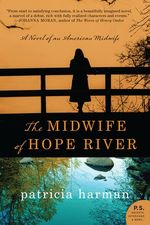
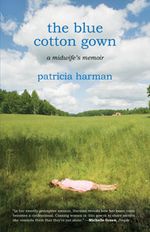
Patricia Harman is a nurse midwife and a Beacon author of two acclaimed memoirs, The Blue Cotton Gown and Arms Wide Open: A Midwife’s Journey. Her first work of historical fiction, The Midwife of Hope River, is a Southern Independent Book Seller’s First Pick.
The final episode of Call the Midwife can be seen on most PBS channels tonight. The series can be viewed in its entirety or purchased on DVD at PBS.org.
 The PBS premiere of the widely popular British
mini series, Call The Midwife, was
something that, as a nurse-midwife, I was determined not to miss. I rushed back
home to West Virginia from Washington, DC—where I was attending an independent
book sellers convention to promote my Beacon Press memoirs and my new novel—and
plunked down in front of the TV just as the show started. I wasn’t
disappointed.
Based on the best selling memoir of Jennifer Worth, a district nurse in the
East End of London in the 1950s, the first episode of the six-part series rang
with authenticity. Having delivered thousands of babies here in West Virginia,
having visited the homes of the rural poor, none of the poverty, misery and
squalor of the East End docks seemed strange to me. Even the births were
surprisingly realistic.
The second episode offered a scene
that markedly echoed my own experiences. One of the new midwives, Chummy Brown,
is called to her first home birth. It’s a busy night in the East End, no one is
available to come with her, and when she gets to the three-story walk up, she
finds the baby is breech. The same thing happened to me—only this was in rural
West Virginia back when I did home births in the 1980s.
I remember it as if it was yesterday… the dilapidated farmhouse, the brave
mother in labor having her first child. I had checked her just that morning and
thought the baby was head down, but when called to her house 12 hours later I
found a baby’s bottom presenting.
 Breech births are difficult. The
cord can be trapped and slow the heart beat or the head can get stuck after the
rest of the body is already born. My patient was ready to push. We were an hour
from the hospital on gravel roads. Did I really want to deliver my first breech
baby in the front seat of a pick-up truck by flashlight? No—I did what Chummy
did. I delivered the baby in the mother’s bed, and everything went fine.
Now I’m an author of books about women’s health and midwifery, and part of the
job of being an author is promoting your books. The interesting thing about
traveling from bookstore to book convention is that, invariably, I end up
talking more about midwifery than about my writing.
“Do all midwives deliver in the
home?” a man, in the back row of an independent bookstore, asks.
“No,” I explain, “They can if they want to, but most of the 13,000 certified
nurse-midwives, (who are RNs with graduate degrees), work in hospitals or in
free standing birth centers. There’s also another kind of midwife, the direct
entry midwife, who’s not a nurse. They do apprenticeships and are called CPMs
or Certified Professional Midwives. These midwives only do out of hospital
deliveries and cannot do gyn care or write scripts for medication, like
nurse-midwives can.”
The fellow nods as if he understands, but I think he’s still confused. I don’t
blame him. That’s one of the problems in the U.S.; laws vary state by state,
and all these titles—CNMs, CPMs, Direct Entry Midwives—how can the ordinary
person keep them straight?
 “My daughter is pregnant and told me she
wants to go to a midwife. That’s why I came here tonight,” a grandmotherly type
admits. “I hate to say it, but I was shocked. I always assumed she’d go to an
OB/Gyn. Don’t you think they’re the experts? It’s her first baby. Anything
could happen. I’m afraid for her.”
“You know, 80% of babies in the world
are delivered into the hands of midwives. Pregnant women are doing their
research. They know that the Cesarean Section rate in the US is 33%. That means
that one in three mothers have their baby by major surgery! If the women want
to avoid a C- Section, they look for a provider who has the lowest rate.
Because midwives aren’t surgeons, we get very good at getting babies out the regular way.”
“So why, then, do people like me think there’s
something wrong about midwifery?” another woman asks.
I have to explain the history of modern midwifery in the United States, which
dates back to the 1930s when the first schools for midwives were established (in
Europe and Great Britain training programs began over 100 years earlier). Before that, in the early part of the
twentieth century, our country was still very rural, and 95% of deliveries were
in the home with midwives who were self-taught. Then a campaign began by the
medical establishment to present midwives as dirty and unclean—a real marketing
blitz. Hospitals were put forward as modern, sanitary and safe, with supposedly
better-trained professionals. What makes this ironic is that doctors in those
days received no hands-on training in obstetrics at all.
The attacks against midwives continued for 30 years, despite the statistical
proof that midwife-assisted births were safer than those conducted in
hospitals. By 1955 only 1% of babies were delivered by midwives, and it’s taken
all these years for the profession to recover. Now midwives are back up to
doing 10% of the births in the United States, and guess what? We now have our own publicity campaign… not to show that
midwives are better, but that we are a safe alternative and that we believe in
the strength of women and their ability to give birth naturally.
“Show,
don’t tell,” a writing teacher once instructed me. “Show, don’t tell.”
 That’s what’s great about the
mini-series, Call the Midwife. It shows us why a midwife makes a
difference. And that’s what my books are meant to accomplish, show what
midwives do, show their courage and their love for their patients.
“So do you want to hear about my new book?” I finally get around to asking the
audience. Heads nod, yes.
“Patience Murphy, is the Midwife of Hope
River” I explain. “She’s a transplant from Pittsburgh during the Great
Depression, hiding out in the mountains of West Virginia, and she tells you in
the first chapter that she’s 36, too old and too obstinate for courting, and
besides that…” (Here I pause for dramatic effect) “…she’s wanted in two
states!” Eyebrows shoot up. The man in back laughs out loud and I laugh with
him.
“Now you have to read the book…
to find out why.”
Photo: BBC
 Beacon Broadside
Leave a comment