In honor of Earth Day, we asked a handful of our nature writers: "What
is one thing that people should do to connect with nature? Why
is it important?" Here are their responses. Read, enjoy, and GET OUTSIDE!
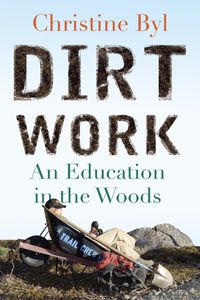


CHRISTINE BYL, author of Dirt Work: An Education in the Woods
Go outside. Be outside. It sounds obvious, I
know, but it's amazing how easy it is to forget this. In the noble but often
all-consuming quest to make sustainable choices and fight big environmental
battles and visit spectacular places, daily time spent present in the outdoors—skiing,
walking the dog, splitting wood, just watching—is the most grounding thing I
know of. It not only hitches me to the details and inhabitants of my own place,
it reminds me that I am nature. Not separate from it. As reliant on my
ecosystem—no matter how fragile or fractured—as a chickadee, a birch tree, a
moose. For me, this realization is the most important thing: the world is my
home.
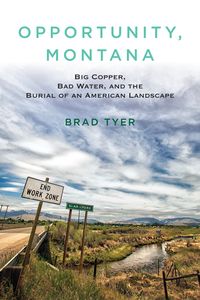
BRAD TYER, author of Opportunity, Montana: Big Copper, Bad Water, and the Burial of an American Landscape
The best way I know to connect with nature,
sullied and otherwise, is to spend a week descending a river in a canoe. Why a
river? Because water is the root of all biology, and gravity is its only motor.
Why a week? Experienced paddlers agree that it takes at least three days to
leave day-to-day time-clocked headspace behind and enter "river
time," leaving at least three days of circadian gravy. Why is it
important? You can tell me when you get back.
EVA SAULITIS, author of Into Great Silence: A Memoir of Discovery and Loss among Vanishing Orcas
So many things come to mind
with this question, the biggest one being: Go outside. Alone. Spend time alone in nature. But something even more important, I think,
is to come to know well one wild creature that lives where you do. Today,
after cleaning my teeth, the dental hygienist showed me a photo she'd taken and
posted on her Facebook page. It was a photo of a coyote with a dead
snowshoe hare in its jaws that she took near her house. The big white
feet of the hare looked longer than the coyote's face. The coyote's coat
was thick and luxurious. She told me she'd seen lots of showshoe hare
tracks in the snow on her walks, but that was the first hare she'd seen in a while.
She told me she'd dreamed once of being a wildlife biologist. But in a
way, she is. She is a citizen biologist. Because she knows these
creatures intimately, knows their habits, she couldn't stand by if something
threatened them. I believe she'd act. So my advice for Earth
Day is to come to know a species of wild creature that shares your habitat,
even if it's just a house sparrow.
Or a flock of crows. Or a family of raccoons. Or monarch
butterflies. Or a spider. Consider it a neighbor, not just another
animal. When you encounter this animal on your walks outside (alone as
often as you can) say hello, even if it's just a whisper, or a voice in your
head.
MICHAEL LANZA, author of Before They're Gone: A Family's Year-Long Quest to Explore America's Most Endangered National Parks
It may be a sad and telling measure of our disconnection
from nature that we even feel the need to contemplate the question, “What is one thing that people should do to
connect with nature, and why is it important?” It implies that the
objective is difficult to achieve, requires time and effort, and one can only
attain this level of connectedness through methodical planning and perhaps a
good self-help book. It’s not, it doesn’t, and you don’t really need anything
more than a doorway to a natural environment.
A regular fix of nature doesn’t have to be complicated or
time-consuming. One deep irony being an outdoor writer who works at home is
that I can go an entire day literally without stepping outside once. It’s
easy, in fact, to get lost in what I’m working on and suddenly realize, at the
end of the day, that I have no idea whether it’s warm or cold outside, sunny,
windy, or snowing. Then I know what I have to do: walk out into my back yard.
I take nothing—especially not my phone. I have two trees and
a garden and it’s mostly quiet back there except for the birds flitting between
my trees. I see the colors of flowers and drink in a big visual gulp of green.
In an adequate dose, green can solve any problem; I’m convinced of that. And I
just stand out there, doing nothing except listening and watching—feeling the
sun’s warmth, the breeze on my arms. My blood pressure takes a nice, healthful
dip and levels off. I’m pretty sure it does, anyway, based on the instantaneous
sense of relaxation I gain just by stepping out there.
Often, I only spend ten minutes in my yard—not a very deep
commitment to connecting with nature on a given day, I admit. But there’s a
huge ROI in psychological and emotional gains for the insignificant time and effort
invested. I’m no health professional or psychologist, but I will confidently
predict that if you carve out ten minutes in every workday to stand under trees
and listen to birds singing, you will live longer, raise smarter children,
develop amazing abs, enjoy a more vigorous sex life, and smile more often. Or
at least the last thing.
I need and regularly get more than ten minutes a day outside
(in a good week, all day, every day). You should, too. Leave home for a day or
a week and go someplace off the grid. Hike a mountain, paddle a river, climb a
cliff, sit by a lake, fish a stream. We evolved to live in the natural world
and we starve ourselves physically and emotionally when we divorce ourselves
from it.
But in the interim, those ten minutes under a tree—now
that’s the ticket.
Watch our YouTube playlist of videos for Earth Day
Related articles


 Beacon Broadside
Leave a comment