David Chura is the author of I Don’t Wish Nobody to Have a Life Like Mine: Tales of Kids in Adult Lockup. He has worked with at-risk teenagers for the past 40 years. For 26 of those years, he taught English and creative writing in community based alternative schools and in a county penitentiary. His writings have appeared in the New York Times as well as other scholarly and literary journals. He blogs at kidsinthesystem.wordpress.com. This post originally appeared at Huffington Post.
 It’s hard reading about the lockstep curriculum
set out by Common Core with its emphasis on “informational readings,” and
seeing all the hoops students and teachers have to jump through to meet its
standards. Quite frankly, it makes me sad.
“Why sad?” you might wonder. Frustrated, maybe, or for that
matter, mad. But sad? Usually when the topic is education reform frustrated and
mad come easily to me. But this is different. I’m a romantic (as I think many
English teachers are) and I see literature—poetry, drama, fiction—and its power
to change people’s lives as the heart of an English teacher’s job.
But the designers of Common Core don’t see it that way. They assert that
students have been raised on an easy-read curriculum and because of this they
are unable to analyze complex reports, studies and government documents. The
administration’s solution is to have informational texts make up 50 percent of
elementary school readings and 70 percent of 12th grade readings by 2014.
Unfortunately, the burden of this solution will fall mostly on English
teachers, leaving them little time to teach real literature. Instead they will
somehow have to figure out ways to get kids interested in such texts as “Fed Views” by
the Federal Reserve Bank of San Francisco (2009) or “Executive Order 13423:
Strengthening Federal Environmental Energy, and Transportation Management”
published by the General Services Administration.
So yes, it makes me sad to see the education of the heart—the real core of any
worthwhile English curriculum—gutted for the sake of global competition, and to
see teachers once again take the hit for “dummied down” education.
But I feel saddest for the kids who must struggle their way
through this type of literal—not literary—education, especially those kids
for whom school is already a difficult and alienating place.
I’ve worked with those students in both
alternative high schools and a county prison, young men and women who have
already had the heart taken out of their lives by poverty, racism, abandonment
and neglect. They have very little interest in school because the traditional
school setting has had very little interest in them. And now this latest
roadblock makes success even harder to attain: a reading curriculum that has
less to do with real life, their real life, and more to do with corporate
America.
As an English teacher it’s never easy to get
disaffected kids to pick up a book and read. I was constantly justifying my
choices, answering the question every literature teacher (and author) is
confronted with in one way or another, “What’s this got to do with me?” But
once we got past those hurdles and students gave a particular reading a chance,
I have seen books—novels, plays, poetry, biography, memoir—save at-risk kids’
lives, if only for the time that they are reading them.
I’m pretty certain that one of the Federalist Papers, a Common
Core selection, wouldn’t have kept 15-year-old Warren out of trouble on the
cell block and coming to my jailhouse classroom. But Manchild in the Promised Land did. As Warren put
it, “I’ve never ever read a whole book before,” but once he got his hands on
Claude Brown’s memoir that changed. Slowly, he got lost in a book that not only
reflected Warren’s own troubled life but also did something else—showed him a
young man much like himself deciding that life on the streets was no life at
all. That book helped keep Warren out of trouble and coming to school long
after he’d read the last page.
The way poetry did for ‘Nor, a 17-year-old
single mom who worked the 3-11 shift at Sears. ‘Nor never missed a day of
school because of the poets she read in class like Nikki Giovanni, Langston
Hughes, Rilke, Luis Rodriguez, and her favorite, the enigmatic Emily Dickinson.
She didn’t always understand what she read but those words helped her survive
life in the projects where too often words had nothing to do with poetry.
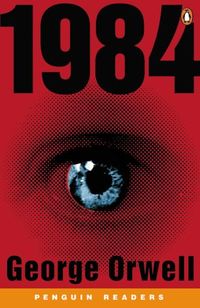
And it’s hard to imagine that George Orwell’s “Politics and the
English Language” would have had Tanya, a real cut-up with a long suspension
record from her home school, jumping off the school bus and running towards me
yelling, “Mr. C., Mr. C, I finished 1984! I can’t
believe what they did to Winston!”
Given the way this country is going, haunted by
one tragedy after another, maybe it’s time to re-examine what we want our true
Common Core to be. Maybe it’s time to worry more about the heart of America,
and about all America’s children and less about the bankrolls of corporate
America. Let’s design a reading curriculum that keeps kids connected to their
schools, to their communities and to their best selves.
Related articles


 Beacon Broadside
Leave a comment