By Carlos Cueva Caro
One of my main interests throughout my four years as a history major was colonial history. As I researched different narratives of colonial America, it became evident that these stories tended to focus on the white male settlers as the protagonists, erasing other groups of people and stripping them of their agency. Hence, my interest turned to the stories left out, like those of the early inhabitants expelled by the European colonists and those forcibly brought here as slaves. This interest led me to take two classes on the history of Indigenous people of the Americas and the history of African Americans, respectively. Initially, I approached both subjects as separate categories of history. Yet, while studying the history of Native Americans, I couldn’t help but connect them with my knowledge of the history of African Americans. When looking at both groups’ struggles against the European colonial project, I could find commonalities between their experiences. Yet, it wasn’t until I read Kyle T. Mays’s An Afro-Indigenous History of the United States as an assignment for my class in Native American history that I could move beyond that exercise in comparison and start conceptualizing them under the larger category of Indigeneity. When talking about the Afro-Indigenous, Mays refers to individuals of mixed-race heritage who have to navigate their dual identities, and to both groups’ interconnected histories, shaped by the white colonialist project that formed this country.
As a Salem resident and due to my aforementioned interest in colonial history, the Salem Witch Trials of 1692 was a topic of history that I felt compelled to tackle. By coincidence, I took a class on the Salem Witch Trials the same semester I read Mays’s book. While looking through documents and narratives about the Trials, I began looking at the records through the lens of the colonialist experience. The Salem Witch Trials have been used to examine themes like patriarchy, religious fundamentalism, and authoritarianism, but there is also a colonial component to the Trials. The beginning of the New England colonies was characterized by the doctrine of discovery, the belief that the Indigenous inhabitants’ perceived “savagery” justified European seizure of their lands. This belief led to an effort to eradicate the inhabitants of the region, be it through cultural and religious conversion, warfare, or enslavement. Native Americans, as a response to European aggression, retaliated through diplomatic and military means that led to a series of colonial Indian Wars. While the Native Americans saw the Europeans as invaders, the colonists’ belief in their right to the land made them see themselves as the injured party. The attacks against the civilian population left both sides deeply traumatized. For the deeply religious Puritan Salemites, the Indians represented an existential threat, agents of the devil sent to destroy their Christian utopia. It’s no coincidence, then, that when the first accusations in Salem Village were thrown out, one of the first people accused was Tituba, an enslaved Indian woman.
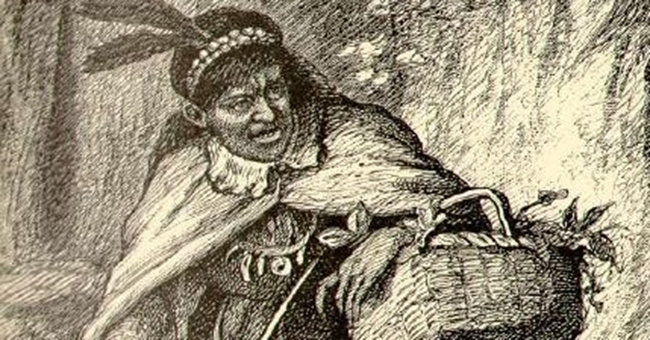
The events in Salem Village that led to the witch hunt are well-known. A group of girls, including the Reverend Samuel Paris’s daughter and niece, experienced several seizures and strange behavior medicine couldn’t explain. When witchcraft was brought to the table, the girls first accused three outcast women: Sarah Good and Sarah Osbourne, both women of dubious moral character; and Tituba, Samuel Parris’s slave. While Good and Osbourne proclaimed their innocence, Tituba not only confessed but also implicated the other two women and wove a narrative about a conspiracy of witches that served as the basis of the witch hunt. Tituba’s role was so crucial that it’s almost impossible to erase from any narrative about Salem. Yet most narratives focus on the white settlers of Salem as the “protagonists,” relegating Tituba to a plot device rather than a character. White settlers’ self-indigenization, their view of themselves as the original inhabitants of America, turned Tituba into a foreigner. In later retellings, she was responsible for teaching the girls her exotic magic, which led to the girls’ afflictions, effectively becoming the indirect source of the witch hunt.
Most academics today agree that Tituba was an Indigenous woman, based on court records that explicitly identified her as Indian. Yet the records also refer to Tituba as practicing “hoodoo,” implicitly acknowledging the encounter of Indigenous American and African cultures in the Caribbean. Though her specific ethnicity is hard to define, academics theorize, based on mentions of an enslaved Indian girl of a similar name, that Tituba was probably Arawak, kidnapped from the Spanish Main (today Venezuela) and taken to Barbados, where records show she was purchased by Samuel Parris, who took her to New England. By the end of the eighteenth century, Tituba was identified as a mixed-race woman. By the nineteenth century, she was understood as a Black woman, both erasing the realities of Indian enslavement and applying Black Caribbean stereotypes to Tituba. One of the main sources about the trials for many people, Arthur Miller’s The Crucible, cemented in popular culture Tituba’s identity as a Black woman.
Maryse Condé’s I, Tituba, Black Witch of Salem, a fictionalized story of Tituba, transforms her into a mulatto woman, born in Barbados from an Ashanti mother and her white kidnapper. Yet Condé uses Tituba’s race to celebrate Caribbean identity as Black and Indigenous. Condé, an Afro-Caribbean author, understands her Caribbean identity as a mixture of Indigenous-American and African cultures, a product of the encounter of two continents forced together through the trauma of white colonialism, regardless of what specific race may have been imposed upon them by the white colonial establishment. Although the fictional Tituba’s history differs at several points from the historical record, the essence of her tale aligns with the real Tituba’s journey. Both the fictional and historical Tituba were Indigenous women forcibly removed from their homeland. It’s a story of an Indigenous immigrant forced out of her homeland by colonialist enterprises, forced into a position of outsider, trying to survive a hostile environment that rejects her despite forcing her to stay. Both women fought to retain contact with their roots while assimilating to the new realities of a strange land. When explaining Native American and African relations, Mays argues in favor of conceptualizing African Americans as also Indigenous. He argues that Africans brought to America as slaves fought to retain their links with their homelands despite colonialist efforts to erase their African identity. Under that definition, Condé’s Tituba becomes the story of an Indigenous woman. A central part of Tituba’s arc is her efforts to return to her homeland, Barbados, literally or metaphorically through her culture and religion.
Most information about the historical Tituba comes from her deposition during the Trials. Although at first glance her deposition can be read as Tituba repeating the words forced upon her by her enslavers to fit a narrative of witchcraft, a closer reading offers hints of Tituba’s own agency during this ordeal. When explaining how she performed magic, she pulls from Afro-Indigenous religion and traditions regarding spirits rather than European traditions on witchcraft. When confessing, she made a point of playing into colonial expectations of her lack of agency, by showing herself as a victim of threats and trickery by the white witches, hence avoiding being accused of being the main corrupter in Salem (like later representations claim her to be). More importantly, rather than implicating just herself and the other two accused women, Tituba wove a narrative of a large conspiracy that subtly implicated high-ranking men of Massachusetts’s colonial society, going as far as to describe the devil with similar characteristics to her enslaver, Samuel Parris. As Mays explains, part of the Indigenous experience is their imposition of race by the white establishment and the struggle and negotiation of non-whites to retain their roots, connection to their homeland, and ensure their survival. In other words, Indigenous people like Tituba have to balance both playing with and defying white colonial narratives to ensure their survival.
Yet, as Mays pointed out, nobody is immune to colonialist narratives. In I, Tituba, the only mention Tituba (and by extension Condé) makes of Native North Americans is when she calls them “wild barbarians who were set on scalping any head that came too close” (53). This statement goes unquestioned, something shocking since Condé’s Tituba constantly questions the Puritans’ stances on slavery, gender roles, and race relations. Condé’s Tituba internalized white settlers’ narratives about North American Indians in the same way many American Indians and Africans have internalized white colonial narratives about each other and themselves, consciously and subconsciously playing the white supremacist game with hopes of attaining advantageous results.
Tituba was an outsider because of the color of her skin and because she was Indigenous. In 1692, New England was in the middle of an Indian war of resistance against the colonial enterprise. For the Puritans, the devil was “tawny.” For white settlers, both in 1692 and today, Indigeneity, understood as non-whites’ resistance to submit to European culture, was a threat. Many of the founding fathers were slave owners and they ensured to enshrine slavery in the Constitution. At the same time, Alexander Hamilton wrote that Indians were Americans’ “natural enemies.” In the nineteenth century, the American government pursued policies of eradication of Indigeneity through extermination and forced assimilation, continuing the old colonial narrative of demonizing Native Americans. At the same time, narratives about slavery and witchcraft became closely associated with Black people. Tituba’s presence in Salem as an enslaved Indian woman who practiced witchcraft became hard to explain. Yet Tituba was far too important to erase from the narrative; so instead, white authors and historians erased the Indian, turning her into a Black slave. In doing so, the “Indian problem” became the “Black problem” related to slavery and the role African Americans should play in white society.
Although we aren’t entirely sure of Tituba’s race (she could have very well been mixed race), we can agree that it was colonial imposition, set in paper by the magistrates of Salem and then reshaped and transformed by later authors under the social construct of race. But her whole story, regardless of whether she was Native American or African, is that of an Indigenous woman experiencing a white colonial establishment. Giving Tituba a larger role in the Witch Trials’ narrative means discussing Salem within the larger context of colonialist ideology. Salem, then, becomes not only a story about religious intolerance or patriarchy, but also a story of white oppression over Indigenous people, understood, as Mays argues, as both Native American and African. In her foreword to the English translation of Condé’s book, Angela Y. Davis states that Salem is not Davis’s story until Tituba takes an active role in it. Davis also states that her race, either as Black or Indian, is irrelevant because her story is a reminder that “the doors of our suppressed cultural histories are still ajar” (Condé, xi). Tituba’s story is the story of an Indigenous (or Afro-Indigenous) woman’s encounter with colonialism and white supremacy.
Bibliography:
Breslaw, Elaine G. Tituba, Reluctant Witch of Salem: Devilish Indians and Puritan Fantasies. New York: New York University Press, 1996.
Condé, Maryse. I Tituba, Black Witch of Salem. Translated by Richard Philcox. New York: Ballantine Book, 1986.
Hansen, Chadwick. “The metamorphosis of Tituba, or why American intellectuals can’t tell an Indian witch from a Negro.” The New England Quarterly Vol. 47, No. 1 (1974): 3-12.
Lopez Oro, Paul Joseph. “A Love Letter to Indigenous Blackness.” NACLA-Report on the Americas 53, No. 3 (2021): 248-254.
Mandell, Daniel R. Tribe, Race, History: Native Americans in Southern New England, 1780-1880. Baltimore: The John Hopkins University Press, 2011.
Mays, Kyle T. An Afro-Indigenous History of the United States. Boston: Beacon Press, 2021.
Pinnock, Winsome. “Reclaiming Tituba: The Real Story Behind Arthur Miller’s Character.” The Yale Review. December 6, 2022.
About the Author
Carlos Cueva Caro is a public historian from Salem, Massachusetts. He graduated from Salem State University with a BA in history and is currently enrolled in the Cooperstown Graduate Program of Museum Studies. He interned for Historic Salem, Inc., Historic New England, and The Welcome Immigrant Center as an undergraduate. His honors thesis, “We’ve Come to Stay:” The Historic Preservation Movement and the Struggle for Place in New England,” is the culmination of his combined interest in colonial history, preservation, and the immigrant experience in the USA.
 Beacon Broadside
Leave a comment