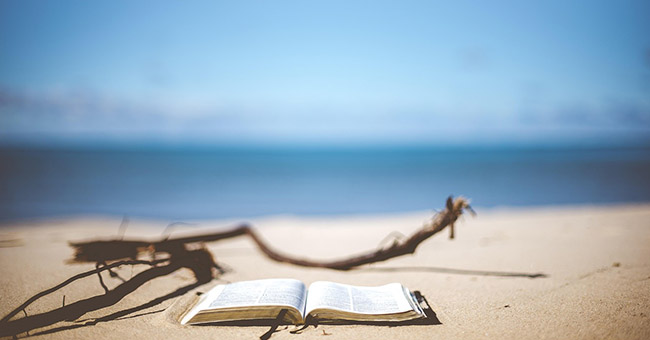
Finishing eight or nine? Tell us: What’s the perfect time? We told you we’ll be waiting, hiding from the rainfall. And tell us: What’s the joy of giving if you’re never pleased? On our last strength against you, babes, tell us what you, as titles from our catalog, need. Oh, you need us to read you? Till the end of summer? Yeah, you got it, babes, cover to cover! We’ll never let you go.

Art Above Everything: One Woman’s Global Exploration of the Joys and Torments of a Creative Life
“It is precisely this ability—creating life out of paint, out of notes, out of clay—that inspires us to become artists in the first place. Once we fully grasp the infinity of hours that must be sacrificed to achieve our vision, most of us quit. The rest must somehow steel themselves against the rejections, the loan sharks, the meniscus tears, and the despair to follow. Will this be worth it, in the end?”
—Stephanie Elizondo Griest
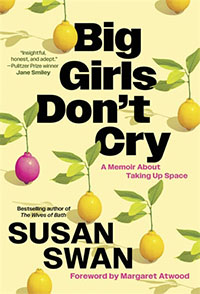
Big Girls Don’t Cry: A Memoir About Taking Up Space
“But everyone takes up space as they travel through their lives. Taking up space is how most of us learn who we are and what makes us happy. This is especially true for women, who are often taught to be smaller than their brothers and the boys they know, and, later on, smaller than their partners, or their husbands, or their colleagues. And if they become mothers, they may be expected to step aside and cede space to their children.”
—Susan Swan
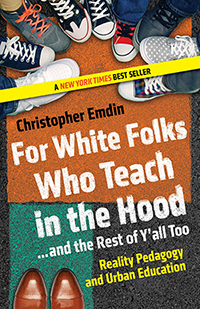
For White Folks Who Teach in the Hood: Reality Pedagogy and Urban Education
“In schools, urban youth are expected to leave their day-to-day experiences and emotions at the door and assimilate into the culture of schools. This process of personal repression is in itself traumatic and directly impacts what happens in the classroom. Students exist in a space within the classroom while the teacher limits their understanding to what is happening in the classroom place. Failure to prepare teachers to appreciate the psychic spaces students occupy inevitably limits their effectiveness. Some teachers understand that students come from places beyond the classroom and can acknowledge that these places have an effect on students and the spaces they occupy. However, many teachers cannot see beyond their immediate location (the school) and therefore have a very limited understanding of space.”
—Christopher Emdin

Mean Little deaf Queer: A Memoir
“We were both smiling in exactly the same way, as if we were about to break into song, although it’s a good thing we didn’t, since neither of us can sing on key. I introduced myself and invited her to a party that was being held to welcome me back to Austin. I got a bit flustered and asked her to call me. I gave her the number of the house where I was staying with Isabelle, her lover Beatrice, and Isabelle’s sister Vivian, all of whom were from the same region in southern France, two of whom still had outrageously magnificent French accents. When I told Donna to call me I said, ‘By the way, I’m deaf so I won’t actually hear you when you call. The friends I’m staying with translate for me. They’re French.’ Which confused Donna mightily. She wasn’t sure if that meant they would be speaking French if she called me or if they would translate her English into French for me to understand. But she felt it impolite to probe.”
—Terry Galloway
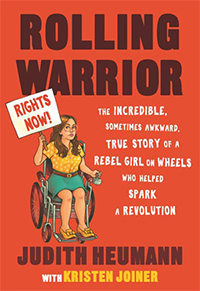
“We lived on one of those streets where there were tons of kids and everyone knows each other. I was the only kid in a wheelchair, but this meant literally nothing to us. We were little and we just figured things out, like you do when you’re little. If everyone was roller skating, we put roller skates over my shoes and I skated in my chair. If everyone was jumping rope, I turned the rope for the kids who were jumping. We didn’t even think about it. Me being in a wheelchair just felt like me having straight hair when Mary had curly. Sometimes I think kids are so much smarter than adults.”
—Judith Heumann with Kristen Joiner
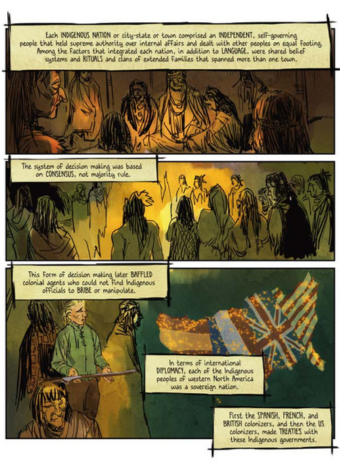
 Roxanne Dunbar-Ortiz’s Indigenous Peoples’ History of the United States
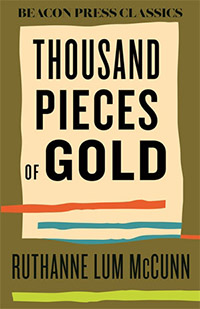
“From the time Lalu had learned to walk, she had worked: first, following her father’s plow and dropping soy beans into the furrows; later, when her father planted the sweet potato vines, filling the holes with water, covering all but one leaf with soil; then, during the harvests, cleaning sweet potatoes for her mother to slice and dry, and picking peanuts off the vines. Even during the two years of foot-binding, when she could not walk, she had not been idle, learning to sew and spin and weave. And after her feet became little four-inch lotus, when she was no longer allowed to work in the fields, she had helped her mother at home. Except for the harvests. Then she and her mother joined the other women and girls, threshing wheat and millet, picking peanuts, and preparing sweet potatoes, turnips, cabbages, and other vegetables for storage. She had thought working as her father’s laborer would be no harder. She had found she was wrong.”
—Ruthanne Lum McCunn

“I drive around the colored section looking for a restaurant where I can buy some ham sandwiches, cake, and coffee to take on the road. I never like to stop at roadside cafes, even the ones that say “take-out service,” which is a signal to colored people that they can stop, buy their food, and get going. Sometimes they can come in the front way; other times they have to come to the back door. You never know what the locals will do when you’re traveling through these wastelands. I always keep a guide with me that my father gave me a copy of, written by people who’ve traveled these badlands before me, although I don’t like to travel further south than Tennessee or further west than Indiana.”
—Gayl Jones
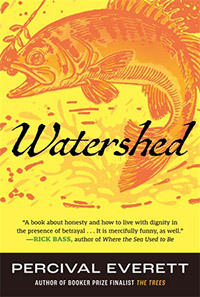
“The lie was a great big fat one and I had more than a little sinking feeling. What was worse was that I did not know why I had lied. I had no real reason to suspect that Louise Yellow Calf was involved in the deaths of the two FBI agents, but things were not clear with her. In fact, I did have some idea why I had lied, although knowledge of a feeling doesn’t make it rational. I recognized that I was almost pathologically incapable of imparting anything but basic information to the FBI. Had she been asking me if I had seen the purse snatcher run past me on the street I might have answered her truthfully, but the whole feel of this thing was muddled and dicey.”
—Percival Everett
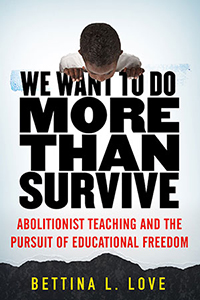
We Want to Do More Than Survive: Abolitionist Teaching and the Pursuit of Educational Freedom
“Whiteness cannot enter spaces focused on abolitionist teaching. Whiteness is addicted to centering itself, addicted to attention, and making everyone feel guilty for working toward its elimination. Whiteness will never allow true solidarity to take place. Those who cling to their Whiteness cannot participate in abolitionist teaching because they are a distraction, are unproductive, and will undermine freedom at every step, sometimes in the name of social justice.”
—Bettina L. Love

About the Author
Christian Coleman is the digital marketing manager at Beacon Press and editor of Beacon Broadside. Before joining Beacon, he worked in writing, copy editing, and marketing positions at Sustainable Silicon Valley and Trikone. He graduated from Boston College and the Clarion Science Fiction & Fantasy Writers’ Workshop. Follow him on Twitter at @coleman_II and on Bluesky at @colemanthe2nd.bsky.social.
 Beacon Broadside
Leave a comment