A Q&A with Breanne Fahs
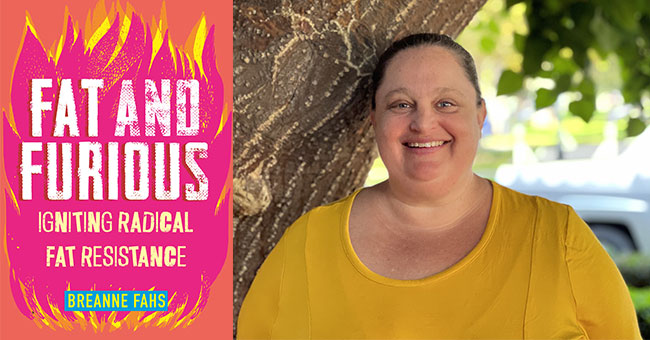
Anti-fatness and fat-shaming are used most often as a way to inspire fear in others about being or becoming fat. In Fat and Furious: Igniting Radical Fat Resistance, scholar and therapist Breanne Fahs breaks down how the dread of fatness is used to control and capitalize on women’s fears of their unruly bodies and demonstrates how rejecting shame and instead igniting feelings of anger can help us collectively move towards justice. Weaving together the voices of fat people and activists with damning psychological and sociological evidence, Fahs argues that rage, or fat fury, becomes the necessary antidote to the resignation and powerlessness that anti-fatness so often generates. We caught up with her for a two-part chat. This is part two of two. Read part one.
Beacon Press: What are some of the ways that people, especially those who claim to support fat justice, find themselves unintentionally engaging in anti-fat beliefs and practices?
Breanne Fahs: We’re all doing this in so many ways—big and small. There are so many interpersonal and interactive ways that this plays out. Complements about weight loss, making it clear that thinner is more desirable, parents “worrying” about their kids gaining weight (particularly in terms of securing a partner or making friends or being liked), clothes shopping discourses, restaurant discourses—and more!—are all areas where lots of anti-fat practices play out. We also have deeply held cultural beliefs about what fat people can do, what their bodies mean, and what they need.
I recently did a review of news articles about Ozempic and Wegovy and found very, very few who ever bothered to interview fat people about their own bodies or experiences. We love to talk about fat people without talking to fat people. It is assumed that we know what the “fat experience” is without actually asking people.
There are also ways that fat people feel they need to apologize for their bodies or see their bodies as a liability. That needs to change as well. And people encourage and feed that discourse all the time by imagining that fat people shouldn’t mention what they need, that they have to minimize their public relationship to food at work, with friends, etc., and more.
BP: How does anti-fatness show up in our day-to-day lives? For example: healthcare, media, workplaces, education, etc.?
BF: Anti-fatness is everywhere, like the air we breathe. There is a synergy to it. We don’t see fat people and so we don’t imagine them as having complex interior lives.
Media excludes fatness, or derides it, or sees it as a project to “fix.” The majority of super-fat people on TV are treated like entertaining circus creatures, there to make thinner people feel superior and to make them feel horrified at fat bodies.
Healthcare is a nightmare beyond words. Nearly every single fat person has faced discrimination, inappropriate comments, assumptions about their bodies, and this leads to all sorts of avoidance of medical care, screenings, and honest conversations about bodies. The insurance fiasco about weight loss drugs shows this even more acutely. We imagine fat people as a “mob” who will “destroy” Medicare if they all these drugs, and who fundamentally don’t deserve medications in the way that other populations clearly do. COVID and vaccination discourses showed this as well. Fat people were never treated as deserving of prioritized vaccines even when their health depended on them.
Workplace discrimination is rampant, in hiring, firing, retention, promotion, and interpersonal exchanges.
And educational anti-fatness is also rampant. Fewer and fewer fat people are going to college and getting graduate degrees. Teachers see fat studies in less positive terms.
We can go on and on. And the problem is, most people hear these arguments and use them to justify more efforts to keep people from being fat! That’s not the answer. The answer is: How do we level the playing field so that fatter and thinner people have similar access to what they need and to building beautiful, complex, fulfilling lives?
Capitalism is also a huge culprit in preventing that goal as well, but that’s for my next book . . .
BP: Why do you center anger, specifically “fat fury,” as the emotional core of the book?
BF: Anger is the turning of depression and suffering and sadness outward. In other words, instead of feeling despair and hopelessness, anger can motivate change, collectivize us, and it demands that we do better. Anger is an emotion that has powerful transformational potential, especially when harnessed as part of a social movement or an activist orientation. Anger is also a statement of refusal—refusal to internalize all of this garbage, refusal to believe and endorse anti-fatness, refusal to enact anti-fatness onto others. Anger is a beautiful, powerful emotion; fury is what we need in this political and cultural moment.
BP: How can anger be transformed from a stigmatized emotion into a catalyst for collective action and change?
BF: Anger is often seen as a destructive feeling, as something that destroys or harms others. I think that’s really missing the potential that anger has to transform us politically. When anger is experienced collectively, it works to undermine systems that are stubborn and problematic, and it does so from a place of righteous rage. Anger reminds us that we can refuse to subscribe to stories that don’t serve us. We can make something new, with anger at the helm. Anger paves new paths and makes us see things in new ways, especially when we do it together.
BP: What can we learn from radical fat activists featured in this book that might help us shift how we think about resistance and justice?
BF: Radical fat activists are, and have been, paving the way for us for a long time. They were early to identify fatness not as an individual “problem” but as something that deserves space to exist and to thrive. Radical fat activists have refused to be satisfied with “within-system” limited solutions like “loving your body” and have instead demanded that we look deeper into the roots of anti-fatness to the spaces where anti-fatness joins with racism, sexism, ageism, ableism, capitalism, and more. Radical analysis doesn’t mean “extreme”; it means going to the root of something to understand it at its core or root. Radical fat activists ask us to think more deeply about how the hatred of fatness is powerfully connected to misogyny and anti-Blackness, for example, among other things. And radical fat activists understand that fun, play, anger, celebration, collective despair, and outright fury all matter in creating a better world for fat people and for everyone else, too!
BP: How can thin/straight-sized people engage meaningfully in fat resistance without centering themselves?
BF: Thinner people can work to recognize when they’re doing harm to themselves and others and they can work to better understand the more root structures of anti-fatness. They will inevitably find parts of their own identity there at the root, too (women, people of color, queer people, etc.). The roots of one oppression are often shared with others’ oppressions.
We need to be in solidarity with each other, now and always. It is the only way forward. Just because we don’t live in the same body or same type of body, just because we don’t have the same identities in no way means we can’t fight against each other’s oppressions. What I feel about thinner people is: If your fight aligns with my fight, however imagined, we are allies for each other. We are in solidarity. I want thinner people to be better at truly being in solidarity with fat people and in fighting to make room for all kinds of bodies and all kinds of feelings about bodies. I also think that fat resistance makes sense on as large a scale as possible. We need all hands on deck!
BP: What do you hope readers will do differently after reading Fat and Furious?
BF: I hope readers will feel furious! I hope they will better understand how actually bad things are in terms of how we treat fat people and what they deal with. I also want them to see fury and collectivism and social movements and righteous rage as a way forward. I want readers to learn from fat activists and see them as guides for the struggles of the future. Mostly, I want readers to invest themselves with the identity of activist, ally, and fellow traveler. When fat people live in a more just world, we all benefit.
About the Author
Breanne Fahs is professor of women and gender studies at Arizona State University, where she specializes in studying women’s sexuality, critical embodiment studies, feminist histories, and political activism. She has authored many books, including most recently Unshaved, Burn It Down! Feminist Manifestos for the Revolution, and Fat and Furious. She is the founder and director of the Feminist Research on Gender and Sexuality Group at Arizona State University, and she also works as a clinical psychologist in private practice.
 Beacon Broadside
Leave a comment