• By Frederick S. Lane

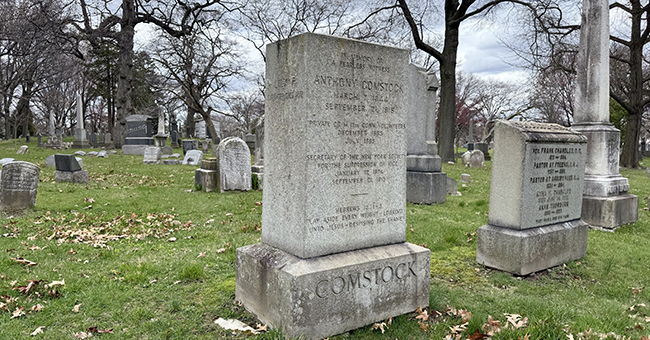
    Andrew Comstock grave

    Gravesite of Andrew Comstock. The Comstock Act came back from the dead. Photo credit: Frederick S. Lane

    The name Anthony Comstock has been in the news a lot over the last few weeks.

    That’s really something of a surprise, given that Comstock died almost 109 years ago in his Summit, NJ, home. But he left behind a legacy of legislative and cultural activism that increasingly resonates with the country’s growing Christian nationalist movement. 

    Following brief service in the Civil War, Comstock moved from his native Connecticut to Manhattan. A devout Christian, Comstock was horrified by what he considered to be the city’s rampant immorality—all-too-readily available alcohol, pornography, contraception, abortion services, etc. Imbued with a righteous vigor, Comstock began a lonely vigilante effort to combat vice. It was, to say the least, an uphill battle.

    His work did not go unnoticed, however. Wealthy sponsors of the Young Men’s Christian Association (you may have seen some of them on HBO’s The Gilded Age) gave Comstock some much-needed donations to continue his work, and in the fall of 1872, hired him to travel to Washington to lobby for passage of an anti-vice law.

    It is likely that the poorly educated young moralist was both surprised and dismayed at the limits on what Congress could do. Under our system of dual sovereignty, the several states are primarily responsible for adopting and enforcing criminal laws. Congress can pass criminal laws as well, but generally, those laws are only enforceable on federal property or with respect to any activity over which Congress has constitutional authority (like, for instance, the nation’s postal service).

    Fortunately for Comstock, his YMCA sponsors were able to introduce him to a powerful ally: US Supreme Court Associate Justice William Strong, who was himself a devout Christian and an unsuccessful advocate for a constitutional amendment declaring the United States to be a “Christian nation.” Strong helped Comstock draft a bill prohibiting the sale of anything “of indecent or immoral nature” in the District of Columbia and other federal territories and amending the US Postal Code to prohibit the mailing of “obscene, lewd, or lascivious” items or “any article or thing designed or intended for the prevention of conception or procuring of abortion.”

    After some legislative wrangling, the legislation was passed in the final moments of the Congressional session in the early morning of March 3, 1873. Not long afterward, Comstock was appointed as a special agent of the Post Office Department and charged with enforcing the legislation that, in no small part due to his relentless self-promotion, would come to bear his name.

    There was just one problem for the young vice-hunter: The privacy of sealed letters is one of the oldest and most rigorously-observed norms in our nation’s history. It is a principle embedded in the warrant requirements of the Fourth Amendment and in the provisions of the Post Office Act of 1792, which prohibited government surveillance of private letters. Throughout his career, Comstock was dogged by charges that he was willing to invade the privacy of the mails in his overly zealous efforts to stamp out immorality.

    Less than a year after his appointment, for instance, the Chicago Weekly Post and Mail ran a short editorial entitled “Anthony’s Fall.” While praising some of his work, the paper noted he was also charged with “endeavoring . . . to induce men to break the law which he was appointed to enforce, and . . . unwarranted supervision of the mail matter of firms not disposed to a quiet submission.”

    “When this vast power is given to one man alone,” the paper continued, “he becomes a Napoleon of the Mail Bags. . . . The office itself should be done away with, as it gives to one man alone the power to do an immense amount of evil as well as a great deal of good.”

    The editorial’s call went unheeded, and Comstock went on to a four-decade-long career of harassing publishers, gamblers, physicians, midwives, and others. By the end of his career in 1915, however, legal developments and cultural changes had made Comstock a fusty object of ridicule. The Comstock Act slowly but surely slid into legal obsolescence.

    Over the last few years, the spirit of Comstock has found its purest revival in the person and work of US District Court Judge Matthew Kacsmaryk, the sole judge presiding over the Amarillo federal courthouse in the Northern District of Texas. A former deputy counsel for the First Liberty Institute (one of the most religiously conservative law firms in the country), Kacsmaryk was appointed in 2017 by then-President Trump and confirmed in 2019. As the sole judge in his courthouse, Kacsmaryk is the preferred jurist for Christian nationalist legal actions, like the one filed in November 2022 by the Alliance for Hippocratic Medicine against the Food and Drug Administration.

    The lawsuit, filed by a number of anti-abortion doctors, challenged the federal agency’s 2000 initial approval of the abortion drug mifepristone, as well as its subsequent rulings in 2016 and 2021 that eliminated in-person requirements for prescribing and delivering mifepristone to patients. That made the drug available by mail, and according to the Center for Reproductive Rights, mifepristone now accounts for more than half of all abortions in the United States.

    In their complaint, the physicians specifically referenced the Comstock Act and argued that the FDA was allowing doctors to violate the law’s still-valid prohibition against “the mailing of ‘(e)very article, instrument, substance, drug, medicine or thing’ that produces ‘abortion.’” In his opinion granting a national injunction against mifepristone, Kaczmaryk relied heavily on plaintiffs’ arguments regarding the validity and effect of the Comstock Act.

    “Plaintiffs have a substantial likelihood,” Kaczmaryk wrote, “of prevailing on their claim that Defendants’ decision to allow the dispensing of chemical abortion drugs through mail violates unambiguous federal criminal law” (i.e., the Comstock Act).

    On April 14, 2023, the United States Supreme Court issued a stay of Kaczmaryk’s injunction, and in December, agreed to hear an appeal filed by the US Department of Justice. During oral arguments on March 26, 2024, a majority of the Court expressed doubts about whether the anti-abortion medical plaintiffs even had standing to bring their lawsuit. But the Court’s two most conservative jurists, Justices Samuel Alito and Clarence Thomas, also made it clear that they were, at the very least, Comstock Act-curious.

    The Court’s opinion is not expected until late spring or early summer 2024, but even if the Court does rule against the Alliance, the zombie Comstock Act will still star in the fevered dreams of Christian nationalists. For instance, the Heritage Foundation’s dystopian transition blueprint, Mandate for Leadership, explicitly calls on the Department of Justice to enforce the Comstock Act’s prohibition against the mailing of abortifacients.

    Minnesota US Senator Tina Smith, a former Planned Parenthood executive, wrote in a New York Times op-ed that she is exploring legislation that will “protect the ability of doctors, pharmacies and patients to receive in the mail the supplies they need to exercise their right to reproductive care.” Whether such legislation is ever considered will depend in no small part on the outcome of the 2024 election.

    In the meantime, it is worth reflecting on the sobering words written in 1884 by an unnamed writer for The Worthington Advance, a Minnesota weekly. They apply with equal force to both Comstock and Kaczmaryk:

    Comstock represents a principle and an innovation which ought to be stamped out at once. We mean the uniting of the ecclesiastical and the civil officer in one man, an old European practice which every American should curse and upon which the people should jump with both boot heels at once and stamp it out.


    About the Author 

    Frederick S. Lane is an author, attorney, educational consultant, and lecturer based in Brooklyn, NY. He is a nationally-recognized expert in the areas of cybersafety, digital misconduct, personal privacy, and other topics at the intersection of law, technology, and society. Lane has appeared on The Daily Show with Jon Stewart, CNN, NBC, ABC, CBS, the BBC, and MSNBC. He has written eight books, including Cybertraps for Educators. Find him online at FrederickLane.com and on Twitter (@fsl3).
  • By Mei Su Bailey

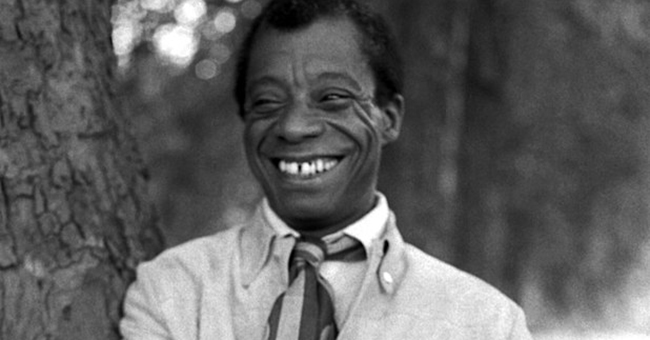
    James Baldwin, 1969. Photo credit: Allan Warren

    James Baldwin, 1969. Photo credit: Allan Warren

    This year, Beacon Press is taking part in the nationwide celebration of James Baldwin’s hundredth birthday with the release of the James Baldwin Centennial Series! Originally published in Notes of a Native Son, these essay collections commemorate Baldwin’s legacy as an artist, an activist, a social critic, and a gifted writer.

    Beacon Press first published Baldwin’s highly acclaimed Notes of a Native Son in 1955. “There is truly no greater honor for a press than having published James Baldwin,” reflects Beacon Press Director Gayatri Patnaik. “We know the impact that Notes of a Native Son had on the culture was immense and the story of how Beacon came to publish it is worth telling.”

    Decades ago, Sol Stein was a contributing editor at Beacon Press. Stein had been Baldwin’s classmate at Clinton High School in the Bronx, where they were both editors of the literary magazine, The Magpie. An early champion of Baldwin’s writing, Stein kept in touch with Baldwin through the years. Knowing the brilliance of Baldwin and wanting him to be published by a house whose sensibilities and ethos were radical and cutting edge, Stein introduced him to Beacon.

    “I can’t think of another author on our list that defines the core principles or values of Beacon Press more powerfully than Baldwin,” says Patnaik. “I’m grateful that in subsequent years we continued our commitment to promoting his legacy by publishing Jimmy’s Blues and Other Poems and Nothing Personal.”

    Today, one hundred years after his birth, Baldwin’s work remains strikingly current and perhaps even more relevant than ever. The essays in the James Baldwin Centennial Series, which range in topic from race and identity to religion and culture, will entice modern readers of all ages, from longstanding Baldwin fans to those discovering his work for the very first time.


    The James Baldwin Centennial Series


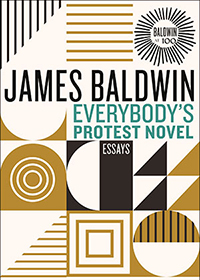
    Everybody's Protest Novel

    Everybody’s Protest Novel: Essays

    Baldwin explores the Black experience through the lens of popular media, critiquing the ways in which Black characters—in Harriet Beecher Stowe’s novel Uncle Tom’s Cabin, Richard Wright’s novel Native Son, and the 1950s film Carmen Jones—are reduced to digestible and dehumanizing caricatures. 


    The Harlem Ghetto

    The Harlem Ghetto: Essays

    In “The Harlem Ghetto,” Baldwin introduces readers to his native city, analyzing the role of the Black leader and the Black press within the fabric of US politics. Baldwin describes the religious underpinnings of the city and the complex and historically fraught relationship between the American Jew and the Black American. 


    Encounter on the Seine

    Encounter on the Seine: Essays

    This collection examines Baldwin's transformative time in Europe, where he uncovers what it means to be American. Exploring Black life overseas, he immerses the reader in his experiences as a foreigner, his troubling encounter with a Parisian prison, and his unprecedented arrival to a tiny Swiss village.

    James Baldwin


    About the Author 

    Mei Su Bailey is the publicity assistant at Beacon Press. She worked at various youth advocacy and literary organizations, including 826 Boston, Dear Asian Youth, and the Fir Acres Writing Workshop. She holds a degree in sociology and anthropology from Lewis & Clark College in Portland, Oregon, and graduated from the Columbia Publishing Course at Oxford. Outside of work, you can find her playing with cats, making things with yarn, and enjoying many bowls of noodle soup with chili oil.

  • A Q&A with Jaclyn Moyer

    Jaclyn Moyer and On Gold Hill

    Author photo: Hannah King. Cover design: Carol Chu

    In 2012, twenty-five-year-old Jackie Moyer—the daughter of a forbidden marriage between a white American father and a Punjabi American mother—leased 10 acres of land in Gold Hill, California, and embarked on a career in organic farming. With a fractured relationship to her heritage, Moyer saw an opportunity for repair when she learned of a nearly lost heirloom wheat variety called Sonora.

    In On Gold Hill: A Personal History of Wheat, Farming, and Family from Punjab to California, Moyer maps her personal story of reconnecting with her Punjabi heritage atop the entangled histories of wheat cultivation and the rise of the organic farming movement. With a passion for dismantling the exploitative big-agriculture industry, she examines how the development of high-yielding varieties and chemical fertilizers has harmed our relationship with food, the planet, and each other. Beacon Press senior publicist Bev Rivero caught up with her to chat about it.

    Bev Rivero: You write about learning the origins of the organic farming movement through your research into the history of wheat development and your own family’s past. What might people be surprised to learn that you discovered? 

    Jaclyn Moyer: I wasn’t intending to write about the history of the organic farming movement when I started this project, but as I began to uncover my family’s past, I discovered that the origins of the organic movement, the development of modern wheat, and my own personal history intersected. And all three were bound up with colonialism.

    I was reading about the Canal Colonies—a region in present-day Pakistan that was once a breadbasket for the British empire and the place, I’d recently learned, where my grandmother was born—when I came across a passage that mentioned a wheat breeder by the name of Albert Howard. I recognized the name, but it took me a moment before I realized why: Howard was the renowned “father” of organic agriculture. But here, he was not referred to not as a crusading proponent of Nature’s farming, as he would later be known. Instead, he was identified as Imperial Economic Botanist for the British colonial government’s Indian Agricultural Research Institute.

    I read on to learn that, in 1905, long before Howard become famous for popularizing organic growing methods, he was invited to India as part of an effort to develop Indian agriculture in order to quell rising local unrest and calls for self-rule. Howard was tasked with improving crop production in the subcontinent, beginning with wheat. At the time, a cheap and efficient process for manufacturing nitrogen did not yet exist. Thus, synthetic fertilizer remained expensive, putting its use out of reach for most Indian farmers. Manure, a traditional natural fertilizer, was also scarce due to its use as a fuel for cooking and heating. Faced with these limitations and charged with increasing crop production to stave off hunger while also generating profits for the British government via crop exports and taxation, Howard set out to find alternative methods for maintaining soil fertility. The techniques he developed and refined—particularly his procedure for making compost fertilizer by building heaps of plant material—would later form the foundation for modern organic agriculture.

    This story was quite different from the popular origin story of the organic movement as I’d always heard it. In that more common story, Howard, driven by concerns for ecological and human health and disillusioned with Western agriculture, seeks out traditional peasant farmers of the East who teach him to grow food holistically using their ancient methods just as they’d been doing for millennia. This story, in which the economic and political context is omitted and replaced with romantic notions of timeless traditions and Eastern mystique, obscures the ways colonialism had so thoroughly disrupted the lives of those “traditional” farmers—driving a shift from subsistence farming and local food production to growing cash crops for export; increasing land alienation and dispossession; and perpetuating poverty and indebtedness via heavy taxation. I wanted to explore the fuller story of Howard’s time in India and the economic and political factors that led to his development of organic methods, because this story shed due light on the broader forces—those that lie beyond a farmer’s particular skills, traditions, or proclivities—that shape the way food is produced.

    BR: The importance of place in your book is so strong. When writing the book, did you plan to have travel as a theme and to evoke such strong imagery of California and India?

    JM: I embarked upon writing this book, in large part, to understand the places I was from—my family’s ancestral village in northern India where my mother was born, and the foothill town in Northern California where I grew up and later returned to as a young adult to start a vegetable farm. Both places were fundamental to my own life story, and I wanted to better understand my relationship to each, and their relationship to each other.

    I did not plan for travel to be a prominent theme. In fact, very little about this book was planned. Instead, On Gold Hill unfolded over many years and evolved as I had experiences—one of which was traveling to India—that opened up questions I wanted to explore on the page.

    Spending time in my family’s home village in Punjab—standing in the room where my mother was born, walking along the wheat fields surrounding the village, shelling peas in the courtyard of a cousin’s house, watching the moonrise from a rooftop—changed the ways I understood myself, my position in the world, my farm life in California, and my family. To convey the transformative nature of that experience in all its complexity, I strove to evoke the place itself as fully and precisely as I could for my readers.

    The writer Ron Rash once said, “Landscape is destiny.” I read this line midway through working on my manuscript and thought about it often. In many ways, the words resonated deeply with me. The truth of this sentiment was illuminated in the stories I was writing: The lives of the characters in my pages were undeniably shaped by the places they lived, all of us subject to opportunities and constraints presented by our environments. But in other ways, I bristled at the notion: In these same stories, I found powerful moments of people transcending the bounds of their environments.

    Our personal stories and collective histories are archived in the land. From the gold mining scars that marked the hills surrounding my farm, to the dead zones in our oceans, to the varieties of plants that populate our fields, the details of our landscapes reveal much about our lives. The places central to On Gold Hill—my farm, my family’s village in Punjab, my grandmother’s tract house in the San Fernando Valley, the Northern California town where I grew up—are, to me, as important to the narrative as the characters. I wanted to render these places with the same level of complexity and detail as I gave to the people who move through them.

    BR: On the process of getting the farm up and running and selling for the first time, you write: “We didn’t think to subtract anything—not the lease payment, the cost of seed, water, fuel, packaging, electricity, certification, soil amendments. Certainly not our own labor. We just zipped the stack of bills into a bank bag and felt the bulk of it inside.” On Gold Hill is so honest about the finances of small farming. Why was it important to include this aspect in the book?

    JM: The economic realities are often omitted from popular narratives of small organic farming. Sometimes, the financial aspects are portrayed as irrelevant (as in the sentiment “good farmers aren’t in it for the money”). Other times, the economic reality—that the majority of small farms in America don’t provide a livelihood and most small farmers rely instead on an off-farm income source to get by—is obscured by the proliferation of depictions suggesting otherwise: thriving farmer’s markets; photos of grinning families displayed on food labels; Instagram feeds full of abundant produce and grinning proprietors.

    To me, it felt important to be honest about the financial reality of my farm to shed light on the barriers that prevent people with limited access to capital from establishing or maintaining financially sustainable small farms: lack of access to land; expensive equipment; high housing costs. The financial precarity of small farming in America is nothing new, nor is it inevitable. Instead, it’s tied to a long history of labor exploitation, land appropriation and speculation, and market consolidation, and it is perpetuated by policies that serve agribusiness at the expense of farm workers and small farmers who lack access to land or capital.

    Talking about money still feels very taboo in America. Even as it has become easier to openly discuss sexual preferences or racial identity, it remains quite difficult to ask a person how much money she makes. This public and private reluctance to be transparent about income and wealth only works to uphold inequality. To move towards a more just society, we need to talk much more frankly about money.

    BR: What are some books or other media that you would recommend to readers of your book?

    JM: I read widely across genres and subjects when working on this book, and was inspired by countless works by academics, fiction writers, memoirists, reporters, and poets. Here’s a very incomplete short list of some books that informed my own, as well as others I’ve read more recently that feel in conversation with many of the same themes, in no particular order:

    • Where I Was From, Joan Didion
    • Factories in the Field, Carey McWilliams
    • Having and Being Had, Eula Biss
    • The Magical Language of Others, E. J. Koh
    • Agrarian Dreams, Julie Guthman
    • The Far Field, Madhuri Vijay
    • Poverty, By America, Matthew Desmond
    • First the Seed, Jack Kloppenberg
    • The Violence of the Green Revolution, Vandana Shiva
    • On Earth We’re Briefly Gorgeous, Ocean Vuong
    • Lies of the Land, Steven Conn
    • The Yellow House, Sarah Broom


    About Jaclyn Moyer 

    Jaclyn Moyer grew up in northern California’s Sierra Foothills. Her nonfiction has appeared in The AtlanticHigh Country NewsSalonGuernicaOrionNinth Letter, and other publications. She has been a Fishtrap Fellow, a Sozopol Literary Seminars Fellow, and a finalist for the PEN/Fusion Emerging Writers Prize. She has worked as a vegetable farmer, bread baker, teacher, and native seed collector. Moyer lives with her partner and two young children in Corvallis, Oregon.

  • By Christian Coleman

    Women

    Sometimes it happens by trailblazing a path in a testosterone-choked arena. Sometimes it happens through organizing to demand the end of bias and discrimination from our lives and institutions. Sometimes it happens in the quiet, the in-between moments of her life. And, of course, it happens through her writing. These are some of the ways empowered women empower women through history and today. And in a world where all who identify as women are undervalued and threatened with revoked rights, empowerment is a life source.

    This Women’s History Month, we’re highlighting an inexhaustive handful of titles from Beacon’s catalog where that empowerment is potent in a variety of forms. Immense gratitude to the writers who have gifted us with these books!


    A Black Girl in the Middle

    A Black Girl in the Middle: Essays on (Allegedly) Figuring It All Out

    “For Black women, our friendships are so much more; they’re a sisterhood. No one protects or understands Black women like other Black women and so, for reasons bigger than us, we lean on one another and require more from each other because that support isn’t something the world readily gives us . . . No one can love you like your girls. And unfortunately, no one can hurt you deeper than your girls can.”
    —Shenequa Golding 


    A Black Women's History of the United States

    A Black Women’s History of the United States

    “The first Black women who stepped foot on what we now consider American soil were not enslaved. In fact, some, like Isabel de Olvera, were free, and they traveled as part of expeditions to explore land that had been inhabited by native populations for generations. These women did not arrive emaciated and distraught from being packed like sardines in the belly of slave ships. Instead, women of African descent arrived before the first ships disembarked their loads of human cargo in the American colonies. They came with Spanish and Portuguese explorers, and many could be classified as indentured servants, missionaries, interpreters, or simply leaders.”
    —Daina Ramey Berry and Kali Nicole Gross 


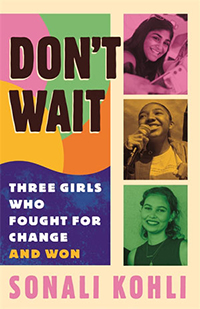
    Don't Wait

    Don’t Wait: Three Girls Who Fought for Change and Won

    “Kahlila explained that she wanted school to be a safe and stable place for her and for kids like her. That’s what drove her to this work, and police don’t make her feel safe or stable. They represent a justice system that jailed both her biological parents and that assumes the worst in her. Her voice was polite, formal, but strong. ‘Don’t wait another week, don’t wait another month,’ she told them. ‘We as Black youth need action now. Stop pushing off our needs as if we’re not a priority to you. As school board members, your number one priority is safety, but school police don’t make students feel safe.’”
    —Sonali Kohli


    The-End-of-Love

    The End of Love: Racism, Sexism, and the Death of Romance

    “[W]hen men began to walk away from the Romantic Ideal, they did so under the shelter of a new ideal, one that I am calling the Pornographic Ideal. Rather than being at odds with romance, the Pornographic Ideal has been its wingman. It has advised men that hot and sweet ‘good girls’ are still worth marrying. But women who are considered too sexually available, dark-skinned, fat, or low-class—attributes attached to insufficient whiteness—are deserving of the relational debasement articulated by Capellanus, a form of mistreatment I call ‘w/horification.’”
    —Sabrina Strings


    Kindred Gift Edition

    Kindred

    “I was back at home—in my own house, in my own time. But I was still caught somehow, joined to the wall as though my arm were growing out of it—or growing into it. From the elbow to the ends of the fingers, my left arm had become a part of the wall. I looked at the spot where flesh joined with plaster, stared at it uncomprehending. It was the exact spot Rufus’s fingers had grasped. I pulled my arm toward me, pulled hard.”
    —Octavia E. Butler


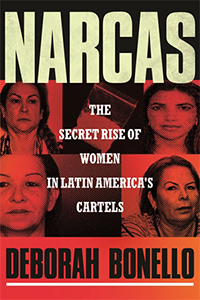
    Narcas

    Narcas: The Secret Rise of Women in Latin America’s Cartels

    “[T]o view their role as a simple reflection of necessity is to rob women of their agency, reducing them to mere pawns in a man’s game. The patriarchy of the cartels seems very real, but to assume women don’t have a capacity for violence or a thirst for power and status is just another narrow gender stereotype that grossly misunderstands and underestimates women and their role in the social order.”
    —Deborah Bonello 


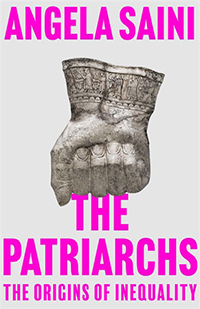
    The Patriarchs

    The Patriarchs: The Origins of Inequality

    “The word we use now to describe women’s oppression—‘patriarchy’—has become devastatingly monolithic, drawing in all the ways in which women and girls around the world are abused and treated unfairly, from domestic violence and rape to the gender pay gap and moral double standards. Taken together, the sheer scale and breadth of it appear out of our control. Patriarchy begins to look like one vast conspiracy stretching all the way back into deep time. Something terrible must have happened in our forgotten past to bring us to where we are now.”
    —Angela Saini


    The Seven Necessary Sins for Women and Girls

    The Seven Necessary Sins for Women and Girls

    “A feminism that must respect ‘culture’ and ‘religion’ is a feminism that is shackled to respecting two basic pillars of patriarchy, pillars that were erected to keep women, girls, nonbinary and queer people in our ‘place,’ which is, of course, subservient to heterosexual men. We need a feminism that is robust, aggressive, and unapologetic; a feminism that defies, disobeys, and disrupts that patriarchy, not one that collaborates with, coddles, and complies with it.”
    —Mona Eltahawy 


    School Moms

    School Moms: Parent Activism, Partisan Politics, and the Battle for Public Education

    “I salute these ‘school moms’—a term that I intend as wholly complimentary and includes all highly active school parents—bring serious professional skills, hours of labor, and care to the tasks they take on. They have always been around, breezing down school hallways or sitting at a checkout desk in the library to help out. But in this new environment, their tasks have shifted. Parent involvement is no longer only about organizing the back-to-school picnic and the teacher appreciation breakfast or keeping track of orders for the wrapping paper fundraiser. Now it also includes tracking school board agendas, organizing meeting turnouts, reviewing proposed state legislation, creating Facebook pages where parents first spread the word about conflict in the schools and building—and then turn those Facebook groups into bona fide organizations with their own websites and missions.”
    —Laura Pappano 


    Touched Out

    Touched Out: Motherhood, Misogyny, Consent, and Control

    “The #MeToo movement brought a steady stream of testimony by women who had been harassed, violated, and assaulted. It felt like a watershed moment. But even in that climate, mothers I knew still spoke of feeling “touched out” as though it were par for the course. I began to wonder about the connection between how women were feeling in motherhood and the larger culture of assault in which we had all grown up. My aversion to my children’s soft hands felt like an indication of a deep unresolvedness in my body.”
    —Amanda Montei

    Women


    About the Author 

    Christian Coleman is the digital marketing manager at Beacon Press and editor of Beacon Broadside. Before joining Beacon, he worked in writing, copy editing, and marketing positions at Sustainable Silicon Valley and Trikone. He graduated from Boston College and the Clarion Science Fiction & Fantasy Writers’ Workshop. Follow him on Twitter at @coleman_II and on Bluesky at @colemanthe2nd.bsky.social.

  • By Frederick S. Lane

    IVF

    Image credit: http://www.cdc.gov

    For millennia, childless couples were told that their nurseries were empty because of “God's will,” or that it was “all in God’s plan.” Similarly, empty condolences were offered when infants or children died of preventable diseases, unsanitary conditions, unhealthy foods, or foreseeable negligence.

    Over the past couple of centuries, we’ve made significant progress in lessening the cruelly capricious nature of “God's will,” particularly with respect to infectious diseases. In 1796, for instance, English physician Edward Jenner developed a vaccine for smallpox, a particularly vicious infection estimated to have killed 300 million people in the twentieth century alone. Thanks to Jenner’s discovery and a worldwide consensus sadly under attack right now, the World Health Organization declared that smallpox had been fully eradicated in 1980. Similarly significant progress has been made on other viral diseases that have plagued humanity, including polio, measles, rubella, tetanus, and so on.

    At roughly the same time that the battle against smallpox was coming to a close, scientists announced a remarkable breakthrough for childless couples. After decades of research, two British doctors, Patrick Steptoe and Robert Edwards, successfully combined a human egg and sperm in a Petri dish in their lab, a process they described as “in vitro fertilization” (IVF). They implanted a fertilized egg in the womb of a patient named Lesley Brown, and nine months later, on July 25, 1978, Louise Joy Brown, the world’s first “test tube” baby, was born.

    It would be a gross understatement to say that IVF has been a popular advance in medical care. In February 2024, CNN reported that roughly 2% of all children born in the US get their start in a glass container. That translates into more than 8 million IVF babies since Louise Brown was born nearly forty-six years ago.

    CNN’s decision in February to write about the popularity of IVF was no accident. Like a lot of news outlets, CNN’s interest was sparked by a decision issued by the Alabama Supreme Court on February 16, 2024.

    The question before the Court was whether an embryo stored in a cryogenic nursery at an IVF facility qualified as a “child” for the purposes of a claim under Alabama’s Wrongful Death of a Minor Act (first adopted in 1872). The plaintiffs had sued over the destruction of several embryos that allegedly resulted from the facility’s negligence: a door to the cryogenic nursery was left open, an unauthorized person walked in, picked up several embryos, and then promptly dropped them due to the freezing temperature of the containers. A trial court dismissed the case, and the plaintiffs appealed.

    The opinion issued by the Court is easily one of the most theocratic judicial decisions in recent memory. The author, Associate Justice Jay Mitchell, begins his analysis of the WDMA with an unequivocal declaration of conservative Christian belief:

    All parties to these cases, like all members of this Court, agree that an unborn child is a genetically unique human being whose life begins at fertilization and ends at death. The parties further agree that an unborn child usually qualifies as a “human life,” “human being,” or “person,” as those words are used in ordinary conversation and in the text of Alabama’s wrongful-death statutes. That is true, as everyone acknowledges, throughout all stages of an unborn child’s development, regardless of viability.

    That is a fairly stunning and profoundly unconstitutional proclamation by a state supreme court. Yes, the WDMA was passed by the state legislature, and it was interpreted by an elected state court, but a majority of a state’s population, even in a predominantly conservative Christian state like Alabama, is prohibited by the US Constitution from imposing its religious beliefs on everyone in that state. There are, of course, any number of people who do not believe that a six-day-old frozen embryo is a “child” as that term is generally used. The world’s major religions, all of which are represented in the United States and in Alabama, have a range of beliefs regarding the significance of conception (and the appropriateness of abortion). Few are as absolutist on that issue as the white evangelical Christians who dominate the Alabama legislature and that state’s highest court.

    But with an uncompromising Christian worldview as its starting place, it comes as no great surprise that the Court concluded that “the phrase ‘minor child’ means the same thing in the Wrongful Death of a Minor Act as it does in everyday parlance: ‘an unborn or recently born’ individual member of the human species, from fertilization until the age of majority.” The Court also found that given the text of the WDMA, there was no reason to distinguish between embryos in utero and those stored in vitro. Plaintiffs can now pursue their claim for wrongful death.

    Whatever joy Christian nationalists may have taken from the Court’s opinion, however, was swiftly tempered by harsh political reality. Ever since the US Supreme Court opened the floodgates to misogynistic state action by reversing Roe v. Wade in June 2022, the political cost for Republicans has been steep. Virtually every pro-choice initiative on the ballot has passed, even in solidly red states like Kansas and Ohio. When three out of the four IVF facilities in Alabama promptly announced that they were shutting down in the wake of the Court’s decision, Republicans in Alabama (and beyond) quickly realized that they had taken a bad situation and made it markedly worse. A national poll released at the beginning of March 2024 underscored the potential damage: 86% of Americans believe that IVF should be legal. Given our polarized society and the relentless culture battles of the last several decades, it is exceedingly rare to find any issue on which 86% of Americans agree.

    Hoping to staunch the looming political wounds, the Alabama state legislature quickly passed a law purporting to provide civil and criminal protection for facilities that provide IVF services. However, at least one facility has not restarted its program, arguing that the new law is not sufficiently protective. Some legal experts also question whether the new law would survive a court challenge, since it does not address the core finding of “personhood” for embryos that exposed IVF facilities to liability in the first place.

    The speed with which the Alabama legislature moved to fix the IVF debacle offers a clear illustration of the bind in which Christian nationalists find themselves. The crusade to reshape the US Supreme Court that I wrote about in The Court and the Cross has largely succeeded (thanks in no small part to one of the nation’s least virtuous presidents); religious activists have little reason to fear a vigorous enforcement of the Establishment Clause against even the most overtly religiously-inspired legislation. But so long as we remain a nominally democratic nation, the dominionist project can be stymied by outraged voters who enjoy the benefits offered by scientific progress.

    Unfortunately, for aspiring autocrats and an inherently autocratic movement like Christian nationalism, voting is seen more and more as a “bug” than a feature of a functioning, multi-ethnic society. If “the will of the voters” is stymying God’s plan, they argue, then it is voters (and voting) that should yield. This is a political and social battle that has been brewing for half-century, one that is at the core of the ongoing national election. Last voter out, please leave the Enlightenment on.


    About the Author 

    Frederick S. Lane is an author, attorney, educational consultant, and lecturer based in Brooklyn, NY. He is a nationally-recognized expert in the areas of cybersafety, digital misconduct, personal privacy, and other topics at the intersection of law, technology, and society. Lane has appeared on The Daily Show with Jon Stewart, CNN, NBC, ABC, CBS, the BBC, and MSNBC. He has written eight books, including Cybertraps for Educators. Find him online at FrederickLane.com and on Twitter (@fsl3).
  • By Jonathan Rosenblum

    Starbucks entrance

    Image credit: Noirescent | Flickr

    This article appeared originally in The Nation.

    Three years of rank-and-file Starbucks worker organizing has produced a historic union breakthrough: a commitment by the implacably anti-union company to bargain a national contract for 10,000 workers and negotiate a process for additional workers to organize. Remarkably, though, this victory came about in part because of a serendipitous boost from the Palestine justice movement. It’s proof of the power—and indeed, necessity—of international working-class solidarity in taking on today’s leading fights against the giants of capitalism.

    Starbucks workers dragged the concessions out of corporate executives through their tenacity and resilience. They beat back intense union-busting, won union representation elections at 392 stores in 43 states, and waged dozens of creative strikes, from single-store walkouts to national actions.

    In late February—just days after announcing that workers at another 21 stores had petitioned for union elections—members of Workers United announced that the union had reached a “foundational framework” with the company on national contract bargaining and “a fair process for workers to organize.”

    Starbucks executives agreed for the first time to a single national bargaining table for unionized baristas. The company also agreed to provide to the unionized workers the pay hikes and credit card tips it had given to workers at the non-unionized stores back in May 2022.

    Negotiations also will commence over organizing rights at the company’s other US stores. Until now Starbucks has pursued a scorched-earth union-busting policy: firing workers, retaliating against others by changing schedules and other work rules, harassing and punishing pro-union baristas, and shutting down unionized stores. The National Labor Relations Board has charged the company with violating federal labor law in at least 120 separate instances. Moving forward, true organizing rights will be critical to building worker power, as the union footprint at Starbucks—impressive as those 392 victories may be—represents a mere 4 percent of the 9,645 US stores that company runs.

    “We’re aware that this is only a first step—and so our feeling is one of jubilatory anticipation,” said Melissa Lee-Litowitz, a barista and Workers United organizer in Glenview, Ill.

    To appreciate how workers got to this point, one must recognize the role of international solidarity. The mainstream and left press have almost entirely elided this aspect of the win. That is unfortunate, because there are important lessons for working-class internationalism embedded in the Starbucks organizing experience.

    Last summer and fall, Starbucks workers were locked in a seemingly unending standoff with the company. Workers were petitioning for elections, but at a slower rate. The anti-union campaign was taking a toll, with firings and harassment of pro-union workers and with hundreds of unfair labor practice cases filed with the National Labor Relations Board or lingering in the courts.

    On October 7, Hamas broke out of Gaza to attack nearby Israeli military posts and communities, killing 1,139 Israelis and foreign nationals, most of them civilians, and taking about 250 hostages back to Gaza. The Israeli military quickly launched a brutal counterassault on Gaza, which has already resulted in more than 30,000 deaths—most of them women and children. In the United States, Starbucks Workers United members joined the growing street protests calling for a cease-fire and an end to the Israeli occupation of Palestine. As the widespread Israeli air strikes on Gaza immediately after October 7 demonstrated that the military offensive was going far beyond self-defense or hostage-rescuing, union members spoke out publicly in support of Palestine. On October 10, the union’s account on X, formerly known as Twitter, posted a simple “Solidarity with Palestine” message. It quote-tweeted a picture of a Palestinian bulldozer knocking down part of the concrete-and-barbed-wire wall that Israel built to contain the 2.2 million residents of Gaza in an open-air prison.

    The union deleted the message within an hour, but not before it sent Starbucks executives into a lather—and lured them into what became a political trap. The company issued a statement denouncing Workers United, falsely claiming that the union tweet showed “support for violence perpetrated by Hamas” and alleging that workers’ pro-Palestinian statements would harm the company’s bottom line. Starbucks denounced Hamas yet failed to call out the disproportionate Israeli violence, the Israeli targeting of civilians, or the ongoing occupation. The workers fired back with their own union statement, condemning the company “for shamefully using this devastating humanitarian crisis to make false statements against our union and to vilify us.” Then, in line with their ongoing scorched-earth strategy against the union, Starbucks sued Workers United for copyright infringement for using the company’s name in the union’s social media.

    This newest arena of struggle between the Starbucks workers and bosses might have lingered on like the rest of the litigious war but for the simple fact that Starbucks is much more than a US company, and because social media today has instantaneous global reach. Starbucks has operations in 82 other countries around the globe. Its customers and investors—in particular in the Middle East and Asia, where sentiment is overwhelmingly pro-Palestinian—were not pleased that the company was providing cover for the Israeli state and its defenders in the US political establishment.

    US brands across the board have taken a hit overseas as a result of the Israeli war on Gaza and the US government’s unswerving support for the Israeli brutalities. But Starbucks chose in response to the workers’ advocacy for Palestine to enter the geopolitical arena with vigorous declarations, making its overseas stores especially attractive targets for protests and boycotts. The foreign actions were amplified by boycott calls from social media activists in the US.

    Asian financial advisers recommended that investors dump their stocks in the company operating Starbucks franchises in Malaysia after they found “at least a 30 per cent fall in foot traffic, as a result of the ongoing boycott of Starbucks Coffee due to the Israel-Hamas conflict.”

    In OmanJordan, Morocco, and other Arab countries, activists organized boycotts of Starbucks and other US brands. “Some campaigners have singled out Starbucks for suing its workers’ union over a post on the Israel-Hamas conflict,” Reuters reported.

    In Turkey, where citizens organized sit-ins at Starbucks stores in solidarity with the Palestinians, the state-run railway system ordered its food and beverage contractor to remove Starbucks products from all dining cars. The state railway chairman pointed explicitly to the Starbucks Workers United struggle in announcing his decision. “Our [state railway] company does not have a contract with the coffee producer that has been accused of mistreating workers for criticizing Israel’s occupation and the suffering of our Palestinian brethren. We have officially instructed our contractor to provide passengers with alternative products instead of those from the mentioned coffee producer.”

    On January 30, Starbucks CEO Laxman Narasimhan reported lower-than-expected earnings to investors and admitted that the pro-Palestinian boycotts and protests abroad had cut into the company’s profits, both domestically and overseas.

    “We saw a negative impact to our business in the Middle East,” Narasimhan said. “Events in the Middle East also had an impact in the US, driven by misperceptions about our position.” That’s about as close as one will get to an admission that executives, by reacting with such hostility to a simple “Solidarity with Palestine” Workers United tweet, had made a costly political blunder, damaging company profits.

    While Narasimhan was reporting to investors, he also was working damage control, directing Starbucks lawyers to settle the copyright infringement lawsuit and the union’s countersuit.

    In a February 28 call announcing the “foundational framework” agreement to union members, Workers United leaders reported that the company had requested mediation talks to settle the lawsuits. It was out of these talks that the historic union organizing and bargaining breakthrough agreement was reached.

    The international solidarity movement hasn’t yet stopped the Israeli carnage in Palestine, yet it can claim an important role in the breakthrough win for Starbucks workers. The global movement’s contribution, added on top of the workers’ persistent organizing and strike activity, helped force the “foundational framework” concession out of the global giant. It’s living proof of the power of international solidarity. The rank-and-file Starbucks workers who in October insisted on solidarity with Palestine may not have anticipated at the time how their stand would play out. Their advocacy for Palestine went against the advice that many labor organizers would have given: Stick to workplace issues. But in this case the Starbucks workers’ class instincts were spot-on. These grassroots, social-justice union sensibilities will be essential to carrying forward the next stage of the battle with Starbucks.


    About the Author 

    Jonathan Rosenblum is the author of Beyond $15: Immigrant Workers, Faith Activists, and the Revival of the Labor Movement (Beacon Press, 2017) and a member of the National Writers Union.

  • By Shenequa Golding

    Shenequa Golding and A Black Girl in the Middle

    Author photo: Uli Seit. Cover design: Louis Roe

    I get why so many Black women are divorcing themselves from the “strong Black woman” trope. The world measures our strength by how much deliberate mistreatment and neglect we accept. We’re expected to pour ourselves into others so much that it’s positioned as an “honor” to die empty. Black women deserve so much more than to live as everyone else's mule and then go to our graves depleted.

    But for far too long, I’ve been weak; equipped with a spine made of boiled spaghetti, I was unable to speak up for myself. Now, I relish the opportunity to build muscle.  Maybe this is an IOU to my younger self. Who knows?

    Wait, let me back up for a second. Hi, how are you? My name’s Shenequa. I kind of went all in without warming everyone up first. Sorry about that. It’s just I get so excited thinking about who this new version of me is, y’know? I’m happy I made it to this side because there was no proof it would happen. Reader, I’ve taken copious amounts of Ls (lowercase Ls, uppercase Ls, Ls in Times New Roman font) just to get here and I’m proud I’m here in one piece.

    My twenties were a wild ride. They were a combination of maxed-out credit cards, an impressive digestive system, and what I assumed was a haute-couture smoky eye, which in reality was just poorly-placed black eyeshadow. You can learn more about all the shenanigans that took place during that time in my new book, A Black Girl in the Middle: Essays on (Allegedly) Figuring It All Out. The best way to describe my book is it toggles between “Yeah, I used to do this.” and “Girl, you deadass right now?”

    Looking at everything from where I’m at now, you couldn’t pay me to go back to my twenties or even the early part of my thirties, but as a woman closing out this third decade, I’m taking stock of everything and creating my constitution. This living document will act as a North Star and help ground me when my life quakes. This might be a fool’s errand, as I’m using my younger self to navigate a new, older version of me, but I feel good about the historical data I’ve acquired.

    So yeah. These are just a few principles I’m now abiding by.

    It’s More Than Yes or No

    As an adult, I have the freedom to do what I want. Growing up, this freedom was all I ever desired. I was raised by a teen mom who, for the most part, believed the word “no” was an effective parenting method, so as I inched closer and closer to twenty-one, all I lusted after was my resounding yes! And for a while, that’s all the thought I put into making decisions. Do I want to do this, yes or no?

    Now, it’s not so black and white. Instead, I ask myself, how will this yes or no affect me? How long will this decision stay with me? What blessings or consequences can come from this? Am I emotionally prepared to handle the results (expected or otherwise) of this choice? I don’t have a spare life like some folks have a spare tire. I’ve learned you have to work hard just to have a decent life, while it takes very little effort or none at all to ruin your life. There’s no live studio audience that claps for you when you’ve made the right decision or a buzzer that goes off when you’ve taken your first step in the wrong direction, so with that newfound insight, it’s got to be more than a yes or no.

    Do I employ this thought process regarding what brunch spot I’m going to? Of course not, but is this something I factor in more as an adult, yes.

    Common Ground

    An underrated sign of weakness is when someone doesn’t look for, value, or stretch themselves to find common ground with others. Insistence on always getting their way is fertile territory for control issues and an inability to harmoniously disagree. Reasonableness, however, is the opposite, and that’s what I now strive for.

    What’s the common ground and how can we both get there safely with our dignity and integrity intact? I’ve been the victim of controlling bosses, manipulative “friends,” and ex-boyfriends, and let me tell you, it’s not a vibe. I’ve also foolishly internalized their behavior as the only way to demonstrate strength, becoming overbearing in situations that didn’t call for any of the energy I brought. Finding common ground and/or being reasonable allows for collaboration and it sets a giving tone that’s missing from so many relationships.

    Do not conflate this to mean I’m seeking common ground with racists, sexists, or anyone who thinks race, gender, or ethnicity dictate one’s value. I will never willingly occupy space with such individuals. But if there’s space for me to bend a little, if there’s an opportunity for me to give of myself for the betterment of the relationship or project, I’m not opposed to that. This “me first” society and the attire you’re encouraged to wear doesn’t protect you. It turns you into the very thing you hate.

    Wisdom > Intellect 

    Walk with me for a spell, because on the surface this may sound fake deep. 

    I’m a woman who values intelligence, and for a long time, becoming intellectually sound was a top priority, and to a certain degree, it still is, but now I’m more inclined toward wisdom. So, you might read this and think: what’s the difference? Intellect has a time limit. What may be the smart thing to do today, may not be the smart thing to do tomorrow. Wisdom, however, is infinite.

    This life comes down to making the best decisions you can with what information you have access to at the moment and, unfortunately, we don’t always do our best. So, now, instead of asking myself “What’s the smart thing to do?” I’m now going to ask “What’s the wise thing to do?” Maybe it’s not making any decision at the moment, or going home and sleeping on it. Maybe the wise thing to do is take a step back and wait for things to play out a bit more. This question, I hope, will allow me to dig deeper and find richer answers. This question also requires that I employ a bit of discernment.

    I don’t think this is a surefire way to avoid all of life’s pains, but I do believe it’ll help minimize them, and honestly, a win is a win!

    Mildness 

    As an insecure young woman, the best way I believed to assert myself was to have an edge in my voice. I wasn’t going to ever let anyone “try me” or “play me” again, and as a result, a hardness formed inside of me, and an inability to relax and breathe easily engulfed me. I soon realized this was no way to live. I could survive but I wouldn’t be able to live.

    So, recently, I’ve tried to adopt mildness, which to me evokes calmness in demeanor, tone, and language. Harshness begets shame and embarrassment and can sometimes encompass an undertone of “I’m right and you’re wrong.” A harsh tongue can cut down a thousand-year-old tree. Mildness is the water that keeps the tree growing.

    But mildness is a practice that I believe will bear ripe fruit. How you conduct yourself and speak to people matters. I’ve been spoken to and treated harshly and it's made me question my self-worth. Why would I intentionally do that to someone else? So yeah, I want to speak to people in a respectful and encouraging way and I think mildness is the best way to achieve that.

    Self-Control 

    In the intro to this essay, I detailed my weaknesses, and throughout the body of it, I discuss how I toggled from one extreme to the next. I went from being a punk to attempting to preemptively punking others, and honestly, none of that worked. Many building blocks were missing from my character, but none greater than self-control. 

    It’s my job to control my tongue, my conduct, and my reactions. It’s my job to say no to something now so I can warmly say yes to what’s important in the future. My lack of self-control has caused everything from financial problems (I don’t always need the newest $30 red lipstick from Sephora) to suffering through the after-effects of my time with Redacted.

    Wait, who’s Redacted? 

    Chapter 3 in my book, boo. Tap in.

    Had I exercised more self-control, which also encompasses patience, I could’ve saved myself time and tears. Had I employed more self-control, I would’ve responded properly to the Aries who crushed me with his hurtful comments instead of reacting out of justified yet untamed anger. Self-control makes all the difference. It allows you to keep your integrity, grace, and dignity intact no matter the offense or circumstance. There are no hacks in life, but self-control is as close to one as any of us will ever have. I severely lacked it in the past and suffered the consequences. I’m done with learning those lessons.

    Like I’ve said, reader, I’ve taken copious amounts of Ls to get to this point in my life, and what I’ve learned is that the best way to live is to be the best me I can be. I can’t take precautions on someone else’s behalf. I can only control who I am, what I do, and how I move in this world.

    This is a living and breathing document. I may move some things around and may make some edits here and there, but for the most part, this is who I am, Shenequa, 2.0.

    If you’d like to meet the Alpha version of Shenequa and hear about how all those Ls happen, you can say wassup to her HERE.


    About the Author 

    Shenequa Golding is a writer and an editor whose work focuses on race, gender, popular culture, and entertainment. A native New Yorker, her work, both on-camera and in print, has appeared in prominent Black publications, such as Vibe and Essence, as well as mainstream outlets, including Complex, the Associated Press, BBC, and Vanity Fair. Her essay, “Maintaining Professionalism in The Age of Black Death is . . . A Lot,” published on Medium in May 2020, has received 990K views to date. When not writing, she can be found watching The Golden Girls reruns, listening to her favorite true crime podcast, or geeking out whenever someone compliments her nails knowing they’re press-ons from Walgreens. Connect with her at shenequagolding.com and follow her on Twitter (@GoldingGirl617) and Instagram (@goldinggirl617).

  • By Nancy Rubin Stuart

    Mercy Otis Warren statue and The Muse of the Revolution

    Photo credit of Mercy Otis Warren statue: Nancy Rubin Stuart

    Who can predict the afterlife of a book? Marketing committees, like the one at Beacon Press, try to assess that before deciding to buy a manuscript. In contrast, authors often write books because we are excited about our subjects and want to share them with others. Naturally, we want to attract a wide readership, but given the large number of books published each year, we rarely expect our books to remain popular beyond the first few years of publication. 

    In 2008, when Beacon Press published The Muse of the Revolution: The Secret Pen of Mercy Otis Warren and the Founding of a Nation, the book had favorable reviews and attracted many readers. In 2009, it received the 1699 Winslow House Book Award, and that year Beacon Press published it in paperback. As a women’s historian, I was thrilled because Mercy Otis Warren (1728-1814) was not well known.

    The wife of patriot James Warren of Plymouth and the mother of five sons, Mercy was one of the nearly forgotten Founding Mothers of the Revolution. Between the 1760s and the early 1770s, she and James hosted secret Sons of Liberty meetings in their Plymouth home. Dutifully, Mercy sat in the chimney corner—a colonial woman’s traditional place—as the men conversed. The Warrens’ friend, John Adams, struck by Mercy’s learning and intelligence, not only welcomed her views but also urged her to write. Through his interest and insistence, Mercy penned anti-British plays which were widely published in pamphlets. Years later, after the 1788 introduction of the US Constitution, she advocated for a Bill of Rights, and finally in 1805, published her three-volume History of the Rise, Progress, and Termination of the American Revolution

    While researching the book at the Massachusetts Historical Society, I was directed to the Pilgrim Hall Museum Library in Plymouth, where I read a typescript of Mercy’s Revolutionary- era letters and discovered her “voice.” Oddly enough, I soon realized that the town of Plymouth, where she lived and wrote, had no publicly displayed information about her. Yet the Warrens’ former home, the eighteenth-century Winslow-Warren House, still stood downtown and housed several businesses.

    In the months before publication of the book, I also learned that residents of nearby Cape Cod were more familiar with Mercy than those in Plymouth. Not only was she born and grew up in West Barnstable, but by 2001, a citizens’ campaign had raised funds for her statue which stands in front of the Barnstable Court House opposite one of her brother, James Otis, Jr, the “spark that lit the Revolution.” A year later, the annual Mercy Otis Warren Award was established to honor a woman who had contributed outstanding volunteer service to the community. Consequently, my book received invitations for talks and a warm welcome on the Cape.  

    Over time, interest in the book flagged, and I wrote other books with Beacon Press. By 2017, my husband and I decided to downsize and we moved to Plymouth. Still nothing, I realized with dismay once I refamiliarized myself with the town, had been done to memorialize Mercy there.

    On a cold Saturday morning in January 2024, Susan St. Marie, a history fan and Plymouth friend, invited me to join her and two historical interpreters who wanted to honor Mercy’s accomplishments. During that meeting, we created a promotional committee to promote her in Plymouth. On Monday, February 5, a newspaper reporter wrote an article in the online Plymouth Independent about our plans. We then received an outpouring of requests from individuals, the tourist bureau, historical and civic organizations, and museums eager to offer support for our project. Apparently, we had touched a nerve with a previously silent group of people who recognized the importance of honoring Plymouth’s most important Revolutionary-era women.

    On March 1, our committee formed The Mercy Otis Warren Society LLC, an educational organization created to memorialize her through historical presentations, tourist guides, walks, an informational kiosk, plaque and statue, digital information, printed brochures, book sales (including mine), and other items. We are now waiting for approval so that the Society can become a nonprofit organization.

    In honor of Women’s History Month, the Mercy Otis Warren Society’s promotional arm, Celebrate Mercy Otis Warren, will host a free debut presentation on March 27 at 7:00 PM at the Plymouth Public Library. After our introduction, the audience will watch an historical enactment of Mrs. Warren’s argument with her mentor, John Adams, played by interpreters Michele Gabrielson and Michael LePage. 

    “Books are the mirrors of the soul,” Virginia Woolf once wrote. Meanwhile our committee continues to wonder if the soul of Mercy Otis Warren reached out to help me write The Muse of the Revolution. Then, realizing books often lack an afterlife, she kept reaching out to other members of our organization to make sure she would be remembered in Plymouth.


    About the Author 

    Nancy Rubin Stuart is an award-winning author and journalist whose eight nonfiction books focus upon women and social history. Her most recently published works include Defiant BridesThe Untold Story of Two Revolutionary-Era Women and the Radical Men They MarriedThe Muse of the RevolutionThe Secret Pen of Mercy Otis Warren and the Founding of a Nation, and Poor Richard’s Women: Deborah Read Franklin and the Other Women Behind the Founding Father. A former journalist, Stuart has written for the New York TimesHuffington Post, the New England Quarterly, and national magazines. She serves as executive director of the Cape Cod Writers Center. Connect with her at www.nancyrubinstuart.com.

  • By Lauren Michele Jackson

    Performer Jennifer Kidwell and producer Joe Scanlan answering questions following their performance of Donelle Woolford: Dick's Last Stand, at MOCAD, Detroit, 14 February 2014. Photo credit: Colmandavid

    Performer Jennifer Kidwell and producer Joe Scanlan answering questions following their performance of Donelle Woolford: Dick's Last Stand, at MOCAD, Detroit, 14 February 2014. Photo credit: Colmandavid

    Editor’s note: To answer your question, yes, the book is real. The book Issa Rae’s character, Sintara Golden, is holding in American Fiction, Cord Jefferson’s film adaptation of Percival Everett’s novel, Erasure, is Lauren Michele Jackson’s White Negroes: When Cornrows Were in Vogue . . . and Other Thoughts on Cultural Appropriation. The scene in question is when Jeffrey Wright’s character, Thelonious “Monk” Ellison, argues with her about authenticity in Black representation in literature and giving the market what it wants, stereotypes be damned. A very à propos choice. This excerpt from Jackson’s book is emblematic of not just the art world but of other creative industries, including—ahem!—publishing.

    ***

    The art world, according to itself, does not have a race problem. The art world does not allow itself to have a race problem. Were any one entity within the network of museums, galleries, shows, curators, schools, artists, press, and millions upon hundreds of millions of dollars that make up capital A Art to allow for race as a topic of debate, the whole enterprise might collapse into so much dust. For the art world to admit it has a race problem, it would have to account for its centuries-long history in which peoples of color have been regularly pushed from the frame of what constitutes artistic enterprise; meanwhile, their creations have long inspired European and white American artists who deviate from the norm. For the art world to admit it has a race problem, it would have to consider how that history stretches into the present, where black aesthetics prove innovative, so long as they are not attached to black artists. For the art world to admit it has a race problem, it will have to admit the art world has an art problem.

    Since 1932, the exalted Whitney Museum of American Art in Manhattan has hosted exhibitions boasting whom it considers the most cutting-edge artists on offer. The Whitney Biennial, as it’s now called, at the apex of everything the art world loves about itself, makes a reliable “crib sheet for the market trends of contemporary art in the United States,” as the professor and poet Eunsong Kim and the artist Maya Isabella Mackrandilal put it in the New Inquiry. The Biennial is a shortcut to the heart of the art world and therefore to the art world’s race problem. Made especially accessible to those from the outside, the Biennial is one of the few occasions to make broad, sweeping, but fairly accurate observations about art, period. After all, if the exhibition claims to be the best and most contemporary of contemporary American work on offer, it begins to look pretty suspect if that yield suffers the same fallacies in 1955 as in 2019. (That is, unless one were to suggest that America is the same America in 2019 as in 1955—which might not be so untrue.)

    And every two years, with each passing Biennial, the event looks more suspicious as critics notice the way the Whitney speaks out of both sides of its mouth. For example, 2014 promised a show that would “suggest the profoundly diverse and hybrid cultural identity of America today.” What its curators, Stuart Comer, Anthony Elms, and Michelle Grabner— all white—failed to mention was the scarcity of artists of color with work on display, a trait shared with almost all other Biennials prior (exception: the panned 1992 show, in which white male artists were the minority). The statement sounds nice but signifies little. “The 2014 Whitney Biennial is the whitest Biennial since 1993,” Kim and Mackrandilal helpfully translate. “Taking a cue from the corporate whitewashing of network television, high art embraces white supremacy under the rhetoric of multicultural necessity and diversity.”

    The 2014 exhibition showed its ass in an array of glitches that went beyond clumsy copy. There’s the portrait of Barack Obama by photographer Dawoud Bey, displayed conspicuously on the fourth floor next to a lengthy note by Grabner. A painter and professor, in her statement Grabner identifies herself as a pedagogue in her curatorial practice as well, who aims “to create a democratic survey” and “curriculum” for artists and viewers. Adjacent to the statement, awkwardly situated above a fire alarm, the Obama portrait takes on an instructive quality. I dare you, provokes the juxtaposition, I double dog dare you to find issue here. Under his eye. If it seems unfair to delegate the work of post-racial sentiment to this image, this president, this Biennial was only working with some permissible mythology engendered by the administration from within. If America, a country enslavement founded, can elect a black man to its highest seat of power, surely no racial wound is too great to be healed.

    Such faith is required to justify the inclusion of Donelle Woolford, whose paintings were located on that same fourth floor. Donelle Woolford is not the name of an artist, nor even of a real person, but the comic avatar of artist Joe Scanlan. Scanlan, also a professor of visual arts at Princeton, is a white man. Donelle Woolford is a black woman—sort of. She is a deceit. Her black womanhood relies on how much credence one lends to a name that denotes a concept, though I imagine sometimes she appears quite autonomous.

    About twenty years ago, Donelle Woolford appeared to Scanlan in his studio amid his collages. “I liked them but they seemed like they would be more interesting if someone else made them, someone who could better exploit their historical and cultural references,” Scanlan said in an interview with BOMB magazine. “So I studied the collages for a while and let them tell me who their author should be.” The collages, like the muses, sent Scanlan Woolford. Her name was “appropriated,” in his own words, “from a professional football player I admired” (a former Chicago Bears cornerback, Donnelle—two n’s—Woolford).

    The story of Donelle varies: She was born in 1954 Detroit, one of three children born to a housewife mother and union pipefitter father. She was born in 1977 Detroit to middle-class parents—a lawyer father, her mother working as a healer. She was born in 1980 Detroit to middle-class parents—a lawyer father, a healer mother. The 2014 Biennial program indicates Donelle was “born 1977 in Conyers, GA,” and she is listed like any other artist in the exhibition, sans mention of Scanlan. Included this way, Donelle was one of nine black artists out of 103 artists in total, or 11 percent of the black artists chosen for the Biennial. “Joe was the very first artist I asked to visit when I started on my studio-visit process for the W.B.,” Grabner told Observer in advance of the show. “I invited both Joe and Donelle. Joe turned my invitation down, but Donelle agreed to participate.”

    Donelle showed two paintings at the Biennial, Joke Painting (detumescence) and Detumescence, both 2013. Both riff off a series of monochromatic joke paintings by the well-known American artist Richard Prince. With ink, paper glue, and gesso, Donelle places “her” jokes on a linen canvas. Joke Painting (detumescence) reads,

    Richard is undressing in his apartment and spies a young woman doing the same across the way. He extends his cock over to her window sill and calls out, Hey babe wanna come over? She thinks for a moment and says, Sure, I’d love to. But how will I get back?

    The joke is funny, crude, and phallocentric—a dick joke. The star of the scene, besides the proffered penis, extends the phallus further when we consider the common nickname for Richard. The foremost Dick is the very Prince whose work provides an additional underlying canvas for Donelle’s painting. But the Dick as in Richard must also be Pryor, whose comedy precedes Donelle in formative ways. And in collaboration with the Biennial, Scanlan took Donelle on tour to reenact Pryor in a forty-minute performance called Dick’s Last Stand. The performance doubles as a séance: Donelle reanimates the dead man in a routine imagined to have been excised from history in what would have been the final episode of NBC’s 1977 variety hour The Richard Pryor Show

    Dick’s Last Stand combined the spiritual and embodied aspects of the Donelle project, concurrently if not in this case side by side. It wasn’t the first time. By then Scanlan had accumulated working relationships with Namik Minter, Abigail Ramsey, and Jennifer Kidwell, three actors—all black women—who’d performed the role of Donelle at art shows and in performance pieces. (Namik Minter, a former student of Scanlan’s at Yale and the first human Donelle, withdrew from the project.) Scanlan considers Donelle a “shared commitment” between himself and the actors, like an “ensemble,” an account Kidwell reaffirms. Kidwell said she was initially turned off by the project but that Donelle “then became a personal challenge,” she told the Los Angeles Times’ Carolina A. Miranda during the Biennial. A Columbia University graduate with degrees in English and comparative literature, Kidwell in her work is interested in ambivalence, an agenda she brings to bear in acting and direction. Her Donelle is meek and awkward and Kidwell is “not interested in her being a fool.” It was her idea to reenact Pryor through Donelle. The suggestion presumably could have been vetoed by Scanlan, but its actualization indicates an influence beyond the “merely” performative. “It originated with Joe, but this is now a collaboration.” Kidwell is no dummy.

    True to Kidwell’s thesis, Donelle places everyone else in the hot seat. As a white man roaming the art world with the access of white manhood and theatrics of black womanhood, Scanlan cannot be permitted to escape censure. Yet, critiques of Scanlan that override the fact of Ramsey and Kidwell risk replicating his alleged erasure, supposing these women to be at the will of one white artist, rather than artists themselves. The assumption that these women know not or care not is too reductive (and reeks of misogynoir). Kidwell told Miranda, “People have said, ‘No, you are not a collaborator!’ And I’m like, ‘How are you telling me that I’m not doing what I’m saying I’m doing?’” That special blend of gendered racism rings familiar.

    The problem is and isn’t Donelle. The very subject of Donelle swallows a conversation to be had between and about people. “Our participation could complicate what many consider a clear example of exploitation,” Kidwell wrote in an essay published post-Whitney. “But so far it hasn’t, because Abigail and I have largely been left out of the discussion, as if we, like Donelle, do not exist.” The problem is and isn’t Donelle because Donelle does not exist. Donelle cannot talk back except through the mind and mind and body of her keepers. The problem is not in presentation—even if she were a walking, talking relic of minstrels past, because the problem of minstrelsy isn’t the shoe polish. The problem of minstrelsy is desire.

    I go back to the character’s genesis, a beginning that must be much less divine than Scanlan describes. It was just Scanlan then. Scanlan and his collages, which suddenly seemed less humdrum if not the product of his white imagination. His impulse brings him to black womanhood. He breathes black womanhood to life. He seeks black womanhood as a break from the usual; ironic, then, that his gesture replicates so many artistic gestures before and alongside his time. He’s defended his impulse in these terms, pointing to William Faulkner and Flannery O’Connor, as if those authors didn’t have their own white imaginations to contend with. Scanlan and Kidwell, so preoccupied with Donelle’s rightful existence as a fictional character, don’t contemplate the preexistent fictions needed for her to emerge in the first place. Out of all the identities in the world, Scanlan chose a black woman, a person who, if real, would be as discounted by the world as he himself is overvalued. Head, shoulders, knees, and toes above artists who happen to be black women, who struggle for a fraction of recognition from sentinels of the art world who look like him, Scanlan crouched down and plucked from them what he sees as their only worthwhile feature. Not their history, not their culture, not their community, but an identitarian claim. Scanlan played identity politics and won.


    About the Author 

    Lauren Michele Jackson teaches in the Departments of English and African American Studies at Northwestern University. Her writing about race and culture has appeared in The AtlanticThe New YorkerThe Paris ReviewEssence, the New RepublicTeen VogueRolling Stone, and New York magazine, among many other places. She lives in Chicago. Connect with her at laurjackson.com and on Twitter (@proseb4bros).

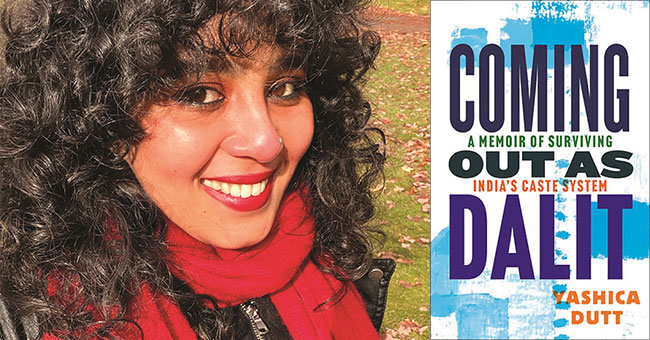
  • A Q&A with Yashica Dutt

    Yashica-Dutt-and-Coming-Out-as-Dalit

    Author photo: Yashica Dutt. Cover design: Carol Chu

    Born into a “formerly untouchable manual-scavenging family in small-town India,” Yashica Dutt was taught from a young age to not appear “Dalit looking.” Although prejudice against Dalits, who compose 25% of the population, has been illegal since 1950, caste-ism in India is alive and well. In Coming Out as Dalit: A Memoir of Surviving India’s Caste System, Dutt blends her personal history with extensive research and reporting, providing an incriminating analysis of caste’s influence in India over everything from entertainment to judicial systems and how this discrimination has carried over to US institutions.

    Published originally in India in 2019 to acclaim, the 2024 expanded edition includes two new chapters covering how the caste system traveled to the US, its history here, and the continuation of bias by South Asian communities in professional sectors. Beacon Press senior publicist Bev Rivero caught up with Dutt to chat about it.

    Bev Rivero: When researching for this book, what was something surprising that you discovered that you would like your readers to know about? 

    Yashica Dutt: The research process for the book was fairly typical. I spent a ton of time in libraries and archives, extracting material around the historical details that have gone into shaping this book. I was most surprised to learn how different those details were from the narrative of history that we have been given for decades.

    For example, we know about Gandhi’s struggle across the world, but so little is known or heard about Dr B. R. Ambedkar, who effectively liberated millions of Dalits and caste-oppressed people and ensured that we got an equal seat at the table. During my research, I discovered just how hugely influential he was in shaping South Asian history and how his legacy was effectively erased because, along with being a global statesman, he was also “lower” caste. 

    BR: It’s interesting that English as a marker of status comes up, such as when you’re working in a call center: “At the call center, caste found its way into pre-shift conversations. When I refused to disclose mine, saying that my parents were progressive and didn’t discuss these things at home, most of my colleagues assumed I was upper caste because of my English.” Do you think the legacy of English being widely regarded as a marker of upper caste background can change via society’s efforts?

    YD: I think that myth is already beginning to shatter, bit by bit. With more online access, there is a greater proliferation of not just English but American and European culture in general, which in the pre-internet era was another marker of caste and class background.

    In the decades before the internet, you could only have access to certain music, literature, cinema, and culture in general if you had the means to travel or had relatives who lived here. Most Dalit and caste-oppressed folks who have been systemically and historically disadvantaged from education and opportunities to build wealth and resources also did not have access to these markers, which were heavily gatekept. Now, with all of it available so easily online, those guardrails have come down a bit.

    More people are speaking and understanding the language through YouTube videos. But caste still has a way to evolve past these markers of progress, and I’m sure that soon there’ll be newer more secretive markers that signal one’s belonging to an upper caste/upper class group (outside of the more obvious religious ones)—a caste version of stealth wealth or quiet luxury if you will. 

    BR: You write, “What I knew for sure was that no one expected a Dalit to be bright. So it wasn’t enough for me to be bright, I had to be the ‘brightest’ to convince them, and essentially myself, that I was their equal.” Being a Dalit woman and the intersectionality of your own feminism in solidarity with Black women and other historically marginalized communities comes through in your writing. How do you see your work in conversation with other writers in this space? 

    YD: I think, as a Dalit woman writer, my work speaks to a lot of folks with marginalized identities who are forced to be at the bottom of their social order. When I moved to the US, I heard this phrase being used a lot in Black communities, on TV shows and in music, where folks were constantly talking about the need to be excellent and better than anyone else to be even considered average. Because the inherent social expectation is that you won’t measure up. It’s not an expectation from, say white folks, who don’t have to constantly prove their worth in social and professional settings. They are expected to belong to that space, expected to be good, even if they are just mediocre. Because the social structures have been erected for them to be safe, to be taken care of, to belong, and most importantly, to succeed. I have heard Black folks talk about this pressure to always be exceptional, and it resonated with me because I felt and experienced that same expectation while growing up as Dalit in India. I think this work and the work of so many other marginalized people show us how systems of oppression work in similar ways and how there is so much to learn from our unique resistance to them. 

    BR: A follow up question: Tell us more about the Dalit Panther Party and their history. What might people not know about their legacy? 

    YD: It’s incredibly interesting to learn how the legacy of the Black civil rights movement and the Black Panther Party inspired marginalized people across the world to demand their rights from an unjust, oppressive system. Dalit people in India, too, have always looked at the struggle of Black folks as a source of inspiration and solidarity. There are connections between Black and Dalit history that go long back.

    Dr. Ambedkar, who studied at Columbia in the 1910s, is known to have been moved by the Harlem Renaissance taking place blocks away from where he lived. There are letters of correspondence between him and W. E. B. Du Bois in which they discuss the shared connections between Black and Dalit struggle. Martin Luther King, Jr. famously visited India in the 60s and talked about being “introduced as an untouchable”.

    The Dalit Panther Party was built on this shared legacy in 1972 when a group of Dalit men in Maharashtra came together to create an anti-caste resistance group, which was deeply inspired by the principles of the Black Panther Party in the US. Their movement was rooted in resistance through literature, poetry, and media, along with direct action. In 2022, in a historic conference in Maharashtra, members of the Black Panther party and Dalit Panther Party came together to reflect on their shared histories and legacies.  

    BR: The connection between mental health and caste discrimination-based hardship is clearly apparent, but not widely acknowledge or discussed. Do you see this happening, particularly with efforts for a “post-caste India”? 

    YD: Caste is a systemic form of discrimination that forms the bedrock of every aspect of Indian society. People who are Dalit and caste oppressed deal with the daily burden of “lowerness” that is imposed on their identities, and struggle to be treated as equal. Moreover, a millennia-old history of this system has ensured that this discrimination runs through generations, creating intergenerational trauma and mental health struggles that have become embedded in our DNAs.

    The conversation around mental health in India is stigmatized overall, but lately, things have begun to change with more people recognizing its impact, which has led to a small but significant change in attitudes towards it. With the death of the Dalit scholar Rohith Vemula in 2016, and the countless suicides by Dalit students in prestigious Indian medical and engineering colleges, the connection between caste and mental health has come sharply into focus. Yet outside of calamitous life-ending consequences, the impact of caste on mental health is also just as easily dismissed.

    Also, let’s be real: India has never been post-caste. Despite well-meaning efforts by Dr Ambedkar and Dalit folks, the systemic inequities remain engraved in our social structures. So to assume that caste doesn’t exist in Indian or South Asian societies is willful ignorance. 


    About Yashica Dutt 

    Yashica Dutt is a journalist, an activist, an award-winning writer, and a leading feminist voice on caste. Born “in a formerly untouchable ‘lower’ caste family,” she passed as dominant caste to survive discrimination. Dutt moved to New Delhi at 17 and became one of the most widely-read culture journalists at a leading English language paper. Eventually coming out as Dalit, she introduced this expression which powerfully resonated in India. Her site, Documents of Dalit Discrimination, was among the first highly visible media spaces for caste oppressed people. Dutt’s work has been published in the New York TimesForeign Policy and the Atlantic, and she has been featured on The BBCThe Guardian, and PBS NewsHour. Dutt lives in Brooklyn, NY.