• By Christian Coleman

    Black Americans-West Coast Surfer

    Image credit: West Coast Surfer

    Remember when Janelle Monáe said Black women aren’t a monolith? Same goes for the Black diaspora, and yet the Grammys love plugging their ears and going La la la la laaaaa. This year, they did Black artists dirty yet again, snubbing them in the award for Album of the Year. Jay-Z is far from the first to call out their snubbery at the ceremony. They’ve also been called out for confining Black artist nominations in the rap/hip hop and R&B categories. Besides confirming the obvious, redlining the AOTY Award denies the fact that Black artists are multifaceted, that their appeal and cultural impact are vast. That would be like if Beacon Press published only a certain kind of book by Black writers, something the film American Fiction, based on Percival Everett’s novel Erasure, brilliantly satirizes.

    With this in mind during Black History Month, here’s a handful of books from Beacon by Black writers (and others) flexing a variety of styles, genres, and subject matter. Some are about Black artists whose mastery and widespread appeal made history. Each one is a Book of the Year!


    A Black Girl in the Middle

    A Black Girl in the Middle: Essays on (Allegedly) Figuring It All Out

    “I don’t live for Fridays, per se (Sundays are actually my favorite day of the week), but doing nothing is a hobby of mine that I employ from time to time and I’m thankful more people understand and respect it. I’m not saying I hate extroverts, but that community largely gives me gas. The older I get, the easier it is for me to identify my tribe, and when it comes to extroverts, I have to keep them at a healthy distance. This muscle was unintentionally strengthened throughout the pandemic. COVID was an extreme case that involved the deaths of more than one million Americans (and countless others globally), but the one upside for me, a self-described introvert, was that I got to stay indoors.”
    —Shenequa Golding 
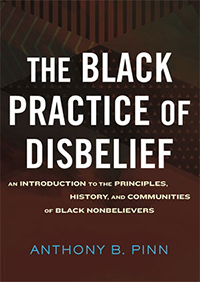
     

    The Black Practice of Disbelief

    The Black Practice of Disbelief: An Introduction to the Principles, History, and Communities of Black Nonbelievers

    “I want to overturn the assumption that only Black theism in its various forms offers life orientation. . . . [T]here is an impressive number of Black Americans who claim no particular (theistic) religious orientation—but (and here’s the kicker) they aren’t nihilistic, and they aren’t hiding away in dark corners feeding on despair. No—they are making their way through the world with community, with a philosophy of life, and in light of certain ritual practices, all of which shape their existence in relationship to others, and in the world.”
    —Anthony B. Pinn 


    The End of Love

    The End of Love: Racism, Sexism, and the Death of Romance

    “For Black women, who by virtue of their racial desecration had been placed outside the scope of the ideal of romance since the eighteenth century, a different push further hurt their hopes for long-term loving partnerships and marital relationships: the civil rights movement. As a result of this insistence on racial equality, a number of straight Black men expected to enjoy the same rights and privileges as white men. This included the right to screw around with or settle down with white and other non-Black women, opportunities that had been denied them by race science and its attendant anti-miscegenation laws.”
    —Sabrina Strings 


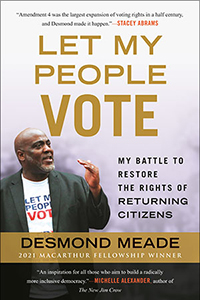
    Let My People Vote pb

    Let My People Vote: My Battle to Restore the Rights of Returning Citizens

    “We were made to feel we weren’t part of society anymore, that we were the lowest of the low. We were despised because of our addiction. We were despised because of the crimes we may have committed. What the right to vote says is that I’m somebody again. It says, simply and powerfully, I AM. The right to vote is one of many rights that need to be restored to individuals who have a previous felony conviction.”
    —Desmond Meade 


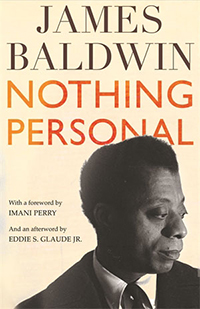
    Nothing Personal

    Nothing Personal

    “To be locked in the past means, in effect, that one has no past, since one can never assess it, or use it: and if one cannot use the past, one cannot function in the present, and so one can never be free. I take this to be, as I say, the American situation in relief, the root of our unadmitted sorrow, and the very key to our crisis.”
    —James Baldwin 


    Reclaiming Our Space

    Reclaiming Our Space: How Black Feminists Are Changing the World from the Tweets to the Streets

    “Combahee lives in the work of twenty-first-century Black feminists who bravely navigate the World Wide Web and streets around the world with a message of empowerment and liberation for Black women and girls.”
    —Feminista Jones 
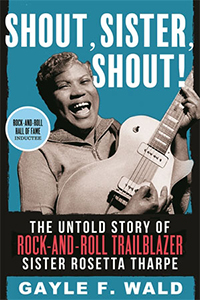
     

    Shout  Sister  Shout 2023 reissue

    Shout, Sister, Shout!: The Untold Story of Rock-and-Roll Trailblazer Sister Rosetta Tharpe

    “Ask gospel fans, especially those mature—don’t say old—enough to have seen Rosetta live, listened to her records in their heyday, or even performed with her, and the phrase inevitably comes up: She made that guitar talk. The expression praises Rosetta’s talents as an instrumentalist, and yet it also speaks metaphorically to how she played and what her playing meant to those who felt moved by her music. She made that guitar talk conveys how Rosetta transformed the guitar into an extension of her body, how she could let her instrument speak through and for her.”
    —Gayle F. Wald 


    A Surprised Queenhood in the New Black Sun

    A Surprised Queenhood in the New Black Sun: The Life & Legacy of Gwendolyn Brooks

    “It was an indelible announcement written in black and white for all to see. The first nationally published poem of Gwendolyn Brooks’s appeared in American Childhood, in October 1930, when she was only thirteen years old. Earlier, at eleven, she’d published four poems in a local neighborhood paper, the Hyde Parker, foreshadowing her brilliance. It was a brilliance that would shine through decades and across nations, bedazzling and impacting hundreds of poets and millions of audiences, in all walks of life.”
    —Angela Jackson 

     

    Treating Violence

    Treating Violence: An Emergency Room Doctor Takes On a Deadly American Epidemic

    “The sad fact is that, according to the Centers for Disease Control, homicide (assault) is the number-two cause of death for Black males ages one to nine and the number-one cause of death for Black men ages fifteen to thirty-four. This means that we are more likely to die at the hands of another person than from cancer or car accidents. A perfect circle of violence. And one I’ve committed to disrupting. I do it every day as a doctor; I do it in working with young people through Kings Against Violence Initiative (KAVI), the nonprofit organization I founded that works both to reach young people before they’ve been victims or perpetrators of violence and to support victims of violence as well as heading off retaliatory violence.”
    —Rob Gore, MD 


    White Negroes

    White Negroes: When Cornrows Were in Vogue . . . and Other Thoughts on Cultural Appropriation

    “Everybody wants the insurgence of blackness with the wealth of whiteness. Everybody wants to be cool without fearing for their lives. They want blackness only as a suggestion, want to remain nonblack, keep centuries of subjection and violence at bay with the prefix non– firmly in place. When appropriative gestures flow to the powerful, amnesia follows. When culture is embraced and its people discarded, it’s too easy to trick the country into believing somebody white started it all.”
    —Lauren Michele Jackson 
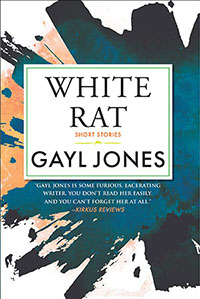
     

    White Rat

    White Rat: Short Stories

    “She say when I come, I look just like a little white rat, so tha’s why some a the people I hang aroun with call me ‘White Rat.’ When little Henry come he look just like a little white rabbit, but don’t nobody call him ‘White Rabbit’ they just call him little Henry. I guess the other jus’ ain’t took. I tried to get them to call him little White Rabbit, but Maggie say naw, cause she say when he grow up he develop a complex, what with the problem he got already. I say what you come at me for with this a complex and then she say, Nothin, jus’ something I heard on the radio on one of them edgecation morning shows. And then I say Aw. And then she say Anyway by the time he get seven or eight he probably get the pigment and be dark, cause some of her family was.”
    —Gayl Jones, from “White Rat” 

    Black Americans-West Coast Surfer


    About the Author  

    Christian Coleman is the digital marketing manager at Beacon Press and editor of Beacon Broadside. Before joining Beacon, he worked in writing, copy editing, and marketing positions at Sustainable Silicon Valley and Trikone. He graduated from Boston College and the Clarion Science Fiction & Fantasy Writers’ Workshop. Follow him on Twitter at @coleman_II and on Bluesky at @colemanthe2nd.bsky.social.

  • By Feminista Jones

    Selfie

    Photo credit: NeShea Jenifer

    Social media wouldn’t be what it is without Black women, so make sure to thank them. Some of the best-loved devices of our shared social media language are a result of Black women’s innovations, from well-known movement-building hashtags (#BlackLivesMatter, #SayHerName, and #BlackGirlMagic) to the now ubiquitous use of threaded tweets as a marketing and storytelling tool. Even the beef between rappers Nicki Minaj and Megan Thee Stallion stands out as an example of how Black women start movements and steer pop culture discourse and fandom while building their platforms as celebrities, influencers, and experts. In this excerpt from Reclaiming Our Space: How Black Feminists Are Changing the World from the Tweets to the Streets, Feminista Jones shows how it’s done.

    ***

    Over the years, I have been approached by several brands, retailers, and television networks and film companies to support their marketing efforts. I may be asked to curate a live-tweet chat or event to build viewership for a television show or film, or to promote a product or service of some sort. My experience is not unique, by far, but it is interesting in the sense that I did not start out as, nor did I ever aspire to be, an “influencer” in this sense. Several of my peers have made an entire career out of these types of opportunities, and in recent years we have seen more focus paid to Black women with large followings whose influence can have direct impact on the purchasing and consumption decisions of their fans.

    According to Influencer Marketing Hub, an online resource for all things related to influencer marketing, an influencer has the power to affect the purchasing decisions of others because of their authority, knowledge, position, or relationship with their audience. Influencers who focus on a particular niche are seen as go-to people in this area of expertise. The most likely influencers are celebrities and athletes, but there is a growing need for bloggers and content creators—people who have long focused on specific issues and have amassed followings based on their expertise, insider access, and knowledge. Influencer marketing has exploded as agencies realize not only that it costs less to have a social media persona promote their product or service as virtual spokespersons, but they’re able to reach demographics underserved by traditional marketing, often due to bias and shortsightedness on behalf of marketing executives. As is the case with Black women, marketing agencies have discovered the powerful influence we have in social media spaces and know they would be severely remiss in ignoring the growth potential in our market and with our audiences.

    I began doing influencer advertisements when I was on the staff of BlogHer.com, a site geared toward female bloggers and content creators that officially merged with SheKnows.com in 2015. As the “Love & Sex” section editor, I grew my own personal following immensely in the three years I worked for the site; it was a treasure trove of subscribers looking for advice on how to find a man, keep a man, and knock his socks off in bed. My popularity as a sex-positive feminist blogger had attracted the site’s senior editors to me, and when they offered me the opportunity to join the team, I jumped on it. There was an influencer program that allowed participants to sign up for various ad campaigns by brands like Walmart, Dove, and Coca-Cola, and we were paid based on the content we created to promote those products and services. We might be asked to share a set number of tweets or Facebook posts in a specific period of time, or attend focus group events and compose sponsored blog posts to share our experiences and promote products. For someone trying to make her way in the blogosphere, this was a pretty sweet deal, and I was happy to participate in what seemed like minimal work for a strong reward.

    Though the appeal was strong, I did not accept every offer made to me, and I remain committed to upholding my own personal values in my endorsements of companies and services. I opted out of a lucrative opportunity to do promotion for Walmart because I took issue with what I believed to be Walmart’s exploitative hold on American labor, wages, and overall health. Then, I did a campaign with Dove before realizing that it, too, as a subsidiary of Unilever, has been linked to practices I do not support. And when I realized that Unilever owned almost every product in my house, I started becoming more aware of how often we compromise our values for consumption habits, and I made a commitment to at least be mindful of this in evaluating my promotional opportunities and what products and services I was willing to endorse using my name and brand.

    I knew that I was valuable as a Black woman in that space. BlogHer and SheKnows weren’t known for being culturally diverse as far as writers were concerned. In fact, they were known mostly as hubs for White mommy bloggers whose lifestyle blogs showcased their bratty kids, inconsiderate husbands, and flavorless recipes. Women of color were there, of course, and I joined the editorial team with the hope of helping these outlets reach a broader, more diverse audience, not just culturally but with regard to religion and sexual identity and orientation as well. As I engaged more of the women sharing content with and producing content for these sites, either virtually or at annual conferences, I realized that not only were their casual lifestyle blogs lucrative but that some of these women were making thousands of dollars a month for product reviews and advertising—thousands. Every now and then, I’d encounter a unique blog that had a different angle with a niche audience, but for the most part, I did not find much of interest in the content they were producing, so I wondered how they’d been able to get these types of sponsors. And I wanted to know how I could get more Black women involved in this hustle—we deserved some of that money too!

    BlogHer/SheKnows helped launch and further the careers of a number of Black women, though, and it is important to make note of this. Luvvie Ajayi, author and social commentator; Kathryn Finney, founder of digitalundivided; Majora Carter, founder of Sustainable South Bronx; A. V. Perkins, popular DIY blogger; and several others found immense support for and promotion of their work in this community, and they’ve each gone on to establish themselves as widely recognized experts and voices in various spaces. For a while, the best, if not only, way that a Black woman could earn money for her blog content, be it on traditional blogs or via microblogging on Twitter and Facebook, was through larger White-owned and operated networks like BlogHer/SheKnows, because those were the companies that attracted the brands willing to spend money on influencer marketing. By tapping into this market, Black women found themselves gaining exposure to markets and opportunities beyond communities like Black Twitter or their own blog subscribers (read: White people with White money). Not only could we get paid to promote products and services, we were being asked to do speaking engagements, sit on panels, do TEDx- or TED-style talks, write and produce content for major publications with household names, and more.

    Ebony magazine is one such household name. . . . In 2012, Ebony.com relaunched with new management at the helm. Kierna Mayo, an award-winning journalist and cofounder of Honey magazine with roots deep in hip-hop culture journalism, came on as editor in chief and vice president of digital content. Jamilah Lemieux, a longtime blogger and content creator widely recognized as a modern Black feminist thought leader, also joined the team, eventually becoming the senior digital editor before she moved to the print magazine in 2015. Lemieux had a large following long before she began to work with Ebony.com, and it was that following and reach that helped propel Ebony.com to becoming the premier site for content catering to Black interests. Offering freelance opportunities to up-and-coming and established writers, Ebony.com, led by these dynamic Black feminist women, created space for bloggers, tweeters, content creators, and burgeoning journalists alike to be published with a reputable periodical and have their work shared with a large audience. Writing for Ebony.com made you “official” and served as a great résumé booster for anyone trying to make a mark as a social or political commentator, a reporter or journalist, or as a purveyor of pop culture.

    It wasn’t simply that the opportunities expanded for writers of color, it was that Mayo and Lemieux were especially committed to centering Black women’s stories, amplifying their voices, celebrating their work, and honoring their beauty in ways that we had not previously seen in digital spaces. The duo reenergized the legacy of Ebony magazine by using digital space to reach a new audience. Their team pushed boundaries and challenged readers to think beyond the status quo. While they did feature pieces on pop culture, fashion, and other “clicky” content, they also delved into important, serious issues affecting the Black community and engaged people whose voices and stories would have otherwise gone unheard.

    It was at Ebony.com that I wrote my very first column for a major publication. It was a sex column called #TalkLikeSex, named after a graphic rap song by the hip-hop artist Kool G Rap. I was definitely conflicted over the use of the song’s title, because Kool G Rap was not only known for his blueprint lyricism; he was also accused of being an abuser of women. Famed author of Confessions of a Video Vixen, Karrine Steffans, alleged in the book that the rapper had physically and sexually abused her. Though she later confessed to fabricating some of her stories, the allegations of abuse lingered. The rapper’s song was one that was not only graphic, but degrading in many ways, so for me, using the song title as the title for my column was a way of subverting his “talk” about sex—and other degrading depictions of sex and sexual abuse and disregard of women in hip-hop music—and changing the way we, Black women, particularly those raised on hip-hop culture, talk about sex. Working with editor Miles Marshall Lewis, a partnership made possible by Lemieux herself, I produced weekly content that addressed everything from polyamory to BDSM to “enthusiastic consent.” Much of the content was influenced by and drawn from topics I’d written about on my blog or on Facebook and Twitter—only this time I was being paid for my content and it was exposed to a larger audience. The column helped me expand my reach and grow my audience, while helping a lot of people understand feminism, specifically sex-positive feminism, in a new way.

    ~~~

    During this same period of growth, other outlets like TheGrio.com, an NBC affiliate, HuffPost Black Voices, TheRoot.com, MadameNoire.com, NewsOne.com, Blavity.com, and Bossip.com emerged and rose in popularity for social media users looking for the latest information related to popular Black culture, politics, social justice, and enterprise. Well-established magazines like Black Enterprise also began to capitalize on the accessibility of an online audience. Many of these publications not only featured Black women as writers and editors, but were helmed by Black women. As social media has made our global Black Community feel smaller and more closely-knit, career opportunities for those of us who only dreamed about being published and read around the world increased. Several of the editors and contributors to these publications were talented Black women, a number of whom, like me, never had any formal journalism training; we simply had stories to tell, opinions to share, and a desire to help other Black women get “put on.”

    ~~~

    Another prominent Black magazine, Essence, also began to establish its online presence and expanded its reach by attracting many of the same writers who were once loyal to Ebony.com. When Chrissy Coleman, former senior culture and entertainment editor of Essence, approached me to write an article about the former NFL quarterback Colin Kaepernick, based on a Twitter thread I wrote about famous Black athletes who had faced racial discrimination, I jumped on it. What I, and others, began to realize is that so many editors and content curators began following those of us with high tweet engagement and some even began using our tweets as source material. Either they were taking the tweets and using them in their “articles,” or they were taking the ideas and sometimes original theories and expanding on them for their own paid pieces. I remember seeing one article that had, no lie, four original lines of text; the rest was a well-curated stream of tweets from me and others. Mainstream publications found a gold mine when they began following Black women with high follower counts who were well-versed not only in popular culture current events, but were also strong writers who were proficient in social media-based discourse. As more Black publications began to establish their online presence and bring their websites into the future, Black writers and thinkers, many of whom are Black feminist women, began to find homes for their art and their wisdom—paid work showcased in our spaces.


    About the Author 

    Feminista Jones is a Philadelphia-based social worker, feminist writer, public speaker, and community activist. She is an award-winning blogger and the author of the novel Push the Button, the poetry collection The Secret of Sugar Water., and Reclaiming Our Space: How Black Feminists Are Changing the World from the Tweets to the Streets. She was named one of the 100 Most Influential People in Philadelphia and one of the Top 100 Black Social Influencers by The Root. Her writing has been featured in the New York TimesWashington Post, and TimeEssence, and Ebony magazines. Follow her on Twitter at @FeministaJones and visit her website.

  • By Jim Morris

    Cover art: Louis Roe. Author photo: Maggie Morris.

    Cover art: Louis Roe. Author photo: Maggie Morris.

    Not long after I became a journalist in 1978—as I was working at a newspaper in Galveston, Texas—I felt the rumblings of what would become a career-long obsession: Explaining the ghastly effects of toxic chemicals on humans—in particular, blue-collar workers. These were the people, mostly men, who did the dirty, dangerous work most of us avoid, in places like Texas City, Texas, and Lake Charles, Louisiana. I detected little sympathy for them when they were burned, gassed, maimed, or soaked with chemicals in the course of their work. This, after all, was what they’d signed up for, right?

    As the years passed, I wrote about sandblasters who were slowly suffocating from the lung disease silicosis; auto mechanics with asbestos-induced mesothelioma; and chemical workers whose brains and livers had been wrecked by substances with unpronounceable names. I saw countless documents showing that corporations and their trade associations knew about these toxic hazards; they simply didn’t bother to tell the workers.

    In 2013, I made my first trip to Niagara Falls, New York, a crumbling former industrial center, to meet several workers and retirees from the Goodyear chemical plant. At that time, 58 current and former employees of the plant had been diagnosed with bladder cancer, a much higher number than would be expected in the general population. The source of the outbreak was no mystery: All the victims had been exposed to a potent bladder carcinogen called ortho-toluidine, used to make an antioxidant for tires.

    As this is being written, in September 2023, the official number of bladder-cancer cases from Goodyear stands at 78. The real number could be higher; retirees aren’t always easy to track. The cancer cluster in Niagara Falls is one of the biggest and best documented in post-war America. It was preventable, but Goodyear and its primary chemical supplier, DuPont, were inexcusably slow to act.

    The tragedy isn’t limited to Niagara Falls or the barbaric days before the federal Occupational Safety and Health Act was passed in 1970. Cancer and other work-related illnesses still take as many as 120,000 lives annually in this country—more than influenza, pneumonia, and suicide combined in 2019, the last full year before the COVID-19 pandemic struck. Thousands of chemicals made and used in the United States haven’t been properly tested for safety—or tested at all. As union membership has declined, workers’ ability to protect themselves against toxic exposures has diminished.

    What happens in our workplaces, where exposures tend to be highest, often presages what happens in our society as a whole. My hope is that The Cancer Factory will spark a long-overdue conversation about the hazards that threaten the men and women who make our essential products, build our highways and office towers, and generally keep the US economy running.


    About the Author 

    Jim Morris is managing editor for environment and workers’ rights at the Center for Public Integrity. A journalist since 1978, Morris has won more than 80 awards for his work, including the George Polk Award, the Sidney Hillman Award, 3 National Association of Science Writers Awards, and 2 Edward R. Murrow Awards. Morris’s 2014 series “Big Oil, Bad Air,” a collaboration with Inside Climate News and The Weather Channel garnered 10 national awards for its revelations about toxic air emissions from hydraulic fracturing. He helped edit the Center’s first Pulitzer Prize–winning project, “Breathless and Burdened,” a 2013 investigation into the deeply flawed federal black-lung benefits system for coal miners. Follow him on Twitter @JimGMorris.

  • By Christian Coleman

    Personal growth

    Image credit: Mariana Anatoneag

    You don’t always follow through on them and yet you make them anyway. That’s the fun of it! They can be as serious as heart bypass surgery or as carefree as a six-gallon bag of caramel popcorn. Come December 31, you flex your New Year’s resolutions as a vision board of the ensuing year. New Year’s is as good a time as any for a reset. Will you live up to it? Only time and your gumption will tell. But in the meantime, here are a handful of titles from Beacon’s catalog to help you steer the course to achieving the new you that you’ve been manifesting. They may even give you some ideas, too!


    Ready for a New Look and Some Reinvention 

    All Made Up

    All Made Up: The Power and Pitfalls of Beauty Culture, from Cleopatra to Kim Kardashian

    “Trying to understand people’s use of makeup throughout history and the influence it has had on culture and social structures is a way to reflect on people’s humanity. People of all genders wear makeup because they are getting something out of it, and the benefit is worth the time, effort, and money they spend. Learning about why people wear makeup sheds light on how people live and how the world is constructed.”
    —Rae Nudson 


    Time to Enrich Your Life with More Fiction 

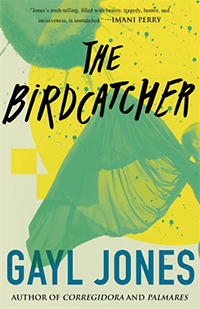
    The Birdcatcher

    The Birdcatcher

    Anyway, well, I remember this one time she’d just tried to kill him, and I got there and there they were sitting on a bench in the hallway outside the locked door, and he was holding her elbow. You’d think they were turtledoves. Baby! If all lovers could look that way! Well, it takes all kinds. And Catherine’s got enough jabber to fill the whole country. She starts talking about elbows! Just tried to kill the man and talking about elbows.”
    —Gayl Jones 


    Cultivating Your Inner Peace 

    The Blooming of a Lotus

    The Blooming of a Lotus: Essential Guided Mediations for Mindfulness, Healing, and Transformation

    “As we meditate, we untie knots we have created in ourselves; knots of fear, hatred, anger, suspicion, despair, and attachment. A transformation takes place, gradually removing divisions and making our relationships with humans and nature much easier. We feel at ease and touch the joy of being alive, like a flower that is slowly opening. The human being is a species of flower that can bloom as freshly and beautifully as any other flower. The Buddha was a fully opened human flower, infinitely fresh and beautiful.”
    —Thich Nhat Hanh 


    Cutting Off the Toxic Relationships in Your Life 

    The End of Love

    The End of Love: Racism, Sexism, and the Death of Romance

    “[T]he dissolution of straight relationships has not happened by chance but by design. I argue that a formation of male media moguls has worked to erode romance as a direct backlash to the twentieth-century feminist and civil rights movements. They have managed to do this by hiding their intent in plain sight. Through a series of messages communicated among themselves (and to us!) via the mass media, prominent men across racial and ethnic groups in the US have worked to kill romance by asserting that it should be limited to special cases involving the ‘right’ types of women. In its place, they effectively erected a new world sexual order. The new order depends on withholding love as a means of manipulating us and maintaining the upper hand over us.”
    —Sabrina Strings 


    Time to Take Care of Your Mental Health 

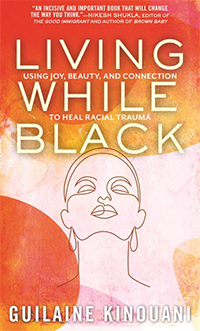
    Living While Black pb

    Living While Black: Using Joy, Beauty, and Connection to Heal Racial Trauma

    “Our definitions of mental health will vary from person to person. However, generally when we talk about mental health we are talking about our subjective sense of well-being, and when we talk about ‘mental health problems,’ we are referring to difficulties in relating to ourselves, others, and/or to the world. Or we refer to feelings, thoughts, and behaviors that have adverse effects on our ability to lead fulfilling lives.”
    —Guilaine Kinouani 


    Reconsidering Why You Eat What You Eat 

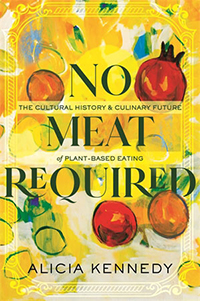
    No Meat Required

    No Meat Required: The Cultural History and Culinary Future of Plant-Based Eating

    “The only thing that has changed in the last few years is that tech meat such as Impossible Foods burgers and Beyond Meat burst onto the scene; now, lab meat is discussed as though inevitable, despite reporting that suggests it will never actually make it to market at a scale that will be affordable. Suddenly, despite my commitment to vegetables, I was tasked with untangling what meat facsimiles mean. But I don’t eat these products, and I don’t actually care about them beyond what they represent. What they represent is a continuation of meat-as-symbol that I find rather troubling, because I personally want to see a radical reimagining of how we eat, how we use land, and how we think about our food.”
    —Alicia Kennedy 


    Finally Trying Your Hand at Penning Poetry 

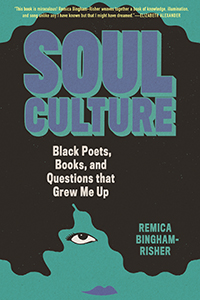
    Soul Culture

    Soul Culture: Black Poets, Books, and Questions That Grew Me Up

    “I’m often asked by students trying to make their way into the writing life, How do you know when poems are ‘good’ (though I’d argue ‘effective’ is a more precise term)? When poets trying to make their way into the wider world ask me, How do you know when a book is really ‘finished’ (effective/good)? I give them all the same questions: What’s the sound like? Is there rhythm as well as tension? Are there holes in the narrative? Is the title a help, hindrance, or spoiler? What are the ‘aha’ moments? Is the ending an opening or only a closing?
    —Remica Bingham-Risher 


    Rethinking Your Relationship Status with Social Media and Digital Technology 

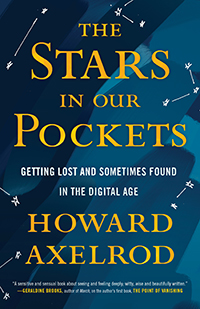
    The Stars in Our Pockets

    The Stars in Our Pockets: Getting Lost and Sometimes Found in the Digital Age

    “We’re forgetting we’re lost, and we’re forgetting what we’re losing, which is a far cry from being well adapted. We need a new kind of map. A map with the digital world and the traits it calls for, and with the old physical world and the traits it calls for, and with the borders clearly marked where the two realms conflict—where the border crossings are treacherous, where we’re bound to lose parts of ourselves we value.”
    —Howard Axelrod 


    Carving a Path for Liberatory Learning in and out of the Classroom 

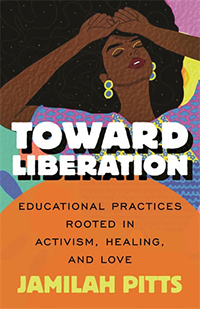
    Toward Liberation

    Toward Liberation: Educational Practices Rooted in Activism, Healing, and Love

    Teaching truth begins with the acknowledgment of our role as teachers in movements of resistance, in the practice of liberation. The ways we uphold or dismantle truths play a role in either dismantling oppression or perpetuating it. We must also consider that our practice is an art form, and as a result it comes with great responsibility and should be subversive. We ought to be required to teach our content fully, dissect our own beliefs, and include the voices of the marginalized and the silenced within the narratives and forms of history about this nation that are often regurgitated.”
    —Jamilah Pitts 


    Re-evaluating What You Think About Body Image and Health 

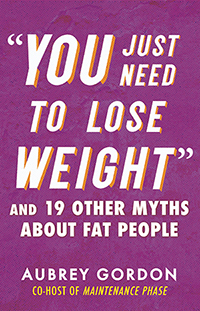
    You Just Need to Lose Weight NYT

    “You Just Need to Lose Weight”: And 19 Other Myths About Fat People

    “Cultural conversations prompt us to regard thinness as a major life accomplishment; these myths lend credence to that belief. Many of these myths center around treating fat people as failed thin people, implying that thin people are superior to fat people. These myths aren’t just incorrect or outdated perceptions: they’re tools of power and dominance.”
    —Aubrey Gordon 


    Success-4222903_1280


    About the Author 

    Christian Coleman is the digital marketing manager at Beacon Press and editor of Beacon Broadside. Before joining Beacon, he worked in writing, copy editing, and marketing positions at Sustainable Silicon Valley and Trikone. He graduated from Boston College and the Clarion Science Fiction & Fantasy Writers’ Workshop. Follow him on Twitter at @coleman_II and on Bluesky at @colemanthe2nd.bsky.social.

  • By Jonathan Rosenblum

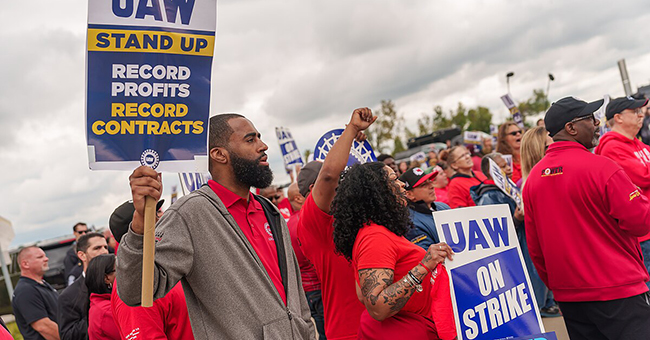
    President Joe Biden walks along the UAW picket line and engages with union members at the GM Willow Run Distribution Center, Tuesday, September 26, 2023, in Belleville, Michigan.

    President Joe Biden walks along the UAW picket line and engages with union members at the GM Willow Run Distribution Center, Tuesday, September 26, 2023, in Belleville, Michigan. Photo credit: Adam Schultz, The White House

    This article appeared originally in The Nation.

    Imagine it’s the evening of April 30, 2028. The nation is roiling as millions of workers coast to coast prepare to walk off the job in an unprecedented May Day national strike. Workers in manufacturing, logistics, healthcare, grocery, high tech, hospitality, and public services have mobilized and committed to bring the economy to a halt unless their bold demands are met: Medicare for All, a $30/hour minimum wage, and a tax on billionaires to massively increase public education funding.

    That’s the sort of vision that United Auto Workers (UAW) President Shawn Fain has challenged the rest of the labor movement to begin organizing toward.

    At the end of October, in announcing strike settlements at the Big Three auto companies, Fain noted that the UAW contracts all expire the day before May Day 2028. He urged other unions to align their contracts with the UAW. “If we’re truly going to take on the billionaire class and rebuild the economy so that it starts to work for the many and not the few, then it’s important that we not only strike, but that we strike together,” he said. 

    Workers have organized national strikes in other countries, where labor movements are stronger and there’s a history of national bargaining around social demands. Not so in the US, where the post-WWII political establishment—too often with the complicity of union leaders—intentionally created and enforced a labor law framework that partitioned the working class by establishing bargaining at the enterprise level, rather than by sector or whole industries. In the US system, workers are left to fight separate battles, worksite by worksite, for health care, fair pay, and health and safety rights—things we’re more powerful fighting for together.

    Fain’s May Day throwdown takes aim at capital’s divide-and-conquer legal regime. But to be successful in 2028, the labor movement will need millions of workers to join in: those now in unions, who should begin to line up contracts for that decisive date, and many more who are not yet in unions but are beginning to organize.

    This vision is what makes the new surge of auto worker organizing the UAW is currently embarking on particularly momentous.

    In the wake of the UAW’s breakthrough strike and contract settlements at Ford, General Motors, and Stellantis, workers at the industry’s growing non-union plants—Toyota, Honda, Subaru, Hyundai, BMW, VW, Tesla, and more—are beginning to organize on a scale not seen in generations. Thousands of workers have signed union cards in the last few weeks. The UAW has dispatched organizers to non-union plants and launched a splashy national media campaign along with social media organizing tools.

    “When we return to the bargaining table in 2028, it won’t just be with the Big 3, but with the Big 5 or Big 6,” Fain predicted.

    That’s much easier said than done. Executives at Toyota et al. already are mounting anti-union campaigns, with carrots—raises of up to 11 percent—and sticks—anti-union meetings, videos, harassment of union leafleteers, and one-on-one lectures by supervisors about the evils of unions. These companies have control in the workplace and will stop at nothing to thwart the incipient worker rebellions. In the past, auto executives have hired the worst-of-the-worst union-busting law firms—outfits like Littler Mendelson, who are the brains and muscle behind Starbucks’ union-quashing efforts. Expect the same army of pinstriped busters this time around in auto plants.

    UAW members scored big when they struck and won contracts at the Big 3 that began to claw back the concessions of the last generation. It took hard work, and the divided ratification votes showed that UAW members are not done demanding their share. It will be an even bigger challenge—another order of magnitude harder—to beat Elon Musk and his fellow auto CEOs and successfully organize non-union auto workers on a mass basis.

    Yet we must all root for and materially support the auto workers, because their victories will lay the foundation for the vision Fain laid out, the opportunity to do battle for social and economic justice on a national, class-wide basis.

    Today the UAW represents only about 15 percent of the 990,000 US automobile and parts manufacturing workers. That’s down from a peak of 1.5 million UAW members in 1979, when 80 percent of US auto manufacturing was unionized and UAW contracts drove industry standards.

    The biggest automaker in the US? It’s no longer General Motors. In 2021 Toyota beat GM to become number one in the US, churning out millions of cars and trucks at its 10 manufacturing plants, all but one located in so-called “right to work” states where anti-union laws weaken worker organization and suppress wages.

    For years, UAW leaders gave lip service to organizing those and other plants. In the last decade, the union badly mangled efforts to organize at Nissan and Volkswagen, in both cases underestimating the potency of the anti-union campaigns and underappreciating the need to build strong in-plant union committees.

    On Dec. 11, Fain delivered a speech on Facebook Live to autoworkers and supporters where he recounted the broader uprising that began during the UAW strike. At the non-union factories, “autoworkers weren’t just writing us messages, they were signing union cards,” he said. “They found old organizing websites—some made their own websites, and just started signing up. They were tuning in to our Facebook Live updates, our stories, our materials, they made their own stickers with our UAW wheel and posted them all over non-union plants.”

    Once the strike concluded in late October, momentum grew for signing union cards, the precondition for a union representation election. By law unions must get a minimum of 30 percent of workers to sign union authorization cards before they can request a vote conducted by the National Labor Relations Board. UAW organizers say they aim to get 70 percent sign-up at plants before filing, to ensure there’s enough support to overcome management opposition.

    VW workers in Chattanooga, Tennessee were the first to surpass the 30 percent threshold in their plant of 3,800. On Dec. 7, they took their campaign public, unveiling a video along with a website featuring a list of the 187 members of the in-plant Volunteer Organizing Committee (VOC). As workers at other auto plants meet the 30 percent threshold, they too will go public.

    A confluence of factors is driving the momentum. To be sure, the gains UAW members made at the Big 3 are a huge inspiration for workers. But also motivating the union push are the punishing non-union working conditions. This year, VW eliminated two holidays and increased insurance costs for workers, according to Zack Curvin, a VW powertrain assembly line worker in Chattanooga. VW also instituted a line speedup, telling workers that the company wants to see “a car a minute off the line,” almost double the line speed of two years ago, Curvin told me, adding that VW has been reducing time for maintenance and workers often struggle with broken or substandard equipment.

    An autoworker I spoke with at Rivian’s 6,000-worker plant in Normal, Illinois said his colleagues were frustrated that the company was expecting workers to use vacation time or take unpaid “voluntary time off” when the plant shuts down for three weeks of retooling next spring.

    When Jeff Allen began working at Toyota’s massive Georgetown, Kentucky plant in 1994, “we had free health insurance and Toyota pretty much followed what the UAW had,” he told me. But over the years, Toyota shifted healthcare costs onto workers, trimmed retirement, and kept wages down.

    None of these indignities or austerity measures were because the companies were hurting financially. The “German Three”—BMW, Mercedes, and VW—made $460 billion in profits over the last decade. Toyota made $250 billion in profits in the same 10-year period, while opening a food bank for Allen and his 9,500 coworkers at the Georgetown plant, according to the UAW

    Workers at these and other plants have tried to organize and failed before, but this time feels different, they said. In the past, Allen said he and his coworkers “just leafleted and assumed people would come on board.” This time, “we’re going back to old school, talking to people one on one,” he told me.

    Yolanda Peoples, a twelve-year VW assembly line worker, described to me how VOC members “are trying to hit every part of the plant, from young to old.” On national auto worker organizing calls, Peoples said, she’s gained skills and insights from other workers about how to approach workers who are on the fence or skeptical. Rather than barge ahead with a union rap, she’s practiced asking questions, drawing out worker concerns and hopes. “I’ll ask them, ‘Have you ever gone through anything that you wouldn’t want your son or daughter to go through?’ Make it more personal. Everyone has that one story,” she said.

    This daily organizing work is unflashy—but absolutely essential. Too many past organizing campaigns—not just the UAW’s failed attempts, but efforts by other unions in myriad industries—have faltered when organizers took organizing shortcuts, fell back on gimmicks, or underestimated the scale of employer resistance. They tried to “sell” workers on the union, rather than challenge workers to step up and make the union their own. They soft-pedaled the fight against the boss, rather than describing a power struggle between workers and management.

    To withstand the tornado of the full-blown anti-union campaign, organizers must place the power struggle front-and-center in conversations, and they must build a union structure inside the workplace that can withstand the hostile winds. That means recruiting respected workers on every shift, in every work area and department, to serve on the plant VOC so they can educate, unite, bolster, and move a majority of coworkers into action.

    It doesn’t matter how deeply felt the workplace issues are, how righteous the fight seems to be, how popular it is with the wider public, if there is not a tight internal organizing structure that is tested through collective union actions: vote yes petitions, sticker-up days, and other demonstrations of majority worker support. The harder the boss fight workers face, the more solid the structure needs to be—and the more often it needs to be tested.

    In Chattanooga, Curvin described how he and his fellow VOC members have talked to 85 percent of his line coworkers, and a majority have signed union cards. “I’m amazed at how quickly things have moved,” he said. “There’s a lot of strong will to help each other out.”

    A BMW worker in South Carolina described to me how he and his coworkers have identified every work area—bumper line, assembly, paint shop, body shop, and so on—and are methodically identifying which areas have VOC members and which don’t.

    That’s the sort of rigorous organizing that will be required to win. These initial organizing steps are a sign that workers and the UAW are keen to avoid repeating past mistakes. Still, there inevitably will be temptations to take organizing shortcuts, become enamored with glitzy media, or overvalue the public vibe or a politician’s endorsement. It will be important to bear in mind that the same UAW contracts that provide non-union workers the courage to stand up and fight also give the bosses of the multinational companies more incentive than ever before to fight the union. They have unlimited resources with which to wage that war, and surely will deploy them.

    But if the workers continue to organize in a disciplined manner, the coming months and years could see the UAW grow by the tens of thousands, or even more. That is an exciting prospect, not just for the workers in these plants, but for all of us in the labor movement who heard Fain’s call to arms and have circled May Day 2028 in our calendars.


    About the Author

    Jonathan Rosenblum is the author of Beyond $15: Immigrant Workers, Faith Activists, and the Revival of the Labor Movement (Beacon Press, 2017) and a member of the National Writers Union.

  • By Christian Coleman

    Celebration

    Image credit: Dewald Van Rensburg

    Some are new, some are veteran crew. These are a handful of Beacon’s bestsellers of 2023! Let’s raise a glass of bubbly to the authors and to another year of bestsellers! Which ones were your favorites?


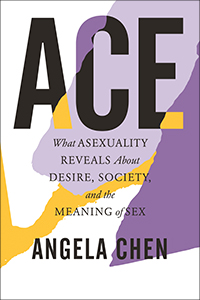
    Ace

    Ace: What Asexuality Reveals About Desire, Society, and the Meaning of Sex

    Nonsexual romantic love sounds like an oxymoron. Almost all definitions of the feeling of romantic love—separate from the social role of married partners or romantic acts like saying “I love you”—fold in the sexual dimension. People might not be having sex, but wanting sex is the key to recognizing that feelings are romantic instead of platonic. Sexual desire is supposed to be the Rubicon that separates the two. It’s not. Aces prove this. By definition, aces don’t experience sexual attraction and plenty are apathetic or averse to sex. Many still experience romantic attraction and use a romantic orientation (heteroromantic, panromantic, homoromantic, and so on) to signal the genders of the people they feel romantically toward and crush on.
    —Angela Chen 


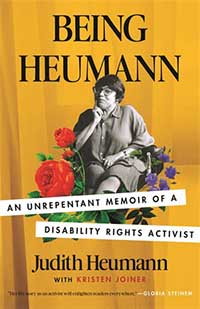
    Being Heumann pb

    Being Heumann: An Repentant Memoir of a Disability Rights Activist

    At camp, I was not seen as a sick kid, excluded from dances and dates and kissing boys behind the football stadium. Nor was I seen as a crippled girl never expected to marry, for whom motherhood was not even a question. No one had told me that no boy would ever give me a second look. At camp we had parties, played loud rock music, and snuck off into the dark to make out. The counselors were young and fun. They strummed the guitar while we sang and danced to the likes of Elvis Presley, Chubby Checker, Buddy Holly, Sam Cooke, and the Shirelles. We knew all the words to “Itsy Bitsy Teenie Weenie Yellow Polka Dot Bikini” and “Chantilly Lace” by the Big Bopper, and we danced in a way we never danced anywhere else. Camp was the only place we weren’t self-conscious about how we looked.
    —Judith Heumann with Kristen Joiner 


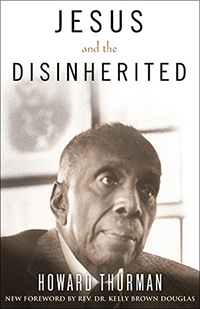
    Jesus and the Disinherited - Gift Edition

    Jesus and the Disinherited

    I can count on the fingers of one hand the number of times that I have heard a sermon on the meaning of religion, of Christianity, to the man who stands with his back against the wall. It is urgent that my meaning be crystal clear. The masses of men live with their backs constantly against the wall. They are the poor, the disinherited, the dispossessed. What does our religion say to them? The issue is not what it counsels them to do for others whose need may be greater, but what religion offers to meet their own needs. The search for an answer to this question is perhaps the most important religious quest of modern life.
    —Howard Thurman 


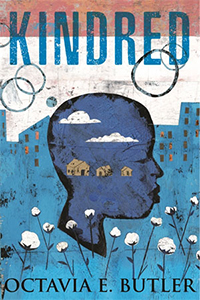
    Kindred Gift Edition

    Kindred: Gift Edition

    I had seen people beaten on television and in the movies. I had seen the too-red blood substitute streaked across their backs and heard their well-rehearsed screams. But I hadn’t lain nearby and smelled their sweat or heard them pleading and praying, shamed before their families and themselves. I was probably less prepared for the reality than the child crying not far from me. In fact, she and I were reacting very much alike. My face too was wet with tears. And my mind was darting from one thought to another, trying to tune out the whipping.
    —Octavia E. Butler 


    Man's Search for Meaning

    Man’s Search for Meaning

    A thought transfixed me: for the first time in my life I saw the truth as it is set into song by so many poets, proclaimed as the final wisdom by so many thinkers. The truth—that love is the ultimate and the highest goal to which man can aspire. Then I grasped the meaning of the greatest secret that human poetry and human thought and belief have to impart: The salvation of man is through love and in love. I understood how a man who has nothing left in this world still may know bliss, be it only for a brief moment, in the contemplation of his beloved.
    —Viktor E. Frankl 


    On Repentance and Repair pb

    On Repentance and Repair: Making Amends in an Unapologetic World

    Let’s face it: It’s deeply uncomfortable to confront the fact that we have caused harm. Research has shown that feelings of guilt can impact how we feel in our bodies; it makes us feel literally weighed down, causing even basic tasks to require more effort than usual. And, of course, guilt—the awareness or belief that I have done something bad—can easily trigger, or morph into, shame, the belief that I am bad. It may be tempting to look for ways to hack the process, to get to that place where we no longer feel burdened by our conscience, where things feel better. Crossing that bridge over into reckoning with what we have done seems like the agonizing opposite of removing this heavy awareness. Instead of getting to the white, we have to walk straight into the crimson? That doesn’t seem right! It’s easy to panic, to try to figure out if there’s a way around the system. But the only way out is through. And trying to skip to the end without all the work in the middle means that, instead of making different choices, we repeat variations on that same crimson harm.
    —Rabbi Danya Ruttenberg 


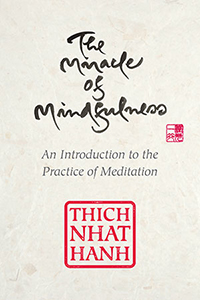
    The Miracle of Mindfulness

    The Miracle of Mindfulness: An Introduction to the Practice of Meditation

    Our breath is such a fragile piece of thread. But once we know how to use it, it can become a wondrous tool to help us surmount situations which would otherwise seem hopeless. Our breath is the bridge from our body to our mind, the element which reconciles our body and mind and which makes possible one-ness of body and mind. Breath is aligned to both body and mind and it alone is the tool which can bring them both together, illuminating both and bringing both peace and calm.
    —Thich Nhat Hanh 


    Owls and Other Fantasies

    Owls and Other Fantasies: Poems and Essays

    On a December morning, two years ago, I brought a young, injured black-backed gull home from the beach. It was, in fact, Christmas morning, as well as bitter cold, which may account for my act. Injured gulls are common; nature’s maw receives them again implacably; almost never is a rescue justified by a return to health and freedom. And this gull was close to that maw; it made no protest when I picked it up, the eyes were half-shut, the body so starved it seemed to hold nothing but air.
    —Mary Oliver, from “Bird” 


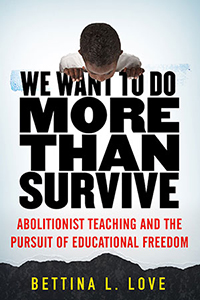
    We Want to Do More Than Survive

    We Want to Do More Than Survive: Abolitionist Teaching and the Pursuit of Educational Freedom

    To begin the work of abolitionist teaching and fighting for justice, the idea of mattering is essential in that you must matter enough to yourself, to your students, and to your students’ community to fight. But for dark people, the very basic idea of mattering is sometimes hard to conceptualize when your country finds you disposable. How do you matter to a country that is at once obsessed with and dismissive about how it kills you? How do you matter to a country that would rather incarcerate you than educate you?
    —Bettina L. Love 


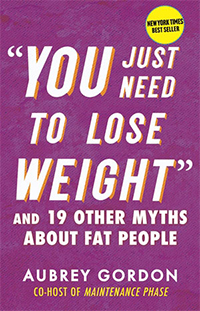
    You Just Need to Lose Weight NYT

    “You Just Need to Lose Weight”: And 19 Other Myths About Fat People

    Nearly every cultural message about fatness and weight loss insists that anyone can choose to lose weight, and many of us deeply believe that to be true. In truth, some fat people do choose fat bodies; some do not. But this cultural insistence that fatness is a choice isn’t about the veracity of that claim: it’s about minimizing fat people’s experiences, dismissing our needs, and perpetuating anti-fat bias. And in its determination to do so, it steamrolls over copious evidence that challenges the belief that thinness is a choice that’s always available to fat people.—Aubrey Gordon  

    Celebration


    About the Author 

    Christian Coleman is the digital marketing manager at Beacon Press and editor of Beacon Broadside. Before joining Beacon, he worked in writing, copy editing, and marketing positions at Sustainable Silicon Valley and Trikone. He graduated from Boston College and the Clarion Science Fiction & Fantasy Writers’ Workshop. Follow him on Twitter at @coleman_II and on Bluesky at @colemanthe2nd.bsky.social.

  • By Christian Coleman

    Presents

    Image credit: JD Hancock

    You’ve heard of that elf on the shelf, but have you heard of word count at a discount? That’s really pushing it, but there are books we’re talking about. Now’s the time to hunt for gifty books for the loved ones in your life. Save 30% on everything at beacon.org through December 31 using code HOL30!

    Scroll down and you’ll see some selections to give you ideas. This is just a handful of our catalog.

    Remember that USPS media mail takes 7-10 business days. Also, the Penguin Random House warehouse will be closed from December 23 to December 25 and then on December 31. So, plan accordingly while placing your orders during this time.

    And remember to support your local independent bookstore this holiday season!


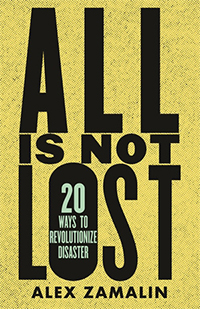
    All Is Not Lost

    All Is Not Lost: 20 Ways to Revolutionize Disaster

    “Despair needn’t create paralysis. To the contrary, it can motivate you to risk everything, to find courage wherever you can, to trust the democratic resources available to you, and to never back down. Power can be forged among the dispossessed. Solidarity can be found in the darkest of places. Always resist and make resistance into a tradition. It will inspire you. And those who come after.”
    —Alex Zamalin 


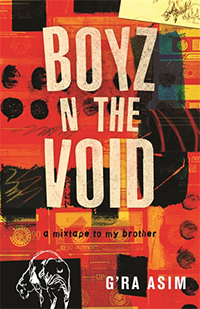
    Boyz n the Void

    Boyz n the Void: a mixtape to my brother

    “[T]here were aspects of punk culture that offered more appealing models for manhood . . . I also associated the sonic textures of punk music with freedom. I wanted to be around people and in proximity with music and art that encouraged pliability and elasticity in how masculinity was performed and understood.”
    —G’Ra Asim 


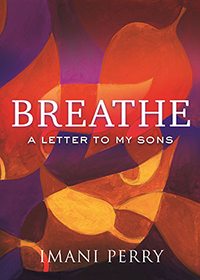
    Breathe

    Breathe: A Letter to My Sons

    “The shards of heartbreak cannot simply be thrown away. They have to be reworked. This requires a careful examination, a tender holding. Of whoever is broken, whether it is you or someone you love.”
    —Imani Perry 


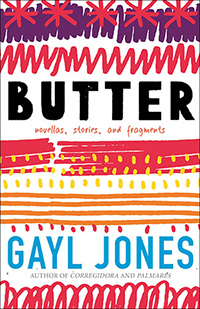
    Butter pb

    Butter: Novellas, Stories, and Fragments

    “Call me pied piper woman. There I was reading the Lorca poem about the barren orange tree and the tower, and there she was with oranges painted on her leather satchel. And there I was riding on the Boston subway from Back Bay to Mass. Avenue. And so I saw this little girl, and I’m a candymaker and it was easy. I always smell like chocolate and caramel and peppermint.”
    —Gayl Jones, from “Mirabeau” 


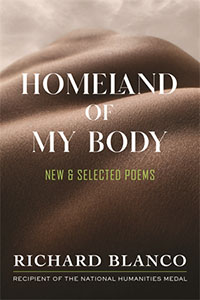
    Homeland of My Body

    Homeland of My Body: New and Selected Poems

    Melodies heard are sweet, just as I heard them
    in the rhythm of Keats, who thought unheard
    melodies were sweeter. And so they are here, in
    the silences of this musician’s still hands, as if
    clenched in prayer, ecstasy, or forgiveness that
    his fingers, solid as pillars, can’t yet release into
    music, not yet strumming a guitar whispering
    stars across my ears, or pounding piano keys
    into my heart, not yet blowing sax smoke for
    my soul, or stroking a bow across a violin like
    a lover resting on his shoulder as if on mine.
    —Richard Blanco, from “Music in Our Hands, after Paul Cordes’s photo The Musician” 


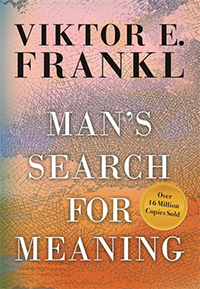
    Man's Search for Meaning

    Man’s Search for Meaning

    “A thought transfixed me: for the first time in my life I saw the truth as it is set into song by so many poets, proclaimed as the final wisdom by so many thinkers. The truth—that love is the ultimate and the highest goal to which man can aspire. Then I grasped the meaning of the greatest secret that human poetry and human thought and belief have to impart: The salvation of man is through love and in love. I understood how a man who has nothing left in this world still may know bliss, be it only for a brief moment, in the contemplation of his beloved.”
    —Viktor E. Frankl 


    No Meat Required

    No Meat Required: The Cultural History and Culinary Future of Plant-Based Eating

    “For me, all stories about food are stories about appetite and nostalgia—even when we’re talking about global warming, and even when we’re talking about the ways in which the state enables systemic oppression of humans, animals, and land. Talking about what we eat cannot just be rooted in the political; by its very nature, eating is personal. This is why a delicate balance must be struck when we discuss ideas of ethical consumption in an unethical global food system that interacts with other systems of oppression, from white supremacy to patriarchy to capitalism.”
    —Alicia Kennedy 


    Nothing Personal

    Nothing Personal

    “It has always been much easier (because it has always seemed much safer) to give a name to the evil without than to locate the terror within. And yet, the terror within is far truer and far more powerful than any of our labels: the labels change, the terror is constant. And this terror has something to do with that irreducible gap between the self one invents—the self one takes oneself as being, which is, however and by definition , a provisional self—and the undiscoverable self which always has the power to blow the provisional self to bits.”
    —James Baldwin 


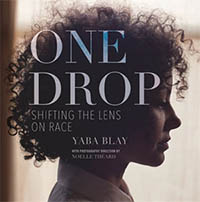
    One Drop

    One Drop: Shifting the Lens on Race

    “We have also seen that there is seemingly no certitude in how racial categories are established or recognized abroad. While many countries throughout the African Diaspora construct Blackness distinct from Mixedness, do all people of mixed ancestry in those countries similarly construct their own identities as mutually exclusive to Blackness? In the absence of a definitive framework through which to designate race, how do people in these countries understand their own racial identities, if at all? Furthermore, what happens when people of African descent migrate to the United States from these various global locales? Do they maintain culturally specific conceptualizations of self? Do they conform to American ideations of race and simply become Black? Or do they negotiate between the two and create melded identities?”
    —Yaba Blay 


    Sweet Movie

    Sweet Movie: Poems

    If you open the door, the light
    blue light is watery as girls in those
    limp posters, overhead. I am listening
    to your memory and it sounds like
    unlimited access. I call your name,
    tenderly. We live in a world
    with few headboards, left.
    —Alisha Dietzman, from “Love Poem by the Light of the Refrigerator” 


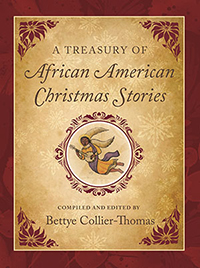
    A Treasury of African American Christmas Stories

    A Treasury of African American Christmas Stories
    Ed. Bettye Collier-Thomas

    “Why is it that lots of white people always grin when they see a Negro child? Santa Claus grinned. Everybody else grinned, too, looking at little black Joe—who had no business in the lobby of a white theatre. Then Santa Claus stooped down and slyly picked up one of his lucky number rattles, a great big loud tin-pan rattle like they use in cabarets. And he shook it fiercely right at Joe. That was funny. The white people laughed, kids and all. But little Joe didn’t laugh. He was scared. To the shaking of the big rattle, he turned and fled out of the warm lobby of the theatre, out into the street where the snow was and the people.”
    —Langston Hughes, from “One Christmas Eve” 

    Presents


    About the Author 

    Christian Coleman is the digital marketing manager at Beacon Press and editor of Beacon Broadside. Before joining Beacon, he worked in writing, copy editing, and marketing positions at Sustainable Silicon Valley and Trikone. He graduated from Boston College and the Clarion Science Fiction & Fantasy Writers’ Workshop. Follow him on Twitter at @coleman_II and on Bluesky at @colemanthe2nd.bsky.social.

  • By Kavita Das

    Man writing

    Image credit: StockSnap

    I remember a conversation I had with an editor at a literary magazine soon after I had transitioned from working in social change to becoming a writer close to ten years ago. I had shared with the editor that I was committed to developing my craft as a writer but that I was also committed to continuing to lift up social issues, even if I now would focus on addressing them on the page rather than in real life settings. I was floored by the editor’s response. He warned me to make sure that my work did not turn into propaganda.

    Fast forward a decade, and I’ve published my second book, Craft and Conscience: How to Write About Social Issues, on how to write about social issues in ways that are compelling yet do justice to intractable, fraught social issues. A cogent review of the book published in feminist magazine Liber opens with a scene where the reviewer has a post-pandemic meet up with a friend from her MFA program who is now an editor at a literary magazine. The editor friend laments to her about how, after George Floyd’s murder, they were receiving so many pieces that were “too political.”

    Celebrated writer George Packer wrote a misguided and meandering piece in The Atlantic entitled “Why Activism Leads to So Much Bad Writing.” Before we examine why social conscience has actually inspired and animated the work of some of our best writers, I feel compelled to point out what these three literary voices have in common: they belong to white male writers.

    Some will roll their eyes and grunt, “Here we go again, using identity politics as a wedge issue for writers.” Well, for many writers, especially writers of color, like myself, identity politics is not a wedge issue in our writing; it is central to it because it is central to our lives. Our identities have played significant roles in not just who we are but how we see and move through the world. Meanwhile, for many of our white hetero male counterparts, whose writing and perspective and aesthetic choices are considered the default, addressing issues of identity or other political issues can be viewed as an artistic choice rather than a moral imperative. That choice is a luxury afforded to the few and privileged. But the truth is one cannot consider writing craft without addressing issues of identity, whether it be the identity of the subject or the writer.

    Packer opens his piece with a directive that writers should not insert politics into their art, and if they do, they put the caliber of their work in peril:

    “When artists turn to activism or introduce politics into a work of art, it’s usually taken as something virtuous, an act of conscience on behalf of justice. But artistic and political values are not the same; in some ways they’re opposed, and mixing them can corrupt both. Politics is almost never a choice between good and evil but rather between two evils, and anyone who engages in political action will end up with dirty hands, distorting the truth if not peddling propaganda; whereas an artist has to aspire to an intellectual and emotional honesty that will drive creative work away from any political line. Art that tries to give political satisfaction is unlikely to be very good as either politics or art.”

    I want to begin by deconstructing this false notion of the writer inserting politics into their writing by posing the question I ask my writing students on our first day together: Is all writing political? After some discussion about which types of writing might be political and which might not be, I share with them my own belief: All writing is political because it reflects a certain perspective or worldview which either directly or indirectly acknowledges social issues, or eschews them, which too is both an artistic choice and a political statement by the writer. Irrespective of the intentions of the author, all writing is political, intentionally or unintentionally, because our work ceases to belong solely to us once it enters the world.

    We need only look at the ever-increasing, alarming efforts to ban books in this country to know that writing is viewed as political. According to PEN America, books are under a “profound attack” with 3,362 book bans in the 2022-’23 school year, a 33% increase from the 2021-’22 school year. When we examine the titles, content, and identities of their authors, we see a clear pattern of targeting books by and about Black people, people of color, and the LGBTQ+ community. And this alarming trend is not new. Important works by treasured authors now considered classics including Harper Lee’s To Kill a Mockingbird, Judy Blume’s Are You There God? It’s Me Margaret, and Ray Bradbury’s Fahrenheit 451 have been banned in years past because they contained ideas that were considered dangerous to conservative political agendas, namely revealing the horrors of racism, the stigma against talking openly about puberty and sexuality, especially for girls, and ironically, the perils of censorship under authoritarian conditions. Did their engagement with these issues sully them or make them essential and timeless works of art?
    Packer cherry picks quotes from prominent writers of color, including Chimamanda Ngozi Adichie and James Baldwin, that seem to suggest that they unilaterally support his notion of separating politics from art. Ironically, these are some of the most socially-engaged writers whose work courses with social issues including race, class, education, gender, and sexuality. Packer blithely ignores Adichie’s probably best-known speech about how writers must avoid the danger of a single story, a story that narrowly defines our subjects by our perceptions and stereotypes rather than by their expansive humanity. “I’ve always felt that it is impossible to engage properly with a place or a person without engaging with all of the stories of that place and that person. The consequence of the single story is this: It robs people of dignity. It makes our recognition of our equal humanity difficult. It emphasizes how we are different rather than how we are similar.”

    Is Adichie speaking of the artistic or moral aims of her work? I believe she’s speaking of both.

    When it comes to Baldwin, who became one of the most outspoken Black writers on the ravages of racism during the Civil Rights era, once again, Packer chooses to use a 1949 quote from Baldwin that suggests that he takes issue with the “protest novel.” The truth is more nuanced. In “Autobiographical Notes,” the opening essay of Baldwin’s 1955 collection of essays, Notes of a Native Son, Baldwin acknowledges the influence of the writer’s identity and life experiences on their work, and how his identity as a Black man and his calling as a writer were indelibly forged. Baldwin ends this essay by declaring “one must find, therefore, one’s own moral center and move through the world hoping this center will guide one aright . . . I want to be an honest man and a good writer.”

    It is true that one can find in Baldwin’s essays and writings contradictory statements about the role of “social affairs” in the work of the writer. But one can also perceive a growing commitment to the notion of the writer as witness and chronicler of the issues of his time as Baldwin aged. Baldwin, like most artists of conscience, struggled with how to balance his artistic aspirations with his moral integrity. It is a struggle that I and other writers who engage with social issues in our writing understand all too well. But rather than viewing political issues as corruptible forces which need to be eschewed in the pursuit of our aesthetic, it is in that very struggle, between our art and our conscience, that we find our voice and our story.  

    The suggestion that writers engaging in activism risk corrupting their art because the values of art and the values of politics are different is a misguided notion that chooses not to reckon with Baldwin’s moral imperative as a Black writer to participate in the March on Washington, to secure his own human rights or, to leave his birth country because it did not recognize him as a full and equal person or writer. Perhaps these were as much political acts of artistic survival as they were acts of political protest.

    Most irksome of all for Packer is the idea that his own essay itself is an act of political writing because his assertion that artists inserting politics into their art is a choice is a bold political statement, even if a wrongheaded one.

    Ultimately, the masterful words of Baldwin from a 1979 interview with the New York Times, sums up the essentiality of grappling with social issues to the work of writers: “If there is no moral question, there is no reason to write.” Baldwin goes on to confess, “I’m an old-fashioned writer and, despite the odds, I want to change the world.”


    About the Author 

    Kavita Das has taught nonfiction writing at the New School and Catapult and has written about social issues for ten years. Previously, she worked in the social change sector for 15 years, addressing issues ranging from community and housing inequities to public health disparities and racial injustice. Das is also the author of Poignant Song: The Life and Music of Lakshmi Shankar and Craft and Conscience: How to Write About Social Issues. Find her online at kavitadas.com and on Twitter (@kavitamix).

  • A Q&A with Alicia Kennedy

    Vegetarian meal

    Photo credit: LUM3N

    The meat-free lifestyle has taken on many cultural meanings over the years, from a fringe diet for eccentric hippies and tofu-loving activists who shop at co-ops and live on compounds to the big business of faux meat meant to replicate the real thing. We’ve come a long way since then. Now, fine-dining restaurants like Eleven Madison Park cater to chic upscale clientele with a plant-based menu, and Impossible Whoppers are available at Burger King. But can plant-based food keep its historical anti-capitalist energies if it goes mainstream? And does it need to?

    In her debut book, No Meat Required: The Cultural History and Culinary Future of Plant-Based Eating, influential food writer Alicia Kennedy makes sense of how this came to be, and what the future may look like. A vegetarian, former vegan, and once-proprietor of a vegan bakery, Kennedy brings depth, context, and her signature voice to our understanding of vegan and vegetarian cuisine and its history as she advocates for retaining its radical heart. Her book is an accessible primer for all audiences on why food is not apolitical. Beacon Press senior publicist Bev Rivero caught up with Kennedy to chat about it.

    Bev Rivero: In the introduction you write, “The concerns I have, the concerns that keep me from throwing a steak into my cast-iron rather than tempeh, are manifold: ethical, spiritual, environmental, economic, political.” Viewing the choice of what to eat so holistically is very centered in your work, can you share how you arrived at this place?

    Alicia Kennedy: My awareness of all the ways in which eating meat intersects with systems and outcomes that I don’t agree with unfolded gradually. It was a very instinctual, spiritual conviction that made giving up meat feel both enticing (at first) and necessary (at last), and then the more cerebral reasons for why I was drawn to it came into focus.

    BR: You do a great job of explaining the meaning of meat, and its hold, symbolic and real, on culture. In terms of what it would take to change this, what might food producers, whether large-scale manufacturers, or restaurateurs, do to take taste and other factors into account?

    AK: It’s actually in not mimicking meat at all that shows folks how delicious and nourishing plant-based food can be. I was most interested, in my research, by how time and again, the most successful folks in the vegetarian and vegan space—chefs Deborah Madison, Amanda Cohen, Brooks Headley—did not make a huge to-do about protein. This says something about how people want to eat, and how they can eat: people will go plant-based once it’s clear to them that technique is the most important part of making the food delicious, and meat can be reduced or sidelined entirely.

    BR: Making the connection between veganism and zine culture as you do makes so much sense. The ways in food and diet are discussed and passed on in this community-driven format, this shared language of experience speaks to the intentionality at the core of plant-based eating. How might eaters—in other words, everyone—get back to some of this spirit in a time when “wellness” and influencer culture exists so adjacent to and overlapping with plant-based media that is communicated to the broader public?

    AK: I think there’s a lot of potential to adjust how we think of what social media is and how it can be used to create similar networks of sharing, albeit under corporatized control. But perhaps we have to use these digital corporate tools to foment a new analog approach.

    BR: What are some other select resources for considerate consumption aside from your book that you would recommend your readers check out?

    AK: MOLD Magazine and the book Flourishing Foodscapes: Design for City-Region Food Systems. I think design and regional planning are where to look to consider the future of food. 


    About Alicia Kennedy 

    Alicia Kennedy is a writer from Long Island, New York, now living in San Juan, Puerto Rico. Her work on food and culture has been published in the New York Times, the Washington PostBon Appétit, and many other publications, including Best American Food Writing 2023. She regularly publishes essays and cultural criticism in her newsletter, From the Desk of Alicia Kennedy. Connect with her online at alicia-kennedy.com.

  • By Christian Coleman

    Table

    Photo credit: Roxana Bowgen

    When loved ones perch at the table together for holiday gatherings, it’s not just the star protein with fixings that gets served. Whether it’s on Thanksgiving, Christmas, or any other occasion for feel-good feasting in big company, those mashed potatoes and greens come with a side of divergent viewpoints on touchy, real-life subjects. Sometimes they’re served respectfully, sometimes with vitriol, but on many occasions, they stir up tough conversations, and the meals become so ideologically fraught that digestion seems out of the question. A casual doomscroll through the headlines will reveal a packed menu of tough conversations du jour, so we are recommending these selected books to bone up on the topics with the aim of informed and fruitful—though difficult—exchange. Even if you are actively avoiding them, it’s good to read up and learn up, too.


    The Israel-Gaza War

    At Home in Exile

    At Home in Exile: Why Diaspora Is Good for the Jews 

    “In theory, no reason prevents a Jewish state from embodying universalist values; no matter how far Israel turns to the right, as it so distressingly has in recent years, more than its share of writers and thinkers speak eloquently of human rights or find fault with their own society’s chauvinism. In a world in which nation-states are primarily concerned with protecting their own, however, the Diaspora remains the place where universalistic Judaism will thrive best. Its Judaism will become more complex and vibrant as its culture intermingles with other cultures. Its religion, far from dissolving into meaningless syncretism, will be enriched by its encounter with other faiths.”
    —Alan Wolfe 


    The Drone Eats with Me

    The Drone Eats with Me: A Gaza Diary

    “So everyone carries their own memories of conflict: wars stand as markers in a Gazan’s life: there’s one planted firmly in your childhood, one or two more in your adolescence, and so on . . . they toll the passing of time as you grow older like rings in a tree trunk.”
    —Atef Abu Saif 


    In Jerusalem

    In Jerusalem: Three Generations of an Israeli Family and a Palestinian Family

    “But by any measure, the Palestinians have seen more innocents perish, have made little progress in their desire for restitution of property, identity, and nationhood, and bear the overwhelmingly greater burden, a conclusion confirmed by seeing up close what politicians and diplomats like to call ‘facts on the ground.’”
    —Lis Harris 


    In This Place Together

    In This Place Together: A Palestinian’s Journey to Collective Liberation

    “[Sulaiman] pressed it, offered a question: ‘How can these two narratives—Palestinian and Israeli—exist in one homeland?’ He shrugged as if there were little left to say. ‘That’s the big question we have to share.’”
    —Penina Eilberg-Schwartz with Sulaiman Khatib 


    The Iron Cage

    The Iron Cage: The Story of the Palestinian Struggle for Statehood

    “Why concentrate on the failures or incapacities of the Palestinians to achieve independence before 1948, when the constellation of forces arrayed against them was so powerful, and in the end, proved overwhelming?”
    —Rashid Khalidi 


    Election Seasons 

    Daring Democracy

    Daring Democracy: Igniting Power, Meaning, and Connection for the America We Want

    “When we assert that democracy is essential we mean that it’s not just a “good” thing. It is the only approach to governance that brings forth the best of who we are. To really thrive, to live our possibility, we hold that beyond the physical, humans must meet at least three essential needs: for connection, meaning, and a sense of agency—that is, a sense of personal power. When these needs are met we can often accomplish what virtually no one before believed possible.”
    —Frances Moore Lappé and Adam Eichen 


    Dirt Road Revival

    Dirt Road Revival: How to Rebuild Rural Politics and Why Our Future Depends on It

    “While the Republican Party will not fight for people and planet, there are many Republicans in our community who do and will. In our view, this is the living proof that Democrats must build bigger broader movements that welcome rural voters, including those who do not appear progressive in traditional ways.”
    —Chloe Maxmin and Canyon Woodward 


    Let My People Vote pb

    Let My People Vote: My Battle to Restore the Rights of Returning Citizens

    “You don’t have to vote if you don’t want to, but having the right to vote, that is what solidifies you as a person of consequence more than anything else in the world. That is especially important for people like me who made mistakes or suffered through addiction. We were made to feel we weren’t part of society anymore, that we were the lowest of the low. We were despised because of our addiction. We were despised because of the crimes we may have committed. What the right to vote says is that I’m somebody again. It says, simply and powerfully, I AM. The right to vote is one of many rights that need to be restored to individuals who have a previous felony conviction.”
    —Desmond Meade 


    Producing Politics

    Producing Politics: Inside the Exclusive Campaign World Where the Privileged Few Shape Politics for All of Us

    “To understand campaigns, then, we need to understand the people whose work builds them: the political consultants and political operatives who make their living working for parties, campaigns, and allied partisan organizations. Just as the decision-makers at Netflix, HBO, and ABC determine what kinds of entertainment to provide, these campaign professionals curate our political options. The ways they shape the system and its offerings for voters come out of their perceptions of what is politically possible, which persuasion strategies are effective, how the electorate operates, and what will make sense to and be rewarded by the rest of the political world.”
    —Daniel Laurison 


    Religious In/Tolerance 

    Christians-Against-Christianity

    Christians Against Christianity: How Right-Wing Evangelicals Are Destroying Our Nation and Our Faith

     “I have endeavored at the outset to share the faith tradition of my youth to give context to my horror at what Christianity has become at the hands of the modern right-wing evangelical movement and to explain my reason for writing this book: to defend the truth and majesty of the Gospel, if you will, from right-wing evangelicals’ crude caricature of it, a caricature so ugly and crude that it has unleashed in the public square new levels of incivility, bullying, cruelty, race-baiting and xenophobia, and birthed a cottage industry of conspiracy theories and grotesque demonizations aimed at anyone who dares to point out the rot at the root of their politics.”
    —Obery M. Hendricks, Jr. 


    Dangerous Religious Ideas

    Dangerous Religious Ideas: The Deep Roots of Self-Critical Faith in Judaism, Christianity, and Islam

    “Religion has too much to contribute to be ignored, and it is too thickly woven through human existence to disappear. But its ongoing role in public life in the United States makes cultivating the deep roots of self-critical faith more urgent. Ultimately, we have to learn how to do this work together, subjecting other people’s religious ideas to rigorous scrutiny as well, without prejudice. Religious ideas cannot receive a pass without impairing the nation’s democratic culture.”
    —Rachel S. Mikva 


    Demystifying Shariah

    Demystifying Shariah: What It Is, How It Works, and Why It’s Not Taking Over Our Country

    “When I think of shariah, I don’t think of something cruel and vicious. I think of justice, feminism, defense of the weak and defenseless, and a commitment to the rule of law. I’m well aware that these words might be taken by too many to be some sort of joke. But that’s because few non-Muslims possess even the most rudimentary understanding of shariah.”
    —Sumbul Ali-Karamali 


    Two Billion Caliphs

    Two Billion Caliphs: A Vision of a Muslim Future

    “We must disabuse ourselves of all forms of special dispensation and unchallengeable authority, for these are hostile to the very spirit of Islam. To live as Caliphs of God in communities of God, we must actively experiment with new kinds of authority, neither dismissing the inevitability of some forms of hierarchy nor the expertise or other benefits they provide, but all the same tempering the worst features of these. Because Islam is not a solitary faith, and because no faith restricted to the individual can survive—humankind is not meant to be atomized, as capitalism and liberalism endlessly learn to their surprise—we must search out new forms through which we understand, realize, and access not just Islam as identity but Islam as spirituality, morality, and intimacy.”
    —Haroon Moghul 


    Don’t Burn Those Bridges! 

    A Master Class on Being Human

    A Master Class in Being Human: A Black Christian and a Black Secular Humanist on Religion, Race, and Justice

    “When difference is defined as a problem, difference must be eliminated—you must think as I think, see the world as I see it, move through the world in line with the values and commitments of my group. But when difference is considered an opportunity, it enables a broader perspective on human circumstances. It affords precious occasions to learn from others, refine our thinking, and adjust our doing.”
    —Brad R. Braxton and Anthony B. Pinn 


    On Repentance and Repair

    On Repentance and Repair: Making Amends in an Unapologetic World

    “We’ve all caused harm, we’ve all been harmed, we’ve all witnessed harm. We are all always growing in our messy, imperfect attempts to do right, to clean up, to repair, to make sense of what’s happened, and to figure out where to go from here. This is, I hope, a way in to the work. . . Yet any attempt to address harm that does not put the victims of harm and their needs at the center will necessarily come up short. I truly believe that the approach taken in my tradition and by Maimonides is almost always profoundly victim-centric; where I think he missed the mark, I say so, and I try to chart another way forward.”
    —Rabbi Danya Ruttenberg 


    We Need to Build

    We Need to Build: Field Notes for Diverse Democracy

    “The first line of our manifesto for this new era should go like this: We the varied peoples of a nation struggling to be reborn are defeating the things we don’t like by building the things we do.”
    —Eboo Patel 


    Reproductive Health 

    Her Body Our LawsHer Body, Our Laws: On the Front Lines of the Abortion War, from El Salvador to Oklahoma

    “Our blinkered focus on whether abortion should be legal distracts us from the plight of the women and children most affected by our abortion laws. They are the most marginalized women in the country. Another child will thrust them deeper into poverty, but an abortion does little to lift them out of it. The war over abortion law draws our gaze away from them, relieving us of the obligation to notice, if not to reset, the odds against them.”
    —Michelle Oberman 

    Trust Women

    Trust Women: A Progressive Christian Argument for Reproductive Justice

    “Abortion, however, is never an abstract ethical question. It is, rather, a particular answer to a prior ethical question: “What should I do when faced with an unplanned, unwanted, or medically compromised pregnancy?” This question can only be addressed within the life of a particular woman at a given moment in time. When a woman is faced with this ethical question, her answer will vary depending on the individual and the many factors—social, economic, personal, religious—that define her life at any given point.”
    —Rebecca Todd Peters 


    How to Talk About Fat and Fat Justice

    What We Don't Talk About When We Talk About Fat

    What We Don’t Talk About When We Talk About Fat

    “Body positivity has shown me that our work for liberation must explicitly name fatness as its battleground—because when we don’t, each of us are likely to fall back on our deep-seated, faulty cultural beliefs about fatness and fat people, claiming to stand for ‘all bodies’ while we implicitly and explicitly exclude the fattest among us. I yearn for more than neutrality, acceptance, and tolerance—all of which strike me as meek pleas to simply stop harming us, rather than asking for help in healing that harm or requesting that each of us unearth and examine our existing biases against fat people.”
    —Aubrey Gordon  


    You Just Need to Lose Weight

    “You Just Need to Lose Weight”: And 19 Other Myths About Fat People

    “Cultural conversations prompt us to regard thinness as a major life accomplishment; these myths lend credence to that belief. Many of these myths center around treating fat people as failed thin people, implying that thin people are superior to fat people. These myths aren’t just incorrect or outdated perceptions: they’re tools of power and dominance.”
    —Aubrey Gordon


    Table


    About the Author 

    Christian Coleman is the digital marketing manager at Beacon Press and editor of Beacon Broadside. Before joining Beacon, he worked in writing, copy editing, and marketing positions at Sustainable Silicon Valley and Trikone. He graduated from Boston College and the Clarion Science Fiction & Fantasy Writers’ Workshop. Follow him on Twitter at @coleman_II and on Bluesky at @colemanthe2nd.bsky.social.