• By Julia Watts Belser

    Mind to mind

    Image credit: Mohamed Hassan

    Ever since I began writing Loving Our Own Bones: Disability Wisdom and the Spiritual Subversiveness of Knowing Ourselves Whole, I knew I wanted to craft a plain language version. The book brings disability culture into conversation with Jewish and Christian traditions, inviting readers to explore how disability insights can transform our politics and our spiritual lives. At its heart, it’s a book about challenging ableism—a book that calls us all to build a radically accessible world.

    So, I knew I wanted the book itself to be as accessible as possible. Beacon Press has been a wonderful partner on this front. Loving Our Own Bones will be released simultaneously in audio and print format. Beacon also works closely with Bookshare, an organization that makes books available in various formats to blind, low vision, and print disabled readers. 

    But what about people with intellectual disabilities? What about people who feel daunted by long books or who can’t process complicated sentences? Plain language is a crucial dimension of access—one that’s often sidelined in mainstream publishing.

    What is Plain Language?

    At its best, plain language gives readers access to the same ideas as the original text. But it presents them in a more straightforward way. We use shorter sentences. We choose simpler words. We organize information more clearly, and we explain things that another reader might take for granted.

    Plain language writing has long been part of my access commitments. In 2007, I cowrote A Health Handbook for Women with Disabilities with the Hesperian Foundation, a nonprofit publisher that creates simple, easy-to-read health guides that help ordinary people challenge the root causes of poor health. And for years, I’ve admired and learned from the work of self-advocates with intellectual disabilities, who use plain language to write pieces about disability rights and activism.

    But it was reading Alice Wong’s new book, Disability Visibility: First-Person Stories from the Twenty-First Century that got me really excited about the possibilities. Wong commissioned a plain language translation by Sara Luterman, which she made available for free online.  The plain language edition of Disability Visibility was a revelation—and I resolved to try something similar with my own book.

    Working Collaboratively to Create Access 

    Even though I have a fair amount of experience writing plain language, I knew I couldn’t undertake this project alone. I didn’t have the distance to adapt my own book. So, I reached out to Devorah Greenstein, a dear friend with decades of plain language experience.

    We worked closely and collaboratively at every stage. Devorah would begin by reading through a chapter, flagging important ideas and key passages. She distilled sentences, simplifying words, looking for more straightforward ways to say what I meant. Then she’d send the document my way. 

    For me, it was a relief to have someone else take on that initial labor. When I went back to read a chapter, I could still remember crafting each of those sentences. I was too attached to the prose. But once Devorah cracked open the door, I could see new possibilities. Diving back in felt liberating, a chance to speak directly to a different set of readers.

    I took up the second round of drafting, tweaking words and shifting them to match my voice. Once that was done, Devorah and I worked jointly over Zoom, editing and shaping the pieces into their final form.

    Plain Language Calls for a More Direct Approach 

    Like many books, Loving Our Own Bones is challenging to translate into plain language. Each chapter unfolds like an essay. The ideas are carefully braided; the argument develops in layers. I often circle back to a point I made earlier, inviting the reader to go deeper, to hold more complexity, to consider another angle.

    At the outset, we tried staying true to the original flow of the book. But when we translated the first chapter paragraph by paragraph, we found ourselves getting lost in the weeds. It was too long, too difficult to follow.  So, we decided to try a different approach.

    Instead of translating chapter by chapter, we identified a set of key themes that felt core to the book. We’ve crafted three plain language pieces to accompany the book’s release:

    1. Saying Yes to Disability
    2. What Do We Each Believe? Talking About Religion and Disability
    3. Disabled, Not Broken: Thinking Differently About Healing Stories

    Each piece is short, at 2,000 words or less. While they read well together, we’ve crafted them so each piece can stand alone.

    Each plain language piece communicates one key idea from the book in straightforward, accessible prose. As we worked together, identifying that single, core idea proved crucial. When we started each new plain language piece, we had to ask ourselves: What’s the takeaway? What’s the crux? We pushed ourselves to craft a title that named that idea directly. We used internal headings to crystalize the structure, to identify each important thought.

    Clear, straightforward sentences became our touchstone. To condense the winding paths of a full book chapter into a tight plain language piece, we had to cut right to the heart of the matter. We chose the most vital personal stories, the most crucial biblical texts. We couldn’t equivocate. No meandering. No backtracking. Our task was to lay everything plain.

    Plain Language Requires Us to Be Concrete About Our Aims 

    Loving Our Own Bones reimagines disability in an ableist world. The book pushes back against deep cultural tropes that treat disability as a metaphor for spiritual incapacity or a tragedy to overcome. It demystifies how ableism operates, laying bare the power structures that force disabled people to the margins. It lays out a radically different vision: for a world where disabled people know our own worth, a world where we know ourselves beloved.

    But culture is an amorphous idea, difficult to pin down. To make it work for plain language, we have to get more concrete. At the start of each piece, we name the problem. We give examples of the way people often approach disability, or the way most of us have been taught to think about God.

    Then we draw the contrast. I speak directly to the reader, laying plain what I believe. I tell them what I think, in sentences that are short and unadorned. It’s a striking contrast to my usual style. My prose tends to flow with a complex cadence, phrase layered upon phrase. But writing plain language has taught me to appreciate the elegance of a spare, simple sentence. To claim the power of coming straight to the heart of the matter.

    If there’s one thing that surprised me about the plain language versions, it’s this: how vividly these pieces capture my own voice. I write with a poet’s soul. When I was drafting Loving Our Own Bones, I’d often read my sentences aloud. I knew a chapter was done when each phrase felt like silk on my tongue, when the rhythm was right, when each word sang.

    I wanted the same for plain language. Devorah and I chose each word deliberately. Each sentence got polished until it shone. We read to each other, testing possibilities. We worked to craft meaning. But we also listened for the music, for the beauty. As we adapted Loving Our Own Bones for a different readership, we wanted to make sure the telling still felt true.

    We’re so grateful to Beacon for their tremendous support for plain language—and for working with us to design and layout these materials in an accessible way. The first three plain language pieces will be available for free download from Beacon’s website, once Loving Our Own Bones is released. We’re planning to release three more pieces next year. To get updates about the project, you can sign up for my mailing list at www.juliawattsbelser.com


    About the Author 

    Julia Watts Belser is a rabbi, a scholar, and a spiritual teacher, as well as a longtime activist for disability, LGBTQ, and gender justice. She is a professor of Jewish studies in the Department of Theology and Religious Studies at Georgetown University and core faculty in Georgetown’s Disability Studies Program, as well as a senior research fellow at the Berkley Center for Religion, Peace, and World Affairs. Author of Rabbinic Tales of Destruction, among other scholarly books, she has held faculty fellowships at Harvard Divinity School and the Katz Center for Advanced Jewish Studies at the University of Pennsylvania. She’s also an avid wheelchair hiker and a lover of wild places. Her book, Loving Our Own Bones, is forthcoming September 2023.

  • By Ben Mattlin

    Disability Pride NYC Parade, July 12, 2015. Photo credit: New York City Department of Transportation

    Disability Pride NYC Parade, July 12, 2015. Photo credit: New York City Department of Transportation

    The Americans with Disabilities Act turns thirty-three this year! Journalist and essayist Ben Mattlin has been keeping tabs on how the social landscape has changed (and hasn’t) for the disability community since it was signed into law. As he reports in this excerpt from Disability Pride: Dispatches from a Post-ADA World, it gave a big push to the Disability Pride movement that’s been blossoming.

    ***

    When you’ve grown up in a world not quite made for you or are forced into one from an accident or illness, and when you feel you should be able to do what everybody else seems to do, when you feel as if you’ve been inexplicably singled out for punishment, it can be utterly, achingly soul sinking. Worse still, it’s hard to shake. “Internalized ableism” is believing the prejudicial assumptions and expectations thrust on you by society, believing you’re inferior, undesirable, burdensome, don’t fit in, and/or in need of repairing or healing or fixing or curing. “Internalized oppression is not the cause of our mistreatment; it is the result of our mistreatment,” says the British disability scholar Deborah Marks. “It would not exist without the real external oppression that forms the social climate in which we exist. Once oppression has been internalized, little force is needed to keep us submissive.”

    Another way to look at it is disability shame. “A great deal of my disabled friends hold onto the idea that we are fundamentally different from non-disabled [people],” says an unsigned 2013 post at the blog Disability Rights Bastard, which is subtitled “musings of yet another bitter cripple.” “By refusing to see ourselves simply as people, we are implying that we do not deserve to be treated as equals.” Many disability blogs focus on this. On Crutches and Spice, the activist Imani Barbarin—who “writes from the perspective of a Black woman with cerebral palsy”—observes, “Discrimination from the outside world we can recognize, but the discrimination we are taught to apply to ourselves is harder to identify.” She goes on to list some self-hating messages we tell ourselves, tagging them as symptoms of internalized ableism, such as This person is only with me because they want to be seen as a hero, or I need to make other people feel at ease about my disability.

    In 2021, the vlogger and author Shane Burcaw posted a video to YouTube titled “I was ashamed of my body.” Because of his spinal muscular atrophy, he has severe scoliosis and reed-thin limbs. “Ten years ago,” he explains, shirtless, to his hundreds of thousands of subscribers, “I would go to the beach and not take my shirt or my pants off because I was programmed by society to be ashamed of the way I look.” Now, he continues, he enjoys posting photos and clips of himself in the pool or shower wearing nothing but a bathing suit. Still, even today, he braces himself for negative reactions and feels surprised when they don’t come. It isn’t easy, he says, to “overcome the belief that my body was shameful.”

    As Burcaw’s story makes clear, this kind of self-doubt can happen even when you know better. You may say it doesn’t matter what other people think. You may try to bolster your self-esteem by recalling your accomplishments, the people who love and respect you. You may count the advantages your disability gives you. (No, not just the parking spaces!) You’re a creative problem solver. You know how to cope, how to be sedentary, to be patient. If you’ve had to rely on regular personal—care help—what disability columnist Mike Irvin calls his “pit crew”—you know a bit about employee management, too. Recognizing the value in such experiences—the expertise they afford—is one way of boosting self-confidence.

    But it only goes so far.

    In her 2019 memoir, Such a Pretty Girl: A Story of Struggle, Empowerment, and Disability Pride, New York–based activist Nadina LaSpina, a polio survivor, describes her emotional battle with society’s low expectations, how she learned from other disabled people to recognize prejudice and fight it. She participated in one of the first “disability independence” marches in New York in 1992, on the second anniversary of the ADA. (Bragging rights to the first march are a matter of some dispute. It may have been in Boston in 1990, with guest speaker Karen Thompson, the brain-injured coauthor of the 1989 memoir Why Can’t Sharon Kowalski Come Home?, which was about one couple’s fight against ableism, sexism, and homophobia.) LaSpina was one of the organizers of the 1992 New York march. Groups such as Disabled in Action, the grassroots advocacy team cofounded by Judy Heumann, had been mounting protests for years—first for the Section 504 regulations mandating accessibility in federally funded institutions and programs, then for the ADA. But once their goals had largely been met, they still had energy. They weren’t done organizing. So they began focusing that momentum into a kind of victory celebration. “The first march, though small, kindled feelings of disability pride,” LaSpina writes.

    The next year’s parade grew to an estimated three thousand participants. They filled the streets of lower Manhattan in giddy celebration, and a version of the march has been repeated almost every summer since, on or near the anniversary of the ADA. There’s a clip, a montage, of the 1993 event available online. People proceed on foot, with crutches, in wheelchairs, singing and shouting and laughing. A float rolls by with a huge banner reading PRIDE. Toward the end, a succession of speakers riles up the crowd. A demonstrator named Eric von Schmetterling declares, “It’s so important for our people to show the world we are proud of who and what we are.”

    Passage of the ADA may not have been the starting point for what would come to be known as disability pride, but it certainly gave it a big push. By 2015, the Disability Independence March had morphed into the Disability Pride Parade. New York mayor Bill de Blasio kicked off events by announcing he was proud that his city was “a national leader in supporting rights for disabled people,” notwithstanding the ongoing lawsuits against the city for access violations. A more recent celebration boasted some seven thousand revelers who gathered at Madison Square Park in lower Manhattan shortly after 10 a.m. and proceeded slowly to Union Square Park through early evening. Major corporate sponsors such as New York Life and T-Mobile joined in. Even in 2020, when the parade was scrubbed because of the COVID pandemic—like many other public gatherings—the significance of “ADA day” wasn’t forsaken. Some people took to calling the entire month of July Disability Awareness Month or Disability Pride Month.


    About the Author 

    Ben Mattlin is a journalist, essayist, and author. Born with spinal muscular atrophy, a congenital muscle weakness, he has been a lifelong wheelchair user. His books include Miracle Boy Grows Up and In Sickness and In Health. His work has appeared in the New York TimesLos Angeles TimesWashington PostChicago TribuneUSA Today, and Vox, and on NPR. He lives in Los Angeles, California. Follow him on Twitter (@benmattlin).

  • By Fred Pearce

    Leslie Groves (left), military head of the Manhattan Project, with J. Robert Oppenheimer (right), 1942. Photo credit: United States Department of Energy

    Leslie Groves (left), military head of the Manhattan Project, with J. Robert Oppenheimer (right), 1942. Photo credit: United States Department of Energy

    Whether you’re taking Christopher Nolan’s three-hour epic biopic Oppenheimer straight or chasing it with Greta Gerwig’s fantasy-comedy romp Barbie, pregaming with the origin story of the Manhattan Project is in order. Environmental journalist Fred Pearce spells out the atomic stakes of the World War II global arena and what brought the (infamous?) theoretical physicist to the New Mexico desert in this excerpt from Fallout: Disasters, Lies, and the Legacy of the Nuclear Age.

    ***

    Whatever its moral pitfalls, the production of the two atomic bombs dropped on Japan was a triumph of twentieth-century science. In the aftermath of Hiroshima and Nagasaki, the steam-powered industrial revolution suddenly seemed quaint. But the arrival of the new atomic age had been very sudden. It was the result of a tidal wave of new science about the structure of atoms, and how unstable these supposed building blocks of matter actually were.

    This began with the discoveries early in the twentieth century that the apparently distinct atoms of each element—oxygen or uranium, copper or carbon—could take different forms, known as isotopes, and that these isotopes contained different numbers of neutrons, one of the building blocks of the atoms themselves. Most unsettling was the revelation that many isotopes were unstable. An isotope of one element might turn into an isotope of a different element, giving off radiation and energy as it did so.

    What transformed this from fascinating science to a discovery that could change warfare was the insight that some atoms could be split to order, by bombarding them with neutrons released by another radioactive element. This splitting of the atom, or “fission,” was first achieved in the lab by New Zealand physicist Ernest Rutherford, in 1917. But it was only in 1933 that Hungarian Leo Szilard suggested that it would be possible to set off an explosive chain reaction in which every split atom released many more neutrons that smashed into yet more atoms. At every step in this nuclear chain huge amounts of energy would be produced.

    Szilard said the best chain reaction would come from splitting uranium, a metal with a large nucleus that would produce the most neutrons at each step. The uranium would need to be packed very tightly, so that a large proportion of the neutrons released by fission hit other uranium atoms. But if a “critical mass” of uranium could be brought together inside a bomb, it would explode with a force as great as setting off thousands of tons of TNT.

    At the outbreak of the Second World War, most of the world’s small band of nuclear scientists had fled from continental Europe and were working on these ideas in Britain and the US. At the end of 1939, Szilard, who was by now in America, met up with Albert Einstein, then the world’s most famous physicist. They wrote a letter to President Franklin Roosevelt suggesting that even though America was then neutral in the war, it should develop such a bomb—not least in case the Germans were doing the same.

    Roosevelt initially didn’t seem too interested. But in Britain, which faced the prospect of invasion by Germany, two other émigré physicists got a different response. A few weeks after Szilard’s rebuff by Roosevelt, the Austrian physicist Otto Frisch and his German collaborator, Rudolf Peierls, wrote to Prime Minister Winston Churchill with the same idea. They added an important new detail. They had calculated that the critical mass of uranium needed to make a fission bomb was only twenty-two pounds, much less than most physicists had expected. There was a proviso: the bomb had to be made of one particular isotope of uranium, known as uranium-235, which made up only a small proportion of natural uranium. But if it was, they promised Churchill that it would create an explosion that “would destroy life in a wide area . . . probably the centre of a big city.”

    This was the summer of 1940. The Battle of Britain was in full swing. The Germans were bombing London daily and an invasion might come at any moment. Within days, Churchill set up a secret committee, known for reasons never explained as the MAUD committee, to see how practical this proposal was—and how soon a bomb could be delivered. Thus began the political process that ultimately delivered the Manhattan Project on the other side of the Atlantic, and the fateful dropping of two atomic weapons on already enfeebled Japan just five years later.

    The MAUD committee quickly heard from another pair of émigré scientists, Austrian Hans von Halban and Russian Lew Kowarski. At their lab in Cambridge, they had been investigating how to generate useable electricity from the energy released by chain reactions. They figured that, rather than setting off a runaway fission explosion, it should be possible to control the chain reactions inside what they called a nuclear reactor. This could generate energy useable for something other than destruction. But while investigating this, they realized that one of the products of splitting uranium atoms would be a new element, which they called plutonium. Plutonium did not exist in nature, but they calculated that one of its isotopes, plutonium-239, might be even more fissile than uranium-235. So even smaller amounts might make a bomb. In wartime, of course, nobody was interested in splitting atoms to generate electricity, but the idea of a plutonium bomb did grab the MAUD committee’s attention.

    Making the ingredients for an atomic bomb would require finding supplies of uranium ore and separating out uranium-235, or constructing reactors to make plutonium. Both were huge industrial projects and Britain didn’t have the money. Only the Americans had the capacity to do the job.

    Things briefly stalled until the US joined the war, following the attack on Pearl Harbor at the end of 1941. Then, Churchill ordered his scientists to share the conclusions of the MAUD committee with the American atomic elite. Within weeks President Roosevelt gave the green light to what became known as the Manhattan Project. Soon, America was throwing hundreds of millions of dollars into turning the work of European university labs into the bombs to win the war.

    The US government decided that in case one design didn’t work out they would go full tilt to produce both a uranium and a plutonium bomb. By the end of 1942, a secret project was buying uranium from what was then virtually the world’s only source, the Shinkolobwe mine in the remote far south of the Belgian Congo, and work was under way to extract uranium-235 from that ore. Meanwhile, a nuclear chain reaction had been produced in a reactor in Chicago, and plutonium-239 had been extracted from it.

    The Manhattan Project scientists developed a strange love-hate relationship with plutonium. Yes, it could destroy worlds, but it was also rather seductive. Thanks to its emission of radiation, it “feels warm, like a live rabbit,” said Leona Marshall Libby, one of the few women scientists involved in the project. Others reported that it had a metallic taste.

    By mid-1943, a large expanse of remote sagebrush desert beside the Columbia River in Washington State had been commandeered for manufacturing plutonium-239, an isotope so fissile that a couple of pounds was thought capable of producing an explosion equivalent to twenty thousand tons of TNT. A huge construction enterprise employing thousands of workers at the Hanford reservation erected nine giant atomic reactors that bombarded uranium fuel with neutrons to create small amounts of plutonium. The fuel was then removed and the “spent fuel” was dissolved in nitric acid to extract the plutonium for turning into bombs, a chemical process called reprocessing.

    The intellectual center of the Manhattan Project was far to the south at Los Alamos, a former boarding school in the New Mexico desert. Here hundreds of scientists spent their days drawing up blueprints for the bombs and for how to maximize their impact. Their average age was twenty-five. Almost all the British scientists who had contributed to the MAUD committee’s report joined Robert Oppenheimer and other young US luminaries there. They included Peierls and Frisch, as well as their close colleague, the German-born mathematician Klaus Fuchs. Besides his day-to-day work, Fuchs kept up with everything. He had a photographic memory and, it later transpired, was sending all the secrets he learned to Joseph Stalin’s chief nuclear scientist, Igor Kurchatov. During his decade-long journey through the British and American atomic science establishments, this diffident but sociable and amenable émigré gathered up a massive amount of information.

    Kurchatov soon knew that the Los Alamos scientists were designing both a uranium bomb and a plutonium bomb. In both bombs, the neutrons to start the reactions came from an “initiator” inside the bomb made of isotopes of polonium and beryllium. But otherwise the designs were very different. The uranium bomb used conventional explosives to slam together two small packs of uranium-235, creating the critical mass for a chain reaction. For the plutonium bomb, Oppenheimer and his colleagues decided they needed a more complex “implosion” bomb. There would be a single ball of plutonium about the size of a tennis ball. The critical mass would be created by detonating a shell of explosives around the ball to squeeze it. Calculating the physics of the implosion, and deciding exactly how to configure the explosives in the shell, were Fuchs’s specialties.

    The uranium bomb was never tested before being dropped on Hiroshima. But with more to go wrong, there was a test firing of a plutonium bomb in the New Mexico desert near Los Alamos in July 1945. It proved a dramatic success, with four times the anticipated explosive power. Just three weeks later, a duplicate bomb was dropped on Nagasaki. Days later, the Japanese emperor, Hirohito, surrendered. The job was done. Spookily, the workforce involved in the Manhattan Project was officially put at 175,000 people, almost exactly matching the death toll from the two bombs.

    Many Manhattan Project scientists were fearful of what they had created. Robert Oppenheimer, their chief, invoked the words of the Hindu deity Krishna: “I am become death, the destroyer of worlds.” There was anger, too, especially about the decision of the military to drop two bombs on Japanese cities. Szilard, the man who had originally conceived of the bomb, had argued for a demonstration of the new bomb’s power in some remote location. But he was overruled by politicians and generals who wanted to see what would happen in a real city.

    With their deed accomplished, the scientists knew well that others could repeat it. To forestall a nuclear arms race, some called publicly for nuclear weapons to be put under international control. The generals didn’t think much of that idea either. They rather liked the idea of being able to “destroy worlds.” For a while after World War II, America hoped to keep the technology to itself. To that end, even their British scientific wartime collaborators were sent home—and rather ridiculously instructed not to use what they had learned should Britain decide to develop its own bomb.


    About the Author 

    Fred Pearce has reported on environmental, science, and development issues from eighty-five countries over the past twenty years. Environment consultant at New Scientist from 1992 to 2018, he also writes regularly for the Guardian newspaper and Yale University’s prestigious e360 website. His many books include The New WildWhen the Rivers Run DryWith Speed and ViolenceConfessions of an Eco-SinnerThe Coming Population Crash, and The Land Grabbers.

  • A Q&A with Nora Neus

    Nora Neus and 24 Hours in Charlottesville

    Cover art: Louis Roe

    On August 11 and 12, 2017, armed neo-Nazi demonstrators descended on the University of Virginia campus and downtown Charlottesville. When they assaulted antiracist counterprotesters, the police failed to intervene, and events culminated in the murder of counterprotestor Heather Heyer. In 24 Hours in Charlottesville: An Oral History of the Stand Against White Supremacy, Emmy-nominated journalist and former Charlottesville resident Nora Neus crafts an extraordinary account from the voices of the students, faith leaders, politicians, and community members who were there and confronted the violent white supremacists. Beacon Press senior publicist Bev Rivero caught up with Neus to chat with her about it.

    Bev Rivero: There was an intentional decision to not include the narrative of, or interview, white supremacists who enacted the violence that is recounted here. Can you discuss this choice as a writer and the ethical parameters in the process?

    Nora Neus: This decision was a key component of the book from the very beginning, and the thing I thought could (and almost did) sink the whole project. Prevailing wisdom from experts in this space say that interviewing and quoting white supremacists, neo-Nazis, and members of other hate groups either (1) gives them a “platform” from which to spew their hateful ideology or (2) minimizes the threat they represent if treating them as just another actor in the story. In other words, you risk either creating helpful propaganda for the white supremacists or making them seem sympathetic, as if their “side of the story” is just as valid. There are experts on combating hate groups who could speak to this more than me, but I listened to the research and experts and chose not to platform fascists. Many of the major American book publishers liked my proposal for this book but wanted me to also interview white nationalists for their perspective, which I was unwilling to do. I’m so grateful to Beacon for understanding the stakes here and supporting the book without platforming hate groups.

    BR: In the introduction, you conclude with: “These are the voices of Charlottesville, telling their own story.” It’s clear that community was a big part of the book project. The nature of the oral history lends itself to this, but can you talk more about the intentionality around this, and anything that stood out when putting the book together?

    NN: This was also a non-negotiable when approaching this book project. In early conversations with key community members and activists about my interest in writing a book about Charlottesville, I told them point-blank that I would not write the book if I did not have the support of the community. It was honestly a scary thing to say out loud and so explicitly, because I really did want to write this book, but it was important to me also as a way of holding myself accountable. Thankfully, the community did rally behind the book, and most folks I’ve spoken to feel like it’s the first truly community-driven and accurate account of the Summer of Hate.

    BR: You collaborated with an oral historian and research assistant for 24 Hours in Charlottesville. What was the process like, and did it inform how you think about book-specific writing?

    NN: It was incredible! I worked with oral historian Noor al Zamami (they/them), who was trained at Columbia University’s top oral history program, and research assistant Arya Royal (she/her), a University of Virginia alum who was very involved in the Black and activist communities. They both helped shape the narrative in valuable ways, asking questions I hadn’t thought of and challenging my assumptions, when necessary. They are both incredibly talented at their jobs and have the added benefit of informing the book’s understanding of the experience of people of color.

    BR: You speak with Emily Gorcenski, who shared: “The white supremacist movement is about whiteness, but whiteness is not just about skin color. It’s about patriarchy. It’s about heteronormativity, cisnormativity. Trans people are one of the most targeted groups by the current white supremacist movement. So I think that being trans informs what I do and that having lived a life of not speaking under my real voice, I know what the power of speaking under my real voice is.” Queer and trans activism is intersectional with the movement to stand up to white supremacist hate. Do you think the general public can be made more aware of how these activists are working to stop the spread of hatred and bigotry?

    NN: Absolutely. That’s one enormous theme of the book that came through when I started my research: the fight against fascism and white supremacy is an intersectional fight. There was a quote that got cut from the book for space that said something like, “These are not your grandparents’ white supremacists.” And that’s so true. It’s not just anti-Black racism, but white supremacy has become a catch all for a wide variety of hate, anything that’s not part of the cishet conservative white community. It’s not a coincidence that the enormous percentage of the activists fighting white supremacy in Charlottesville that summer were queer and trans people of color.

    BR: How do you think Charlottesville has changed in the past six years since the events in 24 Hours in Charlottesville? What lessons do you think other cities can take from them?

    NN: The Charlottesville community is still grappling with how to move forward from the Summer of Hate. There’s been some progress, but it’s slow. The big lesson for other cities is to trust local antifascist activists when they warn you about an impeding fascist threat; Charlottesville did not heed their warning, with disastrous effect.


    About Nora Neus 

    Nora Neus is an Emmy-nominated journalist whose reporting has appeared in CNN, VICE News, the Washington Post, and more. Neus field-produced Anderson Cooper’s coverage of the 2017 white nationalist riot in Charlottesville, Virginia, for CNN. Before joining CNN, she worked as a local news reporter and fill-in anchor for the CNN affiliate in Charlottesville, WVIR NBC29. She is the coauthor of the YA graphic novel Muhammad Najem, War Reporter: How One Boy Put the Spotlight on Syria. Connect with her online at noraneus.com.

  • By Jane Strauss

    Children at play

    Image credit: Diego Villacob

    Most resources available for parents of autistic children come from psychologists, educators, and doctors, offering a narrow and technical approach to autism. Sincerely, Your Autistic Child, edited by Emily Paige Ballou, Sharon daVanport, and Morénike Giwa Onaiwu, represents an authentic resource for parents written by autistic people themselves. Contributors reflect on what they have learned while growing up on the autism spectrum and how parents can avoid common mistakes and overcome challenges while raising their child. For Disability Pride Month, we’re sharing insights from contributor Jane Strauss’s essay.

    ***

    One of the things that many parents seem to be unhappy about when their child is labeled “Autistic” is this: “But they will not have play dates.” Friendship, “socializing,” and human interaction are seen as central to our very humanity. Females often fly under the radar for being labeled on the autism spectrum because their social development is different from that of males, generally resulting in more social orientation, better imitation skills at a younger age, and earlier speech, of whatever kind, than their male counterparts.

    In modern society—where doing things in groups seems to have become the norm—parent education, daycare, and early childhood programs result in children being put into groups at ever-younger ages. The groupification of society results in challenges for any person who has sensory issues or does not like change. And those in charge of such programs, in my experience, are not very good at dealing with such folk, no matter how young. I still remember the extreme confusion of staff at our local “Early Childhood Family Education” program where my eldest daughter spent the entire time I was in the parent group screaming instead of interacting and exploring. The only time she did not scream was if the room she was in had a fan or a similar rotating object, which I suspect she used as a stim.

    This being the case, and as in most modern societies where females are held to a higher standard of social behavior than males, girls on the spectrum are even more likely to be pushed socially than boys—if they are even identified. In addition, the huge amount of energy it takes to behave in a “social butterfly” manner is often ignored or overlooked. Especially if it has not been difficult for Mom to make friends, easily interact, or read social cues, her daughters seem ever more alien when they do not adopt those behaviors easily or naturally. Sometimes Mom has had challenges making friends but has nonetheless muddled through. She may or may not see herself in her daughter. And often those on the spectrum become chronic targets for bullies, even when they have not been labeled, or are not considered disabled enough for their quirks to “count.”

    It is no accident that Autistic girls are more often labeled with depression or eating disorders than with their real neurodivergent natures. When, from early childhood, you live out of sync with social norms and expectations, it’s easy to feel as if you are alien, wrong, and bad. In such a situation, one would have to be catatonic not to be at least a little depressed.

    As an Autistic woman who struggled through over five decades before being properly identified, and who learned, through trial and error, about friends, friendship, what they are, and what they are not, there are a number of things I wish that my parents had known and had been able to teach me. These include how to make friends, how to tell if people really are friends, how to deal with bullies and bullying (as I have learned that often institutions don’t do this effectively), and that it is okay not to live in herds. The one thing my parents tried to teach and seem to have done a reasonably good job of is Shakespeare’s old statement: “This above all, to thine own self be true.”

    What would I suggest that parents know or do? Here you go .  .  . and there is no “whole body listening” or “theory of mind” involved in any of them.

    First, you might wish to take a long, hard look at yourself if your support systems seem inadequate and you are struggling. Autism does run in families, so far as we know. Until recently, many females skated under the radar, and you just might be one of them. Getting support for yourself can be and is, in the long run, better for your children, whichever gender they may be. And as you learn to cope, you will be a better role model for your child.

    Second, realize that your daughter is an individual with her own strengths and weaknesses, and that she is not a smaller version of you. No, really. She may well be introverted and dislike being in large groups. The stress of dealing with noise, motion, and even flickering lights can result in an inability to cope at all and obvious withdrawal. Or, she may seem to do well, until she is at home, where she explodes. Remember, stress can cause a delayed response, bursting out once she is in a safe place.

    If large groups seem to result in stress, put those off and preferentially deal with small groups. Yes, Virginia, you can have play dates for your child, they just may be more low-key than you thought they “should” be. An hour or less interacting with a single child while the moms have coffee is perfectly fine as a play date.

    A piece of old research I wish parents knew about is that kids on the spectrum are often more comfortable with playmates chronologically younger than themselves. That does make sense, if you look at the spectrum as a developmental delay relative to the mythic norms. Delay does not mean never developing; it does mean doing so more slowly than usual. This may change the nature of play dates, but your child’s time playing with a child two or three years younger than herself is still interaction, and may be more beneficial to both than pushing them to interact in a group of age mates.

    All of my own children showed at least traits of if not full-blown autism, four of them in the years when sensory issues were emerging as a thing and before the Diagnostic and Statistical Manual of Mental Disorders (DSM) categories for autism (apart from cognitive impairment) even existed. Our family’s first response to this was to avoid large, group childcare when childcare was needed. We joked that we had managed to find the smallest existing licensed daycare in the entire city that did not include a nanny at home. In a group of four to five, our kids thrived. Once they reached preschool age, again, small groups of fewer than ten were the norm for us. All were in the mainstream, with the exception of the one who narrowly qualified for early intervention after being found “too hyper” to be acceptable for a Waldorf preschool in which her older sister fit in well.

    I strongly recommend that in the early years, children not be separated out from the broad range of others, and that their deficits not be emphasized, although limiting group size is usually helpful. The best goal of early intervention, properly executed, is to identify barriers to growth and find ways of getting around them. It is not to separate children with challenges or differences from others. It is not to emphasize the negative characteristics, and it is not to make those children the “other.” Doing so, in my experience, results in bullying, depression, isolation, and lifelong stress.

    Third, I wish parents knew about the option to teach their children at home or at least to look for small learning environments in which their children’s challenges will not be held against them. My daughters were all delayed in their motor skills. The one who completed kindergarten was treated as though she were “not quite bright” because she performed poorly at all the gross and fine motor skills tests that the schools thought were mandatory to pass at five years of age. Expectations for her were low, and I had to constantly fight the schools and their assumptions, despite her lacking a label. Her ability to learn improved immensely once I brought her home for learning, and the other children were not put in school until they had completed at least several years at home. As a home educating family, we were able to have somewhat more control over who the children spent time with and under what circumstances and arrange for them to meet a wide variety of people of different ages. We went on field trips, met with other homeschoolers, and did volunteer work; 4H, religious school, summer camp programs, community education, park programs, and art classes rounded out learning opportunities.

    Our family then put all the children in a very small non-public (as it happened, religious) school in which no class was larger than twelve students. They thrived there, and from that base continued on in carefully selected public options for secondary school, with three of them placed in a small learning environment of the “open” type, where creativity and individual quirks were valued, and one in a highly structured academic program. All developed friendships in those schools, through meeting others with like interests, and they all learned to advocate for themselves when they did encounter bullies. All have since continued in post-secondary education, pursuing their respective passions.


    About the Author 

    Jane Strauss, a woman of Middle Eastern origin living in Minnesota for over forty years, lived her life on the spectrum without Portfolio (aka diagnosis) until the age of fifty-two. In the interim, she gained several college and professional degrees and worked in nonprofits, advocacy, law, education, and as a stay-at-home mom to five kids (all likely on the spectrum), and as a home educator.  She has been in two long-term intimate relationships and spends her time as a photographer, writer, and home educator, with forays into research, professional presentations, and legal practice. She recently began using her Autistic superpowers of pattern identification, persistence, problem solving, and scripting to work as a Census Bureau field representative.

  • Summer reading 2023

    Image credit: Ylanite Koppens

    Our New England summer is off to an overcast, monsoony start, but that’s not going to stop us from vibing with our seasonal reads and binges. Here’s what our staff has been enjoying.


    From Christian Coleman, Digital Marketing Manager

    Man  Fuck This House

    Twitter is imploding under the weight of its Muskiness, so the days of discovering books on the bird app are numbered. This may be one of the last word-of-mouth recommendations that shows up on my feed before the algorithm highjacks everything in the name of that business tycoon’s eggshell ego.

    Most of my mutuals tweeted about this haunted house novel because the title alone tickled them to death. Tickled me, too! Who hasn’t thought those words when watching a haunted house movie? Brian Asman’s comedy-horror mashup makes cheeky nods to The Haunting of Hill House (the Haskin family moves to the city of Jackson Hill), The Omen (the Haskins’ sinister son is named Damien), and Carrie (buckets of pig’s blood, anyone?) while cranking up the surrealism exponentially in the third act. Breezy and bonkers.


    From Sarah Fuller, Marketing Intern

    Is It Hot In Here

    I’m currently reading Is It Hot in Here? by Zach Zimmerman. It was recommended to me, so I decided to give it a try, and I really like it. His voice is authentic, and the content is sure to make you laugh.

    I listen to a few podcasts: What We Said, The Bad Broadcast, What’s The Juice, and Going Mental. The content is, for the most part, lighthearted (except for Going Mental). I love listening to episodes where the host shares stories submitted by viewers, like “Vacation Horror Stories,” “Worst Accidental Texts,” etc.

    As for movies and shows, I really liked The Ultimatum: Queer Love and Never Have I Ever on Netflix. I also recently saw this horror thriller called Speak No Evil, and it was . . . incredible, especially since I had no idea what I was in for as I began watching it. I will say this: Watch at your own discretion. It is most definitely NOT your typical horror. 


    From Bev Rivero, Senior Publicist 

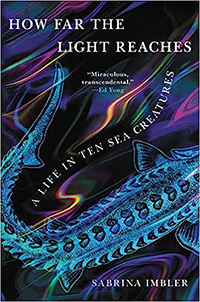
    How Far the Light Reaches

    Reading: I was blown away by How Far the Light Reaches: A Life in Ten Sea Creatures by Sabrina Imbler. A 2023 Lammy finalist for nonfiction, alongside Ricky Tucker’s And the Category Is . . . , this wholly unique book is one of the queerest works of science writing I’ve encountered in a long time, maybe ever. The author pairs the mysteries and miracles of the deep with narratives of first loves, iconic queer spots in NYC, scenes of protest, and more.

    TV: I’m watching the second season of The Bear, which continues to be one of the most innovative streaming shows, with episodes of various lengths, addressing anxiety, legacies of trauma, and the economic realities of the hospitality industry post-COVID, among many other things. Most people wouldn’t call it relaxing viewing, but it’s still packed with humor and worth your time. When you finish watching it, check out Alicia Kennedy’s review at Slate; in a season full of changes, “If one must work, The Bear posits, then force the work to be a means of transformation.”

    Films: I’ve been making my way through Criterion’s Masc collection and particularly loved The Aggressives, a 2005 documentary that follows six participants of various ages, all deeply secure in their presentations. Starting in 1997 and spanning to 2004, the group frankly shares their experiences ranging from joining the military, doing time in prison, competing in the ball scene, having children, and more. I have a total soft spot for documentaries set in NYC that features people on the city’s margins without tokenizing them, and that totally fits the bill in this gem of a film.  


    From Emily Spaulding, Business Operations Assistant 

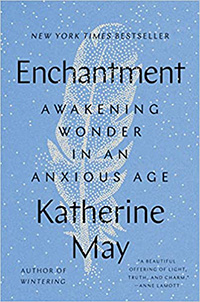
    Enchantment

    If meditation were a book, Enchantment: Awakening Wonder in an Anxious Age would be it. Katherine May perfectly explains post-pandemic anxieties I didn’t know I had, and then resolves them.

    I’ve also enjoyed the podcast Wiser Than Me, where Julia Louis-Dreyfus chats with women over seventy. Listening feels like having a cup of tea with your favorite grandma or great aunt.


    From Brittany Wallace, Sales and Marketing Coordinator 

    Belladonna

    Some people set yearly reading goals, but something about that makes my brain want to rebel and not reach the goal. So, instead of having a specific number in mind, I’m just leaning into the genres that have been piquing my interest and devouring as many of those stories as possible. So far, I’m up to thirty books, 14,672 pages read! 

    For my current workday read, I’m rereading/listening to Adalyn Grace’s Belladonna, an inventive, somehow-YA* story about a young girl who can’t die and her apparent soul-tie to Death himself. My bedtime book is Furyborn, book 1 in the Empirium Trilogy. I’ve been on a big romantasy kick, so I’ve torn through Sarah J. Maas’s ACOTAR and Throne of Glass series. And, like everyone on BookTok, I burned through Fourth Wing in twenty-four hours and anxiously await its sequel, out this fall.

    *If you read it, you’ll know why I’m a little disbelieving of its YA status.

    Summer reading 2023

  • By Christian Coleman

    FX Kindred

    Courtesy of FX Networks

    We took the crushing news pretty hard. The TV adaptation of Octavia E. Butler’s Kindred didn’t get a fair chance when it was cancelled a month and half after all eight episodes were uploaded in December 2022 to stream on Hulu. With the blessing of Butler’s estate, playwright and showrunner Branden Jacobs-Jenkins made bold choices—some of which might make Butler purists gasp—to modernize and expand upon Butler’s classic while staying true to her message. Such a shame that we won’t see the fruits of Jacobs-Jenkins and his crew’s screenwriting labor pay off.

    Since the novel’s publication in 1979, more slavery history scholarship, The 1619 Project for example, has emerged than was available before. Bearing this in mind with the screen alterations made to the story, we thought these titles from Beacon’s catalog would be useful for understanding the historical references included.

    As the title of this post indicates, these books are to be read after marathon-watching the series. So, if spoilers make you break out in hives—and there will be plenty—stop scrolling, go watch it, and then come back.

    Ready?


    Loving

    Loving: Interracial Intimacy in America and the Threat to White Supremacy

    Dana and Kevin’s relationship underwent a stark update. They’re not married as they are in the novel but just getting to know each other. They meet for the first time at Olamina’s, the restaurant where Kevin waits tables—the name is a nod to Butler’s Parable books—then again after Dana swipes right on a dating app. Will they trauma bond through their visits to antebellum Maryland? Or will Kevin decide he’s had enough of doing the time warp again and again with Dana? Unless Jacobs-Jenkins finds another network, we won’t know, because the series ended on a cliffhanger, leaving Kevin stranded on the plantation.

    An interracial Tindr swipe may be considered as common as charging your smartphone today, but that would not have been possible without the Loving v. Virginia decision. Remember that in the novel Dana and Kevin were able to marry because interracial marriage was legalized just nine years prior. And even then, their union sussed out the racial biases of their families. Legal scholar Sheryll Cashin’s Loving outlines the history of this defiance to white supremacy and offers a hopeful treatise on the future of race relations in the US, challenging the notion that trickle-down progressive politics is our only hope for a more inclusive society.


    How To Be Less Stupid About Race

    How to Be Less Stupid About Race: On Racism, White Supremacy, and the Racial Divide

    Jacobs-Jenkins was intentional about setting the present-day events in Kindred in 2016 as opposed to 1976. Listen closely to the television in the background during the scenes between Dana’s nosy neighbors, Carlo and Hermione. They’re watching the presidential debates between Hillary Clinton and Donald Trump, which sets the stage for the race politics Dana and Kevin straddle in both timelines. Carlo and Hermione’s concern for Dana’s safety—they’ve heard her screams between time travels—is thinly veiled contempt for her presence in the neighborhood. Their hostility toward her escalates, visit by visit, until they call the police for domestic disturbance. And we all know what happens when officers show up at a Black person’s home. The kettlebell Karens next door are a textbook example of colorblind racism, which sociologist Crystal M. Fleming covers in How to Be Less Stupid About Race. Performative political correctness in the front, racist stewing in the back.


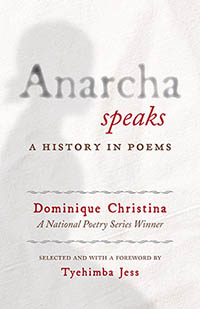
    Anarcha Speaks

    Anarcha Speaks: A History in Poems

    Sabina is one of several new characters created for the series. Enslaved on the Weylin plantation, she shuffles on swollen, deformed feet and provides period-appropriate attire for Dana and Kevin. This is the only time we see her. To pay for a doctor’s visit to treat the broken leg of his son, Rufus, Thomas Weylin trades Sabina to Dr. West so he can experiment on her. Her foot ailment piques the doctor’s “medical curiosity.”

    Her fate is reminiscent of Anarcha’s, an enslaved Black woman who underwent painful surgical procedures without anesthesia at the hands of J. Marion Sims, dubiously dubbed the father of modern gynecology. Poet Dominique Christina reimagines her story in the National Poetry Series-winning collection Anarcha Speaks. One can only imagine what tortures await Sabina at Dr. West’s practice. 


    The Price for Their Pound of Flesh

    The Price for Their Pound of Flesh: The Value of the Enslaved, from Womb to Grave, in the Building of a Nation

    Sarah the cook bristles with revenge against the Weylins. Thomas sold her sons to buy the furniture, china plates, and other fancy fixings his new wife, Margaret, demanded upon moving in with him. And look at how he summarily trades his second-in-command Luke, who grew up with him, during a trip to town with his son Rufus and Kevin. Black lives clearly did not matter to slaveowners, as the slave trade reduced them to commodities. Historian Daina Ramey Berry’s The Price for Their Pound of Flesh is a humane look at how the enslaved recalled and responded to being appraised, bartered, and sold throughout the course of their lives.   


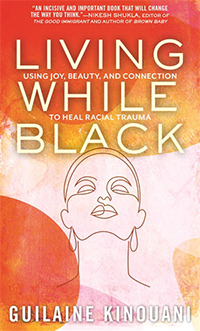
    Living While Black pb

    Living While Black: Using Joy, Beauty, and Connection to Heal Racial Trauma

    Those of us who have read Kindred and its graphic novel adaptation probably weren’t ready for the series’ ultimate twist: Dana’s mother, Olivia. There is no mother character in the novel. Jacobs-Jenkins ups the speculative ante by having Dana inherit the curse of antebellum time travel from Olivia, who in turn inherited it from her mother—a brilliant expansion on the source material and a shrewd metaphor for what psychologist Guilaine Kinouani identifies as intergenerational trauma in Living While Black. “Trauma knows no time boundary,” Kinouani writes. Subsequent generations carry the baggage of racial trauma and historical atrocities from their forebears. When that baggage goes unchecked, it can manifest as distress and dysfunction. Time travel to the horrors of slavery is indeed distress and dysfunction.


    The Long Walk to Freedom

    The Long Walk to Freedom: Runaway Slave Narratives

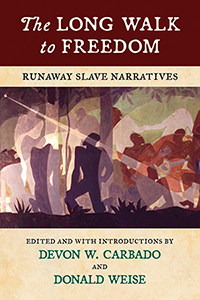
    Dana’s come-to-Jesus moment with Olivia is tough for her to hear. Olivia tells Dana stop worrying about her and to find a purpose in the community of enslaved Blacks while she’s stuck in the nineteenth century. Dana decides to help Winnie, Thomas Weylin’s newest concubine and another new character created for the series, to escape the plantation. A story like Winnie’s could be found in Devon W. Carbado and Donald Weise’s The Long Walk to Freedom, their collection of twelve first-person narratives that show the extraordinary and often innovative lengths runaway slaves went to for freedom.


    Gather at the Table

    Gather at the Table: The Healing Journey of a Daughter of Slavery and a Son of the Slave Trade

    The reason for Dana’s summons to the past eventually becomes clear to her. Rufus Weylin is her white ancestor, and the Weylin plantation is a part of her history. In the eighth and final episode, she finds his name in the family lineage handwritten in her family’s Bible. She also finds the name of Alice Greenwood, her Black ancestor who’s a child in the nineteenth century when they meet.

    As a millennial in the series, Dana’s reckoning with the past will hit with different generational significance than it does for 1976 Dana. She’ll need Thomas Norman DeWolf and Sharon Leslie Morgan’s Gather at the Table to begin her healing journey. But that can happen only when the time traveling stops.


    Kindred Gift Edition

    Kindred

    Because obviously. There would be no series without it.

    FX-Kindred


    About the Author 

    Christian Coleman is the digital marketing manager at Beacon Press and editor of Beacon Broadside. Before joining Beacon, he worked in writing, copy editing, and marketing positions at Sustainable Silicon Valley and Trikone. He graduated from Boston College and the Clarion Science Fiction & Fantasy Writers’ Workshop. Follow him on Twitter at @coleman_II.

  • By Eva Saulitis

    Orca

    Photo credit: Wolfgang Lucht

    Are the orcas okay? Headlines about their attacks on boats off the coast of Spain and Portugal have us raising eyebrows. Do they have a vendetta against humans? No, it’s all for funsies! This is how they socialize and shoot the breeze, or in this case, rip off rudders. There’s no record of orcas killing humans in the wild. If you want to see what their hunting forays look like, dip into this passage from Eva Saulitis’s Into Great Silence: A Memoir of Discovery and Loss among Orcas. The late whale researcher’s rich, lyrical prose brings us up close to the intimate lives of these creatures.

    ***

    Morning. Late June. Daytime breeze already ruffling the passage. While doing calisthenics on the beach, Olga spotted three blows threading upward in rapid succession against Gage Island, across the passage. Humpbacks. Some days, a particular quality of light, wind, and humidity made spouts stand out. Ralph, Mary, and I loaded up Whale 1. Since Elli was still sleeping, Olga stayed behind at camp. A few moments after departing, I spotted smaller, fuller blows off Squire Point. “Stop!” I yelled. The three of us stared through binoculars until the whales surfaced again—three orcas slinking close to shore, heading toward camp. Recalling Craig’s warnings about Squire Point, Ralph crawled onto the cabin roof and knelt on the bow, watching for rocks while Mary paralleled a male, female, and juvenile. I stood behind her, camera at my eye. “Once we’re past the point,” she said, studying the nautical chart, “it looks clear.”

    The trio swam past Whale Camp. Olga, hearing our engine and the whales’ blows, stuck her head out of the tent and waved. In deeper water, the orcas finally dove. We drove ahead, stopped and waited. Would they continue into the labyrinth of rocks and islands ahead of us? Or angle out into the passage? Mary spotted them near a grassy island. Idling in close, we saw that the female was gone. The juvenile nosed up to a tide-exposed rock, its fin wobbling as it pushed its body into the shallows, the male milling a few dozen yards away. A seal pup crouched on the rock, scrambling higher as the orca tried to shove itself up and over a lip to get nearer. We stared, stunned, through our binoculars. Here it was. Seal predation. “I wonder if the juvenile orca has the advantage in shallow water,” Ralph said.

    “Maybe it’s learning how to hunt?” I said. “I don’t know if I’m going to be able to watch this.”

    The seal’s eyes widened. It craned its head back toward the orca, then lurched a few inches higher. The male circled the rock. From behind, his dorsal appeared rippled. Mary checked the tide book. Fortunately for the seal, the tide was ebbing. I thought of Barry Lopez’s writings on the predatory behavior of wolves: “Predator and prey grow stronger together by means of a series of tests, through all the years of their lives, tests that pit them against each other at both psychological and physiological levels, tests that weed both culturally and genetically.” We were witnessing such a test.

    For ten minutes the young orca tried to charge the seal from various angles. Finally, without fanfare, it gave up. The male had already departed. The juvenile turned, inhaled, and dove. We inched Whale 1 forward with a paddle to see if the seal had been injured. Unharmed but shaken, it transferred its worried stare to us briefly before slipping back into the sea.

    “Wow, lucky seal,” Ralph exclaimed. “Lucky us.”

    “Hurry and start up, Mary,” I said. “Or we’ll lose them.” When we caught up, the orcas had reunited and the three were hunting, searching every nook along Mummy Island’s shoreline. They ignored a sea otter and a small group of Steller sea lions, which bunched tighter, rose high out of the water, and huffed as the orcas passed. Hauled on numerous rocks and islets were their likely prey: harbor seals, the main food of West Coast transients in British Columbia.

    As the whales penetrated further into Knight Island’s protected waters, Mary kept her eyes on the chart, and Ralph kept watch for bottom from the bow. It took our three sets of eyes to avoid hitting a reef or losing the whales. They were unpredictable, traveling north for a while, then abruptly reversing direction. Each time we dropped the hydrophone, it was silent. Mary flipped through the catalog. “I think Ripple Fin is AT11,” she said, pointing to a photo. “And that female looks like AT9, with the tiny nick.” According to the catalog, the juvenile was her offspring, AT10. Finally, in water too reef-choked to follow, we lost the whales.

    As we headed back toward camp, I studied the chart. Countless unnamed rocks and islets dotted the entrances of bays that cut deep into Knight Island’s body: Drier Bay, Copper Bay, Johnson Bay, Lower Herring Bay. The archipelago continued for several miles, to Channel Rock, creating a navigational challenge but a refuge for seals, sea otters, and birds. On the chart, large swatches of water appeared impassible, shaded in blue, riddled with asterisks and crosses for rocks. I imagined that world from the orcas’ perspective, an intimate geography they obviously knew as home. Sometimes their bodies probably scraped against rock, or brushed past eelgrass or kelp ribbons. We called that stretch of water the Labyrinth.

    That night, we sat inside the tent drinking cocoa laced with peppermint schnapps, recounting our encounter to Olga. “Hey, speaking of seals, an older guy from Chenega Village stopped by while you guys were out,” Olga said. “His name was Mike, said he grew up in Old Chenega. He said he’d heard you on the radio a lot, wondering where the whales are.” Olga laughed. “He’d been hunting in Icy Bay. He said there were a lot of seals in there. He sees orcas hunting in the ice a lot. There was dead harbor seal in his skiff.”

    Later, after Olga took Elli to bed, Mary and I labeled film rolls and filled data sheets. In the catalog, I checked off the Chugach transients we’d seen so far: AT12, 14 and 22 with Craig. AT9, 10, 11, and 18 with Ralph. “I’ll never remember those numbers,” Mary said. “We should name them.” We already had Ripple Fin. Sitting by the fire, we studied the photos, and tossed around ideas. We settled on Chenega, for AT9, the nicked female, and Mike for AT10, the young seal hunter. The second adult we named Iktua, after the seal haul out in Iktua Bay. Something had begun, a door cracking open.

    Two days later, it opened further. As we readied Whale 1 for travel one morning, two orcas, a male and a juvenile, surfaced off our stern, heading toward Squire Point. We decided to split up, Mary and Ralph taking the again-sluggish Whale 1 to find humpbacks, and Olga, Elli, and I taking the Dynous to follow the transients.

    We threw equipment into Olga’s army-issue ammo cans—green, watertight, metal containers like giant lunch boxes. Olga bundled Elli into a life jacket. Once Olga was settled in the inflatable, I shoved it away from shore, and she yanked the pull cord until the engine sputtered to life. “Hang on!” Olga cried, squatting on her heels in front of the outboard, Elli peering out of the bib of her rain pants. Kneeling in the bow, I watched for rocks, the camera zipped inside my jacket. At Squire Point, the whales—Ripple Fin and Mike—paused, circling the outermost rock. As before, a harbor seal crouched there, out of their reach. Did adult males train juveniles to hunt, I wondered? How did they know the seal was up there? Both whales nosed in, but within minutes they abandoned the seal and dove. We debated what to do. They might continue across the passage or they might return to the rock. The tide was rising. It wouldn’t be long before the seal was swimming. Five minutes passed. “Let’s listen for blows,” Olga said, killing the outboard. I stood up, wide-legged for balance, and scanned.

    At first I thought it was Elli, muffled against Olga’s chest. Something stirred the air, a moan. But it wasn’t Elli. It was coming from below, crescendoing into a trumpeting wail that twined around our ankles. I looked back at Olga. “Oh, my God, they’re calling,” she said. “They’re swimming right under us. Quick, get the recorder going.” I scrambled for the ammo can while Olga, clutching Elli, threw over the hydrophone. Fumbling with the plugs, I cursed until I found the right arrangement and the static stopped and calls poured from the speaker. They echoed off the passage’s underwater canyon walls.

    This was not the chatter of residents, the catlike whines and yips and whistles. This was something other: long, descending cries, and high-intensity blasts ending in upsweeps, like questions. This was a voice at once strident and mournful, a strange hybrid instrument, part trumpet, part oboe, part elephant, part foghorn. And loud. In the calls’ echoes, I imagined the passage mirroring back to the whales: You are, you are. Soon, in silences between vocalizations, we heard distant, answering calls. Mike and Ripple Fin burst through the passage’s surface, charging west. We yanked up the hydrophone and raced to catch up. As we passed, I snapped ID photos, kneeling in the bow. Approaching Iktua Passage, Olga spotted more blows. Ahead of the pair, we dropped the hydrophone again: wild ululations, mingled with cacophony, the passage resonating like an amphitheatre. Without the hydrophone, we wouldn’t know this. It would be like wearing earplugs and watching, from behind a half-drawn curtain, an orchestra flailing away on their instruments.

    At last, in tandem with the male and juvenile, we reached the mouth of Iktua Passage. The pair entered a fray, eight more orcas slapping flukes, charging after one another, lunging in tight arcs. We dropped the hydrophone, turned on the recorder and listened to a sound poem, like something composed by Philip Glass: upswept squawks punctuated by silence, and bangs and cracks, like axe blows against planks, some we could attribute to fluke slaps, and some not. Now and then a syncopated blast of echolocation, like automatic gunfire. No more mournful wails; these calls were higher-pitched, abrupt, gashes of sound, some degenerating into raspberries or harsh, thudding pulse trains, no two calls the same. A looping improvisation of molten glass, spinning, shattering, all of it stunningly audible in the still water. It reached a climax and suddenly stopped. The whales gathered into a line, nine abreast, one adult male behind. They circled slowly for an hour in formation, silent. Rest, I wrote in the notebook, along with the time. At seven in the evening, Elli fussing, all of us hungry and chilled, we left the whales and headed across the Passage toward camp, talking all the way, retelling it, piecing it into a story.


    About the Author 

    Eva Saulitis (1963–2016) studied whales in Prince William Sound, the Kenai Fjords, and Alaska’s Aleutian Islands for the past 24 years. In addition to her scientific publications, her essays, poems, and reviews appeared in numerous national journals, including Orion, Crazyhorse, and Prairie Schooner. The author of the essay collection Leaving Resurrection and the poetry collection Many Ways to Say It, she taught at Kenai Peninsula College, in the low-residency MFA program at the University of Alaska, and at the Kachemak Bay Writers’ Conference. She lived in Homer, Alaska.

  • Ellsbergpentagonpapers


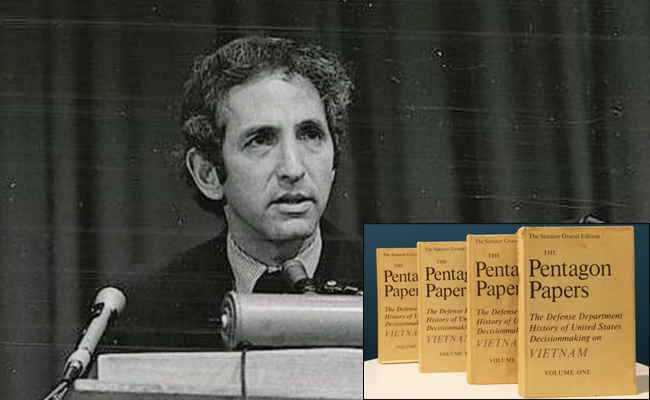
    Beacon Press joins others across America and the world in commemorating the life of the patriotic whistleblower and decades-long anti-war activist Daniel Ellsberg (1931–2023).

    As is widely known, Ellsberg was a defense analyst at the RAND corporation in the late sixties when he was part of a top-secret study of classified documents on the conduct of the Vietnam War. The study was commissioned by then Secretary of Defense, Robert McNamara.

    After becoming increasingly disillusioned about the war and inspired by the young men he saw going to prison for nonviolent protests against the draft, Ellsberg leaked what became known as the Pentagon Papers in 1971. The 7,000-page history revealed decision-making about the conflict, as well as the lies that were told by four U.S. presidents to cultivate public support for the war. After publishing a series of installments from the papers, the New York Times and the Washington Post were enjoined to halt publication until they eventually won their appeal to the Supreme Court, which established an important legal precedent against the government imposing prior restraint.

    Just before that legal victory, Senator Mike Gravel of Alaska read from the Pentagon Papers in a late-night meeting of a subcommittee that he chaired, officially entering the papers into the public record. Gravel aimed to make the papers widely accessible to the public and sought a private publisher to distribute them.

    After dozens of trade and university publishing houses had rejected Gravel's proposal, and despite political and financial risk, Beacon Press, then helmed by director Gobin Stair, agreed to take on the publication of the papers. As a result, President Nixon personally attacked Beacon, Stair was subpoenaed to appear at Daniel Ellsberg's trial, and J. Edgar Hoover approved an FBI subpoena of the press and its financial records.

    None of this deterred Beacon or the Unitarian Universalist Association (under which auspices Beacon publishes) from doing what was right. Reflecting on Ellsberg’s courage and Beacon’s connection to that moment in history, current director Gayatri Patnaik commented, “Daniel Ellsberg’s incredible fortitude stands as an example for all who believe in fighting for democracy and government accountability and who oppose war and the proliferation of nuclear weapons. We are incredibly proud to have taken the stand we did in releasing the Pentagon Papers. Today, over 50 years later, we are still guided by the principles that led to that brave decision.”

    The 5-volume set that makes up the Pentagon Papers has long been out of print and was never a commercial success. In fact, the cost of producing the books combined with the associated legal fees was a huge financial burden for the press. Loans from the UUA and a significant donation from the Unitarian Universalist Veatch Program at Shelter Rock, combined with smaller donations from supporters and from other publishing houses (led by a $2,500 donation from Random House), helped allay the enormous expense.

    The reasons for publishing the papers, though, were never financial. In 2002, during an interview with Susan Wilson in preparation for Beacon’s 150th anniversary, Gobin Stair referred to the Pentagon Papers as “a test of our purpose,” before concluding, “We were publishing what needed to be published." 

    What people said about The Pentagon Papers and Beacon Press

    "When [government agents] push Ellsberg and Beacon Press and others around, they're simply trying to make sure that there'll be no future Pentagon Papers."—Noam Chomsky

    "The story of the Pentagon Papers is a chronicle of suppression of vital decisions to protect the reputations and political hides of men who worked an amazingly successful scheme of deception on the American people. They were successful not because they were astute but because the press had become a frightened, regimented, submissive instrument, fattening on favors from those in power and forgetting the great tradition of reporting."—Justice William O. Douglas

    "We believe that in publishing the full version of the Pentagon Papers as made public by the Senator last June, we will help reduce the likelihood of our nation becoming involved in a similar situation."—Robert West, former president of the UUA

    "I got a phone call at home from Richard Nixon…he said, 'Gobin, we have been investigating you around Boston, and we know you are apparently a pretty nice and smart guy…I hear you are going to do that set of papers by that guy Gravel'…The result was that as the guy in charge at Beacon, I was in real trouble. Before we had decided yes or no, we were told not to do it."—Gobin Stair, former director of Beacon Press

    "The effect of the harassment of Beacon is intangible…There is no question that the publishing industry is more aware of government than at any time since McCarthyism."—Robert L. Bernstein, president and CEO of Random House

    "This case is a threat to the entire publishing industry because it provides a chilling example of how the Government can make any publisher, large or small but particularly small, hesitate to publish controversial material."—Alexander C. Hoffman, vice president of Doubleday

    "I can only hope for the opportunity to do something as daring and courageous as publishing these critical documents…The story of the Pentagon Papers is one of my very favorites about this press and what Beacon stands for."—Helene Atwan, former director of Beacon Press (1996 – 2022)

  • By Leslie Feinberg

    Protesting for trans rights at the Women’s March, Washington, DC, 2017. Photo credit: Ted Eytan

    Protesting for trans rights at the Women’s March, Washington, DC, 2017. Photo credit: Ted Eytan

    In the record-setting year of our horde 2023, over 520 anti-LGBTQ+ bills have already been introduced in state legislatures. Over 220 bills specifically target trans and non-binary people. These are not records the US should be setting. For a voice of reason and guidance, we turn to the wisdom of radical transgender activist Leslie Feinberg in Transgender Warriors: Making History from Joan of Arc to Marsha P. Johnson and Beyond. Notice how observant zie was in this passage in pointing out how capitalism is a key root of sex and gender oppression to keep our society divided.

    ***

    Capitalism is one of the most irrational economic systems imaginable: those who do the most, get the least, and those who do the least, get the most. How can such a system continue? It couldn’t if the vast, laboring majority got together to fight for a new, more equitable economy.

    Keeping people divided—that’s the purpose of making people fearful of those who dress differently, or who change their sex, or whose sex is not either-or. That’s the function of pitting lighter-skinned people against those with darker skin, nationality against nationality, men against women, straight against lesbian, gay, or bi, abilities against disabilities, young against old. Divide-and-conquer is a crude weapon, but it has proven historically effective—that is, right up to the point where people wake up and realize that they have a material need for unity.

    So what is the solution? Are sex and gender oppression so ingrained in people after centuries of campaigns to justify trans persecution that this bigotry can no longer be eradicated? Should we even try? Where would we begin?

    When I was growing up in the stifling repression of the 1950s, I couldn’t have imagined that the wave after wave of revolutionary struggles throughout the 1960s and 1970s would follow. The Stonewall Rebellion was part of those battles for change. I can remember seeing the banners of the young gay liberation movement flying at rallies in defense of the Black Panther Party, and against the Vietnam War.

    But many of us who were working in the sixties enjoyed a higher standard of living, partly because the powers that be decided a liberal guns-and-butter approach would be most effective to dampen any domestic struggle against the Vietnam War. That’s why the Johnson administration beefed up spending for social services—the same vital services that are being slashed today. It was an attempt to keep the youth who were opposing the war and the Black, Latino, and Native liberation movements isolated from the mainstream of the working class.

    But today, the system isn’t working for the majority of people. Many millions are holding down two or three part-time jobs, lack health care, or are one paycheck away from homelessness. Those in the ruling summits of power in the United States are emboldened by the setbacks for workers in the former Soviet Union and Eastern Europe, and are trying to crush the trade unions, as well as the gains, like Social Security, unemployment, and welfare, won by militant struggles over the last seven decades.

    At a time when there is no real economic safety net for most working people and our standard of living is under attack, is it any wonder that we are witnessing well-coordinated state-by-state ballot campaigns to strip lesbians, gays, bisexuals, and trans people of any recourse against discrimination by characterizing our progressive civil rights legislation as “special rights”?

    And is it any surprise that the same well-funded movers-and-shakers of these “family values” hate crusades are frequently in the same ranks as those who are violently attacking women’s rights to reproductive freedom, and are trying to scapegoat immigrants?

    ***

    This is divide-and-rule. But that doesn’t mean we shouldn’t fight for reforms! All trans people need basic civil rights, and we need them right now. In the United States at the present time, for instance, we have very little recourse against discrimination and are struggling to even be included in the broad human rights laid out in the Constitution.

    As our contemporary trans movement gathers more and more oppressed sex and gender communities into its vortex, we will formulate extensive demands in the course of our struggle. We must demand the decriminalization of all forms of outlawed sex and gender expression, and gear education to winning social acceptance of sex and gender variance. We have a right to something as basic as clean toilets that are not marked “women” or “men.”

    Transsexual women and men, and other trans people, have a right to affordable surgery and hormones. And all trans people need access to basic health care, without fear of being turned away because of bigotry or lack of money. The trans community is also ravaged by AIDS; we need AIDS education and services that are offered in trans-friendly spaces.

    We need to fight discrimination against us in housing and employment, in the military, and in child custody and visitation cases. We need to fight violations of the rights of trans prisoners, and trans victims of police brutality.

    High schools, colleges, and universities need to include trans individuals and struggles in their curricula. In addition, the very concept that our current narrow sex and gender system is eternal needs to be challenged by exploring the diversity that has existed throughout human history. We need a fresh reexamination of history, anthropology, and medical science in order to weed out any concepts that sex and gender variation are “abnormal.”

    Sex categories should be removed from all basic identification papers—from driver’s licenses to passports—and since the right of each person to define their own sex is so basic, it should be eliminated from birth certificates as well. And affirmative action—first won to redress some of the historic discrimination based on race and sex—needs to be defended and expanded to include more victims of sex and gender oppression.

    Each person should have the right to determine and change their sex—and express their gender in any way they choose.

    But those rights won’t just fall from the sky. People have a right to food and shelter, and to be free from the threat of sexual or racist violence, too, but all of this takes a struggle.

    ~~~

    For trans people, winning progressive legislation and repealing bigoted laws are important stepping stones in our larger struggle for justice. But the experience of this century has shown that the organic make-up of the profit system inevitably drives it into a cataclysm of economic and social crises that can wipe out the progressive gains of a lifetime. That’s the lesson I learned from the triumph of fascism in Germany.

    As a Jewish child, I thought fascism gathered without warning, like storm clouds. So when I found a swastika carved into my wooden desktop at school, I feared fascism had arrived and nothing could stop the storm. It’s no wonder that I spent so much time studying the real reasons why the Nazis came to power in Germany in the 1930s.

    The German economy was in deep decline, and a powerful workers’ movement was challenging capitalist rule itself, as were many in the movements of trans people, lesbians, gay men, women, and socialists. Fascism was unleashed to crush this movement, the working class, and all allied organizations. The rise of the Nazis was funded by a segment of the industrialists and bankers. Who paid for the construction of the concentration camps, railroad lines, and ovens? Who profited from the slave labor? Hitler promised to turn around the economy and bring about prosperity, and he delivered. War was still an effective jump start for a stagnant capitalist economy.

    War was also “good for business” at the time of the Stonewall Rebellion. But, like any drug, sooner or later quick fixes don’t work. When the Pentagon waged war against Iraq, the economy didn’t revive. So what does the ultra-right wing have to offer now? They won’t deliver jobs. The “leaner, meaner” restructuring, along with the high-tech revolution, has meant more skilled workers are flipping hamburgers for minimum wage.

    We are faced with either relinquishing what we and earlier generations won in terms of living and working conditions and political gains—or organizing in a broad counteroffensive.

    ~~~

    As trans people, we have a history of resistance of which we should be proud. Trans warriors stood up to the slave-owners, the feudal landlords, and the capitalist bosses. Today, as trans warriors we are joining the movement for a just society in greater and greater numbers. By raising the demands of our trans movements within the larger struggle for change, we are educating people about our oppression, winning allies, and shaping the society we’re trying to bring into being.

    None of us will be free until we have forged an economic system that meets the needs of every working person. As trans people, we will not be free until we fight for and win a society in which no class stands to benefit from fomenting hatred and prejudice, where laws restricting sex and gender and human love will be unthinkable.

    Look for us—transgender warriors—in the leadership of the struggle to usher in the dawn of liberation.


    About the Author 

    Leslie Feinberg born in Kansas City, Missouri, in 1949, was a transgender activist, a revolutionary communist, and the author of five books, including Trans Liberation: Beyond Pink or Blue and the Lambda Award–winning novel Stone Butch Blues. Zie died in 2014. In 2019, zie was one of the first 50 LGBTQ leaders to be honored on the newly dedicated National LGBTQ Wall of Honor at the Stonewall Inn in New York City.