• A Q&A Sarah Rose Cavanagh
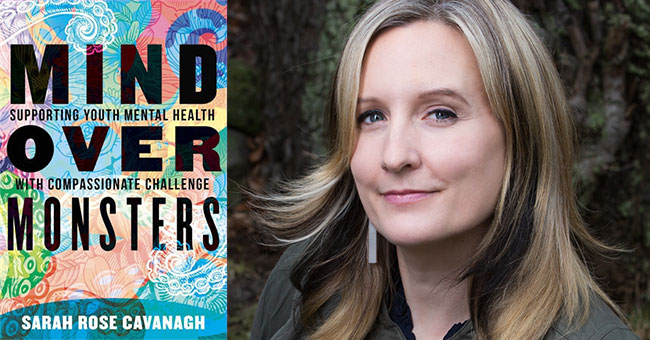
    Cover design: Carol Chu. Author photo: Sharona Jacobs Photography

    Cover design: Carol Chu. Author photo: Sharona Jacobs Photography

    Statistics indicate that mental health problems like depression and anxiety have been skyrocketing among youth in recent years. The widespread isolation and disrupted learning during the pandemic years has only accelerated this crisis. The ever-present question today is, what changes can be made to educational settings in the US to better support youth mental health? As psychologist and professor Sarah Rose Cavanagh writes, our youngest generations are running “low on hope and high on burnout.” In Mind over Monsters: Supporting Youth Mental Health with Compassionate Challenge, Cavanagh examines how to create learning and living environments characterized by compassion, while guiding youth with practices that encourage challenge. Additionally, Cavanaugh shares her personal journey with anxiety, bringing a unique understanding to her exploration of the student mental health crisis. Beacon Press senior publicist Bev Rivero caught up with her to chat about it.

    Bev Rivero: What inspired you to write this book?

    Sarah Rose Cavanagh: I was drawn into this topic for a few different reasons. First, I was watching the news and reading articles warning about a growing mental health crisis in our youth—and this was even before the beginning of the pandemic. As a college educator who studies psychology, and as the parent of a teenager, this news was of high concern to me, both personally and professionally. Second, I was observing these battles taking place in higher education, where one side argues that youth need more compassion, care, and flexibility, and the other side says that we’ve already given too much, and that young people need more challenge, exposure, and risk-taking. I think if you put these people in a room together, most of them would find that really, they all agree that students need both compassion and challenge—but we end up having opposing conversations on opposite tracks. I want to open a conversation about the intersection of compassion and challenge.

    BR: Your subtitle argues that we should support youth mental health with “compassionate challenge.” Can you explain what that is?

    SRC: The take-home message of compassionate challenge is that we need to face the things that scare us, but the only successful route to doing so begins with a secure base. Life is terrifying, and monsters are real—the world is a dangerous place. We can’t stop being scared, but the best way to face those monsters is together, through the development of safety and belongingness and community. We have to do things we don’t enjoy to fix the problems in the world. Only by engaging with those problems can we solve them.

    The monsters referred to in the book are both internal and external. I often view my own panic disorder as a sort of monster that afflicts me sometimes. Of course, external monsters also exist. Racism, poverty, gun violence, and climate change are quite real threats in the world. Internal threats often require more of a taming, involving approach and even befriending. External threats often require collective action, rooting out their sources and finding new solutions. In both cases, facing these monsters head on rather than hoping they’ll disappear on their own is the most productive approach.

    BR: Compassion and challenge working hand in hand takes many forms in Mind over Monsters. What are some highlights that stand out that you encountered when gathering examples for the book, that either made it into the book or didn’t?

    SRC: In terms of examples, I was most inspired by stories from students themselves about how they rose to challenges in settings of compassion. I recall one student I call Hannah, who as a first-year student at an HBCU completely froze in the middle of a class presentation. Rather than excusing her from finishing the presentation, her instructor calmly and supportively talked her through the rest of the talk. Hannah shared that this one experience not only changed her willingness to be a discussion leader in future classes but also made her much more comfortable in social settings on campus. She identifies that particular moment as a key experience in her development as not just a student but a human being in the world. And Stephen, who was in and out of the community college system in between some prison stays, who got so frustrated in a math class that he left his class and punched a tree and decided he was done with college. His math instructor followed him out and talked him into believing in his own possibility and returning. Or Krystan, who struggled to believe she could succeed in her college education and career given the challenges of her disability, who suddenly believed in her own potential when her psychology professor who happened to be blind told her that she inspired him.

    These are all examples of students rising to challenge because they were embedded in situations where their autonomy, competence, and belongingness needs were met.

    BR: You argue that youth need compassionate challenge and that motivation is served by shoring up young people’s feelings of autonomy, competence, and belongingness. Are there some ways to bring this into the classroom for young adults that come to mind?

    SRC: Anxiety and motivation use many of the same physiological systems to mobilize the body for action. Changing the appraisal and interpretation of the challenges before us can spin us either toward motivation or anxiety.

    Avoiding what you fear just reinforces that fear and can spiral into avoiding settings that are less and less challenging, narrowing the scope of your experience. Learning, after all, requires a certain amount of emotion and a certain amount of arousal. If students feel safe, have a sense of autonomy, and a sense of freedom in the classroom, this will help them feel capable, confident, and have a sense of purpose and vocation. These sorts of appraisals and settings can set them on a path to motivation instead of anxiety.

    In terms of what compassionate challenge and support for motivation looks like in the classroom, instructors must do the compassion piece first. Ideally, the stage for compassion is set in the first few weeks of the semester. Compassion can be embedded into the atmosphere, the setting, and the syllabus. Instructors should establish the classroom as a space for co-creating and for discussion, and they should prioritize the building of relationships. Everyone hates ice breakers, but carefully used and well selected ice breakers can be great. They help to establish that we are a group of people working together in order to achieve a goal.

    The challenge piece prioritizes student engagement, evokes their passion and curiosity, and motivates them to take risks. It also has a lot to do with a sense of play, in techniques that I call improvisational learning. We can take a lot of lessons from performing arts: the students and instructors work together as an ensemble, encouraging each other on to a shared experience of success. But the work often involves vulnerability, stretching past your comfort zone, and taking risks. When you can infuse the class with that sense of lightheartedness, intellectual play, and the sense that learning is fun, you can stimulate engagement and challenge your students to greater heights of learning. You also can ask more of your students, cultivating high standards and expectations.

    BR: You write, “COVID took an already maxed-out industry and poured an avalanche of new need on top of it.” Are there any illuminating thoughts you’ve heard from mental health practitioners on a way forward, for a person seeking treatment or otherwise?

    SRC: Well, from the societal side, we need a lot more mental health research and funding, particularly for adolescents. We also desperately need more clinicians of every sort. There is an enormous shortage of trained helpers, and sharply increasing need. More and more clients are seeking clinicians who can relate to their lived experiences, and the field of clinical psychology is overwhelmingly white and homogeneous in many other identity characteristics. And so, we also need targeted recruitment of and incentives for diverse professionals, particularly BIPOC professionals, to the field of mental health treatment. Even if we invest heavily in the expansion of mental health care services, it is unlikely to truly stem the tide of need we are seeing. To truly create change, we also need to explore and invest in community-based care, where we expand the amount of support people are receiving from their schools, their neighborhoods, their healthcare, their faith-based communities, etc. If we can support people before a crisis, we can reduce the strain on the mental health care system that was devised to respond to people in crisis. A big focus of the book is on the fabrics of care that support mental health—I think we could have a much huger impact on mental health if we addressed our fraying support networks than if we target treating symptoms once they emerge.

    BR: When writing a book on mental health, particularly one that includes part of your personal journey with anxiety, what were some ways that you took care of yourself during the process?

    SRC: I conducted the first interview for the book during the initial weeks of lockdown in spring 2020, and all of it was written in the ensuing years of disruption, higher ed pivoting to online learning, and remote schooling for my own child. I’m sure some of the darkness that lurks around the edges of the book seeped in from the global drama that was enfolding. But on the other hand, intellectualization has always been my primary emotion regulation method. Novelist Richard Russo once said that “one of the deepest purposes of intellectual sophistication is to provide distance between us and our most disturbing personal truths and gnawing fears.” So, bizarrely, writing a book about the psychological, philosophic, and neuroscientific basis of my personal journey with anxiety during an incredibly anxious time was probably, in fact, quite therapeutic!

    But I also spent a lot of time cooking, romping with my dogs, and reading speculative fiction.


    About Sarah Rose Cavanagh 

    Sarah Rose Cavanagh is the senior associate director for teaching and learning at the Center for Faculty Excellence and an associate professor of practice in psychology at Simmons University. Her research considers whether the strategies people choose to regulate their emotions and the degree to which they successfully accomplish this regulation can predict trajectories of psychological functioning over time. Her books include The Spark of Learning: Energizing the College Classroom with the Science of Emotion and HIVEMIND: The New Science of Tribalism in Our Divided World. Connect with her on Twitter @SaRoseCav.

  • By Christian Coleman

    Red-alert-hot-spot-FL

    Red-alert hot spot Florida

    Ah, Florida! The hottest tourist getaway where you can refine your tan, stoke your adrenaline on Disney World rides, and soak up state-sanctioned prejudice and ignorance under the sun. Joining fellow civil rights groups League of United Latin American Citizens and Equality Florida, the NAACP issued a travel advisory for the Sunshine State to warn tourists about the laws and policies that are “openly hostile toward African Americans, people of color, and LGBTQ+ individuals.” If Stefon from SNL were in charge of promoting DeSantisLand—gawd forbid!—he’d say this hot spot has everything. The Don’t Say Gay Bill and anti-trans legislation. The Stop WOKE Act and anti-CRT itchies. Anti-immigrant bills and border crisis scaries. And open-carry assault weapons to glow up your belts.

    Florida’s dystopian theme park makeover didn’t take place in a vacuum or overnight. We have this selection of our authors’ books to wrap our heads around what happened and as a reminder to heed the NAACP’s advisory until the gun-shaped peninsula gets it act together. Whenever that will be. How harrowing yet on-brand American that relics like the Green Book can’t be called relics in the twenty-first century.


    Prong I: Don’t Say Gay Bill and Anti-Trans Legislation 

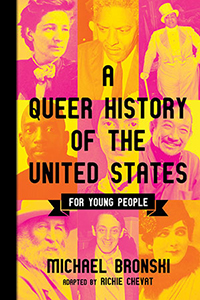
    A Queer History of the United States for Young People

    A Queer History of the United States for Young People

    “If we are erased from the history books, then how can we ever know who we are? This absence, this erasure, denies us the right and the ability to use our history as a guide, to feel pride in the heroism and accomplishments of the LGBTQ people who came before us. And it denies us the ability to use this history as a guide to the future so we can follow in their footsteps.”
    —Michael Bronski and Richie Chevat 


    Transgender Warriors

    Transgender Warriors: Making History from Joan of Arc to Marsha P. Johnson and Beyond

    “Our histories have been erased and whitewashed. We are told that transness is new, that transition is unprecedented. We know this to be patently untrue, but anti-transness continues to find new ways to protect the binary (see the contemporary emergence of gender reveal parties). It remains up to us to track down and preserve our own histories for ourselves. Leslie’s work showed me that it was possible to make history—to find, create, and archive the histories of those who laid the groundwork for us, who showed us how to move beyond the gender binary, and who existed all throughout time as their most full, beautiful, and expansive selves.”
    —Tourmaline, from the introduction of the twenty-fifth anniversary edition


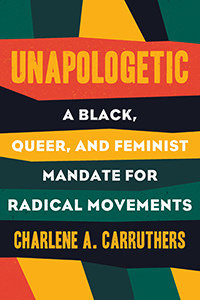
    Unapologetic

    Unapologetic: A Black, Queer, and Feminist Mandate for Radical Movements

    Verbal and physical attacks on Black lesbian feminists may seem surprising to some, as if they belong to a less enlightened era, but they are predictable in times of our high activity and visibility. Regardless of the risk, however, we Black queer and trans women have been on the front lines of anti-police and Black liberation organizing in the United States. We have been there after Black men and boys have been slain by police officers and vigilantes. We have shown up, even when masses have not, after a Black woman, girl, or trans, or queer, or gender-nonconforming person has been killed. And we will continue to show up. What we choose to support and oppose defines our politics.
    —Charlene A. Carruthers 


    YoureInTheWrongBathroom

    “You’re in the Wrong Bathroom!”: And 20 Other Myths and Misconceptions About Transgender and Gender Nonconforming People

    “Rather than being threatening to others, the visibility of trans and gender-nonconforming people contributes to the well-being of youth, both trans and cis, and to a safer, more civil society. Exposure to trans and gender-nonconforming individuals benefits our society both directly and indirectly. Normalizing transgender and gender-nonconforming lives through visibility on television, in movies, and in daily life offers role models people can identify with, especially during the agonizing process of coming out.”
    —Laura Erickson-Schroth and Laura A. Jacobs 


    Prong II: Stop WOKE Act and Anti-CRT Legislation 

    An African American and Latinx History of the United States

    An African American and Latinx History of United States

    “I wrote this book because as a scholar I want to ensure that no Latinx or Black children ever again have to be ashamed of who they are and of where they come from. Collectively speaking, Afri[1]can Americans and Latinx people have nothing to apologize for. Every democratic right we enjoy is an achievement that our ances[1]tors fought, suffered, and died for. When I was growing up, their struggle was not part of the curriculum.”
    —Paul Ortiz 


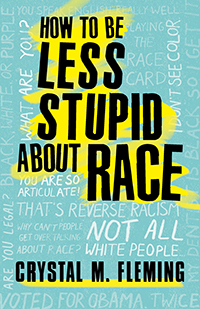
    How To Be Less Stupid About Race

    How To Be Less Stupid About Race: On Racism, White Supremacy, and the Racial Divide

    “Critical race theory is kryptonite for the myth of color-blindness and helps cut through the bullshit of postracial propaganda by specifying the role of social institutions (especially laws and legal practices) in reproducing racism. From a critical race perspective, the United States is not (and never was) a benevolent ‘nation of immigrants.’ Rather, it is a nation of settler-colonialism, genocide, white nationalism, racial slavery, legal torture, and institutionalized rape. Since the inception of this country, laws and legal practices systematically favored whites economically, politically, and socially . . . From this perspective, laws and legal institutions within this country have continually converted white identity into a valuable, exclusive mechanism for maintaining power.”
    —Crystal M. Fleming 


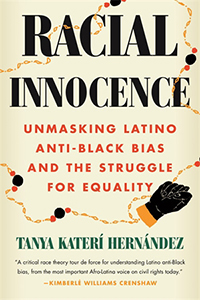
    Racial Innocence

    Racial Innocence: Unmasking Latino Anti-Black Bias and the Struggle for Equality

    “When Peruvian American George Zimmerman killed unarmed Black teenager Trayvon Martin for walking in his neighborhood in 2012, Zimmerman’s relatives and defenders insisted that the murder was not racist because Zimmerman was Latino. Zimmerman’s brother Robert explicitly stated that Zimmerman was not “some kind of mythological racist monster [because] he is actually a Hispanic non-racist person.” All of which strongly suggests that sociologist George Yancey’s survey research indicating that Latinos (unlike African Americans) are more disposed to believing that Latinos cannot be racist is also applicable in the more extreme context of physical violence and murder.”
    —Tanya Katerí Hernández 


    Stand Your Ground

    Stand Your Ground: A History of America’s Love Affair with Lethal Self-Defense

    “As we’ve seen with the tragic death of Trayvon Martin, an unarmed Black seventeen-year-old gunned down by an armed citizen in a Florida suburb in 2012, perceptions of threat are in the eye of the beholder. Defensive lethal violence by armed citizens shares a historical genealogy with contemporary police violence, in that the usual targets are most commonly people of color . . . If Black men are widely perceived as intrinsically dangerous, they do not need to be armed to be seen as a threat to public safety.”
    —Caroline Light


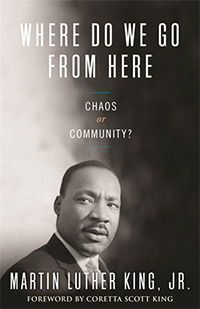
    Where Do We Go From Here

    Where Do We Go from Here: Chaos or Community?

    “One of the great liabilities of history is that all too many people fail to remain awake through great periods of social change. Every society has its protectors of the status quo and its fraternities of the indifferent who are notorious for sleeping through revolutions. But today our very survival depends on our ability to stay awake, to adjust to new ideas, to remain vigilant and to face the challenge of change. The large house in which we live demands that we transform this worldwide neighborhood into a worldwide brotherhood.”
    —Martin Luther King, Jr., “The World House”


    Prong III: Anti-Immigrant Sentiment and Legislation 

    Asian American Histories of the United States

    Asian American Histories of the United States

    “Despite the many differences in national origin, language, faith, generational status, and socioeconomic status of Chinese, Japanese, Filipinos, Koreans, and Indians, anti-Asian hate in the United States wove their fates together. The linkage between Asian bodies and diseases was only one strand of this pattern of hatred. Economic and sexual competition, imperial and colonial hierarchies, and wartime politics were others. At moments of various crises beginning in the second half of the nineteenth century, they incited egregious forms of anti-Asian violence in the United States.”
    —Catherine Ceniza Choy


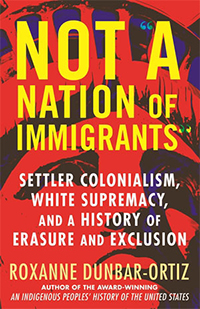
    Not a Nation of Immigrants

    Not “a Nation of Immigrants”: Settler Colonialism, White Supremacy, and a History of Erasure and Exclusion

    “When US Americans talk with fear or hate about ‘Latinos’ or ‘Hispanics,’ or that ‘there are too many of them,’ they are talking about Mexican Americans, not Cuban Americans or Argentine Americans. And the Mexican American population in the US at thirty-seven million does dwarf all other Latino groups, the second and third largest being Cuban Americans and Salvadoran Americans at over two million each. Importantly, unlike other Latin American nations, there is an ancient connection between Central México and the southeast and southwest, and beyond, of what is now the United States, with migrations, roads, and trade routes . . . Although not enunciated by the Mexican haters in the US, this affinity of north and south threatens the legitimacy of settler colonialism and the artificial border that the United States established and militarized but cannot control. Mexican hating is a form of Indian hating.”
    —Roxanne Dunbar-Ortiz


    White Borders

    White Borders: The History of Race and Immigration in the United States from Chinese Exclusion to the Border Wall

    “Immigration laws are a central, but often unrecognized, part of the white supremacist vision of the United States as a white country. The idea of restricting immigration to protect a white identity connects the immigration crackdown of the Trump administration, the eugenics and race pseudoscience of the immigration restrictions in the 1920s, and the anti-Chinese movement of the 1880s. In the great replacement version of America, new immigrants are not seen as like-minded workers drawn to the ideal of the American dream. Instead, they are an existential threat to the white character of the country. Although immigration restrictions are described as protecting American jobs, they are fundamentally about protecting white supremacy.”
    —Reece Jones


    You Are Not American

    You Are Not American: Citizenship Stripping from Dred Scott to the Dreamers

    “Citizenship stripping runs counter to the popular perception of the United States as an open, tolerant, and multicultural nation of immigrants, welcoming not only newcomers but also new cultures, religions, and beliefs. That perception is rooted in fact. From the beginning of the nineteenth century to the start of the twentieth, the United States became the new home for three-fifths of the world’s immigrants, and it continued to take in more immigrants than any other country throughout the twentieth century. . . . And yet the United States is often at war with that identity, at times embracing exclusionary and intolerant policies ranging from Jim Crow to racially restrictive immigration rules to McCarthyism.”
    —Amanda Frost

    Red-alert-hot-spot-FL


    About the Author 

    Christian Coleman is the digital marketing manager at Beacon Press and editor of Beacon Broadside. Before joining Beacon, he worked in writing, copy editing, and marketing positions at Sustainable Silicon Valley and Trikone. He graduated from Boston College and the Clarion Science Fiction & Fantasy Writers’ Workshop. Follow him on Twitter at @coleman_II.

  • By Brian Batugo

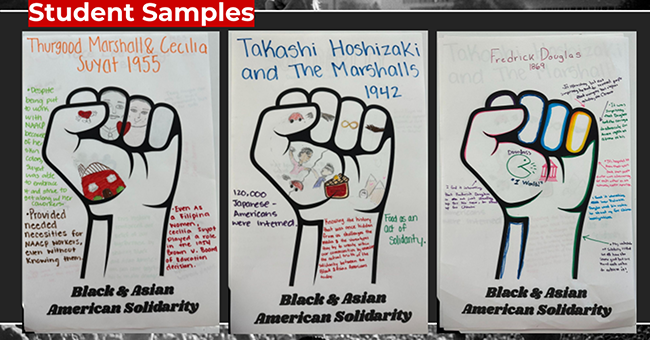
    Student posters celebrating Black and Asian American solidarity

    Student posters celebrating Black and Asian American solidarity. Photo credit: Brian Batugo

    Asian American history must be included in the broader context of US history, especially given the increase in hate crimes and incidents resulting from xenophobic and racist rhetoric that falsely blamed the Asian American community for the coronavirus. Catherine Ceniza Choy’s Asian American Histories of the United States offers a significant counter-narrative that celebrates and highlights the historical support and collaboration between Black and Asian Americans, challenging the media’s portrayal of hostility between these racialized groups.

    In California, there is a growing demand for resources that present diverse perspectives and center the knowledge and histories of BIPOC communities. By 2030, all California high school students will be required to take an ethnic studies course. In San Diego, where I work as an Ethnic Studies Resource Teacher, this requirement will be implemented by 2024. Central Office Ethnic Studies Resource Teachers and Teachers on Special Assignment (TOSA) across California are needed to support school districts in the strategic implementation ethnic studies courses to fulfill graduation requirements. This is the context in which I position my work in K-12 ethnic studies.

    Back in March, I disrupted a regularly scheduled tutorial session in an AVID eleventh-grade class in San Diego to pilot an ethnic studies lesson inspired by a chapter from Choy’s book on the solidarity between Black and Asian Americans. AVID stands for Advancement Via Individual Determination and was founded in San Diego. Classes focus on study skills and generate supportive spaces for first-generation students (all were students of color at the school site I visited) to prepare them for college. Students in the class identified as Black, Somali, Cambodian, Vietnamese, Filipino, and Mexican. All the students were enrolled in their school’s ethnic studies course titled “Identity and Agency in US History,” so they were familiar with ethnic studies content and teaching practices from their history teacher.

    Entering Space

    To establish my connection with the students, I introduced myself as a queer Filipinx-American educator with roots from Stockton, California, the home to one of the largest Filipino populations outside of Manila from the 1920s-1950s. I shared about my degree in Ethnic Studies from UC Berkeley, my former high school students in Stockton, my fiancé Michael, and my dog Patrick. Building a community and being critically self-aware and transparent about my own intersectional social identities is crucial as an ethnic studies K-12 educator because it models the importance of identity for students. This understanding of self shapes the way we create, teach, and explain. It influences our biases and deepens our ability to relate to students, especially those who have not been centered in textbook narratives of History and English curriculum.

    Next, I outlined how today’s lesson could be considered an ethnic studies learning experience by incorporating the guiding principles and values outlined in California's Model Ethnic Studies curriculum. We aimed to do the following: 

    • Celebrate and honor communities of color—specifically Black and Asian Americans—by providing a space to share their stories of struggle and resistance, along with their cultural wealth
    • Center and place high value on marginalized knowledge, acknowledging how our history classes did not have a chapter readily available to discuss today’s topic
    • Challenge oppressive beliefs on ideological, institutional, interpersonal, and internalized levels—especially the ways that viral videos showing Black-on-Asian violence during the pandemic reinforced the beliefs that tension and division run rampant among our communities

    Energizing our Learning 

    To begin the lesson, we discussed solidarity. What is it? What do you know about it? When have you experienced it? How do we show it today? To facilitate collective knowledge building, I showed a video where ants mobilize and create a ball to protect one of their own from an anteater. This visual representation provided context for students to understand solidarity as teamwork, a sense of togetherness, problem-solving, and protection.

    We then delved deeper into solidarity by examining visual examples, such as images of workers with linked arms, individuals supporting Ukraine’s flag, Black Lives Matter protesters, and a banner in solidarity with the Trans community. These modern-day examples allowed students to connect with familiar instances of solidarity. However, we then shifted our focus to three specific images: Mildred and Richard Loving, a gif of two people performing a complicated handshake, and a picture of apple pie à la mode. We explored how marriage, friendship, and food can serve as forms of solidarity, encouraging students to consider the different ways they show solidarity in their own lives.

    After establishing a conceptual understanding of solidarity among the students, we examined how media headlines portrayed the relationship between Black and Asian Americans. Some of these headlines included: “​​Black-Asian animosity is an American tradition;” “Model Minority Myth Again used as a Racial Wedge between Asians and Blacks;” “Viral images show people of color as anti-Asian perpetrators. That misses the big picture.

    Students made critical observations about what they saw. One student noticed division among the communities and questioned the assumption that animosity between Black and Asian Americans was an American tradition passed down through generations. Another student criticized these narratives, pointing out how the media often pit communities of color against each other. Others disagreed with the narrative, emphasizing the need for more comprehensive information beyond just headlines. This perspective-taking exercise allowed students to critically reflect on their own identities and consider different viewpoints. I was able to facilitate these conversations about race because the class already had a strong sense of norms and community, thanks to their AVID teacher. Reflecting on how the #StopAsianHate movement contributed to this narrative, we discussed the power of the media in shaping public perception.

    Framing Our Inquiry 

    We then delved into Choy’s quote, which posed a thought-provoking question:

    In the age of COVID-19, we bear witness to the intense circulation of videos and images of Blacks committing violence against Asian Americans on social media, creating the notion that the surges in anti-Asian hate crimes and incidents are primarily a problem of Black-on-Asian violence. But what if the history about our communities’ solidarity had been circulated with the same frequency and intensity?

    This quote from Choy provided a framework for our inquiry, challenging students to envision a better reality, one that emphasizes solidarity among Black and Asian Americans to serve as a much-needed counter-narrative to the media headlines we just discussed. It grounded the next phase of the lesson, providing a clear challenge and purpose. The lesson’s essential question was: How have Black and Asian American shown solidarity for each other in the past and today?

    The subsequent part of the lesson required students to practice solidarity with each other. They collaborated in small groups, each assigned a one-page excerpt from Choy’s chapter paired with a photo to show the individuals honored in each narrative. Choy included twelve case studies demonstrating instances of solidarity between Black and Asian Americans, ranging from Frederick Douglass in the 1860s to China Mac and Mista F.A.B. in 2020. Students worked together to read the article, identify what was surprising, interesting, and troubling, and locate evidence of solidarity in their assigned narrative. They then collaborated to draft a “solidarity claim,” answering the inquiry question and supporting their claim with evidence from Choy’s excerpts.

    Each One, Teach One 

    But we didn’t stop there. The culminating project for this lesson involved students creating posters using their notes in a solidarity graphic organizer to demonstrate their learning. These artifacts summarized the key takeaways of their learning in an authentic and visually compelling way. Students presented their work to the class with enthusiasm and pride. Many commented on how much of these narratives were surprising because the history was new to them. Overall, as each group presented the work, the stories of Black and Asian American solidarity began to circulate. These posters, proudly displayed on the walls of the classroom, serve as reminders to students of the enduring solidarity between Black and Asian Americans throughout history.

    Reflecting on how this newfound knowledge might challenge perceptions of Black and Asian American solidarity moving forward, I felt compelled to share some key reflections from students as we wrapped up our lesson:

    • Black and Asian solidarity has existed for 150+ years.
    • This helps me understand more that even if people think otherwise against us, we can use our voices to speak up and let ourselves be heard that we’re in unity.
    • Knowing the history that was once hidden from us challenges the media and stereotypes they try to create within our communities by unveiling the actual truth of the solidarity between the Black and Asian Americans today.
    • The history reinforced our belief of our togetherness by showing Black and Asian Americans can come together to make change.

    Choy reminds us that, “The history of Black and Asian American solidarity gives us not only a lens to view the past but also a way to reimagine our future.” Her words resonate deeply with the Black, Asian, and Latinx American students that engaged in this learning experience.

    As we conclude AAPI Heritage Month, I urge educators to extend their teaching of Asian American history beyond the month of May. Ethnic studies in K-12 education provides a powerful opportunity to weave marginalized histories into the core curricula. It grants permission for educators to go beyond the textbook and seek out stories that reflect the identities and communities of the students in their classrooms. Choy’s work is a must-read for any educator ready to begin, extend and sustain ethnic studies in K-12 education.


    About the Author 

    Brian Batugo is a queer Filipinx-American educator with over a decade of experience in K-12 education and community leadership. Throughout his career, he has focused on centering ethnic studies in classrooms and supporting the development of ethnic studies pedagogy among educators. Batugo’s expertise lies in ethnic studies curriculum development, community/culturally responsive teaching, transformative leadership, and integrating ethnic studies with dance and theater. Currently, Brian works as an Ethnic Studies Resource Teacher in San Diego, CA, where he is driven by a deep commitment to social justice and the power of education to promote healing and liberation. In this role, he creates and implements curriculum materials that center the experiences of communities of color, engage students in critical inquiry, and build their capacity to be agents of change in their communities.

  • By Catherine Ceniza Choy

    Yuri Kochiyama mural by Firekatg

    Yuri Kochiyama mural by Firekatg. Photo credit: wireforlego

    Happy birthday to civil rights activist Yuri Kochiyama! She would have turned 102 today. We celebrate her as a powerhouse of the Asian American movement and as a key figure in the US’s timeline of Black and Asian American Solidarity. She joined Malcolm X’s pan-Africanist Organization for Afro-American Unity. Incidentally, Kochiyama and X had the same birthday. As Catherine Ceniza Choy writes in this passage from Asian American Histories of the United States, Black and Asian solidarity has a longer history than is acknowledged. It hasn’t been widely taught or white supremacist media has expressly pitted Asian and Black communities against each other. May Kochiyama rest in power.

    ***

    November 6, 1968, at San Francisco State College was a watershed moment in United States history. It marked the beginning of the Black Student Union and Third World Liberation Front (TWLF) student strike, an action that would last five months and become the longest college strike in US history. The TWLF was a multiracial alliance of Black, Asian American, Latino, and American Indian students who demanded institutional change. Its constituent organizations included the Black Student Union, Latin American Student Organization, Mexican American Student Coalition, Philippine American Collegiate Endeavor, Asian American Political Alliance, and Intercollegiate Chinese for Social Action. Their activism led to the establishment of the College of Ethnic Studies.

    The 1968 TWLF strike was not the first time that Blacks and Asian Americans had expressed solidarity with one another. Rather, this historical event is part of a long history of mutual support between these two groups that spans over 150 years. This support took shape in many forms including advocacy for immigration, union organizing, friendship in times of national crisis, and activism for civil rights.

    Tragically, this history is not well known because both groups have been pitted against one another, an egregious example of which is the way that news stories in the late 1960s and early 1970s presented Asian Americans as model minorities at the expense of Blacks. In 1966, a U.S. News & World Report story titled “Success Story of One Minority Group in U.S.” depicted Chinese and “other Orientals” as successful immigrants who suffered prejudice, but who did not complain, achieving success through hard work alone. This seemingly positive branding was set in contrast to Black Americans, who were used as the example of an unsuccessful minority who protested hardship and relied on the government for help.

    Asian American studies scholars have long argued that the model minority is a harmful stereotype, emphasizing that one of its most pernicious impacts is its construction of a Black and Asian American divide. Yet the association of Asian Americans as docile, model minorities persists, as does the perception of Black and Asian American enmity.

    We can learn lessons from histories of Black and Asian American solidarity.

    ~~~

    After moving to Harlem in 1960, human rights activist Yuri Kochiyama met Malcolm X, and their friendship transformed both of them. She was moved by his calls for Black liberation and began working with Black nationalist organizations in Harlem. As the FBI and police surveilled and repressed Black activists, Kochiyama dedicated herself to supporting political prisoners, “providing non-stop letter writing—often at two or three in the morning,” and linking the plight of imprisoned political activists to her own internment in Jerome, Arkansas, during World War II. In 1964, Malcolm X visited the Kochiyamas to meet Japanese hibakusha (atomic bomb survivors) and journalists on a world peace tour. He also sent the Kochiyamas postcards from his travels to Africa and other parts of the world. One of them, mailed from Kuwait on September 27, 1964, read: “Still trying to travel and broaden my scope since I’ve learned what a mess can be made by narrow-minded people. Bro. Malcolm X.”

    In February 1965, when Malcolm X was assassinated at the Audubon Ballroom in Manhattan, Yuri Kochiyama was there. She had been in the audience waiting to hear him address the Organization of Afro-American Unity, which he had recently founded. After the burst of gunfire, she rushed to the stage, cradled his head on her lap, pleading with him to stay alive. Although a photograph of Kochiyama comforting Malcolm X was published in Life magazine, there was no mention of her by name, and only in recent years has there been mention of an Asian American in attendance at Malcolm’s final speech.

    Black and Asian American solidarity existed well before the TWLF strike at San Francisco State College in 1968. As this brief history shows, some of these examples of mutual support continued after the 1960s, weaving together personal and collective time lines, and overlapping in ways that may surprise us because we never knew about them. In May 2021, a survey commissioned by the nonprofit organization LAAUNCH (Leading Asian Americans to Unite for Change) found that 42 percent of people in the US could not name one well-known Asian American. Not one Asian American name.

    What’s in the names: Frederick Douglass, David Fagen, Cipriano Samonte, Takashi Hoshizaki, the Marshalls, Kiyoshi Kuromiya, Rev. Dr. Martin Luther King, Cecilia Suyat Marshall, Thurgood Marshall, Grace Lee Boggs, James Boggs, Yuri Kochiyama, Malcolm X? Histories of Black and Asian American solidarity that many of us did not know. Histories that we could not know because we never learned about them.

    As a result, we find ourselves grappling with one-dimensional, tired and tiring stories that emphasize the animosity between us. In the age of COVID-19, we bear witness to the intense circulation of videos and images of Blacks committing violence against Asian Americans on social media, creating the notion that the surges in anti-Asian hate crimes and incidents are primarily a problem of Black-on-Asian violence. But, like the model minority, this too is a myth.


    About the Author 

    Catherine Ceniza Choy is professor of ethnic studies at the University of California, Berkeley. Before that, she was an assistant professor of American studies at the University of Minnesota, Twin Cities. She is the author of the books Empire of Care and Global Families and the co-editor of the anthology Gendering the Trans-Pacific World. An engaged public scholar, she has been interviewed in many media outlets, including ABC 2020The Atlantic, CNN, the Los Angeles Times, NBC News, the New York Times, ProPublica, the San Francisco ChronicleTime, and Vox. Connect with her on Twitter @CCenizaChoy.

  • By Margaret Peacock and Erik L. Peterson

    Lockdown

    Image credit: Tumisu

    Masks off, everyone! Pandemic protocols are over. May 11 is going down in history as the end of Evillene—erm, the COVID-19 public health emergency. Can’t you feel a brand new day? In 2020, we were living a completely different reality. Lockdown had just begun with no end in sight. And the vectors of disinformation, poverty, and violence were raging overtime along with disease. It’s all documented in A Deeper Sickness: Journal of America in the Pandemic Year by award-winning historians Margaret Peacock and Erik L. Peterson. Lest we cast those times down the memory hole, let’s see what May 11 and the subsequent days looked like three years ago in these journal entries.

    ***

    MONDAY, MAY 11, 2020

    Two months since the NBA shutdown

    “No moral code or ethical principle, no piece of scripture or holy teaching, can be summoned to defend what we have allowed our country to become,” Matthew Desmond says in his transformative book, Evicted. Six million Americans are out of a job. Many are surely losing healthcare, unable to pay the rent, have children going hungry. But this situation has been happening to the poor in our major cities long before the pandemic. This helps explain why the latest Gallup poll measuring the percentage of American adults who consider themselves to be “thriving” has dropped ten points. That represents about twenty-five million people, worse than 2008 recession levels.

    Today, Trump claims “Obamagate” is to blame for . . . something. When asked point-blank what the current president is accusing President Obama of doing, he has no answer. In Trump’s Twitter tirade yesterday, it was clear that he hopes the word “corrupt” sticks to Obama and Biden like “crooked” stuck to Hillary Clinton.

    More information about the shooting of Ahmaud Arbery comes to light today. The men who shot him planned the attack and received institutional support in the cover-up. This news underscores how we remain two Americas, with two histories and two realities. One America believes in law and order as a protection provided to all. The other America views law and order as a tool for supporting a white, wealthy, nativist status quo. It allows certain people to shoot a man three times and walk away free. In the words of Trevor Noah, host of The Daily Show, “It’s funny how in America if you break the law and look a certain way, you’re a criminal. But if you break the law and look a different way, then you’re a freedom-loving American exercising your rights.” Arbery literally ran into that second America, where white men assumed they could do what they pleased. Arbery must have thought, or at least hoped, that law and order would protect him, too.


    WEDNESDAY, MAY 13, 2020

    According to marketing analysts at Forbes, we have entered the “Escapism + Optimism” phase of our virus experience. Forbes tells marketers how best to profit off the moment. They have been tracking, and can evidently predict, our consumer behavior, even during a pandemic. Evidently, in the early days of the shutdown, Americans searched for how to make a home office and how to cut our own hair. The following month, people searched for what to send in a care package and what to wear while they worked from home. Now, these marketers claim, we are in the third phase. A VP at marketing analytics firm VaynerMedia says Americans are now interested in spending their money on positive and hopeful plans that project their “utopian view of a post-COVID world.” Searches for “virtual sleepover” jumped 800 percent, as have those for “free virtual field trips” and “kids virtual birthday party.” People are looking for apartments they might move to and wedding venues in which to someday celebrate. Many are already planning for the wonderful summer they expect will come after states relax health restrictions, which is already happening. This desire for temporal agency creates profit-making opportunities, they say. For marketers, utopias are the perfect commodity, pitched as something people can access through their own consumer activism.

    All of this marketing data is critical to firms looking to expand. In spite of antimonopoly laws designed to protect capitalist interests, we are witnessing mergers that would have been blocked before the pandemic. Many companies are using the “failing firm” argument, claiming to be in danger of folding under the pressure of the lockdowns and arguing only a merger with a former competitor can save them. It used to be very difficult to get government approval based on this argument because it eliminated competition. But antitrust regulators are increasingly allowing it, which means the companies that come out of this pandemic are likely to be larger, more powerful, and face less competition.

    Companies are also using a different “failing firm” argument to declare that they must reopen, regardless of the danger to employees or customers. Tesla Motors CEO, Elon Musk, decided to open his Fremont, California, factory and informed his employees. Flying in the face of California law to benefit his company, Musk says workers must come to work now if they want to keep their jobs.


    SUNDAY, MAY 17, 2020

    “Imagine I’m a closeted lesbian that is back in a homophobic house because of COVID-19,” Avery Smith, a podcaster and leader in the LGBTQ+ community, shares with me. Smith hosts a highly respected podcast Blessed Are the Binary Breakers and writes the blog Queerly Christian, highlighting the struggles and triumphs of the LGBTQA+ and gender nonconforming community. For too many younger LGBTQA+ and gender nonconforming people, these stay-at-home orders have become nightmarish. “Or say you’re at college, living away from the people who are maybe even hostile toward you.” Smith’s voice drops, “There’s a pandemic. You’re sent home. You’re stuck now—you’re stuck. . . . You don’t have your ordinary connections.”

    “I have a friend group . . . that consists almost completely of trans-plus-autistic and/or otherwise disabled young adults,” continues Smith. “This group of friends meets every Sunday evening at the house four of them rent to make and eat a meal, play games, and just chat and have fun together. They have not been able to hold these weekly dinners since February. And for some of the group, that was the one time all week they could be themselves: wear the clothes they like to wear, talk about trans and autistic stuff with people who Get It, and/or not have to worry about getting misgendered nonstop. So, it really sucks that the dinners can’t take place. A lot of my friends are experiencing some bad drops in mental health because of that loss of community.”

    And there are still more tangible difficulties now. “For instance, say a cishet person becomes homeless because of pandemic, and so does a transgender person. The cishet person might be able to find a homeless shelter to stay in; meanwhile, the transgender person may not be able to find a place that will take them in or that will guarantee their safety from transphobic violence. Another example: say a trans person ends up in the hospital for COVID. They may face transphobic remarks from hospital staff, misgendering, or even outright refusal to treat. I know of many trans persons (and other LGBT persons) who will not go to the hospital unless they’re literally on death’s door because they’ve been traumatized by health providers in the past. And it’s a pandemic!”


    WEDNESDAY, MAY 20, 2020

    Over 1.5 million cases 

    I spend an hour this morning looking at my favorite paintings on the internet, trying to get collected for another day in the new normal. If you have ever stood in front of a Kandinsky or a Vrubel or a Glenn Ligon, you know that no image on a screen or on a page can begin to capture the awe-inspiring, lived experience of art. I suspect that, in order to truly emerge from the trauma of this year, we will need the shared-language-that-lives-before-language that art provides.

    I speak with Zachary Levine, director of Archival and Curatorial Affairs at the United States Holocaust Memorial Museum. The world’s museums and libraries closed back in early March, many permanently. Well-known spaces with large endowments—the Met or the Smithsonian—will survive. Others have been working to move online. Historical archives, where people like me do our hardest work, are digitizing their materials to allow scholars and students (and now homeschooling parents) access. The role of the museum, Levine argues, was already starting to shift before the pandemic from being an authority delivering information to passive visitors to a convener of people around a particular subject. People want to participate and engage. With the pandemic, the successful programs will be those that include the visitor in an active dialogue, even if it is only online. Eventually, there will be an opportunity “for cultural organizations, museums, and art galleries to work very differently from what we’ve seen in the past.” While lots of media attention is focused on the closure of sports and music venues, Levine reminds me that it’s institutions like his that we’ll need the most in the long run.

    Study after study shows the economic benefits of cultural institutions to cities and neighborhoods; they bring many, many more dollars than they cost. Besides, Levine reminds me, “in the wake of all this death and loss caused by coronavirus and the lockdowns, the role of museums—of those that survive these few months, anyway—will become even more central.” Museums help us work through tragedies precisely like the one we’re experiencing now. Perversely, the museums are closing. “You know, there are estimates that 50 percent of museums could fold right now,” Levine says.


    About the Authors 

    Dr. Margaret Peacock is a historian of media and propaganda in Russia, the United States, and the Middle East, with graduate degrees in history and information science. She currently teaches at the University of Alabama.

    Dr. Erik L. Peterson is a historian of science and medicine, with graduate degrees in history, philosophy, and anthropology. He currently teaches at the University of Alabama.

  • Mind

    Image credit: Chen

    Vibe check. Or should we say mind check? Although May 11 was declared the end of the COVID-19 health emergency, we can’t move on like the pandemic didn’t happen. Lockdown overturned the societal rock to expose many issues, including mental health. And isolation wasn’t the only thing that went at the psyche nationwide. What happens in our surroundings—housing, neighborhoods and cities, the R word—is just as important to track as what goes on in the mind. Which is why we’re recommending this handful of titles from our catalog for Mental Health Awareness Month.  


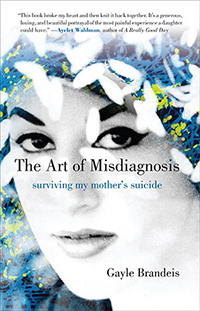
    The Art of Misdiagnosis

    The Art of Misdiagnosis: Surviving My Mother’s Suicide

    “After my mom hangs herself, I become Nancy Drew. I am looking for clues, for evidence. Answers. I put on a detective hat so I won’t have to wear my daughter hat, so I can bear combing through her house. I wrap my new baby to my chest with a bolt of green fabric—my baby born exactly one week before my mom’s death—and recommence the dig.”
    —Gayle Brandeis 


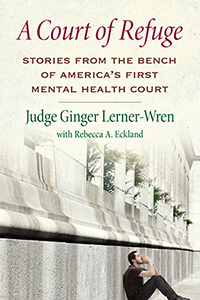
    A Court of Refuge

    A Court of Refuge: Stories from the Bench of America’s First Mental Health Court

    “In 1996 I was elected a judge of the county court of Broward County, Florida, the Seventeenth Judicial Circuit, and my term formally began in January 1997 . . . This order recognized the essential need for a new system of justice to focus on individuals with mental health disabilities, arrested for misdemeanor offenses and the need for appropriate treatment in a therapeutic environment conducive to wellness (not punishment) as well as continuing to ensure the protection of the public. Further, to help defendants who desire such treatment, the order recognized the need for a judge with expertise in the field of mental health and therefore possessed the needed understanding and ability to expeditiously and efficiently move people from jail into community mental health care, without compromising the safety of the public.”
    —Judge Ginger Lerner-Wren with Rebecca A. Eckland


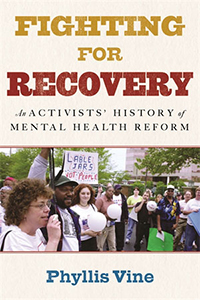
    Fighting for Recovery

    Fighting for Recovery: An Activists’ History of Mental Health Reform

    “A revolution still in the wings challenges us to act on behalf of the forty-three million citizens needing help for a mental health incident in any given year. It beckons to the nearly eight and a half million adults who care for someone with a mental illness, and to the seven and a half million people receiving government support in the public disability system. We hear the challenge for the more than three million adolescents with major depression, 60 percent of whom received no treatment in 2016. And we hear it for the two million people with mental illness languishing in prison.”
    —Phyllis Vine 


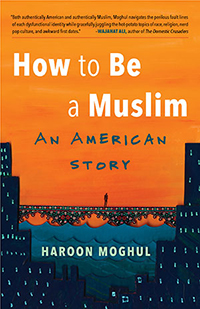
    How to Be a Muslim

    How to Be a Muslim: An American Story

    “‘You’re bipolar.’ Later amended to bipolar II. Like I got promoted. To tell another soul, beyond the privacy of doctor-patient confidentiality, would’ve meant admitting to an illness that was not just embarrassing to allegedly have, but that I did not or should not have believed in. I’m not entirely sure where I’d gotten this idea, except I felt very strongly that Muslims were not supposed to have these problems. If Muslims did, I’d inferred, it was because their belief in God wasn’t strong enough. Which was my own interpretation of her diagnosis. I hardly prayed, I wasn’t really religious otherwise, and even if the last few years God had gone easy on me, physiologically, I’d no reason to expect a permanent truce.”
    —Haroon Moghul 


    Living While Black pb

    Living While Black: Using Joy, Beauty, and Connection to Heal Racial Trauma

    “Practicing joy must be strategic, and it must be deliberate and like self-care more generally cannot be decontextualized. The ability to create and hold spaces for our joy as individuals and as a group of people is an ongoing struggle. But experiencing joy, even if moments of it, is revolutionary. Joy is a spiritual practice. It connects us to beauty, to wonder, to grace, to pleasure. It is thus an emotion that connects us to life, to the universe, and to ourselves and each other. Black joy disturbs whiteness because it is humanizing, and, because it is humanizing, it is transgressive.”
    —Guilaine Kinouani 


    Mind Over Monsters

    Mind Over Monsters: Supporting Youth Mental Health with Compassionate Challenge

    “In a stew of intense negative emotions, deprived of the revitalization of intense positive experiences, and now ushered into a new era where neither physical nor economic safety seems assured, young people face a mental health landscape that seems dire indeed. As a college professor who researches the psychology of emotion, a public intellectual who writes and speaks about higher education, and the mother of an adolescent, I am desperate to understand the challenges facing America’s youth and possible solutions to them.”
    —Sarah Rose Cavanagh 


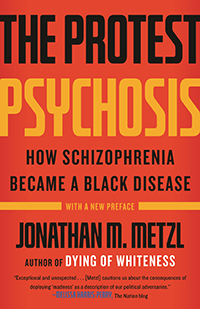
    The Protest Psychosis

    The Protest Psychosis: How Schizophrenia Became a Black Disease

    “In unintended and often invisible ways, psychiatric definitions of insanity continue to police racial hierarchies, tensions, and unspoken codes in addition to separating normal from abnormal behavior. Sometimes, the boundaries of sanity align closely with the perceived borders of the racial status quo. Mainstream culture then defines threats to this racial order as a form of madness that is, still, overwhelmingly located in the minds and bodies of black men.”
    —Jonathan M. Metzl 


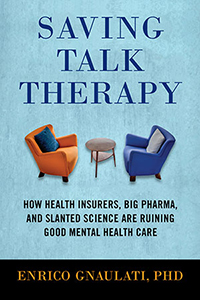
    Saving Talk Therapy

    Saving Talk Therapy: How Health Insurers, Big Pharma, and Slanted Science Are Ruining Good Mental Health Care

    “Improved access to mental health care alone is insufficient. In the halls of government, academia, and medicine, debate on the quality of mental health services currently available nationwide needs to be ignited. In particular, we must address the erosion and necessary restoration of time-honored and scientifically backed, in-depth, humanistically oriented talk therapy.”
    —Enrico Gnaulati 


    Spare-the-Kids

    Spare the Kids: Why Whupping Children Won’t Save Black America

    “We have a saying in our culture, ‘what goes on in this house, stays in this house.’ But whupping your child is not just an individual event that takes place between you and your child within the privacy of your home. Humiliating or inflicting pain onto your child’s body is a social experience that reinforces society’s oppressive power structures. Whupping our children encourages them to accept violence as normal and natural and to demand respect through violence. When black folks participate in this kind of ritualized violence under the guise of teaching, love, and protection we are colluding in the continued subordination of our race.”
    —Stacey Patton 


    Yes to Life

    Yes to Life: In Spite of Everything

    “We give life meaning not only through our actions but also through loving and, finally, through suffering. Because how human beings deal with the limitation of their possibilities regarding how it affects their actions and their ability to love, how they behave under these restrictions—the way in which they accept their suffering under such restrictions—in all of this they still remain capable of fulfilling human values.”
    —Viktor E. Frankl 

    Mind

  • By Thomas Hitoshi Pruiksma

    Mountains at sunrise

    Photo credit: David Mark

    All it takes is that one teacher who sees your potential to gently nudge you in the direction of bringing it to fruition. That’s how it was for Thomas Hitoshi Pruiksma. This Teacher Appreciation Week, he pays tribute to his Tamil teacher, K. V. Ramakoti, who encouraged him to translate The Kural, the classical Tamil masterpiece on ethics, power, and friendship composed in 1,330 short philosophical verses. He will be teaching about it in his new online course, Taller Than a Mountain.

    ***

    One of the most famous verses in the Kural is about the art of learning. What the poet Tiruvalluvar said in Tamil more than fifteen centuries ago is as relevant now as ever:

    391
    Faultlessly study what is to be studied—then fit
    All that you’ve studied

    I’ve always been struck by how Tiruvalluvar not only urges us to learn fully, leaving out nothing, but also inspires us to bring our lives and our studies into harmony. It is not enough, the verse reminds us, merely to have studied. What we study should also change how we live.

    As I’ve lived with the verse, however, I’ve also come to see that it is equally about the art of teaching. Great teachers help us to study till all our questions have been answered and our doubts cleared. Great teachers help us to see how our lives and our studies can come to fit each other fully.

    And I can’t think about the arts of learning and of teaching without also thinking of my Tamil teacher, the late Dr. K. V. Ramakoti. When I met him in South India in 1998 on a two-year fellowship for teaching and study, I had only intended to learn how to speak. I wanted to be able to enter the world of the villages outside the city of Madurai, Tamil Nadu, for which spoken Tamil was an utmost necessity. Tamil, like many other traditional languages, has distinct written and spoken forms, so that a person can learn to read and write and not be able to understand the language as it is spoken, or learn to speak without being able to grasp the language as it is written. I felt spoken Tamil was more than enough of a challenge for me.

    But Dr. Ramakoti was the kind of teacher who not only knew how to push a student to excel, but even more important, he knew how to kindle their enthusiasm and give them reasons to learn. During my second year, after I had moved into a village and was commuting each day to my teaching job and to Dr. Ramakoti’s house, he surprised me, announcing that it was time to study written Tamil. As he went on to explain, he had already charted out an entire course of study.

    “Ayya, that sounds like a great idea,” I said, “but I’m still struggling to understand the speech of my neighbors in the village. My hands, my tongue, already feel full.”

    To which he replied, “Okay, that may be, but let me ask you something. In a year, you’re going to return to your country. You do want to read the letters we’re going to write to you, don’t you?”

    “Yes,” I stammered. “Of course, Ayya. I would want to do that.”

    “And you will want to be able to write a reply in Tamil, won’t you?”

    “Yes, Ayya, I would certainly want to be able to do that too.”

    “Okay, we’ll begin tomorrow!”

    And we did. Step by step, he led me into Tamil as it is written, and then into the extraordinary riches of Tamil literature, cultivating my ability to enjoy and read poetry along the way. This, in turn, led to me being able to enjoy poetry in English anew and inaugurated my own apprenticeship as a writer, poet, and translator.

    I would continue to study with Dr. Ramakoti for nearly twenty more years, on various other trips and fellowships to Tamil Nadu. It was none other than he who suggested gently I might translate the Kural—so gently, in fact, that it took me years to get the hint. He understood, as a teacher and as a poet, that some things in life can only really be suggested, hinted at, implied in the most gentle of ways. Only then might a student be in a position to have the new thought arise naturally, on its own, in a way that it might actually take root.

    This combination of being able to kindle enthusiasm without overwhelming a student is one of the most enduring legacies of my time with Dr. Ramakoti. He could see how much any particular student might be capable of, but would share it and show it only gradually, waiting patiently for the right moment or occasion. In the meantime, he would give his students the means to keep honing the abilities they’d already seen they had.

    And all along the way, he would weave in poetry, not merely in the sense of sharing poems as he taught, but in the deeper sense of honoring the way things can fit and correspond with each other—teacher and student, learning and life, poetry and the nature of the world. Which is to say that he rooted everything he did in love. He loved his students, he loved the Tamil language, he loved the possibilities of poetry. That’s why he was so unforgettable and beloved as a teacher. He fit all that he taught.

    Here, for instance, is one of the first verses from the Kural that he taught me, along with the story of how he made this short love poem come alive.

    As I’ve prepared to offer an online course on the Kural, I have felt Dr. Ramakoti’s presence at every turn. Even in this very different context and setting, I find myself drawing continually on his example. Like him, I hope to offer enough to be deeply informative, but not so much as to be overwhelming. I want to share specific tools and practices, and to show how poetry and life can be woven together—and perhaps have always been woven together. Most important of all, I want to honor the possibilities of fit and correspondence, both by offering the course at “pay what fits” pricing and by finding ways to adapt the lessons to what I learn from and about the people who take it. For I, too, wish to root myself in love—my love for the Kural, my love for my teacher, and my love for what he taught me that I now get to pass on to others.


    About the Author 

    Thomas Hitoshi Pruiksma is an author, translator, teacher, and performer. His translation of the classical Tamil masterpiece on ethics, power, and love, The Kural, was published by Beacon Press in 2022 and is the subject of his upcoming online course, Taller Than a Mountain. Other books include The Safety of Edges and Give, Eat, and Live: Poems of Avvaiyar. He speaks and performs widely, teaches for the Cozy Grammar series of online video courses, and has received grants and fellowships from the National Endowment for the Arts, 4Culture, Artist Trust, and the US Fulbright Program. Connect with him at thomaspruiksma.com.

  • Frankie Karnedy

    Welcome to our rebooted “Beacon Behind the Books” series! In these times when readers are responding to our books “more than ever,” when our authors—including Aubrey Gordon, Tanya Katerí Hernández, Robin D. G. Kelley, Angela Saini, Eboo Patel, and Gayl Jones—are appearing in the media, their ideas going viral on social media, their voices being heard on so many platforms, we thought it would be good to take a break to focus on some of the staff who work hard to find, shape, edit, produce, and promote those works. Our blog series introduces to you a staff member and gives you a behind-the-scenes look, department by department, at what goes on at our office.

    For the month of May, we introduce you to Frankie Karnedy, our sales and marketing assistant! 

    What drew you to publishing, Frankie? How did you find your way to Beacon? 

    When I first began exploring career possibilities in back high school, I decided pretty quickly that I wanted to work in publishing. For as long as I can remember, I’ve wanted to be a children’s author, but even back then, the practical side of me knew I would also need to find a day job I was equally passionate about to support myself. Considering my lifelong obsession with books, publishing was the obvious choice! 

    During my junior year of college, I had the wonderful opportunity to intern at Rubin Pfeffer Content Literary Agency under Melissa Nasson, who also serves as Beacon’s contracts director. I heard a bit about Beacon and their mission while working for her, so when I started looking for jobs in the Boston area after graduation and saw there was a sales and marketing assistant position open here, I immediately knew I wanted to go for it. 

    What’s a typical day in the life of a sales and marketing assistant like?

    One of the great things about being a sales and marketing assistant is that every day can look pretty different. I typically start by sorting through my inbox. As part of the foreign rights team, I usually have several emails from agents we work with around the globe to license Beacon books to publishers abroad. After responding to those inquiries, I turn to a variety of different tasks depending on whatever is most pressing. This could be updating the metadata that will feed out to online retailers, assembling materials for launches and sales conferences, coordinating Goodreads giveaways, creating back ad copy for galleys, and more.

    You’ve recently attended conferences with your colleagues. Tell us more about those experiences and how they add to your work. 

    I recently had the opportunity to attend the Organization of American Historians (OAH) conference in Los Angeles this March, and it was an amazing experience. This was one of my first chances to talk directly with some of the people who buy our books. It was so rewarding to see the impact Beacon titles have and hear educators and other attendees talk about how they use Beacon books in their classrooms and beyond. These one-on-one conversations I had have definitely reshaped the way I approach our books from a marketing and sales perspective. Talking directly with people allowed me to learn which aspects of a title resonated most with the people who stopped by our booth, as well as hear from readers themselves about the topics that intrigue and excite them.

    What helps you focus when you’re working? 

    There is nothing I love more than making lists. I have my Outlook calendar where I keep track of my deadlines and other to-do items, but something about the act of physically writing things down (and most importantly, being able to physically cross them out) soothes my brain and keeps me focused in a way nothing else can.

    What’s the next queued song on your music player? 

    “Would That I” by Hozier. 

    What are you reading right now? 

    I am a few chapters into Harrow the Ninth by Tamsyn Muir, and I can tell it is already going to make it into my top ten books for this year. I highly recommend to anyone looking for a free-wheeling space opera with miserable gay necromancers and an extremely unreliable narrator. Do I have any idea what is going on in this book? No. Am I having fun? You bet. 

    Best vacation destination? 

    Old Québec.

    Favorite food? 

    I have a massive sweet tooth, so anything with chocolate immediately goes to the top of the list. 

    Favorite Book? 

    The Haunting of Hill House by Shirley Jackson. 


    And a little more about Frankie Karnedy

    Frankie Karnedy joined Beacon Press in 2022 after graduating from Johns Hopkins University with a BA in Writing Seminars and English. Previously, she interned at a literary agency and worked with children and teens at her local library. When she’s not trying to get to the bottom of her endless TBR list, she enjoys taking dance classes and baking fun desserts.

  • A Q&A with Annelise Orleck

    Author photo: Joel Benjamin. Cover design: Louis Roe

    Author photo: Joel Benjamin. Cover design: Louis Roe

    We’ve been waiting for the premiere of the documentary since we first shared the news, and now it’s finally here! Storming Caesars Palace tells the little-known story of Ruby Duncan and the pioneering group of Black mothers in Las Vegas who built this country’s most successful antipoverty programs. Based on Annelise Orleck’s book of the same name, now available in a new and revised edition, the documentary aired on PBS in March 2023. Beacon Broadside editor Christian Coleman caught up with Orleck to chat about the new edition and the production.

    Christian Coleman: What does it feel like coming back to Storming Caesars Palace eighteen years after its original publication? What sparked the need to revisit it?

    Annelise Orleck: It felt right, and urgent, to return to the story of Storming Caesars Palace in these times, precisely because this political moment feels both so different and so similar to the time when the book was first published in 2005. Back then, our country was still living in the shadow of 9/11 and the militarist backlash that followed. It was the summer of Hurricane Katrina and, while people were still sweltering in the Superdome and awaiting permanent shelter, President George W. Bush announced plans to zero out funding for Community Action Agencies and Community Development Block grants. It was a time when “the neoliberal consensus” was still largely unchallenged by either major political party. And it was a moment when mass movements and sustained street protest seemed more like ancient history than they do now. When the women of Operation Life were stopped on the streets by young people who asked “When are you going to come back and do something about all this? We need you!” the women would answer “It’s your turn now.”

    As the second edition comes out, young people have taken up that challenge. Donald Trump’s presidency galvanized new generations to protest. In much more constructive ways, so did Occupy Wall Street and the Bernie Sanders campaigns. The racial justice uprisings of Summer 2020—in the aftermath of the police murder of George Floyd in Minneapolis—drew more young people from every background into the streets than the country had seen since the 1960s and 70s when much of the action in Storming Caesars Palace takes place. When the book came out last week, it landed in a country that has seen a decade or more of new mass organizing: Fight for $15, Black Lives Matter, #MeToo. The campaign for a living wage, which has had great success in the past few years, was being waged by the same kinds of people who led the welfare rights movement—low-income mothers of color. A new generation of activists in Las Vegas and elsewhere, my students and so many other Gen Z activists, asked to learn “whose shoulders we stand on.” As young homelessness and living-wage activist Minister Stretch Sanders worked to acquaint young Black Las Vegans with the story told in Storming Caesars Palace, it seemed just the right time to reissue an expanded version of this book.

    It also felt right to reissue this book to retell this remarkable story of poor mothers building one of the most successful and long-lasting community based anti-poverty programs of the War on Poverty era, because today’s GOP is once again waging all-out war on the poor. I am answering this question the day after the 2023 House GOP majority voted for a budget that would dramatically slash aid to senior citizens, poor families, and veterans and that calls for strict work requirements for those seeking food aid. Senate Majority Leader Chuck Schumer noted that this will literally take food out of the mouths of hungry children. Ruby Duncan and the women of Clark County Welfare Rights Organization said almost those exact words to the Nevada Legislature after it cut thousands of poor Nevadans off aid in 1971. This is both a different time and painfully reminiscent of the years this book describes.

    CC: Who got in touch with you about adapting your book? How did you find out the adaptation was happening?

    AL: I was first approached by filmmaker Hazel Gurland-Pooler in 2007 after she heard a radio interview with me about Storming Caesars Palace and the Black mother-activists whose life stories it traced. Hazel has worked on this project on and off for more than fifteen years, putting in her own money and getting funding where she could. So, it is wonderful that we’re finally at the point that this documentary can reach the public via PBS and local screenings and hopefully colleges and public libraries.

    CC: What was your reaction when you found out your book would be the basis of the documentary?

    AL: I loved the idea. In fact, during the early years of research for the book, we filmed a lot of the oral history interviews and hoped someday to make them into a documentary. The story always seemed perfect for adaptation to the screen. But the truth is that I did not know how to make a documentary. So, I’m very glad that Hazel Gurland did.

    Of course, there are key differences between a book and a film. The documentary tends to focus more on the early years of organizing and street protest. The 1971 marches on the Strip. The famous eat-in at the Stardust Hotel in 1972. Hazel did a great job of finding vivid, moving historical footage from those years. The book focuses on all of that too, of course, but as much or more on the twenty years following 1972, when the women of Operation Life opened and ran their one-stop social service delivery center on the West Side of Las Vegas, on how their organization evolved, on lobbying in the state and federal capitals. Those stories do not translate quite as well to the screen, so they are less the focus of the film but are vividly represented in the book.

    CC: How much involvement did you have in the production? How much did you work with the director?

    AL: I introduced Hazel to the women of Operation Life, helped her find some images, and sat for an eight-hour interview on a cold November day in Vermont during the worst of the pandemic with all my doors and windows open and the wood stove cranked up to keep us warm.

    CC: The documentary’s website says the book was revised and updated to accompany its PBS broadcast. Could you tell us about a few of the revisions and updates?

    AL: The book was revised and updated to reflect the years since publication and how knowledge of the story of Ruby Duncan and the women of Operation Life has rippled out to affect change in Las Vegas and elsewhere. It was not updated or revised in relation to the documentary, but certainly the two work really well together, and I’m hopeful that with the documentary out now the book will have a whole new life in the classroom.

    CC: What does Storming Caesars Palace mean to you now that there’s a documentary to tell the story of Ruby Duncan and other revolutionary Black women welfare organizers of Las Vegas?

    AL: I’m hoping that a nationally broadcast PBS documentary will bring more people to the new edition of the book and provide important context for renewed discussion of the importance of having a federal social safety net. Also, I believe that Operation Life provides a scalable model for the most effective way to fight poverty—employing poor mothers and fathers to provide services to their own communities: health care, libraries, housing, job training, solarization programs, crime fighting programs. “We can do it and do it better,” the women argued back in the 1970s when they were first applying for federal funding for Operation Life. They did then. And I think that they can now. That’s the message of this new edition of Storming Caesars Palace.


    About Annelise Orleck 

    Annelise Orleck is professor of history at Dartmouth College and the author of five books on the history of US women, politics, immigration, and activism, including “We Are All Fast-Food Workers Now” and Storming Caesars Palace.

  • Gabel Strickland

    Welcome to our rebooted “Beacon Behind the Books” series! In these times when readers are responding to our books “more than ever,” when our authors—including Aubrey Gordon, Tanya Katerí Hernández, Robin D. G. Kelley, Angela Saini, Eboo Patel, and Gayl Jones—are appearing in the media, their ideas going viral on social media, their voices being heard on so many platforms, we thought it would be good to take a break to focus on some of the staff who work hard to find, shape, edit, produce, and promote those works. Our blog series introduces to you a staff member and gives you a behind-the-scenes look, department by department, at what goes on at our office. And not only our staff, but our interns, too.

    This month, we introduce you to Gabel Strickland, our digital and social media intern! 

    What drew you to publishing, Gabel? How did you find your way to Beacon?

    Like many people in the publishing industry, books have been a lifelong love of mine. At a certain point, it dawned on me that books aren’t just these magical things that poof into existence, but that there is a select group of lucky people who get to create them.

    When I graduated high school, I decided to go to Emerson College, where I major in journalism and minor in publishing as well as comedy writing and performance. As a student, I just poured myself into my publishing classes. I just fell in love with the production process, from reading to editing to designing to marketing. From there, I started searching for internships and immediately set my sights on Beacon Press. “Igniting hearts and minds” is what all writing should strive for, and what I have always hoped I could do with my publishing career. My journalistic background gave me a greater appreciation for the abundance of nonfiction work Beacon does. So . . . yeah, here I am!

    What’s a typical day in the life of a digital and social media intern?

    A typical day for me involves a lot of filming and editing videos together, since much of what I’m doing right now involves boosting our TikTok account. If you ever see me wandering around the office scrutinizing the lighting of the room or scouring bookshelves for books to use as props, I’m probably filming a TikTok. I also spend a good amount of time on Canva making graphics for Instagram. When I’m not actively making graphics of videos, I’m reading our newest books and scrolling through TikTok, Instagram, and Twitter to come up with new content ideas. I might also be filling out data sheets or writing up blog posts.

    What are some of the challenges of being a digital and social media Intern? What do you find most rewarding?

    I think the biggest challenge of being a digital and social media Intern is balancing my schedule as an intern with my schedule as a student. That being said, my job at Beacon is so very rewarding. I can confidently say that out of all the interns in Boston, I’m the one having the most fun. I love getting to share my love of books—and the important topics Beacon writes about—with the internet in the silliest of ways.

    You’ve attended a handful of office meetings. Tell us more about those experiences and how they add to your work.

    Working at Beacon has given me the opportunity to sit in on staff meetings, look at title information sheets, databases, and so much more. It’s a valuable glimpse behind the scenes, and everything I learn about the publishing process makes me even more enchanted with the industry.

    What is one book on our list that has influenced your thinking on a particular issue?

    Living While Black was one of the first books I read from Beacon Press, and it has continued to influence my thinking in the months since I’ve read it. Guilaine Kinouani has gotten me to pay more attention to the connection between mental health and the Black experience. One of the ideas the book touches on is how in a world that doesn’t value you, taking care of yourself is so important as a Black person, and is even a form of resistance to that discrimination. I also feel that the exercises included in the book curated a particularly intimate reader experience, one which I think other books should try to emulate. Now, when I have conversations about racism and racial justice, I weave discussion about self-care into them.

    How much of what you learned in college have you found vital to your work?

    My various fields of study have really intersected well in terms of the work I do for Beacon Press. As I touched on earlier, my journalistic background makes me especially appreciative of the nonfiction work that Beacon publishes. My publishing classes have given me insight into the actual book production process. I’d like to think that my comedy comes through in our fun little posts, but that’s for the audience to decide.

    What upcoming projects are you excited about?

    I have a number of blog posts and video ideas for TikTok that I am excited to share in due time!

    What’s your advice to someone interested in entering the publishing field?

    Haha! At this stage in my life, I’m still better suited to take advice rather than give it. Still though, if I were speaking to another publishing student who wanted to land a publishing internship, I think my main piece of advice would be to be excited about every new opportunity, and let that excitement show to those around you. Be excited about your classes (even the assignments that make you groan at first). Be excited about internships that are out of your comfort zone but give you insight into aspects of the publishing industry that you didn’t know much about before, etc. When you let yourself be excited about everything, you learn so much and meet so many cool people, all of which propels you on your journey.

    What do you wish someone had told you about publishing when you were entering the industry?

    Honestly, I’m still actively entering the publishing industry, so I try to heed every piece of advice that I am given. Maybe in a decade I’ll have a better understanding of what advice turned out to be the most helpful.

    What helps you focus when you’re working?

    Listening to music and/or a podcast while I’m working helps get me in the zone.

    What skills have you taken from previous jobs to help you do your work at Beacon?

    I’m the social media manager for ENSPIRE Magazine, which acquaints me with various social media platforms. I took what I’ve learned building a brand, designing graphics, and writing social media copy for ENSPIRE to my work for Beacon. At the same time, I’ve applied what I’ve learned from Beacon Press to what I do for ENSPIRE.

    What other departments does your department interact or collaborate with? And how?

    One of the cool things about working in the marketing department is that it really acts as the intersection of so many other departments. We bring together all the hard work that editorial, design, and financing has done to finally get the book we’re so excited about out into the world!

    Favorite thing about Boston?

    My favorite thing about Boston is the city’s rich history and how it is infused in the day-to-day bustle. I love that I walk through the oldest public park in the country, historic graveyards, countless meeting houses, and battle sites on my route to get my coffee on any given afternoon. Every building in the city feels like it’s been upcycled to fit modern life (including the building that Beacon Press is in).

    Favorite food?

    Chocolate, which I would argue should be its own food group.

    Best vacation destination?

    I’ve always wanted to visit Italy.

    What are you reading right now?

    I’m currently reading An Indigenous Peoples' History of the United States. The book has already filled in a lot of gaps in my knowledge about the US government’s mistreatment of Indigenous people and land. I’d love to follow up that read with some other books in the ReVisioning History series, perhaps A Disability History of the United States or A Queer History of the United States

    In an alternate universe, what career would you have?

    I would probably be studying history, art, or philosophy. But that’s why I’m so happy with my current career trajectory: through journalism and publishing, I get to study all those interesting things and even highlight them for other people.

    What’s the next queued song on your music player?

    “Mary On A Cross” by Ghost. It’s actually on repeat right now.

    Favorite book ever?

    Oh, the question that tortures every bookworm with the impossibility of answering it. To narrow it down, I’ll highlight my top three faves from Beacon Press thus far: Homegirls & Handgrenades, Women and Other Monsters, and And the Category Is.

    Hobbies outside of work?

    Quite predictably, I love reading, writing, and podcasting. When I’m not doing any of those things, I’m probably having a little dance session to my favorite song of the week, learning to figure skate, and plotting to steal—uh, I mean pet people’s dogs.

    Favorite song/album/type of music?

    I’m a big fan of alternative pop music, so it’s no surprise that my favorite band is probably AJR. That being said, I’m kind of in my indie/folk/acoustic era, so I’ve been listening to Lord Huron, the Lumineers, Hozier, The Oh Hellos, Matt Maeson, all that good stuff.

    Favorite podcast?

    I’ve been waiting for this question all my life. I love NPR’s Rough Translation, which is a podcast that collects interesting stories from all around the globe. Though it is sadly not running anymore, it’s a timeless gem. I recommend the episodes “Anna in Somalia,” “Radical Rudeness,” “The Refugee’s Dating Coach,” and “American Surrogate.” I credit Rough Translation for getting me interested in podcasting, and now I’m the president of the podcast organization PODS at Emerson. I’ve also made two podcasts of my own (though they’re both fictional rather than journalistic), one of which just won an EVVY-award.

    Name three things at your workstation you can’t live without.

    (1) My earbuds. (2) My coffee. (3) My favorite pen (I’m a bit of a stationery fiend).

    What’s your commute to the office like?

    I’ve come to really enjoy my walk to Beacon Press. It’s my time to take in the sunshine, the sights of the city, and the sweet sounds of my walking playlist. These days I’m listening to a mix of Lord Huron and AJR to and from the office.