• By Jonathan Rosenblum

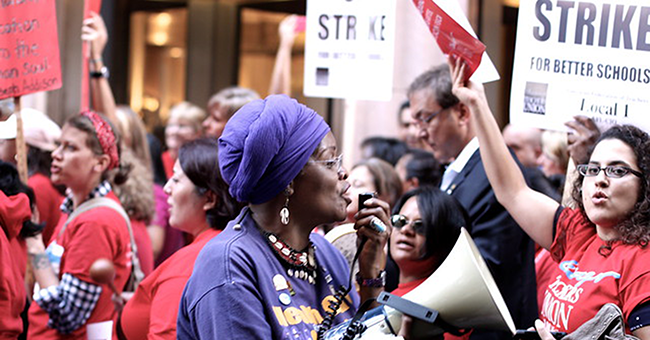
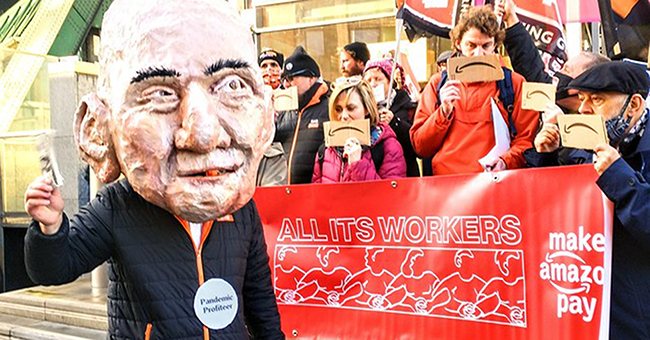
    Jeff Bezos Make Amazon Pay Protest, 26 November 2021, London, England. Photo credit: War on Want

    Jeff Bezos Make Amazon Pay Protest, 26 November 2021, London, England. Photo credit: War on Want

    This article appeared originally in The Nation.

    More than 1 million US workers are employed at Amazon today—the majority at its vast network of more than 1,300 warehouses and logistics centers, with tens of thousands in tech centers around the country. That’s more workers than UPS and FedEx combined, more than the entire US auto manufacturing industry. Another 600,000 work internationally for the company.

    Increasingly, Amazon plays the central role in capitalism’s distribution and logistics system, as well as in the tech sector through Amazon Web Service’s dominant role in cloud computing. The monopolistic behemoth fully intends to keep growing. Its hyper-exploitative model is percolating throughout the entire economy, even seeping into currently unionized workplaces. Few jobs are insulated from its influence.

    Nearly 90 years ago, basic industry worker organizing was key to the revival of the labor movement. Today, Amazon workers occupy the same strategic position, standing at the front lines of the battle to determine whether working people have a fighting chance in the twenty-first century.

    Organizing Amazon is labor’s pinnacle challenge: A project that is extraordinarily daunting—and yet equally obligatory to tackle. It will take years of work and tremendous resources.

    Given that, you’d think that US labor leaders would be sounding alarms and throwing everything into the battle at Amazon, along with other major organizing sites of struggle like Starbucks and big retail. But no. Most labor leaders are imitating President Orlean in the movie Don’t Look Up, averting their eyes from the growing crisis and telling us all to ignore the steady drip, drip, drip decay of union membership—now down to 10.1 percent of the US workforce, the lowest on record—while sitting atop $35.8 billion in labor movement assets.

    But the Amazon asteroid is on course to obliterate Planet Working Class, whether or not today’s AFL-CIO leaders care to admit it openly.

    Fortunately, there are a growing number of organizers—disproportionately young and people of color, many with an explicitly socialist orientation—who are already hard at work trying to deflect the asteroid’s trajectory. Most prominently, Amazon workers at Staten Island’s JFK8 warehouse demonstrated both the possibilities—and current limitations—of institutionalizing worker power through union representation elections when they won their vote a year ago. Amazon workers have staged strikes in Southern California, the Chicago areaGeorgia, and elsewhere, demanding—and in many cases winning—pay raises, more break time, and other work improvements. Workers increasingly recognize the need to organize internationally to match the company’s extensive distribution networks. Polish workers organized slowdowns to resist mandatory overtime that the company tried to impose in response to a strike 400 miles away in a German warehouse. Last fall, workers in 30 countries staged demonstrations and walkouts. Amazon workers in England struck this month.

    These are, of course, very early experiments in meeting the challenge. It is far too soon to declare that an Amazon organizing model exists. However, common organizing principles are emerging from the experiences of frontline activists, at Amazon and other key organizing sites. These principles need to be applied on a growing scale, and with much more substantial support from the wider labor movement.

    ***

    The first organizing principle centers the fight fundamentally around the question of power—a class struggle between workers who have basic demands for rights and material improvements, and their bosses, who are determined to squeeze profit out of every minute. This principle is a no-brainer to frontline warehouse workers I’ve talked to in the US and Canada, as they experience economic penury and the daily indignities of speedups, furloughs, and capricious supervisors.

    “How is it that Amazon makes money? Who actually does the work of getting these packages to our customers? And why does Amazon pay managers two to three times as much as us?” are common questions that warehouse organizers ask new coworkers, according to Ted Miin, a delivery station worker and member of Amazonians United—Chicagoland, part of an independent national network of rank-and-file workers. Workers recognize that “the managers’ job is to make us work to make the company money. It’s to get 10 workers to do the work of 15,” he said.

    With increasing frequency, Amazon workers are flexing their power through short-term walkouts. On a company-wide scale, these are tiny actions. But even with a few dozen or a hundred workers walking out for a shift, these strikes build worker confidence—and reveal the company’s vulnerability to disruption. Miin and several dozen other Chicagoland delivery center workers walked out in the middle of their shifts just before Christmas 2021, demanding more pay. By the end of the following month, Amazon gave $2 raises not just to workers at those two stations but also to workers at another 22 delivery stations around Chicago.

    Workers at Amazon’s San Bernardino Air Hub in Southern California’s vast Inland Empire struck twice last year and won pay raises, access to water and cooling fans, and more heat breaks.

    The mainstream media has focused a lot of attention on the handful of union representation elections at Amazon conducted by the National Labor Relations Board (NLRB). For good reason, there’s healthy skepticism among Amazon organizers about the efficacy of building power through this route. To get to a ballot today, workers must navigate a minefield of brutal management harassment, threats, and firings; this is no democratic exercise in any common meaning of the term. Post-election, there is no shortage of boss tactics that divert worker energy into legalistic dead ends: Drawn-out hearings over contested ballots, interminable trials over unfair labor practices, and unproductive bargaining.

    “We don’t need the company to come out and say, ‘Yes, you’re the union,’” said Howard, an East Coast warehouse worker, and like Miin a member of Amazonians United. If the company concedes to an organized demand, it has in effect recognized workers’ power. “It’s two different questions,” Howard continued. “Workers recognizing their own union, and the company recognizing the union.” For now at least, many Amazon organizers prefer to focus on the former.

    To underscore this point, Amazon workers cite the current experience at Starbucks, where the company’s union-busting lawyers have made a mockery of bargaining, walking out after just a few minutes of negotiations. No amount of high-minded petitioning by Starbucks Workers United to the new CEO to “do the right thing and respect workers’ rights” will change that. Right now, Starbucks workers, organized at about 3 percent of the company’s stores, simply don’t have enough power to force meaningful bargaining. The solution is more organizing and more disruptive and sustained strike action—not appeals to make the legal process work or adjustments in union bargaining tactics.

    Nonetheless, I don’t sense a bright line among most Amazon organizers around the strategic question of pursuing NLRB elections. Representation elections can serve a power-building purpose, provided workers organize around them not with an expectation that success will lead promptly to bargaining, but as part of an escalating strategy that prepares workers for meaningful disruptive action. Elections can be, to use organizer and author Jane McAlevey’s term, important structure tests in union-building. Imagine, for instance, if the Amazon Labor Union (ALU) organizers at the JFK8 warehouse on Staten Island, after winning their historic NLRB vote a year ago, had redoubled shop floor and break room organizing to build for a strike during the Thanksgiving-through-Christmas peak season. Such a strategy could have established a powerful strike hub at a major warehouse and inspired spinoff strike actions at other Amazon workplaces. Unfortunately, the JFK8 ALU leadership appears to have throttled back on the energetic workplace organizing that achieved their historic victory. That was a missed opportunity, and a year out from the election the company has JFK8 bargaining tangled up in myriad legal knots. But, fortunately for the workers, peak season comes around every 12 months; it’s not too late for JFK8 to lead a fall 2023 strike wave.

    ***

    The second emerging principle is to organize fights around concrete demands, whether region-wide, worksite-centered, or department-specific. Today’s Amazon organizers have studied past campaigns that fell short, such as the election loss two years ago at Amazon’s warehouse in Bessemer, Ala. Organizers for RWDSU, the union in Bessemer, urged workers to join the union under the banners of respect and dignity and collective bargaining rights. There’s nothing wrong with those slogans, but concepts like respect and dignity are hard to sustain unity around because they “mean something different to everybody,” observed Braeden Pierce, an Amazon worker at the company’s huge KCVG air cargo center in northern Kentucky.

    When they began organizing last fall, Pierce and his coworkers coalesced their campaign around three demands: $30 an hour minimum wage, 180 hours of paid time off, and union representation at all disciplinary meetings. “We chose these demands because they unify everybody from any kind of background,” Pierce said. “Everybody wants to be able to afford going to the grocery store, everybody wants to have time to take off. And nobody wants to be across a table from someone who has no idea what the job truly is…telling them that they’re doing their job incorrectly.”

    Equally instructive is how the Kentucky workers developed those core demands: grassroots democracy. Over the course of several meetings last fall, the cargo center workers “took a lot of time to debate out what are the top three things that would affect the widest amount of our coworkers,” said Griffin Ritze, another KCVG union leader. They asked questions like, “How can we use demands to draw people into the campaign and fight for a clear program?” The three demands that the workers settled on are not the only issues they are agitating around. But the three are central to every organizing conversation.

    There are plenty of organizers in the US union movement who would shy away from that approach. “They buy into the idea that ‘we don’t want to make promises we can’t keep,’” said Genevieve Morse, an organizer for Socialist Alternative, which is supporting the Kentucky workers. “But demands are not promises. They are a rallying point to bring people together.”

    Other fights have focused on near-term achievable demands, like the Chicago delivery station workers’ wage victory and the San Bernardino workers’ strike to mitigate horrific working conditions.

    Workers at the massive Otay Mesa warehouse in San Diego, just outside the US-Mexico border, organized to demand that Amazon provide free shuttle service for the hundreds of employees who cross the border daily from Mexico. Many were paying “raiteros” $3 to $5 for the two-mile trip from the border to the warehouse. More than 600 people signed a petition and a worker delegation marched on the boss. They won Amazon’s pledge of free transport from the border.

    On the East Coast, workers at six warehouses coordinated mass petitions during peak season in 2021 with a list of demands including that the company allow people to carry their phones on the floor and provide extended time to appeal disciplines. They won on both issues.

    When San Bernardino air cargo managers suspended (as a step toward firing) strike leader Sara Fee last fall, workers wore “Where’s Sara?” stickers throughout the facility for three days until the bosses brought her back. Actions such as these are not going to bring the company to its knees, but they are vital building blocks for worker confidence and fighting experience. “When it’s you versus Amazon, you know who has the power. But when we work together, there’s nothing better to protect you,” Fee said.

    ***

    The third organizing principle is that the work must be systematic and rigorous. The election losses in Bessemer and last year in Albany, N.Y., illustrate what happens in the face of an all-out union-busting campaign when workers don’t have strong, trained, and representative organizing committees of rank-and-file leaders, able to lead workers to overcome the brutal boss campaign. RWDSU organizers in Bessemer failed to build a representative organizing committee capable of mobilizing the “yes” vote. Union staff hoped that big name endorsements from progressive luminaries like Bernie Sanders and Nina Turner would make up for the lack of a strong internal committee. They were dead wrong. In Albany, organizers were counting on a momentum boost from the JFK8 victory six months earlier to make up for shortcomings in the internal union committee. They, too, were wrong.

    Key practices for successful long-term organizing include mapping workplaces—shifts, jobs, ethnic and social relationships—identifying and recruiting natural leaders and training activists on the daily organizing work. And given the high turnover in many warehouses, organizing can never let up. Fee and her San Bernardino colleagues make sure they have conversations with every new hire.

    The KCVG workers, who recently affiliated with Amazon Labor Union and are pushing for a representation election, provide workers with two hours of training before they are sent out to sign up union members in the workplace and at the “battle tables” that members have set up just outside the workplace—so named because managers continually approach them to harass and intimidate.

    “The first day we passed out leaflets, they tried to bust that up and we had to assert our rights,” recalled Ritze. “And every step of the way, they’ve tried to intimidate us and push us back and we’ve stood our ground and been able to back that up. So there have been times where management has had to announce in all-hands meetings that ‘Hey, actually in fact you are allowed to distribute material. You just have to be on your breaks and break areas.’ I think people just see that, yeah, there’s a seriousness and a professionalism about the campaign.”

    Such methodical work may not be headline-grabbing material—but it is key to the long-term success of organizing. “Month by month there are new organizing committees, there are new actions, there’s more workers who are starting to work on building organization,” said Howard, the east coast Amazonians United organizer. “And if that continues, then eventually we’ll win. The majority of Amazon workers want a union. They want power. The question for them is, do they believe that it’s possible? Amazon is so clearly a behemoth that it is hard to imagine that we—as just a handful of workers among over a million—could have the power to start making change at this company.

    “The big task for the labor movement right now and for us at Amazon is to be building those stories, building that confidence, building up the hope and belief that workers have, that they can make a change in their own lives by coming together and building a fighting organization,” he said.

    ***

    It’s not coincidental that most of these budding efforts are germinating in independent organizations outside the AFL-CIO, like ALU and Amazonians United. The AFL-CIO and traditional unions are used to campaigning on discrete timelines—the next election, the next contract expiration. Their leaders should be—but are not—prepared to commit the vast majority of their resources for, say, at least the next decade to organize workers at Amazon and other mammoth employers. For anyone concerned about decent standards of living for all workers in the future, that needs to be recognized as labor’s central task.

    Other organizations are stepping into this political vacuum to help workers at Amazon and other workplaces—groups like Labor Notes, which trains thousands of rank-and-file workers every year on struggle-based unionism; the Emergency Workplace Organizing Committee, a joint project of the United Electrical workers union and Democratic Socialists of America; and internationally, the Rosa Luxemburg Foundation’s Organizing for Power workshops, which have trained more than 27,000 workers from 130 countries.

    Add to that list Workers Strike Back, the new political movement launched by Seattle’s socialist city council member, Kshama Sawant. Workers Strike Back has pushed to elevate the KCVG worker organizing nationally. Last month Workers Strike Back activists organized tabling and rallies in a dozen US cities. Sawant and her Socialist Alternative organization hosted three KCVG workers at a rally outside Amazon’s Seattle headquarters.

    That’s just a start. In the coming years, the struggle needs to be expanded exponentially. It won’t be good enough for other union activists simply to cheer on workers at Amazon, Starbucks, and elsewhere, showing up at rallies and donating to solidarity funds. They must enter the battle themselves, too, prepared to use their collective labor, consumer, and social power to demand that Amazon workers get justice. The disruptive strategies that Amazon workers are honing through practical experience need to be expanded greatly, both within the company and beyond. That will take all unions, not just those at Amazon.

    Does that sound ambitious? It certainly is. But if the labor slogan “An injury to one is an injury to all” still has real meaning, then the entire labor movement must be mobilized into the epic economic and political struggle needed to turn the Amazon asteroid away from smashing all of us.


    About the Author 

    Jonathan Rosenblum is a union and community organizer based in Seattle. He is the author of Beyond $15: Immigrant Workers, Faith Activists, and the Revival of the Labor Movement and a member of the National Writers Union.

  • By Priyanka Ray

    Confetti

    Image credit: Jensen Art Co

    In 2021, Beacon expanded our poetry program, adding both new and established poets to sit alongside the classic masters—including James Baldwin, Mary Oliver, and Sonia Sanchez—who have long been an essential part of our catalog. The series, Raised Voices, serves the overarching goals of raising marginalized voices and perspectives, publishing poems that affirm progressive values and are accessible to a wide readership, and celebrating poetry’s ability to access truth in a way no other form can.

    Beacon has published four books in the series: Achy Obejas’s Boomerang/Bumerán; Raquel Salas Rivera’s antes que isla es volcán/before island is volcano; Aaron Caycedo-Kimura’s Common Grace; and Tim Z. Hernandez’s Some of the Light. In Spring 2024, we will add M. Nzadi Keita’s Migration Letters to our list.

    Coverage for Raised Voices has been extensive. The poem “What’s Kept Alive” from Common Grace was featured in one of my favorite podcasts, Poetry Unbound. Raquel Salas Rivera was interviewed on NPR’s Weekend All Things Considered for National Poetry Month. The Poetry Foundation called Boomerang/Bumerán “political poetry at its finest,” and Tim Z. Hernandez discussed his journey through single fatherhood in an interview with People en Español. Collections in the Raised Voices series have also been covered on Poets.org, The Rumpus, WGBH, Ms. Magazine, The Boston Globe, The Wall Street Journal, The Los Angeles Review of Books, Poem-A-Day, Guernica, and more. Excerpts have appeared in outlets such as The Atlantic, The Nation, American Poets Magazine, The Oxford American, and LitHub.


    Boomerang

    Boomerang/Bumerán is a unique and inspiring bilingual collection of lyrical poetry written in a bold, mostly gender-free English and Spanish that addresses immigration, displacement, love, and activism. Achy Obejas is a Cuban American writer, translator, and activist whose work focuses on personal and national identity. Her story collection, The Tower of the Antilles, was a PEN/Faulkner finalist, and her novel, Days of Awe, was called one of the best books of the year by the Los Angeles Times.


    Before island is volcano

    antes que isla es volcán/before island is volcano is a bilingual Spanish–English poetry collection about the future of Puerto Rico, including speculative pieces on what its independence would look like. Raquel Salas Rivera is a Puerto Rican poet, translator, and editor. The author of five full-length poetry books, his work has won the Lambda Literary Award for Transgender Poetry and has been nominated for the National Book Award and the PEN Open Book Award. 


    Some of the Light

    The lyric and political poems in Some of the Light: New and Selected Poems evoke single fatherhood, life in the time of COVID, children imprisoned in detainment facilities at the US/Mexico border, and life in California’s San Joaquin valley. Tim Z. Hernandez is an award-winning poet, novelist, research scholar, and performance artist. His debut collection of poetry, Skin Tax, received the 2006 American Book Award from the Before Columbus Foundation, and the James Duval Phelan Award from the San Francisco Foundation.


    Common Grace

    Common Grace is a three-part collection of poems that explore the author’s life and art, the death of his parents (told loosely through the lens of ubasute, a mythical Japanese tradition wherein the son delivers his aged mother to a mountain and leaves her to die), and his close relationship with his wife. Aaron Caycedo-Kimura, a poet and visual artist, is the author of the chapbook Ubasute, winner of the 2020 Slapering Hol Press Chapbook Competition; he is also the author and illustrator of Text, Don’t Call: An Illustrated Guide to the Introverted Life.

    Confetti

    Migration Letters is a poetry collection that reflects on intimate aspects of Black history, culture, and identity, revealing an uncommon gaze on working-class Philadelphia in vibrant lyric detail. M. Nzadi Keita is a poet, essayist, scholar, and teacher. Her most recent poetry collection, Brief Evidence of Heaven—a finalist for the Phillis Wheatley Poetry Prize—sheds light on Anna Murray Douglass, Frederick Douglass’s first wife, and is cited by David Blight in his prize-winning biography, Frederick Douglass: Prophet of Freedom. 


    About the Author 

    Priyanka Ray is the assistant publicist at Beacon Press. She joined Beacon’s publicity team in October 2020 after graduating from Boston University with a BA in English. Previously, Priyanka interned at Beacon and worked at BU’s Community Service Center and Writing Center. Outside the office, she enjoys roller skating, reading murder mysteries, and karaoke.

  • By Brandon Johnson

    Chicago Teachers Union strike, September 10, 2012.

    Chicago Teachers Union strike, September 10, 2012. Photo credit: Spencer Tweedy

    Before running for office and winning the election as mayor of Chicago in 2023, Brandon Johnson worked as a middle school social studies teacher at Jenner Academy Elementary School and George Westinghouse College Prep, both part of the Chicago Public School systems. He became an organizer with the Chicago Teachers Union in 2011 and helped organize the 2012 Chicago teachers strike. In this essay from Mark Warren and David Goodman’s Lift Us Up, Don’t Push Us Out!: Voices from the Front Lines of the Educational Justice Movement, he tells the story of CTU’s transformation from a traditional “wages and hours” union to a social justice union working with families and communities of color for racial equity and justice. This is part two of his story. Read part one

    ***

    Strike!

    In 2012 the CTU went on strike for the first time in twenty-five years. We prepared our members to take this step by, first, making the case that we could better protect our profession by defending public education and our children. Second, we put forward a real plan for what schools needed to look like, and we effectively identified those people, including the mayor, who stood in the way. Finally, we began to raise awareness of the inequities that many people said couldn’t be fixed but we refused to accept. As a result, our members realized that we needed to withhold our labor in order to beat back the mayor’s proposal that would hurt both teachers and students. The mayor proposed high-stakes evaluations for teachers, cuts to benefits, and removal of the cap on class sizes, and he refused to respond to our demands for a more well-rounded education for students.

    The 2012 strike became about, How do you make sure that the dignity of teaching—our humanity as educators, paraprofessionals, clerks, nurses, and social workers—is respected? How do we make this fight for education about what people ultimately deserve? And, finally, who should pay for it?

    A key to our success was winning parents to our side. Parents and community groups joined us on picket lines, and polls showed that a majority of parents supported our demands. This was unprecedented. Meanwhile, people forget that CTU members are also parents of children in the public schools in Chicago. I myself live in Austin, on the west side of Chicago, which has been deemed the most violent neighborhood in Chicago. We were overwhelmed by the support of parents, and we are still humbled by the continued support and the belief that parents have in our work.

    The strike was a success. We stopped merit pay, protected benefits and retirement security, saved the cap on class sizes, and pushed the board to offer greater variety in subjects for students, including expanded access to art, music, and physical education.

    The strike had a big political impact beyond the contract. The larger success was to bring community and labor together to fight for public schools and the rights of workers. Our strike inspired teachers to go on strike in other school districts in Illinois, even in some of the more affluent areas. The strike led to stricter accountability for charter expansion. It also led to teachers organizing in charter schools. Meanwhile, bus operators and train operators prepared to take strike votes too. We elected progressive members to the city council as a result of the 2012 strike.

    The strike also expanded democracy. The state legislature passed a law to make the school board an elected body, ending mayoral control, although the governor failed to sign it. Funding education has become a priority in the state by calling for the rich to pay their fair share in taxes.

    You cannot fix twenty-five years of bad policy in one contract. You must continue to fight. That’s why we led a one-day strike on April 1, 2015, that shut down the entire city. It included university professors and activists from Black Lives Matter, bus drivers, and train operators. In 2012 we showed it was possible to wage a fight and win. People recognized that you can actually build a movement and fight back against corporate greed and politicians who are protecting the interests of the 1 percent.

    An Attack on Black Labor

    As I recall, Dr. King said that the enemies of the Negro are the enemies of labor. That speaks to me and explains why I work for the CTU. If advocates for civil rights and labor rights were to ever work together, what enormous potential we would have.

    When you look at the attack on public education, it’s not just an attack on the right to public accommodations. It’s also an attack on black labor. In 1995, when a Republican-led Illinois General Assembly and governor turned control of the Chicago Public Schools over to the mayor, half of the teaching force was black. Now that percentage is down to 22 percent, and we are seeing this kind of decline across the country.

    The attack on labor, through school privatization and closures, has decimated the black teaching force. That underscores how educational justice must be about civil rights. W. E. B. Du Bois said that it was a Negro idea in the South that the government should provide education for black children. We birthed that idea out of the pain and struggle for our humanity. As black access to quality education improved in the 1970s and 1980s—which was also the height of unionization—the achievement gap between black and white students closed dramatically. Then suddenly, in response to the economic and academic gains that black people were achieving, the system reset itself, beginning with mayoral control and continuing through to budget cuts, privatization, school closures, and the growth of charter schools. The result has been devastating to black communities.

    The power holders in this country have proven clever at finding ways to change the rules of the game to make it more difficult for black people to gain access to what should be guaranteed as a common good rather than a privilege. About 85 percent of the student population in Chicago is black or brown. If you are not talking about racial justice, then you’re not serious about transforming the education system to meet the needs of all students.

    Our union has fought against the system for firing black teachers, for closing schools, for disinvesting in schools where the staff is overwhelmingly black, schools that were anchors in communities. We talk about the disproportionate impact that school closing has on black neighborhoods. It’s not a coincidence that the same neighborhoods where schools are being attacked are also the most violent neighborhoods. These neighborhoods have suffered from a lack of affordable housing, lead paint contamination, and many other problems. They need more investment in education, not less.

    If you’re attacking public schools, you’re attacking black people, especially women. Black women make up the large majority of recipients of teacher pensions. By going after our retirement security, the system is threatening resources that provide what little stability is left in many black neighborhoods. As a black man, I know that the economic security I have within the teaching profession didn’t come just because someone thought it was a good idea to pay people more money. Black workers, who were not even accepted in the teachers’ union in the early years, fought that struggle.

    Organizing and Fighting

    The history of black teachers is quite profound in this city. Black teachers struck as part of the CTU. But they also led wildcat strikes on their own, where they had to fight both the system and the union. We embrace that history of militant unionism.

    The political and educational systems will not automatically provide the working and learning environment that we desire. There is only one way to achieve it: through organizing and fighting. That is not the most comfortable space for educators. It’s hard enough to get through the daily routine of educating students. But the days of being able to simply close our doors and follow our lesson plans are over.

    We can best support our students and our communities by organizing and fighting on their behalf. We showed teachers across the country that you can secure a good contract while also securing a good learning environment for students. It is worth that fight.


    About the Author 

    Brandon Johnson is an educator and politician who is the mayor-elect of Chicago, having won the election in 2023. He is an organizer for the Chicago Teachers Union and is a former middle school teacher.

  • By Brandon Johnson

    Brandon Johnson (far left) alongside other CTU members during the 2019 strike

    Brandon Johnson (far left) alongside other CTU members during the 2019 strike. Photo credit: TDKR Chicago 101

    Before running for office and winning the election as mayor of Chicago in 2023, Brandon Johnson worked as a middle school social studies teacher at Jenner Academy Elementary School and George Westinghouse College Prep, both part of the Chicago Public School systems. He became an organizer with the Chicago Teachers Union in 2011 and helped organize the 2012 Chicago teachers strike. In this essay from Mark Warren and David Goodman’s Lift Us Up, Don’t Push Us Out!: Voices from the Front Lines of the Educational Justice Movement, he tells the story of CTU’s transformation from a traditional “wages and hours” union to a social justice union working with families and communities of color for racial equity and justice. This is part one of his story. Read part two.

    ***

    The moment you sign up to become a teacher in the Chicago public school system you become an advocate, because you’re always searching for opportunities to meet the needs of your students. The system often falls short—from classroom materials, to reading and math support, to social and emotional development. Most schools don’t have social workers and counselors, for example, even though there is an overwhelming need for them.

    While I was teaching at Jenner Academy, a K–8 school near the Cabrini-Green housing projects, I saw many policies that resulted in tremendous destabilization. For example, the district closed a neighborhood school located on the other side of the boundary in gang territory. Those students had to walk across gang lines every day to attend their new elementary school. As our students left the building, gangs of students gathered outside, waiting to confront them and make it impossible for them to get back home. It was chaotic. A local police commander told me that he deployed more police officers at this elementary school than at all the high schools in the area combined. My role as an educator extended well beyond teaching time, because we had to ensure that students could walk safely across the street.

    We faced tremendous stress every day. Somehow, despite these extreme circumstances, students were expected to learn and teachers were expected to teach; the political leadership had no regard for those black lives. That’s when I started to realize that we needed a teachers’ union that would understand the broader fight beyond wages and benefits.

    After teaching at Jenner Academy for several years, I reluctantly left to teach at Westinghouse High School on the west side, close to my home. Karen Lewis had just been elected president of the Chicago Teachers Union (CTU). The new leadership was looking to make some dynamic changes by adopting an organizing model instead of the service model that it had followed for too long. I joined the organizing summer institute, where I had the experience of talking to our members about what a good school system could look like. I spent six weeks of a hot summer knocking on hundreds of doors across the city. At the end of the summer, the union leadership asked me to join the staff and help prepare for what became the 2012 Chicago teachers strike.

    Over that summer of door knocking, I learned that my experiences at Jenner were not unique. The city was disinvesting in schools in black neighborhoods across the city. As students lost their school, the children of gentrifiers occupied it. They would close a predominantly black school, forcing the students to cross gang territory, and open an overwhelmingly white selective enrollment school in the building. It made me sick: this intentional policy to remove people who were indigenous to the community to make room for the new Chicagoans.

    A Conscious Black Educator

    There is a tremendous need for conscious black men to teach in Chicago schools. To be honest, the challenge has often felt overwhelming. I’m not magical. Black children do not automatically listen to me more because I’m a black man. But seeing a black man working full-time as a professional in their schools can have a tremendous impact on children.

    Conscious teachers recognize that the way to educate children is by giving them the opportunity to ask questions and not simply follow directions. They engage with students, learning about their experiences and ideas and hopes. I do not teach a story and just say, “Answer these five questions.” I also have to be aware that the conditions in which the students live are real political problems. For example, one day a student in my classroom had his head down for a long time, and I thought something might be wrong. I said, “What’s going on, man? You’ve had your head down for forty minutes.”

    “No, Mr. Johnson, I’m for real,” he replied. “I’m not feeling well.” He opened his mouth, and I saw that one of his teeth had a hole from severe decay. There was no nurse in the building that day. That hole had not opened up just the previous night. This had been a condition he’d had for some time. These are political problems.

    I want to help my students think critically about their environment. I want them to understand why they have an untreated medical problem and why there’s no nurse in their school. Maybe then, if our union and community allies are successful, when students come to school with a medical condition, there will be a nurse to treat them.

    The Making of a Social Justice Union

    You do not win elections during the voting. You win in the buildup.

    Back in the 1990s, when school closures, consolidations, and charter expansions began, the old CTU leadership did not put up a fight. When they announced that the last school was going to close in Cabrini and that the school where I was teaching would be the receiving school for all the displaced students, the union leadership focused only on how to keep as many jobs as possible. Local teachers were left to speak out against the closure on their own. There was no fight about all the social and economic injustices that occurred because of school closures.

    Teachers who were part of the Caucus of Rank and File Educators, led by Karen Lewis, began to organize protests and rallies against mass teacher layoffs and budget cuts. I said to my colleagues, “This is what a union needs to look like.”

    The caucus won the election for the union leadership in 2010, and Karen Lewis became the new president of the CTU. We moved quickly to reorient ourselves as a social justice union. We look at social justice in terms of equity and how schools are resourced, but we also look at it from a racial and economic justice point of view. The school “deformers,” as we refer to the so-called reformers, have caused tremendous harm. Low-income black communities have suffered the most under these privatization schemes.

    For example, North Lawndale, on the west side of Chicago, has a profound history. Dr. Martin Luther King stayed in North Lawndale when he came to Chicago. This historic neighborhood has just been devastated by an unemployment rate that resembles that of the Great Depression, and from sustained disinvestment in housing and schools. Many schools in North Lawndale, like 140 schools across Chicago, have no librarians. Schools often have no social workers, counselors, or nurses, and offer physical education as an online course. In addition, many schools lack proper ventilation, so they are either boiling hot or freezing cold. Instead of investing in these schools to build up the community, Mayor Rahm Emmanuel and his handpicked school board implements a so-called turn-around school policy with which they fire every person in the building, including the cafeteria workers. They bring in a whole new set of teachers who are young and white, and most of them don’t stay longer than eighteen months. The turnover is far worse than in a traditional neighborhood school, and the problems continue.

    This was and is an injustice. We knew the union had to fight for schools that all children deserve. To gain credibility beyond securing wages and benefits, we had to connect our working conditions to our students’ learning conditions. Moreover, we had to fight to improve both the quality of the learning environment and the quality of the living conditions that our students, their families, and our members endure every day.

    Teachers and Community United

    We moved to shift our teachers away from the service model of unionism—in which a teacher has an issue and the union representative meets with the principal to resolve it—to seeing themselves as a powerful force to protect members and students in their own building. Members must recognize that the union is only as strong as its membership. Teachers have to organize in their building against attacks on the contract but also against violations of students’ rights, such as the right to Individualized Education Program accommodations for special education students. That involves organizing parents as well.

    Historically, there have been divisions between teachers’ unions and parents of color. We addressed this up front by creating a community table called the Grassroots Education Movement (GEM). Parent and community organizations sit at this table as partners with the union. Their views matter to us and helped shape our new program. The CTU program calls for fully funding education; reducing class sizes; improving facilities; challenging inequities in resources and school discipline; providing wraparound services with more counselors and nurses; adding classes in art, music, and physical education; and partnering with parents in all we do.

    Our community partners have led us in actions that have pushed our union’s comfort zone. For example, they advocated for GEM to organize a march to Mayor Emanuel’s house in 2011 to protest his plan for further privatization of public education. The mayor was at the height of his popularity, with a 70 percent approval rating, and we were hesitant. Our community and parent organizations insisted we had to take it right to the mayor’s front door—and they meant it literally. They said, “We need to march in his neighborhood and tell the mayor that this is harming us. We can’t find you downtown, so we’re going to find you at your home.” Our community partners challenged the union and our membership, insisting that we be far more confrontational, and they were right. It was a dynamic action that energized our members and showed where we stood as a union. This is the important thing about organizing and fighting for an educational justice movement: you must be prepared to not just talk about what you want but to take some risk as well.

    We worked with our members to understand that you can’t fight for black children without fighting for their black parents. Teachers need to build relationships with parents of the children they serve. If parents and teachers are not collaborating to bring about a better working and learning environment, we don’t have a fighting chance at beating back those who are undermining public education. In fact, had it not been for parents working alongside our membership with their children, we certainly would not be the force we are for educational justice.

    Prior to the strike, CTU members spent countless hours talking with parents in our buildings. We knocked on thousands of doors across the city. Many teachers and parent allies led discussions at their churches. We talked to folks about what a school system should look like, not just about our pay. We would ask, “What do you want from your schools?” Parents would tell us what they wanted but would also say, “You all deserve to get paid too.” They recognized the hard work that we put in. We agreed that you can fight for a good school and protect the dignity of those who work there. Those conversations laid the foundation for widespread parent and community support for our strike.


    About the Author 

    Brandon Johnson is an educator and politician who is the mayor-elect of Chicago, having won the election in 2023. He is an organizer for the Chicago Teachers Union and is a former middle school teacher.

  • Ruthie Block

    Welcome to our rebooted “Beacon Behind the Books” series! In these times when readers are responding to our books “more than ever,” when our authors—including Aubrey Gordon, Tanya Katerí Hernández, Robin D. G. Kelley, Angela Saini, Eboo Patel, and Gayl Jones—are appearing in the media, their ideas going viral on social media, their voices being heard on so many platforms, we thought it would be good to take a break to focus on some of the staff who work hard to find, shape, edit, produce, and promote those works. Our blog series introduces to you a staff member and gives you a behind-the-scenes look, department by department, at what goes on at our office.

    For the month of April, we introduce you to Ruthie Block, our editorial assistant!

    What drew you to publishing, Ruthie? How did you find your way to Beacon?

    When I started to think about career options in my first year of college, I knew I wanted to do something in the world of books and I knew I wanted, within that, to work somewhere that recognized the inherent political power of publishing and that was committed to using that power in a way that was both disruptive and purposeful. I also knew—or thought I knew at the time—that I wanted to be in New York.

    In the summer of 2018, I joined The Feminist Press in New York City as an intern and was first introduced to mission-oriented, nonprofit publishing. I fell in love with what I came to understand to be “the life of a book” and was thrilled by how many opportunities there were within publishing to learn so many new and beautiful things about the world from the books and proposals I was tasked with reading.

    As it turned out, New York wasn’t for me! But I returned to school in Boston with a newfound appreciation for the world of publishing and for the people in it. I was familiar with a number of Beacon’s titles, primarily through my mom’s bookshelf which has, for as long as I can remember, been lined with Black histories and Black-authored nonfiction. As a result, most of the books that have shaped me are books that Beacon brought into the world.

    When I came across the listing for Beacon Press’s BIPOC Editorial Internship in my junior year, I immediately applied! I think that was in the winter of 2020, and I’ve been working in Beacon’s editorial department ever since. It’s felt incredibly meaningful, and a little bit magical, to now be in a position where I’m adding books to my mom’s bookshelf more frequently than I’m stealing away with them. 🙂

    What is one memorable project you worked on at Beacon?

    During my first week as an intern at Beacon, I was tasked with helping to compose the manuscript for Sonia Sanchez’s Collected Poems. I spent weeks keying in Sonia’s poems from her previously published books, formatting them and sorting them and putting them into a massive binder that we eventually sent off to Sonia for review. Although my work has certainly evolved and I’ve been able to work on books in a more direct and creative way since that first week, I’ll never forget how special it felt to get to read Sonia Sanchez all day for work (secretly, I definitely would’ve done that for free) and I’ll never forget how excited I was, even playing the small role that I did, to be a part of something that Sonia Sanchez was creating in my second day on the job.

    What is one book on our list that has influenced your thinking on a particular issue?

    While Robin D. G. Kelley’s Freedom Dreams was published well before my time at Beacon, I encountered the book in undergrad, and it radically reshaped my relationship to Black scholarship. Kelley’s vision of a world transformed by the power of collective dreaming has served as a guiding light for me. It’s the type of book that makes me want to write. I was lucky enough to work on the book’s 2021 reissue, which includes a beautiful foreword from poet and activist Aja Monet, and it was an incredible gift to get to revisit Kelley’s work and to be introduced to Aja’s. I was able to join in a conversation with Kelley himself (via Zoom). I tried my best not to geek out but I’m not sure I pulled it off!

    Favorite thing about your remote home base?

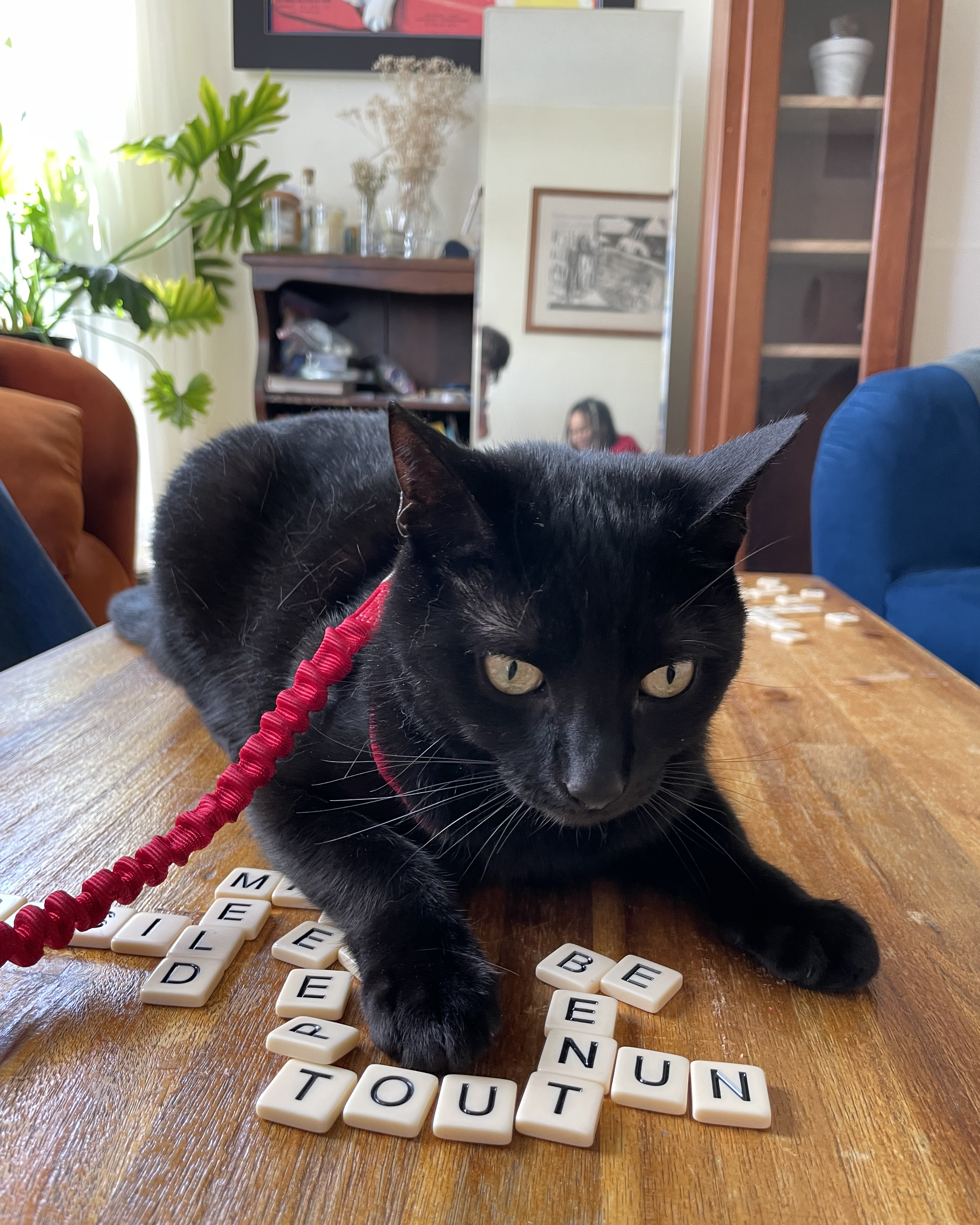
    As much as I miss the social part of working in person, I have to say that I feel pretty spoiled at my apartment. Both of my roommates work in person, so I generally have nine to five at home alone and get to turn all the common spaces into a massive office suite. It’s been nice to spread out and to listen to music out loud, and the lack of social exposure has really inspired me to work on developing a friendship with my roommate’s cat. Things started out rocky between us at first, but he’s pretty much my respected colleague at this point.

    The roommate’s cat

    The roommate’s cat playing Banagrams after a walk

    What’s the next queued song on your music player?

    “By Your Side” (Neptunes Remix) by Sade on an infinite loop!

    Hobbies outside of work?

    I’m getting really into baking birthday cakes, and spring is a major birthday season for a lot of the people I love! My top hits from the last couple of months include a tiramisu cake, a basketball b-day cake, a strawberry shortcake cake, and a failed Baked Alaska. I’m hoping to make use of the blow torch I bought for the Baked Alaska, so maybe next up is something crème brûlée-esque? Any and all suggestions for blow-torch baking ideas are very welcome.

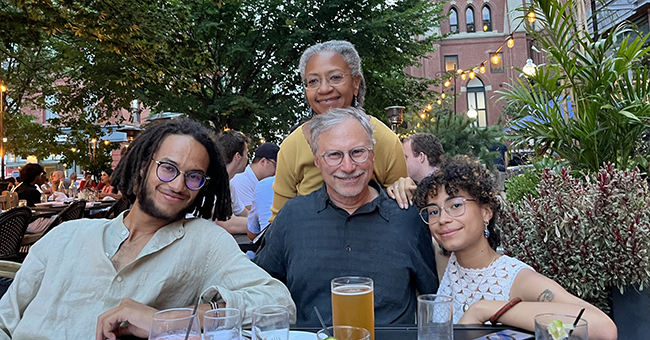
    Ruthie Block and the fam

    Ruthie Block and the fam

    Do you still have a commute to work? If not, do you miss it? What do you like to do to pass the time?

    I only go into work on Thursdays, and the commute is sweet when the sun is shining and the train isn’t super packed. Because I live in Cambridge, my trip to work is about thirty minutes of walking and only ten minutes sitting on the train. Back when I lived right off the red line, I was able to read a ton during the commute, but now I find that ten minutes isn’t really enough for me to dig into a book. I’ve been breaking out my Nintendo DS on the train lately, and Bowser’s Inside Story is an excellent way to pass the time!


    Ruthie Block received a BA in English and Africana Studies from Tufts University in 2021. Previously, Ruthie interned at The Feminist Press, as well as working at Beacon as an intern and freelancer. Outside the office, Ruthie enjoys farming, community building, reality TV, and adding to their ever-growing collection of books to read.

  • A Q&A with Catherine Tung

    On a bed of Desire and Superfreaks

    “Desire” cover design: Carol Chu. “Superfreaks” cover design: Louis Roe. Photo credit: Jay Mantri.

    Our catalog is expanding and heating up this summer, and not just because of the sun and the humidity. Editor Catherine Tung launches our new sexuality list with two exciting books: Desire: An Inclusive Guide to Navigating Libido Differences in Relationships and Superfreaks: Kink, Pleasure, and the Pursuit of Happiness. Beacon Broadside editor Christian Coleman caught up with her to chat about it.

    Christian Coleman: In my years at Beacon, I haven’t seen books like this in the catalog. This is such a cool (or hawt) new venture for the press. How did you get the idea to start a sexuality list?

    Catherine Tung: This is something I’ve been wanting to do for a long time! Editors all have bucket lists of books they want to publish, and near the top of my list has been a book that introduces the rich world of kink to a general audience without sensationalizing, othering, or distorting the material. When I arrived at Beacon three years ago, my senior colleagues encouraged me to brainstorm ideas for new lists that I could develop. I started with the idea of a kink book, and the idea of a sexuality list flowed naturally from there, especially since Beacon had at the time just published a groundbreaking new book on asexuality, Angela Chen’s Ace.

    CC: What sort of credentials do you have in mind when scouting out authors for the list?

    CT: Desired credentials vary, depending on the topic! If an author is writing on a medical topic, they’ll usually have educational and professional degrees and certifications. If they’re writing about a community that has historically been underserved or overlooked by the market, they’ll be part of that community themselves. If they’re writing a history of an aspect of sexuality, they’ll have training and experience in history. Regardless of topic, I tend to pursue authors whose work can help readers in a new way. Such authors tend to be carving out a whole new space with their work, and they invariably have a strong vision for what they want their work to accomplish, be it celebrating a particular kind of sexual diversity or expanding access to sex education.

    CC: How did you find the authors of Desire and Superfreaks?

    CT: Superfreaks was the first sexuality book I signed, and I found Arielle Greenberg through her work with The Rumpus: she had edited a column there called (K)Ink: Writing While Deviant, in which writers would talk about their writing practice, their kink practice, and how the two intertwine. I reached out to her to see if she wanted to write a book about kink and was very lucky that she said yes.

    Desire was my second sexuality acquisition. This project came to me from an agent, the wonderful Claire Harris. I’ve never asked her how I ended up on her submission list, but I’m guessing she saw my staff bio on the Beacon website, which lists the topics in which I acquire, including sexuality.

    CC: When you began acquiring for the sexuality list, what were you looking for subject-wise, aside from the kink idea that started it all?

    CT: I was pretty open minded! The main parameters I had in mind were, firstly, that the sexuality list should be distinct from our LGBTQ+ list. A book about queer activism or a memoir of growing up trans, for instance, is ultimately more about personal identity than about the sexual side of people’s lives. I knew that the books in the sexuality list needed to be about sex itself.

    The second parameter was that the sexuality list needed to reflect Beacon’s values—the titles needed to talk about sex in an inclusive, positive, intellectually rigorous way.

    The third parameter was that the books say something new and necessary about sex, something that could empower readers in some way.

    CC: What attracted you to the authors’ writing? Based on their prose, how did you know you wanted to work with Arielle Greenberg, Lauren Fogel Mersy, and Jennifer Vencill?

    CT: Arielle is a poet and has a wonderful sense of humor and an insatiable curiosity. All these qualities light up her prose, making it feel intimate, energetic, approachable, and artful. Her writing style serves the topic of kink very well—she takes what can be an intimidating topic and shows readers its fun, accessible side.

    Lauren and Jenn also write in a very accessible, friendly way. Their book is based on their work as sex therapists, and they did a wonderful job of packing their book with as much expert information as possible: the basics of gender and sexual identities; the role that structural oppression can play in impacting libido; the different structures that relationships can take; the biological workings of libido; the world of sex toys; libido and the ageing process; sex and disability; sex and illness. It’s an incredible wealth of knowledge. They also carefully organized all this info within the book to help readers find what they need as easily as possible.   

    CC: In your “Beacon Behind the Books” profile, you said you’re working toward a world free from sexual shame with this list. Tell us more about that. How do you see this in line with Beacon’s mission?

    CT: That statement was inspired by Lauren Fogel Mersy, who dedicates Desire “to a future that’s free from sexual shame, one where everyone has access to good sex education.” In a way, I think the sexual shame in our culture helps me identify topics for the list. If there’s a sexual topic that people feel ashamed to discuss, there should probably be a book on it.

    Sexuality is a powerful force. Arielle has an Audre Lorde quote in her book that expresses this beautifully: “The erotic is a measure between the beginnings of our sense of self and the chaos of our strongest feelings. It is an internal sense of satisfaction to which, once we have experienced it, we know we can aspire. For having experienced the fullness of this depth of feeling and recognizing its power, in honor and self-respect we can require no less of ourselves.”

    Our society has long channeled this powerful force for destructive purposes—exclusion, subjugation, control—and has used sexual shame to silence those demanding something better. To free ourselves from sexual shame is to tap into the power of our sexuality, and that’s what I hope these books will help us all do. I see this as very much in line with Beacon’s stated mission, which is to uplift such values as “freedom of speech and thought; diversity, religious pluralism, and anti-racism; and respect for diversity in all areas of life.”


    More about Catherine Tung

    Catherine Tung joined Beacon Press in late 2019 after seven years at Vintage Books, where she acquired in memoir, fiction, and nonfiction titles on politics, disability, cultural studies, and mental health. At Beacon, she is actively developing a list focused on oral history, urban planning, sexuality, and Asian American writing. Outside the office, she enjoys musicmaking, community building, knitting, gardening, and friendly debates over bourbon.

  • By Sonia Sanchez

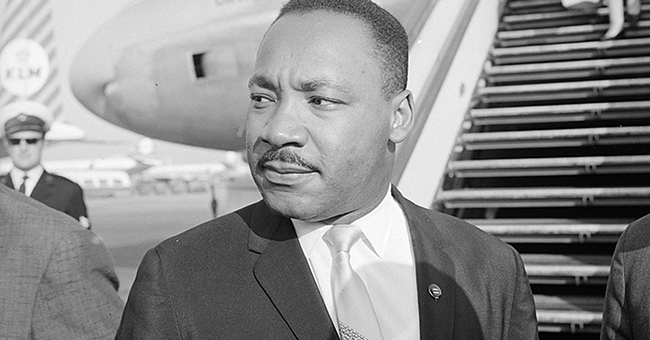
    Martin Luther King, Jr., 15 August 1964. Photo credit: Noord-Hollands Archief / Fotoburo de Boer

    Martin Luther King, Jr., 15 August 1964. Photo credit: Noord-Hollands Archief / Fotoburo de Boer

    On the fifty-fifth anniversary of Martin Luther King, Jr.’s death, we turn to the words of the Black Arts Movement luminary Sonia Sanchez. Collected in Homegirls & Handgrenades, Sanchez penned this letter to Dr. King on what would have been his fifty-fourth birthday. We still miss him today the way she does in her words.

    ***

    Dear Martin,

    Great God, what a morning, Martin!

    The sun is rolling in from faraway places. I watch it reaching out, circling these bare trees like some reverent lover, I have been standing still listening to the morning, and I hear your voice crouched near hills, rising from the mountain tops, breaking the circle of dawn.

    You would have been 54 today.

    As I point my face toward a new decade, Martin, I want you to know that the country still crowds the spirit. I want you to know that we still hear your footsteps setting out on a road cemented with black bones. I want you to know that the stuttering of guns could not stop your light from crashing against cathedrals chanting piety while hustling the world.

    Great God, what a country, Martin!

    The decade after your death docked like a spaceship on a new planet. Voyagers all we were. We were the aliens walking up the ’70s, a holocaust people on the move looking out from dark eyes. A thirsty generation, circling the peaks of our country for more than a Pepsi taste. We were youngbloods, spinning hip syllables while saluting death in a country neutral with pain.

    And our children saw the mirage of plenty spilling from capitalistic sand.

    And they ran toward the desert.

    And the gods of sand made them immune to words that strengthen the breast.

    And they became scavengers walking on the earth.

    And you can see them playing. Hide-and-go-seek robbers. ­Native sons. Running on their knees. Reinventing slavery on asphalt. Peeling their umbilical cords for a gold chain.

    And you can see them on Times Square, in N.Y.C., Martin, selling their 11-, 12-year-old, 13-, 14-year-old bodies to suburban forefathers.

    And you can see them on Market Street in Philadelphia bobbing up bellywise, young fishes for old sharks.

    And no cocks are crowing on those mean streets.

    Great God, what a morning it’ll be someday, Martin!

    That decade fell like a stone on our eyes. Our movements. Rhythms. Loves. Books. Delivered us from the night, drove out the fears keeping some of us hoarse. New births knocking at the womb kept us walking.

    We crossed the cities while a backlash of judges tried to turn us into moles with blackrobed words of reverse racism. But we knew. And our knowing was like a sister’s embrace. We crossed the land where famine was fed in public. Where black stomachs exploded on the world’s dais while men embalmed their eyes and tongues in gold. But we knew. And our knowing squatted from memory.

    Sitting on our past, we watch the new decade dawning. These are strange days, Martin, when the color of freedom becomes disco fever; when soap operas populate our Zulu braids; as the world turns to the conservative right and general hospitals are closing in Black neighborhoods and the young and the restless are drugged by early morning reefer butts. And houses tremble.

    These are dangerous days, Martin, when cowboy-riding presidents corral Blacks (and others) in a common crown of thorns; when nuclear-toting generals recite an alphabet of blood; when multinational corporations assassinate ancient cultures while inaugurating new civilizations. Come out come out, wherever you are. Black country. Waiting to be born . . .

    But, Martin, on this, your 54th birthday—with all the reversals—we have learned that black is the beginning of everything.

    it was black in the universe before the sun;

    it was black in the mind before we opened our eyes;

    it was black in the womb of our mother;

    black is the beginning,

    and if we are the beginning we will be forever.

    Martin. I have learned too that fear is not a Black man or woman. Fear cannot disturb the length of those who struggle against material gains for self-aggrandizement. Fear cannot disturb the good of people who have moved to a meeting place where the pulse pounds out freedom and justice for the universe.

    Now is the changing of the tides, Martin. You forecast it where leaves dance on the wings of man. Martin. Listen. On this your 54th year, listen and you will hear the earth delivering up curfews to the missionaries and assassins. Listen. And you will hear the tribal songs:

                                                                                 Ayeeee                    Ayooooo                       Ayeee
                                                                                 Ayeeee                    Ayooooo                       Ayeee
                                                                             Malcolm . . .                                                     Ke wa rona*
                                                                             Robeson . . .                                                     Ke wa rona
                                                                             Lumumba . . .                                                  Ke wa rona
                                                                             Fannie Lou . . .                                                Ke wa rona
                                                                             Garvey . . .                                                        Ke wa rona
                                                                             Johnbrown . . .                                                Ke wa rona
                                                                             Tubman . . .                                                     Ke wa rona
                                                                             Mandela . . .                                                    Ke wa rona
    (free Mandela,
    free Mandela)
                                                                             Ássata . . .                                                        Ke wa rona

    As we go with you to the sun,

    as we walk in the dawn, turn our eyes


    Eastward and let the prophecy come true

    and let the prophecy come true.

    Great God, Martin, what a morning it will be!


    __________

    *Ke wa rona: He is ours


    About the Author 

    Poet, playwright, educator, and activist Sonia Sanchez has received the Langston Hughes Poetry Award, the Robert Frost Medal, the Wallace Stevens Award, the Dorothy and Lillian Gish Prize, the Jackson Poetry Prize, the Edward MacDowell Medal, and the Anisfield-Wolf Lifetime Achievement Award. She is the author of 17 books, including HomecomingWe a BaddDDD PeopleUnder a Soprano SkyWounded in the House of a FriendCollected Poems, and Homegirls & Handgrenades.

  • By Ricky Tucker

    Gia Love

    Gia Love in “Kiki” (2016).

    For Trans Day of Visibility, the spotlight is on Gia Love, former House mother of House of Juicy, public speaker, model, activist for Black trans lives, and a friend of Ricky Tucker’s. Ricky Tucker is a close friend of the NYC Ballroom community and interviewed her for his book And the Category Is . . . Inside New York’s Vogue, House, and Ballroom Community. In this passage, he asks her about the importance of focusing on Black trans joy.

    ***

    This portion of my July 26, 2020, interview with preeminent trans advocate, model, and icon Gia Love was pure joy for me on a lazy Sunday afternoon. She is a joy to be around, and accordingly, in the aftermath of a summer stricken with the murders of Black, trans, and Black trans people (which we discussed), I wanted to ask her about how she finds and leans into joy during these cruel times as a thinking and socially engaged person sitting at the intersection of those identities. Luckily, the concept of trans joy is central to her ethos, pathos, and logos. She also cast a spotlight on some of the limits of the not-for-profit industrial complex when servicing Black women of trans experience. Enjoy.

    RICKY TUCKER: I saw you speak at the Black Trans Lives Matter protest at the Brooklyn Museum the other day, and you were talking about the murder of Islan Nettles and how you all shared a trans mother. Can you tell me a little about how her passing is affecting you?

    GIA LOVE: Yeah, so I wouldn’t consider her a friend, just to be very clear; but I would consider her a sister. We weren’t really particularly close, but I did know her personally because she was a Juicy and because she was very close with Courtney, who is my trans mother.

    And that’s the thing. That’s what a house is like. She was a Juicy, so I loved her, but I didn’t have her number, type of thing. But I can speak to her death. I remember, because it was really at the beginning of my transition. I remember probably like two weeks after her death, this Black guy tried to talk to me in the street and I was absolutely terrified. I literally ran, because I was just like, “Excuse me?” I just didn’t know . . . what the result of that would be. I never really know. . . . The situation that happened with Islan was the first in my transition, the first time that I was really able to see something like that. And maybe before, when I was identifying other ways, I was blind to the reality of a trans woman, and what we go through. It was like a wake-up call, in a sense.

    Before that, I feel like the younger generation wasn’t really having a conversation about the lived experiences of trans women. Oftentimes people romanticize it, like “This experience of being a trans woman is great because then you have this relationship with trade, which is a different type of relationship than if you were a gay man.” But the violence that we’re subjected to because of the fact that we’re trans is not really romantic—at all.

    If I can control my destiny, one thing that I will just never allow to happen is that I will not be a victim of transgender-based violence at the hands of some Black nigga who’s really insecure about his sexuality and feels like he needs to take that out on me. So, I’m very intentional about how I engage men. I’d rather be lonely than be dead, and I’m not commenting on women who choose to navigate those spaces, because that’s a choice that they make; but for me, I have decided that if you’re not treating me like I feel like I should be treated, I’d rather be lonely and really lean on the support of the people that do, even though it’s not intimate love in the sense that you’re fucking me, but it’s like I get love from my house family, from my personal family in the Ballroom community. And that love, for me, is everlasting.

    RICKY: Well, you’re such a huge inspiration, and a community figure. Losing you would take a toll on your family, but also the community at large.

    GIA: Right. And I get it. I get that people want to be loved, but at what expense?

    RICKY: Absolutely.

    GIA: So, one of the ways that I deal with transphobia, toxic masculinity, fragile men that I’ve engaged with in the past, is by letting them know how fucking low they are and how fab I am. I had a conversation with this man the other week. I was like, “You know what? I’m not going to take that course this time. I’m not going to go there, because I feel like that’s really revealing some things about myself that I’m working through.” I don’t have to big myself up. They’re not going to see me as the person I see myself as, no matter how I tell them that I’m the girl, that girl, the ultimate girl in the world. They won’t believe that, so I won’t be that to them.

    So, I just explained to him how I’ve always gotten the short end of the stick in every relationship I’ve ever had with a man. A lot of these guys’ sexual explorations or just self-explorations were done at my expense, with no care about how that would affect me. I told him, “As a trans woman, my gender identity and how that shows up in the world is very interwoven into every aspect of my life. But if you decide that you want to fucking freak out tomorrow and that you don’t like trans women anymore, you can do that. That’s a gift; that’s a privilege. I live with this every day. The very reason you are attracted to me is the very same reason you fucking hate me—that’s very problematic. I was like, “You need to do some healing and you need to do some work, because I choose not to allow men to explore on my time.”

    RICKY: Amen. Where do you see yourself going professionally or academically, because it seems to me like you can do so many different things.

    GIA: I just want to finish school. I have so much working experience, so when people say, “What do you see yourself doing?” I don’t really know, because I literally have so much working experience without having the degree, and I’ve had so much leadership experience in jobs. I’m actually about to transition out of my job now, and I’m going to be devoting more of my time to Black fem trans activism.

    My objective is to really center our joy and not our pain. A lot of time we have resources out there, like GMHC [Gay Men’s Health Crisis]. They give us PrEP, but that’s not the whole entirety of my life. My life doesn’t look like HIV prevention and condoms. It’s like we’re just running from this disease; that’s what we’re going to live for—to die? I want to provide resources for Black trans artists that address health from a holistic framework and also from a full-body, full-person framework. I’m not going to treat your identity; I’m going to treat your personhood. What do you need to thrive and be healthy? We aim to address the much-needed nuances of our identities, especially in our professional lives.

    RICKY: That’s really exciting. That’s awesome. One thing I’d like to land on is if you want folks out there to focus more on the joy in trans lives than your suffering, tell me what brings you joy. What should we know about Gia in terms of her joy?

    GIA: Well, I’m a tennis player. I love to play tennis; I love to watch tennis. Honestly, I feel that if I grew up in a household that was like, “Oh, try this, try this, go to dance classes, go to this,” and they put me in tennis, I would be pro today. People don’t know I play tennis, but I’m like really good. I love tennis—I love it.

    And I love to just be in the community that I have created for myself and just really share love and receive love from the ones that I love and who love me for who I am. My happiness and my joy is just really about being around people, like-minded people, people that really care about my health and well-being, and protecting people like me and just really constructively moving forward: emotionally, in terms of our careers, really supporting each other. I have a really good core group of friends, Jonovia [Chase] being one of them, where we really work with each other. We’re really respectful and intentional with the work that we do. That’s the center of my joy at the moment.

    RICKY: I have two things to say about that. One of them is that when you said you love playing tennis, it brings to mind to me your old love of being on the debate team. There’s something about a back-and-forth that seems to engage you.

    GIA: I do that. That’s like my life. When I was in debate, I was in debate. When I was in tennis, I was in tennis. When I was in Ballroom—I was in Ballroom. I’m getting back into tennis now and trying to train so that I can play tournaments in the winter. Actually, one of the guys who used to train me was in the Ballroom—

    RICKY: For real? Wow.

    GIA: Yeah, Ryu Mizrahi. He’s a legend for face. Basically, like ten years ago when I came into Ballroom, I found him there. I had my own friends, and he was with his own people, but then one of my fathers is his son, and that’s how we built a relationship. He’s been trying to get me to play tennis all these years, and one night I just hit him up like, “Yo, I’m ready to start playing.” I sent him five hundred dollars, and I was just like, “Buy me all the things I need,” and he did it, and now I’m playing. Do you live in New York?

    RICKY: Yep, I’m in Crown Heights.

    GIA: Okay, cute. I’m doing a cookout in August. It’s going to be a celebration of Black trans resilience, well, Black trans women. I was at that Women’s March, and I took issue with the fact that they’re saying, like “If this is a Women’s March and we’re centering women, why are we saying ‘Black trans’?”

    RICKY: Ugh. Of course.

    GIA: Because even in research sometimes, when they say “Black trans,” it’s a dog whistle for people, and what they think that means is they’re making trans men invisible, when they’re really just talking about trans women. Our experiences are very different. You know what I mean? And the reason why I will continue to center Black trans women is because it’s a Black trans thing. Because in this country in particular, systemic racism is a thing. So, if you think that Black people are on the last rung of the ladder, and then you just want to say trans—no, Black trans women are on the fucking last rung of that ladder, and that’s why we are counting twenty-five of us who have been murdered in a very specific and unique way. It’s not like there’s nuance to the murderers either. No. Every time, it’s a Black cis man in some situation with a trans woman, and she’s getting murdered by him, and his weapon of choice is a gun. So, it’s a very specific narrative, right? I’m also not having it when they say, “All Black Lives Matter”—not doing that either. No. Black trans women matter. The thing is, saying that plays into that realness trope, how we’re not supposed to speak about or uplift our transness? No. I am a Black trans woman, and we are not going to be afraid to say that.

    RICKY: That’s so important. Unfortunately, there are all of these experience erasures that are happening at the moment. Maybe it’s what happens when so many diverse groups form coalitions.

    GIA: Right? Let’s talk about it. Black trans women are disproportionately criminalized. The way that we navigate the criminal justice system is very different. There’s just so much that is unique to being Black and trans. I’m not going to allow people to erase that.

    RICKY: Well, I’m going to keep an eye out for the flyer, because that cookout sounds amazing.

    GIA: Yeah, it’s going to be great. This is everyone’s opportunity to show up for Black trans women in a way that is really centered around joy, centering celebration. And hopefully it can be an annual thing.

    RICKY: Do you have a name for it yet?

    GIA: Yeah, it’s “Gia Love in Collaboration with Friends: An Event Celebrating the Resilience of Black Trans Women.” I’ll be giving out roses and buttons to all the Black trans women who come.

    RICKY: Love it.


    About the Author 

    Ricky Tucker is a North Carolina native, a storyteller, an educator, a lead creative, and an art critic. His work explores the imprints of art and memory on narrative, and the absurdity of most fleeting moments. He has written for the Paris Review, the Tenth Magazine, and Public Seminar, among others, and has performed for reading series including the Moth Grand SLAM, Sister Spit, Born: Free, and Spark London. In 2017, he was chosen as a Lambda Literary Emerging Writer Fellow for creative nonfiction. He is the author of And the Category Is . . . : Inside New York’s Vogue, House, and Ballroom Community. Connect with him at thewriterrickytucker.com and on Instagram: @rictorscale.

  • By Gabel Strickland

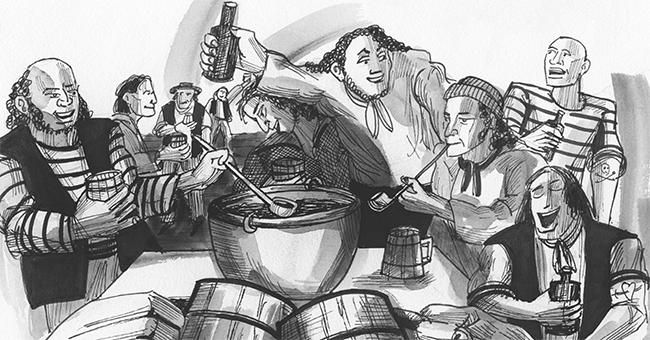
    A merry life and a short one. Illustration from “Under the Banner of King Death” by David Lester.

    A merry life and a short one. Illustration from “Under the Banner of King Death” by David Lester.

    “More than a little like Robin Hood, the mythic outlaw but friend of the people who has endured like no other figure in the English language, the pirates—to simplify an exceedingly complex category—have been a natural for popularization and romanticization. They exist beyond the margins of law and order. They boast and sing lustily about their lives on the sea and off. By progressive or radical interpretation, they sometimes join directly in the struggle of the dispossessed, but more than often the struggle for the survival of themselves, outcasts of any age.”
    —Paul Buhle, afterword of Under the Banner of King Death


    The proud subversiveness of a pirate’s lifestyle often makes them a heroic figure for the marginalized. For the politically, socially, and economically oppressed, pirates are a vessel (get it?) through which to see their own liberation, representation, and revolt against the powers that be. At sea, the enslaved can be free, the disenfranchised can vote, people can even create new identities—and legends—around themselves.

    This idea is reflected in today’s newest and most popular pirate media. Under the Banner of King Death, written by Marcus Rediker, illustrated by David Lester, and edited by Paul Buhle, dramatizes how piracy allowed lower class men (and women) to meaningfully participate in democracy and for formerly enslaved people to find freedom on the high seas. This graphic novel’s protagonists, John Gwin, Ruben Dekker, and Mark/Mary Reed, overthrow their ship’s captain to embark on a voyage of revelry and mayhem. Comparatively, HBO’s popular television series Our Flag Means Death tells the story of how a fictionalized version of Stede Bonnet uses piracy to escape the toxic masculinity and societal expectations that burden him back home. He becomes The Gentleman Pirate, exploring his queerness on the open seas with his eventual lover, Blackbeard.

    Both stories explore how pirate narratives can be the perfect medium through which to provide empowering, empathetic representation of marginalized voices as well as provide social and political commentary. Let’s compare the two. 

    Representation and Critique of Oppressive Systems

    Pirates flee from society and all its oppressive structures—from capitalism, from the authority of the government, from the very ground these structures are built upon. So naturally, for characters of marginalized identities, piracy is a way of blatantly rejecting the institutions that confine them on land. Both stories explore this concept, but each show focuses on representing different marginalized identities. In Under the Banner of King Death, John Gwin escapes the confines of racial hierarchies. In Our Flag Means Death, Stede Bonnet (and other characters) freely explore queerness from beyond the jurisdiction of society.

    Let’s start with Under the Banner of King Death. John Gwin escapes slavery in South Carolina by fleeing to the open seas. Gwin has been successfully seafaring for some time when, at the beginning of the graphic novel, he and his companion, Ruben Dekker, are forced to work on a slave ship called “The African Prince.” Eventually, he leads a mutiny against the ship’s captain, freeing the people trapped in the ship’s bowels and entering his life of piracy. This life allows him to literally and metaphorically break the chains of his bondage. From then on, Gwin makes his own decisions, travels wherever he pleases, and even falls in love with a white woman, Mary Reed. None of this would have been possible on the plantation in South Carolina.

    Mary Reed is also afforded a unique freedom on a pirate ship, where she spends most of her time disguised as a man, Mark Reed. Seafaring ensures her the personal autonomy that would never have been afforded to her in England, where women were continually denied even the most basic personal and political liberties.

    For Our Flag Means Death’s Stede Bonnet, escaping society means escaping the heteronormative, toxically masculine social structure at the heart of English life. On his own ship, Bonnet gets to be unabashedly himself—flamboyant, silly, gentle—without enduring the mockery of his father and peers for not being “masculine” enough. The pirate life is also how he escapes his loveless marriage with Mary Bonnet and discovers his love for Blackbeard.

    Similarly, piracy (unexpectedly) affords other characters opportunities that they would not have had otherwise. Jim, a nonbinary character, at first hides in the system of piracy, but eventually, establishes their own genderfluid identity aboard. Episode four is key in this. When a member of the crew asks Jim, “So this whole time you’ve been a woman?” Jim says, “I don’t know.” Jim leverages the already unregulated life of a pirate ship to create a new name and life for themselves, asserting their identity through sheer force. Later, the crew begins referring to Jim with multiple different pronouns, mostly they/them. Surprisingly, even Bonnet’s abandoned wife Mary finds her own means of empowerment in her husband’s absence. Without a husband to answer to, she finds social belonging in a group of other “widows,” starts a flourishing art career, and even explores her own sexuality with a new lover. So goes the domino effect of one person choosing a life beyond society's rules and land.

    Depiction of Democracy on a Pirate Ship

    There are several aspects of pirate life that intrigue Marcus Rediker, one being the democracy pirate crews enjoyed at a time when much of the world lived under the rule of a monarch. Rediker is a scholar of Atlantic history and the author of Villains of All Nations, a social and cultural history of the Golden Age of piracy that inspired Under the Banner of King Death.

    As Rediker said in an interview with Asia Art Tours in 2021, “At a time when poor people had no democratic rights whatsoever (the early 1700s), they elected their officers and limited their power. At a time of extreme inequality, they divided their loot and resources in stunningly egalitarian ways. These practices were direct and subversive attacks on how merchant and naval ships operated—and the ruling classes of the Atlantic immediately understood them as such.”  

    This democratic system is displayed in Under the Banner of King Death. After John Gwin leads his crew in overthrowing their ship’s original captain, he oversees a vote in which the crew collectively decides where they should sail next.

    Our Flag Means Death also highlights this emphasis on giving each crew member equals rights and decision-making power. In episode one, Stede Bonnet encourages each crew member to sew a new flag for the ship, declaring that the crew will vote on the best one afterwards. Even as Bonnet asserts the importance of this egalitarianism, the show demonstrates the crew’s power over their leadership in another way: in the same episode, the crew plots to overthrow Bonnet as captain, deciding amongst themselves what they demand of their leader and who should replace Bonnet once he is deposed. The message is clear: the crew always has a say over the ship’s operation, whether the captain embraces that power or not.

    Historical Accuracy

    Both Under the Banner of King Death and Our Flag Means Death are fictionalized stories rooted in historical fact, situated during the same historical period (the early 1700s, the Golden Age of Piracy). Therefore, they touch on many of the same historical elements of pirate life: the rivalry with the British naval ships, the depiction of pirate life itself, interactions with Indigenous populations of various lands, etc. However, it is in their characters that these pirate tales show the most creative freedom in interpreting—or even directly rewriting—history. Both narratives have a blended cast, some characters being entirely made up and others being based on people who really lived. When writing the latter, they stick to the broad, well-known plot points in their characters' real lives while also taking plenty of artistic liberties for the sake of the story.

    For example, the crew of Under the Banner of King Death is fictional. John Gwin and Ruben Dekker are both made up to tell this story. Mary Reed is the only character who is historically documented (in real life, her name is spelled Mary Read). However, David Lester and Marcus Rediker plucked Read from her documented story and recast her into this one. The graphic novel stays true to selective elements of her past. It is true that Read lived in disguise as a man on her pirate ships. It is also reported that she was pregnant when she was captured, which stalled her execution. However, her voyage with Gwin and Dekker’s crew is entirely invented.

    Similarly, while it is documented that Stede Bonnet and Edward “Blackbeard” Tatch sailed together briefly, the nature of their relationship is pure speculation. Some sources describe a contentious relationship, while others a friendly one. Our Flag Means Death unapologetically  casts them as lovers. Concerning Bonnet’s real life, the show accurately depicts Bonnet leaving his aristocratic life behind to become a pirate. Some historians suggest that perhaps this was due to a mental break of some kind, which the show explores. It is also widely reported that Bonnet was not an instinctually good pirate when he first started, and the show has a lot of fun driving that point home. However, the show changes other details of Bonnet’s life, like who his family members were, for the sake of the narrative.

    Both address the wider historical context in which these stories are set, albeit to varying degrees depending on the tone of their respective genres.

    Differences in Tone

    While both pirate stories display democracy aboard a pirate ship, the main difference between the two adaptations is that Our Flag Means Death doesn’t paint pirates as pioneers of democracy or connect this self-governance to our ideas about political freedom and participation today. But, as Under the Banner of King Death suggests, they in fact do deserve that credit. Part of this is due to the differences between the genres of the two works. As a comedy, Our Flag Means Death certainly mocks the British government and its institutions, which drove Bonnet to piracy, but its characters are almost too goofy to be seriously championed as political revolutionaries. They are shown to be egalitarian, but a point isn’t made of it as much as in Under the Banner of King Death, simply because the heart of the show’s story does not lie there.

    Presumably for similar reasons, Our Flag Means Death glosses over some elements of Atlantic history that Under the Banner of King Death addresses, most notably the slave trade. Rediker, as a scholar of Atlantic history, was careful to demonstrate how pirates interacted with the slave trips and traders, who were actively voyaging at the same time as pirates were. Our Flag Means Death has a culturally and racially diverse cast, but there is little mention of how canonically each person ended up on the ship. While the racial hierarchy of the English is addressed—and then subverted by the crew—our protagonists never encounter a ship carrying enslaved people. Again, this is probably because it is a comedy. As a drama, Under the Banner of King Death is better equipped to address such a topic with the weight and nuance it deserves.

    ~~~

    These stories act as a powerful critique of the social constraints that the characters break away from. By showcasing the beauty and civility pirates create in their lives on free vessels, these stories highlight the harshness and absurdity of the system that tried to deny them this freedom in the first place—all while claiming to be the more “civilized” way of living.  

    And, of course, both stories love a good pirate song.


    About the Author 

    Gabel Strickland is a digital and social media intern at Beacon Press. She is getting her BS degree in journalism at Emerson College with a minor in publishing, comedy writing and performance.

  • By Esha Chhabra

    Hanging fabrics and textiles

    Photo credit: mmorris76

    This year’s theme for World Water Day focuses on accelerating change to solve the water and sanitation crisis. Being part of that change means reducing water waste. And regenerative businesses are already on it. In this passage from Working to Restore: Harnessing the Power of Regenerative Business to Heal the World, writer and journalist Esha Chhabra showcases a handful of companies channeling their resources into recycling fabrics and textiles the cleanest way possible.

    ***

    Unable to put all the secondhand clothes to use, Patricia Ermecheo, [who has been in the business of recycling trash for the past decade], began thinking about how to break down this clothing and turn it into yarn, ready to be spun into a new garment. That could create more systemic change in the industry.

    Ermecheo partnered with some scientists at North Carolina State University to conduct research on the strength of this recycled yarn. Two years of research at NCSU and visiting manufacturers and fashion experts resulted in a new technology that provided a solution, and Ermecheo founded another company, called Novafiber, to employ the new process. She set up a factory in Guatemala, working with her existing contacts. Novafiber breaks down fabrics and upcycles them without the use of chemicals, dyes, or water. “That’s really important,” she says, “because the dyes and excessive water usage in the fashion industry is just as bad and we didn’t want to add to the problem.”

    Ermecheo took the solution to the marketplace with a simple offering: socks. It was a low-cost, affordable product with just a couple of sizing options, making it a good pilot. The response was positive. They sold more than two thousand socks in a month, and she began thinking about how to scale the model.

    “To get the industry to truly change, we have to work with the big brands, and convince them to go circular,” she explains. “So I focused on B2B [business to business].” Rather than creating her own line of products, she invested her time in working with established brands that could transform the industry virtually overnight. Though the change didn’t happen that quickly, she did find a receptive audience with one of the world’s largest sports brands, Nike. For the past two years, Ermecheo has been working with Nike to drive innovation in its sustainable supply chain, and to perfect this upcycled yarn for its products.

    In the meantime, she has received recognition from other ecofriendly brands. For instance, in 2018, Stella McCartney, a women’s fashion brand focused on sustainability, featured the socks at Fashion Week in Paris. Each guest at the Stella McCartney show was given a custom-made Osom Brand pair of socks in a 100 percent compostable bag.

    “It’s definitely still the beginning, but we’re starting to see more brands take action, and have a hunger for solutions and change,” she says.

    Ermecheo’s focus is on using postconsumer waste, clothes that have already been worn. This is, perhaps, the greatest challenge in recycling clothing because most clothing today is made of a blend of fabrics and fibers. “That makes it hard when you’re trying to break it down and reweave into a new thread. These materials have their own properties and cannot be separated so easily when they’re woven together,” she explains.

    ~~~

    Anders Bengs, the Finnish cofounder of Helsinki-based Pure Waste Textiles, knows this firsthand. In 2006 Bengs started a company called Costo with Hannes Bengs and Lauri Köngäs, an accessories label that refashioned waste textiles into hats. The concept was a hit, and as Costo’s popularity surged in the Nordic region, Bengs, like Ermecheo, began to think bigger: How do we revolutionize the industry as a whole?

    Bengs partnered with a fellow Finn, Jukka Pesola, and an Italian, Maela Mandelli, to start Pure Waste Textiles in 2013. Having seen the amount of fabric wasted on the cutting table in factories, Bengs and his cofounders homed in on textile waste in the manufacturing process, or pre-consumer waste. In particular, they started working with cotton, a material that, Bengs says, “takes a hell of a lot of resources to grow and seems like a crime to waste.”

    In 2016, they built a factory with their Indian partner, Raj Agrawal, in a small village outside of Coimbatore, India. Situated in the heart of the Indian textile industry, they had easy access to the cuttings from the factory floors. “India is a powerhouse when it comes to knitwear, and as a result, they have a lot of the waste as well. About 15 percent of material is wasted in the manufacturing process,” he estimates.

    With 100 workers, primarily women, the factory gathers all the cotton clippings from nearby factories and sorts them by color, then mechanically breaks them down to individual fibers.

    Like Ermecheo, Bengs is focused on repurposing the material in the “cleanest” way possible. “We don’t use dyes or chemicals in the process, and the consumption of water is almost zero,” he says. The factory runs on 90 percent wind power, with solar panels on the way to make up the last 10 percent.

    To make it easy for companies to work with them, Pure Waste Textiles offers finished products, such as T-shirts, sweatshirts, pants, and bags that can be customized with company logos, slogans, and designs. “We do that because we’re working with a relatively new type of material, the recycled cotton blends, which some factories may not be as familiar with, or [know] how to work with properly,” he explains. It’s easier for them to own the whole supply chain, from waste to a finished product. “We don’t have investors, shareholders, or any outside voices telling us what to do,” Bengs says, “so we’ve been able to grow this slowly based on our knowledge and values.”

    The three founders started with $3,500 (€2,500) in 2013. By 2019, they had an annual turnover of $5 million. With some grants from the Finnish government, they’ve also invested in research and development. Their latest foray is in learning how to better recycle post-consumer textile waste. They’re currently testing potential solutions with local universities and research institutes in Finland.

    “We’ll definitely be able to do it. It just takes a lot of infrastructure, which is what’s lacking right now in the industry. So, we need to invest in the machinery and infrastructure to be able to repurpose all kinds of textile waste,” Bengs says.

    Despite their need for investment capital, they are not interested in receiving capital from institutional investors. “We like our freedom,” says Bengs. “It’s let us get to where we are today and build a business that’s not about making money but about changing the world.”

    The Waste Stream Itself

    To reduce the waste stream, using existing materials is important—first, because some of these items are made of polymers and synthetic materials that do not decompose; second, because of the chemical dyes that manufacturers use to color fabrics in specific shades of millennial pink or sky blue. Dyeing fabrics for both industrial and consumer use eats up precious resources, especially water, and leaves behind toxins.

    Not just the dyes can be problematic but also the finishes on these clothes that make them soft, water-resistant, and sweat-friendly. All textiles have some pretty dirty secrets, the textile chemist Matthias Foessel tells me.

    Dressed in a denim jacket by Nudie Jeans, a Swedish brand that uses organic cotton and promotes heritage-inspired selvedge denim that has not been prewashed, Foessel wears his views these days. But that was not the case nearly three decades ago when he started his career in textiles.

    With a master’s degree in textile chemistry from Coburg University in Bavaria, Germany, Foessel was prepared for a lifelong career in textile manufacturing. His first job after completing post-grad was at Ciba Specialty Chemicals, a company that operated in more than eighty countries and in almost every industry where a textile would be used: from car seats to baby clothes to shoes to home linens. In 2009, Ciba became a part of BASF, a German chemical company that is one of the largest chemical companies in the world.

    After Ciba he went on to work for Huntsman, an American chemical company headquartered in Texas. It was at Huntsman, in 2008, that Foessel started thinking about alternatives to the thousands of chemicals used in the manufacturing process.

    “I had to spend time learning about the industry, and its mistakes, before I could wake up to the reality,” Foessel admits. “I needed that time to understand that we can do it better. At this point, I had traveled all over the world, been to countless mills. I could have just sailed into an executive position at a chemical company and lived a very cushiony life. But I saw the effect that all this consumerism was having on the planet. And I couldn’t turn away from that. So I quit.”

    Foessel partnered with friends to start a new era in textile chemicals. It was the beginning of Beyond Surface Technologies, or BST. Using their own funds, they set out to create alternatives to some of the commonly used chemicals in the industry. It took them four years to create their first product—and even that happened by accident.

    “Everyone thought we were nuts to start a chemical company that was going to be bio-based, and that, too, in Switzerland,” Foessel jokes. “We were mad and stupid. That’s the truth.”

    Luckily, they didn’t care what everyone thought. Instead, Foessel, with the addition of Mike Rushforth, a Scotsman with a PhD in chemistry, set out to find a replacement for durable water repellent—DWR, as it is routinely called—one of the most commonly used chemical coatings on outdoor apparel. The job of DWR is to keep you dry when it’s wet outside. It does this with the use of chemicals. DWR, until recently, was made with a long-chain (C8) fluorocarbon, but the byproducts of this chemical are toxic and, when mixed with water, can easily end up in the environment.

    “After three years of working on different chemistries for DWR, we dropped water on a sample and it absorbed [the water], instead of repelling it,” Foessel says. Instead of creating a bio-based alternative to DWR, BST developed the exact opposite, a substance that causes wicking. “Thankfully, we didn’t give up. We just kept going with it,” Foessel continues, laughing.

    Though they didn’t find the solution to DWR, in 2015 they did create their first product, bioWick. Outdoor and athletic wear needs to have effective wicking properties, so that when a person sweats, the fabric picks up the liquid and disperses it quickly throughout the material, allowing it to evaporate.

    The BST team, based in Basel, did not have the travel budget to market their product to clients. So they reached out to Adidas, a significant name in sports, and conveniently headquartered just a few hours away in Herzogenaurach, near Nuremberg, Bavaria. That year Adidas did a trial run of the bioWick finish on the jerseys for the German World Cup football (soccer) team. If the professionals didn’t notice the difference between the bio-based and the chemical-based finishes, BST had a winner.

    “We knew we had to create a product that wasn’t just about being bio, or natural—it had to perform. And this was the test,” Foessel says.

    The feedback from Adidas was positive. BST’s bio-Wick performed on par with the synthetic concoction. Three years in, BST had a client. Adidas adopted the product for its global football collection in 2015.

    “Our solution is 99 percent bio-based. While it’s not 100 percent, because we have less than 1 percent of synthetics, it’s a serious upgrade from the industry standard, which can be as low as 0 percent [bio-based],” Foessel says.

    The chemical waste and carbon footprint from bioWick, as a result, is one-ninth that of conventional DWR. In a life-cycle analysis, BST’s vegetable-oil-based bioWick was put up against the traditional petroleum-based wicking concoction; bioWick came in at 2.4 versus 23.4 for the latter (in the units used to measure carbon footprint).

    BST aims to make a dent in petroleum usage by the industry: the textile industry uses ninety-eight million tons of nonrenewable resources, including oil, every year. Textile production pollutes water systems; 20 percent of industrial water pollution is attributable to the dyeing and treatment of textiles. BST can tackle both by going bio: the water has fewer, if any, pollutants, and the finishes themselves are largely biodegradable and petroleum-free.

    With Adidas on board, BST had established that they can compete with existing industry players and work in big volumes. That goes back to BST’s team, which consisted of industry veterans with established networks, and a recognition that to succeed, the product had to be on par with or better than the options currently on the market.

    Since 2015, BST has developed some more bio-based alternatives. DWR is still only partially bio-based, Foessel says. “It’s better, about 53 percent bio-based, but we’re still working on it.”

    He acknowledges that four bio-based alternatives are a good start but nothing compared to the dozens at his previous job. Although BST is only twelve years old, Foessel expects that product development will go faster than it did during the first three years. “I sure hope that it doesn’t take us three years to develop a single product,” he says. “But we’re learning quickly, and I think we’ll be able to iterate faster going forward.”

    While their emphasis thus far has been on developing bio-based coatings for synthetic and conventional fibers, even materials like organic cotton can be coated in synthetic chemicals for their finishing, which Foessel is keen to highlight: “It doesn’t stop at the fiber. And the industry needs to appreciate that. It goes further, and it gets complex.”

    In addition to Adidas, BST’s client base includes some mainstream brands such as Levi’s and Tommy Hilfiger, and BST’s bio-based products have been used on one hundred million pieces of clothing (annualized) thus far. Surprisingly, approximately 10 percent of that total comes from Tchibo, a German coffee company that also has a chain of cafés throughout the country, for which BST produces merchandise periodically. “What I love about working with them is that it shows that this is not an upscale solution. They’re a very mass-market brand. If they can do it, why are you not doing it?” Foessel asks of other brands.

    Cost-wise, he notes, bioWick is comparable to industry standards. “After having spent two decades in mills and dye houses,” he says, “I knew that I had to make a product that would be just as good and as inexpensive as what the market was using. So there are absolutely no excuses not to convert over.”


    About the Author 

    Esha Chhabra is a writer who covers sustainability, international development, and the rise of mission-driven brands. She has spent the last decade contributing to a number of international and national publications such as The Guardian, New York Times, Wired UK, Washington Post, Atlantic, Fast Company, Forbes, Stanford Social Innovation Review, and more. She has been awarded multiple fellowships from the Pulitzer Center on Crisis Reporting. Follow her on Twitter (@esh2440) and Instagram (@eshatravels).