• Women in silhouette

    Image credit: Alexey Hulsov

    Whip out that #OscarsSoMale hashtag. This year, the Academy snubbed such filmmakers as Gina Prince-Bythewood, Maria Schrader, Sarah Polley, and Charlotte Wells as Best Director nominees. In The Wrong Kind of Women, Naomi McDougall Jones writes that this snubbery—read: discrimination—owes itself to “the film industry’s fetishization of the male ‘genius’ auteur filmmaker.” Must the patriarchy be so basic? At least Sarah Polley took home a Best Adapted Screenplay Academy Award for her film Women Talking.

    Regardless of Tinseltown’s Old Boys Club, snubbery won’t stop women directors from telling stories—a form of revolution to dismantle the gods of Hollywood. The same goes for all women contending with the patriarchy to tell stories in all other media: print, radio, stage, blogs, podcasts, news, social media, etc.

    In the spirit of this year’s theme for Women’s History Month, Celebrating Women Who Tell Our Stories, here’s an inexhaustive batch of recommended reading and book-length shout-outs to the women who’ve done so, from the past and from today. Because these stories, in all their nuances and varieties, are what map out and thread together women’s history.


    Being Heumann pb

    Being Heumann: An Unrepentant Memoir of a Disability Rights Activist

    “How we treat disabled people, how we treat minorities, boils down to our fundamental beliefs about humanity. Do we believe that we all have something to contribute, regardless of where we’re from, how we move or think, the language we speak, the color of our skin, the religion we choose, and the people we love? Do we believe in equality? We need to look inside and think deeply about whether we really believe this to be true.”
    —Judith Heumann with Kristen Joiner 
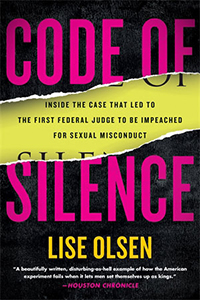
     

    Code of Silence pb

    Code of Silence: Sexual Misconduct by Federal Judges, the Secret System That Protects Them, and the Women Who Blew the Whistle

    “In the 2000s, [Cathy] McBroom was one of the only women in the United States who was publicly raising allegations about sexual harassment and sexual misconduct by a federal judge. In 2006, an activist from New York, Tarana Burke, suggested that women should band together to combat pervasive stories of sexual abuse and assault by sharing what she called ‘Me Too’ stories, though Burke’s idea would not fully take hold until 2017. That year, other women finally began to speak out about how other powerful federal judges had committed sexual harassment and other forms of misconduct. Many men cloaked in the power of their black robes seemed to have gotten away with it.”
    —Lise Olsen 


    Looking for Lorraine

    Looking for Lorraine: The Radiant and Radical Life of Lorraine Hansberry

    “Like the ones who came before, she lived an artist’s life, a flesh and blood life, with a great deal of difficulty and little in the way of respectability once she committed fully to who she was. She did things that were politically dangerous. She was brave and also fearful; experimental and superb.”
    —Imani Perry 


    Momfluenced

    Momfluenced: Inside the Maddening, Picture-Perfect World of Mommy Influencer Culture

    “Ultimately, momfluencer culture allows us to control—at least to an extent—the mythology of our own motherhood. I don’t have a ton of followers on Instagram, but every mom-centric photograph or caption I post is chosen to communicate something specific about my motherhood, about the type of mom I want others to see when they look at me.”
    —Sara Petersen 


    The Patriarchs

    The Patriarchs: The Origins of Inequality

    “After centuries of living in the societies we have made, we call what we see ‘patriarchy.’ From here it appears almost conspiratorial, as though it was cleverly planned out from the start—when, in truth, it has always been a slow grift. We can see this for ourselves in the patriarchs still trying to stretch their tentacles into our lives today.”
    —Angela Saini 
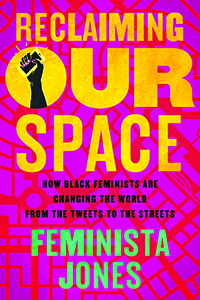
     

    Reclaiming Our Space

    Reclaiming Our Space: How Black Feminists Are Changing the World from the Tweets to the Streets

    Black feminist women are being heard in ways they have never been heard before. Social media networks provide platforms for conversations that we have long been having in our hair salons and our churches, by our watercoolers and in our breakrooms, and in our housing project courtyards and systematically segregated classrooms . . . . We have to look at how, over the last decade, Black women have harnessed their ingenuity and their magic and have taken to digital platforms to advance the fight toward liberation while honoring the ways in which Black Feminism has been the guiding theoretical framework for our collective progress.
    —Feminista Jones 
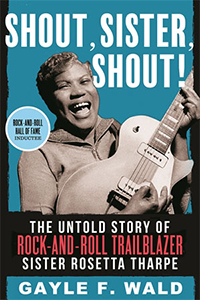
     

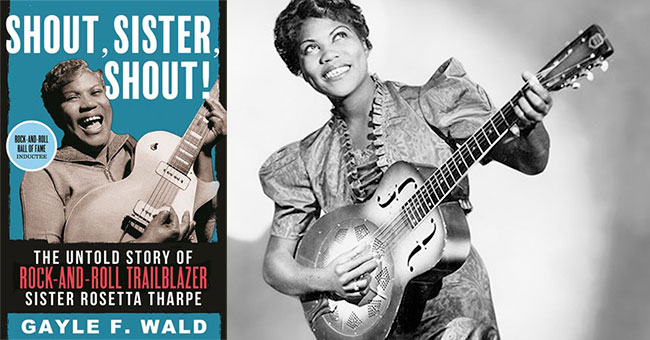
    Shout  Sister  Shout 2023 reissue

    Shout, Sister, Shout!: The Untold Story of Rock-and-Roll Trailblazer Sister Rosetta Tharpe

    “Although Lizzo locates Tharpe historically with her phrase ‘back in the day,’ in talking about [Janelle] Monáe’s ability to set ‘the example’ for contemporary ‘black and queer and big’ artists, she connects the dots between past and present. We need monuments to Rosetta Tharpe, but we also need to work for a world in which the trailblazing Rosetta Tharpes of today can thrive. Only then we will have truly ‘told’ Tharpe’s story.”
    —Gayle Wald 
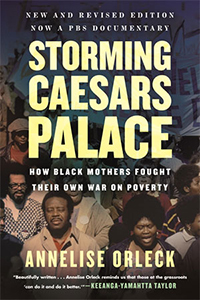
     

    Storming Caesars Palace

    Storming Caesars Palace: How Black Mothers Fought Their Own War on Poverty

    “Most of the women of Operation Life have now passed on. But they would be happy to see this new era of activism. Still, there is one aspect of their movement that perhaps could be highlighted more dramatically. They insisted that poor mothers are the real experts on poverty, that their vision and their labor are crucial if we really hope to improve the lives of this country’s poor mothers and children. “We can do it and do it better,” they often said. This is a history of extraordinary women who did exactly that. We have never needed their vision more.”
    —Annelise Orleck 


    Twice As Hard

    Twice As Hard: The Stories of Black Women Who Fought to Become Physicians, from the Civil War to the 21st Century

    “Black women have been leaders in medicine in America for over 150 years, despite the immense barriers erected along their paths. They’ve succeeded in medical specialties, surgical specialties, public health, and policy while providing care for underserved communities on the local, national, and international levels. They’ve changed the culture of medicine, making the field more accessible for women and people of color coming behind them.”
    —Jasmine Brown 


    With Her Fist Raised

    With Her Fist Raised: Dorothy Pitman Hughes and the Transformative Power of Black Community Activism

    “Dorothy had a profound impact on her community and on the women’s movement, even if it is not yet widely recognized. For many years now, women’s historians have understood that it is wrong to grant only white women in the women’s movement agency and power to create political change. Dorothy’s route from New York City community activism through the women’s movement and beyond has been a challenge to document, but a genuine commitment to understanding the wider history of Black activism makes it vital to piece together, lift up, and publish stories such as Dorothy’s.”
    —Laura L. Lovett  


    The Wrong Kind of Women

    The Wrong Kind of Women: Inside Our Revolution to Dismantle the Gods of Hollywood

    “As the lead voice for how a film comes together and as the person in charge on set, a director’s role is absolutely crucial. But the final product of their work is not based on solitary effort. Neither is their success or failure. Where this becomes particularly problematic is that women do not benefit from the genius myth. When a woman’s film succeeds, it’s because of the team effort, and a female director is frequently replaced on the sequels since her work isn’t seen as all that crucial. When her film fails, however, the failure is hers alone.”
    —Naomi McDougall Jones


    Women in silhouette

  • By Kristen Joiner

    Judy Heumann

    “So, you’ve been a feminist and worked in human rights your whole career?” Judy Heumann asked me the first time we met to discuss the possibility of writing her memoir.

    “Right.”

    “And you never knew disability was a civil rights issue?”

    Since I’d already owned up to this, I nodded again.

    “So, what makes you think you can write my story?”

    I paused. Judy Heumann always invited total honesty. “Because I’ve learned I have this blind spot and I want to know why.”

    “Don’t say blind spot,” she said.

    So began a five-year-long conversation, which spanned a leap of faith on both our parts, growing trust, occasional arguments, tears, multiple rejections, and ultimately, two books and a pending feature film helmed by an Oscar Award-winning director. I feel enormous gratitude for the journey we took together.

    Judy Heumann, who died last week at the age of seventy-five, was one of the greatest civil rights leaders of our time.

    Paralyzed from polio at eighteen months, Judy’s life is one story after another of being blocked from society. First banned from elementary school for being a fire hazard, she was nearly barred from high school, then denied a teaching license when, against all odds, she graduated from university with all the required credentials. These are just a few of the more major affronts she faced, among millions of other daily barriers and invisible cuts.

    The daughter of Holocaust survivors, Judy grew up watching the Freedom Marches on television. Her closest friends were other disabled children she met in the segregated world of disability programs. Influenced by the Civil Rights Movement, she and her friends were the first to name their segregation for what it was: discrimination.

    But being left out of the world didn’t make Judy and her friends feel they didn’t belong; it made them angry.

    In 1977, Judy and activist Kitty Cone led what is now known as the Section 504 Sit-In, the longest peaceful takeover of a federal building in US history. Which then paved the way for the Americans with Disabilities Act.

    Yet, when my agent asked me if I’d like to work with Judy Heumann on her memoir, not only did I have no idea who Judy was, I initially dismissed the project. I thought (and recap: I’d spent my career working for social change) it sounded boring. Not until I looked deeper into Judy’s story did I realize how staggeringly significant her life was.

    Later, I’d see this reaction as my first insight into what ableism, or discrimination against people with disabilities, can feel like from the inside.

    I wasn’t alone. When our agent went to publishers to sell our book, we got multiple rejections. While many editors praised Judy’s accomplishments, they confessed a fear that her story wasn’t “compelling enough.”

    The truth is, on the surface, ableism can look and feel quite benign—for the perpetrator. Discrimination doesn’t have to be malicious. It can be a simple dismissal. A split-second judgement about whose story is deemed “interesting.” In 2016, the Annenberg School found that less than three percent of the characters in the top 100 highest earning movies were portrayed as disabled, even though twenty-six percent of Americans have a disability, according to the Centers for Disease Control.

    Discrimination dismisses, diminishes, and ignores.

    I shared this with Judy as part of our ongoing conversation about discrimination: how it looked and felt on my side as a nondisabled person, and how it had looked and felt on her side for her entire life.

    Then, we confronted another engrained belief. As a Gen Xer, I’d grown up with little faith in government. I couldn’t understand the time and trust she’d invested in activism.

    “What made you focus on changing policy?” I asked her. “After the Holocaust, how did you have any faith in government at all?”

    Judy answered without hesitation: “My parents believed in democracy because they had experienced what life was like without it.”

    At this, something had clicked: Democratic government is purpose-built to represent every single person’s voice. In fact, it’s the only vehicle we have.

    For people ignored and dismissed by society, what other better vehicle do we have for comprehensive, wide-reaching social change? For the first time in my life perhaps, I grasped the true value and potential of democracy.

    Judy, the daughter of refugees, had appreciated this. I, a multi-generation American, had taken it for granted.

    But then another internal struggle, on my part: “How did you not give up?” I asked. “How did you sustain your belief in activism when the government kept ignoring you?”

    She’d thought about this for a moment. Then said: “I never once expected it to be easy.”

    Among all the many lessons I learned from Judy Heumann, this might be one of the greatest.

    Despite all she’d faced, she never succumbed to cynicism. She never lost faith—not in herself or her fellow activists, and not in our democratic government. She never stopped being an activist, even at age seventy-five.

    Because she had never expected it to be easy.

    As I got to know Judy’s story, my awe at what she had accomplished increased exponentially, and I became convinced of the enormous power that activism holds.

    Watching my kids grow up in a world where the threat of authoritarianism continues to rise, where the rights of many continue to be under attack—from people with disabilities, to trans people, to women—the lessons that Judy Heumann offers us are more important than ever before.


    About the Author

    Kristen Joiner is a writer, entrepreneur, and leader in the global nonprofit and social change sector. Her writing on empowerment, inclusion and human rights has been published in numerous outlets including the Stanford Social Innovation Review, Ms. Magazine, and The Spin Off. She co-wrote Judy Heumann’s memoir, Being Heumann, and its young-adult adaptation, Rolling Warrior. Connect with her on Twitter (@kristenjoiner).

  • By Naomi McDougall Jones
    Clapperboard

    Photo credit: Vadim Tashbaev

    We would like to thank the Academy for nominating and recognizing the work of more women directors, but they didn’t. Oscar season may as well be called Old Boys Club season. None of the Academy Award nominations announced on January 21 included such filmmakers as Gina Prince-Bythewood, Maria Schrader, Sarah Polley, or Charlotte Wells, who directed The Woman King, She Said, Women Talking, and Aftersun respectively. That’s because the power structures that keep the privileged tushies of cishet white men in the director’s chair are deeply entrenched. In this excerpt from The Wrong Kind of Women: Inside Our Revolution to Dismantle the Gods of Hollywood, Naomi McDougall Jones explains just how deeply entrenched it is.

    ***

    For female directors fortunate enough to be working, they can expect the average production budget for their film to be smaller than those of their male peers. Film budgets shrink by 20 percent when a woman has the starring role due to untrue but enduring industry “common knowledge” that “no one wants to see films about women.” Since female directors are more likely to either choose or be given films with female leading characters, they disproportionately suffer from these smaller budgets that are assigned to such films.

    Not only is it harder to carry out your creative vision as a director when you have fewer resources, but these smaller budgets have led to a couple of key misperceptions. The first is that that women are only equipped to direct dramas and maybe comedy and so are rarely hired for lucrative genres, such as action films or thrillers. “Males, in contrast, work across all genres.” The reality is that there is no substantiating evidence that there is any difference in the proportion of women versus men who choose to direct drama versus other genres at the indie film level. The majority of all indie films are dramas, because that’s the genre you can most easily make work when you’re dealing with tiny budgets.

    The second misperception is that women only like to direct small, intimate films. Again, this is circumstance-driven more than anything else—if you have a limited budget, the only real option available to you is to make small, intimate films. You can’t make Star Wars on a million bucks.

    Female directors are then constantly handed the extra baggage of having to go out of their way to disprove these entrenched misperceptions in their work. Jenni Gold, who feels the weight of having to bust stereotypes of women and of women in wheelchairs, chose to direct an action film for her first feature. “I wanted to prove that anywhere a dolly can go, I can go. I blew stuff up. I loved blowing stuff up!”

    Of course, because she’s a woman and a woman in a wheelchair, she had to blow stuff up with far less money. “I just once want a real budget,” Jenni told me. “It’s like being told, okay, you and this guy are going to have to each make a chair. And he’s going to have cushions and plywood and steel, and you’re going to have a toothpick. Then those chairs get judged against one another.”

    When women are hired into positions of leadership on set or on a production, they often have to fight to command the respect from typically majority-male crews.

    Director Jaclyn Gramigna showed up on the set of a film and a production assistant walked up to her and said, “Oh, good. I’m here. I’m going to get the director a coffee. Can you watch the van?” Except that Jaclyn, in spite of being a woman, was the director of the film, not, as he assumed, another production assistant.

    One rising star female film producer—we’ll call her Bee—was working with a special effects professional on a film, and the objects he was creating were consistently of lesser quality than she’d requested. Bee called him up and asked, “Why are you sending us objects that are subpar?”

    “Excuse me, but how many films have you made?” he shot back.

    “Five films. All of them have been nominated for Independent Spirit Awards and one of them won one of the top film festivals in the world.”

    The props came back better after that.

    These scenarios are so prevalent that an entire Tumblr account has been dedicated to it. If you ever want to spend a couple of hours on something that is equally hysterical and soul-crushing, visit shitpeoplesaytowomendirectors.tumblr.com.

    Ava DuVernay, famously, when she (finally) got her first studio job directing Selma, anticipated this problem—which is compounded for a woman of color. She took each one of her crew members out for coffee prior to the shoot and let them know who was boss. She didn’t have any problems, such as lack of respect or being mistaken for a PA, but has said she is 100 percent sure she would have had she not taken that extra step.

    The work of filmmaking is difficult and strenuous enough without the added obstacle of having to constantly prove your authority and worth on your own set. Or not getting credit for work you’ve done, as also frequently happens to women in film, as in other industries. Or getting fewer resources than a man would.

    Fueling all of this discrimination is the film industry’s fetishization of the male “genius” auteur filmmaker. A prime example of this mythic status is George Lucas, without question one of Hollywood’s Boy Wonder geniuses. In 1977, however, before he was George Lucas, he invited some friends over to watch a rough cut of the first Star Wars film. Brian de Palma, one of the friends and fellow filmmakers present, according to Steven Spielberg, who was also present, reportedly called the film “nonsense” and said it didn’t make any sense. Hearing the criticism, Lucas hired de Palma and screenwriter Jay Cox to rewrite the entire opening crawl, asking them to please help him make sense of the story. Even more crucially, Lucas’s then-wife Marcia Lucas, Richard Chew, and Paul Hirsch—all of whom were editors for the film—heavily reworked the film in post-production to the extent of cutting most of the first half, inserting basic plot points, and reordering dialogue within scenes to create completely different meanings. That iconic male classic, Star Wars, was saved in the edit, primarily by a woman most people have never heard of. None of this is a secret. Lucas’s entire original cut of the film is available on YouTube, along with some great commentaries and mash-ups showing the differences between the original and eventually released versions.

    Hollywood also knows this—and has acknowledged it. In a sly nod, the Academy of Motion Picture Arts and Sciences gave Marcia and Paul the Best Editing Oscar for the film, while snubbing Lucas for Best Director. Yet Lucas is the one who gets the lone male genius auteur label.

    None of Lucas’s work has ever been done alone. No filmmaker does it alone. And those considered to be the best filmmakers in the world are so, in part, because they surround themselves with the best teams of people. Every film is the sum total of a collaboration, many times the collaboration of a hundred artists or more, and it is virtually impossible to know, when watching the end product, which of those artists was responsible for what. As the lead voice for how a film comes together and as the person in charge on set, a director’s role is absolutely crucial. But the final product of their work is not based on solitary effort. Neither is their success or failure.

    Where this becomes particularly problematic is that women do not benefit from the genius myth. When a woman’s film succeeds, it’s because of the team effort, and a female director is frequently replaced on the sequels since her work isn’t seen as all that crucial. When her film fails, however, the failure is hers alone.


    About the Author 

    Naomi McDougall Jones is an award-winning actress, writer, and producer. Her TED Talk, “What It’s Like to Be a Woman in Hollywood,” ignited a global outpouring of support for the women in film movement. Naomi has written, produced, and acted in two award-winning independent feature films, Imagine I’m Beautiful (2014) and Bite Me (2019), and she is the author of The Wrong Kind of Women: Inside Our Revolution to Dismantle the Gods of Hollywood. Connect with her at naomimcdougalljones.com and on Twitter (@NaomiMcDougallJ).

  • Matt Davis

    Welcome to our rebooted “Beacon Behind the Books” series! In these times when readers are responding to our books “more than ever,” when our authors—including Aubrey Gordon, Tanya Katerí Hernández, Robin D. G. Kelley, Eboo Patel, and Gayl Jones—are appearing in the media, their ideas going viral on social media, their voices being heard on so many platforms, we thought it would be good to take a break to focus on some of the staff who work hard to find, shape, edit, produce, and promote those works. Our blog series introduces to you a staff member and gives you a behind-the-scenes look, department by department, at what goes on at our office.

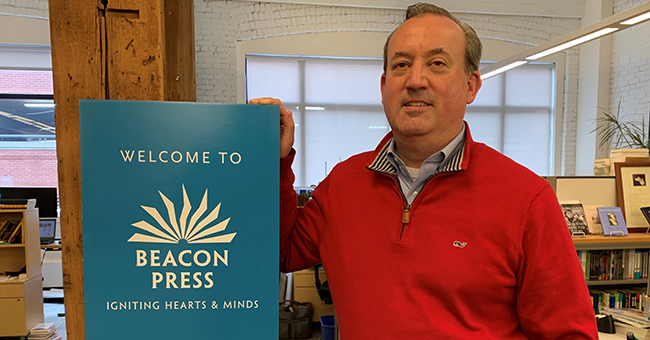
    For the month of March, we have a special joint profile. We introduce you to Matt Davis, who is taking the reins as chief financial officer as Clifford Manko retires this spring. We are so grateful for everything Cliff has done for us in these past seven years and wish him the happiest retirement!

    We begin with Matt and then on to Cliff, who will share some parting words.

    What drew you to publishing, Matt? How did you find your way to Beacon?

    I never planned on a career in publishing. After working in public accounting, I was offered a position at The Thomson Corporation in their publishing division. I thought I would try that for a few years and move onto something else. Shortly afterwards, I moved to their educational publishing group and ended up there for the next thirty years.

    I come from a family that works in the education field in various ways. My mother was a school librarian; my father sold institutional furniture to school districts—i.e. desks, chairs, bookcases, etc. (I spent a few college breaks unloading tractor trailers of furniture for the company). My brother does genetic research work for NC State University, and I have a sister and a couple nieces who are schoolteachers.

    Cliff and I know each other from Cengage. I was part of the team that worked with Cliff integrating Houghton Mifflin College after Cengage acquired it. Cliff then joined Cengage a year after the acquisition, and we worked together for the next five years. When I was leaving Cengage, I reached out to Cliff, who let me know he was retiring in the spring of 2023, and his position would be opening up.

    What’s a typical day in the life of a chief financial officer?

    The first thing I do each morning is to look at the month’s sales and how we are trending for the month.  Throughout the day, I may have discussions with sales to understand what they are hearing from customers, editorial on the status of projects, and production on inventory levels and printing decisions.

    What are some of the challenges of being a chief financial officer? What do you find most rewarding?

    When overseeing the financial aspects of the business, there are two primary activities. First is “closing the books” on the prior months’ financial activities, and the second is forecasting the future months.  Each month, we summarize our financial results and review what went well and what didn’t. Next, I take that information and forecast with the goal of spotting any potential issues that may be on the horizon. Identifying them early gives us time to address them appropriately.

    Building forecast models is what I enjoy most, using historical trends to predict the future results and testing possible scenarios.

    You’ve given lectures. Tell us more about those experiences and how they add to your work.

    I recently gave a lecture at Emerson College on the business of Higher Education Publishing and how the business model has changed over the last 10 years with the transition to digital courseware products and subscription services.

    What is one book on our list that has influenced your thinking on a particular issue?

    I have not read many Beacon books (yet). Since I’ve started, I’ve read Man’s Search for Meaning because it is one of our most popular books. I lean toward books about WWII, initially focusing on battles and strategy but then moved onto topics regarding espionage and the resistance, the experiences of Holocaust and POW survivors, and post-war impacts.

    How much of what you learned in college and/or graduate school have you found vital to your work?

    I think the most important skill learned in college was time management. There are always things you want to do and things you must do. Scheduling out your time allows you to achieve both goals.

    What upcoming projects are you excited about?

    The finance team is working on the fiscal year 2024 budget. I’m in the process of understanding the key metrics of Beacon and how to forecast the next twelve months.

    What do you wish someone had told you about publishing when you were entering the industry?

    I never knew how incestuous this industry was. While I don’t have experience in other industries to compare, I’m amazed how many people know each other in publishing.

    What skills have you taken from previous jobs to help you do your work at Beacon?

    Ask questions and listen to people. I may not be the most talkative person, but I am listening to what you are saying.

    What other departments does your department interact with? And how?

    Typically, sales, editorial, and production. I’m constantly reviewing sales trends and product mix to understand how that may impact the financials of the business. Also making sure we don’t have too much or too little inventory.

    Favorite thing about Boston (or your remote home base)? 

    I spent the first twenty-five years of my adult life in the NYC metro area and the last ten years in Boston. The people of Boston are nicer and more considerate of others.

    Favorite food? 

    With apologies to any vegetarian or vegans, I really enjoy a good steak.

    Best vacation destination? 

    When I was very young, we used to go to Biddeford Pool, Maine, each summer, but then my family moved from Massachusetts to Connecticut, and that stopped. In 2011, my siblings decided to resurrect this, so each September, we rent a house and take our families (around eighteen people) and spend the weekend together.

    What are you reading right now? 

    I’m between books right now, but the last two books I’ve read are Freezing Order by Bill Browder, which is a follow up to his prior book about uncovering corruption in Russia, and The Splendid and the Vile about Winston Churchill’s first year as Prime Minister.

    In an alternate universe, what career would you have? 

    Pilot

    What’s the next queued song on your music player?

    I grew up in the 80s so I have a lot of Journey, Van Halen, and Bruce Springsteen. The next song up is Don Henley’s “The Boys of Summer.”

    Favorite book ever? 

    To Kill a Mockingbird.

    Hobbies outside of work? 

    I enjoy being outside, so if I’m not playing golf, I’m usually working on my yard.

    Favorite song/album/type of music?

    Growing up, I shared a bedroom with a brother, who had a wide assortment of musical interests. I grew up listening to rock, Broadway musicals, and classical music. I generally listen to rock, but I do know all the songs from The Sound of Music.

    Favorite/recommended podcast? 

    I generally don’t listen to podcasts, but I have listened to a few of Conan O’Brien’s.

    Name three things at your workstation that you can’t live without. 

    Coffee cup, wireless mouse (I don’t like touchpads), and reading glasses.

    Do you still have a commute to work? If not, do you miss it? What do/did you like to do to pass the time? 

    I’m currently commuting two days a week. I don’t miss commuting but live on the South Shore, so I take the Hingham Ferry to Boston. If you have a commute, I think that is the best way to do it. I typically use the commuting time to catch up on news, so I will listen to news on my airpods while reading news stories on my phone.


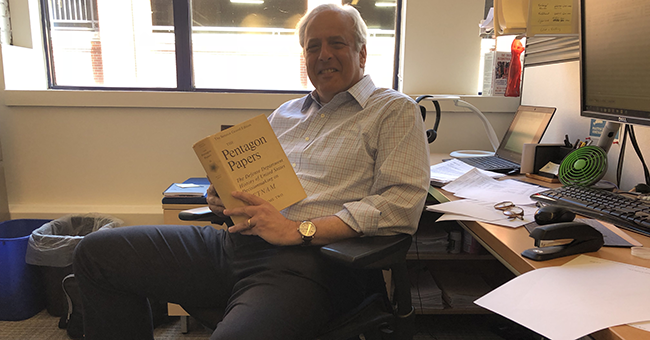
    And now a word from Cliff Manko.

    Cliff Manko

    It’s hard to believe it is time to say goodbye. These past seven years flew quickly and were very meaningful to me. 

    The two biggest events for me during my tenure were the impact on Beacon Press from the 2016 National Election and from COVID. With regards to the 2016 election, the issues that Beacon and its authors have addressed for decades rose to a new level of contentiousness—race, immigration, LGBTQ, and the environment to name a few. I was moved at the depth of emotion and commitment, both at Beacon and the UUA organization, to keep its books and values front and center. As for COVID, if someone had told me that in March 2020 the world would shut down and Beacon would move to remote operations for over two years, I would have been incredulous. The Press had to reinvent itself, and a new work model is emerging from COVID. Sometimes, I step back and smile as I reflect on how I commuted five days a week for nearly all my career—and wore a suit and tie every day for the first twenty years.

    It was interesting for me to read what I’d written in August 2017. I mentioned the Biblio implementation in motion. That has become our day-to-day toolset. In connection with going live with Biblio, we migrated everyone to laptops. When I reflect on COVID and our sudden move to remote operations, I realize how fortunate we were to have Biblio implemented, staff trained in it, and all staff with laptops. Hard to imagine how our publishing operations could have worked without that in place. Our production team did heroic work handling reprints during a period of vendor stress and historic reprint volume. I also discussed how, as CFO, I face the continuous need to get good data and scrub it with colleagues across all departments to make decisions. That continued to be where I spent a lot of time and am grateful to the business office for its work on our many data dives and support from Beacon departments. I also want to acknowledge the challenges the business office had to address during COVID with key workflows, like bill paying and month end accounting to name a few.

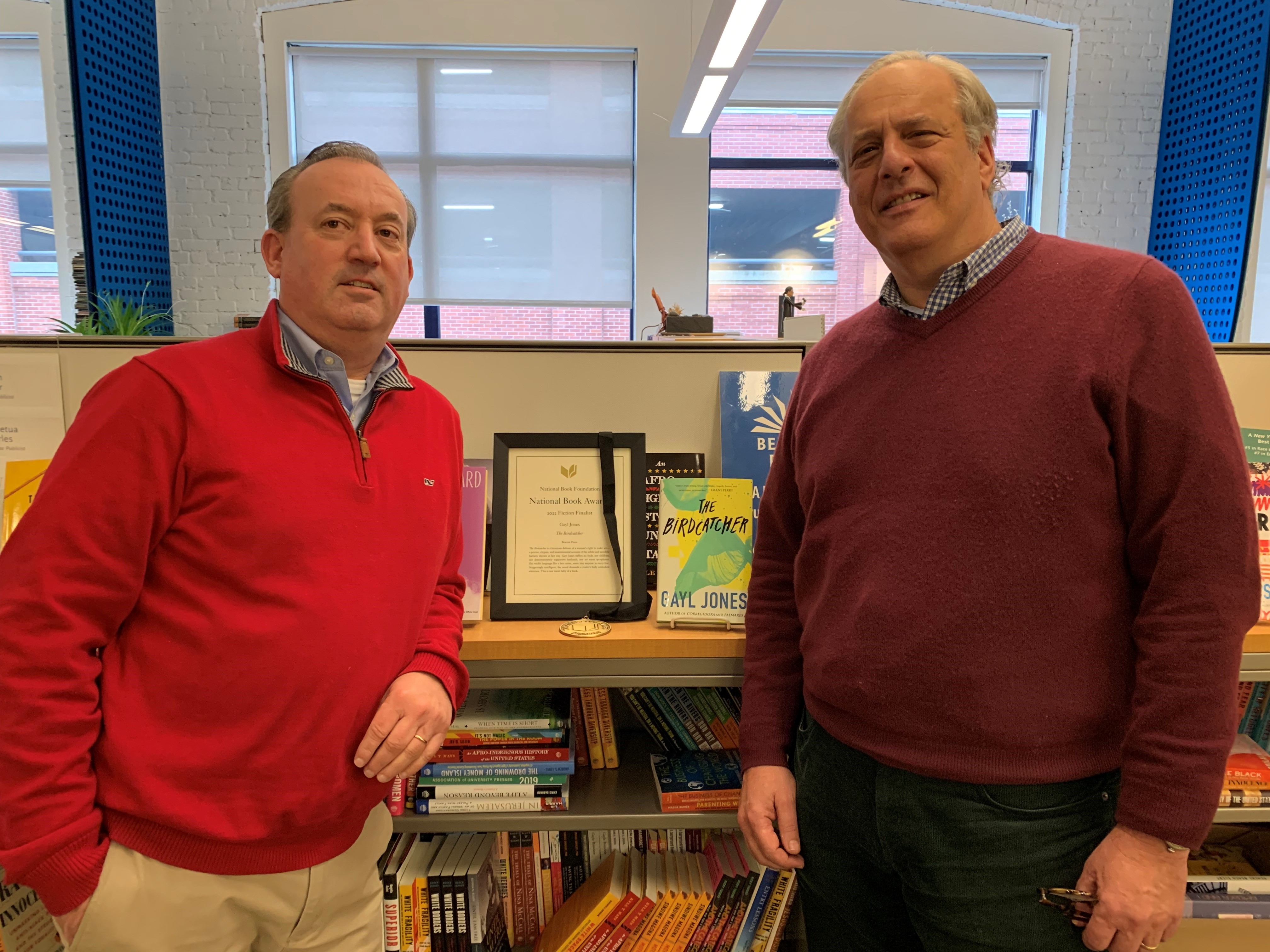
    Matt Davis and Cliff Manko

    I wish my successor, Matt Davis, great success as our new CFO. I met him in 2008 when my business unit at Houghton Mifflin Harcourt was sold to Cengage Learning. I later joined Cengage Learning, and Matt and I worked together there for five years. He brings many years of publishing and finance expertise to Beacon Press. I know he will make a great contribution.

  • By Gayatri Patnaik and Christian Coleman

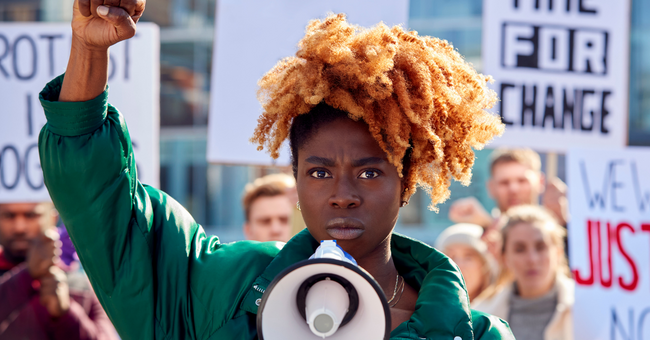
    Black protest

    In her compelling Boston Globe article “Celebrating Black History Month as Black History Is Being Erased,” Renée Graham writes that Black History Month this year has a specific purpose and burden, “and that burden is not for Black people to bear alone.” The challenge, Graham notes, “is to save this crucial American history from being eroded book by book, law by law, and state by state.” We couldn’t agree more.

    In that spirit, and in response to Tyre Nichols’s death and in protest against the relentless right-wing onslaught against teaching Black history in schools in Florida and elsewhere, we’re offering this free eBook bundle of titles on Black resistance and Black liberation. It includes seven essential Black thinkers and activists whose work always—but in these times especially—is simply compulsory reading.  


    An African American and Latinx History of the United States

    An African American and Latinx History of the United States

    “In a time of endless war, with democracy in full retreat, I argue that we must chart pathways toward equality for all people by digging deep into the past and rediscovering the ideas of Emancipation Day lecturers, Mexicano newspaper editors, abolitionists, Latin American revolutionaries, and Black anti-imperialists who dreamed of democratic ways of living in the Americas.”
    —Paul Ortiz

    DOWNLOAD THE FREE EBOOK


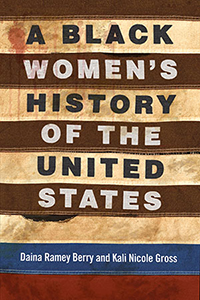
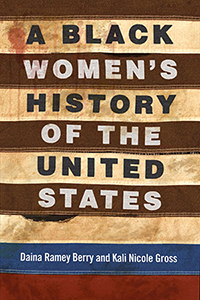
    A Black Women's History of the United States

    A Black Women’s History of the United States

    “Although it largely defies uniformity, African American women’s history is marked by the ways that we have marched forward, against all odds, to effect sustained change, individually, locally, and nationally.”
    —Daina Ramey Berry and Kali Nicole Gross

    DOWNLOAD THE FREE EBOOK


    Defund Fear

    Defund Fear: Safety Without Policing, Prisons, and Punishment

    “This moment presents the opportunity to take action toward a culture of caring and policies of caring. . . The care-based approach asks how do we care for ourselves and each other so that we all can be safe. A new care-based model of safety can replace deprivation, suspicion, punishment, and isolation with resources, relationships, accountability, and participation, what taken together I call a ‘culture of care.’”
    —Zach Norris

    DOWNLOAD THE FREE EBOOK


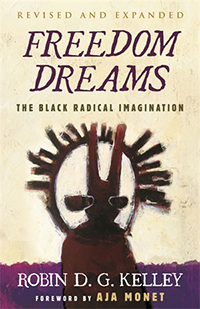
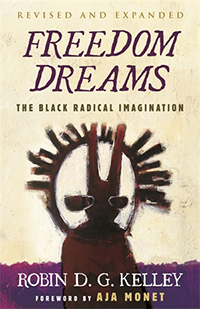
    Freedom Dreams

    Freedom Dreams: The Black Radical Imagination

    “The Black radical imagination is not a kind of dream state conjured and nurtured independent of the day-to-day struggles on the ground but rather is forged in collective movements. We cannot divorce critical analysis from social movements.”
    —Robin D. G. Kelley

    DOWNLOAD THE FREE EBOOK


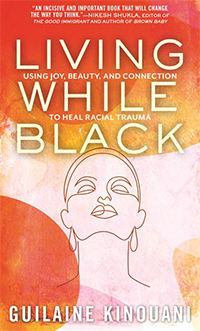
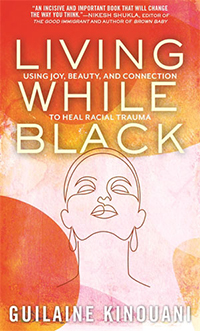
    Living While Black pb

    Living While Black: Using Joy, Beauty, and Connection to Heal Racial Trauma

    “All Black movements for liberation have centered the need for Black pride again, as an act of active defiance. Black pride in this context is a response to white supremacist cultures and ideologies of devaluation, denigration, and Othering. It encourages us to celebrate our heritage, our features, and history. It makes us feel good about being Black.”
    —Guilaine Kinouani

    DOWNLOAD THE FREE EBOOK


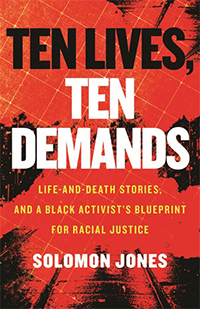
    Ten Lives Ten Demands

    Ten Lives, Ten Demands: Life-and-Death Stories, and a Black Activist’s Blueprint for Racial Justice

    “In the stories of these people, I see the depth and breadth of Black America. I see our pain and our promise. I see our struggle and our victory. I see our humanity, and I can only hope that readers will see it as well.”
    —Solomon Jones

    DOWNLOAD THE FREE EBOOK


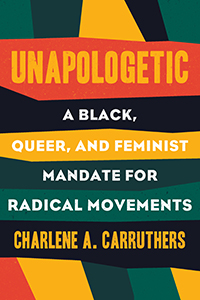
    Unapologetic

    Unapologetic: A Black, Queer, Feminist Mandate for Radical Movements

    “Each of us has a role in the work of movement building and must assume that responsibility. As we amass freedoms and experience collective liberation, which I believe is possible, we cannot recycle the master’s tools, systems, or thinking. The movement must commit to leadership development, healing justice, and combating liberalism through principled struggle.”
    —Charlene A. Carruthers

    DOWNLOAD THE FREE EBOOK


    Black protest

    We start offering this bundle on the day of Dream Defenders’ Can’t Ban Us Day of Action. At 12PM EST on February 23, thousands of students across Florida will be walking out and organizing Black Studies teach-ins to demonstrate their support and solidarity for each other in the affirmation that, no matter what DeSantis does, Black communities and Black history will not be banned and will not be erased.

    Join in by clicking Dream Defenders’ Action Support link and download their toolkit to get an idea of the exciting range of solidarity actions that your organization, campus, labor union, faith-based group, museum, senior center, etc., can engage in to uphold democracy!


    About the Authors 

    Gayatri Patnaik is the director of Beacon Press. Previously an editor at both Palgrave Macmillan and Routledge, she has been at Beacon Press over twenty years and has published authors including Imani Perry, Cornel West, Kate Bornstein, Roxanne Dunbar-Ortiz, and Jeanne Theoharis. She acquires in US History, with a focus on African American History and race/ethnicity/immigration, and began Beacon’s award-winning “ReVisioning History” series. Gayatri occasionally signs memoir, began Beacon’s LGBTQ series, “Queer Action/Queer Ideas,” (edited with Michael Bronski) and developed books in “The King Legacy,” with Joanna Green, in a series about Dr. Martin Luther King, Jr. Follow her on Twitter at @gpatnaik1

    Christian Coleman is the digital marketing manager at Beacon Press and editor of Beacon Broadside. Before joining Beacon, he worked in writing, copy editing, and marketing positions at Sustainable Silicon Valley and Trikone. He graduated from Boston College and the Clarion Science Fiction & Fantasy Writers’ Workshop. Follow him on Twitter at @coleman_II.

  • By Sheryll Cashin

    Dr. Martin Luther King, Jr.

    Photo credit: Hugo van Gelderen / Anefo

    On January 29, 2023, law professor and acclaimed author Sheryll Cashin delivered her Dr. Martin Luther King, Jr. Sunrise Celebration keynote at the American Library Association’s annual Library Learning Experience meeting in New Orleans, Louisiana. She talked about Dr. King’s Chicago Freedom Movement to explain his vision of mobilizing poor Black communities to strike down the US’s residential caste system. Contrary to popular belief, the North was never the liberal haven it fancied itself to be.

    ~~~

    As a daughter of civil rights activists from Alabama who knew Dr. King personally, it is a great honor to address you today for a Sunrise Celebration of him! And it is a joy for me, as a writer, to address librarians. I want to begin by thanking you for your service, for what you do to bring books and truth for free to the masses!

    Let me begin with some truth telling of my own about Dr. King. I suspect it is easier for many Americans to focus on his words of love and harmony rather than on his radical agenda for change. Associating him and the movement he led with ending the old Jim Crow of the South is a comforting vindication of American progress.

    But a close look at King’s words and deeds in pressing his vision on the North and the rest of the nation might render him a more dangerous or uncomfortable figure. And yet, in our current moment of toxic division, his ideas for radical transformation and reconciliation are more relevant than ever.

    In preparing to speak to you, I read and reflected on a chapter from a wonderful book, The Autobiography of Martin Luther King, Jr. Chapter 28 is about King’s involvement with a campaign for “open housing” in Chicago. In 1966, Dr. King moved his family into a tenement apartment in one of the poorest communities in the Windy City. This was his entrée to northern agitation. King wanted to help organize a broad, nonviolent movement that would attack hypersegregation—“the ghetto”—and the systemic exclusion of Black Americans from white neighborhoods. Reading this chapter was a refreshing primer on King’s tactics for nonviolent social change.

    The Southern Christian Leadership Conference which King led, and its many local affiliates, had mounted successful nonviolent sit-ins throughout the South. Black Americans protested so that they could sit, shop, eat, travel, learn, and work where they desired. Birmingham was the symbolic city in which social confrontation ultimately altered politics. When Bull Connor turned fire hoses and attack dogs on crusading children the nation was horrified, and this ushered passage of the Civil Rights Act of 1964.

    Slide 2Similarly, the spectacle of police clubbing the heads of John Lewis and others on the Edmund Pettus Bridge in Selma accelerated passage of the Voting Rights Act of 1965.

    Slide 3

    Open Source photo

    In the wake of those victories, Dr. King thought that Chicago would be an equally strategic city for piercing the nation’s conscience about northern segregation. A broad coalition of local Black groups had been agitating for open housing. They invited King and SCLC to join their campaign. Together, they planned marches, rallies, and other strategic confrontation, like kneeling and praying in front of realtor’s offices. They called it the Chicago Freedom Movement. Their goal was to enable Black Americans to move out of dilapidated tenements and access opportunity elsewhere. They wanted to dismantle the system of residential caste that the Great Migrants were consigned to. They wanted to transform all social institutions to include Black citizens and make upward mobility real for all people.

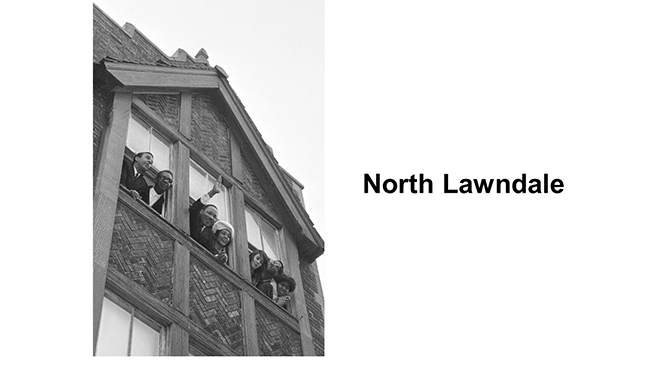
    While the southern civil rights movement had been powered mainly by middle-class people, in Chicago, Dr. King wanted to begin organizing with people trapped in concentrated poverty. And so he moved his family to North Lawndale, then a West Side locale of poverty that was more than 90 percent Black.

    Slide 4

    Edward Kitch, AP Photo, Jan. 26, 1966

    Lawndale was also minutes from the white suburban sundown town of Cicero, which had violently repelled Blacks who tried to move there.

    Slide 5

    King immediately noticed that his Lawndale neighbors paid more in rent or purchase price for wretched housing than whites paid for modern homes in the suburbs. And they paid more for food and consumer goods. They could not leave Lawndale, nor could they access jobs that were elsewhere. This social system, which King likened to a “ghetto prison” or a domestic colony, was in many ways more resistant to change than the caste system SCLC had attacked in the rural south. And yet King and others in the Chicago movement had the audacity to try.

    Dr. King refused to approach this movement with gradualism. He said, and I quote: “Now is the time to make real the promises of democracy, now is the time to open the doors of opportunity to all God’s children.” And so, as they had in Birmingham and Selma, they demanded change through nonviolent confrontation.

    First, they organized, including recruiting Black gang members to lay down their arms and join their nonviolent cause. Then they marched in white neighborhoods. They were met with bricks, bottles, swastikas, firecrackers, and chants of “white power.”

    At a march through Marquette Park on the South Side, as thousands of whites tried to thwart them, a stone struck King’s head, and he knelt with supporters.

    Slide 6

    Bettman, Getty Images

    In the interlude, King said before cameras, “I have never seen, even in Mississippi and Alabama, mobs as hostile and as hate-filled as I’ve seen in Chicago.” Then they continued the march.

    Two months of confrontation in the summer of 1966 led to negotiation and a written commitment to open housing from the City of Chicago and its Board of Realtors. Sadly, the agreement was not enforced and did not change housing patterns. But it inspired the Fair Housing Act of 1968 that would be passed in the wake of King’s assassination.

    King’s radical vision of humans of all colors working together to replace residential caste with communities of love and justice may seem quaint or naïve. But the Fair Housing Act planted a seed. It included a requirement that localities receiving government funding must “affirmatively further fair housing.” Nearly five decades later, a certain President named Barack Obama was the first to issue a regulation to actually enforce that requirement. President Obama, who had worked in Chicago as a community organizer, began to attack systemic segregation by requiring localities to do more than just plan. The “AFFH rule” pushed them to adopt policies that actually resulted in more inclusion.

    Unfortunately, Obama’s successor rescinded the AFFH regulation and tried to woo suburban voters in 2020 by promising to insulate them from affordable housing. President Biden’s administration has proposed to reinstate the rule.

    Birmingham, Selma, Chicago. These examples vindicate King’s philosophy that tension was necessary to spreading awareness of systems of oppression. This is how you gather multiracial political power for change.

    With the key planks of American segregation countered by new civil rights laws, Dr. King turned to tackling poverty and economic oppression. He had endured the backlash of those who saw civil rights gains as coming at the expense of whites. But he did not give up on the radical Christian ideal of redemption and agape love in which former enemies might become friends.

    In the last months of his life, King was organizing the Poor People’s Campaign. He aimed to build a multiracial army, to bring poor Blacks, whites, Latinos, Indigenous people, and others to the National Mall to demand an economic bill of rights.

    He wanted all people to be able to work to feed a family, and have economic security when work disappeared. He hoped that with this basic, pure goal, the movement would find a middle ground—between frustrated urban rebellion on the left and backlash on the right.

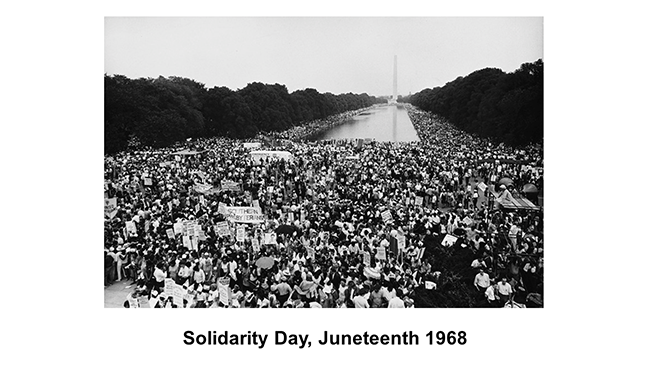
    As we know, King was tragically assassinated on April 4, 1968. But Rev. Ralph Abernathy and SCLC were determined to see King’s vision through. By June 19 (“Juneteenth”), Solidarity Day for the campaign, a rainbow of poor people had erected Resurrection City on the Mall. This settlement of tents housed some 7,000 people.

    Slide 7

    More than 50,000 people were on the Mall for the culminating rally on Solidarity Day. But no economic bill of rights resulted. And, without King’s sonorous voice on the Mall, that campaign, and its message of economic justice, was largely erased from our nation’s collective memory.

    Slide 8

    AP, Bob Daugherty

    The Poor People’s Campaign was not in vain. It inspired the Rev. William Barber’s Moral Mondays movement in North Carolina and a new, national Poor People’s Campaign that Barber started. The new campaign continues to organize poor and working-class people and gather power across boundaries of race.

    In a time of division, dismantling structures that set people apart or creating class solidarity across races for policies that tackle economic inequality seem nearly impossible. In my own work, I have thought a lot about how we might abolish and repair the system of residential caste that King and others tried to disrupt in the Chicago Freedom Campaign. In the final chapter of my most recent book, White Space, Black Hood, I argue that the first step to transformation is to change the lens applied to people trapped in concentrated poverty. RIFF, change lens, frees you to focus on evidence-based strategies. And I think it is possible, now, to get started building small examples of Beloved Community King imagined. I will leave you with some hopeful examples.

    In 2018, Minneapolis repealed its single-family home zoning—a policy that maintains race and class segregation across the country in part by keeping affordable housing out of affluent communities. Under Minneapolis’ new law, duplexes and triplexes can be built in any neighborhood throughout the city. Before this transformation, 70 percent of land in the city was zoned only for single-family homes—part of Minneapolis’ legacy of extreme racial segregation.

    Advocates laid the groundwork for this sea change through widespread education about the city’s history of redlining and intentional segregation. After a few years of civic education, the law repealing single family zoning passed by a vote of 12-1 in the city council. The city also now permits more apartment buildings to be built near transit stops and has adopted “inclusionary zoning” requiring that 10 percent of new apartment units go to moderate-income people. And Minneapolis has increased funding to combat homelessness and subsidize low-income renters.

    There is an emerging movement, as well, toward promoting racial equity in city budgeting and disrupting a long history of disinvestment in Black and minority communities. Some cities become equality innovators, including Newark, NJ, Gary, IN, and Savannah, GA. They reduced violent crime from 2019 to 2020 through social experiments, including universal basic income pilots, hiring former offenders to help defuse gun violence , and deconcentrating poverty by moving tenants out of high-rise public housing to higher-opportunity neighborhoods. It bears emphasis that these are majority Black communities that are applying a lens of care in formulating their policies.

    Many cities, including New Orleans, have removed statues from public spaces that exalted Confederate traitors to the Union and stood as symbols of white supremacy. Progressive cities are not perfect. Like all innovators, they make mistakes. But places that acknowledge truth and wrestle with past and present policies that diverge from America’s professed ideals should be applauded for trying. 

    Martin Luther King, Jr.

    As we celebrate Dr. King, we should all recommit to his work at transformation, reckoning, and reconciliation. Because without it we will get more of the same—an often cheap politics of division that harms democracy and struggling people of all colors.


    About the Author 

    Sheryll Cashin is an acclaimed author who writes about the US struggle with racism and inequality. Her books have been nominated for the NAACP Image Award for Nonfiction, the Hurston/Wright Legacy Award for Nonfiction, and an Editors’ Choice in the New York Times Book Review. Cashin is the Carmack Waterhouse Professor of Law, Civil Rights and Social Justice at Georgetown University and an active member of the Poverty and Race Research Action Council. A law clerk to US Supreme Court justice Thurgood Marshall, Cashin also worked in the Clinton White House as an advisor on community development in inner-city neighborhoods. She is a contributing editor for Politico Magazine and currently resides in Washington, DC, with her husband and twin sons. Follow her at sheryllcashin.com and on Twitter (@sheryllcashin).

  • Young Black man looking

    Photo credit: Adeboro Odunlami

    The Sunshine Pearl-Clutching Brigade is back on their BS and doubling down. Under Governor Ron DeSantis, Florida banned a new AP African American Studies course under the pretense that it’s “indoctrination” that “runs afoul of [their] standards.” This is almost a year after the Florida legislature banned the teaching of “the state-sanctioned racism that is critical race theory” with the Stop WOKE Act. It’s giving unwoke on numerous levels.

    Don’t DeSantis and his ilk realize that they’re only proving the great power Black history wields? Why else would they steer such a fear-steeped crusade against it? That power lies in the stories of resistance in all forms against white supremacy, which you’ll find in these books from Beacon Press’s catalog. They have the ingredients the Florida governor and his sandbox bullies find yucky: Black queer theory, intersectionality, calls for the abolition of the police state. It’s all there, it’s all good, and it’s all in the name of Black liberation. Defend Black history by reading and teaching it!


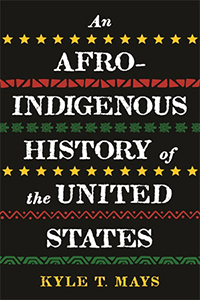
    An Afro-Indigenous History of the US

    An Afro-Indigenous History of the United States

    “Black people are Indigenous North America’s destiny, and Native people are Black America’s destiny. Collective liberation is possible, and we will need everyone.”
    —Kyle T. Mays


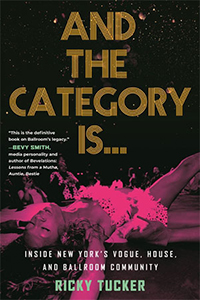
    And the Category Is pb

    And the Category Is . . . : Inside New York’s Vogue, House, and Ballroom Community

    “In house-ball culture, we encounter a freedom, a fearlessness, in walking a category: in deconstructing and reinventing oneself in front of a crowd, in running the risk of being chopped, receiving a low score from a panel of shrewd judges, or being told that your dream of a new or even truer identity is half-baked, even daring to lower the reputation and retail value of your house and subsequently answer to your ‘house mother.’ Or worse still, of being shamed and ‘shaded’ into oblivion.”
    —Ricky Tucker


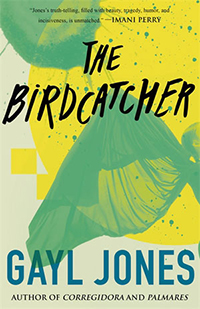
    The Birdcatcher

    The Birdcatcher

    “You see, Catherine sometimes tries to kill her husband. It has been this way for years: He puts her into an asylum, thinks she’s well, takes her out again, and she tries to kill him. He puts her in another one, thinks she’s well, takes her out again, she tries to kill him: on and on. You’d think we’d learn by now; you’d think everybody’d learn, don’t you? But somehow we keep the optimism, or the pretense, bring her out, and wait.”
    —Gayl Jones
     

    A Black Women's History of the United States

    A Black Women’s History of the United States

    “Few things have played a larger role in shaping Black women’s destinies in this country than labor and entrepreneurship. Enslavement forced kidnapped African women into fields and houses, to toil alongside men. Discrimination and poverty would keep many there long after Emancipation, yet society stigmatized Black women for occupying these roles. Working outside the home effectively excluded them from being treated according to any commonly held notions of respectable womanhood. But African American women challenged universal symbols of femininity and virtue that privileged whiteness.”
    —Daina Ramey Berry and Kali Nicole Gross


    Freedom Dreams

    Freedom Dreams: The Black Radical Imagination

    “Every freedom dream shares a common desire to find better ways of being together without hierarchy and exclusion, without violence and domination, but with love, compassion, care, and friendship.”
    —Robin D. G. Kelley


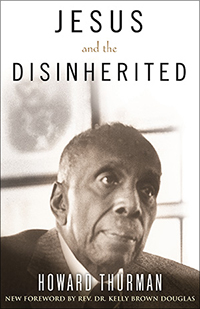
    Jesus and the Disinherited - Gift Edition

    Jesus and the Disinherited

    “It is necessary, therefore, for the privileged and the underprivileged to work on the common environment for the purpose of providing normal experiences of fellowship. This is one very important reason for the insistence that segregation is a complete ethical and moral evil. Whatever it may do for those who dwell on either side of the wall, one thing is certain: it poisons all normal contacts of those persons involved. The first step toward love is a common sharing of a sense of mutual worth and value. This cannot be discovered in a vacuum or in a series of artificial or hypothetical relationships. It has to be in a real situation, natural, free.”
    —Howard Thurman


    Living While Black pb

    Living While Black: Using Joy, Beauty, and Connection to Heal Racial Trauma

    “Practicing joy must be strategic, and it must be deliberate and like self-care more generally cannot be decontextualized. The ability to create and hold spaces for our joy as individuals and as a group of people is an ongoing struggle. But experiencing joy, even if moments of it, is revolutionary. Joy is a spiritual practice. It connects us to beauty, to wonder, to grace, to pleasure. It is thus an emotion that connects us to life, to the universe, and to ourselves and each other. Black joy disturbs whiteness because it is humanizing, and, because it is humanizing, it is transgressive.”
    —Guilaine Kinouani


    One Drop

    One Drop: Shifting the Lens on Race

    “If we can recalibrate our lenses to see Blackness as a broader category of identity and experience, perhaps we will be able to see ourselves as part of a larger global community.”
    —Yaba Blay


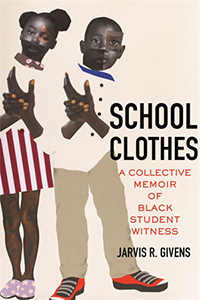
    School Clothes

    School Clothes: A Collective Memoir of Black Student Witness

    “African Americans’ deep reverence for education expressed itself in how they showed up to learn. And while rigid social norms about clothing could certainly be limiting, aesthetic and sartorial politics, acts of adorning the body, could also be about soulcraft, cultivating an internal vision and virtues that one might express externally in the world. For a great many of them, education was the starting place for thinking up and creating that world, where everyone could have what they needed to live a life of dignity and human flourishing—a world where they could pursue the desires of their hearts without being barred because of who they were. Knowing beauty to be a method, black students dressed themselves in dreams that emerged over generations of African Americans striving within the veil.”
    —Jarvis R. Givens


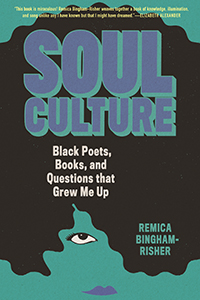
    Soul Culture

    Soul Culture: Black Poets, Books, and Questions That Grew Me Up

    “I do know the power that other Black poets have given me: Enlightenment. Scrutiny. Camaraderie. Words to subvert fear.”
    —Remica Bingham-Risher


    Twice As Hard

    Twice As Hard: The Stories of Black Women Who Fought to Become Physicians, from the Civil War to the 21st Century

    “The triumph of black women physicians has etched itself into my memory. Their victories shape the way I walk in medical spaces, and serve as a shield against the physicians, medical students, and patients who have questioned my ability to become a competent physician. I now know that I, a black woman, can have an immense impact in medicine. I may have to work twice as hard as my colleagues with more privileged identities, but eventually I will become a changemaker within medicine, positively impacting patients and aspiring physicians within my reach.”
    —Jasmine Brown


    A Worthy Piece of Work

    A Worthy Piece of Work: The Untold Story of Madeline Morgan and the Fight for Black History in Schools

    “Morgan’s demand that Black history receive a place in the school curriculum continues to hold relevance today, almost a century after she began teaching. Her conviction that the history of Black America must be acknowledged in the school curriculum anticipated the demands of civil rights workers in the 1950s, Black Power activists in the 1960s, and multiculturalists in the 1980s and 1990s. More recently, the global protest movement catalyzed by the killing of George Floyd and the onset of the global COVID-19 pandemic, the impacts of which have been felt disproportionately in Black and Brown communities, have fueled reawakened calls for racial justice both in society at large and in schools.”
    —Michael Hines

    Young Black man looking

  • By Remica Bingham-Risher

    Black woman contemplating_Dellon Thomas

    Photo credit: Dellon Thomas

    For a long time, I was making a list in my head of the writers who changed me, the ones I had to meet. I started planning too late and missed James Baldwin, who died when I was six. I hadn't yet been gobsmacked by his short story “Sonny’s Blues” then, but read my way through his whole milieu my freshman year of college. I met Toni Morrison (thank goodness) but didn’t get to ask her questions, flanked as she was by other booklovers. Who I regret missing the most is August Wilson, as lines from Joe Turner’s Come and Gone and Jitney still wake me up some nights. He died a year after I’d begun interviewing Black writers whose words I’d carried in book bags, jean pockets and purses, words that helped me wrestle with the world and cobble together a life. I was on the periphery of his circle; some of my teachers knew him, so there’s the six degrees of separation. Now that I’ve sat with many of my exemplars, I regret loving him from a distance. 
    Still, I’m sure some would have cautioned me: Don’t meet your heroes. We’ve all heard the admonition or gone down the rabbit hole of a celebrity run-in spun out in a series of threads. Heroes are, more often than not, disappointing in their dismissal or aloofness at best, or at worst, their rough, underhanded malice. 
    Maybe writers are different. Maybe poets especially just appreciate getting any love at all. The ones I’ve been given the privilege of sitting with have been eager to have someone ask about their trajectory. Over a decade or so, I interviewed Black poets I admired. Not the most famous ones, not the most erudite or elite, but those who’d knocked the wind out of me when I read their work. When I began asking, though only a few knew me or anything about my work, most said absolutely yes, asked for no compensation, and gave me hours of their time, just because I was hungry to learn about how I might venture out onto the literary landscape. Hence, I always began with: Do you remember your first encounter with poetry? Then, in one way or another, followed up with questions about what they read, who their communities were, how they sustained themselves. In other words: How did you make poetry a life? 

    My memoir, Soul Culture: Black Poets, Books and Questions That Grew Me Up, is the culmination of these inquiries. In the book, I sit with writers like Lucille Clifton, A. Van Jordan, Forrest Hamer, and Tim Seibles, then process their shared histories. They taught me many things, not least of all reinforcing what my grandmother, Mary, would always say: Nothing fails but a try or Closed mouths don’t get fed. Meaning: Ask for what you need, and who knows what the universe might supply? In all their generosity, here’s what they taught me.

    The Value of Listening

    I’ve found that when people are complaining about apathy or inattentiveness, they are mostly complaining about listening. It’s out of vogue, what with our quick quips and lightning-fast replies expected all hours of the day, to actually sit and listen. But listening at the feet of elders is sometimes how we acknowledge a whole community, a whole movement’s history. Being ‘quick about listening, slow about speaking,’ as one Biblical verse points out, ensures you might actually form a relationship with someone you admire, might get a lesson you had no idea you needed, or something to bolster you in the face of coming storms. When I sat with Sonia Sanchez, for instance, she went back to a long poem she’d written decade before, “Just Don’t Never Give Up on Love.” It’s about how you miss so much when you’re rushing, about romantic love and not that at all, but really about how a young girl learns from an elderly woman who shares the bench at the park where her children play. The lessons are: Don’t take the elders for granted; love is a fire, but care is how you tend the flame. 

    Childhood is a Gift

    In my talks with writers about how they began swirling around a life with words, most if not all reminded me that children, given space enough and time, can carry their wonder into every part of their lives. For some, it took years for the blaring worries of race and trauma to steel them. For some, like Erica Hunt and especially for me, worry set in as soon as there were others to care for. Our children, our students (as most poets walk the path of teachers as well) then bear the burden of our worry. But as children themselves, the writers I sat with reminded me that childhood was the only time they remember being as wide as the ocean, endless and gobbling up dreams, carefree. And writers need flights of fancy. What else will bring them to the page but imagination cultivated and untamed again and again? 

    Give Flowers to the Living

    Honorée Fanonne Jeffers and I, in our conversation, went back to tending the altars of ancestors, but writing this book, reaching out to larger-than-life figures that seemed impossible to reach but were very down-to-earth, easygoing human beings, reminds me that everybody wants their flowers now. Everybody wants somebody to hold onto and carry them. By asking if they’d tell me about their path, I was really saying to those writers who’d shaped me: This is a job well done, you are a wonder. And like Lucille Clifton reminded me then, with her candor and wild laughter, and still asks all of us: Won’t you celebrate with me? Black folks, especially, know how tenuous and fleeting life can be. We miss our chance to love up on so many folks, so the joy they had when I sat with these writers taught me: Why not say it outright as much as we can? I love you. You changed me.  

    Grown Folks Spill the Tea

    If you read any of my own poems, you’ll find out pretty quickly how much I like being in grown folks’ business, so these interviews were a win-win for me. Finding out what Patricia Smith felt when she left the Boston Globe or in the moments after her father died; or which grad schoolteacher told Natasha Trethewey to forget about writing about her Blackness and her mother and to think about the conflict in Ireland instead; or whether E. Ethelbert Miller and June Jordan were lovers. This is the kind of gossip I was giddy about and, with years long past and nobody really studying them, the kind of tea poets poured out happily. After a while, people don’t see any reason to lie—they’ve lived, they’ve learned—so they just tell it like it is, and that’s when the good stuff comes out. They’ll tell on other grown folks, they’ll tell you the rules they’ve broken, then give you permission to do likewise. 

    ***

    When someone on Twitter asked authors to describe their upcoming book in three words, I posted Black poet listening. I relish in this gift, that writers have been patient enough to teach me by sharing their own stories, that my Black interior life, my woman-mother-hybrid self is worth bearing out. That just like them—and just like all of us—somebody, somewhere, should hear me.


    About the Author 

    Remica Bingham-Risher is a Cave Canem fellow and Affrilachian Poet. Her work has been published in the New York Times, the Writer’s ChronicleNew LettersCallaloo, and Essence, among other journals. She is the author of 3 volumes of her own poetry: Conversion, winner of the Naomi Long Madgett Poetry Award; What We Ask of Flesh, shortlisted for the Hurston/Wright Award; and Starlight & Error, winner of the Diode Editions Book Award. She lives in Norfolk, VA with her husband and children. Follow her online at remicabinghamrisher.com, on Twitter (@remicawriter), and on Instagram (@remicawriter).

  • A Q&A with Jasmine Brown

    Jasmine Brown and Twice As Hard

    Cover design: Louis Roe. Author photo: Mary Brown

    No real account of Black women physicians in the US exists, and what little mention is made of these women in existing histories is often insubstantial or altogether incorrect. In her literary debut, Twice As Hard, Jasmine Brown offers a rich new perspective, penning the long-erased stories of nine pioneering Black women physicians beginning in 1860, when a Black woman first entered medical school. Brown tells the stories of these doctors from the perspective of a Black woman in medicine. Her journey as a medical student already has parallels to those of Black women who entered medicine generations before her. Beacon Press senior publicist Bev Rivero caught up with her to chat about it.

    Bev Rivero: You share that the victories of these women shape you. Can you talk about the positive impact the research you did, that turned into this book, had on your career decisions?

    Jasmine Brown: In college, I dreamed of becoming a physician and a national leader who would make a positive impact in many people’s lives. But I was acutely aware of how few Black women there were in senior positions within the medical field, such as the dean of a medical school or chair of a medical department. Black women physicians are even underrepresented at the level of professorship in many medical schools. So, I worried that my career would be severely restricted by a glass ceiling imposed upon me due to my race and gender.

    But learning about the women in my book gave me a sense of freedom. These women faced significant social and structural barriers that made their dreams seem impossible, but through unwavering persistence and help from their support systems, they made their dreams a reality. Many of them were the first Black woman to reach certain milestones. Their stories taught me that I don’t have to be limited by a theoretical glass ceiling. Even if my path is riddled with many obstacles, I can still achieve my dreams.

    BR: What actions would you like readers who are outside the fields of medicine/public health to take away from reading your book?

    JB: In recent years, there has been more discussion about the exclusion of Black folks across various industries, including business, law, academia, and entertainment. We are underrepresented in these spaces. And the Black folks who have made it into these industries face significant wage gaps and are rarely promoted to high levels of leadership within their organizations. This is particularly true for Black women. I hope that my book shows readers that these issues are not new. They did not occur by chance. History shows how policy and social norms developed overtime to create this problem that is so ubiquitous in our present. I encourage my readers to reflect on how these long-standing barriers have perpetuated inequity in their fields and participate in efforts to dismantle them.

    BR: It’s important to you that your message of change and hope reach young people considering STEM careers. What programs or initiatives have you seen that share this goal? As someone who did so much work in this space, founding the Minority Association of Rising Scientists while an undergraduate at Washington University, what can higher ed institutions do to truly support these students?

    JB: There are many organizations working to uplift students from marginalized backgrounds who are interested in STEM careers, such as the Minority Association of Pre-Medical Students, the National Society of Black Engineers, and the Minority Association of Rising Scientists, which I founded as an undergraduate at Washington University. These organizations have had a significant impact on many students interested in STEM careers. But as we await the US Supreme Court’s decision to keep or overturn affirmative action, it’s clear that we need increased efforts from higher ed institutions to support these students.

    There are three things that universities and professional schools can do to support students from marginalized backgrounds:

    1. Raise awareness of underrepresented minorities who have been very successful in their careers. These role models can motivate students to go after their dreams despite the obstacles that they face.
    2. Connect students with mentors who share their identities. These mentors can help students navigate challenges because they’ll have a better understanding of the student’s experience.
    3. Create a safe space for students with marginalized identities. Students continue to face prejudice and discrimination while attending higher ed institutions.

    These institutions should have a system that makes it easier for students to report instances of discrimination while ensuring that students are not retaliated against for speaking up. And there should be a committee composed of faculty members who investigate these instances of discrimination, address them, and create structures to prevent similar situations from happening again. By providing these students with role models, mentors, and a space where students are less exposed to prejudice, higher ed institutions can help students from marginalized identities reach their full potential.

    BR: What do you like to read? As a youthful debut author, what are some other books, of any genre, you’d like your readers to know about?

    JB: When I was younger, I liked to read romance and historical fiction novels. Now, I tend to gravitate towards nonfiction books. I particularly enjoy books that make me feel seen as a Black woman in STEM such as Hidden Figures by Margot Lee Shetterly and Black Man in a White Coat by Damon Tweedy. Another favorite of mine is The Defining Decade: Why Your Twenties Matter—And How to Make the Most of Them Now by Meg Jay. I oftentimes reflect on that book as I try to make the most of my twenties.


    More About Jasmine Brown 

    Jasmine Brown is a medical student at the Perelman School of Medicine at the University of Pennsylvania. She completed an MPhil in the history of science, medicine, and technology at the University of Oxford on a Rhodes Scholarship. As an undergraduate at Washington University in St. Louis, she founded the Minority Association of Rising Scientists and served as its president, working to increase the number of underrepresented minorities in science and medicine. Follow her online at jasminebrownauthor.com and on Twitter (@JasmineB_Author) and Instagram (@jasminebrownauthor).

  • A Q&A with Gayle Wald

    Sister-Rosetta-Tharpe-and-Shout-Sister-Shout

    Cover design: Carol Chu. Tharpe photograph by James J. Kriegsmann.

    She was inducted in the Rock and Roll Hall of Fame in 2018, and since then, her posthumous star shines brighter and brighter. Electric guitar diva Sister Rosetta Tharpe is getting the respect she deserves as the godmother of the hip-swinging genre, and now that Grammy-winner Lizzo is raving about her, you better listen. On top of that, a stage musical about her is making its way around the nation, which we wouldn’t have without Gayle Wald’s biography Shout, Sister, Shout!: The Untold Story of Rock-and-Roll Trailblazer Sister Rosetta Tharpe. Wald has written a new preface for this year’s reissue of her book. Beacon Broadside editor Christian Coleman caught up with her to chat about it and its translation from page to stage.

    Christian Coleman: Sister Rosetta Tharpe has gone from being buried in an unmarked grave in a Philadelphia cemetery to being inducted into the Rock and Roll Hall of Fame and being depicted in Baz Luhrmann’s biopic about Elvis Presley. And Lizzo has gone on record as a super stan. Do you think the world is finally catching on to how amazing Tharpe was?

    Gayle Wald: Yes, it’s fantastic to see Tharpe getting all kinds of recognition, especially from young people and artists like Lizzo. I should also say that there are musicians and people in the gospel world who always cherished her, so the world is catching up with them.

    CC: What are some of your favorite Rosetta Tharpe performances and what do you enjoy about them?

    GW: I love Tharpe’s gorgeously recorded duets with Marie Knight. I love her 1944 hit “Strange Things Happening Every Day,” which still feels fresh. And, of course, there is her performance at Griffith Stadium in 1951, when she staged an audacious wedding concert and played electric guitar in a wedding gown.  

    CC: Your biography of her recently got the stage treatment as a bio-musical. That’s so exciting! Is this the first time anyone has approached you about adapting it?

    GW: This production goes back several years to a conversation I had with the director Randy Johnson. He was the first one to express interest in a stage musical. The first production of “Shout, Sister, Shout!” was in Pasadena in 2017, and there was a second in Seattle in 2019. Each time, the show has gotten bigger and better. 

    CC: How did you get news that the stage production was happening?

    GW: The pandemic was so hard on live theater, so it was great to learn last year that Ford’s Theatre in DC would be putting the show on. Everyone involved with the show knew there would be a third production; they just needed to figure out where. 

    CC: How much involvement do you have with the production?

    GW: I have been involved in peripheral ways, working with the producers Bev Ragovoy and Dawn Smallberg and talking to the phenomenal writer Cheryl West. Mostly, I have tried to stay out of the way and be a resource when the theater professionals need me!  

    CC: Shout, Sister, Shout! was originally published in 2007. What does the reissue, featuring a new preface by you, mean to you now after her induction in the Rock and Roll Hall of Fame?

    GW: It’s really meaningful and I’m so grateful for Beacon’s support. I hated to think that people reading the book in 2023 might come away thinking that Rosetta Tharpe was still in an unmarked grave, as she was in 2007. The fact that her story has changed—is changing—is inspiring. In 2007, I called Rosetta Tharpe a “rock-and-roll trailblazer.” Now, on social media, she is the “queer Black woman” who “invented rock and roll.” 


    About Gayle Wald 

    Gayle Wald teaches American Studies at the George Washington University. Her books include Shout, Sister, Shout!It’s Been Beautiful, and Crossing the Line. Her essays on music and culture have appeared in numerous publications. She lives in Washington, DC. Follow her on Twitter @gaylewald and at ShoutSisterShout.net.