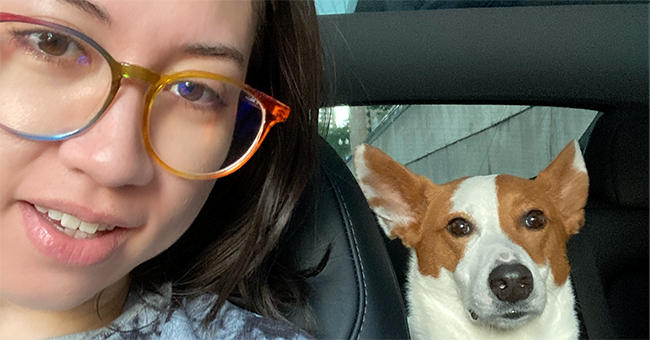
• Catherine Tung

    Welcome to our rebooted “Beacon Behind the Books” series! In these times when readers are responding to our books “more than ever,” when our authors—including Aubrey Gordon, Tanya Katerí Hernández, Robin D. G. Kelley, Eboo Patel, and Gayl Jones—are appearing in the media, their ideas going viral on social media, their voices being heard on so many platforms, we thought it would be good to take a break to focus on some of the staff who work hard to find, shape, edit, produce, and promote those works. Our blog series introduces to you a staff member and gives you a behind-the-scenes look, department by department, at what goes on at our office.

    For the month of February, we introduce you to Catherine Tung, our editor!

    What drew you to publishing, Catherine? How did you find your way to Beacon?

    I initially wanted to be a writer, and I also wanted to live in New York, where many of my best friends were already living. In my last semester of college, my thesis advisor mentioned publishing as a possible day job—an industry that, of course, is also mainly based in New York. After college, I did some internships and freelance work at various New York publishers, magazines, and agencies, and then did an MFA in fiction writing at Brooklyn College, where I studied with author and editor Nathaniel Rich. He was the first person to introduce me to line editing, which I immediately fell in love with. I came to the realization that: a.) Publishing was not a “day job”—it was an all-consuming, passion-driven career; and b.) I liked editing more than I liked writing.

    My first full-time trade publishing job was at Vintage Books, where I stayed for seven years and developed a particular interest in publishing nonfiction books on social justice topics—a category that is, of course, Beacon’s main focus. When a mid-level editorial job opened here, it seemed like the perfect fit.  

    What’s a typical day in the life of an editor?

    It’s a constant juggling act to balance the dynamic work that I do with my colleagues—acquisitions, launch presentations, cover design meetings, etc.—with the intense one-on-one editing that happens between me and my authors. I feel fortunate that I’m able to do all this work from home, which allows for the kind of sustained, solitary focus that is so important when editing.

    What are some of the challenges of being an editor? What do you find most rewarding?

    The writer-editor relationship is an intense one, full of constant negotiation. It’s my job to honor the author’s views and vision while also trying to challenge them in ways I believe will make their book the best it can be. This is both the most challenging and the most rewarding part of the job.

    What is one book on our list that has influenced your thinking on a particular issue?

    Absolutely Aubrey Gordon’s What We Don’t Talk About When We Talk About Fat. It made me aware of the work that’s happening within the fat acceptance movement, the harmful medical myths surrounding fatness, the many ways in which fat people are marginalized, and our need as a society to dismantle fatphobia.

    What current projects are you excited about?

    I’ve been working to establish a new sexuality list at Beacon, and this summer, we’ll be publishing the first two books in that list: Superfreaks by Arielle Greenberg, a book on kink; and Desire by licensed sex therapists Lauren Fogel Mersy and Jennifer Vencill, a book on libido differences. We are working towards a world that is free from sexual shame!

    Favorite food?

    Chicken and rice of all kinds.

    Best vacation destination?

    Montréal.

    What are you reading right now?

    I just finished reading a history of the Cambodian Revolution called When the War Was Over by Elizabeth Becker. It’s a difficult read but immensely illuminating, not only on the history of Cambodia but on Southeast Asia and communist movements of the twentieth century.

    What’s the next queued song on your music player?

    “Speak Low,” Ella Fitzgerald and Joe Pass.

    Hobbies outside of work?

    Songwriting, musicmaking, vegetable gardening, cooking, knitting baby sweaters, and playing with my cat.


    Catherine Tung joined Beacon Press in late 2019 after seven years at Vintage Books, where she acquired in memoir, fiction, and nonfiction titles on politics, disability, cultural studies, and mental health. At Beacon, she is actively developing a list focused on oral history, urban planning, sexuality, and Asian American writing. Outside the office, she enjoys musicmaking, community building, knitting, gardening, and friendly debates over bourbon.

  • By Martin Luther King, Jr.
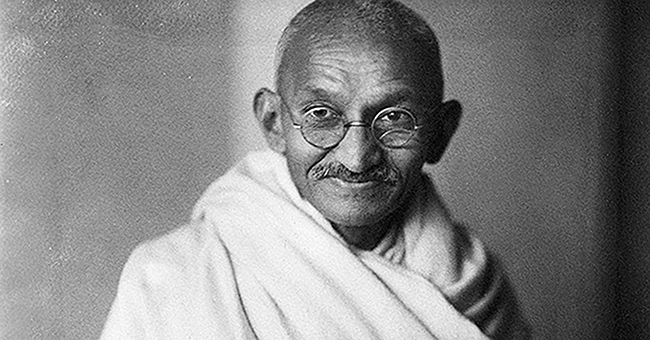
    Studio photograph of Mahatma Gandhi, London, 1931.

    Studio photograph of Mahatma Gandhi, London, 1931.

    For Martin Luther King, Jr., Gandhi embodied the spirit and ethos of Christ. On the anniversary of the passing of India’s nonviolent, anti-colonial revolutionary, we look at highlights from the Palm Sunday sermon, delivered on March 22, 1959, at Dexter Avenue Baptist Church in Montgomery, Alabama, Dr. King wrote on him.

    ***

    This, as you know, is what has traditionally been known in the Christian church as Palm Sunday. And ordinarily the preacher is expected to preach a sermon on the Lordship or the Kingship of Christ—the triumphal entry, or something that relates to this great event as Jesus entered Jerusalem, for it was after this that Jesus was crucified. And I remember, the other day, at about seven or eight days ago, standing on the Mount of Olives and looking across just a few feet and noticing that gate that still stands there in Jerusalem, and through which Christ passed into Jerusalem, into the old city. The ruins of that gate stand there, and one feels the sense of Christ’s mission as he looks at the gate. And he looks at Jerusalem, and he sees what could take place in such a setting. And you notice there also the spot where the temple stood, and it was here that Jesus passed and he went into the temple and ran the money-changers out.

    And so that, if I talked about that this morning, I could talk about it not only from what the Bible says but from personal experience, first-hand experience. But I beg of you to indulge me this morning to talk about the life of a man who lived in India. And I think I’m justified in doing this because I believe this man, more than anybody else in the modern world, caught the spirit of Jesus Christ and lived it more completely in his life. His name was Gandhi, Mohandas K. Gandhi. And after he lived a few years, the poet Tagore, who lived in India, gave him another name: “Mahatma,” the great soul. And we know him as Mahatma Gandhi.

    ~~~

    I would say the first thing that we must see about this life is that Mahatma Gandhi was able to achieve for his people independence through nonviolent means. I think you should underscore this. He was able to achieve for his people independence from the domination of the British Empire without lifting one gun or without uttering one curse word. He did it with the spirit of Jesus Christ in his heart and the love of God, and this was all he had. He had no weapons. He had no army, in terms of military might. And yet he was able to achieve independence from the largest empire in the history of this world without picking up a gun or without any ammunition.

    Gandhi was born in India in a little place called Porbandar, down almost in central India. And he had seen the conditions of this country. India had been under the domination of the British Empire for many years. And under the domination of the British Empire, the people of India suffered all types of exploitation. And you think about the fact that while Britain was in India, that out of a population of four hundred million people, more than three hundred and sixty-five million of these people made less than fifty dollars a year. And more than half of this had to be spent for taxes.

    Gandhi looked at all of this. He looked at his people as they lived in ghettos and hovels and as they lived out on the streets, many of them. And even today, after being exploited so many years, they haven’t been able to solve those problems. For we landed in Bombay, India, and I never will forget it, that night. We got up early in the morning to take a plane for Delhi. And as we rode out to the airport we looked out on the street and saw people sleeping out on the sidewalks and out in the streets, and everywhere we went to. Walk through the train station, and you can’t hardly get to the train, because people are sleeping on the platforms of the train station. No homes to live in. In Bombay, India, where they have a population of three million people, five hundred thousand of these people sleep on the streets at night. Nowhere to sleep, no homes to live in, making no more than fifteen or twenty dollars a year or even less than that.

    And this was the exploitation that Mahatma Gandhi noticed years ago. And even more than that, these people were humiliated and embarrassed and segregated in their own land. There were places that the Indian people could not even go in their own land. The British had come in there and set up clubs and other places and even hotels where Indians couldn’t even enter in their own land. Gandhi looked at all of this, and as a young lawyer, after he had just left England and gotten his law—received his law training, he went over to South Africa. And there he saw in South Africa, and Indians were even exploited there.

    ~~~

    You have read of the Salt March, which was a very significant thing in the Indian struggle. And this demonstrates how Gandhi used this method of nonviolence and how he would mobilize his people and galvanize the whole of the nation to bring about victory. In India, the British people had come to the point where they were charging the Indian people a tax on all of the salt, and they would not allow them even to make their own salt from all of the salt seas around the country. They couldn’t touch it; it was against the law. And Gandhi got all of the people of India to see the injustice of this. And he decided one day that they would march from Ahmadabad down to a place called Dandi.

    He was able to mobilize and galvanize more people than, in his lifetime, than any other person in the history of this world. And just with a little love in his heart and understanding goodwill and a refusal to cooperate with an evil law, he was able to break the backbone of the British Empire. And this, I think, is one of the most significant things that has ever happened in the history of the world, and more than three hundred and ninety million people achieved their freedom. And they achieved it nonviolently when a man refused to follow the way of hate, and he refused to follow the way of violence, and only decided to follow the way of love and understanding goodwill and refused to cooperate with any system of evil.

    ~~~

    He had the amazing capacity, the amazing capacity for internal criticism. Most others have the amazing capacity for external criticism. We can always see the evil in others; we can always see the evil in our oppressors. But Gandhi had the amazing capacity to see not only the splinter in his opponent’s eye but also the planks in his own eye and the eye of his people. He had the amazing capacity for self-criticism. And this was true in his individual life; it was true in his family life; and it was true in his people’s life. He not only criticized the British Empire, but he criticized his own people when they needed it, and he criticized himself when he needed it.

    And whenever he made a mistake, he confessed it publicly. Here was a man who would say to his people, “I’m not perfect. I’m not infallible. I don’t want you to start a religion around me. I’m not a god.” And I’m convinced that today there would be a religion around Gandhi if Gandhi had not insisted all through his life that “I don’t want a religion around me because I’m too human. I’m too fallible. Never think that I’m infallible.”

    ~~~

    Now you know in India you have what is known as the caste system, and that existed for years. And there were those people who were the outcasts, some seventy million of them. They were called untouchables. And these were the people who were exploited, and they were trampled over even by the Indian people themselves. And Gandhi looked at this system. Gandhi couldn’t stand this system, and he looked at his people, and he said, “Now, you have selected me and you’ve asked me to free you from the political domination and the economic exploitation inflicted upon you by Britain. And here you are trampling over and exploiting seventy million of your brothers.” And he decided that he would not ever adjust to that system and that he would speak against it and stand up against it the rest of his life.

    ~~~

    And he looked at all of this. One day he said, “Beginning on the twenty-first of September at twelve o’clock, I will refuse to eat. And I will not eat any more until the leaders of the caste system will come to me with the leaders of the untouchables and say that there will be an end to untouchability. And I will not eat any more until the Hindu temples of India will open their doors to the untouchables.” And he refused to eat. And days passed. Nothing happened. Finally, when Gandhi was about to breathe his last, breathe his last breath and his body—it was all but gone and he had lost many pounds. A group came to him. A group from the untouchables and a group from the Brahmin caste came to him and signed a statement saying that we will no longer adhere to the caste system and to untouchability. And the priests of the temple came to him and said now the temple will be open unto the untouchables. And that afternoon, untouchables from all over India went into the temples, and all of these thousands and millions of people put their arms around the Brahmins and peoples of other castes. Hundreds and millions of people who had never touched each other for two thousand years were now singing and praising God together. And this was the great contribution that Mahatma Gandhi brought about.

    And today in India, untouchability is a crime punishable by the law. And if anybody practices untouchability, he can be put in prison for as long as three years. And as one political leader said to me, “You cannot find in India one hundred people today who would sign the public statement endorsing untouchability.” Here was a man who had the amazing capacity for internal criticism to the point that he saw the shortcomings of his own people. And he was just as firm against doing something about that as he was about doing away with the exploitation of the British Empire. And this is what makes him one of the great men of history.

    And the final thing that I would like to say to you this morning is that the world doesn’t like people like Gandhi. That’s strange, isn’t it? They don’t like people like Christ. They don’t like people like Abraham Lincoln. They kill them. And this man, who had done all of that for India, this man who had given his life and who had mobilized and galvanized four hundred million people for independence so that in 1947 India received its independence, and he became the father of that nation. This same man because he decided that he would not rest until he saw the Muslims and the Hindus together; they had been fighting among themselves, they had been in riots among themselves, and he wanted to see this straight. And one of his own fellow Hindus felt that he was a little too favorable toward the Muslims, felt that he was giving in a little too much toward the Muslims.

    And one afternoon, when he was at Birla House, living there with one of the big industrialists for a few days in Delhi, he walked out to his evening prayer meeting. Every evening he had a prayer meeting where hundreds of people came, and he prayed with them. And on his way out there that afternoon, one of his fellow Hindus shot him. And here was a man of nonviolence, falling at the hand of a man of violence. Here was a man of love falling at the hands of a man of hate. This seems the way of history.

    And isn’t it significant that he died on the same day that Christ died; it was on a Friday. This is the story of history. But thank God it never stops here. Thank God Good Friday is never the end. And the man who shot Gandhi only shot him into the hearts of humanity. And just as when Abraham Lincoln was shot—mark you, for the same reason that Mahatma Gandhi was shot, that is, the attempt to heal the wounds of a divided nation. When the great leader Abraham Lincoln was shot, Secretary Stanton stood by the body of this leader and said, “Now he belongs to the ages.” And that same thing can be said about Mahatma Gandhi now. He belongs to the ages, and he belongs especially to this age, an age drifting once more to its doom. And he has revealed to us that we must learn to go another way.

    Excerpted from “In a Single Garment of Destiny”, published by Beacon Press. All material copyright © Martin Luther King, Jr., and the Estate of Martin Luther King, Jr.; all material copyright renewed © Coretta Scott King and the Estate of Martin Luther King, Jr.


    About the Author 

    Dr. Martin Luther King, Jr. (1929–1968), Nobel Peace Prize laureate and architect of the nonviolent civil rights movement, was among the twentieth century’s most influential figures. One of the greatest orators in US history, King also authored several books, including Stride Toward Freedom: The Montgomery Story, Where Do We Go from Here: Chaos or Community?, and Why We Can’t WaitHis speeches, sermons, and writings are inspirational and timeless. King was assassinated in Memphis, Tennessee, on April 4, 1968. 

  • Gallows hung near the US Capitol during the January 6 Insurrection

    Gallows hung near the US Capitol during the January 6 Insurrection. Photo credit: Tyler Merbler
    It confirms what we’ve known for the past two years—and then some. The January 6 committee’s report shows that our former despotic Cheeto in chief incited a mob with false allegations of voter fraud to storm the US Capitol and overturn the results of the 2020 presidential election. Talk about moving the goal post of being the sorest loser. In the most violent way possible, too. Available to the public, the testimony and findings stacked against him are steep—over 800 pages worth.

    Perusing the whole report, you’ll find this curious observation: “If we lacked the imagination to suppose that a President would incite an attack on his own Government, urging his supporters to ‘fight like hell,’ we lack that insight no more.” Who is this ‘we’? Anyone who’s read dystopian fiction or has lived on the margins of society won’t have lacked the imagination. Trust. And don’t forget that the attempted coup was recently rebooted in Brazil.

    Over the course of eight chapters, the House committee in charge of the investigation recommends four criminal referrals against the former president. Hopefully, this leads to the prosecution we’ve been waiting for. But what to make of the societal morass culminating in the Capitol attack? Context is key. For that, we turn to the work of our authors. These books not only lay out the historical precedents—history may not repeat, but it certainly rhymes over time—but also show a way forward.


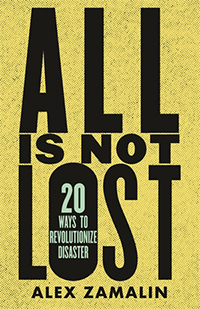
    All Is Not Lost

    All Is Not Lost: 20 Ways to Revolutionize Disaster

    Hope. The concept may seem old-fashioned. Or it may be the last thing you feel when you’re living through disaster. But hope is the force behind a revolutionary life. Hope motivates you to confront the abyss in the face of long odds and impossible obstacles. This isn’t wishful thinking. Not the innocent kind you see in children’s books. It’s the hope you feel in the dark. You can’t see a better future. You don’t know if you’ll arrive there, ever. You question your intuitions. You’re shaken by your doubts. But without hope, there’s no way out of disaster. Without hope, this disaster—and the next one, and the one after that—will swallow you and everything you hold dear. Hope is like love. You feel grounded in the world.
    —Alex Zamalin


    Considering-Hate

    Considering Hate: Violence, Goodness, and Justice in American Culture and Politics

    The hate frame prevents examination of many types of violence embedded in American culture, some accepted or taken for granted, some not. It also prevents us from examining whom violence is directed against and why. Often violence is seen as spontaneous, such as intimate partner violence; sometimes as “legitimate,” such as police violence. In reality, such violence is structural—that is, embedded in cultural norms—and is frequently unseen and unchallenged . . . Only by understanding the actual causes of violence—is it used to oppress a person or group? to resist oppression? to assert independence? to assert control?—can we begin to comprehend what fairness or justice might mean in these situations.
    —Kay Whitlock and Michael Bronski


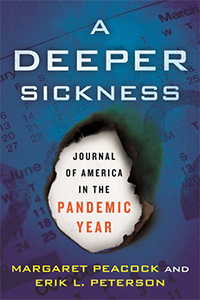
    A Deeper Sickness

    A Deeper Sickness: Journal of America in the Pandemic Year

    Three historical factors, in particular, made America sicker than we should have been in 2020: (a) entrenched racial hierarchies; (b) an economic structure dependent on individual accumulation of wealth and widespread consumption of ephemeral goods and entertainment; (c) distraction, cognitive dissonance, and an intentional historical amnesia that prevented the majority of comfortable, well-intentioned, middle-class, white Americans like ourselves from doing anything about the first two issues. These factors channeled seventy-four million people—nearly 47 percent of all votes cast—to nearly reelect a narcissistic, predatory charlatan who accumulated immense power by repeating age-old, bigoted, malevolent, and dishonest tropes.
    —Margaret Peacock and Erik L. Peterson


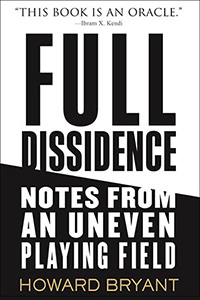
    Full Dissidence

    Full Dissidence: Notes from an Uneven Playing Field

    There are many facets to the grotesqueness of Donald Trump’s America, and his desperation to profit from militarization is certainly one of them. Blind militarism is the legacy of 9/11, not something caused by Trump, despite the panicked revisionism that Trump and Trump alone is the source of the country’s pathologies. It isn’t his America at all. Trump attempted to claim himself as the military’s original champion by demanding an unquestioned loyalty and deference to it but its ubiquity in the culture is also not of his doing, even if he did spend the first year of his presidency unsuccessfully trying to garner support for a military parade worthy of a third-world despot, but finally succeeding in the embarrassment in his third. For all of his incompetence and crassness, Trump has provided convenient cover for the decades that preceded him, and his existence represents not a root but a culmination of decline obvious to anyone not actively engaged in the soothing ritual of avoidance.
    —Howard Bryant


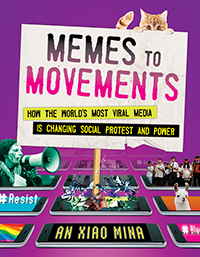
    Memes to Movements

    Memes to Movements: How the World’s Most Viral Media Is Changing Social Protest and Power

    Memetic strategies can challenge power, but the opposition adapts . . . [M]emes are a media strategy above all, and like any media, they can be used to communicate different kinds of messages. The ability to quickly generate narratives on the internet reflects a strength and a weakness: rather than simply censor overtly, governments and countermovements can create alternative narratives based on rumors, falsified information, and distraction, generating media popularly known as “fake news” but that perhaps more accurately should be called misinformation, disinformation, and propaganda.
    —An Xiao Mina


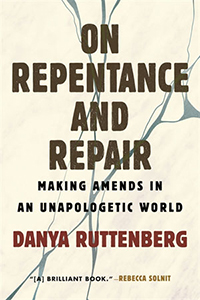
    On Repentance and Repair

    On Repentance and Repair: Making Amends in an Unapologetic World

    I’ll admit that it’s something of a personal pet peeve that the word atonement is thrown around as a synonym for forgiveness in popular discourse. In my tradition, forgiveness is something that people can grant to other people (whether they are informed of it or not, as we’ve discussed). But atonement is, in the framework of my tradition, something that happens in connection with the divine. And, as we’ve seen, if you’ve hurt someone else, atonement is up for discussion only after you’ve done all the work that must be done with regard to repair, apology, and amends.
    —Rabbi Danya Ruttenberg


    Proud Boys and the White Ethnostate

    Proud Boys and the White Ethnostate: How the Alt-Right Is Warping the American Imagination

    Despite punchy proclamations of inclusivity and anti-racism, most of the men who joined the Proud Boys when it was formed in 2016 were white, straight, and aggrieved. They embodied the profile fleshed out in Michael Kimmel’s study of the contemporary crisis of masculinity in America: white men of overlapping generations with faith in the American Dream who came of age “believing they would inevitably take their places somewhere on the economic ladder, simply by being themselves.” They never realized or had to comprehend the extent to which the “deck was stacked in their favor for generations.” They are hostile to notions of equality and diversity, which promise not to improve their lot but to humiliate and displace them. This nagging sensation of dispossession and impotence, Kimmel argues, “is the source of their rage.”
    —Alexandra Minna Stern


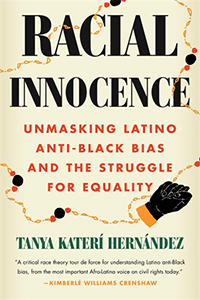
    Racial Innocence

    Racial Innocence: Unmasking Latino Anti-Black Bias and the Struggle for Equality

    George Zimmerman and Alex Michael Ramos are not isolated examples of Latinos harboring racialized violence. The Southern Poverty Law Center has noticed that there is a disturbing trend of more Latinos joining White supremacist hate groups. These Latinos include people like Christopher Rey Monzon, a twenty-two-year-old Cuban American, associated with the neo-Confederate hate group League of the South. Monzon was arrested weeks after Charlottesville for charging at protesters in a separate Florida demonstration. Nick Fuentes, a nineteen-year-old student who hosts an alt-right podcast called America First, also participated in the Charlottesville protests. In an interview with National Public Radio, Juan Cadavid, a Colombian-born Californian who now goes by the name Johnny Benitez, shared how he is an advocate for what he called “white identity politics”—which includes embracing the “14 Words” slogan used by White supremacists: “We must secure the existence of our people and a future for white children.” Finally, the January 6, 2021, terrorist attack on the US capitol included Latino members of the White supremacist group Proud Boys (including but not limited to Bryan Betancur, Louis Colon, Nicholas DeCarlo, Gabriel Garcia, and William Pepe). Disturbingly, the Proud Boys’ chairman is Cuban American Enrique Tarrio.
    —Tanya Katerí Hernández


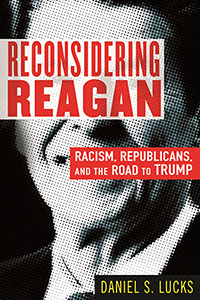
    Reconsidering Reagan

    Reconsidering Reagan: Racism, Republicans, and the Road to Trump

    Reagan’s communications director Patrick Buchanan said it best: “Donald Trump is a conservative populist and the direct descendant and rightful heir to Ronald Reagan.” Reagan’s legacy survives in the form of crushing poverty, prisons overflowing with poor people of color, and a nation plagued by profound racial strife and socioeconomic inequities. In reconsidering Reagan and the conservative movement that emerged in tandem with the civil rights movement, Reagan’s racist politics and policies cast a blight on his legacy, and have ensured that the color line will continue to be a central problem of American life well into the twenty-first century. This legacy is something Reagan’s acolytes can no longer ignore.
    —Daniel S. Lucks

    Gallows hung near the US Capitol during the January 6 Insurrection

  • By Samira K. Mehta

    Lentil soup

    Photo credit: Matthias Lipinski

    Popular belief assumes that being mixed race gives you the ability to feel at home in more than one culture. In The Racism of People Who Love You: Essays on Mixed Race Belonging, Samira K. Mehta writes about how it’s more complicated than that. The flipside shows you can feel just as alienated in those spaces, even when it comes to sharing food. Born to a white American and a South Asian immigrant, Mehta describes in these passages the ways being a vegetarian brings up what it means to belong to (or sometimes not) and to toggle two cultural identities.

    ***

    I have never worn a “Meat Is Murder” t-shirt to Thanksgiving dinner. Clearly, I have thought about doing it, and while I would like to be able to claim that I have not done so because it would be rude or because I have deep-seated reservations about Morrissey, really, I have not done so because I have never been quite enough of a Smiths’ fan to have ever made the jump from buying CDs to buying t-shirts.

    Thanksgiving, however, has always been a challenge for me. And it is possible that I wish, on some level, that I had the t-shirt and the ability to be that rude.

    I know vegetarians and vegans who have different attitudes toward being the culinary outsiders. Some really do not seem to mind it. I have a friend who has made it through many years in Rome as a lactose intolerant vegetarian who does not drink, and he has yet to complain about anything culinary except for the crappy quality of Italian tea. To be honest, even though I am something of a foodie, I am happy to work around meat in any number of ways. I travel with peanut butter, so that I can navigate communal meals and entire countries that include meat-heavy cuisines. But particularly at Thanksgiving, there is something about the communal meal that feels communion-like. And I mind being excluded. I mind the sense that my extended family is more careful and respectful of people who are gluten-free than they are of my vegetarianism, and that sometimes the gluten-free people are the least respectful of my vegetarianism.* I really mind the amount of work that I end up doing to create a meal that I won’t fully be a part of, and I mind that it goes on for days, as all ten or more of us eat leftovers and people talk about how there is no need to actually cook new food.

    One year, I decided that rather than being crabby, I would be proactive. In my family, the meat-based traditions continue on to the day after Thanksgiving, when, for more than a decade, my uncle made a turkey gumbo for the entire family. The gumbo was not as much of a production as the actual Thanks[1]giving dinner, but it was close. We made homemade stock from the turkey carcass, picking off as much of the meat as possible, to add to the soup later. The stock simmered all night, it had to be strained, and then we made the gumbo. Inevitably, making the roux filled the house with smoke. We had to open doors, letting in the cold, raw November air. It was a production—a big family social event, one that neither I nor the aunt with celiac disease could enjoy. (This aunt is, however, a more laidback person than I am. If she minded, she never let on.) And so I decided to make an entire stock pot of red lentil soup, enough for anyone who wanted some, almost in hopes that my big pot of soup would create a way for me (and my gluten-free aunt) to participate, if not in the communal dish, in the meal, rather than simply microwaving the next round of leftovers.

    I made the soup ahead of time and pulled it out once the gumbo was made (and the turkey grease that films the kitchen by the end of the process was scrubbed away). And come time to serve, the two soups sat, side by side, bubbling away on a nice clean stove next to a pot of rice. Each with its own ladle.

    One of my non-celiac aunts and I were next to each other, by the stove. She was helping herself to soup and I was getting out spoons, when I watched her take the ladle from the gumbo and pour a serving of gumbo onto the rice in her bowl. I then watched, and somehow did not manage to stop her, as she took the gumbo ladle, dipped it into the lentil soup, and made a parallel stripe of lentil soup alongside.

    And all of a sudden, I could no longer eat the soup. It was as unacceptable, as treyf, to me as it would have been if made with a ham bone.

    I had an intense (and entirely internal) emotional reaction: I was frustrated. I had planned ahead. I had solved a problem. And I watched my solution evaporate through someone else’s thoughtlessness. I was also furious. I almost cried, I felt so fundamentally disrespected.

    My aunt, who had no idea that anything was wrong, turned to me, still holding the meat ladle, and asked if I wanted rice for my lentil soup. I explained that I thought I would have a peanut butter sandwich instead. She was understandably confused—why had I made this big pot of soup? I had to explain that, when she put the ladle into the lentil soup, it had stopped being vegetarian, and so I was no longer comfortable eating it.

    “What are you now?” she asked. “Some kind of religious fanatic?”

    I stared at her in horror. She had ruined my meal without a thought. And yet somehow I was the difficult one? But it is also interesting that she identified my vegetarianism as being fundamentally religious. That is not how I would have framed what I was doing, but the more I have thought about her response, and my own experience of meat—as food, as raw material, as dead animal—the more I realize that she was seeing something about me that frustrated and baffled her, something that separates me from the relatives (including the vegetarians) on the American side of my family, and something that deeply informs the hows, if not precisely the whys, of my vegetarianism.

    ~~~

    Sometimes my killjoy status was really primarily logistical. On my mother’s side of the family, the white side, my vegetarianism was always treated as reasonable, but those logistics still made me a killjoy. I was the person who needed a separate entrée at holiday dinners, and there was always tension. If they made only enough for me, some sort of special treat, I was rude if I did not share or if I objected as my meal was passed around the table—watching as the possibility of seconds evaporated. If they made enough for everyone, it added expense and work to the meal for the hosts, who might have also roasted a turkey. Other times, particularly when I was younger and more the kind of person who might have shown up in a “meat is murder” t-shirt, my killjoy qualities were more likely to come out in comments about animal suffering or environmentalism. But even if I am simply asking that people respect my boundaries and keep their meat spoons out of my vegetarian dishes, as far as my family is concerned, I am something of a problem.

    As my family members on the Indian side have become enthusiastic meat eaters with their move to the United States, I have become a killjoy to them as well. Perhaps even more of a killjoy, as my vegetarian presence may serve as a reminder that they are transgressing. An uncle once explained that it is impossible to be vegetarian in the United States, and therefore silly to try (and rude to make them accommodate me). “Even those pastries you are eating,” he commented, “were probably made with lard. There is no way to know!” And honestly, they might well have been, I suppose. As a high school student, I was not yet the kind of vegetarian who would have known or thought to ask, though of course one always can ask. I have always found it weird that my Indian aunts and uncles, several of whom like to harp on all the ways that I am not Indian enough also criticize my vegetarianism, although it is the most Indian thing about me, and this is part of why I understand my vegetarianism as a killjoy problem, in Ahmed’s sense. It reminds everyone that they are doing wrong. It reminded the liberal Unitarians of their ethical failures around animal cruelty and environmentalism. It reminded the Indian relatives that they were being bad Hindus and therefore bad Indians, not so much because they believed strongly in the purity restrictions that govern our caste, but because their choices around assimilation sit uncomfortably with them and because, were she alive, their mother (who likely did believe in purity restrictions and caste) would be disappointed in them.

    While I can point to any number of rational reasons for my vegetarianism, and while I am fully aware that the logical extension of these rational reasons is veganism, there is a deeply emotional and instinctive reaction fueling my vegetarianism. I do not want to eat anything that has touched meat. Or really, anything that has been touched by something that has touched meat. When I was in junior high school, my parents realized that we would need a separate grill for my vegetables and veggie burgers. And they got one, building two fires, every time we grilled out, keeping separate tongs and serving plates. And there are two things that are significant about my profound disgust—this sense of meat as contaminating, both of me and of anything that it has touched. First, I never thought about how accommodating my parents were of my insistence on strict separation, and perhaps therefore, I never thought about the fact that not everyone does vegetarianism the way that I do. Second, I never thought about the fact that vegetarianism has not struck me as a sacrifice—in many ways, the revulsion came first, and the justification and reasons came later. Because I do not feel that revulsion towards many dairy products, I continue to eat them, an impulse that is supported by the little I know of Hinduism, in which milk is used to purify. And while that sensibility does not justify my not being a vegan, it goes a certain part of the way toward explaining it.

    My aunt identified my rejection of meat and my sense that she had made my soup impure as “religious fanaticism.” While I reject the idea that I am a fanatic, fundamentally, my revulsion at meat has religious qualities to it. My horror at meat, at things that have touched meat, or at the idea of consuming something derived from meat (gelatin, for instance) is, one could argue, religious.


    About the Author 

    Samira K. Mehta is an associate professor of women and gender studies and of Jewish studies at the University of Colorado Boulder. Her research and teaching focus on the intersections religion, culture, and gender, including the politics of family life and reproduction in the United States. Her first book, Beyond Chrismukkah: The Christian-Jewish Blended Family in America, was a National Jewish book award finalist. Mehta’s current academic book project, God Bless the Pill: Sexuality and Contraception in Tri-Faith America is forthcoming from the University of North Carolina Press. Connect with her online at samiramehta.com and on Twitter @samirakmehta.

  • Perpetua Charles

    Our rebooted “Beacon Behind the Books” series is on a roll! In these times when readers are responding to our books “more than ever,” when our authors—including Aubrey Gordon, Tanya Katerí Hernández, Robin D. G. Kelley, Eboo Patel, and Gayl Jones—are appearing in the media, their ideas going viral on social media, their voices being heard on so many platforms, we thought it would be good to take a break to focus on some of the staff who work hard to find, shape, edit, produce, and promote those works. Our blog series introduces to you a staff member and gives you a behind-the-scenes look, department by department, at what goes on at our office.

    To kick off 2023, we are following up with Perpetua Charles in a profile sequel! When you first met her, she was an assistant publicist. Now, she is a publicist, and there have been changes since then. 

    As a longtime member of the Beacon publishing team, what has changed and what has stayed the same?

    I’ve been a Beacon staff member and a publicity team member for seven and a half years! In that time, I’ve witnessed the rise of podcasts as legit and meaningful coverage for authors; the gradual expansion of book sections at major publications like the Washington Post and The Atlantic; and the ongoing growth of the indie book scene here in Boston. And, of course, my work and my life have changed since the onset of the pandemic nearly a full three years ago.

    A change I really enjoy is our hybrid schedule. Our staff is very fortunate to have the flexibility to work in ways that allow us to be the most productive based on our needs, comfort, and abilities during the pandemic and beyond.

    What’s not changed is the varied cast of characters who continue to enter my life as a publicist. Every author brings unique personality to their projects, and therefore, to the publicity campaign. It was an adjustment to learn how to engage with authors and their books in a new work setting, but it continues to be a gratifying experience to help authors get their books out into the world.

    What do you wish someone had told you about publishing when you were entering the industry?

    This lesson didn’t really sink in until the pandemic, but more important than any industry know-how and technical skills you learn are the relationships you form with the people you’re working with. That goes for your staff members as well as for the authors you’ll work with over time. Can they trust you? If put under a spotlight, can they say you’re kind and respectful, even if your personalities don’t quite match up?

    Being able to write, think critically, and effectively carry out a campaign are obviously really important skills you need for the job. But in my early years, I often forgot I was working with people, focusing instead on attaining perfection with every attempted effort on a book project and leaving the people who wrote the books in the lurch. I’ve learned that authors just want to know that things are going to be okay. Giving attention to the relational aspect of my work has made my day-to-day much more fruitful.

    What is one book on our list that has influenced your thinking on a particular issue?

    Coming out this spring, “You Should Be Grateful” explores the many nuances of adoption. Before reading this book, I’d organized my thoughts about adoption to be “good” or “bad.” I now understand that the process is far more complicated than that. The author, Angela Tucker, an adoptee herself, invites the reader into the conflicting emotions she feels as an adoptee, especially as she connects with her birth family. I find myself experiencing that conflict right alongside her. The book challenges me to think beyond dichotomies and to confront the systemic issues and the very real people that make adoption such a difficult and beautiful thing.

    What current projects are you excited about?

    I’m so hyped about this week’s release, The Racism of People Who Love You. The book is by Samira K. Mehta, a professor and author who writes about her experiences as a mixed-race child of a white mother and Indian father. Her writing is so thoughtful, humorous, and relatable. Though I don’t identify as mixed-race, the subtleties of navigating race in your circle of family and friends that Mehta recounts resonate with me. And if Oprah’s people think the book is a necessary read this year, so should you!

    Best vacation destination?

    The beach. It literally doesn’t matter where. I wish I was at the beach right now!

    In an alternate universe, what career would you have?

    I’d be a cosmetologist or a personal stylist in another universe. I love fashion and beauty and I love to help people find something about fashion they can connect with.

    What’s the next queued song on Spotify?

    “Free Mind” by Tems. Issa mood, issa vibe.

    Favorite podcast?

    I’m obsessed with the Binge Mode podcasts from The Ringerverse. My favorites are Binge Mode: Harry Potter and Binge Mode: Marvel.

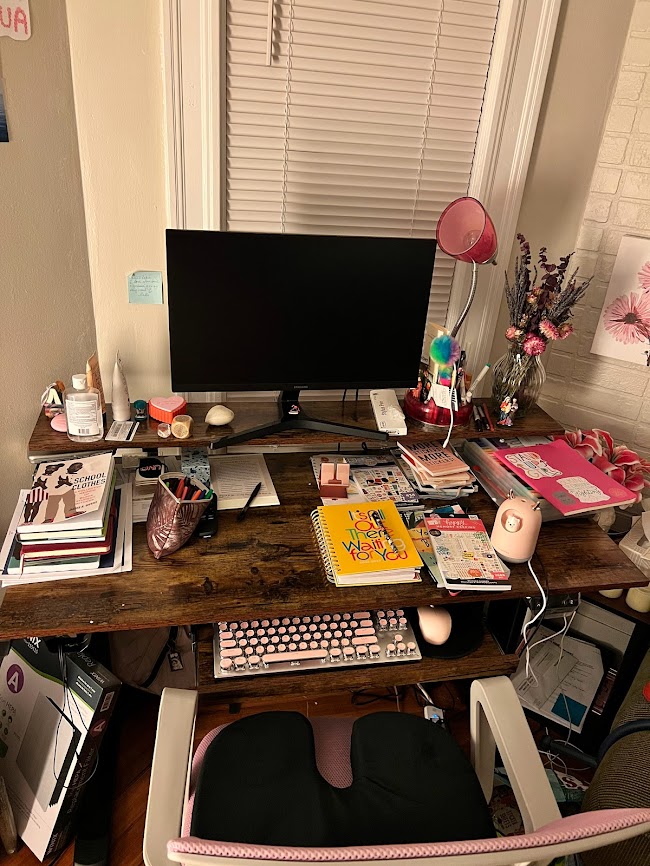
    PC home office

    Name three things at your workstation you can’t live without.

    1. My planner/stickers. I recently discovered that I have approximately 10,000 stickers. They make planning fun!
    2. Hand lotion. Dry air in the winter sucks the joy out of these hands.
    3. My headphones. When I need to shut out the world and focus, they help me do that in an instant.


    Perpetua Charles

    Perpetua Charles joined Beacon Press in 2015. She is a graduate of Florida Southern College and earned her MA in Publishing and Writing from Emerson College. Perpetua has extensive publicity experience in the areas of race and culture, memoir, education, and history. Some of her favorite things include the Lord, TV, Disney princesses, books, 90s-00s teen pop, and the color pink. Connect with Perpetua on Instagram at @princessperpetuaa.

  • 2022 and moon

    Image credit: Tumisu

    All right. 2022 has been cute—in a We-Lumbered-Through-Yet-Another-Plague-Year kind of way—but now it’s giving shabby and dogged. That’s right. Time to sashay away and to do so with some grace and dignity.

    But before then, we need to give it up for our authors and staff who blessed Beacon Broadside with their words and insight. These are the year’s top ten blog posts—some recent, some from previous years making a comeback. If you haven’t read any of them yet, get to clicking and flexing your optic scans.

    See you in the new year with more commentary from the authors and staff of your favorite indie press!


    Memorial candles

    “5 Poems in Memory of the Robb Elementary School Shooting Victims”

    When a child hears gunshots,
    she will say Mom is beating
    the pots and pans. She will say
    It sounds like home. Let’s keep it
    this way; our children
    misinterpreting the sound of dying
    as a crude percussion.
    —from Meghan Privitello’s “[When a child hears gunshots]”


    Carol Channing

    “Before Passing Away, Carol Channing Passed for White”
    By Lisa Page

    “Americans like stories like hers, because racial and ethnic passing is ubiquitous inside a culture known for self-invention. But being Black is about more than biology, one drop rule be damned. Being Black is not just about singing and dancing, and shucking and jiving. Being Black goes beyond complexion—it’s a cultural thing.”


    Still from CODA

    “Being CODA Is More Complexed and Nuanced Than ‘CODA’ Film Lets On”
    By Lennard Davis

    “It’s disingenuous to claim that CODAs seriously were part of the creative process when they were essentially hired for a different task—that of interpreting sign language. Isn’t it also ironic that the film’s central story is about CODAs having to do interpretation instead of following their dreams, yet the involvement of CODAs in the production entailed interpreting rather than being hired to be part of the creative team?”


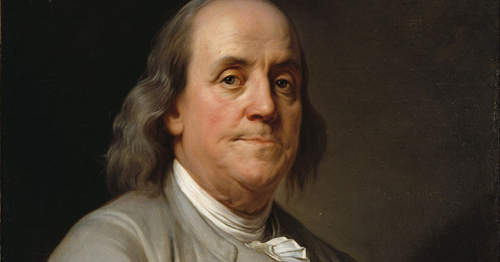
    Benjamin Franklin

    “A Franklin Valentine: Why Older Women Make Better Mistresses Than Younger Ones”
    By Nancy Rubin Stuart

    “Everyone knows Benjamin Franklin was a scientist, an inventor, and a diplomat, but did you know he also had the makings of a great romance advice columnist? The founding father was well suited to that job because of his wide experience with women. That may explain why he penned a letter in 1745 to a single man about the best way to sate his sexual impulses outside marriage. Ben’s advice? Sleep with an older woman instead of a young one.”


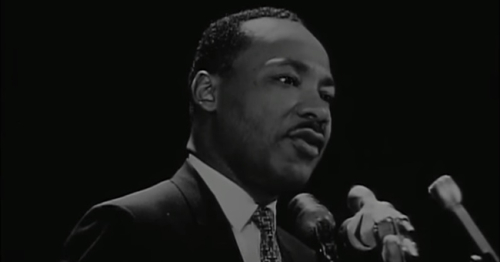
    MLK

    “Martin Luther King, Jr.: The World House (excerpt)”
    Martin Luther King, Jr.

    “One of the great liabilities of history is that all too many people fail to remain awake through great periods of social change. Every society has its protectors of the status quo and its fraternities of the indifferent who are notorious for sleeping through revolutions. But today our very survival depends on our ability to stay awake, to adjust to new ideas, to remain vigilant and to face the challenge of change.”


    The Other America

    “Martin Luther King, Jr.’s ‘The Other America’ Still Radical 50 Years Later”
    Martin Luther King, Jr.

    “The fact is that freedom is never voluntarily given by the oppressor. It must be demanded by the oppressed—that’s the long, sometimes tragic and turbulent story of history. And if people who are enslaved sit around and feel that freedom is some kind of lavish dish that will be passed out on a silver platter by the federal government or by the white man while the Negro merely furnishes the appetite, he will never get his freedom.”


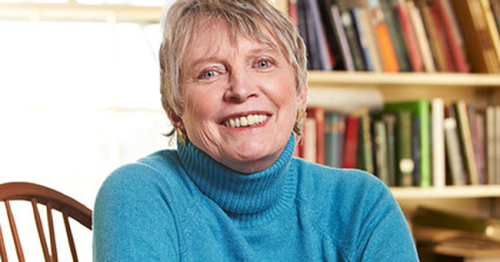
    Lois Lowry

    “One Dangerous Author: An Interview with Lois Lowry”
    By Helene Atwan

    “Every now and then, when there is a public controversy over a book, kids will make their voices heard in a local newspaper or at a school board meeting. Teenagers in particular are very eloquent spokespeople for literary freedom. Often they are inspired by special programs such as Banned Books Week or by a school curriculum that calls attention to the issue. I have great admiration and appreciation for school administrators who support such programs.”


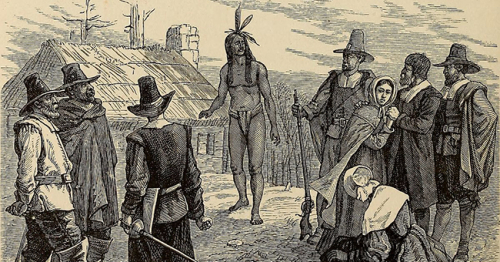
    French trading with Native Americans in Quebec

    “Settler Fragility: Why Settler Privilege Is So Hard to Talk About”
    By Dina Gilio-Whitaker

    “It’s important to emphasize that like white privilege, settler privilege is systemic, so just denying that one doesn’t possess it doesn’t mean one isn’t complicit in it. This is about deeply questioning all the assumptions we have been raised with in a society built on imperialism, private property (which includes slavery), and capitalism. Even for Native people who don’t live in their ancestral homelands, the questions need to be asked: who are the original people of the place where I live, and what are my responsibilities to them?”


    Henry David Thoreau

    “Some Thoughts on Henry David Thoreau and the Nature of Time (on the Bicentennial of His Birth)”
    By Tom Montgomery Fate

    “Our relationship to time is defined by the technologies we use to measure it. ‘Keep the time,’ Thoreau wrote in his Journal. ‘Observe the hours of the universe—not of the cars.’ Again Henry advocates the clock of sun and moon and gravity. But he wasn’t, as some believe, anti-technology. He was a skilled surveyor and pencil maker who designed a new way to compress and mold graphite. It seems he was opposed to technology that had no clear purpose, or that didn’t benefit the common person, or simply made us less human.”


    A_popular_history_of_the_United_States_-_from_the_first_discovery_of_the_western_hemisphere_by_the_Northmen _to_the_end_of_the_first_century_of_the_union_of_the_states;_preceded_by_a_sketch_of_the_(14597125217)

    “Unpacking the Invisible Knapsack of Settler Privilege”
    By Dina Gilio-Whitaker

    “All of today’s settlers and immigrants are in one way or another beneficiaries of genocide and land theft, even if they are simultaneously themselves victims of other forms of discrimination (with the possible exception of migratory Indigenous peoples of “Meso-America”). I realize this may be difficult for people of color to hear. But this is what it means to center settler colonialism as a framework for understanding the foundation of the US beyond an analysis of race, since the origins of the US are rooted in foreign invasion, not racism.” 

    2022 and moon

  • Boxed gifts

    Look how fast holiday season crept up on us. Where did 2022 go? Well, now’s the time to hunt for gifts for the loved ones in your life. Save 30% on everything at beacon.org through December 31 using code SPARKJOY30!

    Scroll down and you’ll see some selections to give you ideas. These books are bound to spark the joy of living your best queer life with found Ballroom family. Of stepping outside societal boundaries to embrace your inner monster. Of honing your center with mindfulness. Of getting inspired by the words of Black poets. This is just a handful of our catalog, which you can browse on our website.

    Remember that USPS media mail takes 7-10 business days. Also, the Penguin Random House warehouse will be closed from December 23 to December 25 and then on December 31. So, plan accordingly while placing your orders during this time.

    Happy holidays!


    And the Category Is pb

    And the Category Is . . . : Inside New York’s Vogue, House, and Ballroom Community

    Finding a family like the folks in Ballroom, hand-picked and talented, a flamboyance of family, can be the precious gift that fills seemingly unfillable voids like homelessness, alienation, sorrow, the hunger to be seen—a sense of purpose.
    —Ricky Tucker


    The Birdcatcher

    The Birdcatcher

    You see, Catherine sometimes tries to kill her husband. It has been this way for years: He puts her into an asylum, thinks she’s well, takes her out again, and she tries to kill him. He puts her in another one, thinks she’s well, takes her out again, she tries to kill him: on and on. You’d think we’d learn by now; you’d think everybody’d learn, don’t you? But somehow we keep the optimism, or the pretense, bring her out, and wait. She’s like the fucking trapdoor spider.
    —Gayl Jones


    The Blooming of a Lotus

    The Blooming of a Lotus: Essential Guided Meditations for Mindfulness, Healing, and Transformation

    When we begin to meditate on earth, water, fire, air, space, and consciousness outside our bodies, we recognize that these six elements are everywhere in the universe. We gradually come to see that we and the universe are one. The universe is our basis, and we are the basis of the universe. The composition and the decomposition of a body do not add or take away anything from the universe. The sun is just as necessary for our bodies as are our hearts.
    —Thich Nhat Hanh


    Breaking Bread

    Breaking Bread: Essays from New England on Food, Hunger, and Family
    Eds. Deborah Joy Corey and Debra Spark

    Even if your parents wouldn’t pony up for Cracker Jack, if you were a child in the 1960s and 1970s, you were all about sugary breakfast cereals and the box prize. Only here, too, the food was rather disgusting. Who, presented with real candy, would opt for the “marshmallow treat” of Lucky Charms? Clearly, what the world needed was a genuinely tasty item in which a prize was contained. And that item, though it took till my own late-age motherhood to discover it, is the Kinder Egg.
    —from Debra Spark’s “Prize Inside”


    Common Grace

    Common Grace: Poems

    I pluck you like a bass guitar—
    your left forearm my fretboard,
    the ribs on your right side my strings.

    I boom, boom, boom a blues pattern;
    the feedback of your laughter cuts
    the sound check short.

    I know only one riff,
    but you ask me to play it again.
    —Aaron Caycedo-Kimura, from “Riff”


    Freedom Dreams

    Freedom Dreams: The Black Radical Imagination

    The Black radical imagination does not stand still; it lives and breathes and moves with the people. The best we can do is catch a glimpse of how people in motion have envisioned the future and what they did to try to realize or enact that future. But every freedom dream shares a common desire to find better ways of being together without hierarchy and exclusion, without violence and domination, but with love, compassion, care, and friendship.
    —Robin D. G. Kelley


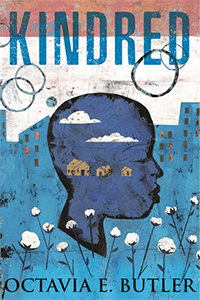
    Kindred Gift Edition

    Kindred: Gift Edition

    I had seen people beaten on television and in the movies. I had seen the too-red blood substitute streaked across their backs and heard their well-rehearsed screams. But I hadn’t lain nearby and smelled their sweat or heard them pleading and praying, shamed before their families and themselves. I was probably less prepared for the reality than the child crying not far from me. In fact, she and I were reacting very much alike. My face too was wet with tears. And my mind was darting from one thought to another, trying to tune out the whipping. At one point, this last cowardice even brought me something useful. A name for whites who rode through the night in the antebellum South, breaking in doors and beating and otherwise torturing black people.
    —Octavia E. Butler


    The Radiant Lives of Animals

    The Radiant Lives of Animals

    I hoped the wolves would remain away from any location that would become the crosshairs of their deaths. For many, the word wolf carries a dark and heavy meaning. Four letters have made them into something other than what they are and how they resonate inside the mind of many humans. Traditional Native peoples, however, have lived with wolves and recently have even requested their return to reservations. For us, the word means cooperation, a natural connection with the lives of a forest, communication, and loyalty to others. A pack of wolves also bespeaks the health of water, trees, and survival for other animals. For millennia, observation in shared territories has taught us this; the wolf is given an earned measure of respect.
    —Linda Hogan


    Soul Culture

    Soul Culture: Black Poets, Books, and Questions That Grew Me Up

    There’s much talk lately of the importance of representation—If you see it, you can be it was a mantra I remember teachers making us repeat—but, until these Black women poets, I only saw slivers of myself, of creative freedom, of fearless inspiration. Writing is part of my self-care, and if I’m censored there, inside my own wondering, where else am I allowed to question freely? Writing rarely gives me answers, but it helps me articulate questions I have about the world and my own longing. It’s a safe space, with many rooms, a house Black women have tended for me.
    —Remica Bingham-Risher


    A Treasury of African American Christmas Stories

    A Treasury of African American Christmas Stories
    Complied and Edited by Bettye Collier-Thomas

    Why is it that lots of white people always grin when they see a Negro child? Santa Claus grinned. Everybody else grinned, too, looking at little black Joe—who had no business in the lobby of a white theatre. Then Santa Claus stooped down and slyly picked up one of his lucky number rattles, a great big loud tin-pan rattle like they use in cabarets. And he shook it fiercely right at Joe. That was funny. The white people laughed, kids and all. But little Joe didn’t laugh. He was scared. To the shaking of the big rattle, he turned and fled out of the warm lobby of the theatre, out into the street where the snow was and the people. Frightened by laughter, he had begun to cry. He went looking for his mama. In his heart he never thought Santa Claus shook great rattles at children like that—and then laughed.
    —from Langston Hughes’s “One Christmas Eve”


    Vinegar Hill

    Vinegar Hill

    Within the body is its own sweet sound,
    It starts as echo and fades fast.
    In the bricked-up burden of bone
    Two old notes repeat, both fierce.

    The city curves. The brightest will
    Is open. I have been here for years.
    There are lights and wires; there is
    Some beauty. It is almost enough.
    —Colm Tóibín, from “Curves”


    Women and Other Monsters

    Women and Other Monsters: Building a New Mythology

    If stepping outside the boundaries makes you monstrous, that means monsters are no longer bound. What happens if we charge through the gates and find that living on the other side—in all our Too Muchness, oversized and overweening and overcomplicated as we are—means living fully for the first time? Then the monster story stops being a warning sign, and starts to be a guide. Draw a new map. Mark down: Be monsters here.
    —Jess Zimmerman

    Boxed gifts

  • By Edward McClelland

    Strikers guarding window entrance to Fisher body plant number three. Flint, Michigan, January-February 1937.

    Strikers guarding window entrance to Fisher body plant number three. Flint, Michigan, January-February 1937. Photo credit: Sheldon Dick

    Was it truly so much to ask for? Rail workers have no paid sick days and were braced to go on strike. President Biden, however, signed into law on December 2, 2022, a measure imposing a contract agreement brokered by his administration, effectively averting the strike by making it illegal. A win for capitalism and a blow for railroad managers and their employees demanding better working conditions. Still no paid sick leave. But history doesn’t always lean in favor of capitalism. In this passage from Midnight in Vehicle City: General Motors, Flint, and the Strike That Created the Middle Class, journalist and historian Edward McClelland writes about the brutal factory floor conditions that led to the Flint sit-down strike of 1936-37 and marked the birth of the United Auto Workers. This strike set the standard for wages in every industry.

    ***

    The heat wave begins on the Great Plains, in the Dust Bowl, that dead, dry land whose barren fields have transformed it into a furnace. The summer of 1936 is the hottest anyone can remember. After killing the meager yield of crops in the farm states, the dome of heat spreads north and east, smothering the Great Lakes. In the second week of July, every afternoon, workers preparing for second shift at the General Motors plants in Flint, Michigan, look out the kitchen windows of their company-built Cape Cods and slope-roofed bungalows, at the thermometers bolted to the walls. The gauges fill with red mercury, measuring triple-digit temperatures: 108 degrees, 105 degrees, 102 degrees, 104 degrees, day after miserable day in the lush, humid Saginaw Valley.

    It’s so hot inside those brick factories. They were built to trap warmth during the hard winters, but they’re kilns during this heat wave, even with all the windows cranked open. There are no fans to cool the workers, no air conditioning. Building automobiles is a strenuous, sweaty occupation, even during mild weather. The assembly line never stops moving, not once in eight hours. If the company needs more cars, it cranks up the speed. Men who can’t keep up don’t keep their jobs, so the workers go home exhausted, too tired to talk to their wives and children, too tired to do anything but eat and sleep. They endure it, because every day, there’s a line of men outside the personnel office, hungry for a job in this Depression.

    Gilbert “Gib” Rose has one of the toughest jobs at General Motors, grinding crankshafts at Chevrolet Plant Number Four, called Chevy Four, the engine plant in the Chevrolet complex, a collection of factories that steams and smokes and clanks all day and night on the south bank of the Flint River. One of the plants in that complex is nicknamed “Chevy in the Hole,” either because it lies in a depression alongside the river or because it’s a hellhole—probably both. The crankshafts weigh a hundred and eight pounds, and Rose has to lift each one off the assembly line, set it on a grinding rack, then carry it back to the line when it’s finished. By the end of a long shift, Rose will have lifted tons of metal with his bare hands and bare arms. Not even plowhorses pull so much weight during a day.

    The men in the crankshaft department are the biggest and strongest at GM, men in the prime of their work lives. The company doesn’t like workers over forty; it looks for reasons to fire them in favor of younger hires. But even the strongest are not stronger than this heat wave. On the day the thermometer spikes at 108, the hottest ever measured in Flint, four of Rose’s coworkers faint on the assembly line. They’re rolled onto stretchers and carried off the shop floor, but the crankshafts never stop coming.

    “Get him on a stretcher and get him the hell out of here,” a foreman shouts every time a man collapses. “And don’t stop that line! If you miss one crankshaft, we’ll fire you.”

    At General Motors, the workers come and go, but the assembly line never stops moving. It moves as fast as men can bolt seats and doors and crankshafts onto cars . . . and then it moves faster. The heat wave passes, but the despised “speedup,” as the men call it, is an unceasing feature of factory life. Whenever there is a gap in the line, as a result of a parts shortage, the foreman speeds up the tempo for the rest of the day, to ensure the plant produces its quota. At the beginning of a shift, the line might move at forty cars an hour, but by the end, it can be cranked up to sixty. This is faster than the lines are engineered to run, so cars jerk forward under the stress of the speed. A trim-line worker whose job is to tack head linings to an auto seat pounds a tack into his finger when a car lurches suddenly. His foreman tells him that lunch is coming in fifteen minutes, so he can go to the infirmary then. By the end of a day, the men are working so frantically that everyone is clustered at the end of the line because they haven’t been able to keep up with the cars as they pass by. Workers arrive at the shop an hour early to lay out their parts—the only way to keep up with the pace of auto assembly and thus avoid getting fired. A factory wife complains that her wrung-out husband comes home so exhausted that “he throws himself on the floor, and he can’t sometimes hold a fork in his hand afterwards.”

    A man whose job is to wipe down bodies at the end of the line with a gasoline-soaked rag doesn’t have time to wring it out between jobs, the cars come at him so fast. He spatters gasoline on himself, burning his arms and legs. The unceasing approach of auto bodies drives him so mad he begins to hallucinate and hear bells ringing. His brother drives up from Detroit to take him home. Most men aren’t driven crazy, but many are driven to drink. When the line is running, it doesn’t just run fast, it runs unceasingly—nine hours a weekday and five on Saturday, Christmas Eve, New Year’s Eve. You have to put in the time to save enough money for the next layoff. After work, men drown their exhaustion in beer gardens. Families come to know their fathers as drunk, tired, and surly.

    “The man was so driven by the speedup inside the factory that he came home unable to be a decent companion either to his wife or children, and she had to take an awful lot of bad treatment from her husband,” one worker’s wife would recall. “When a person is driven beyond human endurance, you become so resentful inside yourself it’s got to spill out somewhere.”

    Not only is the work exhausting, it’s dirty and dangerous. Workers dare not step off the assembly lines, even to use the toilet. There are no fans, no ventilation, no dust masks, no safety glasses. A man named Neil Yaklin works half blind because a chip flies off a chisel when he’s driving rails into car bodies—forty or fifty rails a minute—and lodges in his eye. He loses the eye but keeps working because there is no disability pay or unemployment insurance. There is no health insurance either, so it takes Yaklin four years and an appeal to the state labor board to get $1,800 for his missing eye.

    Presses chop off fingers, hands, even a leg. In the nickel-plating department, where workers apply the finish to radiator grills with buffing wheels, the lye and lime dust settle in men’s hair and depilates their heads. The dust is so thick that “sometimes all you could do was to stand there and cough for a couple of minutes,” a worker later recalls. “If you had said anything to a foreman then about wearing a mask to protect your nose and mouth, he would have called you a sissy.”

    That sweltering summer, a labor organizer appears in Flint. Wyndham Mortimer, an autoworker from Cleveland and a member of the Communist Party USA, is the first vice president of the newly formed United Auto Workers of America (UAWA; later known as the UAW), which has recently broken away from the American Federation of Labor. At its first convention, held that April and May in South Bend, Indiana, the delegates agree that the only way to build the union’s membership is to organize General Motors, the nation’s number-one automaker. They want a strike between Christmas and New Year’s. From a GM tool-and-die maker, they learn that two Fisher Body plants contain the dies that stamp out the body parts for all GM vehicles. (The Fisher Body Company was a carriage maker that shifted to building bodies for the automobile industry and was absorbed by General Motors in 1919.) Fisher One, in Flint, produces components for Buicks, Oldsmobiles, Pontiacs, and Cadillacs. Fisher Body, in Cleveland, produces components for Chevrolets. The Cleveland plant is already well organized, so Mortimer is dispatched to Flint, to persuade the workers there that joining the union and going on strike will end their misery.


    About the Author 

    Edward McClelland is a journalist, a historian, and an author born and raised in Lansing, Michigan. His work has been published in numerous places, including the New York TimesWashington Post, and the Chicago Reader, and on Salon and Slate. He is the author of several books, including Young Mr. Obama: Chicago and the Making of a Black PresidentNothin’ but Blue Skies: The HeydayHard Times and Hopes of America’s Industrial Heartland, and How to Speak Midwestern. Connect with him online at edwardmcclelland.com and @TedMcClelland on Twitter.

  • Nicole-Anne Keyton

    Photo credit: Mengwen Cao

    Our rebooted “Beacon Behind the Books” series is on a roll! In these times when readers are responding to our books “more than ever,” when our authors—including Colm Tóibín, Tanya Katerí Hernández, Robin D. G. Kelley, Eboo Patel, and Gayl Jones—are appearing in the media, their ideas going viral on social media, their voices being heard on so many platforms, we thought it would be good to take a break to focus on some of the staff who work hard to find, shape, edit, produce, and promote those works. Our blog series introduces to you a staff member and gives you a behind-the-scenes look, department by department, at what goes on at our office.

    To close out 2022, we introduce you Nicole-Anne Keyton, our assistant editor! 

    What drew you to publishing, Nicole? How did you find your way to Beacon?

    In undergrad, when I started working on my creative writing minor, I spotted a course on book publishing in the English department’s catalog. I’d always been “interested” in publishing, and I suppose the books and films I consumed growing up that glamorized the industry fascinated me as someone on the outside looking in—same with my other educational pursuits in film, journalism, art history, creative writing, advertising . . . I owe a tremendous debt to that class, as it made learning about the industry more accessible to those who couldn’t afford an elite summer publishing course or graduate program. From there, I took on a lot of odd jobs, from freelancing as a medical research copyeditor to bookstore retail to tutoring at a writing center, until I found an entry-level opening at Beacon.

    What are some of the challenges of being an assistant editor? What do you find most rewarding?

    One of the biggest challenges for me is establishing a workflow that I feel works best for me. I’m still testing out different working strategies but have yet to find a routine that sticks. I could spin that as a positive, but on some days, it can get frustrating when it hits 5pm and all the little things I got done in a day seem to amount to very little in the grand scheme of things.

    What I find most rewarding, on the other hand, is meeting with authors and agents and getting to know them off the page. I love learning more about others’ obsessions and why they want to write about them.

    What is one book on our list that has influenced your thinking on a particular issue?

    This one’s a backlist baby, but I was floored by Carole Joffe’s Doctors of Conscience. While I’ve been reading a lot of personal stories about the current state of abortion in the US, I found it just as vital to read about what abortion access looked like before Roe v. Wade legalized it. Doctors of Conscience rekindled some hope in me for a future network of abortion and preventive care that holds strong by way of interstate community networks when our political systems fail us. While the book’s testimony ends in the late 1970s and can’t speak to how abortion access and medical care have evolved since, it’s an essential part of our history that shouldn’t be ignored or discounted in the context of how we got here today.

    What’s your advice to someone interested in entering the publishing field?

    Your past experiences are much more valuable than you realize. I didn’t enter book publishing through the conventional ways (publishing/English degree, internships, knowing someone who knows someone). I picked up bits of knowledge about the industry and developed certain skillsets through my past lives in workplaces far from publishing. Working at a big-name bookstore taught me the ins and outs of sales trends and how to be a decent human to service workers. Freelancing in medical research improved my proofreading and fact-checking skills. Working in film production strengthened my sense of time management and my eye for detail. Even working as a delivery driver for a Chinese restaurant taught me when to multitask and when to prioritize (and how to serve several plates in one trip). Linear career paths are not the only way to find what you love doing.

    In an alternate universe, what career would you have?

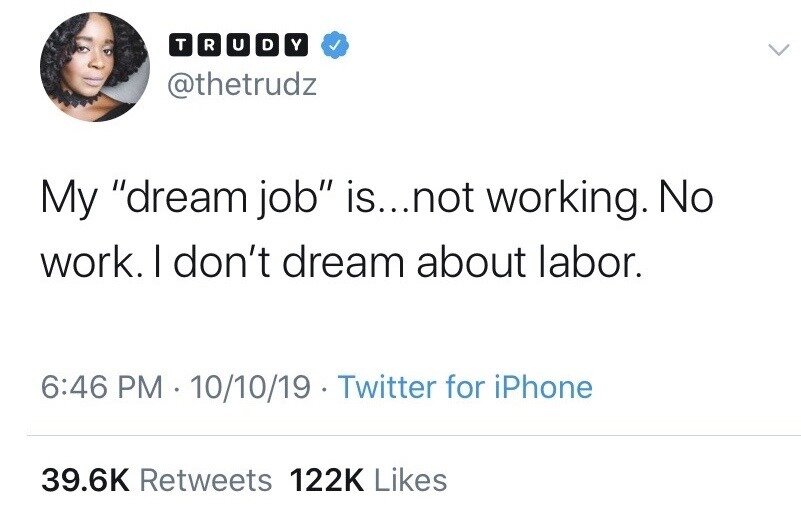
    I think I would run my own independent bookstore or be a guidance counselor for high schoolers. Or I’d be that one weird literature professor in the English department who openly loathes neoliberalism and teaches the tropical gothic canon. Ultimately, though, “I do not dream of labor.”

    I Do Not Dream of Labor

    What are you reading right now?

    I’m currently reviewing a memoir from She Writes Press about mixed-race identity, PTSD, and bipolar disorder, which will come out later this month. And I’m reading the latest translation of Albert Camus’s The Plague, which is the first English translation written by a woman!

    Hobbies outside of work?

    Reading . . . ? I mean, I read a lot outside of work. Thing is, I’m a very slow reader, so I can only get through about thirty books a year. Apart from reading, I write book reviews and short stories. I edit fiction for a small online literary journal. I guess outside of all things books, I enjoy teaching myself how to (properly, scientifically) cook, watching A24 films and Doctor Who, and hanging out with my dog. 🙂

    Nicole-Anne Keyton and Sassy

    Favorite book ever?

    How dare you.


    More About Nicole-Anne Keyton 

    Nicole-Anne Bales Keyton (they/she): Nicole joined Beacon’s editorial team in December 2019 and assists Editorial Director Amy Caldwell. Nicole received an MFA in creative writing from the University of Massachusetts-Boston and a BA in film from Virginia Commonwealth University. Nicole is a Kundiman fellow and the fiction editor for Vagabond City Lit. In their spare time, Nicole can be found writing short fiction, creating moody Spotify playlists, making zero progress with their endless TBR bookshelf, and hanging out with their dog, Sassy.

  • By Christian Coleman

    Film camera

    Photo credit: Alexander Fox

    Have you ever watched a Beacon book before? Grab your popcorn and your favorite seat for binge viewing because a handful of them have or will be taking to the screen as narrative films, documentaries, and TV miniseries! Here are five adaptations to cue up on your streaming accounts.


    An Indigenous Peoples’ History of the United States and Silencing the Past 

    With Raoul Peck’s Exterminate All the Brutes, you get a Beacon two-for-one special: Roxanne Dunbar-Ortiz’s An Indigenous Peoples’ History of the United States and Michel-Rolph Trouillot’s Silencing the Past: Power and the Production of History in one docuseries. Over the course of four episodes, Peck examines the history of Native American genocide and American slavery to reframe the overarching aftermath of European colonialism.

    Dunbar-Ortiz recalled on Beacon Broadside how she was stunned that the filmmaker she most admired in the world had read her book and made it a part of his series. “He said he had never conceived of United States continental imperialism,” she added, “only US imperialism, and of course, the thirty plus years that the United States occupied Haiti. He then asked me if I would work with him on it, with such humility in his voice, as if I might decline!” She joined the production as a consultant.

    Produced by HBO Documentary Films, Velvet Film, Sky Documentaries, and ARTE France, Exterminate All the Brutes aired on HBO on April 7, 2021.


    The Rebellious Life of Mrs. Rosa Parks

    It started with a Twitter thread. When author Jeanne Theoharis tweeted about Rosa Parks’s lifelong activism on February 4, 2019, filmmaker Johanna Hamilton caught sight of it and asked her if a documentary on Parks was already in the works. Just as surprised as we were that there was not, Hamilton brought in a second director, Yoruba Richen, to bring Theoharis’s NAACP Image Award-winning biography to the screen. Then Soledad O’Brien’s production company came to the project in 2020, and Peacock funded it this spring. Theoharis worked as a consulting producer.

    Theoharis had remarked on Beacon Broadside that working on it was a labor of love. She played a role in who was interviewed (watch for fellow Beacon author Dr. Mary Frances Berry as an interviewee), the questions asked, the kinds of places to look for archival materials, and many of the key details in this huge sweep of history that is Rosa Parks’s life of activism.

    The Rebellious Life of Mrs. Rosa Parks began streaming on Peacock this year on October 19.


    Kindred

    Long before and after Octavia E. Butler’s untimely death in 2006, her fans had been hankering for decades to see a novel of hers get the screen treatment, big or small. How could studios ignore the work of the first science-fiction author to be dubbed a MacArthur genius? Kindred is often the gateway to Butler fandom, and thus the most likely adaptation candidate. Now, the wait is finally over.

    Mallori Johnson, fresh out of Juilliard in her debut leading role, stars as Dana James—Dana Franklin in the novel—alongside Micah Stock, who plays her partner, Kevin Franklin, in the FX Networks TV series adaptation. Not to be confused with the British indie horror film of the same name but a completely different storyline or with the thriller Antebellum, which has a similar conceit of a modern-day Black woman mysteriously trapped on a Southern slave plantation. Butler’s time-travel classic came first. Speaking of the horror/thriller genre, notice how Kindred has recently entered the horror canon and how this teaser is clearly targeting Jordan Peele fans.

    MacArthur fellow and playwright Branden Jacobs-Jenkins adapted Butler’s novel and serves as the showrunner. He also executive-produces the series with Joe Weisberg, Joel Fields, Darren Aronofsky, and Ari Handel of Protozoa Pictures; Courtney Lee-Mitchell; and Jules Jackson. Janicza Bravo directed and executive-produced the pilot episode. All eight episodes of season one—there are plans for a second season!—will be available to stream on Hulu on December 13. How heartbreaking, though, that Butler isn’t alive for this.


    Storming Caesars Palace

    Storming Caesars Palace

    In Storming Caesars Palace: How Black Mothers Fought Their Own War on Poverty, Annelise Orleck penned the story of Ruby Duncan and other revolutionary Black women welfare organizers of Las Vegas who spearheaded an evergreen, radical revisioning of American economic justice. Their trailblazing movement proved that poor mothers were the real experts on poverty, providing job training, libraries, medical access, daycare centers, and housing to the poor in Las Vegas throughout the 1970s. As today’s news fills with headlines about workers fighting for livable wages, the lives of these hidden figures prove to be all too relevant.

    Orleck’s book is the inspiration for filmmaker Hazel Gurland-Pooler’s first feature-length documentary of the same name. Honored with the Ken Burns/Lavine/Library of Congress finalist prize, it had its premiere at the BlackStar Film Festival on August 3, 2022, and will air on PBS on March 20, 2023.


    Being Heumann

    Being Heumann pb

    Disability rights activist Judy Heumann already appeared in the Oscar-nominated documentary Crip Camp, so it was only a matter of time until her life story stoked filmic interest. Her personal story of fighting for the right to receive an education, have a job, and just be human shined a light on the long-overlooked history of the Disability Rights Movement in the United States.  

    A year before director Siân Heder’s film CODA took home three Oscars, news broke that Heder was adapting Heumann’s memoir, Being Heumann: An Unrepentant Memoir of a Disability Rights Activist, as a biopic for Apple Original Films. She is producing it with David Permut through his Permut Presentations and Heumann’s managers, John W. Beach and Kevin Cleary of Gravity Squared Entertainment. Heumann and her coauthor, Kristen Joiner, are joining the crew as executive producers.

    Tony Award-winning actor Ali Stroker has been eyed, though not confirmed, to star as Heumann. She did, however, portray Heumann in Drunk History’s enactment of the Section 504 sit-in. We book groupies can dream.

    Film camera


    About the Author 

    Christian Coleman is the digital marketing manager at Beacon Press and editor of Beacon Broadside. Before joining Beacon, he worked in writing, copy editing, and marketing positions at Sustainable Silicon Valley and Trikone. He graduated from Boston College and the Clarion Science Fiction & Fantasy Writers’ Workshop. Follow him on Twitter at @coleman_II.