• By Kyle T. Mays

    Malcolm X

    Ed Ford, New York World-Telegram and Sun

    To celebrate Malcolm X’s birthday, we thought we’d take a closer look at one of the key tenets of the radical civil rights icon’s advocacy for Black liberation in these passages from Kyle T. Mays’s An Afro-Indigenous History of the United States. Land ownership. It’s important to see how Indigenous peoples’ conception of land fit—or didn’t—in his grand scheme of Black people laying claim to land.

    ***

    I have read The Autobiography of Malcolm X every summer since I was sixteen; it is my favorite book. During a particularly difficult time in my life, my Advanced Placement US history teacher, Mr. K., gave me a copy of the book after trying to get me to talk to him about my situation. For reasons I don’t remember, I did not want to hear from this white man! He pulled out of his bag an original copy of The Autobiography. As he handed it to me, he said, “I’m white, and I know you’ve completely tuned me out. But I’m going to give you this old copy of The Autobiography of Malcolm X. I hope it helps.” I went home that day and read it all within a few days. I could not put the book down. How Malcolm, without apology, described racism and its source helped me see clearly for the first time in my life why I was often very angry. Racism had impacted my life in ways I had never really thought about, and Malcolm gave me the language to understand it. The book changed my life.

    During this past summer, while doing my annual re-reading, I was struck by how Malcolm discussed Indigenous people and histories. Malcolm described to Alex Haley how he would go “fishing” for potential new converts, tell them about the history of the “white man’s crimes” and why Islam was the religion for the Black man. He made a brief reference to Manhattan: “Go right on down to the tip of Manhattan Island that this devilish white man stole from the trusting Indians for twenty-four dollars!” There are two points here. First, where did Malcolm learn this? Second, it suggests he was at least vaguely familiar with Indigenous histories of New York City, though he mistakenly framed Native people as trusting, docile, and without agency.

    In another part of the book, the local hustlers taught him how to live a life of crime; they also explained to him histories of Harlem’s demographic change over time. Hustlers explained that Harlem was first a Dutch settlement; then came the Germans, then the Irish and Italians, and then Jews. “Today, all these immigrants’ descendants are running as hard as they can to escape the descendants of Negroes who helped to unload the immigrant ships.” Malcolm continued, “I was staggered when old-timer Harlemites told me that while this immigrant musical chairs game had been going on, Negroes had been in New York City since 1683, before any of them came.”

    In Malcolm’s framing, these European immigrants came to the US, importantly, as settlers who displaced Black Americans who, in his estimation, have a more legitimate, even indigenous connection to New York. By mentioning that Black folks were there first, he was, in essence, asserting Black claims to New York’s origins. This historical rendition tells us about Black relationship to land, but it also suggests a form of ownership, or that Black people were the original people. Malcolm said nothing of the Indigenous inhabitants, who would have been the Munsee Delaware. “Manhattan” is an Indigenous word that means, “the place where timber is procured for bows and arrows.” It is one of the few names found on early colonial maps in New York that has never been removed.

    Malcolm used a variety of discourses concerning Black peoples’ relationship to the United States, which seemed revolutionary and contradictory. At times, they centered on Black peoples’ relationship to place. At other times, he connected to the diaspora. And then at others, he offered direct critiques of US colonization and empire. Ultimately, he was concerned with the condition of blackness and belonging in the US.

    MALCOLM X’S BLACK BELONGING

    Malcolm’s style, frankness, and ability to “make it plain” for his audience made him one of the more well-known, if not beloved, Black activists of the 1960s. As a result, he remains, among a wide range of activists, from Black nationalists to communists, an icon long after his death. Although he did not invent the Nation of Islam or its rhetoric of Black supremacy, his efforts made that discourse open to both the Black and white public spheres, with mixed results. Yet, as powerful a rhetorician as he was, Malcolm X was, on the one hand, a powerful voice of the Black oppressed, and, on the other hand, an uncritical participant in settler-colonial discourse, at least early on in his political development. In other words, he accepted the European American belief that Native people had disappeared. Malcolm based his belief that the US government owed Black people land on two conclusions: one, because Native people were “invisible” as a result of being duped out of their land, the US government had land that it could entrust to Black people; and two, Black folks had earned a right to land through their labor during slavery.

    Malcolm believed that Black separation from whites was essential for Black freedom. That is, white Americans were not going to truly accept Black people into their society; therefore, they should have land of their own. While civil rights activists sought to reform US society so that it would become integrated, Malcolm reminded Black people that they weren’t anything more than second-class citizens, and would never be full citizens because, unlike white people, Black people “didn’t come here on the Mayflower.” Instead, he reminded them, they were brought here by the architects of US democracy.

    He also argued that Black people were owed land because of their exploited labor and the blood they had shed in wars. Black people had indeed fought in every war since the American Revolution, for the ability to be a citizen of the US. Black people had made a “greater sacrifice than anybody” and had “collected less” than any other group. For this reason, Malcolm believed no one deserved land more than Black people. Malcolm’s argument exists in certain Black nationalist discourses today, including that of the American Descendants of Slavery, or ADOS. Let’s sit back and think about the implications of Malcolm’s argument. If Black people deserve land, what about the Native people who were forcibly removed from those southern states? It is a question that Black nationalists have rarely, if ever, truly engaged with. In other words, we can’t uncritically assert Black land ownership without understanding the possibilities of continuing the ongoing genocide and land theft against Native people.

    Malcolm’s belief in a separate land for Black people made a lot of sense. If a nation-state that purports to uphold democracy, equality, and freedom does not actually do so in practice, and if Black folks are barred from voting and participating in civic life, why wouldn’t you advocate for separation? However, Malcolm’s erasure of Indigenous histories and rights would have benefited his case greatly.

    ~~~

    Perhaps Malcolm best articulated the importance of Black land as an integral part of Black liberation in a speech delivered in Detroit. That speech, titled “Message to the Grassroots” and given on November 10, 1963, remains perhaps one of his most eloquent public speeches on the necessity of a Black revolution. In this speech, he spends significant time outlining his historical understanding of revolution, including the American, French, and Russian Revolutions. While many read this speech as an outline of Malcolm’s belief in the need for revolutionary violence—juxtaposing it against the use of nonviolence—I understand this speech to be a call for Black land ownership in the US, different from the vision of Elijah Muhammad. While Muhammad wanted a separate land in order to build a Black nation, it was solely so it could be left alone. Through his reading of historical revolutions, Malcolm, on the other hand, believed the only way to get land was through revolution. For Malcolm, land was a necessary condition of Black liberation in the United States.

    Malcolm began “Message to the Grassroots” by stating, “I would like to make a few comments about the difference between the Black Revolution and the Negro Revolution.” To make this argument, he defined the term “revolution” by offering historical examples. Malcolm explained, “When you study the historic nature of revolutions, and the methods used in a revolution, you may change your goal and you may change your mind.” He continued, and here I quote at length:

    Look at the American Revolution, in 1776. That revolution was for what? For land. Why did they want land? Independence. How was it carried out? Bloodshed. Number one it was based on land—the basis of independence. And the only way they could get it, was bloodshed. The French Revolution, what was it based on? The landless against the landlord. What was it for? Land. How did they get it? Bloodshed. Was no love lost, was no compromise, was no negotiation. I’m telling you, you don’t know what a revolution is, cause when you find out what it is, you’ll get back in the alley, you’ll get out of the way. The Russian Revolution, what was it based on? Land. The landless against the landlord. How did they bring it about? Bloodshed. You haven’t got a revolution that doesn’t involve bloodshed.

    While he is simplifying the goals of these revolutions for his particular audience, his point should not be understated. Malcolm was very adept at discussing political revolutions on the African continent and throughout the underdeveloped world. His discussion of land poses a difficult question that he, and those that tried to follow his logical conclusion after his assassination struggled with: How can you compare the decolonization efforts occurring on the African continent with what should happen in the US, given that the US was not Black land? Decolonization efforts on the African continent happened on Africans’ land, marking a fundamentally different situation than what Black people faced. Indigenous people in the US settler society did not even register in these analyses except as they related to the white-constructed idea that white people had simply wiped out all of the Indians. While attempting to place the Black American struggle within worldwide efforts for liberation, Malcolm and others participated in discourses of omission.

    Malcolm’s discourse of Black belonging as it related to land unfortunately perpetuated racial projects in the US—one that was based upon a Black and white racial binary, as well as a very masculine, settler idea of how land should be utilized. Though going global in his analyses and pointing toward a connection with the Global South and peoples’ attempts to rid themselves of colonialism, he failed to clearly understand the actual social and political conditions in a land they called home. Malcolm’s reference to the American Revolution presents another point of contention. In one sense, yes, that revolution was about land. But once the revolution was won, they needed to remove Native people to secure that land. Furthermore, Native peoples participated in that fight with their own agendas of maintaining land, on both the American and British sides. Though unable to develop fully his ideas for Black liberation, Malcolm did develop an elementary rubric for placing Black Americans within the global struggle for human rights.

    In the last two years of his life, especially after his split from the Nation of Islam and Elijah Muhammad, Malcolm X exemplified a greater analysis of the Black American condition within the larger international struggle against colonialism. He discussed the North Vietnamese’s fight for freedom and traveled extensively throughout the African continent. Speaking with dignitaries like Jomo Kenyatta and Kwame Nkrumah, he saw firsthand how they challenged European colonialism. As a result, he framed his own thinking about the Black American condition within colonial terms. Yet, this framing and analysis begs the question: How can you discuss Black Americans as primary settler-colonial subjects when the US is (1) a settler-colonial state and (2) Indigenous people still lived on this land? Yes, everyone is impacted by settler colonialism, but the experiences of people vary, especially if this is not one’s land. While we cannot have expected Malcolm to be all-encompassing in his understanding of colonialism, his thinking was responsible for a generation after him who continued to frame the Black American condition in colonial terms, even while they acknowledged that those terms were imperfect.


    About the Author

    Kyle T. Mays is an Afro-Indigenous (Saginaw Chippewa) writer and scholar of US history, urban studies, race relations, and contemporary popular culture. He is an Assistant Professor of African American Studies, American Indian Studies, and History at the University of California, Los Angeles. He is the author of Hip Hop Beats, Indigenous Rhymes: Modernity and Hip Hop in Indigenous North America and An Afro-Indigenous History of the United States. Connect with him online at kyle-mays.com, on Twitter (@mays_kyle), and Instagram (@mayskyle).

  • A Q&A with Eboo Patel

    Eboo Patel

    As the founder and president of Interfaith America, Eboo Patel is perhaps best positioned to advise future leaders, activists, and everyone who wants to make sure their actions have a positive impact. An American Muslim and the son of immigrants, Patel grew up in the Midwest and spent his formative years denouncing white supremacy and critiquing the system. A challenge by a mentor to build the change he wanted to see shifted his direction and approach to accomplishing change. As he writes in his latest book, “Uncompromising methods are not the only strategy for social change. There are moments for stridency and moments for melody.” Patel has spent the last twenty-five years constructing one of the most impressive civic institutions of our time. As an organization, Interfaith America is dedicated to engaging the great challenge and opportunity that is American religious diversity and moving the needle toward more widespread interfaith cooperation.

    The product of his years spent creating alliances, We Need to Build: Field Notes for Diverse Democracy lays out how to approach movement building with empathy and a new form of self-awareness—emphasizes the power of listening, learning from what you hear, and being unafraid of missteps in the journey towards collective growth. Beacon Press senior publicist Bev Rivero caught up with him to chat about it.

    Bev Rivero: You have over twenty-five years of fieldwork experience, and in many ways, this latest book is a roadmap to navigating this work. What is one practical lesson you would like to see people who work in advocacy take from We Need to Build? And one for those who just want to make a difference?

    Eboo Patel: Always remember: the goal is not a more ferocious revolution; the goal is a more beautiful social order. Those of us in advocacy have signed up to be the architects of a better society, not just tell other people what they are doing wrong. We need to defeat the things we do not love by building the things we do. What does a better school look like? What does a working grocery store in a food desert look like? A public health agency that takes care of the poorest and most marginalized? Let’s get busy building those things where they do not exist and running them well where they do exist. You can protest bad things out of existence, but if you want good things, you have to build those.

    My advice to people just starting out: Be part of something positive that builds things up and brings people together. Become the assistant coach of a team, participate in a Habitat for Humanity build, help out at a community theater, tutor kids. And then think about how to start a team, or a theater, or a Habitat for Humanity program in a place that doesn’t have one and really needs it.

    BR: As a Muslim American who has led a public life working for interfaith cooperation, what has been one of the most hopeful changes you have seen over the past years? How do you feel about the future of civic leadership and faith in progressive movements, and more broadly, in American culture?

    EP: There are so many more Muslims who hold visible roles and are involved in public life now than there were ten or fifteen years ago. I love hearing the name Leila Fadel when I turn on NPR! There are two great Muslim foundations, Pillars and the El-Hibri Foundation, that fund great work. Zaytuna is an accredited Muslim college. There are a lot of Muslim American social entrepreneurs and a handful of remarkable Muslim civic organizations, like the Inner-City Muslim Action Network that proudly serves a much wider community than just Muslims. There are novelists like Ayad Akhtar and great nonfiction writers like Haroon Moghul.

    This is all a part of the emergence of Interfaith America, which is both the name of the nonprofit institution I run and the era of American history that we are in—the chapter after ‘Judeo-Christian’. There is still Islamophobia and other forms of religious prejudice, of course, but I’m grateful that more and more people are recognizing the dangers such bigotry poses. We Muslims have to love Islam more than we hate Islamophobia. We have to be guided by the positive light of our faith, not driven by anger at those who are ignorant or even malicious. Overall, I’m quite hopeful.

    BR: In your epilogue, which is a letter to your sons, you underscore: “I do not want you to feel like the only story to tell about your brown skin, ethnic heritage, and Muslim faith is a story of marginalization.” What advice would you give to those who feel challenged to look beyond the narratives of marginalization?

    EP: The last time I called myself oppressed, I was in a taxi with my dad in the city of Bombay, India. I told him how marginalized I felt as an Indian American at Oxford (I was a graduate student there at the time), as if the British Empire were oppressing me the way it colonized our ancestors. My dad’s response was to point to a leprous child, missing one arm and sticking his other hand out asking us for pennies, and saying, “If you’re oppressed, what would you call him?” It was a humiliating moment for me. Because, of course, that beggar child and I do not at all occupy the same category. India is full of leprous beggar children. There are probably tens of millions of them. And I’ve traveled enough to have seen abject poverty in many other parts of the world: Nairobi, Casablanca, Johannesburg, Amman, Mexico City—hell, Chicago, Memphis, and Los Angeles.

    The point is: we should not be in a conspiracy against our own agency. Yes, systems need to change, but it’s not like anybody reading this is totally helpless, at least not the way that beggar child is helpless. Half the world lives on less than $5.50 a day. We have a lot more power to improve our own lives than most people do. If you are physically healthy and college educated in America, you are one of the luckiest people in human history. Let’s embrace our privilege and ask ourselves what responsibility we have to help others. A responsibility that I believe includes building better institutions.

    BR: In your chapter “Be Careful Turning Identity Categories into Ideological Categories,” you write: “Telling someone else who they are—or more accurately, who you want them to be—is the height of presumptuousness.” It often feels like there are a lot of pervasive assumptions about identity and experience made on behalf of others. How would you advise us to move out of that tendency either linguistically or in one’s own frame of reference?

    EP: We have to remember that people are not like Russian nesting dolls. You can’t assume a person’s politics or aesthetic preferences or how they feel about the police simply from their race, gender, religion, or sexuality. All the survey data tells us that identity groups have profound internal ideological diversity.

    Kwame Anthony Appiah had a great essay where he essentially said we need to stop using the formulation ‘As A’. That simple phrase can be highly dangerous when it is used as a way of positioning yourself as a spokesperson for a community of millions and millions, a community which almost certainly did not elect you to represent them. Furthermore, ‘As A’ and similar phrases can be a subtle way of creating a standard of authenticity—‘This is the right kind of politics for an immigrant to have, and if you feel a different way, you are not a real immigrant.’ I think all people, progressives especially, should have enough respect for other individuals to allow them to decide what’s the right way of being for themselves.

    BR: People speak often about the best qualities a leader can have. What about the qualities that builders should seek to attain? Is there a difference?

    EP: There are many types of leaders, and a builder is one type of leader. It’s the type that I happen to be. Builders create and operate institutions. I think the good society is defined, simply, as a society with a network of good institutions. To be the builder of one of those institutions, you need to have a vision for its purpose and function, a blueprint for how to build it, the ability to work with others to make it happen, and the skills to build yourself. In my book, I walk through the process of how we built the organization Interfaith America and highlight the leadership of many other builders as well, most notably Reverend Jen Bailey, who built the Faith Matters Network, and Jane Addams, the architect of Hull House.

    BR: You’ve spoken about how even those on the margins of faith have a role in religious diversity, by building awareness about those around them, to best serve their needs, and work in cooperation with them. In some ways, We Need to Build reads like a vision for this to be applied to our cultural vision of democracy. What does this look like in practice?

    EP: If you’re a doctor and you’re an apatheist—you don’t have a tradition yourself, and it’s not important to you—but you’re working with a Muslim who says, “I need to leave for ten minutes for the midafternoon prayer,” or you’re working with an Orthodox Jew who says, “I can’t eat anything unless it’s kosher,” or you’re working with a Hindu who says, “I can’t eat anything unless it’s vegetarian,” and you’re treating a Buddhist patient, to be good at your job, you need to have a radar screen for religious diversity. You need to make sure your colleagues can eat and pray. You need to make sure that your Buddhist patient’s religious convictions are being cared for. Diversity is not just the differences you like, or even the identities you think are important. Diversity is engaging the identities that other people think are important. This is what it means to live in Interfaith America. It is wonderful—and it is challenging!


    About Eboo Patel

    Eboo Patel is founder and president of Interfaith America, the largest organization engaging religious diversity in the United States. He is the author of five books on diversity and democracy, including We Need to Build: Field Notes for Diverse Democracy, a regular contributor to the conversation on the role of religion in public life, and a frequent keynote speaker. He lives in Chicago with his wife Shehnaz and two sons. Follow him on Twitter (@EbooPatel).

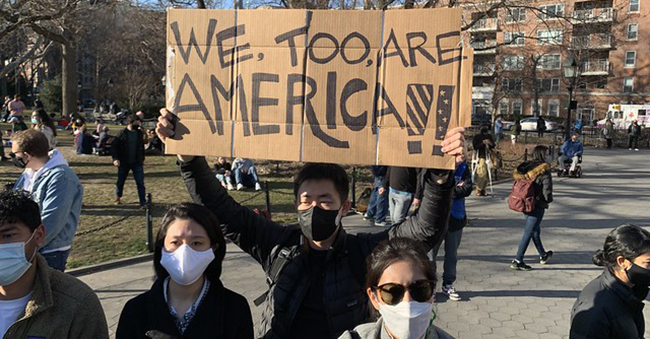
  • WSP Vigil for Asian Americans, Asians for Abolition, March 20, 2021. Photo credit: Andrew Ratto

    WSP Vigil for Asian Americans, Asians for Abolition, March 20, 2021. Photo credit: Andrew Ratto

    Still kicking two years in, COVID brought out the worst from the nation’s populace: racist brutality against marginalized communities. This year’s Asian American and Pacific Islander Heritage Month commemorates the victims of the 2021 spa shootings as well as all other Asian Americans and Pacific Islanders lost to anti-Asian violence during the pandemic and throughout history. This violence is a form of erasure. As historian Catherine Ceniza Choy writes in her forthcoming volume in Beacon Press’s ReVisioning History series, “This positioning of Asians in opposition to American identity and experience is perhaps most powerfully expressed through the erasure of their long-standing presence in the United States and their contributions to its various industries.” And so, this year’s recommended reading list—by no means exhaustive—is a spotlight on our Asian American authors, the rich diversity of Asian American communities, and their contributions to US history. Because they, too, are America.


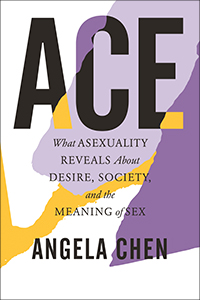
    Ace

    Ace: What Asexuality Reveals About Desire, Society, and the Meaning of Sex

    The ace world today has become broad enough to include many types of people. There are many types of aces, for one, who describe ourselves as sex-repulsed, sex-indifferent, or sex-favorable depending on how averse we are to sexual material and sexual activity. The ace world also includes people who identify as gray-asexual, or gray-A, a more catchall phrase that encompasses experiences like only occasionally experiencing sexual attraction or not experiencing it very strongly.
    —Angela Chen


    Asian American Histories of the United States

    Asian American Histories of the United States

    Asian American history begins in the here and now, as well as over 150 years ago in the mid-nineteenth century. It begins in Asian continental lands and waterways as well as in urban, suburban, and rural areas of the United States. The Asian American experience stretches back as well as forward in time and space. It crisscrosses over time periods and over lands, oceans, and waterways. Where and when we enter are complex questions.
    —Catherine Ceniza Choy


    Common Grace

    Common Grace: Poems

    In the rush of autumn wind, a student reads Chaucer on the banks of the Charles. Her morning
    desk: a sunlit bench with notebooks, blue water bottle, a ziplock bag of Wheat Thins. An old
    woman with a metal cane limps to the bench, scrunching amber leaves underfoot. She liberates
    a surge of Ukrainian as if she never left her country: family, friends, war zones. The student
    collects her things to one side, stretches a tiny smile—no eye contact—returns to ninety-five
    pages due tomorrow. The woman continues her Slavic monologue, pulling a gray sweater from
    her canvas bag. Surrendering to the disruption—now an armhole struggle—the student helps
    the woman with gentle tugging and smoothing. An accented Thank you, a closed book on the
    bench, they exhale with the wind and watch a crew team glide across the water.
    —Aaron Caycedo-Kimura, “Common Grace”


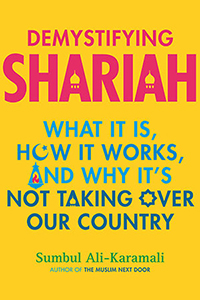
    Demystifying Shariah

    Demystifying Shariah: What It Is, How It Works, and Why It’s Not Taking Over Our Country

    When I think of shariah, I don’t think of something cruel and vicious. I think of justice, feminism, defense of the weak and defenseless, and a commitment to the rule of law. I’m well aware that these words might be taken by too many to be some sort of joke. But that’s because few non-Muslims possess even the most rudimentary understanding of shariah.
    —Sumbul Ali Karamali


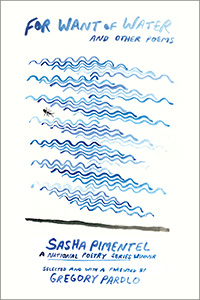
    For-Want-of-Water

    For Want of Water: and Other Poems

    The violins in our home are emptied
    of sound, strings stilled, missing
    fingers. This one can bring a woman down
    to her knees, just to hear again
    its voice, thick as a callus
    from the wooden belly. This one’s strings
    are broken. And another, open,
    is a mouth. I want to kiss
    them as I hurt to be kissed, ruin
    their brittle necks in the husk of my palm,
    my fingers across the bridge, pressing
    chord into chord, that delicate protest—:
    my tongue rowing the frets, and our throats high
    from the silences of keeping.
    —Sasha Pimentel, “If I Die in Juárez”


    Memes to Movements

    Memes to Movements: How the World's Most Viral Media Is Changing Social Protest and Power

    Memes are the street art of the social web, and, like street art, they are varied, expressive, and complex, and they must contend with the existing politics of our public spaces. Sometimes this is silly, sure. And that’s pretty wonderful. Not so wonderful is that meme culture often reinforces the powerful, with sometimes terrifying efficiency. But sometimes, memes help make transformative, positive changes to society.
    —An Xiao Mina


    Prisons Make Us Safer

    “Prisons Make Us Safer”: And 20 Other Myths About Mass Incarceration

    Prisons have proven again and again to be an ineffective intervention. First, we must remember that incarceration is a form of punishment and incapacitation that happens after harm has occurred, not before. We must also remember that incarceration addresses only certain types of harm. . . So when confronted with the statement that prisons provide safety, we should ask, Safety for whom? And from what?
    —Victoria Law


    Two Billion Caliphs

    Two Billion Caliphs: A Vision of a Muslim Future

    This book describes what Islam has been and what it is, who its heroes are, what its big ideas are. Not only to tell you about the past or the present, but to create a future. This book prescribes outcomes. It advocates for a way of being Muslim in the world. It offers Muslim thoughts for coming generations, fashioning an interpretation of Islam of and for the years ahead, the kind of religion we deserve, with echoes of the confident faith we once had. For Islam was a religion of love and, more than anything, I want it to be (itself) again. I want that vulnerability, that longing, that bond of kinship, and that tug of romance to be at the very heart of my faith.
    —Haroon Moghul


    The Upstairs Wife

    The Upstairs Wife: An Intimate History of Pakistan

    I had never known that a man could have two wives. I had never been to a second wedding or met a second wife. In the days after the revelation, the idea swirled in my head, expanding into a sensational epic of injustice. Every night, under the blue flowered quilt my grandmother had made just for me, I tried to imagine what a wedding would be like for a man who already had a wife. Frustrated by my limited experience, the mysterious “other” wife erupted dark and powerful and witchlike in my head. Bedecked in bridal finery and cunning, she cast a spell that sentenced Aunt Amina to a solitary chamber under a curse of silence. With his first wife gone, she tricked her new husband into believing that she was a better wife and that his old wife was dead, or disappeared.
    —Rafia Zakaria


    We Need to Build

    We Need to Build: Field Notes for Diverse Democracy

    The brand of social change I’ve always found more inspiring is the kind that seeks the best for everyone, including the people you consider your enemies. I think this is the great genius of Martin Luther King Jr. King realized that, in a democracy, you have to live with the people you defeat. They get to vote, to advocate for their views, to amass power, to do all the things that you get to do. If you say that the new world you are building has no place for them, why would they journey with you to that place? If you insist that they will never rise above their worst qualities, how will they ever know they have better ones, let alone aspire to embody those?
    —Eboo Patel

    WSP Vigil for Asian Americans

  • By María de los Angeles Torres

    Operation Pedro Pan: Cuban children waiting in line to emigrate

    Operation Pedro Pan: Cuban children waiting in line to emigrate. Photo credit: DFELIX

    After a contentious campaign that ignited strong debate specially among Pedro Pans—Cuban children who came to the US unaccompanied in the early sixties—Governor DeSantis of Florida is poised to sign a new law effectively banning shelter for recent unaccompanied immigrant minors in the state fleeing violence in their homeland. 

    Many Pedro Pans, including myself, believe today’s unaccompanied immigrant children are equally deserving of asylum while others of us have supported this law out of the false notion that Cubans are an exceptional case. But the facts speak otherwise, and the similarities between Pedro Pans and the children DeSantis plans to bus out of the state are revelatory.

    In 1961, when I was six years old, my parents made the difficult decision to send me as part of what became known as Operation Pedro Pan. The Cuban revolution they supported had turned autocratic and violent. Schools, including the one I attended—Nuestra Señora de Lourdes, near our home in La Vibora—had been shut down. A US invasion had failed, many of our friends had been arrested, and summary trials often led straight to the firing squad. The killing of Virgilio Campaneria, a seventeen-year-old family friend, tipped my parents towards exile. Many unaccompanied minors today also face violence in their countries, including the possibility of being killed. Their parents, just like mine, make the heart-wrenching decision to send them abroad.  

    Then, as now, there were no established legal channels by which the United States could accommodate us. Federal agencies involved in the war against Castro operated multiple classified visa-waiver programs skirting existing legal channels. One was aimed at minors and anyone under the age of sixteen, who with a mimeographed letter signed by a Catholic priest granting a visa waiver, were allowed entry into the US. This became the quickest way to leave. Once in the United States, papers would be filed on our behalf for our parents to receive waivers, provided they passed a security check. 

    Over an eighteen-month period, more than 14,000 unaccompanied Cuban children made it to the United States. More than half of us reunited with relatives here. Others were placed in the care of the Catholic Welfare Bureau, a predecessor of Catholic Charities. In 1962, immigration doors for Cubans were shut, and at least 8,000 minors already here were unable to reunite with their parents for years. 

    Despite heightened national sentiment against communism at the time, popular opinion about our arrival was mixed and has remained so. As news of our secret immigration program leaked out, Congress received hundreds of letters from irate Americans complaining bitterly about spending taxpayer dollars on foreigners particularly paid through the Catholic Church. Others worried that we could be “communist spies sent to infiltrate the US,” and Miami politicians complained that we would “change the complexion of the City.”

    Despite this pressure, three Presidents continued to give us shelter and, even more importantly, allowed us to “claim” our parents. Ours was a well-funded program; it reflected our nation’s ideals and generosity.

    Immigration now has become a wedge issue that corrupts the very essence of the American experience, one that DeSantis and so many others have embraced. In contrast, Congress passed the Immigration and Naturalization Act of 1965 which made family reunification the cornerstone of US immigration policy and, a year later, the Cuban Adjustment Act, legalized our status. This welcoming history begs the question that what makes us exceptional is the treatment we received, not the circumstances we fled.

    Communism has faded as a national security concern, but new threats to hemispheric democracies, particularly from narco-traffic violence in Latin America and the Caribbean, are fueling an exodus of unaccompanied minors. It is shameful that many government officials, politicians, and even some former Pedro Pans, are willing to abandon the very same democratic societal values that led to our being welcomed in this country. 

    Years ago, when Operation Pedro Pan group was under the leadership of its founder, Elly Chovel, conferences were organized in which we could debate different perspectives and share our memories, including the painful ones. In one such encounter, Olga Levy-Drucker, author and child survivor of the Holocaust who had been saved by Kindertransport, said to us that we all had a common past. I objected, saying that while the situation in Cuba was horrible, it could not be compared to the Holocaust. She thought for a moment and responded: There were differences, but that regardless of these, as children we had all experienced fear and we had suffered separations from our parents, and these shared human experiences were what brought us together. Unfortunately, this lesson was never learnt by Governor DeSantis and forgotten by some Pedro Pans.


    About the Author 

    María de los Angeles Torres is a distinguished professor of Latin American and Latino Studies at University of Illinois Chicago and author of The Lost Apple: Operation Pedro Pan, Cuban Children, and the Promise of a Better Future, Beacon Press.

  • Tulips

    Image credit: S. Hermann & F. Richter

    Bring out your flower bouquets and your brunch reservations! This Sunday is Mother’s Day, and we’re bringing the books to take you into the weekend and beyond. These books show how every kind of mother needs to be valued and supported in the catch-all societal stew we call the US. Mothers of color. Immigrant mothers. Mothers who become parents at a young age. Mothers separated from their families because of incarceration. Mothers challenging the medical establishment about misconceived notions of disability. House mothers who form found families to take in queer and trans children disowned by their biological parents. These are titles to gift to your mother, to be read with your mother, with those who want to be mothers, those who want to better understand their mothers, those who understand where other mothers are coming from. Cheers!


    And-the-Category-Is

    And the Category Is . . .; Inside New York’s Vogue, House, and Ballroom Community

    [A]t its core Ballroom is an answer to an act against nature: parents disowning their children. . . . [B]all culture was started by defiant trans ladies like Crystal LaBeija and then jettisoned through the twentieth century and into the future by trans mothers like Pepper LaBeija, Dorian Corey, Avis Pendavis, Angie Xtravaganza, and countless others who instilled in their houses and children unique traits and values that are the very life essence and lineage of the culture.
    —Ricky Tucker


    Breathe

    Breathe: A Letter to My Sons

    I am indignant at their pitying eyes. I do not want to be their emotional spectacle. I want them to admit that you are people. Black boys. People. This fact, simple as it is, shouldn’t linger on the surface. It should penetrate. It often doesn’t. Not in this country anyway. But no matter how many say so, my sons, you are not a problem. Mothering you is not a problem. It is a gift. A vast one. A breathtaking one, beautiful. One that makes me pray for an unmercenary spirit about what I am here to do, never considering it a burden or worthy of particular praise. Mema, your grandmother, said it this way, “Mothering Black boys in America—that is a special calling.” How do I meet it? What is it like?
    —Imani Perry 


    Entry Lessons

    Entry Lessons: The Stories of Women Fighting for Their Place, Their Children, and Their Futures After Incarceration

    In reality, across the US, corrections officials and child welfare workers rarely inquire or even think about how incarceration will negatively impact the parent-child relationship during the possible phases of trial, sentencing, and prison intake. And here, as parents facing incarceration, the consequences for women differ radically from those experienced by men. Although all mothers and fathers have to cope with separation from their children, for men, there’s usually a woman on the outside—mothers, wives, girlfriends—to care for their offspring . . . [W]hen women are locked up, families are splintered, and the upheaval affects communities as well. Children all too often lose any sense of permanence and feel they don’t belong anywhere. They stop attending school, feeling unmoored and uncertain, emotions they share with their mothers. And despite all the upheaval, there is simply no support and no reentry planning for women and their children once mothers are incarcerated.
    —Jorja Leap 


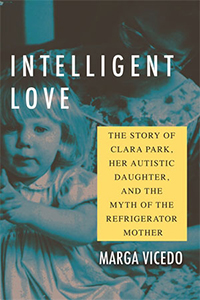
    Intelligent Love

    Intelligent Love: The Story of Clara Park, Her Autistic Daughter, and the Myth of the Refrigerator Mother

    In challenging the view that she had caused her child’s autism, Clara defended the value of intelligent love. In doing so, she put her finger on a central assumption in autism literature that blamed mothers. All the researchers working on children’s emotional development, from Erik Erikson to René Spitz, from Margaret Ribble to John Bowlby, from Leo Kanner to Bruno Bettelheim, claimed that children needed “natural” love—some kind of raw, instinctual feeling that should not be sullied by a mother’s other interests. But none of those researchers had explained why this type of maternal love, love that was untainted by intellectual and professional aspirations, is richer and more nurturing than other types of love. None of them had explained why the intellect and the emotions are in conflict with each other. Clara thought they were not, even in childrearing.
    —Marga Vicedo 


    Ma Speaks Up

    Ma Speaks Up: And a First-Generation Daughter Talks Back

    [My mother] was just foreign, from another country, another time, another world. She couldn’t be my mother, this alien, this immigrant. I read books. She hated books. I loved words. She fought furiously, hopelessly with the English language, losing every round, retiring into defeated, bitter silence in her corner while I performed a jeering victory dance in mine, fists raised triumphantly, oblivious to my own privilege. She wanted to enfold, to care for the child that was finally hers and hers alone. But every photo of me from the time I could stand shows a stick-limbed child moving away from her, scrabbling out of her arms, fighting to hold onto myself so she couldn’t engulf me in a molasses tidal wave, knocking me over, stealing my breath, drowning me in a flash flood of her sticky love.
    —Marianne Leone


    Mothercoin

    Mothercoin: The Stories of Immigrant Nannies

    These women’s stories reveal that the mothercoin is not an industry or an immigration pattern, but an approach to value. The invisibility is what does the harm, the insignificance attributed to the work and to the woman and to the choices she has confronted. When the work is swept under the rug, so are the cultural expectations about a woman’s place in the home, on the job. When the woman is little more than a household expense, her landscape of choice succumbs to the cold reality of supply and demand and her humanity is compromised by a hierarchy of value that pits the faces of the mothercoin against each other: presence against protection, labor against love. The deepest damage comes from a language that paints these conflicts as the result of her own choices.
    —Elizabeth Cummins Muñoz 


    Parenting with an Accent

    Parenting with an Accent: How Immigrants Honor Their Heritage, Navigate Setbacks, and Chart New Paths for Their Children

    It really hit when I first held my baby in my arms. Suddenly, Russian seemed like the most intuitive way to speak to her. It felt like home. Whenever my daughter and I watched cartoons from my childhood together, my eyes welled up with tears. I wanted to dig up family recipes, to hum to her the lullabies my grandparents sang and their parents sang before them, to whisk her away into a familiar world, safe and secure, as seen through the eyes of a child. This nostalgia had nothing to do with politics. I’m not a supporter of Russia’s human rights violations or foreign policy. If my relationship with the motherland were a social media status, it would probably be “It’s complicated.” Sharing my culture with my children turned out to be a heavy lift for many reasons, not the least of which was because my home no longer existed.
    —Masha Rumer 


    Pregnant-Girl

    Pregnant Girl: A Story of Teen Pregnancy, College, and Creating a Better Future for Young Families

    Without knowing it, I was feeling the impact of a president’s words and a country’s fears. It was 1998—just three years after President Bill Clinton, in his State of the Union address, called teenage childbearing “our most serious social problem.” Not the peak of crime rates in the early 1990s, which had been on the rise since the Lyndon B. Johnson presidency. Not the crack-cocaine epidemic of the mid-1980s. Not the mass incarceration that exploded under President Ronald Reagan, decimating families and disproportionately affecting communities of color. No, young mothers were the greatest threat to our country. Those two pink lines meant that I was now an enemy of the state.
    —Nicole Lynn Lewis

    Tulips

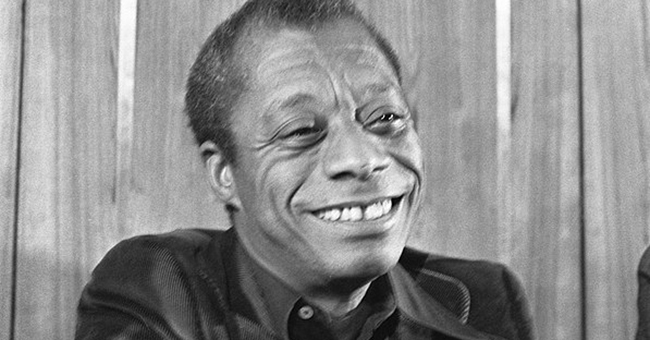
  • By James Baldwin

    James Baldwin

    Photo credit: Rob Croes / Anefo

    This National Teacher Appreciation Week, we’re going back to 1963, when Uncle Jimmy delivered his “Talk to Teachers.” That first line speaks to today’s culture wars over book banning and conservatives bullying classrooms with curriculum censorship in select states (you know which ones you are). Teachers, who deserve way more appreciation than we could ever repay, have a tall order during our pandemic times, least of all disabusing our youth of the myths of US exceptionalism and white supremacy as Uncle Jimmy talks about here in these excerpts collected in The Price of the Ticket.

    ***

    Let’s begin by saying that we are living through a dangerous time. Everyone in this room is in one way or another aware of that. We are in a revolutionary situation, no matter how unpopular that word has become in this country. The society in which we live is desperately menaced, not by Khrushchev, but from within. So any citizen of this country who figures himself as responsible—and particularly those of you who deal with the minds and hearts of young people—must be prepared to “go for broke.” Or to put it another way, you must understand that in the attempt to correct so many generations of bad faith and cruelty, when it is operating not only in the classroom but in society, you will meet the most fantastic, the most brutal, and the most determined resistance. There is no point in pretending that this won’t happen.

    Since I am talking to schoolteachers and I am not a teacher myself, and in some ways am fairly easily intimidated, I beg you to let me leave that and go back to what I think to be the entire purpose of education in the first place. It would seem to me that when a child is born, if I’m the child’s parent, it is my obligation and my high duty to civilize that child. Man is a social animal. He cannot exist without a society. A society, in turn, depends on certain things which everyone within that society takes for granted. Now, the crucial paradox which comforts us here is that the whole process of education occurs within a social framework and is designed to perpetuate the aims of society. Thus, for example, the boys and girls who were born during the era of the Third Reich, when educated to the purposes of the Third Reich, became barbarians. The paradox of education is precisely this—that as one begins to become conscious one begins to examine the society in which he is being educated. The purpose of education, finally, is to create in a person the ability to look at the world for himself, to make his own decisions, to say to himself this is black or this is white, to decide for himself whether there is a God in heaven or not. To ask questions of the universe, and then learn to live with those questions, is the way he achieves his own identity. But no society is really anxious to have that kind of person around. What societies really, ideally, want is a citizenry which will simply obey the rules of society. If a society succeeds in this, that society is about to perish. The obligation of anyone who thinks of himself as responsible is to examine society and try to change it and to fight it—at no matter what risk. This is the only hope society has. This is the only way societies change.

    Now, if what I have tried to sketch has any validity, it becomes thoroughly clear, at least to me, that any Negro who is born in this country and undergoes the American educational system runs the risk of becoming schizophrenic. On the one hand he is born in the shadow of the stars and stripes and he is assured it represents a nation which has never lost a war. He pledges allegiance to that flag which guarantees “liberty and justice for all.” He is part of a country in which anyone can become president, and so forth. But on the other hand he is also assured by his country and his countrymen that he has never contributed anything to civilization—that his past is nothing more than a record of humiliations gladly endured. He is assumed by the republic that he, his father, his mother, and his ancestors were happy, shiftless, watermelon-eating darkies who loved Mr. Charlie and Miss Ann, that the value he has as a black man is proven by one thing only—his devotion to white people. If you think I am exaggerating, examine the myths which proliferate in this country about Negroes.

    All this enters the child’s consciousness much sooner than we as adults would like to think it does. As adults, we are easily fooled because we are so anxious to be fooled. But children are very different. Children, not yet aware that it is dangerous to look too deeply at anything, look at everything, look at each other, and draw their own conclusions. They don’t have the vocabulary to express what they see, and we, their elders, know how to intimidate them very easily and very soon. But a black child, looking at the world around him, though he cannot know quite what to make of it, is aware that there is a reason why his mother works so hard, why his father is always on edge. He is aware that there is some reason why, if he sits down in the front of the bus, his father or mother slaps him and drags him to the back of the bus. He is aware that there is some terrible weight on his parents’ shoulders which menaces him. And it isn’t long—in fact it begins when he is in school—before he discovers the shape of his oppression.

    Let us say that the child is seven years old and I am his father, and I decide to take him to the zoo, or to Madison Square Garden, or to the U.N. Building, or to any of the tremendous monuments we find all over New York. We get into a bus and we go from where I live on 131st Street and Seventh Avenue downtown through the park and we get into New York City, which is not Harlem. Now, where the boy lives—even if it is a housing project—is in an undesirable neighborhood. If he lives in one of those housing projects of which everyone in New York is so proud, he has at the front door, if not closer, the pimps, the whores, the junkies—in a word, the danger of life in the ghetto. And the child knows this, though he doesn’t know why.

    I still remember my first sight of New York. It was really another city when I was born—where I was born. We looked down over the Park Avenue streetcar tracks. It was Park Avenue, but I didn’t know what Park Avenue meant downtown. The Park Avenue I grew up on, which is still standing, is dark and dirty. No one would dream of opening a Tiffany’s on that Park Avenue, and when you go downtown you discover that you are literally in the white world. It is rich—or at least it looks rich. It is clean—because they collect garbage downtown. There are doormen. People walk about as though they owned where they are—and indeed they do. And it’s a great shock. It’s very hard to relate yourself to this. You don’t know what it means. You know—you know instinctively—that none of this is for you. You know this before you are told. And who is it for and who is paying for it? And why isn’t it for you?

    Later on when you become a grocery boy or messenger and you try to enter one of those buildings a man says, “Go to the back door.” Still later, if you happen by some odd chance to have a friend in one of those buildings, the man says, “Where’s your package?” Now this by no means is the core of the matter. What I’m trying to get at is that by this time the Negro child has had, effectively, almost all the doors of opportunity slammed in his face, and there are very few things he can do about it. he can more or less accept it with an absolutely inarticulate and dangerous rage inside—all the more dangerous because it is never expressed. It is precisely those silent people whom white people see every day of their lives—I mean your porter and your maid, who never say anything more than “Yes, Sir” and “No, Ma’am.” They will tell you it’s raining if that is what you want to hear, and they will tell you the sun is shining if that is what you want to hear. They really hate you—really hate you because in their eyes (and they’re right) you stand between them and life.

    ~~~

    What passes for identity in America is a series of myths about one’s heroic ancestors. It’s astounding to me, for example, that so many people really appear to believe that the country was founded by a band of heroes who wanted to be free. That happens not to be true. What happened was that some people left Europe because they couldn’t stay there any longer and had to go someplace else to make it. That’s all. They were hungry, they were poor, they were convicts. Those who were making it in England, for example, did not get on the Mayflower. That’s how the country was settled. Not by Gary Cooper. Yet we have a whole race of people, a whole republic, who believe the myths to the point where even today they select political representatives, as far as I can tell, by how closely they resemble Gary Cooper. Now this is dangerously infantile, and it shows in every level of national life. When I was living in Europe, for example, one of the worst revelations to me was the way Americans walked around Europe buying this and buying that and insulting everybody—not even out of malice, just because they didn’t know any better. Well, that is the way they have always treated me. They weren’t cruel, they just didn’t know you were alive. They didn’t know you had any feelings.

    What I am trying to suggest here is that in the doing of all this for 100 years or more, it is the American white man who has long since lost his grip on reality. In some peculiar way, having created this myth about Negroes, and the myth about his own history, he created myths about the world so that, for example, he was astounded that some people could prefer Castro, astounded that there are people in the world who don’t go into hiding when they hear the word “Communism,” astounded that Communism is one of the realities of the twentieth century which we will not overcome by pretending that it does not exist. The political level in this country now, on the part of people who should know better, is abysmal.

    The Bible says somewhere that where there is no vision the people perish. I don’t think anyone can doubt that in this country today we are menaced—intolerably menaced—by a lack of vision.

    It is inconceivable that a sovereign people should continue, as we do so abjectly, to say, “I can’t do anything about it. It’s the government.” The government is the creation of the people. It is responsible to the people. And the people are responsible for it. No American has the right to allow the present government to say, when Negro children are being bombed and hosed and shot and beaten all over the Deep South, that there is nothing we can do about it. There must have been a day in this country’s life when the bombing of the children in Sunday School would have created a public uproar and endangered the life of a Governor Wallace. It happened here and there was no public uproar.

    I began by saying that one of the paradoxes of education was that precisely at the point when you begin to develop a conscience, you must find yourself at war with your society. It is your responsibility to change society if you think of yourself as an educated person. And on the basis of the evidence—the moral and political evidence—one is compelled to say that this is a backward society. Now if I were a teacher in this school, or any Negro school, and I was dealing with Negro children, who were in my care only a few hours of every day and would then return to their homes and to the streets, children who have an apprehension of their future which with every hour grows grimmer and darker, I would try to teach them—I would try to make them know—that those streets, those houses, those dangers, those agonies by which they are surrounded, are criminal. I would try to make each child know that these things are the results of a criminal conspiracy to destroy him. I would teach him that if he intends to get to be a man, he must at once decide that he is stronger than this conspiracy and that he must never make his peace with it. And that one of his weapons for refusing to make his peace with it and for destroying it depends on what he decides he is worth. I would teach him that there are currently very few standards in this country which are worth a man’s respect. That it is up to him to begin to change these standards for the sake of the life and the health of the country. I would suggest to him that the popular culture—as represented, for example, on television and in comic books and in movies—is based on fantasies created by very ill people, and he must be aware that these are fantasies that have nothing to do with reality. I would teach him that the press he reads is not as free as it says it is—and that he can do something about that, too. I would try to make him know that just as American history is longer, larger, more various, more beautiful, and more terrible than anything anyone has ever said about it, so is the world larger, more daring, more beautiful and more terrible, but principally larger—and that it belongs to him. I would teach him that he doesn’t have to be bound by the expediencies of any given administration, any given policy, any given morality; that he has the right and the necessity to examine everything. I would try to show him that one has not learned anything about Castro when one says, “He is a Communist.” This is a way of his learning something about Castro, something about Cuba, something, in time, about the world. I would suggest to him that he is living, at the moment, in an enormous province. America is not the world and if America is going to become a nation, she must find a way—and this child must help her to find a way to use the tremendous potential and tremendous energy which this child represents. If this country does not find a way to use that energy, it will be destroyed by that energy.

    Delivered October 16, 1963, as “The Negro Child—His Self-Image”; originally published in The Saturday Review, December 21, 1963. Excerpted from The Price of the Ticket, published by Beacon Press, 2021. Copyright © 1985 by James Baldwin. Reprinted by arrangement with the James Baldwin Estate. All rights reserved.


    About the Author 

    James Baldwin (1924–1987) was a novelist, essayist, playwright, poet, and social critic, and one of America’s foremost writers. His writing explores palpable yet unspoken intricacies of racial, sexual, and class distinctions in Western societies, most notably in mid-20th-century America. A Harlem, New York, native, he lived periodically in exile in the south of France and in Turkey. He is the author of several novels and books of nonfiction, including Notes of a Native SonGo Tell It on the MountainGiovanni’s RoomAnother CountryTell Me How Long the Train’s Been GoneIf Beale Street Could TalkJust Above My HeadThe Fire Next TimeNo Name in the Street, and The Evidence of Things Not Seen, and of the poetry collection Jimmy’s Blues.

  • Teacher Helping Students Working At Computers In Classroom

    Photo credit: City of Seattle Community Tech

    It has not gotten any easier for educators. If the pandemic was not enough, many are picking up the slack for unfilled job openings, riding on the fumes of burnout, and consequently, leaving the profession or retiring early since the start of COVID. Which goes to show how much they are unthanked and undervalued for all they do to nurture wisdom, curiosity, and critical thinking in students at a time when societal consensus at large would rather shepherd us toward an uneducated nation. We need to show up for them! So for National Teacher Day, a handful of our authors, each one also an educator, share stories about their favorite teachers and their influence on their lives.

    ***

    Remica Bingham-Risher

    “Tim Seibles taught the first poetry class I ever took, and I’ve been wandering with intent down his path of reverence ever since. I’ve published three books of poems, I teach at Old Dominion University, where I met Tim but twenty years ago, and in August, Beacon Press will publish my memoir, Soul Culture: Black Poets, Books, and Questions That Grew Me Up, about my conversations with Black poets and how they ushered me into the writing life. For years, I interviewed Black poets I admired, like Tim Seibles—fun fact: he’s the only poet I interviewed twice—and the essay, “Revision as Labyrinth,” is about how my father and Tim Seibles taught me the beauty of re-envisioning what you want from poems and your own living. Seibles’s poems reckon with race, sensuality, belonging, and the Divine, holding out an insistent hope for more expansive ways of seeing each other and the world. I’m so grateful he opened up my way of seeing and capturing the world as well.”
    —Remica Bingham-Risher, Soul Culture: Black Poets, Books, and Questions That Grew Me Up 


    Michael Hines

    “As a current educator at the college level, a former K-12 teacher, and son and grandson of educators, I’ve had the privilege to see amazing instructors, mentors, and coaches at work in almost every phase of my life and career. From my mother, Teresa Hines, who is the model for the kind of warmth and nurturing spirit I hope to bring to the work. To Tim Connors, who led the speech and theater programs at my high school and brought his infectious optimism and boundless energy to every class session and event. To Patrick and Larin Rottman, amazing administrators who’ve led their respective schools through the pandemic while putting the mental, physical, and emotional wellbeing of students and families over all else. There are so many more I could name—colleagues, classmates, and former students who’ve gone on to stand in front of classrooms of their own. They each remind me that it’s an honor to watch great educators at work!”
    —Michael Hines, A Worthy Piece of Work: The Untold Story of Madeline Morgan and the Fight for Black History in Schools 


    Rachel S. Mikva

    “The teachers who were transformative in my life were the ones who believed in me, who thought that I had some special gift worth sharing. My eighth-grade English teacher, who thought I would be the first female US president (no thanks!); my tenth-grade English teacher, who invited me to direct our school’s Writer’s Showcase (a more reasonable goal); and all those in college, rabbinical school, and my doctoral program who also saw a spark. Their faith presses me to ask: How can we help every student feel that way?”
    —Rachel S. Mikva, Dangerous Religious Ideas: The Deep Roots of Self-Critical Faith in Judaism, Christianity, and Islam


    Maureen O'Connell

    Dr. Randall Miller, professor of history at Saint Joseph’s University, all but dared me as a senior history major to travel to an out-of-state archive at a major university in order to unearth answers to uncomfortable questions involving slavery and one of the world’s most notable orders of Catholic priests. Little did I know that he had placed a pebble in my shoe that would bug me for nearly thirty years before turning into a full-blown, uncomfortable, and yet unapologetic curiosity about things that good Catholics are not supposed to talk about, much less write about for popular audiences. I am forever grateful for Randall’s generosity in sharing his passion with me, his confidence in my own ability as a scholar—then and now—and his way of modeling for me how to accompany my students in finding their purpose and joy.”
    —Maureen O’Connell, Undoing the Knots: Five Generations of American Catholic Anti-Blackness 


    Leigh Patel

    “Mr. Bettz was a math teacher who never let any of his students believe they weren’t mathematicians. He introduced us to Bob Moses, the Algebra Project, and in his class, we wrote essays. In calculus, we wrote essays. Because of him, I refuse to let any metric define my students or me.”
    —Leigh Patel, No Study Without Struggle: Confronting Settler Colonialism in Higher Education

    Teacher Helping Students Working At Computers In Classroom

  • A Q&A with Roque Raquel Salas Rivera 

    Raquel Salas Rivera

    Author photo: Tamara Maz Photography

    Roquel Raquel Salas Rivera’s star has risen swiftly in the poetry world, and antes que isla es volcán/before island is volcano, his sixth book and the second volume in Beacon Press’s Raised Voices poetry series, promises to cement his status as one of the most important poets working today. In sharp, crystalline verses, written in both Spanish and English versions, this collection daringly imagines a decolonial Puerto Rico. Associate editor Catherine Tung caught up with the National Book Award-nominated and Lambda Award-winning poet to chat about it.

    Catherine Tung: You’ve used the bilingual flipbook format for several of your poetry collections, including antes que isla. How does this format complement and serve your work?

    Roque Raquel Salas Rivera: Not all my work is meant to be translated, but when I do self-translate, the flipbook is perfect for a bilingual edition. It doesn’t give priority to either language, and that feels truer to both my process and my readership. In many ways, my readers in Spanish and those who read me in English don’t always overlap but they do correspond, to borrow a term from Jack Spicer. They do relate in complex ways. The flipbook allows for there to be a clear distinction without hierarchy and without denying a connection between the two texts.

    CT: Rather than working with a translator to produce the bilingual edition, you write Spanish and English versions of your poems, and you avoid using the word “translation” in reference to your work. Can you say a bit about the difference between a translation of a poem and a version of a poem, and why this is important for your work?

    RRSR: That’s interesting. I didn’t notice I was avoiding the word “translation”. I guess I do, yes, but mostly because I think most poems are in some sense already translations. I also think of translation as a mode, as a way of navigating and, at times, negotiating—not just a practice in the narrowest sense. Each book is simultaneously the work of the author and a collective product. Like Derrida (in translation), I say, “I only have one language; it is not mine.” In other words, I do think of the versions in English as translations, but only because they bear such a clear and direct correspondence to the versions in Spanish. Yet, when I first sit down to write in Spanish, I have the voices of others, the things I have lived and seen, the books I have read, all populating my mind.

    CT: Your friend, the artist Xavier Valcárcel de Jesús, created the gorgeous illustrations featured on the two covers of antes que isla. Can you talk about the meanings and symbols contained within his illustrations and how his art relates to your poems?

    RRSR: I think Xavier can speak more directly to that. He read the book and responded to it, and I wouldn’t want to comment too much on his art. But I will say I can recognize many of the images in the book: the kites, the bullets, the flor de maga, the hurricane, the kaleidoscopic. We wanted one of the images to have space that could be colored in, like a coloring book. This points to a future that we make together. The other side is more colored in, but it operates in a way that is complementary. Both sides need each other and dialogue with each other.

    CT: One of the many things that I love about your poetry is your powerful use of repetition—both on the level of the line (“we are more tender than roots with earth; / we are more tender than downpour’s tremor; / we are braver than stalking anguish; / we are more beautiful than universal monarchies”) and on the level of the poem—such as the seven identically titled poems that make up the series of the same name, the independence (of puerto rico). How does this technique help you express yourself in poetry?

    RRSR: That particular section is a multiverse that branches out of the Fanon quote I use as an epigraph. The idea is that although our individual trajectories are different and oftentimes constrained by colonialism, they could all be leading to a shared future, a future where we have decolonial independence and true freedom. Repetition, or what Jackobson called “parallelism” in poetry, does not do the same thing in each instance. It can create contrast, irony, repetition with a difference, harmony, etc. In the case of this series, each instance is different, but each trajectory leads to the same outcome. 

    CT: One of the other series in this collection, island, alludes to William Shakespeare’s The Tempest. How do your verses engage with the play?

    RRSR: There is a long history in Latin America and the Caribbean of answering back, identifying as Ariel, but most especially as Caliban. I am partially writing out of this tradition. It speaks pretty directly to moments in the play which have taken on a historical significance for the Caribbean. My poems not only answer back; they also question the very production and writing of the play and the ways in which the Caribbean served as inspiration, but also source material for Shakespeare’s characters.

    CT: At the heart of this collection is the vision of a decolonial Puerto Rico. What do you want readers to know about this vision, this concept, of a decolonial Puerto Rico?

    RRSR: It depends on the reader. This book is about the future of Puerto Rico, and that future belongs to Puerto Ricans and no one else. In that sense, although different readers may identify with the book, this is a future only we (les puertorriqueñes) can develop, change, and decide what Puerto Rico will be. More than a concept, it is a yearning, a place and time when we will finally have decisional power over our own futures, without forced tutelage, imperial control, or saviors.


    About Roque Raquel Salas Rivera 

    Roque Raquel Salas Rivera is a Puerto Rican poet, translator, and editor. His honors include being named the 2018-19 Poet Laureate of Philadelphia and receiving the New Voices Award from Puerto Rico’s Festival de la Palabra. He is the author of five previous full-length poetry books. His third book, lo terciario/the tertiary, won the Lambda Literary Award for Transgender Poetry and was longlisted for the 2018 National Book Award. His fourth book, while they sleep (under the bed is another country), was longlisted for the 2020 Pen America Open Book Award and was a finalist for CLMP’s 2020 Firecracker Award. His fifth book, x/ex/exis, won the inaugural Ambroggio Prize. He currently writes and teaches in Puerto Rico. Connect with him at raquelsalasrivera.net and on Twitter (@roquevallejo85) and Instagram (@roquesalasrivera).

  • By Christian Coleman

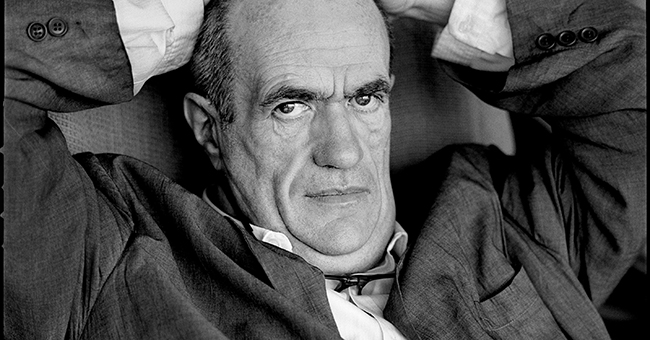
    Colm Tóibín

    Author photo: Laura Wilson

    He is hailed as a literary giant whose prolific writing career has made him a New York Times best-selling author. His novels include The Master, The Magician, Nora Webster, and Brooklyn. Brooklyn was, in fact, adapted as a feature film nominated for an Academy Award for Best Picture, so he has movie-vetted cred, too. Now we get to see Colm Tóibín flex as a poet in his debut collection, Vinegar Hill.

    Vinegar Hill explores the liminal space between private experiences and public events as Tóibín examines a wide range of subjects: politics, queer love, reflections on literary and artistic greats, living through COVID, and facing mortality. The poems reflect a life well-traveled and well-lived; from growing up in the town of Enniscorthy, wandering the streets of Dublin and Barcelona, and crossing the bridges of Venice to visiting the White House, readers will travel familiar locations and new destinations through Tóibín’s unique perspective.

    Known for his novels, Tóibín began writing poetry early. “I began first at the age of twelve in the family house,” he told the Academy of American Poets in a Q&A. “It was September 1967. My father had died in the summer. In our family, from the age of twelve, you were meant to study every evening, go into the front room and be alone. I started to write poems. It just happened. I did one and then I did more.”

    Tóibín was, by admission, a late reader. On NPR’s Weekend Edition, Scott Simon asked him if being a late reader strengthened his appreciation for words. “I think it left me free to imagine things,” Tóibín said during his interview, “to wander around the house in a sort of dream. While my siblings were all busy buried in books, I was sort of looking at them, checking them out, going into the other room to see what was going on there. I think it allows you, in a certain way, when you’re maybe seven or eight, to become a better noticer.” Reading his verse, you’ll notice his keen sense of observation, emotion, and humor.

    It took several decades for the collection to come together, and the wait was worth it! Beacon Press acquired the book after Tóibín sent a small group of poems to our director, Helene Atwan. She raved about them but told him he would need to write three times as many to make a full volume. Tóibín joked that he would do that in a couple of decades. Then, while COVID and his (successful) treatment for cancer kept him in lockdown, he found himself with a lot of free time and plenty of motivation to write new poems. In Publishers Weekly’s roundtable poetry feature, he described his writing process:

    “I was in LA in my boyfriend’s house, and I started to write poems in the evenings out of the blue. This was new in that, really, the poems came every day, and I would just work at getting them down, and then the lovely business of going back every half hour to see if there was anything more that was wrong with it. It wasn’t just the silence, but the fact that there was no getting on a flight, no dinner coming up, no reading that I had to do—all those things that take up a lot of imaginative energy were just not there.”

    So in less than five years, he had the volume ready to send to Helene!

    The collection is named after his poem “Vinegar Hill.” Not only is the location described in verse; it’s also depicted in the cover art in a painting by his mother. A twofold experience of the place for your senses.

    Included in poetry roundups in the Sunday Times, Publishers Weekly, and The Guardian, Tóibín’s collection offers us lines and verses to provoke, ponder, and cherish. You can read the title poem in the New Yorker and other excerpts in The Atlantic.


    About the Author

    Christian Coleman is the digital marketing manager at Beacon Press and editor of Beacon Broadside. Before joining Beacon, he worked in writing, copy editing, and marketing positions at Sustainable Silicon Valley and Trikone. He graduated from Boston College and the Clarion Science Fiction & Fantasy Writers’ Workshop. Follow him on Twitter at @coleman_II.

  • A Q&A with Terry Galloway

    The Oscar statue

    Image credit: Bryan Carey Multimedia

    We’re not here to gab about the slap. Beacon Broadside editor Christian Coleman caught up with deaf queer writer and performer Terry Galloway to chat about this year’s Oscar darling, CODA, and how it caves into Hollywood conventions to depict Deaf culture with ham-fisted broad strokes. Though there are some things to like about it. Galloway had a thing or two to say about The Eyes of Tammy Faye. She has a special place in her heart for the former televangelist.

    Christian Coleman: CODA won big time at this year’s Oscars for Best Picture, Best Supporting Actor, and Best Adapted Screenplay. What was your reaction when it was announced as the winner of these awards?

    Terry Galloway: It’s a Hallmark film of a movie and, as such, has every Deaf cliché you can think of, including how hot Deaf people are in bed—although I’m inclined to perpetuate that myth.

    CODA, written by a hearing person and adapted by another hearing person, made the Deaf family the nominal villains: backwards, unthinking, unfeeling, selfish bumpkins. Until, of course, their hearing, singing savior of a child makes them see the error of their dumb ole Deaf ways. I wanted to rip the child’s throat out. And the screenwriter’s, too.

    Deaf Culture does appreciate music. It has many ways and a long history of doing so. I was glad the girl finally broke down and Signed the song she was singing—something she could have done at her high-school music recital, which so obviously (painfully obviously) bored her long-suffering Deaf parents who, for the purposes of heavy-handed drama I have to guess, seemed more focused on dandruff than their daughter up on stage.

    So no, I wouldn’t have voted for CODA for Best Picture or Best Screenplay, and I’m not even sure I would have for Best Supporting Actor. Troy Kotsur has a great face and a genial presence. But he was on screen for all of twelve minutes. But then, Judy Dench got her Best Supporting Oscar for five minutes of screentime. So maybe. I liked the guy.

    CC: Are there aspects of Deaf representation that the film gets right?

    TG: Here’s what I loved: seeing the intimacy of ASL on screen. ASL is a full-body language and gorgeous to behold. I loved seeing it during that film in all its intricate glory. I loved seeing the intimacy of Deaf family life portrayed as embracing and warm and enhanced, not diminished, by the sheer physicality of that beautiful language.

    The physical intimacy of the CODA family is what I longed for as a little “d” child and got somewhat from my hearing family—a way of moving through life that is physically hands-on while being joyfully complex.

    CC: Where does the film fall short?

    TG: I knew from the opening credits what to expect. Hokey moments, sticky sentiment, conflicts and resolutions that were entirely predictable. 

    And God forgive me, I hated the obvious hook: the hearing child who has a beautiful voice and is cursed with Deaf parents who are oblivious, even hostile, to her talents because they can’t readily share them. So much more could have been done with that relationship. 

    There is a documentary that examines the tensions of Deaf vs hearing family members called Sound and Fury. Two young Deaf parents, who were both born into hearing families, renegotiate their relationship with their hearing parents when their own child, who was born Deaf, decides she wants to get a cochlear implant so she can hear again. It is a fraught and sometimes bitter renegotiation that is full of heartbreak and surprises. 

    CODA has some of that heartbreak, some of that bitterness, but it is heartbreak and bitterness of the made-up sort. And there are absolutely no surprises.

    CC: Unlike the original French film, La Famille Bélier, this remake cast actual Deaf actors in the roles of Deaf characters. Which is wonderful, though its reception from Deaf viewers and CODAs has been more mixed. What’s your take?

    TG: CODA’s big win was taking a treacly French film and wrestling it away from the hearing people who, in an equivalent of blackface, performed the Deaf family; and then remaking it with Deaf actors. That’s a triumph. And a sad commentary on this day and age.  

    In 1985, when the film adaptation of The Color Purple was released, it was criticized as being overly sentimental and, more damningly, not authentically depicting the Black experience. Alice Walker said, then, that the problem with the film was not that it was a sentimental and limited film depicting Black lives but that it was the only film out there depicting the lives of Black people. 

    And that is the problem with CODA. At the moment, it is the only story about Deafness.

    Popular culture regards the Deaf community as part of the larger Disability Community instead of a culture entirely unto itself. For the mainstream, CODA allows an emotional inroads toward a basic understanding of disability. Maybe it will blaze a larger trail. Maybe it won’t. 

    Crip Camp, a genius film, would have been my choice as a trailblazer for disability complexity. But it was a documentary and didn’t win the Oscar.

    CC: Jessica Chastain won Best Actress for playing Tammy Faye Baker in The Eyes of Tammy Faye. You’ve played Tammy Faye, too. What did you think of Chastain’s interpretation of her?

    TG: Jessica Chastain isn’t my favorite actress. I just don’t care for her. So it’s nice that she’s been rendered unrecognizable for The Eyes of Tammy Faye. I felt less inclined to automatically give her the stink eye. 

    She does an admirable job for bringing forth all those bonkers eccentricities that made Tammy Faye who and what she was—that fearless sense of herself, that preternatural cheeriness, those war markings on her face otherwise known as permanent make-up. And the great, genuine goodness of her feisty little soul. Tammy Faye loved with all her heart. And she made a point of loving the unloved, especially the queers with AIDS. 

    If I’d ever have had the pleasure to meet Tammy Faye, I would have kissed every single bejeweled finger on her hands. I’m that filled with admiration. And plain old liking.

    Tammy took on the men and fought them and won on a lot of fronts. Until they played dirty and brought her down. Her twerp of a husband didn’t help any. 

    So, the movie did a good job of showing all that male, pastoring posturing. And contrasting it with the force that was Tammy Faye. I liked it. I even liked Chastain, whom I have already made a point of noting, I am not prone to like. 

    But the documentary, The Eyes of Tammy Faye, featuring the real deal, flayed my heart, made me weep and feel so angry that, of all the nut cases in that story of religious empire making, Tammy Faye was the one to die too young.

    I love fiction. But when it’s a well-done documentary versus a well-done piece of fiction, the documentary will win me over every time. 

    CC: How helpful was reading Tammy Faye’s biography when you played her?

    TG: It is a total discombobulating hoot. Painful to read.

    CC: What’s your favorite passage from it?

    TG: My favorite of favorite moments from it is the one I adapted to perform—when Tammy tries to raise her dog Chi Chi from the dead. Its horrifying absurdity made me laugh harder at a dog’s death than I should have.


    About Terry Galloway

    Terry Galloway is the founder of the Actual Lives writing and performance programs; a founding member of Esther’s Follies, Austin, Texas’s legendary cabaret; and cofounder of the Mickee Faust Club in Tallahassee, Florida. She divides her time between Austin and Tallahassee. She is the author of Mean Little deaf Queer: A Memoir. Follow her on Twitter at @TerryLGalloway.