• A Q&A with Margaret Peacock and Erik L. Peterson

    Margaret Peacock and Erik L. Peterson

    Margaret Peacock and Erik L. Peterson

    When we look back at the year 2020, how can we describe what really happened? In A Deeper Sickness: Journal of America in the Pandemic Year, award-winning historians Margaret Peacock and Erik L. Peterson set out to preserve what they call the “focused confusion,” and to probe deeper into what they consider the Four Pandemics that converged around the 12 astonishing months of 2020: disease, disinformation, poverty, and violence.

    Organized into the journal-entries along with dozens of archival images, A Deeper Sickness will help readers sift through the chaos and misinformation that characterized those frantic days. It is both an unflinching indictment of a nation that is still reeling and a testament to the power of human resilience and collective memory. Beacon Broadside editor Christian Coleman caught up with Drs. Peacock and Peterson to chat about it. This is part one of their two-part Q&A.

    Christian Coleman: What inspired you to collaborate on the book?

    Margaret Peacock and Erik L. Peterson: Early in 2020, we realized we were each in the process of collecting sources from the unfolding pandemic. Erik began focusing on the unfolding epidemiology of the pandemic when it was still limited to East Asia, while Margaret was paying close attention to the ways the pandemic was playing out in global media. We realized that we could produce something exceptional if we each brought our areas of expertise to the table to write a book that attempted to cross many facets of the pandemic experience. Plus, given the mammoth job we suspected was ahead of us by the spring of 2020, we figured having someone else there would spur us on to keep working when we were tired or emotionally drained.

    CC: You write that four pandemics converged in 2020: disease, disinformation, poverty, and violence. How did you narrow it down to these four?

    MP and ELP: This number came out of one year of mucking through thousands of primary and secondary sources along with countless hours of writing and analysis. Certainly, one could argue for a different interpretation—and we are open to having that conversation—but these four long-standing crises helped us to create a conceptual framework for thinking about the 2020 experience.

    ‘Disease’ encapsulates America’s chronically broken healthcare system that has made access to reasonable care in the United States so difficult. ‘Disinformation’ describes the worrisome tendency in the United States that goes back centuries to prioritize comfortable myths over evidence-based knowledge about the past and the present. It also includes the dangerous power that this disinformation can wield. ‘Poverty’ is, well, poverty, which relegates millions of Americans to the chronic cycles of suffering, unemployment, limited access to education and healthcare, higher mortality rates, and less opportunity for advancement. ‘Violence’ speaks to the recurring phenomenon of vigilantism in the United States, which is marshaled throughout our history to maintain the status quo.

    Critically, these four pandemics shaped each other in fundamental ways in 2020. Disinformation, poverty, and violence had a huge impact on how we experienced the COVID-19 virus. Similarly, disease, disinformation, and violence shaped the experiences of America’s poor in 2020. These elements arguably amplified the negative experiences of the others. Plus, that whole “four horsemen of the apocalypse” thing—2020 so often felt like an apocalypse.

    CC: A Deeper Sickness is written as a journal in real time, with entries that not only comment on headlines and news but also reflect on personal experiences. Why did you decide on this approach?

    MP and ELP: Daniel Defoe’s Journal of the Plague Year has been a model for how to chronicle an epidemic for 300 years. Early on, it felt like we were witnessing another version of that very old story. It seemed a natural fit. But more than that, we recognized that journalists, then historians, would write many books reflecting on what happened and what we learned from the perspective of public health or epidemiology, etc. But those later books would write the account dispassionately, attempting to get at what was happening out of public view. And they should. That kind of writing is great. It’s what we do most of the time. What gets lost in these accounts, however (which we know from writing academic history books ourselves), is the subjective and the emotional. That cannot be grasped from a later historian’s eye view. We wanted to freeze in time the day-to-day experience of living through a pandemic where we didn’t know the outcome, didn’t know how it would turn out.

    When the stories of Ahmaud Arbery, Breonna Taylor, and George Floyd emerged  in May 2020, we felt the deep familiar tragedy braided into the fabric of this country peaking through. Again, others will give objective accounts later. We did everything we could to capture the initial raw pain of those early weeks. By Juneteenth, so much of the corporate world and the media that tracks with that world had moved on. That news cycle completed itself. The attention stream of the country began to shift. It was as if the scrim that always mutes painful episodes in American life was descending again to keep our society from having to do any more work, to clean out the wounds.

    But as we documented all that tragedy, it seemed to us like there was much more continuity than difference between the COVID-dominated portion of spring 2020 and the Black Lives Matter protests. We wanted to stay with it longer, to keep coming back to the ways in which the first part of the year and the second and following parts shared so many features with each other. Though it sounds funny to say it now, the journal kept the rawness when the media, the government, and regular American culture wanted to cover it back up.


    Read part 2.


    About Drs. Peacock and Peterson

    Dr. Margaret Peacock is a historian of media and propaganda in Russia, the United States, and the Middle East, with graduate degrees in history and information science. She currently teaches at the University of Alabama.

    Dr. Erik L. Peterson is a historian of science and medicine, with graduate degrees in history, philosophy, and anthropology. He currently teaches at the University of Alabama.

  • A Q&A with Jonathan Rosenblum

    Protest against Amazon by East African workers, Shakopee, Minnesota, December 14, 2018.

    Protest against Amazon by East African workers, Shakopee, Minnesota, December 14, 2018. Photo credit: Fibonacci Blue

    In 2020, Amazon workers in Bessemer, Alabama, voted on whether to be represented by the Retail, Wholesale and Department Store Union (RWDSU). The union lost the vote, due in part to the hiring of the infamous union-busting agency the Pinkertons, and an extensive and intrusive anti-unionization campaign. The US National Labor Relations Board (NLRB) first found enough evidence of Amazon’s interference at Bessemer to call for a re-vote and, in December 2021, reached an agreement with Amazon about ensuring that Amazon workers’ basic rights to organize are upheld by the company. Both of these verdicts have aided the growing narrative that a pro-union shift has taken place within the United States government with President Joe Biden and the Democratic party at the helm of this ostensibly progressive reorientation. But are these rulings as pro-worker as they seem?

    Tori Fleming and Matt Davis of the Canadian blog The Bullet spoke with Jonathan Rosenblum to find out. A second part to the interview with Jonathan on lessons for union organizing will follow. Tori and Matt are involved in a variety of activities related to union organizing and media coverage of the labour movement.

    Matt Davis (MD): Thanks so much for joining us, Jonathan. To start, would you mind telling us a bit about your background, specifically when it comes to organizing, and what you’ve been working on lately?

    Jonathan Rosenblum (JR): I’m really excited to be in this discussion with Canadian comrades about what’s going on here in the States and the prospects for organizing in the period ahead. I actually started out many decades ago as a rank-and-file union member in the newspaper industry, as a member of the International Typographical Union, which now I think is part of the Teamsters. From there, I became a full-time union organizer working in the Deep South in the 1980s, and then in New England before I came out to Seattle in 1991. I’ve been doing a lot of different organizing over the decades, healthcare organizing, industrial organizing, and so on. In 2011, the union (Service Employees International Union – SEIU) asked me to head up what became the first successful fight for $15 in the country. That was the SeaTac (Seattle-Tacoma) Airport workers fight, which resulted in an initiative passed by the voters to require an immediate $15 minimum wage for all of these airport workers. It was largely immigrant workers at SeaTac Airport, which is our main international airport, just outside of Seattle.

    For the last five or six years, I’ve been working primarily with our socialist city council member Kshama Sawant on a number of projects. We’ve been fighting for and winning some really important renters’ rights here in Seattle, also passing a historic first time ever tax on Amazon and other big businesses here to fund affordable housing and Green New Deal projects. That was a tremendous battle as well. I’ve recently stepped out of that role, while I still stay close to the work that Kshama and the Socialist Council Office are doing, I am focusing my work with academic workers up and down the West Coast of the United States.

    Working with the United Auto Workers (UAW), which is not just for auto workers, but also academic workers. In California, the vast majority of academic workers are struggling every month to pay the rent. These are graduate students, teaching assistants, research assistants, postdocs, graders, tutors, and the like. They are organizing a huge contract campaign where during this year 48,000 UAW members in the University of California system will be having contract negotiations and are going to be demanding housing justice as a major part of that fight. And then up here in Seattle, 7000 workers at the University of Washington are also in a similar struggle, although in a somewhat different timeline. I’m very excited that university workers are coming together to fight for housing justice, and really to fight for the entire community’s right to live affordably. So that’s the work I’m doing in 2022.

    MD: I wish we had the time to ask you about all of those projects! I think we’d like to turn to Amazon and its recent settlement with the NLRB. So, Amazon has come to a settlement with the Labor Relations Board around the issue of Amazon’s employees having the right to organize and how that right is communicated. From your point of view, what are some of the most important details of the settlement and what are the potential impacts or implications for workers both inside and outside of Amazon?

    JR: I would say to Canadian comrades that it’s obviously a good thing to have this settlement. It validates the workers’ demands for rights. We also shouldn’t exaggerate the actual value of this settlement from the National Labor Relations Board. There are two things to look at in terms of the settlement. First, the legal and practical implications, and second, the political and organizing implications.

    Let me talk first about the legal and the practical side, just so that your audience has an understanding. The Labor Board found, to the surprise of zero workers in this country, that Amazon violated workers legal rights. The Board found that Amazon illegally threatened, harassed and retaliated against workers who were organizing unions. In the settlement, the Labor Board required that Amazon post notices saying they won’t do these things in the future. But there’s no admission of guilt required. There are absolutely no penalties of any sort.That’s how federal labor law works in this country. What’s different about this particular settlement from others is the posting requirement: the requirement for Amazon to post notices that say ‘here are your rights’. It also requires Amazon to email that notice to all of its workers. This is more than a million people in this country. That requirement is new. I want to come back to it when we talk about the organizing implications.

    The other thing that the Labor Board found is that Amazon managers were illegally discriminating against worker organizers by restricting their access to break rooms, parking lots and other non-work areas before and after their shifts, when other workers were not restricted in the same way. The Board ordered Amazon to rescind this discriminatory rule. Now, there’s been a lot of celebration about this particular ruling, and how it will open the doors for workers to organize much more freely at Amazon.

    I certainly hope that does turn out to be the case, but I think people need to understand that Amazon is not going to simply let this happen. All Amazon has to do to get on the right side of the law is issue a new company rule limiting worker access, and to issue the access rule in a non-discriminatory way. In other words, to craft the rule so that it doesn’t name union organizing as any particular restriction. In fact, if you read the last sentence of the posting, it explicitly authorizes Amazon to do exactly that after the 60-day notice posting period is over. So, in the scheme of things, the settlement is a slap on the wrist for Jeff Bezos. Maybe not even a slap on the wrist, more like a tap. It’s not going to change Amazon and its implacable hostility toward workers and unions.

    What’s more interesting to examine are the political and organizing implications of the settlement. It’s extraordinary that the company is now going to have to send out notices to all of its workers. Disseminating the posting is certainly going to boost confidence of workers who are inclined to organize. It validates their critique of the company’s illegal behavior, though I think it’s way too soon to tell whether it will sufficiently embolden workers to move from inertia and fear to organizing. I think it would be a little panglossian to imagine that this is somehow going to open the floodgates of organizing at the company. It’s not. Amazon is going to continue to try to snuff out unions at any expense. They’ll just be a little more careful.

    I think it’s also important for Canadian workers to understand that what’s an abuse of worker rights and what’s a violation of labor law in the United States are two very different matters. Labor law is very narrowly constructed. The NLRB found that Amazon had an after-hours access rule that was applied in a discriminatory manner, and therefore it violated labor law. It’s not illegal for Amazon to do most of the things that it traditionally has done to bust unions or stop unions from growing, such as holding mandatory anti-union meetings, or threatening people in ways that don’t violate the law. Management lawyers are quite adept at training companies how to go right up to the edge of breaking the law without getting into legal jeopardy. I’m sure that is what Amazon is training their managers on right now.

    Let me give you just one example. There’s nothing illegal under US labor law for management to force workers to attend mandatory anti-union meetings, where they browbeat workers about how terrible unions are. In fact, that’s exactly what Starbucks is doing at every single one of their stores where workers are standing up and forming unions. It’s not illegal for management to tell lies, to exaggerate, or to threaten through implication. So for instance, it is illegal under US labor law for the boss to say, “you will lose your job if you organize.” However, it’s not illegal for him to say to the workers that, “if you organize, you could lose your job. We never have to sign a contract, and look at what happened to all those union workers down the street who got laid off after organizing.” Now that’s a pretty intimidating message coming from the person who controls your paycheque. All that is legal under US labor law.

    It’s so important for people to recognize both in your country, ours, and elsewhere, that once American workers who don’t have union protection punch the time clock – that’s 89% of the workforce – they give up their free speech and other basic rights. There’s nothing democratic about the American workplace and this ruling doesn’t really fundamentally change that brutal reality. Workers need to organize, demand their rights and make the boss pay attention through collective action up to and including strikes. That’s what’s going to deliver justice for Amazon workers, not a particular ruling or settlement from the Labor Board.

    MD: Some progressives have argued that this settlement is a major concession by Amazon, that this is a defeat for them in some way. Does this settlement represent a shift from Amazon away from more overt forms of anti-union coercion toward something a little more covert?

    JR: Well, it’s a concession by Amazon, just like when there is enough pressure on them to commit to a $15 minimum wage. They did that like any capitalist boss. They assess the field and the state of play, and they will make whatever minor concessions allow them to continue on the course that they’re headed on. So yes, it is a minor concession in that for 60 days they have to permit greater degrees of people doing organizing in non-workspaces. But they’ll still reinstitute the new access rule that will lock that down. Workers who start to organize at Amazon will still be confronted with anti-union meetings, hostility, threats, firings, and so on, just like it’s always been.

    Tori Fleming (TF): I think your point about Amazon instituting a $15 minimum wage is interesting. Amazon was able to leverage the fact that they were one of the first big box employers to concede to that demand to paint themselves as a bit more progressive. What role do you think that the $15 concessions, as well as the previously mentioned NLRB ruling have within that general history of Amazon attempting to try to undercut criticisms waged against them?

    JR: Well, I think what’s important for us who are on the left is to have a proper assessment of the importance of the ruling and not to inflate it or play into the capitalist PR game that this is somehow a shift in posture or policy. It’s not. Whether it’s Amazon or Walmart or Starbucks, they all operate ready to make minor adjustments in their approach to things and deal with crises of the moment, whether that happens to do with the supply chain, labor relations, or even the jockeying that goes on between these big capitalist competitors. But they’re all on the same side of the class fence in the end, and they’re all going to work together to try to keep workers down.

    How do we take this ruling? We should say, this company is actually outside the law and this is exactly why workers need to organize. We should also say, this is not a panacea, not even in the ballpark, and that workers have to organize and fight back. We have to challenge the very premise that this company should be able to make profits off of our labor while destroying the planet in the process.

    TF: I agree that the PR aspect is important for us to understand, especially as Amazon seems to have an especially savvy PR team behind them. One example that comes to mind is the mainstream media, particularly the New York Times, praising Amazon for their COVID-19 testing and vaccination policies while numerous reports have been made of Amazon’s atrocious record when it comes to workplace safety. What would you say in response to those celebrating this moment as a shift away from Amazon’s behaviour toward its workers in the past? Will Amazon now become more responsive to addressing complaints made against it?

    JR: This actually doesn’t change much. The NLRB in the scheme of things is a fairly small agency in the federal government. Amazon has a direct channel to the commanding heights of political power in the country. The NLRB is a small nuisance that they can easily brush away.

    As for official complaints, somebody can file a charge with the Labor Board, the board would need to investigate and it could potentially take many months. For example, what happened in Bessemer, where Amazon violated all kinds of workers rights, and I don’t mean, just labor law violations, but basic human rights violations. The workers were intimidated to vote against having a union. A year later the Labor Board says, well, let’s have a do-over election. By this point any semblance of the potential for democratic vote has been absolutely destroyed by what Amazon’s done over the last year. So, for the Board to now come in and say, ‘we’re going to fix it’ doesn’t really solve the problem for workers. I do hope the workers win. But the Labor Board is not going to get Amazon to change its behavior in any significant way.

    TF: There is this idea out there, that due to this settlement, some of the administrative processes at the NLRB can be bypassed to punish Amazon for violations much more easily. Is this accurate? Could we expect more enforcement against Amazon in the coming months?

    JR: You might be referring to a couple of recent articles on the default statement in the settlement. The statement basically says the NLRB can go to court for enforcement and Amazon can’t argue the facts. That’s a pretty standard statement. That’s been a part of all settlements the NLRB has done for the last 75 years, and probably a standard legal settlement even outside of the NLRB too. Once you agree to something in a stipulated agreement, you can’t then go back on it and try to re-litigate it. You don’t get two bites at the apple. That’s a basic legal principle.

    I think the bigger question is, why would the New York Times and the mainstream media want to celebrate this? Why would they tell us we should celebrate this as a great victory for workers? That is part of the propaganda of the political and business establishment. That this is something really very different, “now workers do have these rights, and Amazon is going to be schooled.” Frankly, that’s just a lot of misdirection and BS. I don’t know how else to put it. They may want us to believe that things are going to be different, but they are not. We still are dealing with a company that has implacable hostility to workers and to unions.

    MD: We’re interested to hear what you think this moment in Amazon’s development as a company means for organizing, especially directly on the shop floor itself. Do you have any thoughts around what the current moment holds for some of the independent workers groups organizing at Amazon, like various ‘solidarity unions’ that focus on direct action and may not necessarily have direct connections to some of the established unions?

    JR: I have no way to independently judge – you would have to go talk to the workers. I think for most people, it’s nice to get the posting in the mail, but it doesn’t change the brutal reality of how people are overworked, abused, underpaid, and treated horribly every day, in and out in the warehouses. Let’s remember, it’s not just a company that deals in logistics. This is a tech company, and this company controls a significant part of the internet. There are a lot of high-tech workers too. Increasingly, in Seattle for instance, where Amazon is basically headquartered, many mid-level Amazon workers are unable to afford to live in the city, because of Amazon’s growth and how it has really distorted the housing market. They’ve promoted a lot of luxury developments at the expense of affordable housing. So, from the perspective of Amazon workers, I think the challenges are still every bit the same as they were.

    I want to go back to a point you made, Tori, about reactive messaging, just to put a final note on it. From a PR standpoint the company is saying to themselves, we have to create a different message, because if we don’t act, the message is going to be that Amazon kills workers. And Amazon does kill workers. That message is intolerable to the establishment, not just Amazon, but to the political and economic elites of this country. So, the narrative had to be redirected to things like ‘Oh look, they’re providing masks, they’re providing vaccines’. Well, that’s not going to bring back the lives of the Midwest people who were killed because they were forced to continue working during a tornado.

    TF: One concern is the way that Amazon goes about making even the most basic of changes. It often works to do precisely what you are saying, conceal the reality of what’s actually happening within Amazon workplaces. In light of that, are there ways that workers can use this settlement in a way that actually can develop their workplace struggles further and actually promote solidarity?

    JR: Certainly, from a public standpoint, workers can point to the settlement and say, ‘Amazon violated our rights’. However, the truth is there’s actually no admission in the settlement that Amazon violated workers’ rights. That’s why I really would encourage us to think about the bigger picture of organizing and put the settlement in its proper context. It’s certainly better to have it than to not have it, but it’s not going to transform things.

    I think you have to look at the day-to-day reality of what workers are struggling with. The question for workers who are organizing, either through informal solidarity networks or through formal unions, is: “Are they going to learn some of the fundamental lessons from the first round of union elections in Bessemer and adjust the organizing strategies and tactics so that workers can be successful?”

    I want to give you an example. At Bessemer, the staff union organizers actually thought they were going to win. They did not have a full assessment of the workplace. They did not have a functioning organizing committee that was broad and fully representative of a majority of the workers. They did not do house visits. They also did not have majority structure tests, as Jane McAlavey calls them, to assess and determine how strong the union actually was. So it was a shock to many of them when the result came in so overwhelmingly against the union. It was not, unfortunately, a surprise to some of us who were looking at it more from a distance and saw that the basics of organizing that working class people have to do to build durable power in taking on a company, were not done. Until you do them, you are not going to prevail.

    Let me contrast that with the Starbucks organizing that’s going on. In Bessemer, it was hard to see the workers who were involved. There were a few workers who were out there publicly, but not a lot. In contrast with the Starbucks organizing, you’re seeing petitions signed by all the workers at a particular store, very publicly saying ‘we are the union’. It makes it much harder for the boss to third-party the union in that case, because the workers have publicly identified themselves as the union. It also makes it harder for the boss to intimidate people, because people have already said, ‘we’re public, we’re not shy, we’re not hiding who we are’. So that builds a much more solid foundation for workers to be able to endure the harassment, the threats, the intimidation, the firings, that are certainly going to continue from Starbucks.

    I hope that in the second round of Bessemer, and in other organizing that’s done at Amazon worksites, that people understand those lessons. I hope they recognize that you have to have a representative organizing committee, you have to be public and out front, and you have to demonstrate majority support if you’re going to overcome everything that the company is going to throw at you.

    Let me give one more example. Three years ago, before the pandemic, a number of Amazon tech workers, organized, fought for, and got the company to concede on reducing its emissions, reducing its carbon footprint and going net zero by 2040. The point is that these largely tech workers were able to force Amazon to make this concession on climate justice issues through one-on-one organizing in the workplace, followed up by a lot of media publicity. Though it’s not over yet, it’s still not enough of a concession by any stretch of the imagination.

    What’s interesting for us as leftists or socialists is to imagine what happens when the tech workers and the warehouse workers at Amazon actually combine forces and say we’re all in this together and we want to struggle together. Because again, Amazon is not a warehouse company. It is a very broad company that spans many different industries, warehousing and logistics is just a small portion. The single biggest element of Amazon is actually Amazon Web Services. AWS controls a substantial portion of the internet as you may know. Real worker power at Amazon is only going to be realized when we figure out how to unite tech, warehouse and other workers in this huge mega-corporation together, nationally, and of course, internationally as well.


    Part 1 of this Q&A appeared originally in The Bullet.

    Read part 2.


    About Jonathan Rosenblum 

    Jonathan Rosenblum is a union and community organizer based in Seattle. He is the author of Beyond $15: Immigrant Workers, Faith Activists, and the Revival of the Labor Movement and a member of the National Writers Union.

  • By Keisha N. Blain

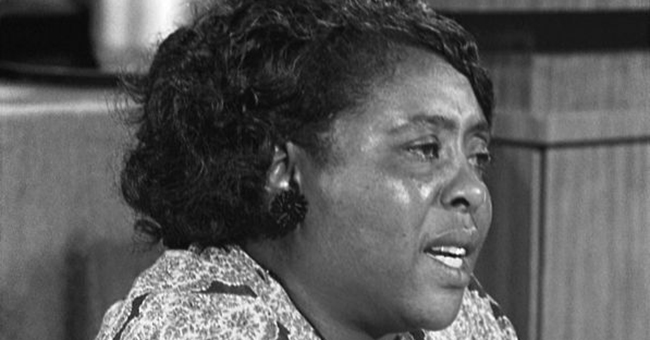
    Fannie Lou Hamer, American civil rights leader, at the Democratic National Convention, Atlantic City, New Jersey, August 22, 1964.

    Fannie Lou Hamer, American civil rights leader, at the Democratic National Convention, Atlantic City, New Jersey, August 22, 1964. Photo credit: Warren K. Leffler, U.S. News & World Report Magazine

    More than forty years since her death in 1977, Fannie Lou Hamer’s words still speak truth to power, laying bare the faults in American society and offering valuable insights on how we might yet continue the fight to help the nation live up to its core ideals of “equality and justice for all.” In Until I Am Free: Fannie Lou Hamer’s Enduring Message to America, Award-winning historian and New York Times best-selling author Dr. Keisha N. Blain situates Hamer as a key political thinker alongside leaders such as Martin Luther King Jr., Malcolm X, and Rosa Parks and demonstrates how her ideas remain salient for a new generation of activists committed to dismantling systems of oppression in the United States and across the globe.

    Dr. Blain gave a keynote address about her this year at the twenty-third annual Dr. Martin Luther King, Jr. Virtual Holiday Observance and Sunrise Celebration. Hosted by the American Library Association, the event commemorates Dr. King’s legacy and recognizes the connection between his life’s work and the library world. This year’s theme focuses on Dr. King’s 1957 speech, “Give Us the Ballot—We Will Transform the South.” Dr. Blain’s address illustrates how Hamer embodied Dr. King’s vision of courageous Black leadership.

    ~~~

    In 1957, Martin Luther King, Jr. delivered a speech on the power of voting. King argued that access to the ballot would allow Black Americans to remake society without having to wait for federal support. He argued that voting was a solution for the many challenges Black Americans faced. King’s speech also addressed the 1954 Brown Decision. In the aftermath of Brown, local school districts and politicians continued to resist the attempts to desegregate schools nationwide. These delays frustrated Civil Rights activists across the nation who organized the Prayer Pilgrimage for Freedom. King used his speech at the event to advocate for expanding Black political rights. He emphasized the need for strong leadership to emerge from several groups, including from within Black communities. King called for courageous Black leaders to emerge. He stated that these leaders must meet hate with love.

    King’s vision would soon be realized as the Southern Christian Leadership Conference, and later, the Student Nonviolent Coordinating Committee, or SNCC, spread throughout the South. SNCC recruited local Black leaders to organize their communities. These leaders were essential to achieving the victories of the Civil Rights Movement, and perhaps none more so than Fannie Lou Hamer.

    Fannie Lou Hamer was the embodiment of King’s vision, a courageous leader who answered the call to expand Black political rights. Hamer deeply believed in the power of voting. Although King and Hamer did not always see eye-to-eye, she shared his commitment that the politics of love could overcome the politics of hate.

    Born in Mississippi in 1917, Hamer was a working poor and disabled Black sharecropper who joined the Civil Rights Movement at the age of forty-four. In 1962, her life changed dramatically after attending a mass meeting at a local church. The gathering had been organized by activists in SNCC. The speakers that night highlighted how ordinary citizens could transform American society with the right to vote, a message that resonated with Hamer. She went on to become a field secretary for SNCC and assisted Black people in Mississippi and beyond with voter registration.

    This was dangerous work. In June 1963, Hamer was returning from South Carolina with a group of other activists. They stopped in Wynona to grab a bite to eat. Hamer’s colleagues encountered resistance from the owners of the café who made it clear that Black people were not welcome. The police arrived. And when Hamer exited the bus, an officer grabbed her and started kicking her. After Hamer and her colleagues were arrested, they received brutal beatings from the police officers who also instructed prisoners to do the same. Hamer’s injuries left her with kidney damage, a blood clot in her eye, and worsened a physical limp that she would carry for the rest of her life. However, Hamer was undeterred and continued her efforts to expand Black political rights.

    This was no small matter. Despite the passage of the Thirteenth, Fourteenth, and Fifteenth Amendments, Black people in the South were still shut out of the formal political process. During the early 1960s, only an estimated five percent of Mississippi’s 450,000 Black residents were registered to vote. Hamer was determined to change this. In April 1964, she joined forces with several other activists to establish the Mississippi Freedom Democratic Party, the MFDP. The group challenged the Mississippi all-white Democratic party. In August of 1964, only months after the establishment of the MFDP, Hamer and others traveled to Atlantic City, New Jersey, to attend the Democratic National Convention. The group arrived in Atlantic City hoping to compel the state and national party to give up seats to the MFDP delegation rather than suffering the embarrassment of exposing the lack of equal representation before a national audience. They also hoped to raise awareness to the broader struggles Black people in Mississippi face as they attempted to exercise their right to vote. They wanted people to know about the resistance Civil Rights activists encountered while organizing in the state.

    The experience in Atlantic City transformed Hamer. Although she encountered resistance, she persisted and delivered the most well-known speech of her political career before the Credentials Committee at the Convention. Hamer used her speech to describe the acts of racist violence Black people faced on a daily basis in the Jim Crow South. She told the stories of shots being fired at the homes of those who supported voting rights, and she told the story of what happened to her in Wynona. As she reflected on the painful experiences that Black people face in the South, Hamer could not help but to question America. In her words, is this America, the land of the free and the home of the brave, where we have to sleep with our telephones off the hooks because our lives are threatened daily, because we want to live as decent human beings in America?

    These crucial words shook the nation to its core. The United States could not claim to be a democracy while withholding the voting rights from millions of its citizens. Hamer had asked an urgent question that all Americans were forced to ponder. Is this America?

    ~~~

    Watch Dr. Blain’s full keynote.


    About the Author 

    Keisha N. Blain is a historian of the 20th-century United States specializing in African American history, the modern African diaspora, and women’s and gender studies. She is the author of the multi-prize-winning book Set the World on Fire, Until I Am Free, and co-editor, with Ibram X. Kendi, of the #1 New York Times bestseller Four Hundred Souls. She is an associate professor of history at the University of Pittsburgh, president of the African American Intellectual History Society, and a columnist for MSNBC. Follow her at keishablain.com, on Twitter (@keishablain), and on Instagram (@keishanblain).

  • By Solomon Jones

    Trayvon Martin’s father, Tracy Martin, and his mother, Sabrina Fulton, at the Union Square protest against Trayvon’s shooting death, March 21, 2012.

    Trayvon Martin’s father, Tracy Martin, and his mother, Sabrina Fulton, at the Union Square protest against Trayvon’s shooting death, March 21, 2012. Photo credit: David Shankbone

    This year, February 26 is the tenth anniversary of the murder of Trayvon Martin. As Solomon Jones lays out in these passages from Ten Lives, Ten Demands: Life-and-Death Stories, and a Black Activist’s Blueprint for Racial Justice, there is a path to get rid of the anti-Black stand-your-ground laws that took Trayvon’s life. Jones also honors his life with a snapshot of his relationship with his father, Tracy Martin.

    ***

    The pain of that night was still fresh in Tracy’s mind when I interviewed him in 2015, three years after George Zimmerman shot and killed Trayvon. Tracy also remembered the good times he’d shared with his son, and he freely shared all he could recall.

    Tracy, a truck driver who grew up in the impoverished city of East St. Louis before moving to Miami in his early twenties, lit up when he talked about Trayvon. He recalled meeting [Trayvon’s mother] Sybrina Fulton at a Christmas party—how they had dated for a year and half before they married. Sybrina cursed Tracy’s name while going through the pain of childbirth, he said, but when Tracy cut the umbilical cord and heard their child yell in the nursery, Tracy knew he and Trayvon would have much in common.

    “He was stubborn,” Tracy told me. “And from the moment I really got to embrace him, I knew that this was a part of me that would just, kinda . . . do certain things that I did, because he wouldn’t stop hollering and my mother said when I was born, I wouldn’t stop hollering. So, I knew right then, this kid is gonna be like me. . . . From early on we built a friendship. We built a bond.”

    Tracy played baseball, Trayvon played football, and the father and son spent many long days on the playing field. But after one such day, when Trayvon was nine years old, tragedy struck. Tracy and Trayvon had been on the field all day, and when they got home, they were exhausted. Trayvon was hungry, though, and he wanted to eat before they settled down to watch the Miami Hurricanes play the North Carolina Tarheels on television.

    Tracy put grease in a pot on the stove to fry chicken wings, but as the grease heated up, both he and Trayvon fell asleep.

    “The grease had actually been on from 9:30 at night and I woke up coughing,” Tracy told me. “The grease had started spilling out over the pot and the kitchen cabinets caught on fire. My first instinct when I saw the fire . . . I took a towel and threw it over the pot, but I didn’t know how heavy the towel was. The towel dragged the pot off the stove and the grease hit my legs. I had third-degree burns from my knees down to the bottom of my feet and what happened was my body instantly went in shock.”

    Trayvon dragged his father to safety that night. Then, when the ambulance came and the paramedics told Trayvon he couldn’t ride with them, the boy displayed the stubbornness Tracy knew. “He was like, ‘No, I’m riding in the ambulance with my dad,’” Tracy recalled. “This is the personality that I know he had in him that I had in me.”

    Trayvon’s personality was grounded not just in genetics, but in a determination to win that was nurtured on the playing fields of South Florida.

    “In Miami we have an atmosphere,” Tracy told me. “When you play sports, sports don’t really see Black, brown, white, or yellow. He was raised on the park with a lot of Latin kids, a lot of Jewish kids, a lot of white kids.”

    But ultimately, the young man who played defensive end and wide receiver on a youth football team, who dragged his father to safety after a grease fire, and who grew up around kids of every race and ethnicity, was profiled by someone who believed a Black boy in a hoodie looked suspicious.

    Trayvon, like any seventeen-year-old boy, was not perfect. He’d recently been suspended after school officials found a bag containing traces of marijuana in his backpack, but Trayvon had no criminal record, and his father said he wasn’t a bad kid by any stretch of the imagination.

    That’s why, on the night Trayvon was shot, Tracy knew that his son would’ve come back from the store if he could have, so at four in the morning, Tracy called the police. Then he filed a missing person’s report.

    “They ended up calling me back about six thirty in the morning, and they told me they were going to send a patrol unit out to the house,” Tracy told me. “It hadn’t dawned on me that something was wrong. I’m thinking the unit’s coming out to get more information about him being missing. So it was three cars pulled up. The first car was a community service car, the second car was a uniformed officer’s car, and the third car was an undercover car.

    “So, they get out. They introduce themselves, and it didn’t dawn on me that the first person to introduce himself to me was the—he was sort of like the chaplain for the police department. And he introduced himself as—he said, ‘I’m the chaplain of the Sanford Police Department.’ And then the detective came up. He introduced himself. He said he was with the Major Crimes Unit. And it’s not registering.

    “So, he asked me did I have a picture of Trayvon. I told him, ‘Yeah I had a picture.’ I had just taken a picture of him and two more of my kids playing around two days before. So I showed him the picture and he told me I’ll be right back. And it was drizzling outside. He asked if I minded if we went in the house.

    “He asked me when was the last time I seen Trayvon and what did he have on and he went through the formalities, and then he said, ‘I’m going to show you a picture. You tell me if this is your son.’ And he pulled out a picture, and it was him on the ground dead.”

    ~~~

    Zimmerman was found not guilty, and according to at least one of the six jurors, the stand-your-ground law played a major role in the decision.

    The woman, known only as Juror B-37, told CNN’s Anderson Cooper that “because of the heat of the moment and the ‘stand your ground,’ he had a right to defend himself. If he felt threatened that his life was going to be taken away from him or he was going to have bodily harm, he had a right.”

    Ultimately, the juror said, they had no choice but to acquit.

    Therein lies the problem. Stand-your-ground laws not only give murderers the legal justification to kill others. These laws also signal to jurors that killers have a right to take lives under the vague notion that they feel threatened.

    This kind of legal sleight of hand, which allows perceived threats to be viewed as real, jeopardizes the lives of Black people, and, according to recent research, it particularly endangers Black men.

    In a 2017 study, researchers found that people see Black men and boys as larger and more threatening than their similarly sized white counterparts. They sometimes use those stereotypes to justify using violence against Black males, and Trayvon Martin was no exception.

    Black men are not the only ones facing a more dangerous world with stand-your-ground laws. Black women are too, and in the wake of Zimmerman’s acquittal, it was three Black women—Alicia Garza, Opal Tometi, and Patrisse Cullors—who created the #BlackLivesMatter hashtag, which has since grown into an international movement to protect all Black lives, including those in the LGBTQ community.

    However, as the movement has grown, so has the threat of stand-your-ground laws. As of 2020, legislation similar to Florida’s has been adopted by twenty-seven states with the help of two powerful forces—the National Rifle Association and the American Legislative Exchange Council.

    “ALEC seized on the Florida law, which became part of ALEC’s ‘model legislation’ portfolio,” writes Rukmani Bhatia of the Center for American Progress. “The result was widespread efforts for state legislatures across the nation to enact these laws.”

    The results have been devastating for Black people.

    In November 2012, when a white man named Michael Dunn claimed he was threatened after confronting a group of Black teenagers over loud music in a Jacksonville, Florida, gas station, he fired into their car, killing seventeen-year-old Jordan Davis while claiming self-defense. Dunn was eventually convicted.

    In February 2020, when Gregory and Travis McMichael, both white, confronted a twenty-five-year-old unarmed Black jogger named Ahmaud Arberry, they initially avoided arrest by claiming they were standing their ground and acting in self-defense. The McMichaels, along with William “Roddie” Bryan, a third white man who filmed the encounter, are awaiting trial after being charged with Arberry’s murder.

    “These tragic deaths are not outliers,” writes Bhatia. “Researchers at American University found that approximately 30 people die each month in a ‘stand your ground’-related incident in states with these laws enacted. Data show that states with a version of ‘stand your ground’ laws see increased rates of homicides and injuries related to gun violence.”

    Behavioral scientist Andrew Morral and economist Rosanna Smart, writing for the RAND Corporation blog, reviewed available research on stand-your-ground laws and arrived at similar conclusions. Their review found “‘moderate’ evidence—the second strongest level of evidence—that these laws are associated with an increase in homicides. Since publication of RAND’s report, at least four additional studies meeting RAND’s standards of rigor have reinforced the finding that ‘stand your ground’ laws increase homicides. None of them found that ‘stand your ground’ laws prevent violent crime. No rigorous study has yet determined whether ‘stand your ground’ laws promote legitimate acts of self-defense.”

    Then, of course, there is the racism. John Roman, of the Urban Institute’s Justice Policy Center, analyzed data from the FBI’s Supplemental Homicide Report for 2005–2009 in states with stand-your-ground laws. “The odds that a white-on-black homicide is ruled to have been justified is more than 11 times the odds a black-on-white shooting is ruled justified,” Roman told Bloomberg News. “No dataset will ever be sufficient to prove that race alone explains these disparities. But there are disparities in whether homicides are ruled to be self-defense, and race is clearly an important part of the story.”

    It is indeed, which is why, in the interest of Black people’s survival, stand-your-ground laws must be challenged in courts, overturned in legislatures, and ultimately erased from the books.

    If there is any doubt that these laws are meant to target Blacks, one need only examine a November 2020 proposal made by Florida governor Ron DeSantis. The governor, a white conservative, proposed an update to Florida’s stand-your-ground law in the wake of a summer of protests seeking racial justice after George Floyd and others were murdered by white police officers.

    In an effort that seems to target the very Black Lives Matter protests that began with the killing of Trayvon Martin, DeSantis’s proposal would update the law to justify lethal force in instances of looting, criminal mischief, and arson “that results in the interruption or impairment of a business operation.”

    DeSantis called the proposal “anti-mob” legislation. But neither DeSantis nor other conservatives proposed similar edicts after a largely white mob attacked the US Capitol in an attempt to overturn an election, killing a police officer and causing four other deaths in the process.

    Thus, we must call stand-your-ground laws what they are: anti-Black laws. We must fight them with every fiber of our being.

    The Demand: Eliminate stand-your-ground laws, which have served to justify the murders of Black and brown people, beginning with Trayvon Martin. These laws, which expand the definition of self-defense to a level that endangers all citizens, and especially people of color, have been shown to increase homicides rather than prevent them. Therefore, they must face legal challenges until they are wiped from the books at the state level and prohibited by federal law.


    About the Author 

    Solomon Jones is an award-winning columnist for the Philadelphia Inquirer and morning host for WURD radio in Philadelphia. He is also a host for Classix 107.9 and a blogger for NPR affiliate WHYY. Jones is an Essence best-selling author who has been featured on NPR’s Morning EditionNightline, and CNN. In 2019, Jones formed the Rally for Justice Coalition with a multitude of civil rights organizations. The coalition’s efforts resulted in the firing of over a dozen Philadelphia police officers who espoused racist rhetoric online. Connect with him on Twitter @solomonjones1 or at solomonjones.com.

  • By Guilaine Kinouani

    Black woman at ease

    Image credit: msahbee0

    Racism causes harm.

    Harm to the body. And harm to the mind. Yet it was only in November 2020 that the American Medical Association recognized racism as an urgent threat to public health. Thankfully, many of us did not wait for this penny to drop to tackle its impact. For about fifteen years, I have been working therapeutically with people of color, supporting almost exclusively Black people distressed by racism and experiencing racial trauma. Living While Black seeks to offer the same support in book form, by presenting some of this work—the politics and personal and professional experiences that underlie my psychology and psychotherapy practice—to help us find connection, hope, and empowerment.

    First, I want to tell you a little bit about the journey that brought this book to life. I have carved my practice out of the whiteness of psychology and psychotherapy. I have carved it out of the thousands of micro and macro experiences of discrimination and Othering I had to navigate. I have refused to ignore this rich set of data, the intellectual gifts contained therein, and their potential to help others heal. Exploring and reflecting on my own lived experience, my lived evidence, has been central to understanding patterns of harm and domination but also patterns of resistance. My scholarship was born out of the documentation of these patterns on Race Reflections, a platform that started as a blog and turned into a social enterprise dedicated to tackling inequality, injustice, and oppression. Women—especially Black women—are socialized to distrust what we know and to be suspicious of our own authority. Often, we stop ourselves from using our gifts, or wait for someone to give us the go-ahead, or to tell us how to start and when to start. I had little support when I decided to set up my practice. What drove me was simply a strong will or perhaps a strong need to have a space where, as a Black woman, a mental health professional, and a psychologist, I could engage with mental health and psychology from the vantage point of being a Black female body in the world, with the richness, complexities, and baggage that this entails.

    In distilling these complex learnings, the primary aim of Living While Black is to make many of us who often haven’t felt this way feel heard, seen, and held. This book seeks to help Black people thrive by first addressing the nuances of Blackness, then creating a tailored self-care plan. The first aspect is achieved via case studies, research, and strategies born out of countless hours of clinical practice and personal reflections, some of it extracted from the work of Race Reflections. The second aspect guides the reader as they self-reflect and prompts them to engage in self-care activities. Living While Black is a vital psychology guide for Black people. It is also an anti-racist text for others who simply want to better understand the effects of anti-Black racism so they can do better. And it is a resource for mental health, social care, and medical practitioners working with Black people.

    This book sheds a light on the trauma of racism—its impact on both our mental and physical health and its consequences across individuals’ lifespans, across generations, and across social contexts. It exposes anti-Black experiences, which society tells us are not occurring or, if they are occurring, are not causing us harm. I want there to be no doubt that racism harms and that racial trauma is real. But, equally, I want to show that it is possible to resist and to practice radical self-care while navigating white supremacy.

    The material you will encounter here does not reach most psychology and psychotherapy “teaching” or our collective consciousness. In fact, it is material we have learned to censor. It is therefore rich and heavy material that you are asked to engage with and to honor. Here you will encounter intersectional violence, intergenerational wounds, normalized trauma, everyday resistance, cultural homelessness, structural inequality, and all the intersections of the socioeconomic, the political, the historical, the institutional, the relational, and the psychological. This is the stuff that tends not to reach Black people who seek support for psychological distress. Many mental health professionals still believe politics belongs outside our therapy rooms. That therapy is not political. The whiteness of this position is still to be accepted as a fact, let alone as a problem. Way too many mental health professionals consider social structures and indeed racism to be a distraction from the real issues or a vehicle to the real issues. And for way too many psychotherapists and psychologists, the real issues still lie in our relationship with our mother (imagine a slave in distress at their condition, being asked to reflect on their relationship with their mother, to get to the “real issues”).

    Over the years, Black people have come to my practice after having been further harmed by those whose job it is to facilitate healing. Psychotherapy and mental health services continue to struggle to work with racism; in fact, they often reproduce it. Mindlessly. The reality is this: If you are Black and those you seek support from are unwilling to look at racism and the trauma it inflicts, these individuals or systems are simply unwilling to look you in the eye. They do not want to see you. They are not prepared to engage with the weight and complexities of our shared and often bloody history. From there, there is usually nowhere to go but an impasse. A wall. The wall of whiteness. It is this absence of thinking that leads to a gap that continues to make racism nearly impossible to address in therapy for way too many.

    It is in that gap that some of us are forced to sit while being encouraged to displace Black rage toward our mothers because their capacity to be mothers was affected by the unjust structures within which they mothered us: the abject xenophobia, the racism, the patriarchy, the poverty. I think of my own mom too. Her back is pretty much broken. The social symbolism of a Black woman with a broken back is such a powerful one. So many of the Black women I know have broken backs. Being the mules of society carries such a heavy burden. And so many of their daughters have sore throats or are losing their voices trying to speak words few are prepared to hear. This is what being silenced can do. Black backs have a long history of carrying loads—white loads. And of being flogged for not keeping silent. But we are entitled to take some of the weight off and share it. And we are entitled to speak. And we are entitled to write. In fact, we absolutely must make our voices heard by any means necessary if we are to stand any chance of stopping history from becoming fatality by repetition.

    Living While Black provides more specific tools to help you with specific challenges such as managing race-based stress, coping with Black shame, and talking to Black children about race. The title comes from an expression that has been part of racial discourse for decades. The phrase “ . . . while Black” is used by Black academics, journalists, writers, and activists in and outside the US to describe the challenges of existing, resisting, and thriving within white supremacy. The term links its origins to a 1999 Minnesota Law Review paper by David A. Harris subtitled “Why ‘Driving While Black’ Matters,” which exposed the treatment of Black motorists by the police in 1990s America. The phrase has since been used in a variety of other contexts, such as “birding while Black,” “traveling while Black,” and “working while Black.” It highlights the differing experiences and outcomes of these mundane activities when they are carried out by Black people—because of racism, racial profiling, and the associated risks to our safety, all of which will be explored in this book.

    Please also note that the contents of Living While Black may sometimes be distressing. You may feel a temptation to disconnect, to put the book down. We know that human beings go to extraordinary lengths to avoid pain, discomfort, and tension. This has resulted in us continuing to refuse to confront the reality of racism. But breaking silences matters. It is always the first step in breaking the cycle of abuse. And we can only break silences if people accept the invitation to hear and see. Here, you are invited. While I primarily address the Black reader directly, and the activities and strategies are focused on our needs, many of the tools will no doubt be helpful to others who experience racism and oppression. I want to again be clear, however, that everyone is invited to come in and reflect on the work we all must do, and to think of what they themselves can do to lighten the load.

    Consider this invitation a gift.


    About the Author 

    Guilaine Kinouani is a UK-based French radical and critical psychologist of Congolese descent. She is a feminist, a therapist, and an equality consultant, as well as the founder, leader, and award-nominated writer for RaceReflections.co.uk. Kinouani is a senior psychologist and an adjunct professor of Black and Africana studies at Syracuse University, London. Kinouani heads Race Reflections and its academy, providing workshops on anti-racism, racial trauma, and self-care. She is the author of Living While Black: Using Joy, Beauty, and Connection to Heal Racial Trauma. She tweets as @KGuilaine.

  • By Jonathan Rosenblum

    Starbucks

    Image credit: Christian Hardi

    This article appeared originally in Jacobin Magazine.

    It’s time for an all-labor national day of action to defend Starbucks workers. 

    The Starbucks baristasREI retail workersAmazon warehouse workers, striking Warrior Met mineworkers and concrete truck drivers, along with other workers bravely organizing and fighting back, are at the forefront of resisting unbridled corporate greed in this new Gilded Age. But they won’t succeed if the fights are limited by region or industry. We need to mobilize workers throughout the labor movement to demonstrate that there’s still substance to the labor maxim, “An injury to one is an injury to all.”

    It mystifies and disturbs me that regional and national labor bodies that ought to be pulling out all stops for these baristas, retail workers, and others don’t seem to recognize that this moment demands their full energy and focus.

    Last week, Starbucks workers in several New York City stores petitioned for union elections, bringing the number of unionizing stores to seventy-two since the fall. The weekly spate of new Starbucks election filings represents a breakthrough for labor with potentially historic implications.

    The executives are counterattacking: last week, they fired seven Memphis baristas who had led the organizing in that city. Yet the AFL-CIO’s pinned tweet in the aftermath blathered on about “another victory for working people today with the release of the first report from the White House Task Force on Worker Organizing and Empowerment.”

    Victory? Really? It’s a report. But this is the most important thing the AFL-CIO leadership wants us to get animated about—not the bravery of low-paid workers taking on the billionaire class.

    Local rallies and press conferences are a good step. I attended one a few weeks ago in Seattle, organized by Starbucks Workers United, socialist city councilmember Kshama Sawant, and a bunch of local unions that stepped up (but notably not the central labor council, unfortunately). It was exciting to hear from Starbucks workers who had flown in from the East Coast and to see the local solidarity from other unions.

    Yet scattered local efforts will not be sufficient to force the companies to pull back on their union-busting. The shameful but not surprising firing of the seven Memphis Starbucks workers and the aggressive REI anti-union captive-audience meetings this past week confirm that the bosses have run the calculations and determined that any reputational harm they suffer from these over-the-top tactics is a price worth paying if it stops union momentum. They are okay with maybe being required by the labor board to make back pay settlements to fired workers—in two years? three years?—because a slap on the corporate hand is a pittance to pay for tactics that cast widespread fear throughout the workforce and deter other workers from standing up.

    We won’t win unions at places like Starbucks and REI simply by reacting with outrage to the bosses’ attacks on workers. Absent union escalation, there will be more firings, more shakedowns, more union-busting. We, the labor movement, must escalate the fight and demonstrate that when workers in Memphis, or New York, or Arizona are under attack, then workers from California to Maine will fight back.

    There’s no better way to ramp up than with demonstrations at Starbucks stores in every state in this country. From there, we should organize escalating actions that create a crisis for the CEOs who try to stymie the workers’ democratic decisions.

    Years ago, in my hometown of Seattle, professional union musicians struck the 5th Avenue Theatre after eighteen of them were fired during contract negotiations. It was a tiny walkout. The local Jobs With Justice coalition and labor council mobilized more than a thousand people nightly to attend rallies in front of the struck theater. Boeing machinists, longshore workers, city employees, health care workers, construction workers, tugboat operators, grocery workers, university workers, teachers, and more—all joined in to block the downtown street in front of the theater and prevent the show from opening with scabs.

    Within a week, the musicians won full reinstatement and a new contract. It was not just a musicians’ win—it was a win for the entire working class.

    The 5th Avenue Theatre strike is hardly unique. Think about what the West Virginia teachers did, on a much larger scale, just four years ago, and how their leadership and sacrifice inspired educators throughout the country to stand up and fight for public education. Or recall how the 2019 sickout by a handful of air traffic controllers, on top of strike calls by the flight attendants’ union, forced the end of Donald Trump’s national government shutdown.

    What the Starbucks workers need now is to see that the entire US labor movement has their back. We need a decisive national demonstration of class solidarity—one that sends a message to bosses everywhere that in 2022, when you mess with a single barista, you mess with all of us.


    About the Author

    Jonathan Rosenblum is a union and community organizer based in Seattle. He is the author of Beyond $15: Immigrant Workers, Faith Activists, and the Revival of the Labor Movement and a member of the National Writers Union.

  • By Nancy Rubin Stuart

    Benjamin Franklin. Portrait by Joseph-Siffred Dupessis, oil on canvas, circa 1785.

    Portrait by Joseph-Siffred Dupessis, oil on canvas, circa 1785

    Everyone knows Benjamin Franklin was a scientist, an inventor, and a diplomat, but did you know he also had the makings of a great romance advice columnist? The founding father was well suited to that job because of his wide experience with women. That may explain why he penned a letter in 1745 to a single man about the best way to sate his sexual impulses outside marriage.

    Ben’s advice? Sleep with an older woman instead of a young one.

    At first blush, the idea sounds ridiculous. After all, it is widely assumed that young women are better in bed than older ones. But not according to Ben, who seemed to understand a lot about the sexuality of older women.

    Despite his famous warnings about the importance of personal discretion, Ben confessed in his autobiography that he had often succumbed to that “hard-to-be-governed passion of youth” with women. One of those dalliances resulted in the birth of his illegitimate son, William. In June 1745, during his common-law marriage to Deborah Read, his essay, “Old Mistresses’ Apologue,” later known as “A Letter to a Friend on Choosing a Mistress,” explained why older women were preferable to younger ones as mistresses.   

    Franklin scholars, embarrassed by the letter’s prurient tone, kept that essay hidden for nearly two centuries to avoid reflecting badly upon the founding father. But by the 1920s, as social mores became more liberal, Phillips Russell printed the letter in his widely-read biography Benjamin Franklin: The First Civilized American.

    Franklin began his lecture by admitting that marriage was the “proper remedy” for lust. However, if the reader had no immediate plans to wed, he should seek out an “old” woman to satisfy his needs rather than a young one. By “old” Franklin meant something quite different than those we consider elderly today. In eighteenth-century America, the average life span for both sexes ranged from the late thirties to the early forties. Today’s average life expectancy for women is eighty-one and seventy-seven for men. Since we’re living longer and healthier, our definitions of old age have changed. As a result, Franklin’s reference to old women referred to those we consider middle-aged today.

    His letter revealed eight reasons why older women were preferable to younger ones when engaging in casual sex.

    1. First, older woman had more wordly knowledge than younger women. Hence, they were better conversationalists and companions.
    1. Older women may not be as attractive as younger ones but were much nicer to their partners. That happened, according to Franklin, because when a woman lost her looks, “she studies to be good,” is willing to do “a thousand and one favors,” and is “the most tender and useful of all friends when you are sick.”
    1. Since she was older, her partner didn’t have to worry about her becoming pregnant.
    1. Being more experienced, older women were also more discreet about their affairs than younger ones.
    1. Even though Franklin complained that the faces and necks of older women were more wrinkled than younger ones, that wasn't important. After all, he reminded his friend that the “lower parts continuing to the last as plump as ever . . . As in the dark all cats are grey, the pleasure of corporeal enjoyment with an old woman is at least equal and frequently superior” to that of younger women.
    1. Since she was no longer a virgin, her lover never had to worry about ruining her purity or reputation.
    1. Unlike younger, more demanding women, older ones were simply happy to have a lover.
    1. Best of all, Franklin gleefully wrote, “They are so grateful!”

    Today, pundits have summarized Franklin’s praise for older women thus: “They don’t yell, they don’t swell, and they’re grateful as hell!” 

    For decades, historians have debated what prompted Franklin to write this essay. Was it inspired by an affair either before or during his common-law marriage to Deborah Read? Or was it one of Franklin’s experiments to write bawdy prose then secretly in vogue among literate men of his era? Perhaps, too, it was still another example like his youthful praise for prostitutes while an apprentice in his older brother’s New-England Courant

    The motives for Franklin’s titillating letter may never be known, but his observations about the pleasures of a sexual liaison with a mature woman were uncannily accurate. Several recent studies reveal that older women not only enjoy sexual intimacy as much as younger women but, surprisingly, even more. A 2011 survey in the American Journal of Medicine of 806 women with a median age of sixty found that their sexual satisfaction increased with age.

    Another paper by the American Sociological Association in 2014 on a hundred heterosexual married women ages thirty-five to forty-five revealed that sixty-seven percent were seeking affairs because they wanted more romantic passion including sex.  

    The following year, a survey in the Annals of Family Medicine based upon a nationally representative sample of women aged twenty-eight to eighty-four found that sexual satisfaction had nothing to do with age and more to do with good communication with partners. That seems to confirm Franklin’s observation that an older woman’s conversation skills often made her more desirable than a younger woman.  

    Those studies, coupled with Franklin’s observations, suggest there’s good news for men involved with older women today. Happy Valentine’s Day to the 51.5 million women ages forty to sixty-four from America’s most outspoken founding father!   


    About the Author 

    Nancy Rubin Stuart is an award-winning author and journalist whose eight nonfiction books focus upon women and social history. Her most recently published works include Defiant BridesThe Untold Story of Two Revolutionary-Era Women and the Radical Men They Married and The Muse of the RevolutionThe Secret Pen of Mercy Otis Warren and the Founding of a Nation. A former journalist, Stuart has written for the New York TimesHuffington Post, the New England Quarterly, and national magazines. She serves as executive director of the Cape Cod Writers Center. Her next book, Poor Richard’s Women: Deborah Read Franklin and the Other Women Behind the Founding Father, is forthcoming in March 2022. Connect with her at www.nancyrubinstuart.com.

  • Black man with shades

    What a difference a year makes. Book banning is back—and it’s on steroids. Is it a coincidence that it’s all the rave—more like rage—during Black History Month? The pearl-clutchers have assembled and are targeting not only books dealing with sex and gender but also books featuring Black themes and US history. It’s a predictable flex. A tired flex.

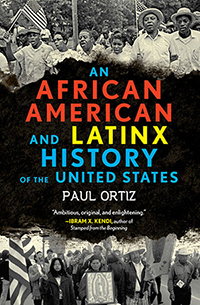
    Don’t forget that Paul Ortiz’s An African American and Latinx History of the United States holds the dubious honor of making it on that little Krause list of around 850 books that “might make students feel discomfort, guilt, anguish, or any other form of psychological distress because of their race or sex.” We know which students he’s referring to. That’s what you call cosigning ignorance. Is “psychological distress” the new doublespeak for learning and enlightenment?

    And so, starting with Ortiz’s book, here’s a batch of recommended reading on Black history and Black lives for the month and year round. Psychological distress be damned. Because Uncle Jimmy Baldwin put it best in The Price of the Ticket: “One wishes that Americans—white Americans—would read, for their own sakes, this record and stop defending themselves against it. Only then will they be enabled to change their lives.” 


    An African American and Latinx History of the United States

    An African American and Latinx History of the United States

    “In a time of endless war, with democracy in full retreat, I argue that we must chart pathways toward equality for all people by digging deep into the past and rediscovering the ideas of Emancipation Day lecturers, Mexicano newspaper editors, abolitionists, Latin American revolutionaries, and Black anti-imperialists who dreamed of democratic ways of living in the Americas.”
    —Paul Ortiz


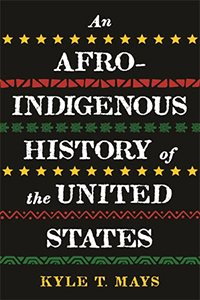
    An Afro-Indigenous History of the US

    An Afro-Indigenous History of the United States

    “If I am to imagine a new world, one that brings an end to a world that hates Black people and reproduces antiblackness and white supremacy, and a world that erases Indigenous people and reproduces their dispossession through settler colonialism, I intend to tell some histories that have been ignored at best or made invisible at worst.”
    —Kyle T. Mays


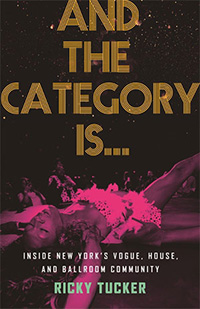
    And-the-Category-Is

    And the Category Is . . . : Inside New York’s Vogue, House, and Ballroom Community

    “What is Ballroom? First, let’s be clear about what it isn’t. Ballroom is not a single song, movie, catchphrase, TV show, pop star, or ‘scene.’ Ballroom, ball culture, or the house-vogue system is part of a thriving arts-based culture founded over a century ago by LGBTQ African American and Latinx people of Harlem . . . If identity is a construct, and the world a stage, then Ballroom is the world’s Met Gala.”
    —Ricky Tucker


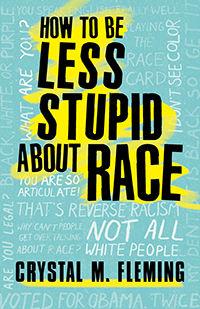
    How To Be Less Stupid About Race

    How to Be Less Stupid About Race: On Racism, White Supremacy, and the Racial Divide

    “Have you ever wondered how people lived with slavery, Jim Crow, and lynching but looked the other way? Look around right now. This is how they did it.”
    —Crystal M. Fleming


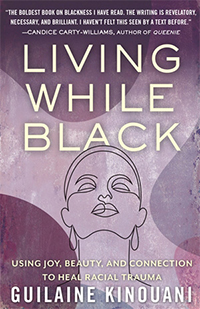
    Living While Black

    Living While Black: Using Joy, Beauty, and Connection to Heal Racial Trauma

    “This book sheds a light on the trauma of racism—its impact on both our mental and physical health and its consequences across individuals’ lifespans, across generations, and across social contexts . . . I want there to be no doubt that racism harms and that racial trauma is real. But, equally, I want to show that it is possible to resist and to practice radical self-care while navigating white supremacy.”
    —Guilaine Kinouani


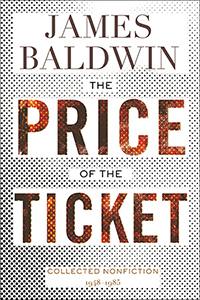
    The Price of the Ticket

    The Price of the Ticket: Collected Nonfiction: 1948-1985

    “My point of view certainly is formed by my history, and it is probable that only a creature despised by history finds history a questionable matter. On the other hand, people who imagine that history flatters them (as it does, indeed, since they wrote it) are impaled on their history like a butterfly on a pin and become incapable of seeing or changing themselves, or the world.”
    —James Baldwin, from “White Man’s Guilt”


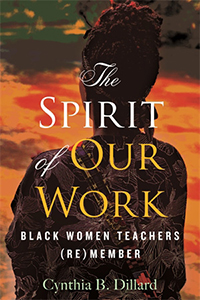
    The Spirit of Our Work

    The Spirit of Our Work: Black Women Teachers (Re)member

    “(Re)membering serves to honor the complexity of that wholeness in the long history of Black life, a history that moves us to be more fully human through both the joy and the tragedies of our existence as a people, and to learn from all of it.”
    —Cynthia B. Dillard


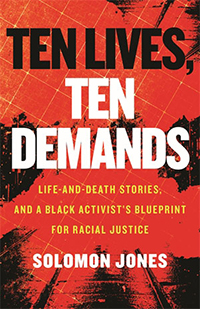
    Ten Lives Ten Demands

    Ten Lives, Ten Demands: Life-and-Death Stories, and a Black Activist’s Blueprint for Racial Justice

    “The demands in this book are drawn from my desire to see my people fight and win the equality we deserve . . . America is our country. Its wealth is built on our backs. Its capitalism depends on our consumption, and its future will be defined by our success. We demand much more than I could list in these pages, but these ten things are a damn good start.”
    —Solomon Jones


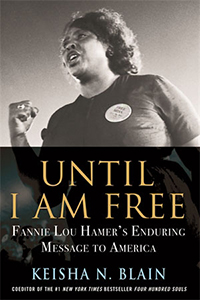
    Until I Am Free

    Until I Am Free: Fannie Lou Hamer’s Enduring Message to America

    “As Hamer reminded audiences across the country, it was impossible to ‘make democracy work’ when only some Americans had access to rights and resources.”
    —Keisha N. Blain


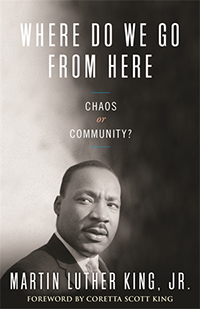
    Where Do We Go From Here

    Where Do We Go From Here: Chaos or Community?

    “One of the great liabilities of history is that all too many people fail to remain awake through great periods of social change. Every society has its protectors of the status quo and its fraternities of the indifferent who are notorious for sleeping through revolutions. But today our very survival depends on our ability to stay awake, to adjust to new ideas, to remain vigilant and to face the challenge of change.”
    —Martin Luther King, Jr., from “The World House”


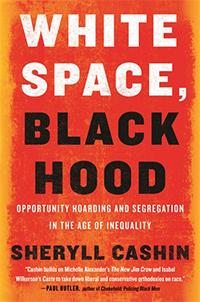
    White Space Black Hood

    White Space, Black Hood: Opportunity Hoarding and Segregation in the Age of Inequality

    “A basic move, of creating and maintaining Black-subordinating institutions to confer value on affluent whites, has not changed, though the mechanics and propaganda have metastasized. I argue that policy decisions made in the early twentieth century, to construct ghettos, have profound consequences for producing current inequality. I also contend that geography is now central to American caste, a mechanism for overinvesting in affluent white space and disinvesting and plundering elsewhere.”
    —Sheryll Cashin


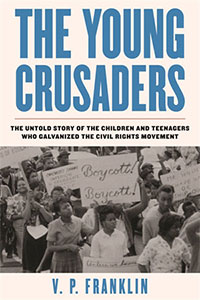
    The-Young-Crusaders

    The Young Crusaders: The Untold Story of the Children and Teenagers Who Galvanized the Civil Rights Movement

    “Children and teenagers were on the front lines at nonviolent protests and demonstrations throughout the 1950s and 1960s, but their major contributions to civil rights activism has generally gone unacknowledged.”
    —V. P. Franklin

    Black man with shades

  • By Ricky Tucker

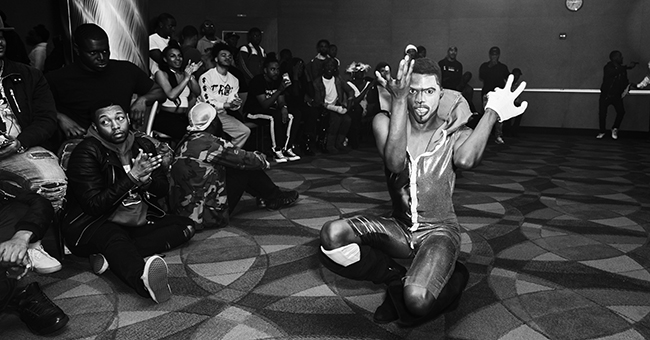
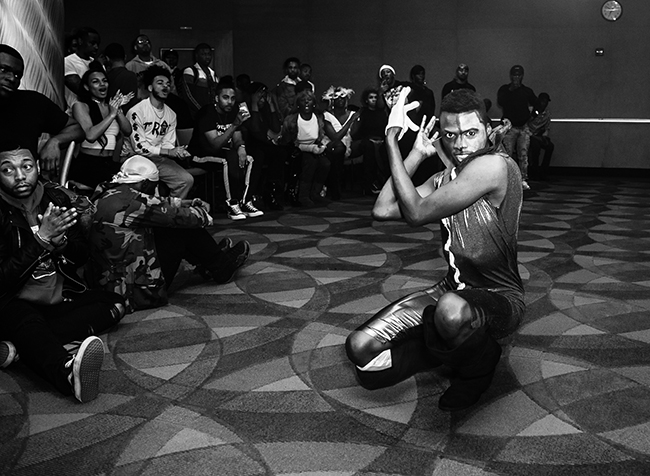
    At the 2019 “Escape from Arkham” Kiki ball in the Bronx, NY, Two-Face vogues and slays the competition. © Kareem Worrell.

    At the 2019 “Escape from Arkham” Kiki ball in the Bronx, NY, Two-Face vogues and slays the competition. © Kareem Worrell.

    Editor’s note: FX’s Pose and HBO’s Legendary have recently charmed mainstream TV audiences to Ballroom, but the Black and Latinx LGBTQ underground subculture has been around much longer than you think. There’s no way either show could cover every facet of its complex cultural makeup, its integrated history, its ongoing relevance. Turn to Ricky Tucker’s And the Category Is . . .: Inside New York’s Vogue, House, and Ballroom Community, walking the scene with a strut that means business.

    Equal parts sugar and shade, Tucker’s book offers an impressionistic point of entry into the world founded as a fearless response to the systemic marginalization of minority populations. Its photo insert, with contributions from photographers Kareem Worrell, Emrys Eller, and Luna Luis Ortiz, brings us that much closer to the fabulousness of balls. Here, they join Tucker, a close friend of the community, as he shares with us examples that embody the spirit of each ball category. Get your lives, honeys!

    ***

    Werk

    This was one of the first images my friend and And the Category Is . . . photographer Kareem Worrell developed while I was writing the book—and it became an aspirational photo. The audacity of Lee, the central figure, drove my urge to match in tone his ferocity in the first few chapters. To, like Ballroom, unapologetically hold accountable the public appropriation of this unique culture, AND to elevate to divine status the unwavering love that is its foundation. In short, this photo is the epitome of the chapter “Werk.” 

    At the 2019 “Escape from Arkham” Kiki ball in the Bronx, NY, Two-Face vogues and slays the competition. © Kareem Worrell.

    At the 2019 “Escape from Arkham” Kiki ball in the Bronx, NY, Two-Face vogues and slays the competition. © Kareem Worrell.

    Kareem Worrell on shooting this Ball:

    “I’m not always sure of what I’m looking for when I’m photographing an event, but I can sense it when I see it. My first ball [the Escape from Arkham Ball] was full of these knowing intuitions, triggered by the thumping music, chanting spectators, and kinetic movements on the runway. The frenzied energy of the crowd coupled with the fierce performances really set off my creative energy; I wanted to photograph everything, every vogue movement, every twirl and every hurtling dip (death drop to those weaned on Drag Race). In that space, I felt called home, like I was at a church sermon designed to solely proselytize to me. I hope my photography can honor Ballroom’s visual feast and legacy of tradition built by queer Black hands.”

    Find more of Kareem’s work at kareemworrell.com. Follow him on Instagram: @kareemworrellphoto


    Memory

    From contributing two interviews that underscore the global prowess of Ballroom to walking, winning, and constantly breaking the eccentrically dressed category called “bizarre” to being the founding father of the House of Soldier—this book could never have been written without NYC nightlife and Ballroom icon Lee Soulja. His real-life tall tales about traveling to Japan with Willie Ninja for a Thierry Mugler show and going to Paradise Garage the night Keith Haring body painted Grace Jones took the book above and beyond its New York title. And we and the book are transcendent because of it.

    Ballroom legend and NYC nightlife royalty Lee Soulja. Latex Ball, NYC, 2009. © Luna Luis Ortiz.

    Ballroom legend and NYC nightlife royalty Lee Soulja. Latex Ball, NYC, 2009. © Luna Luis Ortiz.

    Vogue

    Although our final cover image of Keetz the Baddest by Anja Matthes is the image of my dreams, at one point during our search, I thought this photo by Kareem was the one. It’s so kinetic yet arresting and matches perfectly the personal victories and communal engagement that makeup ball culture. Everyone is giving it their all, and it is everything—which is basically what we are voguing about.

    Starfire, spin . . . and dip. “Escape from Arkham” Kiki ball, Bronx, NY, 2019. © Kareem Worrell.

    Starfire, spin . . . and dip. “Escape from Arkham” Kiki ball, Bronx, NY, 2019. © Kareem Worrell.


    The Children

    The Red Ball, where this picture was taken, was different from most of the balls captured in the book’s photo insert, as it was one specifically meant for the Kiki scene—a much younger set. That night, we were overly encouraged to hit the complimentary buffet, answered surveys for New York City’s public health department, and while watching the runway, felt a fiery rush only the children could deliver. It reminded me that even if LGBTQ kids of color are often abused and let go from their homes, Ballroom catches them with open arms. This community knows no strangers. 

    The children at the Red Ball. Brooklyn Expo Center, 2019. © John Emrys Eller.

    The children at the Red Ball. Brooklyn Expo Center, 2019. © John Emrys Eller.

    Emrys Eller on shooting this ball:

    “The lasting impression of shooting the Red Ball in Brooklyn, shortly before Covid forced us into our silos, was a feeling of sincere and warm acceptance. I showed up to my first-ever ball expecting the vogueing kids to be wary of the new face behind a giant lens, but their smiles and friendly chit-chat quickly dispelled that notion. Here was a crowd who gathered to witness one another wholly, with plenty of playful judgment but not an ounce of malice. As I snapped portraits of a group outside the venue, they passed the post-ball joint my way, and I felt honored that they had welcomed this stranger into the fold, if only for a night.”

    Find more of Eller’s work at emryseller.com.


    Church

    Throughout the book, but specifically in the “Church” chapter, I discuss the extended metaphor of the Ball as a sacred, hallowed, space. The MC as pastor. The crowd the congregation. The DJ as choir director. House music the gospel. This picture, however, states beautifully the divine grace bestowed upon those most prepared for and deserving of its spotlight.

    A young woman basking in the spotlight. Red Ball, Brooklyn Expo Center, 2019. © John Emrys Eller.

    A young woman basking in the spotlight. Red Ball, Brooklyn Expo Center, 2019. © John Emrys Eller.


    Realness

    Walking categories, trans lives, and the unexpected prevalence of gender norms within the Ballroom scene 

    Winning the umbrella category of realness can be contingent upon current beauty standards and the tastes of the judges. The offshoot category of face can rely as heavily on holding your head high, finding the right light with said face, and emphatically appealing to your judges. Thus, this picture by Legendary Icon Hall of Famer, Butch Queen Face grand prize winner, and photographer Luna Luis Ortiz shows the lengths to which folx will go to have you know precisely how mother effin pretty they are.

    The category is: Face. Latex Ball, NYC, 2009. © Luna Luis Ortiz.

    The category is: Face. Latex Ball, NYC, 2009. © Luna Luis Ortiz.

    Luna Luis Ortiz on shooting his lifelong community across countless balls:

    “Taking photographs at a ball is an extension of my own creativity as an artist. From the moment I entered Ballroom in 1988, I knew it was something important and that it should be documented. Being a walking participant gave me an understanding of the body in motion; I understood the voguing body because I Vogue. I understood the beauty in the photo because I walked and won Face. I understood the struggles before going into the ball because I lived it. So, it came naturally for me to capture images that are not only beautiful but tell a story, that showcase the vulnerability and strengths of Ballroom. 

    A ballroom moment is just a moment—but a photo or video is forever.”

    Find more of Luna’s work at visualaids.org/artists/luna-luis-ortiz. Follow Luna on Instagram: @lunalens.


    Body

    In the “Body” chapter, I go into the importance of Black trans fem bodies, metabolizing racial trauma in our bodies, body sponsorship by both corporations, and the not-for-profit industrial complex. Heavy. But I thought for this image, it would be nice to simplify a bit and appreciate bodies at a ball in their most classic sense—stuff you’d like to touch. Enjoy. #bodiadiadi

    The category is: Sex Siren. Latex Ball, NYC, 2009. © Luna Luis Ortiz.

    The category is: Sex Siren. Latex Ball, NYC, 2009. © Luna Luis Ortiz.


    Two-Face Escape from Arkham Kiki ball

    About the Author 

    Ricky Tucker is a North Carolina native, a storyteller, an educator, a lead creative, and an art critic. His work explores the imprints of art and memory on narrative, and the absurdity of most fleeting moments. He has written for the Paris Review, the Tenth Magazine, and Public Seminar, among others, and has performed for reading series including the Moth Grand SLAM, Sister Spit, Born: Free, and Spark London. In 2017, he was chosen as a Lambda Literary Emerging Writer Fellow for creative nonfiction. Connect with him at thewriterrickytucker.com and on Instagram: @rictorscale.

  • A Q&A with Jeanne Theoharis

    Jeanne Theoharis – The Rebellious Life of Mrs. Rosa Parks

    Author photo: John Riscoli

    Have you wondered why there has never been a Rosa Parks documentary? It is so long overdue. No need to wonder anymore because it is finally on the way! Peacock’s The Rebellious Life of Mrs. Rosa Parks, the first-ever feature on Parks, is currently in production from Soledad O’Brien’s SO’B Productions. Based on Jeanne Theoharis’s NAACP Image Award-winning biography of the same name, it is slated to have its premiere on the streaming platform this year. In honor of the lifelong activist’s birthday today, Beacon Broadside editor Christian Coleman caught up with Theoharis to chat about the production.

    Christian Coleman: This project marks the first-ever full-length documentary about Mrs. Parks. Given how many films and documentaries there are about Dr. King and Malcolm X, why do you think it’s taken this long for a documentary to be made about her? She has six decades’ worth of activism to look into.

    Jeanne Theoharis: I think people assume that they know her. Even many people who know Rosa Parks wasn’t just a simple seamstress who accidentally walked into history don’t realize how much of her history—the militancy of her early activism in Montgomery, her activism in Detroit, her work in Black Power—is still largely unrecognized. As longtime civil rights activist Julian Bond ruefully said to me when I interviewed him for my book, “I met her numerous times over her lifetime . . . . I just talked to her about innocuous things and never delved deeper . . . . I thought I knew everything to know about her.” I’ve been researching Rosa Parks for over fifteen years, and I’m still surprised at how wide her activities were and how many things she did.

    CC: Who got in touch with you about adapting your book? How did you find out the adaptation was happening?

    JT: On February 4, 2019, I did a Twitter thread on Rosa Parks’s life of activism. A filmmaker named Johanna Hamilton, who I had met through her film 1971—which covers the activist break-in to the FBI office in Media, Pennsylvania, that exposed the FBI’s spying on the civil rights and antiwar movements—reached out in admiration. She wondered if a Rosa Parks documentary was already in the works and was surprised when I said no. We had a conversation later that week and then she sprang into action. 

    Because she was currently based in London, she wanted to bring on a second director and reached out to Yoruba Richen, who was also excited about the project and whose filmmaking expertise was in twentieth-century African American history and politics. She directed The Green Book: Guide to Freedom and more recently How It Feels to Be Free

    The three of us met. Johanna did a long interview with me. And then they started looking for funding. Part of what was exciting was that I had admired both Johanna and Yoruba’s work long before we began the project.

    CC: What was your reaction when you found out your book would be the basis of the documentary?

    JT: I was excited but a bit incredulous. I didn’t quite believe it would happen. Soledad O’Brien’s production company came onto the project in 2020, which was also thrilling. But I still didn’t quite think it would happen. Even after Peacock funded the project this spring, and we started in earnest, I kept being surprised that this was actually coming together.

    One of the coolest things is that they committed to building a team of people of color—from producers to editors to the people filming and composing the score. It’s an incredible team of people working on it. For many people, like me, this feels like a labor of love. As one person involved put it, she feels like she’s walking through the world in a new way having gotten to know Mrs. Parks’s full life of freedom fighting.

    CC: How much involvement do you have in the production? How much do you work with Richen and Hamilton?

    JT: I am a consulting producer on the film. I have gotten to play a role in who was interviewed, the questions asked, the kinds of places to look for archival materials, and many of the key details in this huge sweep of history—from the 1930s almost to her death in 2005—that is Rosa Parks’s life of activism. I get to attend the weekly team meeting. It’s been really exciting to be part of figuring out how to tell her story in this new medium, and I have learned a ton.   

    CC: What challenges have come up in telling her story in this medium? How does your text fit in with the interviews of activists and celebrities and Mrs. Parks’s family, video footage, and exclusive audio?

    JT: Part of the challenge of the film was one of the issues I faced when writing the book: Rosa Parks was hidden in plain sight in so many events across so many movements. As Dr. Mary Frances Berry puts it in her interview, people “would say stand up Mrs. Parks, wave Mrs. Parks,” and not ask her for her thoughts; they would only interview her about her bus stand and Montgomery in 1955. They wouldn’t delve into the danger and details of her two decades of activism before the boycott and the four decades after. Rosa Parks spent the second half of her life in Detroit fighting the racism of the North and joining a burgeoning Black Power movement. We were committed to telling that story in the film, too.  

    On top of that, most of us aren’t familiar with what Rosa Parks actually sounded like. So, it required a lot of sleuthing and an amazing archival producer who dug up a lot of footage and images. We get to hear so much of Mrs. Parks’s life in her own words in the film.  

    CC: What does your book mean to you now that Mrs. Parks’s lifelong activism is finally coming to the screen?

    JT: The film is not done yet! But it is such an honor to see it coming into being. And I’m so excited to have another tool to change the way people, and particularly young people, to learn about Rosa Parks. One of the great things about Rosa Parks is that she gets more impressive the more you get behind the myth of her. Her example is so relevant to where we are today in this country and how you push for change over a lifetime.


    About Jeanne Theoharis 

    Jeanne Theoharis is Distinguished Professor of Political Science at Brooklyn College of City University of New York and the author or coauthor of numerous books and articles on the civil rights and Black Power movements and the contemporary politics of race in the US. Her books include The Rebellious Life of Mrs. Rosa Parks (winner of a 2014 NAACP Image Award) and A More Beautiful and Terrible History (winner of the 2018 Brooklyn Public Library Literary Prize for Nonfiction). Connect with her on Twitter (@JeanneTheoharis).