• By Leigh Patel

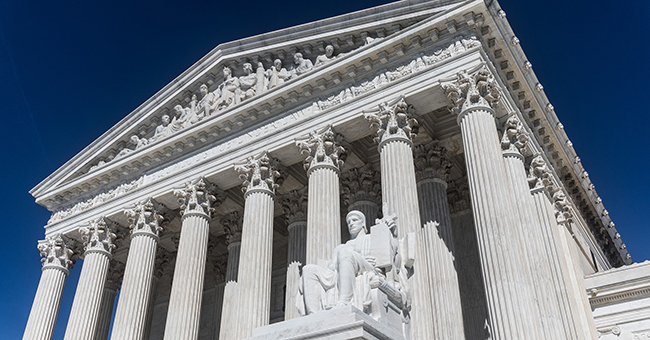
    US Supreme Court Building

    Image credit: Mark Thomas

    On January 24, the United States Supreme Court agreed to hear two cases that have upheld the use of affirmative action in college admissions. The cases, one filed against Harvard University and one against the University of North Carolina (UNC), have been organized financially and in media by Edward Blum, a legal strategist who has worked for years to lodge attacks against affirmative action. Although not a lawyer, Blum uses strategy of media and message and is also the president of Students for Fair Admissions, the organization that filed both lawsuits that will all be heard in the highest court in this land. What is affirmative action and what is at stake?

    Affirmative action began in the 1960s, first under the federal administration of John F. Kennedy and through a policy at the University of Michigan to rectify the racial inequities of the university’s staff. Affirmative action has since become a way for universities to consider race, and sometimes racism, in its admissions decisions. It has been attacked consistently, with the Supreme Court maintaining its worth. The most recent cases have upheld affirmative action in lower courts; therefore, it is likely to assume that the Supreme Court’s willingness to review these cases implies a questioning, again, of affirmative action. Until now, the Supreme Court has upheld affirmative action’s power through slim margin votes, with the deciding vote cast by a moderate conservative out of the nine justices. There is no longer a moderate conservative justice on the Supreme Court.

    Affirmative action faces its largest challenge since becoming a protected practice, not just in admissions but in addressing inequities in hiring, compensation, and even what research is funded and what books are read in schools. Affirmative action’s potential to demand a reckoning with racism as gatekeeping, such as college admissions, is already compromised by commonplace misunderstandings of its history and meaning. On January 30, during a weekly TV news panel, Republican Senator Lindsay Graham defined affirmative action as “picking somebody not as well qualified for past wrongs.” This patently incorrect and ahistorical definition was made in the context of the Senator’s support for one of several Black women likely considered by the president to fill Judge Breyer’s upcoming retirement from the court. With misconceptions like this on national media, the stakes for affirmative action are indeed high.

    One of the most confusing aspects of the challenges to affirmative action is that, on the surface, the lawsuits and the seemingly benign-named Students for Fair Admissions seek to fight for equal admissions. Yet, the cases against Harvard and UNC share a common logic that has long been leveraged in the interest of protecting whiteness: pitting people who are not white against each other. In the recent cases, the allegation is that affirmative action discriminates against Asian Americans by requiring higher test scores from them, which allegedly benefits Black students who apply for admission. In an amicus brief filed by an education rights attorney and a scholar of higher education, Nicole Gon Ochi and OiYan Poon argue that UNC’s admissions policies do not, in any way, require higher scores from students of Asian ancestry. They also provide litigious proof that the lawsuit undermines the ability to ascertain the obstacles that many Asian and Asian Americans face through obstacles of racism and caste-like classism.

    Pitting Asian and Black peoples against each other has its history in the model minority myth, the idea that Asians are, by culture or by ethnicity, harder workers, smarter, and come from more stable families. As historian Helen Wu carefully traces, this mythology is long and contorted but consistently works for two intertwined goals: casting Asian peoples as a monolithic perpetual foreigner and fanning the flames of anti-Black racism. It should come as no surprise that the model minority myth has reared its head in times of social movements that challenge anti-Black racism and white supremacy.

    Whether one examines legal efforts to intervene on admissions practices that uphold white supremacy from these recent decisions or from a slightly more historied view of solidarity between Asian and Black peoples during the Civil Rights Movement of the 1960s, a few points are salient. First, the pitting of Asian and Black peoples against each other is entirely precedented, and two, the struggle for quality education for all continues.

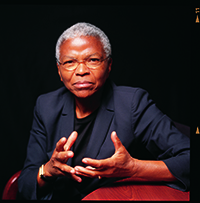
    The recent passing of legendary organizer and educator, Bob Moses, contextualizes these recent attempts to curdle efforts for equity and freedom. Moses married his passion for philosophy of mathematics with what he learned alongside Ella Baker about organizing for nothing less than freedom. Just months before he transitioned from his life, he wrote an essay arguing that returning to ‘normal’ from the pandemic would mean returning to a ‘sharecropper education,’ in which some are designated for certain kinds of lives and only afforded a serf-like education. Moses worked tirelessly for freedom for all, his last efforts focused on education as a constitutional right. In a panel discussion that both honored Moses’s impact and lifted up his ongoing legacy, Maisha Moses, Bob and Janet Moses’ daughter and Executive Director of the Young Peoples’ Project, noted that her father, having learned from his elders, showed throughout his life that people can create meaningful lives in the struggle for freedom.

    Although affirmative action may seem to be in the crosshairs of a fatal blow at the hands of a deeply conservative Supreme Court, the struggle for freedom is as long, if not longer and larger, than any attempt to pit people of color against each other. Following Bob Moses’s example, in this moment when falsehoods and ahistoricity seem to be everywhere, we can and must create meaning in our lives through struggles for freedom.


    About the Author 

    Dr. Leigh Patel is an interdisciplinary researcher, an educator, a writer, and a professor at the University of Pittsburgh. She works extensively with societally marginalized youth and teacher activists. Patel is a recipient of the June Jordan Award for scholarly leadership and poetic bravery in social critique and is a national board member of Education for Liberation, a long-standing organization dedicated to transformative education for and by youth of color. She is the author of Youth Held at the BorderDecolonizing Educational Research, and No Study Without Struggle. Connect with her on Twitter at @lipatel.

  • By Amy Caldwell

    Photo of Thich Nhat Hanh © Plum Village Community of Engaged Buddhism, Inc.

    Photo of Thich Nhat Hanh © Plum Village Community of Engaged Buddhism, Inc.

    As we entered our second year of the pandemic, early in the spring of 2021, I was reviewing the changes and additions the monastics of the Plum Village Center for Engaged Buddhism had made for our revised and expanded edition of Thich Nhat Hanh’s classic collection of meditations, The Blooming of a Lotus. Upon hearing of Thay’s death last Friday, my mind returned to my reading and that time.

    It was still cold here in New England, and yet the winter, for a New England winter, had been oddly warm and snowless. I was delighted not to be shoveling snow—and unsettled. We had a new president, but we’d also had an insurrection. The vaccines were just rolling out, but it had been a long year of too much isolation, too much anxiety, too many Zoom meetings, and too much streaming. I felt deeply disconnected and yet over-connected, tethered to my laptop.

    You know. You had your own version of 2021. You may even be still living it.

    Working on The Blooming of a Lotus during this time was a gift. It was medicine of the highest order. Sometimes, I took the time to practice one or two of the early meditations in the book before diving into the next section of editing, focusing on my breathing, connecting mind and body, tasting the sensation of simple presence before my mind inevitably darted elsewhere. Other times, I found myself returning to one or another of the brief prefaces Thay had given at his 2004 Rains Retreat.

    After each of these prefaces, the retreatants would meditate in silence for forty minutes. I, too, meditated upon them, if with less rigor.

    Some of the Rains Retreat meditations are meant to help calm one’s mind, others to look deeply and contemplate a subject—which requires a calm mind. They praise the Buddha for teaching us to generate joy and happiness; and they bring us to dwell in the present moment, for it is the only moment in which we can be alive and fully present.

    But they also describe the practice of loving speech and thought, that of right action, and the internal knots—the fetters—that bind us. (And much more.) As ever with Thich Nhat Hanh, Buddhist practices and fetters are not merely individual; they ripple through communities.

    I am, like most of us, fettered—sometimes more so, and sometimes less. I need practices that connect me to the wellspring of joy that is within me when that wellspring feels like a fantastical creature long unseen. I need to be not only urged toward loving speech and thought but reminded how it can, properly done, break down barriers, external and internal.

    As one flawed human to my fellow flawed humans, then, I am deeply grateful to the monastics of Plum Village Center for Engaged Buddhism for ensuring that we all have access to so many of Thich Nhat Hanh’s meditations and teachings. And as much as we need them now, we will need them long after the pandemic ends.


    About the Author

    Amy Caldwell is the editorial director at Beacon Press. She acquires in religion, with special emphases on interfaith issues; the relation between politics, culture, and religion; and how Americans live out their religious beliefs. She also acquires in science and society, as well as narrative nonfiction/memoir.

  • A Q&A with Solomon Jones

    Solomon Jones

    Author photo: Milton Perry

    In a Philadelphia Inquirer op-ed, acclaimed commentator Solomon Jones posits that, as a nation, we could eradicate the domestic terror threat of white supremacy for a fraction of the cost of the Afghan war, but it would require “refocusing our hearts, taking a long look in the mirror, and mustering the courage to change our collective will.” In Ten Lives, Ten Demands: Life-and-Death Stories, and a Black Activist’s Blueprint for Racial Justice, he offers a blueprint for where we can start.

    Told through his perspective as an activist, Jones tells the stories of real people—George Floyd, Michael Brown, Breonna Taylor, Sandra Bland, Hassan Bennett, Alton Sterling, Tamir Rice, Trayvon Martin, Eric Garner, and Deborah Danner—whose lives and deaths pushed the Black Lives Matter movement forward. He explains how each act of violence was incited by specific instances of structural racism, and details concrete and actionable strategies to address crimes committed by our “justice” system. Our senior publicist, Bev Rivero, caught up with Jones to chat with him about his book.

    Bev Rivero: Do you feel that this book is a natural extension of your work as an organizer?

    Solomon Jones: Yes. One of the things I realized in working against racism in policing is that Frederick Douglass was right when he said, “Power concedes nothing without a demand. It never did and it never will.” You simply can’t have an effective movement without very specific demands. If you don’t know exactly what you want and you can’t articulate it clearly, the power structure decides for itself what it is willing to give, and that often turns out to be nothing. Organizing should start with deciding on a list of demands, and the actions should be centered on making them happen.

    BR: The Demands at the conclusion of each chapter are rooted in systemic change. What would be some of your advice for individuals to uplift these demands and reach lawmakers and others?

    SJ: I would encourage people to list these demands on their social media—to use them as a starting point for action. Next, I would advise them to get involved in their own communities. Learn how the local systems work and learn the names of local leaders. Challenge them to make change locally, and if they don’t make change, replace them. Run for office yourself if you must, and when you do, lift up these demands. Then make the demands the center piece of every campaign on the state and federal level. Force candidates to take positions, and then force them to act on those positions or lose their seats.

    BR: In your chapter on Alton Sterling, you discuss how the George Floyd Justice in Policing Act would have made a big difference in gaining justice for Sterling. In March of 2021, the bill passed in the House, but it has not yet advanced to the Senate, although President Biden called upon Congress to send him the bill by the one-year anniversary of Floyd’s death. Can you summarize what passing this bill would mean?

    SJ: The George Floyd Justice in Policing Act would do three main things. First, it would make it easier to convict a law enforcement officer for misconduct in a federal prosecution. Right now, prosecutors have to do the impossible—they must prove that an officer “willfully” violated the victim’s rights. Under this law, they’d simply have to prove that the officer knowingly or recklessly did so. Second, this law would limit qualified immunity so that police officers can be sued for their on-duty actions. That means officers who are sued for on-duty actions would pay damages out of their own pockets rather than having the taxpayers do so. Third, this law would authorize the Department of Justice to issue subpoenas in pattern-and-practice investigations, which would make it easier to gather evidence against departments that routinely engage in abusive behavior.

    BR: As you weave your own story of survival throughout the book, what are some of the connections you’d like to see readers make?

    SJ: I’d like readers to know that Black people have worth. We spend our lives navigating through racist systems that magnify and monetize our mistakes. Some of us come out the other side to tell the story, and some of us don’t. By the grace of God, I’ve been blessed to be able to tell the story. Unfortunately, too many of us are left to let others tell the tale. I want readers to know that there is a connection between the negative portrayals of Black people in media and the justification of police brutality. I want readers to understand that unjust outcomes are sometimes driven by personal connections between police and prosecutors. I want readers to understand that the systems that enable police brutality and corruption within our criminal justice system are connected to laws that protect the guilty and victimize the innocent. We have the ability to make change, but in order to do so, we must make one final connection. We must connect our protests to demands.

    BR: In the epilogue you share how deeply emotional the process of narrating these stories and lives was for you and how the “triumph of this book” is that it opens the full spectrum of feelings. In revealing how emotion is a catalyst for action, how might this prompt organizing and demanding change?

    SJ: This book allowed me to explore the grief I felt for these families who lost so much to police brutality and injustice. It also helped me to craft an action plan that would allow my community to do something constructive with our emotions. When each of these stories happened, people protested because they refused to sit still and allow the anger, sadness, and grief to overwhelm them. Instead, they used their emotions as tools to build a movement. It’s my hope that this book will give us the demands we need to transform our movement into real and tangible change. I’m still angry and hurt, but more than that, I’m determined to see justice for my people. That must be our ultimate demand.


    About Solomon Jones 

    Solomon Jones is an award-winning columnist for the Philadelphia Inquirer and morning host for WURD radio in Philadelphia. He is also a host for Classix 107.9 and a blogger for NPR affiliate WHYY. Jones is an Essence best-selling author who has been featured on NPR’s Morning EditionNightline, and CNN. In 2019, Jones formed the Rally for Justice Coalition with a multitude of civil rights organizations. The coalition’s efforts resulted in the firing of over a dozen Philadelphia police officers who espoused racist rhetoric online. Connect with him on Twitter @solomonjones1 or at solomonjones.com.

  • By Thomas Hitoshi Pruiksma

    Thomas Hitoshi Pruiksma

    Author photo: David Mielke

    Drawing on the poetic tradition of W. S. Merwin, Wendell Berry, and William Carlos Williams, and nurtured by two decades of study under Tamil scholar Dr. K. V. Ramakoti, Thomas Hitoshi Pruiksma’s new translation of The Kural brings English readers closer than ever to the brilliant inner and outer music of Tiruvalluvar’s work and ideas. This selection from his preface tells of his discovery of the text and the intricacies of translating from the original Tamil to a poetically intense English.

    ***

    Twenty-two years ago, when I first lived in Madurai in the state of Tamil Nadu, I went to visit the home of a student at the college where I was teaching. Meenakshi Sundram lived on a narrow lane not far from the Meenakshi Temple in this venerable and beautiful South Indian city. His home was only a few rooms, but they filled with family, friends, and neighbors, all eager to greet the teacher from abroad who could somehow speak a little Tamil. Meenakshi’s parents fed me a sumptuous feast, and at the end of the lovely and leisurely evening, they surprised me with a gift: two books of Tamil poetry. One was a collection by a contemporary poet; the other, a special edition of Tiruvalluvar’s Tirukkural. Meenakshi’s father pointed to the cover of the second, dust-jacketed book. “Everything you need to know is in here,” he said. “There are chapters on every aspect of life. When you have learned Tamil fully, you must read this book well.”

    I had no idea at the time how my interest in the language was going to blossom. It would be years before I could delve fully into any kind of Tamil literature, let alone an ancient classic. But I did know something of the importance of the Tirukkural, one of the most celebrated books in Tamil’s two millennia of literary history. I’d seen quotes from it posted overhead in the city buses and had heard my Tamil teacher, Dr. K.V. Ramakoti, refer to several of the book’s memorable verses. And so, in 2003 and 2004, when I returned to India on a Fulbright grant, I spent the second half of my stay studying the Tirukkural with Dr. Ramakoti as a guest in his home, tying the work to what I’d learned from him about the literature that precedes it and how different poets understand and express the relationship between people and place. Each day we read another chapter from the book, exploring not only the poetry itself but all the major commentaries that have grown up around it. As part of the process, I also memorized a selection of more than half of its verses, a far cry from the tradition of learning the entire volume by heart but enough at least to start getting some of its rhythms into my body.

    The Tirukkural, or more simply, the Kural, is indeed an extraordinary work. Scholars often date it between the third and fifth centuries CE, at the end of what is known as the Sangam period, a time of literary flourishing in Tamil Nadu. The name of the book combines the honorific prefix tiru—“eminent,” “beautiful,” “holy”—with the name of the Tamil verse form that Tiruvalluvar employs, the kural venpā. More than one translator has referred to the kural form as a couplet, but doing so risks a misunderstanding. While a kural does consist of two lines of poetry, they are not matched metrically, as a couplet by Shakespeare or Pope might be. The first line of a kural contains four feet (cīr, in Tamil), while the second contains a mere two and a half. In addition, a kural is not end-rhymed but rather follows a sophisticated and nuanced pattern of assonance and consonance that has characterized Tamil poetry from its beginnings. Within the rhythm of each line, key vowel sounds are expected to correspond with each other (assonance), and key consonants, at the beginnings of words as well as within them, are expected to match exactly (consonance). It is an exceedingly compact and demanding form. (During my Fulbright year, I learned to write Tamil kurals myself, composing a handful of verses each morning before breakfast and showing them to Dr. Ramakoti for correction and emendation. They were not great poetry, but writing them deepened my understanding of Tamil prosody considerably.)

    Tiruvalluvar uses this form to elucidate what it means to live a good life. Each chapter of the Kural consists of ten kurals on a single theme, such as friendship, hospitality, or rain. These verses are both complete in themselves and part of a larger whole in which all the different verses complement, augment, and amplify each other. The book’s 133 chapters, in turn, are arranged into sections that cover three of the four aims prescribed by Hindu tradition—virtue, wealth, and love. Most commentators claim, and I’m inclined to agree, that Tiruvalluvar leaves out the fourth aim—liberation from the cycle of birth and death—because if a person pursues the first three wholeheartedly, the fourth is a natural result.

    The book thus covers a vast array of human knowledge, experience, and wisdom, offering an intricate interweaving of ethics and poetry, full of wordplay, sharp imagery, and rhythmic sophistication. Its scope is so sweeping that some scholars have argued that Tiruvalluvar isn’t actually a person but rather an emblem for a collective persona whose poems have been gathered into one volume. Either way, however, it is the work itself that matters. In the years since my first entry into its pages, Dr. Ramakoti would sometimes remark to me, “Wouldn’t it be good if someone did a proper literary translation of the Tirukkural, drawing on all the commentaries that we studied together?” I would always agree, but it never crossed my mind that this hypothetical someone might be me. Until unexpectedly, five years ago, it suddenly occurred to me to try.

    When I told Dr. Ramakoti that I was starting to make a translation, he exclaimed, “Oh good, you finally got it.” It may have been obvious to him all along, but I don’t think I could have even entertained the thought until I felt my knowledge of Tamil was clear enough and my practice as a poet solid enough to do some kind of justice to the task. Which is perhaps why he never suggested it to me directly. He knew it had to occur to me in its own time.

    ~~~

    One may well ask why a new translation is even needed. The Kural is by far the most translated book from Tamil literature, with over eighty translations into different world languages, some made directly and many more made by way of English, since English serves as a common language in both India and beyond. Many of these translations, however, are neither literary nor in print, and several are entirely unreadable. The best of them, that of P. S. Sundaram, captures Tiruvalluvar’s brevity and playfulness but does little to suggest his patterns of consonance and assonance. Here, for instance, is how Sundaram renders a verse from chapter 11, “Gratitude”:

    103 Help given regardless of return

            Is wider than the sea*

    And here is a transliteration of this verse, with several elements of its patterns in bold:

    103 payan tūkkār seyta utavi nayan tūkkin

           nanmai katalir peritu

    Very little of these patterns has made it into Sundaram’s translation. My experience, however, suggests that more is possible. Even if one can’t achieve exactly the same effect with the same means—the same exact sounds in the same exact order—one can try to achieve a similar effect with similar means. That, in any case, is what I’ve tried to do, while also trying to honor root meanings. In this verse, for instance, tūkkār means literally “those not weighing”:

    103 The weight of good done without weighing results—grace

           Greater than oceans

    Two other aspects of Tiruvalluvar’s poetry have eluded previous translations: the dissimilar lengths of the lines in a kural and the absence of punctuation. (Tamil didn’t have or need punctuation as we know it until the language encountered English.) Accordingly, I’ve tried to honor this dissymmetry in each verse and have also drawn on the example of the North American poet W. S. Merwin, who relinquished punctuation while writing his fifth book, The Moving Target. He felt, and I feel, that punctuation staples a poem to a page, pinning it within the rational protocol of written language and literal-minded prose. I want instead to evoke the oral and aural qualities of Tiruvalluvar’s intelligence, which cannot be fully captured by mere rationality. He speaks to all of our senses with all of his. So although at times I use a dash to make the meaning clearer, as well as initial capitals to suggest the formality of the verse, I have strenuously avoided any other kind of punctuation. This is meant to encourage readers to read the poems out loud and to allow their breath and their ears to participate in the discovery of the verses’ many patterns and meanings.

    In some cases, the dashes are also meant to suggest a form of expression in Tamil that doesn’t have an exact equivalent in English. Many of Tiruvalluvar’s statements equate one thing to another, as we might do in English with a form of the verb “to be.” I might say, for instance, “My name is Thomas,” and we’d understand that the verb “is” equates “my name” and “Thomas.” In Tamil, however, one doesn’t need a verb to make such a statement. One can simply place the two elements beside each other and their connection will be clearly understood. What looks literally like “My name Thomas” means in fact “My name is Thomas.” But in English, if we write “My name Thomas,” we’re not really writing in English. Unless, that is, we say the statement out loud and add a pause of some significance between “name” and the name itself: “My name—Thomas.” Now we have something that brings the two forms of expression a bit closer. And notice that this not only returns us to language as it’s spoken but to the drama that such a pause out loud can convey.

    I have thus used dashes to indicate places where a pause may help to bring the poem off the page. Here’s an example from chapter 2, “The Glory of Rain”:

    15 That which ruins and raises up

         The ruined—rain

    One could, of course, translate the dash here as “is,” but I feel that it’s closer to the spirit and energy of the original to convey that meaning with a more meaningful silence. Doing so also keeps the poem more open to possibility and to different interpretations, as all good poems tend to do. Throughout this translation, if a verse does not seem at first to make sense to you, speak it out loud and you may find it revealing its patterns of meaning to your ear. Poetry begins in the ear of the heart, which we can learn to hear through the ear of our body.

    ~~~

    In order to interweave some of the contexts in which these verses find meaning, I have included some brief notes to explain key cultural and literary ideas. These notes, taken together, form a kind of commentary, one that corresponds to what is known in Tamil as “a commentary of notes.” I first encountered this kind of commentary reading another Tamil classic, Ilankō Atikal’s Cilappatikāram (The Tale of an Anklet), and appreciate the way it gives just enough background for readers to enter the writing more fully without taking over the process entirely. In that spirit, I’ve given notes to amplify the connotations of words and to offer further insight into the verses themselves, especially about what goes on behind the scenes of the translation. For instance, although one might wish to translate key words from the Tamil in the same way throughout the book, this isn’t always possible or even desirable, given how meanings can shift in different contexts. Hence, the notes clarify where different words in English may be translating the same word in Tamil, or where the same word in English may be rendering, at different times, different words in the original.

    The notes also serve another purpose. Present-day readers of the Kural in Tamil almost never read the work without a commentary of some kind. In making this translation, I have referred to the oldest traditional commentaries available, written between the eleventh and fourteenth centuries. Where it has seemed helpful to do so, I have included certain observations from the last and most authoritative of these commentators, Parimēlalakar, as well as from the earliest and in some ways my favorite, Manakkutavar. In this way I mean to suggest how interpretive frameworks such as theirs are part of the experience of reading Tiruvalluvar in Tamil. If at times I offer a pair of conflicting interpretations, I don’t do so to say that these are the only ones possible but rather to suggest there may be still others.

    Two last textual notes: Most of the time, in writing Tamil words in English, I have used the transliteration system of the Tamil Lexicon, published by the University of Madras. However, though such systems can be useful for scholars, the diacritical marks they include can also serve inadvertently to mystify a language and hide it behind a screen of scholarly expertise. So, in some cases, where it feels right to do so, I have transliterated words according to my ear instead, so that a reader can hear what I’m talking about without recourse to a system that requires some initiation to make sense of. I have also omitted the diacritics on Tamil (Tamil), Tirukkural (Tirukkural), and Tiruvalluvar (Tiruvalluvar), in honor of how these names have become naturalized in English.

    Finally, I have followed the practice of most Tamil editions of the Kural and ordered the verses in each chapter according to Parimēlalakar’s commentary. (Other commentators, such as Manakkutavar, sometimes order the verses differently.) I have also included a number of Parimēlalakar’s insights about how various chapters form larger groupings, and how these groupings in turn help us in reading the poems. But I would encourage the reader to keep returning to the verses themselves and to remain open to one’s own discoveries. The Kural is not simply a book to read but a work to engage and converse with. That is how its verses come most alive, able to startle and illuminate.


    About the Author 

    Thomas Hitoshi Pruiksma is an author, poet, performer, and teacher. His books include The Safety of Edges and Give, Eat, and Live: Poems of Avvaiyar. Pruiksma teaches writing for Cozy Grammar and has received grants and fellowships from the National Endowment for the Arts, 4Culture, Artist Trust, the Squaw Valley Community of Writers, the US Fulbright Program, the American Literary Translators Association, and Oberlin Shansi.

  • Lani Guinier

    Author photo: Santa Clara Law

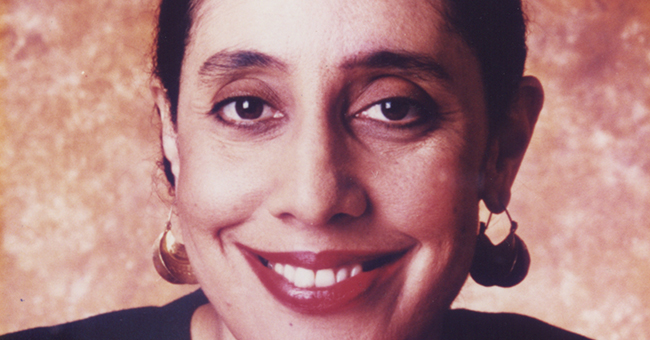
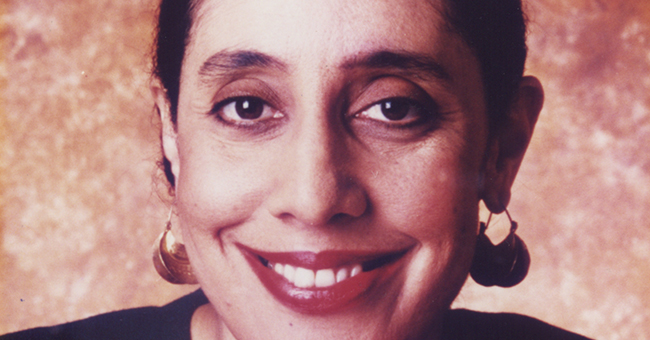
    It’s a rough way to begin the new year, mourning an author and an intellectual powerhouse. Lani Guinier, legal scholar, champion for voting rights, and the first woman of color appointed to a tenured professorship at Harvard Law School, joined the ancestors on January 7. She was seventy-one. Although heartbroken about her passing, we remain honored to have published her work, including The Tyranny of the Meritocracy, which she wrote to provide a clear blueprint for creating collaborative education models to strengthen our democracy rather than privilege individual elites. May she rest in power.

    Our director and authors offer these words to commemorate her and her work.

    ***

    Working with Lani Guinier on her last book, The Tyranny of the Meritocracy, remains one of the great joys and privileges of my many years in publishing. It was a long time in process, some six or seven years, in fact, largely because she was in such high demand as a teacher, lecturer, and commentator. I was competing for her time with her students—and she did not ever stint with her students—her colleagues, the media, and the legal and civil rights community as a whole. She deserved her legendary status, every bit of it, for the courage she displayed in each groundbreaking step of her career. She deserves even more. Her legacy is deep and will be lasting, I’m sure.

    But what I want to remember is having the three-hour parking meter run out while I sat in her office at Harvard Law School, just listening, kicking myself for not having a tape recorder (before smartphones), for not taking better notes—but I was too occupied trying to take mental leaps with her. She was so knowledgeable, so perceptive, and yes, so enchanting. Each meeting, every conversation was an illumination. And also fun. Because she had a wonderful sense of humor, a sly one. My colleague, Pam MacColl, recalled so fondly “her quirky observations and hilarious side comments.” I was especially honored that she came back to Beacon for this book, and that she came to my fifteenth anniversary party, where her warmth and generosity were on brilliant display.

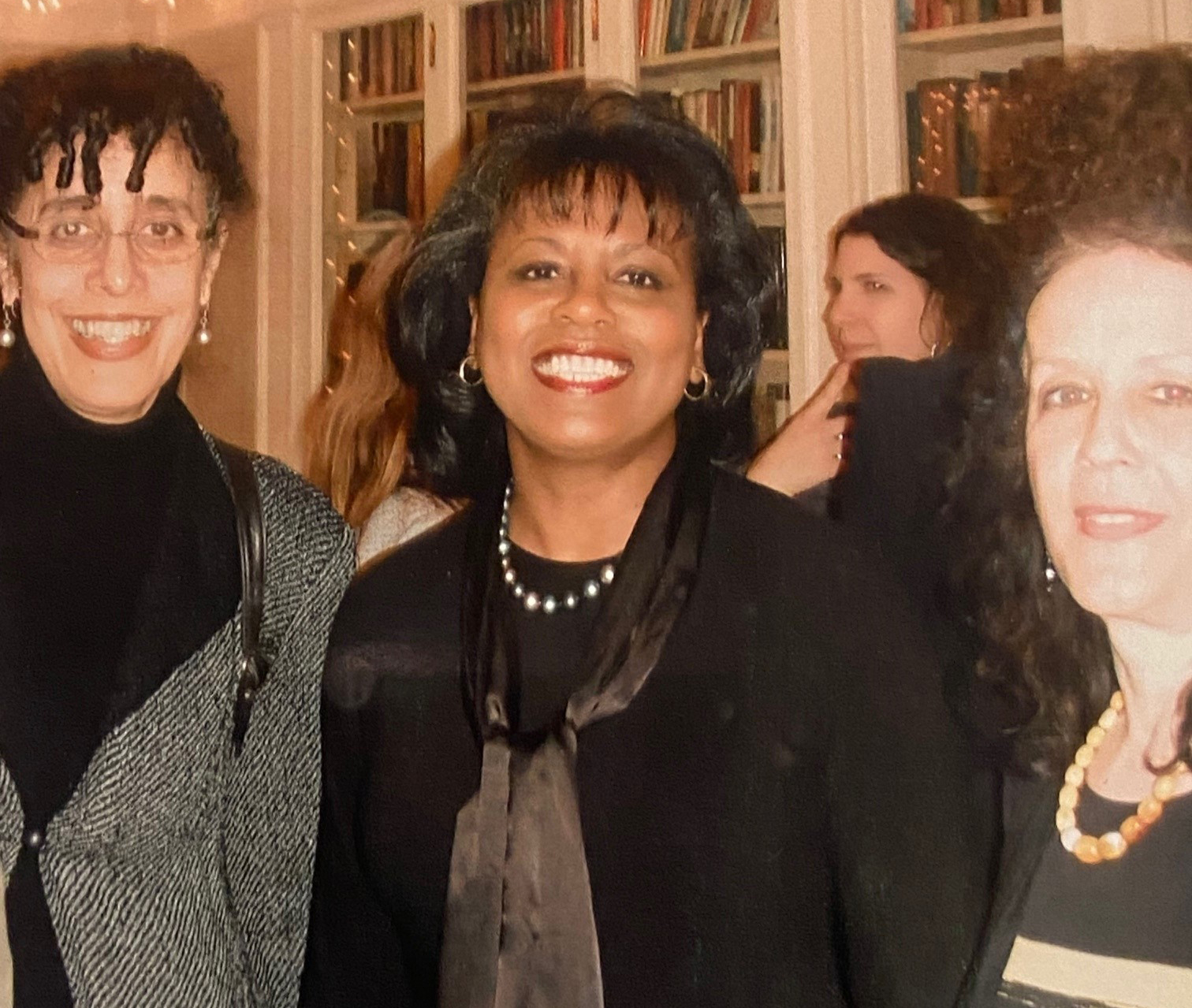
    Celebrating Helene Atwan’s fifteenth anniversary party at Beacon HQ, 2010. Left: Lani Guinier; center: Anita Hill; right: Helene Atwan.

    Celebrating Helene Atwan’s fifteenth anniversary party at Beacon HQ, 2010. Left: Lani Guinier; center: Anita Hill; right: Helene Atwan.

    I recently replied to a French cousin who asked: why is merit a tyranny? Lani taught me the intricacies of that formulation over the years, and she was able to persuade anyone who was willing to listen to her or read her work. Michelle Alexander called her vision “transformative,” and Claude Steele named her “one of our nation’s greatest legal minds.” Just as she had taught us about the tyranny of majorities, she showed us how tyrannical the myth of “merit” could be. And she showed us models to do better. But these were just two of her many achievements.

    We’ve lost Lani, but her work survives and will guide, I know, generations to come. Rest in peace and power.
    —Helene Atwan, director


    Mary Frances Berry

    Lani Guinier, one of the nation’s leading voting rights scholars and litigators, played a major role in improving the 1965 Voting Rights legislation and its enforcement during her career. When a right-wing political campaign caused President Bill Clinton to withdraw her nomination to serve as Assistant Attorney General for Civil Rights, I told her—based on my own experience after Ronald Reagan fired me—that the episode would only broaden the platform for advancing her work. She was a friend, a colleague, and a tireless fellow traveler on the road toward justice.
    —Mary Frances Berry, author of History Teaches Us to Resist


    Paul Ortiz

    Professor Lani Guinier was one of the most brilliant legal theorists in US history. During an extraordinary scholarly and public career, she demanded that the United State become accountable in ensuring equal access to education and voting rights. Because Professor Guinier demonstrated that racism was a continuing force in American life, she was vilified and attacked by individuals across the political spectrum. Lani Guinier’s towering intellectual accomplishments helped pave the foundation for Black Lives Matter. We are forever indebted to her.
    —Paul Ortiz, author of An African American and Latinx History of the United States


    Jeanne Theoharis

    I met Lani Guinier for the first time in 2013 when she came to a talk I was giving for my new Rosa Parks biography. There she was in the front row. I swallowed hard. The positive reception to the book had meant I was having to do many new and intimidating things, but here was another one. Give a talk with Prof. Guinier, one of the most brilliant legal minds of a generation, in the front row. She smiled and nodded and was incredibly warm and generous afterwards. But what stuck with me was the act of coming—not needing a rarefied private colloquium that most senior scholars would require to engage a new book (or believe they knew enough already), but the generosity of spirit to come to a bookstore talk on a random Friday afternoon. The desire for continued education and the visionary spirit to keep learning, engaging, and changing. May her memory be for a lesson.
    —Jeanne Theoharis, author of A More Beautiful and Terrible History

    Lani Guinier

  • By Jonathan Rosenblum

    Kshama Sawant. Photo credit: Joe Mabel

    Kshama Sawant. Photo credit: Joe Mabel

    This article appeared originally in The Nation.

    Once again, Seattle City Council member Kshama Sawant and her Socialist Alternative organization have beaten the political odds. Last month, she defeated a million-dollar recall campaign by real estate developers and landlords, Democratic Party leaders, big Trump donors, and newspaper editorialists, who all teamed up to evict the eight-year councilor from City Hall.

    Sawant’s win is both an inspiration for embattled progressives everywhere and a road map of how to fight back aggressively and win. And it’s all the more remarkable because this was a special election, engineered to suppress working-class turnout, with anti-Sawant forces scheduling the election between Thanksgiving and Christmas.

    “The wealthy . . . took their best shot at us, and we beat them. Again,” Sawant declared to about 100 supporters gathered on December 10 outside Seattle’s New Hope Missionary Baptist Church. “We won because we did not back down. We did not back down in our socialist city council office. Instead, we went on the offensive, and won some of the most crucial victories for renters’ rights this year. We did not back down in fighting for workers. . . . We did not back down one inch in our socialist election campaign to defeat the racist, right-wing, big-business-backed recall.”

    The victory margin was narrow—50.4 to 49.6, a 317-vote difference out of nearly 41,000 cast, with a handful of ballots still being tallied in advance of the election certification on Friday. As Sawant’s fourth race in eight years, this recall effort wasn’t even supposed to be close.

    Corporate executives and their political allies, with help from the courts, state government, and the media, had orchestrated the special December election. They fully intended to finish off the firebrand socialist, who has led movements producing the first big-city $15 minimum wage, breakthrough renters rights legislation, and a new tax on Amazon and other big businesses to fund affordable housing and Green New Deal projects.

    Sawant, a member of both Socialist Alternative (SA) and Democratic Socialists of America (DSA), is but one voice of nine on the city council, but she’s had an outsize impact on the city’s political discourse. I’ve witnessed this first hand, having worked with Sawant since 2013 on issue and electoral campaigns and currently in her city council office as a community organizer.

    As Seattle Times reporters Daniel Beekman and David Gutman observed the week before the election, “few figures have influenced the city’s politics as much in the past decade. Sawant’s scorching rhetoric and uncompromising approach have pushed the council to the left on issues ranging from business taxes to renter protections and have altered the way City Hall operates.”

    It would be a mistake for observers outside Seattle to discount the significance of the socialist’s win by writing off the Northwestern coast city as some sort of lefty political outlier among US cities. While Seattle has a relatively active labor movement and a proud history of community struggle, it is no progressive nirvana.

    Economic inequality has reached obscene levels, with no end in sight. Some of the most brutal repression against Black Lives Matter protesters in the summer of 2020 happened on the streets of Seattle. The city’s police department, under ten-year federal oversight for abusing Black and brown residents, notoriously had the highest number of police officers attend the January 6 Capitol insurrection—at least six—of any US police department. And elected Seattle Democrats have united around the policy of systematically sweeping people experiencing homelessness from their encampments, junking their personal items, and pushing them to another park, underpass, or flea-ridden shelter, all contributing to the record 221 street deaths in the region in the last twelve months.

    As in many other cities, Seattle in 2021 experienced a backlash led by big business and political leaders to the demand from the local Black Lives Matter movement and area residents to slash bloated police budgets and invest more in community needs. Real estate developers, big landlords, and tech CEOs recruited their star candidates for mayor and the one competitive council seat. These two contenders, along with a Republican who ran for city attorney, all campaigned on platforms of increasing police funding and prosecutions, along with cozier relations between big business and City Hall.

    In April, when the state supreme court green-lighted the Recall Sawant campaign, the recall spokesperson explained that they would intentionally delay turning in the required voter signatures to miss the deadline for a November ballot, aiming to suppress voter turnout in the majority-renter district. That is exactly the timeline they got from the county elections board, filing in September to ensure a December 7 ballot.

    The other boost the recall advocates achieved was a sweeping victory in November. The business-backed mayoral candidate, Bruce Harrell, crushed City Council President Lorena Gonzalez by seventeen points. Gonzalez spent much of the campaign backpedaling on her previous commitment to shift police funding into community programs, and she failed to speak up forcefully for popular working-class issues, like affordable housing. Business owner Sara Nelson beat community organizer Nikkita Oliver for the open council seat. In the city attorney race, Ann Davison—an attorney with almost no courtroom experience who joined the Republican Party during the Trump administration—prevailed, buoyed by high-profile Democratic establishment endorsements.

    Just as the dust began to settle from the November election and as households turned attention to the Thanksgiving holiday, ballots arrived in the mailboxes of the 77,000 voters in Seattle’s District 3, the central urban area that reelected Sawant just two years earlier. (Washington state elections are all by-mail.)

    Financing the recall campaign was a who’s who of big developers and anti-union executives: George Petrie, CEO of the $2.5 billion Goodman Real Estate and Trump’s number one donor in Washington State; Frank Shrontz, who as Boeing CEO waged war on the Machinists union at Boeing and oversaw some of the biggest layoffs in company history; hotel owner and union foe Richard Hedreen; Martin Selig, a billionaire developer and major Trump donor; and a host of venture capital, Amazon, and high-tech executives. All told, some 130 Trump donors and more than 850 millionaires donated to the recall, building a war chest of some $800,000.

    State law limits individual campaign donations to $1,000, so executives who had maxxed out to the recall campaign formed a political action committee and petitioned the Washington State Public Disclosure Commission to lift all PAC contribution caps. They argued that the PAC technically was an “independent” political committee deserving unlimited fundraising rights under Citizens United. Just before Thanksgiving, with ballots already out, the public disclosure commission members—appointed by Democratic Governor Jay Inslee—unanimously ruled in favor of lifting the PAC contribution limits. With restraints off, the recall backers collected another $200,000 to fund huge television ad buys in the final week.

    The Kshama Solidarity Campaign managed to raise just over $1 million, closely matching the recall backers, with an aggressive grassroots fundraising push—everything from collecting coins and single bills at apartment doors to staging online fundraisers. The fundraising supported a huge canvassing effort, which began in the spring while the recallers were collecting signatures to get on the ballot. The early canvassing—more than 1,500 volunteers logged time over the course of 2021—gave the campaign momentum heading into the fall.

    By October, hundreds of volunteers, along with staff fluent in eight different languages, were knocking on tens of thousands of doors every week, getting people involved in renters rights struggles, soliciting contributions, and educating voters about the right-wing and corporate forces behind the recall campaign.

    Many progressive electoral campaigns shy away from framing the fight in class terms. Sawant rejected that approach, contrasting working-class demands for rent control and tenant protections against the pro-recall developers and CEOs, whom she called out by name. The campaign also had no hesitation calling the recall campaign a racist one: Two of the three recall charges against Sawant involved her participation in Black Lives Matter demonstrations during the peak of Justice for George Floyd protests in the summer of 2020. The campaign successfully defined their adversary, effectively undermining the recall campaign’s narrative about ordinary District 3 voters outraged by the socialist.

    In the city council, Sawant pressed her renters’ rights agenda. Between the spring and the December 7 vote, she successfully mobilized tenants’ rights groups, the Seattle teachers union, University of Washington workers’ unions, other progressive unions, and SA and DSA activists to win breakthrough renters’ rights legislation: the right to counsel for all tenants facing eviction; a ban on school-year evictions of children, their families, and educators; a ban on any rent increases without six months’ advance notice; and extensions of the Covid-related eviction moratorium into 2022. And she led the effort to collect more than 15,000 community signatures demanding that the Seattle City Council enact her bill to institute rent control as soon as activists succeed in lifting Washington state’s ban.

    In stark contrast to mayoral candidate and City Council President Gonzalez, Sawant ran on a platform of rent control, increasing the Amazon Tax, community control over the police, and a Green New Deal for Seattle. Mainstream political consultants might urge candidates in Sawant’s position to burnish their appeal to undecided voters, but every piece of campaign literature loudly proclaimed the councilor’s socialist bona fides and the right-wing, racist nature of the recall.

    In the final days before the ballot deadline, canvassers blanketed the working-class neighborhoods in District 3, while other volunteers staffed grassroots ballot stations with Wi-Fi-connected printers. Local law encourages voters to reprint spoiled or misplaced ballots—a good way to ensure higher voter turnout, but not so easy to do if one doesn’t have easy access to a printer. The pop-up ballot stations solved that access problem, and King County Elections data show that turnout in many low-income precincts climbed above November figures. In one apartment building, turnout among the largely East African residents increased by an order of magnitude over the November vote, Sawant’s campaign reported.

    The recall and PAC piled on in the last weeks of the campaign with a torrent of mailers and Internet, TV, and radio ads, supplemented by editorials in The Seattle Times calling for Sawant to be recalled. The Times editorial board—which had previously written against voter suppression in other states—railed against Sawant’s grassroots ballot stations and demanded that the state legislature outlaw the practice of campaigns helping voters restore their ballots.

    A final boost for the anti-Sawant recall came from Democratic Party leaders: Most local elected Democrats, including several on the City Council who call themselves progressive, stood aside and refused to support Sawant, abetting the recall campaign’s narrative that Sawant was ineffective because she doesn’t get along with her council colleagues.

    In her election night speech, Sawant called out the silence of progressive Democrats: “Why is it when progressive people get elected, even well-meaning ones, they don’t do anything much? Or they utterly sell out. There is no big mystery—fundamentally it’s because this system puts enormous pressure on elected representatives to operate within the status quo. And it is only by basing yourself on movements that you can fight back.”

    It was that grassroots movement that overcame the odds and beat the recall. For Sawant and Socialist Alternative, the biggest lesson of this election resonates beyond the city. As Sawant said in her Friday victory speech, “If a small revolutionary socialist organization can beat the wealthiest corporations in the world here in Seattle, again and again, you can be sure that the organized power of the wider working class can change society.”


    About the Author 

    Jonathan Rosenblum is the author of Beyond $15: Immigrant Workers, Faith Activists, and the Revival of the Labor Movement (Beacon Press, 2017) and a member of the National Writers Union. He works as a community organizer for Seattle City Council member Kshama Sawant.

  • Champagne

    This is it. The final hurrah for 2021! Yes, we’re ending in the phase of Omicron rising, but many of our titles were selected for a number of best-of lists and holiday gift guides for the year. So many! Let’s raise a glass to our authors to congratulate them!

    And guess what? Our holiday sale is in full swing! The best-of books below and everything else on our website are 30% off through December 31 with code HOL30. If you’re still on the hunt for holiday gifts, you know where to scroll.

    By the way, we will be closed Monday, December 20, 2021, through Friday, December 31, 2021. We will be back in the office on Monday, January 3, 2022.

    As you place orders during this time, remember that USPS media mail takes 7 to 10 business days. Also, the Penguin Random House warehouse will be closed from December 23 to December 25 and then on December 31. So plan accordingly as you place your orders.

    Here’s to a new plague-free year we desperately need and more best-of books to come!


    The Behavioral Code

    Behavioral Scientist’s Notable Books of 2021


    A Black Women's History of the United States

    Harvard Book Store’s Gift Ideas 2021: History and Politics


    Boomerang

    Wall Street Journal’s “Who Read What: Writers Share Their Favorite Books of 2021”


    Boyz n the Void

    Kirkus Reviews“2021’s Best Books About Being Black in America”


    Collected Poems

    Publishers Weekly’s Holiday Gift Guide 2021: Poetry


    Dangerous Ideas

    The Telegraph’s “75 Best Books of 2021 to Read This Winter”


    Dear-Specimen

    Audubon’s “44 Perfect Gifts for the Bird and Nature Lovers in Your Life”
    Plume’s Staff Recommendations of December 2021


    Not a Nation of Immigrants

    Harvard Book Store’s Gift Ideas 2021: History and Politics


    Palmares

    NPR’s Books We Love 2021
    Esquire’s The 50 Best Books of 2021
    Kirkus ReviewsBest Fiction Books of the Year
    Harvard Book Store’s Gift Ideas 2021: Literary Fiction


    Pregnant-Girl

    NPR’s Books We Love 2021


    The Rebellious Life of Mrs. Rosa Parks YA

    Kirkus Reviews“Best YA Biography and Memoir of 2021”


    A Treasury of African American Christmas Stories

    Esquire’s “The 10 Best Christmas Books to Read During the Holidays”


    Until I Am Free

    Smithsonian Magazine’s “The Ten Best History Books of 2021”
    The Guardian’s “The best books of 2021, chosen by our guest authors”
    Chicago Tribune’s “Biblioracle’s 8 favorite nonfiction books of 2021”


    The Water Defenders

    The Progressive’s “Favorite Books of 2021”
    Foreign Affairs“The Best Books of 2021”


    Women and Other Monsters

    NPR’s Books We Love 2021

    Champagne

  • 2021 loading red

    We did it! We made it to the finish line of another plague year! Just a few more weeks left. Even though it’s not New Year’s Eve yet, uncork some bubbly to celebrate. We earned it. Our big wish for the new year: no more COVID variants. Delta, Mu, Omicron . . . Worst. Upgrades. Ever.

    Before we slam the door on 2021, we need to applaud and thank our authors and staff for the blog posts they wrote for the Broadside. These are this year’s top ten. If you haven’t read any of these yet, now you can click your way to their insightful observations and commentary.

    See you in the new year with more posts from our authors!


    Julian Bond

    “Movement Music: The Final Lecture from Julian Bond’s Class on the Southern Civil Rights Movement—Part 1”
    Julian Bond

    “These songs tell stories. They are protest songs and songs of rebellion. They issue challenges to the white opposition. They tie the movement’s experiences—a march, a boycott, a clash with white authority—to the tradition of the black church, and take from the tradition of black church songs, substituting words and names to create new songs, applying old songs with Biblical messages to the current movement.”


    Meghan and Harry

    “Royally Racist: The Fear Behind the One-Drop Rule to Preserve Whiteness”
    Yaba Blay

    “White anxieties about racial mixture were rooted in eugenics and scientific racism, both supposing that the White race was the superior race, that physical and mental traits were tied to heredity, and that racial mixing thus not only lowered human quality but further threatened the survival of the White race. Within this framework, Blackness was considered a contaminant, one poisonous enough to taint and further cripple an entire gene pool. The one-drop rule would be critical not only in the defense of the White race but in the concentration of White power.”


    Cop

    “Are Your Ideas of Safety Policed by White Supremacy?”
    Ryan Lugalia-Hollon

    “How we hear the call to reimagine public safety is, in part, shaped by whether or not we have experienced the violence and racism of our criminal justice system. Yet there are also many subtle ways that our imagination is policed by white supremacy, the treacherous yet pervasive idea that white people are in any way superior to Black and non-Black people of color. Across the United States, we have convinced ourselves that people of color, especially Black people, are “criminals” at levels that are unprecedented in human history. Without white supremacy, this level of widespread criminalization would not be possible.”


    Roxanne Dunbar Ortiz

    “Indigenous Peoples’ History of the US Forms Part of Raoul Peck’s HBO Docuseries”
    A Q&A with Roxanne Dunbar-Ortiz

    “I found it radical that Raoul [Peck] recognized that the Indigenous Peoples of North America also experienced classic European colonialism and genocide, first by the British Empire, then by the independent United States in its one hundred years of wars against the Indigenous peoples to take the continent and import settlers to people Native land. It was certainly a risk.”


    Child

    “Dear Parents: ‘Autistic’ Isn’t a Bad Word”
    Emily Paige Ballou

    “When we ask you to understand the reasons autistic people choose the identifying language we do, no one is asking you not to call your child by their name in any context in which that would be the normal and obvious thing to do. That is not what this is about. It’s about the right of autistic people to have access to the language with which to talk about our experiences, to share an identity as a community, and to have words with which to advocate effectively for our needs.”


    US-Mexico border

    “Deconstructing the US’s Privilege of Forgetting Its Role in Central American Crises”
    A Q&A with Aviva Chomsky

    “Most people in the United States don’t even know—that is, they have the privilege of forgetting—how many times the United States has invaded Central American countries, how many times we’ve overthrown democratically-elected governments there, how many war criminals and death squad leaders we’ve trained and armed, how many peasants our corporations have displaced, and how much our corporations have profited from US “aid” to Central America and from their investments there.”


    Rage

    “What Is This Rage Against Critical Race Theory All About?”

    “This is less a backlash against Critical Race Theory—a set of rigorous, theoretical concepts that obviously very few of the current CRT critics have read—and more a blow against the global Black Lives Matter movement. We are in an Empire Strikes Back moment when elements of the ruling class are trying to crush movements for policing reforms, historical truth, and working-class power. “
    —Paul Ortiz


    Princeton_University_campus-080

    “Universities’ Foundation of Stolen Labor (and Stolen Remains) Demands a Reckoning”
    Leigh Patel

    “As universities move into full re-openings of campuses for the coming academic year, most are operating out of a frame of scarcity and capitalist competition, even ones as wealthy as Princeton and the University of Pennsylvania. When and where will students learn about the plunder by universities and the much larger life and fortitude of peoples that settler colonialism has tried to erase?”


    House in the West End neighborhood of Portland  ME

    “Unseen in Plain Sight: Navigating the Unbearable Whiteness of Beauty Culture”
    Perpetua Charles

    “There is something to be said for the confidence we’re all called to develop and practice so that we can feel secure in ourselves no matter where we are. Black women are especially encouraged to cultivate this confidence because we often can’t count on non-Black environments to affirm us. But again, when even beauty culture is rooted in white supremacy, we can still feel self-conscious, regardless of how many mantras of self-love we whisper to ourselves every day before leaving the house.”


    Ruth-Behar-and-The-Vulnerable-Observer

    “Happy 25th Anniversary to ‘The Vulnerable Observer’!”
    A Q&A with Ruth Behar

    “Throughout the years, I’ve received many kind letters and emails praising the book. I’ve met students and colleagues all over the world who’ve been influenced and inspired by the book. That has been so moving, and totally unexpected. I admit it’s a little scary when someone tells me they decided to go into anthropology after reading The Vulnerable Observer. That’s actually happened several times, and it’s a lot of responsibility to bear.”

    2021 loading red

  • By James Baldwin

    James Baldwin

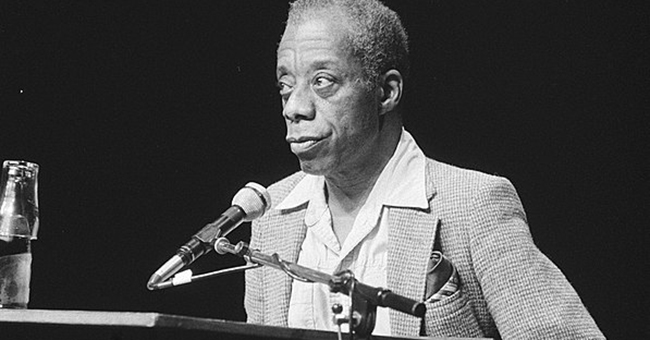
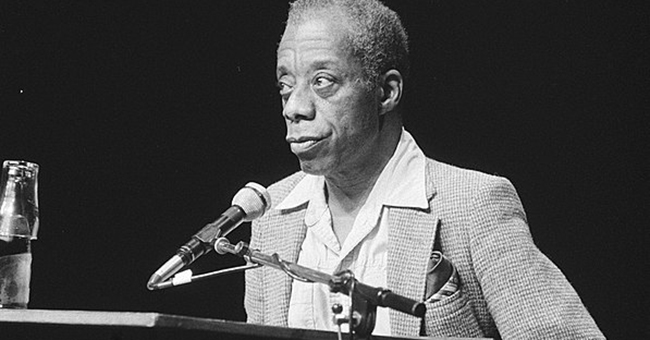
    Jimmy, our prophetic truth-teller, joined the ancestors thirty-four years ago on this day. Were he alive, he would find reason upon reason to perpetually criticize America, the country he loved more than any other. Here’s one: the murder of Ahmaud Arbery. Reading this essay collected in The Price of the Ticket, you will find no need to change a word to see Arbery as a casualty of the US’s unending saga of rutting in white man’s guilt. Read closely, and you will also notice that Jimmy was talking about white fragility well before the term was coined.

    ***

    I have often wondered, and it is not a pleasant wonder, just what white Americans talk about with one another.

    I wonder this because they do not, after all, seem to find very much to say to me, and I concluded long ago that they found the color of my skin inhibiting. This color seems to operate as a most disagreeable mirror, and a great deal of one’s energy is expended in reassuring white Americans that they do not see what they see.

    This is utterly futile, of course, since they do see what they see. And what they see is an appallingly oppressive and bloody history known all over the world. What they see is a disastrous, continuing, present condition which menaces them, and for which they bear an inescapable responsibility. But since in the main they seem to lack the energy to change this condition they would rather not be reminded of it. Does this mean that in their conversation with one another, they merely make reassuring sounds. It scarcely seems possible, and yet, on the other hand, it seems all too likely. In any case, whatever they bring to one another, it is certainly not freedom from guilt. The guilt remains, more deeply rooted, more securely lodged, than the oldest of old fears.

    And to have to deal with such people can be unutterably exhausting, for they, with a really dazzling ingenuity, a tireless agility, are perpetually defending themselves against charges which one, disagreeable mirror though one may be, has not really, for the moment, made. One does not have to make them. The record is there for all to read. It resounds all over the world. It might as well be written in the sky. One wishes that Americans—white Americans—would read, for their own sakes, this record and stop defending themselves against it. Only then will they be enabled to change their lives.

    The fact that they have not yet been able to do this—to face their history, to change their lives—hideously menaces this country. Indeed, it menaces the entire world.

    White man, hear me! History, as nearly no one seems to know, is not merely something to be read. And it does not refer merely, or even principally, to the past. On the contrary, the great force of history comes from the fact that we carry it within us, are unconsciously controlled by it in many ways, and history is literally present in all that we do. It could scarcely be otherwise, since it is to history that we owe our frames of reference, our identities, and our aspirations. And it is with great pain and terror that one begins to realize this. In great pain and terror one begins to assess the history which has placed one where one is and formed one’s point of view. In great pain and terror because, therefore, one enters into battle with that historical creation, Oneself, and attempts to recreate oneself according to a principle more humane and more liberating; one begins the attempt to achieve a level of personal maturity and freedom which robs history of its tyrannical power, and also changes history.

    But, obviously, I am speaking as an historical creation which has had bitterly to contest its history, to wrestle with it, and finally accept it in order to bring myself out of it. My point of view certainly is formed by my history, and it is probable that only a creature despised by history finds history a questionable matter. On the other hand, people who imagine that history flatters them (as it does, indeed, since they wrote it) are impaled on their history like a butterfly on a pin and become incapable of seeing or changing themselves, or the world.

    This is the place in which it seems to me most white Americans find themselves. Impaled. They are dimly, or vividly, aware that the history they have fed themselves is mainly a lie, but they do not know how to release themselves from it, and they suffer enormously from the resulting personal incoherence. This incoherence is heard nowhere more plainly than in those stammering, terrified dialogues which white Americans sometimes entertain with the black conscience, the black man in America. The nature of this stammering can be reduced to a plea. Do not blame me. I was not there. I did not do it. My history has nothing to do with Europe or the slave trade. Anyway, it was your chiefs who sold you to me. I was not present in the middle passage. I am not responsible for the textile mills of Manchester, or the cotton fields of Mississippi. Besides, consider how the English, too, suffered in those mills and in those awful cities! I also despise the governors of southern states and the sheriffs of southern counties, and I also want your child to have a decent education and rise as high as capabilities will permit. I have nothing against you, nothing! What have you got against me? What do you want? But on the same day, in another gathering and in the most private chamber of his heart always, the white American remains proud of that history for which he does not wish to pay, and from which, materially, he has profited so much.

    On that same day in another gathering, and in the most private chamber of his heart always, the black American finds himself facing the terrible roster of his lost: the dead, black junkie; the defeated, black father; the unutterably weary, black mother; the unutterably ruined, black girl. And one begins to suspect an awful thing: that people believe that they deserve their history, and that when they operate on this belief, they perish. But one knows that they can scarcely avoid believing that they deserve it: one’s short time on this earth is very mysterious and very dark and very hard. I have known many black men and women and black boys and girls who really believed that it was better to be white than black; whose lives were ruined or ended by this belief; and I, myself, carried the seeds of this destruction within me for a long time.

    Now, if I as a black man profoundly believe that I deserve my history and deserve to be treated as I am, then I must also, fatally, believe that white people deserve their history and deserve the power and the glory which their testimony and the evidence of my own senses assure me that they have. And if black people fall into this trap, the trap of believing that they deserve their fate, white people fall into the yet more stunning and intricate trap of believing that they deserve their fate and their comparative safety and that black people, therefore, need only do as white people have done to rise to where white people now are. But this simply cannot be said, not only for reasons of politeness or charity, but also because white people carry in them a carefully muffled fear that black people long to do to others what has been done to them. Moreover, the history of white people has led them to a fearful baffling place where they have begun to lose touch with reality—to lose touch, that is, with themselves—and where they certainly are not truly happy for they know they are not truly safe. They do not know how this came about; they do not dare examine how this came about. On the one hand they can scarcely dare to open a dialogue which must, if it is honest, become a personal confession—a cry for help and healing which is, really, I think, the basis of all dialogues and, on the other hand, the black man can scarcely dare to open a dialogue which must, if it is honest, become a personal confession which fatally contains an accusation. And yet if neither of us cannot do this each of us will perish in those traps in which we have been struggling for so long.

    The American situation is very peculiar, and it may be without precedent in the world. No curtain under heaven is heavier than that curtain of guilt and lies behind which white Americans hide. The curtain may prove to be yet more deadly to the lives of human beings than that Iron Curtain of which we speak so much and know so little. The American curtain is color. Color. White men have used this word, this concept to justify unspeakable crimes and not only in the past but in the present. One can measure very neatly the white American’s distance from his conscience—from himself—by observing the distance between white America and black America. One has only to ask oneself who established this distance, who is this distance designed to protect, and from what is this distance designed to offer protection?

    I have seen all this very vividly, for example, in the eyes of southern law enforcement officers barring, let us say, the door to a courthouse. There they stood, comrades all, invested with the authority of the community, with helmets, with sticks, with guns, with cattle prods. Facing them were unarmed black people—or, more precisely, they were faced by a group of unarmed people arbitrarily called black whose color really ranged from the Russian steppes to the Golden Horn to Zanzibar. In a moment, because he could resolve the situation in no other way, this sheriff, this deputy, this honored American citizen, began to club these people down. Some of these people might have been related to him by blood. They are assuredly related to the black mammy of his memory and the black playmates of his childhood. And for a moment, therefore, he seemed nearly to be pleading with the people facing him not to force him to commit yet another crime and not to make yet deeper that ocean of blood in which his conscience was drenched, in which his manhood was perishing. The people did not go away, of course; once a people arise, they never go away (a fact which should be included in the Marine handbook). So the club rose, the blood came down, and his bitterness and his anguish and his guilt were compounded.

    And I have seen it in the eyes of rookie cops in Harlem—rookie cops who were really the most terrified people in the world, and who had to pretend to themselves that the black junkie, the black mother, the black father, the black child were of different human species than themselves. The southern sheriff, the rookie cop, could, and, I suspect still can, only deal with their lives and their duties by hiding behind the color curtain—a curtain which, indeed, eventually becomes their principal justification for the lives they lead.

    They thus will barricade themselves behind this curtain and continue in their crime, in the great unadmitted crime of what they have done to themselves.

    White man, hear me! A man is a man, a woman is a woman, a child is a child. To deny these facts is to open the doors on a chaos deeper and deadlier and, within the space of a man’s lifetime, more timeless, more eternal, than the medieval vision of Hell. White man, you have already arrived at this unspeakable blasphemy in order to make money. You cannot endure the things you acquire—the only reason you continually acquire them, like junkies on hundred-dollar-a-day habits—and your money exists mainly on paper. God help you on that day when the population de[1]mands to know what is behind that paper. But, even beyond this, it is terrifying to consider the precise nature of the things you have bought with the flesh you have sold—of what you continue to buy with the flesh you continue to sell. To what, precisely, are you headed? To what human product precisely are you devoting so much ingenuity, so much energy.

    In Henry James’s novel, The Ambassadors, published not long before James’s death, the author recounts the story of a middle-aged New Englander, assigned by his middle-aged bride-to-be, a widow, the task of rescuing from the flesh pots of Paris her only son. She wants him to come home to take over the direction of the family factory. In the event, it is the middle-aged New Englander, the ambassador, who is seduced, not so much by Paris as by a new and less utilitarian view of life. He counsels the young man “to live, live all you can; it is a mistake not to.” Which I translate as meaning “trust life, and it will teach you, in joy and sorrow, all you need to know.” Jazz musicians know this. The old men and women of Montgomery—those who waved and sang and wept and could not join the marching, but had brought so many of us to the place where we could march—know this. But white Americans do not know this. Barricaded inside their history, they remain trapped in that factory to which, in Henry James’s novel, the son returned. We never know what this factory produces for James never tells us. He conveys to us that the factory, at an unbelievable human expense, produces unnameable objects.

    Originally published in Ebony, August 1965. Excerpted from The Price of the Ticket, published by Beacon Press, 2021. Copyright © 1985 by James Baldwin. Reprinted by arrangement with the James Baldwin Estate. All rights reserved.


    About the Author 

    James Baldwin (1924–1987) was a novelist, essayist, playwright, poet, and social critic, and one of America’s foremost writers. His writing explores palpable yet unspoken intricacies of racial, sexual, and class distinctions in Western societies, most notably in mid-20th-century America. A Harlem, New York, native, he lived periodically in exile in the south of France and in Turkey. He is the author of several novels and books of nonfiction, including Notes of a Native SonGo Tell It on the MountainGiovanni’s RoomAnother CountryTell Me How Long the Train’s Been GoneIf Beale Street Could TalkJust Above My HeadThe Fire Next TimeNo Name in the Street, and The Evidence of Things Not Seen, and of the poetry collection Jimmy’s Blues.
  • By Masha Rumer

    Mmm . . . The before photo of pirozhki before we devour the whole plate. Photo credit: Moonsun1981

    Mmm . . . The before photo of pirozhki before we devour the whole plate. Photo credit: Moonsun1981

    As the year draws to an end, it’s a reminder of the new coping skills just about everyone has acquired because of the pandemic. In the case of immigrants, the shortages also hurled us right back into our childhoods.

    Many of us we were raised on stories of famines and wartime starvation, tempered by breadlines and diluted sour cream, particularly in the former Soviet Union, where I’m from. Nothing went to waste: neither old yarn nor chicken skins nor beet greens. We brought this hardiness with us to the US. Ever seen those folks who’d wash plastic bags and hang them out to dry and scour the sidewalks for unwanted furniture? Yeah, that was probably us, the new arrivals.

    “Can’t Americans grate their own cheese?” we wondered, gaping at the stocked supermarket shelves. “Why do they eat the veggies in the soup but discard the broth?”

    As an adult in the US, you move away from this—sort of. You become a discerning consumer and remember which produce is best to buy organic. Maybe you let a professional color your hair instead of doing it yourself, like most other things you’d been taught to do. You forget about the hand-me-downs and maybe even joke about those memories to feel more assimilable.

    That’s why many immigrants couldn’t imagine supply chain breakdown happening here, in the US. And anyway, we’d be ready. Always ready. No hand sanitizer? Use vodka! (It is now a well-known fact that vodka won’t zap coronavirus, though it will take the edge off.) Save old newspapers—who knows when they could come in handy! On social media, I shared the industrious Soviet ways to use canned fish: on a bread slice, in a salad of eggs and boiled vegetables known as “mimosa,” tossed into soup as protein, or mashed with rice and mayonnaise. Voilà! A fellow Russian-speaking expat taught a Zoom lesson on drawing a still life of a toilet paper roll. Was it all just Soviet kitsch or our new reality?

    It was the latter, of course. And I heeded the battle call by deploying the food of my ancestors. I found myself stocking up on canned goods like the older generations once did and channeling my anxiety into oversized portions of homemade farmer’s cheese and soups fixed with whatever was on hand. I started buying buckwheat and millet, staples of a Russian childhood diet, having never cared for them until now (they’re actually super filling, versatile, and easy to store). As long as there were time and ingredients or substitutes available, my oven eked out challahs and round loaves and hand pies, pirozhki, based on an old family recipe. After some experimenting, I recreated a sourdough rye so tart and springy, it was like an emotional reunion with an old friend. There were enough baked goods to feed my family and to share with relatives, neighbors, and sometimes, strangers. 


    Everyone has suffered losses in these past two years, often shrouded in isolation and shame. And yet we have also tapped into our survival skills and latent strengths. These are the things that will keep propping us up, long after the world begins to repair itself.


    About the Author

    Masha Rumer is an award-winning journalist and freelance writer. Her work has appeared in the New York Times, the Washington PostQuartz, the Moscow TimesParents.comSFWeeklyVolume 1 Brooklyn, and elsewhere. An immigrant from the former Soviet Union, she now lives with her family in California, where she is navigating the nuances of multicultural and interfaith parenting. She is the author of Parenting with an Accent: How Immigrants Honor Their Heritage, Navigate Setbacks, and Chart New Paths for Their Children. You can find her online at masharumer.com and on Twitter @MashaDC.