• A Q&A with Cynthia B. Dillard
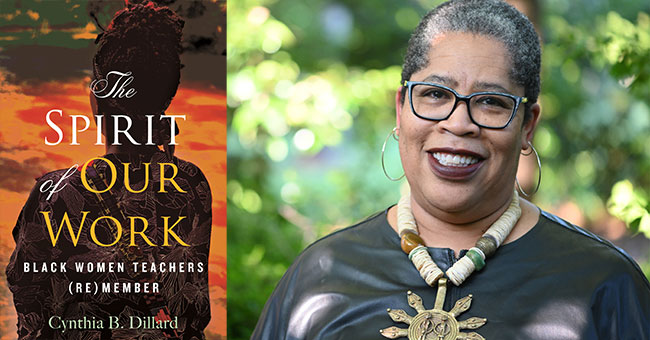
    Cynthia B. Dillard and The Spirit of Our Work

    Cover art: Louis Roe

    Too often in our study of teaching, teachers, and teacher education, we approach discussions and research in education from a place where Black educators are not able to bring their whole selves to the classroom. Especially Black women teachers. Dr. Cynthia B. Dillard’s The Spirit of Our Work: Black Women Teachers (Re)member centers the spiritual lives of Black women educators and their students, arguing that their cultural lives and heritage can (and should!) be supported to inform education policy, practice, and theory. In essence, it is a love letter to all Black women teachers throughout the diaspora. Beacon Broadside editor Christian Coleman caught up with Dr. Dillard to chat about it.

    Christian Coleman: Tell us about the inspiration behind writing The Spirit of Our Work.

    Cynthia B. Dillard: The inspiration for this book? I think it is the other way round. This book has inspired me. It has literally been writing me all of my life! It is the story of what happens when teachers have the opportunity and the audacity to (re)member their stories and their culture. It is about how the awesome power that experiences with the African continent opens a space for Black folks and fills in the blank of our often anemic education. I was inspired by all of this to write the book I wished I could have read as I was growing up: As a Black woman, as a teacher, as a leader.

    CC: How do you see this book in conversation with your previous books, On Spiritual Strivings and Learning to (Re)member the Things We’ve Learned to Forget?

    CBD: The Spirit of our Work builds on the work of those two books, the gathering of what I have learned about how critical it is for Black women to bring our spirituality—our politics, our spiritual consciousness, and our creativity—to everything we do, to everything we live. In On Spiritual Striving, the conversation started with myself and my life, what animated the spirit of my work and the deep influence that Ghana as had on my life and work as an educator and a leader. In Learning to (Re)member the Things We’ve Learned to Forget, I put the spirit of my work into theoretical conversations with everyday concepts in research and teaching from a Black/endarkened feminist lens, pointing out the importance of (re)membering for education.

    CC: Could you tell us more about what you mean when you write that, for Black women teachers, (re)membering isn’t optional, that nurturing and connecting with their spiritual lives and Blackness is a priority?

    CBD: This is a point that needs to be made! Black women teachers, like all teachers, have the awesome responsibility of teaching the next generation of Black students. In order to do so, we must have the knowledge of Black people, of our origin stories, of Black identities and culture. In order to tell the full story of Black/African life, this base of knowledge must reach back to the continent of Africa and to life BEFORE enslavement. All teachers must be able to teach from the depth and breadth of Black life and accomplishment, from the spirit of Black triumph and strength. It is a priority because, in this moment where we are seeking to address inequities and justice within schools and society, Black women teachers who have engaged in (re)membering stand as the ones who can respond not only with accurate knowledge of Black legacy but also as those who will teach through experiences of inequities from a place of wellness and wholeness, from a spiritual place.

    Black women’s stories matter. And most of us need as many as possible to fill in the gaps and limits of the education we received about global Black life and culture in our education in this country.

    CC: (Re)membering is made up five related processes: (Re)searching; (Re)visioning; (Re)cognizing; (Re)presenting; and (Re)claiming. And (re)membering isn’t necessarily a linear process. Why is that?

    CBD: It is not linear because a person can literally be thrown into any part of these processes prior to the other. In a new and unfamiliar context, one might (re)vision and then set out to (re)search the origin of that vision. One might engage in (re)presentation by wearing a piece of clothing without having really (re)cognized the deeper meanings of that act, needing to (re)search to fill in their knowledge. (Re)membering is the overarching framework: I have simply highlighted necessary processes that are a part of (re)membering so that we can see their importance in the lives of Black women teachers. But it might be more accurate to describe these processes like a Slinky (which probably tells my age!) or a coil that continuously loops back onto itself in order to move forward in dynamic ways, faced with new engagements with Black life, traditions, culture, and heritage. They are all a part of a full circle: The processes never end.

    CC: Do you see (re)membering as an act of resistance Black women teachers will need until the education system as we know it has a reckoning and decenters whiteness?

    CBD: You’ve answered your own question: OF COURSE (re)membering is about resistance! Any time Black people choose ourselves, choose to marshal our knowledges and to tell our stories in a system or society that devalues and has exploited all of those things, these are radical acts. But processes of (re)membering are acts of gathering ourselves, acts of healing and honoring the ancestors who have made our lives and educations possible. Those who have constructed systems of schooling honor their own exploitive purposes for education. Privilege will not let go easily. But the concern of (re)membering is to focus our attention on the brilliance of Blackness, on (re)membering who we are and whose we are as THE most important work we can do, even as we continue to work to abolish structures that don’t love us.

    As Ayi Kwei Armah has suggested, exploitive systems such as capitalism are fundamentally about taking: African ways of knowing and being are fundamentally about sharing, about how I am because we are. Such a stance starts with knowing there is always enough for everyone. Knowing our origin stories helps us to stand in and move from that spirit of our strength and resilience.

    CC: You lead Full Circle Retreats Ghana, cultural retreats to Ghana focused on (re)membering the beauty and traditions of Black heritage, identity, and culture. How have the retreats informed your writing of The Spirit of Our Work?

    CBD: I am a teacher from the core of my being, whether I am called teacher, professor, dean, or retreat leader. So Full Circle Retreats Ghana is really an extension of what I call “the work:” The work of (re)membering our stories and our spirits, whether I am planning a syllabus for a university course that I teach, leading a department or a college, or retreating in Ghana! How do we work from a place that loves Black people and the contributions of our humanity in this world?

    CC: The stories of the women who join you on the retreats and of their experiences embracing their full selves bring so much joy! This isn’t really a question, just a word of deep gratitude that they’re in the book.

    CBD: *smiles all around*

    CC: One last thing before we go. Next year, you’ll be Dean of the College of Education at Seattle University. Are you excited about your new role?

    CBD: I am! Like this book, becoming a Dean feels like another moment where my entire life and experiences have prepared me for such a time as this. Seattle University is a very special place, and the recent inauguration of President Eduardo Peñalver has further clarified our direction as an innovative, progressive, Jesuit university. At the front of that mission and direction is the formation of the whole person—body, mind, and spirit. And the foundation of the institution is that we use our gifts in service of justice and fairness. As Dean of the SU College of Education, I see processes of (re)membering and pedagogies of the spirit articulated in this book as “the spirit of our work” as a College: Our preparation of teachers, counselors, school leaders, and other educational professionals will be guided by this spirit. I am so excited to build with the talented faculty, staff and students of Seattle University—and to (re)turn to Seattle, the city where I grew up! What a homecoming this will be, a truly sacred circle for me.


    About Cynthia B. Dillard 

    Cynthia B. Dillard (Nana Mansa II of Mpeasem, Ghana, West Africa) is incoming dean of Seattle University’s College of Education and the former Mary Frances Early Professor in Teacher Education and chair of the Department of Educational Theory and Practice at the University of Georgia. Two of her books, On Spiritual Strivings and Learning to (Re)member the Things We’ve Learned to Forget, were selected as Critics’ Choice Book Award winners by the American Educational Studies Association (AESA). Connect with her at cynthiabdillard.com and on Twitter @cynthiabdillard.
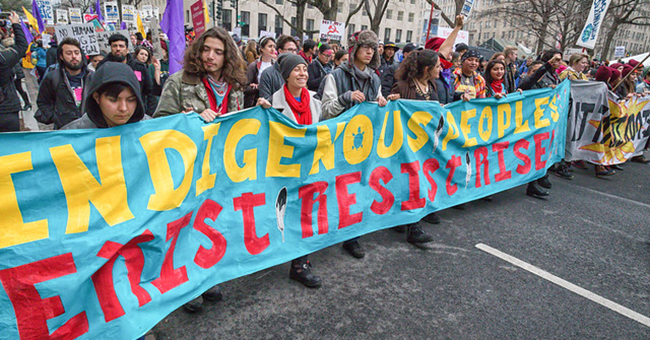
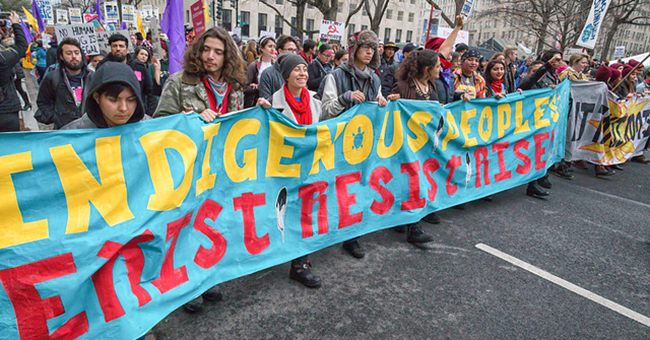
  • Indigenous marchers at the Inauguration protests of 2017, Washington, DC.

    Indigenous marchers at the Inauguration protests of 2017, Washington, DC. Photo credit: Mobilus In Mobili

    President Biden sure is making up for lost time. At this year’s tribal nations summit, skipped over the previous four years by you know who, he signed an executive order for the US to take steps to protect tribal lands and address the epidemic of missing and murdered Native Americans. He proposed a ban on federal oil and gas leases on the sacred tribal site of Chaco Canyon in northwestern New Mexico. And in his official White House proclamation for Native American Heritage Month, he listed more commitments the country will make to Indian Country.

    On paper, this looks good. Let’s hope the administration delivers, and let’s hold them to it. Because too often, the US has shafted the country’s Indigenous communities. Too often meaning from the get-go. The history of it is in these books we’re recommending for Native American Heritage Month. But there’s also more to it than that. These books have stories of intersectional alliances, stories of Native Americans in all their diversity, making a way out of no way when all the cards of settler colonialism, dispossession, and white supremacy are stacked against them. Check it out!


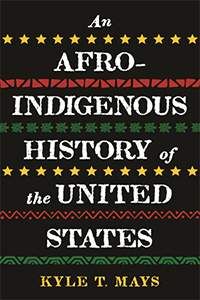
    An Afro-Indigenous History of the US

    An Afro-Indigenous History of the United States

    Black and Indigenous peoples, in spite of presumed differences—that is, the different ways they were treated by the settler state—have sought solidarity with each other. They have always sought to disrupt, dismantle, and reimagine US democracy; they have even sought to radically transform how this society operates. . . . Without understanding both [Native dispossession and slavery] as white supremacist and settler-colonial projects, we will continue to have a distorted understanding of US history, and also have a severe lack in understanding our present circumstances, and how we gon’ get free going forward.
    —Kyle T. Mays


    All the Real Indians Died Off

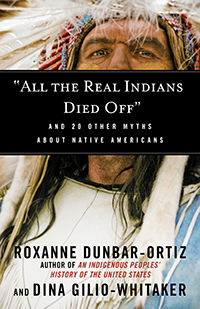
    “All The Real Indians Died Off”: And 20 Other Myths About Native Americans

    The myths about Indigenous peoples that this book identifies can be traced to narratives of erasure. They have had—and continue to have—a profoundly negative impact on the lives of the millions of Native people who still live on the continent of their ancient ancestors. They work further to keep non-Natives in a state of ignorance, forever misinformed and condemned to repeat the mistakes of history, silently eroding their own humanity when they fail to recognize their roles in—or, more specifically, the ways they benefit from—the ongoing injustice of a colonial system.
    —Roxanne Dunbar-Ortiz and Dina Gilio-Whitaker


    As Long As Grass Grows

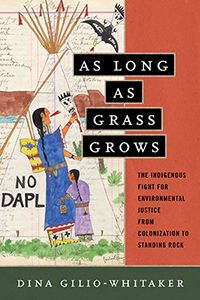
    As Long As Grass Grows: The Indigenous Fight for Environmental Justice, from Colonization to Standing Rock

    As the #NoDAPL movement made clear through the slogan “Water is life,” Native resistance is inextricably bound to worldviews that center not only the obvious life-sustaining forces of the natural world but also the respect accorded the natural world in relationships of reciprocity based on responsibility toward those life forms. What does environmental justice look like when Indigenous peoples are at the center?
    —Dina Gilio-Whitaker


    How Does It Feel to Be Unwanted

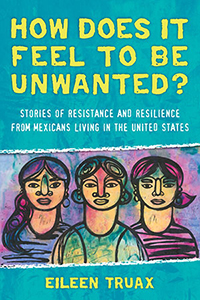
    How Does It Feel to Be Unwanted?: Stories of Resistance and Resilience from Mexicans Living in the United States

    Mexico is a multicultural, multilingual country where seven million people speak indigenous languages. Of those, more than a million speak only one of seventy-two indigenous languages, and no Spanish. This population is concentrated in a few of Mexico’s thirty-one states. Oaxaca, which, along with neighboring states Guerrero and Chiapas, is one of the three poorest states in the country, is also the state with the largest indigenous population, at over 1.5 million. With over sixteen ethnolinguistic groups, four out of every ten inhabitants of the state speak an indigenous language, and 14 percent of the population do not speak Spanish . . . . Aside from a lack of documents, for migrants who do not speak Spanish or English, it’s a challenge just to find interpreters to help with carrying out official business—with the government, signing contracts, or when seeking medical attention or legal help, sometimes in what could be matters of life or death.
    —Eileen Truax


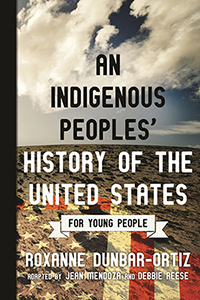
    An Indigenous Peoples History of the United States

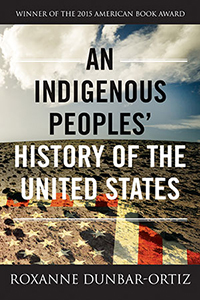
    An Indigenous Peoples’ History of the United States

    The history of the United States is a history of settler colonialism—the founding of a state based on the ideology of white supremacy, the widespread practice of African slavery, and a policy of genocide and land theft. Those who seek history with an upbeat ending, a history of redemption and reconciliation, may look around and observe that such a conclusion is not visible, not even in utopian dreams of a better society. Writing US history form an Indigenous peoples’ perspective requires rethinking the consensual national narrative. That narrative is wrong or deficient, not in its facts, dates, or details but rather in its essence.
    —Roxanne Dunbar-Ortiz


    An Indigenous Peoples History of the US for Young People

    An Indigenous Peoples’ History of the United States for Young People

    Like most people, Americans want to think well of themselves, their ancestors, their history, and what they and their leaders do. As advanced technology makes the experiences of Indigenous peoples around the world more readily available, it is necessary that Americans learn to think more completely and more critically about their own history, because it can help them be better citizens of the world. Part of that critical thinking involves recognition that “America” is a name given to two land masses by European colonizers. Indigenous peoples had, and have, words for the land in their own languages.
    —Roxanne Dunbar-Ortiz, adapted by Debbie Reese and Jean Mendoza


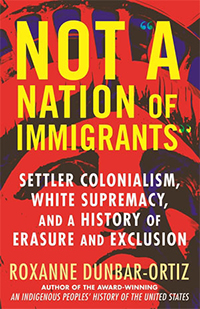
    Not a Nation of Immigrants

    Not “A Nation of Immigrants”: Settler Colonialism, White Supremacy, and a History of Erasure and Exclusion

    Although immigrant bashing is not new, and has long targeted Asian and Mexican workers, it has become a more fraught issue as it crystalized in the late twentieth century and accelerated in the early twenty-first century, targeting Mexicans, Asians, and Arab Muslims. Yet, those who defend immigrants and immigration, mostly metropolitan liberals, often immigrants or children of immigrants themselves, employ the idea of a nation of immigrants naively without acknowledging the settler-colonial history of the United States and the white nationalist ideology it reproduces.
    —Roxanne Dunbar-Ortiz


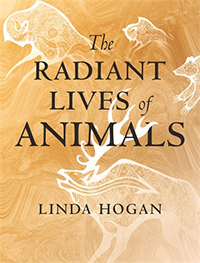
    The Radiant Lives of Animals

    The Radiant Lives of Animals

    When I think of change, I consider the re-minding of ourselves and I mean that it is time to consider other kinds of intelligence and ways of being, to stretch our synapses to take in new ways of thought. As an Indigenous woman, I look toward our Native knowledge systems, the times when our relationship with the earth wasn’t the disjointed connection most of us have learned from our Euro-American education systems. I am one human animal who wants to take back original meanings and understandings in ways that are possible and are necessary.
    —Linda Hogan


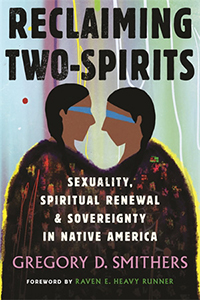
    Reclaiming Two-Spirits

    Reclaiming Two-Spirits: Sexuality, Spiritual Renewal & Sovereignty in Native America (forthcoming in April 2022!)
    Gregory D. Smithers

    “Compels readers to rethink gender and sexuality from the nonbinary point of view of Indigenous cultures, which uses gender-neutral and polyvalent words to express an array of identities. Smithers recovers the Two-Spirits who lie hidden beneath the homophobic language of archival records, obliging not only historians but everyone who cares about Indigenous peoples to be more aware of gender biases and how language is a tool of colonization.”
    —David Martínez (Akimel O’odham/Hia Ced O’odham/Mexican), author of Life of the Indigenous Mind

    Inauguration protest 2017

  • By Dina Gilio-Whitaker

    California’s Death Valley. The Timbisha Shoshone were dispossessed of their lands with the creation of Death Valley National Monument in 1933.

    California’s Death Valley. The Timbisha Shoshone were dispossessed of their lands with the creation of Death Valley National Monument in 1933.

    All environmental justice eyes are on the UN Climate Change Conference in Glasgow. As we watch, we must remember to center the world’s Indigenous nations in conversations on damage control in the face of our climate crisis. Because the environmental movement showed its true settler-colonialist colors toward First Nations activists in the past. As Dina Gilio-Whitaker wrote in As Long As Grass Grows: The Indigenous Fight for Environmental Justice from Colonization to Standing Rock, it wasn’t pretty.

    ***

    The Red Power movement was just one aspect of the social revolution that swept across the American social landscape in the 1960s and ’70s, paralleling other ethnic nationalisms, women’s liberation, the antiwar movement, and the emergence of a new, rebellious, and predominantly white middle-class counterculture. Disenchanted with the conservative values of their parents’ generation and witnessing the increasing degradation of the environment, countercultural youth looked to other cultures for answers to existential questions they perceived as unavailable in mainstream American society. In American Indians they, like Thoreau and Muir before them, saw a relationship to nature that should be emulated, inspiring a back-to-the-land movement and an aesthetic that unequivocally evoked the Indian—long hair, headbands, moccasins, beads and feathers, leather and fringe, turquoise and silver.

    In 1971, just a few months after the first Earth Day signaled the beginning of a modern environmental movement, Indians unwittingly became the symbol of the new movement with the famous “Crying Indian” antilittering commercial released by Keep America Beautiful, Inc. The image of a buckskin-clad Indian, with a single tear rolling down his face as a factory spews toxic smoke in the background and trash thrown from a car lands on his beaded moccasins, seared itself into America’s collective consciousness. Never mind that the Indian, Iron Eyes Cody, was no Indian at all, but a 100 percent Sicilian American actor named Espera Oscar de Corti who had built an entire career—and personal life—on Indian impersonation. The Crying Indian represented what anthropologist Shepard Krech III called the “ecological Indian,” a revamped version of the noble savage who became the stand-in for an environmental ethic the US should aspire to. In a strangely visceral way, the deception of Iron Eyes Cody mirrored the falseness of the ecological Indian stereotype, because like de Corti’s fake, hyper-Indian image, the new stereotype set an impossibly high standard to which white environmentalists would hold Native people for the next several decades. It came at a time when tribal governments had finally regained enough power to exercise self-determination in nation-building projects that often involved exploiting the only things they had—natural resources—setting the stage for future conflict and discord.

    The relationship between the counterculture and Indian country was complicated from the beginning. Desiring a deeper connection with the Earth and a more meaningful form of spirituality, hippies made pilgrimages to reservations searching for the mystical Indian wisdom they had read about in books like John Neihardt’s Black Elk Speaks and Carlos Castaneda’s wildly successful but fraudulent series about the Yaqui shaman Don Juan Matus. Other ethnic frauds infested the literary counterculture over the next few decades, exploiting the gullibility of the spiritually starved and building a lucrative New Age industry in the process. The problem was not so much that hippies looked to Indian country for answers. It was that as settlers they unconsciously brought with them worldviews and behavior patterns that were inconsistent with Indigenous paradigms and tried to fit Indigenous worldviews and practices into their own cognitive frameworks. Predominant among their settler culture frameworks are the pursuit of universal truth and personal edification, both particularly Christian ideas in the context of the US. If truth is universal, the logic goes, then the truths perceived in Native cultures must be applicable to all people everywhere, and in the United States everyone has the right to practice whatever religion they choose. Non-Natives couldn’t comprehend that Native spiritual principles evolved over eons based on ancient relationships to place and was reflected in language and specific histories, and that the function of Indigenous ceremonies was primarily for the perpetuation of particular communities, not personal enlightenment. An orientation based on rugged individualism combined with a deeply ingrained sense of entitlement (Manifest Destiny in its modern form) translated into the toxic mimicry that today we call cultural appropriation, which takes a multitude of forms. At its core, cultural appropriation is always an invocation of “authentic” Indians and Indian culture as constructed by settlers, however falsely. The fetishized authentic Indian is the representational production of the culturally and biologically “pure” Indian, and the ecological Indian trope was just the counterculture and environmental movement’s version of it.

    The Indian-inspired back-to-the-land sensibility cultivated by the counterculture emerged as another iteration of the environmental movement, but it was expressed in distinctly spiritual terms drawn from Native peoples, as the literary examples of Carlos Castaneda and many others demonstrate, however problematically. Sometimes referred to as “second-wave environmentalism,” countercultural hippies, despite their blatant appropriations, did at times work constructively with Indian country. As historian Sherry L. Smith documents, the Pacific Northwest Fish Wars, the cultural revolution in California, the Wounded Knee occupation, and other places and events saw productive partnerships between hippies and Native people who were working for Indian rights alongside calls for other social justice reforms. Indians sometimes even exploited non-Natives’ misplaced beliefs about Native cultural authenticity, but overall “most leftists did not understand that their adulation and reverence carried this darker undercurrent [of colonialism and racism].” Historian Paul Rosier contends that the mainstream environmental movement developed in tandem with an American Indian environmentalism during the 1960s and ’70s, sometimes intersecting in interesting ways (the Fish Wars is a good example, and literary examples include Ken Kesey’s blockbuster One Flew Over the Cuckoo’s Nest and Edward Abbey’s 1975 cult classic The Monkey Wrench Gang). “An important element of this story,” Rosier writes, “is thus the conversation and collaboration among Indians and non-Indians on environmental problems in their efforts to find common ground; the process was an exchange of ideas and political support rather than a one-way act of appropriation or cultural imperialism.” But as the years progressed, the cultural appropriation and imperialism intensified with the rise of the New Age movement, and the conversations and collaborations weren’t always smooth, or even present at all, when they should have been.

    With the 1975 shift in federal policy to tribal self-determination and as tribal governments sought economic development, land use projects, land return, and cultural revitalization, clashes between tribes and white environmental groups were on the rise by the early 1980s, exposing the groups’ historic roots in (white) settler privilege and racism. In 1983, for instance, the Nature Conservancy purchased four hundred acres of land on the White Earth Reservation and donated it back to the state of Minnesota, not the tribe. In 1985 the Sierra Club sued to prevent Tlingit and Haida in Alaska from logging on Admiralty Island, after the US had returned twenty-three thousand acres as part of a land claims settlement. In 1992 the Sierra Club refused to support the White Earth Land Recovery Project’s effort to have returned the northern half of the Tamarac Wildlife Refuge to the White Earth Band on the grounds that the club would not have a say in refuge management. In 1999, after years of legal, cultural, and spiritual groundwork, the Makah tribe in Washington State successfully hunted and killed their first gray whale in more than seventy years from a traditional cedar canoe. The reprisals were swift and furious, coming from a variety of antiwhaling and animal rights groups, the most vocal from the Sea Shepherd Conservation Society’s Paul Watson, a founding member of Greenpeace. The Makah received death threats, hate mail, public harassment, and the inevitable challenges to the authenticity of the tribe’s culture.

    Conservationist mythologies of Native people living in untouched pristine nature have dogged them even into recent years. The Timbisha Shoshone in California’s Death Valley were dispossessed of their lands with the creation of Death Valley National Monument in 1933, ending the tribe’s ancient land management when their homeland came under the management of the National Park Service. In 1983 the tribe gained federal recognition, but because federal recognition did not come with the return of land, it would take many more years of legal battles to finally reacquire 7,754 acres within the park, under the Timbisha Homeland Act. Decades of landscape neglect resulted in the deterioration of the honey mesquite and single-leaf piñon groves—both important food sources—and in 2000 the Timbisha requested comanagement with the Park Service to resume their traditional management practices, but they faced bitter opposition from numerous environmental groups and individuals, including the local Sierra Club chapter. In the public commenting process of a legislative environmental impact assessment, a dominant theme running through the comments was objection to tribal management. Public opposition was based on the tired, old belief of a pristine wilderness, as though the valley had been uninhabited and unmanaged for millennia. Eventually the conflict was resolved, and today the Timbisha Shoshone are engaged with the Park Service in experimental projects to rehabilitate the natural habitat with traditional techniques.

    Opposition to gaming has also been a platform upon which environmentalists have battled with tribes. I began my career as a journalist with one particularly ugly episode in 2003 in the Northern California community of Sonoma County. I chronicled an explosive controversy over plans of the Federated Indians of the Graton Rancheria (FIGR) to build a casino and hotel resort within its traditional territory of Rohnert Park, a town that was part of the county’s growing urban sprawl and where I happened to live. Sonoma County and neighboring Napa Valley are better known as California’s wine country, and tribal gaming had long been perceived as a corrupting influence in an otherwise politically liberal and expanding economic climate. Prior tribal gaming ventures had faced bitter opposition and vitriolic fights. Initial promises not to pursue a gaming operation were made by tribal leaders under pressure from congressional members as a condition of the tribe’s federal recognition bill, which had passed only three years earlier. But when the recognition bill passed without an antigaming clause, the tribal council changed its mind; well-funded gaming industry backers had courted them based on what was sure to be a lucrative location. Terminated in the 1950s and with widespread poverty in its community, the tribe had regained its recognition but had no land base. The project would first require the acquisition of land that would then be taken into federal trust, making it a reservation. Once the site was chosen and the purchase initiated, the organized casino opposition kicked into high gear, becoming a spectacle of modern bipartisan anti-Indianism and invoking the ghosts of California’s not-so-distant genocidal past. Like the Makah, the tribe faced death threats and public hate speech, inaccurate and unfair media representation, and vicious racist attacks. And it went on for years.

    Lawsuits failed to stop the project. The conflict raised issues of the tribe’s sovereignty, its right to economic development, and the historical injustices it had faced on one hand, and on the other, an ideologically driven disapproval of gaming by a surprisingly large and diverse segment of the local population. The result was a toxic brew of highly public and far-reaching anti-Indian rhetoric. After a 360-acre parcel of farmland had been purchased and the land taken into trust in 2010, the opposition group Stop the Casino 101 Coalition tried numerous tactics to block construction, including appeals to environmental harm. The Center for Biological Diversity was brought in and determined that the habitat of the endangered tiger salamander would be affected. Adding fuel to an already raging political conflagration, public debates then centered on the need to balance economic development (not tribal sovereignty) with environmental protection. Efforts to stop the project based on the endangered salamander ultimately failed, however, and the casino opened in 2013. The highly divisive public battle led all the way to the US Supreme Court, with the court declining to hear the case in 2015. In the end, challenges based on salamander habitat resulted in the US Fish and Wildlife Service’s designation of a 47,383-acre salamander protection zone, an exemption of 252 acres of FIGR’s property from the zone, and the tribe setting aside 180 acres and $24 million for environmental mitigation projects.

    Legal strategies aimed at protecting the salamander may have failed to stop the project, but it raised troubling and provocative questions about what it means for non-Indians to use environmental issues as a political wedge against tribes’ right to exercise sovereignty, especially if seen through a lens that recognizes settler colonialism as an ongoing process of environmental injustice. If settler colonialism is a structure that disrupts Indigenous peoples’ relationships to their environments (as clearly happened to FIGR) and the exercise of sovereignty is at least a partial effort to reverse that structure, then opposition to it would be read as favoring a system that continues to commit environmental injustice against Indigenous peoples. It also highlights why environmental injustice is an issue that for Indigenous peoples goes beyond environmental racism. To what degree is environmentalism deployed as just another weapon of colonial domination in unpopular tribal economic development projects? Connecting the issue more broadly to ethical land use in energy projects, how can environmental awareness and protection be balanced with histories of injustice and respect for tribal sovereignty? If environmentalists (and the broader public) were more knowledgeable about tribal histories, sovereignty, and colonialism, could they transcend narratives that reduce debates about tribal economic development projects to environment versus development or in the case of gaming, communities versus tribal gaming? Finally, how can education about settler privilege, white supremacy, and systemic racism improve relations between Indian and non-Indian activist communities and the broader American population overall?


    About the Author 

    Dina Gilio-Whitaker (Colville Confederated Tribes) is a lecturer of American Indian Studies at California State University San Marcos, and a consultant and educator in environmental justice policy planning. Her research interests focus on Indigenous nationalism, self-determination, environmental justice, and education. She also works within the field of critical sports studies, examining the intersections of indigeneity and the sport of surfing. She is co-author with Roxanne Dunbar-Ortiz of Beacon Press’s “All the Real Indians Died Off” and 20 Other Myths About Native Americans, and author of As Long as Grass Grows: The Indigenous Fight for Environmental Justice from Colonization to Standing Rock. Follow her on Twitter at @DinaGWhit and visit her website.

  • By Pamela D. Toler

    Cathay Williams

    Artist William Jennings’ fictional illustration of Cathay Williams. Image by: Wikimedia/Public Domain

    Netflix went all out with their western, The Harder They Fall. It’s one of the few films from the genre centered on Black protagonists, let alone characters based on historical figures. Released on the streaming platform on October 22, the revisionist revenge romp brings together real-life Black cowboys, lawmen, and outlaws of the nineteenth-century American West and lets the sparks fly. And let me tell you something. We. Are. Here. For. This. Cuffee, portrayed by Danielle Deadwyler, is modeled on Cathay Williams, aka William Cathay, who served in the United States Army dressed as a man. Pamela D. Toler profiles her in Women Warriors: An Unexpected History. This is her life story at a glance. 

    ***

    Cathay Williams (more or less 1844–1892)* was the first African American woman known to have served in the United States Army—a two-year stint in which she passed as a man.

    Born a slave near Independence, Missouri, she was a “house girl” on the Johnson plantation in Cole County, near the Missouri capital of Jefferson City, when the Civil War began. After General Nathaniel Lyons’s troops captured Jefferson City, which had become a rebel stronghold, the Eighth Indiana Volunteer Infantry claimed Williams and other escaped or displaced slaves as “contrabands.”^ She traveled with the regiment for the rest of the war, working as a laundress.

    When the war was over, she was free for the first time, but without family, home, or job. We can only speculate as to why she chose to enlist. It is probable that, like many women who walked a similar path before her, her motivation was as basic as economic security. She could earn more as a soldier than as a laundress, or even as a cook, which was the highest paid, most prestigious job available to black women in the United States in 1866.

    In November 1866, she enlisted for a three-year term of service as “William Cathay” at Jefferson Barracks in St. Louis.~ After what must have been a cursory medical examination, she was assigned to the newly formed Thirty-Eighth United States Infantry Regiment—one of six all-black regiments of “Buffalo Soldiers” created by Congress in August 1866 with a view toward filling the need for soldiers created by westward expansion.

    It does not appear that her company ever engaged in combat. Even if her fellow soldiers experienced battle, the odds are good Williams would not have been with them. She spent most of her military career on sick call: she was hospitalized five times in four different hospitals over the two years that she served. Apparently no one discovered she was a woman during any of these hospital visits—which raises questions about the quality of the medical care black soldiers received at the time. Or, perhaps, doctors repeatedly discovered the truth about her gender and didn’t bother to report it.

    On October 14, 1868, Private William Cathay was discharged from the army for medical reasons. In June 1891, she filed an application for an invalid pension based on her military service. In February 1892, the Pension Bureau rejected her claim on the grounds that no disability existed, not on the grounds that she was a woman and therefore her enlistment in the army was illegal.†

    Cathy Williams vanishes from the historical records after the Pension Bureau rejected her claim. She was not a military hero. She did not earn medals or commendations. She probably never faced an enemy in the field. But she earned a place in history.


    Notes:

    *It’s often difficult to get biographical information about women—as late as the nineteenth and twentieth centuries, social conventions conspired to disguise women in the historical record. Multiply that difficulty many times over in the case of a freed slave. The two data points we have for Williams’s birthday are her army enrollment in 1866, when she claimed to be twenty-two, and her pension application in 1891, when she claimed to be forty-one. If you do the math, you find one of those claims must be wrong. Possibly neither is accurate. It is likely Williams did not know her exact age.

    ^The term used by the Union army to describe escaped slaves who sought Union protection prior to the Emancipation Proclamation. Derived from the concept of “contraband of war,” the term used the concept that slaves were property as the reason why they could not be returned to their owners.

    ~ Many women chose a male version of their own name. Maria van Antwerpen, for example, enlisted once as Jan van Ant and another time as Machiel van Antwerpen.

    †By 1891, the Pension Bureau had dealt with a number of women who applied for military pensions. In fact, Pension Bureau records are a prime source for verifying the military details of women who served in the Civil War disguised as men.


    About the Author 

    Pamela D. Toler goes beyond the familiar boundaries of American history to tell stories from other parts of the world, as well as history from the other side of the battlefield, the gender line, or the color bar. She is author of The Heroines of Mercy Street: The Real Nurses of the Civil War and Women Warriors: An Unexpected History, among other books. Her work has appeared in Aramco WorldCalliopeHistory Channel MagazineMHQ: The Quarterly Journal of Military History, and on Time.com. Visit her website and follow her on Twitter at @pdtoler.

  • By Christian Coleman

    Sonia Sanchez

    Author photo: Jim Alexander

    You know who ranks supreme on our list of national treasures? Poet, educator, and activist Sonia Sanchez! Know this if you haven’t known it already.

    Ms. Sanchez won another lifetime achievement award, the Dorothy and Lillian Gish Prize. Two years ago, she won the Anisfield-Wolf Lifetime Award. The Gish Prize is given each year to “a highly accomplished artist from any discipline who has pushed the boundaries of an art form, contributed to social change, and paved the way for the next generation.” This has Ms. Sanchez written all over it. A founder of the Black Arts movement and, as Maya Angelou dubbed her, “a lion in literature’s forest,” she has been dedicated to the causes of Black liberation, social equality, and women’s rights. She has more than earned it. The prize comes with a $250,000 cash award.

    In response, Ms. Sanchez said, “What an honor it is to receive this award, most especially since we as a country are attempting to answer the most important question facing us: what does it mean to be human? I promise, as other artists do, that I will continue to write and talk about the importance of answering this question—the importance of celebrating the beauty of the world and its people.”

    We had the honor of Ms. Sanchez inviting our director, Helene Atwan, and our publicist, Perpetua Charles, to the award dinner in New York City last month. Helene shared a moment of the wonderful event on Twitter.

    https://platform.twitter.com/widgets.js

    For the past three and a half years, Perpetua has worked as Ms. Sanchez’s publicist and finally met the luminous and revolutionary poet for the first time in person at the dinner. On Instagram, she wrote that Ms. Sanchez “is an extraordinary person, and I am lucky to have this connection with her and our culture’s history.” We will never forget this night!

    The full scope of her achievements in poetry across the decades shines in her latest book, Collected Poems. Beginning with her earliest work, including poems from her first volume, Homecoming (1969), through to 2019, Ms. Sanchez has collected her favorite work in all forms of verse, from Haiku to excerpts from book-length narratives, as well as poems written especially for youth and young adults.

    This moment in our history sees young people especially passionate about social change. Young people like poet Amanda Gorman. To this day, we’re still thinking about Ms. Gorman delivering her poem “The Hill We Climb” at President Biden’s inauguration. That’s what you call fire! Ms. Sanchez’s writing encourages current and future generations of artists, activists, leaders, and advocates for justice to stand up for what they believe in. Collected Poems will inspire love and community engagement among her many fans and introduce new lovers of poetry to one of the greatest American poets in history.

    Now Ms. Sanchez isn’t one to rest on her laurels. Poetry is as essential to her as is breathing. She still has verses upon verses to compose. As she had told Philadelphia Magazine, she isn’t done with us yet: “I’m an 86-years-of-age woman whose work continues, and it will continue to my last breath. This is how I have moved on this Earth. I have tried to move on this Earth in a righteous way.”

    Let’s give it up for Ms. Sanchez! We join our applause with these awesome people:

    “This world is a better place because of Sonia Sanchez: more livable, more laughable, more manageable. I wish millions of people knew that some of the joy in their lives comes from the fact that Sonia Sanchez is writing poetry.”
    —Maya Angelou

    “Her songs of destruction and loss scrape the heart; her praise songs thunder and revitalize. We need these songs for our journey together into the next century.”
    —Joy Harjo

    “The poetry of Sonia Sanchez is full of power and yet always clean and uncluttered. It makes you wish you had thought those thoughts, felt those emotions, and, above all, expressed them so effortlessly and so well.”
    —Chinua Achebe, Nobel Prize laureate

    “Sonia Sanchez remains one of the most read, respected, and visible figures of the Black Arts Movement.”
    —Amiri Baraka

    “No one can read your work, Sonia, and not realize that you have always had us on your mind, in your heart, and in those small tensile fingers of your writing hand; in your voice crafted and designed for more than the ear: for the aorta, the spine, and the soles of our feet. You have spoken for us . . . Written for us . . . Sung to us . . . How much in your debt we are.”
    —Toni Morrison 


    About the Author 

    Christian Coleman is the digital marketing manager at Beacon Press and editor of Beacon Broadside. Before joining Beacon, he worked in writing, copy editing, and marketing positions at Sustainable Silicon Valley and Trikone. He graduated from Boston College and the Clarion Science Fiction & Fantasy Writers’ Workshop. Follow him on Twitter at @coleman_II.

  • By Laura Erickson-Schroth and Laura A. Jacobs

    Dave Chappelle

    Photo credit: John Bauld

    Editor’s notes in italics: Art is no longer art when it spreads misinformation that can incite violence against marginalized communities. That’s the problem with Dave Chappelle’s latest Netflix special, The Closer. He doubles down on his transphobic screeds—retreads from his previous offerings on the streaming platform—in this seventy-two-minute stand-up concert.

    To protest his special, Netflix employees staged a walk-out in support of their trans and nonbinary colleagues. Yes! Because the falsehoods he perpetuates are no joke. The mental health and lives of trans and nonbinary folx are at stake. Leading cultural commentators and comedians have rightfully taken issue with Chappelle’s concert in GQ, the Guardian, Vox, and the New York Times. Referring to Laura Erickson-Schroth and Laura A. Jacobs’s “You’re in the Wrong Bathroom!”: And 20 Other Myths and Misconceptions About Transgender and Gender-Nonconforming People, we’re going to cover the dangerous myths about the trans community laced all through it. He harps on three of them.


    MYTH: You’ve Never Met a Transgender Person

    In solidarity with JK Rowling, Chappelle proudly proclaims himself Team TERF because, as he says, “Gender is a fact.” To utter this betrays his ignorance around the distinction between gender and biological sex, and more importantly, his investment in the social construct of binary gender. In a bit before that, he facetiously asks, “What is a woman? What is that in this day and time? Is there even such a thing as a woman or a man or anything?” Here’s what Erickson-Schroth and Jacobs have to say:

    The belief that transgender people are recognizably distinct from nontransgender people assumes that there is something we can pick out about a transgender person’s clothing, body shape, or speech that “gives them away.” It assumes that trans people never escape their “essential” gender assigned at birth—that they are never “really” a part of the gender with which they identify.

    Why do we have this belief? What purpose does it serve? For one thing, it helps us to feel secure that we will not be “tricked” about someone’s gender. But why is it so important to us that we are not “tricked?” Some might argue that it is about genitals—that we want to know the genital status of the people we are going on a date with or going to the bathroom with. But why would—or should—we care about the genital status of people in the checkout line with us at the grocery store or in the seat across from us on the train?

    Clearly the concern is not just about genitals; it’s also about gender. We have a lot of expectations about people based on their gender. We regulate the way boys and girls, men and women work, play, dress, and love each other. And if someone doesn’t fit into one of our gender categories, we’re not sure what to expect of them and may sometimes find ourselves upset. Transgender people are harassed, discriminated against, and all-too-often assaulted or murdered. Stepping outside of gender boundaries can provoke significant hostility. It’s crucial to ask ourselves why it bothers us so much to see these lines blurred.


    MYTH: Trans People Are Trying to Trick Others

    This continues a theme from the previous myth. Just listen to Chappelle’s comments about looking for knuckles and Adam’s apples on trans women in the audience who are “out to get him,” to see where the threats are coming from. It’s always trans women who “pose a threat” because they’re in disguise to do cisgendered men in. That couldn’t be further from the truth:

    Trans people, especially trans women, are repeatedly cast as deceptive. A constant barrage of news stories portrays “unsuspecting” men who have been “fooled” into sleeping with trans women. Online forums such as Debate.org discuss whether it should be illegal for a trans person to sleep with someone without disclosing their trans identity. In 2013, a UK court of appeals sided with a teenage girl who claimed she had been sexually assaulted by a teenage trans boy because the two had dated and he had given her consensual oral and digital sex without disclosing that he was trans.

    Though cisgender men are often painted as the victims in these stories, statistics demonstrate that it is the trans people who are commonly the subjects of emotional and physical violence. In August 2013, James Dixon and a few of his friends began chatting up a group of women on a New York City sidewalk. Among the women was Islan Nettles. Dixon reportedly asked Nettles if she was trans, and when she answered affirmatively, he began to beat her. He punched her so hard that her head hit the ground, causing her such serious brain injury that she died in a hospital five days later. “I just didn’t want to be fooled,” Dixon admitted during a police interview.

    Every third day, a transgender person is reported murdered, and this is likely an underestimate, as many murders of trans people are never brought to the attention of authorities. Heterosexual cisgender men are, by far, the majority of perpetrators in these crimes, and there is social acceptability in some circles to claim “trans panic” as a defense—the idea that learning someone is trans can cause a temporary inability to prevent yourself from killing them. In 2014, California became the first state to ban “gay panic” or “trans panic” as defenses in court, but elsewhere in the United States these arguments are still permitted.

    The concept of disclosure is very complex to a trans or gender-nonconforming person:

    The first step in coming out is coming out to yourself. This can take a significant period of time—often years and sometimes decades. People who are exploring their gender identities often start by reaching out to online or in-person support groups in order to build community and hear stories so they can compare them to their own. Once they feel they understand themselves, they may begin to consider if and how to tell others.

    Some trans people make a decision to be “stealth,” keeping their identities private from all or most people. On the other end of the spectrum, there are those who feel it is important to be open to a large number of people about their identities, sometimes for political reasons. Almost all trans people are open to some people and not to others, and most fall somewhere in between these two ends of the spectrum.

    Although there is often a lot of focus on trans people coming out to potential sexual or romantic partners, most people come out to those they are not intimately involved with, such as family, friends, and coworkers. Deciding who, how, and when to tell can be extremely complicated. For some people, coming out may not be a choice. For those who decide to make physical changes, it may be obvious to those around them that something is different about them.


    MYTH: “You’re in the Wrong Bathroom!”

    We’ve covered the bathroom myth in other blog posts, in this one and this one, but we’re including it here as well, because it’s low-hanging fruit for Chappelle. His fixation on his discomfort of using a urinal next to a trans woman in a public restroom makes him very basic. The bathroom scare, and the bills passed to protect cisgendered folks from trans women, come from this myth. Chappelle is so far in his feelings that he doesn’t understand how fraught using a public bathroom is for transgender people, as Erickson-Schroth and Jacobs explain here:

    For transgender people, just going to a public bathroom—something all of us may need to do multiple times a day—can be extremely frightening. In the wake of numerous state bathroom bills, many transgender people have contributed to the hashtag #WeJustNeedToPee. A Human Rights Watch (HRW) report focusing on trans youth and sex-segregated school facilities reveals that preventing youth from using bathrooms and locker rooms consistent with their gender identity leads to numerous health and safety issues. A fourteen-year-old transgender girl in Texas who was forced to use the boys’ locker room was assaulted by a group of football players. A fifteen-year-old trans boy in Utah told HRW, “I just don’t go to the bathroom at school,” and another said, “I go home for lunch and use the bathroom there. And I don’t go for the rest of the day.”

    Avoiding fluid intake or holding your bladder can lead to dehydration, urinary-tract infections, and kidney problems. In the HRW report, the mother of another transgender boy in Utah stated: “He told us about junior high and not going to the bathroom all day. He was getting bladder infections and we didn’t know why.” While the Department of Justice and the Department of Education have announced that Title IX of the Educational Amendments of 1972 protects transgender students’ rights to use the facilities corresponding with their gender identity, a number of states have sued to challenge the federal government’s interpretation.


    As long as Chappelle focuses on race and race relations between Blacks and Whites, his comedy is shrewd, insightful, and cutting at the moments where it matters. When it comes to gender, the trans community, the queer community at large, and the intersections of race and class with those identities, he is out of his depth, underinformed, and willfully ignorant. He clearly needs proper schooling on these issues, which he won’t get from the enlightenment of his perfunctory Google keyword searches. Erickson-Schroth and Jacobs’s book would be a good start. Because without it, his comedy is no different from the tirades of cis-het men at the mic, chronically cranky about not keeping up with the changing world.

    What was that joke he made in The Closer about the woman who confronted him in a parking lot about his misogyny? The one where, at the end of the exchange, he blew her off and told her to save her breath for the comments section? We have news for you, Dave. Your whole concert was a comments-section rant.


    About the Authors 

    Laura Erickson-Schroth, MD, MA (New York, NY), is a psychiatrist working with LGBTQ people in New York City. She is the editor of Trans Bodies, Trans Selves, a resource guide written by and for transgender people.

    Laura A. Jacobs, LCSW-R is a psychotherapist, activist, author, and public speaker in the NYC area.  She is co-author of “You’re In The Wrong Bathroom!” and 20 Other Myths and Misconceptions about Transgender and Gender-Nonconforming People, and Chair of the Board of Directors of the Callen-Lorde Community Health Center, one of the largest LGBTQ+ health centers in the nation. Follow her on Twitter at @LauraAJacobsNYC and visit her website.

  • By Sheryll Cashin

    Sheryll Cashin

    On October 15, 2021, at the invitation of Congresswoman Maxine Waters (yes, the Maxine Waters!), law professor and acclaimed author Sheryll Cashin testified before the Subcommittee on Housing, Community Development, and Insurance on Friday at noon about exclusionary zoning and what to do about it. She led with her book, White Space, Black Hood, and her theory of residential caste. She submitted the following testimony that is now part of the Congressional record.

    ~~~

    Good afternoon. As a law professor, author, and former White House staffer in the Clinton Administration, I have spent nearly three decades grappling with the issue of US residential segregation—its origins, persistence, and calamitous effects in producing racial and economic inequality. My most recent book, White Space, Black Hood: Opportunity Hoarding and Segregation in the Age of Inequality, reflects these decades of examination and analysis. It argues that we have a system of residential caste, in which government over-invests and excludes in affluent white spaces, and disinvests, contains, and preys on people in high-poverty Black neighborhoods. These are the extremes of American residential caste. But everyone who cannot afford to buy their way into high-opportunity neighborhoods is harmed by this system. People of all colors who are trapped in concentrated poverty are harmed the most. They are systemically denied meaningful opportunity for social mobility, no matter how hard they work to escape. In the book, I show that residential caste is animated by three anti-Black processes: boundary maintenance, opportunity hoarding, and stereotype-driven surveillance.

    Boundary maintenance is a polite phrase for intentional state action to create or maintain racial segregation. The dominant response to at least six million Black “Great migrants” moving north and west to escape Jim Crow in the twentieth century was to contain them in densely populated Black neighborhoods and to cut those neighborhoods off from essential public and private investment that was and is regularly rained down on majority white areas. In addition to racially-restrictive covenants, mob violence, mortgage redlining, and racial discrimination in housing sales and rentals, exclusionary zoning was a key tool for creating and insulating predominantly white neighborhoods. Exclusionary zoning was first sanctioned by the US Supreme Court in 1926 in the case of Village of Euclid v. Amber Realty. The Court explicitly endorsed the idea that certain uses of land, like duplexes, were “parasitic” on single-family homes and the people who lived there. In ensuing decades, thousands of new suburban governments would form, enabling middle- and upper-class whites to wield the zoning power to exclude certain types of housing, particularly rental apartments, and therefore exclude unwelcome populations. Fast-forward to today and where high levels of Black segregation persist, researchers have found that it was actively promoted by zoning laws that restricted density and by high levels of anti-Black prejudice, particularly in places with large numbers of Blacks with lower incomes and education levels than most whites. And, according to a stunning, geographically mapped analysis produced by the New York Times, “[i]t is illegal on 75 percent of the residential land in many American cities to build anything other than a detached single-family home” (emphasis added). That figure is even higher in many suburbs and newer Sun Belt cities.

    This hearing is about exclusionary zoning, which necessarily concerns local zoning power. But it is important to recognize the singular, outsized role of the federal government in creating and continuing America’s separate and unequal residential landscape. The federal government mandated redlining, marking Black neighborhoods as “hazardous” and cutting Black residents out of its largest wealthy building subsidies (HOLC, FHA, and Veterans Administration-insured mortgage lending). The federal government, through its mortgage underwriting rules, insisted that lenders insert racially restrictive covenants in deeds. The federal government spent billions for “urban renewal” to displace Black occupied housing and paid cities to build high-rise public housing that intentionally placed Black and white tenants in separate and unequal housing projects. These policies created iconic Black “ghettos” that exacerbated white flight and resistance to having Black neighbors. The federal government paid for and acquiesced in an interstate highway program laid to create racial barriers in cities and facilitate easy exit from cities to majority white suburbs. (For a detailed overview of this federal history see Sheryll Cashin, The Failures of Integration: How Race and Class are Undermining the American Dream, Chapter Three.)

    The federal government still invests in segregation. To date, George Romney, Sen. Mitt Romney’s father, is the only HUD secretary to have pressured and penalized communities for exclusionary zoning laws and for refusing to build affordable, non-segregated housing. For decades, both HUD and local governments regularly violated the Fair Housing Act of 1968 requirement that communities “affirmatively further” fair housing. For decades, HUD has distributed about $5.5 billion annually in grants for community development, parceled among more than 1,000 local jurisdictions nationwide, with no meaningful accountability for promoting inclusive, integrated housing. The federal government also continues to concentrate poverty through the Low-Income Housing Tax Credit (LIHTC) program, its largest subsidy for affordable housing. Each year, the LIHTC funnels about $10 billion for affordable housing construction, and only seventeen percent of those units get built in high-opportunity neighborhoods with high-performing schools, low crime, and easy access to jobs. That keeps Americans who need affordable housing concentrated in the same low-opportunity areas.

    This history and present of federally-backed segregation inform the legal and moral case for congressional action to disrupt exclusionary zoning and residential caste. Intentional segregation of Black people in the twentieth century shaped development and living patterns for everyone and put in place an infrastructure for promoting and maintaining segregation that lives on. Racial steering by realtors who nudge homebuyers into segregated spaces; discrimination in mortgage lending; exclusionary zoning; a government-subsidized affordable housing industrial complex that concentrates poverty, local school boundaries that encourage segregation; plus continued resistance to integration by many but not all white Americans—all are forms of racial boundary maintenance today.

    The negative effects of systemic exclusion are clear. As demonstrated by Harvard economist Raj Chetty and others, segregated communities tend to rate low on social mobility for poor children. And the gap in life expectancy between Blacks and whites in very segregated cities can rise to more than twenty years because of increased exposure to trauma, lead poisoning, allergens in poor-quality housing, fast-food “swamps,” and healthy-food deserts. Meanwhile, residents of exclusionary affluent spaces rise on the benefits of concentrated advantages, from excellent schools and infrastructure to job-rich social networks to easily accessible healthy food. Less understood is the fact that the government-created segregation facilitates poverty-free affluent white space by concentrating poverty elsewhere.

    In considering policy options that Congress might pursue, it is important to acknowledge that the main reason exclusionary zoning persists is the vested interests and expectations of people who live in poverty-free havens. Government at all levels has catered to these expectations. And again, another reason for persistent exclusion, at least in some places, is high levels of anti-Black prejudice. In California, a so-called blue state where ostensibly liberal Democrats are in charge, despite a grave housing crisis and abundant problems with homelessness, the state was only able to take the baby step of opening single-family neighborhoods to duplexes. So, if Congress wants to disrupt a near century of exclusionary zoning, serious pressure and accountability are required. Congress and the executive branch also must atone for the federal legacy of promoting segregation.

    It bears remembering that, in the face of Southern massive resistance to school integration, school districts did not begin to desegregate with alacrity until the Johnson Administration threatened to withhold federal education funds pursuant to Title VI of the Civil Rights Act of 1964 (or they were ordered to do so by a federal court). I recommend not just spending incentives to deregulate or repeal exclusionary zoning ordinances but serious pressure on localities to adopt locally designed inclusionary zoning ordinances—like the highly successful mandatory ordinance Montgomery County, Maryland, has had in place for five decades. Because Montgomery County requires that all new development above a certain size include affordable units and sets aside some of those new units for residents of public housing, this extremely diverse, wealthy suburban county has no pockets of concentrated poverty, and poor children have more access to integrated, well-resourced schools.

    In conclusion, I recommend that federal housing and community development and infrastructure funds should be conditioned on localities adopting inclusionary zoning ordinances and/or actually “affirmatively furthering fair housing.”

    ~~~

    Watch Sheryll Cashin give her testimony.


    About the Author 

    Sheryll Cashin is an acclaimed author who writes about the US struggle with racism and inequality. Her books have been nominated for the NAACP Image Award for Nonfiction, the Hurston/Wright Legacy Award for Nonfiction, and an Editors’ Choice in the New York Times Book Review. Cashin is the Carmack Waterhouse Professor of Law, Civil Rights and Social Justice at Georgetown University and an active member of the Poverty and Race Research Action Council. A law clerk to US Supreme Court justice Thurgood Marshall, Cashin also worked in the Clinton White House as an advisor on community development in inner-city neighborhoods. She is a contributing editor for Politico Magazine and currently resides in Washington, DC, with her husband and twin sons. Follow her at sheryllcashin.com and on Twitter (@sheryllcashin).

  • Holiday gifts

    You’ve heard the news. Now’s the time to jump on your holiday book buying. Supply chain delays are affecting many industries, including the book industry. Some new books you’ve been waiting for may not make it to bookstores in time for the holiday, and hot sellers may be sold out by December and not reprinted in time. On top of that, what’s thrown a wrench into the works is—wait for it—the pandemic. Who saw that plot twist coming? (We’d probably be in less of this mess if everyone got vaccinated, but hey, let’s not digress.) So, gifts you would typically start buying in December may not be available. That’s why we, along with your favorite authors and bookstores, are recommending that you get started now if you haven’t already while bookstores are stocked up with your favorite titles.

    October is the new December. Trust us: This is not like seeing Christmas decorations in Walmart before Halloween.

    We’re starting you off with some selections for the season from our catalog. Take a look!

    ~~~

    Breathe

    Breathe: A Letter to My Sons
    Imani Perry

    Breathe is what is says it is, a letter from a mother to her sons, but it is more than that. It’s a meditation on child-rearing, world-building, fire-starting, and peace-building. Imani Perry combines rigor and heart, and the result is a magic mirror showing us who we are, how we got here, and who we may become.”
    —Tayari Jones, author of An American Marriage


    Dance We Do

    Dance We Do: A Poet Explores Black Dance
    Ntozake Shange

    “A gorgeous last offering from one of our most gifted and multifaceted artists. Her passion for dance, just like her passion for words, is among the many reasons she will be missed, though these insightful interviews, ruminations, and reflections will continue to be a balm, across generations, from her to us.”
    —Edwidge Danticat, author of Everything Inside


    How to Love a Country

    How to Love a Country: Poems
    Richard Blanco

    “This clear-seeing and forthright volume marks Blanco as a major, deeply relevant poet.”
    Booklist, Starred Review


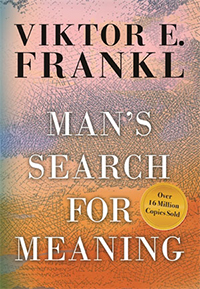
    Man's Search for Meaning

    Man’s Search for Meaning
    Viktor E. Frankl

    “This is a book I reread a lot . . . it gives me hope . . . it gives me a sense of strength.”
    —Anderson Cooper, Anderson Cooper 360/CNN


    One Drop

    One Drop: Shifting the Lens on Race
    Yaba Blay

    One Drop presents a nuanced exploration of racial identity that serves as a practical guide for thinking critically about what it means to be Black in the twenty-first century.”
    —Tarana J. Burke, author, activist, and founder of the MeToo movement


    Owls and Other Fantasies

    Owls and Other Fantasies: Poems and Essays
    Mary Oliver

    “Oliver has gained enormous popularity in recent years for the accessible yet highly articulate and profound treatment she gives each poem . . . This title will bring much pleasure to the many readers who claim Oliver as their favorite poet, as well as to people new to her work.”
    Library Journal


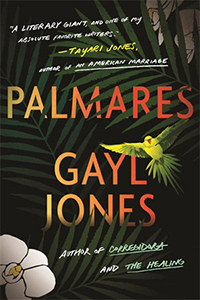
    Palmares

    Palmares
    Gayl Jones

    “This story shimmers. Shakes. Wails. Moves to rhythms long forgotten . . . in many ways: holy. [A] masterpiece.”
    The New York Times Book Review


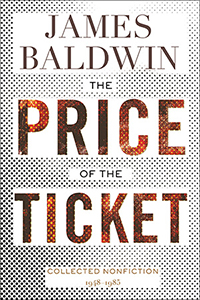
    The Price of the Ticket

    The Price of the Ticket: Collected Nonfiction: 1948-1985
    James Baldwin

    “With burning passion and jabbing, epigrammatic acuity, Baldwin fearlessly articulates issues of race, democracy, and American identity.”
    —Toni Morrison


    Prophet Against Slavery

    Prophet Against Slavery: Benjamin Lay, a Graphic Novel
    David Lester with Marcus Rediker and Paul Buhle

    “David Lester’s raw, expressive visual approach perfectly delivers. Prophet Against Slavery is a crucial account of abolitionism’s religious framework, its courage and moral clarity often recast as sin or insanity, and the necessity of taking outside risks in pursuit of justice and equality.”
    —Nate Powell, National Book Award–winning artist of the March trilogy about US congressman John Lewis


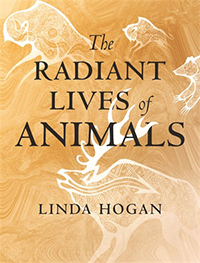
    The Radiant Lives of Animals

    The Radiant Lives of Animals
    Linda Hogan

    “Linda Hogan’s work is rooted in truth and mystery.”
    —Louise Erdrich


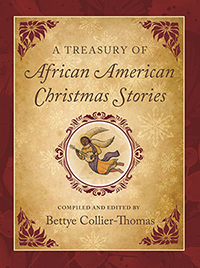
    A Treasury of African American Christmas Stories

    A Treasury of African American Christmas Stories
    Compiled and edited by Bettye Collier-Thomas

    “Here was a veritable who’s who of Black writers, whose powerful stories and poems ran the gamut of literary expressions—from the tragic to the comic, fables to romance. A book for all seasons, these stories are bound to amuse, educate, and inspire all kids, from one to ninety-two.”
    —Robin D. G. Kelley, author of Freedom Dreams


    Until I Am Free

    Until I Am Free: Fannie Lou Hamer’s Enduring Message to America
    Keisha N. Blain

    “[A] riveting and timely exploration of Hamer’s life. . . . Brilliantly constructed to be both forward and backward looking, Blain’s book functions simultaneously as a much needed history lesson and an indispensable guide for modern activists.”
    New York Times Book Review

    ~~~

    Here’s what you can do as we get through this season.

    1. See something you’d like a loved one to have? Buy it now!
    2. If you aren’t too blitzed by Zoom fatigue and working remotely, consider buying it as an e-book or audiobook.
    3. Are your eyes set on a title that’s not coming out for another few months? Smash that preorder button now! Your authors and indie bookstores will love you and appreciate you for this.

    Which brings us to the next point. Speaking of indies, we need to really show up for them and for venues like Bookshop, Indiebound, and our personal favorite, InSpirt UU Book and Gift Shop. Publishing delays are likely to hit them harder than large chain bookstores. Holiday season keeps indies afloat during the slower seasons. The pandemic hasn’t made this any easier for them.

    We’re all in this together. We thank you, your authors thank you, and your indie bookstores thank you.

    Holiday gifts

  • A Q&A with Ruth Behar

    Ruth Behar and The Vulnerable Observer

    Author photo: Gabriel Frye-Behar

    Award-winning anthropologist Ruth Behar’s groundbreaking book, The Vulnerable Observer: Anthropology That Breaks Your Heart, turns twenty-five this year! Eloquently interweaving ethnography and memoir, Behar offers a new theory and practice for humanistic anthropology—an anthropology that is lived and written in a personal voice. She did so with the hope that it would lead us toward greater depth of understanding and feeling, not only in contemporary anthropology, but in all acts of witnessing. (Spoiler alert: yes, it has!) For Hispanic-Latinx Heritage Month, Beacon Broadside editor Christian Coleman caught up with her to chat about the book’s anniversary.

    Christian Coleman: The Vulnerable Observer was pioneering when it first came out in 1996 because it proposed the concept of vulnerability in social research. Why was this concept so novel at the time?

    Ruth Behar: So much has changed in the last twenty-five years that sometimes we forget how different were the paradigms we worked with before. Anthropologists were taught that they had to approach their research from a distance. This meant silencing the story of your entanglement with a specific set of people, in a specific place, in a specific moment in time, and how knowledge gets produced in this messy, haunting, unrepeatable process. By concealing your presence, your feelings of vulnerability as an observer, and how the social world you observe connects with your own life, you would supposedly be “unobtrusive” and “neutral” and “more objective.” But that stance asked that you deny any self-positioning regarding gender, race, class, nationality, and other markers of identity, that you somehow be an invisible observer.

    I felt extremely uncomfortable attempting to pursue research from this perspective. I questioned it from the start. In The Vulnerable Observer, I gave voice to the alienation I had felt about the detachment I was supposed to maintain when carrying out social research and writing about my experience. But that detached approach to social research was so ingrained that, when the book came out and I spoke of being vulnerable, some academic readers were taken aback. The word “vulnerable” wasn’t in wide circulation. Scholars weren’t supposed to be emotionally invested in social research, and if you were, that was not something you’d ever write about.

    Over time, a paradigm shift took place, and now anthropologists, social researchers, and writers embrace their vulnerability and describe their self-positioning and speak openly of the emotional consequences of their work. The Vulnerable Observer has been part of this sea change. Since the publication of the book, the usage of the word “vulnerable” has gone through a boom in the English language. In anthropology alone, its usage has increased by 400%. The Vulnerable Observer played a role in spurring the word—and the concept—into our lexicon.

    CC: Where did the idea of bringing vulnerability to anthropology come from? How did you find yourself developing this concept for your work?

    RB: In the late 1980s, early 1990s, several scholars of diverse backgrounds challenged the norm of writing in third person, unwilling to accept self-erasure, and they wrote their scholarship in their unique personal voices. This was a dramatic shift. Much of the academic world rejected it, dismissing the idea of writing personally as “self-indulgent.” In anthropology, it was taboo, because the discipline prides itself on turning its gaze on the lives of those being observed, not on the observer; and we study and advocate for people in the plural, as collectives, communities, cultures. To call attention to yourself was not just distracting but shameful. Arguments arose as to whether work that incorporated the story of the anthropologist into the story of those being studied was “really” anthropology. I was so vexed about this that I ended up writing an essay for the Chronicle of Higher Education in 1994 that was called precisely, “Dare We Say ‘I’?”

    The shift in the academy was a response to the late 1960s rallying cry: “The personal is political.” It was such an obvious assertion and yet so radical. Feminist scholars and African American and Latinx poets and writers began to tell stories about their lives in first-person voices that had never been told before, raising awareness about sexism and misogyny, racism, and inequality. Autobiographical writing was embraced across the disciplines, in medicine, law, and art. In anthropology in this era, there were calls to decolonize the discipline and do away with the idea of the “other” as the focus of our studies. This led to self-reflexive work that connected the personal with the ethnographic, and eventually, to the notion of autoethnography. And then the “literary turn” took place, which drew attention to the fact that anthropologists are writers constructing narratives of their journeys and so are always implicated in how they represent the people they are observing.

    Allowing the personal voice into scholarship, into anthropology, was crucial for letting vulnerability come through the gates, too. Once you are writing as “I,” you can address your own vulnerability as well as the vulnerability of those who’ve let you into their lives. For me, writing as “I” made me want to know what it means to observe others and write about them. Who am “I” to have the right to do that? The concept of vulnerability grew out of my need to try to answer that fraught question.

    Through experiences carrying out research in Spain, Mexico, and Cuba, I came to realize that the psychic state of the observer, the reality of what was going on in my life at the moment of observation, had consequences for what I could and couldn’t see, what I could and couldn’t understand. And this knowledge needed to be worked through in the writing, because it is in the retrospective act of writing that you process the multidimensional and sensorial experience of doing anthropological research. To do that research, you enter into relationships with people who are kind enough to let you into their lives. In the course of getting to know about their dreams and struggles, you come to care about them greatly. You form deep attachments to both the people and the places where you’ve lived, often for many years, returning over and over. In the end, as I’ve said in the book somewhere, what we’re enacting is our shared mortality. That’s the deep core of the concept of vulnerability.

    CC: Have you seen the effect the book has had on readers over the course of twenty-five years? Do you have any favorite stories about people who have connected with it or use and recommend it as a reference?

    RB: It’s been humbling to learn that The Vulnerable Observer is a widely-cited book, with thousands of citations. The book is described as a “classic,” as a book that sparked “an epiphany.” The Vulnerable Observer has influenced scholars not just in anthropology and sociology (where it is included in many qualitative research guides, handbooks, scholarly reflections, and ethnographies), but also across many disciplines well-beyond anthropology, ranging from psychology to education to health to rhetoric (and even to management studies). Readers say that the book poignantly put a label on something anthropologists and other scholars had been grappling with but had not coalesced around a fitting term for the practice of thinking through and laying bare one’s subjectivity and personal connection to research. Even academic readers who are critical describe the book as “the right way” to do vulnerable work, incorporating only those personal disclosures that add to the ethnographic account and analysis, rather than distract from it. I’ve been struck by how many scholars and writers borrow the book’s title for their own work, writing about “Trying to be a Vulnerable Observer,” or “Reflections of a Vulnerable Observer” or “When Collecting Data Can Break Your Heart.”

    Beyond the academy, the book has engaged journalists, writers, and general readers. I was delighted to see The Vulnerable Observer included in a list of “The Best Books That Capture the Complexities of Writing About the Real World.” Travel writer Tim Hannigan, the author of that list, described my work as offering “a recognition of the way your own personal and cultural baggage colours your way of seeing, and of the way that you, the writer, are always part of the story.” A reviewer on Goodreads noted, “This book is introspective, passionate, and raw. Ruth Behar crafts a masterpiece of authenticity in this autoethnography.”

    Throughout the years, I’ve received many kind letters and emails praising the book. I’ve met students and colleagues all over the world who’ve been influenced and inspired by the book. That has been so moving, and totally unexpected. I admit it’s a little scary when someone tells me they decided to go into anthropology after reading The Vulnerable Observer. That’s actually happened several times, and it’s a lot of responsibility to bear. I mean, what if they’re not happy once they’re pursuing a career in anthropology? But it’s consoling to know that people bring their own desires and needs to their reading of the book and draw the energy they’re seeking from it. Just two days ago, I received an email from a young professor who’s teaching a seminar on ethnography, and they said, “Your work and words often serve as a reminder for me to feed my soul. . . Every time I re-read or read anew your work, it reminds me of who I want to be when I ‘grow up’ someday. Thanks for what YOU gave us—both my students and me.” 

    CC: And lastly, what surprised you about The Vulnerable Observer that you didn’t foresee or anticipate when it was first published?

    RB: I didn’t expect that The Vulnerable Observer would end up on many course syllabi. I’ve learned that numerous students read it each semester. Or at least they’re assigned to read it. I hope they actually read it! Evidently, they are often asked to write about it. You can even purchase a student essay about the book online.


    About Ruth Behar 

    Ruth Behar, ethnographer, essayist, poet, and filmmaker, is professor of anthropology at the University of Michigan. The recipient of a MacArthur Fellows Award and a John Simon Guggenheim Fellowship, Behar is the author of several books, including The Vulnerable Observer. She lives in Ann Arbor, Michigan. Follow her on Twitter at @ruthbehar and visit her website.

  • By Philip Warburg

    Solar roof on Elnora Thompson's home

    Solar roof on Elnora Thompson's home. Photo credit: Resonant Energy

    The Better Buildings Act, now making its way through the Massachusetts legislature, is a monumental step toward curbing fossil fuel use by larger commercial and public buildings. Yet even as we focus on these major carbon polluters, we cannot lose sight of the need to bring clean energy solutions to residential communities, particularly those that have been unable to tap the solar energy that shines on their rooftops.

    In recent years, more than 100,000 solar arrays have been installed on Massachusetts homes and businesses, but the Commonwealth’s lower-income communities have experienced little of that growth. In some of those communities, local activists are teaming up with enlightened entrepreneurs to close the solar power gap.

    When Boston-based Resonant Energy was looking for low-income homeowners to join its Solar Access Program, it’s no surprise that Elnora Thompson stepped up. For decades, she has dedicated herself to strengthening community ties and healing the environment in Boston’s Dorchester neighborhood, a few blocks from Codman Square. First, she spearheaded community gardening; then she turned to solar power. 

    Shortly after moving to her current home in 1990, Thompson learned about a makeshift community garden where she could plant some vegetables. “There were ten guys here at the time, and I was the only woman,” she recalls as we sit in the morning shade beneath a pergola surrounded by tight rows of beans, greens, sunflowers, and staked tomato plants. “They appointed me the coordinator, so I have been doing it ever since.”

    About a decade ago, when a condo complex was proposed for the garden site, Thompson was on the front lines rallying opposition to the project. “We got Codman Square Health Center, ABCD [Action Plan for Boston Community Development], all the grocery stores, and everybody with a nutritional link to come on board with us.” After a multi-year struggle, the community gardeners won title to the property from the City of Boston for a dollar and registered the Nightingale Community Garden as a nonprofit organization. Today, the garden has 134 plots and yields 25,000 pounds of fresh produce annually.

    Elnora Thompson in Nightingale Community Garden

    Elnora Thompson in Nightingale Community Garden. Photo credit: Philip Warburg

    Thompson recalls her first encounter with Resonant Energy a few years ago. “A young lady showed up at my house, and I was in my front yard working. She said, ‘We have this program,’ and she started explaining it to me. I said, ‘I run a community meeting over at Codman Square Library and we’re meeting tonight. Why don’t you come over and present?’”

    At the meeting, Resonant Energy’s field representative described the company’s offering. In exchange for leasing out roof space to Resonant for a solar array, homeowners would receive twenty percent of the sun-generated power free of charge. The estimated savings, deducted from their monthly electricity bills, would amount to roughly $500 per year, and after ten years, the homeowners would have the option to buy the solar arrays outright at a deeply discounted price.

    Nine people expressed initial interest, but progress was slow. Thompson worked hard at reining in her neighbors’ impatience with the many months it took to line up financing for their installations and a contractor to install the solar arrays. After multiple neighborhood meetings and working sessions with Resonant staff around her kitchen table, Thompson and five of her Dorchester neighbors now have solar power on their property. Her own photovoltaic (PV) array was activated on August 24.

    One of the barriers to low-income solar access is the cost of buying and installing a rooftop PV array, averaging more than $15,000 in Massachusetts. Federal and state investment tax credits on renewable energy—a real boon to solar buyers with sufficient taxable income—are of little use to low-income households. A low FICO credit score can pose other obstacles: it may bar homeowners of modest means from taking out a loan for the purchase of a PV array, prevent them from leasing solar equipment, and dim their prospects of signing a power purchase agreement that would let them buy electricity from a company that has installed its own solar panels on their property. Resonant’s Solar Access Program surmounts all those hurdles, offering solar power at no upfront cost and without any ongoing financial obligations.

    Resonant Energy, as a certified B Corporation, is legally bound to conduct business in a socially and environmentally responsible way. The company’s mission, as co-founder and co-CEO Ben Underwood describes it, is “to fundamentally change how the profits of the solar industry are distributed and whom they benefit.” Resonant, a worker-owned company, has installed four megawatts of solar power on individual homes, multi-family affordable housing, and houses of worship across Massachusetts, plus a few in New York State. That’s more than the electricity needed for 650 average American homes.

    Financing for Elnora Thompson’s roof and several other Resonant Energy projects comes from Sunwealth, a Cambridge-based investment firm whose mission aligns with Resonant’s goal of advancing solar access and inclusion. Jess Brooks, chief development officer at Sunwealth, describes the challenge her firm addresses: “On the investor’s side, how do you connect all the people who care about addressing climate change, particularly care about building strong and more vibrant regional solar economics, want to be invested in local solar projects supporting local businesses, and care about a more equitable clean energy future?” 

    In expanding the reach of solar power to households and communities that mainstream lenders steer clear of, Brooks emphasizes that Sunwealth operates within existing capital markets. “Sunwealth has intentionally chosen to develop in a way where we are delivering returns to investors. We are not requiring a grant subsidy to do the work.” In some older homes, though, antiquated wiring and aging roofs have to be replaced before solar can be safely installed. Ben Underwood says that Resonant has raised extra funds from philanthropic sources to cover those expenses.

    Sunwealth’s CEO Jon Abe acknowledges that, while many of the installations it finances serve low-income households, it’s often cheaper to install solar systems in suburban and rural areas than in crowded cities with older buildings and electric distribution networks that strain under the added load of solar power. That’s part of what makes Sunwealth’s collaboration with Resonant Energy so impressive. Neither firm is charting the most effortless path to a clean energy future; both are dedicated to balancing profits and environmental gains with a commitment to leveling the solar power playing field for underserved communities.

    Rev. Mariama White-Hammond, the City of Boston’s chief environmental officer, gave the keynote last month at a backyard celebration of Resonant Energy’s first half-decade. “I’m glad to be here, where a few crazy people said, ‘We’re going to try something different, we’re going to put ourselves out there,’” she said. “I hope it will make all of us walk away from here asking, ‘What is the next courageous, community-driven, creative solution that we are going to go for?’ Because time is running out and the status quo certainly isn’t working.”


    About the Author 

    Philip Warburg is a Senior Fellow at Boston University’s Institute for Sustainable Energy.