• By Christian Coleman

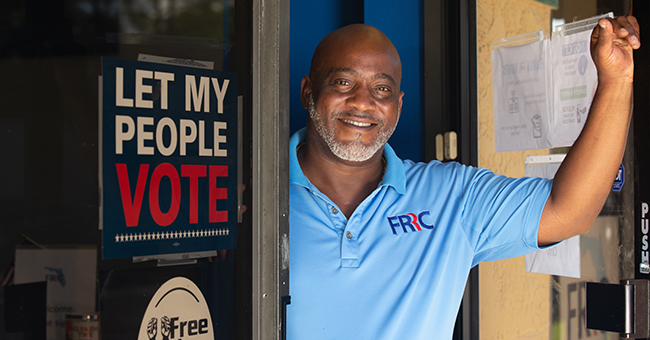
    Desmond Meade

    Photo credit: John D. and Catherine T. MacArthur Foundation

    Break out the confetti and the champagne! We’re having a double celebration for civil rights activist Desmond Meade! First, he has been named a 2021 MacArthur Fellow! Secondly, it’s the first-year anniversary of his book, Let My People Vote: My Battle to Restore the Rights of Returning Citizens!

    The MacArthur Foundation selected him to join this year’s class of Fellows because of his work to restore voting rights to 1.4 million formerly incarcerated citizens in Florida and to remove barriers to their full participation in civic life. As president of the Florida Rights Restoration Coalition (FRRC), he led the successful fight for Amendment 4, a constitutional amendment that overturned a Jim Crow-era law aimed at keeping Black Americans from voting. Amendment 4 was passed in November 2018 with sixty-five percent of the vote and was hailed as the biggest win for voting rights in decades.

    When he spoke with Lulu García-Navarro on NPR’s Weekend Edition about Republicans in Florida state legislature hobbling the initiative, he said, “It’s a clear affront against democracy, forcing an American citizen to choose between putting food on their table or voting. To me, that is not what democracy is all about. Access to the ballot box should be unencumbered and free. And any attempt to minimize that or to discourage that is an affront to democracy and what this country stands for.” They required anyone with a felony conviction to completely pay off their fines before casting any ballots. This is modern-day disenfranchisement at work.

    You will notice that when Meade talks about formerly incarcerated citizens, he uses the term returning citizens. This is very intentional. When he talked to Amy Goodman on Democracy Now!, he said, “One of the things that impact policies, and no matter what policies you’re dealing with, is that narrative, right? How are you viewing people? And when you use the term ‘ex-felon,’ ‘convict,’ ‘ex-con,’ what you’re doing is you’re actually dehumanizing that individual while desensitizing the public towards that individual or the issue that they’re dealing with.” Language always matters because language shapes the narrative. As a returning citizen of Florida himself, Meade knows firsthand what that feels like.

    Meade gives us his firsthand account in Let My People Vote, recounting his journey through prison and homelessness, to his activism, to the present as he fights for a fully enfranchised nation. He survived a tough childhood only to find himself with a felony conviction. Finding the strength to pull his life together, he graduated summa cum laude from college, graduated from law school, and married. But because of his conviction, he was not even allowed to sit for the bar exam in Florida. And when his wife ran for state office, he was filled with pride—but not permitted to vote for her. His journey takes us from his time in homeless shelters, to the exhilarating, joyful night when Amendment 4 passed.

    Michelle Alexander, author of The New Jim Crow, calls his story “an inspiration for all those who aim to build a radically more inclusive democracy.”

    Just last year, Meade voted for president for the first time in thirty years. During his CBS 60 Minutes interview, he explained why it was such a watershed moment for him and what it meant in not only his personal history but also Black history. For him, it was sacred. He said, “When I went in there to vote, I didn’t just take my family in there with me. I brought all of my ancestors that were hung on trees, that were burned, that were bitten by dogs, that were sprayed by fire hoses. I brought their spirit with me in there. Our people went through that. We’ve been constantly fighting. Amendment 4 was nothing but a continuation of the Civil Rights fights. And we're still fighting.”

    In 2019, he was recognized by Time as one of the 100 Most Influential People in the World. Today, he continues fighting against new restrictions placed on Florida voters that have been likened to Jim Crow laws.

    Michelle Alexander calls Meade one of her personal heroes. He’s one of ours, too! Meade joins the ranks of such writers as Octavia E. Butler, Bob Moses, and Rev. Dr. William J. Barber II as our MacArthur Fellow authors!

    Congratulations, Desmond Meade!
  • A Q&A with W. J. Herbert

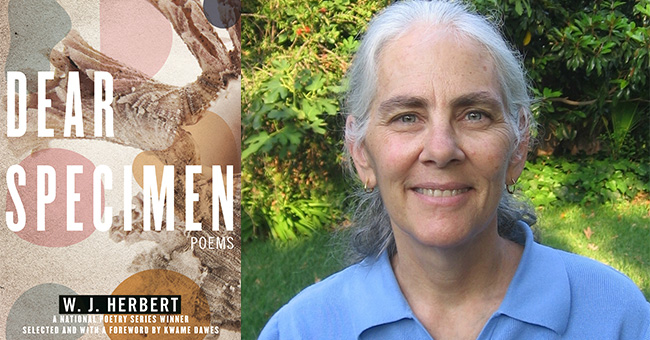
    Dear Specimen and W. J. Herbert

    “Dear Specimen” cover art: Carol Chu

    W. J. Herbert’s Dear Specimen is a five-part series of interwoven poems from a dying parent to her daughter, examining the human capacity for grief, culpability, and love, asking: do we as a species deserve to survive? Selected by Kwame Dawes as our winner in the National Poetry Series, her collection juxtaposes a profound sense of intimacy with the vastness of geological time and offers a climate-conscious critique of the human species. Bill McKibben says it “engage[s] the most critical question humans have ever faced . . . from the wellsprings of passion and grace.” Our publicity assistant, Priyanka Ray, caught up with Herbert to chat with her about it.

    Priyanka Ray: Dear Specimen is written from the perspective of a dying mother to her daughter. Why did you frame the collection as a “love letter” from a parent to a child? And what was the process of adopting this point of view?  

    W. J. Herbert: A woman meditates on her impending death and the crisis her species has created in the original version of this manuscript which contained only fossil and specimen poems. “Do these creatures ever answer your speaker’s questions?” asked friend and fellow poet Tim Carrier. They don’t, I told him. He said: “But your readers need a way in.” I wasn’t sure what he meant but, in my heart, I knew he was right: we need to care deeply about the speaker.

    As he and I talked, I realized that my grief over my mother’s death might offer a connection. Many of the manuscript’s poems already involved animals and their offspring. In one, a beaver slaps the water with her tail “. . . to warn kits away from bobcat, / anchored barge leaking tar sands.” In another, a baby mammoth is “. . . unearthed from the tundra, / mother’s milk inside her.” Because I was once a daughter and have daughters myself, it wasn’t hard to imagine poems that would function as the dying speaker’s love letters to the daughter she will leave behind.

    Though these poems are not autobiographical, I hope their emotional landscapes seem real to the reader. To me, they are among the most effective poems in the collection, but because I was aware of their importance to the manuscript, I found them difficult to create. I seldom write with such definite intentions!

    PR: The speaker often connects her own impending death to species extinction. In the poem “Sea Lily,” she converses with an extinct sea creature, asking, “Lily, why do we have so little time?” How does the speaker’s self-identification of her individual mortality with mass extinction allow us to develop a more intimate understanding of our relationship with the Earth and other beings?  

    WJH: In the collection’s opening poem, “A Homo Sapiens on the Brink of Extinction Speaks to the Fossil Mosasaurus,” the brevity of one life, the speaker’s, is set in urgent relief to those species we have already lost. She watches an echocardiogram of her own beating heart “. . . as if a fossil had come to life . . .” and, comparing herself to the mosasaurus, whose species was nearly as ferocious as ours, asks: “. . . why didn’t you survive?” At the poem’s conclusion, she imagines the two of them, not only as individuals, but as members of extinct species who have become the objects of puzzlement to future life forms.

    But in the final section of Dear Specimen, the speaker no longer asks creatures to answer her unanswerable questions. In “Triage,” an acutely-ill woman (whom we presume is the speaker) imagines that the hospital she has entered has become a building whose “. . . body moves / like a whale, that breathing, / leaves wind and light behind it as it dives.” We are told that the woman sinks quietly and soon “. . . she’s so deep, / that, to capture / what light is left in the darkness // around her, her eyes / leave her body and grow out on long stalks . . . but her arms glow / as if lit by a strange / fish whose forehead / gleams as it glides by // and the woman dreams of harp / sponge, sea whip / coral, the luminous / arms of light-tipped squid.” She no longer understands her life, or even her death, as separate from theirs: she is, and always will be, a miraculous strand in the web of life on Earth.

    PR: In one of my favorite poems in the collection, “Shanidar, First Flower People,” the speaker imagines that after death, rather than being cremated, she will be left in a cave containing the fossils of an extinct human species. What does this poem, and the collection at large, say about remembrance and legacy in the context of the imminent extinction of humankind? 

    WJH: Even in death, the speaker abhors the idea that her cremation might contribute to global warming. She has already expressed the fear, in the poem “Squander,” that her own culpability set within the context of our species’ larger greed, is an unendurable legacy. In “Shanidar,” the issue is not only that she can’t bear the imagined pain of her cremation—it’s that she wants to be placed with other members of her genus who are already extinct, as if she could join them on a flower-filled journey into a future that exists beyond the reaches of time. If, after our extinction, the cave is discovered by a newly evolved species, they may rename us Homo neglegens, heedless man.

    But the poem, “At the Sea Floor Exploration Exhibit, Sarah Asks,” mitigates that harsh assessment. Here, the speaker’s daughter, grieving after her mother’s death, is spellbound by the mysterious creatures she sees. With humility, she asks those who inhabit a world still largely unknown to us, “Please, tell me what you told her.” If we translate into action a radical empathy like hers, perhaps we can save what’s left of life on our planet.

    PR: The final poem in Dear Specimen foretells climate refugees overrunning one of our planet’s last habitable places. You write, “Still, no one stopped us / from swarming onto sacred land / with its legend / of a magic caribou boy who, / enchanted by a moonlit herd, / no longer wanted to be human.” Can you discuss the idea of no longer wanting to be human, and how this relates to feelings of guilt and self-loathing around our role in climate change? How do you recommend we combat these feelings? 

    WJH: Guilt over our culpability for the climate crisis is just one of the many reasons this boy no longer wants to be human. Yes, we seem unable to turn our climate juggernaut around, despite the best efforts of scientists and policy makers over many decades. Yes, we all suffer the warming climate’s effects, though many communities who have few resources to prepare for or mitigate this catastrophe had nothing to do with its creation. And yes, those of us in richer countries still haven’t made it clear to governments or corporations that we won’t tolerate continuing devastation.

    But the boy in this poem has an even more powerful reason for not wanting to be human, and this points a way for us to combat our own negative feelings about our species’ culpability. In the harsh climate of the Northwest Territories, Indigenous people have relied on caribou for food, shelter, and tools for thousands of years. The boy’s enchantment is born of gratitude and reverence for the natural world.

    The speaker of Dear Specimen represents all of us: We face mortality; we worry about our children’s future; and, in the context of the climate crisis, some of us wonder if our species will survive. By creating a speaker who feels acutely these concerns, I hope readers not only share her urgency as she searches for meaning, but also her awe for the myriad species with whom we share this miraculous planet.


    About W. J. Herbert 

    W. J. Herbert’s work was awarded the Anna Davidson Rosenberg Prize and was selected by Natasha Trethewey for inclusion in Best American Poetry 2017. Her poetry, fiction, and reviews appear in Alaska Quarterly ReviewThe AtlanticHudson ReviewSouthwest Review, and elsewhere. Born in Cleveland, Ohio, she was raised in Southern California where she earned a bachelor’s in studio art and a master’s in flute performance. She lives in Kingston, New York, and Portland, Maine.

  • Travis Cohen

    After a season of hibernation, we are excited to reboot our “Beacon Behind the Books” series! In these times when readers are responding to our books “more than ever,” when our authors—including Christopher Emdin, Roxanne Dunbar-Ortiz, Robin DiAngelo, James Baldwin, and Gayl Jones—are appearing in the media, their ideas going viral on social media, their voices being heard on so many platforms, we thought it might be good to take a break to focus on some of the staff who work hard to find, shape, edit, produce, and promote those works. Our blog series introduces to you a member of our staff and gives you a behind-the-scenes look, department by department, at what goes on at our office. And not only our staff, but our interns, too! 

    For the month of October, we introduce you to our production associate, Travis Cohen!

    What drew you to publishing, Travis? How did you find your way to Beacon?

    My degree is actually in film, but I realized only afterward that it wasn’t what I wanted for myself, so I did what any sensible person would do—I street performed for a little while in Baltimore, playing bucket drums. Wanting something more stable, I luckily got hired on as a manager at a Books-A-Million. The rest is history, I guess. I just fell in love with books, the industry, and the people in it. My first taste of publishing was during an internship at MIT Press where I got to work in a few different departments. That affirmed publishing as the right place for me.

    Beacon was always in the foreground. You knew someone was on the right path if you caught them purchasing a Beacon book. Its history and work embody a moral clarity that represents (and actively contributes to) the best of American thought—so I applied!

    What’s a typical day in the life of a production associate?

    Hard to say. Every day seems so different and poses unique challenges. The short answer: shepherding our paperback conversions and reprints through production, digitally archiving files for our books, and assisting my colleagues in any way that I can. Most of it, though, consists of chasing down printers. 

    What upcoming projects are you excited about?

    Song for Almeyda and Song for Anninho by Gayl Jones! Palmares was such an incredible journey that left me immediately wanting to see what happens next.

    What’s your advice to someone interested in entering the publishing field? 

    Find someone in publishing willing to talk to you and provide a good breakdown of the life. It’s a small world inhabited by genuinely good people. It might not lead to a job, but what does these days?

    What skills have you taken from previous jobs to help you do your work at Beacon?

    Working in bookstores has probably done more for my development than any institution, and it is all by dint of working with such brilliant and amazing people. That said, customer service might be the one that gets tapped into the most.

    Favorite thing about Boston?

    Just hear me out: the MBTA. It was the first thing I loved about this city, which probably says a lot about my mental health. I’ll also say the Boston Public Library and our fantastic array of used bookstores.

    What are you reading right now?

    Shutdown by Adam Tooze. I wasn’t interested in reading a COVID book yet, but I do love Tooze and am enjoying it.

    What’s the next queued song on your music player?

    Pressure to Party by Julia Jacklin.

    Favorite book ever?

    The Private Life of Chairman Mao. Unsure if this is my favorite book ever, but it has to be close. It’s magisterial history and memoir rolled into one. We should be thankful every day that Dr. Li decided to chronicle his experience.

    Hobbies outside of work?

    Playing Stardew Valley with my wife is what you can bet I’m doing right now.


    About Travis Cohen

    Travis Cohen received his BS in Mass Communication from Frostburg State University in 2014. Before Beacon, he worked at Politics and Prose and Brookline Booksmith, as well as interned for MIT Press. In his spare time, he loves to read/browse books, play video games, and watch anything with beautiful set production.

  • By Sumbul Ali-Karamali

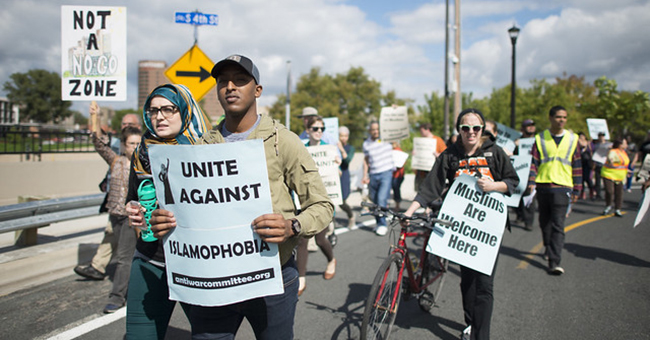
    200 people gathered in east Minneapolis, MN, for a rally and march to to denounce hate speech and hate crimes against Muslims, September 17, 2016.

    200 people gathered in east Minneapolis, MN, for a rally and march to to denounce hate speech and hate crimes against Muslims, September 17, 2016. Photo credit: Fibonacci Blue

    In this age of Diversity, Equity and Inclusion movements, twenty years after the tragedy of 9/11, why is it still acceptable to denigrate Muslims and what they believe without any knowledge of what they believe? Why are Muslims judged on the basis of stereotypes and not on facts? And why are we as Americans so reflexively quick to believe the worst of Muslims, given half an opportunity to do so?

    Shariah, in particular, is a scare word in the West. Lately, most people, including journalists, take for granted that what the Taliban (or ISIS) say is shariah really is shariah. That’s exactly like going to the Ku Klux Klan to get a definition of Christianity. In fact, the Taliban are to Islam what the KKK are to Christianity: both groups commit acts of murder and brutality and justify them on the basis of religion. The only reason the Taliban and ISIS have been more successful than the KKK is that they operate in failed states.

    But the shariah scare began long before the Taliban or ISIS. In 2010, David Yerushalmi, a right-wing lawyer, set out to introduce the idea of a draconian, oppressive shariah ready to take over the US. To this end, he approached state legislatures and convinced fourteen of them to pass anti-shariah legislation. As a lawyer, Yerushalmi must have known that the First Amendment to the US Constitution prevents any religious law from taking over the US. He didn’t care. His purpose was to otherize Muslims, portray shariah as backward and barbaric, and portray Muslims as incapable of following their country’s laws.

    That’s ironic, because Muslims are required, under shariah itself, to follow the laws of the country in which they live. Moreover, shariah is not what Yerushalmi and the Taliban say it is. As Noah Feldman, Harvard professor of Jewish and Constitutional law remarks, “For most of its history, Islamic law [shariah] offered the most liberal and humane legal principles available anywhere in the world.”

    Shariah means “the path of God.” Loosely, shariah just means Islam. It’s not law the way we think of law—rigid and enforceable—but rather a mass of religious guidelines primarily relating to personal conduct. Shariah is not static, either; it contains internal methodologies to change and adapt according to time and place.

    Shariah developed the kinds of principles we take for granted: the right to a fair trial, innocent until proven guilty, and the right not to incriminate oneself. Moreover, all Islamic law had to further these five rights: the right to life, family, intellect, resources, and religion. These Islamic principles sound a lot like our beloved constitutional principles—but they were established over a thousand years ago, long before England finally began to stop using trial by fire and trial by water to determine guilt or innocence.

    Indeed, when the English colonized India in the eighteenth century, they began overturning shariah cases on grounds that shariah was too lenient.

    Today, shariah is not the law of the land anywhere in the world. Iran, for example, has a constitution and civil code and has simply tacked on Islamic-sounding provisions. Saudi Arabia is an amalgam of cultural tribal law and Islam.

    The Taliban violate shariah, whatever they say. Shariah forbids taking a life except in very few circumstances: in legitimate warfare, as punishment after a fair trial, and in self-defense of imminent threat. This is no different from modern Western law. Shooting protesters, as the Taliban have done, is murder under shariah. Beating and killing women for perceived offenses in dress and conduct, as the Taliban have done, is forbidden under shariah. So is rape and forced marriage.

    As for amputating limbs and cutting off hands, these were typical of ancient, homiletic punishments designed to deter criminal behavior in the absence of police forces to enforce the law. Even then, shariah contains so many procedural requirements for proving cases for theft and adultery (as well as defenses for the accused) that it is virtually impossible to actually apply the punishments. These punishments were in abeyance for centuries, until fundamentalists revived them in the twentieth century.

    Yet, shariah has become synonymous with backwardness. Lately, even the recent harsh abortion law in Texas (which effectively reverses Roe v. Wade in that state) has provoked hashtags such as #ShariaLawInTexas and a cartoon featuring a Texan and a Taliban fist-bumping. But shariah prohibits neither abortion nor birth control. Islamic scholars differ on when in the pregnancy abortion is permissible, but the great majority allow it. It’s the Christian right, not shariah, that’s responsible for abortion bans.

    In fact, if Muslims were so misogynistic, we wouldn’t have had fourteen Muslim women presidents and prime ministers of Muslim populations in the last few decades alone. If Islam were so sexist, Muslim-American women wouldn’t be the second-most educated female faith group in the US (after Jewish-American women), and they wouldn’t have the most parity of income with men of any faith group in the US. It’s poverty that determines opportunities for women, not religion.

    Majorities of Muslim Americans favor Black Lives Matter, same-sex marriage, and abortion rights. Muslim Americans are the faith group most likely to reject attacks against civilians (indeed, shariah prohibits attacks against civilians).

    So let’s stop using shariah as a catch-all shorthand for bad behavior. Let’s stop giving a pass to bigotry when it applies to Muslims and Islam. And let’s stop treating groups like the Taliban as representative of Islam and shariah, rather than the other 1.7 billion or so Muslims in the world. These attitudes not only hurt Muslims; they hurt all Americans.


    About the Author 

    Sumbul Ali-Karamali is a former corporate lawyer with an additional degree in Islamic law. Her newest book is called Demystifying Shariah: What It Is, How It Works, and Why It’s Not Taking Over Our Country.

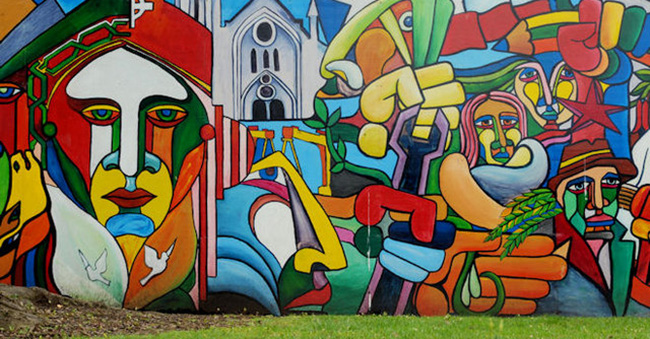
  • Mural celebrating Latin American culture, commissioned by Northern Ireland's Latin American Association, in partnership with Belfast City Council and others.

    Image credit: Albert Bridge

    This year’s theme for Hispanic/Latinx Heritage Month is Esperanza: A Celebration of Hispanic Heritage and Hope. It invites Hispanic and Latinx communities to reflect on how good our tomorrow can be by holding onto resilience and hope. The following books from our catalog wouldn’t be here without our authors’ sense of hope, be it the hope of a better future embodied in the text or the hope that the book will reach the reader who needs it. In each one, you will experience stories of resilience in the face of seeking justice, of crossing borders and carving out a space for one’s self in an uninviting country, adding to the complexities and contradictions of the United States’ narrative. One of these books is for you. Happy Hispanic/Latinx Heritage Month!


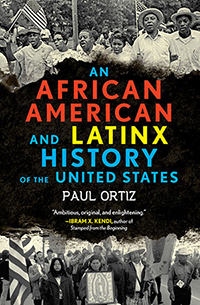
    An African American and Latinx History of the United States

    An African American and Latinx History of the United States

    I wrote this book because as a scholar I want to ensure that no Latinx or Black children ever again have to be ashamed of who they are and of where they come from. Collectively speaking, African Americans and Latinx people have nothing to apologize for. Every democratic right we enjoy is an achievement that our ancestors fought, suffered, and died for.
    —Paul Ortiz


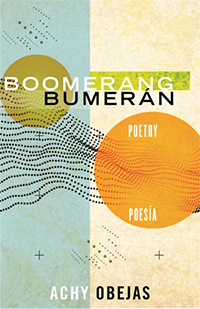
    Boomerang

    Boomerang/Bumerán

    You are returning, you are going back to where it all
    began, careful to engage in the necessary oblivion of the
    circumstances that took you away in the first place. You will
    hold your breath and pretend enough answers have been
    provided to satisfy your pride, your urge to be here, on the
    threshold of what might have been home if not for upheaval,
    if not for the price of sugar and oil on the world market, if
    not for the assurance of safety and comfort elsewhere, if not
    for revolution and exile.

    /

    Vas de regreso, vas a volver a donde empezó todo, con
    cuidado de establecer le obligade olvido de les circunstancias
    que te alejaron en le primer lugar. Vas a contener le
    respiración y pretender que suficientes respuestas han sido
    proporcionades para satisfacer tu orgullo, tu afán de estar
    aquí, en le umbral de lo que podría haber sido tu hogar, de
    no haber sido por le agitación, de no haber sido por le precio
    de le azúcar y de le petróleo en le mercado mundial, de no
    haber sido por le garantía de seguridad y de confort en otre
    lugar, de no haber sido por revolución y exilio.
    —Achy Obejas


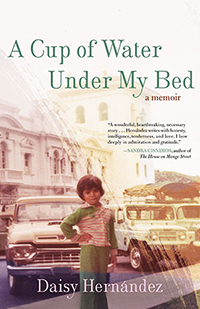
    A Cup of Water Under My Bed

    A Cup of Water Under My Bed: A Memoir

    I begin resenting Spanish. At first, it happens in small ways. I realize I can’t tell my mother about the Pilgrims and Indians because I don’t know the Spanish word for Pilgrims. I can’t talk about my essay on school safety because I don’t know the Spanish word for safety. To share my life in English with my family means I have to give a short definition for each word that is not already a part of our lives. I try sometimes, but most of the time I grow weary and finally sigh and mutter, “Olvídate.” Forget it. This is how Spanish starts annoying me. I suppose it’s what happens when you’re young and frustrated, but you can’t be angry at the white teachers because that would get you nowhere, and you can’t be too upset with your parents because they want what they think is best for you.
    —Daisy Hernández


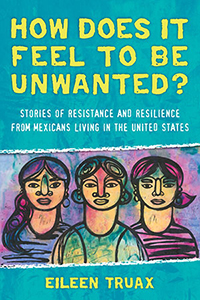
    How Does It Feel to Be Unwanted

    How Does It Feel to Be Unwanted?: Stories of Resistance and Resilience from Mexicans Living in the United States

    Like millions, these Mexican men and women have worked diligently over the course of three decades to create networks of resistance and solidarity and keep forging ahead. They have refused to be the victims of the broken systems of both countries and have triumphed over adversity against all expectations. Thanks to this history of struggle and perseverance, on both sides of the border, they are standing up to the politicians in the United States who convey, in words and in actions, that they are not wanted here.
    —Eileen Truax


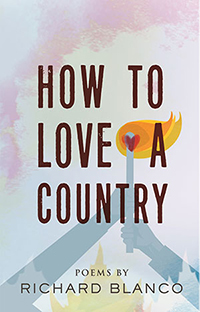
    How to Love a Country

    How to Love a Country

    Como tú, I question history’s blur in my eyes
    each time I face a mirror. Like a mirror, I gaze
    into my palm a wrinkled map I still can’t read,
    my lifeline an unnamed road I can’t find, can’t
    trace back to the fork in my parents’ trek
    that cradled me here. Como tú, I woke up to
    this dream of a country I didn’t choose, that
    didn’t choose me—trapped in the nightmare
    of its hateful glares. Como tú, I’m also from
    the lakes and farms, waterfalls and prairies
    of another country I can’t fully claim either.
    Como tú, I am either a mirage living among
    these faces and streets that raised me here,
    or I’m nothing, a memory forgotten by all
    I was taken from and can’t return to again.
    —Richard Blanco


    An Incomplete List of Names

    An Incomplete List of Names: Poems

    No one calls me Miguel
    except those who don’t know me
    or those who do.

    America what do you want me to say?
    There are too many of your voices in my ear;
    I don’t know what you look like anymore.
    America what size are you now?
    —Michael Torres


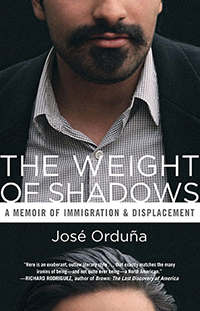
    The Weight of Shadows

    The Weight of Shadows: A Memoir of Immigration & Displacement

    How strange to be welcomed now, since I’ve lived my life here from before I can remember. My cultural references are decidedly 80s and 90s United States—Urkel, Alex P. Keaton, Tom & Jerry, Biggie—and despite my best efforts I sometimes slip into a Chicago accent, cutting my A’s short. . . . I don’t feel any different after saying “I will,” but I know there are some real changes that have just taken place, not to my body—and it’s really too soon for anything to have changed in my mind—but to the relations I have to the place in which I live, its bureaucracy, and its ability to restrict my movement.
    —José Orduña


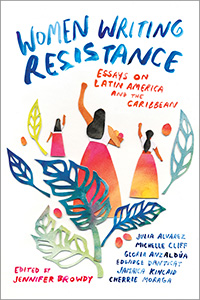
    Women-Writing-Resistance

    Women Writing Resistance: Essays on Latin America and the Caribbean, ed. Jennifer Browdy

    The big and the little screens have presented us with the picture of the funny Hispanic maid, mispronouncing words and cooking up a spicy storm in a shiny California kitchen. This media-engendered image of the Latina in the United States has been documented by feminist Hispanic scholars, who claim that such portrayals are partially responsible for the denial of opportunities for upward mobility among Latinas in the professions.
    —Judith Ortiz Cofer, “The Myth of the Latin Woman”

    Mural celebrating Latin American culture, commissioned by Northern Ireland's Latin American Association, in partnership with Belfast City Council and others.

  • By Christian Coleman

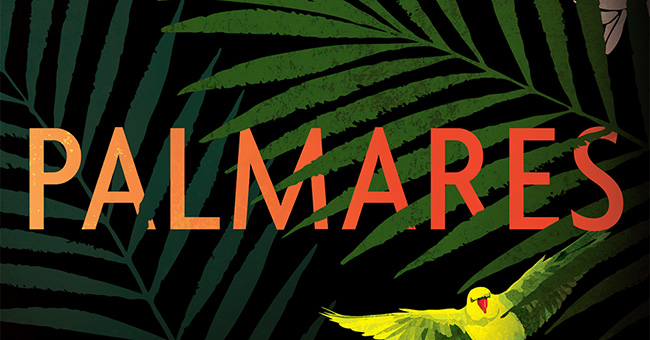
    Palmares

    Cover art: Louis Roe

    It was a long wait before Gayl Jones broke her years of silence. When Toni Morrison first discovered her, she said “no novel about any Black woman could ever be the same after this” upon reading the manuscript for Corregidora. It was published in 1975 when Jones was twenty-six. She followed up her debut novel with Eva’s Man and The Healing. But then after Mosquito, which came out in 1999, we wouldn’t hear from one of the greatest literary writers of the twentieth century for twenty-two years.

    Her absence is finally over, and she’s back in full form with a new novel! Palmares recounts the story of Almeyda, a Black woman enslaved as a girl who comes of age on Portuguese plantations and escapes to a fugitive slave settlement called Palmares. Following its destruction, Almeyda embarks on an epic journey across seventeenth-century colonial Brazil to find her husband, Anninho, who disappeared in battle.

    We’re not the only ones overjoyed about Jones’s magnum opus. In their starred review, Kirkus Reviews calls it “an epic adventure of enchantment, enslavement, and the pursuit of knowledge in seventeenth-century Brazil . . . . Those familiar with Corregidora (1975) and Eva’s Man (1976) will not be surprised by the sustained intensity of both imagery and tone. There is also sheer wonder, insightful compassion, and droll wit to be found among the book’s riches. Jones seems to have come through a life as tumultuous as her heroine’s with her storytelling gifts not only intact, but enhanced and enriching.”

    The book’s riches shine in the way Almeyda’s story brings to life a world impacted by greed, conquest, and colonial desire. Almeyda encounters a mad lexicographer, desperate to avoid military service; a village that worships a cave-dwelling male “god”; and a native medicine woman who offers great magic, at a greater price.

    Beholding all this epicness, the New York Times Review is astounded, saying: “Mercy, this story shimmers. Shakes. Wails. Moves to rhythms long forgotten. Chants in incantations highly forbidden. It is a story woven with extraordinary complexity, depth and skill; in many ways: holy. . . . This feeling of masterpiece-in-and-as-process is deliberate, and genius.”

    Yes, it shimmers with mastery! Combining her command of language and voice with her unique brand of mythology and magical realism, Jones reimagines the historical novel. The result is a sweeping saga spanning a quarter century, with vibrant settings and unforgettable characters, steeped in the rich oral tradition of its world. 

    O Magazine feels the same way about Palmares, marveling at how richly textured it is: “This multilayered work vividly—at times horrifyingly—explores the impact of colonialism on native peoples and redefines the historical novel. But it is, foremost, Almeyda’s story—of pain, conquest, triumph, and love.”

    In Literary Hub, editorial fellow Snigdha Koirala has more to say about how Jones’s blend of mythology and magical realism make us reconsider our relationship with history and how it shapes us: “A novel invested in grappling with, and breaking the lines between, historical conditions and intimate endeavors, Palmares troubles the idea of history itself—how we tell it, contain it, and disseminate it—and thus makes us ask what it means to examine and ground ourselves in this heavy thing called history. Jones’ magical realism evokes orature, moving from year to year, and propels us into a complex language and form to walk through, at times, an unspeakable legacy of violence.”

    Even Esquire Magazine noticed her return. (But then, who wouldn’t?) They had this to say about the novel in their Best Books of Fall 2021 roundup: “Gorgeously suffused with mystery, history, and magic, Palmares is a remarkable new outing from a major voice in American letters.”

    If you hadn’t seen it featured on Esquire’s best-of roundup, you’ll probably have seen it on ones from Bustle, Kirkus Reviews, Literary Hub, BuzzFeed, the Guardian, the RootMs. Magazine, just to name a few.

    The only one absent from all the excitement is Ms. Jones herself, having disappeared from public life in 1998 yet having remained dedicated as ever to her craft. You won’t see or hear her in interviews anytime soon. But we have her creative output, which speaks for itself. As interdisciplinary scholar Imani Perry writes in her New York Times profile piece on Jones, “she’s given enough, having made space for the generations.” In her awe-inspired take on Palmares, Perry says that Jones “tears down the castles built by those of us yearning to tell a romantic and triumphant history of Black life in the Americas. What remains is a tender, blues-soaked story of people seeking, truth, love and freedom in the detritus of the West.”

    Palmares is the first of five new works by Gayl Jones we’ll be publishing in the next two years, rewarding longtime fans and bringing her talent to a new generation of readers. We publish her other work in our Celebrating Black Women Writers series. Join us in celebrating her return!


    About the Author 

    Christian Coleman is the associate digital marketing manager at Beacon Press and editor of Beacon Broadside. Before joining Beacon in 2015, he worked in writing, copy editing, and marketing positions at Sustainable Silicon Valley and Trikone. He graduated from Boston College and the Clarion Science Fiction & Fantasy Writers’ Workshop. Follow him on Twitter at @coleman_II.

  • By Joan Murray

    Candlelight

    Photo credit: Manfred Richter

    Last week, I got a call from a stranger. She was an elder at a church planning a remembrance ceremony for the twentieth anniversary of the 9/11 attacks and asked if I’d read a poem. It was a poem I wrote on an Amtrak train four days after the attacks, and when I read it on NPR four days later, it became something of an anthem. Thousands of people from all over the world wanted copies: A factory owner in the Midwest wanted to read it to his workers; a Maryland police sergeant wanted to read it to her officers before they went on duty; a Canadian physician wanted to read it at a conference. People said they needed the poem.

    The poem shot out of me after I ran into a group of young men in the train’s café car. They were wearing shorts and jeans but were standing in a way that made it seem they were on a mission. When I asked them, they said they were firemen on their way to New York “to dig at the Pile.” I said, “I hope you find some survivors,” and went back to my seat, and out came “Survivors—Found.” I believe its power lay in its empathy and compassion, the way it paid tribute to the goodness of everyday people, the way it shone a light on our better natures and gave us something to weigh against the horrors of that day. Those horrors were unspeakable, but, as people said, the poem spoke to their souls. It didn’t mention burning buildings. It mentioned window washers, waitresses, and firemen.

    My grandfather was a New York fireman, yet it was the firemen on the train who reminded me of my parents’ generation, the so-called “greatest generation,” who did difficult and selfless things, often because they had to. My own generation was the movement-politics generation that questioned authority and created positive social change. With our casual anti-American posture and intellectual-class privilege, we dominated the media. But in the four days following the attacks, there were other people on our screens: Latina women ladling soup to rescue workers; iron workers cutting tangled beams; people in small cities donating blood. Everyday Americans. And we found ourselves among them.

    That vision was widely embraced. I was invited to read the poem at the official New York State 9/11 Memorial Observance, at a stadium unveiling of the 9/11 stamp, and at a Fallen Brothers Foundation fundraiser. NECN TV in Boston used my reading as the voiceover for a 9/11 video, and three publishers asked me to put together an anthology in response to the attacks.

    I agreed to do an anthology with Beacon since they’d published me before and I knew they’d do something meaningful and respectful. (No burning buildings on the cover!) I called the book Poems to Live By in Uncertain Times, and, for its contents, I chose poems from my home library that I’d turned to before in difficult times: poems about loss by Faiz Ahmed Faiz, Jane Kenyon, Daniel Berrigan, and others; poems of wisdom by Lucille Clifton, Seamus Heaney, and Primo Levi, and more; poems that spoke directly to the soul about fear, courage, war, and the elusive need to pray. And, at my editor’s insistence, I included “Survivors—Found.”

    For two months, I worked day and night, as did everyone at Beacon, to ensure we’d have Poems to Live by in Uncertain Times in hand on November 11 (two months after the attacks) when I read at the firefighters’ fundraiser. The book quickly became a Beacon Bestseller, and five years later, in response to the unconscionable wars in Iraq and Afghanistan, I put together another anthology, Poems to Live By in Troubling Times. The books remain popular because they’re not about 9/11 or the post-9/11 wars, but about the struggles in the human heart and conscience. As a stranger said by phone, “My wife died a year ago, and the only thing that’s helped me is your book.”

    So how do I feel about “Survivors—Found” now? I’m proud and grateful to have written it, and I’m enormously gratified that it helped so many who were wounded or traumatized by 9/11, or who needed words to express their grief and sympathy. But after all the horrifying deaths of the past twenty years—the COVID deaths of more than 640,000 people in the US alone; the opioid deaths of 500,000; the deaths of 7,000 US troops and untold Middle Easterners in the post-9/11 wars; as well as the numerous people killed by fires or floods or at the hands of civilian racists or police—is it still appropriate to remember those lost on 9/11?

    I don’t believe tragedies vie for exclusivity or for a high notch on a sliding scale of grief. If I grieve for the mass-shooting victims at Sandy Hook Elementary, Pulse Nightclub, the El Paso Walmart, or Mother Emanuel Church, can’t I also grieve for those murdered on 9/11? If I mourn for Michael Brown, Eric Garner, Tamir Rice, Walter Scott, Alton Sterling, Philando Castile, Ahmaud Arbery, Stephon Clark, Breonna Taylor, George Floyd, Daunte Wright, and Elijah McClain, can’t I also mourn for Father Mycah Judge, the openly gay NYC firefighter chaplain; and Bernard Brown, the eleven-year-old Black boy on the plane that hit the Pentagon; and Walter Hynes, the brother-in-law of one of my oldest friends, who was one of the 343 firefighters among the nearly three thousand people murdered that day?

    The 9/11 attacks came before all those other tragedies. I believe it hit us so hard because it was so unimaginable, because it was so instantaneous and enormous, because its images were so searing, and because we felt so innocent. But I also believe that the acute sense of loss we felt on 9/11 opened our hearts, and I hope that on this significant anniversary, our hearts will open even wider.

    ***

    “Survivors—Found”

    We thought that they were gone—
    we rarely saw them on our screens—
    those everyday Americans
    with workaday routines,

    and the heroes standing ready—
    not glamorous enough—
    on days without a tragedy,
    we clicked—and turned them off.

    We only say the cynics—
    The dropouts, show-offs, snobs—
    The right- and left-wing critics:
    We thought that they were us.

    But with the wounds of Tuesday
    When the smoke began to clear,
    We rubbed away our stony gaze—
    And watched them reappear:

    the waitress in the tower,
    the broker reading mail,
    the pair of window washers,
    filling up a final pail,

    the husband’s last “I love you”
    from the last seat of a plane,
    the tourist taking in a view
    no one would see again,

    the fireman, his eyes ablaze
    as he climbed the swaying stairs—
    he knew someone might still be saved.
    We wondered who it was.

    We glimpsed them through the rubble:
    the ones who lost their lives,
    the heroes’ double burials,
    the ones now “left behind,”

    the ones who rolled a sleeve up,
    the ones in scrubs and masks,
    the ones who lifted buckets
    filled with stone and grief and ash:

    some spoke a different language—
    still no one missed a phrase;
    the soot had softened every face
    of every shade and age—

    “the greatest generation”?
    we wondered where they’d gone—
    they hadn’t left directions
    how to find our nation-home:

    for thirty years we saw few signs,
    but now in swirls of dust,
    they were alive—they had survived—
    we saw that they were us.


    About the Author 

    Joan Murray is a National Poetry Series winner, a two-time National Endowment for the Arts Poetry Fellowship winner, and winner of Poetry Society of America’s Gordon Barber Award. Her five full-length collections include Swimming for the Ark: New & Selected Poems 1990-2015, Dancing on the Edge, Queen of the Mist, Looking for the Parade, and The Same Water. She is editor of The Pushcart Book of Poetry and the Poems to Live By anthologies from Beacon Press.

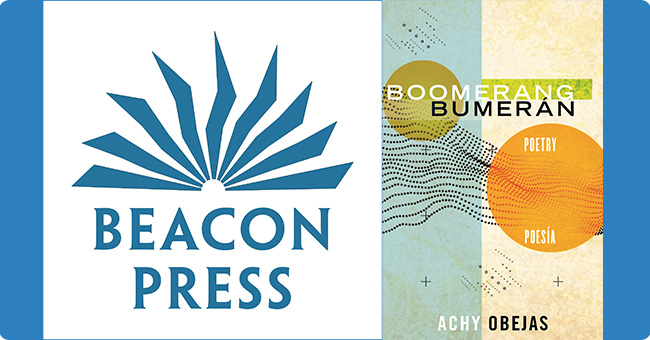
  • Raised Voices with Boomerang / Bumerán

    Cover art for “Boomerang/Bumerán”: Carol Chu

    Beacon Press is proud to announce the expansion of its poetry program, adding new voices to those of the press’s renowned poets—including James Baldwin, Mary Oliver, Sonia Sanchez, and Richard Blanco—who have been an essential part of the press’s catalog. The new series is called RAISED VOICES and will serve the overarching goal of representing marginalized voices and perspectives in poetry. The series authors will offer books that affirm progressive values, give voice to many identities, are accessible to a wide readership, and celebrate poetry’s ability to access truth in a way no other form can. Beacon plans to acquire about three new titles for the series each year.

    Beacon Press director Helene Atwan says, “We are so pleased to be able to launch a series of books of poetry with this important mission. Working over the years with Beacon poets, including Sonia Sanchez, Mary Oliver, Jay PariniRichard Blanco, and, recently, Jimmy Baca, and participating in the National Poetry Series, I have come to really value the unique ability of poetry to dig very deep and to articulate important truths, and I’ve especially valued poets who work inaccessible verses that welcome a wider audience of readers.” 

    The team working on RAISED VOICES at Beacon, which includes Helene Atwan, associate editorial director Amy Caldwell, managing editor Susan Lumenello, associate editor Catherine Tung, and editorial assistant Nicole-Anne Bales Keyton, is especially happy to announce a distinguished advisory committee:  

    Richard Blanco, the award-winning author of two memoirs and four poetry collections, including Looking for the Gulf MotelOne Today, and How to Love a Country. He was selected by Barack Obama as the fifth Presidential Inaugural Poet in US history.  

    Mahogany L. Browne, writer, organizer, and educator, is the executive director of JustMedia, a media literacy initiative designed to support the groundwork of criminal justice leaders and community members. She is the author of Chlorine SkyWoke: A Young Poets Call to Justice, Woke Baby, and Black Girl Magic. 

    Stephanie Burt, the literary critic, poet, and professor of English at Harvard University, has published five collections of poetry and many books, essays, and articles on poetry, comics, music, and trans and queer culture, including Advice from the LightsBelmont, and Parallel Play. 

    Josh Cook, a bookseller at Porter Square Books in Cambridge, Massachusetts, whose own fiction, criticism, and poetry have appeared in numerous magazines and journals.  

    Ha Jin, a poet and novelist whose much acclaimed work, including WaitingWar Trash, and, most recently, A Song Everlasting, has received awards including the National Book Award, the PEN/Faulkner Award, the PEN/Hemingway, and the Flannery O’Connor Prize.  

    Jimmy Santiago Baca, an award-winning poet and writer who learned to read in a maximum-security prison, emerging as a prolific artist of the spoken and written word, and whose books include the memoir A Place to Stand and the book-length poem When I Walk Through That Door I Am.

    Hill Saxton, a youth services librarian at the Cambridge Public Library in Cambridge, Massachusetts, who received their master of library and information science degree from Simmons College. 

    Helene adds: “It’s especially rewarding to be launching the series with a bilingual book by a writer who is beloved in the community of writers, Achy Obejas.” 

    The inaugural books in the series are: 

    Boomerang/Bumerán, published on September 7, 2021, is a unique and inspiring bilingual collection of lyrical poetry written in a bold, mostly gender-free English and Spanish and which addresses immigration, displacement, love, and activism. Achy Obejas is a Cuban American writer, translator, and activist whose work focuses on personal and national identity. Her story collection The Tower of the Antilles was a PEN/Faulkner finalist, and her novel Days of Awe was called one of the best books of the year by the Los Angeles Times. 

    antes que isla es volcán/before island is volcano, which will be published April 5, 2022, is a Spanish and English poetry collection that imagines the decolonial future of Puerto Rico. Raquel Salas Rivera is a Puerto Rican poet, translator, and editor; the author of five full-length poetry books, he has won the Lambda Literary Award for Transgender Poetry and has been nominated for the National Book Award and the PEN Open Book Award. 

    Some of the Light: New and Selected Poems, a collection of lyric and political poems, which will be published in spring 2023, evokes single fatherhood, life in the time of COVID, children imprisoned in detainment facilities at the US-Mexico border, and life in California’s San Joaquin valley. Tim Z. Hernandez is an award-winning poet, a novelist, a research scholar, and a performance artist. His debut collection of poetry, Skin Tax, received the 2006 American Book Award from the Before Columbus Foundation and the James Duval Phelan Award from the San Francisco Foundation. 

    Common Grace, which will be published in fall 2022, is a three-part collection that explores the author’s life and art, the death of his parents (told loosely through the lens of ubasute, a mythical Japanese tradition wherein the son delivers his aged mother to a mountain and leaves her to die), and his relationship with his wife. Aaron Caycedo-Kimura, a poet and visual artist, is the author of the chapbook Ubasute, winner of the 2020 Slapering Hol Press Chapbook Competition, and the author and illustrator of Text, Don’t Call: An Illustrated Guide to the Introverted Life. 

  • Ambriah Underwood

    After a season of hibernation, we are excited to reboot our “Beacon Behind the Books” series! In these times when readers are responding to our books “more than ever,” when our authors—including Christopher Emdin, Roxanne Dunbar-Ortiz, Robin DiAngelo, James Baldwin, and Gayl Jones—are appearing in the media, their ideas going viral on social media, their voices being heard on so many platforms, we thought it might be good to take a break to focus on some of the staff who work hard to find, shape, edit, produce, and promote those works. Our blog series introduces to you a member of our staff and gives you a behind-the-scenes look, department by department, at what goes on at our office. And not only our staff, but our interns, too! 

    For the month of September, we introduce you to our sales intern, Ambriah Underwood!

    What drew you to publishing, Ambriah? How did you find your way to Beacon?

    It took me a long while to figure out that there were entire careers behind every page of the books I was reading. It might sound odd, but it wasn’t until reading about Anastasia Steele working in a publishing house from Fifty Shades of Grey that I put it together (pretty sure that wasn’t the goal of the book, haha). After that, I spent more and more time looking not only at what I was reading, but also which publisher or imprint was producing it. Nearly a decade later (definitely shouldn’t have been reading Fifty Shades that young, sorry mom and dad!), I landed this amazing sales internship at Beacon after applying for the role in conjunction with the We Need Diverse Books grant, which operates every summer. 

    What’s your advice to someone interested in entering the publishing field?

    You’ll often hear that you should apply to all different types of jobs in publishing to get your foot in the door and then later you can switch to another department you’re interested in. While there is certainly some truth to that, particularly when you’re completing internships, I would recommend you primarily apply to the jobs you really want. It’s a huge commitment to spend one or two years in one field with the hope you’ll eventually go to the one you have your heart set on.

    What do you wish someone had told you about publishing when you were entering the industry?

    It’s funny, because I was certainly warned about this, but I just want to reiterate it just in case you haven’t: it’s totally normal to feel imposter syndrome in your early phase on the job. It’s normal to feel overwhelmed, unsure, and worried that you might be in over your head. The great thing is no one expects you to know everything when you first get there, so ease up on yourself as you get acclimated!

    What helps you focus when you’re working?

    I will zoom in on the screen so I have no distractions and am solely focused on reading the words right in front of me. I essentially turn into the person who has their texting font sized to the max. I also give myself micro checkpoints and deadlines. I’ll tell myself, “Do this for thirty minutes and then you get a break.” Knowing that I have that reprieve coming up gets me even more motivated to finish what I am working on.

    What skills have you taken from Beacon to help you with your work at your next job?

    I am incredibly fortunate to say that upon wrapping my summer 2021 internship at Beacon, I’ll be working as an editorial assistant at Grand Central Publishing’s Forever imprint at Hachette Book Group. The skills I’m taking from Beacon are undoubtedly rooted in the revision process. Getting feedback on Title Information Sheets (copy, key selling points, author bios, target consumers, etc.) really encouraged me to think deeply about the core message and themes of the books, and what the audience would resonate with most. Understanding these elements will be essential not only to my future fact sheet write-ups, but also when I think about why I am drawn to a specific title.

    What are you reading right now?

    After reading Octavia E. Butler’s Kindred for my work at Beacon, I’ve been reading a lot of Afro-futuristic books. Right now, I am finishing up Tomi Adeyemi’s Children of Blood and Bone and am about to start reading Ta-Nehisi Coates’s The Water Dancer.

    In an alternate universe, what career would you have?

    For my undergraduate degree at the University of Maryland, I majored in multi-platform journalism. In an alternate universe, I’d probably have continued my work in journalism. Likely on the editorial side, doing things like copyediting or fact-checking. Also, reporting really got me out of my shell and helped me figure out how to ask strong follow-up questions (which are always helpful during job interviews!).

    What’s the next queued song on your music player?

    BeBe & CeCe Winans “Addictive Love”! It always brings a smile to my face not only from the nostalgia of my childhood churchgoing days, but whenever I hear it, I can’t help but giggle thinking about the spot-on parody Kevin Fredericks (@KevOnStage) made reenacting the hearty singing.

    Name three things at your workstation you can’t live without.

    A notepad with a pen, a full water bottle, and my motivational quote-of-the-day calendar.

    Do you still have a commute to work? If not, do you miss it? What do or did you like to do to pass the time?

    While I don’t yet have to commute for my role as an editorial assistant, I do look forward to it. I like listening to music, reading, people watching, and stopping by local shops to pick up some lunch or breakfast. As a bonus, my calf muscles always wind up looking super toned after I speed-walk my way to work!

  • Crowd

    Image credit: Gerd Altmann

    Ch-ch-ch-changes are happening to the US population, and time is changing us. The results from the Census Bureau’s 2020 head count are in: the country is growing more urban and more racially and ethnically diverse! And more citizens are identifying as mixed race. Put another way, the population is growing less white. White Americans are on track to make up the minority by 2042. What does this mean for a country founded on enslavement, settler colonialism, and systemic disenfranchisement? Let’s take several steps back to get perspective. These books from our catalog will be enlightening for our increasingly diverse future.


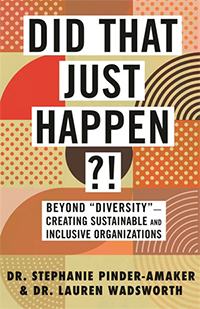
    Did That Just Happen

    Did That Just Happen?!: Beyond “Diversity”—Creating Sustainable and Inclusive Organizations
    Dr. Stephanie Pinder-Amaker and Lauren Wadsworth

    The more diverse the workplace becomes, the more we’ll need to improve cultural awareness of a variety of communities and identities to sustain inclusivity at the office. It’s not a one-size-fits-all solution. Drs. Stephanie Pinder-Amaker and Lauren Wadsworth offer real-life accounts that illustrate common workplace occurrences around inclusivity and answers to questions like “How do I identify and handle diversity landmines at work?” and “What can I do when I’ve made a mistake?”


    Nice Racism

    Nice Racism: How Progressive White People Perpetuate Racial Harm
    Robin DiAngelo

    Old habits die harder than a block of cement. Racism is one of them, whether it’s explicit or dressed up in niceness by White progressives. Don’t be surprised to see White families flocking to strictly white enclaves, especially for “better” schools and school districts. One of the moves of “nice racism” that Robin DiAngelo identifies in White progressives is pretending their preference for segregation is accidental. “It’s just a fluke,” they’ll say, or “This school is a better fit for my child.” They’re rewarded for living in White neighborhoods and, consequently, perpetuating segregation.


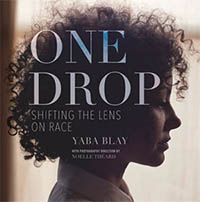
    One Drop

    One Drop: Shifting the Lens on Race
    Yaba Blay

    The US Census has a pitiful track record, and you need to know its history. It reveals a lot about how the country thinks about race. Since the period of colonial enslavement, Blacks have been defined by the one-drop rule. Through historiographic overview and sixty individual stories with photographs, Yaba Blay proves how the rule has everything to do with preserving the country club of whiteness and its privileges and nothing to do with Blackness as an identity and lived reality.


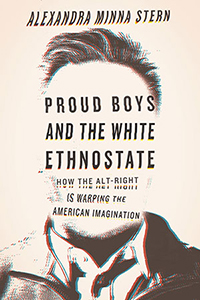
    Proud Boys and the White Ethnostate

    Proud Boys and the White Ethnostate: How the Alt-Right Is Warping the American Imagination
    Alexandra Minna Stern

    It will be inevitable. White nationalists will freak out and shout claims of white genocide because of the growth in our communities of color. Alexandra Minna Stern takes a deep dive down the rabbit hole to uncover the source of this ideology and teaches us how to recognize it in our cultural, political, and digital landscapes when it rears its ugly head. Because it will. White supremacy is quite the Hydra.


    Same Family Different Colors

    Same Family, Different Colors: Confronting Colorism in America’s Diverse Families
    Lori L. Tharps

    As more individuals and families identify has mixed race, they’ll find themselves navigating colorism, color bias, and skin-color politics. Weaving together personal stories and interviews, history, and cultural analysis, Lori L. Tharps illuminates the complex and multifaceted ways that colorism affects our self-esteem and shapes our lives and relationships. She also includes a brief history of the Census Bureau and how we got the term “Hispanic” in the census in the first place.


    Some of My Friends Are pb

    Some of My Friends Are . . . : The Daunting Challenges and Untapped Benefits of Cross-Racial Friendships
    Deborah L. Plummer

    In spite of the demographic ch-ch-ch-changes, people will still find ways of staying segregated within their social circles. Most US citizens tend to gravitate toward friendships within their own race. Plummer gives an insightful look at how cross-racial friendships work and fail. She also encourages all of us to examine our friendship patterns and to deepen and strengthen our current cross-racial friendships.


    Superior

    Superior: The Return of Race Science
    Angela Saini

    Continuing with the theme from Stern’s Proud Boys, mainstream scientists can hold fast to the idea that race is a biological reality, no matter how educated they are. The hope of finding simple genetic differences between “races”—to explain differing rates of disease, to explain poverty or test scores, or to justify cultural assumptions—stubbornly persists. Saini examines of the insidious and destructive nature of race science—and reminds us that, biologically, we are all far more alike than different.


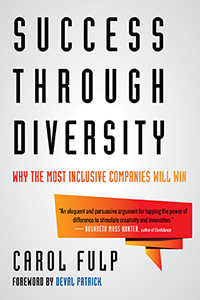
    Success Through Diversity

    Success Through Diversity: Why Inclusive Companies Will Win
    Carol Fulp

    Increasing demographics in our diverse society means our workforce will grow more racially and ethnically diverse. Companies that proactively embrace diversity in all areas of their operations will be best poised to thrive. Renowned business leader and visionary Carol Fulp explores staffing trends in the US and provides a blueprint for what businesses must do to maintain their competitiveness and customer base.


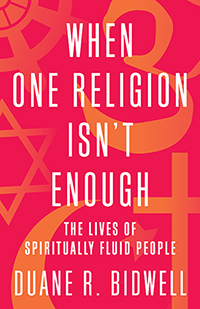
    When One Religion Isn't Enough

    When One Religion Isn’t Enough: The Lives of Spiritually Fluid People
    Duane R. Bidwell

    With more people identifying as mixed race, there’s a good chance that they’ll come from two or more religious traditions. They’re part of the spiritually fluid community. No, they’re not confused or unable to commit. Duane R. Bidwell explores how they celebrate complex religious bonds, and in the process, blur social categories, evoke prejudice, and complicate religious communities. Religious and spiritual identity are not pure, static, and singular as we may assume.


    White Space Black Hood

    White Space, Black Hood: Opportunity Hoarding and Segregation in the Age of Inequality
    Sheryll Cashin

    In spite of the growing diversity of our population, opportunity hoarding and segregation will still be a thing, because white supremacy lies at the root of the US caste system. Sheryll Cashin contends that geography is central to US caste and traces the history of anti-Black residential caste to unpack its current legacy so we can begin the work to dismantle the structures and policies that undermine Black lives.

    Crowd