• By Jon Hale

    School building

    Photo credit: Dave Blanchard

    Last week, the State Board of Education in Florida allowed parents to apply for vouchers and enroll in a different school if their children were subject to “COVID-19 harassment.” The policy enforces Governor Ron DeSantis’ anti-masking directive. His order protects parents’ “freedom to choose” whether to mask or not, despite an alarming rise in COVID cases in the state. The order also threatened to withhold funding if school boards did not comply with the law.

    Gov. DeSantis’ “freedom to choose” and the use of vouchers to protect that freedom has a troubled history in Florida—as it does across the country.

    A school voucher is publicly funded credit used to cover the cost of private schools. School vouchers fund or compensate a family directly as opposed to funding a public school. It is part of the conservative and libertarian mantra of “funding students, instead of systems” that is a cornerstone of the modern school choice movement.

    The storied history behind vouchers and school choice in Florida and across the nation, however, is much more insidious than simply funding students.

    In Florida and across the South, vouchers were initially designed to circumvent desegregation after the Brown v. Board of Education (1954) decision. They were an integral part of “school choice” policies.

    Southern legislators amended state constitutions to support private school costs by compensating the cost of tuition through grants. They provided state tax credit for contributions to private segregated schools. In addition to vouchers, policymakers repealed compulsory education laws, authorizing school closures if ordered to desegregate by the government or courts. Legislators also expanded the decision-making authority of local school boards to implement pupil-placement laws.

    Florida and other states also passed “freedom of choice” plans to avoid desegregation. On paper, anyone regardless of race could apply to any school in the area. But the plans placed the onus of desegregation on Black families. Withholding transportation for white schools while harassing Black transfer students, white parents and representatives ensured that such plans were largely ineffective, leading only to token desegregation.

    These policies coincided with other forms of massive resistance to desegregation in the 1950s and 1960s that targeted Black schools and teachers. Legislators shuttered historically black schools and fired Black teachers with impunity.

    Passed in the wake of the Brown decision, it was clear that vouchers and “school choice” were weapons in the larger fight to preserve segregation. Vouchers—and school choice in general—were used to maintain segregation and preserve control of the schools.

    Though courts struck vouchers down as part of the “freedom of choice” plans in the 1960s, the idea of vouchers remained. Ronald Reagan, for instance, touted vouchers and privatization in his administration. His plans were soundly defeated, but the idea persisted and even garnered judicial support.

    By the 1990s, courts retreated from enforcing desegregation goals and schools largely remained segregated—and many districts re-segregated. This paved the way for vouchers, which, on paper, promised to reform a broken public system. Once the Supreme Court affirmed the constitutionality of vouchers in Zelman v. Simmons-Harris (2002) and more recently in Espinoza v. Montana Department of Revenue (2020) decision, vouchers advocates renewed their commitment.

    Betsy DeVos, the controversial Secretary of Education under Donald Trump, provided unabashed support for vouchers. She advocated for millions for vouchers and other choice options such as charter schools. Though largely rebuffed by Congress, like Reagan, DeVos ignited demand and support for vouchers, positioning them as a valid option in the larger school choice debate.

    Vouchers remained an enticing option for DeSantis and other southern governors like Henry McMaster of South Carolina, who proposed spending COVID relief funding on vouchers for private schools.

    Today, vouchers are used in Florida in the same way as they were in the past. Gov. DeSantis passed the anti-masking mandate to “protect the freedoms and rights of students and parents.” Much like the 1950s and 1960s in the attempt to avoid desegregation and federal oversight, “freedom” is used to protect the right of parents to avoid governmental intervention.

    Then and now, the use of “freedom” in this way is detrimental to the public good. In the 1950s and 1960s, the freedom to choose schools protected the right of white parents to support private “segregation academies.” The sole purpose was to preserve all-white schools. This allowed racist policy, segregation, and diversion of public funds to fester.

    Also like the past, linking vouchers to freedom—in this case freedom from masks—is not only suspect, but immediately precarious. In the current context of the pandemic, vouchers effect a parallel danger to society and the larger public good. DeSantis illuminates the harm perpetuated by vouchers and legislating the “right to choose” schools. After the schools reopened this fall, COVID cases have been soaring in Florida. In one district, over 10,000 students, staff, and teachers were isolated or quarantined after the first week of school. Other districts that reported hundreds of cases have defied the governor’s orders and mandated masks.

    Public schools in Florida—and other states with voucher policies—are under dual threats. They face a continual risk of losing funds over implementing recommended CDC guidelines while also losing public funds to private schools through vouchers.

    The historical record documents the danger of vouchers to a shared public good. The recent use of vouchers in Florida merely affirms the clear and present danger it continues to pose.


    About the Author 

    Jon Hale is a professor of educational history at the University of Illinois at Urbana-Champaign and an advocate for quality public education. Hale’s research in education has been published in The Atlantic, CNN.com, Education Week, the American Scholar, and the African American Intellectual History Series. His books include The Freedom Schools, To Write in the Light of Freedom, and The Choice We FaceFollow him on Twitter at @ed_organizer.

  • Classroom

    Photo credit: Jamey Boelhower

    Back-to-School season is tinged with precariousness this year. While Delta variant cases surge, many schools are reopening and resuming in-person classes. Even though the Biden administration announced plans to offer COVID booster shots in September, the fact remains that conditions at institutions of learning aren’t safe or fully resourced. We asked some of our authors what they would like folks to be aware of on the education front as students and educators return to the classroom. And given our pandemic reality, we also asked them how they think schools could take this opportunity to re-envision themselves for a better, post-COVID future.

    ***

    Billions of dollars in federal COVID relief funds are heading to local public-school districts, but administrators in these districts have few good ideas of where to put the money. There was already a teacher shortage; more teachers are not available to hire. Tech companies selling often useless online “solutions” will likely rake in huge profits. But a proven, crucial use for some significant part of these funds is at hand, though rarely discussed. Put the money directly into the pockets of high school students by employing them to share knowledge and skills with their peers and younger children. They can be paid to teach or use anything they know: solving an equation, making a video, putting on a play, running a sports league, doing a dance, speaking another language (including ASL), reading Braille, collecting oral histories from elders in the neighborhood, fixing a bike, and on and on. The “proven” part is that meaningful employment in high school leads to many great outcomes: high school and college completion, higher lifetime earnings, more stable marriages, better health, and more. And of course, the young people being taught reap all kinds of benefits as well. The key to rethinking American education is to understand that the students already in high school are the culturally informed experts we currently think we lack. Pay them, and they’ll start teaching right away.
    —Jay Gillen, The Power in the Room: Radical Education Through Youth Organizing and Employment


    Kyle Mays

    I am scared as hell for my nieces and nephews and for all the wonderful teachers I know who are returning to schools. At the same time, this is an opportunity to reimagine education, and make it more equitable for the most marginalized. Now is the time for radical change in how we approach schooling for our young people.
    —Kyle T. Mays, An Afro-Indigenous History of the United States


    Paul Ortiz

    The United States has experienced the Global Pandemic as a horrific tragedy. But for the nation’s fatal embrace of “profits over people,” we could have avoided hundreds of thousands of agonizing deaths. What should have been a clarion call for re-examining the nation’s flawed institutions instead became a debate about “science vs. anti-science,” as if our problems were a matter of semantics instead of the crushing racial and class oppressions that magnify the devastating impact of COVID-19 on working class African American, Latinx, Asian, and immigrant communities.

    As educators and students by the millions return to unsafe and under-resourced classrooms, we must carry forward the lessons of the global Black Lives Matter movement and fight harder than ever to end systemic racism, homophobia, and economic injustice. As teachers, we must practice compassion, patience, and antiracism in our classrooms. We should embrace lifelong learning and remember that our students, no matter how ‘disadvantaged,’ bring new forms of wisdom and dissident knowledge into our classrooms. These forms of knowledge “from below” are superior in intellectual content and liberatory potential than the ideologies of the corrupt status quo in this society. ¡La lucha continúa!
    —Paul Ortiz, An African American and Latinx History of the United States


    Leigh Patel

    The back-to-school pictures this year on social media carried an unmistakable tone of worry that tempered the excitement of back-to-school routines. Children’s infection rates are skyrocketing with Delta variant of COVID-19, many schools have shifted from in-person to quarantine or back to online after positive cases surfaced quickly. What explains this seemingly haphazard collection of steps and missteps? In keeping with the deeply regional control over education policies that are still consistently imbued with nationalist narratives of boot-strap grit and individualism, schools are reopening as petri dishes in which those narratives are overriding the ability to say “We reopened too quickly” or “There is still so much we don’t know about this virus” or perhaps the most important statement “We are not going to run real-time experiments on people, including children.” Universities have been making strong plans to fully reopen face-to-face instruction, with a mixture of requiring vaccinated status and masks. Those hallowed halls, much like K-12 districts, are announcing changes to teach remotely days before course start; meanwhile, students are arriving on campus. 

    The much decried ‘learning loss’ pales in comparison to the literal loss of life. A sad but reasonable observation is that it may take the chaos of schools reopening and full beds in pediatric units of hospitals to sober a ‘COVID fatigued’ society to revisit what it claims to be its core values and actually enact them. We have, still, the opportunity and responsibility to learn the foundational lesson of this pandemic: everything we do affects others.
    —Leigh Patel, No Study Without Struggle: Confronting Settler Colonialism in Higher Education

    In the classroom

  • By Peter Jan Honigsberg

    Guantánamo Bay protest in front of the White House on the seventeenth anniversary of Guantánamo Bay, January 11, 2019.

    Guantánamo Bay protest in front of the White House on the seventeenth anniversary of Guantánamo Bay, January 11, 2019. Photo credit: Victoria Pickering

    Daniel A. Medina’s excellent article on Mohammed al-Qahtani, the would-be twentieth al-Qaeda terrorist hijacker, identifies an important long-term problem that all presidents have faced since al-Qaeda terrorists crashed planes into the World Trade Center, the Pentagon, and a field in Pennsylvania on September 11, 2001. Does due process apply to Guantánamo? As Medina points out in discussing al-Qahtani’s case, the Biden administration has not taken a stance on this question.

    Under a due process and rule of law system, the men in Guantánamo would not have been held for years and, for some, even a decade or more without charges. They would have had access to attorneys from the time they were first incarcerated to challenge their detentions and assure them of other due process rights. They would have been guaranteed full and fair trials in federal court to defend any charges brought against them. They would not have been systematically physically and psychologically tortured in the prison. (Psychological torture includes periods of isolation, sleep deprivation, and sensory deprivation such as wearing hoods.)

    Al-Qahtani was physically and psychologically tortured in Guantánamo. He nearly died during one episode of unrelenting abuse. His heart rate dropped precipitously in an interrogation session, and he was rushed to the hospital. In 2008, senior Pentagon official Susan Crawford refused to allow the military to prosecute al-Qahtani. “We tortured Qahtani,” she admitted. 

    As Medina notes in his article, the Biden administration has until September 8 to decide whether to: 1.) challenge a federal judge’s order to permit a due process right to an independent medical evaluation for al-Qahtani to determine his eligibility for repatriation to Saudi Arabia for psychiatric care; 2.) agree to the medical evaluation for al-Qahtani; or 3.) repatriate him to Saudi Arabia and dodge the issue.

    Key to the administration decision is whether Guantánamo detainees are entitled to due process. Previous administrations have argued that such rights do not apply to the detainees.

    Due process and the rule of law are the cornerstones of our democracy. We cannot accept that administrations deny these rights to people we have detained. President Biden must take a stand if he is going to lead the US back to the respect it once commanded around the world. He must acknowledge that due process and the rule of law apply at Guantánamo. Denying these rights impacts not only the detainees but has long-term implications for the future of our nation.

    “Guantánamo Bay, I think, is going to be seen as the significant start of the fall of American democracy.” In 2012, Australian attorney Stephen Kenny spoke these words to our Witness to Guantánamo project. 

    For nearly a decade, Witness to Guantánamo filmed interviews with 158 people who lived or worked in Guantánamo across twenty nations. Fifty-two of the people interviewed were former detainees. Others included prison guards, interrogators, interpreters, chaplains, attorneys, medical personnel, reporters, high ranking military and government officials, and family members of the detainees.

    Stephen Kenny was referring to how the United States government broke the rule of law by imprisoning 780 alleged Muslim terrorists from more than forty countries at Guantánamo Bay, Cuba. The US government denied the men the due process rights that all people detained by the US government are entitled to under the Constitution. Rather than charge them with crimes and hold fair trials, the Bush administration incarcerated the men and threw away the key. 

    We will never know how many of the 780 prisoners were international terrorists because nearly all were never charged, tried, or convicted of a crime. In fact, many of the men held in Guantánamo were not captured by US soldiers but were purchased by the US military for ransom or bounty from Pakistani and Afghan soldiers.

    Of the thirty-nine prisoners currently at the base, eleven have been charged. Ten other people have been thoroughly vetted by six national security agencies and cleared for release. Although they have been recommended for transfer, they continue to remain housed at the prison until the government can repatriate them or find other countries that are willing to accept them. The Biden administration repatriated one person to Morocco last month.  

    Al-Qahtani, along with seventeen other people who were never charged, are essentially “forever” prisoners. The Biden administration should apply the rule of law and due process to Guantánamo and release al-Qahtani, the other seventeen other forever prisoners, and the ten men who have been cleared for release. What kind of message are we sending to the world on the rule of law when we hold people for nearly two decades without charges? 

    President Biden must apply our cherished Constitution to the men in Guantánamo. We must be mindful of due process and the rule of law in all our actions. Stephen Kenny’s words should not haunt us in the future.


    About the Author 

    Peter Jan Honigsberg is professor of law at University of San Francisco, founder, and director of Witness to Guantánamo, and author of A Place Outside the Law, Forgotten Voices from Guantánamo, published by Beacon Press.

  • By James Baldwin

    Alex Haley promoting “Roots” at University of Texas at Arlington’s Texas Hall, 1980.

    Alex Haley promoting “Roots” at University of Texas at Arlington’s Texas Hall, 1980. Photo credit: University of Texas at Arlington Photograph Collection

    When it first came out, Alex Haley’s Roots was an Event. Event with a capital E. That goes for the miniseries, too. The novel spent forty-six weeks on the New York Times Best Seller List, twenty-two of which were at number one. It inspired Black Americans to dive deep into their genealogies and celebrate Black history. And the timing of its publication, the nation’s Bicentennial, deserves a chef’s kiss. In this context, what was James Baldwin’s take on Haley’s cultural sensation? On the forty-fifth anniversary of the novel, we’re going back in time to Baldwin’s review. It appears in our forthcoming paperback edition of The Price of the Ticket*.

    ***

    I cannot guess what Alex Haley’s countrymen will make of this birthday present to us during this election and Bicentennial year. One is tempted to say that it could scarcely have come at a more awkward time—what with the conventions, the exhibition of candidates, the dubious state of this particular and perhaps increasingly dubious union, and the American attempt, hopelessly and predictably schizophrenic, of preventing total disaster, for white people and for the West, in South Africa. There is a carefully muffled pain and panic in the nation, which neither candidate, neither party, can coherently address, being, themselves, but vivid symptoms of it.

    What most significantly fills this void, or threatens to, is the presence, in America, of the world’s first genuine black westerner. Created here in pain and darkness, remnant of slaughter, his hour may, at last, and in mysterious, unprecedented ways, have begun to strike. Certainly a bell is tolling now for all that the western peoples imagined would last forever. This electoral contest, taking place in an arena which is, presently, at the very center of the troubled world, seems to have invested the black vote with a power, and exhibits toward it a respect, which the black vote has never, in the memory of the living, had before. This has not happened before now for the very simple reason that, until now, Americans were able to prevent it from happening. They cannot prevent it now simply because—they cannot; it is not because the Americans have seen a great light. They need the moral authority of their former slaves, who are the only people in the world who know anything about them and who may be, indeed, the only people in the world who really care anything about them.

    In any event, and no matter how diversely, and with what contradictions, the black vote is cast in the twenty-four years left in this century’s life, the impact of the visible, overt, black presence on the political machinery of this country alters, forever, the weight and the meaning of the black presence in the world. This means that the black people of this country bear a mighty responsibility—which, odd as it may sound, is nothing new—and face an immediate future as devastating, though in a different way, as the past which has led us here: I am speaking of the beginning of the end of the black diaspora, which means that I am speaking of the beginning of the end of the world as we have suffered it until now.

    The world of Alex Haley’s book begins in Gambia West Africa in 1750 with the birth of one of his ancestors, Kunta Kinte, born of Omoro and Binta Kinte, of the Mandika tribe, and of the Muslim faith. In the recreation of this time and place, Haley succeeds beautifully where many have failed. He must have studied and sweated hard to achieve such ease and grace, for he would appear to have been born in his ancestral village and to be personally acquainted with everybody there. The public ceremonies of this people are revealed as a precise and coherent mirror of their private and yet connected imaginations. And these ceremonies, imaginations, however removed in time, are yet, for a black man anyway, naggingly familiar and present. I say, for a black man, but these ceremonies, these imaginations are really universal, finally inescapably as old and deep as the human race. The tragedy of the people doomed to think of themselves as white lies in their denial of these origins: they become incoherent because they can never stammer from whence they came.

    There exists, in West African life, what I have heard described as the “eight day” ceremony. This ceremony takes place eight days after the birth of the child, during which time the father—alone—has to give his child a name. This name is both a gift and a challenge, for it is hoped that the child will make his own some of the positive qualities that the name implies (very like, if you will, and yet entirely unlike people naming their children after movie stars). On the eighth day, in the presence of the village, the child is named: “[Omoro] lifted up the infant and as all watched, whispered three times into his son’s ear the name he had chosen for him. It was the first time the name had ever been spoken as this child’s name, for Omoro’s people felt that each human being should be the first to know who he was.”

    Now, nothing like this has ever happened to me, or to any American black I know, and, yet, something like this surely happened somehow, somewhere, for the tenacity with which a black man, or woman, can insist on not being called “out of their name” has something of this tone. And even way up here in the twentieth century, Muhammad Ali will not be the only one to respond to the moment that the father lifted his baby up with his face to the heavens, and said softly, “Behold—the only thing greater than yourself.”

    We know that Kunta will be kidnapped, and brought to America, and yet, we have become so engrossed in his life in the village, and so fond of him, that the moment comes as a terrible shock. We, too, would like to kill his abductors. We are in his skin, and in his darkness, and, presently, are shackled with him, in his terror, rage, and pain, his stink and the stink of others, on the ship which brings him here. It can be said that we know the rest of the story—how it turned out, so to speak, but frankly, I don’t think that we do know the rest of the story. It hasn’t turned out yet, which is the rage and pain and danger of this country. Alex Haley’s taking us back through time to the village of his ancestors is an act of faith and courage, but this book is also an act of love, and it is this which makes it haunting.

    The density of the African social setting eventually gives way to the shrill incoherence of the American one. Haley makes no comment on this contrast, there being indeed none to make, apart from that made by the remarkable people we meet on these shores, who, born here, are yet striving, as the song puts it, “to make it my home.”

    The American setting is as familiar as the back of one’s hand. Yet, as Haley’s story unfolds, the landscape begins to be terrifying, unutterably strange and bleak, a cloud hanging over it day and night. Without ever seeming to, and with a compassion as haunting as the sorrow songs which helped produce him, Haley makes us aware of the disaster overtaking not the black nation, but the white one. One will not, for example, soon forget the fiddler, who had been told by his master—who was considered to be a “good” master—that he could buy his freedom, and how he worked for thirty years to buy it. But when he brought the money to his master, his master regretfully informed him that he could take the money only as a down payment on the fiddler’s freedom because the price of slaves had risen so high that he would be cheating himself if he allowed his slave to buy his freedom for so little. This is the same master who later sells Kunta’s daughter as punishment for her having aided a runaway slave, and who, as Kunta is beaten nearly unconscious, as the girl’s mother lies prostrate, and as the sheriff drags the girl away, walks, head downward, into his house. What, one can’t but wonder, can be waiting for him in that house. Perhaps, all hard things considered, it was wealthier in the slaves’ cabins. We had to face whatever was in there, and, while we might call each other nigger, we knew that a man was not a thing.

    Roots is a study of continuities, of consequences, of how a people perpetuate themselves, how each generation helps to doom, or helps to liberate, the coming one—the action of love, or the effect of the absence of love, in time. It suggests, with great power, how each of us, however unconsciously, can’t but be the vehicle of the history which has produced us. Well, we can perish in this vehicle, children, or we can move on up the road.


    * James Baldwin, “How One Black Man Came to Be an American: A Review of ‘Roots,’” New York Times, September 26, 1976.


    About the Author 

    James Baldwin (1924–1987) was a novelist, essayist, playwright, poet, and social critic, and one of America’s foremost writers. His writing explores palpable yet unspoken intricacies of racial, sexual, and class distinctions in Western societies, most notably in mid-20th-century America. A Harlem, New York, native, he lived periodically in exile in the south of France and in Turkey. He is the author of several novels and books of nonfiction, including Notes of a Native SonGo Tell It on the MountainGiovanni’s RoomAnother CountryTell Me How Long the Train’s Been GoneIf Beale Street Could TalkJust Above My HeadThe Fire Next TimeNo Name in the Street, and The Evidence of Things Not Seen, and of the poetry collection Jimmy’s Blues.

  • By Robert P. Moses and Charles E. Cobb, Jr.

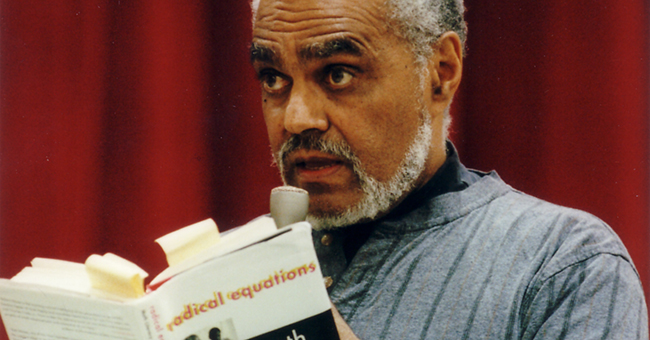
    Bob Moses and Radical Equations

    Bob Moses left us with a legacy to honor and live up to in the spirit of the civil rights movement today. His work to organize Black voters in Mississippi in the early 1960s famously transformed the political power of communities. Nearly forty years later, he organized again, this time as founder of the national math literacy program called the Algebra Project. The following passages are highlights from Radical Equations, which he wrote with Charles E. Cobb, Jr., that delve into what the Algebra Project was all about and the importance of its foundation in civil rights movement building.

    ***

    The Algebra Project is first and foremost an organizing project—a community organizing project—rather than a traditional program of school reform. It draws its inspiration and its methods from the organizing tradition of the civil rights movement. Like the civil rights movement, the Algebra Project is a process, not an event.

    Two key aspects of the Mississippi organizing tradition underlie the Algebra Project: the centrality of families to the work of organizing, and organizing in the context of the community in which one lives and works. As civil rights workers in Mississippi, we were absorbed into families as we moved from place to place with scarcely a dollar in our pockets, and this credential—being one of the community’s children—negated the white power structure’s efforts to label us “outside agitators.” In this way we were able to sink deep roots into the community, enlarging and strengthening connections in and among different communities, absorbing into our consciousness the community’s memories of “where we have been,” forcing us to our own understanding of our collective experience.

    We are struggling to frame some important questions: Is there a way to talk with young people today as Amzie Moore and Ella Baker did with us in the 1960s? Is there a consensus for young Blacks, Latinos, and poor whites to tap into that will drive such a literacy effort? What price must they pay to wage such a struggle?

    Like Ella Baker, we believe in these young people, that they have the energy, the courage, the hope to devise means to change their condition. Although much concern about the education of African-American young people is voiced today, I am frequently asked why I have turned to teaching school and developing curriculum—teaching middle school and high school no less. There is a hint of criticism in the question, the suggestion that I am wasting my time, have abandoned efforts at attempting real, meaningful social change. After all, in the end, such work “merely” leads to youngsters finding a comfortable place in the system with a good job. Nothing “radical” about that, I am told. This is a failure to understand what actually is “radical,” so it might be useful to repeat what Ella Baker posits as necessary to the struggle of poor and oppressed people: “It means facing a system that does not lend itself to your needs and devising means by which you change that system.”

    ~~~

    So, to understand the Algebra Project you must begin with the idea of our targeted young people finding their voice as sharecroppers and day laborers, maids, farmers, and workers of all sorts found theirs in the 1960s. Of course, there are differences between the 1960s and what the AP is doing now. For one, the time span between the start of the sit-in movement and the challenge by the MFDP in Atlantic City was incredibly brief, sandwiched between two presidential elections (Kennedy-Nixon and Johnson-Goldwater). When I look back it feels like twenty years folded into four; I still can hardly believe how short a time period that was. Math literacy, however, will require a longer time frame. There is a steep learning curve and what we’re looking at with the AP is something evolving over generations as math literacy workers/organizers acquire the skills and training through study and practice and begin tackling the system. Young people, however, may speed this up as youth clearly did in the civil rights movement. And, whereas the right to vote campaign took place in the Deep South, the math literacy problem is throughout the entire nation.

    Yet to understand the Algebra Project, you need to understand the spirit and the crucial lessons of the organizing tradition of the civil rights movement. In Mississippi, the voiceless found their voice, and once raised, it could not be ignored. Organizers learned to locate the vast resources in communities that seemed impoverished and paralyzed at first glance. The lessons of the movement in Mississippi are exactly the lessons we need to learn and put into practice in order to transform the education of our children and their prospects for the future. As with voting rights four decades ago, we have to flesh out a consensus on math literacy. Without it, moving the country into systemic change around math education becomes almost impossible. You cannot move this country unless you have consensus. That’s part of what we learned in Mississippi. We learned it on the ground, running.

    ~~~

    The Algebra Project is founded on the idea that the ongoing struggle for citizenship and equality for minority people is now linked to an issue of math and science literacy. This idea determines strategies and choices made about the organization, dissemination, and content of the curriculum. It’s important to make it clear that even the development of some sterling new curriculum—a real breakthrough—would not make us happy if it did not deeply and seriously address the issue of access to literacy for everyone. That is what is driving the project. The Algebra Project is not about simply transferring a body of knowledge to children. It is about using their knowledge as a tool to a much larger end.

    ~~~

    Organizing around algebra has the potential to open a doorway that’s been locked. Math literacy and economic access are the Algebra Project’s foci for giving hope to the young generation. That’s a new problem for educators. It’s a new problem for the country. The traditional role of science and math education has been to train an elite, create a priesthood, find a few bright students and bring them into university research. It hasn’t been a literacy effort. We are putting literacy, math literacy, on the table. Instead of weeding all but the best students out of advanced math, schools must commit to everyone gaining this literacy as they have committed to everyone having a reading-writing literacy.

    This is a cultural struggle, the creation of a culture of mathematical literacy that’s going to operate within the Black community as church culture does. And that means that math won’t be just school-based, but available as reading and writing are. Kids now routinely assume that someone will be able to explain some word to them, or teach them how to read a sentence if they don’t understand it. They also take it as a matter of course that no one can help them with their “higher” math studies. Projecting several generations down the road we can see a youngster who has grown up in a Black neighborhood being able to get his or her questions about mathematics as easily answered in the neighborhood.

    ~~~

    Many people will see our vision as impossible. There’s a sense in which most people are not going to believe or accept any of this agenda until they are confronted with the products of such an effort: students who come out of classrooms armed with a new understanding of mathematics and with a new understanding of themselves as leaders, participants, and learners. As I said before, in the sixties everyone said sharecroppers were apathetic until we got them demanding to vote. That finally got attention. Here, where kids are falling wholesale through the cracks—or chasms—dropping out of sight, becoming fodder for jails, people say they do not want to learn. The only ones who can dispel that notion are the kids themselves. They, like Mrs. Hamer, Mrs. Devine, E. W. Steptoe, and others who changed the political face of Mississippi in the 1960s, have to demand what everyone says they don’t want.


    About the Authors 

    Robert P. Moses (1935-2021) was the founder of the Algebra Project and was the winner of many awards, including a MacArthur fellowship and a Heinz Award in the Human Condition. He was the coauthor of Radical Equations: Civil Rights from Mississippi to the Algebra Project.

    A journalist for major magazines for thirty years, Charles E. Cobb, Jr. is senior writer at allAfrica.com. He is the coauthor of Radical Equations: Civil Rights from Mississippi to the Algebra Project.

  • By Perpetua Charles

    One of those fancy-shmancy houses in the West End neighborhood of Portland, ME. Photo credit: Alexius Horatius

    One of those fancy-shmancy houses in the West End neighborhood of Portland, ME. Photo credit: Alexius Horatius

    Two years ago, my partner and I took a small getaway to Portland, Maine. To feel confident on this trip, I was going to need my best early spring outfits and my trusty travel makeup bag. At the time, my natural curls were cropped close to my head and, to be honest, the stylist had done the cut a little lopsided. Unbeknownst to me, I’d also been struggling with the effects of an undiagnosed GI issue. But it didn’t take long into our first afternoon there to discover that my makeup bag didn’t make the trip with me. Dread and panic set in. My partner, a white, straight, cisgender male, had trouble understanding why I was briefly spiraling over this realization. In the moment, I couldn’t find the words to explain what I innately knew. In a city like Portland, I was going to stick out. Without makeup, I was going to stick out even more.

    In All Made Up: The Power and Pitfalls of Beauty Culture, from Cleopatra to Kim Kardashian, Rae Nudson explains that white people have historically used beauty standards they set up as a way to keep Black and Brown people from the social and economic capital that could come from being viewed as stylish or beautiful. This dates as far back as the mid- to late-nineteenth century, where formerly enslaved people were still considered and treated as last-class citizens. Nudson writes that skin color and other physical traits associated with Black people were visible ways to make distinctions between people, reinforce social and economic hierarchies, and maintain power structures that kept Black people out.

    The next day, my partner and I visited the center of town. I had fun but felt insecure. I regretted leaving my hair creams and gels at home. If I’d brought them, maybe they’d have given me a fighting chance of looking “put-together” in a strange city, I thought. Without my makeup or hair products, I walked the line between enjoying myself and trying to will myself invisible.

    Black women frequently struggle with two societal extremes: being scrutinized as though under a microscope or being ignored and looked past as though we were air itself. The more access a Black woman has to beauty products that match her skin tone and conform to beauty standards of the day, the easier she can move through society, hopefully lessening the number of microaggressions she experiences daily. As Nudson explains, Black women stand out, not because of our phenotype, but because the white supremacist structure we live in uses our visible traits to discriminate against us. I couldn’t fully enjoy my lobby-pop (it’s a lobster lollipop; you really had to be there) because of a nagging feeling that I wasn’t blending in.

    Perpetua and the lobby-pop

    Perpetua and the lobby-pop

    Later that evening, my partner and I went out for dinner. I was a little self-conscious about my look, but after a day out and about with no incidents, I told myself it was okay to settle into the evening. Then we were seated in the back corner. We had to wait a very long time between visits from our server. We never heard the specials. Our food was lackluster. The tables around us were dutifully attended to but we had to eavesdrop to hear what the night’s specials were. When my partner offered feedback about our experience, our server was passively apologetic. We left the restaurant in search of more (better) food and a place where we could hopefully relax after that tense dinner. We found a bar with a live band. After choosing a spot near the back, I ordered a bite to eat while my partner went to the restroom. As he returned, I watched one white woman’s eyes take him in lasciviously, only for her nose to wrinkle in disdain when he sat next to me.

    Now I was ready for the evening to end, and I was ready to get out of Portland.

    Nudson writes that the “wrong” makeup can cause funny looks or lead to harassment, while the “right” makeup can be completely unnoticed and unremarked upon. In my case, I felt that the “wrong” makeup was no makeup at all. While my partner raged at the injustice on our way back to our Airbnb, I replayed the events of the evening in my head. Would we have had better service if I’d worn some eyeliner and blush? If my curls had been more defined? Did the contempt of the woman from the bar stem from seeing a Black woman with a white man? Would she have been less contemptuous if she could see a hint of gloss on my lips?

    Probably not. And yet, I felt some level of responsibility for how the evening had gone.

    There is something to be said for the confidence we’re all called to develop and practice so that we can feel secure in ourselves no matter where we are. Black women are especially encouraged to cultivate this confidence because we often can’t count on non-Black environments to affirm us. But again, when even beauty culture is rooted in white supremacy, we can still feel self-conscious, regardless of how many mantras of self-love we whisper to ourselves every day before leaving the house.

    All the Fenty in the world may not have protected me from the microaggressions of that night in Portland. What it might have done was make it easier to wave away the ignorance of others. But as writer Jia Tolentino said in The New Yorker, “What did it mean…that I have spent so much of my life attempting to perform well in circumstances where an unaltered female face is aberrant?” That trip to Portland was an invitation for me to think about how I can use my bare face to resist the demands of white-dominant beauty culture. Could I challenge myself to wear makeup only when I wanted to, and to leave it behind when my face needed a break? Could I accept that others might think I’m tired or ill without my makeup and still feel free to live my life?

    Nudson’s book came to me at the right time. The last eighteen months have been an ongoing examination of my relationship with makeup. If I wear a beautiful red lip stain and then step outside wearing a mask, do I even exist? As the Delta variant spreads widely and quickly, me and my fashion favorites may have to shut ourselves away after enjoying a few months of relative freedom. Thanks to Nudson’s engaging histories that illustrate the relevance and importance of makeup when planning to smash the patriarchy, I’ve gained a new perspective on what beauty culture is, why it matters to me, and what I want my relationship with it to be like going forward.

    House in the West End neighborhood of Portland  ME


    About the Author 

    Perpetua Charles joined Beacon Press in 2015. She is a graduate of Florida Southern College and earned her MA in Publishing and Writing from Emerson College. Perpetua has extensive publicity experience in the areas of race and culture, memoir, education, and history. Some of her favorite things include the Lord, TV, Disney princesses, books, 90s-00s teen pop, and the color pink. Connect with Perpetua on Instagram at @princessperpetuaa.

  • Bob Moses. Photo credit: Miller Center

    Bob Moses. Photo credit: Miller Center

    The Civil Rights Movement has lost another great one. Radical educator, global-minded activist, MacArthur genius fellow. On July 25 at age 86, Bob Moses joined the ancestors. While we’re heartbroken about his passing, we remain honored to have published Radical Equations, which he wrote with Charles E. Cobb to tell his story of founding the Algebra Project. He provided a model for anyone looking for a community-based solution to the problems of our disadvantaged schools and improving education for poor children of color.

    He meant so much to us at Beacon and our authors. Here’s what they have to say about him.

    It was a great privilege for Beacon Press to work with the legendary civil rights activist Bob Moses and his colleague and coauthor Charles E. Cobb on his revolutionary book, Radical Equations. Bob did something completely fresh, building on his experience organizing in Mississippi to create a model for using math literacy as a new frontier in civil rights. He didn’t just teach math; he used it to build bridges and community. He was audacious even as he was entirely modest and self-effacing. His voice was ever so soft, but his witness and his work were both huge and very audible. I feel lucky to have known him and very proud to see his legacy continue to grow.
    —Helene Atwan, director

    In every classroom or meeting space, Bob Moses listened better than anyone. The speaker might be five years old, or a sharecropper studying for the voter’s literacy test in Mississippi, or an Algebra Project student in Chicago, or the student’s grandmother, or the Attorney General of the United States. Bob wanted their words to become a part of his life, to figure in the enormous tapestry of experience that he lived in and that he built all around him. He listened to you and then he invited you to do something more than just speak: to consider something; to look from a different angle; to try to apply what you said; to go somewhere; to meet someone; to tell someone else; to make something happen. He put tens of thousands of us in motion with this simple technique: listen, and then invite someone to move as if they meant what they said. Teacher and organizer. Listener, questioner, doer.
    —Jay Gillen, The Power in the Room: Radical Education Through Youth Organizing and Employment 

    A reminiscence about the late Bob Moses, one of the most courageous and creative activists of our time. I organized a panel for the annual meeting of the Organization of American Historians, which was held at the National Civil Rights Museum in Memphis on April 4, 2003, the thirty-fifth anniversary of the assassination of Dr. Martin Luther King, Jr. Our topic was “Remembering SNCC and SDS.” Two of the speakers were Bob Moses and Staughton Lynd, who had worked together in SNCC. The meeting included historians, but it was primarily a community event. The large room, packed to overflowing, included reporters and cameramen from local news stations. Jesse Jackson, who had been with Dr. King when he died, showed up and asked to join the panel. The moment Bob Moses walked into the room, unintroduced, the audience rose in a thunderous standing ovation. Staughton told a story about Bob, who in 1964 was speaking to a small gathering in front the charred remains of a Black church that had recently been burned down in Philadelphia, Mississippi. In that moment, Bob chose to speak about a bill that had just been passed by the US Congress called the Gulf of Tonkin Resolution, which signaled a vast expansion of US involvement in the Vietnam war. Bob said everyone needed to pay close attention because the war overseas and the Civil Rights movement at home would be closely linked. His vision of struggle was international—and prescient.
    —Marcus Rediker, The Fearless Benjamin Lay: The Quaker Dwarf Who Became the First Revolutionary Abolitionist

    Some of our authors took to Twitter to share their outpouring of love for him.

    https://platform.twitter.com/widgets.js

    https://platform.twitter.com/widgets.js
    https://platform.twitter.com/widgets.js

    https://platform.twitter.com/widgets.js

    Rest in power, Bob Moses.

  • By Ben Mattlin

    Disability Pride Flag, designed by Ann Magill

    Disability Pride Flag, designed by Ann Magill

    On July 25, 2021, a day before the thirty-first anniversary of the Americans With Disabilities Act (ADA), the New York Times Magazine published a story about the proliferation of ADA litigation. “The Price of Access” was the headline of the print edition; the online version, which had appeared a few days earlier, was titled “The Man Who Filed More Than 180 Disability Lawsuits.”

    The titles say it all: the piece was sarcastic, hard-hitting, and largely disparaging of disability rights campaigns. As a lifelong wheelchair user, I was offended.

    Understanding the ADA

    The ADA is often referred to as a landmark civil rights bill. It outlawed discrimination against people with disabilities in employment, government programs and buildings, public accommodations such as stores and restaurants, and telecommunications. In its recognition of widespread past discrimination, it elevated the disability population—currently estimated to represent roughly a fourth of the US population—to a legally protected minority status.

    As sweeping as the law is, however, it has one primary flaw: The government doesn’t go around actively enforcing it. You can’t get a ticket for access violations. Instead, the regulations must be implemented through lawsuits filed by those who feel they’ve been unfairly discriminated against. Disabled people themselves are deputized to become a sort of unpaid labor force of ADA cops.

    The Times article acknowledged this. “In response to right-wing resistance to expanded governmental reach, those who fought for the ADA’s passage decided against setting up a federal office to monitor or enforce it, the way the Drug Enforcement Administration enforces narcotics laws and Immigration and Customs Enforcement pursues immigration violations. Instead, lawmakers concluded that ADA enforcement should happen through the courts—essentially transferring the role of enforcement from the government to individual disabled people and the judges who heard their cases.”

    So, the fate of accessibility fell to the slow-moving courts. No one wants to be sued for an ADA violation, of course, but that doesn’t stop many companies and cities from taking their chances.

    Complicated Standards

    Granted, the specific access codes can be complicated. Ramps can only be so steep. Doorways must have a certain width. Menus and signs must be in Braille. No doubt, some violations are accidental or inadvertent. And no doubt, there are lawyers who recruit disabled people to pursue litigation, as the Times article implied. “In 2012, plaintiffs filed 2,495 Title III cases in federal court,” said the article, referring to charges against stores and other public accommodations. “By 2017, that had more than tripled to 7,663 cases.”

    That may sound alarming, yet this spate of litigiousness doesn’t mean the ADA is a bad thing. Moreover, litigation is only part of the story. Judging the ADA by the court cases it’s engendered completely misses the point of one of the most important events in recent history.

    Repercussions of Equal Rights 

    I’ve been researching a book about what the disability community and the disability movement have been up to since the ADA became law. One key theme I kept finding was how the civil rights protections laid out in the ADA helped change perceptions as well as legal statutes. Not only does the average American now have an inkling about disability rights that never existed before, but disabled people themselves gained an unprecedented sense of entitlement, of belonging. The ADA enabled them to imagine a fairer, more just world. It made it seem actually possible, almost within reach.

    Today, the changes brought by the ADA can be seen everywhere—wheelchair ramps, of course, but also Braille signs in elevators and elsewhere, public transit lifts, emotional-support animals, sign language interpreters at many political rallies and during the National Anthem at big sporting events, electronic listening devices in movie theaters, “reasonable accommodations” by employers such as flextime and telecommuting, and myriad other modifications.

    Moreover, you see disabled people out and about, interacting with society in ordinary ways, which wasn’t always true before.

    But perhaps chief among the ADA’s successes is the simple fact that so many people now accept the idea of equality for disabled people. This very notion “approaches disability in a new, unfamiliar way,” wrote Doris Zames Fleischer and Frieda Zames in the Disability Studies Quarterly. The old approach, they explained, was the “impairment model,” which essentially presumed you couldn’t expect equality if you couldn’t do certain things to function effectively in the world. After the ADA, though, disability was redefined in terms of a struggle for fairness and social parity.

    The ADA as a Spark 

    This proved an essential spark. Almost immediately after its passage, pro-disability celebrations began happening in Boston and New York. At “disability independence” marches, people quickly started talking about disability pride. It may not have been a brand-new concept, but it soon spread and gained traction. In time, every anniversary of the ADA’s passage became known as Disability Pride Day. Recently, the entire month of July was dubbed Disability Pride Month.

    At the same time, disability studies curricula began cropping up. These gave a generation of students a unique perspective on the disability experience and the trajectory of the disability movement. As a result, perhaps, more young people are identifying as disabled (though some of that is because of improved diagnosing of learning disabilities and other neurodivergencies).

    Soon, previously unrecognized pockets of the disability community began to speak out and gain attention. People of color, with all types of disabilities and chronic health conditions, of all gender identities, stressed that the disability community is not all about White men in wheelchairs, as the media had been portraying it. Disability, after all, knows no racial, ethnic, geographic, socioeconomic, or gender bounds.

    This, in turn, led to greater awareness of intersectionality—the interplay of what’s come to be known as ableism with racism, sexism, homophobia, trans-phobia, and all other forms of oppression.

    The Crusade Continues 

    Though it had once seemed the ultimate goal, the ADA proved to be a starting point for the ever-broadening disability community. It provided a legal framework, a schematic for the future, but the disability community has taken the cause—the crusade—much farther.

    Lawsuits are only one part of that. There would be fewer lawsuits, of course, if there were fewer violations. But as long as people and institutions continue to thwart the notion of fair and equal access, disabled people will keep fighting by whatever means necessary.

    Beyond fighting for our rights, though, the disability community asserts itself by simply coming out of the shadows—coming to embrace our identity and connectedness to one another. That’s a key part of what disability pride signifies. We’ve moved beyond self-acceptance to redefine what it means to be disabled.

    The ADA may have been society’s way of recognizing us as a group deserving of equal rights. But the legacy of the ADA is what we make of it and do with it every day.


    About the Author 

    Ben Mattlin is the author of Miracle Boy Grows Up and In Sickness and In Health: Love, Disability, and a Quest to Understand the Perils and Pleasures of Interabled Romance, and a frequent contributor to Financial Advisor magazine. His work has appeared in the New York TimesLos Angeles TimesWashington PostChicago TribuneUSA Today, and Vox, and on NPR. He lives in Los Angeles, California. Follow him on Twitter at @benmattlin and visit his website.

  • A Q&A with Leigh Patel

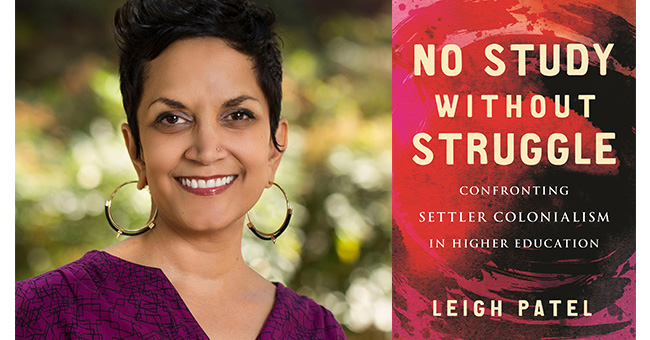
    Leigh Patel, No Study Without Struggle

    Cover art: Louis Roe

    An inconvenient truth lies beneath the promises of opportunity and prestige that higher education degrees offer. US academic institutions are built upon legacies of stolen labor on stolen land. Through history, this settler-colonial foundation has trapped us in history and perpetuated race, class, and gender inequalities on campus. Social protests, often led by youth, have fought for equitable access to education and continue to do so. But as Dr. Leigh Patel argues in No Study Without Struggle: Confronting Settler Colonialism in Higher Education, it’s high time for these institutions to reckon with their legacy. Beacon Broadside editor Christian Coleman caught up with Patel to chat with her about her book and how we see these structural inequalities take place today.

    Christian Coleman: Tell us about what inspired you to write No Study Without Struggle.

    Leigh Patel: As someone who has a deep love of learning and teaching, places of formal education have often brought me some amount of heartbreak. We have absolutely stunning teachers because they are also learners, and students who teach as they continue to learn. However, much of education, and glaringly so in higher education, has been shaped by mythologies of who is smart, intelligent, deserving, and more recently in higher education, what to do to bring in money. I often say to my students that they have been told lies about society in their K-12 education and that they’ve come to love those lies. In this book, I hope that readers will join me in tracing how often those lies and those mythologies have been challenged through the closely intertwined and historical struggle to study.

    CC: You write that naming the problem of racism in higher education is necessary but insufficient. Why is settler colonialism a more comprehensive framework for explaining how marginalized communities experience harms and barriers to higher education?

    LP: With all the inequities in society, a key question is: How do I look at or frame this inequity? What does this approach allow, even obligate, me to know? What does it leave out? Racism is undeniably the bedrock to this nation’s formation. However, racism is not often discussed in relation to the ongoing attempt to erase Indigeneity. We lose track of this vital component that continues to manifest itself. In higher education, where property rights are central as an asset and as an arm of the government, the framework of settler colonialism allows and obligates us to do better. It might be a good and important move to take down the statue memorializing an eighteenth-century enslaving man, but what do we learn about the relationships to land and Indigeneity where that statue stood? For the white students in universities who are not taught about the stolen land that required stolen labor in this nation’s creation, higher education is doing them a disservice and prolonging the harm that is done to Indigenous, Black, disabled, and poor people.

    CC: You also write that settler colonialism is continuous as a process and a structure, not just a distant historical event that can be glossed over with the narrative of education as the great equalizer. Why was it important to make this point?

    LP: Most people are in touch, emotionally and psychically, with the idea of education as the great equalizer as well as a constant reflection of their worth. Who hasn’t received a low grade or a rejected paper and felt that it was a reflection of their intelligence? This individualism is a largely shared belief system that says if you work hard, play by the rules, and are a good person, this country will open opportunities to you. It’s the myth of meritocracy that blurs population-level inequities and places all the responsibility in one person’s lap. It also alleviates the ongoing practices of the ongoing enclosure of Black and brown people’s bodies and spirits, denying them the ability to thrive, as Bettina Love writes about so eloquently. Settler colonialism has the potential to remind us that education often comes out of a political economy that is deeply interested in wealth accumulation for a few rather than well-being for all, including land as a life form. The ongoing structure of settler colonialism offers us, again and again, the opportunity to be in right relation with historical accuracy and to act. Reading land acknowledgements is a start but has not moved many institutions to, for example, fly the flags of the Indigenous peoples whose land the college occupies.

    CC: There’s a part where you identify the gift economy as part of the settler colonial structure. It’s devised to make students and faculty of color feel indebted to universities, to make them feel they owe gaining entrance to colleges to some great benefactor. Would you say this invokes the white savior complex in university gatekeepers to absolve them of reckoning with the inequalities they uphold on campus?

    LP: This is a fantastic question. There are lots of labels that have been uttered, more frequently in the past years and months following the police killings of George Floyd and Breonna Taylor, including white ally, white co-conspirator, and white savior. All of higher education has engaged in gatekeeping. Even the legislation that created the first historically Black colleges and universities (HBCUs) included gatekeeping of separatism and financial stability. What HBCUs have done with the lesser gift is shape transformative leaders, including Thurgood Marshall, Zora Neale Hurston, Julian Bond, and Toni Morrison. So, when we understand that universities, still overwhelmingly led by white administrators and faculty who don’t share many lived realities as their first-generation students of color, use gift-like awards and scholarships, it can also blur the fact that universities often exploit labor. Students are made to feel like they are indebted to the university or that one professor who gave them an override into a full course, when all the time our role as university educators is to serve students and their learning to transform society.

    CC: As someone who spent years mired in student loan hell, I felt vindicated seeing how you address and indict student loan debt as part of the settler colonial structure. What tipped you off to include it in your argument?

    LP: I wish I could topple over the horrible and intricate reality of student loan debt! Addressing the rapidly rising rates of student loan debt has always been central to me. Because I love learning, it feels odd to me, if not offensive, to charge people to learn. To be even more plain about it, universities are often charging people for a credential, an opportunity to build social networks, and sometimes they learn important histories or ways of knowing in the process. Looking at student loan debt through race, class, gender, and parents’ or caregivers’ education gives us a better understanding that, as with all institutions in the United States, there are tremendous differences in not only how much loan is carried by Black and Latinx students but also how likely they are to secure employment in a society that questions their intelligence at every corner.

    CC: How do you see this book in conversation with your previous books, Decolonizing Education Research and Youth Held at the Border?

    LP: I very much see this book in relation to both of those books. Across all three books, I dig deeply into the national narratives that we are told and how different those narratives are from the intertwined realities of colonialism, racial capitalism, and wealth and wellness for a few. Across the ways that migrant youth encounter national, racial, gender, sexuality, and cultural borders, the ways that graduate students are taught research that has often been extractive to their home communities, to the study groups that have demanded better from higher education, I am consistently tracing the logics of oppression and the important struggles from students for higher education and the nation to do better.

    The fantastic news for colleges who are confronting settler colonialism in their policies and practices is that there are innumerable examples of collectives coming into formation to study in order to act. Learning is much bigger than school, college, or university. Reckoning with settler colonialism is an invitation to destabilize who is an expert and who is need of an expert. Reckoning helps us to tell the truth and realize that there are openings and invitations for us to work, to study, and to struggle together for a society where schools are not warehouses or fickle distribution bureaucracies of credentials.

    CC: And lastly, do you consider Cornel West’s resignation from Harvard as exemplary of the issues you unpack in No Study Without Struggle?

    LP: This is a great example of what else we can see if we widen our lens from racism to settler colonialism. The public coverage of Nikole Hannah-Jones’s and Cornel West’s treatment by two of the most heralded universities in this land animate settler colonialism.

    In Hannah-Jones’s case, it was the impact of wealthy alumni calling a member of the University of North Carolina’s board of trustees and taking issue, purportedly with Hannah-Jones’s approach to journalism. Settler colonialism claims knowledge as property, as well as land and some people. UNC lost one of our most impactful journalists to an HBCU because UNC deferred to wealth and what money told them was valid.

    In Cornel West’s case, he is one of five faculty who are Black and/or scholars of color who have spoken and written about US imperialism. All were denied tenure. A settler colony does not like being reminded that it is actively occupying land and materially sustaining that practice in other places in the world, including Israel and Palestine. Were these racist practices? Yes. Without an analysis of setter colonialism, though, we might collapse it into a problem of racism in hiring and processes. It’s much deeper and wider than that.


    About Leigh Patel 

    Dr. Leigh Patel is an interdisciplinary researcher, an educator, a writer, and a professor at the University of Pittsburgh. She works extensively with societally marginalized youth and teacher activists. Patel is a recipient of the June Jordan Award for scholarly leadership and poetic bravery in social critique and is a national board member of Education for Liberation, a long-standing organization dedicated to transformative education for and by youth of color. She is the author of Youth Held at the Border and Decolonizing Educational Research. Connect with her on Twitter at @lipatel.

  • By Marga Vicedo

    The Red Lion Inn, Jessica Park, 2012

    The Red Lion Inn, Jessica Park, 2012

    A two-and-a-half year old girl sits on the floor. Her mother lays besides her, making random marks with a brush and paint on a piece of paper. She is hoping her little girl, Jessy, will imitate her. Unlike most children her age, Jessica has shown little interest in imitating her siblings or her parents. She seems content playing alone, placing some set of objects carefully in rows. Jessica did not start to use the brush and paint herself that day with her mom; but, remarkably, she did so three days later, on her own. From then on, her mother made sure Jessy always had paper, crayons, and paints.[i] These tools would open up a new world of experiences and interests for Jessica. Decades later, her art allows us to understand that world a bit better than people did for many years.

    One of the most persistent stereotypes about autistic people is that they have a limited emotional life. The original definition of infantile autism as a condition of the affects contributed to this perception. For John Hopkins University child psychiatrist Leo Kanner, who first identified childhood autism as an independent syndrome in 1943, autistic children lacked the standard innate ability to establish affective connections with people. Soon afterwards, many psychiatrists and psychoanalysts reframed autism as a ‘retreat’ from the social world. For them, cold or rejecting mothers pushed their children into autism. Supposedly, these “refrigerator mothers” created ‘frozen’ children, that is, children with stunted emotional development. Seen as suffering from a condition of the affects, autistic people were deemed unable or unwilling to connect to others, and were often believed to be emotionally disturbed.[ii]  

    Today, the scientific community has rejected these ideas, but the stereotype of autistic people as individuals with a poor emotional life persists. Because many autistic people have sensory sensitivities and difficulties in social relations, they tend to avoid loud and busy interactions with others. This is often interpreted as reflecting a lack of interest in human contact or even dearth of emotional life. We have known for a while that this is not the case. In fact, autistic people have a rich and varied emotional life. Similar to everyone else, their emotions are connected to their diverse and unique personal interests. Among my autistic friends, I count Jessica. More than anything I’ve read about autism, her life and work taught me this.

    Jessica Park is an accomplished painter; her art can offer us a better understanding of the rich emotional life of many autistic people. We can follow Jessica’s emotional development by looking at her journey into a world lived and expressed not in words but in lines, shapes, and colors. Jessica was drawn to the elements of that world ever since she sat on the floor with her mother Clara, and often with her siblings Katy, Rachel, and Paul, to scribble and draw. She showed proficiency in learning colors and shapes very early on. At age six, she knew how to get pink out of red and white. She developed a connoisseur’s taste and affinity for subtle color variations. She loved specific shades of a color, such as pale mint or aquamarine.

    In her adolescence, Jessica used drawing as an expressive instrument, employing simple drawings to tell stories. These reveal much about her inner life.  In the late 1960s and early 1970s, Jessica developed over two hundred stories. They all start with a title page, run for about five pages – always numbered – and end with a page that says in large print: “THE END.” They cover a great range of subjects, as some of the titles show: Book about the radio, Book about the hamburger, Book about the number 3 in it [the presence of number 3], Book about the number of three in it [numbers divisible by 3]. Some tell stories about real people or ‘imaginary’ people. Some include Jessica herself, as “Little Jessy” or “Big Jessy.” Many stories she presents as ‘fictional’ even if they involve real people.  For example, in the book “Up Side Down” Jessica draws three figures, herself, her mother, and her father crying. On the side she writes: “Just make believe!”

    Park_Just make believe

    In other stories, Jessica’s drawing points to a future event. In a picture of a big table with many chairs but only a few with people seated, there is an annotation by her mother. She asked Jessica: Why so many chairs? The answer: For the children who will come later. These ‘graphic stories’ disclose not only Jessica’s imagination and creativity, but also the depth of her emotional life.

    Encouraged by friends, family, and teachers, Jessica flourished as an artist. A turning point was the art program at Mount Greylock Regional High School, where she met a supportive teacher and the twin sisters Ana and Diana who became lifelong friends. The twins stayed after regular class had ended to spend more time with Jessica. At first, Jessica just copied their drawings: an eye, a tree, or a flower.[iii] Soon, Jessica focused on her own interests.

    In her drawings and paintings, Jessica reveals what many would call her obsessions, but she calls them her “enthusiasms.” Jessica trembled with delight upon seeing, or just thinking about, auroras, eclipses, and double-yolk eggs. The objects or events that bring her intense pleasure have changed over time. In her early drawings and paintings, Jessica depicted the gadgets she found mysterious and fascinating: radio dials, clocks, quartz space heaters, and electric blanket controls.

    The Bathroom Heater at Franziska’s House, Jessica Park, 1981

    The Bathroom Heater at Franziska’s House, Jessica Park, 1981

    Later, Jessica’s acrylic paintings showed her enduring fascination with the night sky. She represents stars and constellations faithfully in paintings of buildings and bridges. At first sight, the representation seems mimetic, a faithful rendering of what her eye sees. But it is not so simple. She carefully chooses specific parts of a building, decides which corner to focus on, and determines how many windows to paint. She also selects which celestial bodies to include. She will represent them accurately, but she does not shy away from moving the Southern stars to the Northern hemisphere, as she did in her depiction of the Brooklyn Bridge. Her choice of colors is also unique and playful. She reflects on the different shades she will choose, and the resulting combinations are creative and often surprising, conveying a sense of joy and intense engagement.

    Jessica’s artwork reveals the richness of her emotional world.

    As we celebrate disability pride this July, we are called on to recognize and appreciate the neuro-diversity among all of us. We should also celebrate the varied lives of the heart and the enthusiasms of those around us.


    [i] Anna Saldo-Burke, Green Mittens Covered Her Ears: A Look at Autism; My Story with Jessica Park, ill. Diana M. Saldo (self pub., 2010).

    [ii] Marga Vicedo, Intelligent Love: The Story of Clara Park, her Autistic Daughter, and the Myth of the Refrigerator Mother (Boston, MA: Beacon, 2021)

    [iii] Clara Park, “The slow growth of an artist.” Unpublished manuscript, p. 1. Clara Park personal papers. See also: Clara Claiborne Park, Exiting Nirvana: A Daughter’s Life with Autism (Boston: Little, Brown, 2001). Tony Gengarelly and Adria A. Weatherbee, eds. Exploring Nirvana: The Art of Jessica Park (North Adams, MA: Massachusetts College of Liberal Arts, 2008); Tony Gengarelly, ed. A World Transformed: The Art of Jessica Park (North Adams, MA: Jessica Park Project, Massachusetts College of Liberal Arts, 2014).


    About the Author 

    Marga Vicedo, PhD, is a philosopher and historian of science. She is a professor at the University of Toronto, where she teaches and writes about the history of biology, psychology, and psychiatry since the turn of the twentieth century. She is on the editorial board of numerous journals, including the Review of General Psychology and Journal of the History of the Behavioral Sciences, and is the author of The Nature and Nurture of Love: From Imprinting to Attachment in Cold War America and Intelligent Love: The Story of Clara Park, Her Autistic Daughter, and the Myth of the Refrigerator Mother. Connect with her at margavicedo.com