• By Zach Norris

    Black Lives Matter/Defund the Police rally in Washington Square Village, NY, 6 June 2020.

    Black Lives Matter/Defund the Police rally in Washington Square Village, NY, 6 June 2020. Photo credit: Eden, Janine, and Jim

    The police state that took George Floyd’s life and countless other Black lives operates on five systemic harms: capitalism, white supremacy, patriarchy, violence, and trauma. Understanding the harms is crucial in order to work toward defunding the police. Zach Norris identifies each one in great detail in this passage from Defund Fear: Safety Without Policing, Prisons, and Punishment. This is part two of the two-part post. Click here to read part one.

    ***

    HARM #3: PATRIARCHY

    Like white supremacy, patriarchy is a system of domination, this one claiming the superiority of the father (the straight male) and granting him more of all the influential and desirable stuff: more political leadership and moral authority, and more rights to own resources and property. As a result, women must get less of the power and the resources. The patriarchy also disadvantages or outright harms anyone who does not conform to heterosexuality or gender norms.

    Like white supremacy, patriarchy is baked into our culture. It is in the air we breathe. In the United States, boys are told: be a man, grow some balls, don’t be a pussy, stop crying, stop with the tears, pick yourself up, don’t let nobody disrespect you, be cool, bros come before hoes, don’t let your woman run your life, get laid. I heard variations of these things growing up. Patriarchy imposes such strict norms and expectations on the male experience that men also suffer under it even as they experience the benefits of it. Men are socialized to not display most emotions, to be tough, to resolve conflict through fighting, to see women and all things feminine as less than, to take what they want, to see gender as binary, and to see people who are queer, gender nonconforming, homosexual as being less than and also perverse.

    At one point, a friend invited me to join a men’s reading group. The group was reading The Will to Change: Men, Masculinity, and Love by feminist author bell hooks. Her words undid something inside me: “Patriarchy demands of men that they become and remain emotional cripples. Since it is a system that denies men full access to their freedom of will, it is difficult for any man of any class to rebel against patriarchy.” Reading this book was the first time I felt free of the compulsion to adopt male bravado.

    The harms caused by the patriarchal system are as far-reaching as those caused by white supremacy, going back generations and leaving a legacy of intergenerational trauma, while also causing fresh hurts on a daily basis. When our country was founded, women had no formal legal existence apart from their husbands. Women could not sign contracts or own wealth except under limited circumstances. They could not even be the guardians of their own children if their husbands died. Patriarchy’s impacts are different across races because of white supremacy, leading to particularly great harm to women of color and queer folks of color. Colonizers targeted “two-spirit” people and nonpatriarchal tribes with special intensity. Black women were the property of their white male owners, and the law actually sanctioned their rape by making the children of black women the property of white men. While many of those laws were eventually overturned, we still have patriarchal laws in place. As Senator Kamala Harris asked Brett Kavanaugh during his Supreme Court nomination hearings, pressing him on his stance on abortion rights: “Can you think of any laws that give government the power to make decisions about the male body?”

    There are numerous ways that male privilege and male supremacy show up in our institutions and personal lives, such as the persistent gap in pay between men and women who perform the exact same work. This is often stated as women earning an average of eighty cents per dollar that a man earns (which doesn’t reflect much lower wages for black and Latina women) but may be as extreme as forty-nine cents, according to new research that compares earnings over a lifetime of employment. Generally, women are more likely to occupy low-wage jobs, they face more barriers to getting hired or promoted, and when a given field becomes dominated by women, the pay in that field drops. Trans women are often excluded from the formal economy altogether.

    Money matters when it comes to what women have to put up with in the workplace and with domestic violence. When women have economic power within a relationship, they are less likely to face violence in their homes. Research has found that “decreases in the wage gap reduce violence against women, consistent with a household bargaining model.” This helps us understand a key feature of domestic violence. It is not so much about anger as it is about domination and control. Men are socialized to believe that they should never be in a position subordinate to women.

    As domestic violence counselor Michael Paymar describes in Violent No More, “Men are taught to suppress most of their emotions with the exception of anger, which then tends to build more anger and tends to lead toward violence” in their relationships with women in their homes and workplaces.51 Our failure to address domestic violence as a public health crisis is an indication of the pervasive reach of patriarchy in modern society.

    The year 2018 witnessed many women coming forward with allegations of sexual abuse and harassment by men in the workplace, events often referred to by the hashtag #MeToo. Although the #MeToo movement had already been around for years—and in founder Tarana Burke’s original vision it focused on harassment and violence in homes and in communities, not just the workplace—#MeToo gained national attention after allegations of sexual misconduct by Hollywood producer Harvey Weinstein launched an industry-wide reckoning. Revelations about the number of people that helped him facilitate and cover for his abuse shows how engrained in the culture of Hollywood these acts were. The indicators were all around us and in plain sight for decades. As just one example, cultural critic John DeVore describes how Woody Allen’s 1979 film Manhattan—about a forty-two-year-old man dating a seventeen-year-old girl—has been preserved by the Library of Congress’s National Film Registry for its “cultural significance.” If it’s culturally significant, DeVore quips, it’s because it is a “creepy message from the past that explains our awful present . . . the movie is about a society that doesn’t protect young women.”

    Although the most recent highly publicized #MeToo stories involved celebrities in media, government, and entertainment, it is clear that sexual misconduct is as extensive, if not more extensive, in less glamorous occupations. A related campaign called Time’s Up (#TimesUp) was launched to move beyond sharing the stories and names involved in misconduct, toward creating workplaces that offer equity, dignity, and safety to all kinds of women.

    My wife supports restaurant workers in getting fairer wages and better conditions. She took twenty waitresses to a conference organized by Michelle Obama called the United States of Women. At the beginning of the conference, when they were asked if they had been harassed on the job, almost all of the women said no. By the end of the conference, after doing a training, being in a safe space, and hearing the stories of other women, all twenty women revealed a story of being sexually harassed, assaulted, or raped on the job. Some of them were appalled that they had not previously recognized it as such. Many women have been brought up to be “polite” or “people-pleasing,” or to believe that their bodies and their selves have value only when others take pleasure in them. This makes saying “no” to unwanted advances more complex and often more difficult. Not to mention the fact that women’s livelihood in the restaurant industry is dependent on their tips. Incidents of harassment, abuse, and outright violence against women, queer folk, and gender-nonconforming people are under-reported and under-prosecuted, which further reflects the scope of patriarchy’s power.

    HARM #4: VIOLENCE

    I’ve noted the abrupt drop in violent crimes in the US over the past few decades. That’s true, but it doesn’t mean we don’t still have a problem with violence in this country. America still has an extremely high rate of homicides and a fairly high rate of violent crime relative to most of the developed world. For example, US homicide rates in 2016 were about five times higher than in other high-income countries like Germany, Canada, and Japan.

    There’s the threat of an “active shooter,” some dangerous individual with a gun intending to kill multiple people in a confined public space. Between 2000 and 2008, there was one of these kinds of events every other month, or approximately five per year. But from 2009 to 2012, the frequency of these horrifying events increased to sixteen per year, more than one per month. Of all those events between 2000 and 2012, 29 percent of them happened in schools. Although school shootings receive a lot of media attention, we should be more alarmed by how many American children are dying from gun violence generally. A 2019 study in the American Journal of Medicine found that guns kill more kids than on-duty police and active military personnel combined.

    As for nonlethal violence, in 2014 more than seven hundred thousand children experienced maltreatment, a term that includes physical abuse, sexual abuse, educational neglect, medical neglect, emotional abuse and mistreatment—with those aged zero to three experiencing the highest rates. The majority of children in the US, nearly 55 percent, have experienced some form of physical assault. Experts say that any exposure to violence increases the chances that a young person will experience additional forms of violence and the probability of future victimization.

    According to the 2014 National Crime Victim Survey, at least three hundred thousand children are sexually abused each year in the US. Roughly one in ten boys and one in five girls experience sexual abuse before the age of eighteen. Children who have developmental disabilities are sexually abused at nearly twice the rate of nondisabled children. According to generationFIVE, which aims to end sexual abuse of children within five generations, “an estimated 60 million people have survived child sexual abuse and are living with its often-devastating consequences.”

    On the other side of the age spectrum, there are threats to the safety of our elders. Elders and all those who are frail or sick have diminished capacity to fight or run when threatened with violence. Between one million and three million Americans aged sixty-five or older have been injured or exploited by someone on whom they rely for protection or care. Women also face a heightened threat of violence. Nearly one in five, or almost twenty-three million women in the United States have been raped in their lifetime. More than three-quarters of female victims of rape (78.7 percent) were first raped before they were twenty-five years old and 40 percent were raped before the age of eighteen.

    For everyone, vulnerability increases if a person is female, queer, disabled, darker-skinned, or recognizable as belonging to a religion or culture that gets targeted in hate crimes. Violence against the LGBTQ community, especially transgender people, has been rising. We know that young people of color are at particular risk for brutality and harm at the hands of the police. Evidence of this takes the form not just of the videos shot by bystanders, with which we’ve become more and more familiar; there are also records of stop-and-frisks, car dashcam and bodycam video footage, police reports, and court records. All these reveal pervasive police intimidation and verbal and physical abuse that disproportionately is directed at people of color, especially young men of color.

    Experts say most of the above statistics don’t represent the true scope of the problem, because these are just reported cases. There are many instances of violence that don’t get accounted for, let alone find healing, in the current system. Many of these occur in our homes, behind closed doors.

    All the real harms described in the previous sections—including capitalism—cause much of the violence. In her book Until We Reckon, Danielle Sered, who leads the organization Common Justice, working to support survivors of violence, writes: “Most violence is not just a matter of individual pathology—it is created. Poverty drives violence. Inequity drives violence. Lack of opportunity drives violence. Shame and isolation drive violence. And . . . violence drives violence.”

    The greatest barrier to ending violence, writes Sered, is “the story we tell about violence that precludes the development and expansion of new strategies.”

    HARM #5: TRAUMA

    Having had the sense of safety stolen from us during a traumatic event causes trauma. All of the above forms of harm either directly constitute a traumatic event, as with violence, or are the root cause of traumatic events, like the loss of a home due to predatory lenders operating in our capitalist system. The trauma we are left with then manifests as physical disease, mental illness, substance abuse, broken families and communities, poverty, social instability, and crime.

    It is a tragic irony that our current public safety model—the framework of fear—actually causes us harm and makes us less safe because of the role of trauma and cycles of trauma. Trauma is not just the consequence of harm, but also its cause. It is people who are traumatized who commit most violent crimes. Hurt people hurt people, goes the saying, or, “No one enters violence for the first time by committing it,” as Sered has written.

    “[The behaviors of traumatized people] are not the result of moral failings or signs of lack of willpower or bad character—they are caused by actual changes in the brain,” notes Bessel van der Kolk, one of the world’s top clinicians and researchers of trauma. Once it’s been traumatized, the brain can easily be retriggered, reading normal circumstances as dangerous. Especially if we are repeatedly exposed to traumatic things, the activity patterns of our brain are shaped by this, thanks to neuroplasticity (the process described as “neurons that fire together, wire together”). We experience the same physical sensations of the past trauma in the present, and ordinary occurrences and conflicts are experienced through a lens of trauma. This makes it harder to see and imagine various possibilities: the only outcomes that seem possible are echoes of what happened to us when we were traumatized. Because of this, of how trauma limits imagination and cognitive functioning, trauma makes it more likely that people will repeat the same mistakes or patterns.

    Trauma limits possibilities and the imagination because it locks the brain into certain assumptions about what is likely to happen. Even if the trauma is inherited, passed down your blood lineage, or even if it has been experienced by a group you belong to, perhaps professionally or socially—trauma can have this effect. All of that trauma builds up not just inside individuals, but in our neighborhoods, communities, and institutions, inside of our country. Unaddressed trauma at that scale is a recipe for long-term disaster.


    About the Author 

    Zach Norris is the executive director of the Ella Baker Center for Human Rights, which creates campaigns related to civic engagement, violence prevention, juvenile justice, and police brutality, with a goal of shifting economic resources away from prisons and punishment and towards economic opportunity. He is also the cofounder of Restore Oakland and Justice for Families, both of which focus on the power of community action. He graduated from Harvard and took his law degree from New York University. Connect with him at zachnorris.com and on Twitter (@ZachWNorris).
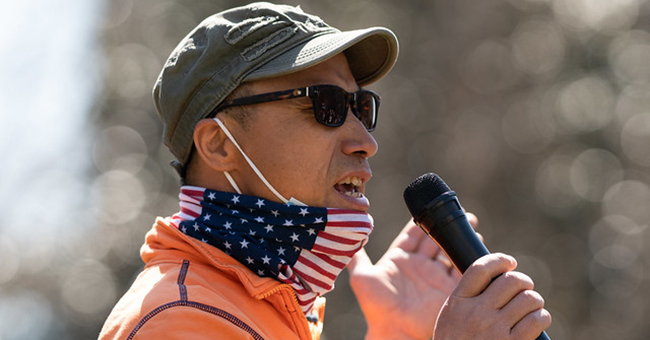
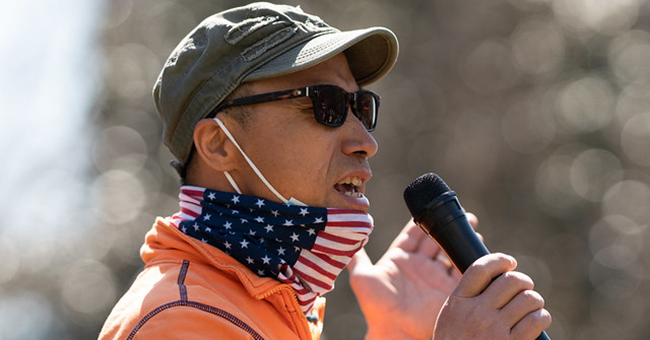
  • DC Rally for Collective Safety; Protect Asian/AAPI Communities; McPherson Square, Washington, DC

    DC Rally for Collective Safety; Protect Asian/AAPI Communities; McPherson Square, Washington, DC. Photo credit: Miki Jourdan

    This year’s theme for Asian American and Pacific Islander Heritage Month is Advancing Leaders Through Purpose-Driven Service. Beacon Press views their writers as leaders, charting the way to a better future with uncovered histories, cultural commentary, and more. Which is why, as AAPI Heritage Month wraps up, we’re putting the spotlight on the work of our Asian American writers. The following list of recommended reads—by no means exhaustive—honors their work and contributions to our society and American history at large, especially during a time when anti-Asian violence has been on the rise. These are titles to be savored all through the month and beyond.


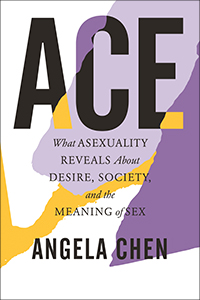
    Ace

    Ace: What Asexuality Reveals About Desire, Society, and the Meaning of Sex
    Angela Chen

    “A book that makes room for questions even as it illuminates, Ace should be viewed as a landmark work on culture and sexuality.”
    —Nicole Chung, author of All You Can Ever Know: A Memoir


    Acts of Faith 2020

    Acts of Faith: The Story of an American Muslim, the Struggle for the Soul of a Generation
    Eboo Patel

    “Eboo Patel has crafted an elegantly written and brilliantly argued manifesto-a call to arms, really-about the importance not of interfaith dialogue but of interfaith cooperation. Acts of Faith is more than a book; it is an awakening of the mind. It should be required reading for all Americans.”
    —Reza Aslan, author of No God but God


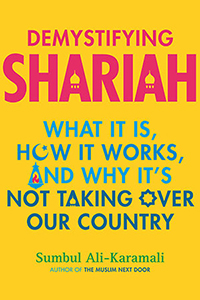
    Demystifying Shariah

    Demystifying Shariah: What It Is, How It Works, and Why It’s Not Taking Over Our Country
    Sumbul Ali-Karamali

    “With clarity and wit, [Ali-Karamali] describes shariah’s origins, central texts, methodologies, and schools of thought, exploring something that was never a code of law, but rather a system of interpretation designed to evolve and be flexible . . . This is a remarkably nuanced and thought-provoking history.”
    Publishers Weekly, Starred Review


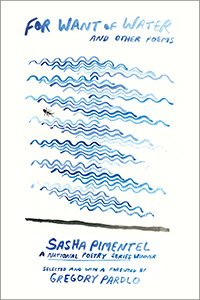
    For-Want-of-Water

    For Want of Water: and other poems
    Sasha Pimentel

    “In language of fierce compassion and tenderness, Pimentel humanizes the dehumanized. And oh, how we need such poems.”
    —Martín Espada, author of Vivas to Those Who Have Failed


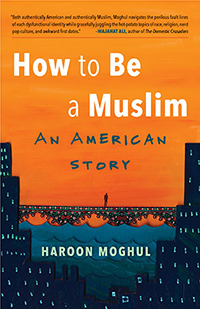
    How to Be a Muslim

    How to Be a Muslim: An American Story
    Haroon Moghul

    “Both authentically American and authentically Muslim, Moghul navigates the perilous fault lines of each dysfunctional identity while gracefully juggling the hot-potato topics of race, religion, nerd pop culture, and awkward first dates. . . . By showing us his warts, pain, flaws, insecurities, demons, and hypocrisies, Moghul ultimately reveals the joy, wonder, and purpose of living and being in the messy, conflicted playground that is modern life.”
    —Wajahat Ali, author of The Domestic Crusaders


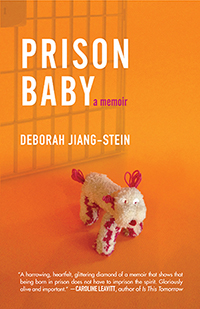
    Prison Baby

    Prison Baby: A Memoir
    Deborah Jiang Stein

    “Deborah Jiang Stein has beaten the cycle of intergenerational incarceration, despite the odds against her—multiracial, born in a federal prison to a heroin-addicted mother. Her story offers hope to the possibility of personal transformation for anyone.”
    —Sister Helen Prejean, author of Dead Man Walking and Pulitzer Prize nominee


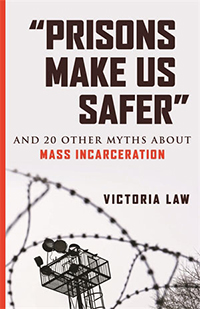
    Prisons Make Us Safer

    “Prisons Make Us Safer”: And 20 Other Myths About Mass Incarceration
    Victoria Law

    “Law has offered us a very important tool. Her careful and accessible analysis, her feminist approach, and her methodical demystification of widely held views about incarceration enable precisely the kind of understanding we need at this moment.”
    —Angela Y. Davis, Distinguished Professor Emerita, University of California, Santa Cruz


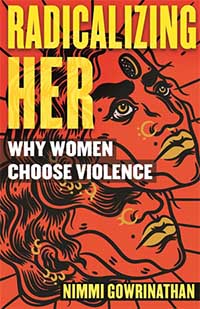
    Radicalizing Her

    Radicalizing Her: Why Women Choose Violence
    Nimmi Gowrinathan

    “This is the kind of book that will unravel your understanding of the world. Reading Gowrinathan is a rare treat: when she narrates a story, she is as gripping and lyrical as Arundhati Roy—when she presents her philosophical takeaways on violence, she is precise and incisive, the Hannah Arendt of our times.”
    —Meena Kandasamy, author of When I Hit You


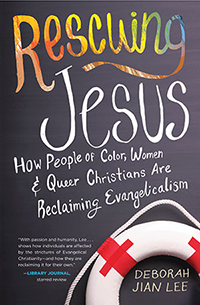
    Rescuing Jesus

    Rescuing Jesus: How People of Color, Women, and Queer Christians Are Reclaiming Evangelicalism
    Deborah Jian Lee

    “Lee’s reporting indicts modern American evangelicalism’s failure to be good news for those who aren’t conservative, straight, white men. Weaving in her own story, she movingly chronicles her subjects’ search for a spiritual home, and what emerges is a profoundly hopeful, deeply Christian narrative about redemption and resurrection.”
    —Jeff Chu, author of Does Jesus Really Love Me?


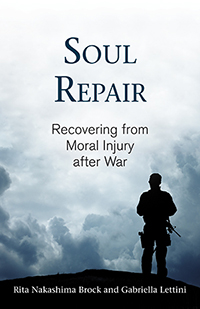
    Soul Repair

    Soul Repair: Recovering from Moral Injury After War
    Rita Nakashima Brock and Gabriella Lettini

    “An eloquent, deeply human reminder that war is not just what takes place on a distant battlefield. It is something that casts a shadow over the lives of those who took part for decades afterwards. The stories told by Lettini and Brock are deepened by what the authors reveal about the way the tragic thread of war’s aftermath has run through their own families.”
    —Adam Hochschild, author of To End All Wars


    Thousand Pieces of Gold

    Thousand Pieces of Gold
    Ruthanne Lum McCunn

    “From Shanghai to San Francisco, Lalu Nathoy’s courageous journey is an important contribution to the history of pioneer women.”
    Ms. Magazine


    The Upstairs Wife

    The Upstairs Wife: An Intimate History of Pakistan
    Rafia Zakaria

    “From a window in the upstairs of her family’s house, Rafia Zakaria parts the curtain, looks down on Pakistan, and writes its history. The Upstairs Wife roams between the lives of a family and the life of a nation—and finds itself in the heart of a society that is much maligned and little understood.”
    —Vijay Prashad, author of The Poorer Nations


    DC Rally for Collective Safety; Protect Asian/AAPI Communities; McPherson Square, Washington, DC

  • By Zach Norris

    Defund the Police Mural Rally, Baltimore, MD, 12 June 2020.

    Defund the Police Mural Rally, Baltimore, MD, 12 June 2020. Photo credit: Elvert Barnes Photography

    The police state that took George Floyd’s life and countless other Black lives operates on five systemic harms: capitalism, white supremacy, patriarchy, violence, and trauma. Understanding the harms is crucial in order to work toward defunding the police. Zach Norris identifies each one in great detail in this passage from Defund Fear: Safety Without Policing, Prisons, and Punishment. This is part one of a two-part post. Click here to read part two.

    ***

    From among all the things that actually harm us, a mere sliver is addressed by our criminal legal system—a term I prefer over “criminal justice system,” because calling it a “justice system” inaccurately links it to justice, as well as fairness, healing, and safety. Generally speaking, the criminal legal system works great at protecting you and keeping you safe if you are a rich white man. It protects your power, prestige, and property, while debunking, debasing, and diminishing those who would question your right to those privileges. If you’re anyone else, it’s a lot less likely to result in justice, let alone healing.

    Much of what people go to prison for are actions that were not harmful to anyone. Meanwhile, there are so many actions that are actually harmful that we’re not taking into account because the current criminal legal system can’t or won’t apply to them. In focusing so much on crimes—defined as what’s against the law—we have increasingly lost sight of morality.

    Belief systems that have to do with the allocation of power—such as capitalism and sexism and racism—are also the cause of immense harm. In fact, they probably bear the lion’s share of the blame for suffering on this planet. But how do you hold a belief system accountable? Occasionally the criminal legal system can punish individual racists, sexists, or capitalists for harms they have caused (Bernie Madoff comes to mind). Targeting and weeding out individuals doesn’t change a toxic society- wide culture, whether we’re talking about white supremacy, male supremacy, or the supremacy of profit over people.

    At the same time, much of the harm that feels most devastating to us individually is intimate and interpersonal: every hurt that gets dealt, inside families, between friends, between parents and offspring, between lovers. We know that the prevalence of child abuse and domestic violence is far wider than what is reflected by reported offenses, let alone arrests or prosecutions. Harms that happen inside the home are largely invisible, occurring in a private sphere behind closed doors. Regardless of whether it happens at home or elsewhere, psychological and emotional abuse almost never gets “counted,” yet causes tremendous damage. The more #MeToo stories we hear about harassment and abuse in the workplace, the more we understand how vulnerable women are—and how they risk retaliation, humiliation, and termination when they do come forward. Some of the most popular stories have been about celebrities, but we know that the reach of sexual harassment and abuse is at least as extensive in everyday occupations.

    This is why I focus on “harms” rather than on “crimes.” I’m not proposing that we do away with laws and the criminal legal system. I just don’t think they’re how we generate safety.

    Shifting the focus away from crimes to harms means we address actions, policies, and behaviors that are most harmful. Shifting focus would mean we look at psychological harms, environmental damages, and social and economic suffering. Finally, it means that when it comes time to address harms and keep further harms from happening, we involve far more bodies than merely the law; the players include academics, policymakers, community leaders, historians and community members who are involved in arenas such as public health, epidemiology, urban planning, and social policy.

    HARM #1: CAPITALISM

    In a system where the primary directive is to promote profit, human well-being will always lose out. Inequality is not an accident, but a central defining feature of capitalism. Capital doesn’t naturally trickle down like part of a watershed—as we were promised for much of the second half of the twentieth century. Instead, what it naturally does is amass and concentrate in the hands of a few. Umair Haque does a great job of explaining the logic of wealth concentration in simple language:

    Mom-and-pop capitalism is a healthy and beautiful thing, an economy of a million little shops, bakeries, artisans — but it takes only a modest attachment to a profit motive. But thanks to the rise of massive, global speculation, only aggressive quarterly profit-maximization was allowed. CEO earnings were hitched to share prices, and your share price only went up if your earnings did, relentlessly, illogically, crazily, every single quarter, instead of stabilizing at a happy, gentle amount — and so the only way left, in the end, to achieve it, was to build titanic monopolies, which could squeeze people for every dime. Once the economy had Macy’s, JC Penney, K-Mart, Toys-R-Us and Sears. Now it has Walmart. The story was repeated across every single industry.

    Part of that squeezing for every dime involves jobs, of course, which have been moved around as companies look for the least amount of friction with profit, whether that has meant reduced occupational health and safety standards, or reduced rights and wages for workers. Now, in the newest iterations of squeezing, we have automation and machine learning, along with increasing numbers of companies hiring for temporary, flexible, precarious jobs, instead of offering full-time, long-term employment with benefits. It is not so much that employers don’t want stable employees as much as they don’t want to reciprocate with stable hours and benefits. Why would they, if they can get away without doing so, increasing their all-important profit margins?

    Meanwhile, the so-called “financialization” of the economy has meant that speculation—investment banks and hedge funds and others making money “placing bets with each other”—has grown to be a huge part of the economy, dwarfing the real economy, where things that we actually need are invented and made and maintained, whether that means food, or the cure for cancer, or a new energy grid.

    In 2008, all the house of cards speculation upon speculation led to a collapse, which is exactly what houses of cards inevitably do. And when that happened, it took down everyone. Except that the wealthy few at the top had the resources and connections to allow them to recover; and the rest of us did not, further undermining our already insecure positions. Almost three-quarters of the US population has under a thousand dollars in savings, and a third has zero. This is why a single unexpected expense like a hospital visit or a car repair is all it takes for someone not to make rent. Then they’re forced to make impossible choices: to stop refilling the prescription they depend on, or stop paying utilities, or to skip subway fare and risk getting caught. Even then, it’s often not enough.

    An economy that is geared toward speculation with a focus on short- term profits is like a hungry beast that must be fed. A wealthy few refuse to compromise the expansion of their profit, regardless of the impacts on natural resources and the planet, as well as on the majority of people’s well-being and security. When the US government (among others) chose to spend its money propping up this system, it declared the need to make cuts elsewhere. Outside the United States, this gets called “austerity.” Inside the US, some have referred to this framework as “Reaganomics,” but its basic tenets have been enthusiastically endorsed by Democratic and Republican presidents alike. Healthcare, support in old age, the environment, renewable energy—the government decided the budgets for these items could be slashed. Let corporations make money providing them—a.k.a. “privatization.”

    That’s where we are today in this stage of capitalism. Most resources are going to a tiny minority of people, while the majority can’t get their basic needs met. Millions of Americans face a constant struggle to keep a roof over their heads. Four evictions are filed every minute.37 Many Americans go without healthcare, given the absence of universal coverage in the US. As a result, the US ranks poorly on key indicators of health, such as infant mortality, and a hundred thousand Americans die each year from causes that were preventable with medical treatment.38 This is really a violation of common decency and dignity, as well as a source of instability and insecurity for us as a society. There’s a tendency to think of capitalism as inevitable, but like all human systems it was created by humans and there are other options.

    And because wealth equals power, its concentration in the hands of a few means our democracy is getting replaced by oligarchy—the rule of the few. They make new laws and bankroll elected officials to protect their interests, while geting rid of all the laws and politicians who impinge on those interests. Pretty much everyone else is left suffering and plagued by anxiety about how much worse things can get.

    HARM #2: WHITE SUPREMACY

    There is no end to the harm done to people of color by the long prevailing belief system that holds that white people are superior to others and deserve more—more resources, more second chances, more of the credit, more starring roles, and on and on; more of all the good stuff. People of color, by contrast, get more of things like asthma, freeways through our neighborhoods, bad mortgages, and jail time.

    “When over decades the police, courts, banks, buses, schools, and other parts of society regularly ignore, exploit, and harm non-White people, yet these incidents are largely denied, excused, or blamed on the victims, without being properly investigated, before disappearing from the accounts of history or the evening news or the general discourse: this is white supremacy. The humanity of certain people is made invisible,” writes Native American Edgar Villanueva in his 2018 critique of philanthropy, Decolonizing Wealth.

    There are the explicit examples of racism that should be shocking but instead are unrelenting. If you are a parent of black children, your confidence in their safety is likely to be at an all-time low as videos and stories of police misconduct and violence emerge on what seems like a daily basis. Antwon Rose was seventeen. Cameron Tillman was fourteen. Tamir Rice was twelve. Aiyana Jones was seven. “I see mothers bury their sons / I want my mom to never feel that pain / I am confused and afraid,” Antwon had written in a poem that ended up being recited at his funeral.

    White supremacy also manifests more subtly in behavior and attitudes, for example as white people believing that everything they’ve achieved is based on merit and hard work, as opposed to a system set up to make their success more likely, which leads to absurd ideas like “playing the race card” or “reverse racism,” or defensiveness and woundedness when white privilege is mentioned—a phenomenon known as “white fragility,” a term coined by the whiteness studies professor Robin DiAngelo.

    Most intractable of all is white supremacy that has been baked into institutions, culture, and policies, also known as structural racism, which has served to deprive people of color of resources over the entire history of the United States. These implicit forms of white supremacy are nefarious, making it hard to assign responsibility.

    Even when we consider certain threats that appear to apply to everyone indiscriminately, such as nuclear war, natural disasters—people of color almost always bear more harm. Hurricane Katrina is an example. The lack of adequate evacuation plans and disaster relief caused the worst and most immediate hurt to low-income people, people with disabilities, and black people. According to Mimi Kim of Creative Interventions: “People with less power can be more vulnerable to violence because they are an easier target, because they are less likely to be protected, more likely to be blamed, and [have fewer] places to go to get help.”

    The harm done is physical, economic, psychological. Physical: this includes police brutality and hate crimes, and the bias in medical care that has thousands of black women suffering, as legendary tennis player Serena Williams did during the birth of her daughter, because doctors don’t listen to them or trust them to know their situation; and the diseases and chronic conditions caused by having highways, waste treatment facilities, and toxin-spewing factories disproportionately located in communities of color. Economic: such as the disparity in wealth between white people and people of color, which doesn’t correlate to education or income level; or the disproportionate impacts of job losses and mortgage crises upon people of color. Finally, psychological: the depression and trauma that come from all the other harms compounded, and from feeling the whole world, or at least the whole nation, considers you as less worthy.

    Writing about the historic and intergenerational trauma that Native Americans experience, Edgar Villanueva writes: “Imagine that all your family and friends and community members regularly experienced traumatic events: upheaval, violence, rape, brainwashing, homelessness, forced marches, criminalization, denigration, and death, over hundreds of years.” He goes on, and the next passage can be applied just as much to all people of color: “Imagine the trauma of this experience has been reinforced by government policies, economic systems and social norms that have systematically denied your people access to safety, mobility, resources, food, education, dignity, and positive reflections of themselves. Repeated and ongoing violation, exploitation, and deprivation have a deep, lasting traumatic impact not just at the individual level—but on whole populations, tribes and nations.”


    About the Author 

    Zach Norris is the executive director of the Ella Baker Center for Human Rights, which creates campaigns related to civic engagement, violence prevention, juvenile justice, and police brutality, with a goal of shifting economic resources away from prisons and punishment and towards economic opportunity. He is also the cofounder of Restore Oakland and Justice for Families, both of which focus on the power of community action. He graduated from Harvard and took his law degree from New York University. Connect with him at zachnorris.com and on Twitter (@ZachWNorris).

  • Graduates at dawn

    Hats off to all students graduating this season! Because whew! This is no easy time to finish up school. The ideal graduation ceremony would be outdoors, filled with the company and applause of loved ones. Most will be held online, some outside within the parameters of social distancing. It won’t be the same, and frankly, nothing has been since March last year. But isn’t that what graduating is all about? Growing into the next new phase, whatever that phase happens to be? Before we get all misty-eyed and sob into our masks, here’s a list of recommended reads for the occasion.


    Boyz n the Void

    Boyz n the Void: a mixtape to my brother

    Vivid, honest, and thoughtfully rendered as a Black self-portrait might be, it is competing for real estate in the imaginations, white and otherwise, which are largely monopolized by the phantom projections of ethnocentrism. . . . To be a Black artist of any consequence, you must not only untether yourself from essentialized notions of Blackness but create with such fluency as to move your audience to jettison the same constraints.
    —G’Ra Asim


    Breathe

    Breathe: A Letter to My Sons

    We cannot make of our lives a nightmarish Fortnite game with the guns cocked and ready for you as a target and our hands inexplicably empty of self-protection. Sons, I will not allow that to be your life. Your testimony is living with the passionate intensity of one whose presence matters despite the violence of this world towards your beautiful flesh.
    —Imani Perry


    Daring Democracy

    Daring Democracy: Igniting Power, Meaning, and Connection for the America We Want

    Every day seems to bring yet more worrisome, frightening news, putting millions on the edge of despair. At the same time, we’ve come to see that despair itself is ultimately our only enemy, and we’ve become ever-more clear that there’s an effective antidote: meaningful action we take together. But we realize that to take action—and more, to join with others you do not know—requires courage. So in this moment of extreme threat, we may come to see that the opposite of evil is no longer goodness. It is courage. Goodness without action isn’t good enough.
    —Frances Moore Lappé and Adam Eichen


    Man's Search for Meaning

    Man’s Search for Meaning

    It does not really matter what we expected from life, but rather what life expected from us.
    —Viktor E. Frankl


    Nothing Personal

    Nothing Personal
    with a foreword by Imani Perry and an afterword by Eddie S. Glaude, Jr.

    To be locked in the past means, in effect, that one has no past, since one can never assess it, or use it; and if one cannot use the past, one cannot function in the present, and so one can never be free.
    —James Baldwin


    The Only Woman in the Room

    The Only Woman in the Room: Why Science Is Still a Boys’ Club

    If female scientists are weighted with the responsibility of mentoring younger female scientists, they will have even less time to carry on their research. It’s the larger society that needs to change. No American of either gender will want to become a scientist if studying science or math makes a middle schooler so nerdy he or she becomes undatable, or if science and math are taught in such a way as to seem boring or irrelevant. Focusing on facts and tests is not the best way to convey the beauties of a subject or the reasons anyone would want to study it. The lowly status teaching is accorded in our society, combined with the unreasonable demands on most teachers, makes it difficult for anyone to impart high-level skills to our children while instilling in them a love for whatever is being taught. Changing such deeply ingrained cultural patterns might be difficult, but the barriers are not insurmountable.
    —Eileen Pollack


    One Drop

    One Drop: Shifting the Lens on Race

    “If we can recalibrate our lenses to see Blackness as a broader category of identity and experience, perhaps we will be able to see ourselves as part of a larger global community. As a professor of Africana Studies in the United States, I believe that it is becoming increasingly important for all people, not just people of African descent, to recognize the existence of a global Black community. In my experience teaching students about issues related to the African Diaspora, I find that they have a particular level of difficulty assigning the category and thus the identity of Blackness to people throughout the world, even when those people themselves identify as Black . . . . [T]here are Black people all over the world. We are not a minority—we comprise a global community.”
    —Yaba Blay 


    Pregnant-Girl

    Pregnant Girl: A Story of Teen Pregnancy, College, and Creating a Better Future for Young Families

    We erroneously build interventions that define young people by a single moment in their lives. This is especially true for teen mothers and fathers. We begin with the pregnancy as the thing that started a cascade of struggles in their lives, ignoring all that came before because it allows us to overlook all the ways we have failed them. But if we begin at the true beginning, the pregnancy is no longer the singular issue. It’s just a symptom of larger, often systemic, issues. Larger issues in a family. Larger issues in a country.
    —Nicole Lynn Lewis


    What Doctors Feel

    What Doctors Feel: How Emotions Affect the Practice of Medicine

    No matter how it’s portrayed, and no matter how many high-tech tools enter the picture, the doctor-patient interaction is still primarily a human one. And when humans connect, emotions by necessity weave an underlying network. The most distant, aloof doctor is subject to the same flood of emotions as the most touchy-feely one. Emotions are in the air just as oxygen is. But how we doctors choose—or choose not—to notice and process these emotions varies greatly. And it is the patient at the other end of the relationship who is affected most by this variability.
    —Danielle Ofri


    Yes to Life

    Yes to Life: In Spite of Everything

    To say yes to life is not only meaningful under all circumstances—because life itself is—but is also possible under all circumstances.
    —Viktor E. Frankl

    Graduates at dawn

  • A Q&A with G’Ra Asim

    G’Ra Asim

    Author photo: Selina Stoane

    When millennial writer and punk rocker G’Ra Asim noticed his teenaged brother, Gyasi, going through the same paces and challenges he went through at that age, he decided to write him a survival guide for tackling the sometimes treacherous cultural terrain particular to being young, Black, brainy, and weird in the form of a mixtape. That mixtape is his epistolary memoir Boyz n the Void, in which he reflects on navigating Blackness, masculinity, and young adulthood and discovering punk music and straight edge culture as outlets to express himself freely. Asim also shreds on social commentary and pop culture critique in the mix while grounding each chapter in a totemic punk track. Beacon Broadside editor Christian Coleman caught up with him to chat about it.

    Christian Coleman: Toni Morrison’s oft-quoted aphorism on writing goes: “If there’s a book that you want to read, but it hasn’t been written yet, then you must write it.” Was this the case for you when writing Boyz n the Void? And given the similarities between you and your brother, Gyasi, did you wish someone had written a mixtape like this for you?

    G’Ra Asim: Morrison’s aphorism is definitely germane to the genesis of this book. As I write about in the chapter “Evidence of Things Unscene,” I started working on Boyz in a grad school MFA workshop. At first, I was trying to write essays on punk and straight edge in a less overtly personal way. The feedback I got from my instructors and classmates was that the “I-character” in my essays was difficult to fully imagine or believe. That led me to a larger idea: for the most part, we all walk around with our own IRL dramatis personae of what kind of people we think exist in the world. We generate this dramatis personae based on mass culture, lived experience, and stereotypes. If you’re someone whose personality and social location—the combination of factors like gender, race, class, etc.—are perceived not to correspond, you’re probably absent from most people’s dramatis personae. You aren’t a plausible figure for them until you instantiate yourself as thoroughly and persuasively as possible. The book became a way of writing myself, my brother, and many others like us out of the void, and an exploration of how punk rock has served as a coping mechanism for otherwise dwelling in the margins.

    CC: I really connected with the passages where you write about neighborhood kids in Maryland chiding you for “talking like a white boy” or other people calling you out for not living up to their expectations of authentic Blackness because of your upbringing and love for punk. (I was an anime and classical music fiend growing up, so my Black card was often revoked and given the stamp of disapproval.) And punk is all about defying expectations. Would you say that punk and straight edge culture played a significant part in you claiming Blackness on your own terms?

    GA: I felt comfortable embracing punk rock and straight edge because I’d already accepted that the most visible and propagandized representations of Blackness weren’t the only valid ones. My parents are artists and eccentrics, and lots of their characteristics—and even their relationship, as a happily married couple in which each party is an attentive and committed parent—were at odds with so many of the stereotypes about Black people. Merely daring to internalize and abide by the values impressed upon me in that household would and did amount to cultural treason in some people’s eyes. The world withholds full humanity from Black people as it is. I didn’t want to narrow the scope of possibilities for myself even further by feeling beholden to some dreadfully rigid script.

    It’s worth noting, too, that when Black people make interventions in cultural traditions where they aren’t the norm, those interventions bear the traces of our Blackness. At a certain point, insisting that a Black person making rock music is making “white music” is like saying Washington Wizards point guard Russel Westbrook’s game is white because he incorporated the Eurostep. Whatever the origin of the tools we absorb into our process, Black folks inevitably imbue what we create with the markers of our particular history, styles, and affects.

    CC: You’ve written about the punk scene for AfroPunk, especially the POC punk scene. Did these pieces prepare you in any way for writing Boyz?

    GA: Maintaining an engagement with all the incredible and inspiring POC punk bands that are continually reimagining the punk tradition for the twenty-first century was crucial to the development of Boyz n the Void. I’m super grateful to AfroPunk for providing a space where I could geek out about groups like the Muslims, Rebelmatic, the 1865, Choked Up, and Bachslider, and to fine tune some of my ideas about what Black punk cultural production means. AfroPunk is also a platform that is perhaps more known for elevating Black music that may, in the broadest sense, reflect a punk sensibility but doesn’t necessarily resemble, for example, the Clash or the Ramones at all in terms of its sound. So with my contributions to the site, I relished reminding people that Black rockers are out here making provocative and timely music that specifically foregrounds loud electric guitars, too.

    CC: I came across AJ+’s video on the Black history of punk music, which features Bad Brains. You have a chapter centered on them and their song “Attitude.” I was wondering what you thought of the band, Death, as a proto-punk band that introduced a Black footing into the genre. Are they foundational to your punk ethos?

    GA: I hadn’t heard of Death until I watched the excellent documentary on them that came out in 2012, A Band Called Death. While I had already been an enthusiastic punk fan for a long time by then, watching the film did encourage me to start thinking about exploring punk as a literary subject at book length. It was moving to see punk music as a bridge between Black family members, so there’s some intriguing overlap there as well.

    CC: Are any of the bands from your mixtape influences for your own band, babygotbacktalk, and if so, which ones?

    GA: With all sincerity, every single band on the mixtape has made an impact on babygotbacktalk. They’re all taproots, and we’re a subsidiary.

    Propagandhi and Bad Religion are especially huge influences. They’re the OGs at marrying a catchy, melodic, and accessible sound with socially conscious lyrics. That’s a recipe we study closely and aspire to add our own spin on. Fefe Dobson is a godmother to our band. It might seem odd to position her that way, since she and I are close in age, but she’s a model of punk precocity; she’s been making bops since I was in middle school. I discovered her music at a formative time when even the faintest indication of a Black person within two feet of an electric guitar beckoned to me like iron filings to a magnet. I try to bring Fefe’s attitude to my day-to-day life, so naturally, it also comes out in the studio and on stage.

    CC: Do any of the songs on your album, Genre Reveal Party, touch on the themes you write about in your book? Is your book in dialogue with your album?

    GA: Genre Reveal Party and Boyz n the Void have a lot to say to one another. When I was hammering away at Boyz and needed a break, I’d pick up a guitar and work on riffs and melodies that would end up on the album.

    There’s resonance between lead single “Space Jam” and the second chapter of Boyz. Both metaphorize outer space as a bastion of the freedom, peace, and safety that continue to elude Black people on Earth. “Historically White College” engages some of the book’s primary themes by poking fun at all colleges as raced spaces—rather than just HBCUs. “When They Go Low, We Go Six Feet Under” addresses the use of respectability politics to dehumanize Black people lost to racist state violence. The song is an example of how punk and protest have been mutually reinforcing projects in my life, as detailed in the Boyz chapter “Marching Through the Mosh Pit.” Album closer “NYhilism” details the perils of Dating While Straight Edge, which makes it a companion piece to the book, and especially the chapter titled “To the Edge and Back.”

    CC: And now for the million-dollar question: Has Gyasi read the book? Have you all hashed out his impressions of it yet?

    GA: He has! He read it pretty recently, so our conversation about it is still ongoing. One of his main takeaways is that even though a lot of what I wrote is aimed at his specific personality and unique suite of concerns, Gyasi thinks Boyz n the Void is a useful survival guide for a broad range of readers. I mopped my brow when he said so. The kid’s a tough and trenchant critic, so his approval means a lot.


    About G’Ra Asim

    G’Ra Asim, a writer and musician, is an assistant professor of nonfiction writing at Ithaca College. He has served as writing director at the African American Policy Forum and as graduate teaching fellow in Columbia’s Undergraduate Writing Program. His work has appeared in SlateSalonGuernicaThe Baffler, and The New Republic. When not writing prose or teaching, he sings, plays bass and writes lyrics for NYC DIY pop punk band babygotbacktalk, who were named one of Afropunk’s “Top 8 Punkest Bands on the Planet Right Now.”

  • A Q&A with Eric Berkowitz

    Book burning

    Photo credit: Marco Verch

    If free speech is one of the West’s most revered values, it is also among the most contentious. The base impulses driving many famous acts of suppression of free speech date way back. Book burnings, decrees of death, violent attacks of retaliation—censorship comes in several guises, which writer, lawyer, and journalist Eric Berkowitz covers in Dangerous Ideas: A Brief History of Censorship in the West, from the Ancients to Fake News. His book illuminates the power of restricting speech; how it has defined states, ideas, and culture; and (despite how each of us would like to believe otherwise) how it is something we all participate in. Beacon Broadside editor Christian Coleman caught up with Berkowitz to chat with him about it and why censorship doesn’t work.

    Christian Coleman: Tell us about the inspiration behind writing Dangerous Ideas.

    Eric Berkowitz: Not terribly inspiring, really. My UK publisher was proposing ideas for new projects, none of which seemed likely to hold my—or the public’s—interest very long, until one or another censorship/free speech issue popped up. I think it was the censorship of “drill” music—a hardcore rap genre—there, along with the inevitable battles and accusations. It struck us that every time an issue like this comes up, it’s as if it was for the first time. We realized that there were no books for the non-specialist audience unlocking what Western censorship or free speech has meant over the centuries, and how the same issues continually emerge in new forms. I started to read and didn’t look up for a long time.

    CC: In addition to the writer hat, you wear two others: lawyer and journalist. How has your background informed the writing of Dangerous Ideas?

    EB: It’s easy to see where journalism and the book intersect. As for my lawyering life, my very first case involved an unlikely free-speech hero: a captain in the Alameda County Sheriff’s Department. He had worked against the reelection of the miserable incumbent sheriff and found himself working the night shift in the county jail. We sued, claiming retaliation against his expressed political beliefs and—much against the obvious wishes of the judge—won big. That taught me the power behind the words of the First Amendment. I now represent Central American women seeking asylum. No one has experienced silencing like they have.

    CC: One of the main points of your book is that censorship doesn’t work. Suppressing speech gives it that much more power. How is that?

    EB: It doesn’t work because it can’t work. A text might be burned, a person or group might be punished or worse, but the ideas expressed invariably carry on and gain more currency for being forbidden fruit. Words, the poet John Milton said, have their own life apart from the page they appear on. Once the invention of the printing press supercharged the spread of ideas to the masses, censorship laws bloomed as well, along with an exploding black market. Printers told writers to write “anything that will be forbidden” while Catholic monks drove up the price of Galileo’s works the Church had forbidden.

    Censors eventually got into the act, as the profits from trading in printed contraband outpaced their official pay. As time pressed on, government prohibitions became marks of quality. France’s chief eighteenth-century censor declared that anyone who read only approved books was behind the times by at least a century.

    This is no less true now. The Chinese government, for example, knows that its “Great Firewall” against Western news is being circumvented millions of times a day—recently a raft of forbidden news was routed through Spotify and the online game Minecraft—but that has only hardened its resolve. It’s not just speech authorities fear but also the appearance of toleration. And once an aggressive stance toward speech has been taken—even a symbolic one—to abandon or soften it seems to dig them into a deeper hole.

    CC: I want to look at two current issues of Dangerous Ideas to see how they form part of the cultural history of censorship. For starters, our former president had the habit of speaking untruths—boasting the size of his inauguration turnout and downplaying the severity of the pandemic—while decrying “fake news” whenever he was fact checked. Why is it so important for world leaders like him, including Mao Zedong and others before him, to make history, as you write, “an instrument of ideology and power?”

    EB: The curation of history—by smashing statues and images, censoring books and records, or even destroying people—has always been a preoccupation of authoritarians, and similar impulses have spilled over to democratic societies. The past, as the historian J.H. Plumb noted, has always been “a created ideology with a purpose,” sculpted to shore up power and class structures and provide people with a sense of collective destiny. As such, it’s best to think of history less as an accumulation of verified facts than a psychological reality. For governments, the management of that reality is critical to justify their authority and undermine their opponents, living and dead.

    There are so many examples of this. Napoleon banned the Roman historian Tacitus because he didn’t want the descriptions of tyrannical emperors to remind readers of him. An American filmmaker was jailed during World War I for a movie depicting British atrocities during the Revolutionary War—the judge didn’t want Americans to know how badly America’s current ally had behaved. Poland has a new law censoring any scholarship showing its complicity in the murder of Jews during World War II, and right now there is a move from the right to bar schools from teaching the New York Times1619 Project, which documents (among other things) the persistent legacy of American slavery.

    CC: Secondly, would you consider cancel culture to be a form of censorship?

    EB: I defy anyone to give a coherent definition of cancel culture, other than by pointing to the consequences—fair or otherwise—of one’s speech or actions. Terms like this, or “woke,” or “politically incorrect,” or even censorship, have become bleached by weaponized overuse, and maybe that’s not a bad thing. It forces us to be more precise in our thinking.

    It’s comical to think of congresspersons, or famous celebrities, or zillionaire businessmen as being silenced, and they rarely suffer lasting consequences for their words or actions. But when the less powerful are driven from their jobs or are threatened by online mob attacks, well, that looks like silencing. Is it censorship in the traditional sense of government action against citizens? Generally not, other than when Trump called out the online dogs against his enemies du jour. Is it fair? Often not, in my estimation, as the subtleties of speech, context, and meaning are lost in instant online pile-ons.

    Way back in 1968, Marshall McLuhan warned of “womb-to-tomb surveillance” made possible by “the electrically computerized dossier bank—that one big gossip column that is unforgiving and unforgetful, and from which there is no redemption, no erasure of early ‘mistakes.’” I fear we may have reached that point.

    CC: How do you see Dangerous Ideas commenting on our post-truth cultural landscape? What do you hope readers will take away from reading it?

    EB: I’m not sure this landscape is that novel. Can we forget that our country was founded in part on the belief that a large part of the population was less than fully human? Or that millions of Jews were killed on the false notion that they were undermining Christian society? Or that we went to war on the lie—amplified by the likes of the New York Times—that Saddam Hussein was behind 9/11? All this predated Mark Zuckerberg.

    We have long bathed in bullshit because it often answers knotty questions, affirms what we want to believe, and demonizes those we already hate. I hope Dangerous Ideas sensitizes us to this and to our innate hostility to ideas that jar our beliefs. Hopefully, the book will nudge us toward greater toleration of ideas unlike our own. Tolerance isn’t easy, it’s a flimsy muscle that easily atrophies.


    About Eric Berkowitz

    Eric Berkowitz is a writer, lawyer, and journalist. For more than 20 years, he practiced intellectual property and business litigation law in Los Angeles. Berkowitz has published widely throughout his career, and his writing has appeared in periodicals such as the New York Times, the Washington PostThe Economist, the Los Angeles Times, and LA Weekly. His previous books include Sex and Punishment and The Boundaries of Desire. He lives in San Francisco. Connect with him at ericdberkowitz.com and on Twitter at @ericberkowitz4.

  • By Marga Vicedo

    Partly cloudy

    Photo credit: sipa

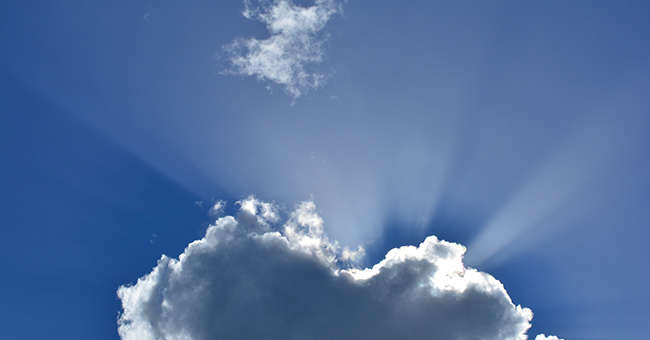
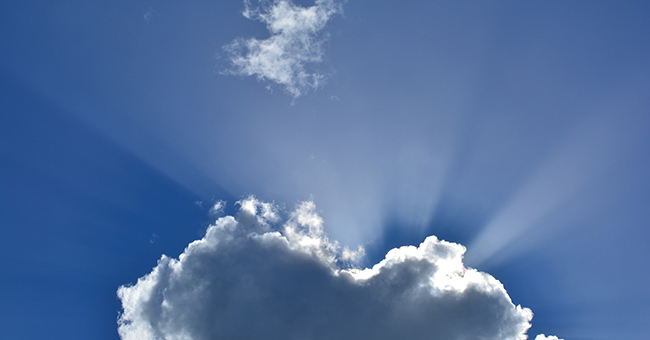
    “Sometimes can tell when people are happy even if not smiling because can tell by the face. When people are happy eyes always glow and face shine like sun. And if people are sad face always looks gloomy like clouds. And between happy and sad lie partly cloudy.”
    —Jessica Park[i]


    “You are being emotional,” someone may tell you during a conversation. It is not a compliment. It usually means you are being irrational or at least unreasonable. The underlying assumption is that you are not thinking clearly because you are letting your emotions interfere with your reasoning. This belief is not only prevalent in daily interactions. The separation between cognition and affects has a long history in philosophical and scientific approaches in the Western world. The emotional and cognitive realms are often seen as separate, if not opposed to each other. In this view, emotions cannot help your thinking; on the contrary, they will always cloud your judgment. Clear, rational, objective thinking is supposed to require leaving one’s feelings aside.

    In the field of autism, this view about cognition and affectivity also has a long history. In 1911, Swiss psychiatrist Eugen Bleuler introduced the term “Autismus” to refer to a symptom of schizophrenia. He defined it as the tendency to detach from reality. For Bleuler, that tendency resulted from “autistic thinking,” which he defined as the opposite of “logical thinking.” Logical thinking was connected to reality. Autistic thinking was disconnected from reality because it had been distorted by certain affects, especially a person’s desires and fears.[ii] Most child psychiatrists who adopted Bleuler’s term autism did not elaborate on his views about the contraposition between autistic and logical thinking. However, the idea that autism was a condition of the affects persisted. When John Hopkins University child psychiatrist Leo Kanner first presented childhood autism in 1943 as an independent condition, he saw it as a child’s innate inability to form affective contacts with people.

    Our views about autism have changed profoundly in the last few decades. However, the idea that autistic people have some disturbance of the emotions, specifically that autistic people have a limited understanding of the emotions of other people, has persisted.[iii] I believe that this view derives in part from accepting the separation of the emotional and cognitive abilities in psychological development.

    Yet, there are different ways of coming to understand how other people feel. One could understand the emotions of others because one has experienced them in similar circumstances, or one could understand them because one has learned to identify the situations that trigger those emotions and their signs. More than anyone else, Jessica Park taught me this. Jessica was diagnosed as autistic in 1961, when she was three years old.

    In her adolescence, Jessica developed a system based on clouds and doors to organize her world. The system included twenty-nine kinds of days: “dayhigh” was a day with high sun and no clouds; “daynothing” was a day with a clear sky. Any cloud in the sky would ruin Jessica’s mood.[iv] Using clouds and doors, Jessica also cataloged other experiences and objects, including gum-wrappers, flavors, music, and numbers.[v] Jessica gave classical music two doors. She gave four doors and no clouds to hard rock music because she felt such intense pleasure listening to it that she needed to put four doors between her and the sound. Thus, her system helped her organize not only the external world but also her inner emotional experiences. In a sense, the clouds and doors served as emotional currency that allowed her to make conversions in a system of emotional exchange, an emotional economy of sorts.

    Over the years, Jessica has established different systems to navigate the world around her. To develop those systems, she looks for patterns everywhere.

    Like many autistic people, Jessica is a “pattern thinker,” as animal researcher Temple Grandin says, or a “pattern seeker,” as psychologist Simon Baron-Cohen puts it.[vi] During her adolescence, Jessica’s greatest passion was finding order in the world of numbers. In one of her drawings, she represented herself doing just that.

    Jessy at a number-filled blackboard

    Jessica’s pattern identification abilities are impressive and often she discovers or establishes patterns that are not readily seen by others. Once, at age twelve, Jessica drew a grid with fifty numbers, in no apparent order.

    Jessy's grid of 50 numbers

    Mathematician Freeman Dyson, a friend of the Park family, figured out that the grid contained the squares of the numbers 51–100, with the first twenty-five being the even numbers (arranged in terms of the number of powers of 2 they contained) and the last twenty-five being the odd numbers (this time arranged in ascending order).[vii]

    Jessica’s mother, Clara Park, told us that numbers became Jessica’s “primary expressive instrument.” Jessica was fascinated not only by the order one could find in numbers, but also by their emotional charge. For Jessica, some numbers were “too good” and others were “HATE” numbers. Even with an emotional charge, the world of numbers is immutable and is an ideal terrain for seeking patterns. It was not so easy with other features of the human world that Jessica also needed to communicate with.

    Human emotions are some of the most complex things to organize into neatly separate categories, as the famous British naturalist Charles Darwin discovered. In his 1872 book, The Expression of the Emotions in Man and Animals, Darwin embarked on the ambitious project of cataloging all human emotions that are revealed in facial expressions. He sought to establish the universality of facial gestures that allow us to recognize the emotional states of other individuals.[viii] It was a project that has continued to this day. Whether the expression of certain emotions is universal and innate remains a contested issue. However, the capacity to ‘read’ emotions on somebody’s face is not universal.

    For Jessica, identifying the emotions of other people through their facial expressions was not always easy. But she resorted to her ability to find patterns and to connect those to her systems. In this way, she found out that “When people are happy eyes always glow and face. And if people are sad face always looks gloomy like clouds. And between happy and sad like partly cloudy.” Over the years, Jessica worked with her family and friends to learn about each other’s feelings. All learning is reciprocal. In her accounts of Jessica’s development, her mother Clara told us that Jessica had to learn what it means to be discouraged or dismayed and what events caused that state. For their part, her family members had to learn that leaving the light on at night in any room caused Jessica profound distress.

    Through examples, Jessica also learned more about empathy and developed her ability to act empathetically based on her understanding of other people’s desires. With the help of Joan, one of her friends and house companions, Jessy set out to practice more “thinking of others.” One day, Jessica told her mother: “I put nutmeg instead of cinnamon in the pudding because I know you don’t like that.”[ix] Jessica definitely has the ability to take the perspective of others and can take their preferences into account in her decisions.

    Later, using storybooks and other tools, Jessica also learned what feelings are appropriate in certain social situations. We all need to be socialized into a community, which includes learning many of the cultural expectations about emotional reactions through observation and imitation. Jessica had to apply a more ‘intellectual’ approach to understanding the feelings of other people. Jessica’s growth shows us that different people combine their intellect and their emotions in diverse ways.

    Jessica found her own way of combining love and intelligence to navigate the complicated and often chaotic world of human emotions and their expressions. She used her cognitive abilities for patterns and systems to interpret how other people feel. In her efforts to understand her daughter, Clara Park, too, combined the cognitive and the emotional, intelligence and love. When Jessica was a child, Clara was seen as a “refrigerator mother,” a cold mother who was responsible for her daughter’s condition. Although criticized for taking an intellectual approach to mothering, Clara argued that “intelligence and love are not natural enemies.”[x] The intellect and the emotions are deeply interrelated. Different people combine them in various ways to make their way in the world and to understand and empathize with each other.


    Notes

    [i] Quoted in Clara Park, “Social Growth in Autism: A Parent’s Perspective,” in Social Behavior in Autism, ed. Eric Schopler and Gary B. Mesibov (New York: Plenum Press, 1986), 81–99, 94.

    [ii] Eugen Bleuler, “Autistic Thinking,” American Journal of Insanity 69 (5): 873-886, 1913, 874, 882.

    [iii] https://www.scientificamerican.com/article/people-with-autism-can-read-emotions-feel-empathy1/

    [iv] Clara Claiborne Park, Exiting Nirvana: A Daughter’s Life with Autism (Boston: Little, Brown, and Co., 2001).

    [v] Park, Exiting Nirvana, 82.

    [vi] Temple Grandin and Richard Panek, The Autistic Brain: Thinking Across the Spectrum (Boston: Houghton Mifflin, 2013), 141. Simon Baron-Cohen, The Pattern Seekers: How Autism Drives Human Invention (New York: Basic Books, 2020)

    [vii] Park, Exiting Nirvana, 93-94.

    [viii] Charles Darwin, The Expression of the Emotions in Man and Animals (Oxford: Oxford University Press, 1998 [1872]).

    [ix] Park, Exiting Nirvana, 147.

    [x] Marga Vicedo, Intelligent Love: Clara Park, her Autistic Daughter, and the Myth of the Refrigerator Mother (Boston: Beacon Press, 2021).

    Partly cloudy


    About the Author 

    Marga Vicedo, PhD, is a philosopher and historian of science. She is a professor at the University of Toronto, where she teaches and writes about the history of biology, psychology, and psychiatry since the turn of the twentieth century. She is on the editorial board of numerous journals, including the Review of General Psychology and Journal of the History of the Behavioral Sciences, and is the author of The Nature and Nurture of Love: From Imprinting to Attachment in Cold War America and Intelligent Love: The Story of Clara Park, Her Autistic Daughter, and the Myth of the Refrigerator Mother. Connect with her at margavicedo.com

  • By Laura Erickson-Schroth and Laura A. Jacobs

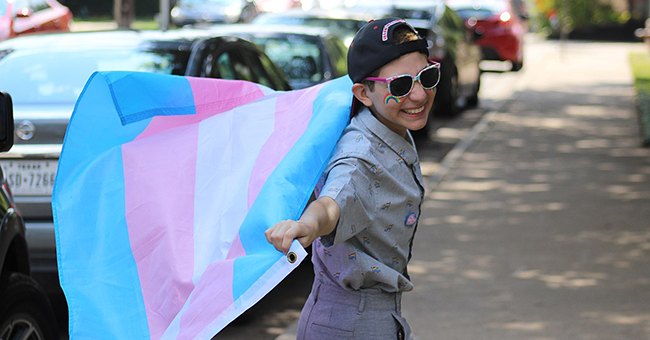
    Trans boy celebrating Pride

    Photo credit: Daydreamerboy

    Notice how certain pleas to “protect the children” don’t actually consider the well-being of children? Especially if children and teens are trans? 2021’s latest rash of anti-trans bills aims to restrict their access to gender-affirming healthcare and make it illegal, restrict transgender students’ right to fully participate in school and sports, and bar them from using bathrooms aligned with their gender identity. Cis-gendered folks need to show up for trans youth! These points from Laura Erickson-Schroth and Laura A. Jacobs’s “You’re in the Wrong Bathroom!”: And 20 Other Myths and Misconceptions About Transgender and Gender Noncomforming People explain why support and acceptance is so important for their mental health and development. Erickson-Schroth and Jacobs also debunk the myths fueling these anti-trans bills.

    ***

    Bullying from Peers and Teachers

    Many transgender people have been marginalized from a young age. Children and adolescents who demonstrate gender variance can be harassed by their peers simply for dressing in the “wrong” garment or for having a hairstyle that more closely matches norms for the “other” gender. Teachers often refuse to acknowledge students’ trans identities and insist on referring to individuals by their birth names and pronouns, something most transgender and gender-nonconforming people find to be an aching nullification of their identity. Very frequently, youth who do not conform are subject to ostracization, jeers, bullying, physical violence, and sexual assault. Many youth also face similarly unsupportive or hostile families.

    These explicit and implicit attacks can become a chronic trauma individuals face daily. Lack of physical and emotional safety can lead to poor school performance, less access to higher education, fewer opportunities for stable and lucrative employment, and less safe living conditions.


    Because Bathrooms . . . Again

    There have been numerous attempts to legislate trans people’s restroom use based on allegations that we are sexually exploitative. These laws are framed not as infringements on the rights of transgender people but as “protection” for women, children, and others. Those in favor of “bathroom bills” argue that trans people are more likely than others to perpetrate physical or sexual violence, or to spy on their neighbors while using the restroom. There is little discussion of the burden imposed on transgender and gender-nonconforming people when they are forced to use bathrooms inconsistent with their genders.

    In fact, as of 2015, there had been no recorded incidents of anyone trans or gender nonconforming being arrested for sexual misconduct in a bathroom within the United States ever, and trans people are far more likely to be the victim in such settings. Up to 70% of transgender people report having been denied access to restrooms, harassed while using restrooms, or even physically assaulted.


    Hormones and Gender-Affirming Healthcare

    Even with the numerous steps that trans people are required to take in order to gain access to hormones and surgeries, critics of current practices still argue that they are too easy to obtain. One of the biggest concerns is that those seeking hormones or surgery will regret the decision later on, but decades-long follow-up studies conducted by researchers around the world demonstrate extremely low regret rates (0–3 percent).

    Many are concerned about these health-care interventions being applied to children, unaware that children do not physically transition with hormones or surgeries. Instead, children who express gender-nonconforming behaviors or thoughts and have supportive parents often work with therapists to explore their feelings, and some socially transition, adopting clothes, hairstyles, names, and pronouns that they feel fit them. There are times when children socially transition and then later decide that the gender they were assigned at birth actually fits more comfortably, and these individuals, in supportive environments, still thrive. The distress often experienced is more commonly due to an intolerant social atmosphere; it is more harmful to prevent children from exploring their gender identities than to follow them on their journeys, wherever they may lead.

    Some adolescents are prescribed hormone blockers, which can be offered in the early stages of puberty to halt the development of secondary sex characteristics, or even later in puberty to prevent ongoing body changes and menstrual cycles, or to provide time for an individual to make decisions. However, hormone blockers are extremely expensive and financially prohibitive for most families. Teenagers with supportive families may have the option to start adult hormones like estrogen or testosterone if they are mature enough to understand their decisions.

    Our current approaches to care for transgender people seeking hormones or surgeries are less restrictive than they were in the past, but far from making it too easy to obtain hormones and surgeries, these systems continue to put up numerous barriers. Unfounded fears related to regret rates, which are actually quite low, continued to drive opposition to efforts to increase access and make it harder for trans people to live as their authentic selves.


    The Importance of Trans Visibility for Trans Youth

    In a 2015 Marie Claire article, activist and writer Janet Mock wrote that the cultural acceptance of multiple genders in her native Hawaii “served as a backdrop for my best friend and me as we embodied our womanhood, enabling us to transition through the halls of our high school and become who we knew ourselves to be.” A 2016 study in the journal Pediatrics demonstrated that transgender children with supportive families have no more anxiety or depression than children who don’t identify as trans.

    Rather than being threatening to others, the visibility of trans and gender-nonconforming people contributes to the well-being of youth, both trans and cis, and to a safer, more civil society. Exposure to trans and gender-nonconforming individuals benefits our society both directly and indirectly. Normalizing transgender and gender-nonconforming lives through visibility on television, in movies, and in daily life offers role models people can identify with, especially during the agonizing process of coming out. Additionally, these representations help our allies address their own fears by seeing us in everyday settings, and they help everyone, trans or cis, explore the rich diversity of gender and sexuality by offering a vision of a broad range of possibilities for how we might live our lives.


    Family Support

    In addition to formal mental health care, there are other strategies that have been shown to promote resilience in transgender people. Helping parents with gender-nonconforming children learn to be supportive can have a significant impact. In a 2010 study by the Family Acceptance Project, LGBTQ+ young adults with high levels of family acceptance showed greater levels of self-esteem and general health and lower levels of depression, substance abuse, and suicidal ideation and attempts. A 2016 study on the mental health of transgender children clearly demonstrated that “out” trans youth living in supportive environments with supportive families, schools, and friends have no greater rates of depression and anxiety than youth in similar environments who do not identify as trans. In addition to environmental changes that can be made to assist trans people in building resilience from a young age, trans people often engage in behaviors that build their capacity to thrive in difficult situations. Studies of transgender people’s strategies for coping and resilience show that they often use techniques like positive reframing and self-talk, and turn to hobbies, humor, and spirituality to deal with transphobia in society. They also find ways to act as mentors to younger people, boosting their own and their mentees’ sense of agency.

    Fighting anti-trans legislation in schools and other public spaces is important. But there are a number of smaller changes we can make as individuals or as members of organizations or companies to improve bathroom access for transgender people. Single-stall, gender-neutral restrooms can be beneficial not only for trans and gender-nonconforming people but also for families and people with disabilities. In larger, multi-stall restrooms that cannot currently be converted to single bathrooms, urinals can be removed and stalls upgraded for complete door and side coverage, so that people of all genders can be invited in. Work can also be done to change the language of bathroom access, acknowledging that many people, including trans people, require more access rather than less.


    About the Authors

    Laura Erickson-Schroth, MD, MA (New York, NY), is a psychiatrist working with LGBTQ people in New York City. She is the editor of Trans Bodies, Trans Selves, a resource guide written by and for transgender people.

    Laura A. Jacobs, LCSW-R is a psychotherapist, activist, author, and public speaker in the NYC area.  She is co-author of “You’re In The Wrong Bathroom!” and 20 Other Myths and Misconceptions about Transgender and Gender-Nonconforming People, and Chair of the Board of Directors of the Callen-Lorde Community Health Center, one of the largest LGBTQ+ health centers in the nation. Follow her on Twitter at @LauraAJacobsNYC and visit her website.

  • A Q&A with Emily Paige Ballou

    Emily Paige Ballou

    Author photo: Charlie Stern: Cover art: Louis Roe

    Most resources available for parents come from psychologists, educators, and doctors, offering parents a narrow and technical approach to autism. Sincerely, Your Autistic Child, edited by Emily Paige Ballou, Sharon daVanport, and Morénike Giwa Onaiwu, represents an authentic resource for parents written by autistic people themselves. From childhood and education to culture, gender identity, and sexuality, this anthology tackles the everyday joys and challenges of growing up while honestly addressing the emotional needs, sensitivity, and vibrancy of autistic kids, youth, and young adults.

    In this blog series, our editorial intern, Evangelyn Beltran, introduces you to each of the editors to talk about the book and about how parents can avoid common mistakes and misconceptions, and make their child feel truly accepted, valued, and celebrated for who they are. For the conclusion of our series during Autism Acceptance Month, here’s Emily Paige Ballou!

    Evangelyn Beltran: What was it like to be diagnosed as autistic in your twenties rather than as a child?

    Emily Paige Ballou: I think I actually benefited more from being diagnosed as an adult than I would have as a child. It came as a huge vindication and a relief, to have confirmation that I wasn’t just imagining all the ways I was different. Things really were harder for me. I wasn’t making it up. I wasn’t being spoiled or dramatic, and I wasn’t just broken.

    Growing up without any knowledge or explanation was not a picnic that I would wish on anyone, but I also think that given the time period in which I was growing up (the early 1980’s-1990’s), nothing better would have happened to me if I’d been correctly diagnosed as a child.

    EB: Were your parents supportive of your interests and encourage them growing up? 

    EPB: My parents definitely weren’t unsupportive, for which I’m thankful, but I think they also didn’t quite know what to do with a kid with interests so intense and so uncommon. (For example, I became intensely obsessed with Buddy Holly when I was eight years old.)

    But I think it was also helpful that I was growing up in a time in which kids tended to have far more unstructured, unsupervised time than they seem to have now. We were largely expected to entertain ourselves after school, on the weekends, and in the summertime. That meant we watched a lot of TV, but I also just had a lot of free time to read, work on whatever crafts I was into at the time or walk in the woods. While there were definitely things I wish I’d had more access to, it was important to me to figure things out for myself—both what I was interested in and what I was capable of.

    EB: At what point in your life did you become comfortable with your identity?

    EPB: I think that’s still a work in progress, and probably will continue to be so.

    EB: In what ways have your autistic traits helped you in life?

    EPB: For me, anyway, the irony is that a lot of the strengths of autism have to be spent on navigating or compensating for the ways in which our society is still very hostile toward autistic people. And I think a lot about the kinds of things we might be able to create or accomplish if we all had the support that we need or weren’t required to expend a lot of our energy and cognitive bandwidth having to look out for ourselves in ways that non-autistic and non-disabled people don’t, if we didn’t have to leverage our strengths so hard just to survive.

    But I love reading and writing, which feel like much more of a native language to me than speaking does, and that was definitely helpful in pursuing the kind of education I wanted. And through having to learn to navigate the world in ways that many people don’t have to, I’ve developed instincts for logistics and planning that are a huge asset in my career field. I have a job where, a lot of the time, I’m responsible for communicating to other people the information they need in order to feel secure in their ability to do their jobs, and I have a really visceral understanding of how important that is because of how important it is to me to be able to know what to expect and what’s expected of me.

    EB: Have you dealt with any struggles in the workplace relating to your autism, and how did you handle it?

    EPB: Yes, definitely. Because I have sensory issues that most people don’t understand well, combined with the facts that stage managers frequently aren’t thought of as having needs of our own as opposed to just being able to deal with anything and everything, and that most people still don’t think of autistic people as possibly being in the room, and there are risks to making your presence known. The combination of factors can make it hard to even know where or how to start advocating for yourself.

    And learning how to handle it is also still a work in progress, partly because employers in my industry usually don’t have the same kinds of HR departments that more conventional employers do. But I think I’m getting better at figuring out who the right person is to talk to about getting what I need or at least starting a conversation about whether there’s a possible solution to whatever challenge or obstacle I’m facing.

    This can also just be a physically and mentally exhausting profession to work in whether you’re disabled or not, and I’ve found it increasingly important as I get older to set limits and make sure I’m getting enough rest. Leaning on my affinity for routines and rituals actually helps a lot with this. I made a checklist of exactly what I have to do as soon as I get home from rehearsal every day, before I do anything else, so that my work that has to be done is done and I can rest and take time for myself with the rest of my evening.


    About Emily Paige Ballou 

    Emily Paige Ballou is an old Millennial from the Midwest who currently lives and works in NYC, where she primarily stage manages off-Broadway new plays and new musicals, including works such as the Hello Girls with Prospect Theater Company, Nikola Tesla Drops the Beat at the Adirondack Theatre Festival, and Rose with Nora’s Playhouse. She graduated from the University of Georgia, where she was also a member of the Demosthenian Literary Society. Previous publications include pieces in the Thinking Person’s Guide to AutismThe Real Experts: Readings for Parents of Autistic ChildrenNeuroQueerBarking Sycamores, and Fuckit: A Zine.

  • By Andreas Karelas

    Community and the Earth

    Image credit: Gerd Altmann

    Considering how the pandemic has called attention to the harms we’ve caused our planet, it’s fitting that this year’s theme for Earth Day is Restore Our Earth. The theme reminds us to value the home we share with so many other species as well as the opportunities we have to do better by our planet. Andreas Karelas, founder and executive director of RE-volv, is all about the opportunities to act on climate change solutions. One of the ways we can restore our Earth is to take a page or two from this passage of his book, Climate Courage, and adopt the three community-centered values he suggests. Our psychology and mindset toward climate change is just as important to be aware of.

    ***

    Based on the latest findings of positive psychology research, I suggest that, in order to address climate change, we need to cultivate different values—values that place a greater emphasis on community and less on consumption—and that living according to these values will have the benefits of reducing our impact on the planet and increasing our personal well-being. To do this I’ll describe what I believe to be an effective three-step approach: (1) cultivate gratitude, (2) choose simplicity, and (3) focus on serving others. If we can learn to be more grateful for what we have, simplify our lives, and put more effort into serving others, I think we’ll be well on our way to a happier, more sustainable world.


    GRATITUDE

    Our ability to be grateful can be one of the most important factors that determine our happiness. As the psychologist Mihaly Csikszentmihalyi reminds us, “Happiness . . . does not depend on outside events, but, rather, on how we interpret them.” This, he points out, brings us to the reasonable conclusion that “it seems that those who take the trouble to gain mastery over what happens in consciousness do live a happier life.” As the old saying goes, our happiness often boils down to whether we see the glass as half empty or half full.

    Do I often look around and feel thankful for the number of good things going on in my life? Or do I look at what’s missing, what’s lost, or what hasn’t yet been attained? Rather than constantly being in a state of want, in a state of lack, in a deprived, craving mentality because we choose to focus on all the things we don’t yet have or haven’t yet achieved, we can instead choose a different focus. We can focus on what we feel grateful for. Through mindfully guiding our thought patterns, we can cultivate the attitude that our lives are abundant, full, and that we have plenty of everything we need. We don’t have to feel compelled to get a bigger home when the home we have is comfortable, cozy, and lovely in all its imperfection.

    Wabi-sabi is a Japanese term that embodies the spirit of perfection in imperfection or taking pleasure in the imperfect. It stems from the idea that nothing is perfect, nor will it ever be. That piece of furniture with the slightly worn corners is perfect the way it is. It’s the worn corners that give it that special something. A little character, perhaps. The key to seeing things this way is a gratitude mindset.

    Save Money

    When we’re not constantly shopping, spending, or upgrading the material things in our lives, we can actually save a lot. That means fewer credit card bills to pay, less stress and conflict about money in the family, less pressure to stay at the job you hate because the pay is good, and a greater ability to put some money away and feel more financially secure.

    Using Less

    When we cultivate gratitude in our lives, we tend to switch our mentality from one of scarcity to one of abundance. It gives us a sense of confidence. A hop in our step. Coming from a place of abundance allows us to approach life more compassionately and less competitively, more collaboratively and less selfishly.

    Generosity

    If we know that overall we’re doing fine, we’re going to be more willing to help others. Even if we’re not well off, even if money is tight, if we cultivate an attitude of abundance, we’ll find that we’re more often able to spare something to help someone else out. It’s this type of generous, altruistic spirit that binds us together, that creates community.

    How to Increase Gratitude

    Psychologists have found a simple routine to implement that does just the trick: gratitude journaling. At some point during the day, write down three things you are grateful for. It could be anything: The breakfast you had. A compliment you received at work. A nice phone call with a friend. Getting through your to-do list. A beautiful sunset. Once you begin this practice, you may find the number of things you’re grateful for increasing dramatically. It also can help remind us of our interconnectedness.


    SIMPLICITY

    The evidence shows us that what really gives us happiness are the very things we’re not getting enough of: Social relations. Leisure. Community. Quality time with the people in our lives. Taking time for ourselves and enjoying the fruits of our labor. If social relations and leisure are important factors in our happiness, is modern society helping? As technology replaces social interaction, it increasingly isolates us. And ironically, with all our time-saving devices, it’s actually speeding up the pace of our lives, leaving us with less leisure time to just be and enjoy life.

    Simplicity at its core is about removing the extra activities, possessions, and responsibilities that don’t bring us joy, so we can put more time and energy into the things that do. Perhaps there’s no greater advice on simplicity than that given by the American author, philosopher, and father of the environmental movement, Henry David Thoreau. Thoreau, who spent two years, two months, and two days at Walden Pond observing nature, journaling, and reflecting on life, believed that even during his lifetime in 1840s Massachusetts, people needed to simplify their lives: “Simplicity, simplicity, simplicity!” he wrote. “I say, let your affairs be as two or three, and not a hundred or a thousand.” I can certainly relate. Unfortunately, I often feel as though the items on my to-do list number closer to a thousand than two or three. And frankly, I have a lot less on my plate than many people.

    Simple living, however, does not mean we need to go live in the woods like Thoreau. Duane Elgin, author of the classic Voluntary Simplicity, argues that living simply is not about living in poverty or deprivation. It’s about living an examined life in which one has determined what is truly important and how much is enough and then letting go of the rest.

    Elgin’s research led him to the conclusion that “the American public has experienced . . . limited rewards from the material riches of a consumer society and is looking for the experiential riches that can be found, for example, in satisfying relationships, living in harmony with nature, and being of service to the world.”

    He goes on to say that the call to live simply is both pulling and pushing humanity at the same time. “On the one hand,” Elgin says, “a life of creative simplicity frees energy for the soulful work of spiritual discovery and loving service—tasks that all of the world’s wisdom traditions say we should give our highest priority.” That’s a strong pull. But there’s also a push. “On the other hand,” he points out, “a simpler way of life also responds to the urgent need for moderating our use of the world’s nonrenewable resources and minimizing the damaging impact of environmental pollution.” That’s also true. “Working in concert, these pushes and pulls are creating an immensely powerful dynamic for transforming our ways of living, working relating, and thinking.”

    Declutter

    Decluttering our spaces by removing what no longer brings us joy frees us up to pursue activities and experiences that do bring us joy. “As a result,” Marie Kondo writes, “you can see quite clearly what you need in life and what you don’t, and what you should and shouldn’t do.”28 These dramatic changes in lifestyle and perspective, she argues, are life transforming. I’m so glad to see that her message resonates with so many people, because this shift to simplicity is exactly what we need to reduce the overconsumption that contributes to climate change.

    Declutter Our Schedules

    Let’s also embrace the value of simplicity for its own sake. As we slow down, take on fewer responsibilities and commitments, and declutter our schedule, we’ll find we have more time for relaxing, more time for our loved ones, more time for ourselves, more time just to enjoy being alive. And by the way, we’ll create a lot less carbon than we do rushing about in our currently overscheduled lives.

    Experiences

    Money, it turns out, gives us a lot more happiness when it’s spent on experiences, rather than on things. So as we clean out our closets, getting rid of all the extra things we don’t need, we should make a mental note: the next time we’re tempted to make an impulse purchase, use that money instead on a fun excursion, a concert, or an evening out with a friend, which we’d be sure to enjoy more.

    Nature

    Time spent in the natural world reminds us that we are part of the biosphere. The plants, animals, bugs, mountains, waterways, and woodlands nearby are an extension of our homes and part of our community. It’s important for us to remember these natural areas surrounding us, to spend time in our local environment, and, hopefully, to cultivate a sense of stewardship in the process.

    People

    Science shows us, not surprisingly, that the area that gives us the most happiness, fulfillment, and meaning in our lives is our relationships. This is why rebuilding our sense of community is at the core of combatting the climate crisis.


    SERVICE

    The fast-paced, hyper-individualized materialistic world we’ve inherited was made by people. And as Frederick Douglass pointed out when analyzing the brutalities of slavery, “What man can make, man can unmake.” I was reminded of his words when I saw an inspiring poster at a bus stop recently that said “Tomorrow’s World Is Yours to Build.”

    Wow. That’s a powerful message. And, frankly, very good news. I find it uplifting because it puts us in the driver’s seat. We have the ability to reinvent the world.

    The cultural narrative of our day is very much focused on individual development, individual power, individual fulfillment—in other words, on “me.” My money, my stuff, my job, my image. Our individualistic culture is making us ever more anxious, ever more concerned with our appearance, and generally preoccupied with our life story—our personal narrative of the dramas of our day-to- day lives.

    One way to break from this self-absorption is to direct our energy toward service. By service I mean serving other people, other living beings, for their primary benefit, and not our own. Not only do we end up better off by creating waves of positive impact that uplift our communities, but studies show that it makes us happier.

    Why does service make us feel happy? A lot of reasons.

    Human Connection

    First and foremost, serving others allows us to connect with people and strengthen our relationships to them. As social animals, we get a tremendous amount of joy and satisfaction from connecting with our friends, family members, coworkers, neighbors, and fellow community members.

    Purpose Driven

    Nothing makes us feel more accomplished than helping others, lifting others up, and creating real impact in the lives of other people. I’m sure you’ve had plenty of these experiences. Serving others brings the best out of us and that feels great. And nothing feels better than giving your all, especially when it’s for someone or something you really care about.

    Interconnection

    Service isn’t something done only for the benefit of others. Because we are interconnected, whatever impact I have on others will undoubtedly affect me too. Whether we can measure the benefits of service or not, whatever benefits I provide to one person, I provide to the whole, which includes myself, and thus improves the situation for everyone.


    TYING IT ALL TOGETHER

    With the Earth and all life that depends upon it hanging in the balance, living a simpler life has become an imperative. The world simply cannot sustain 7.8 billion people living the lifestyle of the average American or anything close to it. If we don’t change our behaviors and tastes, driven by our underlying mindsets, we risk it all. But if we can shift our attitudes, minds, and behaviors toward living simply, with gratitude, with a purpose to serve, then not only can we avert planetary disaster, we may also find peace in our hearts and love in our communities. We may have more days filled with joy, ease, and happiness.


    About the Author 

    Andreas Karelas is the founder and executive director of RE-volv, a nonprofit organization that empowers people around the country to help nonprofits in their communities go solar and raise awareness about the benefits of clean energy. He is a dedicated clean-energy advocate with over 15 years of environmental and renewable energy experience. He is an Audubon TogetherGreen Conservation Leadership Fellow and an OpenIDEO Climate Innovator Fellow. He lives and works in San Francisco. Connect with him at re-volv.org and on Twitter at @AndreasKarelas.