• By Yaba Blay

    Duchess of Sussex Meghan Markle and Prince Harry are so done with the way the royal family has treated them. We wish the couple and their children all the happiness in the world. Photo credit: Chris Jackson/Getty Images

    Duchess of Sussex Meghan Markle and Prince Harry are so done with the way the royal family has treated them. We wish the couple and their children all the happiness in the world. Photo credit: Chris Jackson/Getty Images

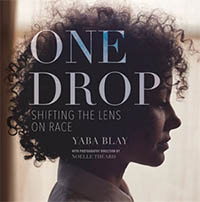
    The ripple effects from the truth bomb of Oprah Winfrey’s interview with Meghan Markle and Prince Harry will take a while to settle. During their two-hour talk, the royal couple revealed the royal family’s concern with how dark the skin of their child, Archie, would be when he was born. Also, Archie will not be granted a title or protection. Put two and two together, and the reason is clear. Racism is a hell of a drug, isn’t it? Not even Markle’s perceived proximity to whiteness, granted to her as a biracial woman, can protect her son. We may live in the woke times of the twenty-first century, but the royal family’s “concern” is a fear is as old as the slave trade their ancestors took part in. As Yaba Blay writes in One Drop: Shifting the Lens on Race, it’s a historical fear, steeped in colonialism, over preserving the purity of whiteness and the superiority ascribed to it.

    ***

    The US Census reveals much about the country’s perspective on race. It counts people according to how the nation defines people, and historically, those people counted as Black have been those people with any known Black ancestry. Blacks are defined by the one-drop rule. No other racial or ethnic group is defined in this way, nor does any other nation rely upon this formula; the one-drop rule is definitively Black and characteristically American. It should make sense then that the origins of the rule are directly linked to the history of Black people in the United States, and as such, our discussion of the one-drop rule begins during the period of colonial enslavement.

    Within the context of colonial enslavement, Blackness—prototypical and phenotypical African features such as dark skin, a broad nose, tightly coiled hair—were the undeniable markers of inferiority. These features served to immediately communicate one’s position within the social power structure, and in the context of enslavement, whether one was free or enslaved.

    If you were White, you were free; if you were Black, you were enslaved. Simple.

    However, this seemingly simple social order soon became complicated by the rampant increase in amalgamation—the mixing of the races. The lines between White and Black, free and enslaved, became more and more blurred. Even though the mixing was extensive and extremely common, from the beginning it was always discouraged. For example, in 1630, only eleven years after the first enslaved Africans arrived in Virginia, “colonist Hugh Davis was sentenced to be soundly whipped ‘before an assembly of negroes and others for abusing himself to the dishonor of God and shame of Christianity by defiling his body in lying with a negro.’” Any White person, male or female, suspected of interracial sexual contact was publicly punished.

    Racial mixing posed a number of potential problems. At a time when Blacks far outnumbered Whites, Whites were afraid of losing control over the enslaved population. But what really lay beneath their physical fears were their psychological ones. In order to maintain White supremacy, Whiteness had to remain “pure.” White anxieties about racial mixture were rooted in eugenics and scientific racism, both supposing that the White race was the superior race, that physical and mental traits were tied to heredity, and that racial mixing thus not only lowered human quality but further threatened the survival of the White race. Within this framework, Blackness was considered a contaminant, one poisonous enough to taint and further cripple an entire gene pool. The one-drop rule would be critical not only in the defense of the White race but in the concentration of White power.

    Given the shamelessly disproportionate amount of power and privilege assigned to Whiteness, the lines between who counted as White and who did not had to be unquestionably clear. Maintaining a firm color line would require the institution of what would later be called “anti-miscegenation laws”—laws that defined marriage (and sometimes sex) between the races as criminal. Because Blacks were already enslaved, in reality these laws reflected an attempt to police the behavior of Whites:

    In many of the colonies . . . interracial marriage was formally prohibited; those who engaged in interracial fornication paid a double fine; those who intermarried were banished; those who performed marriages for mixed couples were punished; Whites who engaged in interracial marriages were enslaved; offspring of such marriages followed the slave status of the mother if the mother were Black and were enslaved anyway if the mother were White.

    The idea that children born to enslaved mothers would take the status of the mother reflected a significant break with traditional English common law that held that children take the status of the father. However, as we will continue to see, laws changed frequently to maintain White supremacy. Essentially, if a White man were to impregnate a Black woman, the law took him off the hook; he did not have to support or even claim that child. At best, if the mother of the child was his property, he gained not a child but additional property and another source of labor and income. Thus, the law inadvertently sanctioned the sexual abuse of enslaved women. In fact, on some plantations, a select number of enslaved women were reserved specifically for breeding with White men since Mixed-race “slaves” brought higher prices at the market. Defining White-descended children born to enslaved Black women as “slaves” suited the need to control the population, increasing the number of exploited laborers while limiting the number of free Blacks. By limiting who had access to privilege, particularly that of freedom, Whites were able to further concentrate White power.

    The punishment for White women who had consensual sex with Black men was much more severe than the penalties given to White men who raped Black women. The responsibility of maintaining the purity of the White race lay in the hands (and wombs) of its women, the literal bearers of the next generation. White women who had children by Black men were not only disgraces to their race but to their nation. Many were banished from the colony; many others were themselves enslaved. Conveniently, traditional English common law was upheld in these cases, and Black-descended children born to White women took the status of their Black fathers. In both cases, racially mixed persons would be assigned to the status of the lower group, thus the term “hypodescent”—“hypo” meaning under, defective, or inadequate. A White mother could give birth to a Black child, but a Black mother could never give birth to a White one.

    Obviously, White/Black sexual liaisons continued, and the Mixed-race population grew rapidly. The general term used during the antebellum period to describe people of mixed racial heritage was “Mulatto.” Taken from the Portuguese and Spanish term mulato meaning “young mule,” the term reflects not only the disdain with which the referents were held but the way in which race was conceptualized at the time. As we know, a mule is the offspring of a horse and a donkey—a hybrid of two different animals—and as hybrids, they are sterile. To refer to children born of interracial sexual relationships as “Mulattos” pointed to the conviction that Whites and Blacks were two distinct beings and the related belief that if they were to mix, their offspring would be sterile and thus useless. True, we know that those of mixed racial heritage were not at all sterile; but this process of naming reflected a projected value system more so than an actual truth. Again, what lay beneath their physical fears were their psychological ones.

    What would happen if one’s social status—free or enslaved—were no longer obvious based on physical appearance? What exactly were “Mulattos”? If there were only two racial categories, White and Black, which one did they belong to? By one colonial observation, Virginia was “swarming with Mulattos,” a situation that likely forced the state to quickly put laws into place to address the “problems” it posed. Virginia was the first state to outline a formulaic definition of race in its ban against interracial marriage. In 1705, it defined a “Negro” as the child, the grandchild, or great-grandchild of a “Negro” or anyone who was at a least one-eighth “Negro.” By this definition, “Mulattos” were Black. Other states soon followed. At different times up until the twentieth century, Indiana, Maryland, Missouri, Nebraska, North Carolina, North Dakota, and South Carolina all relied on a one-eighth rule, while Alabama, Arkansas, Georgia, Kentucky, Louisiana, Mississippi, Oklahoma, Tennessee, and Texas defined anyone with “any blood of the African race in their veins” as Black. While legally many Mixed-race individuals were considered White in many states at various points of time, socially most Whites regarded anyone with any Black ancestry as Black. The message was clear: No matter how White you may appear, if there is but one drop of Black blood in your lineage, you will be considered Black and treated accordingly.


    About the Author 

    Dr. Yaba Blay is a scholar-activist and cultural creative whose work centers the lived experiences of Black women and girls. She has launched viral campaigns including #PrettyPeriod and #ProfessionalBlackGirl and has appeared on CNN, BET, MSNBC, and NPR. Dr. Blay’s work has been featured in the New York TimesEbonyEssence, and The Root. A thought leader on Black racial identity, colorism, and beauty politics, she is a globally sought-after speaker and consultant. Connect with her online at yabablay.com.

  • By Alex Zamalin

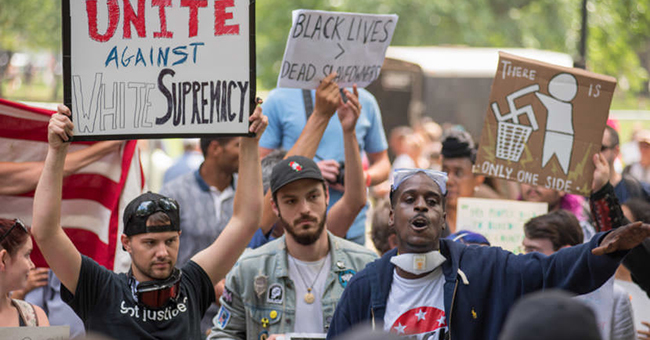
    Counterprotesters speak out against a “free speech” rally in Boston on Aug. 19, 2017.

    Counterprotesters speak out against a “free speech” rally in Boston on Aug. 19, 2017. Photo credit: Tim Carter

    Aaron Sorkin, screenwriter of the long-running television serial, The West Wing, prefers flair to substance. His characters talk fast and sound like civics teachers. But it’s not clear, beyond aspirational quotes, what they offer. The same is true in this acceptance speech. During his Golden Globes acceptance speech for writing the Netflix film, The Trial of the Chicago 7, Sorkin quoted one of the film’s character’s, Abbie Hoffman, saying, “‘Democracy is not something you believe in or a place to hang your hat. But it’s something you do. You participate. If you stop doing it, democracy crumbles.’ I don’t need any more evidence than what happened on Jan. 6 to agree with this.” He gets closer to an important truth than ever before, which, ironically, he fails to recognize.

    His statement about democratic vigilance is as right as his analysis of the January 6 riot is wrong. Yes, democracy requires struggle, constant stewardship from citizens. But January 6 is not a lapse in democracy. It’s a product of a long history of white supremacy that coexists alongside democracy. What needs to happen to achieve democracy is an end to white supremacy. Relatedly, as I argue in Against Civility: The Hidden Racism in Our Obsession with Civility, once you have true democracy, white supremacy is less likely to flourish.

    Based on Sorkin’s writing career, his vision of democratic participation is one where people debate both sides of an issue, listen and learn from one another, go out to vote every couple of years, and read newspapers to stay informed. But is a lack of these things what led to the January 6 riot? Definitely not. More people voted than ever before in 2020. During the Trump presidency, media outlets were bending over backwards to hear both sides. No, what happened on January 6 was a continuation of a long history in which many white people feel like democracy belongs to them.

    So the way you prevent January 6 from ever happening again isn’t through more civics classes, but a reimagination of democracy in which racism is excised and full socioeconomic equality achieved for people of color. What’s especially remarkable is that this idea is literally buried in Sorkin’s movie. Sorkin pays little attention to the antiracist democratic vision of one of attendees at the trial, the Black revolutionary Bobby Seale, who, in 1966, cofounded the Black Panther Party for Self-Defense in Oakland, California. Seale was gagged in the courtroom and beaten by police during the trail, and he is silenced in Sorkin’s film. He’s never given full texture and is reduced to a peripheral character. But Seale wasn’t peripheral in Oakland. He, along with Huey Newton in the 1960s, not only denounced the deep link between racism and American democracy; he also organized a democratic experiment, which Sorkin might benefit from studying. The Panthers put into place free breakfast programs, provided affordable health, gave out loans, set up childcare centers, and free shoes to the poor. This is what democracy looks like in action. Not listening to both sides or voting but working to end racism and being part of grassroots community action that addresses socioeconomic inequality.

    If Sorkin had studied Bobby Seale, he would perhaps recognize that January 6 was not an embarrassing moment in which Americans took their eye of the ball. He would understand that, regretfully, it was a central part of how racism has coopted democracy. At the same time, if Sorkin were serious about democracy, he would know you can’t have full participation without ending socioeconomic inequality. As with much of his writing, Sorkin gets the feeling mostly right, but the interpretation wrong. Democracy requires vigilance. But what we need is not the democracy Sorkin has in mind.


    About the Author 

    Alex Zamalin is the director of the African American Studies Program and an assistant professor of political science at the University of Detroit Mercy. He is the author of numerous books, including, most recently,  Antiracism: An Introduction. His areas of expertise include African American political thought, American politics, and political theory. Zamalin’s essays and reviews have appeared in various edited book collections and in peer-reviewed journals such as New Political Science, Contemporary Political Theory, Political Theory, and Women’s Studies Quarterly.

  • By Jeanne Theoharis and Brandy Colbert

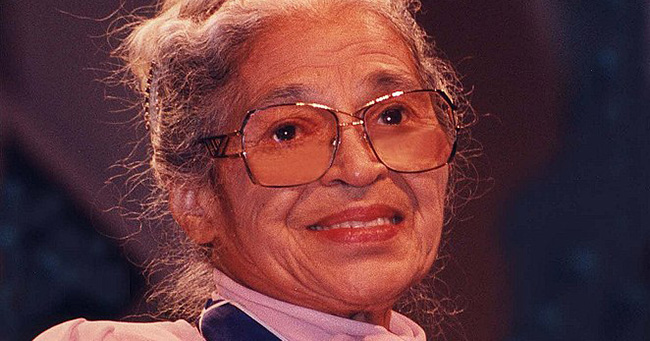
    Rosa Parks after receiving the Presidential Medal of Freedom from President Clinton, Washington, DC, 1996

    Rosa Parks after receiving the Presidential Medal of Freedom from President Clinton, Washington, DC, 1996. Photo credit: John Mathew Smith

    What you learned about Rosa Parks in school was a myth. Much of what is known and taught about her is incomplete, distorted, and just plain wrong. Because Rosa Parks was active for sixty years, in the North as well as the South, her story provides a broader and more accurate view of the Black freedom struggle across the twentieth century. Jeanne Theoharis and Brandy Colbert show young people how the national fable of Parks and the civil rights movement—celebrated in schools during Black History Month—has warped what we know about Parks and stripped away the power and substance of the movement. Their young-adult adaptation Theoharis’s The Rebellious Life of Mrs. Rosa Parks illustrates how the movement radically sought to expose and eradicate racism in jobs, housing, schools, and public services, as well as police brutality and the over-incarceration of Black people—and how Rosa Parks was a key player throughout.

    If you haven’t already read either version—and you should!—here are twelve things you didn’t know about Rosa Parks.

    ***

    One: Raised by her mother and grandparents to be proud, Parks’s determination began as a young person. When a white boy pushed her, she pushed back. His mother threatened to kill her, but Parks stood her ground, saying she did not want to be pushed. Another time, she confronted a white bully bothering her and her brother, holding up a brick and daring him to hit her. He went away.

    Two: Her husband Raymond was “the first real activist I ever met.” When she married him, Raymond was working to free the nine Scottsboro boys, and she joined these efforts. Raymond’s political outlook was crucial to her political development and their partnership sustained her political work over many decades.

    Three: She was a lifelong believer in self-defense and kept a gun in the house, including during the boycott, because of the daily terror of white violence.

    Four: She had been thrown off the bus a decade earlier by this same bus driver for refusing to pay in the front and go around to board in the back—and had various run-ins with other bus drivers because she refused to re-board after paying. Parks knew well the cost of bus resistance. A neighbor at Cleveland Courts had been killed. Fifteen-year-old Claudette Colvin was arrested in March 1955 for her refusal to move had been manhandled, and Parks had spearheaded efforts to raise money for the case.

    Five: She had been working with the NAACP for more than a decade, doing the dangerous work of trying to document white brutality and legal malfeasance against Black people. She had grown so discouraged with the lack of change that she told fellow activists at a Highlander Folk School workshop she attended the summer before her bus stand that there would never be change in Montgomery because people wouldn’t stick together, and white resistance was too fierce.

    Six: Parks had no belief that her arrest would galvanize a mass movement. She had been “pushed as far as she could be pushed.” She did not know if she would get off the bus alive” but still found her arrest “annoying” as it seemed, at the time, a distraction from the NAACP youth workshop she was planning for the weekend.

    Seven: Parks’s arrest had grave consequences for her family. She and her husband both lost their jobs. Even as she made appearances across the country, Parks and her family were at times nearly destitute. Her mother would stay on the phone for hours just to keep the line busy so death threats could not be called in. The Parks’s economic and health troubles lasted for a decade after her arrest. 

    Eight: Parks spent more than half of her life in the North, in Detroit—and lived for most of her time in Detroit in “the heart of the ghetto” (just a mile from the epicenter of the 1967 Detroit riot). She continued to organize and protest racial inequality in the North, “The promised land that wasn’t” she called it.

    Nine: In 1964, she volunteered for the long-shot campaign of John Conyers for a new congressional seat and helped secure his victory in the crowded primary by convincing Martin Luther King to come to Detroit on Conyers behalf. One of the first things Conyers did when he was elected was hire Rosa Parks to work in his Detroit office, where she worked until 1988. This was the first time in over twenty years of political work that she held a paid political position. Conyers’ office received all sorts of hate calls and letters for hiring Parks.

    Ten: Her personal hero was Malcolm X.

    Eleven: Parks worked alongside the Black Power movement, particularly around issues such as reparations, Black history, anti-police brutality, freedom for Black political prisoners, independent Black political power, economic justice, and an end to the war in Vietnam. She attended the Black Political Convention in Gary, IN, and the Black Power conference in Philadelphia, PA. She journeyed to Lowndes County, AL, to support the movement there, spoke at the Poor People’s Campaign, helped organize support committees on behalf of Black political prisoners, such as the Wilmington 10 and Imari Obadele of the RNA, and paid a visit of support to the Black Panther school in Oakland, CA.

    Twelve: She was an internationalist. An early opponent of the war in Vietnam in the early 1960s, she was a member of WILPF and supporter of Winter Soldier hearings in Detroit and the Jeannette Rankin Brigade protest in DC. In the 1980s, she protested apartheid and US complicity, joining a picket outside the South African embassy and opposed US policy in Central America. Eight days after 9/11, she joined other activists in a letter, calling for justice and saying this means working with the international community and no retaliation or war.


    About the Authors 

    Jeanne Theoharis is Distinguished Professor of Political Science at Brooklyn College of City University of New York and the author or coauthor of numerous books and articles on the civil rights and Black Power movements and the contemporary politics of race in the US. Her books include The Rebellious Life of Mrs. Rosa Parks (winner of a 2014 NAACP Image Award) and A More Beautiful and Terrible History (winner of the 2018 Brooklyn Public Library Literary Prize for Nonfiction). Connect with her on Twitter (@JeanneTheoharis).

    Brandy Colbert is the award-winning author of several books for children and teens, including The Only Black Girls in TownThe Voting Booth, and the Stonewall Book Award winner Little & Lion. She is the cowriter of Misty Copeland’s Life in Motion young readers’ edition. Her books have been chosen as Junior Library Guild selections and have appeared on many best-of lists, including the American Library Association’s Best Fiction for Young Adults. She is on faculty at Hamline University’s MFA program in writing for children and lives in Los Angeles.

  • By Helene Atwan

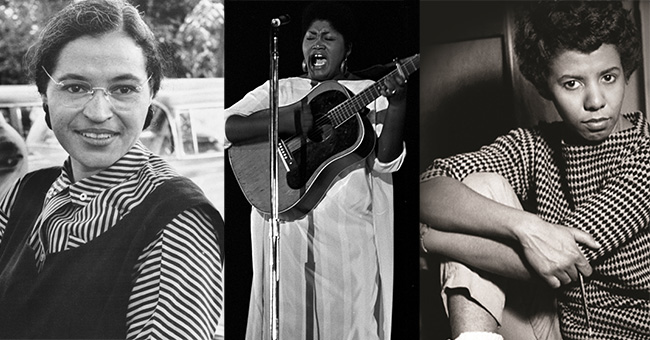
    Rosa Parks and Odetta and Lorraine Hansberry

    Rosa Park, Odetta, and Lorraine Hansberry

    When Beacon was founded, in the mid-1850s, two burning issues of the day were abolition and women’s suffrage. Here, as we transition from Black History into Women’s History Month, I’m feeling so proud of our lasting tradition of publishing biographies that celebrate Black lives and women’s stories, and often both.

    Decades ago, about the time I came to Beacon, we published Marian Wright Edelman’s memoir of her mentors (and it was among the press’s best-selling books of the time), and more recently we have published biographies of Black women who have made an indelible contribution to our history, including, of course, the NAACP Image Award–winning The Rebellious Life of Mrs. Rosa Parks by Jeanne Theoharis (also a best-selling book for Beacon, and just last month we published the YA adaptation of that book, coauthored by Jeanne and celebrated writer Brandy Colbert). These books put Mrs. Parks not just at the front of the bus but at the front of a movement that she very much helped to plan and lead. They correct the false image of an unwitting heroine who needed a rest and restore Parks to her actual role as an intentional and lifelong activist for civil rights.

    The work of Black women as leaders in activism goes far deeper in our history, as recent films about Harriet Tubman and Madame C. J. Walker attest. But these women need no fictionalizing. In Keisha Blain’s powerful Until I Am Free, we will have a new book that tells the story of Fannie Lou Hamer, the youngest of twenty children, the granddaughter of enslaved people, a woman who worked as a sharecropper before dedicating herself to activism; and just out is a biography of Dorothy Pitman Hughes, With Her Fist Raised, Laura Lovett’s groundbreaking account of this pivotal figure in Black feminism and community organizing. The powerful work and witness of these women is baked into American culture and deserves to be better known. Like so many of the important books recently written by Black women activists, a good number of those published by Beacon, these stories correct the white supremacist version of history we’ve been fed for centuries.

    We’ve also published in just the last half decade several important biographies of extremely influential Black women in the arts who are not as well-known as they deserve to be: Gayle Wald’s Shout, Sister, Shout!, the story of the life and times of Sister Rosetta Tharpe, often acknowledged to be the first gospel superstar, a book that led me to discover Sister Rosetta’s unique music, much as Ian Zack’s Odetta, an intimate portrait of a woman who was known as “The Voice of the Civil Rights Movement,” led me to hours of riveting listening. Angela Jackson’s acclaimed biography of poet Gwendolyn Brooks, A Surprised Queenhood in the New Black Sun, introduces us to one of the great American literary icons of the twentieth century, a protégé of Langston Hughes and a mentor to a generation of poets, including our own Sonia Sanchez. I hadn’t read enough of Brooks’s work or understood her role, her very real importance in our culture, until Jackson’s book. And until Imani Perry’s multiple award-winning biography of playwright and essayist Lorraine Hansberry, Looking for Lorraine, I mostly knew only A Raisin in the Sun and failed to appreciate the ways Hansberry used her prominence to challenge President Kennedy and his brother, the attorney general, to take bolder stances on civil rights, for example, or in supporting African anticolonial leaders and confronting the more subtle racism of the new generation of white writers. These books will help reshape our understanding of the lasting influence of Black women in the arts.

    Just a few months ago, Beacon’s associate publisher and editorial director, Gayatri Patnaik, was awarded BIO’s prestigious 2020 Editorial Excellence Award. Most of the books I’ve mentioned above were acquired and edited by Gayatri; she deserves our gratitude.

    Finally, on a personal note, I feel deeply honored, over the course of my career, to have had the opportunity to work with Black women whose influence on me has been profound. In the days before I came to Beacon, I was lucky enough to get to know Jamaica Kincaid, Edwidge Danticat, and Charlayne Hunter-Gault, among other brilliant Black women. Since I became director here, now over twenty-five years ago, I’ve been fortunate to have had the chance to meet and interact with some of the writers mentioned here, along with some whose work I personally edited and whose friendship I count as one of the great joys of my life. So thank you to Amy Alexander, Elaine Brown, Dominique Christina, Carol Fulp, Lani Guinier, Anita Hill, Gayl Jones, Deborah Plummer, and Sonia Sanchez.  


    About the Author 

    Helene Atwan has been the director of Beacon Press since 1995.

  • By Julian Bond

    The Freedom Choir, featuring high school students in Selma in 1964, was just one example of the important role music played throughout the movement.

    The Freedom Choir, featuring high school students in Selma in 1964, was just one example of the important role music played throughout the movement. Photo credit: Danny Lyon

    I entered the archive at the University of Virginia unsure what I might find. Looking through the Julian Bond Papers, over 130 boxes of materials, I was asked to find his lectures for the class he taught on the Southern Civil Rights Movement. With the aid of several research librarians, I eventually found those lectures, which Jeanne Theoharis and Pam Horowitz edited into the book, Julian Bond’s Time to Teach: A History of the Southern Civil Rights Movement. One unexpected surprise, and one that we could not fit into the book, was his lesson on the music of the movement. He ended his classes with this lecture, perhaps as a way to celebrate, but also as a way to inspire and to move his students to go out and change the world.

    Music served many purposes for the movement. There was great resolve activists gained from singing together. Martin Luther King Jr. wrote:

    “I have stood in a meeting with hundreds of youngsters and joined in while they sang ‘Ain’t Gonna Let Nobody Turn Me ‘Round.’ It is not just a song; it is a resolve. A few minutes later, I have seen those same youngsters refuse to turn around from the onrush of a police dog, refuse to turn around before a pugnacious Bull Connor in command of men armed with power hoses. These songs bind us together, help us march together.”

    Here we see that music can give a group of activists courage and a sense of togetherness to move forward into action. Music can take people from the realm of ideas into the realm of action. In this realm of action, those resisting are able to transform spaces of oppression into spaces of resistance. Movement singing was largely based on congregational singing, which is not rehearsed but learned in the moment, and is flexible and can respond instantly to the needs of an assembled group. A song-leader raises a song, receives a response from the congregation, and, in turn, the song leader responds. This style was a natural fit for the work being done by civil rights activists. Fannie Lou Hamer provides a clear example of this congregational style here, in her singing of Woke up this Morning. You can here the way the room responds and the dynamic give and take of a group speaking to each other.

    Local people in the civil rights movement created a space in their struggles, using music to gain confidence, power, and a voice. In this process, they transformed the space around them; turning churches into spaces to organize; claiming jails as spaces for political speeches; and making armed police and vigilantes back down in realization that they could not control a movement that was showing their unity and power, all through song. In this lecture from Julian Bond, we get a lesson in how this happened through a variety of songs.

    You can listen to the entire album, from which Julian played selections for his class, by following this link for purchase of the album or individual songs. We have linked the songs in this article to video and audio freely available online.

    —Erik Wallenberg

    ***

    Movement Music
    by Julian Bond

    We are going to listen today to several Freedom Songs, all of them taken from a three-record set “Voices of the Civil Rights Movement: Black American Freedom Songs 1960–1966”—all of them should blow your mind. The set was compiled by Dr. Bernice Johnson Reagon, Director of the Smithsonian’s Program in Black American Culture. You will hear her voice on some of these songs and will remember her from the movement in Albany, Georgia. She is best known as the Founder and Director of the singing group Sweet Honey in the Rock. In the liner notes, she says the “music culture of the civil rights movement was shaped by its central participants: black, Southern, and steeped in oral tradition.

    These songs tell stories. They are protest songs and songs of rebellion. They issue challenges to the white opposition. They tie the movement’s experiences—a march, a boycott, a clash with white authority—to the tradition of the black church, and take from the tradition of black church songs, substituting words and names to create new songs, applying old songs with Biblical messages to the current movement.

    For example, the lines “Paul and Silas bound in jail, had no money for to go their bail” could easily refer to Biblical figures, or to jailed protestors in Albany, Birmingham, or Selma. The song “Let My People Go” might mean the children of Israel held in bondage; it might also mean jailed protestors anywhere in the early 1960s South.

    SNCC Field Secretary Charles Sherrod described in a field report how the music helped the movement when he wrote about the Albany Movement’s first mass meeting in November 1961:

    “The church was packed before eight o’clock. People were everywhere, in the aisles, sitting and standing in the choir stands, hanging over the railing of the balcony, sitting in trees outside the window . . . When the last speaker among the students, Bertha Gober, had finished, there was nothing left to say. Tears filled the eyes of hard, grown men who had seen with their own eyes merciless atrocities committed . . . And when we rose to sing ‘We Shall Overcome’ nobody could imagine what kept the church on four corners . . . I threw my head back and sang with my whole body.”

    There are many songs on these three records, and many other collections—on records and in songbooks—of movement music. Some of these songs should be familiar to you; others will be brand new. When they are familiar, you should feel free to lose your inhibitions and sing along, following the song’s leader. I have selected a few, loosely divided into two categories—first, songs created by movement songwriters for movement ensembles to express a feeling or sentiment or to sum up a movement, and then more traditional songs from church tradition that have been altered and adapted to become Freedom Songs.

    Bernice Reagan explained that process:

    “Charlie Jones looked at me and said ‘Bernice, sing a song,’ and I started ‘Over My Head, I see Trouble in the Air.’ By the time I got to where ‘trouble’ should be, I didn’t see any trouble, so I put ‘Freedom’ in there. That was the first time I had an awareness that these songs were mine and I could use them for what I wanted.”

    These songs serve many purposes. They help to rally community spirit. They help the community to say things in song they might not dare to say in conversation. Most of them are congregational, sung by everyone at the mass meeting. When everyone sings, everyone shares in the emotion, and everyone shares in the spirit expressed in the song. There were many movement ensembles or groups. Many communities had a favorite choir, drawn from a church, or a choir made up from several church choirs that moved from church to church as the sites of mass meetings moved.

    Each community also had song leaders. Each leader brought something different to each song. On occasion, a member of the ensemble or choir—or of the congregation or audience—can supersede the leader, suggesting a line, introducing the chorus, even beginning a new song. Typically, the leader serves both musical and organizational roles. He or she establishes which song is to be sung, and the rest join in. The leader must select the right song for the right moment and must infuse the group with the spirit to sing. The typical song follows a pattern imported from Africa, adapted to field or work songs during slavery and peonage, and existing today in church and popular music, and in the cadences of black and white ministers—call and response.

    Thus, in the spiritual, “the leader asks, “Have you got good religion?” and the congregation answers, “Certainly Lord.”

    Leader: “Have you got good religion?”

    Audience: “Certainly, Lord.”

    Leader: “Have you got good religion?”

    Audience: “Certainly, Lord.”

    Leader: “Have you got good religion?”

    Audience: “Certainly, Lord. Certainly, certainly, certainly, Lord.”

    With the change of a few words, this spiritual becomes a Freedom Song.

    Leader: “Do you want your freedom?”

    Audience: “Certainly, Lord.”


    The next songs are traditional songs from the standard hymnal and church repertoire that have been altered to become Freedom Songs, this one from the height of the Birmingham movement in 1963. It is based on the parable of the lost sheep.

    The singers are Carleton Reese and the Alabama Christian Movement Choir, and the song is a traditional gospel song with new words. As you listen, you’ll hear the leader, Carleton Reese, open with the call, “Oh Lord, I’m running,” and the choir will respond, “Lord I’m running, trying to make a hundred.” Later they will exchange places and the choir will issue the call, “35, 40, 45, 50,” and Reese will respond, “Won’t do, won’t do.” Then he’ll take over and he will issue the call “Let me tell you 91, 92,” and the choir will respond “Won’t do, won’t do.”


    Next is a song sung and recorded at a mass meeting in Greenwood, Mississippi, in the fall of 1961. Mrs. Fannie Lou Hamer leads what began as a traditional Christmas song, “Go Tell it on the Mountain,” which announces the birth of Christ.


    The next song, “This Little Light of Mine,” was recorded at a mass meeting in Selma in October 1963. The group is the Selma Youth Choir. The leader is fifteen-year-old Betty Mae Fikes—here, Betty Mae Fikes talks decades later about the role of signing in preparing for going to jail—who is one of the movement’s strongest singers. Fikes is going to use the names of local figures and people and places in these songs to make them relevant to a Selma audience. She will mention Governor Wallace, Alabama’s governor; Jim Clark, the Dallas County Sheriff; Judge Loomis, who has been a movement opponent; Mayor Heinz, Selma’s Mayor; Hudson and Farish High Schools, the segregated black and white schools in Selma; Mr. Anderson and Miss Moore, popular teachers at the black high school, Hudson High; and Pres’s Place and the Thirsty Bar, segregated after-school student hangouts in Selma.


    “If You Miss Me from the Back of the Bus” is a song written for the movement during the Freedom Rides. Here, Betty Fikes changes the usual words to fit the specificities of the Selma movement:

    “If you miss me from the back of the bus,

    and you can’t find me nowhere,

    come on up to the front of the bus,

    I’ll be sitting up there.”

    She inserts local names—George Wallace, Jim Clark, and others—to make points not easily made otherwise. Listen carefully and you will hear her say:

    “If you miss Jim Clark,

    and you can’t find him nowhere.

    Come on over to the graveyard,

    He’ll be lying over there.”

    Here is the Selma Youth Choir and fifteen-year-old Betty Mae Fikes.


    Next is a song whose title should be familiar to all of you. It is “I’m Gonna Sit at the Welcome Table”—this was the name of the course reader Julian assigned for his class—and is sung by Hollis Watkins. He is at a rally for striking coal miners in West Virginia and he takes this 1930s labor song, which had been transferred into a 1960s Civil Rights or Freedom Song, and makes it a union song again.


    Last is the movement anthem, “We Shall Overcome.” George Stoney has produced a marvelous documentary on this song, tracing its development from an old church song “I’ll Overcome Someday.” In 1945, members of the Food and Tobacco Workers Union in Charleston, South Carolina, adopted it for use during a strike and brought it with them to Highlander Folk School. Zilphia Horton used it at union meetings all over the South and taught it to Pete Seeger. Seeger and Horton added verses appropriate to labor, peace, and integration movements.

    In 1959, Guy Carawan was hired as Highlander’s Music Director. He sang it at SNCC’s organizational meeting on Easter Weekend, 1960. That was the first time I and other students had heard it. It quickly became the movement’s anthem. I saw Israeli and Palestinian women holding hands and singing it; it was sung as the Berlin Wall came down; I heard it sung in Tiananmen Square. In March [2006] in the great immigrant rights marches, it was sung in Jackson, Mississippi in Spanish. This version was recorded in Hattiesburg, Mississippi, at a mass meeting in 1964. Mrs. Hamer is the lead singer.


    Read part one of “Movement Music: The Final Lecture from Julian Bond’s Class on the Southern Civil Rights Movement.”


    About the Authors 

    Horace Julian Bond (1940-2015) was a leader in the civil rights movement, a politician, professor, writer, and activist. A founding member of the Student Nonviolent Coordinating Committee, he went on to serve as president of the Southern Poverty Law Center from 1971 to 1979. He served ten years in the Georgia House and six terms in the Georgia Senate. From 1998 to 2010, Bond was the board chairman of the NAACP. He taught at several universities, including the University of Virginia, where he spent twenty years as a professor in the history department. He is the author of A Time To Speak, A Time To Act.

    Erik Wallenberg is a PhD Candidate in History at CUNY Graduate Center where he studies environmental history and the Black freedom struggle. He researches and writes on the artistic expressions, the music and the theater, of social movements.

  • Black joy

    Black history isn’t just about the history-makers and big social movements. They begin as everyday people whose day-to-day experiences, inner Black life, and Black joy—this especially!—are just as much a part of Black history. Without daily life and joy, the picture narrows solely on struggle and trauma, and comes off as incomplete. We need it all.

    With this in mind, and February being the month it is, we are also sharing selections from our titles—veterans of the shelf, new, and soon-to-be new—that offer a richness of Black life you won’t find in encyclopedias or reference texts. And remember: Blackness is not a monolith.

    ***


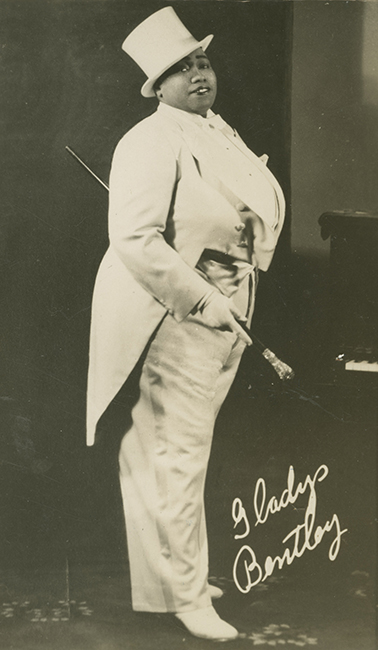
    Gladys Bentley

    Gladys Bentley, “America’s Greatest Sepia Player—The Brown Bomber of Sophisticated Songs, 1946-1949.”

    Gladys Bentley

    African American female performers took to stages in cramped bars and grand halls alike, scenes awash in cigarette smoke, thinned gin, and explicit sexual entanglements. In cabarets, Black women engaged the personal in the blues to talk about issues such as domestic violence and incarceration but also to give voice to the erotic. Songs like Ma Rainey’s “Black Eye Blues” told the tale of Miss Nancy, whose man beat her, cheated on her, and took all of her money. It also told of her efforts to fight back by warning, “You low down alligator, just watch me/Sooner or later gonna catch you with your britches down.” Gertrude “Ma” Rainey’s performances also brazenly flouted heterosexual norms. With songs such as her 1928 hit “Prove It on Me Blues,” she crooned, “I went out last night with a crowd of my friends/ They must’ve been women, ’cause I don’t like no men/Wear my clothes just like a fan/Talk to the gals just like any old man/’Cause they say I do it, ain’t nobody caught me/Sure got to prove it on me.” The lyrics and performances exploded respectable concepts of how to be Black women and men in the world, and it opened up a space for a variety of sexual identities to emerge.

    Black lesbians like Gladys Bentley donned tuxedos and played before raucous crowds eager to drink in Bentley and bathtub gin by the mouthfuls. Headlining clubs such as the Clam House, in top hat and coattails, Gladys in particular had a commanding presence that made her a top-selling artist in Jazz Age Harlem. As renowned poet Langston Hughes described: “Miss Bentley was an amazing exhibition of musical energy—a large, dark, masculine lady, whose feet pounded the floor while her fingers pounded the keyboard—a perfect piece of African sculpture, animated by her own rhythm.” Hughes beautifully captured the essence of Gladys, who made no secret of her intimate relationships with women.
    —Daina Ramey Berry and Kali Nicole Gross, A Black Women’s History of the United States


    G'Ra Asim

    G’Ra Asim. Photo credit: Selina Stoane

    Being a Black punk rocker is about maintaining a feat of punk rock inception. You are a punk among punks, a subversion of rules that themselves are subversions of yet other rules. At the same time, Black people and aestheticized irreverence are a more intuitive fit than is popularly acknowledged. I would be hard pressed to think of anything more definitional to Blackness than being subject to the chafing of oppressive norms.
    —G’Ra Asim, Boyz n the Void: a mixtape to my brother (forthcoming in May 2021)


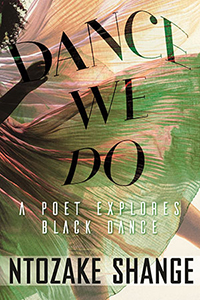
    Ntozake Shange with a cast of for colored girls

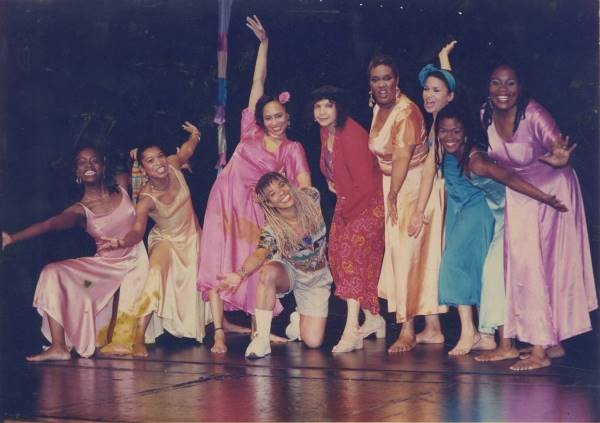
    Ntozake Shange with a cast of “for colored girls.” Photo source: Courtesy of the Ntozake Shange Revocable Trust & Barnard College Archives and Special Collections

    Our music, our dance, and our visual arts were considered natural gifts, not craft or a complicated rethinking of the possibilities of sound and the body, and I fell for it. It took me years to undo this horrible stereotyped construct. I’d seen Carmen de Lavallade in Amahl and the Night Visitors, and I knew I would never be capable of doing what she did—I wasn’t white enough. I’d see Katherine Dunham in old black-and-white movies, loved her solos, but I was ashamed of the ensemble pieces that drew from Haitian and Cuban influence. Too colored. Too sensual. Any Black person could shake that butt. So, after many years of this psychic and psychological trauma, the Black Arts Movement, as championed by Amiri Baraka and Larry Neal in the anthology Black Fire, gave me a new context; I was re-made.

    Not only were our so-called “natchel” talents art, but they were a gift to the world, a craft, and I believe that after realizing that, something was freed in me that has changed my life dramatically. I don’t even have a slave name. Paulette was afraid of her body, it could not fit, move lyrically, or get her knee to her nose in a chorus line. But when I went to the first Black Power Convention in Newark, New Jersey, in 1967, I saw authentic African, jazz, and modern dance in Black bodies of all shapes, colors, and skills, and I said with my whole being, “That’s what I want to do. I want to do that.” Surprisingly, the dancers invited the audience to join in, and my body knew joy in my heart. Since that time (which is before I started writing), I have searched out, studied, and worked professionally with an amazing collection of African American, African, Cuban, Brazilian, and Haitian groups. I threw myself into the world of jazz, tap, and modern dance as interpreted by Black sensibility. Those experiences, I swear to you, are among the most treasured moments of my life.
    —Ntozake Shange, Dance We Do: A Poet Explores Black Dance


    Rashod Ollison photo credit to Hyunsoo Leo Kim

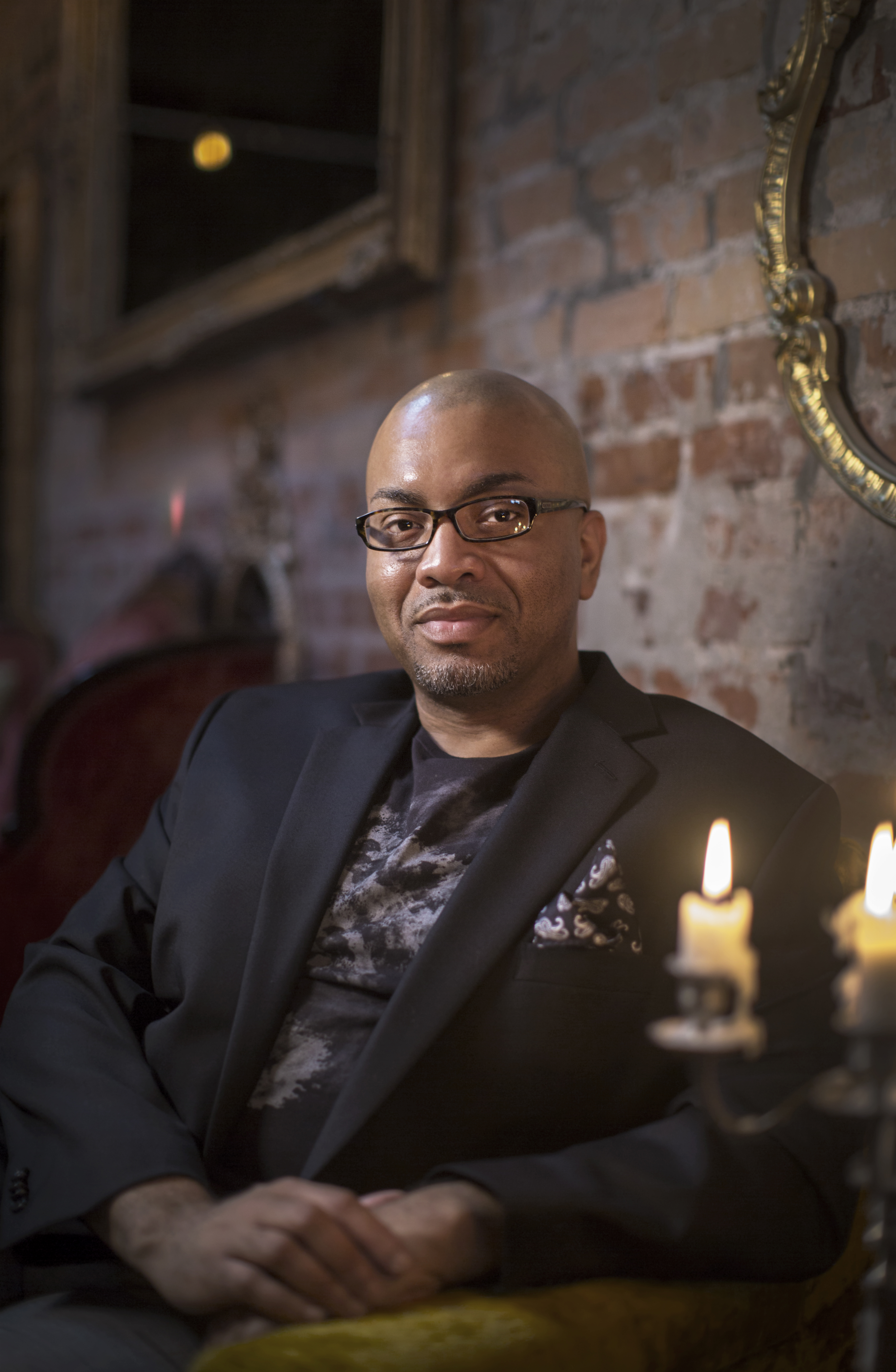
    Rashod Ollison. Author photo: Hyunsoo Leo Kim

    The historical figures I idolized, Martin Luther King Jr. and Malcolm X chief among them, embodied an idealized sense of strong black manhood, but they were straight. The love poems I absorbed in dog-eared black poetry anthologies were clearly written from a heterosexual point of view. This burning curiosity about other boys, I figured, would pass. Maybe it was because Daddy wasn’t around to help me through this phase. Maybe this longing to be affectionate and sexual with other boys was all about missing him. Whatever it was, I didn’t know what to do with it, and I told myself that the feelings would all fade away. The dashikis and clumsy Afrocentric rhetoric would disguise the desire, distract me from it, or maybe erase it altogether.
    —Rashod Ollison, Soul Serenade: Rhythm, Blues & Coming of Age Through Vinyl


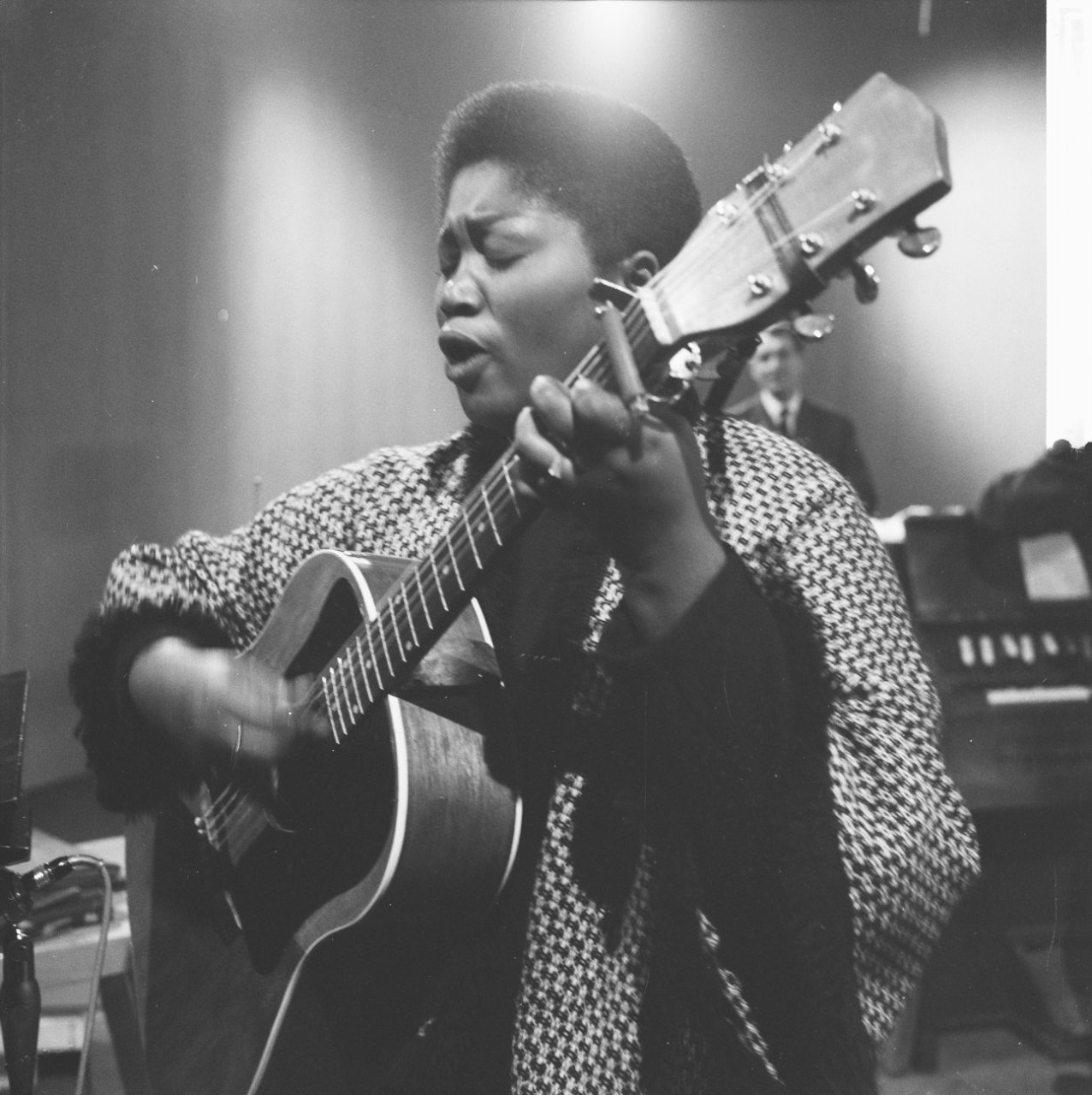
    Odetta performing in Amsterdam, December 1961. Courtesy of Dutch National Archives. Photo by Jac. de Nijs.

    Odetta performing in Amsterdam, December 1961. Courtesy of Dutch National Archives. Photo by Jac. de Nijs.

    Her soaring vocals and preternatural ability to inhabit the characters she sang about left her predominantly white audiences spellbound and a little more open to the notion that someone could be both wonderfully American and proudly Black at the same time.

    Odetta, in fact, gave them cause to celebrate Blackness. “She is more than an eloquent Negro voice,” one reviewer would note in the 1960s. “She is the eloquent voice of the Negro.” As Blacks demanded freedom at Southern lunch counters, at voter registrar offices, and on frontline protest marches before seething sheriffs’ deputies, many Northern whites were looking to embrace the nation’s better angels. The young woman with the trailblazing Afro, who sang about prisoners and chain gangs and talked about the Black history not being taught to schoolchildren, helped rouse a political consciousness among a searching and surging youth generation.

    For a brief but seminal period, Odetta was a star, selling out concerts in the US and around the world, appearing on TV and in films. Our cultural memory can be short-lived, but at the height of her fame, Odetta’s singing and magnetic stage presence exerted such a force over her acolytes that sometimes their knees went weak, they fainted in front of her, or they tried to steal her food in the hope that it contained some kind of magic elixir.
    —Ian Zack, Odetta: A Life in Music and Protest


    Joshua Bee Alafia. Photo credit: Noelle Théard

    Joshua Bee Alafia. Photo credit: Noelle Théard

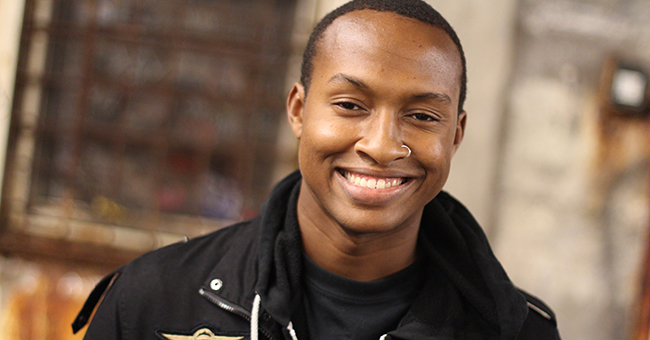
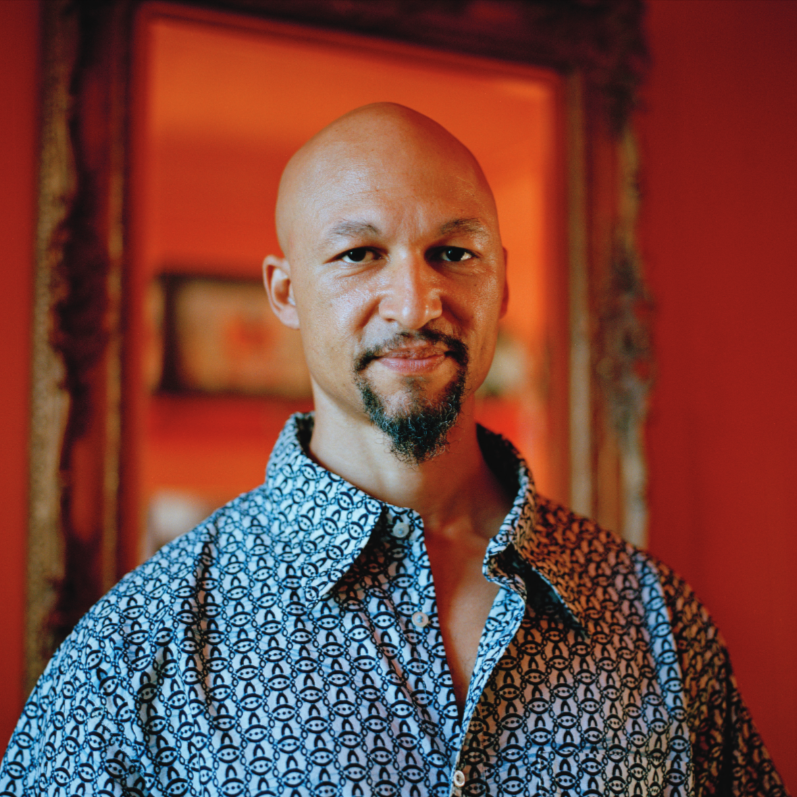
    Racially, I identify as Mixed because my father’s African American, my mother’s European American, and they both have Indigenous ancestry. Culturally, I identify as African American, because whereas the African American community is more of an open community that will claim me in being Mixed, the White community will never accept me as being White. So I wouldn’t even think of it. Never. Most people assume I’m Latino. Caribbean. They rarely think that I’m African American. I’ve been mistaken for Middle Eastern. Every once in a while people think I’m Black and Asian. In Cuba, they would call me Chino but they thought I was Cuban. Same thing in Brazil. Until I open my mouth, they just think I’m Brazilian. A lot of places are like that. But when I went to Tanzania, folks were breaking my heart thinking I was straight-up Italian. When I was in Ethiopia, I got ‘Are you half-caste?’ All the time. A couple times in Jamaica, I even got ‘White man.’ And that hurts. So, it depends on how people’s eyes perceive. You can feel like you’re Black as night on the inside but still be perceived as Other on the outside.
    —Joshua Bee Alafia, Brooklyn, NY, in Yaba Blay’s One Drop: Shifting the Lens on Race


    Angelina Griggs. Photo credit: Akintola Hanif

    Angelina Griggs. Photo credit: Akintola Hanif

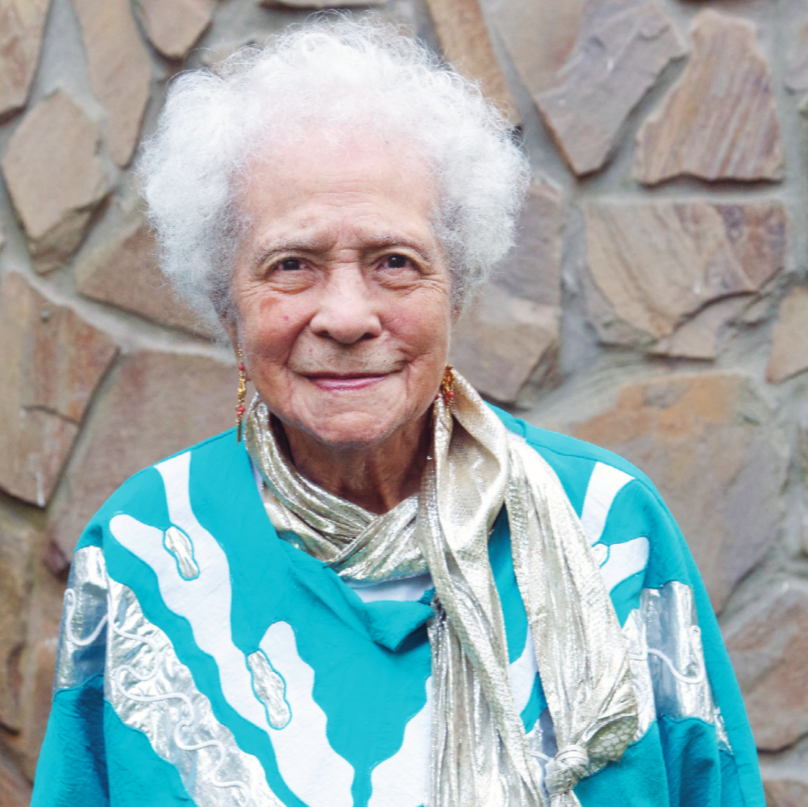
    My father’s father was White, and his mother was dark. My father’s father owned the sawmill. He never claimed my father as his son, but he did see to it that they were taken care of. My father never laid on us about no ‘yella’ or no light skin or no White or no passing or none of it. He told us we were Negroes. He would tell us about how the White people took advantage of his mother and how we needed to respect her. He said, ‘You see Mama? You see her color? If you disown that, you disown her.’ So, I never gave passing a thought. But my Uncle Felix passed. My father’s brother. He left Florida and went to Ohio because he wanted to pass. Uncle Felix worked for the railroad, and I remember he would come in the dark of night just to make sure we were OK. He’d always give us a little something, but he could never stay. They woulda killed him. When we left Apalachicola for New Jersey, Uncle Felix got our train tickets. We had to sit way in the back by the engine, me and my sister. Can you imagine? Coming all the way up through the South like that? But Uncle Felix worked for it, so we knew not to say, ‘Hi, Uncle Felix.’ We ain’t so much as look at him. But one way or the other he saw to it that we had food and something to drink. He saw to it that we could come up North to be with our parents. But once we got up North, we never saw Uncle Felix again.

    When I was in Florida, I went to public school. They treated me so bad my mother took me out and put me in the Catholic school. At that time, Colored people would say, ‘Black is honest,’ and ‘Yella is dishonest,’ and so they was hard on me. They used ‘yella’ a lot. They didn’t trust me, but they knew better than to mess with me, because I’d fight them.
    —Angelina Griggs (born in 1908), Fayetteville, GA, in Yaba Blay’s One Drop: Shifting the Lens on Race


    Sosena Solomon. Noelle Théard

    Sosena Solomon. Noelle Théard

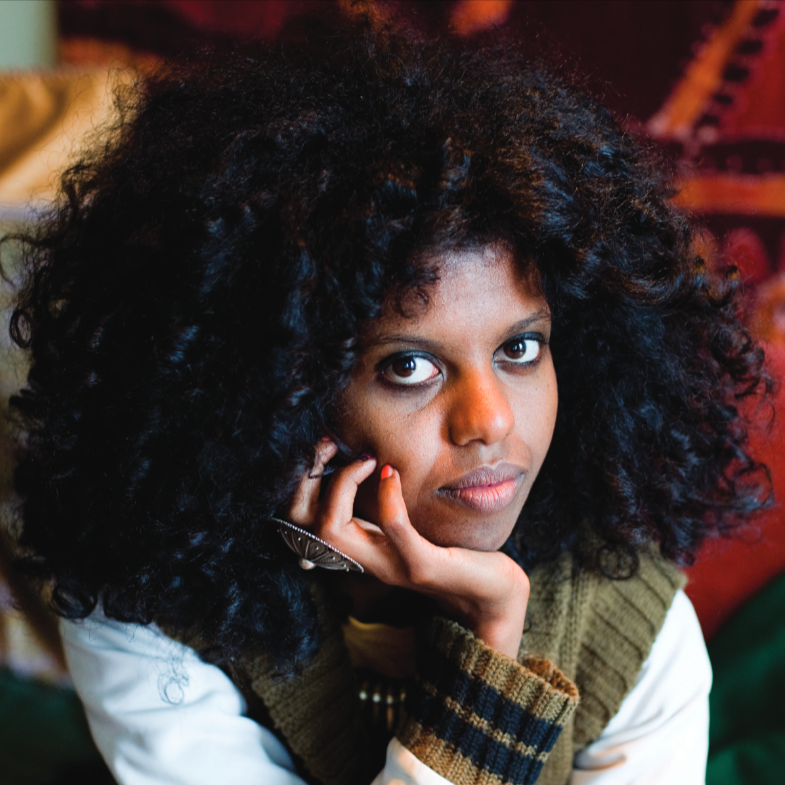
    In my experience, it’s been my hair that’s been more of an issue than my skin color. People totally change the way they treat me when my hair is different. When I wear my hair straight, people don’t look twice. I look normal, and I guess I’m safe. If my hair is straight, people think I’m Indian. Then it’s like this whole other situation with a whole other set of stereotypes. But if my hair is curly, it’s more risky. Then people are like, ‘Is she Black? She can’t be Black. Is she Jamaican? Oh, she has some mix of something. But she’s definitely got some Black.’ People always do that. But then people who understand Ethiopian features do call me out and say I’m Ethiopian. Most people are just very Black or White. ‘You’re Black. Period. You’re not White.’ And I hate to say it but it’s true—there’s some privilege in my hair. I’ve heard ‘You have good hair’ all my life. And I never really understood, like ‘What do you mean? I know a lot of people who have my hair.’ Especially when I was in Philly at temple, a lot of women were like, ‘You’re so lucky.’ Why does that make me lucky? Just because my hair is curly? I didn’t really get it because I think it’s all beautiful. Straight, curly, natural, permed.
    —Sosena Solomon, Brooklyn, NY, in Yaba Blay’s One Drop: Shifting the Lens on Race


    Leah Vernon

    Leah Vernon. Photo credit: Velvet d’Amour for http://www.volup2.com.

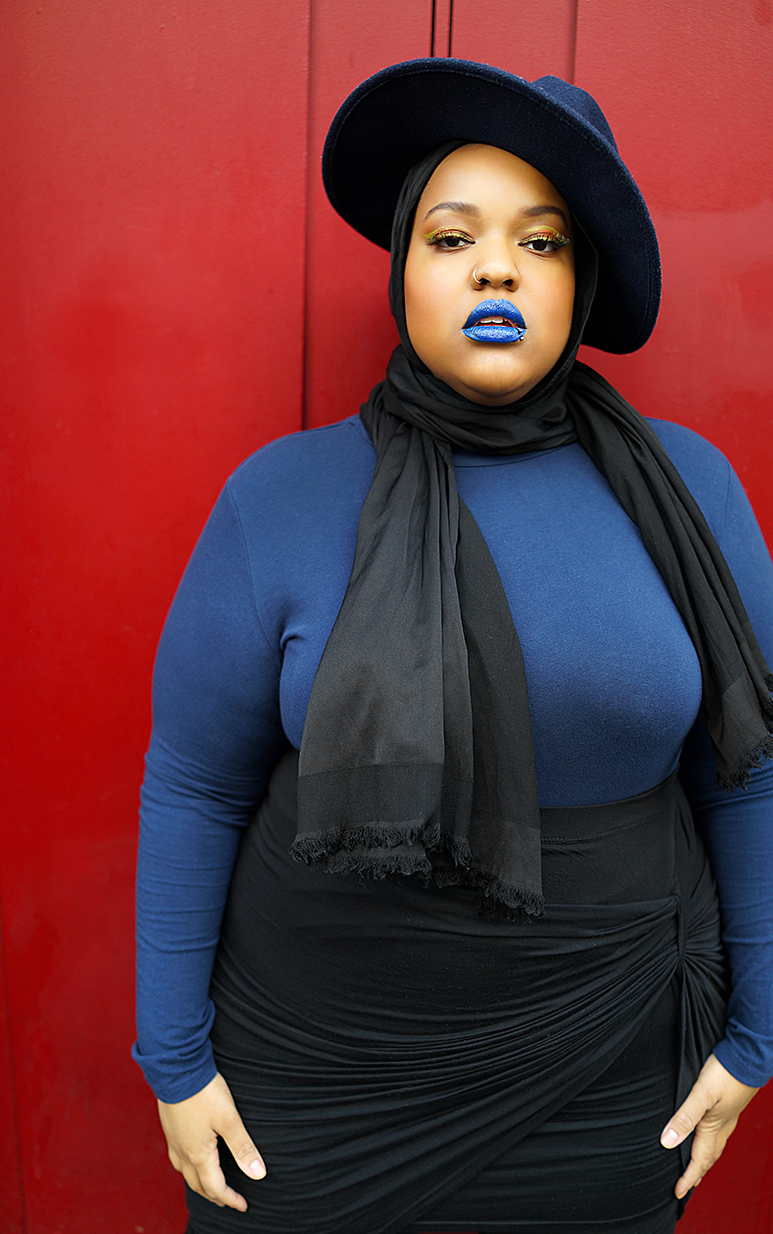
    I couldn’t help but think that somehow I had scammed them into believing I was worthy enough to model for them, that they’d find out that I was fatter than my photos showed, and that they’d toss me off the set as soon as I walked through the door. I was a small-time model from Detroit without an agent. I mean, I had modeled in Paris and LA, but those were smaller gigs that I had set up myself. Oh, and I had modeled for Adidas Originals, too, but I could barely fit into their stuff. New York was intimidating. They’d expect me to be on the entire time. What if my IBS acted up and ruined the whole shoot? What if I died on the way there and they’d be like, “Ugh, I knew her fat ass would so die on the way here. Such a typical fattie.” And worse, what if I couldn’t fit into any of their wardrobe?

    The team and I emailed back and forth about what I could and couldn’t wear due to being a covered Muslimah. Then we got into sizing. The agency gave me the stylist’s Instagram, so I could see who’d I be working with. The head stylist was that typical tan, privileged, and thin white girl with even whiter teeth and soft brown tresses with honey blonde highlights. She’s possibly never seen cellulite in her life. She’d probably vomit seeing mine. I’d been on a set before, and I’d have to be naked during fittings and outfit changes. I knew the drill. Beads of sweat rolled down my neck as I anticipated the judgment.

    I sent in my size and measurements. She replied: “Great. Do me a favor and just bring in some of your fave outfits.”
    —Leah Vernon, Unashamed: Musings of a Fat, Black Muslim

    Black joy

  • By Julian Bond

    Julian Bond

    Julian Bond. Photo credit: Eduardo Montes-Bradley

    I entered the archive at the University of Virginia unsure what I might find. Looking through the Julian Bond Papers, over 130 boxes of materials, I was asked to find his lectures for the class he taught on the Southern Civil Rights Movement. With the aid of several research librarians, I eventually found those lectures, which Jeanne Theoharis and Pam Horowitz edited into the book, Julian Bond’s Time to Teach: A History of the Southern Civil Rights Movement. One unexpected surprise, and one that we could not fit into the book, was his lesson on the music of the movement. He ended his classes with this lecture, perhaps as a way to celebrate, but also as a way to inspire and to move his students to go out and change the world.

    Music served many purposes for the movement. There was great resolve activists gained from singing together. Martin Luther King Jr. wrote:

    “I have stood in a meeting with hundreds of youngsters and joined in while they sang ‘Ain’t Gonna Let Nobody Turn Me ‘Round.’ It is not just a song; it is a resolve. A few minutes later, I have seen those same youngsters refuse to turn around from the onrush of a police dog, refuse to turn around before a pugnacious Bull Connor in command of men armed with power hoses. These songs bind us together, help us march together.”

    Here we see that music can give a group of activists courage and a sense of togetherness to move forward into action. Music can take people from the realm of ideas into the realm of action. In this realm of action, those resisting are able to transform spaces of oppression into spaces of resistance. Movement singing was largely based on congregational singing, which is not rehearsed but learned in the moment, and is flexible and can respond instantly to the needs of an assembled group. A song-leader raises a song, receives a response from the congregation, and, in turn, the song leader responds. This style was a natural fit for the work being done by civil rights activists. Fannie Lou Hamer provides a clear example of this congregational style here, in her singing of Woke up this Morning. You can here the way the room responds and the dynamic give and take of a group speaking to each other.

    Local people in the civil rights movement created a space in their struggles, using music to gain confidence, power, and a voice. In this process, they transformed the space around them; turning churches into spaces to organize; claiming jails as spaces for political speeches; and making armed police and vigilantes back down in realization that they could not control a movement that was showing their unity and power, all through song. In this lecture from Julian Bond, we get a lesson in how this happened through a variety of songs.

    You can listen to the entire album, from which Julian played selections for his class, by following this link for purchase of the album or individual songs. We have linked the songs in this article to video and audio freely available online.

    —Erik Wallenberg

    ***

    Movement Music
    by Julian Bond

    We are going to listen today to several Freedom Songs, all of them taken from a three-record set “Voices of the Civil Rights Movement: Black American Freedom Songs 1960–1966”—all of them should blow your mind. The set was compiled by Dr. Bernice Johnson Reagon, Director of the Smithsonian’s Program in Black American Culture. You will hear her voice on some of these songs and will remember her from the movement in Albany, Georgia. She is best known as the Founder and Director of the singing group Sweet Honey in the Rock. In the liner notes, she says the “music culture of the civil rights movement was shaped by its central participants: black, Southern, and steeped in oral tradition.

    These songs tell stories. They are protest songs and songs of rebellion. They issue challenges to the white opposition. They tie the movement’s experiences—a march, a boycott, a clash with white authority—to the tradition of the black church, and take from the tradition of black church songs, substituting words and names to create new songs, applying old songs with Biblical messages to the current movement.

    For example, the lines “Paul and Silas bound in jail, had no money for to go their bail” could easily refer to Biblical figures, or to jailed protestors in Albany, Birmingham, or Selma. The song “Let My People Go” might mean the children of Israel held in bondage; it might also mean jailed protestors anywhere in the early 1960s South.

    SNCC Field Secretary Charles Sherrod described in a field report how the music helped the movement when he wrote about the Albany Movement’s first mass meeting in November 1961:

    “The church was packed before eight o’clock. People were everywhere, in the aisles, sitting and standing in the choir stands, hanging over the railing of the balcony, sitting in trees outside the window . . . When the last speaker among the students, Bertha Gober, had finished, there was nothing left to say. Tears filled the eyes of hard, grown men who had seen with their own eyes merciless atrocities committed . . . And when we rose to sing ‘We Shall Overcome’ nobody could imagine what kept the church on four corners . . . I threw my head back and sang with my whole body.”

    There are many songs on these three records, and many other collections—on records and in songbooks—of movement music. Some of these songs should be familiar to you; others will be brand new. When they are familiar, you should feel free to lose your inhibitions and sing along, following the song’s leader. I have selected a few, loosely divided into two categories—first, songs created by movement songwriters for movement ensembles to express a feeling or sentiment or to sum up a movement, and then more traditional songs from church tradition that have been altered and adapted to become Freedom Songs.

    Bernice Reagan explained that process:

    “Charlie Jones looked at me and said ‘Bernice, sing a song,’ and I started ‘Over My Head, I see Trouble in the Air.’ By the time I got to where ‘trouble’ should be, I didn’t see any trouble, so I put ‘Freedom’ in there. That was the first time I had an awareness that these songs were mine and I could use them for what I wanted.”

    These songs serve many purposes. They help to rally community spirit. They help the community to say things in song they might not dare to say in conversation. Most of them are congregational, sung by everyone at the mass meeting. When everyone sings, everyone shares in the emotion, and everyone shares in the spirit expressed in the song. There were many movement ensembles or groups. Many communities had a favorite choir, drawn from a church, or a choir made up from several church choirs that moved from church to church as the sites of mass meetings moved.

    Each community also had song leaders. Each leader brought something different to each song. On occasion, a member of the ensemble or choir—or of the congregation or audience—can supersede the leader, suggesting a line, introducing the chorus, even beginning a new song. Typically, the leader serves both musical and organizational roles. He or she establishes which song is to be sung, and the rest join in. The leader must select the right song for the right moment and must infuse the group with the spirit to sing. The typical song follows a pattern imported from Africa, adapted to field or work songs during slavery and peonage, and existing today in church and popular music, and in the cadences of black and white ministers—call and response.

    Thus, in the spiritual, the leader asks, “Have you got good religion?” and the congregation answers, “Certainly Lord.”

    Leader: “Have you got good religion?”

    Audience: “Certainly, Lord.”

    Leader: “Have you got good religion?”

    Audience: “Certainly, Lord.”

    Leader: “Have you got good religion?”

    Audience: “Certainly, Lord. Certainly, certainly, certainly, Lord.”

    With the change of a few words, this spiritual becomes a Freedom Song.

    Leader: “Do you want your freedom?”

    Audience: “Certainly, Lord.”


    The first three songs are sung by one of the movement’s premier ensembles, the SNCC Freedom Singers.

    First is a song “Dog, Dog,” written in Parchman Penitentiary in 1961 by Freedom Riders James Bevel and Bernard Lafayette. It reflects the early 1960s optimism of the movement that racial barriers would be broken down and blacks and whites would one day be together. It owes its inspiration to the rhythm and blues music of the period.

    James Bevel explained how it was written.

    “I lived next door to a man and he had a lot of children and so did my dad but we weren’t allowed to play together because they were white. But we had two dogs. He had a dog and we had a dog. And our dogs would always play together, so we wrote this song . . .”

    This is SNCC’s Freedom Singers—Rutha Harris, Bernice Reagan, Bertha Gober, Chico and Charles Neblett—each of them a SNCC Field Secretary with experience working in the field. Cordell Reagan, who came to Albany in 1961 with Charles Sherrod, is the lead singer.


    The next song was also written in jail, this time by Bertha Gober and Janie Culbreath, both students at Albany State College arrested for trying to integrate the bus station. This song is based on the spiritual “Oh Mary, Oh Martha.” By substituting some words, they have changed it into a Freedom Song. The song is “Oh Pritchett, Oh Kelley;” Pritchett is the Albany Chief of Police and Kelley is the Mayor. This song follows the call and response pattern:

    Leader: “Oh Pritchett.”

    Response: “Oh, Kelley.”

    Leader: “Oh, Pritchett.”

    Response: “Open them cells.”

    The Freedom Singers are singing; Bertha Gober sings the lead.


    Like many others, this next song borrows from the popular culture, in this case, rhythm and blues music. This song was written by James Orange, an SCLC (Southern Christian Leadership Conference) organizer. It is called “Governor Wallace” and is aimed at the segregationist governor of Alabama.

    The Freedom Singers sing; Charles Neblett is the lead singer.


    Read part two of “Movement Music: The Final Lecture from Julian Bond’s Class on the Southern Civil Rights Movement.”


    About the Authors 

    Horace Julian Bond (1940-2015) was a leader in the civil rights movement, a politician, professor, writer, and activist. A founding member of the Student Nonviolent Coordinating Committee, he went on to serve as president of the Southern Poverty Law Center from 1971 to 1979. He served ten years in the Georgia House and six terms in the Georgia Senate. From 1998 to 2010, Bond was the board chairman of the NAACP. He taught at several universities, including the University of Virginia, where he spent twenty years as a professor in the history department. He is the author of A Time To Speak, A Time To Act.

    Erik Wallenberg is a PhD Candidate in History at CUNY Graduate Center where he studies environmental history and the Black freedom struggle. He researches and writes on the artistic expressions, the music and the theater, of social movements.

  • By Daniel S. Lucks

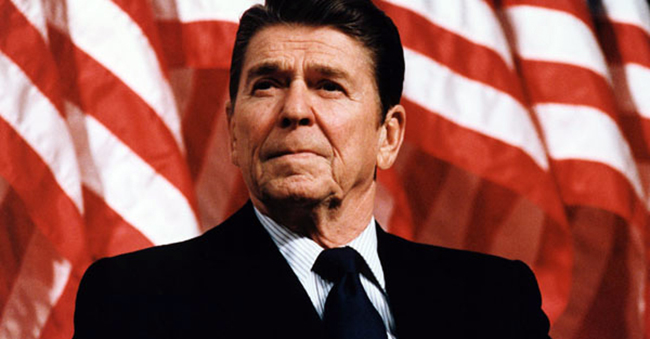
    President Reagan speaking at a rally for Senator Durenberger By Michael Evans, February 8, 1982

    President Reagan speaking at a rally for Senator Durenberger By Michael Evans, February 8, 1982. Photo credit: Courtesy of Ronald Reagan Library, National Archives and Records Administration

    The ease with which Donald Trump took over Ronald Reagan’s Republican Party is one of the most significant political developments of the Trump era. For many Americans, this is surprising because the Gipper was a sunny and avuncular figure, and his projection of America as a “shining city on a hill” is the antithesis of the Trump’s polarizing dystopian view of “American carnage.” 

    In The Reagans, journalist and documentary filmmaker Matt Tyrnauer’s four-part Showtime docuseries, challenges the narrative of Reagan as an American icon by revealing a dark side to Ronald and Nancy Reagan’s glamorous veneer. According to Tyrnauer, Reagan’s triumph marked an inflection point where America took the wrong turn and prioritized greed and selfishness, demonized government, eviscerated labor unions, and destroyed the social compact that created widespread middle-class prosperity in the post-war era. Though the now ex-President Trump is never mentioned in the nearly four hours of archival footage and commentary from a variety of historians, journalists, and a gallery of Reagan-era luminaries, Tyrnauer implies that Reagan’s political rise from Hollywood B actor to President of the United States laid the groundwork for the former reality star Donald Trump’s capture of the Presidency.

    The Reagans is organized chronologically as well as thematically. The first episode narrates Reagan’s political odyssey from youthful allegiant of Franklin Roosevelt’s New Deal liberalism to his transformation to staunch conservative and corporate pitchman for General Electric. Tyrnauer’s treatment of Reagan’s role as an FBI informant in Hollywood, where he enforced the Hollywood blacklist as President of the Screen Actors Guild, will be news to many viewers.   Reagan’s background in Hollywood was pivotal in his facility in crafting an image of himself as an American hero based on a mythical America that never existed.

    The second episode focuses on Reagan’s political rise from B Actor to Governor of California and explores his deft use of racially-coded dog whistles like “law and order,” “states’ rights,” and “welfare queens,” in appealing to white middle-class voters anxious over the racial and cultural dislocations of the 1960s. The final two episodes are a searing indictment of Reagan’s presidency. The third focuses on his quest to dismantle government programs for the needy while increasing the power of the wealthy through his tax cuts, ushering in our current Second Gilded Age. The final episode details some of the troubling episodes of Reagan’s final years, like the Iran-Contra scandal and his callous disregard of the AIDS epidemic. Most interestingly, Tyrnauer interviews Ronald Reagan, Jr., who believed his father exhibited symptoms of dementia during his Presidency. A main thesis of The Reagans is the central and indispensable role of the First Lady Nancy Reagan, an avid cultivator of the wealthy and powerful, and her reliance on an astrologer to determine Reagan’s schedule.

    While much of the docuseries covers familiar ground, Part II, “The Right Turn,” traces Reagan’s early political career, backed by a powerful consortium of California millionaires, which is not as well known to the American public. Tyrnauer provides a great service by exposing the extent to which racism factored into Reagan’s political rise to Governor of California, and then the Presidency. As far back as the mid-1960s, Reagan aggressively appealed to white working-class Democrats by stoking their anxieties over the pace of the civil rights movement, which reached a crescendo after the explosive 1965 Watts riots. Capitalizing on fears that the ghetto and mayhem would spread to their communities, Reagan announced his bid for Governor in January 1966, claiming he wanted to protect Californians from the city streets that are “jungles” after dark, and crisscrossed the state excoriating California’s Fair Housing Act as an infringement on property rights. In 1976, Reagan campaigned for the Presidency, repeating the fanciful tale of a Cadillac-driving welfare queen chiseling off the hard work of white taxpayers. While Reagan never resorted to the overt racism of a George Wallace, his racially-coded dog whistles on “law and order,” “states’ rights,” and “welfare queens” resonated with white Americans.

    The Reagans is a compelling, revisionist examination of the defining figure of the modern conservative movement who has been treated far too well by history. Tyrnauer succeeds in puncturing the myth of Reagan that a network of conservative activists and intellectuals fashioned in the years following Reagan’s exit from the political stage, and in apotheosizing Reagan as an American icon deserving of a coveted space on Mount Rushmore. The docuseries is a good companion to Reconsidering Reagan: Racism, Republicans and the Road to Trump, finalist for the 2021 Prose Award, in which I, too, indict Reagan and the conservative movement’s racist politics and policies and argue that Reagan’s white supremacist policies laid the groundwork for Trump. Both demonstrate Reagan’s genius in packaging his racism in a façade of fatherly love. 

    Tyrnauer’s docuseries and Reconsidering Reagan are visceral reminders that Reagan was a media-savvy celebrity like Trump who deployed racism and convinced millions of middle-class whites to vote against their self-interest. Moving forward, it’s imperative that the conservative movement expunge the scourge of Trumpism, but they also need to reckon with the dark side of Reagan’s legacy. 


    About the Author 

    Daniel S. Lucks holds a PhD in American history from the University of California, Berkeley and is the author of Selma to Saigon: The Civil Rights Movement and the Vietnam War and Reconsidering Reagan: Racism, Republicans, and the Road to Trump. He is a graduate of the University of California Hastings College of the Law and lives in Los Angeles.

  • By Jonathan Rosenblum
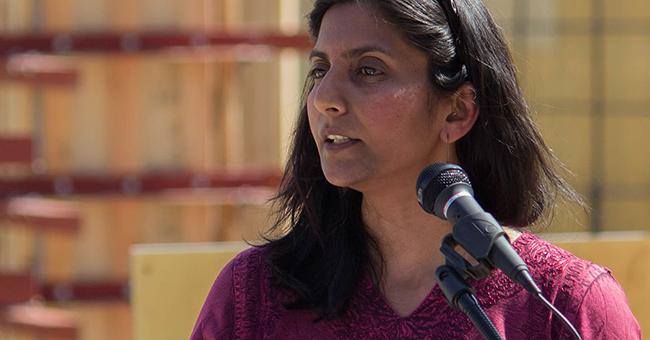
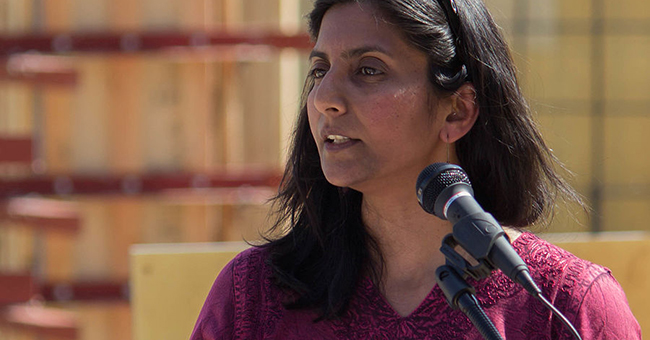
    Kshama Sawant celebrating the groundbreaking of University Commons, a Low Income Housing Institute project, which will house homeless youth and low income workers.

    Kshama Sawant celebrating the groundbreaking of University Commons, a Low Income Housing Institute project, which will house homeless youth and low income workers. Photo credit: Seattle City Council

    This article appeared originally in The Nation.

    Last year’s dreadful miasma of Covid, recession, police violence, and coup attempt obscured some remarkable advances by local and national left-wing movements. Florida voters, while rejecting the Biden/Harris ticket, overwhelmingly approved a $15 minimum wage. Arizona and Oregon approved tax increases on the wealthy to fund public education. Colorado passed paid family leave. Portland, Me., voters approved rent control. All six representatives in historically swing districts who supported Medicare for All won reelection. Ninety-two of the 93 House Democrats—including all four in swing districts—who ran in November as Green New Deal sponsors won reelection. At least 20 candidates endorsed by Democratic Socialists of America (DSA) won office. In a year of historic uprisings against police brutality and economic inequality, support for socialism rose, especially among younger people.

    These developments were not welcomed by establishment Democrats, who sought to blame their own poor showings in congressional races on the progressive movement. “‘Defund the police’ is killing our party, and we’ve got to stop it,” declared House majority whip Jim Clyburn (D-S.C.) a week after the election. “Don’t say socialism ever again,” Representative Abigail Spanberger (D-Va.) said, as votes were still being tallied in early November. While fending off Trump’s attempted coup from the right, Joe Biden and leading Democrats spent a considerable amount of energy before and after the election attacking socialized medicine, the Green New Deal, and the movement to defund bloated police budgets.

    That blowback represents a broad effort by leading Democrats, nationally and locally, to steer political discourse away from more radical demands and foist on the citizenry their vision of “a return to normal”—a kinder, gentler neoliberal Gilded Age without the daily White House tweet tantrums.

    As 2021 gets underway, ground zero for this sharpening struggle will be in Seattle, where an alliance of establishment Democrats, real estate interests, and Trump backers is coming together to try to recall socialist City Council member Kshama Sawant, who initially won office in 2013, and was reelected in 2015 and 2019. The recall advocates intend to fire a warning shot to socialists and radicals everywhere. The recall campaign has already raised a quarter of a million dollars, and is ramping up efforts to qualify for the ballot sometime in the spring or summer.

    In the last year, Sawant and her Socialist Alternative organization won a three-year battle to tax Amazon—headquartered in Seattle—and other big businesses to fund emergency Covid relief, affordable housing construction, and local Green New Deal projects. And in the midst of nationwide street protests following the Minneapolis police murder of George Floyd, Sawant led organizing to win a first-in-the-nation ban on police use of tear gas, pepper spray, rubber bullets, and other so-called “crowd control” weapons. (Full disclosure: I’ve known and worked with Sawant since 2013 on issue and electoral campaigns, and currently work in her City Council office as a community organizer.)

    These victories met a swift response from the political establishment. Democratic Mayor Jenny Durkan—elected in 2017 with help from a record $350,000 donation from Amazon—aligned with the Trump Justice Department in challenging Sawant’s weapons ban legislation in court.

    The mayor also demanded that the City Council investigate and consider expelling Sawant from office for her leadership in the Tax Amazon campaign and her participation in Black Lives Matter protests. The council demurred, but Durkan’s bill of charges got picked up by pro-business forces and converted into a recall petition against Sawant.

    The petition is now before the Washington state Supreme Court, which is expected to green-light it in the coming weeks. That will trigger a six-month period for recall advocates to collect 10,700 signatures from Sawant’s central Seattle district—one-quarter of the number of voters in the 2019 election—in order to qualify the recall for the ballot.

    The petition levels four charges at Sawant, only one of which needs to be approved by the court for the recall to proceed. Two of the charges are aimed at the Black Lives Matter movement in addition to the council member: They charge that Sawant misused her City Council position to invite hundreds of protesters (with masks on) into City Hall for a people’s assembly at the height of the Justice for George Floyd protests, and that she revealed the mayor’s confidential home address by speaking at a protest outside the mayor’s mansion that had been organized by DSA and the families of police violence victims. A third charge claims Sawant illegally used City resources to campaign for the Amazon tax. The fourth charge alleges that Sawant broke City hiring rules when she involved Socialist Alternative in making hiring decisions.

    Washington state’s recall law is powerful protection for a political ruling class seeking to weed out radical threats. Over the years state courts have exercised wide discretion in gatekeeping recall petitions. Lawyers on both sides of the Sawant recall fight say they expect the Supreme Court to approve at least one of the charges, and yet last fall the same court tossed out a petition against Mayor Durkan for overseeing the repeated, brutal police violence of last summer against hundreds of Black Lives Matter protesters.

    To approve a recall effort, state courts merely have to conclude that recall petition charges, if true, would constitute malfeasance or a violation of an official’s oath of office. But the court is expressly barred from considering “the truth of the charges.” So, for instance, even though Sawant has stated she had no idea where the mayor lived, her mere participation in the protest outside the mansion is being used as the basis for one of the charges. Additionally, in today’s Citizens United world, independent committees can pour unlimited funds into supporting the recall effort.

    ~~~

    Sawant is one of dozens of socialists who have been elected to office in recent years, but removing her would represent an especially valuable trophy for the business elite. She has never melded into the culture of closed-door political dealmaking, instead focusing on building movements outside City Hall to define, shape, and advance legislative demands. After upsetting a four-term City Council incumbent in 2013, Sawant and allied forces pushed through $15-an-hour minimum wage legislation in the spring of 2014, making Seattle the first major city to achieve the iconic base wage.

    Hoping that 2013 was a fluke, big business spent hundreds of thousands in 2015 to defeat Sawant, an immigrant and a rank-and-file teachers union member. But they fell short as renters, students, and union members turned out in huge numbers, mobilized by hundreds of volunteer door-knockers. Following the 2015 election, Sawant led successful campaigns to cap rental move-in fees, bar rent increases at substandard apartments, and win tens of millions of dollars for affordable housing and social services. Sawant and the movement also won signature organizing battles outside City Hall, organizing tenants to beat back rent increases in public and private housing, and supporting workers organizing into unions and fighting for contracts.

    The legislative fights, especially, put the Democratic political establishment on its back heels. Sawant and Socialist Alternative routinely mobilized hundreds of activists—students, low-wage workers, people experiencing homelessness, union members, young people of color, among others—to pack City Hall chambers. Organizing out of her City Council office, Sawant hosted town hall meetings, led marches demanding city action, and sponsored petitions and mass letter-writing campaigns to elected officials. Sawant legislative initiatives that began with scant support among other council members—like blocking construction of a new militarized police station in 2016—ended up getting adopted by City Council after these sustained public demonstrations.

    In 2017, the local Chamber of Commerce was determined to push back against the influence of socialist politics, and it recruited Jenny Durkan to run for mayor. A former US prosecutor and close confidante to pro-business Democratic powerhouses like former governor Chris Gregoire, Durkan was trusted by the board of trade to bring political order to City Hall. At its most basic level, Durkan’s candidacy was a bid by business and the political establishment to convince liberal Seattle voters to abandon Sawant’s left-wing activism and return to a more centrist political discourse that they could control.

    Boosted by nearly $900,000 in mostly corporate-dependent expenditures, including Amazon’s record donation, Durkan handily beat a crowded candidate field to win the mayor’s office. The following year, in 2018, Sawant and housing activists pushed through a modest tax on Amazon and other top corporations, but, with Durkan’s encouragement, the local Chamber of Commerce launched a scorched-earth political counterattack that reversed the tax within weeks.

    Later the same year, Mayor Durkan negotiated and pushed for City Council approval of a new police contract that rolled back key police accountability measures. Two dozen civil and immigrant rights groups protested, but got steamrolled by the combined forces of the new mayor, local labor council leaders, the police, and businesses. On the council, only Sawant voted no, with the eight other members—all Democrats—approving the contract.

    For Durkan and her political base, the police contract experience stimulated hope that they could defeat Sawant and the popular movement. The local chamber president, Marilyn Strickland, declared that 2019 would be “a change election” in Seattle. She vowed to replace local officeholders with pro-business candidates, starting with unseating Sawant. The anti-Sawant coalition drew in conservative building trades union leaders and others who could claim to be past supporters of the socialist put off by her recent tactics. To fund the anti-Sawant campaign, Strickland’s group led the effort to amass $4.1 million in corporate cash for the City Council elections—including a staggering $1.45 million from Amazon—swamping council races that previously saw candidates win with one-20th that amount of money.

    The gambit backfired, however, as Sawant’s campaign—with support from other candidates and progressive union forces—successfully turned the 2019 election into a referendum on Amazon and corporate power. Five of the seven business-aligned office seekers went down in defeat.

    In early 2020, Sawant, her Socialist Alternative organization, and renter groups seized the election momentum to win a first-in-the-nation ban on winter evictions, and to launch a renewed Tax Amazon demand.

    The arrival of the pandemic shifted the terrain for the reemergent tax movement by making grassroots political tactics like door-knocking and tabling initially off-limits. Yet the economic crisis for working people underscored the dire need to fund services, and rampant profiteering by Amazon and other big businesses made it hard for most pro-business politicians to defend continued corporate tax immunity.

    Notably, also, the Black Lives Matter uprising bolstered the tax fight. Street protesters and local clergy drew the connection between police violence and the brutal gentrification and economic displacement that have shrunk Seattle’s core Black community by three-quarters in recent decades. “If Black Lives Matter, then affordable housing for Black families in the Central District should matter,” the Rev. Carey Anderson, senior pastor at Seattle’s First African Methodist Episcopal Church, told media at a pro-Amazon-Tax press conference organized with Sawant and other faith leaders.

    Sawant and Tax Amazon volunteers collected more than 30,000 signatures—many from the street protests—threatening to put the tax measure on the ballot if the City Council failed to act. The Tax Amazon call became a prominent demand at Black Lives Matter protests.

    Mayor Durkan openly fought the Amazon Tax, at one point derisively telling a TV reporter, “Yeah, that never is going to happen, and I think it’s irresponsible for anyone to say that that’s even possible.”

    But in July—two weeks after winning the police weapons ban legislation—Sawant and the movement proved the mayor wrong, as the City Council adopted a tax on big business that was more than four times the size of the repealed 2018 measure. A late amendment introduced by Sawant dedicates a portion of the tax every year to building affordable housing in the historically Black Central District, a significant tangible victory for the Black Lives Matter movement.

    “Victories like these are why the ruling class wants a do-over, not only of my [2019] reelection, but also of all these victories for the working class and oppressed communities,” Sawant said.

    ~~~

    As for Durkan, the mayor’s fortunes tumbled in the wake of the Tax Amazon win and the summer’s Black Lives Matter street protests. Joining with millions around the country, tens of thousands of Seattle community members turned out to protest racist police violence, including eight killings by Seattle police on Mayor Durkan’s watch. Durkan initially issued public declarations of solidarity with the movement, but then staunchly defended multiple brutal police crackdowns on protesters.

    Faith and community members assailed the mayor’s defense of police violence. Key organizations, including the local United Food and Commercial Workers Union, called for her resignation. The Seattle Human Rights Commission, along with the LGBTQ Commission, called on her to quit. Activists launched a recall petition against Durkan (which was quickly dismissed by the state Supreme Court). Politically tattered, Durkan announced in December that she would not stand for reelection in 2021, clearing the path for making the recall against Sawant the marquee political contest this year.

    The big corporate cash has yet to make an appearance against Sawant—independent expenditure mega-donations typically show up just before ballots drop. For now, the recall’s early donors reveal the contours of the emerging battle. They include billionaire property developer Martin Selig, a major Trump donor, along with senior executives from Goodman Real Estate, a huge apartment and commercial landlord with $2.5 billion in properties in the US and Canada; Broadmark Realty Capital; National Health Investors, a Tennessee-based real estate investment trust with control in 242 nursing homes and senior living centers around the US; Meridian Capital, a global investment banking firm based in Seattle; Merrill Lynch, and Noble House Hotels, a North American hotel and restaurant chain that in 2018 picked a huge fight with Seattle Unitehere members, whom Sawant actively supported. Notably, many of these executives, aside from Selig, have routinely donated to Democratic candidates like Joe Biden, according to the Center for Responsive Politics.

    Collecting the required signatures might be a challenge for a grassroots campaign, but it’s hardly impossible for a recall effort with limitless cash to spend on mailings and advertising, backed by the local Sinclair-owned TV station, right-wing talk radio, and a Seattle Times editorial board that rarely misses an opportunity to attack the socialist. Once the recall campaign turns in signatures and they are verified, election officials would schedule the recall 45 to 90 days out.

    Recall forces doubtless will continue to hammer away on their allegations that Sawant broke the law. They also are likely to try to split progressives in Sawant’s left-leaning district, by enlisting community leaders with liberal bona fides who will argue that Sawant is too confrontational and polarizing, and that the city needs elected officials who play “Seattle nice.”

    Sawant and her supporters readily admit they don’t plan to bend to that culture.

    “She doesn’t say, ‘Oh, well, you know, we have to all get along,’” said Kathy Yasi, a child care provider and vice president of SEIU 925. “Well, I don’t really want her to get along. I want her to say, ‘What the hell is happening? Why is this this way?’ And I can count on her to do that.”

    This past summer, as Black Lives Matter protests took off across the country, seven of Seattle’s nine City Council members publicly pledged to halve Seattle’s bloated $409 million police budget. But when the budget votes came this fall, only Sawant supported the 50 percent police cut. The other members agreed to trim about 8 percent from the police and pledge to do more at some point in the future, arguing that more community discussion and political deliberation were needed. Their disavowal matched other municipal retreats—most notably, in Minneapolis—from pledges to defund the police. At the same time, the Seattle council approved the mayor’s proposal to cut $200 million from affordable housing, bus hours, parks, and libraries.

    Sawant was unsparing in her public response, issuing a statement that “the budget that Democratic Party Councilmembers have approved today is a budget that deeply fails working people and marginalized communities, including working-class and poor communities of color.”

    Sawant and her allies will seek to galvanize the movement against the recall with their own set of broad demands on the city: increase the Amazon Tax to fund more Covid relief, a jobs program, and ramped-up local Green New Deal projects; cancel rents and mortgages for tenants and small businesses who’ve lost income during the pandemic; and establish a democratically elected community oversight board over the police, with subpoena, investigatory, and policy-setting powers.

    They also will enlist a range of political leaders and activists—socialists, independents, and progressive Democrats—who recognize the broader impact of the recall effort.

    “I don’t have to agree with everything that Kshama does to know that I am opposed to the recall,” said Democratic state Senator Rebecca Saldaña. “Kshama is a democratically elected woman who is doing work on behalf of her constituents…. Instead of spending money on the recall, businesses should focus on supporting economic recovery, our public health, addressing racial inequities, and creating a clean-fueled economy that recognizes the dire climate emergency.” Saldaña’s constituency overlaps with Sawant’s district.

    Seattle civil rights leader Larry Gossett, who recently retired after serving 25 years on the council, noted that the attack on Sawant is an attack on the broader progressive movement. “I know, as an activist organizing Black Student Unions, Third World coalitions, and unemployed Black workers beginning in the 1960s, that our opponents always try to undermine our movement and movement leaders, especially when they are effective,” he said. “That’s exactly what’s going on here.”


    About the Author 

    Jonathan Rosenblum works as a community organizer for Seattle City Councilmember Kshama Sawant. He is the author of Beyond $15: Immigrant Workers, Faith Activists, and the Revival of the Labor Movement (Beacon Press, 2017), and a member of the National Writers Union/UAW 1981. Find him online at https://jonathanrosenblum.org/ or Twitter: @jonathan4212.

  • Black man reading

    Is the coast clear? Any instances of blackface or diversity snafus on the horizon to mar Black History Month? Any of that nonsense to call out? Only last year and the year before did rashes of both spread in news headlines. But not this year. We’re conditioned to anticipate them like clockwork, but it’s a relief not to see them. Too soon to call it?

    Anyway, this year’s Black History Month is starting on a more auspicious note. Kamala Harris was sworn in as the first Black and South Asian woman vice president. The Reverend Raphael Warnock was elected as Georgia’s first Black senator. And Stacey Abrams was nominated for a Nobel Peace Prize. We can never get enough Black excellence and change! To celebrate, we’re sharing a list of selected Black history titles by our Black writers. These are books that uphold the excellence of the Black literary tradition, that document the many legacies of excellence and change, that can make change happen.


    Anarcha Speaks

    Anarcha Speaks: A History in Poems

    Anarcha
    you are a house
    of too many hands.
    how else do
    they build
    but by blood?
    by bone?
    —Dominique Christina


    A Black Women's History of the United States

    A Black Women’s History of the United States

    “To write a history about the United States from the perspective of Black women is to chart a course where the incredible, the fantastic, and the triumphant meet, mix, and mingle, often simultaneously, with hardship, and terror. Although it largely defies uniformity, African American women’s history is marked by the ways that we have marched forward, against all odds, to effect sustained change, individually, locally, and nationally.”
    —Daina Ramey Berry and Kali Nicole Gross


    Dance We Do

    Dance We Do: A Poet Explores Black Dance

    “There are so many Black dancers who have gone unnamed and unrecognized and hopefully we will meet some of them in this book. We are fleeting in our knowledge of who our dancers are, how hard they work, what it takes to keep a company together, what it takes to make a dance, and what it takes to make a dancer is unknown to us because we do not write it down. I have tried to capture some of this mystery, this rugged creativity that informs Black dance.”
    —Ntozake Shange


    The Heritage

    The Heritage: Black Athletes, a Divided America, and the Politics of Patriotism

    “The omnipresent racial and class divisions and creeping authoritarianism embedded within sporting events in post-9/11 America would collide with the most powerful black employees in the country recognizing their political power and showing a willingness to use it. Through the great unifier of sports, with the black players kneeling, the white players standing, the police heroes to one, center of protest to others, America would discover explosively and definitively just how severe its fractures truly were.”
    —Howard Bryant


    Looking for Lorraine

    Looking for Lorraine: The Radiant and Radical Life of Lorraine Hansberry

    “Ahead of her time, Lorraine’s witness and wisdom help us understand the world, its problems and its possibilities. In her lonely reckonings, her impassioned reaching for justice, and the seriousness of her craft, she teaches us how to more ethically, more lovingly, witness one another today.”
    —Imani Perry


    Kindred

    Kindred

    “You might be able to go through this whole experience as an observer . . . . I can understand that because most of the time, I’m still an observer. It’s protection. It’s nineteen seventy-six shielding and cushioning eighteen nineteen for me. But now and then . . . I can’t maintain the distance. I’m drawn all the way into eighteen nineteen, and I don’t know what to do.”
    —Octavia E. Butler


    Loving

    Loving: Interracial Intimacy in America and the Threat to White Supremacy

    “I believe that rising interracial intimacy, combined with immigration and demographic and generational change, will contribute to the rise of what I call the culturally dexterous class. From cross-racial marriage, adoption, and romance to the simple act of entering the home of someone of another race or ethnicity to have a meal, the dexterous cross different cultures daily and are forced to practice pluralism . . . . In this case, integrators are spreading the social epidemic or virus of cultural dexterity—an enhanced capacity for intimate connections with people outside one’s own tribe, for seeing and accepting difference rather than demanding assimilation to an unspoken norm of whiteness. For whites in particular, intimate contact reduces prejudice and anxiety about dealing with an out-group.”
    —Sheryll Cashin


    Notes of a Native Son

    Notes of a Native Son

    “Americans attempt until today to make an abstraction of the Negro, but the very nature of these abstractions reveals the tremendous effects the presence of the Negro has had on the American character.”
    —James Baldwin, from “Stranger in the Village”


    On the Courthouse Lawn

    On the Courthouse Lawn: Confronting the Legacy of Lynching in the Twenty-First Century

    “There is unfinished business in communities throughout this country, where the reality of lynching and racial pogroms has never been fully confronted, where the historical complicity of ordinary citizens in condoning racial terrorism continues to undermine the chance for trust and racial reconciliation, and where the participation of local institutions in upholding violent white supremacy continues to taint their legitimacy. I believe that communities can themselves take charge of the project of healing, reconciliation, and reparation.”
    —Sherrilyn A. Ifill


    One Drop

    One Drop: Shifting the Lens on Race

    “If we can recalibrate our lenses to see Blackness as a broader category of identity and experience, perhaps we will be able to see ourselves as part of a larger global community. As a professor of Africana Studies in the United States, I believe that it is becoming increasingly important for all people, not just people of African descent, to recognize the existence of a global Black community. In my experience teaching students about issues related to the African Diaspora, I find that they have a particular level of difficulty assigning the category and thus the identity of Blackness to people throughout the world, even when those people themselves identify as Black . . . . [T]here are Black people all over the world. We are not a minority—we comprise a global community.”
    —Yaba Blay


    The Social Life of DNA

    The Social Life of DNA: Race, Reparations, and Reconciliation After the Genome

    “Combating color-blind racism requires the restoration of color-vision—that is, the return to visibility of historic and continued racial inequalities. Genetic ancestry testing is being used to make this case. In this “post-racial,” post-genomic moment, therefore, DNA further offers the unique and somewhat paradoxical possibility of magnifying issues of inequality in order to bring them into view, both literally and figuratively. Social inequities may then be challenged using other strategies such as the courts and social movements.”
    —Alondra Nelson


    Where Do We Go From Here

    Where Do We Go From Here: Chaos or Community?

    “For its very survival’s sake, America must re-examine old presuppositions and release itself from many things that for centuries have been held sacred. For the evils of racism, poverty and militarism to die, a new set of values must be born. Our economy must become more person-centered than property- and profit-centered. Our government must depend more on its moral power than on its military power.”
    —Martin Luther King, Jr.

    Black man reading