• By Leigh Patel

    Before the Capitol siege

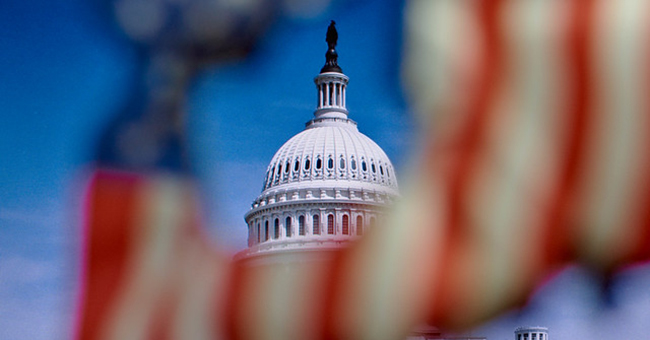
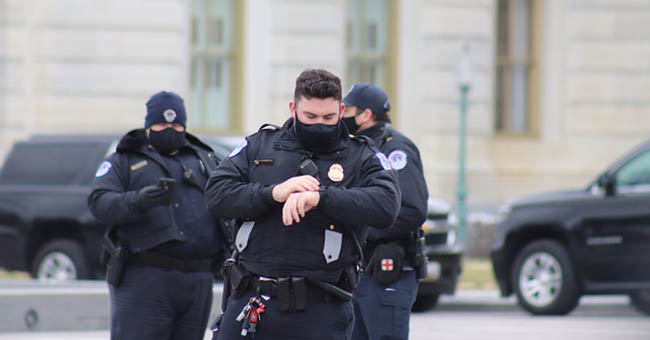
    Before the siege: US Capitol grounds, East Plaza off First Street and East Capitol Street, Washington, DC, on Wednesday afternoon, 6 January 2021. Photo credit: Elvert Barnes Photography

    Jim Clyburn, Congressional representative from South Carolina and the majority whip, has an office in the Congressional Chambers with his name title displayed clearly. However, Clyburn does not work out of that office, instead working from an unmarked one with this staff. On January 6, the day of the storming of the Capitol building, some of the domestic terrorists attempted to enter Clyburn’s office. His staff had piled furniture and were texting from inside. They were able to block the rioters from entering. Clyburn stated in an interview with NBC news, “My question is how did they know where that office was? There were [inside] people taking selfies with these insurrectionists.” Part of the unfolding of events prior to the insurrection contain the report that on January 5, some lawmakers provided a reconnaissance tour for some of the insurrectionists.

    As the nation moves past two weeks that included what many called a violent breach of ‘the peoples’ house,’ as well as the election of a career politician as the nation’s forty-sixth President, now is a good time to ask how some police officers, elected officials, and their college-educated aides came to play a role in fomenting the insurrection. Was this an aberration from their education or was it an outcropping of the education they received? The relationships between famous alumni are under a new light and are unveiling how deeply some lawmakers were complicit with the white supremacist attack on the US federal government.  

    Institutions of higher education tend to lift up the public accomplishments of their alumni. Alumni of public standing are promoted via school websites and even hold advising roles at their alma maters. For example, the University of California, Berkeley has reserved parking spaces for winners of the Nobel prize. Several people who were involved in the insurrection and claimed voter fraud have been identified, and the universities they attended are now reckoning with what to say and how to, in essence, distance themselves from these famous alumni.

    Universities are taking various actions to distance themselves from those caught in the video and records for having breached not just the Capitol but laws themselves. Republican congresswoman Elise Stefanik has been removed from a committee in Harvard’s Kennedy School for Politics. Sean Spicer, former press secretary in the Trump administration, had held a fellowship from the Kennedy School, but the school has not issued a statement about Spicer. In fact, the removal of alumni involved in manufactured voter fraud claims and supporting the insurrection, is unique. Most of the reaction from universities has been either silence or vague statements that condemn incitements. The University of Pennsylvania, whose alumni include Donald Trump, released a statement from the university’s president and provost, saying that they join “together with everyone who raises their voices and condemns threatening incitements and assaults on the political freedom of all citizens.”

    These statements have only cited recent events and not addressed two crucial facts. One, graduates from elite institutions of higher education have social networks that are often used to facilitate remaining in power and building wealth. They have earned degrees from institutions that have been built through the stolen labor of enslaved Black people, and in all likelihood, their college educations did not teach them that history, nor the long-standing freedom struggles that students have mobilized for de-centering whiteness in admissions, faculty ranks, and curriculum. Second, these statements say nothing about the thousands of peoples’ homes that are invaded regularly, by police officers and sanctioned by the law. Black medical worker Breonna Taylor was fatally shot seven times on March 13, 2020 in her bed, after police dressed in plainclothes used a no-knock entry. In 2019, Anjanette Young, a Black social worker in Chicago, was woken in the middle of the night as police with automatic rifles, again with a no-knock entry, searched her apartment. For almost one full minute, Young was naked, repeating that the police were in the wrong apartment. The police then left, turned off their video cameras, and turned them back to re-enter and apologize to Young. There is precious little that is unprecedented about the terrorism that occurred in the nation’s capital on January 6. As scholar Sabina Vaught put it, “If we are the people, then where we reside is also the people’s house” (personal communication, January 8, 2012).

    Elite universities are complicit when they mis-educate often well-monied students admitted through legacy policies into thinking that they are smarter and they must take up high positions—one would think—for the larger good. However, historian Craig Steven Wilder reminds us that the nation’s Ivy League schools were built through enslaved Black labor for the benefit of white men who attended those schools in the 1800s. Furthermore, Roxanne Dunbar Ortiz reminds us that the history of this nation, for Indigenous peoples, is nonstop invasion, destruction and erasure.

    Four centuries after the first ship arrived on the shores of what is now called Cape Cod carrying enslaved African people, Black hourly employees were the ones cleaning up the glass and debris that the white, mostly male, terrorists left in their wake. The past was entirely present in the completely precedented invasion of the Capitol.


    About the Author 

    Dr. Leigh Patel is an interdisciplinary researcher, educator, writer, and is Professor of Education at the University of Pittsburgh. She works extensively with societally marginalized youth and teacher activists. Patel is a recipient of the June Jordan Award for scholarly leadership and poetic bravery in social critique and is a national board member of Education for Liberation, a long-standing organization dedicated to transformative education for and by youth of color. She is the author of Youth Held at the Border, Decolonizing Educational Research, and the forthcoming No Study Without Struggle. Connect with her on Twitter at @lipatel.

  • By Marilyn Sewell

    Clouds

    Photo credit: Sara Olsen

    At last, it’s over! I mean the last four years of suffering from an abusive relationship—with our former president. Why am I not alive with energy, ready to get back to my writing? Wanting to Zoom with friends? Pushing ever harder with my climate activism? I find that I’m simply exhausted, needing to recover.

    The ethical and relational norms in our society have been breached, not just a few times, but almost every day for four years. Truth? Doesn’t exist. Decency? Don’t count on it. Integrity? So old fashioned. And so, for the duration of this time, I have felt upended, discombobulated—actually, crazy.

    One day, years ago, when I was a single mom raising two tween boys, I got a call at work from the older one, saying that when he and his brother got home from school, they noticed that the kitchen window was broken.

    “A big break?” I asked. “Big enough for someone to get in?”

    “Yes,” he answered.

    “Go to the library right now. Right now,” I said.

    I called the police and raced home, just a few blocks from where I worked. The squad car was already there when I arrived. Nothing of value was gone except my good camera, which had hung on the hall tree. But I’ll never forget the sense of violation I felt when I saw the muddy footprints planted on the blue carpet in the living room.

    For these last four years, that same shock of violation has messed with my psyche over and over again. At every new offense, each more egregious than the last, I have been newly incredulous: Did he really do that? I’ve felt bushwhacked emotionally, old fears laid bare. So, no, I’m not yet over the crazed mob’s invasion of the Capitol, the culmination of four years of incursions on human decency and decorum by the former president, four years of selfishness and neglect from one who should be our protector, our defender. I’m not.

    Sometimes frustrated voters are misled (remember Brexit?), but it’s heartbreaking to see scores of Republicans in Congress aiding and abetting a president who lied blatantly about all manner of things, who abused women with impunity, who made fun of disabled persons, who supported the Proud Boys and QAnon as “good persons.” Is anything holy? Is winning an election really a good trade for selling your soul?

    I have been affected not only emotionally, but physically: the irritated gut, the lost weight, the dry eyes, the sore throat, and hoarse voice. Stress, my doctors said, stress. Then came the slowly encroaching horror of the pandemic. Hundreds died, then thousands, then hundreds of thousands. Is all this death really happening? My Buddhist friend told me I’m too angry, that I should be a “non-anxious presence.” I told her she’s not in touch with reality. We’re both right.

    January 20 brought me palpable relief, as Joe Biden was inaugurated as the forty-sixth President of the United States in a joyous and inspirational ceremony that promised very different values guiding our nation’s future. But my healing will take more time. Age has given me the privilege of working when and where I choose. For now, I have retreated to my fireplace and my easy chair. I’m on vacation from angst and despair. Doing a puzzle. Laughing at silly jokes a friend persists in sending. The frown that puckered my brow is gone. I’m beginning to smile again.

    Just now, I’m waiting my turn for the vaccine. It’ll be a while, and that’s frustrating, but I can wait. As an elder, I do fear the virus, but I trust that our new president will do everything possible to protect us. Something like normality will come.

    Maybe I’ll be able to get back to the book I was writing—there has been too much static in my brain of late to tap into my creativity. Each evening for many long months, I have written in my journal. I record the date at the top of the page and the hour. This lets me know, oh, yes, another day has passed, and I know what it is. Then I mainly just reiterate what I’ve done during the day—remembering what I had for lunch is another way of being present. And lastly, I record the number of cases and the number of deaths in our nation and in our state, both an acknowledgment and an act of mourning.

    Today is Sunday. Yet another Sunday. This morning, I heard Rinpoche Yangsi, the founder of Maitripa, a Buddhist college here in Portland, talk about what it means to be a bodhisattva. I’ve got a ways to go. I think, for now, I’ll give thanks. For the constancy of the river outside my window and the nests of blue herons across the way. For the man in the bright yellow jacket I see walking his dog. For the sunshine breaking through the clouds.


    About the Author 

    Marilyn Sewell is the editor of Claiming the Spirit WithinCries of the SpiritResurrecting GraceBreaking Free. and recently, In Time’s Shadow: Stories About Impermanence. She is minister emerita at the First Unitarian Church in Portland, Oregon. Follow her on Twitter at @marilynsewell.

  • Alondra Nelson

    Photo credit: Thomas Sayers Ellis

    “Science and technology have permeated nearly every aspect of our lives throughout the course of human history. But perhaps, never before in living memory, have the connections between our scientific world and our social world been quite so stark as they are today. . . . As new technologies take root in our lives, from artificial intelligence to human genome editing, they reveal and reflect even more about the complex and sometimes dangerous social architecture that lies beneath the scientific progress we pursue.”

    That’s Alondra Nelson, Dean of Social Sciences and professor of sociology and gender studies at Columbia University. She’s also the author of The Social Life of DNA: Race and Reparations After the Genome. And now she has another title to add to her already spectacular CV. She’s been appointed to President Biden’s science team as Deputy Director of the Office of Science and Technology Policy for Science and Society! She stated the above at the televised ceremony introducing President Biden’s science team on January 15.

    She is having a moment, and we at Beacon are here for it!

    Our associate director and editorial director, Gayatri Patnaik, is especially excited: “I was overjoyed when I recently heard that Alondra Nelson would be part of the Biden-Harris cabinet. Beacon Press published Alondra’s book, The Social Life of DNA, in 2016. The word ‘brilliant’ is overused, but I recognized from the beginning that it was the correct word to describe Alondra intellectually.”

    Nature Magazine was also abuzz with coverage around Nelson’s new role, highlighting experts who’ve said that she is an “inspired choice.” And we wholeheartedly agree.

    At the televised ceremony, Nelson continued to say, “Science, at its core, is a social phenomenon. It is a reflection of people, our relationships, and of our institutions. When we provide inputs to the algorithm, when we program the device, when we design, test, and research, we are making human choices. Choices that bring our social world to bear in a new and powerful way. It matters who makes these choices. It matters who they’re thinking about when they do. As a Black woman researcher, I am keenly aware of those who are missing from these rooms. I believe we have a responsibility to work together, to make sure that our science and technology reflects us, and when it does, that it reflects all of us, that it reflects who we truly are together.”

    Let’s take a step back and look at The Social Life of DNA, because it gets at the heart of the points she raised at the ceremony. It’s also an excellent entry point to understand where she’s coming from.

    Since the turn of the twenty-first century, especially after the completion of the Human Genome Project in 2003, the interest in genealogy surged. Millions of people started tracing their roots with the latest technological advances, like direct-to-consumer DNA testing kits and the appearance of online genealogical websites that simplified uncovering one’s past, making it the second most popular hobby in the US. In her book, Nelson details her more than ten years of research into the ways that African American communities are specifically engaging with these new scientific insights, exploring the personal, cultural, and political impact that genetic data is having on issues of race in America.

    The book unearths lesser-known but “truly momentous uses of genetic ancestry testing,” Nelson writes, including legal and political uses that aid in establishing ties with African ancestral homelands, transforming citizenship, recasting history, and making the case for reparations. From individual “root seekers” and “DNA Diasporas” groups collaborating to reconfigure and reconnect to their pasts, to contemporary activists and lawyers working on social justice campaigns, she details the surprising trajectory that genealogical information is having. She explores the global emergence of reconciliation projects that are incorporating DNA analysis, including a major class-action suit demanding financial restitution for unpaid slave labor that originated in a Brooklyn federal court in 2002. The book also considers the ongoing influence of the groundbreaking study initiated at the African Burial Grounds in New York City, beginning in the 1990s.

    The Social Life of DNA examines the role that genetics now plays in the story of race in America. “DNA holds not only the molecular building blocks of life, but also some of our highest aspirations, for ourselves, our families, and our social communities,” writes Nelson, adding that, “the double helix now lies at the center of some of the most significant issues of our time.”

    When it comes to Nelson’s book, Gayatri Patnaik said, “It’s no surprise that it broke new ground, showing how the double helix can be not only a portal to history—shedding light on historical injustices—but that science can be an ally to transform our present and future racial politics. We at Beacon Press can’t wait to see what Alondra and the Office of Science and Technology Policy do to use science to benefit and to promote a more just and liberated future.”

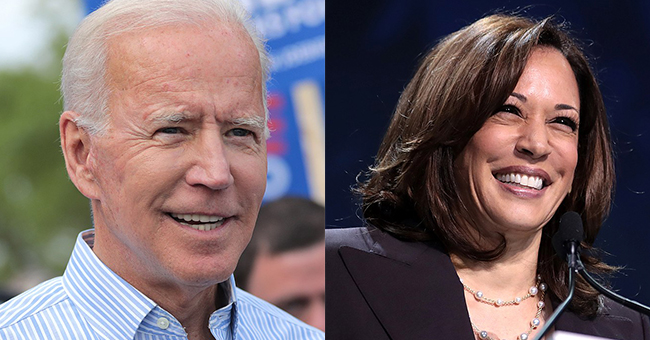
  • Joe Biden and Kamala Harris

    Photo credits: Gage Skidmore

    After living through four years of an endless horror franchise, Joseph Biden gets sworn in today as commander in chief. Kamala Harris, in a historic moment for the US, gets sworn in as the first woman of color Vice President. And they have so much wreckage laying before them. No easy reset button will fix it or spirit it away. The pressure is on their administration to do right by a country reeling from a traumatic relationship with a white supremacist tyrant, and rightfully so. We reached out to our authors to ask what they want Biden and Harris to know, understand, or be aware of. On Inauguration Day, we share their responses with you. 


    Daina Ramey Berry

    “The Biden/Harris Administration will be facing some of the greatest challenges of our history because of a global pandemic that will likely take the lives of almost 400,000 American loved ones by the time they take office. They will face this grim human toll as well as the economic fallout, both of which have impacted Black, Indigenous, and Latino Americans disproportionally. I hope equality in the US, particularly in the area of healthcare, education, and social justice, is one of their highest priorities. One area I’m most passionate about is improving educational honesty in our teaching of American History. Reversing recent executive orders designed to limit the accurate teaching of our history is a good start and so is relying on primary documents to drive our revisions of US History textbooks.”
    —Daina Ramey Berry, The Price for Their Pound of Flesh and A Black Women’s History of the United States


    Tom DeWolf

    “It’s difficult to fathom just how much work it will take to clean up the mess, literal and figurative, left behind by the outgoing administration. In addition to dealing effectively with COVID-19, addressing a fragile economy, and the economic challenges faced by the most vulnerable among us—particularly people and communities of color, the assault on environmental protections, and so much more—it is critical that the outgoing President and his enablers and supporters in the House and Senate be held accountable for their actions. Not doing so will enable future elected officials to act out badly (like Senators McConnell, Graham, Cruz, Hawley, and others), and encourage the kind of violent uprisings we witnessed on January 6.”
    —Thomas Norman DeWolf, author of Inheriting the Trade and Gather at the Table, Program Manager for Coming to the Table


    Dina Gilio-Whitaker

    “Four years of Trumpism has taken its toll on Indian Country, but Trump was always only a symptom of much larger structural, societal problems that have lingered since the violent beginnings of this country. The US settler state has a long way to go toward becoming accountable for the ways it has been built on and still maintains a relationship of domination and control over the Original Nations of this land. My hope is that President Biden and Vice President Harris will bring us closer as a nation to promoting an ethic of accountability for this long, painful history and effect real justice and respect to those relationships.”
    —Dina Gilio-Whitaker, As Long As Grass Grows   


    Sharon Morgan

    “President Joe Biden and Vice President Kamala Harris have a daunting task ahead. Undoing four years of acrimony under The Vulgarian and healing centuries of malfeasance will not come easy. I can only HOPE that their administration will help America take a step FORWARD in healing the obvious breach in moral principles.”
    —Sharon Leslie Morgan, Gather at the Table


    Zach Norris

    “When Joe Biden is sworn in as President, it will not be true to say that the guardrails of democracy held. It would be truer to say that the underlying fissures in our frail democracy were widely exposed. After the January 6 Capitol Hill siege by white nationalists, pressure is on Biden to expand the police state and increase surveillance. It’s up to us to push the administration to divest federal resources from incarceration and policing and instead fund community-based organizations providing non-punitive, non-carceral programs related to restorative justice and transformative justice.”
    —Zach Norris, Defund Fear


    Annelise Orleck

    “Many presidential inaugurations are suffused by a feeling of hopefulness, a fresh start, a chance at long-overdue changes. Others have felt apocalyptic and dire, none more so than the last—Trump’s American Carnage inauguration. This inauguration in 2021 is both. Even as the fallout from the toxic white supremacist assault on the Capitol continues to settle, President Joe Biden laid out dozens of executive orders that will begin to stop on Day One some of the most horrific of Trump’s orders: the cruel Muslim ban; the barbaric frenzy of federal executions; the US’s return to the Paris Climate Accords and the World Health Organization; rescinding the permit for the Keystone Pipeline; restoration of Obama-era regulations protecting the rights of transgender students in public schools; to require masks for 100 days in federal buildings and interstate transport. And, desperately needed by tens of millions, he will order the rent, foreclosure, eviction, and student loan payment moratoria to continue.

    The first piece of legislation he plans to send to Congress will be a COVID aid bill that includes direct $1,400 payments, an increase in weekly unemployment checks, desperately needed aid to the states, And, quietly, that bill would increase the federal minimum wage to $15 an hour. Also, on Day One, the new president will send to Congress the most sweeping immigration overhaul in thirty-four years. It will include green cards for Dreamers and those with Temporary Protective Status and an eight-year path to citizenship for 11 million undocumented Americans. In addition to those which, in the aftermath of Democratic victory in the Georgia Senate runoffs, it is possible those can pass. And new Senate Majority Leader Chuck Schumer has promised that his first bill will be an expansive voting rights bill that will make it easier than ever to register and will prevent many currently used forms of voter suppression.

    Kamala Harris, the first woman Vice President, who is of Jamaican and Indian descent, will be sworn in on Justice Thurgood Marshall’s bible. The new Energy Secretary will likely be a woman who wants to invest in and prioritize building a national infrastructure for electric cars. The Secretary of the Treasury will be a woman who has told Congress she thinks we must be bold and big in our stimulus packages—a chance to alleviate some of the terrible suffering sweeping our country. And the Secretary of the Interior, in charge of land policy and the major liaison to Native American peoples across the country, will be Deb Haaland, a woman of Pueblo descent who has promised to be a fiercely protective steward of our natural resources.

    Only a few days ago, I was continuing the ritual of morning and middle-of-the-night anxious doomscrolling as headlines reported one horror after another. Today marks the end of the Trump era, and Biden seems to understand that he may only have two years to fulfill his slogan: “Build Back Better.” He had a front row seat as the Obama administration ran into roadblock after roadblock courtesy of Mitch McConnell. He just might have a different plan. It seems possible that he is going to be bold and that the sun may just shine again.”
    —Annelise Orleck, “We Are All Fast-Food Workers Now”


    Alexandra Minna Stern

    “This inauguration unfolds against the backdrop of intense threats of domestic terrorism and an uncontrolled pandemic, both of which were fomented and enabled by the outgoing administration. A top priority for the Biden-Harris administration should be a concerted effort to address resurgent white nationalism and extremism, which will require an informed, purposeful, and multi-pronged approach.”
    —Alexandra Minna Stern, Proud Boys and the White Ethnostate


    Eileen Truax

    “After years of treating immigrants and asylum seekers as criminals, in violation of international regulation and the United States Constitution, our country has an opportunity to get on track. I’m not just talking about the end of the Trump administration, but about an immigration system that was born broken. The immigration legislation in the US was designed to use immigrants as a disposable working resource, and in recent years, as a political bargaining chip. It also allows to use the rule of law under different criteria for different people and lacks a path to regularization for those who have lived for decades without documents while playing an essential role in the productive machinery of this country.

    Over the next four years, the Biden administration can take the first steps toward becoming the country of open arms that we have pretended to be. In his action plan for the first hundred days of government, he has included revoking the travel ban for Muslim countries, the expansion of the DACA program, the reunification of families who were separated at the border, and the restoration of the asylum process. That’s a good start, but it’s not enough. The US needs to create a path to citizenship for the eleven million undocumented people in the country. The DACA and TPS programs have been a relief for some people in vulnerable situations, but we need that protection to be permanent through immigration regularization for them and their families.

    During the Obama-Biden administration, priorities on the government's agenda and partisanship in Congress stopped any legislative progress on immigration. Once again, Joe Biden comes to the White House in a complicated situation, but now he is the President. He has a united and more diverse Democratic Party, and most importantly, he knows that this time around he’s in debt with the communities of color. It is time to pay it back. That's a good way to start building forward.”
    —Eileen Truax, How Does It Feel to Be Unwanted?


    Kay Whitlock

    “As we observe Inauguration Day in a politically polarized nation, it is essential that Biden/Harris recognize that, horrific and harmful as it is, most violence doesn’t ensue from the actions of ‘extremists’ and far-right actors playing lethal games with guns and bludgeons. We must confront vigilante and paramilitary violence, of course. But the models for that violence come from state and corporate systems that embrace and embed the violence of supremacist actions and beliefs at every level. Structural racist, gendered, ableist, and economic violence is normative, not only in policing and the criminal legal system, but in virtually all systems, public and private. Until we face that unpleasant truth with integrity and determination, until we stop telling ourselves the group fiction that violence results from ‘extremism,’ structural violence and inequality will expand and deepen. We have to reimagine and restructure US society; we have to completely transform how power and pain are distributed.”
    —Kay Whitlock, Considering Hate

    Joe Biden and Kamala Harris

  • By J. A. Mills

    The Capitol after the attack

    The Capitol after the attack. Photo credit: Victoria Pickering.

    I’ve lived in Washington, DC, for twenty years, but I’ve only been inside the US Capitol a handful of times. For meetings, hearings, and receptions related to protecting wild tigers, rhinos, and bears.

    I love this city for her vast green areas and restrictions on building height that bring attention to the sky, the dome of the Capitol, and the soaring Washington Monument. I also love her for her residents of all colors and beliefs, whom I overhear on the sidewalks speaking many of the languages of the world.

    I have dear friends and respected colleagues who work for US government. I have worked with government agencies for years. There is no “deep state,” just as there are no Satan-worshipping child traffickers working out of the basement while middle-class families dine on pizza and wings at the Comet Ping Pong restaurant up the road from me.

    As I write these words, I sit in my home just two miles from the White House and wait for the armed hordes of Trump supporters said to be headed our way to disrupt the inauguration of the duly elected next president of the United States, Joseph R. Biden Jr.

    I think back to my first visit to China in the late 1980s, when I saw firsthand the remnants of a violent “people’s” revolution. I think of the nearly empty store shelves, the churches turned into factories, Chinese acquaintances afraid to invite a foreigner into their homes for fear of government reprisals, and the bug in my hotel room used to monitor my private conversations.

    I remember my thoughts before I went to sleep in my Hong Kong apartment on the night of July 1, 1997—the day Britain handed the colony back to Beijing. I recall my fear of waking the next morning to find tanks manned by the People’s Liberation Army patrolling the streets.

    I think of the immigrants who allowed me to be born an American. On my mother’s side, a Scotsman sent as an indentured servant to the American colonies in 1651 who was lucky enough to marry his owner’s daughter. On my father’s, two Polish peasants whose hope for prosperity was destroyed by systemic discrimination wrought by American nationalists who deemed them part of a criminally inclined underclass that threated the country’s moral and genetic integrity. 

    Now, some of my family members—people who carry my Polish immigrant DNA—support the man who has dog-whistled these neonationalists to my beloved city, vowing to shed blood to defy the will of the 81.3 million Americans who chose Biden as the forty-sixth president of the United States.

    Law enforcement authorities have said the “insurgents” could deploy with “suicide-type aircraft” or killer drones. The Ohio National Guard is sending specialists in biological and chemical attacks. Are they thinking a dirty bomb is possible?

    Photos of National Guard members sprawled throughout the Capitol yesterday remind me of images taken in April 2003 of US Army soldiers lounging about in Baghdad’s Republican Presidential Palace after the bloody fall of Saddam Hussein.

    A journalist friend just called from Hoboken, New Jersey. She spent two years researching a story for National Geographic in Trump Country, which she calls “Pennsyltucky.” She said she felt “an edge in gun states” that came from a “readiness” to act on some amorphous threat to America. Trump clarified that clarion threat with his lies about the “deep state” and an election he has tried to steal from Joe Biden. My friend said she’s hopeful, because “the eyes of the FBI and the nation are now watching” for what comes next.

    I wish I could share her hope. But I keep thinking of China. Of how cosmopolitan and affluent it was before Mao Zedong’s revolution. How the Chinese people then could not fathom the violence and ruin that would be brought by Mao Zedong and his henchmen. How Americans like me, a mere eight days ago, could not have fathomed that Trump’s henchmen would storm the Capitol. That what is called “the capital of the free world” would one day look like a war zone.
    And so, I wait in fear, incredulous that I am praying members of the National Guard and Secret Service don’t go rogue and wondering, on an endless loop, how a sleezy, pathological liar with clown hair could have brought my great country to this precipice.


    About the Author 

    J. A. Mills has worked for TRAFFIC, World Wildlife Fund, Conservation International, and Save the Tiger Fund. She is the author of Blood of the Tiger: A Story of Conspiracy, Greed, and the Battle to Save a Magnificent Species and lives in Washington, DC. Visit her website at jamillsauthor.com. Follow her on Twitter at @JAMillsAuthor.

  • By Rev. Dr. Raphael G. Warnock

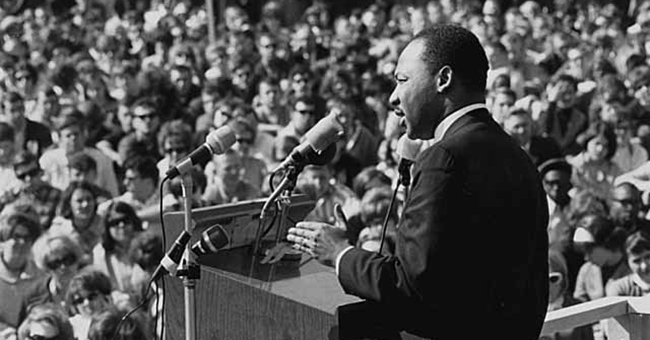
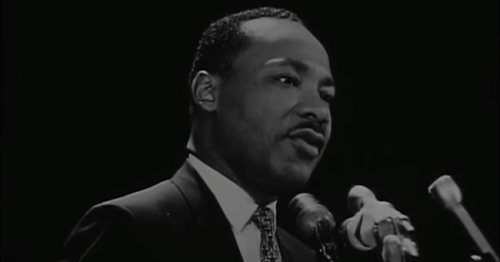
    Martin Luther King, Jr., speaking against the Vietnam War, St. Paul Campus, University of Minnesota, 27 April 1967.

    Martin Luther King, Jr., speaking against the Vietnam War, St. Paul Campus, University of Minnesota, 27 April 1967. Photo credit: Minnesota Historical Society

    Before Rev. Dr. Raphael G. Warnock ran for office to become senator-elect of Georgia, he wrote this commemorative piece in honor of Martin Luther King, Jr. and his legacy for Dr. King’s classic collection of sixteen sermons, A Gift of Love: Sermons from Strength to Love and Other Preachings. We share it with you here today on Dr. King’s birthday.

    ***

    No one in American history has addressed more eloquently or advanced more effectively the ideals of freedom, justice, and equality than the Reverend Dr. Martin Luther King, Jr. With his voice, he discredited the fallacious doctrine of white supremacy; and through his activism, he changed America, liberating the sons and daughters of “former slaves” and “former slave owners” for the possibility of what he called “the beloved community.” Dr. King bequeathed to all of us a gift of love.

    His epoch-making impact on law, public discourse, and culture is all the more stunning when one considers that he was a private citizen who never ran for public office and never held any official role within government. Yet because his legacy and impact were greater than that of most presidents, King is rightly regarded as a modern father of the nation and his memorial now sits appropriately on the national mall. Hailed during his lifetime as a civil rights leader and honored in death with a memorial befitting a president, it should not be forgotten that King was at his core a preacher. In fact, his identity as preacher and prophet was basic to his self-understanding and mission.

    King himself said as much when he offered that “[In] the quiet recesses of my heart, I am fundamentally a clergyman, a Baptist preacher. This is my being and my heritage, for I am also the son of a Baptist preacher, the grandson of a Baptist preacher and the great-grandson of a Baptist preacher.” In his opening remarks, prior to preaching “The Man Who Was a Fool” at a Chicago church in 1967, he clarifies his sense of vocation in this way:

    I did not come to Mount Pisgah to give a civil rights address; I have to do a lot of that . . . But before I was a civil rights leader, I was a preacher of the gospel. This was my first calling and it still remains my greatest commitment. You know, actually all that I do in civil rights I do because I consider it a part of my ministry. I have no other ambitions in life but to achieve excellence in the Christian ministry. I don’t plan to run for any political office. I don’t plan to do anything but remain a preacher.

    So, this volume of sermons, which includes all but one sermon from Strength to Love, is important because here we encounter King the preacher. Also, we encounter King as pastor. All of these sermons were preached at Dexter Avenue Baptist Church or Ebenezer Baptist Church, congregations he actually served, respectively, as pastor and co-pastor while at the same time emerging as preacher, prophet, and pastor to an entire nation that needed to change.

    In this way, his civil rights activism was rooted in his sense of ministerial vocation, and both emerged from the black church—the church that has had to be the countervailing conscience of the American churches with regard to racism, America’s original sin. So, as Martin Luther King, Jr., America’s great preacher, stood in the pulpit of Dexter Avenue during the days of the Montgomery bus boycott, and later alongside his father at Ebenezer Baptist Church, he stood well within the historical trajectory of African American prophetic Christianity. With his extraordinary academic training and preparation, King extended it and gave it a global voice such that at its height, the movement was appropriately multiracial and ecumenical, embracing believers across faith traditions and nonbelievers alike in a magnificent quest for human dignity. When the legendary Jewish cleric and friend to Dr. King, Rabbi Abraham Joshua Heschel, marched in the movement, he said he felt like his feet were praying! This deep yearning for freedom felt so strongly in Heschel’s feet and heard so clearly in Dr. King’s voice was expressed during slavery by sermons and spirituals that saw the story of black slaves through the lens of the story of Hebrew slaves marching out of Egypt. It was institutionalized by the independent black church movement of the eighteenth and nineteenth centuries and embodied in the ministries of King’s preaching forebears, whom he references in the autobiographical statement above.

    His maternal great-grandfather, Willis Williams, was a preacher during slavery who well may have played a role in the establishment of a local independent black church. His grandfather, A. D. Williams, the second pastor of Ebenezer Baptist Church, was an activist preacher who helped to launch the Atlanta branch of the NAACP, leading the fight, as its president, to establish the city’s first secondary school for African American children. Martin Luther King, Jr., and his siblings attended the Booker T. Washington High School, which existed only because of the activist ministry of his grandfather. Also, few people know that Martin Luther King, Sr., King’s father and Ebenezer’s third pastor, led a campaign for voting rights in 1935 in Atlanta, thirty years before King and others would create the conditions necessary for passing the Voting Rights Act. Moreover, “Daddy King,” as his father was affectionately called, fought for the equalization of teachers’ salaries decades before his son and others would lead a nonviolent war against segregation itself.

    The activist tradition of a church born fighting for freedom, philosophically grounded in the other sources he cites in his “Pilgrimage to Nonviolence,” including Walter Rauschenbush’s Social Gospel, help to explain why, for King, preaching and activism were inextricably connected. In fact, in his work the two are so seamlessly connected that it is difficult to see where one ends and the other begins. The two feed and inform each other. Hence, at the heart of the sermons printed here is a view of the gospel that rejects any truncated or interiorized spirituality that seeks to save souls while ignoring bodies or focuses narrowly on matters of private morality while ignoring the moral implications of our public policy. In “Love in Action,” he laments that:

    One of the great tragedies of life is that men seldom bridge the gulf between practice and profession, between doing and saying. A persistent schizophrenia leaves so many of us tragically divided against ourselves. . . . How often are our lives characterized by a high blood pressure of creeds and an anemia of deeds! We talk eloquently about our commitment to the principles of Christianity, and yet our lives are saturated with the practices of paganism. We proclaim our devotion to democracy, but we sadly practice the opposite of the democratic creed. We talk passionately about peace, and at the same time we assiduously prepare for war. We make our fervent pleas for the high road of justice, and then we tread unflinchingly the low road of injustice. This strange dichotomy, this agonizing gulf between the ought and the is, represents the tragic theme of man’s earthly pilgrimage.

    In positive terms, Dr. King prescribed what he called in another sermon printed here, “The Three Dimensions of a Complete Life.” Herein is the clarion call of a spiritual genius and sober-minded sentinel who insists that we pray with our lips and our feet, and work with our heads, hearts, and hands for the beloved community, faithfully pushing against the tide of what he often called “the triplet evils of racism, materialism and militarism.” In a divided world and amid religious and political pronouncements in our public discourse that erroneously divide the self, we still need that message. The scandal of America’s prison-industrial complex that is disproportionately black, brown, and poor and continues to grow irrespective of actual crime rates, the yawning chasm between the haves and the have nots and the political maintenance of an unwieldy and costly Cold War–era military-industrial complex, decades after the death of Dr. King and the death of the Cold War, all suggest that we are mired in a continuing spiritual crisis that requires us to be vigilant in struggle against the triplet evils the preacher aptly identified so long ago. We need love in action. The Reverend Dr. Martin Luther King, Jr.’s gift of love, embodied in word and in deed, points the way.


    About the Author 

    The Rev. Dr. Raphael G. Warnock is senior pastor of the Ebenezer Baptist Church and senator-elect of Georgia.

  • By David R. Dow

    Donald Trump

    Photo credit: Gage Skidmore

    According to reporting from Michael S. Schmidt and Maggie Haberman at the New York Times, President Trump was already exploring the possibility of pardoning himself, even before a riotous mob incited by Trump’s tweets and baseless charges of a stolen election stormed and defiled the US Capitol on Wednesday, January 6, the day Congress was meeting to fulfill its duty under the Twelfth Amendment to count the states’ electoral votes for President and Vice-President. With reports circulating that the Justice Department is investigating Trump’s role in instigating Wednesday’s lawlessness, the question is no longer merely hypothetical. May Trump pardon himself?

    The constitutional text is short. Article II section 2 provides that the President “shall have power to grant reprieves and pardons for offenses against the United States, except in cases of impeachment.” Some aspects of the pardon power are clear. For example, it applies solely to “offenses against the United States”—that is, federal crimes—and does not permit the President to pardon people for violations of state or foreign law. In addition, if the House were to again impeach the President, despite the fact there is almost certainly not enough time for the Senate to convict (or acquit) him, Trump could not pardon himself with respect to that new article of impeachment. 

    Historically, there have been questions as to whether the pardon power extends to possible offenses that have not been adjudicated. When President Ford pardoned Richard Nixon, the proclamation extended to all offenses Nixon “committed or may have committed or taken part in.” Yet the Supreme Court held in Ex parte Garland that the President’s power does in fact extend to issuing pardons in cases where there has not yet been a conviction. 

    So, the fact that Trump has not yet been charged or convicted would not preclude a pardon. If, for example, Trump were to resign, Vice-President Pence would assume the Presidency and he could pardon Trump for any federal offenses Trump might have committed in connection with the storming of the Capitol. But what if Trump doesn’t resign?

    Nobody can be certain of the answer to a constitutional question that has never before arisen, and never before has a President attempted to pardon himself. With that caveat, however, we can be almost certain Trump does not have the power to pardon himself, and any attempt to do so would be ineffective.

    Here’s why: Chief Justice Marshall recognized in United States v. Wilson, the first Supreme Court cases addressing the President’s pardon power, that the framers modeled the power on that of the English monarch. Much more recently, in Herrera v. Collins, Chief Justice Rehnquist observed that the constitutional power to issue pardons was understood by the framers to be coterminous with the monarch’s power in England, dating back to the 700s, to “extend mercy” or “soften the rigour of the general law.”

    Yet in the 1,500 years that the pardon power has existed in the common law legal system, including the 234 years it has existed in the United States, it has never been used by a king or queen or President to pardon him or herself. Quite the contrary, Charles I was convicted of treason and beheaded in 1649 following the first English civil war. Edward II was imprisoned after being forced from the throne and succeeded by his son, Edward III. In all of English legal history, there is not a single instance of a king pardoning himself or even attempting to do so. 

    From a constitutional perspective, therefore, the relevant question is whether, given English legal history, the framers would have intended for the pardon power to include the authority of the President to pardon himself—something that had never happened in the English legal system. The complete absence of any historical antecedent for that practice strongly suggests that the answer is no.

    And there is more. In the Declaration of Independence, the colonists enumerated twenty-seven grievances against King George III. People remember the complaint about taxation without representation, but that was, in fact, the seventeenth grievance on the list. The first was that George did not follow the law—which of course impliedly assumed the King is required to do so. The eighth was that he obstructed justice; the twelfth was that he attempted to make the military power superior to that of the people. Most extraordinarily was the twenty-seventh, which charged the King with “excit[ing] domestic insurrections amongst us.” It is most implausible to imagine that the same men who wrote the Declaration of Independence would write a Constitution giving the President the authority to excuse himself for committing acts similar if not identical to those that inspired the colonists to declare independence. 

    If Trump does purport to pardon himself, no one can be certain of the effect that effort will have unless and until he is criminally prosecuted and convicted in federal court. But democracies do not survive by permitting people who attempt to undermine them to escape prosecution simply because the outcome of the prosecution may be in doubt and simply because they once held the office of the the Presidency.


    About the Author 

    David R. Dow is the Cullen Professor at the University of Houston Law Center. He is the author of Executed on a Technicality: Lethal Injustice on America’s Death Row. He can be reached via email at DDow@central.uh.edu.

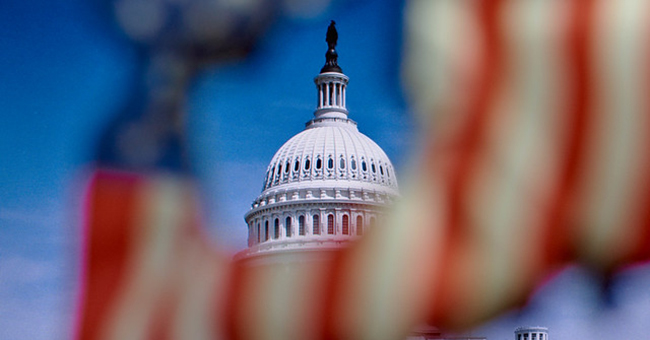
  • View of Capitol Hill through shorn flag

    Photo credit: Marco Verch

    New Year, New Attempted Coup. Just as we were celebrating the triumphant results of the Georgia runoff election, the insurrection at the Capitol began. And we looked on with anger and weariness. Not disbelief, though. Less than a month before his Twitter account was suspended, the tyrant in chief rallied a mob of low-bar Civil War cosplayers for the “big protest” on January 6. It would be foolhardy to claim we did not see this coming a mile away after four years of a president inciting violence and race-baited backlash in white nationalists and scores of his other supporters. Here’s what our authors had to say about it.


    Daina Ramey Berry

    “As an American, I am heartbroken that a sitting President would incite a riotous mob to lay siege to the US Capitol, primarily in an effort to disregard the votes of people of color in key swing states. As a historian, I see the mirroring of many points in our history when white Americans used violence to retain power—during the Civil War, Jim Crow Segregation, the Tulsa Massacre, the Civil Rights Movement, and even in the over-reaction to peaceful protests by Black Lives Matter activists. The recent progress—the election of the first Black/South Asian woman as Vice President and the election of the first Black man to represent Georgia in the US Senate—unleashed violent responses to progress that are, unfortunately, very common in our history. Once again, agitators hide behind patriotism in a way that presumes only white Americans are patriotic.”
    —Daina Ramey Berry, The Price for Their Pound of Flesh and A Black Women’s History of the United States


    Mary Frances Berry

    “Despite the contest over the election and the riot at the Capitol, American democracy has withstood enormous stress and still stands. The courts held firm, and the Congress counted the electoral votes and certified Biden’s victory. Still, those who engaged in violence, flaunting white supremacy, must be dealt with severely. Those who protested peaceably appear to have been misled and disserved into endangering our democracy. Trump got elected posing as addressing long-standing grievances, even though he had no coherent policy and not enough political understanding to succeed. This crisis tells us we need to reject white supremacy more aggressively and squelch domestic terrorism. But we also need a path to more issue competition in elections hoping to reduce sincere complaints about unfairness. After all, the party system is not in the Constitution and has become an effective vehicle for political polarization. An improved method for screening candidates, and ways to remove the lock the two parties have on elections, may improve the functioning of the system.”
    —Mary Frances Berry, History Teaches Us to Resist


    Tom DeWolf

    “Watching the invasion of the US Capitol, I alternated between tears of sadness and tears of rage. I thought, ‘Trump supporters, this is on YOU. You supported a narcissistic thug who now concludes his presidency by riling up his right-wing, white supremacist, Confederate flag-carrying followers to attempt to disrupt the certification of Biden's and Harris’s victory and overthrow our newly elected government. This is an assault on our democracy and on our elected officials. This is treason. This is domestic terrorism. This is disgusting. This is the responsibility of your candidate, who sat in the White House watching the riot unfold on TV. Shame on him and shame on you. This is his legacy and yours.’ But, of course, this act of sedition is not surprising or unexpected. It’s a product of our centuries-old system of white supremacy that remains alive and well. Trump further exposed the wounds and fanned the flames of discontent. We have a lot of work to do to acknowledge and heal the racial wounds from the past that continue to fester and, too often, erupt in violence today.”
    —Thomas Norman DeWolf, author of Inheriting the Trade and Gather at the Table, Program Manager for Coming to the Table


    Roxanne Dunbar-Ortiz

    “Chickens came home to roost on January 6 in the US imperial capital. US elected officials, especially Republicans, were disgusted, saying this is something that happens only in ‘banana republics.’ They fail to point out (what they know very well) that the US has been the architect of those ‘banana republics’ coups, most recently in Bolivia. It was only a matter of time before the snake began eating itself, Trump being the perfect vehicle. It seems that that hard reality is being suppressed, and obsession with increased law and order is the topic. Meanwhile, the stock market continues to soar.”
    —Roxanne Dunbar-Ortiz, An Indigenous Peoples’ History of the United States


    Kyle T. Mays

    “‘This does not represent our democracy. This is not who we are,’ said many politicians. Others are expecting us to unify with people who engaged in these acts. They are not fanatics. They represent American democracy. American democracy has always been violent towards Black, Indigenous, Latinx, and other people of color. What happened on January 6 is a manifestation of American democracy. The violence they exhibited is as American as apple pie. They represent the violence that is essential to the function of US democracy. The insurrection is not surprising. The question I have is: Why have BIPOC seemed so shocked? This is how a settler colonial and white supremacist democracy has always functioned.”
    —Kyle T. Mays, An Afro-Indigenous History of the United States


    Rachel Mikva

    “People waving American flags tried to destroy the democratic values that stand as the foundation of our nation. People waving Jesus flags behaved in ways that the Prince of Peace would undoubtedly condemn. They are connected, and the brutal display of White Christian Supremacy on January 6 should not have come as a surprise. An article in The Atlantic asserted that ‘Donald Trump has bent elements of American Christianity to his will, and . . . many Christians have obligingly remade their faith in his image.’ Tragically, however, the religion was already weaponized to inflict this kind of deep wound in the soul of America. A legacy of conquest, exclusive claims of religious truth, centuries of justified slavery, disproportionate attachment to a spirit of punishment—Christian history is rife with examples. And yet, it has also transmitted teachings to love your neighbor and the stranger, to tend the earth, to care for the less fortunate, to respect every human being—all fashioned in the image of God. Whatever one’s faith, we are choosing in every moment whether its power will be wielded for harm or for blessing.”
    —Rachel S. Mikva, Dangerous Religious Ideas


    Sharon Morgan

    “It is hard for me to explain my feelings about the insurrection of 2021. I am SAD and ANGRY. All I can muster at this point is to try and maintain feelings of HOPE that Americans will UNIFY and WORK toward achieving the illusive American Dream of a DEMOCRACY where ALL people are treated with dignity and respect, not just under the law but in their hearts.”
    —Sharon Leslie Morgan, Gather at the Table


    Zach Norris

    “On January 6, we saw the consequences of years of Trump fanning the flames of fear and distrust and urging his followers to act on these impulses. I describe Trump as an ‘architect of anxiety,’ someone who tells us not to trust our neighbors down the block, at the border, or in distant lands. Trump used people’s fears to fuel marginalization and dehumanization. Our democracy has been compromised by the climate of scarcity, suspicion, and dehumanization that the fear-based model of safety has propagated.

    Congress members and the President are sworn to uphold the constitution and protect democracy, not subvert it. As a result, President Trump and all congress members who supported the coup attempt should be removed from office. Not to do so would be to repeat the mistakes of the past when leaders of the confederacy were allowed to reassume positions of power.”
    —Zach Norris, Defund Fear


    Annelise Orleck

    “It was, as some commentators of color have noted, a whitelash, a spasm of white-led violence in response to perceptions of expanded political power by those deemed usurpers of the ‘real America’—people of color (particularly Black people), women, and increasingly, Jewish Americans. The assault on the Capitol fits neatly into a long history in the US of white mob violence mobilized by political elites to manipulate and control democratic elections through violence, suppression of votes, and tryng to create the impression that any electoral victories won by people of color are—by definition—fraudulent. We can look back to Reconstruction for vivid examples: New Orleans massacre of 1866; KKK violence at Black election rallies and voter registration drives during the electoral season of 1867-68; and the mob assault on the Capitol in North Carolina in 1898 to overthrow democratically-elected Black officials. Part of what made this so scary was that it was not local. This was organized by the President of the United States and his allies.”
    —Annelise Orleck, “We Are All Fast-Food Workers Now” 


    Paul Ortiz

    “During part of my time in US Special Forces in the mid-1980s, I was stationed in several different nations in Central and South America, including Venezuela, Colombia, and Honduras. We were not in Latin America promoting democracy, I can assure you.

    For generations, the United States has promoted and planned coups in the Global South at the behest of corporations and financial interests. Is it any wonder that many Americans are cynical and have no respect whatsoever for democracy? Don’t like the outcome of your nation’s elections? Just overturn them by force and intimidation. Liberals and conservatives alike supported the US-backed 2009 coup d'état in Honduras.

    The Trump autogolpe on January 6 is a wake-up call. We must call upon the incoming Biden administration to reject coup politics once and for all. We must demand an end to US imperialism and cease our interference in the affairs of other nations. Only then will we begin to rebuild a democratic culture in the United States.”
    —Paul Ortiz, An African American and Latinx History of the United States


    Alexandra Minna Stern

    “The storming of the Capitol on January 6 showed, in dramatic fashion, just how radicalized the far right has become over the past several years. We saw the blood-thirsty convergence of conspiracy theories (from QAnon to a stolen election), white nationalism, and a cult mentality towards Trump, who incited the insurrection. The far right is as armed and activated as it ever has been. From their perspective, America is under siege, and civil war is the inevitable option. I believe we have entered what will be a protracted period of far-right domestic terrorism in the US.”
    —Alexandra Minna Stern, Proud Boys and the White Ethnostate

    View of Capitol Hill through shorn flag

  • New Year 2020

    Image credit: Syaibatul Hamdi

    Give yourself a round of applause for running the marathon and sadistic obstacle course that was 2020! Or a glass of wine. Recollect yourself and recuperate with your self-care regimen if you have one. This year ran us so ragged we may not be in any mood to look back in annoyance, exhaustion, or terror. But this is one of those car wrecks worthy of a size-up so we can take stock of the issues that blew up in 2020. That way, we can recommit to learning about them in the New Year to set the nation back on course to the society we want. The top read blog posts on the Broadside are a good, and hopefully less painful, way to do that. Give our authors a round of applause and appreciation for giving us the context and critique to understand these issues and where to go from here!

    Here are this year’s highlights of the Broadside with a few favorites from previous years. See you in the new year with more insightful blog posts from our authors!


    Judith Heumann and Kristen Joiner

    “How We’re Silenced and the Power of Judy Heumann”
    Kristen Joiner

    “Writing Judy’s story, this is what I’ve learned: there is no path to challenging abusive societal norms that allows us to stay in the nice box. Speaking the truth about and taking on the wrongs of the world is never going to be nice. It is always going to be about challenging and dismantling power structures, and privilege will do anything it can to shame, bully, and exclude truthtellers. Talking about being a victim of sexual assault, being discriminated against, being violated—none of it is nice. The dehumanization of people is ugly business. Period.”


    Tiger

    “Coronavirus Pandemic Could Trigger Happy Endings for Tigers”
    J. A. Mills

    “Here’s the potentially good news, as I see it. This is the moment—perhaps the last, best moment—for the world to finally put an end to commercial wildlife farming promoted by China and growing across Southeast Asia, South Africa, and elsewhere. Farming that has raised demand for wildlife parts and products and put a price on the head of every tiger, rhino, and bear in the wild, because many consumers believe those taken from the wild are of superior quality—not unlike wild versus farmed salmon.”


    Patrick J. Carr

    “When I Think of Pat: A Tribute to Patrick J. Carr”
    Gayatri Patnaik

    “I had the privilege of being Pat’s editor on Hollowing Out the Middle: The Rural Brain Drain and What It Means for America that Beacon published in 2009. He coauthored it with sociologist Maria Kefalas, who is also his wife, and I loved working with this duo immediately. They were an immensely talented and vibrant couple . . . . Today, I find myself thinking so much of this extraordinary couple and of this special man who meant so much to so many people. He’s left an amazing legacy and will be profoundly missed.”


    The Other America

    “Martin Luther King, Jr.’s ‘The Other America’ Still Radical 50 Years Later”

    “The great tragedy is that the nation continues in its national policy to ignore the conditions that brought the riots or the rebellions into being. For in the final analysis, the riot is the language of the unheard. And what is it that America’s failed to hear? It’s failed to hear that the plight of the Negro poor has worsened over the last few years. It has failed to hear that the promises of justice and freedom have not been met. It has failed to hear that large segments of white society are more concerned about tranquility and the status quo than about justice, humanity, and equality, and it is still true. It is still true that these things are being ignored.”


    Black Lives Matter protest

    “10 Practical Steps for Building a Less Racially Stupid Society”
    Crystal Marie Fleming

    “I know it’s tempting to wish racism away—to just sort of assume that there’s an inevitability to progress. But if you want to be less stupid about race, you need to let that shit go right now. There is no quick fix for racism. Go back and read that sentence. Then tell a friend. There’s! No! Quick! Fix! None . . . . If you want to pursue the cause of social justice, give up the need for quick fixes and gird your loins for a long struggle. To sustain your work for the long haul, you’ll have to build up your reserves of resilience, self-care, community care, and courage. You’ll have to nurture your capacity for hope, humor, love, and connection, even, and especially, in the midst of oppression.”


    A_popular_history_of_the_United_States_-_from_the_first_discovery_of_the_western_hemisphere_by_the_Northmen _to_the_end_of_the_first_century_of_the_union_of_the_states;_preceded_by_a_sketch_of_the_(14597125217)

    “Unpacking the Invisible Knapsack of Settler Privilege”
    Dina Gilio-Whitaker

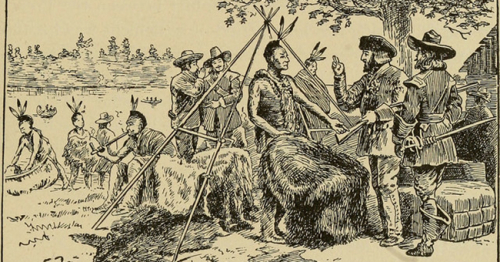
    “People who do not have ancestral connections to Native communities are all either settlers or immigrants. People with ambiguous ‘Native ancestry,’ like Elizabeth Warren, are so disconnected from whatever Native roots they may have had that they can no longer be considered Native. Settlers are people whose ancestors came to acquire recently dispossessed Indian lands, such as recipients of the homesteads of the nineteenth century and earlier land speculators. Immigrants are people who came later to cash in on the benefits of American citizenship that didn’t necessarily include land (but might have if they came with enough money to invest in American land). Most are settlers (also ‘colonizers’) or immigrants by choice, with the exception of Blacks who are descended from slaves who were settled here without their consent.”


    French trading with Native Americans in Quebec

    “Settler Fragility: Why Settler Privilege Is So Hard to Talk About”
    Dina Gilio-Whitaker

    “Settler privilege thus simultaneously implicates and is beyond racism, which is one reason why, paradoxically, even non-Native people of color can experience a type of privilege and fragility. Fragility stems from the need to distance oneself from complicity in settler colonialism, in what some scholars have called ‘settler moves to innocence.’ The good-bad binary is part of this distancing impulse, because like racism, nobody wants to be associated with genocide and injustice, especially in a country that touts its democracy and equality, and especially for people who have been oppressed by it in other ways. But compared to white privilege, this is what makes settler privilege so much more beguiling and difficult: it cuts to the core of American identity in all its iterations, subtly calling into question the legitimacy of the US and the sense of belonging on the land.”


    James Baldwin

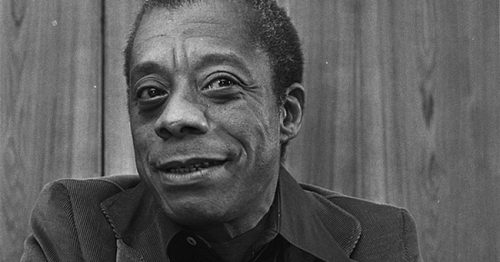
    “James Baldwin Warned Us: The Fires Last Time Are the Fires This Time”

    “The forces of Imani Perry and Eddie S. Glaude, Jr. are joining in our latest Baldwin publication. We’re excited to release Nothing Personal, his famous 1964 essay on social isolation, race, police brutality—sounds a lot like what we’re living through during the pandemic, doesn’t it?—with a foreword by Perry and an afterword by Glaude. A trifecta of Black brilliance. Baldwin’s critique of American society at the height of the Civil Rights movement is as incisive as ever.”

    New Year 2020

  • By Angela Chen

    Cat and Ace

    Cat photo credit: Gundula Vogel. Cover art: Louis Roe

    When I published Ace, I hoped for positive reviews and perhaps a reader email or two. I did not, however, expect that social media would bring a very particular joy to my life, which is that of readers sending me photos of the book with their cat.

    For example:

    This one is especially adorable:

    https://platform.twitter.com/widgets.js

    Black cats seem to be overrepresented, so here’s a cream-colored one for good measure:

    https://platform.twitter.com/widgets.js

    And a gray-and-white one:

    https://platform.twitter.com/widgets.js

    As a lifelong admirer of felines in all forms, seeing cats hanging out with my book warms my heart. And as someone who barely knows how to do makeup but has immense respect for the creativity of those who do, I was utterly delighted to see that Ace had even inspired a makeup #BookLook:

    Truly, this has exceeded my wildest dreams.


    About the Author 

    Angela Chen is a journalist and writer in New York City. Her reporting and criticism have appeared in the Wall Street JournalAtlanticGuardianParis ReviewElectric LiteratureCatapult, and elsewhere. Chen is a member of the ace community and has spoken about asexuality at academic conferences and events including World Pride. Find her on Twitter @chengela or at angelachen.org.