• By Kyle T. Mays

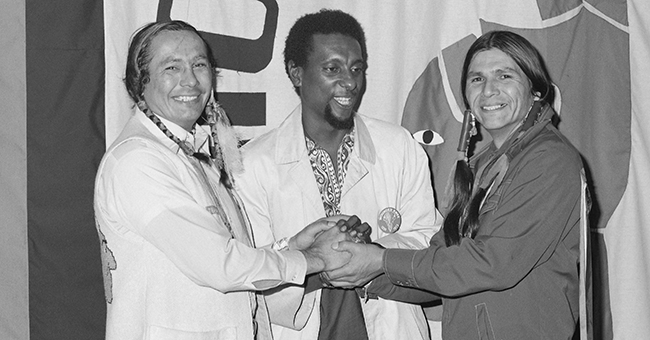
    Civil rights activist Kwame Ture (formerly Stokely Carmichael) came to St. Paul, Minnesota, to support Dennis Banks and Russell Means during the Wounded Knee Trials, 1974.

    Civil rights activist Kwame Ture (formerly Stokely Carmichael) came to St. Paul, Minnesota, to support Dennis Banks and Russell Means during the Wounded Knee Trials, 1974. Photo credit: Dick Bancroft

    Editor’s Note: On this day in 1973, the Wounded Knee Occupation began. 200 Oglala Lakota and followers of the American Indian Movement occupied the town of Wounded Knee to demand the removal of tribal chairman Richard Wilson from office on charges of corruption and abuse of opponents. They also protested the United States government’s failure to fulfill treaties with Native peoples. It lasted for seventy-one days. The protesters had support, too. As Kyle T. Mays wrote in the following passage from An Afro-Indigenous History of the United States, it was an occasion for the Black Power movement to show up for the Red Power movement in solidarity.

    ***

    The discourse of Black Power and Red Power existed side by side. The phrase “Black Power” emerged as a rallying cry in Greenwood, Mississippi, in June 1966, in a speech by Stokely Carmichael during the March Against Fear, which was organized after the shooting of James Meredith. While there were earlier iterations of “Black Power,” Carmichael popularized it. In Black Power: The Politics of Liberation, Carmichael and Charles Hamilton wrote, “The adoption of the concept of Black Power is one of the most legitimate and healthy developments in American politics and race relations in our time. . . . It is a call for black people in this country to unite, to recognize their heritage, to build a sense of community. It is a call for black people to begin to define their own goals, to lead their own organizations and to support those organizations. It is a call to reject the racist institutions and values of this society.” Though Carmichael would later think beyond nation-state borders, he did understand that one had to have a clear sense of self before demanding rights and protections from a state that was predicated on your exploitation.

    Native people also participated in the rhetorical power games, raising a fist and utilizing the phrase “Red Power.” Though the etymology of the phrase is not entirely clear, it was most definitely an assertion of Indigenous sovereignty, a declaration that Native people were there to stress to the white settlers that they were reclaiming their right to sovereignty—guaranteed by their treaties. Indigenous intellectuals like Vine Deloria Jr. agreed.

    Deloria Jr., a Standing Rock Sioux intellectual, was long a prominent voice for Indigenous rights, including in his role as the executive director of the National Congress of American Indians from 1964 to 1967. In perhaps his most provocative book, Custer Died for Your Sins: An Indian Manifesto (1969), Deloria shared his belief that the rhetorical assertion of Black Power was an important step toward Black nationalism. For him, white Americans did their best to segregate Black people from entering their neighborhoods, their schools, and their political system. They wanted Black labor but not their full participation in society. In contrast, white people attempted to assimilate Native people in order to take their land. Deloria beckoned Black people to understand that mainstream society had no desire to include them. After reading Deloria, I was like damn, was he trying to do his best Malcolm impersonation? Regardless, Deloria’s assertion generally remains true. Instead of keeping Black people out, corporations with hardly any people of color will ask an activist or scholar of color to teach them how to be antiracist. They might pay you, but they don’t want the truth. Anti-racism is not something that can be taught once; it requires a sustained relationship and a dedication to systematically ending racism.

    For Deloria, the discourse of civil rights was a road to nowhere, and designed to make white liberals feel good. He realized that the state did not want Black self-determination, writing:

    Civil rights as a movement for legal equality ended when the blacks dug beneath the equality of fictions which white liberals had used to justify their great crusade. Black power, as a communications phenomenon, was a godsend to other groups. It clarified the intellectual concepts which had kept Indians and Mexicans confused and allowed the concept of self-determination suddenly to become valid.

    Deloria understood the power of Black rhetoric for others. He believed that Stokely Carmichael’s declaration of Black Power made more sense to Indigenous peoples because it was based upon the language of power and sovereignty. Deloria advocated for Black folks to find a home. “To survive, blacks must have a homeland where they can withdraw, drop the façade of integration, and be themselves,” he wrote. Finally, Deloria left open the possibility of Black and Indigenous solidarity and, perhaps, even a shared space: “Hopefully black militancy will return to nationalist philosophies which relate to the ongoing conception of the tribe as a nation extending in time and occupying space. If such is possible within the black community, it may be possible to bring the problems of minority groups into a more realistic focus and possible solution in the years ahead.” I understand Deloria to being open to forming a new society, where Black and Indigenous peoples share a common space, where we all live and work together—imagining the aftermath of ongoing dispossession.

    Black and Indigenous people also participated in each other’s struggles for liberation. They showed up to each other’s protests, including the takeover of the Bureau of Indian Affairs in 1972 and the occupation of Wounded Knee in 1973. In 1972, while in Washington, DC, Pan-Africanist Stokely Carmichael showed up during the third day of the takeover of the Bureau of Indian Affairs, in which Native activists stormed the office, took it over, and retrieved thousands of documents related to tribal issues. Carmichael, speaking as head of the All-African People’s Revolutionary Party (AAPRP), offered to “support this movement 100 percent. The question of native Americans is not just a question of civil rights,” he said. “This land is their land . . . we have agreed to do whatever we can to provide help . . . there can be no settlement until their land is returned to them.” Carmichael understood what it meant to be in solidarity with Indigenous peoples on their land. Vernon Bellecourt, a founding member of the American Indian Movement who became one of its key spokesmen, fondly remembered Carmichael’s sustained support of Native causes in the US. At a memorial service in 1998 celebrating the life of Carmichael at City College, Bellecourt remarked, “Brother Kwame Ture was the first to come in and show his solidarity with the indigenous struggles of the Americas. One year later, at Wounded Knee, the AAPRP and Kwame Ture were there standing with us.” Another example of solidarity was that of Angela Davis. Davis, a radical Black intellectual who had at the time been recently forced to go on the run, attempted to show up and support the resistance at Wounded Knee, though the FBI denied her from joining the occupation.

    On February 24, 1974, in Detroit, Michigan, Davis participated in a rally to end political repression. Sponsored by the Michigan Alliance Against Repression and attended by more than one thousand people, Davis gave a speech covering a variety of topics, including the recent election of Detroit’s first Black mayor, Coleman A. Young. Regarding this historic event, she remarked, “The fires of revolutionary struggle are raging in Detroit.” Also there was Clyde Bellecourt, a member of the American Indian Movement, demonstrating the forging of a Black and Indigenous radicalism that had been vibrant since the 1960s. There to raise funds for those under political repression who occupied Wounded Knee, Bellecourt shared with the Detroit audience that he hoped the US would live up to its treaty obligations toward tribal nations. He also commented on the limitations of being an Indigenous person born in a settler colony, remarking that they become “political prisoners of the United States at birth.”

    They also showed some historical and ideological connections in public discourse. While this discourse is not always cordial, it demonstrates to me that Black and Indigenous people were aware of each other’s struggles, and did their best to understand how this relationship might look going forward. Though some in the Black media did not believe that Wounded Knee was a Black issue, others disagreed. Writing for the Black newspaper the Los Angeles Sentinel, Emily Gibson asserted, “Black-controlled media has a special role to play informing us and laying the foundation for a unity which is broader than race.” Nevertheless, people like Bellecourt and Davis understood that to achieve radical change, they needed to support one another. Although their political goals might be different, they both wanted a complete uprooting of the capitalist colonial order.

    Others believed that issues like those raised at Wounded Knee offered Afro-Indigenous peoples the opportunity to rightfully claim their heritage. In the Chicago Defender, Reverend Curtis E. Burrell Jr., a longtime Chicago activist and reverend who identified as a Choctaw Freeman from Mississippi, wrote that it was time for Black Indians to reclaim their history. He called upon Black people to “look at their Indian heritage which goes beyond civil rights consciousness.” He desired that Black folks “deal with a consciousness of sovereignty.” In the context of the struggle at Wounded Knee, he believed that “we must . . . not confuse civil rights with sovereign rights.” He challenged civil rights activists, such as Ralph Abernathy, who went to Wounded Knee, to think critically about what possibilities civil rights offered:

    The black protest represented by Martin Luther King was a call for equal treatment under the Constitution for all citizens. But the Indian heritage says—we have never nullified our sovereign rights as a nation and we see the white man setting up a sovereignty within our sovereign boundaries. He, therefore, does not seek equal rights under the Constitution—he rejects the Constitution as having authority over him, for he has his own laws and customs and values, and is non-conformist to the white man’s ways. He charges the government which represents this Constitution with violating 371 treaties of agreement.

    Therefore, civil rights and sovereign rights have a vast difference between them. The civil rights leaders who rushed off to Wounded Knee, ought to think before they speak. They must ask themselves if they are prepared to relate to their total history as black Indians. They must therefore, ask themselves if they are ready to deal with this.

    It is difficult to know how much this opinion affected the Black readers of the Chicago Defender. But as one of the premier Black newspapers, it hopefully had some impact on readers and prompted them to think carefully about the meaning and possibilities of Indigenous sovereignty, and also reclaim and assert Afro-Indigenous heritage. While some in the Black media were engaged in the work of solidarity, groups like the Republic of New Afrika were making their own claims to freedom.


    About the Author 

    Kyle T. Mays (he/him) is an Afro-Indigenous (Saginaw Chippewa) professor of African American Studies, American Indian Studies, and History, at the University of California, Los Angeles. He is the author of An Afro-Indigenous History of the United States (Beacon Press, 2021). Connect with him online at kyle-mays.com, on Twitter (@mays_kyle), and Instagram (@mayskyle).
  • By Gayatri Patnaik

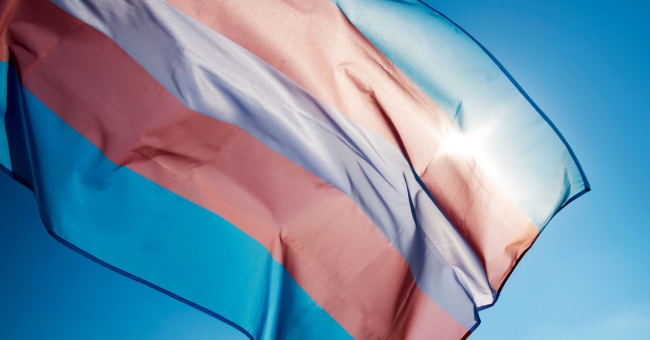
    Trans flag

    Beacon Press sides with the trans and nonbinary community always—and especially in these times. As a book publisher, we speak through our books and want to lift up authors we have had the privilege of publishing over the last thirty years who affirm trans and nonbinary lives and identities.

    Beacon Press will continue to show our love and support for trans and nonbinary folx and affirm that we will still make their voices heard.


    Read Our Trans and Nonbinary Authors

    Before island is volcano

    antes que isla es volcán/before island is volcano: poemas/poems

    me raptaste de mi hogar,
    castigándome por no llamarte míster.
    aprendí tus malas palabras,
    y te maldije en tu idioma
    para que entendieras.

    nunca entendiste.
    decías que mi acento era muy fuerte.

    //

    you stole me from my home,
    punished me for not calling you mister.
    i learned your bad words,
    cursed you in your language
    so you would understand.

    you never understood.
    you told me my accent was too thick.
    —Raquel Salas Rivera, de/from “calibán a próspero”/“caliban to prospero”


    At-the-Broken-Places

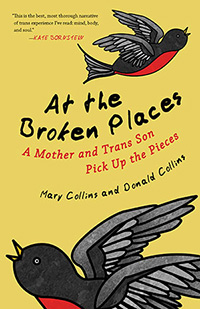
    At the Broken Places: A Mother and Trans Son Pick Up the Pieces

    “My decision to pursue a hysterectomy my senior year of college was personal, based on my individual relationship with my body, my organs, and our future together. I had been out as trans for almost four years, maintained hormone treatment, and in 2013, the year prior, I processed a legal name change and underwent top surgery. I had come a long way to understanding what being male meant to me. For the first time, I truly grasped that there is no right way to be trans, that there is no right way to “feel” any gender.”
    —Donald Collins, “Who Wears the Pants?” 


    Just Add Hormones

    Just Add Hormones: An Insider’s Guide to the Transsexual Experience

    “Comfort with one’s body and a congruity between body and mind are the goals of transition, and these concepts mean different things to different people. For some, a mixture of the masculine and feminine body types, behaviors, and though processes is sufficient. For others, only a complete and all-inclusive transition to the ‘opposite’ gender will do. For all the problems that transsexual people have in transitioning to the ‘opposite’ gender, it seems to me that the use of the term opposite in this context might signal a societal misconception that affects not just transpeople but everyone. When we use the term, we’re automatically setting up a strict binary gender system (a two-gendered system) that leaves no room for anyone who doesn’t specifically conform, physically and emotionally, to what our society considers either ‘male’ or ‘female.’”
    —Matt Kailey


    Nina Here Nor There

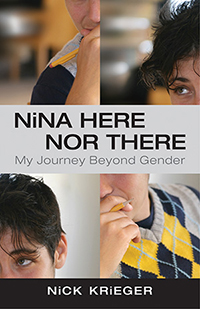
    Nina Here Nor There: My Journey Beyond Gender

    “Lately, it seemed like these trans guys, as most people referred to them, were everywhere—bars, bookstores, parks, my house, my street—their very presence refuting what I’d always taken as fact, that those with an F on their birth certificates were automatically women. Before moving to the Castro, I’d thought becoming a man was as realistic as growing wings. Asking whether a woman would be happier as a guy was one of those dumb questions, like what would you do if a genie emerged from a bottle and granted you three wishes, or what super power would you most like to have.”
    —Nick Krieger


    Producing Politics

    Producing Politics: Inside the Exclusive Campaign World Where the Privileged Few Shape Politics for All of Us

    “Researching this book meant being invited into some of the fanciest, most expensive houses and offices I’ve ever seen, just as it brought me into fairly humble, jumbled working campaign offices. Most political professionals I met had extremely good social skills. I almost always had good conversations with people from both parties, despite personally being on the opposite side of nearly every political issue from the Republicans I interviewed, and to the left of most of the Democrats as well. Whatever I felt about the views of the people I interviewed, I focused on my research goal: understanding the campaign industry and how such professionals view their jobs, the candidates, and the electorate. Maybe they assumed I shared their views, since I did request the interviews, and although I am trans, they probably just saw me as a fellow straight White guy. Or maybe they simply didn’t mind explaining their work to a geeky grad student (when I started this project) or assistant professor (when I finished).”
    —Daniel Laurison 


    A Queer and Pleasant Danger

    A Queer and Pleasant Danger: The True Story of a Nice Jewish Boy Who Joins the Church of Scientology and Leaves Twelve Years Later to Become the Lovely Lady She Is Today

    “It was a dozen years after my gender change, and I’d never gone blonde. All my life, blonde had called to me, like some people are called into the service of the Lord. I wanted to be a kickass blonde, like Geena Davis in The Long Kiss Goodnight. I wanted hair like hers—I wanted eyes like hers and a mouth like hers. But I’d spent most of my life as a ruggedly handsome Jewish guy of Russian heritage, and I was afraid that too much of the rugged guy-ness would leak through the blonde and I’d be a yellow-haired guy in a dress. I’d be a towheaded freak, a platinum clown.”
    —Kate Bornstein 


    Trans Liberation

    Trans Liberation: Beyond Pink or Blue

    “Trans people are still literally social outlaws. And that’s why I am willing at times, publicly, to reduce the totality of my self-expression to descriptions like masculine female, butch, bulldagger, drag king, cross-dresser. These terms describe outlaw status. And I hold my head up proudly in that police lineup. The word outlaw is not hyperbolic. I have been locked up in jail by cops because I was wearing a suit and tie. Was my clothing really a crime? Is it a ‘man’s’ suit if I am wearing it? At what point—from field to rack—is fiber assigned a sex?”
    —Leslie Feinberg 


    Transgender Warriors

    Transgender Warriors: Making History from Joan of Arc to Marsha P. Johnson and Beyond

    “For trans people, winning progressive legislation and repealing bigoted laws are important stepping stones in our larger struggle for justice. But the experience of this century has shown that the organic make-up of the profit system inevitably drives it into a cataclysm of economic and social crises that can wipe out the progressive gains of a lifetime. That’s the lesson I learned from the triumph of fascism in Germany.”
    —Leslie Feinberg 


    YoureInTheWrongBathroom

    “You’re in the Wrong Bathroom!”: And 20 Other Myths and Misconceptions About Transgender and Gender Nonconforming People

    “Every third day, a transgender person is reported murdered, and this is likely an underestimate, as many murders of trans people are never brought to the attention of authorities. Heterosexual cisgender men are, by far, the majority of perpetrators in these crimes, and there is social acceptability in some circles to claim ‘trans panic’ as a defense—the idea that learning someone is trans can cause a temporary inability to prevent yourself from killing them. In 2014, California became the first state to ban ‘gay panic’ or ‘trans panic’ as defenses in court, but elsewhere in the United States these arguments are still permitted.”
    —Laura Erickson-Schroth and Laura A. Jacobs


    Read Our Titles that Affirm Trans and Nonbinary Lives and Identities

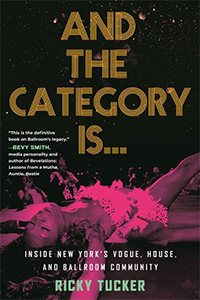
    And the Category Is pb

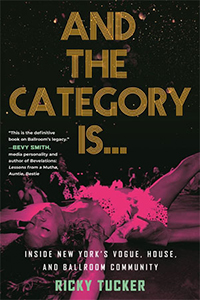
    And the Category Is . . . : Inside New York’s Vogue, House, and Ballroom Community

    “[B]eyond the four walls of a ball, in the outside world, the ability to blend and not be clocked is an utter necessity, again especially in the case of Black trans women who navigate day-to-day life in the brutal streets of all four carnal, cardinal corners of the United States. For them, being noticeably trans in public has always been answered with violence, sometimes verbal, often physical, always psychological. While at a Ballroom function, you might win a trophy, scoring tens across the board for convincingly resembling a soldier, a pampered housewife, or a young hunk, whereas in the streets of Harlem, the Bronx, Brownsville, or any other urban center, being or not being “clocked” as trans means the difference between peace and trauma or death.”
    —Ricky Tucker 


    Invisible No More

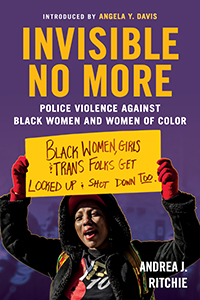
    Invisible No More: Police Violence Against Black Women and Women of Color

    “These racially gendered and sexualized myths conjured to justify the brutal social control used to maintain racially gendered hierarchies persist to this day, having transformed, solidified, and mutated over time to fit shifting realities. They pervade daily law enforcement interactions with women and transgender people of color, structuring police and public perceptions of women’s appearance and behavior, and dictating the terms of policing and police violence against women’s bodies in the context of present-day policing paradigms.”
    —Andrea J. Ritchie 


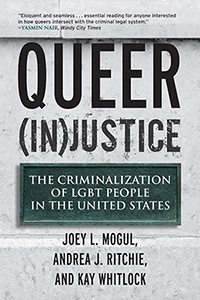
    Queer (In)Justice

    Queer (In)Justice: The Criminalization of LGBT People in the United States

    “Justice for [Black transwoman] Duanna Johnson and countless other LGBT people requires that efforts to eradicate discrimination go beyond Fortune 500 companies to shelters, welfare offices, and drug treatment programs, and ensure that public and private institutions are held accountable. It also demands critical examination of the role played by the criminal legal system in queer lives. It requires that we envision and nurture approaches to safety that do not rely on and strengthen a system that is built on and perpetuates systemic violence against queer people—particularly the most marginalized among us.”
    —Joey L. Mogul, Andrea J. Ritchie, Kay Whitlock


    Queer Virtue

    Queer Virtue: What LGBTQ People Know About Life and Love and How It Can Revitalize Christianity

    “It is common for Christians to approach Christian ethics as a series of rules, and to assume that God condemns us when we violate those rules. This is the same problematic misinterpretation we saw operating in the story of Abraham nearly sacrificing Isaac: God sets up rules and demands compliance with them. If we break the rules, this thinking goes, we are wrong and worthy of punishment. This is a flawed but powerful notion that has done immeasurable harm to queer people. Many of us are forced to confront again and again the internalized homophobia, biphobia, transphobia, and plain old sexphobia that this thinking breeds within us.”
    —The Rev. Elizabeth M. Edman


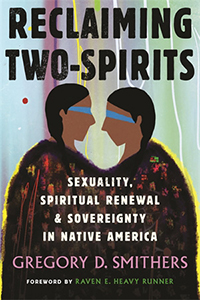
    Reclaiming Two-Spirits

    Reclaiming Two-Spirits: Sexuality, Spiritual Renewal & Sovereignty in Native America

    “‘Two-Spirit’ denotes the existence of feminine and masculine qualities in a single person. This English translation was never meant to limit gender and sexual expression, or the connections people make to tradition and community. LGBTQ Native Americans adopted Two-Spirit in the 1990s to provide people with a sense of Pan-Indian unity, to give greater visibility to people made almost invisible by settler colonialism, and to reclaim tribally specific roles and identities.”
    —Gregory D. Smithers


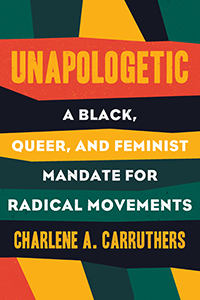
    Unapologetic

    Unapologetic: A Black, Queer, and Feminist Mandate for Radical Movements

    “Black radical feminism should be considered basic, not something advanced or optional. If organizers and educators are committed enough to dig into complex theories on racial capitalism, white supremacy, and anti-Blackness, then they can also commit to digging into patriarchy, homophobia, and transphobia.”
    —Charlene A. Carruthers


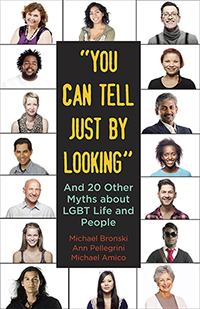
    You Can Tell Just By Looking

    “You Can Tell Just By Looking”: And 20 Other Myths About LGBT Life and People

    “Transgender adults and children in the United States are not asking to be given a special role; they want to be allowed to live their lives and have access to the trans-specific medical care they need—all without being told they are a problem to be solved.”
    —Michael Bronski, Ann Pellegrini, Michael Amico


    Trans flag


    About the Author 

    Gayatri Patnaik is the director of Beacon Press. Previously an editor at both Palgrave Macmillan and Routledge, she has been at Beacon Press over twenty years and has published authors including Imani Perry, Cornel West, Kate Bornstein, Roxanne Dunbar-Ortiz, and Jeanne Theoharis. She acquires in US History, with a focus on African American History and race/ethnicity/immigration, and began Beacon’s award-winning “ReVisioning History” series. Gayatri occasionally signs memoir, began Beacon’s LGBTQ series, “Queer Action/Queer Ideas,” (edited with Michael Bronski) and developed books in “The King Legacy,” with Joanna Green, in a series about Dr. Martin Luther King, Jr. Follow her on Twitter at @gpatnaik1. and on Bluesky at @gayatripat.bsky.social.

  • By Catherine Tung and Perpetua Cannistraro

    Danielle Legros Georges by Jennifer Waddell

    Author photo: Jennifer Waddell

    Editor’s note: It was with extraordinary sadness that we learned that our author, Danielle Legros Georges, passed away in her Dorchester home on February 11 after a years-long battle with stage-four breast cancer. Her partner, Tom Laughlin, and her brothers, Gerard, Bernard, and Stephan, were with her. We are honored to have published her final book, Three Leaves, Three Roots, and will find ways in the coming days, weeks, and beyond to celebrate the Poet laureate of Boston (2015-2019) and her work. Her editor, Catherine Tung, and her publicist, Perpetua Cannistraro, pay tribute to her here.

    ***

    As Danielle’s editor, I got to know her primarily through the documents we sent back and forth—the edited manuscripts, author questionnaires, cover design notes, blurb requests, and other written tasks that go into a book. Through it all, she was unfailingly patient, charming, intelligent, and artful. Yet what shone through more than anything was a quietly revolutionary spirit, forged in steel. In response to the author questionnaire prompt “How would you like to be addressed by Beacon staff?” she put:

    “She who writes with fire in her pen and fierceness in her heart in every third instance, but otherwise Danielle.”

    When Danielle and I eventually met face to face, I found that her quiet power was all the more present in person. And that power lives on in her work, which taught me a chapter of history that I find endlessly inspiring and will always carry with me.
    —Catherine Tung, editor


    I could tell that Danielle was a voracious learner the moment I met her at the Omni Parker House for lunch one sunny afternoon in July.

    As we settled into our booth, she leaned in and whispered excitedly, “Did you know that Malcolm X used to be a server here at Parker’s Restaurant?” She pointed to a table behind us. “It’s rumored that John F. Kennedy proposed to Jackie Onassis at that corner table.”

    Her intelligence and perceptiveness were on display the whole afternoon. Danielle and I gabbed all lunch to the slight dismay of our server, who had to return to our table twice to take our order because we’d never picked up a menu. Such was our instant connection over literature, our shared Haitian heritage, and our curiosity about one another’s careers, hers in academia and mine in book publishing.

    I was excited to meet a dedicated scholar and poet whose past encompassed equal parts Motherland and Diaspora. Ever since leaving home, I could feel the Motherland part of my life slipping away. I was born a second-generation Haitian American. Most of my life, I was assimilated into white America. I’d recently married the love of my life, a white man. As time passed, I felt increased pressure to carry on my family’s heritage. I wasn’t sure I could keep my culture alive and pass it on to my children one day. Toward the end of our lunch, I took a chance and shared this fear with her.

    Danielle looked at me. Her eyes conveyed compassion but they also gleamed with a fierceness I hadn’t seen throughout the meal.

    She told me that what defines a Haitian is the pursuit of freedom. That pursuit has marked our country’s entire two-hundred-plus-year history and is the thing all of our lives represent. She said the freedom to determine our own futures and to tell our own stories, and the desire to do so, resides in the heart of every Haitian. She told me that if I passed that down to my children, I would be giving them the very essence of our culture.

    Three Leaves, Three Roots is a gorgeous and lasting testament to this idea. Danielle worked hard to ensure that this little-known chapter of Haiti’s history, tied so closely with the Congo’s, made it into the annals of time. She interviewed her parents, their friends, and others who participated in the transnational movement of the 1960s and 70s in order to make this moment come alive. She gave voice to women so often silenced in favor of Haiti’s terrifying and powerful men. And she told the story beautifully. We are lucky to be able to travel Danielle’s imagination to visit this era of Haitian life. Danielle’s work serves to set Haitians free from the darkness of fear-filled stereotypes and shines a magnificent light on the diversity of Haiti’s population. Her words inspire me to embody that drive for freedom that makes me Haitian—that makes me human.
    —Perpetua Cannistraro, publicist 


    About the Authors 

    Catherine Tung joined Beacon Press in late 2019 after seven years at Vintage Books, where she acquired in memoir, fiction, and nonfiction titles on politics, disability, cultural studies, and mental health. At Beacon, she is actively developing a list focused on oral history, urban planning, sexuality, and Asian American writing. Outside the office, she enjoys musicmaking, community building, knitting, gardening, and friendly debates over bourbon. 

    Perpetua Cannistraro joined Beacon Press in 2015. She is a graduate of Florida Southern College and earned her MA in Publishing and Writing from Emerson College. Perpetua has extensive publicity experience in the areas of race and culture, memoir, education, and history. Some of her favorite things include the Lord, TV, Disney princesses, books, 90s-00s teen pop, and the color pink. Connect with her on Instagram at @perpetuathepublicist.

  • By Christian Coleman

    Image credit: Alex A. Alceus

    Image credit: Alex A. Alceus

    Did you check your phones? Is it any shock that Google Calendar genuflected to the current scorched-earth administration’s anti-DEI tour and removed Black History Month from its holiday list during Black History Month? Is it a shock that they claimed their holiday list wasn’t “globally scalable or sustainable?” Talk about Big Tech being an avowed fascist’s pick me. Doublespeak and all. Well, guess what, Google Calendar? We don’t need you to recognize Black History Month. Keep on with your Ku Klux Kowtowing while we get this party started.

    This year’s theme highlights how Black communities have always been vital to transforming and tooling the US through all varieties of labor, visible and invisible, through the centuries. We have just the handful of labor-themed and labor-adjacent titles from our catalog for the occasion. This inexhaustive list doubles as a shout-out to the labor force of Black writers. Because, yes, writing is labor, too.


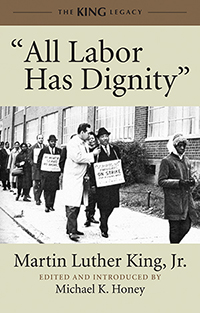
    All Labor Has Dignity

    “All Labor Has Dignity”
    Edited and Introduced by Michael K. Honey

    “You are demanding that this city will respect the dignity of labor. So often we overlook the work and the significance of those who are not in professional jobs, of those who are not in the so-called big jobs. But let me say to you tonight, that whenever you are engaged in work that serves humanity and is for the building of humanity, it has dignity, and it has worth. One day our society must come to see this. One day our society will come to respect the sanitation worker if it is to survive, for the person who picks up our garbage, in the final analysis, is as significant as the physician, for if he doesn’t do his job, diseases are rampant. All labor has dignity.”
    —Martin Luther King, Jr. 


    And the Category Is pb

    And the Category Is . . . : Inside New York’s Vogue, House, and Ballroom Community

    “I often compare [Ballroom] to sports. We have international leagues for basketball, football, swimming. Why don’t we have that for Ballroom? Why aren’t these same brands and corporations treating us the same? If y’all want to give us a coin, give us a coin to create the sort of infrastructure that people can sustain themselves around. Growing up, I always heard you couldn’t put Ballroom on a resume. Well, I have made it part of my life’s mission to disprove that notion. I was like, ‘Why can’t you?’ And so, I don’t want to be an anomaly. I don’t think it should only be me. I think it should be any and everyone who wants to make Ballroom their career. There should be a path to do that. I’m tired of this, ‘Oh, Paris Is Burning. Oh, Vogue. Oh, Vogue Evolution. Oh . . . these things just come up and then just go away for a while.’ But I say, No, kiki happened. No, Pose happened. Now, Legendary happened. We just need to keep going.”
    —Twiggy Pucci Garçon in conversation with Ricky Tucker 


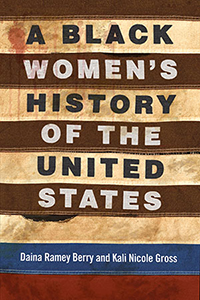
    A Black Women's History of the United States

    A Black Women’s History of the United States

    “ . . . [B]ecause in just about every battle that Black women have undertaken in the United States, every barrier that they have shattered, and every first accomplishment they have secured, their actions have paved the way not just for other Black women but for all marginalized peoples. Even against their will, Black women’s bodies, knowledge, labor, and offspring have helped develop the country and contributed to its wealth, which laid the foundation for the colonies’ move toward independence.”
    —Daina Ramey Berry and Nicole Kali Gross


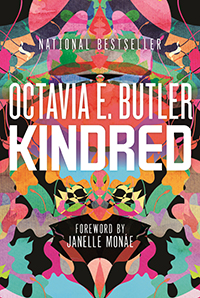
    Kindred - Monae foreword

    Kindred
    Foreword by Janelle Monáe

    “I kept Kevin’s room clean. I brought him hot water to wash and shave with, and I washed in his room. It was the only place I could go for privacy. I kept my canvas bag there and went there to avoid Margaret Weylin when she came rubbing her fingers over dustless furniture and looking under rugs on well-swept floors. Differences be damned, I did know how to sweep and dust no matter what century it was. Margaret Weylin complained because she couldn’t find anything to complain about. That, she made painfully clear to me the day she threw scalding hot coffee at me, screaming that I had brought it to her cold.”
    —Octavia E. Butler 


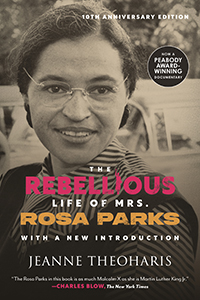
    The Rebellious Life of Mrs. Rosa Parks - 10th-anniversary ed

    The Rebellious Life of Mrs. Rosa Parks: 10th-Anniversary Edition

    “Parks’s lifetime of political work ran the gamut of approaches. A longtime admirer of Martin Luther King Jr., Ella Baker, Malcolm X, Septima Clark, and Robert F. Williams, she embraced multiple approaches, given the systematic and pervasive character of American racism. Working alongside the Left from the Scottsboro case to E. D. Nixon’s Brotherhood of Sleeping Car Porters to the Highlander Folk School to her association with the National Negro Labor Council, Parks refused to be intimidated by the red-baiting of the era. She also knew that registering to vote and taking her youth group to see the Freedom Train exhibit—let alone galvanizing an organized bus boycott—were revolutionary acts in the postwar South. To her, a united front was key to black struggle.”
    —Jeanne Theoharis 


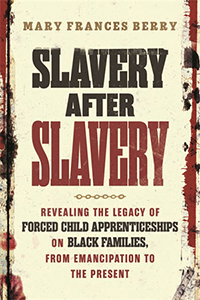
    Slavery After Slavery

    Slavery After Slavery: Revealing the Legacy of Forced Child Apprenticeships on Black Families, from Emancipation to the Present

    “To the unrequited harm done to blacks during slavery and after, the use of apprenticeships to provide former slave owners with slave labor after the Thirteenth Amendment, must be added the experience of these children and families who fought, sometimes successfully and sometimes not, to prevent emancipated children from being pushed back to forced labor. Any consideration of reparative justice must take the suffering of these children and their families into account.”
    —Mary Frances Berry


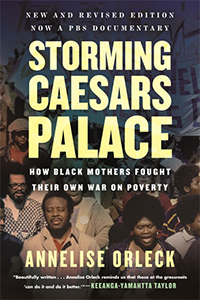
    Storming Caesars Palace

    Storming Caesars Palace: How Black Mothers Fought Their Own War on Poverty

    “[Ruby] Duncan loved her new job. She learned how to cook for thousands of people, and relished the camaraderie of the Sahara kitchen staƒf. Supervisors praised her thoroughness and style, bantered with her, and laughed at her sometimes bawdy jokes. ‘One supervisor would always call me ‘punkin,’’ she says. He also taught her how to prepare 1,200 salads a day. ‘I would get all my bowls and I was in there with both hands flying,’ Duncan says. Even the hotel boss took a liking to her, asking Duncan to personally prepare his grapefruit every morning. ‘I could have stayed and stayed,’ she says.”
    —Annelise Orleck


    Three Leaves  Three Roots

    Three Leaves, Three Roots: Poems on the Haiti-Congo Story

    “use instead a slow swelling of light that begins at a
    beginning when the scar-giver forges the scar and forgets,
    and the bearer remembers indelibly the mark on the body,
    recalls how a mark can be made on a body. in the ear a clear
    consciousness whispered. use instead reply because peace
    is a place free of trouble: a blue firmament, a gold sun that
    reaches the skin. use instead the equalization of all suns, the
    standing next to, the standing for, rotation, and the equi-
    librium of stars: objects held together by their own gravity.
    gravity is the flame of dissonance, is the mind honed with
    the vision of its unity. grave is the fist raised of the body.”
    —Danielle Legros Georges, “in this poem, do not use the word revolution”


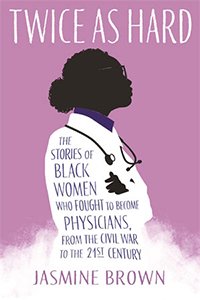
    Twice As Hard

    Twice As Hard: The Stories of Black Women Who Fought to Become Physicians, from the Civil War to the 21st Century

    “Once I found substantive information about one African American woman physician, she led me to the next, and the next. When I felt my knees begin to buckle under the weight of the knowledge that, for well over a century, people like me had been rejected from medical schools and then residency programs solely because of their identities, these black women’s stories were my antidote. They gave me the strength to keep running in my own race toward a career in medicine.”
    —Jasmine Brown


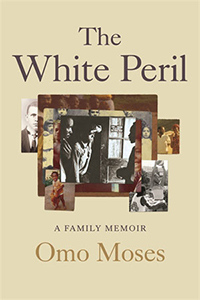
    The White Peril

    The White Peril: A Family Memoir

    “My dream for YPP [Young People’s Project] was that it could be a space for young people who nurtured whatever gifts they’d brought into this world, who challenged them to make good use of their gifts—like the basketball court and swimming pool had for me. A space that encouraged young people to be invested in each other’s success, to practice winning and losing together. Some crawl space to become conscious of and perhaps confront the challenges of their generation. I dreamt, like Baba [my father, Bob Moses], that math could be a catalyst for learning, teaching, leading, and organizing, for the self-realization and self-determination required to transcend, to perhaps deconstruct America’s cages.”
    —Omo Moses


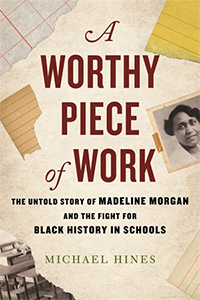
    A Worthy Piece of Work

    A Worthy Piece of Work: The Untold Story of Madeline Morgan and the Fight for Black History in Schools

    “By the spring of 1942, the units Morgan had devised, titled Supplementary Units for the Course of Instruction in Social Studies: The Negro in American Life, were ready for classroom use. The new curriculum was unveiled at 2:00 p.m. on Thursday, May 28, 1942, at Emerson Elementary, the school Madeline had left to begin her curricular efforts a year earlier, in a ceremony that involved not only the board of education but also an audience ‘consisting of leaders interested in the field of Negro education.’”
    —Michael Hines

    Black man by Alex A. Alceus


    About the Author 

    Christian Coleman is the digital marketing manager at Beacon Press and editor of Beacon Broadside. Before joining Beacon, he worked in writing, copy editing, and marketing positions at Sustainable Silicon Valley and Trikone. He graduated from Boston College and the Clarion Science Fiction & Fantasy Writers’ Workshop. Follow him on Twitter at @coleman_II and on Bluesky at @colemanthe2nd.bsky.social

  • By Mei Su Bailey

    Beacon Press Classics

    Photo credit: Christian Coleman

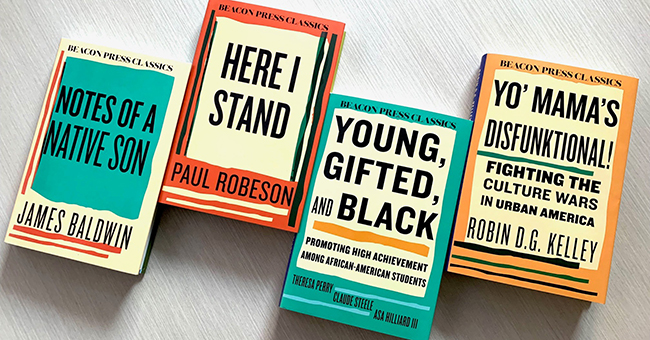
    In 2029, Beacon Press will celebrate 175 years of continuous book publishing. In the lead up to that milestone, the Press is drawing from its rich publishing history to reissue a selection of core titles that remain relevant to readers today. The series, “Beacon Press Classics,” will be released throughout 2025 and beyond, beginning with four titles slated for February 4. Those titles, released in celebration of Black History Month, are Notes of a Native Son by James Baldwin, Young, Gifted, and Black by Theresa Perry, Yo’ Mama’s Disfunktional! by Robin D. G. Kelley, and Here I Stand by Paul Robeson.

    “Selecting a handful of titles from over 170 years’ worth of books is no easy feat,” says series editor Alison Rodriguez. “Beacon has a massive catalog that has shifted and transformed across the decades, yet it has always remained unapologetically progressive. I’m looking forward to seeing the series continue to expand with new titles releasing as we head towards our 175th anniversary.”

    The series will feature spot gloss details and retro palettes inspired by the colors used on the original covers. “In general, there were bold colors and classic compositions born of the time and trends of when the original books were published,” says creative director Carol Chu. “For rolling out this series, the retro palettes signal something from the past, and as a whole family, they visually convey a timelessness and liminal permanency. I really liked the idea that the spines would form a visual block on a shelf—so all the spines are in the same blue.”

    The current list of Beacon Classics titles releasing in 2025 can be found here, and information about future Beacon Classics titles in the run up to 2029 will be provided at a later date.


    About the Author 

    Mei Su Bailey is the publicity assistant at Beacon Press. She worked at various youth advocacy and literary organizations, including 826 Boston, Dear Asian Youth, and the Fir Acres Writing Workshop. She holds a degree in sociology and anthropology from Lewis & Clark College in Portland, Oregon, and graduated from the Columbia Publishing Course at Oxford. Outside of work, you can find her playing with cats, making things with yarn, and enjoying many bowls of noodle soup with chili oil.

  • A Q&A with Jeanne Theoharis and Gayatri Patnaik

    Author photo: John Riscoli. Cover design: Louis Roe

    Author photo: John Riscoli. Cover design: Louis Roe

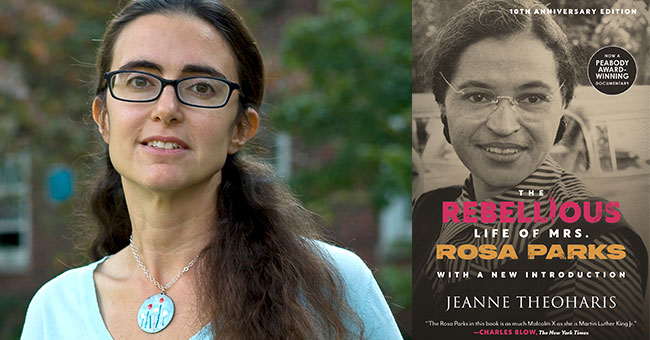
    Has it truly been ten years already? That’s how long it’s been since the second and revised edition of The Rebellious Life of Mrs. Rosa Parks, Jeanne Theoharis’s definitive biography covering all six decades of the civil rights icon’s activism, was published. It’s had quite the journey along the way. Awards, adaptations, curricula, and ongoing mythbusting. Beacon Broadside editor Christian Coleman caught up with Theoharis and her editor, Gayatri Patnaik, to chat about the tenth-anniversary edition.

    Christian Coleman: Congratulations on the tenth-anniversary edition! What does the book mean to you ten years on? How has your relationship to it changed or evolved over time? 

    Jeanne Theoharis: This is actually the twelfth-anniversary edition of the original book, which came out in 2013. This is the tenth anniversary of the second edition. When I published the original edition, I did so without being able to see a cache of Rosa Parks’s papers that had been held for years by Guernsey’s auction following a dispute over her estate. In late 2014, Howard Buffett, horrified by a news story about how Rosa Parks’s papers and effects were being held by this auction house, instructed his foundation to act, bought them and then donated the papers and photographs to the Library of Congress. In 2015, I was able to work with the Library of Congress to examine and open those papers to the public. We published a second edition of my book with a new introduction reflecting what was in the papers. 

    Many of those papers and photographs informed the young-adult edition I published with Brandy Colbert in 2021 and the documentary we did with Peacock that came out in 2022 where I served as a consulting producer. Because of the documentary, we received a grant from the Ford Foundation to create a curriculum around the film and the YA edition, and the book is now used by teachers across the country. This was also enabled by Lush Cosmetics, who created a special “Teach Truth” bath bomb in February 2022 and donated a portion of the proceeds to pay for 13,000 copies of the Parks YA edition to be distributed to teachers through the Zinn Education Project. I’m currently working with the Rosa Parks Museum in Montgomery on an exhibit on Parks’s longer history of activism for the museum. The work has just snowballed, and I think this new edition marks that bigger impact.

    Gayatri Patnaik: It is an editor’s dream to work on a book which is genuinely original, groundbreaking, and a catalyst to fundamentally changing how we think about something—in this case, Mrs. Rosa Parks. Of course, Mrs. Parks is one of the few female historical figures in the US that everyone knows. I still recall receiving drafts of chapters of Jeanne’s book and suddenly realizing how impoverished we were as a nation in terms of truly understanding Parks—her decades-long activism, her radicalism, and her phenomenal contributions. Mrs. Parks was, as Jeanne observed, hiding in plain sight. Jeanne’s award-winning book is a powerful corrective and has already become a classic. One of the most rewarding aspects for me is to see how profoundly her book continues to influence the national conversation.

    CC: For this edition’s introduction, you took an approach different from the introduction you wrote for the 2015 edition. How did you decide to write ten ways to be like Rosa Parks in the age of Black Lives Matter? 

    JT: There are many problems with the fables we have of Parks and King and the civil rights movement. But one of the worst is how these myths of the civil rights movement are weaponized against young activists today—against Black Lives Matter organizers or Palestine activists—to say, “You’re not doing it the right way.” Be like King. Be more like Rosa Parks, they’re told. Many of those people chastising young activists have no idea what they’re saying because most of the things they’re unhappy with are the same critiques waged against Parks and King: You’re un-American. You’re a troublemaker. You’re unreasonable. You’re being disruptive. 

    So, this new introduction was a way to challenge that framing—to say the ways to be like Rosa Parks in this moment are actually to confront the issues of our time, from police brutality to global justice, and fight widely and persistently on them, even when such activism is criticized and red-baited. It was also to underline that Rosa Parks found tremendous hope and sustenance in the spirit and militancy of young people, from her NAACP Youth Council in Montgomery to the myriad Black Power actions she supported in Detroit, delighting in the energy of young people, particularly at moments when she found her peers “complacent.”

    CC: Early in the introduction, you write that the reception to The Rebellious Life of Mrs. Rosa Parks “was beyond [your] wildest imagination.” What are some of your favorite highlights from the ways folks have received the biography? 

    JT: One of my favorite moments came the first week. I was on Melissa Harris-Perry and then on PBS News Hour with Gwen Ifill. Both of them, in their excitement about the book and learning about Mrs. Parks’s larger history of freedom fighting, said a version of “Thank you for bringing her back to us.” That even though we all had heard of Rosa Parks, she was so much better than what we’d been given. I’ve heard from so many activists and community organizers across the country how her story has brought them faith and sustenance for their own struggle. I have been told by so many professors and teachers how much students gravitate to this history and their anger at being taught so many myths about her. My most viral tweet has been around Rosa Parks’s clear opposition to Clarence Thomas’s nomination to the Supreme Court—even before the Anita Hill story came out—particularly because it brings Rosa Parks squarely into our current moment.

    CC: Since its original publication, Rebellious Life won the NAACP Image Award and others. As you mentioned, it’s been adapted for young-adult readers and as a Peabody Award-winning documentary produced by NBC-Peacock. Did you see the book having this kind of life when you first wrote it? What course did you have in mind for it? 

    JT: Of course, this is what any author hopes for—the dream of changing the ways this country honors Rosa Parks and how people teach about her in school. But to get to start to do it . . . Wow! 

    When we first brought the book out and people started asking me to do a YA adaptation, I was resistant. Mrs. Parks had been trapped for decades in all these bad children’s and YA books. My job, as I saw it, was to do a full, footnoted biography for adults. But, over the years of doing a lot of talks for teachers, I remember at one workshop in Montgomery in the summer of 2018 that someone, again, asked me what I recommended to teach on her. Finally, I was like, I need to have skin in the game. I can imagine how to do a version for teenagers. So, we did the YA. And then Lush and Zinn Education Project partnered to get it in the hands of thousands of teachers.

    Meanwhile, over the years, on holidays and important days, I have always done Twitter threads as a way to circulate material on Parks that most people don’t know. I did one on her birthday in 2019, and a documentary filmmaker I had met, Johanna Hamilton, reached out, surprised by all she didn’t know and asked if someone was doing a documentary. She was stunned that there hadn’t been one on her. She partnered with fellow filmmaker Yoruba Richen. Soledad O’Brien came on board. They sold the project to Peacock. The film premiered at Tribeca in June of 2022. Meanwhile, the Ford Foundation gave us a grant to build education and outreach around the film, and with Zinn Education Project, we made a curriculum using the YA version and film. Now, thousands of teachers are bringing this into their classrooms, despite the pushback against teaching Black history that has escalated across the country.

    So many people have helped elevate this book and this history of Rosa Parks’s life of freedom fighting. It has been an honor of a lifetime.

    CC: You have a new book about Martin Luther King’s campaign for racial justice outside the South coming out from The New Press, King of the North. How do you see it in conversation with Rebellious Life? As an extension of it? 

    JT: Certainly, King of the North is an extension of, is in conversation with, and stands on the shoulders of The Rebellious Life of Mrs. Rosa Parks. I learned a lot from doing the research for the Parks book and seeing its reception in the world. First, with Parks and now with King, the need to return to the people we think we know and realize how much we don’t. Both with Parks and with King, there were so many aspects of their activism that were hidden in plain sight. We got comfortable with certain stories. And then looking with new eyes and new questions, a whole realm of activism comes into view (in part because of the work of the Black press that documented all the things that both were doing and that, in King's case, have been missed by so many biographers).

    I realized in all my public speaking about Rosa Parks both how hungry people are for this fuller history and also for understanding why we get the fables we get and what political work they do. So, for King of the North, I’ve gone back and examined how certain narratives about King and his work were key media narratives built at the time to serve Northern liberals and US Cold War politics, unpacked them and shown how Dr. King himself took them on. I’ve also centered Coretta Scott King in this book, understanding that he became what he did because of her.
    People often ask me what my most interesting find was doing the Parks research. It wasn’t one particular thing. It was that she spent more than half of her life living in Detroit, fighting the racism of the Jim Crow North, “the Northern promised land that wasn’t.” Similarly with King, we’ve Southernized him. From graduate school on, King understood and challenged Northern segregation and the limits of Northern liberalism at home (a “new Egypt,” King would proclaim). And finally, like with Parks, getting to spend many years with Martin and Coretta Scott King, to see the measure of their work and their courage, has been like getting to know them anew. A King for our times.


    About the Authors 

    Jeanne Theoharis is Distinguished Professor of Political Science at Brooklyn College of City University of New York and the author or coauthor of numerous books and articles on the civil rights and Black Power movements and the contemporary politics of race in the US. Her books include The Rebellious Life of Mrs. Rosa Parks (winner of a 2014 NAACP Image Award) and A More Beautiful and Terrible History (winner of the 2018 Brooklyn Public Library Literary Prize for Nonfiction). Her forthcoming book, King of the North: Martin Luther King, Jr.’s Life of Struggle Outside the South, will be published March 25, 2025. Connect with her on Twitter (@JeanneTheoharis) and on Bluesky (@jeannetheoharis.bsky.social). 

    Gayatri Patnaik is the director of Beacon Press. Previously an editor at both Palgrave Macmillan and Routledge, she has been at Beacon Press over twenty years and has published authors including Imani Perry, Cornel West, Kate Bornstein, Roxanne Dunbar-Ortiz, and Jeanne Theoharis. She acquires in US History, with a focus on African American History and race/ethnicity/immigration, and began Beacon’s award-winning “ReVisioning History” series. Gayatri occasionally signs memoir, began Beacon’s LGBTQ series, “Queer Action/Queer Ideas,” (edited with Michael Bronski) and developed books in “The King Legacy,” with Joanna Green, in a series about Dr. Martin Luther King, Jr. Follow her on Twitter at @gpatnaik1. and on Bluesky at @gayatripat.bsky.social.

    Christian Coleman is the digital marketing manager at Beacon Press and editor of Beacon Broadside. Before joining Beacon, he worked in writing, copy editing, and marketing positions at Sustainable Silicon Valley and Trikone. He graduated from Boston College and the Clarion Science Fiction & Fantasy Writers’ Workshop. Follow him on Twitter at @coleman_II and on Bluesky at @colemanthe2nd.bsky.social

  • Cecile Richards

    Photo credit: Lorie Shaull

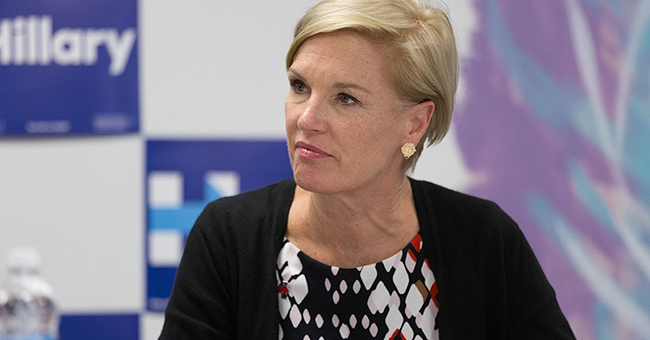
    Primarily known as the president of Planned Parenthood and champion of reproductive rights, Cecile Richards was a feminist activist on more than one front. She brought her A-game to intersectionality in several social justice movements and political arenas. She deserves all the accolades and recognition, the most recent of which was the Presidential Medal of Freedom from President Joe Biden at the White House last November. Since the demise of Roe v. Wade in 2022 and the return of an avowed fascist to the White House, her death on January 20, 2025 at age sixty-seven from brain cancer hit us that much harder. Our hearts go out to her loved ones. A few of our authors pay tribute to her and her work.

    Rosemarie Day, author of Marching Toward Coverage: How Women Can Lead the Fight for Universal Healthcare, paid her respects on Instagram:


    Carole Joffe

    Cecile Richards, the president of Planned Parenthood from 2006-2018, and a transformative figure in reproductive health in America, died of brain cancer on January 20. Though passionate about abortion rights—she was working on projects to promote abortion access till the time of her death—she was hardly a single-issue actor.

    Her first job out of college was in the labor movement, organizing hotel workers, and throughout her career, she was always aware that reproductive health services were essential, but only one part of a package of things working people needed for a dignified life.  As she once said in a speech, “The same folks I organized in hotels in New Orleans, or janitors in Los Angeles, or nursing home workers in East Texas, they’re the folks that rely on Planned Parenthood, too. People come to us for reproductive health care, but they need a lot of other things. They need a living wage. They need childcare that’s affordable. If they’re immigrants, they need us to stand with them.”

    One of her greatest achievements at Planned Parenthood was to bring the organization forcefully into the political arena. In response to the growing attacks on the organization by Republican administrations, particularly during the presidency of George W. Bush, she established the legal arrangements that allowed staff and supporters to engage in electoral work under the aegis of Planned Parenthood. In 2008 and 2012, thousands affiliated with the organization worked on behalf of Barack Obama’s successful presidential campaigns. Immediately after leaving Planned Parenthood, she turned her energy to working on voting rights.

    Though a media super star, Cecile Richards was widely known as a down-to-earth, gracious individual. I had the good fortune to meet her several times and treasure my memory of our encounters. The contrast between Cecile’s life work and commitments and those of the person inaugurated, the same day of her death, as the president of the United States could not be more enormous. My despair about the future of our country under this new regime is tempered somewhat when I remind myself of the difference someone like Cecile could make. May her memory be a blessing.
    —Carole Joffe, After Dobbs: How the Supreme Court Ended Roe but Not Abortion


    Michelle Oberman

    Cecile Richards lived in complicated times, particularly for an abortion advocate. Throughout her career, there was the ever-present drumbeat of Roe v. Wade’s coming demise. Meanwhile, forces ranging from restrictive laws to poverty and racism dictated that, for too many Americans, the “right” to choose abortion was increasingly hollow. This reality spurred an ongoing reckoning over the mission of the pro-choice movement and of Planned Parenthood’s role within it. Abortion medication began changing the way Americans got abortions, which in turn raised questions about Planned Parenthood’s brick and mortar business model. This work was not for the faint of heart.

    Through it all, Cecile brought her prodigious power and skill to the task of making things better. And she did. I suspect she was talking to herself, as much as to us, as she worked from her sickbed on her most recent projects: Charley, an abortion finder chatbot; and Abortion in America, a media project using abortion stories to fuel activism.

    It’s not hard to imagine future generations one day asking: ‘When there was so much at stake for our country, what did you do?’ The only acceptable answer is: ‘Everything we could.

    As we face down the chaos of our times, her memory is for blessing: May we be like Cecile Richards, strong and resolute.
    —Michelle Oberman, Her Body, Our Laws: On the Front Lines of the Abortion War from El Salvador to Oklahoma 


    Rest in peace, Cecile Richards.

    Cecile Richards

  • A Q&A with Cheryl L. Neely

    Cheryl-Neely-and-No-Human-Involved

    Author photo: Justin Milhouse. Cover design: Louis Roe

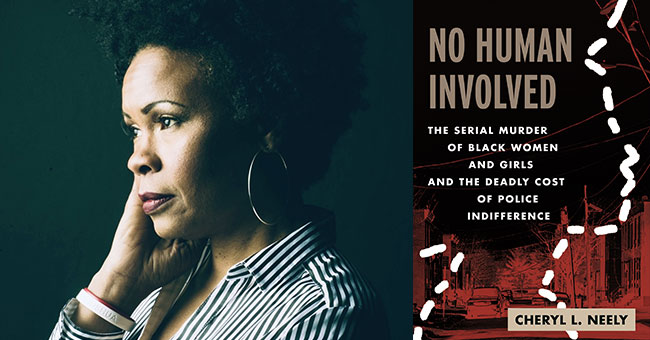
    When Black women and girls are targeted and murdered their cases are often categorized by police officers as “N.H.I.” — “No Humans Involved.” Dehumanized and invisible to the public eye, they are rarely seen as victims. In the United States, Black women are killed at a higher rate than any other group of women, but their victimhood is not covered by the media and their cases do not receive an adequate level of urgency.

    Utilizing intensive historical research of cases in cities such as Boston, Cleveland, Chicago, Detroit, and Los Angeles, Cheryl L. Neely calls attention to serial cases of Black female murder victims and a lack of police action in No Human Involved: The Serial Murder of Black Women and Girls and the Deadly Cost of Police Indifference. Beacon Press senior publicity Bev Rivero caught up with Neely to chat about her book.

    Bev Rivero: You open your book with a deeply personal story. How did you approach writing about this loss and how it led to your research and academic work?

    Cheryl L. Neely: When I wrote my first book, You’re Dead—So What?: Media, Police, and the Invisibility of Black Women as Victims of Homicide, I shared the story of the murder of my schoolmate and friend, Michelle Kimberly Jackson in 1984 in the book’s prologue, focusing on the lack of media coverage and police response it garnered. Her case was solved a few years after the book was released and almost forty years after she was killed. I wanted to open No Human Involved with the first chapter being devoted to her story, the resolution of the case, and how police neglect led to other victims by Michelle’s killer, Kennith Dupree, who confessed to at least seven other homicides. I noticed while doing research on my first book that some of the women (like Michelle) were murdered by men who killed more than once. This was the catalyst for me to research the possible connection between lackluster homicide investigations of murdered Black women and girls by police and emboldened serial killers who target these victims, believing they don’t matter to law enforcement.

    BR: The Murder Accountability Project (MAP) is fascinating. Can you describe it in brief and how you came to interview Thomas Hargrove and incorporate his work into No Human Involved?

    CLN: MAP is an organization founded by Thomas Hargrove, a journalist who devised a mathematical algorithm to identify clusters of unsolved murder cases that would most likely be serial killings. What makes his project so vital to my research is that, oftentimes, the patterns of serial homicide that go uninvestigated or even classified as serial homicides by police involve victims that are ignored or disregarded by law enforcement. This is how I came across MAP, as I was researching cases of possible serial murders of Black women in Chicago and Cleveland, Ohio. Thomas Hargrove had identified a series of killings of Black women who died in a similar fashion—dumped in similar locations—and had yet to be solved by police. I reached out to him, and he agreed to be interviewed for my book. The information Hargrove provided was indispensable and confirmed my underlying thesis that police’s failing to seriously investigate and solve murders of victims creates a single offender who targets victims with impunity, without fear of ever being apprehended.

    BR: A topic you explore is mainstream media’s language choices when describing the deaths of these women and girls, such as “two bodies found in trash bags.” How do you think these choices affected the perception and attention to these cases?

    CLN: Language used by media to describe the deaths of victims reinforces a narrative about whether that person is someone society should care about. Media has the power of agenda setting—determining how a problem is viewed and how society should respond to it. And when it comes to homicides, media has a role in how police respond by increasing pressure on police to solve the case. In the deaths of Black women and girls who are often viewed through a lens of indifference, racism, and misogynoir, framing their murders as “bodies found in trash bags” is dehumanizing and disrespectful to the victims as well as to their traumatized and devastated families. They are not just bodies. They are people. Human beings. I would rather the title of the article be “The bodies of two young women found in trash bags.” Show them as people first!

    BR: Writing about the Taco Bell murders and Henry Wallace’s connection to the victims, you note that while it is “unusual for serial killers to murder individuals with whom they have a personal relationship, again, Black women are more likely to be killed by male acquaintances than by strangers compared to their white counterparts.” You reveal how getting law enforcement to treat these cases as serial murders affecting the community is an ongoing struggle, no matter the geographic region. Do you see this changing with time?

    CLN: I don’t necessarily see this issue as changing or improving with time since decades can pass with attitudes remaining the same and little change taking place. So, it’s not about time as it is about a shift in the cultural paradigm of policing. As long as Black women and girls’ lives don’t matter, their deaths won’t either. It’s a matter of police choosing to see these victims as human beings and, as they often do with white women and girls, as damsels in distress worthy of protection and rescue from male violence.

    BR: In the conclusion, you comment on the role of true crime media and podcasts in reopening cases. These cases are often not focused on women of color. Do you have any thoughts or advice for those who might want to work on a podcast project focused on the women you write about?

    CLN: The only thoughts I have about podcasts focused on Black women and girls as neglected victims of violence is that more podcasts emerge with these victims at the center. There are so many stories of serial killings with Black victims across the country, with communities and families desperate for public attention, so finding cases to focus on will not be a challenge. And as I discussed in the conclusion, podcasts have been successful in renewing attention on cold case murders and getting them solved.

    BR: Finally, what are some other projects, books, or writers you’d like your readers to seek out after reading your book?

    CLN: The issue of the invisibility of victims of violence based on race and gender is even more pronounced in Indigenous communities across North America, specifically in the US and Canada. I also encourage people to read about these cases. Unbroken: My Fight for Survival, Hope, and Justice for Indigenous Women and Girls by Angela Sterritt and Just Another Indian: A Serial Killer and Canada’s Indifference by Warren Goulding are books I strongly recommend. I also recommend Andrea J. Ritchie’s book, Invisible No More: Police Violence Against Black Women and Women of Color, also published by Beacon Press. Ritchie’s book is a powerful, yet emotionally-taxing examination of police violence against Black women and women of color as well as transwomen. It also illuminates the paradox that the very institution required to protect victims also perpetuates violence against them.


    About the Authors 

    Cheryl L. Neely is a sociology professor at Oakland Community College in Royal Oak, Michigan, where she teaches courses in Sociology and Criminology. She is the author of You’re Dead—So What?: Media, Police, and the Invisibility of Black Women as Victims of Homicide, which won the Gold Medal Midwest Book Award in 2016. 

    Bev Rivero is senior publicist at Beacon Press. Before joining Beacon in 2021, Bev was the communications and marketing manager at the National Book Foundation, where she worked on the National Book Awards, promoted the Foundation’s public and educational programs, and led all social media and marketing campaigns. Prior to NBF, she was in publicity at the New Press for six years, where she worked with authors committed to social justice, including Paul Butler, Michelle Alexander, and many more. She has extensive experience promoting nonfiction and tailoring outreach campaigns that resonate with activists and change-makers. Bev is a NYC-based graduate of Johns Hopkins University, ardent supporter of indie presses, and a graphic designer

  • A Q&A with Danielle Legros Georges

    Three-Leaves-Three-Roots-and-classroom

    Cover design: Carol Chu. Photo credit: Victor Salazar

    Between 1960 and 1975, thousands of Haitian professionals emigrated to Congo, a fellow Black francophone nation that emerged under the revolutionary new leadership of Patrice Lumumba. As Danielle Legros Georges writes in the introduction to Three Leaves, Three Roots: Poems on the Haiti-Congo Story, these émigrés sought to “escape repression in Haiti, start new lives in Africa, and participate in a decolonizing Congo.” Among them were her parents.

    Grounded in these personal and social histories, Legros Georges’s poetry collection is a richly layered portrayal of an era of decolonization and rebuilding, a time that sparked with both promise and vulnerability for the Pan-Africanist and Black Power movements. We caught up with her to chat about it. She also presents a lesson to teach her poetry.

    Beacon Press: Tell us about your teaching practices. Where do you teach? Who are your students? What topics and texts do you cover? What are your goals as an educator?

    Danielle Legros Georges: I recently took an early retirement after teaching graduate students for two decades at Lesley University. When I taught, I was interested in activating the prior knowledge of my students, understanding that they had much to contribute to the learning spaces we were co-creating and supporting their learning goals within the context of broader curricula. Another goal of mine was aiming to provide access to content through multiple methods and lenses.

    BP: Tell us about your poetry practices. What topics and themes do you explore in your poetry? How have your family, history, and identity influenced your poetry?

    DLG: I’m often motivated to write because I have questions or want to explore or attempt to understand something. A question that occupied me when I was younger was the question of cultural identity: Haitian identity, American and US identity, Black identity, all those spaces on the sides of the now famous hyphens, as well as the unhyphenated spaces. In terms of this area, I was happy to discover that the question was being answered as I was living it, and that I was, in a small way, contributing to the answer, along with other writers and artists; contributing to a way of looking at and occupying multiple identity bases.

    The theme of justice is a motivation for me. I also find language, because of its power to define and transform, compelling as subject matter. An example is the moniker often applied to Haiti outside its borders, “the poorest country in the western hemisphere.” This unfortunate designation became the title of a brief poem (in my last book) that attempts to render the Haiti I know as the incredibly complex place it is—as most places are. This experience of Haiti and Haitians gets compressed by that enduring “poorest country” business and twists into such white supremacist, anti-black racist statements as were made by the forty-fifth US President (which I won’t dignify with more commentary). With the poem, I think I was trying to not fall into a Haiti is poor/bad | Haiti is not poor/good binary, or exclusively into a posture of defense. As we know, the country is deeply challenged. What I was going for—though I don’t know I was articulating all this as I worked on the poem—is a painting of a varied landscape, historical and current—and varied portraits of Haitians going about their business of everyday living even with the limiting label hanging above their/our heads. Also, I wanted to raise these questions relative to Haiti and Haitians: Poor in what ways? What has made the country/us poor? In what ways do we fight against poverty, racism, sexism, and other isms? In what ways do we maintain agency in ongoing struggles for self-determination? 

    BP: Our colleagues invited you to present one of your poems in the format of a sample lesson. Would you like to present your lessons now? 

    This book’s title draws from “Twa Fey,” a song well known in Haitian popular culture. It is meant to evoke the themes of memory and remembrance; of what we keep, what we remember, what we cast off, what we forget, what we lose. It is also tied to the idea of resistance, connected to the Haitian proverb the day the leaf falls in the water is not the day it rots. In other words: you may fall but you will not perish. A proverb for the underdog. A proverb for a country that has stumbled but has not perished.

    • What is the value of memory? How does memory help us in moving forward in our lives?
    • What is a proverb?
    • What are some proverbs you have found useful?
    • What may be differences and similarities between proverbs and poems/the poetic?

    _______________


    In writing about an historical period, Legros Georges uses a variety of sources. 

    • What are some of those sources?
    • Which of her sources are primary sources? Which secondary?
    • What may be differences and similarities between the use of primary and secondary sources?

    _______________


    Three Leaves, Three Roots contains several list poems.

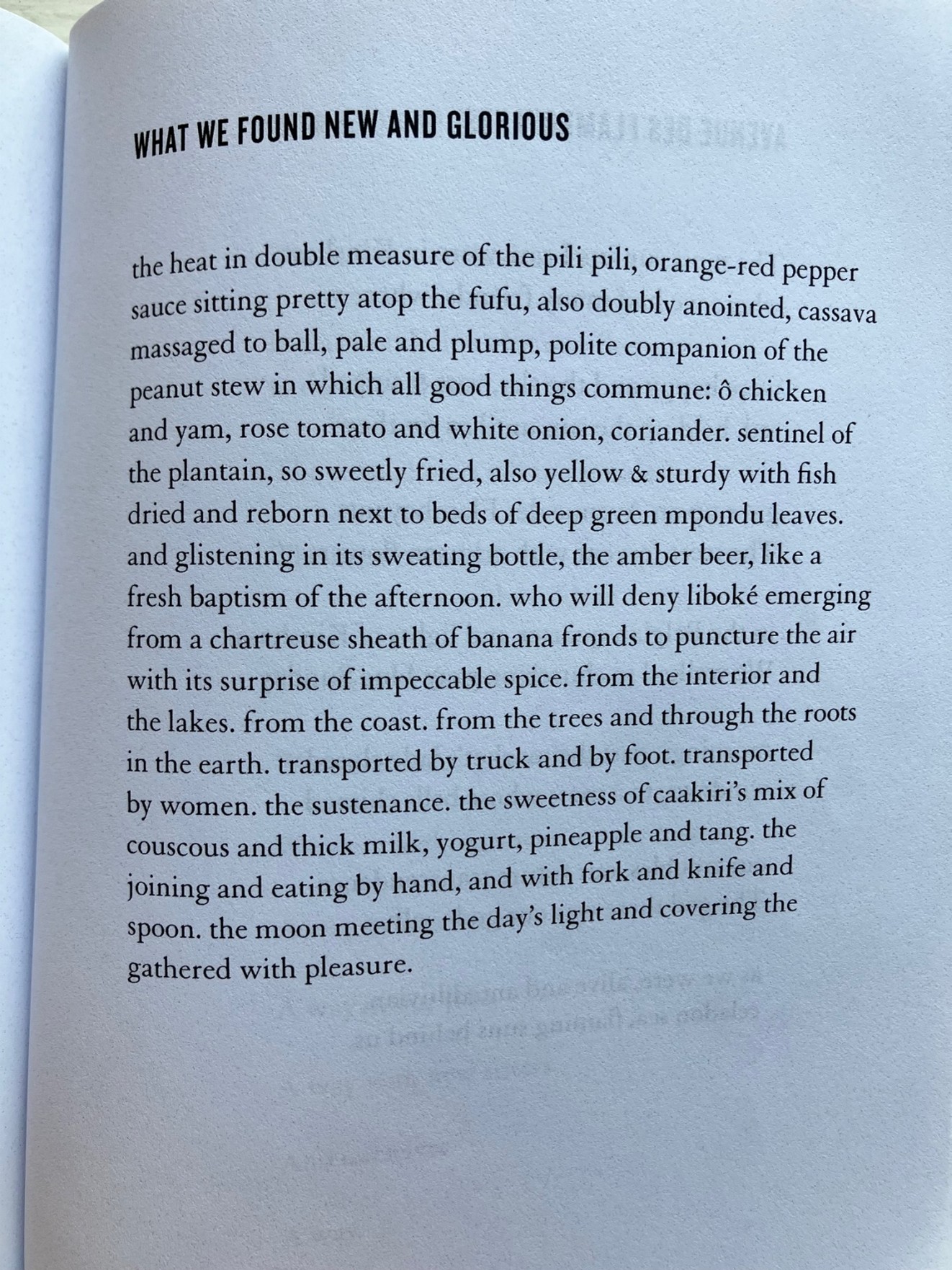
    • Compare and contrast “What We Missed and Attempted to Replicate” and “What We Found New and Glorious”.
    • Identify three of the poems’ themes (one will be obvious J).
    • Write your own list poem in which a category of items (like the obvious one) can represent a group’s experience or a culture.

    What We Missed and Attempted to Replicate

    What We Found New and Glorious

    Three-Leaves-Three-Roots-and-classroom


    About Danielle Legros Georges 

    Danielle Legros Georges is a Haitian-born professor emerita of creative writing at Lesley University. She served as poetry laureate of Boston from 2014 to 2019 and is the author and translator of several books of poetry. Her work has been supported by fellowships and grants from the American Antiquarian Society, the PEN/Heim Translation Fund, the Massachusetts Museum of Contemporary Art, the Massachusetts Cultural Council, the Boston Foundation, and the Black Metropolis Research Consortium.

  • By Christian Coleman

    Self-love by Gerd Altmann

    Image credit: Gerd Altmann

    And the New Year’s category is . . . Transformation! As the oligarchs of the free world steer us on a rocky ride toward dire changes we didn’t want, we’ll be focused on changing ourselves for the greater good. What shall we work on? Expanding our minds about what Buddhism is and what it has to offer? Ditching the me-centric trend of girlboss feminism? Renegotiating our relationship with social media? Beefing up at the gym without the macho trappings? This handful of titles from Beacon’s catalog will set us on the runway of life to get tens across the board for progress and self-reinvention!


    Buddhist Philosophy and Practices 101

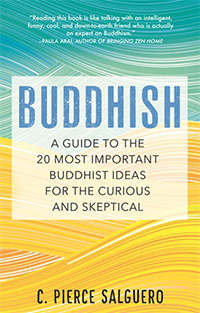
    Buddhish

    Buddhish: A Guide to the 20 Most Important Buddhist Ideas for the Curious and Skeptical

    “Bookstore shelves are piled high with how-tos written by monks and meditators who preach the virtues of devoting your life to Buddhist practices. n the other end of the shelf, there are thick academic tomes that detail the history and doctrine in mind-numbing detail (some of which I myself have written!). This book is intended to fill a niche between these extremes. If you are curious about Buddhism and are looking for an accessible introduction in plain English, if you are open-minded to learning about what Buddhists think and say but don’t necessarily want to be pressured to commit yourself to adopting these convictions yourself, then this is a book for you.”
    —C. Pierce Salguero 


    How to Get Back in Sync in the Sheets

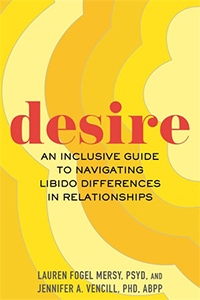
    Desire

    Desire: An Inclusive Guide to Navigating Libido Differences in Relationships

    “A sexual desire discrepancy does not necessarily mean that anything is wrong in a relationship. In fact, it’s quite natural that people—with individual needs and interests—will have differences around sexuality. s partners move out of the honeymoon phase of a relationship—which typically lasts between six months to two years—and as the stresses and demands of life persist, it can certainly be difficult to maintain an active sex life. Sex can often fall lower and lower on the priority list and may start to feel like a chore or obligation for some people. Often, sex doesn’t feel spontaneous anymore. Or it’s not as fun or exciting as it felt early in our relationships. When this is the case, sexual activity typically becomes less frequent, and sometimes, physical touch with partners decreases or stops altogether. This book is for anyone facing this common situation.”
    —Lauren Fogel Mersy and Jennifer A. Vencill 


    Tired: Egocentric Feminism. Wired: Global and Intersectional Feminism

    Faux Feminism

    Faux Feminism: Why We Fall for White Feminism and How We Can Stop

    “The idea that social progress comes from undoing restrictions, that individual potential has an almost magical power, that a difference made by one is a difference for all—these are among the cultural truisms that the freedom myth taps into. I am going to try to convince you that the freedom myth is a major reason we fall into providing support for faux feminisms and feminisms for the few, such as white feminism and neoliberal or ‘girlboss’ feminism. I am using the word we on purpose. I think actual feminists—that is, people who are committed to dismantling gender-based oppression in all of its intersectional forms—end up thinking in terms of the freedom myth pretty often.”
    —Serene Khader 


    One Man’s Redemption Arc, from Living in the Streets to Giving Back to His Community

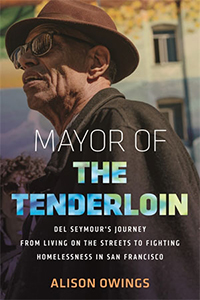
    Mayor of the Tenderloin

    Mayor of the Tenderloin: Del Seymour’s Journey from Living on the Streets to Fighting Homelessness in San Francisco

    “‘We’re all in the Tenderloin. We’re all injured. I was injured out there being stupid for eighteen years, so I kind of know injuries. A lot of people ask me, “How did you put this together? On the internet?” No. Didn’t have to go to the internet. I just knew what I needed when I was out there sick and when I was out there injured. This is kind of my give back, and I got a whole bunch of people helping me.’ There it was, in an aside, an answer to what Del usually does not answer. Why, as a man his age, with considerable (usually undisclosed) health issues, does he spend virtually all day every day on [Code Tenderloin]? ‘Kind of my give back.’”
    —Alison Owings 


    Twitter Is a Musky Dumpster Fire and Meta Is Zucked Up. Now What?

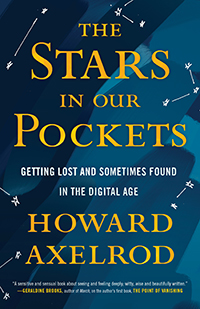
    The Stars in Our Pockets

    The Stars in Our Pockets: Getting Lost and Sometimes Found in the Digital Age

    “What baffles me is that we haven’t yet turned the power of digital technology—specifically its visual appeal and complexity, its potential for displaying myriad facets of an argument and linking to supporting facts—towards apps that foster the kind of political conversation that will promote democracy rather than demagogues. . . . Such an app would bypass the cult of personality, bypass the shouting guys, and would lead to clearer thinking, which would lead to clearer conversation, which would lead to more informed voting.”
    —Howard Axelrod 


    Take a Walk on the Wild Side in Bed and Discover a New Spicy You

    Superfreaks

    Superfreaks: Kink, Pleasure, and the Pursuit of Happiness

    “No matter if you are just a little kinky or a full-blown fetishist, want you to come away from this book knowing that being a sexual minority makes you special, and that—as long as you practice enthusiastically consensual sex—having a kinky life is like a superpower. . . . We are mutants, aliens, walking incognito among the regular humans but with special vision that allows us to see the erotic in things few others can.”
    —Arielle Greenberg 


    Roadmap for Your Beefcake Journey Without the Broken Masculinity

    Swole

    Swole: The Making of Men and the Meaning of Muscle

    “But what is form when it comes to my own body? Is it something I pour myself into or something that emerges from within? In the mirror, I see a composite of forms—a pastiche of archetypes and antecedents: elder Athenian senator; old-timey strongman; mustachioed stranger from a Tom of Finland vignette; Venice Beach meathead; ironic cop. Sometimes I feel like an action figure in search of a playset. hat form do I hope to take? ho is this man I am trying to be? Do I know him?”
    —Michael Andor Brodeur 


    We Can Eat Better and Be Stewards of Our Planet at the Same Time

    Transfarmation

    Transfarmation: The Movement to Free Us from Factory Farming

    “Collectively, farmed animals emit more greenhouse gases than the world’s planes, trains, and automobiles put together. A third of our precious arable land is used to grow feed for factory-farmed animals rather than food we humans could eat directly. We spray this land with immeasurable amounts of chemicals and cut down ecologically important habitats like rainforests—mostly notably right now with the clearing of the Amazon—all to feed and ‘house’ animals on factory farms. Put simply, industrial animal agriculture is one of the most destructive industries on our planet . . . Added to that is the fact that this food system keeps farmers in soul-crushing debt, communities sick and workers living in fear with little freedom. It truly is the most horrific system we could have come up with to deliver our calories.”
    —Leah Garcés 


    How to Drop the Anti-Fat Attitudes

    What We Don't Talk About When We Talk About Fat

    What We Don’t Talk About When We Talk About Fat

    “[T]he most difficult part of anti-fat attitudes isn’t bullying, harassment, fear, or violence. I have come to expect epithets and aggression, have come to weather their heat and pressure. But I have never become accustomed to the complete lack of empathy from so many around me. As a white, queer woman, describing the challenges I may face from misogyny and homophobia may be difficult, but it’s increasingly met with some measure of sympathy. But when I disclose the abuse I have faced as a fat person, I am frequently met with a steely refusal to believe it. Did you do something to aggravate them? Maybe they thought they were helping. They were probably just concerned for your health. When anti-fatness turns institutional, as with staggeringly prevalent employment discrimination or punitive airline policies, others’ responses curdle, turning from indifference to outright defense. Suddenly, people who otherwise relish complaining about delayed flights and cramped legroom become airlines’ staunchest defenders.”
    —Aubrey Gordon


    Getting on the Same Page About What Liberation Means for Everyone

    When Freedom Is the Question

    When Freedom is the Question, Abolition Is the Answer: Reflections on Collective Liberation

    “We are perhaps most free when we’re standing in front of an imposing wall, naming a roadblock to our own (or to our neighbor’s) full humanity and then throwing ourselves against that obstacle. The moment may appear obstructed or fraught or frightening or dangerous—it may, in fact, be all of those things at once. And yet freedom pitches into view precisely when unfreedom is identified (enslavement, subjugation, abuse, cruelty, persecution, extraction, exploitation, oppression), and we reach for a sledgehammer to break through that savage wall, shoulder to shoulder with others in an effort to prevail over unfreedom.”
    —Bill Ayers 


    How Learning and Teaching in the Classroom Makes Meaning in a Metrics-Obsessed World

    When the Light Goes On

    When the Light Goes On: The Life-Changing Wonder of Learning in an Age of Metrics, Screens, and Diminished Human Connection

    “There is another kind of knowledge at play here—the knowledge that teachers and other educators gain from observing students and listening to them. Our era is understandably concerned about surveillance and dehumanizing scrutiny, but we need to keep in mind as well the importance of being seen, of being brought into focus— especially in social and institutional settings where not being visible and not being heard results in diminishment. We’re talking about a certain kind of seeing and listening attuned to ability, desire, and environment. The yield is a rich, complex knowledge that blends the diagnostic and the intuitive, the calculated judgment and the hunch. This knowledge is purposeful, combines with knowledge of subject matter to help people grow and realize who they want to be.”
    —Mike Rose

    Self-love by Gerd Altmann


    About the Author 

    Christian Coleman is the digital marketing manager at Beacon Press and editor of Beacon Broadside. Before joining Beacon, he worked in writing, copy editing, and marketing positions at Sustainable Silicon Valley and Trikone. He graduated from Boston College and the Clarion Science Fiction & Fantasy Writers’ Workshop. Follow him on Twitter at @coleman_II and on Bluesky at @colemanthe2nd.bsky.social.