• Christmas-drink-6876097_1280 by Be_Stasya

    Image credit: Be_Stasya

    Whew! Now that we are shutting the door on that messy guest called 2024, we are officially in our unwind and imbibe era until further notice. Join us, won’t you? Because your books should be as good as your booze. We asked our staff members which beverage, cocktail, or mocktail they would pair with their favorite Beacon book, and they did not disappoint. Cheers!


    Down and Dirty 

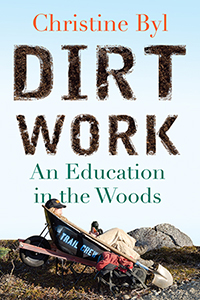
    Dirt Work

    Honestly, I don’t know much about food or drink, though my favorite type of wine is sangria. But I do know a little bit about candy and books—in that order. Dirt Work is a memoir of becoming a trail dog and making a career out of working outside. Instead of a computer, she works with axes and shovels. It’s a stressful time, and I’m looking at the news too much. This book is a reminder to go outside and get off my phone. I would pair it with gummi worms and um, I guess, a sangria?

    Mocktail version: Skip the brandy and wine! Just mix 2 parts unsweetened cherry juice to 1 part sparkling water.

    —Beth Collins, production manager


    The Ominous Gaze 

    Women and Other Monsters

    Emily Powers, senior marketing manager, recommends pairing Women and Other Monsters with Genevieve Morrison’s The Ominous Gaze cocktail. Because there’s a reason Medusa hated the male gaze.

    You’ll need:

    • 2 oz. dry sake
    • 1½ oz. lychee juice from one 19.9 oz. can of lychees in heavy syrup
    • ½ oz. fresh lemon juice
    • ½ oz. prosecco – or 1 oz. if you prefer more sparkles
    • ½ tsp. Luxardo maraschino cherry syrup – from a jar of Luxardo Maraschino Cherries
    • 1 Luxardo maraschino cherry
    • 1 lychee from one 19.9 oz. can of lychees in heavy syrup
    • Cocktail shaker, cocktail pin or toothpick, coup glass

    Mocktail version: Instead of sake and prosecco, opt for sweetened plum juice or a plum simple syrup and a bubbly beverage like sparkling grape juice.


    The Gin and Bear It 

    The Psychoanalysis of Fire

    Hendrick’s neat with a small pinch of salt. (Maldon salt is so pretty. You can watch it dissolve.) I’m currently reading The Psychoanalysis of Fire, which I found on a used book cart at Brattle Book Shop. And snack? Whatever carton of berries is in the fridge or jelly on saltines. Perfection!

    Non-alcoholic version: Pick up a non-alcoholic spirit like Seedlip Grove 42 or Monday Zero Alcohol Gin.

    —Carol Chu, creative director


    The Mainer 

    The Seven Necessary Sins for Women and Girls

    The Seven Necessary Sins for Women and Girls, a Lunch IPA, and a pizza from Blaze at Dole’s Orchard since I’m a Mainer now.

    Non-alcoholic version: Try an NA IPA like Best Day Hazy IPA or Athletic Brewing Company’s Run Wild. (Disclaimer: I don’t drink IPAs, so go with your gut!)

    —Claire Desroches, senior analyst, business operations and reprints 


    The Bucket of Blood 

    Ghosts of Crook County

    “He can swear Hell’s an icebox for the right price.” Hmm, sounds familiar . . .

    Meet Sadie James in Ghosts of Crook County, “The Notorious” detective and owner of Blood Bar in Tulsa, Oklahoma.

    You’ll need:

    • 2 oz. bourbon
    • 1 oz. Cynar*
    • a dash of orange bitters

    Shaken with ice and best enjoyed with a citrus or Luxardo cherry garnish.

    Mocktail version: Check out Spiritless Kentucky 74 for an NA bourbon alternative. I can’t speak for Russell Cobb, who shared this recipe, but I’d go for Lyre’s Italian Orange Non-Alcoholic Spirits in place of Cynar and the orange bitters.

    —Brittany Wallace, sales and marketing coordinator


    The Commentator 

    And the Category Is pb

    It’s hard to pick, but I have a soft spot for And the Category Is . . . with its focus on a relatively NYC-centric subculture. I feel like it deserves a mezcal margarita with its big, bold, and smokey flavors. For the spicy one with the quick clapbacks at the watch party, perhaps a passionfruit marg?

    Mocktail version: The good people of Google seem to overwhelmingly agree that Monday Mezcal is the best NA mezcal option! But you can also try Cut Above Zero Proof Mezcal or Little Saints St. Ember.

    —Bev Rivero, senior publicist

    Christmas-drink-6876097_1280 by Be_Stasya


  • By Christian Coleman

    Christmas gift box by Ronalds

    Image credit: Ronalds

    If last Christmas, you gave someone your heart, and the very next day, they gave it away, this year, to save yourself from tears, you’ll give it to your TBR list! ALL our books are 30% off through December 31 using holiday code REV30 during our holiday sale! 

    Scroll down and you’ll see some selections to give you ideas. This is just a handful of our catalog.

    Remember that USPS media mail takes 7-10 business days. Also, the Penguin Random House warehouse will be closed from December 23 to December 25 and then on December 31. So, plan accordingly while placing your orders during this time.

    And remember to support your local independent bookstore this holiday season!


    All Souls reissue

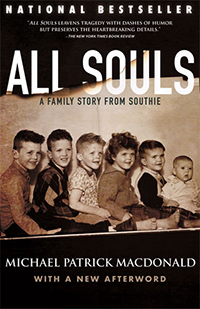
    All Souls: A Family Story from Southie

    “Ma was thrilled, as if she’d died and gone to heaven by getting a place in the all-white South Boston housing projects. She yelled up to all the neighbors on Jamaica Street that we’d struck a great bit of luck, six rooms for eighty dollars a month, heat, light, and gas included, and it’s all white—we wouldn’t have to go back to the black projects! I didn’t know why the white thing was so important. While I’d become familiar with the nightmarish stories from Columbia Point, my own experience had been that we got along much better with the black kids in Jamaica Plain, who seemed to have more in common with us than the other kids with Irish parents.”
    —Michael Patrick MacDonald


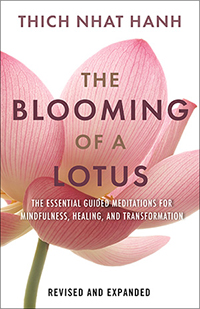
    The Blooming of a Lotus

    The Blooming of a Lotus: Essential Guided Meditations for Mindfulness, Healing, and Transformation

    “Time contains time, and time contains space. Space contains space, and space contains time. Space is itself time. Space and time cannot exist separately from each other. One ksana (point instant) contains infinite time, and the smallest particle contains limitless space. This is the principle of all is one and one is all. When we understand that principle, the phenomena that we used to call birth, death, being, and nonbeing are seen to be illusions.”
    —Thich Nhat Hanh 


    A Cup of Water Under My Bed_10th Anniversary

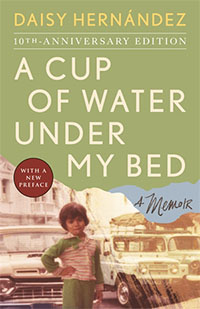
    A Cup of Water Under My Bed: A Memoir 
    10th-Anniversary Edition

    “The tricky thing with open secrets is that you can’t barge your way in. You can read all the books you find at the library and download unpublished theses. You can visit botánicas, buy candles, and have your questions, but to be let in, you have to wait for people. You have to learn when to ask a question and when to shut up. It’s like dealing with someone’s heart. You can’t just knock at the door. You can’t show up and say, ‘I want to live here.’ You have to prove yourself. You have to stick around. You have to wait until the other person is ready.”
    —Daisy Hernández 


    Don't Wait

    Don’t Wait: Three Girls Who Fought for Change and Won

    “Sonia was becoming a face that arts people knew in California. Throughout the summer and fall of 2020, she spoke at online events to other teens and to advocates around the state about how art helped her mental health and how vital it was to students in California. Sonia’s cup of chamomile tea resting atop a coaster that reads “Happiness does not depend on what you have or who you are, it solely relies on what you think” would grow cold as she’d talk passionately about how more money would help get arts resources to her peers. The 2020 election was coming up and in addition to deciding whether to oust the US president after one term, Californians would be voting on a measure that would give more funding to schools.”
    —Sonali Kohli  


    Embracing Hope

    Embracing Hope: On Freedom, Responsibility & the Meaning of Life

    “[S]ociety is frustrating man’s will to meaning; on the other hand, psychology is neglecting this fact. If you go through the current motivation theories, you will find scarcely any reference to what is the most fundamental and basic concern of man: neither pleasure nor happiness, nor power nor prestige, but originally and basically his wish, his desire to find and fulfil a meaning in his life or, for that matter, in each single life situation confronting him.”
    —Viktor E. Frankl 


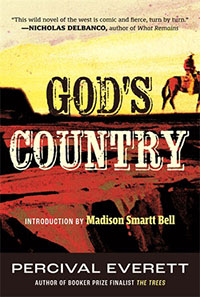
    God's Country

    God’s Country

    “‘Now, don’t you start with yeps and nopes. Dang fool says only that and you’re supposed have some kinda conversation with the filthy scumwagon. Yep and nope, yep and nope. Who can get a rabbit’s turd o’ sense out of a man who says two confounded words? And you know he knows more. Got to.’ I guess I got carried away a little bit because the boy was staring at me like I had a horse’s prick hanging out of my britches. Looking back now, I know it was my chance to lose him by making him think I was crazy, but it slipped past me at the time.”
    —Percival Everett 


    House of Light reissue

    House of Light: Poems

    “The kingfisher rises out of the black wave
    like a blue flower, in his beak
    he carries a silver leaf. I think this is
    the prettiest world—so long as you don’t mind
    a little dying, how could there be a day in your whole life
    that doesn’t have its splash of happiness?
    There are more fish than there are leaves
    on a thousand trees, and anyway the kingfisher
    wasn’t born to think about it, or anything else.”
    —Mary Oliver, “The Kingfisher” 


    In This Place Together

    In This Place Together: A Palestinian’s Journey to Collective Liberation

    “Over a small plate of banana bread, Souli asked again. He wanted me to help tell his story, to weave in Israeli stories, and my own—not to forget the importance of American Jewry in this conflict. As I listened, as time passed in its strange way, I knew that he was asking for the impossible. I knew that the result would be a tangled book, knotted with starkly unresolved issues of representation. But I also knew that the book’s questions of ownership and form might have something beautiful and distinctive to say about who Souli is, about the place he comes from, about what has happened there.”
    —Penina Eilberg-Schwartz with Sulaiman Khatib  


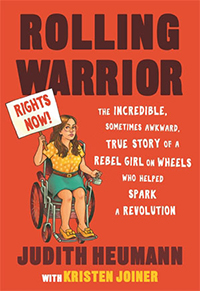
    Rolling Warrior

    Rolling Warrior: The Incredible, Sometimes Awkward, True Story of a Rebel Girl on Wheels Who Helped Spark a Revolution

    “We lived on one of those streets where there were tons of kids and everyone knows each other. I was the only kid in a wheelchair, but this meant literally nothing to us. We were little and we just figured things out, like you do when you’re little. If everyone was roller skating, we put roller skates over my shoes and I skated in my chair. If everyone was jumping rope, I turned the rope for the kids who were jumping. We didn’t even think about it. Me being in a wheelchair just felt like me having straight hair when Mary had curly. Sometimes I think kids are so much smarter than adults.”
    —Judith Heumann with Kristen Joiner 


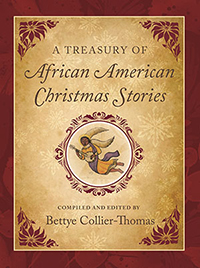
    A Treasury of African American Christmas Stories

    A Treasury of African American Christmas Stories   

    “Now when Jesus was born in Benin of Nigeria in the days of English rule, behold, there came wise men from the East to London. Saying, where is he that is born King of the Blacks? For we have seen his star in the east, and are come to worship him. When the Prime Minister had heard these things, he was troubled, and all England was with him. And when he had gathered all the chief priests and scholars of the land together, he demanded of them where this new Christ should be born.”
    —W. E. B. Du Bois, “The Sermon in the Cradle”

    Christmas gift box by Ronalds


    About the Author 

    Christian Coleman is the digital marketing manager at Beacon Press and editor of Beacon Broadside. Before joining Beacon, he worked in writing, copy editing, and marketing positions at Sustainable Silicon Valley and Trikone. He graduated from Boston College and the Clarion Science Fiction & Fantasy Writers’ Workshop. Follow him on Twitter at @coleman_II and on Bluesky at @colemanthe2nd.bsky.social.

  • Erwin-Kamuene

    Welcome to our rebooted “Beacon Behind the Books” series! In these times when readers are responding to our books “more than ever,” when our authors—including Aubrey Gordon, Tanya Katerí Hernández, James Baldwin, Viktor Frankl, Atef Abu Saif, and Percival Everett—are appearing in the media, their ideas going viral on social media, their voices being heard on so many platforms, we thought it would be good to take a break to focus on some of the staff who work hard to find, shape, edit, produce, and promote those works. Our blog series introduces to you a staff member and gives you a behind-the-scenes look, department by department, at what goes on at our office. And not only our staff, but our interns, too.

    This month, we introduce you to Erwin Kamuene, our editorial intern! 

    What drew you to publishing, Erwin? How did you find your way to Beacon?

    I’ve always been interested in storytelling, but it wasn’t until undergrad that I really learned about the labor that goes into publishing and how gratifying the process can be. Beacon has consistently introduced me to authors I’ve ended up loving, such as Gayl Jones and Alicia Kennedy, so when the opportunity to be an editorial intern opened up, I jumped at it and here I am.

    What are some of the challenges of being an editorial intern? What do you find most rewarding? 

    As an editorial intern, I’m often seeing ideas at their freshest state when they’ve yet to be whittled down into something more particular. It can be hard to exercise foresight at first, but I ultimately find it rewarding that this position constantly challenges me to look at alternative perspectives.

    What is one book on our list that has influenced your thinking on a particular issue?

    The Unicorn Woman by Gayl Jones. When it comes to humanistic depictions of Black characters, Jones is the gold standard. There’s a tenderness to her work that doesn’t come off as patronizing and it really treats her characters with the depth they deserve.

    What’s your advice to someone interested in entering the publishing field?

    I think just acknowledging that it’s very hard to thrive if you isolate yourself from others or don’t make an attempt to put yourself out there.

    What are you reading right now?

    Great Expectations by Charles Dickens. 

    In an alternate universe, what career would you have?

    I’d be a fisherman—if being a fisherman meant doing nothing but wearing the cute uniform.

    What’s the next queued song on your music player?

    “Dollar Days” by David Bowie.

  • By Atef Abu Saif

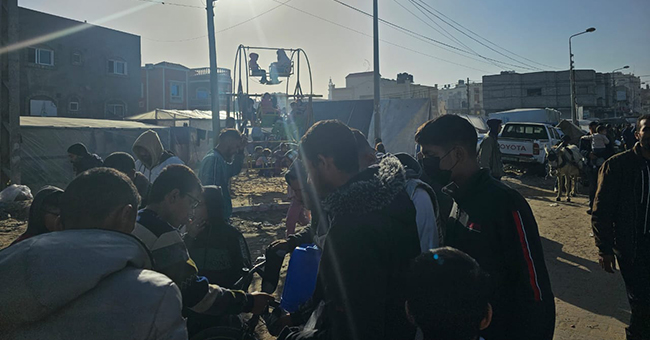
    Refilling on the street

    Photo credit: Atef Abu Saif

    Editor’s Note: Early in the morning of October 7, 2023, Atef Abu Saif, the Palestinian Authority’s Minister for Culture, went swimming. He was on a combined work-and-pleasure trip to Gaza, visiting his extended family with his fifteen-year-old son, Yasser, and participating in National Heritage Day. Then the bombing started.

    A year has passed since Israel began its genocidal campaign against Gaza. As pro-Palestine students protest the attacks on campuses worldwide and as activists pressure the current US administration for a ceasefire, we turn back to Atef Abu Saif’s memoir, Don’t Look Left: A Diary of Genocide. We cannot and should not forget his testimony of the human lives surviving the chaos and trauma of mass destruction. This is part four of this blog series. Read part one, part two, and part three.

    ***

    Saturday, 2nd December, Day 57 

    All of a sudden, with the resumption of war, Khan Younis has become the Israeli’s primary target. It’s like they have followed me here. Last night, shelling and missile strikes could be heard on all sides. I hadn’t seen a ‘ring of fire’ style attack since I left the north, but as I lay on Mamoun’s floor, trying to sleep, the orchestra of war struck up again. Likewise, the old habits kicked in: counting the attacks, speculating on the types of rockets being used, wondering where each strike landed.

    Yesterday evening, I went over to Nasser Hospital to recharge my mobile and laptop. It’s become a habit now to sit in one of the tents set aside for journalists and catch up with some of those working there while my phone charges. Since the war resumed, the hospital has filled up again; those who spent the few precious days of the truce back in their houses, have now returned to their tents inside the hospital grounds, or the corridors and stairwells that sheltered them before. On my way to the journalists’ tent, I saw the rows and rows of tents that have filled up every inch of free space. A new refugee camp was coming into life here, with its back alleys and main routes, its neighbourhoods and networks. I saw people standing around a fire, cooking. A woman was making bread. Two girls were whispering to each other, looking at three young men smoking nargilehs. A new community was taking shape.

    Mostafa, a producer from Russia Today, told me that many of the journalists there had come down from Gaza City and gathered, with their families, in a space next to the walls of Nasser Hospital, pitching their own tents and making it their home now. Like a special mini-camp just for journalists. In truth, the whole of Khan Younis is one big camp now. Tents stand on every street corner. New arrivals come with dreams no more ambitious than to buy a tent and find a place to pitch it. During the day, Mostafa and scores of other journalists stand in front of their cameras, delivering their hourly reports. Then at night, they walk a few yards, climb inside their family tents and resume their lives as fathers and mothers.

    I woke up at 6am. Mamoun was already awake. He listed the places, houses and streets that had been hit while I was sleeping. Though strikes happened all over, the fiercest ones were in the eastern neighbourhoods of Khan Younis. A ground invasion has started there. Civilians are being told to leave their homes. ‘Do you think the Israelis are going to invade our neighbourhood?’ Mamoun asks me. From my own experience in the north, I can only say yes. It might take some time, it may even take longer, but they are coming. The Israelis burn everything in front of them to the ground. They leave nothing standing: no buildings, no trees, no people. They kill everything. ‘Well, I’m not going anywhere,’ Mamoun says. ‘I left my flat in Rimal and now it’s rubble. From here, I have nowhere left to go. I won’t move anymore.’ He reminds me of the way Bilal and I used to talk.

    In the north, the Israelis have resumed their operations, mainly in western parts of Jabalia. I phone my sister Asmaa who’s been sticking it out in her house in Falouja. She sounds terrified as shrapnel from a rocket struck her back garden yesterday and incinerated all her plants. On the same night, a huge fire raged through a nearby souk, spreading into the complex beside it and a neighbouring school. ‘Everything was on fire,’ she says. ‘The heat from the flames made it warmer than daytime.’ After speaking to her, I call my father but can’t get through.

    This morning, some 80 new members of Mamoun’s extended family arrived from al-Qarara, a village north of Khan Younis. They started to arrive around 7am with whatever they could carry with them: clothes, mattresses, pillows. The Israelis fired on their village, destroyed several houses, then asked those that were still alive to leave. So now Mamoun’s admittedly large house, which has already accommodated 70 displaced relatives from Gaza, has to absorb another 80. Street ‘2’ in al-Qarara took the brunt of the attack, with the homes of the Abadalla and Kidra families being destroyed. Across farms and homesteads around the village, many were injured. Three local mosques were also damaged. As the place becomes more crowded, I realise family comes first, they are Mamoun’s priority. We need to move to Rafah and look to stay with my brother and cousins.

    A new atmosphere dominates the city this morning. The war is back and, and for the people of Khan Younis, it is far more severe than before. The truce lulled everyone into a false sense of security. Now that veil has been lifted and we can see the true face of the Israelis once again.

    Walking in the street, I see how much more crowded Khan Younis has become. The Israeli military chiefs talked about 50 different strikes on the city last night. The tanks are coming in from the eastern border of the Strip, ploughing through villages and farmlands and heading straight for us, but before they get here, a tidal wave of humanity pours into the city.

    We find a car to take us back to Rafah, but we end up spending an hour waiting at one particular intersection. A huge crater sits in the middle of the road where an F16 missile struck last night. The traffic is backed up around it, on both sides, as drivers try to keep their cars from toppling over the edge. As I look down into it, I can’t help wondering if this crater will become the new dividing line between Khan Younis and Rafah in the ground invasion to come. The way the Wadi was the natural line between the old north and the south. Rafah will soon become the last refuge in the whole of the Strip, especially the western, coastal side of Rafah. Everyone will be told to go there. Then what?


    About the Author 

    Atef Abu Saif is a Palestinian novelist and diarist of the Palestinian experience of war and occupation. Born in Jabalia refugee camp in Gaza 1973, he relocated to the West Bank in 2019 and is currently the Minister for Culture in the Palestinian Authority. Excerpts from his diaries of the 2023-24 Israel-Hamas war have appeared in the Washington Post, the New York TimesThe NationSlateThe Guardian, and elsewhere. In 2015, Atef was shortlisted for the International Prize for Arab Fiction, also known as the “Arabic Man Booker.” In 2018, he also won the Katari Prize for Best Arabic Novel (young writers category). In 2015, he published his diaries of the 2014 war on Gaza, The Drone Eats with Me: A Gaza Diary (Comma Press), which was described by Molly Crabapple as “a modern classic of war literature.”

  • By Christian Coleman

    IPHUS image header

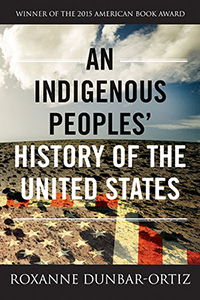
    Roxanne Dunbar-Ortiz’s OG text has had more than one life. Published in 2014, An Indigenous Peoples’ History of the United States is the third installment of Beacon’s ReVisioning History series, created by Beacon Press director Gayatri Patnaik. Now, a decade later, there is more than one way to read and radically reframe four hundred years of US history through the lens of Native American struggle and resistance. The book has even been adapted to two other genres, too!


    An Indigenous Peoples History of the United States

    An Indigenous Peoples’ History of the United States

    Dunbar-Ortiz credits fellow heavyweight activist and writer Howard Zinn as the inspiration for her book. She teased him about the disappearance of Native Americans after 1890 and their reappearance decades later during the Red Power movement in his A People’s History of the United States. Did they hibernate and come out later in the twentieth century? He told her she needed to write that history because he did not know how and would like to know what happened. An Indigenous Peoples’ History won the 2015 American Book Award and the 2015 PEN Oakland-Josephine Miles Award for Excellence in Literature. Six years later, it took its long-overdue place on the New York Times Best Sellers list. Sometimes it takes a while for the work of someone like Dunbar-Ortiz to get the widespread recognition and praise it deserves.


    An Indigenous Peoples History of the US for Young People

    An Indigenous Peoples’ History of the United States for Young People

    Educators already knew there was something special about Dunbar-Ortiz’s book. They saw how crucial it was in filling a serious gap in the US history curriculum. Their enthusiasm tipped us off to give it the YA treatment. When it came out in 2019, An Indigenous Peoples’ History of the United States for Young Readers racked up a triple score of starred reviews from Kirkus Reviews, Booklist, and the School Library Journal. It even caught the attention of the anti-woke bandwagon and was banned in Texas. You know you’re doing something right when your truth-telling is seen as a threat to the mythologized status quo. Although written for young adults, it pairs well with the original for those who would like maps and diagrams to visualize Indigenous history. Adapted by educators Debbie Reese and Jean Mendoza, this edition comes with several guides available to download for free from Beacon’s website.


    An Indigenous Peoples History of the US_10th-Anniversary Ed

    An Indigenous Peoples’ History of the United States: 10th-Anniversary Edition

    Two years before the tenth-anniversary edition was published, filmmaker Raoul Peck’s docuseries Exterminate All the Brutes aired on HBO. It references An Indigenous Peoples’ History of the United States as source material along with another Beacon book, Michel-Rolph Trouillot’s Silencing the Past: Power and the Production of History. Naturally, Peck had to write a foreword for the tenth-anniversary edition. He’s the filmmaker Dunbar-Ortiz admires most in the world. She also wrote a new introduction reflecting on the transition from the Obama years to the Trump years, which will bear much more relevance as we brace for another four years of the white supremacist in chief.


    An Indigenous Peoples' History of the United States audiobook

    Yes, this is the half mentioned in this blog post’s title. For you audiophiles out there, the tenth-anniversary edition came out with an audiobook narrated by Shaun Taylor-Corbett. He narrated the audiobook of another installment in our ReVisioning History series, Kyle T. Mays’s An Afro-Indigenous History of the United States.


    PEART-SMITH - RDO IPHUS

    Roxanne Dunbar-Ortiz’s Indigenous Peoples’ History of the United States: A Graphic Interpretation

    Riding on the running streak of our visual adaptations of historian Marcus Rediker’s books, we felt the need to scratch the graphic-novel itch for Dunbar-Ortiz’s book. Nonfiction graphic novel editor Paul Buhle, who worked on Rediker’s graphic novels, approached British comics artist Paul Peart-Smith about it. Peart-Smith had already established his cred in video games, animation, kids’ history with the Horrible Histories series in the UK, and his acclaimed graphic adaption of W. E. B. Du Bois’s The Souls of Black Folk. In his joint New Books Network interview with Dunbar-Ortiz, Peart-Smith talked about which readers he had in mind and one of the main challenges of the adaptation:

    “I think anyone fourteen and upwards can get something from this book. . . . I tried to avoid, of course, it turning into a complete horror story and over-raking the violence. Not only because of the sensitivities involved, but also because I didn’t want to sensationalize any of that. The thing with comic books is that they have a long history of sensationalizing violence, and it’s part of the entertainment value. But this isn’t that kind of book. It was a balancing act, but I hope that I pulled it off.” 

    He more than pulled it off. Condensing hundreds of pages into stunning full-color artwork was no small feat. And Dunbar-Ortiz, who is depicted as the main narrator throughout the panels, loves how it turned out. So do we!

    IPHUS image header


    About the Author 

    Christian Coleman is the digital marketing manager at Beacon Press and editor of Beacon Broadside. Before joining Beacon, he worked in writing, copy editing, and marketing positions at Sustainable Silicon Valley and Trikone. He graduated from Boston College and the Clarion Science Fiction & Fantasy Writers’ Workshop. Follow him on Twitter at @coleman_II and on Bluesky at @colemanthe2nd.bsky.social.

  • By Christian Coleman

    Indoors

    Image credit: FreeFunArt

    It’s going to be another four years of accelerated survival mode. The results of the election greenlit the sequel of the orange demagogue franchise we didn’t want. And now we need to brace ourselves for it. However, the frustration, the anger, and the grief from the spoils of November 5 are still raw. As such, some recuperation is in order.

    Facing the sequel can wait. Let’s put that on hold, take a breath, and pore over this handful of Beacon titles. If we’re going to spend the next four years in accelerated survival mode, we’ll heal up with all the self-care, inner peace, and restorative comfort we can get before Inauguration Day. And we’ll get that from these titles.

    See you on the flipside of recovery.


    Self-Care Starts Now

    Embracing Hope

    Embracing Hope: On Freedom, Responsibility & the Meaning of Life

    “[A] human being is a meaning-oriented being, and if he succeeds in finding meaning on his search, then he will be happy. But please note, only then. For if he pursues happiness, to the same degree that he does so, he simply cannot become happy, because he would have no reason to be happy.”
    —Viktor E. Frankl 


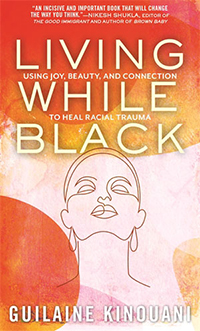
    Living While Black pb

    Living While Black: Using Joy, Beauty, and Connection to Heal Racial Trauma

    “Our ancestral heritage recognizes the importance of connection. Resistance must therefore focus on connecting with our body, mind, community, history, and the environment. African-centered conceptualizations of wellness are based on a symbiotic relationship with the world around us, including nature, earth, soil, and our ancestors. It is that mutual relationship that exists between living and nonliving entities that ensures harmony and continuation of the past into the present.”
    —Guilaine Kinouani


    Man's Search for Meaning

    Man’s Search for Meaning: Gift Edition

    “What was really needed was a fundamental change in our attitude toward life. We had to learn ourselves and, furthermore, we had to teach the despairing men, that it did not really matter what we expected from life, but rather what life expected from us. We needed to stop asking about the meaning of life, and instead to think of ourselves as those who were being questioned by life—daily and hourly. Our answer must consist, not in talk and meditation, but in right action and in right conduct. Life ultimately means taking the responsibility to find the right answer to its problems and to fulfill the tasks which it constantly sets for each individual.”
    —Viktor E. Frankl


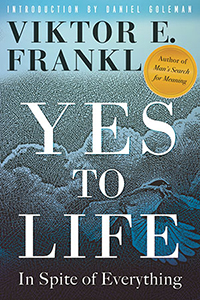
    Yes to Life

    Yes to Life: In Spite of Everything

    “in our normal spiritual lives, people usually know the extent to which any suffering actually belongs to life. For, let us ask ourselves, honestly and seriously, whether we would want to erase the sad experiences from our past, perhaps from our love lives, whether we would want to miss out on everything that was painful or pain inducing—then we would surely all say no. Somehow we know how much we were able to grow and mature precisely during these joyless periods of our existence.”
    —Viktor E. Frankl


    Sustaining Inner Peace and Faith through Grief

    The Blooming of a Lotus

    The Blooming of a Lotus: The Essential Guided Meditations for Mindfulness, Healing, and Transformation

    “Breathing in, bring complete attention to the in-breath. Wherever the breath may be in the body, feel the calm it brings. Just like drinking cool water on a hot day, feel how the breath cools the inner organs of the body. When practicing meditation, if the body is calm, then the mind is calm. Conscious breathing makes the body and mind one.”
    —Thich Nhat Hanh 


    A Gift of Love

    A Gift of Love: Sermons from Strength to Love and Other Preachings

    “[A]gape means a recognition of the fact that all life is interrelated. All humanity is involved in a single process, and all men are brothers. To the degree that I harm my brother, no matter what he is doing to me, to that extent I am harming myself. For example, white men often refuse federal aid to education in order to avoid giving the Negro his rights; but because all men are brothers they cannot deny Negro children without harming their own. They end, all efforts to the contrary, by hurting themselves. Why is this? Because men are brothers. If you harm me, you harm yourself. Love, agape, is the only cement that can hold this broken community together.”
    —Martin Luther King, Jr., from “Pilgrimage to Nonviolence” 


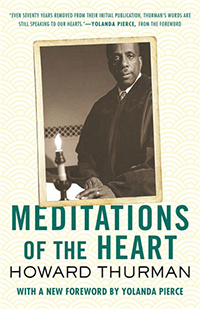
    Meditations of the Heart

    Meditations of the Heart

    “There is in every person an inward sea, and in that sea there is an island and on that island there is an altar and standing guard before that altar is ‘the angel with the flaming sword.’ Nothing can get by that angel to be placed upon that altar unless it has the mark of your inner authority. Nothing passes ‘the angel with the flaming sword’ to be placed upon your altar unless it be a part of ‘the fluid area of your consent.’ This is your crucial link with the Eternal.”
    —Howard Thurman 


    The Miracle of Mindfulness

    The Miracle of Mindfulness: An Introduction to the Practice of Meditation

    “In those moments when you are upset or dispersed and find it difficult to practice mindfulness, return to your breath: Taking hold of your breath is itself mindfulness. Your breath is the wondrous method of taking hold of your consciousness. As one religious community says in its rule, ‘One should not lose oneself in mind-dispersion or in one’s surroundings. Learn to practice breathing in order to regain control of body and mind, to practice mindfulness, and to develop concentration and wisdom.’”
    —Thich Nhat Hanh 


    Curl Up with a Comfort Read

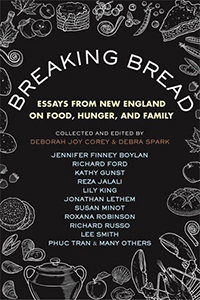
    Breaking Bread

    Breaking Bread: Essays from New England on Food, Hunger, and Family

    “Our kitchen was a place of entertainment, comfort, and healing that often smelled of brown bread rising and berry pies baking, of braising roasts and simmering stews, of gingerbread, and nutmeg and cloves. For the ill or injured or recently bereaved, it was base camp. Our mother made mustard-seed poultices for chest congestion, milk toast for anyone recovering from nausea, and a rich beef marrow broth to help heal broken bones. When we lost a beloved relative or neighbor, Mom would bake a ham or two chicken stews with dumplings shaped like heavenly clouds. One for the grieving family and the other for us. Never a heartache passed without our father saying, ‘Everyone has to eat.’”
    —Deborah Joy Corey, from “All the World Loves a Good Cook,” edited by Deborah Joy Cory and Debra Spark 


    God's Country

    God’s Country

    “There had been a bathhouse in town. It had been owned by a tall, lean man who, and this was the general impression, bathed too much. Seemed to make sense to me. The man had himself three tubs and all the soap anybody could want. I guess he just smelled too nice or something because he made everybody nervous. Why, he’d come into the general store or the stagecoach office and folks would just shut up and breathe. He smelled so good in fact that he kinda quieted down everybody else’s stink. He was around for about a year until Wide Clyde shot him dead.”
    —Percival Everett 


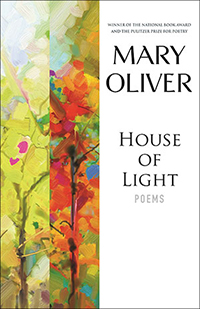
    House of Light reissue

    House of Light: Poems

    “But if I were a lily
    I think I would wait all day
    for the green face

    of the hummingbird
    to touch me.
    What I mean is,
    could I forget myself

    even in those feathery fields?”
    —Mary Oliver, from “Lilies”


    Owls and Other Fantasies reissue

    Owls and Other Fantasies: Poems and Essays

    “All day the flicker
    has anticipated
    the lust of the season, by
    shouting. He scouts up
    tree after tree and at
    a certain place begins
    to cry out. My, in his
    black-freckled vest, bay body with
    red trim and sudden chrome
    underwings, he is
    dapper. Of course somebody
    listening nearby
    hears him; she answers
    with a sound like hysterical
    laughter, and rushes out into
    the field where he is poised
    on an old phone pole, his head
    swinging, his wings
    opening and shutting in a kind of
    butterfly stroke.”
    —Mary Oliver, from “Spring” 


    Without a Map

    Without a Map: A Memoir

    “James and I had been working at the difficult edges of love. I lived alone on Dartmouth Street in the Back Bay section of Boston, in a small shabby apartment with high ceilings and stained glass windows in the bathroom door. At night, I sat in the big bay window at the back of the house with the lights low, watching rats take over the nighttime alley. A man up a story across the alley stood each night at his window, watching me through binoculars. I stared back. Sometimes I filed my toenails for him, or read poetry out loud. I returned each night after work to the rats, my books, the man who watched me. I was very lonely. James and I had argued and had barely seen each other for several months. But when he came one snowy December night and asked me if I wanted to go to India with him, I immediately said yes. Maybe on the road to a faraway country I would find release from the griefs of my past.”
    —Meredith Hall

    Indoors


    About the Author 

    Christian Coleman is the digital marketing manager at Beacon Press and editor of Beacon Broadside. Before joining Beacon, he worked in writing, copy editing, and marketing positions at Sustainable Silicon Valley and Trikone. He graduated from Boston College and the Clarion Science Fiction & Fantasy Writers’ Workshop. Follow him on Twitter at @coleman_II and on Bluesky at @colemanthe2nd.bsky.social.

  • By Atef Abu Saif

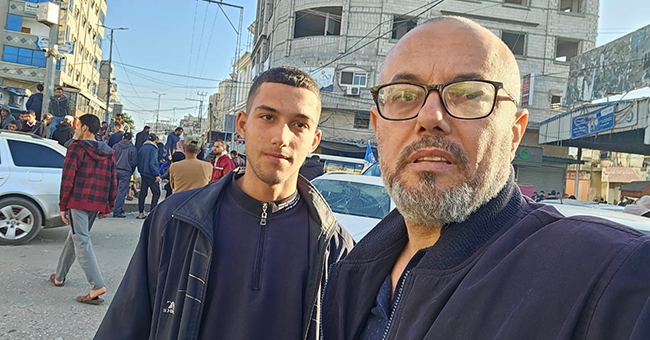
    On the street with Atef Abu Saif

    Photo credit: Atef Abu Saif

    Editor’s Note: Early in the morning of October 7, 2023, Atef Abu Saif, the Palestinian Authority’s Minister for Culture, went swimming. He was on a combined work-and-pleasure trip to Gaza, visiting his extended family with his fifteen-year-old son, Yasser, and participating in National Heritage Day. Then the bombing started.

    A year has passed since Israel began its genocidal campaign against Gaza. As pro-Palestine students protest the attacks on campuses worldwide and as activists pressure the current US administration for a ceasefire, we turn back to Atef Abu Saif’s memoir, Don’t Look Left: A Diary of Genocide. We cannot and should not forget his testimony of the human lives surviving the chaos and trauma of mass destruction. This is part three of this blog series. Read part one. Read part two.

    ***

    Monday, 13th November, Day 38 

    I spent three hours this morning walking the streets, just walking and reflecting on things. Last night was another violent one. The siege is closing in on al-Shifa. Yesterday the administrators had to excavate a mass grave in front of the building to bury all the dead in, whilst trying not to be shot in the process. Closer to home, we heard renewed attacks on the nearby Indonesian Hospital in the early hours. Many civilian houses were hit. People’s access to that hospital has become impossible. I have given up trying to make phone calls. The signal has gone completely. My wife, Hanna, has grown used to my prolonged absences online. At the start of the war, if I didn’t check in every hour, she would get mad with worry. Now, the signal disappears for days on end, and she knows this is why I haven’t checked in. 

    Despite looking downtrodden and dirty, the streets are still alive. People gather in groups to talk. Sometimes these gatherings might erupt into a quarrel, other times you hear laughter emerging. People are tensed, naturally. I carry on walking. This is the longest time I’ve spent in my home city for four and a half years. 

    I pass by Omar, a young neighbour, who tells me he’s just spent two hours filling his 200-litre water tank. It was a long, slow process watching it fill. In the end, he managed to hoist the tank up onto a wheelchair to push back to his house. But on the way home, the chair lost balance, and the tank toppled over, pouring its contents out onto the street. He tells me it was water for the Wudu (washing before the prayers), but it seems God does not want him to worship him, so he has decided not to refill it again. I am not sure if he’s joking, so I say, ‘But this has nothing to do with Allah or prayers.’ He replies: ‘Doctor, Allah doesn’t want me to pray, if he did, why would all my water be lost?’

    Walking on, I’m stopped by another man. He introduces himself as Alaa’, someone who was at high school with me. ‘You were one year ahead of me,’ he tells me. He smiles and asks if the drone is still eating with me. He’s referring to the title of my previous war diaries. ‘It never stopped,’ I reply. ‘There’s nothing left on the table, surely,’ Alaa’ laughs. ‘It’s eaten us out of house and home.’ Sadly, the drone is feasting right now. Little did I know it, but 2014 was just a starter, compared to this. Alaa’ starts asking more predictable questions about the situation and the future; by future he means the time after the war ends, a time none of us can really speculate about. I ask about his house and family. ‘Everything is OK, so far,’ he says. ‘Let’s pray it carries on that way,’ I add. 

    ‘It’s like we’re all being played in one big PlayStation game,’ Alaa’ says. ‘We’re the characters and they’—he means the Israeli army—‘are the players. We move when they make us move. We die when they let us die. They control us. We’re not human beings, we’re characters in a game.’ I don’t know what to say to this. He smiles before moving on, shouting as he goes: ‘Your friend the drone is playing you, Atef.’ I keep walking by myself in the street. This is how conversations go in Gaza at the moment, now that the mobile networks are down. You walk around and people we know stop and chat, for no more than a minute, just to share their latest info about the night’s biggest events, and to get yours. Today, the thing people want to hear about most is whether there’s been any talk of a ceasefire or a truce. In our short, one-minute conversations, people repeat what certain politicians have said and quickly analyse it. People try to calm themselves by reminding themselves how long this has gone on for, and of the fact that they’re still alive. They take solace, for instance, if there’s still water in their tanks. They’re even happier if there is still gas in their cylinders, and they feel like kings if they have solar panels. We take comfort in what we can.

    Faraj manages to get through to his daughter, Mariam, who’s been trapped in the battlefield of al-Shati Camp for the last week. She has now escaped and fled with her husband and kid to the south. This all happened yesterday. For a week though, bullets had been flying through walls and windows throughout her building. It was a miracle they survived. Many others in al-Shati are staying put. They’re without food and water, Mariam explains. They tried calling the Red Cross for help, but no one came. Those who take the risk and flee left towards Salah al-Din Road cannot know for sure if they’ll make it or not. Many are shot on the way. Mariam explained that many were shot the moment they opened the front door of their houses. On the way to Salah al-Din, Mariam saw death at every step. Tanks, soldiers, rockets crashing into buildings on every side. The sky is loaded with death right now, and the land also. Israeli soldiers flank both sides of the road and often summon young men from the fleeing crowds to one side, to question them. In many cases, they arrest them. But Mariam sounds happy that she made it. Now she has a new life to start, one of displacement. The life of a refugee. Or rather, being from a camp already, a ‘re-refugee.’

    ~~~

    Al-Shati Camp has been under siege in the last two weeks. The Israelis came at it from the west and the north. Perching, as it does, right on the beach, the western side has been controlled by the navy, the north by the tanks. ‘Shati’ means beach. The largest contingent of refugees living there come from Jaffa, originally. My late aunt Khadra used to live there and I spent a lot of my summer holidays as a kid in and around her house. When a place like this is under siege, it completely disappears from the news, as no correspondents or reporters can get in, and no communications are let out. For two weeks, we knew there were operations being carried out in al-Shati but we didn’t know any of the details. This morning, the Israelis ordered those who remained in the camp to flee using Yousef Athma Street to reach Salah al-Din. They were told to walk from the very west to the very east. A long enough journey as it was, but that was just the start. They then had to walk another five kilometres to reach the bridge. No one knows the numbers of the dead in al-Shita during the Israeli invasion of that camp. Some of my brother, Mohammed’s in-laws had been located in an UNRWA school on the northern part of al-Shati. For the last week, we haven’t been able to call them. Faraj suggested Mohammed should try again at dawn, there’s a better signal then. So, Mohammed had to wake up around 4:30 this morning to make the call. He did, but it failed. Around 11am he finally manages to speak to his daughter who tells him that they all fled five days ago to her aunt’s place in Sheikh Radwan. I suggest that he go and visit them today or tomorrow. They will need the moral support, now they are displaced.


    About the Author 

    Atef Abu Saif is a Palestinian novelist and diarist of the Palestinian experience of war and occupation. Born in Jabalia refugee camp in Gaza 1973, he relocated to the West Bank in 2019 and is currently the Minister for Culture in the Palestinian Authority. Excerpts from his diaries of the 2023-24 Israel-Hamas war have appeared in the Washington Post, the New York TimesThe NationSlateThe Guardian, and elsewhere. In 2015, Atef was shortlisted for the International Prize for Arab Fiction, also known as the “Arabic Man Booker.” In 2018, he also won the Katari Prize for Best Arabic Novel (young writers category). In 2015, he published his diaries of the 2014 war on Gaza, The Drone Eats with Me: A Gaza Diary (Comma Press), which was described by Molly Crabapple as “a modern classic of war literature.”

  • Emma Gibbons in Mardi Gras season in New Orleans, LA, 2016.

    Emma Gibbons in Mardi Gras season in New Orleans, LA, 2016.

    Welcome to our rebooted “Beacon Behind the Books” series! In these times when readers are responding to our books “more than ever,” when our authors—including Aubrey Gordon, Tanya Katerí Hernández, James Baldwin, Viktor Frankl, Atef Abu Saif, and Percival Everett—are appearing in the media, their ideas going viral on social media, their voices being heard on so many platforms, we thought it would be good to take a break to focus on some of the staff who work hard to find, shape, edit, produce, and promote those works. Our blog series introduces to you a staff member and gives you a behind-the-scenes look, department by department, at what goes on at our office.

    This month, we introduce you to Emma Gibbons, our assistant to the director! 

    What drew you to publishing, Emma? How did you find your way to Beacon?

    In late 2006, I was on the verge of graduating college with an English degree and had no clue what I wanted to do with it. I’d worked in libraries since age fifteen, always loved books and reading, and really liked helping people with their writing and essays. So, I thought, “Maybe get into book publishing and become an editor.”

    I ended up having a very short post-grad editorial internship at W. W. Norton in New York City, absolutely loved the work, then got hired as an editorial assistant at a textbook publisher in 2007. After about a year and change, I was miserable. Since I couldn’t break into the field the way I wanted to, I then decided to make a complete life change and moved to New Orleans.

    There, I fell back into my tried-and-true library work, got my MLIS, a couple of promotions, then returned to the northeast and continued as a librarian in my home state of New York. The inklings of wanting to change careers had been hounding me for a few years prior to Covid, and so, because my timing in life has always been impeccable, I decided in mid-February of 2020 that I was finally going to make a go of it. My last day as a librarian was Friday, March 13, 2020, and within days, New York completely shut down due to the pandemic. It was an interesting ride after that.  

    Two years later, I came across the job posting for the Assistant to the Director position at Beacon, and even though I really wanted to apply, I thought my MLIS would end up hurting my chances because I might be considered overqualified. I kept going back and forth until I thought, “Well, the worst they could do is not respond to your email. This was the field you’d always wanted to get into and try, so why not just apply and see what happens?” And now here I am.

    What’s a typical day in the life of an assistant to the director?

    One of the great things about my role is that no day is really typical. I can be working on a research project one day, drafting flapcopy the next, working with our office’s operations team or outside venues to set up an office gathering the day after that, or hopping on a Zoom call to teach an author how to record a presentation they’re giving for the Unitarian Universalist Association. Or a host of other things. I can honestly say I’m hardly ever bored! 

    What’s your advice to someone interested in entering the publishing field?

    Ask questions of those long-time pros already in the industry. Be willing to learn. Be easy to work with. Be kind. Like many other fields, publishing is a “this person knows so-and-so who also knows so-and-so and they all know so-and-so” type of community. Being a good colleague might end up helping you in the long run more than your résumé could.  

    What skills have you taken from previous jobs to help you do your work at Beacon?

    Many! My organizational skills from library work come into play on an almost daily basis and that background is also very useful when it comes to information gathering. Being a former English and Library/Info Sciences major has always made my writing skills lean more toward the fact/research-based side rather than the creative, but those skills are still helpful when I need to work on writing tasks.  

    In an alternate universe, what career would you have?

    Some type of outdoor related and/or skilled trade job. I was so very fortunate to find work in lawn care during the height of the pandemic and learned a ton, both about a field that was entirely new to me and about myself. Not only did that job help keep me afloat financially at a time when no one was hiring—let alone hiring someone with an advanced degree—but I learned that I really enjoyed physical, hands-on type of work. It was one of the best experiences I’ve ever had. Big shout-out to my Lawn Doctor of OC crew!

    Hobbies outside of work?

    I’m a gym rat, so I’m always doing some type of physical activity every day. I also enjoy “all things spooky,” history, and exploring, so combining all four things sometimes finds me wandering around local cemeteries and reading headstones. Eastern Mass has some great ones!

    Favorite type of music?

    I’ve been into hard rock and heavy metal since middle school. In my heart, I’m still wearing combat boots and all black clothing all the time.

    Do you still have a commute to work? What do you like to do to pass the time?

    I commute to the office on the Orange Line on Thursdays. It makes for great people watching!


    More About Emma Gibbons 

    Emma Gibbons earned an MA in Library and Information Science from Louisiana State University and a BA in English from the Massachusetts College of Liberal Arts. Prior to joining Beacon, she did a number of things, including working at Tulane Law Library in New Orleans, working as a public librarian in southwestern New York, and especially having a blast as a seasonal lawn tech during the height of the pandemic.

  • By Landon Y. Jones

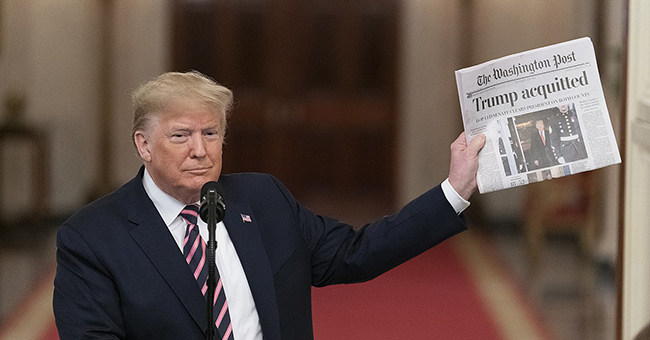
    President Donald J. Trump addresses his remarks Thursday, Feb. 6, 2020 in the East Room of the White House, in response to being acquitted of two Impeachment charges.

    President Donald J. Trump addresses his remarks Thursday, Feb. 6, 2020 in the East Room of the White House, in response to being acquitted of two Impeachment charges. Photo credit: Shealah Craighead, official White House photo

    Editor’s note: If you watched Donald Trump’s Madison Square Garden rally and are incensed about how he got this far, remember that his foundation is the cult of celebrity which is unique to the United States. As the late Landon Y. Jones explains in this passage from Celebrity Nation: How America Evolved into a Culture of Fans and Followers, the former president was abetted not only by fame but also by the popular demand for his antics as platformed by the media.

    ***

    The received wisdom is that Donald Trump was an aberration in American political life. Attention to his rise usually focuses on his assiduously cultivated celebrity status and picturesque obsession with acquiring more fame, more praise, and more money.

    Yet he was hardly the first celebrated American to make a calculated leap into politics. The military hero Andrew Jackson did so in the Early Republic, becoming the first political celebrity to take advantage of the rise of a new form of media: daily newspapers. As his biographers David and Jeanne Heidler put it, “The use of newspapers in the campaign of 1828 was the most revolutionary aspect of a revolutionary year in American politics . . . the first instance of deliberate image building and mythmaking and of skillful manipulation of public perception and popular opinion.”

    More recent examples of celebrities who used their name recognition to their advantage politically include California governors Ronald Reagan and Arnold Schwarzenegger, TV stars Al Franken and Fred Thompson (senators from Minnesota and Tennessee, respectively), Clint Eastwood and Sonny Bono (mayors of Carmel and Palm Springs, California, respectively), and the 2003 American Idol runner-up Clay Aiken, who in 2022 was defeated for the Democratic nomination in North Carolina’s Sixth Congressional District.

    Before the arrival of The Apprentice in 2004, Donald Trump was a B-list inhabitant of gossip columns who specialized in filing serial bankruptcies and prowling beauty contests. But even then he exhibited a degree of celebrity self-absorption high on the Celebrity Worship Scale. In an eerily prescient column Nora Ephron wrote for Esquire in June 1989, she said:

    Here is what interests me about Donald Trump: He wants to be famous. He wants people to talk about him. He wants people to notice him. He wants people to write about him. He wants people to ask him for autographs and recognize him and invade his privacy; not that he seems to have any privacy; he doesn’t even seem to have a single solitary thought he manages to keep to himself, so perhaps there’s no privacy to invade. Perhaps that’s the secret. Who knows? It doesn’t matter. I tip my hat to Donald Trump, because except for an occasional churlish moment he seems to be genuinely enjoying the experience of fame in a way that no one in his right mind ever does, and the fact that he therefore seems not to have any sense or intelligence or taste whatsoever is beside the point. The man has adapted.

    It speaks to those times that, when Ephron wrote her column, anyone’s obsession with fame seemed to be a novelty. During that time, Trump appeared on People’s cover regularly, including once in 1990, grinning and grasping $1 million in cash in his arms. I shudder to remember that I was the editor. But frankly, in those days, we thought he was simply a buffoon—a defiant buffoon, to be sure. Once again, defiance was a celebrity’s calling card.

    The turning point in Trump’s pursuit of celebrity arrived in 2004 when the British producer Mark Burnett adapted his pioneering reality show Survivor to a business setting and called it The Apprentice. With Trump as the host and a catchy tagline, “You’re fired!,” the series became a ratings hit. In the end, Trump hosted The Apprentice and its spin-off, The Celebrity Apprentice, for a collective fourteen seasons. “Most of us knew he was a fake,” one of the show’s producers told the New Yorker in 2019. “He has just gone through I don’t know how many bankruptcies. But we made him out to be the most important person in the world. It was like making the court jester the king.”

    What propelled him were the same forces that Robert Putnam described in Bowling Alone. After the turn of the century, the internet and social media promoted individualism at the cost of the social capital all societies need. Celebrity worship self-selects for narcissistic males with a ravenous need for public attention. As he became increasingly famous, Trump began to monetize his fame with half of the profits from The Apprentice plus the gains from endorsements and product placements that included steaks, vodka, a board game, cologne, neckties, shirts, and casinos. Soon his name was on buildings, golf courses, a for-profit college, and an airline shuttle, most of which went bankrupt.

    In 2010, Mark Burnett aimed his weapons of mass distraction at the American public again with Sarah Palin, the former vice presidential nominee who in 2008 had made politics about cultural identity. He created Sarah Palin’s Alaska, a reality television show that ran for eight episodes in just a single season before it was canceled. But in translating presidential politics into a reality TV show, she gathered five million viewers and demonstrated to Donald Trump that there was nothing crazy about his continuing quest to do the opposite—turn his own reality show into presidential politics.

    Meanwhile, with an additional boost from his “Mondays with Trump” segment on Fox & Friends, by the time the 2016 Republican primaries arrived, Trump was the only presold celebrity among the many candidates. Of the seventeen declared candidates, he was the only one with meaningful television exposure and who understood how tightly celebrities are embedded in the lives of the voters. There was nothing new about this for him. Trump had consistently used his visibility as a celebrity to promote his brand and his public career. What he uniquely realized was that people wanted unmediated access to the president, just as they now had with any other social media star.

    Trump’s 2015 announcement at the Trump Tower of his presidential candidacy mimicked the gaudy visuals and production values of The Apprentice. Like earlier celebrities from the nineteenth century, such as P.T. Barnum and Sarah Bernhardt, he did not pause at the edge of self-parody. If Trump could have had himself photographed in a coffin, as Sarah Bernhardt did, he would have done it to win attention and fame. “It may not be good for America, but it’s damn good for CBS,” said Les Moonves, the network’s CEO at the time.

    Never again will a national election be so devoid of celebrities. If anything, the population of celebrities who have tested the political waters has only increased since the Trump presidency. In 2022, they included the following:

    • Dr. Mehmet Oz, the TV doctor, who lost his race for the US Senate in Pennsylvania after his former celebrity patron, Oprah Winfrey, endorsed John Fetterman
    • Dwayne “The Rock” Johnson, a professional wrestler and actor who in September 22 had 334 million Instagram followers and has expressed presidential ambitions
    • Matthew McConaughey, the actor who flirted with running for the Texas governorship and spoke with passion at the White House about the school shooting in Uvalde
    • Herschel Walker, the former NFL player who ran a competitive race for the US Senate in Georgia
    • J.D. Vance, the author of the best-seller Hillbilly Elegy, who won his first-ever campaign for the US Senate in Ohio
    • Caitlyn Jenner, the Olympian, reality-show star, and self-styled transgender rights activist whose bid to replace Governor Gavin Newsom in the California recall election failed dismally

    What does the rise of celebrity candidates tell us about our politics? As analyst Chris Cillizza observed on CNN:

    For Donald Trump, success on television is the only yardstick of success. When Trump endorsed TV doctor-entrepreneur Mehmet Oz in the 2022 Senate campaign in Pennsylvania, Trump explained, “I have known Dr. Oz for many years, as have many others, even if only through his very successful television show. He has lived with us through the screen and has always been popular, respected, and smart.” At a rally in North Carolina, Trump elaborated, “When you’re in television for eighteen years, that’s like a poll. That means people like you.”

    As Cillizza noted, Trump’s support was based on the fact that Oz was on TV regularly for more than a decade. That made him famous. It also made him popular. “Trump likes famous, popular people who were on TV,” Cillizza summarized. “Trump isn’t endorsing Oz for any other reason. That’s good enough for him. TV then is—and always has been—the way that Trump relates to the world. If it’s on TV, it’s real to Trump. And, if it’s on TV for a long time—as he would often note his show The Apprentice was—then it (and the person behind it) must be good. . . . There’s no part of his calculation to endorse Oz that dealt with whether the TV doctor would actually make a good senator.”

    What have we learned? First, that the celebrity politician has replaced community organizations. People who used to be bowling or working for their voting leagues are now at home watching TV or hunched over their smartphones on social media—likely both. Celebrities have stepped into the space vacated by civic engagement. This has allowed pop culture to be more democratic—more directly responsive to the taste of the masses—than ever before. But it has also elevated and empowered those celebrities who are most able to engage the greatest number of people. Empowered might be too strong a word, because these celebrities aren’t so much leading their millions of followers as being led by them. To be popular to so many, so successfully, for so long, you must necessarily appeal to and, in appealing, reinforce your followers’ popular notions.

    Second, that the art of governing is at risk. If your job as an entertainer has been to appeal to as many of the cultural commonplaces of your audience as possible, it would run against your nature, even if you are now a politician trying to solve problems, to look beyond their commonplace political assumptions for answers. To do so would to be to risk alienating an audience that has, since you declared your candidacy, become your political base—an audience that you’re the world expert at reading and keeping satisfied. So, instead of taking professional advice, you start giving them what they want to hear, and not what is necessarily good for the country—true whether your audience is conservative or liberal. While the typical politician risks taking advice from fairly obscure and potentially unpopular experts—economists, academics, policy analysts— you use your skill at appealing to huge audiences to excite and affirm what your base thinks.

    While these appeals will likely make you a good candidate, they’re unlikely to help you solve the complex problems that imperil the very complex system of government you must head when you win the election. The social media savvy celebrity who runs for office (and which celebrity isn’t social media savvy these days?) is a populist in spirit and in practice, perfectly attuned to the will of the people. While it may seem harmless to be attuned to entertainment that directly appeals to popular tastes, there’s lots of potential for harm when this highly democratic culture uses the vessel of celebrity to infect politics with ratings-tested policies—that is to say, when it’s no longer ideas for songs, cover art, and performances that arise from the Twitter feeds of followers but ideas for executive orders, legislative solutions, and trade agreements. This seems to be the natural drift of things because the celebrity-politicians are highly attuned to their base in the broadest terms. What they are less sensitive to are the opinions and needs of voices in the back of the room and the ideas from the historical margins that need and deserve a hearing.


    About the Author 

    Landon Y. (Lanny) Jones was an editor and author. He was the former managing editor of People and Money magazines and the author of William Clark and the Shaping of the West (2004), a biography of the co-leader of the Lewis and Clark Expedition. Jones also edited a selection of the expedition journals, The Essential Lewis and Clark (2000). In 1980, he published Great Expectations: America and the Baby Boom Generation, which coined the phrase “baby-boomer” and was a finalist for the American Book Award in Nonfiction. In 2015, he received the Henry R. Luce Award for Lifetime Achievement from Time Inc.

  • By Christian Coleman

    Vote

    Image credit: Gerd Altmann

    Here we are again with the nail-biting tension from four years ago. The neck-and-neck polls between Vice President Kamala Harris and former President Donald Trump alerted our attention to other issues at play in addition to the debate and rally talking points. Lies about voter fraud that distract us from how voter suppression at the systemic level threatens our voting rights. How those behind the scenes of the campaign industry shape the way we talk about politics. Why freedom and abolition mean different things to different communities.

    Whatever the outcome of the election—no orange-tanned dictatorship, please!—these issues will still be with us after Inauguration Day as they have been before each election cycle. This batch of selected titles from Beacon’s catalog is for these times when the democratic US we want is on the line.


    Understanding the Powers That Be
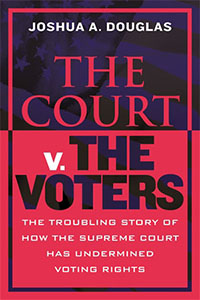
    The Court v. the Voters

    The Court v. the Voters: The Troubling Story of How the Supreme Court Has Undermined Voting Rights

    “A close analysis of the Supreme Court’s rulings reveals that—in a project that has spanned decades—the Court has contributed to the rise of anti-democracy forces animating our elections. Its decisions unduly defer to state legislators to craft election rules that help politicians stay in power while failing to protect voters. The Declaration of Independence says that a government’s legitimacy derives from the consent of the governed, yet the Court’s decisions have allowed entrenched politicians to suppress the votes of people who might vote against them.”
    —Joshua A. Douglas
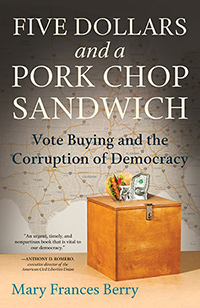
     

    Five Dollars and a Pork Chop Sandwich

    Five Dollars and a Pork Chop Sandwich: Vote Buying and the Corruption of Democracy

    “Paying people to vote for a specific candidate may not seem to fit the definition of “voter suppression,” but it is one of several ways that campaign operators manipulate the outcome of elections. Vote buying, misuse of absentee ballots, and other stratagems tend to defraud the very citizens who need government services the most: the poor, the elderly, and minority voters. These are also the people who may not have “proper” government-issued identification to vote. Whether their vote is bought, or not cast at all, their political power is suppressed. Buying votes is another form of suppression: paying eligible citizens to vote for candidates whom they might not otherwise support. And since a single ballot lists candidates for other offices at the local, state, and even federal level, the entire election can be corrupted.”
    —Mary Frances Berry
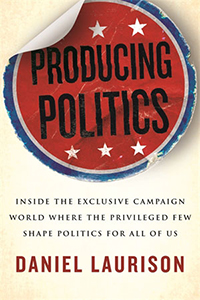
     

    Producing Politics

    Producing Politics: Inside the Exclusive Campaign World Where the Privileged Few Shape Politics for All of Us

    “To understand campaigns, then, we need to understand the people whose work builds them: the political consultants and political operatives who make their living working for parties, campaigns, and allied partisan organizations. Just as the decision-makers at Netflix, HBO, and ABC determine what kinds of entertainment to provide, these campaign professionals curate our political options. The ways they shape the system and its offerings for voters come out of their perceptions of what is politically possible, which persuasion strategies are effective, how the electorate operates, and what will make sense to and be rewarded by the rest of the political world. Politicos’ beliefs about how politics ought to work and how regular people see politics shape the decisions, strategies, and public messaging of the party leaders, presidents, legislators, and governors they advise.”
    —Daniel Laurison
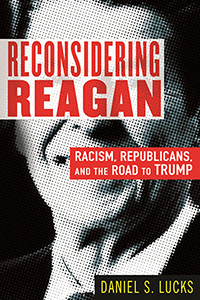
     

    Reconsidering Reagan

    Reconsidering Reagan: Racism, Republicans, and the Road to Trump

    “[T]here are a number of important parallels between Reagan and Trump. The self-proclaimed ‘Errol Flynn of the B’s,’ and the reality-television host both began their public lives in the entertainment industry. Even if Reagan had served two terms as governor of California, he, like Trump, was not well-versed in the details of domestic or foreign policy and did not have much interest in becoming better versed. Both men ran for the presidency as ‘Washington outsiders.’ Furthermore, both the Reagan and Trump administrations were marred by rampant corruption. By the end of his presidency, the Reagan White House was mired in a miasma of corruption that enveloped a whopping 138 members of his administration, who faced investigation, indictment, or convictions for their roles in the numerous scandals that beset the administration. Perhaps it is no accident that Trump became a cultural icon during the Reagan era, the 1980s, ‘the decade of greed.’”
    —Daniel S. Lucks


    Hot-Topic Debate Issues 

    Christians-Against-Christianity

    Christians Against Christianity: How Right-Wing Evangelicals Are Destroying Our Nation and Our Faith

    “A travesty. That’s how I would characterize Christianity in America today. A travesty, a brutal sham, a tragic charade, a cynical deceit. Why? Because the loudest voices in American Christianity today—those of right-wing evangelicals—shamelessly spew a putrid stew of religious ignorance and political venom that is poisoning our society, making a mockery of the Gospel of Jesus Christ. Their rhetoric in the name of their Lord and Savior is mean-spirited, divisive, appallingly devoid of love for their neighbors and outright demonizes those who do not accept their narrow views—even fellow Christians.”
    —Obery M. Hendricks, Jr.
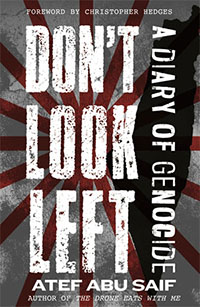
     

    Don't Look Left

    Don’t Look Left: A Diary of Genocide

    “In the morning I read the news. The news is about us. But it’s designed for people reading it far, far away, who couldn’t possibly imagine they could ever know anyone involved. It’s for people who read the news to comfort themselves, to tell themselves: it’s still far, far away. I read the news for different reasons, I read it to know I’m not dead. Presumably the dead don’t read the news; I could be wrong.”
    —Atef Abu Saif
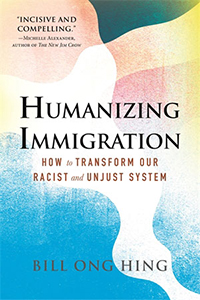
     

    Humanizing Immigration

    Humanizing Immigration: How to Transform Our Racist and Unjust System

    “I make the case for dismantling ICE. I call for continued disruption until transformation of the system is accomplished. Let me be absolutely clear about my starting point: immigration laws and enforcement policies are racist. In fact, those laws and policies are the quintessential examples of institutionalized racism. Think only of the foundational immigration laws that began with the Chinese Exclusion Act (1882) and the national origins quota of the Immigration Act of 1924, which favored Western Europeans, and infamous immigration roundups, such as Operation Wetback (1954), which targeted Mexican braceros, who had been issued temporary US work permits to ease labor shortages.”
    —Bill Ong Hing
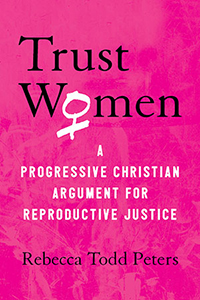
     

    Trust Women

    Trust Women: A Progressive Christian Argument for Reproductive Justice

    “The reproductive justice movement offers a more robust and demanding ethical theory for approaching women’s reproductive health. By starting with the concrete realities of women’s lives, a reproductive justice ethic can rightly focus on healthy sexuality, empowered motherhood, selfcare, and robust families. The movement was born in the United States out of the efforts of women of color seeking to broaden the traditional abortion-rights movement by responding to a fuller understanding of the issues associated with women’s reproduction.”
    —Rebecca Todd Peters 


    Building and Sustaining Democracy 
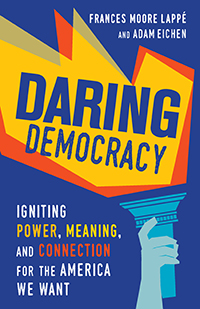
    Daring Democracy

    Daring Democracy: Igniting Power, Meaning, and Connection for the America We Want

    “When we assert that democracy is essential we mean that it’s not just a ‘good’ thing. It is the only approach to governance that brings forth the best of who we are. To really thrive, to live our possibility, we hold that beyond the physical, humans must meet at least three essential needs: for connection, meaning, and a sense of agency—that is, a sense of personal power. When these needs are met we can often accomplish what virtually no one before believed possible.”
    —Frances Moore Lappé and Adam Eichen
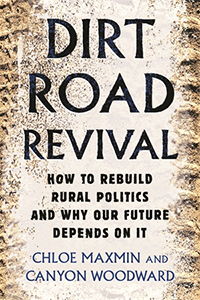
     

    Dirt Road Revival

    Dirt Road Revival: How to Rebuild Rural Politics and Why Our Future Depends on It

    “We’ve watched since 2009 as the Democratic Party abandoned rural Americans—our communities—allowing the rural vote to trend red, with little effort to stop the bleeding. The 2016 presidential election made clear that the consequences of these choices have produced an existential threat to American democracy, plainly illustrated in Donald Trump’s ascendancy and the 2021 US Capitol attack. Rural red districts like the ones that we grew up in have become a decisive force swinging national politics toward an extreme right-wing agenda. Reuniting our country depends on forging a new political paradigm for Democrats in rural America.”
    —Chloe Maxmin and Canyon Woodward
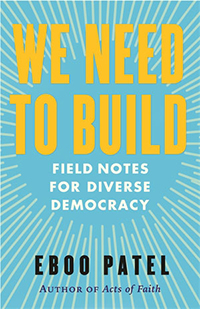
     

    We Need to Build

    We Need to Build: Field Notes for Diverse Democracy

    “[A] potluck supper is about the best symbol there is for a diverse democracy. Potlucks are civic spaces that both embody and celebrate pluralism. They rely on the contributions of a diverse community. If people don’t bring an offering, the potluck doesn’t exist. If everyone brings the same thing, the potluck is boring. And what a nightmare it would be if you brought your best dish to a potluck and you were met at the door with a giant machine that melted it into the same bland goo as everybody else’s best dish. The whole point of a potluck is the diversity of dishes.”
    —Eboo Patel


    Change Starts with Us at the Ground Level 
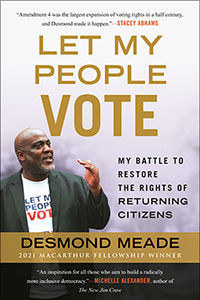
    Let My People Vote pb

    Let My People Vote: My Battle to Restore the Civil Rights of Returning Citizens

    “All rights are important to returning citizens: to be able to surpass occupational license restrictions or housing restrictions or education restrictions; to serve on a jury; to run for office; and to own a firearm. All of these make up an individual’s civil rights. But when I looked at all of those rights, the one that stuck out more than any other was the right to vote. I had learned over the course of the years since returning from prison that nothing speaks more to citizenship than being able to have your voice heard. If we were limited to just dealing with one issue at a time, that seemed like the single most important civil right. Nothing restores dignity more effectively than the right to vote, which in turn can lead to all kinds of other positive momentum for an individual.”
    —Desmond Meade
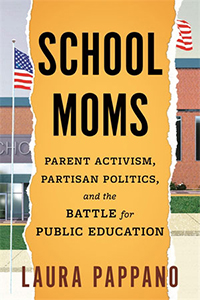
     

    School Moms

    School Moms: Parent Activism, Partisan Politics, and the Battle for Public Education

    “It is hard to consider current school board battles without revisiting the 1970s, when the Christian right movement began to crystallize. This crystallization was also marked by the founding of new think-tanks such as the Heritage Foundation (formed in 1973); the Libertarian Cato Institute, in 1977; and the Leadership Institute in 1979. Yet at the time, its growth was largely overlooked, according to Matthew C. Moen, a well-regarded scholar of the Christian right. Politicians and journalists were caught off guard, and scholars, he wrote, ‘ignored the Christian Right’s infiltration of state Republican party organizations until the Reagan era was over.’”
    —Laura Pappano
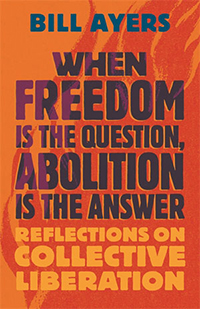
     

    When Freedom Is the Question

    When Freedom Is the Question, Abolition Is the Answer: Reflections on Collective Liberation

    “Freedom as a living thing and a vital aspiration is partially revealed when we look unblinkingly into the face of unfreedom: if unfreedom includes being prevented from voting, then freedom must involve the act of voting; if unfreedom is in part being forced to attend underfunded, segregated, miseducating schools, freedom embraces integrating into the privileged schools and fighting for an honest curriculum; if unfreedom is having no roof over your family’s head, freedom includes having access to adequate housing; if unfreedom is policies and politics of caging and cruelty, exclusion and dehumanization, then freedom must unlock the cages and abolish those heartless practices. Freedom in fact is always freedom in opposition.”
    —Bill Ayers 

    Vote


    About the Author 

    Christian Coleman is the digital marketing manager at Beacon Press and editor of Beacon Broadside. Before joining Beacon, he worked in writing, copy editing, and marketing positions at Sustainable Silicon Valley and Trikone. He graduated from Boston College and the Clarion Science Fiction & Fantasy Writers’ Workshop. Follow him on Twitter at @coleman_II and on Bluesky at @colemanthe2nd.bsky.social.