• By Steve Early

    Richmond

    Photo credit: Jacob Kearns

     This article appeared originally in Social Policy. This is part two of two. Read part one

    A Bay Area Success Story 

    How has the RPA managed to operate year-round for two decades as a multi-issue, membership-based organization and make steady electoral progress in the face of well-funded corporate opposition?

    For a longer answer to that question, see Refinery Town: Big Oil, Big Money, and the Remaking of An American Citywhich chronicled the RPA’s first twelve years. Based on subsequent reporting and interviews conducted lately, here’s ten organizational tips that may be helpful to others on the left trying to create or sustain similar multi-issue, electoral formations:

    Tip #1: Run “Corporate Free”—and on a Team!  

    Post Citizens United, all office seekers, at every level of government in the US, try to convince their constituents of one thing: neither direct donations from wealthy donors or business interests or unlimited spending on their behalf by corporate Super-PACs will have any impact on their behavior in office.

    Here’s the context for that kind of magical thinking in Richmond. A voter population that’s overwhelmingly registered Democrats participates in “non-partisan” elections for city council and mayor. Because candidates are identified on the ballot only by their listed occupation rather than any party affiliation, there’s no familiar clue about who is running to the left, right, or in the middle.

    From its inception, Richmond progressives broke with local “politics as usual” by only fielding candidates who belonged to the RPA and ran “corporate free.” Then and now, this makes rejection or acceptance of money from business interests, large or small, a much-needed litmus test.

    No other players in Richmond politics have ever been willing to take “The Pledge”—even liberal Democrats like Tom Butt, a two-term mayor elected ten years ago. His 2014 victory was aided by RPA candidate Mike Parker dropping out of a four-way race—in contemporary New Popular Front fashion—to avoid splitting the vote and putting Chevron back in control of city hall.

    In California, office seekers who try to run in “corporate-free” fashion above the local level, face far more business-backed “independent spending” than Big Oil and Big Soda has ever deployed against the RPA in Richmond. (Over two election cycles a decade ago, that amounted to $6 million.)

    Despite such heavily funded opposition, RPA candidates have won consistently by fielding multi-candidate slates, with a common program. And sharing resources, rather than competing for them as individual political entrepreneurs. 

    Former Richmond city councilor Jovanka Beckles is upholding that RPA tradition in her current bid to become the next state senator representing Richmond, Berkeley, Oakland, and smaller towns nearby. To beat a Berkeley mayor backed by big business, Beckles has coordinated her grassroots canvassing and voter turnout in Richmond with the overlapping efforts of RPA candidates running for city council this fall.

    Tip #2: Make Creative Use of City Hall (And Its Farm Teams) 

    After Gayle McLaughlin was originally elected mayor of Richmond—in a stunning, upset victory—she helped strengthen grassroots organizing in the city by seeding an array of city commissions, boards, and committees with like-minded activists rarely considered for such roles in the past.

    This enabled some of her appointees—including Beckles and Martinez—to develop a further track record of community service that enabled them to become successful city council or mayoral candidates.

    During eight years as mayor, McLaughlin built lasting relationships with a wide range of community groups and strengthened ties between city hall and Richmond’s forty neighborhood councils, another point of entry into local politics for RPA members.

    RPA and its allies have conducted city hall training sessions to recruit younger and more diverse candidates for appointed positions on the Richmond planning and design review boards; a police oversight body that investigates citizen complaints; and other commissions dealing with arts and culture, parks and recreation, libraries, housing, and economic development.

    As one such RPA recruit, I served for six years on Richmond’s Personnel Board, which OKs new city job descriptions, offers occasional advice to its HR Department, and holds hearings on worker complaints.

    In one grievance appeal filed by the Richmond Police Officers Association (RPOA), we ruled against Richmond’s then-police chief when the latter denied time off to attend union training. In another RPOA case, we sided with the city (and its tax payers) by rejecting a multi-million-dollar claim based on a fanciful interpretation of contract language about negotiated wage increase “parity” for city workers.

    Tip #3: Help “Electeds” Do Their Job, While Holding Them Accountable 

    Getting elected to or holding public office as a working-class progressive is not easy, particularly if you have a demanding day job. Richmond’s current mayor is a retired teacher, so he can devote full time to his duties—even though Richmond, like many cities, delegates day-to-day administration of municipal affairs to an appointed city manager.

    Current Mayor Eduardo Martinez had made the most of a dynamic three-member staff, which includes former RPA co-chair Shiva Mishek, a former Rent Board member; former RPA intern and community activist Tony Tamayo; and, former Chevron refinery worker and USW Local 5 leader, BK White, who is in charge of “just transition” planning for Richmond.

    But if you’re a part-time city councilor in a smaller city like Richmond, you generally don’t have personal staff help. You must prepare for and attend long meetings on weekday evenings and be available to attend all kinds of community events on weekends. Twice a month, on Fridays, Richmond city councilors get packets, 400 to 600 pages long.

    These documents relate to the official business on their agenda the following Tuesday night. To cast informed votes—and be more than a rubber stamp for the full-time city bureaucracy or unwitting tool of business interests—they must wade through this pile of city contracts, budget materials, consultant reports, memos from city department heads and lawyers, and draft resolutions before the meeting starts.

    That’s where RPA’s Council Action Team and other task forces and committees come into play as support groups for progressive council members. These community volunteers—with expertise in areas like including taxes, budgets, housing, education, economic development, and environmental action—help individual council members prepare for upcoming meetings. RPA sub-committees also mobilize concerned citizens to attend city hall meetings and make ample use of “public comment” periods to support or oppose measures pending before the council.

    Tip #4: Develop Labor, Community, and National Allies 

    RPA has benefitted from its long-time synergy with advocacy organizations that regularly rally their local constituencies in similar fashion. These non-electoral groups include Communities for a Better Environment (CBE), Asian Pacific Environmental Network (APEN), the Alliance of Californians for Community Empowerment (ACCE), and Reimagine Richmond, which recruits young people of color to become more involved in civic affairs and wants to reduce crime “through community-centered, non-law enforcement solutions.”

    Unions representing Richmond city workers, local teachers, or nurses, doctors, and therapists at Kaiser Richmond Medical Center have been solid supporters of the RPA and its electoral work. Their backing, plus picket-line alliances with Chevron refinery workers represented by United Steel Workers Local 5, has been a much-needed counter-weight to anti-RPA campaigning by RPOA and building trades unions always on the side of Chevron and local developers.

    Since 2014, when Senator Bernie Sanders keynoted the largest pre-election rally in RPA history, he has been a continuing personal endorser of RPA candidates for city and state office. Our Revolution, created after Sanders’ first presidential campaign, has also been a consistent supporter and valued helper with RPA campaigns.

    The RPA is also affiliated with the California Progressive Alliance, a loose network of like-minded groups throughout the state. A proposal to become part of the national Workings Families Party, in order to gain additional outside resources, was considered and rejected by the group six years ago (with this author arguing, as a rank-and-file RPA member, in favor of that affiliation).

    Tip #5: Reimagine Public Safety 

    Fours year ago, progressives around the country hoped that Black Lives Matters protests in response to the killing of George Floyd would lead to meaningful police reform. That didn’t happen in many places. Worse yet, calls for “defunding the police” led to major blow-back at the polls in Minneapolis and other places.

    In Richmond, the city council tried to build on a widely acclaimed “community policing” experiment launched in 2005 by voting in favor of what local organizers hailed as “one of the most important police budget reallocations in the country.” Critics of spending 40% of the city’s general fund revenue on policing originally sought a 15 percent cut in the RPD budget.

    Instead, in 2021, the council approved cuts of 5 percent a year for the next two years, which freed up more money for the Office of Neighborhood Safety, a seventeen-year-old program to reduce gun violence. Other funds were reallocated to a new civilian-staffed Community Crisis Response Program and expanded services for Richmond youth and unhoused people.

    In 2023, Richmond—once one of the most violent cities in the country—had its lowest homicide rate in fifty years, although half way through this year, that same death toll (8) has already been matched. For the time being, at least, such tangible improvements make it harder for RPA critics to exploit public safety concerns for their own political advantage.

    Tip #6: Push Popular Ballot Measures 

    If your municipality allows local referendums on public policy issues, get measures on the ballot during election years that will boost turnout for progressive candidates—if you’ve picked the right issue.

    RPA had its worst year ever at the polls in 2012 when its candidates backed a soda tax championed by one of its members on the city council (a Kaiser doctor not running for re-election that year). This proved to be racially divisive and drew heavy outside spending by the beverage industry, which defeated the measure and helped tank the candidacies of two RPA candidates.

    Four years later, a successful grassroots campaign for adoption of rent control in Richmond led to a much better electoral outcome for two younger RPA members. One was twenty-six-year-old Melvin Willis, a local high school graduate and skilled organizer, who worked for ACCE, the tenant rights group that got rent regulation on the ballot.

    This year, Willis is seeking a third term on the city council. Both he and his two RPA running-mates have campaigned not just for election to office but for ballot measures designed to improve municipal election procedures (via adoption of ranked choice voting) and make Chevron pay its fair share of local taxes. As noted above, the RPA and its allies (APEN and CBE) used a proposed 2024 ballot measure, calling for a new tax on locally refined oil, to trigger negotiations with Chevron over a financial settlement. Those talks led in August to an agreement requiring the company to pay Richmond $550 million over ten years in return for the city withdrawing the initiative to avoid further litigation over it. 

    Tip #7: Link Local Problems to Global Ones (but Don’t Overdo It!) 

    On behalf of the people of Richmond—or at the behest of advocacy groups among them—progressives on the city council have a long history of passing resolutions on controversial “big-picture” issues, seemingly unrelated to local governance.

    Even when overly wordy and unnecessarily inflammatory, such statements generally offer good advice to less-progressive policy makers at the federal level. For example, anything war-related usually mentions the need for “new national priorities”—i.e. spending less money on the Pentagon and more federal tax dollars on housing, healthcare, education, and environmental protection in places like Richmond.

    Nevertheless, with great election year regularity, RPA foes lambast its resolution passers on the council for triggering long and contentious meetings about problems that can’t be solved locally or even at the county or state level. 

    Last year’s expression of solidarity with Palestinians—still under US-funded military attack ten months later—immediately drew social media accusations that local progressives are pro-Hamas. Other critics accused the council majority of insensitivity to Jewish residents, some of whom now feel “unsafe” because Richmond called for a ceasefire in Gaza. Opposition candidates, this fall, are already blaming any local problem—from potholes to trash dumping to dangerous driving and illegal fire-work displays on the Fourth of July—on council incumbents too preoccupied with seeking peace in the Middle East.

    To narrow the basis for such criticism, it’s best to stay away from performative anti-imperialist politics and related sloganeering. Focus instead on concrete demands like cutting the military budget and redirecting those savings to cities in need or taking steps at the city level, like ending any municipal investment in weapons manufacturers (which Richmond did in May to follow up on its Gaza ceasefire call last October).

    Tip #8: Survive Defeats and Defections

    Since its founding, four RPA activists sought city council seats but did not win. Several others, including current mayor Eduardo Martinez, had to run more than once to succeed. Over the past twelve years, three RPA members who served one city council term or less, ended up losing the confidence of fellow progressives because they cast controversial votes on unpopular development projects. 

    Two of these RPA candidates decided not to run again. The other, a promising young Latina activist, lost a re-election a bid in a crowded field of other candidates because she had been, in effect, “de-selected” by too many original supporters.

    In a contentious but democratic vote at a membership meeting not long after, a founding father of the RPA was then removed from its elected steering committee because his organizational behavior, according to some critics, had become hostile and disruptive. One long-serving city councilor quietly resigned from the RPA, in solidarity with him, while remaining a stalwart of the council’s now progressive super-majority.

    This whole process would have been a lot messier without an official structure, which the group lacked during the first decade of its existence, as an informal political club. In 2015, members finally approved by-laws. This simple, five-page document creates a twelve-person steering committee headed by two co-chairs, a treasurer, and secretary—all elected every two years by dues-paying members. Prior to that, critics of the group often criticized its campaigns for democratization of city government as “hypocritical” because its own internal decision making involved only a few people, operating in not very transparent fashion. 

    Tip #9: Rely on Membership Dues, Not Just Philanthropy 

    Like any organization, RPA still has its weaknesses. One, at the moment, is fewer dues paying members—down to less than 100 from a peak of nearly 280 after a big election win over Chevron-backed candidates ten years ago. That struggle required building an overlapping “key list” of 450 “supporters” and a friendly voter database of 3,400.

    A dues hike (from $12 a year to $60) made annual membership drives more difficult unless credit card payments were already authorized and automatically renewed. Today, RPA’s annual income from membership dues is one third of it was pre-Covid.

    A large private bequest from a recently deceased RPA leader, plus a multi-year grant from a progressive foundation, is more than compensating for that. A group run mainly by volunteers in the past is now lucky enough to have three part-time or full-time staffers.

    Yet, every two years, the Alliance still faces the additional challenge of helping its candidates raise enough money to win office or get re-elected while still having a big enough annual operating budget to pay non-campaign expenses like $35,000 for rental of a year-round office and meeting space.

    In some election cycles, key community allies try to tap the same local donors on the RPA’s list to get rent control passed or, this year, a “polluters tax” enacted. These non-electoral groups have always relied on the usual funding sources for progressive non-profits—grants from social change foundations and wealthy donors, while counting anyone on their mailing list as a “member.” (I recently rejoined the Working Families Party; all it took was pushing a button—and, even there, no dues or donation was required!)

    Older labor activists in the RPA have long stressed the importance of paying dues to the group. In unions, this personal financial commitment is a prerequisite for attending meetings, running for union office, and participating in any other forms of rank-and-file decision making, like contract ratification votes. However, when Reimagining Richmond leader Marisol Cantu conducted a “Listening Project” for the RPA two years ago to get helpful community feedback on its work, she found that “paying membership dues was a turnoff.”

    More familiar with online networks and the organizational culture of local nonprofits funded by foundation grants, some younger respondents wanted a “diversity of options” to qualify for RPA membership—like doing a certain amount of volunteer work. Another Listening Project finding, according to Cantu, was that “new members won’t join if they don’t feel represented.” And that’s where passing the torch comes in.

    Tip #10: Pass the Torch 

    The RPA has tried to be cross generational, as well as multiracial. It now includes “elders” (not my favorite term) who were part of the founding generation of the group or joined after that but are now retirees in their late 60s or 70s. There’s also a middle layer of activists in their 40s or early 50s, often with families, younger kids, and full-time jobs. Finally, there are newer recruits drawn from local high schools and community colleges, Richmond-based youth organizations, and a talented pool of college graduates who returned home to serve their community.

    One older member of that cohort is Doria Robinson, a third-generation Richmond resident who studied at Hampshire College in New England. She came back to create a garden network called Urban Tilth to promote sustainable agriculture and healthy eating in the city. Two years ago, she won election to the city council based on her work with a nonprofit that now has a big staff, many volunteers, and a $6 million annual budget.

    Current RPA co-chair B. K. Williams sees her job as “passing the torch to the next level of leadership” who are following in Robinson’s footsteps. Her advice to IPOs elsewhere is “find young folks, money to fund them, and let them plan ways to take over.” Within the RPA, that effort has taken the form of a youth internship program, involving young people, ages seventeen to twenty-two, who work for the group during the summer or after school. Some former interns have become paid staffers or elected leaders.

    A Winning Formula

    In their new bookPractical Radicals: Seven Strategies to Change the World, Stephanie Luce and Deephak Bhargava profile labor and community organizers doing similar work around the country. These activists understand, as Bhargava recently told The Guardian, that “electoral strategies only focused on candidates are not likely to succeed”—due to popular “cynicism about politics because it hasn’t consistently delivered material improvement in people’s lives.”  

    In contrast, a “long-term, community-centered organizing approach” can be effective in communities of color and among young people, even if they are “afflicted by despair or a deep distrust of establishment political parties.” In Richmond, that challenge has been met by a local political formation with a twenty-year track record of not “just inviting people to vote, but also inviting them to work on the issues they care most about.”

    It’s a winning formula, worthy of emulation, and may work, once again on November 5—for Claudia Jimenez, Melvin Willis and Sue Wilson, a first-time candidate on this year’s RPA slate. All three hope that their election night party in Richmond will not occur, as it did in 2016, against the backdrop of a presidential victory by Donald Trump.

    The Republican Party is no fan or respecter of “municipalism” in states red or blue unless it’s of the MAGA sort. If Trump wins, governors and state legislatures aligned with the right will enact more bans on progressive policy experiments at the local level.

    As Local Progress, a national network of left-leaning elected officials, has warned for some time, the spread of “pre-emption”—directed at any flourishing blue enclaves in red states, like Austin, Texas—will make the job of “claiming the city” much harder over the next four years.

    On the other hand, if millions of Americans reject Trump for a third time in the popular vote and again in the electoral college, the climate for policy innovation and experimentation at the municipal level will be far better, now and in the near future.


    About the Author 

    Steve Early is a former International Union representative for the Communications Workers of America who has been a dues-paying member of DSA since 1982 and the Richmond Progressive Alliance since 2012. He is the author of five books, including Refinery Town: Big Oil, Big Money, and the Remaking of an American City, published by Beacon Press.

  • By Steve Early

    Point Richmond, Richmond, California, taken from atop nearby Nickols Knob, showing Chevron refinery in background across Interstate 580.

    Point Richmond, Richmond, California, taken from atop nearby Nickols Knob, showing Chevron refinery in background across Interstate 580.

    This article appeared originally in Social Policy. This is part one of two. Read part two.

    On a Saturday evening last spring, Richmond Progressive Alliance (RPA) co-chair Claudia Jimenez hosted a high-spirited rally and party with 200 supporters of her re-election campaign for the Richmond City Council. 

    Jimenez is a forty-six-year-old immigrant from Columbia, who worked as an architect and community organizer before seeking elected office four years ago in her diverse, blue-collar city of 114,000, that’s eighty-percent non-white.

    On the seven-member council, which includes an RPA majority, she has immersed herself in municipal finance questions, public safety issues, and the longstanding challenge of making Chevron, the city’s largest employer, more responsive to community concerns about its environmental impact.

    Along with Mayor Eduardo Martinez, a retired Richmond school teacher, Jimenez backed a 2024 ballot initiative—dubbed the “Make Polluters Pay Tax,” which pressured the giant oil refiner into making a financial settlement with the city, that will add $550 million to its treasury over the next decade.

    However, at her campaign kick-off last spring, she ticked off a list of accomplishments less dramatic than jousting with Big Oil or passing one of the first city council resolutions in the nation opposing “all existing and any future military aid to Israel,” because of its “collective punishment” of Palestinians in Gaza.

    Instead, Jimenez reminded her audience of city council work on traffic safety, youth job creation, main library renovation, parks and recreation program improvements, pay raises for city workers, and reallocation of police department funds to pay for other public safety programs, including creation of a “mental health response team” that can respond to some 911 calls not requiring armed officers.

    “I am running once again,” she said, “because I believe local government can be a force for good in people’s everyday lives . . . that public resources must be protected and used to uplift the community.” As an immigrant, working woman, and mother, Jimenez stressed that she was “very practical and goal oriented,” while remaining a “progressive dreamer.” As a Richmond city councilor (and its current vice-mayor), she pledged to “never stop dreaming about ways we can make this a better world!”

    Part of Broader Movement 

    Jimenez is part of a growing “municipalist” movement filled with grassroots activists pursuing similar dreams and practical policy goals. They are waging reform campaigns for public office, at the local level, around the country, as part of electoral coalitions that are multi-racial, multi-generational, and working-class oriented.

    The RPA is a rare long-distance runner among these “independent political organizations” (IPOs). Twenty years ago, Green Party members in Richmond, dissident Latino Democrats, socialists of varying stripes, and other local activists united against Chevron’s longtime control of city hall.  Since then, RPA candidates have appeared on the ballot more than twenty times and won twice as often as they have lost. 

    At a municipal auditorium event September 21, the RPA will celebrate its twentieth birthday by highlighting its current three-member “Team Richmond” slate for the city council and paying tribute to its founding fathers and mothers. They include Gayle McLaughlin, a former two-term mayor of the city, who is stepping down from the council in January. McLaughlin has won five city-wide or council races since her first RPA campaign in 2004.

    Twenty years ago, the term “municipalism”—which refers to local organizing or electoral activity aimed at revitalizing cities—was not yet widely used.  Only the Vermont Progressive Party (and its antecedents) had a continuous record of municipal election success, based on year-round political organizing, which dated back to Bernie Sanders’ four terms as mayor of Burlington, VT.  in the 1980s.

    Relevant lessons, drawn from the experience of more than 1,200 municipal officials elected as candidates of the Socialist Party (SP) during its early twentieth-century heyday, were pretty much unknown or forgotten. Only recently have activists had invaluable  historical guides like Shelton Stromquist’s Claiming the City: A Global History of Workers Fight for Municipal Socialism (Verso, 2023), cases studies on “radical municipalism” in Fearless Cities, abroad, or organizing tool-kits like Building Power in Placejust published by the Solidarity Research Center in L.A. 

    Learning the Ropes

    Two decades ago, with the exception of some Richmond natives like community organizer Andres Soto, RPA founders had little local political experience, despite being well-versed on national and international issues. Like their working-class predecessors profiled in Claiming the City, they had to familiarize themselves with the workings of a local government that was long the domain of political insiders, and not very welcoming to “outsiders.” 

    From a vocal minority on a city council long dominated by the business community, RPA standard-bearers eventually became the driving force behind left-liberal majorities that helped Richmond become nationally known for its innovative public policy initiatives.

    In contrast, some municipal reform groups in other places made initial breakthroughs but then struggled to achieve long-term stability. For example, in a city near Boston, one Sanders campaign inspired affiliate of Our Revolution (OR) succumbed to internal squabbling, set-backs at the polls, and/or election winners who abandoned their original identification with OR and cultivated a more traditional personal following instead.

    Failing to deliver on every campaign promise, in a hostile political environment, has led to tensions and recriminations between some candidates backed by the Democratic Socialists of America (DSA) and local chapters that helped elect them. (See Bowman, Jamaal)

    In Seattle, left intervention in municipal politics has been led by a single charismatic figure, backed by a disciplined “cadre organization,” able to mobilize other forces in the community to fend off re-election threats and win fights over key issues before the city council. Yet the catalytic role played by Kshama Sawant, who is stepping down this winter after a decade in office, has not been replicated anywhere else by Socialist Alternative, her primary support network.

    Fortunately, DSA and a broad coalition called United Working Families (UWF) have achieved wider big city success in Chicago. Last Fall, UWF and its constituent groups elected former Chicago Teacher Union staffer, Brandon Johnson, as that city’s new mayor. Its fifty-member city council now boasts a six-member Democratic Socialist Caucus.

    Nationwide, about half the 200 elected officials affiliated with DSA are members of city councils or commissions. Seven are mayors, including Martinez in Richmond and Emma Mulvaney-Stanek in Burlington, a former VPP co-chair who now presides over a Burlington city council on which Progressives have almost as many seats as Democrats.


    About the Author 

    Steve Early is a former International Union representative for the Communications Workers of America who has been a dues-paying member of DSA since 1982 and the Richmond Progressive Alliance since 2012. He is the author of five books, including Refinery Town: Big Oil, Big Money, and the Remaking of an American City, published by Beacon Press.


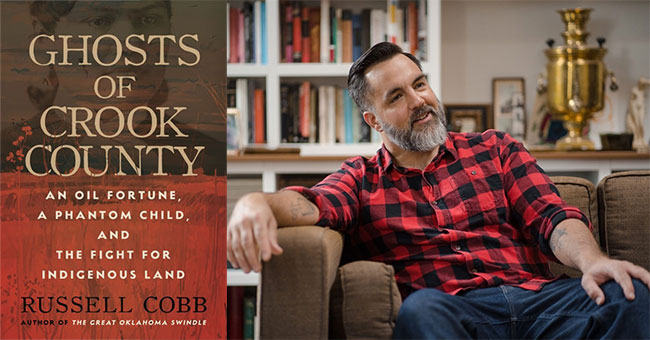
  • A Q&A with Russell Cobb

    Cobb-and-Ghosts-of-Crook-County

    Cover design: Louis Roe. Author photo: Buffy Goodman

    In the early 1900s, few knew the intoxicating power of greed better than white men on the forefront of the black gold rush. When oil was discovered in Oklahoma, these counterfeit tycoons impersonated, defrauded, and murdered Native property owners to snatch up hundreds of acres of oil-rich land. Writer and fourth-generation Oklahoman Russell Cobb sets the stage for one such oilman’s chicanery in Ghosts of Crook County: An Oil Fortune, a Phantom Child, and the Fight for Indigenous Land. Tulsa entrepreneur Charles Page launched a campaign for a young Muscogee boy’s land in Creek County. Problem was, “Tommy Atkins,” the boy in question, had died years prior—if he ever lived at all. Beacon Press senior publicist Bev Rivero caught up with Cobb to chat about it.

    Bev Rivero: You write, “In Oklahoma, the natural resource curse might be deemed as an intergenerational retribution.” Can you explain what this means to you personally as well as provide some context?

    Russell Cobb: The natural resource curse is what happens when a given society strikes it rich by extracting some resource and chases after that wealth as other parts of the economy decline. The race to make as much money as possible leads to corruption, inequality, violence, and environmental destruction. Economists and political scientists point to places like Nigeria, Russia, and Venezuela as object lessons in the natural resource curse, but many of those social ills also plague places like Oklahoma and Texas.

    Now, Oklahoma is unique because the eastern half of the state, where the oil booms occurred, was—still is, actually—on federally recognized Indian Reservation land. Some Native American leaders in the early twentieth century stood to become immensely wealthy from oil but correctly predicted a catastrophe. Muscogee Chief Pleasant Porter thought the discovery of oil would lead to the end of sovereignty and he lamented the coming of this most modern of industries. The ruling white Petro-Christian class that came to dominate the state—it still dominates the state—tried to erase the records of widespread theft and exploitation that accompanied the rise of the oil and gas industry.

    The first Russell Cobb was a well-connected white New Yorker who became quite wealthy during the 1920s oil boom. His son, Russell Cobb, II, turned that wealth into a fortune, but by the end of the 1960s, he was dead, and the money had evaporated. Growing up, I heard there was some sort of curse on the family, but I’ve come to see it not as a supernatural phenomenon, but as a result of a worldview that values wealth creation above all else.

    BR: How did you meet your research partner and collaborator, Apollonia? How did you work together on this investigation?

    RC: We met in 2018 over Facebook. I published a piece in Tulsa World about how this fancy, expensive park in Tulsa contained a hidden history of fraud and possible murder of an Indigenous man. She messaged me to say my facts were correct, but the perspective of a Mvskoke person was missing. I thought I was going to get cancelled! I wrote back, saying I agreed; the whole story needs to be informed by Muscogee history and culture. We found out we were asking the same questions, and despite being from opposite sides of the tracks in Tulsa (she’s from a working-class, Native American/Latino neighborhood and I’m from an upper-middle-class white neighborhood), we actually had a lot in common.

    Most importantly, we share a sense for the absurdity of life and culture in Oklahoma and cope with its madness with a similar sense of humor. Jokes are very important to Okies of all backgrounds. Just watch Reservation Dogs (Sterlin Harjo lives in Tulsa) or the comedy of Bill Hader (he went to my high school!). Secondly, we’re both driven to investigate and tell the true story of this odd place, she from the perspective a Native American and Chicana scientist/artist, and me from the point of view of a writer with personal stakes in a place that continues to surprise me.

    BR: One thing that readers might not know about but that has lasting impact is the connection you make between the Dawes commission and the Census. It’s really telling how these types of categorizations shaped data gathering. How does this fit into the story arc of Ghosts of Crook County and the history of Oklahoma and its surrounding regions?

    RC: Until I started writing this book, I didn’t realize how arbitrary and socially constructed notions of race really were. I mean, we all know that race is a construct, but to see the ramifications of this construct on the ability to amass, control, and pass down wealth to particular individuals was really mind-blowing. For example, if Tommy Atkins was, as Charles Page contended, a “half-blood” Indian, he would have one set of restrictions on the sale of his land. If he was a Freedman (a person of African descent), there would be no restrictions on the sale of his land.

    Furthermore, the race of one of Tommy’s three purported mothers, Nancy Atkins, shifted over her lifetime. She was listed as an “Indian by blood” in the Dawes Rolls, then as “mulatto” in an early Oklahoma census, and then, at the end of her life, she was simply “colored.” Despite the fact that Indian Territory was a triracial society, Oklahoma imposed a very Old South notion of identity along a White/Black binary with tragic consequences for those labeled as “colored.”

    In a broader American context, this is quite interesting. We think of the Old South as being constrained by the slave-holding states, and then gradually relinquishing its hold on white supremacy as the federal government enforced Civil Rights. The story of Oklahoma turns that American myth upside down. It was a place of many races coexisting until 1907, at which point it took on the mold of a Jim Crow state. It went backwards, in other words. In many ways, it’s still going backwards in 2024.

    BR: In the case of Tommy Atkins, as a figure that made the leap from clerical error to real person, we see how the concept of personhood can matter more than what we witness around us. How does the story of Tommy resonate today?

    RC: If millions of dollars of oil wealth were not at stake, Tommy Atkins would still be an interesting case study in the arbitrary nature of the federal government to determine who is and is not an Indian, and indeed, who is a person.

    That’s why the Dawes era is often referred to as “bureaucratic imperialism”: once the bureaucrat in the Department of Interior stamped Tommy’s enrollment card, it was exceedingly difficult to prove to a federal court that he did not exist.

    That was in spite of the tribe, the Muscogee Nation, saying: We know all the people involved, and this Tommy here did not exist. He may have started as a census-taking error, but Charles Page and associates turned him into a very convincing person. The preponderance of evidence suggested Tommy was a fictional creation and that Minnie Atkins was pressured to fabricate a story that Page wanted to be true.

    Here’s the contemporary tie-in: a lie that is backed by powerful people with lots of money to spend can create its own reality. That happens every day on social media, but in the case of Tommy Atkins, the lie became part of the foundation for an entire philanthro-capitalist operation that still exists—the Sand Springs Home. And the lie that started it all was completely swept under the rug. Until now.

    BR: Finally, what is one thing that you’d like readers to take away from your book? What are some other works they might want to seek out to learn more?

    RC: It’s hard to have one takeaway from a project that still has my head spinning around questions of identity, wealth, and belonging. I hope that readers who have no connection to Oklahoma, Indian Country, or the oil and gas industry, will still come away from the book questioning the assumptions embedded in the American Dream mythology. So much of what we think of as American freedom—the open road, the single-family home with a yard, material prosperity—is predicated upon some ugly truths, including treaty violations, legalized swindling, white supremacy, and environmental destruction. My goal is not to make the people who benefitted from oppression and destruction feel bad or guilty. On the contrary, I hope this book will make them want to know more, do better, and expand their horizons of what it means to be in relationship to others and the environment.

    There are some wonderful films, podcasts, and books that cover similar ground as Ghosts of Crook County. Some works I always had at the top of my mind or close to my desk while writing the book are:

    As a soundtrack, I listened to a lot of J. J. Cale, as he captured the mood and sound of eastern Oklahoma like no one else. The guy wasn’t a flashy player, but he never played a wrong note.


    About the Authors 

    Bev Rivero is senior publicist at Beacon Press. Before joining Beacon in 2021, Bev was the communications and marketing manager at the National Book Foundation, where she worked on the National Book Awards, promoted the Foundation’s public and educational programs, and led all social media and marketing campaigns. Prior to NBF, she was in publicity at the New Press for six years, where she worked with authors committed to social justice, including Paul Butler, Michelle Alexander, and many more. She has extensive experience promoting nonfiction and tailoring outreach campaigns that resonate with activists and change-makers. Bev is a NYC-based graduate of Johns Hopkins University, ardent supporter of indie presses, and a graphic designer
    Russell Cobb, a fourth-generation white Oklahoman, is professor in the Faculty of Arts at the University of Alberta and the author of The Great Oklahoma Swindle, which won the 2021 Director’s Award in the Oklahoma Book Awards. His journalism has appeared in the New York TimesThe GuardianSlateThe Nation, and on NPR. His reporting appearing on This American Life was turned into the film Come Sunday, distributed by Netflix. He is also the host of History X, a podcast about buried histories and nonfiction mysteries, broadcast on 88.5FM in Edmonton, Canada, and across all major podcast platforms.

  • Mei Su Bailey

    Welcome to our rebooted “Beacon Behind the Books” series! In these times when readers are responding to our books “more than ever,” when our authors—including Aubrey Gordon, Tanya Katerí Hernández, James Baldwin, Viktor Frankl, Atef Abu Saif, and Percival Everett—are appearing in the media, their ideas going viral on social media, their voices being heard on so many platforms, we thought it would be good to take a break to focus on some of the staff who work hard to find, shape, edit, produce, and promote those works. Our blog series introduces to you a staff member and gives you a behind-the-scenes look, department by department, at what goes on at our office.

    This month, we introduce you to Mei Su Bailey, our publicity assistant!

    What drew you to publishing, Mei Su? How did you find your way to Beacon?

    I’ve known since I was little that I wanted to work somewhere in the world of books. My mom is a writer, so while I was growing up, she was my biggest inspiration and always encouraged me to lean into my love of literature. Some of my favorite childhood memories were discussing books with her—why we liked them, why they felt meaningful, and trying to persuade each other to read our current favorites. When the publicity assistant position opened at Beacon, it seemed like the perfect opportunity to pursue that passion as well as support a mission I really believe in. 

    What’s a typical day in the life of a publicity assistant? 

    Every day brings something new! Sometimes, I’m answering emails from authors and setting up bookstore events. Other days, I’m working on media pitches or doing a deep dive into a book and taking notes for a press release. Being in publicity is fun (and also challenging) because you need to stay on top of current events and what’s trending in the news, like maybe you’ll be able to relate the latest headline to one of the books you’re working on. 

    What current projects are you excited about?

    I’ve been working on the publicity campaign for the new graphic interpretation of Roxanne Dunbar-Ortiz’s Indigenous Peoples’ History of the United States. Along with the joys of getting to work with Roxanne and the amazing illustrator Paul Peart-Smith, it has been a great opportunity to learn how to publicize a book that’s different from the typical Beacon read. Plus, the art and design of the book are stunning!

    What are you reading right now?

    I’m reading The Ministry of Time by Kaliane Bradley. It’s about the top secret time-traveling division of the British government where they bring an 1840s ship commander into the modern day and place him in the home of a ministry employee to see if he can acclimate to modern times. But she, the ministry employee, is half-Cambodian and doesn’t really have time to explain the entire fall of the British empire to him. Plus, he gets overwhelmed by the concept of Spotify really fast. So far, it’s a fun, romantic read interspersed with serious moments about the consequences of meddling with history.

    Favorite book(s) ever?

    The God of Small Things by Arundhati Roy or The Fifth Season by N. K. Jemisin. Very different in premise but both have some of my favorite elements: creative and lively language; nuanced reflections on belonging and identity; and familial drama at the highest stakes. 


    More About Mei Su Bailey 

    Prior to joining Beacon Press in 2024, Mei Su Bailey worked at various youth advocacy and literary organizations, including 826 Boston, Dear Asian Youth, and the Fir Acres Writing Workshop. She holds a degree in sociology and anthropology from Lewis & Clark College in Portland, Oregon, and graduated from the Columbia Publishing Course at Oxford. Outside of work, you can find her playing with cats, making things with yarn, and enjoying many bowls of noodle soup with chili oil.

  • By Christian Coleman

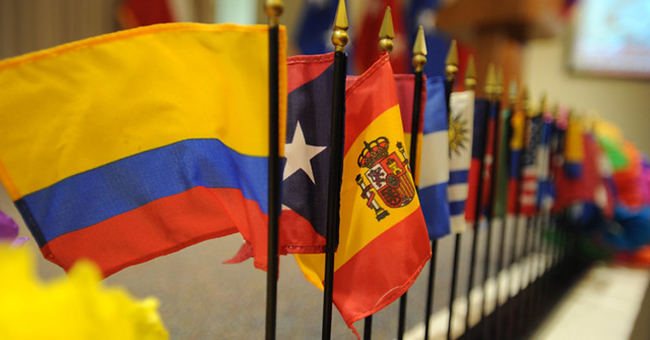
    Miniature flags of Hispanic and Latinx nations

    Photo credit: Texas Military Department

    A Hispanic/Latinx Heritage Month unmarred by election-year drama would have been a miracle. No such luck in 2024. Not with anti-immigrant rhetoric regrowing its Hydra’s head when right-wing candidates take to the debate and rally stages. If that weren’t enough, Hispanic/Latinx Heritage Month started off with news that Jeanine Cummins will release new novel next year about the aftermath of a hurricane in Puerto Rico. Did the publishing world learn nothing from her American Dirt snafu or from the consequences of bankrolling white-savior complexes 4 years ago?

    So, in the spirit of this year’s theme, Pioneers of Change: Shaping the Future Together, we recommend these titles from Beacon’s catalog. Titles from authors who are pioneering change with truth-telling, by centering Hispanic/Latinx voices. Titles about pioneers of Hispanic/Latinx communities and the diaspora. We can shape the future together by reading them. ¡Adelante!


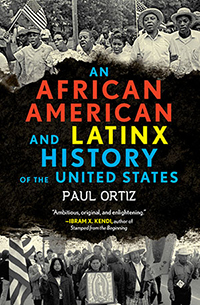
    An African American and Latinx History of the United States

    An African American and Latinx History of the United States

    “Mexicans, African Americans, and their abolitionist allies conceived of a hemispheric liberation movement that would not be tied to nationality nor constrained by borders. They also knew that slavery’s relentless cycle of growth would destroy democracy.”
    —Paul Ortiz


    Before island is volcano

    antes que isla es volcán/before island is volcano: poemas/poems

    “al tratarte como agua, te asumiría como esencial y cotidiana.
    a esto aspiro cuando me enamoro, a que seas mi agua.
    como somos los dos de aquí, estamos un poco
    contaminados y el trato debe tomarlo en cuenta.

    te trato como una isla que mira a otra isla
    y entiende que el agua es poder.
    sé que mezclo cosas, pero el trato es la mezcla de todas las cosas
    que nos hicimos cuando nos quitaron la tierra,
    talaron nuestros bosques y repartieron los frutos.”

    /

    “to treat you like water, i’d have to assume you
    as essential and daily.
    i aspire to this when i fall in love, that you be my water.
    since we are both from here, we are a bit
    contaminated, which treatment must consider.

    i treat you like an island looks at another
    and understands water is power.
    i know i’m mixing things, but treatment
    is the mixture of all the things
    we did to each other when they took our land,
    cut down our forests
    and distributed our crops.”
    —Roque Raquel Salas Rivera, de “la aproximación/from “to approach” 


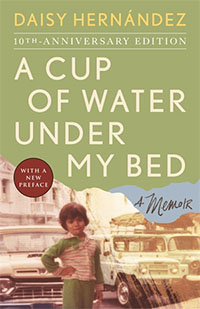
    A Cup of Water Under My Bed_10th Anniversary

    A Cup of Water Under My Bed, 10th- Anniversary Edition: A Memoir

    “After this memoir was published, readers showed up in bookstores and libraries and over social media to tell me that I had written their childhoods. The readers were Chinese or Haitian, or they were Dominican or Colombian. While I had written to love the family that had made me and the girl I had once been, readers told me that this love was not private at all but part of a larger narrative about language, migration, and colonialism.”
    —Daisy Hernández, from the new preface 


    Inocencia racial

    Inocencia racial: Desenmascarando la antinegritud de los latinos y la lucha por la igualdad

    “Queda oculto que la indiferencia de los latinos hacia la negritud desempeña un papel en la condición de subordinación de los afrolatinos y, a su vez, la exclusión de los afroamericanos. Los supervisores latinos en los lugares de trabajo les niegan a ambos grupos de negros el acceso a ascensos y aumentos salariales. Los propietarios de viviendas latinos rechazan a potenciales inquilinos y compradores negros. Los trabajadores latinos en restaurantes no permiten la entrada de negros y se niegan a servirles. Los estudiantes latinos hostigan y abusan de estudiantes negros. Los educadores latinos menosprecian a los estudiantes negros. Los oficiales de policía latinos agreden y matan a negros. Los más odiosos son los latinos que ingresan en organizaciones de poder blanco violentas y hacen daños a los negros. Sin embargo, aun cuando los latinos no se identifiquen racialmente como blancos, como un supremacista blanco, su identidad exclusivamente latina no mitiga los ejemplos de antinegritud antes mencionados.”
    —Tanya Katerí Hernández 


    Mothercoin

    Mothercoin: The Stories of Immigrant Nannies

    “These women’s stories reveal that the mothercoin is not an industry or an immigration pattern, but an approach to value. The invisibility is what does the harm, the insignificance attributed to the work and to the woman and to the choices she has confronted. When the work is swept under the rug, so are the cultural expectations about a woman’s place in the home, on the job. When the woman is little more than a household expense, her landscape of choice succumbs to the cold reality of supply and demand and her humanity is compromised by a hierarchy of value that pits the faces of the mothercoin against each other: presence against protection, labor against love. The deepest damage comes from a language that paints these conflicts as the result of her own choices.”
    —Elizabath Cummins Muñoz 


    Narcas

    Narcas: The Secret Rise of Women in Latin America’s Cartels

    “My understanding of the criminal underworld has been turned on its head. What I used to think was a man’s world is increasingly appearing less so as I learn more about the women present in positions at every level of the drug trade. Now I question what we understand about organized crime and how it works. Fundamentally, how much can we know about the decision-making process and the dynamics within these organizations without understanding women’s roles intimately? Their roles cannot be pigeonholed or oversimplified. Much as the women in today’s licit, legal world are taking on more prominent roles and higher profiles, it’s logical that such a trend should also be reflected in the criminal underworld. And in the case of the women in this book, they’re all connected: by geography, by criminal organizations, and by shared business interests.”
    —Deborah Bonello 


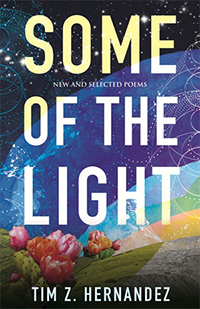
    Some of the Light

    Some of the Light: New and Selected Poems

    “This land is your land,
    this land is Comanche land,
    Mescalero Apache land,
    Coahuiltecan land, my ancestors—
    bent to build the Alamo, then slaughtered
    and buried beneath it, risen again, to be forgotten,
    now a river to be walked upon, treaded by tourists,
    on a mission, who find San Antonio a city
    with two thighs, good only for entering and exiting.”
    —Tim Z. Hernandez, from “Variations on This Land” 


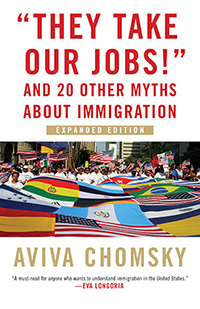
    They Take Our Jobs-Expanded Edition

    “They Take Our Jobs!”: And 20 Other Myths About Immigration

    “Most histories of the United States portray its national identity very differently, as a melting pot made up of ethnically diverse immigrants . . . But in fact US nationality has historically been based very much on race. Congress first enacted a naturalization law—determining who could become a citizen of the United States—in 1790, fourteen years after the country was established. The law restricted naturalization to ‘free white persons.’ ‘White’ was not defined—its meaning was thought to be obvious. Neither, for that matter, was ‘persons’—but it went without saying that ‘persons’ meant ‘male persons.’ With the growth of racial pseudoscience in the nineteenth century, Congress and the courts were increasingly drawn into trying to define who was and was not racially ‘white’ and therefore eligible for citizenship.”
    —Aviva Chomsky 


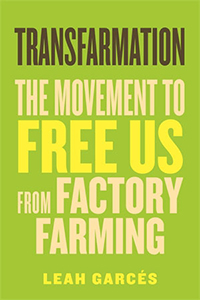
    Transfarmation

    Transfarmation: The Movement to Free Us from Factory Farming

    “When it comes to the meat, dairy, and eggs we eat, the price at the grocery store or restaurant is never a fair reflection of the true cost. In factory farming, risks and liability are mostly externalized by the industry, and most often to the most vulnerable among us. This damage, this harm, is borne by many—from the workers to the animals to the farmers. The industry makes extraordinary profits off this harm by externalizing risk and liability. Externalities are the root of the business model, and they’ve driven the spectacular success, power, and wealth of this industry. But because these costs are hidden from those who purchase the products, consumers don’t affirmatively consent to the harm caused by eating animals and their products.”
    —Leah Garcés 


    We Wear the Mask

    We Wear the Mask: 15 True Stories of Passing in America

    “My mother’s greatest hope was that we’d fit in, that we would be as much a part of the scenery as the sweeping dunes and the Confederate flag on the Marshalls’ living room wall. We, of course, did not understand the meaning of the flag. Indeed, when the Marshall girl and my third-grade self would race up and down Lake Avenue on our bikes and she’d holler, “The South will rise again!” I’d join in. It was my father, having noticed the flag through the window one day, who suggested I should spend less time with the Marshalls. He explained about the Confederacy. “But we’re not black,” my mother pointed out. “It doesn’t matter,” he responded. To her dying day, my mother would say she was white, never mind her nappy hair, never mind the map on her face that betrayed that assertion.”
    —Achy Obejas, from “Secret Lives” 

    Miniature flags of Hispanic and Latinx nations


    About the Author 

    Christian Coleman is the digital marketing manager at Beacon Press and editor of Beacon Broadside. Before joining Beacon, he worked in writing, copy editing, and marketing positions at Sustainable Silicon Valley and Trikone. He graduated from Boston College and the Clarion Science Fiction & Fantasy Writers’ Workshop. Follow him on Twitter at @coleman_II and on Bluesky at @colemanthe2nd.bsky.social.

  • By Christian Coleman

    Book burning_Movidagrafica

    Photo credit: Rafael Juárez

    And the category is . . . Challenged! Challenged as in a hair’s breadth away from being banned. For Banned Books Week, United Against Book Bans released the latest roundup of challenged books, and ten Beacon Press titles are on it! Tens across the board for each one strutting their red-alert stuff! Some are par for the rabid far-right course—Race and history and queers! Oh, my!—while others, indeed, will make you do a double take. In any event, this just means we and our authors will keep the decolonizing, teaching-truth energy going full speed. Can’t stop, won’t stop. 


    An African American and Latinx History of the United States

    An African American and Latinx History of the United States

    “If American exceptionalism is a harmful fable, then what do we replace it with? We can begin by continuing to learn more about ordinary people’s capacity to create democracy in action . . . Whether one looks at events such as the making of the Underground Railroad to Mexico in the 1820s or the 1968 Memphis Sanitation Workers Strike, it is an incontestable fact that the United States advances the most when its most oppressed people achieve power and control over their lives.”
    —Paul Ortiz 


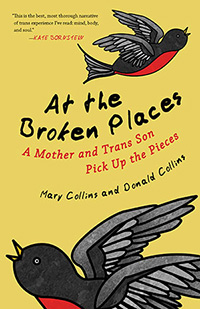
    At-the-Broken-Places

    At the Broken Places: A Mother and Trans Son Pick Up the Pieces

    “Today, people I hardly know ask me about my birth name, my sex life, or my surgical history. Trans people commiserate about these things, because no matter how different we all are, the questions we get are often the same. And while now I accept that being a visible trans person means having to deal with spam, back in high school I had no idea why people suddenly felt they had an all-access pass to scrutinize my anatomy. Let’s get back to my penis.”
    —Donald Collins, “Who Wears the Pants?”


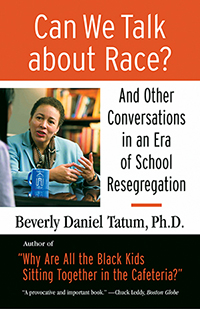
    Can We Talk About Race

    Can We Talk About Race?: And Other Conversations in an Era of School Resegregation

    “We have to talk about the way that our socialization about race prevents us from fully recognizing that talent, and the way that the dynamics of race in our society have kept us from fully educating youth of color. If we don’t fully engage in dialogue about what we can do differently, and bring an understanding of the legacy of race and racism in our society into that conversation, we will not be successful in addressing this and other national challenges. We have a wealth of untapped and underutilized talent in communities of color across the country; we need this talent. Can we talk about race?
    —Beverly Daniel Tatum, PhD 


    Considering-Hate

    Considering Hate: Violence, Goodness, and Justice in American Culture and Politics

    “Conceptualizing violence within the frame of hate makes it easy to mistake symptom for cause. Hatred is not the root cause of racism, misogyny, homophobia, violence against transgender people, violence against disabled people, or economic cruelty. Hate is a predictable consequence of deeply rooted, historically persistent forms of these maladies. They are foundational to institutionalizing hierarchies of power. Unnoticed and unexamined, they permeate mainstream culture.”
    —Kay Whitlock and Michael Bronski  


    An Indigenous Peoples History of the US for Young People

    An Indigenous Peoples’ History of the United States for Young People

    “Like most people, Americans want to think well of themselves, their ancestors, their history, and what they and their leaders do. As advanced technology makes the experiences of Indigenous peoples around the world more readily available, it is necessary that Americans learn to think more completely and more critically about their own history, because it can help them be better citizens of the world. Part of that critical thinking involves recognition that “America” is a name given to two land masses by European colonizers. Indigenous peoples had, and have, words for the land in their own languages.”
    —Roxanne Dunbar-Ortiz with adapters Jean Mendoza and Debbie Reese 


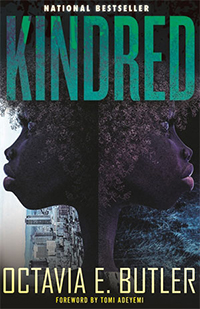
    Kindred YA

    Kindred: Young Adult Edition
    with a foreword by Tomi Adeyemi

    “I could feel the knife in my hand, still slippery with perspiration. A slave was a slave. Anything could be done to her. And Rufus was Rufus—erratic, alternately generous and vicious. I could accept him as my ancestor, my younger brother, my friend, but not as my master, and not as my lover. He had understood that once. I twisted sharply, broke away from him. He caught me, trying not to hurt me. I was aware of him trying not to hurt me even as I raised the knife, even as I sank it into his side.”
    —Octavia E. Butler 


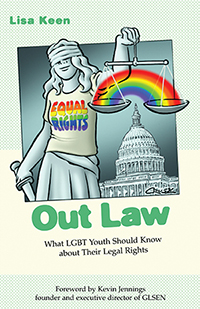
    Out Law

    Out Law: What LGBT Youth Should Know About Their Legal Rights

    “Today, there is greater acceptance of sexual-minority youth among young people and that growing acceptance provides you with a greater level of security in being open about who you are. Nevertheless, greater openness toward sexual difference among youth still runs up against an older, less accepting part of society—a part that still controls many positions of authority. In some cases, that authority is parents, teachers, and principals. In other cases, it is those who make and enforce laws at the local, state, and federal levels.”
    —Lisa Keen 


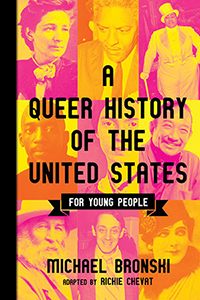
    A Queer History of the United States for Young People

    A Queer History of the United States for Young People

    “The ‘future of queer history’ sounds contradictory, but it is not. Since before this country was founded, there have been people who refused to conform to gender and sexual norms living in and creating America. Often, because they lived outside certain cultural traditions, they led the way for new ways of seeing the world, new ways of seeing America. Sometimes they were persecuted for this; sometimes they were praised. Often, people in the mainstream realized only after the fact the vision and new values queer people brought to American culture. Those people did that in the past. That is American history. Now you, your friends, your classmates, your communities, and your colleagues are the ones who will make those changes, have those visions, and create a new future for America, a new America.”
    —Michael Bronski with adapter Richie Chevat  


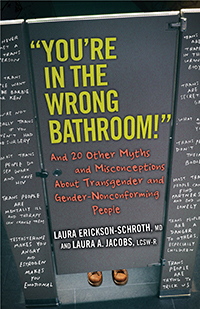
    YoureInTheWrongBathroom

    “You’re in the Wrong Bathroom!”: And 20 Other Myths and Misconceptions About Transgender and Gender Nonconforming People

    “In spite of the many options for surgeries, the myth that surgery makes a trans person ‘fully’ male or female still circulates. It’s not uncommon to hear that a person is ‘more trans’ for desiring surgery, and that those who haven’t yet had or cannot afford these changes are ‘less’ trans. Even within trans communities, there are hierarchies set up between those who are ‘pre-op’ (pre-operative), ‘non-op,’ and ‘post-op’ (post-operative), often resulting in shame and low self-esteem in those who cannot afford or do not want the surgeries others consider important.”
    —Laura Erickson-Schroth and Laura A. Jacobs 

    Book burning_Movidagrafica


    About the Author 

    Christian Coleman is the digital marketing manager at Beacon Press and editor of Beacon Broadside. Before joining Beacon, he worked in writing, copy editing, and marketing positions at Sustainable Silicon Valley and Trikone. He graduated from Boston College and the Clarion Science Fiction & Fantasy Writers’ Workshop. Follow him on Twitter at @coleman_II and on Bluesky at @colemanthe2nd.bsky.social.

  • By Remica Bingham-Risher

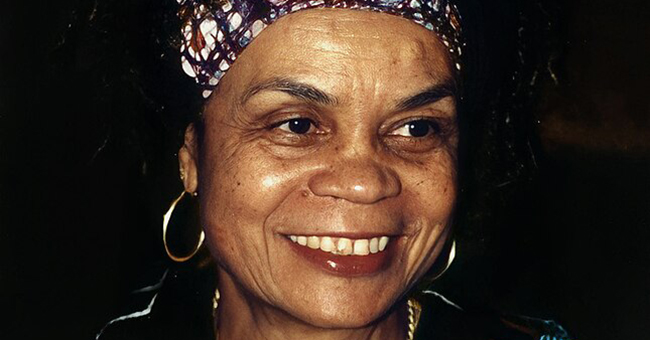
    Sonia Sanchez, New York, 1998

    Photo © John Mathew Smith, 2001

    Editor’s note: Poet, playwright, educator, and activist Sonia Sanchez turns ninety today! To celebrate her momentous solar return, we’re turning to poet Remica Bingham-Risher’s interview with the revolutionary poet in her memoir Soul Culture: Black Poets, Books, and Questions That Grew Me Up. As Bingham-Risher discovers upon meeting her, much as we all do when we are blessed to do so, dear Sister Sonia Sanchez is a force!

    ***

    I met [Sonia] Sanchez at the second Furious Flower Conference in 2004, where she performed with her band Full Moon of Sonia, and interviewed her a few years later. As we had just begun to get to know each other and I was a young mostly unpublished poet, I was surprised to be invited to a gathering at her house that first evening we sat together. At Sanchez’s party, there was food spread from end to end on a large wooden table; people filled the house and were almost as interesting and varied as the art stationed in every room. There were pieces by Thelma Burke, Elizabeth Catlett, and Jacob Lawrence. There were many African statues and masks, along with signed prints and photographs with artists from every genre. Sanchez smiled with entertainers on one wall and Bearden’s autograph graced a print on another. Ngũgĩ wa Thiong’o sat in the living room signing his latest epic novel Wizard of the Crow and took pictures with guests. This went on until well after midnight. Sanchez stood in the kitchen, beckoning when she saw me: “Dear sister, here’s a camera. Document everything, make sure you see everyone. Bring it back to me when you’re done.”

    Months later, when I saw Sanchez at a conference in Atlanta, she remembered we hadn’t finished our interview, as we were cut short by the gathering at her home. I fumbled when she asked me why I hadn’t tried to reach her, explaining that my grandmother had just passed away and that the last few months had been grim. She cut me short as I tried to beg her forgiveness and said we could finish whenever I was ready.

    Before I could thank her, a group of editors came. As she was being swept away, she took my hand. “We’re having a get-together tonight at a local poet’s house. You should come. Here’s the address, here’s the time, bring poems, bring friends.”

    ~~~

    In her book We a BaddDDD People, I was introduced to the Sonia many fell in love with during the civil rights era. When we met more than forty years later, her poems had grown quieter and more mild-mannered in their way. Those in the Black Arts Movement subverted tradition by breaking rules of English grammar and syntax, especially poets like Carolyn Rodgers, Ntozake Shange, and Sonia Sanchez, whose work from that era utilized satiric or phonetic misspellings; slashes for word dismemberment, abbreviation, or fusion; and incorporated one of the most distinguishable features in Black English, using the verb “be” almost exclusively to mark aspect in verb phrases.

    Of course, using Black vernacular wasn’t new. It was a medium in the tradition of Paul Laurence Dunbar, Zora Neale Hurston, and others. But these artists of the 1960s writing in the language of the people understood how reading and hearing the language of one’s heart might change the reader’s response. Moreover, Black feminist poets were railing against each institution that bound them—racism, sexism, ageism—and were precise in their subjects and audience: they were writing Black poems for and about the common Black citizen, especially the youth they believed would be most adept at listening to and acting on their messages. Sanchez explained her revolutionary craft when I asked about the biting tongue in her earlier work: “[Y]ou must remember, all the death and dying that happened during the time that we were writing, and we had discovered how much we’d been enslaved in this country. No one had taught that in the universities, our parents had not even talked about it. So when we discovered it, we weren’t going to say, ‘Well, by golly, I think this is important.’ We came out hitting and slapping and alerting people to what had happened.”

    She went on: “In [my book] Home Coming, you see concentrated bloodletting. We had to alert people who had not been alerted to what was going on. When I got up on the stage and said, ‘I’m Black,’ people booed me, because people wanted to be considered Negroes with a capital N. So, you had to use curse words, because then you engaged people. When I used curse words, I engaged the younger people and they said, ‘Ooh, stop, look at that!’ Then, after I got them engaged, I didn’t have to curse anymore.”

    Among the leaders of the civil rights and Black Power movements, Black youth in the 1960s were bodacious in their stand against discrimination and maltreatment. This made them kindred spirits with the artists of the time. By speaking in the voices of those in their communities, Black poets validated those silenced for centuries. During the Black Arts Movement, numerous brave—sometimes irreverent—new voices like Sanchez’s began to sing in poems, on wax, and in politics.*

    A cursory glance through We a BaddDDD People is nothing like looking into Morning Haiku, a collection of Sanchez’s formal verse published in 2010. There is little discernible structure for most poems in We a BaddDDD People—words sprawl down the page or bleed into others with forward slashes in between; the spelling is invented and divisive in its raging; expletives, derivatives, repetitions of letters or phrases, and wild capitalizations abound. This is obscenity-slinging, English-breaking, loud-mouthing, Afro wider than the photo filling the back cover, revolutionary Sonia—unapologetic and abrasive, full of fire and righteous love. The documentary [about her life, BaddDDD Sonia Sanchez,] proves that Sanchez has never been afraid to tell people about their mess. Mess as in James Brown’s soul-fire “Papa Don’t Take No Mess!” Mess as in staying down in your own dirt. In the 1960s, this is what Sanchez believes plagues the Black community she holds dear, and in We a BaddDDD People she wills the real, revolutionary work to begin at home. In the poem “blk/rhetoric,” she asks who is going to walk the walk, not just talk the talk about revolution. She wants more than lip service for the new Black Is Beautiful movement. She wants more than simple capitalistic appeasements (“cad / ill / acs” or, if the phrase is drilled down, ill-bred, dishonorable [‘cad’], sick [ill] actions [acs/acts]) by those pushing materialism over substance. She wants more than racial, sexual repression and street mongering, more than artificial highs from drugs and cheap hooch, more than temporary pleasures, pain, or sensationalized fascination with difference. She wants legitimate, continuous change, a real about-face for society.

    For Sanchez as for [Alice] Walker, revolution is both a verb and noun, an action and event. In the documentary, Sanchez fights with and for the people in great or small things. She does what Walker posits she must do as a revolutionary artist. Sometimes poets must help move students from one reading level to another, fill out government forms for assistance, help people eat. Revolutionaries must do the regular work to get folks from day to day, be in the trenches, not just pontificate about art and adornment without helping to beautify the lives on the ground. Sanchez teaches and fights for Black studies to be recognized by campus administrators; she is arrested as a grandmother against war. In our interview, I was especially tickled when Sanchez talked about bickering with a manager for fresh produce at her inner-city grocery store. She is fighting against disparities, food deserts, and neighborhood deprivation. In her community, she is in the midst of revolution.

    We talked about Sanchez’s fight to establish Black studies as a field and how real the work got for her before most of the knowledge had a chance to trickle into a groundswell. She said: “It’s amazing how long it has taken people to catch up. Now, it’s normal, it’s commonplace, the things we talked about, things that people should have been doing in the early 1970s. Now, in the twenty-first century, it’s normal to have a Du Bois House, but when I talked about Du Bois and taught Du Bois’s The Souls of Black Folk at San Francisco State, the FBI came to my house. They knocked on my door and told my landlord he should put me out, because I was one of those—they didn’t call us radicals, they called us militants. He said because I was teaching Du Bois—but he pronounced it wrong—Hughes, and Robeson. Well, you can’t very well do the first semester of African American Lit without including them.”

    She continued: “I must admit that I was naïve about the process of teaching them, as I told Ms. Jean Hutson, who was the curator of the Schomburg. When I finally called her after the FBI had left, I said, ‘You know, I’ve just been visited by the FBI!’ I had tears in my eyes, and she said, ‘Dear, dear Sonia. I thought you understood that if you taught some of those people, you might have a little difficulty,’ which was the understatement of the year [laughing].” But being a revolutionary often means troubling the water for good.

    In his introduction to We a BaddDDD People, published by his own Broadside Press, Dudley Randall opens with a delineation of the true revolutionary spirit: “Some people think of revolutionaries as troublesome, but I have found the ones I know to be kind, gentle, generous . . . Those who are revolutionaries, however, want to make this a better world.”

    ~~~

    In Sanchez’s America in We a BaddDDD People, instead of whips and chains, most are tormented by greed, drugs, impossible gains. Black families are torn apart in poems like “—answer to yo/question / of am i not yo/woman / even if u went on shit again” where a Black woman watches her Black man disappear and return as someone else under the haze of drugs, though there is enduring, home-growing, proliferate love. She calls out the seedy, underhanded politics of capitalism, sexism, and pay-for-play sexual encounters in “Indianapolis/summer/1969/poem,” where she admonishes families for not teaching their children that the revolution isn’t about getting “coin.” Sanchez speaks plainly and combs the streets for what she believes people need to hear, her candidness another tenet of the Black revolutionary artist. Sanchez shocks the stoic, prudish, and unaware with the hope of teaching some to know better or, perhaps, with the intention of moving some beyond indifference.

    Sanchez’s revolution is sometimes angry, sometimes celebratory; she chastises and idolizes in equal measure. She’s a shape-shifter, a courier of love and hate. In short, she is all kinds of human. The work of the revolutionary artist/woman, on top of dealing with culture, is often most intentioned and piercing when motherhood is the topic. Layer upon layer of experience (caregiving, care-needing, assumed inadequacies, laborious conflicted histories, etc.) abound. In “summer words of a sistuh addict,” a woman shoots dope on Sunday, making it her temple and God after church. The woman in the poem is not simply negligent or shooting up for recreation; she turns to drugs and explains she is self-medicating against the trauma from her mother. Her casual escape becomes a spiraling addiction, and only the women in her community know how to try to salvage her. The women are a sounding board and communal conscience, voices of reason and restraint. Their final query puts the onus on the daughter, on her part in this undoing. Their inquiry—an intervention, perhaps a saving grace—is followed by the chorus of women mingled with her own tears as she is broken and reborn.

    *I asked Sanchez about when, during this convergence of folks, she met Nikki Giovanni, Haki Madhubuti (who was Don L. Lee then), and Etheridge Knight, who would make up the Broadside Quartet, and she made sure to get my history straight. She said, “Well, turn it around—and I’m just saying it for accuracy—Nikki was younger than us, so she was with us. The great thing about us was, what we did is, we opened up to everybody. She certainly came along with us for Broadside. When you talk about the Black Arts Movement, the people who started that were an interesting bunch of people. You had [Amiri] Baraka, Askia [Touré], Larry Neal, Bobb Hamilton, myself, and then the musicians who came and the painters who came. All those people who came into that facility, BART/S, the Black Arts Repertory Theatre/School, to begin this thing called Black Arts.”


    About the Author 

    Remica Bingham-Risher is a Cave Canem fellow and Affrilachian Poet. Her work has been published in the New York Times, the Writer’s ChronicleNew LettersCallaloo, and Essence, among other journals. She is the author of 3 volumes of her own poetry: Conversion, winner of the Naomi Long Madgett Poetry Award; What We Ask of Flesh, shortlisted for the Hurston/Wright Award; and Starlight & Error, winner of the Diode Editions Book Award. She lives in Norfolk, VA with her husband and children. Follow her online at remicabinghamrisher.com, on Twitter (@remicawriter), and on Instagram (@remicawriter).

  • Sophie Yook

    Welcome to our rebooted “Beacon Behind the Books” series! In these times when readers are responding to our books “more than ever,” when our authors—including Aubrey Gordon, Tanya Katerí Hernández, James Baldwin, Viktor Frankl, Atef Abu Saif, and Percival Everett—are appearing in the media, their ideas going viral on social media, their voices being heard on so many platforms, we thought it would be good to take a break to focus on some of the staff who work hard to find, shape, edit, produce, and promote those works. Our blog series introduces to you a staff member and gives you a behind-the-scenes look, department by department, at what goes on at our office. And not only our staff, but our interns, too.

    This month, we introduce you to Sophie Yook, our sales intern! 

    What drew you to publishing, Sophie? How did you find your way to Beacon?

    Since elementary school, I always loved to read and write in my free time and always had my nose in a book. In fact, my mom would have to wrestle my book and flashlight out of my hands whenever she would catch me reading under the covers at night. As I grew older, books and stories continued to remain an important part of my life but fell to the backburner as other academic and co-curricular pursuits took my time.

    When I entered college, I was convinced I would major in the social sciences. However, I took an Asian American literature course to fulfill a credit and immediately fell in love with the discussions and content we would engage with. It was during these seminars that the topic of publishing came up and how writers of color often contend with additional barriers pre- and post-publication. Thus, I became interested in further exploring the publishing landscape and learning how the industry can become more diverse, inclusive, and accessible for all writers and readers.

    Before coming to Beacon, I interned at a literary agency and an editorial production company where I was introduced to the earlier stages of the publishing process. While I enjoyed my time in editorial work, I also wanted to take the time to navigate the consumer-facing roles of marketing and sales and learn more about the dynamic book market. I’m so grateful to Beacon for giving me the opportunity to do just that this summer!

    What are some of the challenges you’ve encountered in your role? What do you find most rewarding?

    One of the biggest obstacles I have personally stumbled across while working in sales and marketing was learning how to be succinct with my words. Going from writing ten-page papers throughout college to writing copy under 250 words was definitely a learning curve, and I was challenged by the process of thoroughly expressing the ideas of a book in a clear and concise manner. Hoping to improve this skill, I took on an independent project where I drafted updated copy for Beacon’s backlist titles, making it more relevant and engaging to current readers.

    It's rewarding to be in a position where I can tangibly see a book coming to life. When I worked in editorial, it sometimes felt as if the story simply disappeared into thin air after I submitted an edited manuscript, knowing the book would go through a lengthy revision and production process. However, at the marketing and sales stage, I love being able to see the culmination of everyone’s hard work as the book prepares to enter and stand out in the literary landscape.

    What is one book on our list that has influenced your thinking on a particular issue?

    I recently started Women and Other Monsters: Building a New Mythology, where Jess Zimmerman re-examines and re-envisions female mythological monsters in the context of sexism and misogyny. The book reminded me of a class I took last semester, “Medieval Mythology”, during which we encountered similar themes regarding the (mis)representation of women figures, such as the Virgin Mary, across time. Though I haven’t gotten very far with the book, I admire Zimmerman’s incisive approach on how past and present cultures have continuously feared powerful, bold women, confining them to diminishing beauty and behavioral standards.

    What do you wish someone had told you about publishing when you were entering the industry?

    When I was first looking into publishing, I had really only let myself consider editorial work. As an English major, I assumed that it was inevitable for me to go into editorial and never gave other roles and departments a chance. However, with this internship, I was able to try my hand at sales and marketing and found that I really loved all that I had been able to work on during my time at Beacon. Whether it was writing copy or creating various social media assets, I found my English degree to be useful and relevant, with the added bonus of tapping into my creative side as well. And if I ever do go back to editorial, I now feel more knowledgeable and confident about the industry and the publishing process overall.

    Favorite thing about Boston (or your remote home base)?

    I attend college in Maine, so I frequently take the train down to Boston during the weekends. My favorite coffee shop ever is Ogawa Coffee, where they make the prettiest lattes!

    Favorite food?

    Noodles.

    What are you reading right now?

    Little Fires Everywhere by Celeste Ng

    What’s the next queued song on your music player?

    “La La Lost You” by NIKI.

    Dream vacation destination?

    I really want to visit Korea, Japan, and Vietnam next!