• By Samira K. Mehta

    US Senator Kamala Harris at a fundraiser hosted by the Iowa Asian and Latino Coalition at Jasper Winery in Des Moines, Iowa, 2019.

    US Senator Kamala Harris at a fundraiser hosted by the Iowa Asian and Latino Coalition at Jasper Winery in Des Moines, Iowa, 2019. Photo credit: Gage Skidmore

    Since Kamala Harris has become the Democratic candidate for president, her multiracial identity has returned to the news. Harris is the child of a Black Jamaican father and a South Asian mother. You can read that heritage as multiracial, as we are increasingly inclined to do now, but for most of American history, Harris would have been read more or less exclusively as Black. Vice-President Harris has explained that her mother knew this aspect of American race relations, and so she understood that Kamala and her sister Maya would be seen as Black girls and then as Black women. She is a Black woman, a graduate of Howard University. That said, she is Black with South Asian heritage, a multiracial presidential candidate in an increasingly multiracial world.

    Harris’s interracial, interfaith family interests me because, like Harris, I am someone who is half-Indian. These experiences provide the basis of my book of personal essays, The Racism of People Who Love You: Essays on Mixed Race Belonging. I am mixed white and South Asian rather than Black and South Asian, but like Harris, I know what it is like to have my identity questioned or misunderstood because I am mixed. While I have never had a former president question my racial identity—in defiance of both my own personal identity and an entire history of American laws and attitudes about race—I write about my own experiences of having beloved white relatives put down my Indian heritage by disapprovingly asking if I am “super ethnic” when I wore Indian clothing around the house. I also wrote about Indian relatives pointing to my mixed heritage as to why I sometimes find Indian food too spicy or when I accidentally show respect like an American—perhaps by making, rather than avoiding, eye contact.

    More importantly, since writing The Racism of People Who Love You, I have heard from any number of mixed-race people who have shared their experiences of moving through the world with multiple cultural heritages and racial identities. People have written to me about belonging to two worlds, but never fully belonging to either. They have written about feeling deeply part of a world, but then having others question whether they were “authentic” enough. They have talked about the ways in which having mixed cultural heritages makes you better at moving between cultures, and the ways it can put you in a place where you have to code switch for absolutely everyone. While people wrote about many experiences, some of which I share, and some I do not, one thing that we all seemed to have in common, and in common with the public response to Harris is: however comfortable or uncomfortable we feel with our multiple heritages, the fact that we are more than one thing confuses other people who sometimes reject the reality of our pluralistic backgrounds.

    It is surprising and unfortunate that so many people find multiracial heritage confusing, because a growing number of Americans identify as mixed race. In 2020, 33.8 million Americans identified as multiracial—a notable jump from 2010 when 9 million Americans claimed multiracial identity. That jump probably partly reflects a real jump in the number of people who are mixed race because more and more people are marrying across racial lines, and having mixed race children. But it also represents more people claiming their mixedness instead of choosing one racial identity on forms.

    Despite the growing number of mixed-race people, it never occurred to me, as a mixed-race person, that I would see myself in the political life of the nation. Then, Barack Obama, a Black man with a white mother, became president. Still, it wasn’t until Harris that I saw myself. Even then, I was annoyed when people seemed to think I would be excited to see a half-South Asian person in office. Harris’s politics are not as progressive as I would like, and I voted for Elizabeth Warren in the 2020 primary.

    Later, a friend shared a video of Kamala Harris and Mindy Kaling making dosa together. Dosa are not a traditional food for me. Dosa are from the south of India, as are Harris and Kaling’s families. My family is from the north. But I loved their chat about Indians storing spices in Taster’s Choice containers (not something we did either) and was starting to warm up to Harris when it became clear that she had never made dosa.

    I also loved that Kaling treated Harris as a fellow Indian American. There was no implication that, somehow, because Harris is Black, she could not also be Indian. One sensed that, in this moment, Harris was allowed to be fully both, fully herself, even if it was the Indian part of things that was being fronted. This was underscored for me when Kaling’s dad joined them in the kitchen, and Harris, like a good Indian of a younger generation, addressed Mr. Kaling as uncle, and Mr. Kaling, like a good Indian “uncle,” treated her as something of an honorary niece. In that moment, I was sold.

    Representation matters, and whether or not we precisely share politics, there is a way that Harris represents me. 


    About the Author 

    Samira K. Mehta is an associate professor of women and gender studies and of Jewish studies at the University of Colorado Boulder. Her research and teaching focus on the intersections religion, culture, and gender, including the politics of family life and reproduction in the United States. Her first book, Beyond Chrismukkah: The Christian-Jewish Blended Family in America, was a National Jewish book award finalist. Mehta’s current academic book project, God Bless the Pill: Sexuality and Contraception in Tri-Faith America is forthcoming from the University of North Carolina Press. Connect with her online at samiramehta.com and on Twitter @samirakmehta.
  • A Q&A with Lisa Mueller, PhD

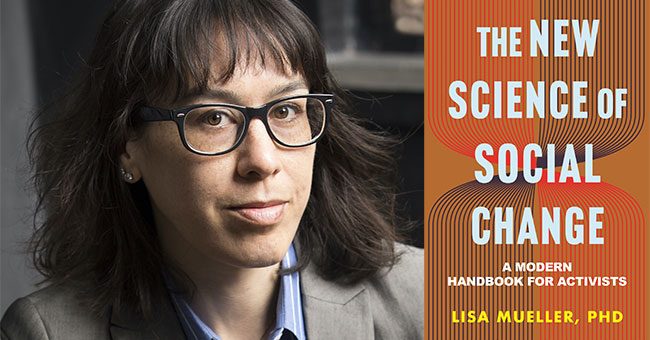
    Lisa-Mueller_New-Science-of-Social-Change

    Author photo: Nancy Hauck. Cover design: Carol Chu

    We are in the middle of a historic swell of activism taking place throughout the world. From Occupy Wall Street and the Arab Spring, to pro-democracy uprisings in China, Black Lives Matter, the Women’s March on Washington, and more recent pro-choice protests; folks everywhere are gathering to demand a more just world. Yet despite social engagement being at record highs, there is a divide between the activist community and the scientists—like Lisa Mueller, PhD—who study it.

    In The New Science of Social Change: A Modern Handbook for Activists, Mueller highlights what really works when it comes to group advocacy, to place proven tools in the hands of activists on the ground—in the US and abroad. She shows how a working knowledge of social science can help activists implement more effective strategies to create the real-world changes we want to see. Beacon Press senior publicist Bev Rivero caught up with her to chat about it.

    Bev Rivero: In your introduction, you write, “Activists should care about discerning cause and effect, because the potential rewards and losses of activism are enormous.” The New Science of Social Change is organized thematically by protest turnout, online versus real-world protesting, violent versus peaceful tactics, coalition building, and fundraising. What are some potential rewards readers might discover in your book?

    Lisa Mueller: Readers will discover that the evidence-based approach that has powered remarkable breakthroughs in medicine, elections, economic development, and other high-stakes endeavors can apply to protests and social movements, too. Activism often feels very emotional, but it can be strategic at the same time. If we want our activism to really improve the world, we should consider which strategies are most likely to produce the desired results, not just those that feel right in the moment.

    For example, chapter 2 explains that while we are evolutionarily hardwired to criticize so-called “slacktivists” who do little more than post about social issues online, empirical research shows that slacktivists can actually contribute in various ways to effective social movements, so seasoned organizers should welcome them into the struggle instead of shunning them.

    BR: In your book, you discuss “performative protest,” which is often used disparagingly to describe certain efforts. How might readers reframe their thoughts on and discussion of these activities?

    LM: While my book emphasizes effective action, it also stresses the importance of thoughtful action. Sometimes, slowing down to contemplate social issues can help people decide which causes to tackle and how they want to tackle them. Performative protest—in the form of, say, a shocking YouTube video, activist music, graffiti, poetry, or theatre—may not immediately move people to action, but it might stop them in their tracks, raise their awareness, and stir constructive emotions like empathy or righteous indignation. As neuroscientist Antonio Damasio said, “At their best, feelings point us in the proper direction, take us to the appropriate place in the decision-making space, where we may put the instruments of logic to good use.” Performative protest will not save the world on its own, but thoughtless action probably will not save the world either, and may actually do harm.

    BR: You share that “[r]esearch on collective action also suggests that it takes less effort to mobilize people within your own social circle, whom you can easily contact and nudge into participating.” What might this look like for an individual seeking to get others to participate in protest or action?

    LM: Yes, in general, we can more easily mobilize people we know, because familiarity allows us to “sanction free-riders,” which basically means giving people a hard time for not protesting. Your coworker, classmate, or neighbor will probably care about your cold shoulder more than a total stranger, and you can more easily exert social pressure on someone when you encounter each other regularly. However, while mobilizing your own network is relatively easy, it is only a first step toward achieving a major goal.

    My book emphasizes that gathering a crowd is not enough; who is in the crowd also matters. If a protest only involves people from the same community, power holders can easily write off the crowd as a radical fringe. Diverse crowds are more difficult to ignore, because they signal that a broad cross-section of society cares about an issue. Needless to say, the most effective activism often takes effort.

    BR: Lastly, what are some resources for those who finish your book and want to learn more about how “social science can be both scientific and radical.”

    LM: I encourage activists to nerd out on emerging research about protests and social movements. One way to do this is by reading academic articles like those that I cite in the book’s endnotes, although those can sometimes be technical and dry.

    Another approach is to form alliances with social scientists who can help to translate the latest research, or better yet, tailor their research and policy advice to the evolving interests of activists themselves. Anthony Fauci is an excellent example of this.

    In the 1980s, protesters stormed his office at the National Institutes of Health, demanding faster approval for experimental HIV/AIDS treatments. Against the advice of his colleagues, Fauci invited the protesters to meet with him. Through repeated conversations, often over dinner in activists’ apartments, Fauci came to trust the activists and devised a plan to expedite drug trials without sacrificing scientific rigor. As a result of this close partnership, the sickest patients gained access to life-extending drugs and HIV ceased to be the death sentence it once was. Protesters sometimes chant “People power, not ivory tower!” but this story illustrates how great things can happen when people power and ivory tower scientists join forces.


    About the Authors 

    Bev Rivero is senior publicist at Beacon Press. Before joining Beacon in 2021, Bev was the communications and marketing manager at the National Book Foundation, where she worked on the National Book Awards, promoted the Foundation’s public and educational programs, and led all social media and marketing campaigns. Prior to NBF, she was in publicity at the New Press for six years, where she worked with authors committed to social justice, including Paul Butler, Michelle Alexander, and many more. She has extensive experience promoting nonfiction and tailoring outreach campaigns that resonate with activists and change-makers. Bev is a NYC-based graduate of Johns Hopkins University, ardent supporter of indie presses, and a graphic designer

    Lisa Mueller, PhD, is associate professor of Political Science at Macalaster College, where she served as Director of African Studies from 2019 to 2020. Her first book, Political Protest in Contemporary Africa (Cambridge University Press 2018), received an honorable mention for Best Book of the Year from the African Politics Conference Group. She is a contributor to the Washington Post, and the author of The Science of Social Change: A Modern Handbook for Activists.

  • Mai-Linh Weller

    Welcome to our rebooted “Beacon Behind the Books” series! In these times when readers are responding to our books “more than ever,” when our authors—including Aubrey Gordon, Tanya Katerí Hernández, James Baldwin, Viktor Frankl, Atef Abu Saif, and Percival Everett—are appearing in the media, their ideas going viral on social media, their voices being heard on so many platforms, we thought it would be good to take a break to focus on some of the staff who work hard to find, shape, edit, produce, and promote those works. Our blog series introduces to you a staff member and gives you a behind-the-scenes look, department by department, at what goes on at our office. And not only our staff, but our interns, too.

    This month, we introduce you to Mai-Linh Weller, our digital and social media intern! 

    What drew you to publishing, Mai? How did you find your way to Beacon?

    As many in publishing would understand, I’m a hopeless bibliophile. My TBR is mountainous, and when I’m not reading, I’m glued to podcasts or YouTube videos about books—and trying my valiant best to persuade friends and family to give my newest hyperfixation read a shot (currently: The Wedding People by Alison Espach). However, if we are talking logistics, I discovered this internship through the unmatched We Need Diverse Books Internship grant and was immediately drawn to Beacon’s progressive values and commitment to publishing advocative titles.

    What are some of the challenges of being a digital and social media marketing intern? What do you find most rewarding?

    Social media marketing can be daunting, notably with the ever-evolving landscape of platforms and trends. And for a publishing house focused on serious nonfiction, there exists a number of challenges. My role involves finding the perfect balance of leveraging current online trends for increased engagement while staying true to Beacon’s core values. Every day, I spend hours analyzing trends and different audiences, exploring niche online communities, to curate engaging content that successfully promotes a title but is authentic to the Beacon brand.

    The most rewarding part is when I discover the sweet spot between Beacon’s ideals and this online space. Before I posted a cover reveal video for Michael Andor Brodeur’s Swole, I noticed a TikTok trend with over 128,000 videos with this zinger: “Can I get applause for the dress? And now an applause for the back of the dress.” My post was a playful homage to this to showcase Swole’s front and back cover design. What’s so wonderful about this position is the ability to use all the creative tools of social media to be exuberant about books.

    What skills have you taken from previous jobs to help you do your work at Beacon?

    I was the YA Programming Assistant at Chicago’s Printers Row Literary Festival in 2021. I began this position at the tail end of the pandemic, when BookTok, TikTok’s online book community, was taking off. As a dedicated BookTok enthusiast, I pitched a panel on the growing online book community to the festival’s directors. My goal was to show people outside my age group the impact BookTok was having. A new generation of readers and young voices was creating a new industry space that was predominantly giving platforms to young women. I organized and moderated a panel of five diverse women, which honed my organizational and communication skills—skills that I now apply at Beacon. Today, when I’m organizing spreadsheets of anniversaries to prepare for promoting different Beacon titles, I pull from my time organizing programming. Also, my experience with BookTok helps me stay attuned to the latest trends in the online book community, allowing me to create content that resonates with today’s readers.

    You’ve attended a handful of office meetings. Tell us more about those experiences and how they add to your work.

    What has been so valuable to me about interning at an indie publishing house is the opportunity to learn about and interact with every department. Our bi-weekly all-staff meetings, weekly marketing, publicity, editorial meetings, our close-knit web team meetings, and author calls have all given me a greater sense of context and purpose for the work I do. This is my first role within the industry and it has allowed me to understand the inner workings of a publishing house and how each department interacts with one another. I’m able to see how marketing and publicity work from the ground up to create individualized plans for each upcoming title and how we integrate sales into our promotional goals. As a digital marketing intern, I often find myself buried in social media, and attending these meetings ensures that all necessary information is included, like backlist titles, sales, and editorial data.

    Favorite food?

    As a biracial Vietnamese woman, I’m partial to banh mi, especially in the summertime. It’s the perfect light, fresh, on-the-go sandwich. I highly recommend Seaport’s Bon Me if you’re in the area!

    What’s the next queued song on your music player?

    The Last Dinner Party’s “The Feminine Urge”

    Name three things at your workstation you can’t live without.

    1. Coffee (most likely from Beacon’s next-door neighbor, Flour).
    2. My notebook is filled with my daily handwritten To-Do lists.
    3. My Airpods. As the digital and social media marketing intern, I’m listening to the same audio bites on repeat all day and would never want to subject the office to this.  
  • Bea Hruska

    Welcome to our rebooted “Beacon Behind the Books” series! In these times when readers are responding to our books “more than ever,” when our authors—including Aubrey Gordon, Tanya Katerí Hernández, James Baldwin, Viktor Frankl, Atef Abu Saif, and Percival Everett—are appearing in the media, their ideas going viral on social media, their voices being heard on so many platforms, we thought it would be good to take a break to focus on some of the staff who work hard to find, shape, edit, produce, and promote those works. Our blog series introduces to you a staff member and gives you a behind-the-scenes look, department by department, at what goes on at our office. And not only our staff, but our interns, too.

    This month, we introduce you to Beatrice Hruska, our sales intern! 

    What drew you to publishing, Bea? How did you find your way to Beacon?

    Like so many people who work with books, I love to read! Reading has always been a massive part of my life—I remember getting in trouble for reading my book during math class in fifth grade—but connecting people with the books they need felt just as important as reading for myself. As I got older, I started to do political organizing work around prison closure and abolition. In doing this work and while speaking to and learning alongside people in prison, it became all the more essential that books reach the people who need them. So, publishing felt like a logical next step, as it gave me some power to help elevate stories and voices we need to listen to. Of course, Beacon felt like a logical next step in that thought process. 

    I discovered Beacon through my college courses in religious studies. I felt like I was opening a treasure chest. Imagine glowing gold and jewels but it’s all Beacon books! A press that publishes nonfiction engaged with the reality of our world, books that help readers find different paths forward, books about abolition, and books about religion? Sign me up! 

    What is one book on our list that has influenced your thinking on a particular issue? 

    As a religious studies student, I would be remiss to pass over some of Beacon’s amazing progressive theology titles. William R. Jones’s Is God a White Racist? is perhaps one of the most engaging pieces of religious scholarship I have ever read. Jones discusses how Christian belief and anti-Black oppression are linked, proposing radical new ways of understanding God and what is to come for those who believe. Reading this book completely changed the course of my own interest in the field of religious studies and helped me to see exactly what the stakes are when so very many people believe in a Christian God. It also illuminated the power of religion not just as an abstract concept but as a system of action that guides the way life is lived seriously and the immense power that can come from progressive theological work. 

    What current/upcoming projects are you excited about? 

    I have gotten the chance to work on some social media graphics for two very exciting new Beacon titles: Mad Wife and Religion Is Not Done with You. This was a fun challenge because I have read both titles and am extremely excited about them both, though they are pretty different. Without revealing too much, Mad Wife is a memoir that looks into what women are asked to sacrifice to uphold their own marriages and the institutions of marriage and family themselves. Religion Is Not Done with You is exactly what it says on the can! It is a shorter book that packs a punch, explaining why, though belief may feel personal, religion is a main driver of our past, present, and future on an incredibly large and public scale. I wanted to honor the content of each title while still making the graphics eye catching and engaging. Emily Powers of the marketing team helped me out with these and guided me through this process! 

    What helps you focus when you’re working?

    When I am in the office, I tend to feel quite engaged and focused, because I can hear and see everyone working around me. I really thrive on other people’s working energy. I also love to look at all the Beacon titles around me. While that might be a tiny bit distracting in the short term, I find that being surrounded by the work that Beacon does, the work I care about and am in awe of, really motivates me and helps me focus on the task at hand. 

    When I work from home, I make sure to get dressed every morning so that I am in a working mindset. I also try to co-work with a friend or work in a new location, like at a coffee shop or at a library near me at least once a week, so that my mind stays fresh and active. 

    Hobbies outside of work?

    I love crafts. If you get me started, there are endless craft-related rants I could go on, from why I prefer vintage sewing patterns to the radical history of quilting to the challenges of buying yarn for knitting. While I do love to talk about crafts, I also really like to do them. Right now, knitting has taken over my life. I see some potential for a Beacon title about craft! 

  • By Christian Coleman 

    Beach-2179183_1280

    Image credit: Pexels

    Normally, we could keep our cool, but this season we’re wilding in a dangerous mood. Can you match our timing? Because we’re in a dangerous mood for some summer reading. These titles from our catalog will make you sweat, make you hotter, make you lose your breath, make you water. They will blow your mind! Hopefully, you can last the whole season.


    The Birdcatcher

    The Birdcatcher

    “I guess I’m sort of a choice companion for the Shugers— professional watcher and listener that I am. People who know the Shugers’ story—or think they know it—wonder why I stay around them. I don’t know why I stay. I could try to come up with a motive, some cliche like ‘Catherine is the only one who accepts me without question.’ It’s not true. She’s wary of me; Ernest is too. They’re wary of me, but they take me in too. It’s like they need someone else to witness the shit, the spectacle they make of themselves . . . a private spectacle. Catherine has never tried to harm him in public. Even that time on the street in Detroit, as you know, it was a Sunday and the salvage dump was closed; no one else on the backstreet, and the bicycle spoke sticking out between the crevices of the wire fence.”
    —Gayl Jones 


    A Black Girl in the Middle

    A Black Girl in the Middle: Essays on (Allegedly) Figuring It All Out

    “I’ve always wanted a nice butt. Always! In my fantasy with my big booty, it’s a sunny spring day and I’d walk down the street, maybe Tompkins Avenue or Quincy Street in Brooklyn, with my hair in a ponytail, wearing a white tank, a black leather jacket, acid-wash jeans, and heels. Think Beyoncé in her “Diva” video. I’d see a group of guys a few feet away and as I got closer, they would spot me, and their entire conversation would dip to a whisper. And then the really cute one, the Method Man out of the group, would make eye contact with me and I’d look back at him. As me and my booty sashayed down the block (I feel like my fantasy booty should have a name. Let’s call her Brenda.) with the spring breeze ruffling the tree leaves, somebody would drive by blasting Amerie’s “Why Don’t We Fall in Love.” These dudes would see me and Brenda and drool, but the Method Man look-alike would be caught up in the rapture just like Anita Baker said, and he and I would be in the rapture just raptured up together! They’d all wipe their mouths and one by one shout a cacophony of respectful and feminist-leaning compliments at me using language that evoked equality and awareness of their male privilege, along with the desire to do their part to destroy the patriarchy . . . But that fantasy was never going to happen, I mean, maybe the Amerie part, but the drooling over my ass wouldn’t take place because that’s not my body.”
    —Shenequa Golding 


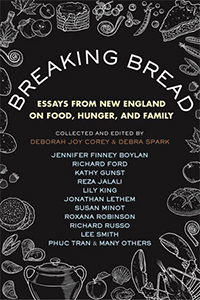
    Breaking Bread

    Breaking Bread: Essays from New England on Food, Hunger, and Family

    “I can’t remember if I was with my family or my boyfriend the day I was at Cowan & Lobel and paused in front of the display of local milks beautifully bottled in thick, traditional glass bottles. I grew up on plastic gallon jugs and cardboard containers of skim milk: I had only seen heavy glass bottles of farm-fresh creamery milk, the company names painted on in thick raised lettering, in old movies. The milk bottles stopped me in my tracks. I don’t think I was even a big milk-drinker by then. But the traditional quality of the packaging and the simple, pure product inside were beautiful to me.”
    —from Arielle Greenberg’s “Glass Bottles of Local Milk”, edited by Deborah Joy Corey and Debra Spark 


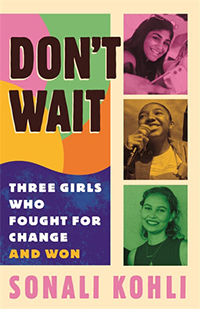
    Don't Wait

    Don’t Wait: Three Girls Who Fought for Change and Won

    “Weeks after Sonia came home to San Francisco from that trip, she was thinking about the faded yellow walls and hard floors of the youth program in South Africa. As she and her choir were leaving, after exchanging songs with the kids there and delivering some donations, the director handed Sonia her card. “If you want to help more,” she said, “get in touch.” That trip to South Africa—each summer the choir goes to a different country to tour—was her first time understanding viscerally that many kids don’t have the kind of access to important resources that she does.”
    —Sonali Kohli 


    The Dragon from Chicago

    The Dragon from Chicago: The Untold Story of an American Reporter in Nazi Germany

    “After Hitler’s rise to power, [Sigrid] Schultz found creative ways around the Nazis’ tightening control over the press. Described by fellow foreign correspondent Quentin Reynolds as “Hitler’s greatest enemy,” she reported on the passage of antisemitic laws, the opening of concentration camps, the closing of churches, and the reign of terror against Jews, Communists, and anyone who opposed Hitler’s government. She accurately predicted Hitler’s military intentions and shared details of Germany’s rearmament. She demonstrated how the Nazis manipulated and misreported the news to their own people and attempted to control the foreign press through a combination of bribery and threats. Her fearless reporting brought danger to both Schultz and her informants. But that danger was part of the job as she understood it.”
    —Pamela D. Toler 


    God's Country

    God’s Country

    “As I rode the trail away from the smoke and ashes that had been my life, I considered the face of my Sadie. I saw it there, bouncing against the saddle of the varmint that stole her, a little fuller than when we first met, just like the whole of her I reckon, but still it was the face of my woman. Naw, it weren’t the face of one of them showgirls in Dodge City what sings and dances, but it was the face I was used to waking up to, and it was thumping against some strange leather on a trail to God knew where. She was off to some horrible plight that I found generally unpleasant to consider, but that’s the way life is, though, full of strange leather.”
    —Percival Everett 


    House of Light

    House of Light: Poems

    Is the soul solid, like iron?
    Or is it tender and breakable, like
    the wings of a moth in the beak of an owl?
    Who has it, and who doesn’t?
    I keep looking around me.
    The face of the moose is as sad
    as the face of Jesus.
    The swan opens her white wings slowly.
    In the fall, the black bear carries leaves into the darkness.
    One question leads to another.
    Does it have a shape? Like an iceberg?
    —Mary Oliver, from “Some Questions You Might Ask” 


    Kindred YA

    Kindred: Young Adult Edition
    with a foreword by Tomi Adeyemi

    “I had been home to 1976, to this house, and it hadn’t felt that homelike. It didn’t now. For one thing, Kevin and I had lived here together for only two days. The fact that I’d had eight extra days here alone didn’t really help. The time, the year, was right, but the house just wasn’t familiar enough. I felt as though I were losing my place here in my own time. Rufus’s time was a sharper, stronger reality. The work was harder, the smells and tastes were stronger, the danger was greater, the pain was worse . . . Rufus’s time demanded things of me that had never been demanded before, and it could easily kill me if I did not meet its demands.”
    —Octavia E. Butler


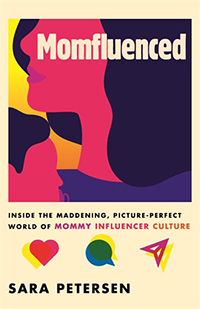
    Momfluenced

    Momfluenced: Inside the Maddening, Picture-Perfect World of Mommy Influencer Culture

    “[M]omfluencer culture offers us power and control. We cannot control our bodies during pregnancy. We cannot control who our children will be. We cannot control who we will turn out to be as mothers. I harbored grand fantasies of being a serene earth goddess mother before having kids, the type who would think about traveling across time zones with her baby as an adventure rather than a logistical, sleep-deprived nightmare. We cannot control how motherhood will make us feel . . . Ultimately, momfluencer culture allows us to control—at least to an extent—the mythology of our own motherhood.”
    —Sara Petersen 


    No Meat Required

    No Meat Required: The Cultural History and Culinary Future of Plant-Based Eating

    “What’s been strange as a food writer who has focused on meatless food is how, in the last five or so years, I have been distracted from the food that grows from the ground by products that promise innovation, that continue to hide the planet, to hide the joy of cooking—to indeed make, to use Carol J. Adams’s concept of the absent referent, the earth itself the new absent referent.”
    —Alicia Kennedy 

    Beach-2179183_1280


    About the Author 

    Christian Coleman is the digital marketing manager at Beacon Press and editor of Beacon Broadside. Before joining Beacon, he worked in writing, copy editing, and marketing positions at Sustainable Silicon Valley and Trikone. He graduated from Boston College and the Clarion Science Fiction & Fantasy Writers’ Workshop. Follow him on Twitter at @coleman_II and on Bluesky at @colemanthe2nd.bsky.social.

  • Summer reading_Bequest

    Image credit: Bequest

    Just what does one do when the sun blazes and the humidity churns the air into chunky Campbell soup? Tell that attention-seeking season called summer “Thank you, but no thank you” and camp out by the A/C with your reads and binges. That’s what we did. *winks* Here’s what our staff has been enjoying.


    From Marcy Barnes, Production Director 

    Rebel Girl

    I just finished Kathleen Hanna’s memoir, Rebel Girl: My Life as a Feminist Punk. It was an honest, mostly unapologetic (apologetic when necessary), and music/art/emotion-filled homage to a very specific scene. But on a very personal level, it was a true page turner for this GenX reader.

    I am currently reading Body Neutral: A Revolutionary Guide to Overcoming Body Image Issues by Jessi Kneeland, body image coach and podcaster (This Is (Not) Your Body). I think of body-neutrality advocates as “close cousins” to the anti-fat-bias scholars and activists like our own Aubrey Gordon. I’m not too far in, but already scribbling on and dog earring many pages! 


    From Christian Coleman, Digital Marketing Manager 

    Mexican Gothic

    Whenever this post comes along, I’m reading horror. Not sure why summer is my season for creepy reads, but I’m sticking to it. Since reading Nadia Bulkin’s anticolonial horror short stories, I’ve been looking for more of the same and found it in Silvia Moreno-García’s novel, Mexican Gothic. When enlisted by her father to check in on her cousin, young Mexican socialite Noemí discovers that she needs to rescue her from the clutches of the insular English family her cousin married into. The family is just as predatory as High Place, the brooding, fungus-infested manor where they live. Come for the gothic vibes and trippy mushrooms; stay for the indictment of eugenics and European settler colonialism. This was slated to be adapted as a Hulu series, but alas, the project was dropped.

    Then, to get my queer on, I picked up Craig Laurance Gidney’s novel, A Spectral Hue. Grad student Xavier Wentworth goes to Shimmer, Maryland to investigate and study Black artists whose work features the same mysterious purple-pink hue that glows and pulses with life, no matter the medium. What is the source of this color? Is it a haunting? Is it a muse? The presence luring queer and outsider artists to the saltmarsh frames a story of the terror and ecstasy of art spanning from the days of slavery to the present day. This is a slow burn that loves its characters.


    From Beatrice Hruska, Sales Intern

    Awayland

    Reading: My current thing is going through the fiction section of my local public library and judging books by their covers (don’t judge me for my judgments!) and I have uncovered some hits. I tore my way through Awayland by Ramona Ausubel, a collection of short stories with one of my favorite covers I have seen yet. It was filled with surreal but deeply sweet mediations on home, family, and relating to an ever-confusing exterior world, as well as the interior one that haunts us all. 

    I also picked up The Skunks by Fiona Warnick from my favorite indie bookstore in Providence, RI, Riffraff. I went for literary trivia but needed to console myself after racking up a whopping 4 points (I believe the winning team had 32). So, I browsed. I also noticed Superfreaks by Arielle Greenberg prominently displayed! 

    Watching: I am rewatching a classic, The O.C., and would suggest it to anyone looking to escape into a soap opera with endearing characters and early 2000s teen nostalgia. I find it deeply funny, but my partner, who is watching it for the first time, is often baffled by the constant drama. So, if you love reality TV but get a little bit concerned that those are real people’s thoughts and choices, I’d highly recommend The O.C.


    From Nicole-Anne Keyton, Assistant Editor 

    The Ministry of Time

    The Ministry of Time by Kaliane Bradley

    It all started with a footnote in a biography. Citing biographies from those lost to the doomed 1845 Arctic expedition, the author gives life to a character buried in his fellow explorers’ footnotes. There are other fascinating elements, too—an MI5-esque government agency that experiments with time travel; a mixed-race protagonist still grappling with her mother’s haunting experience surviving the Khmer Rouge; a budding romance that transcends centuries. All these elements give the book wings, but from one fellow writer to another, I can’t get over how a complex story germinated from a sentence in tiny print relegated to the margins of someone else’s story.

    Rental Person Who Does Nothing by Shoji Morimoto (trans. Don Knotting)

    If, like me, you’re having an existential crisis, why not read this slim memoir about a thirty-five-year-old who gets paid to do nothing? There’s a larger question here about what it means to value someone just for existing. I enjoyed sitting with Morimoto as he regales his new way of life. And no, Morimoto technically didn’t write this book. Someone else did the writing for him.

    The Remarkable Rescue at Milkweed Meadow by Elaine Dimopoulos (ill. Doug Salati)

    Need a quaint summer read set in someone’s backyard? While this is technically a children’s/middle-grade book, I took great pleasure immersing myself in the pastoral life from the perspective of a bunny. Don’t be swayed by the cute talking animals. Our button-nosed narrator has (justifiably) severe anxiety passed down from the horror stories of her grandmother’s survival and other harrowing incidents that take place at Milkweed Meadow, which she must learn to overcome with each story she tells. Call it exposure therapy for those coming of age. I laughed. I cried. I learned to love blue jays.


    From Louis Roe, Associate Art Director 

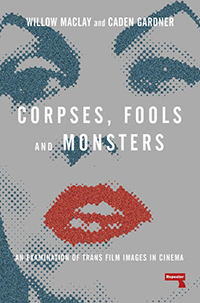
    Corpses Fools and Monsters

    Currently enjoying Corpses, Fools and Monsters: An Examination of Trans Film Images in Cinema by trans film critics Caden Mark Gardner and Willow Catelyn Maclay, a new release from Repeater. With the recent success of Jane Schoenbrun’s cerebral trans horror drama, I Saw the TV Glow, this is a great time to dig deeper into the images of transness that have both reflected and guided the development of trans identity in visual media.

    One of my favorite things about reading about movies is the accompanying watchlist. Of course, Gardner and Maclay’s index includes classics like Boys Don’t Cry, Paris Is Burning, and Funeral Parade of Roses, but their index also encompasses the likes of Frankenstein, Perfect Blue, Tetsuo the Iron Man, and, of course, the timeless transgender classic Bambi. So far, I’ve watched Ernst Lubitsch’s 1918 silent film, I Don’t Want to Be a Man, in which a delightfully rowdy Ossi Oswalda disguises herself as a man to enjoy a night on the town without the trappings of womanhood—and, in the process, accidentally gay-seduces her strict new guardian.

    For those just looking for a bite-sized intro to Gardner and Maclay’s work, check out the Film Comment podcast episode where they discuss their research with host Devika Girish.


    From Mai-Linh Weller, Digital and Social Media Intern 

    Swan Song

    As a Chicago native, this is my first summer in Massachusetts, which means bringing Elin Hilderbrand’s coastal reads as company on my lengthy commutes on the T. After devouring The Hotel Nantucket, I’m reading her newest release, Swan Song, a twisting story that transports you straight to Nantucket for the final Chief Ed Kapenash case. I also recently finished Judy Blume’s Summer Sisters, a novel of found sisterhood spanning eighteen years, which has further enriched my New England summer reading list. 

    As I’ve had the pleasure of being an intern this summer, I’ve been cracking open many of our titles, like Sara Petersen’s Momfluenced and Oiyan Poon’s Asian American is Not a Color. Although interning at Beacon has exponentially increased my never-ending TBR, I’ve relished exploring our social-justice titles, especially during this unpredictable and vital political season.

    Summer reading_Bequest

  • By Michael Andor Brodeur

    Hulk Hogan makes his entrance at SummerSlam in 2005. Photo credit: Kristin Fitzsimmons

    Hulk Hogan makes his entrance at SummerSlam in 2005. Photo credit: Kristin Fitzsimmons

    Editor’s Note: Are we living in the dystopia of Mike Judge’s 2006 film Idiocracy? Judging by the proceedings of the Republican National Convention, some would say yes. At the end of his speech, retired pro-wrestler Hulk Hogan ripped off his shirt to reveal a red Trump-Vance shirt underneath, effectively endorsing our former despotic Cheeto and his underling. Our former despot in chief even blew him a kiss. Since when did strongman culture have anything to do with ethno-nationalism? As Michael Andor Brodeur writes in the following passage from Swole: The Making of Men and the Meaning of Muscle, the connection goes as far back as a few centuries. That’s right. It was already baked in. 

    ***

    For millions of gym bros like me, the closure of gyms nationwide amounted to the loss of a primary habitat, a source of identity.

    And for many of the men I watched unravel online—throwing tantrums on social media over the perceived oppression of public health measures, mask mandates, and home quarantines—the loss of the gym compromised a key source of their manhood. Many men found themselves going stir-crazy, fashioning their own improvised backyard gyms out of disused sawhorses, five-gallon buckets of paint, sandbags, and barrels.

    This type of resourcefulness, I imagine, is how it must have been for the meatheads of yore—those sepia-tinted nineteenth-century strongmen, wrestlers, and assorted swole-timers we envision when we think of the vaudeville stage or an old-timey circus: twirly moustache, leopard loincloth, massive barbell. You know the ones.

    Those sturdy, swarthy Halloween-ready archetypes are inspired by a real-life pantheon of fin de siècle fitness phenoms—formative musclemen of the late nineteenth century like Eugen Sandow (a.k.a. “The Father of Bodybuilding”), George Hackenschmidt (“The Russian Lion”), Louis Cyr (“The Canadian Samson”), and Arthur Saxon (“The Iron Master”).

    And each of these iconic beefcakes was himself the product of a sweeping “physical culture” movement that originated in nineteenth-century Europe and swept across the Atlantic to the States. A wave of widespread cultural shifts and political upheaval through the 1800s set the stage for a wholly revised vision of manhood, masculinity, and “manly” health that still shapes our perception of the American male body.

    ~~~

    The history of American gym culture can be indirectly traced back to the influence of one notably diminutive and highly figurative strongman. If it hadn’t been for famed French emperor Napoleon Bonaparte’s decisive trouncing of Prussian forces at the 1806 Battle of Jena-Auerstädt, young Johann Friedrich Ludwig Christoph Jahn (who settled on “Friedrich”) might never have declared his own personal war on weakness.

    Born in 1778 in the Prussian state of Brandenburg (in current-day eastern Germany), Jahn studied history, theology, and philology as a young man before moving to the capital city of Berlin to teach secondary school physical education. This was a period of remarkable innovation for the young athlete and educator, who devised several of the apparatus that remain central to modern gymnastics, including the rings, the balance beam, the pommel horse, the parallel bars, and the horizontal bar.

    A proud Prussian in a time prior to a unified Germany, when clusters of Germanic principalities (once part of the fallen Holy Roman Empire) were fending off the advances of France, Jahn was deeply stung by Napoleon’s swift victory and subsequent occupation of Berlin. His response to the defeat was visceral in more ways than one, inspiring him to establish his own center dedicated to the training and strengthening of young Prussian men of fighting age.

    For his gymnasium—which, to honor Germanic etymology, he termed Turnplatz, derived from the German turnen, “to practice gymnastics”—Jahn likely drew inspiration from two influential figures in the growing field of physical education: Johann Guts Muths, a teacher and gymnastics pioneer whose 1793 treatise Gymnastik für die Jugend served as a primary phys ed manual, and Franz Nachtegall, a gymnasiarch (gym owner) in Copenhagen who directed Denmark’s Military Gymnastic Institute under King Frederick VI.

    Nachtegall shared Muths’s view of a physical fitness shaped by Enlightenment ideals—a properly exercised body was itself an extension of moral, social, and intellectual fitness. These are tenets directly transposed from the gymnasia of ancient Greece, which drew as much admiration from Muths as “soft and effeminate people” attracted his ire.

    Jahn opened his first Turnplatz in 1811 at Hasenheide, an area outside of Berlin. It was nothing special: a simple but useful array of ropes, bars, beams, blocks, dumbbells, clubs, and other rudimentary gymnastic equipment. A vast open turf was reserved for running drills, playing field games, and practicing gymnastics—and its members became known as Turners (German for “gymnasts”).

    The spartan setup of the Turnplatz makes sense considering its ancient inspiration. Jahn modeled it after the gymnasia of ancient Greece. These public centers of athletic, academic, and military training were far removed from our modern fitness palaces of iron, chrome, and mirrored glass. But like the overcrowded gyms of twenty-first century America, the gymnasia of ancient Greece were cultural hubs—home to storied Panhellenic athletic contests like the Pythian games (which started in Delphi around the sixth century BCE) and the Olympics (which started around the eighth century BCE in the sanctuary of Olympia).

    Only freeborn men and boys and authorized resident visitors were eligible to attend ancient gymnasia—it was a small fraction of ancient Greece’s largely enslaved population—and those who benefited from access were privy to elite military training, studies with influential philosophers and sophists, and the benevolence of the gods.

    The primary pursuit at ancient gymnasia was to maximize one’s individual potential as a citizen—one’s arete, described by scholar Stephen Miller as an amalgam of “virtue, skill, prowess, pride, excellence, valor and nobility.”

    Similarly, the thrust of the Turnplatz, and the network of Turnverein (or Turners unions) that sprung up to connect about 150 clubs operating by 1815, was primarily about Germans building a strong Germany. Historian Eric Chaline points out that Muths and his disciples flipped the script of the nature and function of physical education: “Physical fitness, or fitness for purpose, was not an individual attainment freely offered to the state by the citizen, but a social obligation demanded by the state of its citizens.”

    “As long as man has a body, it is his duty to take care of, to cultivate it, as well as his mind, and consequently gymnastick exercises should form an essential part of education,” Jahn writes in his 1816 fitness manual, Deutsche Turnkunst. “Where man exists, there gymnastick exercises have, or at least ought to have, a place; they are the property of mankind, not confined to any one nation, or part of a nation.”

    As universal as Jahn’s phrasing (translated by fellow Turner Charles Beck for the 1828 English edition, A Treatise on Gymnasticks) may be, athletes at any given Turnplatz weren’t just there to develop their bodies but their sense of Deutschheit, or Germanness. The Turnverein weren’t the only places where fitness served a sense of nationalism. Sweden established a Royal Gymnastics Institute, and the similarly physical Sokol movement spread across the Slavic region and Slovene countries in the mid-1800s. Their impact has carried into the twenty-first century; even today’s Olympic gymnastics culture carries with it a vestigial but vital nationalistic charge.

    In 1813, Jahn helped to form the Lützow Free Corps, a volunteer force supporting the Prussian army’s fight against Napoleon, and led a battalion to halt the expansion of the First French Empire. Following Napoleon’s ultimate defeat at Waterloo in 1815, Jahn returned to Berlin for a short-lived reprise teaching gymnastics. In 1819 Austria’s foreign minister, Klemens von Metternich, instituted the Carlsbad Decrees—a set of brutally repressive laws intended to quell pro-unification activity and sentiment across the German Confederation by censoring the press, removing liberal educators, disbanding Burschenschaften (nationalist fraternities), and banning gymnastics, especially those practiced by Turners, perceived by authorities as a clear threat. Jahn was promptly arrested for revolutionary activity and imprisoned for nearly one year. After a five-year period of confinement to Kolberg, his freedom was granted on the condition he avoid cities with schools and universities and abstain from any further instruction in turnen.

    Though the politics of the Turnverein were liberal enough to attract the ire of the state, Jahn’s own patriotism edged into ethno-nationalist völkisch territory. In 1810, for instance, he wrote, “Poles, French, priests, aristocrats and Jews are Germany’s misfortune.”

    Jahn’s calls for the preservation and empowerment of a German homeland made for easy appropriation a century later, offering the National Socialist Party a ready-made conceptual template for propaganda promoting Germanic superiority, all steeped in repurposed imagery of classical antiquity (even as the Nazis themselves banned independent Turnverein). The writer Daniel Kunitz describes Jahn as “an exemplar of that Romantic idealist generation which combined an admiration for ancient Greek culture and the struggle for freedom from absolute monarchy that, for some like Jahn, devolved into an inward looking, racist parochialism.”

    After Jahn’s arrest and release, his Turnverein would continue operating quietly around Germany, with the official ban on them lifting in 1842 and the Damenturnverein opening gymnasium doors to women in 1845. But the failed revolutions of 1848 against the German Confederation sent many devoted Turners into exile—part of a larger contingent of “Forty-Eighters” that landed on American shores with very specific ideas about how men and their bodies fit into the making of a nation.


    About the Author 

    Michael Andor Brodeur has been the classical music critic at the Washington Post since 2020. Previously, he held editorial and staff-writer positions at the Boston Globe and Boston’s Weekly Dig. His essays, humor, and criticism have also appeared in Nylon, Thrillist, Entrepreneur, Medium, McSweeney’s Internet Tendency, and other publications. He has also released 5 music albums under different monikers, most recently writing and performing electronic music under the name New Dad. He is the author of Swole: The Making of Man and the Meaning of Muscle.

  • By Arielle Greenberg

    Dr. Ruth Westheimer, January 1988

    Photo credit: Harald Bischoff

    One of my friends—someone I met through the sex-positive, ethical non-monogamy world—likes to say “life gets life-y.” What she means by this is that all of us are challenged, at times, by difficulty. Even those of us who dedicate ourselves to naughty delights have moments where that kind of stuff is the last thing on our minds. And in fact, ever since I celebrated the publication of my book, Superfreaks: Kink, Pleasure and the Pursuit of Happiness, my own life has been life-y, with unanticipated hardships that put quite a stumbling block in the path to my own pursuit of happiness.

    After a particularly rough stretch, I connected with Kathryn Nicolai, meditation teacher and host of the (can’t-recommend-it-highly-enough) sleep story podcast Nothing Much Happens, who told me, “What you have been going through has meant that you’ve probably gotten rusty at practicing pleasure. It’s time to try to start noticing and going toward it wherever you can.”

    I think of all this as I consider the legacy of sex educator Dr. Ruth Westheimer, who passed on to another astral plane on July 12 at the wonderful age of ninety-six. With boundless enthusiasm and a rebellious twinkle in her eye, Dr. Ruth was an advocate, a champion, a heroine of pleasure. She made it her mission to tell puritanical Americans that consensual sex of all varieties is, or should be, an “enjoyable” activity—and also no big whoop.

    I like to think that Dr. Ruth would have enjoyed my book and its explicit, cheery tone about non-normative sexual desire. She was someone who had no patience for worries about what kind of sexual desire is “normal”: she was all for wild fantasies, for trying new things, for “game-ifying” sex and making it an imaginative event. She also probably appreciated the deep communication good BDSM negotiation requires.

    She spread this gospel with the same kind of unfettered joy that accompanied a chicken recipe shared by Julia Child, another brilliant woman who made a midlife household name for herself despite enormous patriarchal odds and unconventional “optics” appeal. The humor and mischievous candor that characterized both women made their forward-thinking, life-changing messages palatable to a mainstream audience that would have otherwise probably have never dared think about orgasms or cooking gourmet meals at home.

    Like Dr. Ruth, I’m also perhaps an unlikely poster girl for sexual pleasure: another short, middle-aged, Jewish wife and mother whose Eastern European Ashkenazi cultural heritage can tend toward a less-than-sunny view on life. And while I came of age during Dr. Ruth’s heyday and have always admired her, I have recently found enormous inspiration in the fact that she maintained her lifelong attitude of playfulness and glee despite—or perhaps because of—having endured terrible hardships of her own.

    Dr. Ruth was a Holocaust refugee and orphan whose parents died at Auschwitz. Later, she was severely injured and nearly died in the 1948 Israel war. She had two marriages end before she found lasting contentment in a third. And once she found her stride as America’s most beloved and unexpected sex advisor, she was routinely banned and denounced as she tried to teach an AIDS-ravaged, right-leaning country that there is nothing abnormal or sinful about sexual pleasure.

    And yet Dr. Ruth kept that spark of pleasure, that pursuit of happiness, burning brightly at her own core and at the core of her professional mission. “Experiencing joy was, for her, an act of defiance,” historian Rebecca L. Davis wrote for Time Magazine.

    I will admit that recommitting myself to my own pleasure practices, sexual and otherwise, is still a work in progress as I continue to navigate the life-yness of life. As certainly it’s a tough time, globally, to feel like pursuing happiness ought to be a viable priority. But I can personally tell you that when I do find ways to deeply notice and be present with the inevitable joys that also surface, it really does feel like a radical and transformative act.

    Dr. Ruth knew this. She knew the power of pleasure, the power of choosing to shine like the sun—for the sake of others and the sake of oneself—instead of dwell in shadow. I am so grateful for her example. As our people say, may her memory be a blessing. It certainly is for me.


    About the Author 

    Arielle Greenberg speaks about kink and ethical nonmonogamy at universities and on such podcasts as Dear SugarWhy Are People into That?!, and Sex Out Loud. She is the author of several books of poetry and creative nonfiction, including Superfreaks: Kink, Pleasure, and the Pursuit of Happiness. A former tenured professor in English at Columbia College Chicago, she has spent over 20 years as a scholar and academic, writing about cultural studies and literature and teaching undergraduate and graduate students, as well as in the community. She identifies as a lifelong sexual fetishist. Keep up with her on Instagram (@arielle_greenberg) and on her website, ariellegreenberg.net.

  • By Daniel Laurison

    Joe Biden_LBJ Library

    While progressives and left-leaning voters are reeling from President Joe Biden’s performance at the June 27 presidential debate, they should not demand that he bow out of the race. In fact, they should not focus solely on Biden. It’s important to remember that campaign professionals of any political party are just as responsible for how we talk and think about our country’s political candidates. Sociologist Daniel Laurison wrote Producing Politics: Inside the Exclusive Campaign World Where the Privileged Few Shape Politics for All of Us to give us a behind-the-scenes look at how campaigns influence voter behavior and determine elections. So, what’s the method to the politicos’ madness of running campaigns like Biden’s? This excerpt uncovers the four truths they run on.

    ***

    A lot of people who think deeply about American democracy, its flaws and its promise both, have ignored campaigns and the people who run them. So I want to explain why what happens inside campaigns, or in the heads and hearts of campaign professionals, is relevant to understanding American politics. Many political scientists assume that everyone in politics is acting in a fairly straightforward manner to maximize some obvious interest or utility for themselves—that is, they believe in the rational choice theory of human behavior.

    I’m not at all convinced by this theory—indeed, most sociologists aren’t. Sure, people sometimes act rationally, but in many situations we do what we do based on a complex mix of factors—our habits, our social conditioning, our desire to adhere to norms and be what we think of as a “good person,” our interest in the respect of our peers, our fears and emotions, and so on. In other words, it’s part of who I am as a sociologist to focus on the fact that people are social beings, not isolated individual calculators of their maximum chance of increasing their utility functions.

    If campaign professionals’ actions are geared to one of two obvious external interests, winning or earning, we don’t need to know who they are, or what they think. And if we assume those external interests are what explain campaigns, we miss what’s really happening in American politics, as well as some of the ways it could be different.

    Since the people running campaigns are not simply implementing the best possible path to victory, and they’re also not primarily cynically wringing as much money from the process for themselves as they can, what does account for the choices they make? The answer to that question drives the rest of this book, which focuses on four key aspects of the work world of campaign professionals that are essential to understanding how American politics are produced.

    First, although campaign professionals absolutely want to win campaigns, most of them are even more concerned with becoming one of the people “in the room where it happens.” To them, this means contributing to decisions about campaign strategy and tactics at as high a level as possible in the campaign structure, on as big a campaign as possible. This is where they can have the most influence, where they’re the closest to the candidate and the power center of the campaign, and where they’ll be given the most credit (or blame) for a win or loss. Reaching this level is the clearest sign that they have “made it” in the political world. In order to gain entry to this inner circle, they need other people in the political world to view them as being good at what they do.

    However, because it is so difficult to know which campaign decisions, if any, resulted in a win or a loss, campaign professionals must evaluate each other based on criteria other than the actual effectiveness of their tactics. Data alone cannot tell them how they are doing, but their colleagues and opponents (along with the media) do provide immediate feedback about campaign strategies. It is largely the judgments of other people in politics that matter for politicos’ careers.

    Thus, the second key aspect of campaign work is that campaign professionals tend to use two main proxies for good campaigning: the extent to which their colleagues are willing and able to work ridiculously long hours, and their adherence to conventional campaign wisdom passed down among campaign professionals. The consensus about what’s effective in campaigning rarely changes. When it does change, it’s usually because one party has suffered an unexpected loss, and even then the change is so gradual that although new tactics or approaches (such as online advertising) may gain prominence, older ones—even those shown to be entirely ineffective (such as glossy mailers)—remain. “Best practices” in campaigns are largely learned on the job: a few universities offer certificate or MA programs dedicated to teaching campaign skills, but most politicos I spoke with thought these were “nearly worthless.” When I asked campaigners what made something a good move in a campaign, they rarely mentioned research or evidence, and instead were much more likely to talk about having a “gut sense” for politics or to say, “You just know it when you see it.”

    Third, in part because of the use of these proxies, the world of campaign professionals is very insular. It is hard to get even an entry-level position on most campaigns if you do not already know someone involved in politics, and it is difficult to advance if you do not have both the time and financial security to volunteer or work for very little pay for a campaign that may or may not lead to a next job. This is part of why campaign professionals are overwhelmingly men, generally from middle- to upper-middle-class backgrounds, and disproportionately White. This last is true even when you compare within parties. Democratic campaign professionals are more racially diverse than Republicans, but they are less likely to be Black, Latinx, Asian American, Pacific Islander, or Native American than Democratic voters are. The same holds for Republicans. This might not matter if campaigns were simply implementing straightforwardly knowable best practices. But given that those aren’t available, this insularity limits the variety of strategies and tactics campaigns might take on, as well as their ability to understand and relate to Americans who are socially distant from the political elite in Washington, DC.

    Which brings us to the fourth important consequence of the uncertainty of campaign strategies: a reductive view of voters and their behavior. Tellingly, campaign professionals I interviewed rarely brought up potential voters when I asked about campaign quality. When they did talk about voters, they usually described them as an audience, as passive (if not resistant) recipients of campaign messaging. Campaign professionals even discussed the need to “hit people over their heads” or “pound into them” the campaign’s message.

    This is because, aside from low-level field operatives and event managers, senior politicos rarely interact with the potential voters they are trying to influence. Instead, their understanding of voters is filtered through polls and the modeling done with voter data, combined with their prior beliefs about the right way to campaign. As if to illustrate this point, one key player in the Clinton 2016 campaign told me that they’d made all the right decisions, but simply based them on the wrong data. I heard from a number of people that the campaign headquarters ignored reports from local campaign staff whose interactions with voters indicated that the reality on the ground was different from what the models predicted. This data- and modeling-driven approach to understanding voters leads campaign professionals to think of them as abstract conglomerations of attributes and data points, rather than as members of families or communities, or actual complex people with whom they could connect.

    These four key truths about modern-day campaign workers—their focus on being “in the room,” their adherence to conventional wisdom, the exclusiveness of their world, and their approach to voters as variables—mean that in our current system, campaigns are spending huge sums of money to do things that may not be entirely effective at achieving their goal. Politicos tend to see campaigning as a battle between teams as much as or more than an effort to really connect their candidate with potential voters. Consequently, they are missing an opportunity to include people in democracy in a meaningful way.

    Campaign professionals are doing work that they believe is deeply important and, simultaneously, might not matter at all. To resolve this tension, they focus on their colleagues, their opponents, and the media. In the end, the all-consuming nature of campaigns serves to exclude people who cannot or will not give up everything else in their lives for the sake of the campaign. All this dedication and devotion isolates campaign professionals—and campaign operations—making it even harder for outsiders to make sense of their work and its implications for American democracy.


    About the Author 

    Daniel Laurison is an associate professor of sociology at Swarthmore College, the associate editor of the British Journal of Sociology, and a Carnegie Fellow. He researches and writes on social class and political inequalities. He coauthored The Class Ceiling: Why It Pays to Be Privileged with Sam Friedman and is the author of Producing Politics: Inside the Exclusive Campaign World Where the Privileged Few Shape Politics for All of Us.

  • By David R. Dow

    SCOTUS_Anthony Quintano

    Photo credit: Anthony Quintano

    For the second time in a generation, the Supreme Court has intervened in a political dispute it could have avoided. For the second time in a generation, the justices resolved that political dispute by dividing along ideological lines. For the second time in a generation, the Court squandered the only thing it has as the basis of its authority: the respect of the people, and the public’s perception that it is not merely another political institution.

    This time, however, in the case of Trump v. United States, unlike the Court’s previous ill-advised foray into the political realm in Bush v. Gore, the squandering of the Court’s authority and the demise of its reputation appears to be unsalvageable. 

    Some observers might be tempted to praise the Court for not embracing either of two competing categorical rules: The justices did not say the President has absolute immunity for everything he does while in office, and they also did not say that he lacks immunity for everything he does in office. They purported to do something in between, leaving it to the lower courts to determine on which side of that line the President’s actions fell. But of course, a close reading of the opinion reveals that it will be difficult, perhaps impossible, for a prosecutor to prove that the President’s actions were unofficial. More ominously, although it is often true that a split-the-baby approach represents a sort of prudential compromise, unlike Solomon, whence the split-the-baby metaphor originates, the Court’s compromise in this instance, if it can be so called, does not exemplify wisdom at all.

    Everybody, including the justices, knows that compromise means delay. Everybody, including the justices, knows that delay is a victory for Trump. That is why, shortly after the decision was announced, Trump was gleeful

    But everybody also knows that two of the six justices who voted in Trump’s favor exhibited such ostentatious behavior as Trump supporters that legal ethicists called on them to recuse themselves and not participate in any cases pertaining to the January 6 attack at the US Capitol.  Everybody knows that three of the justices who voted in Trump’s favor owe their seats on the Court to Trump himself. So, when the people whose confidence in the Court’s judgment is the only thing that gives the Court its authority see the result of this decision, they see a little league baseball game where the umpire calling balls and strikes is the pitcher’s father. July 1, 2024, is the date the Court firmly entrenched its reputation as just another bunch of politicians.

    This outcome was easily avoidable. In the opinions announced today, Chief Justice Roberts embraced one point of view; Justice Sotomayor embraced another. But the Court had a superior alternative to both those options: It could have done nothing. Part of what the Supreme Court does, of course, is to decide cases, but another part of what it does is to decide which cases to decide. In making that latter decision, the Court has its best opportunity to avoid appearing to be purely political. It seizes that opportunity by eschewing, wherever possible, political cases. The most important thing the Court can do is preserve its judgment, and often, that objective requires that it not decide. 

    In 1936, Justice Brandeis famously articulated the idea of constitutional avoidance, a concept akin to judicial minimalism. This doctrine has some complexity, but at its core is the notion that if the Court can reasonably avoid deciding a constitutional issue, it should. Avoidance is a tool the Court has for preserving its capital.

    During oral arguments in the case in April, Justice Gorsuch opined that the Court was “writing a rule for the ages.” Justice Kavanaugh similarly suggested prosecutions of former presidents is “not going to stop.” Both these observations are reflected in Chief Justice Roberts’s majority opinion. Yet it is not so much that these concerns are wrong as it is that they ignore history. Since the United States was founded, there have been twenty-two peaceful, uneventful transfers of power from one president to the next. There has been one January 6. One.

    It is, of course, possible that politics in the US has been permanently altered, and that, going forward, the nation will exist in a state of perennial partisan warfare where nothing gets done except for the evening of scores as one administration gives way to the next. But it is also possible that the present moment is aberrational; and if the first 230 years of US history are a better predictor of the future than are the most recent eight years, the likelihood is that once Trump exits the political stage, we will return to a more mundane type of partisan bickering—one where a minimal degree of legislation actually happens and one where few people are shouting to lock the other guy up. 

    If this sanguine view is mistaken—if Trumpism has permanently broken American democracy—the Court would have been able to address issues of presidential immunity in the future. Had it waited to do so, its intervention into the political sphere would have been viewed as critical, not gratuitous. But if Trump is, so to speak, a one-off, there was no need for a constitutional rule from the Court, at least not yet. It is a well-worn cliché in the legal profession that hard cases make bad law; Trump v. US illustrates a corollary to that dictum: unicorns also make bad law.

    There is one final aspect of the Court’s ruination of its own reputation: its imperious disdain for the American people. Had the Court not made a prosecution of Trump practically impossible, Trump himself would have had the opportunity to make his case. At his trial, he would have been able to tell the jury of his peers that, on January 6, he was acting in an official capacity; he would have been able to implore the jury that it would be dangerous for the nation to deem a President guilty of a crime for doing his job. Perhaps twelve jurors—or even one—would have embraced that view. Twelve jurors would have heard the evidence and decided. The Court’s decision divests the jury of that power; its decision is a declaration that it is wiser than those twelve.

    There is simply no getting around the conclusion that Trump v. US is a victory for Trump handed to him by a combination of justices he placed on the Court and two others who unabashedly support him. If yesterday, there was any remaining chance for the Court to be seen as above politics, that chance has been obliterated. The six justices who looked past the unique facts of January 6 and arrogantly insisted they are issuing a ruling for the ages are right to stress that the Supreme Court’s function in our democracy is to decide big cases rather than individual grievances. But their ruling for Mr. Trump represents the apotheosis of an individualized ruling.


    About the Author 

    David R. Dow is the Cullen Professor at the University of Houston Law Center. He is the author of Executed on a Technicality: Lethal Injustice on America’s Death Row.