• Book cover for Fist Stick Knife Gun First, there was Fist Stick Knife Gun, a memoir by Geoffrey Canada, President and Chief Executive Officer of Harlem Children's Zone. The Zone was praised by the New York Times as "… one of the most ambitious social experiments of
    our time. It combines educational, social and medical services. It
    starts at birth and follows children to college. It meshes those
    services into an interlocking web, and then it drops that web over an
    entire neighborhood … The objective is to create a safety net woven so
    tightly that children in the neighborhood just can't slip through." Canada has been called, "
    One of the few authentic heroes of New York and one of the best friends children have, or ever will have, in our nation." And Publisher's Weekly said of his memoir, "A more powerful depiction of the tragic life of urban children and a
    more compelling plea to end 'America's war against itself' cannot be
    imagined."

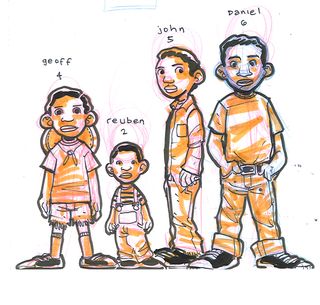
    A couple years ago, Beacon Press began work on a few graphic books. Fist Stick Knife Gun was one of the first titles chosen, and Jamar Nicholas was brought on board by editor Allison Trzop to bring it to reality. Jamar posted on the blog early in the process, and shared some sketches with us along the way:

    Lil geoff blue cowboy

    Older_geoff

    FSKG_Canada-Brothers-01

    FSKG_Canada-Brothers-02

    Yesterday, Fist Stick Knife Gun: A Personal History of Violence (A True Story in Black and White) hit the stores. Jamar Nicholas found a copy at his local Barnes and Noble.

    MEDIA JN

    Read a sample of the book here or on Scribd, and look for it at your local bookstore. If you post a picture of yourself with the book on Jamar's Facebook page, you might even win some free artwork.

    Fist Stick Knife Gun: A Personal History of Violence (A True Story in Black & White) http://d1.scribdassets.com/ScribdViewer.swf?document_id=37166618&access_key=key-6ytl34bjg7jrfia1os6&page=1&viewMode=list

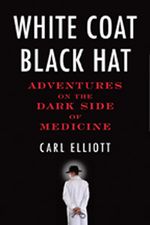
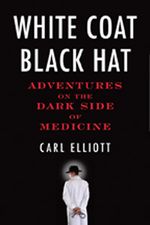
  • Whitecoat Over the past twenty-five years, the practice of medicine has been subverted by the business of medicine, sacrificing old-style doctoring to fit the values of consumer capitalism. In White Coat, Black Hat: Adventures on the Dark Side of Medicine, physician and moral philosopher Carl Elliott traces for the first time the evolutionary path of this new direction in health care, revealing the dangerous underbelly of the beast that has emerged. We’re introduced to the often shifty characters who work the production line in Big Pharma: the professional guinea pigs who test-pilot new drugs; the ghostwriters who pen “scientific” articles for drug manufacturers; the PR specialists who manufacture “news” bulletins; the drug reps who will do practically anything to get their numbers up; the “thought leaders” who travel the world to enlighten the medical community about the wonders of the latest release; even, finally, the ethicists who oversee all this from their pharma-funded perches.

    Check out Carl Elliott’s recent clinical trial expose in Mother Jones, and his piece on Big Pharma’s Thought Leaders in the Chronicle Review. 

    Read the intro here or on Scribd, and check out out the reader’s guide on Beacon.org. 

    White Coat, Black Hat: Adventures on the Dark Side of Medicine http://d1.scribdassets.com/ScribdViewer.swf?document_id=37409128&access_key=key-f0vl4ehpc9jsfyrk8my&page=1&viewMode=list

  • This week's new releases:

    Book cover for Fist Stick Knife Gun Hitting the shelves 9/14: Beacon's first-ever graphic book, Fist Stick Knife Gun: A Personal History of Violence, adapted by Jamar Nicholas from Geoffrey Canada's powerful memoir. The blog Blacksuperhero says of the adaptation: 

    It's a no-brainer, buy one for yourself and one to put in the hands of a young man who may benefit from it as well. The life you save may be your own.

    Geoffrey Canada is one of the main subjects in the forthcoming documentary Waiting for Superman, which takes its title from Canada's memoir. The film, which was directed by Davis Guggenheim (An Inconvenient Truth), has been getting a ton of attention. Watch the trailer and you'll see why. You can watch Geoffrey Canada here talking about his organization, Harlem Children's Zone, and the movie.  

    book cover for White Coat Black Hat Also out this week: White Coat, Black Hat: Adventures on the Dark Side of Medicine by Carl Elliott, a look at the disturbing intersection of medicine and consumerism. Elliott has already been shaking things up, scrutinizing his employer in Mother Jones over its role in a death during a clinical trial. You can read an adapted excerpt of the book, looking at the role of PR firms in medicine, in the Chronicle Review.

    One more new release tomorrow: Mary Oliver's latest collection of poetry, Swan.

    In other news…

    Sometimes our authors keep public radio hosts on their toes: Gail Dines spoke too frankly for Larry Mantle's comfort on AirTalk about her book Pornland and the physical risks of gonzo pornography. Listen to the interview here.

    "It goes beyond marriage equality, it’s a matter of quality of life, and most importantly, justice." Our Big Gayborhood on Carlos Ball's From the Closet to the Courtroom.

    Danielle Ofri has joined the blogging team at "Paging Dr. Gupta" at CNN. 

    A high school teacher in a Seattle suburb will be using The Boys from Little Mexico to "put a human face on our country’s current (and bitter) immigration debate."

  • David Chura has worked with at-risk teenagers for forty years. His book, I Don't Wish Nobody to Have a Life Like Mine, documents the lives of children in adult lockups and how we as individuals and as a society have ultimately failed them.

    Chura Over any teacher's career—in my case, 26 years of teaching high school English to at-risk teenagers, the last 10 of those years in an adult county jail—you get asked lots of questions. Some about the topic you're teaching; others, well, it's hard to know where they come from. But there's one question I heard a lot, most frequently from my jail students, "Why don't you teach in a real school?"

    This usually happened when a lesson went well and a kid really got what we were talking about. "That was a good lesson, Mr. C. You should teach in a real school instead of here." That last part was typical of incarcerated kids. Instead of taking credit for understanding some new idea, the student was quick to give it to me.

    I knew where the "real school" remark came from. My students were mostly poor youth of color; many bereft of families. The education they received in their home districts was pretty bogus, and they knew it. Minimal supplies. School buildings as dilapidated as the warehouses (called "public housing") they lived in. The curriculum dummied down because "they can't handle the real thing." For these locked up kids a "real school" was one they weren't in.

    They knew my take on the "real school" remark. My classroom was a real school; they were real students doing real learning; and I expected them to act that way. I confess, I wasn't always polite about it. It made me mad—at them; at the educational system; at society; at myself. And it made me sad because within that comment was their bone-deep belief that they were worthless.

    But in their remarks I heard another question. It's a question every teacher asks with each new school year, "Why do I teach?" For me it was, "Why teach the hard to reach—at-risk kids—in the first place?" It's a fair question, one that deserves an answer.

    (more…)

  • Today's post is from Helene Atwan, the director of Beacon Press.

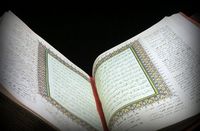
    Image by Ibn Ar-Rashid on Flickr While one man and his small group of followers in
    Gainesville, Florida are talking about burning copies of the Quran on 9/11,
    it's been thrilling to see America's secular and religious communities reacting
    in solidarity. Religious leaders,
    including Peter Morales, president of the Unitarian Universalist Association,
    are calling on their communities to read the Quran. The Mass Bible society has a project to
    donate two copies of the Quran for every one burned. For those
    who would like to take the opportunity to read at least some passages from the
    Quran, you'll find some excerpts here.

    Finally, we're proud to have published many books by Muslims, but I would especially recommend, in this atmosphere of hostility, five: The Place of Tolerance in Islam by Khaled Abou El Fadl, whose title says it all; Acts of Faith by Eboo Patel, who has a strong opinion piece in the Chicago Tribune today; Living Islam Out Loud, which offers perspectives from 15 American Muslim women; The Tent of Abraham, which illuminates the commonalities of the Abrahamic faiths: Christianity, Judaism and Islam; and finally, the forthcoming Love in a Headscarf, by Shelina Zahra Janmohamed, which offers a refreshingly warm and often funny account of being Muslim in the West.

    You can visit the UUA's Standing on the Side of Love website to find a solidarity event near you. 

    Image by Ibn Ar-Rashid on Flickr. Used under Creative Commons.

  • Courtney E. Martin is a senior correspondent for the American Prospect and an editor of Feministing.com. A 2002 recipient of the Elie Wiesel Prize in Ethics, she is the author of Perfect Girls, Starving Daughters, coauthor of The Naked Truth, and coeditor of Click. Her work frequently appears in the Christian Science Monitor, Alternet, and Publishers Weekly, among other publications. She lives in Brooklyn. The following is from a post on Alternet adapted from her new book, Do It Anyway: The New Generation of Activists.

    Save the world.

    Where were you the first time you heard those three little words?

    It’s a phrase that has slipped off the tongues of hippie parents and well-intentioned teachers with a sort of cruel ease for the last three decades. In Evangelical churches and Jewish summer camps, on 3-2-1 Contact and Dora the Explorer, even on MTV, we (America’s youth) have been charged with the vaguest and most ethically dangerous of responsibilities: save the world. But what does it really mean? What has it ever really meant — when uttered by moms and ministers, by zany aunts and debate coaches — to save the whole wildly complex, horrifically hypocritical, overwhelmingly beautiful world?

    Social scientists and the media seems to have made an ugly habit in the last few years of labeling my generation as entitled, self absorbed, and apathetic. Psychologist Jean M. Twenge argues that, largely because of the boom in self-esteem education in the ’80s and ’90s, young people today “speak the language of the self as their native tongue,” in her book Generation Me: Why Today’s Young Americans Are More Confident, Assertive, Entitled — and More Miserable Than Ever Before. Tom Friedman dubbed us Generation Q for quiet in the pages of The New York Times,
    writing, “Generation Q may be too quiet, too online, for its own good,
    and for the country’s own good.” And morning shows can’t resist a
    segment on how entitled Gen Y is in the workplace and what their bosses
    can do to tame their positively gargantuan egos.

    I think they’ve
    got it wrong. They’re missing a class analysis. And they’ve mistaken
    symptoms for the disease. We are not, on the whole, entitled, self
    absorbed, and apathetic. We’re overwhelmed, empathic, and paralyzed. The
    privileged among us, are told over and over that it is our charge to
    “save the world,” but once in it, we realize that it’s not so simple.
    The less privileged are gifted their own empty rhetoric — American
    Dream ideology that charges them with, perhaps not necessarily saving
    the whole damn world, but at the very least saving their families, their
    countries, their honor. We are the most educated, most wanted, most
    diverse generation in American history, and we are also the most
    conscious of complexity. Read the rest at Alternet.

  • Mark Winne is the author of the forthcoming book Food Rebels, Guerrilla Gardeners, and Smart-Cookin' Mamas: Fighting Back in an Age of Industrial Agriculture.

    Book cover for Food Rebels, Guerrilla Gardeners and Smart-Cookin' Mamas Picture this: three long-haired college kids are unloading crates of food from the bed of a battered pick-up truck. It's parked curbside at the Androscoggin Food Co-op located in the equally battered mill town of Lewiston, Maine. The year is 1971 and these kids are, unbeknownst to them, the vanguard of the local food movement.

    They've spent the day rounding up goods directly from local farms and food processors, not because they're devout locavores (the word wouldn't be invented for another 35 years) but because sourcing locally was the cheapest way to get food for a co-op whose members were largely lower income. Some crates are full of apples from a nearby orchard; others contain 12-pound wheels of a so-so cheddar from a small cheese plant; and one cardboard box contains 30 dozen eggs from a chicken farm only 10 miles down the road. That box is labeled DeCoster Farms.

    Yes, the product of this family egg farm (now headquartered in Iowa) at the eye of the current salmonella storm was being handled contentedly by these prehistoric foodies, I among them. As a company that was started with 125 hens in the mid-1960s by Austin "Jack" DeCoster in the farm town of Turner (pronounced "Turna" by everybody except out-of-state college kids), it was as local as you could get.

    Funny how times change. Jack, now 71, was an ambitious man who wasn't going to be happy selling locally produced eggs just in northern New England. According to one DeCoster employee, Jack is a born-again Christian who doesn't engage in any leisure pursuits other than work, which he apparently pursues 18-hours a day. With a work ethic like that, growth was inevitable. Now operating under the names of Wright County Egg and Quality Egg, Jack's egg empire now produces 2.3 million dozen eggs a week in Iowa while his "starter" farm back in Turner, renamed Maine Contract Farming, keeps 3.5 million hens gainfully employed.

    (more…)

  • John Simon Guggenheim Memorial Foundation Fellowship winner (2008), Builder Levy has photographed in New York City’s inner city communities where he was a New York City teacher of at-risk adolescents for 35 years; at civil rights and peace demonstrations in the 1960s and the new millennium; in Mongolia, Cuba, and other developing nations; and since 1968 to the present, has been visiting and photographing life in coalfield Appalachia. His work intertwines social documentary, street and art photography. Here, Levy shares his memories and a photo he took at the 1963 March on Washington.

    Resaved_Builder Levy March on Washington When I got off the bus I was a little disoriented because it was almost too peaceful and relaxed. Yet crowded, full of people, mostly people of color, but people of every color, whichever way you looked. The crowds stretched from the Lincoln Memorial back to the Washington Monument. The signs read “March on Washington for Jobs and Freedom.” I saw contingents with people wearing their labor union caps. Miraculously, I met my brother, Jay, there. He had come from out west, on his way home from a cross-country road trip he had made that summer. There were plenty of police—the media had warned of violence! But it was very peaceful. I had been inspired by Rosa Parks and the Montgomery Bus Boycott and Martin Luther King in the mid-fifties while I was still in junior high school in Brooklyn, New York. As I was entering Stuyvesant High School in New York City, I remember being inspired by the heroic Black students integrating Central High School—the Little Rock Nine, who were being escorted by the federal troops to Central High School through crowds of hate after Arkansas governor Orval Faubus had used state National Guardsmen to block them from entering days earlier. I had marched on Washington for integrated schools, in 1957. In support of the southern students picketing and boycotting Woolworth’s, we picketed Woolworth’s in New York City, in 1960.

    That day in Washington, the signs read “For Jobs and Freedom.”  I was walking around, looking for faces, groups, something that would help me find the meaning of the march. What was significant was its enormous size—more than a quarter-million, probably 300,000 people. Also significant to me was that it had such a strong labor union component of support. One of the main organizers was A. Phillip Randolph, organizer and founder of the Brotherhood of Sleeping Car Porters, and founder and president of the Negro American Labor Council. The fact that the march had a broad coalition, a unity of all the major civil rights organizations, including SNCC and the NAACP, as well as SCLC, the Urban League, and CORE, was of great import also.

    I was near the Lincoln Memorial. I tried listening to the speeches and songs. King would speak near the very end. Shortly before King delivered his speech, Mahalia Jackson began singing. I noticed a contingent from the South (where the current front lines of the freedom struggle were). I think it was an NAACP group from Atlanta, Georgia. Within the group, a young black woman wearing a dark kerchief on her head caught my eye.  She was in the brilliant, bright, hot summer sunlight, standing out from, but still within and a part of, the crowd. I moved closer, composed and focused razor-sharp on the woman. Her face/gaze reflected for me the intensity of the long and continuing struggle, from the arrival of the first Africans sold into bondage in Jamestown in 1619, to Harriet Tubman, John Brown and Frederick Douglass, Denmark Vesey, Nat Turner, Abraham Lincoln, Sojourner Truth, Richard Wright, Paul Robeson, the Scottsboro Boys, Rosa Parks and the Montgomery Bus Boycott, Martin Luther King, the student sit-ins, in Greensboro, John Lewis, Medgar Evers! Her clasped hands seemed to offer an expression of hope.

    A young white man, perhaps a student like me, was to the young woman’s left. A well-dressed black man in a hat and sport jacket was to the right with his back facing me. They, as well as the rest of the crowd behind the woman, gave her the context of the mass multiracial demonstration, but they did not need to be sharply focused.

    Although I never did get much of a vantage point to get good crowd photographs of the historic march, this photograph captures for me the meaning of the March on Washington.

  • Amie Klempnauer Miller is the author of She Looks Just Like You: A Memoir of (Nonbiological Lesbian) Motherhood.
    Miller works as a development consultant to the public media industry
    and lives with her partner and daughter in St. Paul, Minnesota.

    book cover for She Looks Just Like YouI sit in the dark next to Jane, munching the contraband cinnamon roasted nuts that we snuck into the movie theater, past the NO OUTSIDE FOOD OR DRINK sign. Against all odds, we have finally secured a babysitter and made it out to see The Kids Are All Right. Fairly early in the movie, the two mothers, Nic and Jules, are lying in bed together. “Good night, chicken,” one says. “Good night, pony,” says the other. Jane nudges me just as I elbow her. “Oh my god,” I say. “They are such lesbians.”

    I like the film immediately for the way it captures the long-term lesbian relationship, at least one version of it, right down to the menagerie of nicknames. There’s overmothering at the dinner table; snuggling in front of the TV; tensions around work; years-old inside jokes; rehashed insecurities — basically the challenges, joys, hopes and disappointments of marriage, all wrapped up with an estrogen bow.

    But I’m interested in the film not just because I am a lesbian in a long-term relationship, not just because I want to see this film that has brought lesbian-headed families to mainstream attention.

    I want to see it because we, too, have an anonymous donor in our lives, though for the time being, he is still anonymous. I don’t know if we will ever meet him. I would like to leave that up to our daughter to decide since her relationship with him is decidedly closer than ours. So far, Hannah, who is now just seven years old, has not expressed much interest in her donor. Will she want to meet him someday? I have no idea. Would I like to meet him someday? I don’t know the answer to that one either.

    (more…)

  • It has been a tremendously busy summer for our authors. The following are just a few of their major achievements from this week:

    The Christian Science Monitor says that Charles Euchner, in his new book Nobody Turn Me Around: A People's History of the 1963 March on Washington, "does an excellent job of telling the lesser-known story of the internal contradictions that nearly destroyed the historic event."

    Margaret Regan, author of The Death of Josseline, wrote for the Tucson Weekly about the increase in migrant deaths this summer on the borderlands of Mexico.

    Although it isn't going to be published until April, Judge Nancy Gertner’s memoir In Defense of Women has already begun drawing attention: the Boston Globe posted this article, which drew responses from many legal blogs, including Above the Law.

    Although it's unavailable online, there has already been lots of blog response to an article in the September issue of Mother Jones, in which Carl Elliott—author of the upcoming White Coat Black Hat: Adventures on the Dark Side of Medicine— calls out his own school for questionable ethics in medical research. Minnesota Post calls it "a disturbing tale." The New York Times Prescriptions blog said the article was recommended reading and a "withering critique."  A preview of the book and its author can be found on the blog The Periodic Table and an excerpt has recently been posted on the popular medical blog KevinMD. Finally, Elliott’s new book was listed as a New Book of Interest on the blog Hooked: Ethics, Medicine, and Pharma.

    Fred Pearce, author of The Coming Population Crash, was quoted in a feature for Seed magazine on female empowerment, birth control, and the bust of the baby boom.

    In the Washington Post, Rachel Dry draws on psychologist David Amodio's essay from the book Are We Born Racist? to explain the science behind racism and Dr. Laura's recent actions.  

    In the American Spectator, Nathan Harden draws his own connections between feminism and pornography in an article about Gail Dines and her new book Pornland. The topic of pornography and racism was discussed on the Ms. Magazine blog and has already inspired quite a conversation.

    Queeried includes Carlos Ball’s article from the Huffington Post on marriage equality and homophobia in their “5 Must Read LGBT Stories From Around The Internet.”