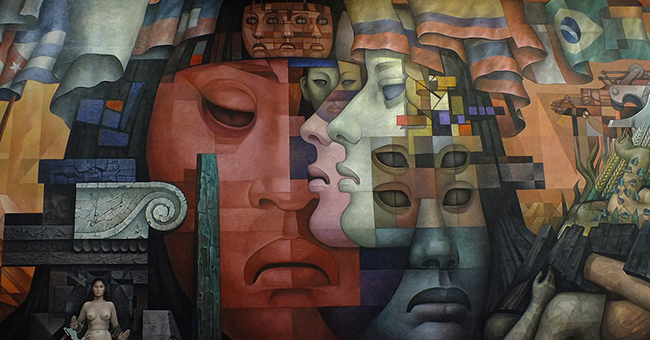
• Presencia de América Latina mural by Jorge González Camarena, 1964-1965, Casa del Arte (Pinacoteca) de la Universidad de Concepción

    Presencia de América Latina mural by Jorge González Camarena, 1964-1965, Casa del Arte (Pinacoteca) de la Universidad de Concepción

    Talk about an affront to human life. In a bait-and-switch tactic to push the Right’s anti-immigrant message, FL Governor Ron DeSantis paid to send 50 migrants like cattle on an airplane from San Antonio, TX, to Martha’s Vineyard, MA. The migrants were told they’d land in Boston, where they could get expedited work papers. On top of that, hundreds of thousands of people across Puerto Rico are waiting for water and power to be restored after Hurricane Fiona knocked out power lines and collapsed infrastructure with massive flooding.

    A rough way for Hispanic/Latinx Heritage Month to start. Which makes this year’s theme, Unidos: Inclusivity for a Stronger Nation, hit even harder.

    The goal is to ensure that all Hispanic/Latinx voices are represented and welcomed to build stronger communities. Seeing how anti-immigrant feels, climate change TKOs, and the can’t-quit-you legacy of colonialism are flaring, this is what we’re doing by highlighting this (inexhaustive) list of titles from our catalog.
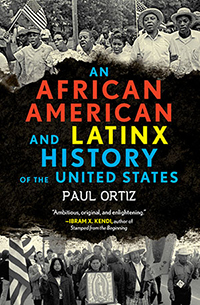
     

    An African American and Latinx History of the United States

    An African American and Latinx History of the United States

    We must give credit to immigrants of the Global South for sharing practical visions of liberation that have reinvigorated civic culture in the United States. A basic knowledge of the battles fought by the ancestors of today’s immigrants—whether they hail from Latin America or elsewhere—is important if we are to understand contemporary US politics.
    —Paul Ortiz 
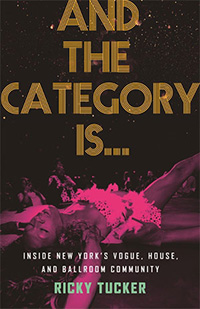
     

    And-the-Category-Is

    And the Category Is: Inside New York’s Vogue, House, and Ballroom Community

    Built out of the human need for lineage and legacy, the house system is a clan barreling toward posterity with a common cause: freedom. And on an individual level, just like with biological families, these houses, Lanvin, Ebony, LaBeija, Pendavis, Mugler, et al., provide LGBTQ BIPOC youth an opportunity to metabolize centuries of generational trauma.
    —Ricky Tucker 


    Before island is volcano

    antes que isla es volcán/before island is volcano: poemas/poems

    me encadenaste para liberarte
    de un amo en común
    y todavía piensas que
    yo soy el caníbal.

    /

    you chained me to free yourself
    from our common master,
    and you still believe
    i’m the cannibal.
    —Raquel Salas Rivera, “calibán a ariel”/“caliban to ariel” 
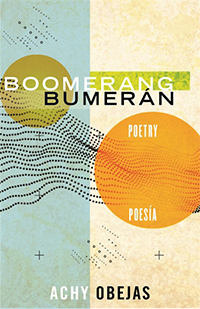
     

    Boomerang

    Boomerang/Bumerán: Poetry/Poesía

    Te apoyas en mí
    mientras bailamos, le suave roce
    de nuestres cabezas juntes,
    nuestres alientos une vapor limpie en le humo
    azul, rápide, agotade.
    Mezclamos margaritas porque
    me gusta le nombre; es
    la mujer que amas. Tú eres mayor.
    Yo estoy dispuesta, borracha, desabrochada.

    /

    You lean against me
    as we dance, the soft huddle
    of our heads together,
    our breaths clean steam in the blue
    smoke, rapid, exhausted.
    We mix margaritas, because
    I like the name, a
    woman you love. You’re older.
    I’m willing, drunk, unbuttoned.
    —Achy Obejas, de/from “Bailando en le paraíso”/“Dancing in Paradise” 
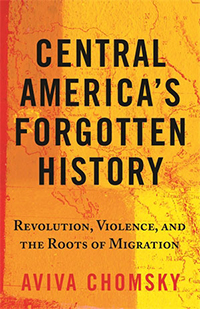
     

    Central America's Forgotten History

    Central America’s Forgotten History: Revolution, Violence, and the Roots of Migration

    The politics of forgetting took on a new significance in the United States as more and more Central Americans fled their homes to make new lives in el norte (the North). Large-scale Central American migration to the United States dates to the civil wars of the 1980s and came primarily from El Salvador and Guatemala. Most came fleeing political violence, and their presence became politically very inconvenient for the Reagan administration, which was seeking to justify its support for these countries’ governments. Others were economic refugees. Either way, the refugees gave the lie to Reagan’s claims of the governments’ legitimacy and right to US support.
    —Aviva Chomsky
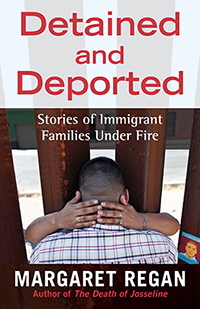
     

    Detained and Deported

    Detained and Deported: Stories of Immigrant Families Under Fire

    As the numbers of detainees imprisoned in this infrastructure skyrocketed, human rights complaints likewise multiplied. Critics noted the racial dimension of the incarcerations. The vast majority of detainees were Mexican—64.4 percent in 2012—with Guatemalans coming in second at 10.6 percent, Hondurans next at 8.5 percent, and Salvadorans at 6.6 percent, for a Central American total of 25.7 percent. And organizations from the ACLU to Amnesty International have cited physical, verbal, and sexual abuse of detainees, inadequate health care and food, use of solitary confinement as punishment, prolonged detention, and even an untoward number of deaths. Arizona plays an outsized role in this human tragedy.
    —Margaret Regan


    How Does It Feel to Be Unwanted

    How Does It Feel to Be Unwanted?: Stories of Resistance and Resilience from Mexicans Living the United States

    “Why doesn’t the US want us?” In my experience, this is the question that immigrants puzzle over, the question that gets under their skin, especially when they are the victims of workplace abuse or bigoted comments, when their children are victims of bullying at school, or when a politician in power insults and stigmatizes an entire community in spite of their struggle and hard work every day.
    —Eileen Truax
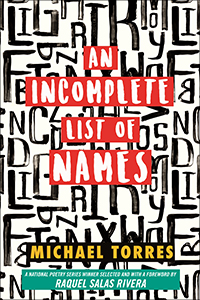
     

    An Incomplete List of Names

    An Incomplete List of Names: Poems

    I keep the photographs of my father—one behind each ear.
    Like accent marks. The father behind my own ear, a man
    holding light in his hand, tells me how to get home: find
    a freeway; go east, away from water. Behind my borrowed
    ear, my father spins the gun on his finger. Wind whistles.
    He tells me, when buying the newspaper, pay for one
    but make sure to take two: one for yourself;
    one for who you cannot be.
    —Michael Torres, from “[Mexican] America” 
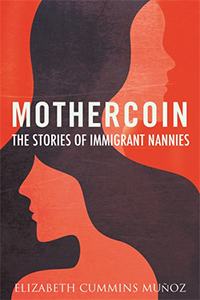
     

    Mothercoin

    Mothercoin: The Stories of Immigrant Nannies

    Women like Sara and her mother are part of a broad phenomenon of international migration for domestic and carework that has been growing since the end of the last century, spurred by widening global inequality and an increased demand for domestic service in the north. As cleaners and caregivers move from poorer regions into wealthier ones, they leave behind a material and emotional absence that is keenly felt by their families in the global south. North of these borders, children of wealthier regions are bathed and diapered and cared for in clean homes with folded laundry and sopa de arroz simmering on the stove, while their parents work ever longer hours and often struggle with these daily separations.
    —Elizabeth Cummins Muñoz 
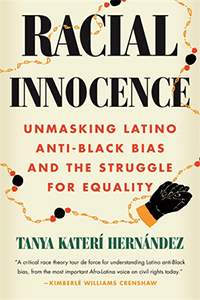
     

    Racial Innocence

    Racial Innocence: Unmasking Latino Anti-Black Bias and the Struggle for Equality

    The anti-Black slurs I heard used in the Latino community with respect to African Americans only reinforced my early impressions that Blackness was problematic, despite our assertions of Latino pride in being a mixture of races. It became evident to me that cultural mestizaje pride (race-mixture pride) aside, not all parts of the mixture were equally welcomed or celebrated.
    —Tanya Katerí Hernández
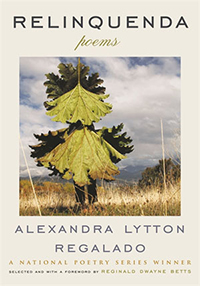
     

    Relinquenda

    Relinquenda: Poems

    For my husband in El Salvador,
    separated for eighty-three days
    during COVID-19, 2020

    Without you, the hours I measure in my skin,
    deepening to a darker brown as I write
    canalside. You say I worry too much,
    & it’s true, I often stay silent rather
    than go off-key. Like the bufo frogs, I too,
    find protection beneath a broad leaf, hidden
    from the jaws of snake or iguana, invisible
    to spear-beaked ibis. These days are wet sand
    through my fingers, pouring out in hills & turrets.
    —Alexandra Lytton Regalado, from “Bufo Lovesong” 
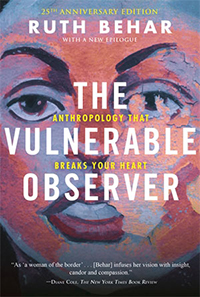
     

    The Vulnerable Observer 25th Anniversary

    The Vulnerable Observer: Anthropology That Breaks Your Heart

    Readers say the notion of “the vulnerable observer” put a label on something many anthropologists and other scholars had been grappling with: how to describe the practice of thinking through and laying bare one’s subjectivity and personal connection to research. They point out that the book heightened the awareness of the emotional stakes of being an observer of any social world.
    —Ruth Behar 
    Mural__Presencia_de_América_Latina__04

  • By Pamela D. Toler

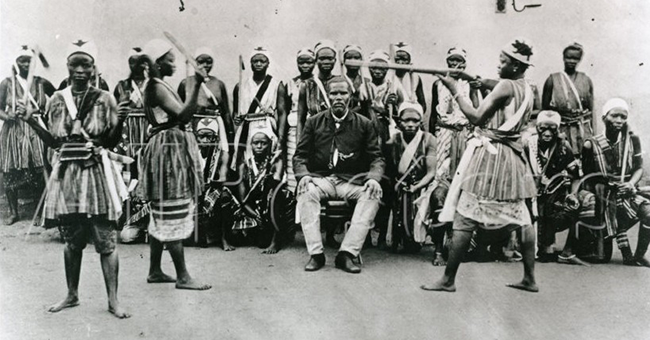
    Dahomey Amazons, circa 1890

    Dahomey Amazons, circa 1890

    Who doesn’t enjoy a historical epic on the big screen? On September 16, The Woman King had its premiere in US theaters. Directed by Gina Prince-Bythewood and starring Viola Davis at her fiercest, it centers on a general of the Agojie, women soldiers who protected the West African kingdom of Dahomey, training the next generation of warriors in the 1820s. They are the same warriors the Dora Milaje of Black Panther are partially based on. Cue the popcorn so we can behold all the badassery! Movies being movies, though, historical accuracy and integrity are secondary to drama and epicness. Here, in Women Warriors: An Unexpected History, Pamela D. Toler gives a bird’s-eye view of what life was like for the soldiers.

    ***

    In the seventeenth through the nineteenth centuries, the kingdom of Dahomey in West Africa, in what is now the Republic of Benin, employed troops of trained full-time women soldiers who fought alongside their male counterparts.1 The Europeans who encountered them in the eighteenth century dubbed the Dahomean soldiers “black Amazons.” The Dahomeans called them abosi (the king’s wives)2 or minos (our mothers).

    Members of the female regiments lived in the palace, which was off limits to all men except the king. Unlike other palace women, such as concubines, they were required to remain celibate. In compensation, they enjoyed more autonomy than most women in Dahomey. In their time off they swaggered like any other band of elite soldiers with a three-day pass: drinking, dancing, and singing rowdy songs, many of them to the effect that the men could stay behind and plant crops, a job Dahomeans considered women’s work, while the minos headed out to eviscerate their enemies. They not only disdained “women’s work” but claimed that by proving themselves equal to, or better than, their male counterparts on the battlefield, they had become men.3

    For much of their existence, the minos’ weapon of choice was the smooth-bore, muzzle-loading flintlock, the same weapon carried in North American and European wars from the eighteenth through the mid-nineteenth centuries. Most early references to Dahomey’s women warriors describe them carrying muskets and comment on their prowess with the weapon. British traveler John Duncan, invited to a display of marksmanship by Dahomey’s women warriors, was impressed: “I was certainly surprised to see the certainty of their deadly aim. . . . Very few missed their object; and I did not observe one who fired wide of a man’s body.” Serious praise for marksmanship with a notoriously inaccurate weapon.

    Most European travelers echoed his opinion.

    As in the American Revolution, the slow reloading time and inaccuracy of the flintlock meant battles were often decided by hand-to-hand combat. Dahomean soldiers, male and female alike, carried machetes, a weapon that French trader Edmond Chardoin reported they “wield with much skill and with which they lop off a limb or a head with a single blow as if it were an ordinary cane of bamboo.” Others carried a uniquely Dahomean weapon: a blade eighteen inches to three feet long that folded into a wooden handle. Effectively a giant straightedge razor, it took two hands to use. Fascinated Europeans reported the minos were rumored to use the razor to collect body parts as trophies.

    The minos fought not in units alongside men but in separate units commanded by women. The units were not easily distinguished from each other in the field because their uniforms were similar: sleeveless, kilt-length tunics and shorts. According to an Egba oral tradition, when Dahomey attacked the capital of the Yoruba kingdom of Egba in 1851, the city’s defenders were unaware they had been retreating before women soldiers until one of the minos fell into Yoruba hands. The Yoruba traditionally castrated the first prisoner taken during a battle. When they stripped their prisoner and discovered she was a woman, the Yoruba soldiers were so outraged at the idea they had been fighting against women that the tide of battle turned.4 The Egba do not say what retribution they took on the woman, but I suspect it was ugly.

    Oral history traces the origin of the minos to a group of women who hunted elephants for King Wegabja (ca. 1645–1680). Known as the gheto, they were presumably responsible for supplying him with ivory and meat.5 While the jump from women hunting elephants to women fighting the enemy seems logical enough, there is no direct link to prove it is true. The closest tie we have is a probably apocryphal story that when King Gezo (r. 1818–1858) praised his female elephant hunters for their courage, they answered “a nice manhunt would suit them even better.”

    The first eyewitness account of women deployed as soldiers in Dahomey dates from 1734. In 1727, Dahomey conquered the neighboring kingdom of Whydah (now Ouidah), a wealthy coastal trading state. In 1729, encouraged by the director of the local English entrepôt,6 the ruler of Whydah regained control of the country with a large army while King Agaja (r. 1718–1740) of Dahomey fought off an attempted invasion of his country by the Yoruba kingdom of Oyo, in what is now central Nigeria. The Dahomean army suffered heavy losses in the battle against the Yorubans, but Agaja was determined to recapture Whydah, manpower shortage or not. According to British slave trader William Snelgrave (fl. 1719–1743), Agaja “ordered a great number of Women to be armed like Soldiers, and appointed Officers to each Company, with Colours, Drums, and Umbrellas [symbols of rank], according to the Negroe Fashion. Then ordering the Army to march, the women soldiers were placed in the Rear, to prevent Discovery.” Snelgrave doesn’t tell us whether or not these women fought, but a similar ploy used in the Battle of Tenochtitlan in 15217 suggests they would have. The chronicles of Tlatelolco tell us that at the end of the battle, when his troops and those of his allies had been decimated by disease and Spanish gunfire, the Aztec leader Cuauhtémoc ordered the women of the city to cut off their hair, disguise themselves as men, and fight the Spanish. Would an experienced elephant hunter do less?

    European observers agree the minos numbered between eight hundred and nine hundred women during the eighteenth century. The size of the corps grew in the two years after King Gezo seized power from his brother in 1818. By the 1840s, European visitors estimated the number of female soldiers at between three thousand and eight thousand.8

    The women warriors of Dahomey came to an end with the arrival of the French in the late nineteenth century.

    The first Franco-Dahomean war began in 1890. The war lasted two months and included two major engagements; Dahomey’s women warriors fought in both of them. The Battle of Cotonou began before dawn on March 4. The French fielded a small force of 359 men, most of them Senegalese and Gabonese tirailleurs trained and led by French officers. They were armed with eight-shot repeating rifles and equipped with four field pieces that shot grapeshot. A Dahomean army of several thousand soldiers, armed for the most part with muskets and led by its women warriors, attacked the log stockade of the trading post around five o’clock in the morning. The battle lasted for four hours, but despite the Dahomeans’ manpower advantage, they could not hold out against the superior French firepower, particularly after dawn, when a gunboat stationed offshore supported the troops in the trading post with cannon fire. The second major conflict of the war, the Battle of Atchoupa on April 20, was a repeat of the first: rifle and artillery fire demolished the charging Dahomean forces before they could get within musket range. Even so, a few women managed to get close enough to engage French soldiers in hand-to-hand combat before they fell to bayonet thrusts.9

    Peace negotiations after the Battle of Atchoupa resulted in a treaty in which Dahomey recognized the French protectorate over Porto-Novo and occupation of Cotonou. Both sides knew the peace was just a pause before war would resume.


    Notes

    1. The primary historical sources for the women warriors of Dahomey are accounts written by European soldiers, explorers, missionaries, colonial officials, slave traders, and merchants. We also have oral traditions recorded in Benin in the 1970s by anthropologist Amélie Degbelo.
    2. Not queens in the Western sense.
    3. It was not unusual for women warriors to use language that elevated women by comparing them to men and denigrated men by comparing them to women. Women warriors are the product of the same culture as the men around them.

    4. Since the Yoruba had been fighting Dahomey on-and-off for more than forty years at that point, it’s hard to believe word wouldn’t have gotten around.
    5. Dahomey still had female elephant hunters in the late nineteenth century.
    6. Europeans in Africa in the eighteenth century always had a straight-edged razor to grind.
    7. The last battle between the Aztecs and the Spaniards.
    8. Richard Burton—the nineteenth-century explorer and proto-anthropologist, not the twentieth-century actor—was the British consul in Dahomey in 1863. He claimed his British predecessors in Dahomey had been hoodwinked as to the numbers of female warriors by “the heroines [being] marched out of one gate and in through another,” so they could be counted more than once. See Richard F. Burton’s 1864 A Mission to Gelele, King of Dahome (New York: Praeger, 1966), 263. Unlike other European observers, including members of the French army who would fight opposite the minos twenty years later, Burton was as dismissive of the women warriors’ military skills as he was of his predecessors’ observation skills. Writing to his friend Richard Moncton Milnes, Lord Houghton, Burton said, “They manoeuvre with the precision of a flock of sheep, and they are too light to stand a charge of the poorest troops in Europe . . . an equal number of British charwomen, armed with the British broomstick, would . . . clear them off in a very few hours.” Quoted in Edward Rice, Captain Sir Richard Francis Burton: The Secret Agent Who Made the Pilgrimage to Mecca, Discovered the Kama Sutra and Brought the Arabian Nights to the West (New York: Charles Scribner’s Sons, 1990), 378. Unfortunately, with Burton, it is hard to separate truth from quip.
    9. French accounts of the battle suggest the Dahomean soldiers had never faced bayonets before and consequently were impaled in large numbers—which seems odd, since they were familiar with other types of long, sharp metal weapons.


    About the Author 

    Pamela D. Toler goes beyond the familiar boundaries of American history to tell stories from other parts of the world, as well as history from the other side of the battlefield, the gender line, or the color bar. She is author of The Heroines of Mercy Street: The Real Nurses of the Civil War and Women Warriors: An Unexpected History, among other books. Her work has appeared in Aramco World, Calliope, History Channel Magazine, MHQ: The Quarterly Journal of Military History, and on Time.com. Visit her website and follow her on Twitter at @pdtoler.

  • Lindsay Wang

    Our rebooted “Beacon Behind the Books” series is on a roll! In these times when readers are responding to our books “more than ever,” when our authors—including Colm Tóibín, Tanya Katerí Hernández, Robin D. G. Kelley, Eboo Patel, and Gayl Jones—are appearing in the media, their ideas going viral on social media, their voices being heard on so many platforms, we thought it would be good to take a break to focus on some of the staff who work hard to find, shape, edit, produce, and promote those works. Our blog series introduces to you a staff member and gives you a behind-the-scenes look, department by department, at what goes on at our office. And not only our staff, but our interns, too.

    This month, we introduce you Lindsay Wang, our digital and social media intern! 

    What drew you to publishing, Lindsay? How did you find your way to Beacon?

    Like most other people in the industry, I’m here because I love books! I love words and how they can be combined to reveal a new way of knowing the world. For a while, my dream was to become a writer, but over time, I grew less interested in telling my stories and more interested in helping others tell theirs. I found Beacon through the amazing We Need Diverse Books internship grant and was immediately drawn to its progressive catalog and justice-oriented mission. My friends and family can attest that I was jumping for joy when I received the internship offer!

    What is one book on our list that has influenced your thinking on a particular issue?

    Angela Chen’s Ace was incredibly influential in terms of how I thought about sexuality, love, and desire. Before reading this book, I could identify aspects of myself with the concept of asexuality, but my understanding of it was so nebulous that I constantly second-guessed myself. Ace gave me the words I needed to fully understand this part of myself that had previously been so uncertain. At the same time, it also challenged my assumptions about what asexuality could look like and provided me with new angles through which to approach this identity I now feel comfortable claiming as my own. In many ways, Ace re-proved to me the importance of books in people’s lives and reaffirmed my dream to help publish other stories that touch readers as intimately as Ace has touched me.

    Favorite thing about Boston?

    I’m originally from the Bay Area in California, so one great thing about my time at Beacon was exploring Beantown! Even with all the cool things I got to see and do, I think my favorite thing about Boston must be the Charles River. I’ve always loved rivers and bridges: there’s something incredibly calming about moving water, and rivers are almost always accompanied by a cool breeze and shady greenery, both of which are absolutely necessary during a muggy New England summer. Watching the sunset over the Anderson Memorial Bridge will always be a highlight of my summer in Boston.

    What are you reading right now?

    In preparation for the next school year, I’m currently working through Le Morte d’Arthur by Thomas Malory, an absolute classic of Arthurian legend. Somehow, over the past couple of years, I’ve developed an interest in medieval romances, which are often rife with queer subtext. Middle English may seem scary at first, but it isn’t so hard to decipher once you’ve read enough Chaucer.

    Favorite song?

    I have this problem where I find an amazing song and then play it on a loop until I am sick of hearing it. That being said, one song I haven’t gotten sick of yet is “Good Life” by Sammy Rae & The Friends. I haven’t yet found a song by this band that I haven’t added to my playlist!

  • A Q&A with Remica Bingham-Risher

    Remica Bingham-Risher and Soul Culture

    Cover art: Alex Camlin; cover design: Carol Chu. Author photo: Jennifer Natalie Fish

    When you ask Cave Canum fellow and poet Remica Bingham-Risher what soul culture is, she will tell you it’s the nuanced living of Black Americans, and more specifically, of contemporary Black American poets. It’s also the name of her newest book, her joyous ode to Black poets and poetry. Equal parts oral history and coming-of-age on the shoulders of giants, Soul Culture: Black Poets, Books, and Questions That Grew Me Up examines firsthand the writing process through interviews with such legends as Sonia Sanchez, Lucille Clifton, and Patricia Smith interwoven with Bingham-Risher’s own origin story of becoming a poet. Beacon Broadside editor Christian Coleman caught up with her to chat about it.

    Christian Coleman: Having published three volumes of poetry, did you feel a nonfiction book like Soul Culture was on the way?

    Remica Bingham-Risher: Absolutely not :-). I actually never contemplated writing a book of nonfiction. When I started interviewing Black poets I admired, I did imagine that one day, I’d compile all those interviews. But those would be testaments to the things they were doing in the craft; it wouldn’t have much to do with me. So, it’s interesting that, over time, all the things they taught me kind of melded into this hybrid text, but I couldn’t have imagined it for myself. I’m very grateful.

    And to be clear, much of how Soul Culture came to be is because of the brilliance of my editor at Beacon, Haley Lynch, who really encouraged me to let my own voice—the Black woman’s interior voice—shine through.

    CC: You conducted interviews with ten masters of Black poetry—E. Ethelbert Miller, Honorée Fannone Jeffers, Lucille Clifton, A. Van Jordan, Sonia Sanchez, Forrest Hamer, Erica Hunt, Natasha Trethewey, Patricia Smith, Tim Seibles—over the course of a decade. Tell us what it was like carrying this book in your head and then distilling it into words.

    RBR: What’s interesting is it wasn’t much like carrying around a book in my head but was very much like carrying around these various libraries or even encyclopedias of knowledge. Each one of those poets taught me so many things about the way to enter the work that I used their examples when going to the page myself and when figuring out the next step to take in my writing life. I always had a repository of information to pull from and always hoped that other poets would be able to have it, too. That’s why I was interested in making sure that all of the information I gathered from them wasn’t lost. 

    Distilling these ideas into words was another story. Much of that distillation—taking what they taught me, tracing it back to my own writing life, and uniting it under ideas and themes—happened during the pandemic when I had real down time and when I was very frightened about how my craft would stall out, especially since we couldn’t be in the presence of others. Much of my work feeds on being with other poets—teaching young poets, going to conferences to fill the well, as it may be. So, when working on Soul Culture, I was really creating my own craft course, retracing my own trajectory in a time where I was most lonely and it was difficult to see how we would get back to any other kind of life.

    CC: How did you decide on these ten poets to profile in the book?

    RBR: They were my absolute favorites, and when I asked, they said yes. Black poets are so generous that even those who were wildly famous and who knew nothing of me gave me the chance to sit with them when I was a burgeoning poet. Their kindness really knew no bounds.

    CC: Were there any surprises that came up for you during the interviews?

    RBR: Oh, there were surprises at every turn. I was shocked with how open people were, how honest they were about their mistakes and tensions in their communities. I love to get all in people’s business, so when folks started telling me about faux pas that happened, I was all ears. I was also, though I probably shouldn’t have been, surprised at how often James Baldwin and Toni Morrison came up in the conversations. We were supposed to be talking about poets, but almost everyone mentioned one if not both as influences, and it reminded me how overarching their work is in the field of Black literature.

    CC: Soul Culture could have easily been a series of individual back-and-forth interviews, but you wove in your own story of getting bitten by the poetry bug and forging your path as a poet. Why was it important to add?

    RBR: This was a strategic move: folks read memoir and aren’t often interested in lots of interviews stacked together. That was why we chose the personal essay to tie together so many of these ideas. I really wanted to make sure that, throughout the narrative of this book, people understood that by learning from my elders I was learning how to be. I was coming into my own understanding, and without them, this wouldn’t have been possible. It was also important for me to convey that though this sometimes seems like a difficult path—the artist’s life, the writing life—young up-and-coming artists can do the same.

    CC: As a Cave Canem fellow, what are your thoughts on the current discourse that’s critical of writers’ workshops? The main argument being that the established method workshops use is harmful and oppressive for writers from marginalized communities.

    RBR: Well, for one thing, Cave Canem was designed to try to break this mold long before it was becoming part of the discourse, so you know: kudos to the fam :-). However, I think as is made evident by some of the anecdotes I included in Soul Culture about my time in graduate school and about the work of brilliant workshop leaders like Erica Hunt, how important and necessary it is for all of us to re-examine that practice. We should think about how we might not limit or stifle the voices of students from any community in our workshops. I’m glad that we’re now coming to the idea that it’s a helpful exercise for us to try to break down some of those practices that have been inhibiting writers for years.

    CC: There’s one quote in your book that stands out for me: “Writing rarely gives me answers, but it helps me articulate questions I have about the world and my longing. It’s a safe space, with many rooms, a house Black women have tended for me.” Would you say this line encapsulates the way you live soul culture?

    RBR: What a compliment! Thank you for giving my words back to me. I certainly hope this is how I live; I certainly hope this is how I embody soul culture for myself and my students. Black women poets in particular have proven to me the possibility of this life and continue to bolster me daily.


    About Remica Bingham-Risher 

    Remica Bingham-Risher is a Cave Canem fellow and Affrilachian Poet. Her work has been published in the New York Times, the Writer’s Chronicle, New Letters, Callaloo, and Essence, among other journals. She is the author of 3 volumes of her own poetry: Conversion, winner of the Naomi Long Madgett Poetry Award; What We Ask of Flesh, shortlisted for the Hurston/Wright Award; and Starlight & Error, winner of the Diode Editions Book Award. She lives in Norfolk, VA with her husband and children.

  • Avery Cook

    Our rebooted “Beacon Behind the Books” series is on a roll! In these times when readers are responding to our books “more than ever,” when our authors—including Colm Tóibín, Tanya Katerí Hernández, Robin D. G. Kelley, Eboo Patel, and Gayl Jones—are appearing in the media, their ideas going viral on social media, their voices being heard on so many platforms, we thought it would be good to take a break to focus on some of the staff who work hard to find, shape, edit, produce, and promote those works. Our blog series introduces to you a staff member and gives you a behind-the-scenes look, department by department, at what goes on at our office.

    For the month of September, we introduce you Avery Cook, our sales and marketing assistant!

    What drew you to publishing, Avery? How did you find your way to Beacon?

    I was always interested in being somewhere in the world of books. Before college, I wanted to be a full-time writer, and at some point, in those four years, I realized I needed more social interaction in my day than there would be in a typical freelance day. Publishing seemed like the most adjacent career that was less isolated, and it’s turned out to be the case!

    As for finding Beacon, I’d chatted with a few folks here before I was even thinking about the job search. I’ll always be grateful for the conversations I had with Haley Lynch and Emily Powers that led me to keep an eye on all things Beacon. Then later on, I interned with Melissa Nasson and decided I should throw my hat in the ring, and here we are!

    What’s a typical day in the life of a sales and marketing assistant?

    Since I started remotely, my workflow has stayed pretty consistent at Beacon. I’m part of the subsidiary rights team, so I usually start the day going through our rights inbox and any emails that have come in from overseas. We work with agents on five continents, and I usually have a few emails from the wee hours of the morning waiting for me. From there, I get to a priority to-do list that can include anything from updating the Beacon website to brainstorming posters for bookstores.

    I’ve found that the key to a productive day is scheduling out what needs to happen, and how long I’m going to work at each item before taking a break or switching tasks. If I’m writing copy for a book, I can get engrossed, and the day is gone; on the other hand, one minute in Excel can feel like an hour. There’s still also time in each day to learn a new part of the publishing process or meet someone for the first time. All of this makes for full days, but also plenty of new experiences.

    How much of what you learned in college have you found vital to your work?

    The biggest help to my work in publishing has actually been completely unrelated to my undergrad classes. Throughout college, I worked for our school’s community outreach office, interned at the local public library, and coordinated different types of tutoring with teachers and students from grades K through 12. Through all these programs, I learned so much about making connections with people, working around challenges that arise in a project, and thinking creatively about where we haven’t gone in the past, and where we can hope to go in the future. As it turns out, it’s good to have done a bit of all three when in the world of books!

    What upcoming projects are you excited about?

    I am so looking forward to a graphic novel from our Spring 2023 list, Under the Banner of King Death. Beacon previously published Prophet Against Slavery, which is the graphic novel adaptation of Marcus Rediker’s book on the Quaker and early abolitionist Benjamin Lay. Illustrated by David Lester, authored by Lester and Marcus Rediker, and edited by Paul Buhle, the Benjamin Lay novel tells his story through unique artwork, creating an immersive reading experience that brings you into the righteous friction that Lay caused between himself and his fellow Quakers. In a similar vein, Under the Banner of King Death adapts ­Villains of All Nations, Rediker’s history on seventeenth-century Atlantic pirates, to historical fiction. Lester, Rediker, and Buhle once again create an engrossing journey and cast of characters, all based on the real pirates behind our legends.

    I am so excited to work toward reaching new audiences and speaking to dedicated Beacon readers as well. We are working on a zine for booksellers, a marquee poster for comic stores, and plenty of other swashbuckling campaign items that I think will be a real treat to execute.

    What’s your advice to someone interested in entering the publishing field?

    The best thing you can do is talk to folks in the industry. It’s how the world of publishing goes ’round, for better or worse. If you don’t have an uncle, mom’s friend’s daughter, dog’s cousin, etc. who works in publishing and can connect you to an internship, don’t lose hope. You’ll hear a lot of people saying that’s how they got a foot in the door, which is a very real aspect of the book industry—not to diminish its prevalence at all.

    But that said, there are other ways to break in. You can cold email folks who are doing cool things with marketing, publicity, their front-list titles, and so forth. You can find them on LinkedIn and send a message to ask to chat. And keep in mind: we’re almost always happy to talk to you and to talk publishing. Just look at all the publishing gossip accounts on Instagram! So, keep reaching out and learning more as you go.

    Favorite thing about Boston?

    I moved to Boston in January 2022, so I might be missing some of the non-pandemic times experiences, but I have loved the FOOD. I’m from Upstate New York, where you can either drive thirty minutes for a burger, or an hour for a sit-down meal. Here, I’m finding a different homemade ice cream place on every corner, a $15 dosa night across from my grocery store, an adorable café on the ground floor of my favorite yoga studio—the possibilities are truly endless. Maybe someday, I’ll make my way to every bakery in Boston, and it’s definitely worth the valiant effort.

    Favorite food?

    Homemade fried dough. It’s a hazard to make but a dream to enjoy.

    Best vacation destination?

    I grew up in the Adirondack Mountains, and it’ll always be my favorite getaway. The far-off plan is to retire to a hidden cabin in the woods and write nature poetry to my heart’s content.

    What are you reading right now?

    I am reading a collection of poetry by Tess Gallagher, Midnight Lantern, after having a poem from the book on my whiteboard for months now. It was originally a poem-of-the-day that came to my email and it stuck with me all the way to the Somerville Library. I’m also listening to the audiobook of David Sedaris’s The Best of Me, and it has truly been a laugh-out-loud experience from the start.

    In an alternate universe, what career would you have?

    I would absolutely be a baker. I spent a summer as the early-morning kitchen crew at a summer camp and discovered that the supreme way to start the day is by baking treats en masse.

    What’s the next queued song on your music player?

    I am currently having somewhat of a Glee renaissance, so I’ve got “Beth” by Kiss on repeat.


    More About Avery Cook 

    Avery Cook joined the Beacon sales and marketing teams in 2022. She graduated from Hamilton College in 2021, where she studied creative writing and worked in community outreach, interfaith organizing, and archival research around American communal societies.

  • Aayushi Agarwal

    Our rebooted “Beacon Behind the Books” series is on a roll! In these times when readers are responding to our books “more than ever,” when our authors—including Colm Tóibín, Tanya Katerí Hernández, Robin D. G. Kelley, Eboo Patel, and Gayl Jones—are appearing in the media, their ideas going viral on social media, their voices being heard on so many platforms, we thought it would be good to take a break to focus on some of the staff who work hard to find, shape, edit, produce, and promote those works. Our blog series introduces to you a staff member and gives you a behind-the-scenes look, department by department, at what goes on at our office. And not only our staff, but our interns, too.

    This month, we introduce you Aayushi Agarwal, our sales and marketing intern! 

    What drew you to publishing, Aayushi? How did you find your way to Beacon?

    There is a picture of me as a child frowning over my book at whoever is behind the camera interrupting my read, and I think it is the perfect depiction of my relationship with books. I’ve always loved books, and nothing else made sense to me. If I couldn’t share stories with people, what else could I do? 

    I found Beacon through We Need Diverse Books’ Internship Grant Program when I was searching for internships earlier this year. Before this internship, I had focused on the editorial side of publishing but wanted to learn more about the industry as a whole and how I could fit into it. As I did some research, I realized I already owned some of their titles and felt like I was coming full circle when I was offered the position! 

    How much of what you learned in college have you found vital to your work?

    Before I went to college, I found critical and analytical thinking very hard. My experience at school never really encouraged us to think beyond what we were told. I memorized my textbooks, got good grades, and that was it. 

    The real problem came when I had my first literature class at college. I was an English major but felt like a baby thrown into the deep end. I had no clue what I was doing. Themes and motifs were a foreign language. College really helped me understand how to think more deeply about stories: creative writing classes taught me how to give feedback, and literature classes taught me how to think beyond the words on the page. While I may not have learned as much in terms of facts and concrete information, I think the skills that I have been able to refine at college played a big role in my internship.

    What helps you focus when you’re working?

    Since I was in high school, listening to music has always helped me focus on my work. Be it Korean rock or Hindi ballads, music helps me keep the rest of my mind occupied as I try to be productive. 

    Favorite thing about Boston or your remote home base?

    This is going to sound a bit silly, but I really love how walkable Boston is. My home and college are both fairly small, so you need a car if you want to go anywhere. As someone who doesn’t have a license, it can be hard to do things.  

    What are you reading right now?

    I’ve been slowly making my way through Crime and Punishment by Fyodor Dostoevsky. I’ve been very into classic literature these days, and this is definitely one I would recommend! I am a big fan of stories that explore gray areas of morality, so this read has been great for my brain.   

    In an alternate universe, what career would you have?

    I say this as someone with zero musical ability but being part of the music industry would be so cool, be it as a songwriter, a creative director, or even a concert staff member! I really adore music, and the thought of being involved behind the scenes of someone’s favorite song is fascinating to me. My other option would be a museum curator! I really love looking at art, and working at a museum would be a dream come true. 

    Favorite book ever?

    I can’t talk about books without paying homage to the Percy Jackson series. They were the first books I ever fell in love with, and I would not be who I am today if I hadn’t read them. Other than that, I really adore Ocean Vuong’s writing. I have not gotten through one of his books without bursting into tears multiple times.

    Favorite album?

    One of my most favorite albums is mono. by RM. It’s gotten me through some hard times, and I owe a lot to it. I would recommend you listen to it when it’s raining for the best experience, but either way, I hope it helps you the way it continues to help me. 

  • By Alan Levinovitz

    Yellowstone National Park. Photo credit: David Mark

    Yellowstone National Park. Photo credit: David Mark

    The National Park Service blows out 106 birthday candles today! Without them, we wouldn’t have the majesty of Yellowstone and the like. We retreat to these enclaves of preserved wilderness to reconnect with nature, but are we aware of how much worship is tied up in our notions of nature’s goodness? Is it possible for us, souped up as we are with modern comforts like technology, to truly bond with nature at its rawest level? Alan Levinovitz has some thoughts on the matter, which he expounds on in this excerpt from Natural: How Faith in Nature’s Goodness Leads to Harmful Fads, Unjust Laws, and Flawed Science.

    ***

    As long as national parks have existed, people conceived of them in religious terms. In his book Discovery of the Yosemite, the nineteenth-century explorer Lafayette Bunnell described the valley as hallowed ground. Yosemite wasn’t just beautiful, it was holy, “the very innermost sanctuary of all that is Divine in material creation,” a place where visitors could “commune with Nature’s God.” When his companions failed to behave respectfully, Bunnell reacted as one would in church. “It may appear sentimental,” he wrote, “but the coarse jokes of the careless, and the indifference of the practical, sensibly jarred my more devout feelings . . . as if a sacred subject had been ruthlessly profaned, or the visible power of Deity disregarded.” (Despite revering the valley, Bunnell had no problems profaning the Native Americans whose presence long predated his “discovery,” calling them “naturally vain, cruel, and arrogant.”)

    Today people pay over 350 million visits to US national parks each year, visits that might be better characterized as pilgrimages. The pilgrimage is an archetypal religious ritual in which individuals seek spiritual significance and renewal through travel to a holy place. This experience is precisely what national parks have always promised, as Lynn Ross-Bryant meticulously documents in her book Pilgrimage to the National Parks. We go to “get away from it all,” to be awed and humbled, surrounded by grand systems in which we had no hand. Hikes lead to overlooks dubbed “Inspiration Point” in Yosemite, the Grand Tetons, and Yellowstone, recalling the original meaning of inspiration: to be filled by divine breath with life and spirit. “Better men and women will result from their visits to the great open breathing spaces,” declared the director of the National Park Service in 1921.

    Pilgrimages are constituted by smaller rituals: prayers, sacrifices, ablutions. In a sacred place, pilgrims can communicate directly with divinity. It’s an opportunity to demonstrate devotion through giving up time and resources. Cleansed of earthly concerns, you reconnect with what matters. In Yellowstone, devoted wolf-watchers wake up before the sun like monks to point pricey scopes at an active hillside den. Later, tourists rise and submit themselves to the rhythm of Old Faithful’s eruptions or hike a mile to give thanks for the kaleidoscopic colors of Grand Prismatic Spring.

    These various rituals are infused with shared meaning by their context. They take place in a massive natural cathedral, larger than Rhode Island and Delaware combined, set aside and protected by people who are dedicated to preserving nature in its most pristine form; nature’s clergy, so to speak. They are devoted to the earliest scientific mission of Yellowstone, the world’s first official national park: “Preserving natural conditions.”

    The appeal of pure natural conditions—genuine wilderness—has its roots in being the antithesis of the artificial environments where we spend virtually every minute of our existence. “It’s something real in this contrived and digital age,” argues Doug Smith, a longtime wildlife biologist and the leader of Yellowstone’s Wolf Restoration Project. “Life and death. Real nature with no bars in between. Most of us don’t get this in our daily lives, so it can be a thirst slaked only by the real thing. There are not many places other than Yellowstone to go for this.” Zoos, even the best ones, are simulations. For people like Smith, our “contrived and digital age” is also a simulation, a zoo into which we have placed ourselves. (And who among us hasn’t felt this way, at least a little?) But not Yellowstone. Yellowstone is nature, shaped by forces from beyond and before humanity. It is wild, and therefore it is real.

    To fully experience the wildness of Yellowstone I decided to camp solo in the backcountry. Vehicles out of earshot; buildings and roads out of sight; animals my only companions. Wasn’t that Yellowstone in its purest form? I’d read numerous essays about “the pricelessness of untampered nature,” as the ecologist Paul Errington puts it, and I wanted to evaluate it for myself. Everyone I spoke with approved. Two of my guides, the naturalist Ashea Mills and her husband, ecologist Michael Tercek, told me stories about their own life-changing backcountry experiences. Rangers praised me. “Only one to two percent of visitors even get off the road,” one said scornfully, as he helped me find an April hike that would be tolerably free from snow. “You’re doing it the right way.” When I sat down to talk with Doug Smith, he advised me to take at least a couple breaks from yelling “Hey, Bear!” standard practice for avoiding dangerous encounters when you’re hiking alone. What was the point of wildness, he mused, if we are constantly contaminating it with the sound of our own voices?

    I knew I wanted to immerse myself in untampered nature, but as I planned the trip I struggled with translating that abstract ideal into practice. It wasn’t just my voice that could contaminate nature. There were the propane stove for boiling water, the instant oatmeal and freeze-dried beef stroganoff (slogan: “Savor the adventure!™”), my tent that traded the night sky for nylon, my book about the park and my lantern for reading it before falling asleep. I was an impure pilgrim, clinging to unholiness because I couldn’t live without it. Even if I went silent, my very existence would keep shouting “Hey Bear!”

    Part of me dismissed these feelings as puritanical nonsense. You can’t spoil the natural world with a lantern and a book. Not even the most dedicated nature lovers would think to suggest a Yellowstone backcountry trip in April without a can of bear spray and a subzero sleeping bag. There will always be distance between humans and the rest of nature, and that’s just fine. Striving to fully close the gap can lead to a situation like that of Timothy Treadwell, the bear lover and activist immortalized in the Werner Herzog documentary Grizzly Man. After Treadwell was devoured by grizzlies in Alaska’s Katmai National Park, his partially eaten head, spine, and right arm—watch still ticking on his wrist—were recovered by rangers, a warning to anyone who might be tempted to leave the bear spray at home, as Treadwell did out of respect for his animal companions.

    And yet, before his death, Treadwell had managed to cultivate unmediated relationships with multiple bears for over a decade. Was his connection to nature purer than that of the park rangers who insisted on carrying bear spray and installing electric fences around campsites? At a certain point, the security we’ve come to demand must depend on artificiality and alienation, aerosols and electricity, a distance from natural systems that blessed and tragic. We “unplug” and “disconnect,” but not completely. We can’t; it isn’t in our nature. Even Treadwell slept in a tent.

    H. G. Wells captured the paradox beautifully: “Man is the unnatural animal, the rebel child of nature, and more and more does he turn himself against the harsh and fitful hand that reared him.” Unnatural animals. How then do we act naturally? What are the right rituals?

    ~~~

    My own ritual visit to Yellowstone removed any lingering suspicions that the idea of nature is a “social construct.” Naturalness is a continuum, and it can be very difficult to decide where something exists on that continuum. It may be the case that human influence has spread so far that nothing is purely natural anymore. But there is no denying that certain spaces and systems are less touched and less ordered by humans than others. Walking alone through the grass, immersed in one of those nearly untouched systems, I was fully convinced that nature has intrinsic value and deserves protection, just like a historical monument or a classic piece of art. Resources spent on saving the bison, on bringing back the wolves, on carving out cathedrals for nature—these are wise decisions that make the world a better place.

    Yet as I gathered my waste and placed it in the nylon bear bag for the last time, I also felt certain that, paradoxically, my ritual visit was undiminished by its unnaturalness. You don’t need to be a “grizzly man” to understand and care for grizzlies. You can take the approach of a scientist and tag them, collar them with radios, study them from airplanes, crunch data about their eating habits on a computer. You can observe them through a scope, or from an automobile. You can connect with elk by photographing them; you can integrate yourself into an ecosystem by shooting them. To honor nature there’s no need to remake ourselves in its image, an impossibility for un[1]natural animals like ourselves. Instead, we can do what wolf-watchers do after a glorious morning; what Native American hunters do after success[1]fully felling a buffalo; what my guides do every day as they look up at ancient mountains and down at new-formed soil. I learned another ritual from these diverse lovers of nature, an alternative to being natural.

    It is giving thanks.


    About the Author 

    Alan Levinovitz is associate professor of religious studies at James Madison University. In addition to academic journals, his writing has appeared in Wired, the Washington Post, the Atlantic, Aeon, Vox, Slate, and elsewhere. He is the author of Natural: How Faith in Nature’s Goodness Leads to Harmful Fads, Unjust Laws, and Flawed Science. Connect with him on Twitter at @AlanLevinovitz.

  • Howard Zinn offering keynote at 2008 NCSS Conference in Houston, TX. Photo credit: Steve Puppe.

    Howard Zinn offering keynote at 2008 NCSS Conference in Houston, TX. Photo credit: Steve Puppe.

    Who’s your favorite people’s historian, and why is it Howard Zinn? He’s ours, too, and today, August 24, he would have turned one hundred. He wore many hats: social activist, professor, author, and playwright. He meant so much to us here at Beacon Press. Going through the books we published of his, including his memoir, You Can’t Be Neutral on a Moving Train, we get a little misty eyed. To celebrate his hundredth birthday, we pulled some beloved quotes that showcase his life’s worth of wisdom and insights on hope, the politics of writing history, the power of social movements, nonviolence, class, race, education, and much more. Which are your favorites?

    And to keep the party going, we joined forces with the New Press, Haymarket Books, and Seven Stories Press to assemble an e-book featuring select writings of his that you can download for free. Enjoy!


    3 Plays: The Political Theater of Howard Zinn (2010)

    “Would writing for the theater be as satisfying, for someone like me, whose life and writing had been concentrated on war, law, poverty, injustice, racism? Thinking about it, I concluded that neither form of social struggle could be considered superior. Each had its unique power. Writing historical and political works, I could introduce to my readers ideas and facts that might provoke them to examine anew the world around them, and decide to join the fray. Writing plays would zoom in on a few characters, and by getting the viewers to identify with them emotionally, move the audience in a visceral way, something not easily achievable in prosaic works of history and political philosophy.”

    ~~~

    “A play, like any other form of artistic expression (novels, poetry, music, painting), has the possibility of transcendence. It can, by an imaginative reconstruction of reality, transcend the conventional wisdom, transcend orthodoxy, transcend the word of the establishment, escape what is handed down by our culture, challenge the boundaries of race, class, religion, nation. Art dares to start from scratch, from the core of human need, from feelings that are not represented in what we call reality.”


    The Power of Nonviolence: Writings by Advocates of Peace, editor (2002)

    “We need new ways of thinking. A $300 billion military budget has not given us security. American military bases all over the world, our warships on every ocean, have not given us security. Land mines and a “missile defense shield” will not give us security. We need to rethink our position in the world. We need to stop sending weapons to countries that oppress other people or their own people. We need to be resolute in our decision that we will not go to war, whatever reason is conjured up by the politicians or the media, because war in our time is always indiscriminate, a war against innocents, a war against children. War is terrorism, magnified a hundred times.”


    You Can’t Be Neutral on a Moving Train: A Personal History (1994)

    “Civil disobedience was not the problem, despite the warnings of some that it threatened social stability, that it led to anarchy. The greatest danger, I argued, was civil obedience, the submission of individual conscience to governmental authority. Such obedience led to the horrors we saw in totalitarian states, and in liberal states it led to the public’s acceptance of war whenever the so-called democratic government decided on it.”

    ~~~

    “This mixing of activism and teaching, this insistence that education cannot be neutral on the crucial issues of our time, this movement back and forth from the classroom to the struggles outside by teachers who hope their students will do the same, has always frightened the guardians of traditional education. They prefer that education simply prepare the new generation to take its proper place in the old order, not to question that order.”

    ~~~

    “War is not inevitable, however persistent it is, however long a history it has in human affairs. It does not come out of some instinctive human need. It is manufactured by political leaders, who then must make a tremendous effort—by enticement, by propaganda, by coercion—to mobilize a normally reluctant population to go to war.”

    ~~~

    “History can come in handy. If you were born yesterday, with no knowledge of the past, you might easily accept whatever the government tells you. But knowing a bit of history—while it would not absolutely prove the government was lying in a given instance—might make you skeptical, lead you to ask questions, make it more likely that you would find out the truth.”

    ~~~

    “I had always insisted that a good education was a synthesis of book learning and involvement in social action, that each enriched the other. I wanted my students to know that the accumulation of knowledge, while fascinating in itself, is not sufficient as long as so many people in the world have no opportunity to experience that fascination.”

    ~~~

    “Revolutionary change does not come as one cataclysmic moment (beware of such moments!) but as an endless succession of surprises, moving zig-zag towards a more decent society.”

    ~~~

    “We don’t have to engage in grand, heroic actions to participate in the process of change. Small acts, when multiplied by millions of people, can transform the world.”

    ~~~

    “To be hopeful in bad times is not just foolishly romantic. It is based on the fact that human history is a history not only of cruelty, but also of compassion, sacrifice, courage, kindness.”


    The Politics of History (1970)

    “In a world where justice is maldistributed, historically and now, there is no such thing as a ‘neutral’ or ‘representative’ recapitulation of the facts, any more than one is dealing ‘equally’ with a starving beggar and a millionaire by giving each a piece of bread. The condition of the recipient is crucial in determining whether the distribution is just.”

    ~~~

    “In our time, as in the past, we construct ‘history’ on the basis of accounts left by the most articulate, the most privileged members of society. The result is a distorted picture of how people lived, an underestimation of poverty, a failure to portray vividly the situations of those in distress. If, in the past, we can manage to find the voice of the underdog, this may lead us to look for the lost pleas of our own era. True, we could accomplish this directly for the present without going back. But sometimes the disclosure of what is hidden in the past prompts us, particularly when there is no immediate prod, to look more penetratingly into contemporary society.”

    ~~~

    “The more widespread is education in a society, the more mystification is required to conceal what is wrong; church, school, and the written word work together for that concealment. This is not the work of a conspiracy; the privileged of society are as much victims of the going mythology as the teachers, priests, and journalists who spread it. All simply do what comes naturally, and what comes naturally is to say what has always been said, to believe what has always been believed.”

    ~~~

    “How to use the past to change the world, and yet not be encumbered by it—both skills can be sharpened by a judicious culling of past experience. But the delicate balance between them cannot come from historical data alone—only from a clearly focused vision of the human ends which history should serve.”


    Vietnam: The Logic of Withdrawal (1967)

    “The citizen’s job, I believe, is to declare firmly what he thinks is right. To compromise with politicians from the very start is to end with a compromise of a compromise. This weakens the moral force of a citizenry which has little enough strength in the shaping of governmental policy.”


    SNCC: The New Abolitionists (1964)

    “All Americans owe [the Student Nonviolent Coordinating Committee] a debt for—if nothing else—releasing the idealism locked so long inside a nation that has not recently tasted the drama of social upheaval. And for making us look on the young people of the country with a new respect. Theirs was the silent generation until they spoke, the complacent generation until they marched and sang, the money-seeking generation until they renounced comfort and security to fight for justice in the dank and dangerous hamlets of the Black Belt.”

    ~~~

    “It is just possible that the civil rights movement may lead us to re-examine our concern for ‘private’ property, and to redefine what is private and what is public.”

    ~~~

    “It was not the Negro revolt that brought poverty to national attention. The statistics on unemployment, the conditions in Appalachia, the cries of distress from here and there, the studies of Michael Harrington and Leon Keyserling—these had their own impact, and ordinarily would bring some moderate economic reform, for such is the American tradition. What the civil rights movement has done is to bring into question whether perhaps we need a fundamental restructuring of the economic system in the United States, a change beyond Fair Deals and New Deals and other temporary aids.”


    About Howard Zinn

    Howard Zinn (1922–2010) was a world-renowned historian, author, playwright, and social activist best known for A People’s History of the United States. His many highly acclaimed books include Three Strikes (with Dana Frank and Robin D. G. Kelley).

  • By Ricky Tucker

    Beyoncé and Ballroom

    Bottom photo: The Flash, mid-dip. “Escape from Arkham” Kiki ball, Bronx, NY, 2019. Photo credit: Kareem Worrell. If you don’t know who that is in the top photo, check your pulse, honeys!

    On July 29, 2022, our lordt and save-her, Beyoncé, released Renaissance, her long-awaited seventh studio album that, coming off its lead single, “Break My Soul,” promised to be redemptive to all of us who, in the past few years, have felt cast aside, if not full-on antagonized, by the powers that be, including that relentless microscopic militia known as COVID. That jerk . . .

    Anyhow, Beyoncé delivered. Us.

    Ironically, the album is, in fact, a soul-shattering love letter to dance music, many of its lyfe-granting sixteen tracks certifiably hitting the BPMs to qualify as EDM. It specifically utilizes house music, a global Black and queer nexus containing disco, electronica, and soul elements. House is also the genre that werks as a driving engine to Ball Culture, the world’s largest art collective and an LGBTQ Black and Latin community for which I wrote my own love letter, And the Category Is . . . : Inside New York’s Vogue, House, and Ballroom Community.

    The cultural correlations between Ballroom and Renaissance are abundant, and after literally listening to it three times a day for about three weeks, which is seriously a lowball estimate, I could very well for the rest of my life “Beautiful Mind” you the connective tissue. A notably titular red thread is that Queen Bey quotes the Ball MC pre-walk announcement, “Category Is . . .” several times throughout the course of the album, which, upon first listen, was enough for me to swoon and faint right into a hospital gurney to be immediately and efficiently hup-hupped by a pair of gold lamé-drenched butch queens to my funeral. Do not pass go. Do not collect 200 dollars. Money is a construct, and heaven doesn’t take it.

    The album is also aptly “it” by the virtues of its heart-pounding meter, its nonstop danceability—nay, its VOGUE-ability—its Ball-like cat calls throughout, its baroque if not breakneck transitions, its bravada, and its bombastic queer Black aesthetic. This album is for me. Scratch that—this Renaissance is for the girlz.

    And intellectually I knew that, but actually felt it roughly a week after Bey’s release, on August 5, 2022, when I caught word that the New York Public Library, another one of our lordt and save-hers, had curated a list of books that speak directly to each track of Renaissance. My book is one of them. And on the thumbnail of their post, it sat dead center, between Octavia E. Butler and Nichole Perkins. Swoon-to-funeral2.

    But Beyoncé has always been serious business to me. From that genesis revelation twenty-five years ago at my first job at the North Carolinian, Andy Griffith-themed soda shop called Mayberry, where my coworker, Nicole Jennings, played for me Destiny Child’s “No, No, No pt. 2.” To learning the dance moves to Usher’s cameo in “Naughty Girl” while cataloging books at Boston Public Library. To hearing and being knocked out by the MJ bounce of “Déjà Vu” through the radio in the back kitchen of Fiore’s Bakery in Jamaica Plain. To rifling through and organizing Beyoncé concert pics on my phone as a student worker at The New School. To fellow Beacon Broadside blogger and my editor Maya Fernandez and I first meeting to talk book stuff and Beyoncé standom. I had, for decades, engaged Beyoncé on the job, often in lieu of it. And now, thanks to NYPL and a book I’d written with love for a community that has loved on me, I’ve somehow, cosmically, made talking about Beyoncé MY ACTUAL JOB.

    So, let’s get to werk.


    Renaissance Tracks That Stand Out as Distinctly Ballroom

    “Pure/Honey”

    Ballroom Lyric:

    “It should cost a billion to look this good / But she make it look easy ’cause she got it (Check my technique)”

    Thank you, New York Public Library, for connecting And the Category Is . . . with this track and its above lyrical extraction. “Pure/Honey,” a manic, quintessentially vogue fem track, has the strongest direct tie to Ballroom on the album for its classic use of kat-kuh-kat-kat-kat-kat-kat syncopation that ensures earthquake-level spins and dips on the 2s and 4s, and for its sampling of Kevin Aviance’s legendary “Cunty” chant, a nether region throb that lends as the heartbeat of many a vogue performance at a Ball, and a meter key to my friend DJ/producer MikeQ’s “Feels Like,” also sampled here. A loop of Moi Renee's 1992 track, “Miss Honey,” seals it all like a torched crème brulé finish.

    I also want to take NYPL’s shout out as an opportunity to further point out this lyric’s correlation to the book, particularly in a literary context. Pardon the braggadocio—owning our greatness is a major messaging point of Renaissance—but when I wrote the book, I intentionally broke it up into digestible, modular sections made up of close reads of culture and media, art criticism, personal narratives, and interviews—all meant to paint sociopolitical complexity. To keep the kinetic energy up—like at a ball—and to ensure we leave learning something from Ball culture. Because form is the ultimate chaser for content. Like a spoonful of sugar. Ballroom is the antidote to so much that ailes us. Check my technique.


    “Cozy”

    Ballroom Lyric:

    “Might I suggest you don’t fuck with my sis . . . ooh—cuz she comfortable.”

    As I write this, I’m thinking of an Instagram story I saw just today by my friend, House-Ball Culture Mother and book interviewee, Gia Love, that featured the Bey track, “Cozy.” In it, she’s summer-selfying while out and about in NYC, the most public of publics, just being the beautiful, bodacious, and bombastic Black Trans Ballroom queen she is. Not in danger. But thriving. That’s “Cozy.”


    “Alien Superstar”

    Ballroom Lyric:

    “Category: bad bitch / I’m the bar.”

    This track is Beyoncé rap-singing as a Ball MC, specifically highlighting her royalty and categories that all fall under the umbrella of the refrain “unique!”, which is adjacent to the world-famous category “bizarre.” I’m looking at you, legendary Lee Soulja. Basically, “Alien Superstar” must be the name and theme of a Ball that’s happened in the past ten years. I’m, like, certain of it. 


    “Move”

    Ballroom Lyric:

    “Who dis girl in the back of da room?”

    In the “Church” chapter of And the Category Is . . . , I write about the theological safe space that is the Ballroom dancefloor. To further underscore this haloed space theory, Ball Culture’s godfather of nightlife, Lee Soulja, recounts to me the time he left Studio 54 and discovered the Paradise Garage, the then truly divine dance club alternative where he saw voguers for the first time, and witnessed Grace Jones (sampled here), backstage, being body painted by Keith Haring! Though “Move” begins Renaissance’s block of dancehall-style tracks, such sacred spaces are interchangeable. Be it a club, dancehall, roller rink, or house of worship, you can find Grace Jones, Jesus, Yoncé and ‘nem, helping you to be born-again. 


    “Heated”

    Ballroom Lyric:

    “Tip, tip, tip on hardwood floors / Tens, tens, tens across the board.”

    Here, she’s referencing the flight down a Ball’s runway, leading to the judges table—and a perfect score. Speaking of, you should follow winner of HBO’s Legendary and vogue extraordinaire, Arturo Lyons, on Instagram (@arturo_thaengineer). There you’ll find very recent videos of his soft/pink and powerful choreography to “Heated,” a song that is one of the album’s cuntiest vogue fem submissions verging on island fodder. The song also implements the sound of a hand fan—thwoorp!—a prop used by Ball walkers and drag queens alike. For the “Vogue” chapter of the book, I visit one of Arturo’s vogue classes, and let me tell you, hunty: if you attend one of his NYC classes, you will need to do your squats and take your collagen, cuz your knees aren’t ready. Your spirit, on the other hand, has been waiting.

    Another notable lyric from “Heated” is Beyoncé’s mention of her gay uncle who passed away due to AIDS-related complications:

    “Uncle Jonny made my dress/That cheap spandex—she looks a mess!”

    I laughed when I heard this, because of Bey’s embedded shade to her rhetorical category competitors (Rhianna—where’s that album tho . . . ?), and the reverence for the unsung tailors and seamstresses that adorn the Ballroom Community across categories. Then I looked up Uncle Jonny, and I simply wanted to know more. His death is a type of senseless and deep loss that beautifully categorizes Beyoncé, Ballroom, LGBTQ life, and frankly, my family. Like the COVID-19 pandemic, it is such traumatic depths that give us a keener understanding of why we would even need to be together, dancing, rejoicing, and reaching for the sky.


    So. That’s Renaissance, at least from an aesthetic, lyrical, and Ballroom standpoint. The above connections have revitalized my love of dance and my determination and dedication to Ballroom as I continue my tour of And the Category Is . . . Now, there is still the question of the album’s sociopolitical impact and borrowing, of who truly has ownership here. Is this album progressive in terms of increasing representation for Ball and queer cultures? Is it appropriation? And with Madonna joining Beyoncé on the remix of “Break My Soul,” referencing her 1990 hit “Vogue,” is this album harmful or healing? I’ll soon be writing about this as I continue to sit, several times a day, with this gorgeous album. Who am I kidding? I’ll be dancing. Voguing.


    About the Author 

    Ricky Tucker is a North Carolina native, a storyteller, an educator, a lead creative, and an art critic. His work explores the imprints of art and memory on narrative, and the absurdity of most fleeting moments. He has written for the Paris Review, the Tenth Magazine, and Public Seminar, among others, and has performed for reading series including the Moth Grand SLAM, Sister Spit, Born: Free, and Spark London. In 2017, he was chosen as a Lambda Literary Emerging Writer Fellow for creative nonfiction. He is the author of And the Category Is . . . : Inside New York’s Vogue, House, and Ballroom Community. Connect with him at thewriterrickytucker.com and on Instagram: @rictorscale.

  • By Catherine Ceniza Choy

    Rally to stop anti-Asian hate, McPherson Square, Washington, DC, 21 March 2021. Photo credit: Victoria Pickering

    Rally to stop anti-Asian hate, McPherson Square, Washington, DC, 21 March 2021. Photo credit: Victoria Pickering

    This piece appeared originally in History News Network.

    Since 2020, Asian Americans in the United States have experienced dual existential crises: anti-Asian violence and COVID-19. According to Stop AAPI Hate, nearly 11,500 hate incidents were reported to its organization between March 19, 2020 and March 31, 2022. While the uptick in this violence has been connected to present-day coronavirus-related racism and xenophobia, anti-Asian violence and the association of Asian bodies with disease are not new. Rather, they have a history that is as old as the earliest mass migration of Asians to the United States. Furthermore, a closer look at this history illuminates a distinctive kind of immigrant health paradox. Although Asian immigrants have historically contributed to the health of the U.S. nation as farmers and harvesters of fresh produce and as frontline health professionals, they are among the targets of anti-Asian violence.

    The Medical Scapegoating of Asian Americans 

    As the numbers of Chinese arrivals in San Francisco increased after the discovery of gold in northern California in 1848, the social stigma of Chinese bodies as a weak and inferior race combined with perceptions of them as foreign economic competition fueled anti-Chinese sentiment in the region and the state. Tragically, the concurrent development of San Francisco’s public health institutions in the second half of the nineteenth century furthered anti-Chinese sentiment through municipal reports that blamed Chinese immigrants for smallpox outbreaks. Public health officials instituted measures—quarantine, physical examination, the fumigation of their clothing and baggage—that targeted Chinese arrivals at the city’s port. Such medical scapegoating extended to ethnic enclaves. San Francisco Board of Health Annual Reports from 1876 to 1877 referred to the city’s Chinatown as a “moral and social plague spot” and a region “contaminating the atmosphere.”

    Print culture spread anti-Chinese, medicalized horror stories to the general public. An 1881 political cartoon, entitled “A Statue For Our Harbor,” depicted the Statue of Liberty as a Chinese laborer wearing tattered clothing, a human skull at his foot, and an opium pipe in his hand. His queue or traditional ponytail was likened to a slithering snake, while a rat tail peeked out from behind the human skull. This classic representation of “yellow peril,” was highlighted through the following capitalized words that emanated from the Chinese laborer’s head in lieu of Lady Liberty’s crown: FILTH, IMMORALITY, DISEASES, RUIN TO WHITE LABOR.

    European settlers had also spread smallpox and other diseases, yet the belief in Western medical superiority contributed to the popular nineteenth-century idea of manifest destiny, the divine right of the United States to expand westward across the continent and the Pacific Ocean and into the Philippines. Although Filipino nationalists had been fighting for their independence from over three centuries of Spanish rule, ideas that linked Filipino bodies to unsanitary practices and diseases, such as leprosy, justified U.S. colonization of the archipelago and its “benevolent assimilation” policies, which included Americanized nursing training.

    Concurrently, Japan was emerging as a global power through imperialism, but that did not prevent the linkage of Japanese immigrant bodies in California to diseases, such as typhoid. In 1910, when a U.S. Public Health Service physician found that many Indian arrivals at Angel Island’s Quarantine Station had hookworm, the threat of disease became grounds for the movement to exclude them from entering the United States.

    Asians and Asian Americans protested medical scapegoating in multiple ways. Some rejected the purported supremacy of Western medicine and refused to partake in American medical practices. Others filed U.S. federal lawsuits, criticizing the unequal administration of public health-related laws. A Chinese immigrant detainee at Angel Island Immigration Station wrote a poem on a barrack wall: “I thoroughly hate the barbarians because they do not respect justice . . . . They examine for hookworms and practice hundreds of despotic acts.”

    They understood that at stake was not solely their livelihoods, but also their lives. Their denigration as filth, immorality, disease, and ruin to white labor dehumanized them and made them targets of violence.

    Histories of Anti-Asian Violence 

    Like medical scapegoating, anti-Asian violence permeated and linked the experience of diverse groups of Asians in the United States beginning in the second half of the nineteenth century. In the 1885 Rock Springs Massacre in Wyoming, 28 Chinese workers were killed, their homes and bunkhouses set on fire. Historian Beth Lew-Williams notes that in 1885 and 1886, over 168 communities in the U.S. West expelled their Chinese residents, united in their vehemence that “the Chinese must go.”

    Animosity linked to economic and sexual competition was intense. In 1907, a white mob of 500 working men expelled Indian migrant workers from Bellingham, Washington. They threw rocks and indiscriminately beat people. An angry mob of white workers attacked Korean farm workers in Hemet Valley, California, in 1913. Anti-Filipino riots took place in Exeter and Watsonville, California in the 1920s and 1930s. White mobs roamed through Filipino agricultural labor camps, beating them, smashing cars, and burning down bunkhouses.

    International relations, most notably war, triggered anti-Asian violence. During World War II, Japanese Americans were racialized as an enemy of their own country. Their homes and businesses were targeted for arson, shootings, and vandalism. Beginning in 1942, approximately 120,000 Japanese Americans were forcibly relocated and incarcerated in remote internment camps across the United States without due process. Even though Asian American men served in the US armed forces and Asian American women worked as Rosie the Riveters, non-Japanese Asian Americans were racially lumped together with the Japanese. They feared going out at night and some were beaten even in broad daylight.

    The passage of the Immigration and Nationality Act of 1965 and U.S. involvement in the Vietnam War resulted in new mass migrations of highly educated, professional Asians as well as diverse waves of Vietnamese, Hmong, Laotian, and Cambodian refugees. Advanced educations and alliances with U.S. military forces did not protect them from racial violence. In 2017, Indian-born engineer Srinivas Kuchibhotla was fatally shot by a man with a semiautomatic pistol. The man yelled, “Get out of my country!” before opening fire.

    Thus, despite their many differences in national origins, languages, faiths, generation, and socio-economic status, and despite their longstanding and multigenerational presence in the US, histories of anti-Asian hate and violence in the United States have woven the fates of Asian Americans together. These histories seep into our present.

    In 2020, a threatening note was taped on a Hmong American couple’s door in Woodbury, Minnesota: “We’re watching you f—— c—– take the Chinese virus back to China. We don’t want you hear infecting us with your disease!!!!!!!!!!”

    An Immigrant Health Paradox 

    A closer look at Asian American histories of immigration and violence illuminates a distinctive immigrant health paradox. Although Asian American labor as farmers and harvesters of fresh produce and as healthcare professionals have contributed to healthier American foodways and US healthcare delivery, Asian Americans continue to be the targets of medical scapegoating.

    Beginning in the late 1860s, Chinese workers transformed tens of thousands of acres of California swampland into arable land. The ingenuity of Chinese horticulturalists, such as Ah Bing and Lue Gim Gong, contributed to the popular Bing cherry and cold-resistant citrus fruits.

    By 1909, more than 30,000 Japanese were tenant farmers or farm laborers in California. They produced 70 percent of California’s strawberries, and grew the majority of the state’s snap beans, tomatoes, spring and summer celery, onions, and green peas, fulfilling the increasing demands for fresh produce in the cities. During this time period, many Indian immigrants also worked in farming, growing lettuce and beets. Among them was Dalip Singh Saund, who in 1956 became the first person of Asian descent elected to serve as a U.S. Representative, championing the farmers of his southern California district.

    The mostly Filipino young men who came to the United States in the tens of thousands in the 1920s and 1930s labored as migrant agricultural workers. They followed the crops from California to the Pacific Northwest, harvesting grapes, onions, tomatoes, asparagus, potatoes, peaches, lettuce, sugar beets, celery, and more. Anti-Filipino violence, meager wages, and poor working conditions contributed to their labor militancy, which culminated in Larry Itliong’s leadership and Filipino American farmworkers’ initiation of the Grape Strike in Delano, California, in 1965.

    As a consequence of their Americanized nursing training, over 150,000 Filipino nurses have immigrated to the United States since the 1960s. They have cared for the most vulnerable Americans primarily at the bedside in acute and long-term patient care. Partly as a result of their direct exposure, they have suffered a disproportionate toll from COVID-19. Yet, they and other Asian American healthcare professionals are among the targets of present-day anti-Asian hate and violence.

    Why does this violence happen over and over again? One root cause is the phenomenon of not knowing Asian American history, including both the long-standing tragedy of anti-Asian scapegoating and Asian American contributions to American health and health care delivery specifically, and the nation’s culture, economy, and government more broadly. Thus, recent changes in K-12 education in Illinois, New Jersey, and Connecticut to include Asian American and Pacific Islander histories in schools are important and hopeful steps. We cannot begin to change what we do not know.


    About the Author 

    Catherine Ceniza Choy is professor of ethnic studies at the University of California, Berkeley. Before that, she was an assistant professor of American studies at the University of Minnesota, Twin Cities. She is the author of the books Empire of Care and Global Families and the co-editor of the anthology Gendering the Trans-Pacific World. She is also the author of Asian American Histories of the United States. An engaged public scholar, she has been interviewed in many media outlets, including ABC 2020, The Atlantic, CNN, the Los Angeles Times, NBC News, the New York Times, ProPublica, the San Francisco Chronicle, Time, and Vox. Connect with her on Twitter @CCenizaChoy.