• Jeremy Adam Smith is the author of The Daddy Shift: How Stay-at-Home Dads, Breadwinning Moms, and Shared Parenting Are Transforming the American Family and the co-editor of
    Are We Born Racist?: New Insights from Neuroscience and Positive Psychology. This post originally appeared on his blog, Daddy Dialectic.

    So, apparently, on Tuesday I was a guest on The Today Show:

    http://www.msnbc.msn.com/id/32545640

    Visit msnbc.com for breaking news, world news, and news about the economy

    1. When I walked up to the studio, the guest entrance was besieged by awe-struck teenage girls. Were they waiting for me? Er, no, they were there for a supernaturally handsome dude I later learned was Peter Facinelli, one of the stars of The Twilight Saga: Eclipse:

    http://www.msnbc.msn.com/id/32545640

    Visit msnbc.com for breaking news, world news, and news about the economy

    Peter and I were ushered into the studio together; he gave me the once-over to make sure I wasn't somebody famous, and then ignored me. That's OK, because I didn't recognize him either, and I would rather gouge out my own eyes than watch The Twilight Saga.

    (more…)

  • Today's post is from Nancy D. Polikoff, author of Beyond (Straight and Gay) Marriage: Valuing All Families under the Law. Polikoff is a Professor of Law at American University Washington College of Law, where she teaches Sexuality and the Law and has taught Family Law for more than 20 years. This post originally appeared on her Beyond (Straight and Gay) Marriage blog.

    Book cover for Beyond (Straight and Gay) MarriageI'm guessing most married same-sex couples think they have little in common with the hippie communes of the 1960's and 70's. Free-loving hippies challenged the fabric of American society, including the nuclear family, while most married same-sex couples, or at least the organizations that speak for them, are busy presenting gay marriage as anything but a threat to heterosexual family life.

    Well, think again. Last week's ruling in Gill v. OPM demonstrates just how much debt all gay rights advocacy owes those hippies.

    After rejecting every asserted justification for excluding Massachusetts married couples from the legal consequences of being married under federal law, US District Court Judge Joseph Tauro said this:

    What remains, therefore, is the possibility that Congress sought to deny recognition to same-sex marriages in order to make heterosexual marriage appear more valuable or desirable. But to the extent that this was the goal, Congress has achieved it "only by punishing same-sex couples who exercise their rights under state law." And this the Constitution does not permit. "For if the constitutional conception of 'equal protection of the laws' means anything, it must at the very least mean" that the Constitution will not abide such "a bare congressional desire to harm a politically unpopular group."

    The citation for the last sentence in that paragraph is a case called USDA v. Moreno, decided in 1973. It's the case that formed the primary precedent for the Court's landmark gay rights ruling in 1996, Romer v. Evans.

    Moreno was a challenge to an amendment to the statute governing the federal food stamp program. When enacted in 1964, eligibility for food stamps was determined on the basis of household size and income. A "household" included any group of related or unrelated individuals who basically shopped for food and cooked in common. In 1971, Congress amended the law to exclude households whose members were not all related.

    (more…)

  • DarktideallsoulsTwo Beacon Press books, All Souls: A Family Story from Southie by Michael Patrick MacDonald, and Dark Tide: The Great Boston Molasses Flood of 1919 by Stephen Puleo, are leading the voting for the Boston Globe's first citywide read program. From the Globe: 

    After lamenting the absence of a One Book, One City program in Boston, the Globe decided to launch an experiment: a citywide reading program of its own. The comments that followed the story after it ran in the Books section and on Boston.com confirmed what we suspected — local citizens are certainly among the country's most opinionated readers. What better place to host a reading program than Boston? Here's how the Globe online book club will work: What follows is a list of 10 books, many of which were culled from readers' suggestions. The list — we hope — has something for everyone; each book certainly has plenty of meat for discussion. The only theme: All the books have local interest. Readers will have one week to vote for their pick (voting closes July 13). Once the winner is announced participants will then have a month to read the book. At the end of the month Boston.com will host a discussion with an expert moderator.

    Go to the Globe website and vote now for the title you'd like to read. The poll closes tomorrow, so cast your vote now!

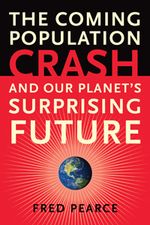
  • Today's post is from Fred Pearce, author of The Coming Population Crash and Our Planet's Surprising Future. Pearce is an environmental consultant at New Scientist and a weekly columnist and investigate journalist for the Guardian. This post originally appeared at TriplePundit.

    Book Cover for the Coming Population Crash A green myth is on the march. It wants to blame the world's over-breeding poor people for the planet's peril. It stinks. And on World Population Day, I encourage fellow environmentalists not to be seduced.

    The actor Jeremy Irons has announced that he plans to make an Al-Gore style movie about the population problem. The screen idol with a social conscience — who famously has seven homes and a pink castle in Ireland – says his inconvenient truth is that "there are just too many of us."

    Overpopulation is driving global warming, mass starvation and accumulating pollution, making the planet uninhabitable. Irons thinks a new plague, like the Black Death 700 years ago, is going to be nature's way of solving the problem.

    He is far from alone in thinking that all efforts to save the world are doomed unless we "do something" about continuing population growth. But this is nonsense. Worse, it is dangerous nonsense.

    (more…)

  • While many see July as a time for extra vacation days, our authors are hard at work promoting their books both across the country and here in Boston. With topics ranging from controversy over pornography to violence in our prison systems, here is a look at our authors' achievements this week:

    In her new book, Pornland, Gail Dines analyzes how the lucrative pornography industry has– through violence, racism, and sexism—destroyed how the public views sexuality. (The two excerpts available on Scribd have been very popular.) At the Huffington Post, Dines discusses the research process for such a controversial subject. The blog at Ms. Magazine has posted the first two parts of a three part interview. At the Guardian, Dines's work sparked debate in the comments stream. Her interview at Pulse was picked up by Andrew Sullivan and more debate ensued.

    Writer and historian Steve Puleo takes a look at the birth of Boston as a major metropolis in America in his new book A City So Grand. A fantastic review of Puleo's book can be found on Boston.com, and be sure to read a free excerpt on Scribd.

    In Wealth and Our Commonwealth, Chuck Collins warns about the possibility of a permanent aristocracy in America. In an article for The Nation, Collins makes a connection to Teddy Roosevelt's "New Nationalism" speech and the dangers that accompany giving too much money and power to a select few.

    California Lawyer praises Carlos Ball's From the Closet to the Courtroom, saying "[Ball] offers lawyers an enlightening shift of focus, enabling us to understand who 'makes law' in this country, and what motivates them to do so." The book examines five of the most groundbreaking cases that have shaped LGBT rights in the United States; in the Huffington Post, Ball looks at a recent victory.

    The Sentencing Project, a national organization that works towards fair and effective criminal justice in America, gives a spectacular review to David Chura's I Don't Wish Nobody to Have a Life Like Mine.

    In response to youth violence in the city of Boston, officials have created 400 jobs for at-risk teenagers according to Boston.com. Ninth graders in the program will receive a copy of Michael Patrick MacDonald's memoir All Souls, which recounts his childhood growing up Irish Catholic in the violence of South Boston.

  • Sherrilyn Ifill is a professor at the University of Maryland School of Law, and is nationally recognized as an advocate in the areas of civil rights, voting rights, judicial diversity and judicial decision-making. Ifill is the author of On the Courthouse Lawn: Confronting the Legacy of Lynching in the 21st Century. This article originally appeared at The Root, where she is a frequent contributor.

    Book cover for On the Courthouse Lawn by Sherrilyn Ifill The second day of the confirmation hearings of Elena Kagan to the U.S. Supreme Court was marked by some substantive dialogue, respectful banter and even an exchange of ethnic humor between the nominee and members of the Senate Judiciary Committee. Republicans and Democrats alike seemed to have forgotten the previous day's tensions.  But for many of us who'd sat in stunned silence while Republicans members of the committee used their opening statements to unleash an orchestrated disparagement of the record and legacy of Supreme Court justice and civil rights icon Thurgood Marshall, the wounds still felt raw.

    The invocation of Marshall (35 times by Republicans) was a surprising new low, even for the shameless opportunism of modern confirmation hearings. At first it seemed astonishing as senator after senator — Jeff Sessions (R-Ala.), Jon Kyl (R-Ariz.), John Cornyn (R-Texas) – disparaged nominee Kagan's "association" with Thurgood Marshall. But the abandonment of the "Marshall as slur" tactic on day 2 suggests that the Republican senators' opening-day sucker punch may have backfired.

    (more…)

  • Roger Wilkins is a professor of history at George Mason University. He was cited in the 1972 Pulitzer Prize award to The Washington Post for his coverage of Watergate. The following is a short excerpt from his book Jefferson's Pillow: The Founding Fathers and the Dilemma of Black Patriotism. His book examines the founding fathers and their contradictory notions of independence and slavery in the newly-formed United States.

    We Americans have a wonderful political legacy that is, in part, the work of people who owned people very much like me. It is possible that some of those they owned were among my ancestors. The lives of these founders and their characters were indelibly stained by that fact, though the heinousness of the crime may be relieved a bit by the fact that they were born into an existence anchored in slavery.

    (more…)

  • The following post is from Margaret Regan, the author of The Death of Josseline: Immigration Stories from the Arizona-Mexico Borderlands. Regan's book chronicles firsthand accounts of the militarized borders and the ultimate human struggle and sacrifice to experience the freedom and independence in the United States.

    A hot wind swept through the Arizona desert on the first day
    of July, pushing gray clouds across the sky and carrying the welcoming smell of
    rain.

    The
    dampness in the air gave some small hope to this parched land. During all of
    June, it rained not a single drop in southern Arizona. The temperatures spiked above
    100 degrees on twenty-two days, including sixteen days in a row during the last
    two weeks of the month. On one day, June 23, the mercury shot up to 109.  

    The
    region’s powerful summer thunderstorms—the monsoons—haven’t started yet but everyone’s
    praying for rain. Last week in Tucson, in a traditional celebration on the
    feast day of San Juan Bautista—St. John the Baptist—on June 24, neighbors
    carried his statue around on the banks of the dried-up Santa Cruz River, in
    hopes that the saint would baptize the borderlands. So far, the saint hasn’t
    answered their prayers.

    (more…)

  • Nancy Rubin Stuart is an award-winning author, journalist and writer-producer who specializes in women and social history. Her previous books include The Reluctant Spiritualist, American Empress, and Isabella of Castile. In connection with her work she has appeared on several national television series and on NPR’s “Morning Edition.” Her articles have appeared in the New York Times, the Los Angeles Times and many national magazines. She currently serves as one of the directors of the Women Writing Women’s Lives Seminar at the Graduate Center of the City University of New York.

    Stuart’s book, The Muse of the Revolution: The Secret Pen of Mercy Otis Warren and the Founding of a Nation, follows Mercy Otis Warren and her connection to some of the most notable players in the American Revolution. With a sense of liberty and independence, Stuart chose the following excerpts documenting Warren’s satirical poems and plays pertaining not only to the events that led to war, but also to her revolutionary ideas of women’s rights.

    The Muse of the Revolutionhttp://d1.scribdassets.com/ScribdViewer.swf?document_id=33827775&access_key=key-24ucwe6o6fqoy5trpid4&page=1&viewMode=list

  • Independence Day reminds us not only of our rights as Americans, but also of our rights as human beings on a global scale. This week, our authors have been using their freedom of speech to promote further rights in fields such as education, religion, and LGBT law. Take a look at what they have been up to.

    In Steve Wilson's book, The Boys from Little Mexico, one all-Hispanic boys' soccer team surpasses ethnic boundaries and personal struggles to win the Oregon state championship. Recently quoted in Newsweek, Wilson praises the Mexican-American players in the World Cup and their drive for success. The Oregon newspaper, the Woodburn Independent, ran a review for Wilson's book, praising it for taking the local story to a national level.

    In his book From the Closet to the Courtroom, Carlos Ball discusses in rich detail five lawsuits that have affected LGBT rights for Americans. In a poignant article for the Huffington Post, Ball poses the question "Is it time for gay federal judges?" Diversity Inc. posted a short interview with the author and the Advocate.com recently ran an excerpt from the book on the topic of high school harassment. An outstanding review of the book was recently posted on Lambda Literary stating "[Ball] appeals to the hearts of his readers by fleshing out the human players in each chapter without sacrificing scholarship."

    Harassment often led to violence for our next author, Geoffrey Canada, whose memoir Fist Stick Knife Gun recounts the dangers of growing up in the South Bronx. Waiting for Superman—a new documentary on America's failing education system featuring Canada—was mentioned in Entertainment Weekly. As buzz for the film begins to grow, Geoffrey Canada speaks in a brief interview about his personal feelings towards his childhood when his ideal image of Superman was rocked by the harsh realities of life.

    Education is failing in both American schools and juvenile penitentiary systems according to David Chura, author of I Don't Wish Nobody to Have a Life Like Mine. Listen to an interview with Chura on KPFA's Flashpoints (starting 43 minutes into the program) discussing the realities of juvenile incarceration. Listen to another interview with Chura on WMUA Writer's Voice where he describes how the war on crime is synonymous with the war on kids.

    Finally, in celebration of UUA's General Assembly in Minneapolis, Beacon authors John Buehrens and Rebecca Ann Parker appeared on the radio program State of Belief to discuss their views on social activism and religion. In their book, A House for Hope, the authors describe a shared momentum among religious progressives and the impact they have on the 21st century. Eboo Patel, author of Acts of Faith, also appeared on the show, discussing his interactions with the Dalai Lama in strengthening Buddhist-Muslim ideals.