• The Abbeville Manual of Style, one of the best publisher blogs around, may soon disappear. Go over there and read some of their amazing, insightful, and often funny posts, and then write about how much you love them on your own blog. Oh, and buy their books, too.

    In reaction to combative, ill-informed opposition to health care reform, there’s been a whole lotta debunking going on. Judy Bachrach, whose Ask Judy column at Obit-Mag is one of my can’t-miss items online, goes after the “Kill Granny” myths. Zachary Roth at TPM assures us that our bank accounts are safe. Salon goes after all the misconceptions. And Christopher Hayes at the Nation has some, er, answers of his own.

    You should also follow DemFromCT at DailyKos, who has been putting together some excellent roundups of the health care debate (including this one that linked to David Moore’s piece on Gallup’s polling bias on the issue).

    A Gay Gatesgate? Above the Law has been following the story of a gay lawyer who was arrested for disorderly conduct in DC after insulting an officer. Latest developments here.

    Some sexual assault victims still have to pay for their own rape kits, even though the Violence Against Women Act was supposed to make this illegal.

    And in Beacon Press linkage…

    Wendy Kaminer analyzes the free-speech issues posed by the Gates arrest and a couple of related incidents.

    Remember to eat your weedies.

    Forget organized Youth Sports, even gym class is dangerous these days.

    A thoughtful review in Disability Quarterly of Beyond the Miracle Worker: The Remarkable Story of Anne Sullivan Macy and Her Extraordinary Friendship with Helen Keller and a really nice interview with the book’s author, Kim Nielsen.

    Mean Little deaf Queer was also featured in Disability Quarterly, as well as Edge on the Net and More Magazine.

    Can’t get enough Beacon Press? Be sure to check out our YouTube channel, Twitter Feed, Facebook Page (also one of those for Beacon Broadside), and our website.

  • Today’s post is from Frederick S. Lane, an author, attorney, expert witness, and lecturer who has appeared on “The Daily Show with Jon Stewart,” CNN, NBC, ABC, CBS, the BBC, and MSNBC. His fifth book, American Privacy: The Four-Hundred-Year History of Our Most Contested Right, will be published by Beacon Press in November 2009. For additional information, visit www.FrederickLane.com

    Cover image for American PrivacyFew addresses have gained so much notoriety so quickly as 133 C Street SE in Washington, D.C. The slim brick townhouse, nestled on a quiet street behind the Madison Building of the Library of Congress, was recently outed as an enclave of fundamentalist Washington insiders by Jeff Sharlet, author of The
    Family: The Secret Fundamentalism at the Heart of American Power
    , and a contributing editor to Harper’s and Rolling Stone. (Editor’s note: Sharlet is also co-editor, with Peter Manseau, of Believer Beware: First-Person Dispatches from the Margins of Faith.) With typical Christian duality, C Street has reportedly been a place for some members of Congress both to hold assignations with non-spousal partners and to seek refuge from them.

    Last month, I stayed half a block from 133 C Street while in Washington doing research for a book. It was like bumping into Dennis Kucinich in a DC bookstore (which also happened during my visit); buildings, like people, can take on a weird sense of familiarity when you’ve seen them repeatedly on television or the Internet. As I walked or jogged past the townhouse each morning, it occurred to me that C Street is neatly located at the intersection of my last two books, The Court and the Cross: The Religious Right’s Crusade to Reshape the Supreme Court and American
    Privacy: The Four-Hundred-Year History of Our Most Contested Right
    . The recent spotlight shining through the curtained windows of C Street begs an important question: can we defend a pluralistic democracy from religious zealots without critically wounding core American values, such as freedom of religion and the right to privacy? Not coincidentally, that’s a question that has become particularly pressing since 9/11.

    133 C Street, Washington DC
    Photo of the C Street house that is home to “The Family,” taken by the author.

    So just how far into C Street should the media (or governmental) spotlight shine? The answer lies in a bit of constitutional topology.
    In its various decisions on privacy, the Supreme Court has ruled that there is a zone of privacy that surrounds each of us, a zone limned in large part by the rights guaranteed to us in the Constitution. For private individuals, that zone of privacy is a portable sphere that surrounds us and protects us, to varying degrees, from unreasonable governmental interference. But for elected officials, like the Congressional denizens of C Street, the zone of privacy is more like a toroid, or doughnut, hanging around their midsection.

    (more…)

  • In today's post, Christopher M. Finan, president of the American Booksellers Foundation for Free Expression, explains why booksellers should care about what happens to Robert J. Stevens, a Virginia man who has been convicted of creating videos that contain scenes of dogfighting. Finan is the author of From the Palmer Raids to the Patriot Act: A History of the Fight for Free Speech in America. This post originally appeared at the ABA's Bookselling This Week.

    Book Cover for From the Palmer Raids to the Patriot Act Why should booksellers care about what happens to Robert J. Stevens?

    Stevens is a Virginia man who has been convicted of creating videos that contain scenes of dogfighting. I'm sure there are many people, including some booksellers, who would applaud the fact that he was sentenced to three years in jail.

    But U.S. v. Stevens is now before the U.S. Supreme Court, and it could become the most important First Amendment case in a generation. Civil libertarians are deeply concerned that the Court may use the case to begin dismantling the protections for free speech that have been built up over the last 70 years. If that happens, booksellers will find themselves facing a government armed with a broad new power to censor speech.

    Stevens was prosecuted under a federal law that was passed in an effort to suppress the sale of so-called "crush" videos. These videos are a genre of fetish films that depicts small animals being crushed to death by women's feet. When the bill was introduced in Congress in 1999, it faced little opposition because it appeared to be focused on a very specific type of material that bordered on obscenity. Obscenity is not protected by the First Amendment.

    In fact, however, the law applies to a much broader range of material. It makes it a felony to create or sell a depiction of animal cruelty, including a photograph, film, or audio recording of an animal being intentionally harmed or killed. President Bill Clinton acknowledged the breadth of the bill when he signed it into law by promising that the Justice Department would only enforce it against producers and distributors of crush videos.

    There have been three prosecutions under the law — none involving crush videos. Stevens was indicted for producing three videos extolling the virtues of pit bulls. The films do contain scenes of pit bulls fighting and attacking other animals, but Stevens opposes dogfighting in a self-published book, Dogs of Velvet and Steel: Pitbulls: A Manual for Owners. Stevens did not stage or film the fights. Some of the footage was more than 30 years old and some came from Japan, where dogfighting is legal.

    It is clear that the law applies even more broadly. Since it covers any depiction of animal cruelty in whatever country it may have occurred, including countries where the acts are legal, it could apply to books and films about bullfighting. In overturning the law in 2008, the Third Circuit Court of Appeals observed that even depictions of killing deer or catching fish could fall within the act. It might also be used against animal rights activists who attempt to shock the public with graphic depictions of slaughterhouse practices or the inhumane treatment of farm animals.

    (more…)

  • Today's post is from David W. Moore, author of The Opinion Makers: An Insider Exposes the Truth Behind the Polls (out in hardcover now, paperback with a new afterword available this fall). Moore is a senior fellow of the Carsey Institute at the University of New Hampshire. A former senior editor of the Gallup Poll, where he worked for thirteen years, Moore also served as professor of political science at UNH and is the founder and former director of the UNH Survey Center.

    Book cover for The Opinion Makers by David W. MooreThe Gallup Poll is without doubt one of the most influential media polls in the country, and as such one would hope that its analysis of public opinion would be objective. Usually that is the case. But on the current subject of healthcare reform, especially its most recent article that presents "key findings from Gallup surveys" on the issue, the post reads like a conservative manifesto for delaying legislation until it succumbs to a slow death.

    Having worked at Gallup for 13 years until 2006, I know that everyone who writes the stories makes a valiant effort to be objective. Sometimes, however, because of a blind spot or perhaps personal preferences, an article is not as balanced as it should be. That certainly is the case with Gallup's recent post, "Americans on Healthcare Reform: Top 10 Takeaways."

    The piece presents a series of public opinion findings, all of which reinforce the overall theme that "Americans may have hit the slowdown button" on healthcare reform. But there are many other public opinion findings that contradict that general conclusion. Listed below are some of the most salient assertions by Gallup, followed by examples from other polls which lead to much different interpretations of what the public is thinking. (The Gallup poll analysis is found on its website, while the other results can be found at pollingreport.com, unless otherwise noted.)

    (more…)

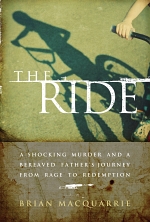
  • Today’s post is from guest author Brian MacQuarrie, whose book The Ride: A Shocking Murder and a Bereaved Father’s Journey from Rage to Redemption (Da Capo Press) chronicles the true story of a child’s murder and a father’s transformation from vengeance-seeking victim to outspoken death-penalty critic. For the last twenty years, MacQuarrie has been a reporter for the Boston Globe, where he was nominated in 2006 for a Pulitzer Prize. He lives in Boston.

    TherideFor a newspaper reporter turned first-time author, I approached The Ride, a nonfiction account of the 1997 murder of 10-year-old Jeffrey Curley of Cambridge, Massachusetts, and the torturous aftermath for his family, as an extended journalistic exercise. I would report the story thoroughly, organize my notes meticulously, and finally write the narrative in 1,000-word segments that would allow me to march in neat, tidy, daily steps toward a timely, satisfying finish. And, of course, I would keep all the horrific details of the crime and its wide, collateral damage at proper, professional bay. After all, isn’t that what I had always done?

    I had been embedded with a front-line battalion during the invasion of Iraq, an engaged but unflappable witness to dozens of charred and broken bodies along the war-pocked roads from Kuwait to Baghdad. I had walked in the New Orleans Convention Center after Hurricane Katrina, at a time when the corpses of the homeless poor lay unacknowledged by both their peers and the powerful on a putrid floor inside that neglected place. And I had knocked on the doors of dozens of murder victims during my career at The Boston Globe, offering murmured condolences to the loved ones of the newly slain, and inquiring in appropriately respectful tones whether I could step inside, please, and listen to their loss.

    I could do this again; in fact, I would do this again, I told myself. I had been granted a year-long book leave by the Globe, and I had been welcomed to a remote Long Island beach house with a fabulous, soul-freshening view where I could retreat to write after my reporting, and my interviews, and my leads had been exhausted in Massachusetts.

    (more…)

  • Stacy Mitchell is the author of Big-Box Swindle: The True Cost of Mega-Retailers and the Fight for America’s Independent Businesses. A senior researcher with the Institute for Local Self-Reliance,
    she chairs the American Independent Business Alliance, Mitchell
    regularly contributes articles and commentaries to magazines and
    newspapers, and produces an acclaimed monthly email newsletter, The Hometown Advantage Bulletin. This post originally appeared a the ILSR’s New Rules Project blog.

    Book Cover for Big-Box SwindleIn one of the more brazen attempts by a corporation to disguise itself as a locally owned business, Starbucks is un-branding at least three of it Seattle outlets.

    The first of these conversions, reopening this week after extensive remodeling, will be called 15th Avenue Coffee and Tea. All of the signage and product labels will bear this new name. The Starbucks corporate logo will be no where to be seen.

    In an interview with the Seattle Post-Intelligencer, Starbucks spokeswoman Anna Kim-Williams described the company’s intent:

    We’re continuing our commitment to delivering specialty coffee excellence while refreshing our store design approach with amplified focus on local relevance… Ultimately, we hope customers will feel an enhanced sense of community and a deeper connection to our coffee heritage.

    This is the latest, and arguably most audacious, in a string of corporate attempts to imitate and co-opt local-ness (see a recent investigation at New Rules Project: The Corporate Co-Opt of Local).

    Starbucks learned how to act like a locally owned, neighborhood café by studying several independent coffeehouses in Seattle. One was Seattle Coffee Works, a small, 300-square-foot café. On the café’s blog, co-owner Sebastian Simsch writes:

    Last winter, three separate delegations of Starbucks folks came by. Each time they filled our little store so that no one else could fit in. Usually they didn’t introduce themselves, and one delegation even lied, saying they were just a group of Japanese tourists. They didn’t buy a single drink.

    Starbucks people also logged many hours at Victrola Coffee Roasters. “They spent the last 12 months in our store with these obnoxious folders that said, ‘Observation,’” owner Dan Ollis told the Seattle Times.

    In the most obvious rip-off of an independent business, the décor of the new 15th Avenue Coffee and Tea, which the Seattle Times describes as a “rustic, eco-friendly style,” is virtually identical to that of Smith, a successful bar next door. Owner Linda Derschang says Starbucks copied everything, from her vintage industrial light fixtures to her wooden seats, and even asked one of her managers where the bar’s awnings came from. In an interview with the Seattle Post-Intelligencer, she noted:

    It’s got a lot of salvaged wood, it’s the same paint color inside as Smith and some of the wood framed chalkboards look very, very similar… Where’s the independent spirit in knocking someone off?

    Starbucks plans to convert at least three of its Seattle outlets to uniquely named neighborhood coffeehouses. If the experiment proves successful, the approach will be extended to more of the chain’s 16,000 outlets.

    Starbucks has struggled over the last year. Some 600 outlets have been shuttered in a bid to cut costs. Yesterday, Starbucks reported that same-store sales were down 5 percent in the last quarter, after declines of 8 and 9 percent in the previous two quarters.

    Related:

    The Stranger: Starbucks/15th Avenue Coffee and Tea: The Protesters

    15th Avenue Coffee & Tea Flickr set

  • Today’s post is from Susan Campbell, author of Dating Jesus: A Story of Fundamentalism, Feminism, and the American Girl. Campbell’s writing has been recognized by the American Association of Sunday and Features Editors; National Women’s Political Caucus; the Sunday Magazine Editors Association, and the Connecticut chapter of Society of Professional Journalists. She was also a member of the Hartford Courant‘s 1999 Pulitzer Prize-winning team for breaking news. Be sure to check out her Dating Jesus blog.

    Dating Jesus: link to Beacon Press page for the bookI want to take a moment– belatedly so– to thank Bro. Jimmy Carter.

    Let me first say that former Pres. Carter is not of my particular theological tribe. I was raised non-denominational/ fundamentalist Christian, while Carter is maybe the world’s most famous Southern Baptist Sunday school teacher Growing up, we thought Southern Baptists were in gross scriptural error– but then, we thought everyone else was, too. I have since come to understand that we were wrong on that and on several other matters of faith, including our view of the role of women in society. In my church– and in Carter’s– women were told to keep silent. They could and can hold no positions of authority (lest they usurp authority over a man), and their highest calling was/is to be someone’s submissive partner. My highest calling at my church was to be what we called “help-meets.”

    Please don’t tell me this is God’s plan. There is no good reason– scriptural or otherwise– to assign to more than half the population the role of “help-meet.” Do men really need that much help?

    (more…)

  • From the Ideal Bite website:

    For the third installment of our summer Biter Book Club, we’re trying something a little different: Fred Pearce, author of our August selection, Confessions of an Eco-Sinner, is gonna lead off the blogging to get the dialogue started.

    So read Part 1 (through Chapter 2), and then check back on Monday, August 3 to see what Fred’s got up his sleeve. Then, our moderators Hanah and Tosh’ll guide you the rest of the way with daily questions and discussion topics. We want to hear what you have to say, so comment on the discussion questions – daily, weekly, whenever you have time – and see what other BC members are saying. And, if you have any specific questions you want to ask Fred about the book, post them as a comment on our BC blog and he’ll do his best to answer a few of them. Happy reading…

    Synopsis: You bought your jeans at a local boutique, sure – but where do they really come from? Curious journalist Fred Pearce tracks the origins of his purchases (his coffee, his computer, his socks…) and learns about the impacts of buying stuff, first-hand, from the people who are most affected by it.

    About the author: Considered one of Britain’s best science writers, Fred Pearce is a former news editor at New Scientist who’s currently serving as its environment and development consultant. He won the British Environment and Media Award for Environment Journalist of the Year in 2001, and was nominated for it three more times. He’s written for Audubon, Popular Science, Time, the Boston Globe, and Natural History, and has written five other books, including The Last Generation, When the Rivers Run Dry, and Deep Jungle.

    Reading Selection Week 1:(August 3-9) Parts 1 &  2, Ch. 1 through Ch. 9; 81 pages.

    Moderators: SF Editor Hanah Snavely and Daily Tip Editor Toshio Meronek

    Pearce420X130.jpg

  • Sherrilyn Ifill (On the Courthouse Lawn: Confronting the Legacy of Lynching in the Twenty-first Century) has some excellent commentary on recent events, including the Sotomayor hearings (as well as the Supreme Court ruling on Ricci v. DeStefano, a case that was brought up repeatedly in the hearings) and the Henry Louis Gates arrest.

    You should also check out Stanley Fish talking about his friendship with Professor Gates in the New York Times.

    Jay Wexler (who, it's already been established, loves road trips) is in Asheville, NC, this week. Check him out at Malaprops Bookstore on Thursday, and read about his family's adventures here. And read about how drinking beer helped him write his book here.

    Patricia Hill Collins talks about institutional racism and education on BookTV. (It's about a hour and fifteen minutes long, so set aside some time to watch.)

    Suzanne Strempek Shea says polka's not dead yet.

    Mark Hyman looks at one of the problems addressed in his book about youth sports: whether curveballs are too stressful for young bodies.