• A Q&A with Hilary Levey Friedman

    Miss USA Preliminaries, 2011

    Miss USA Preliminaries, 2011. Photo credit: Tim Kretschmann

    The show must go on . . . even during COVID. Wait, what? The pandemic didn’t bring everything to a halt. As a surge of new cases reaches new peaks at the end of 2020, the Miss USA pageant was held last night, November 9, at the Exhibition Centre and the Soundstage at Graceland in Memphis, Tennessee. In years to come, it will become part of American feminist history as Hilary Levey Friedman writes about in Here She Is: The Complicated Reign of the Beauty Pageant in America. What importance does the competition hold today, especially during our pandemic times? Beacon Broadside editor Christian Coleman caught up with Levey Friedman to find out.

    Christian Coleman: Why is Miss USA being held in person during the pandemic?

    Hilary Levey Friedman: The simplest answer is that the organizers could make it happen, and the contestants wanted to compete (one exception is Miss Wyoming USA, who had to withdraw due to school obligations and her first runner-up stepped in a few days before the competition started). How could they make it happen? Endeavor, which owns Miss USA, also owns UFC and manages other sporting events, and they have been successfully organizing events since May. They were able to find a network and venue—FYI and Graceland respectively—where production and contestants could be safely housed together on a timeline that worked.

    CC: This year’s Miss Utah USA, who identifies as bisexual, will be the first out LGBTQ contestant. Sexuality is an issue pageants have historically avoided. Do you think Miss USA is taking a step away from being one of the most heteronormative things a young woman could do?

    HLF: Rachel Slawson is the first out LGBTQ contestant since 1952. Even if she wins, there’s still a long way to go to say participating in pageants is not an incredibly heteronormative activity. It’s worth noting Miss America has also only had one out contestant: Miss Missouri 2016 Erin O'Flaherty, who identifies as a lesbian. Miss America 2005 Deidre Downs did marry a woman in 2018, though she was not out when she won. The fact that I can list just three names shows there is much more work to do in terms of non-heterosexuality being embraced in national pageantry.

    CC: This year’s Miss Hawaii USA, Samantha Neyland, is the first Black Miss Hawaii. She’s been using her title to get involved with a legislative coalition to make Hawaii recognize Juneteenth as a state holiday, as Hawaii is one of four states that does not. How do you see her involvement with civic engagement and racial justice in the evolution of pageants being a pivotal starting point in developing political skills?

    HLF: Here are but a few things politicians and pageant queens have in common: representing a locality and/or state, engaging in community issues, and speaking in front of others, whether it be a legislators, press, or a crowd (well, someday that will happen again!). Neyland’s advocacy is very of-the-moment, as is the work of many politicians, so there is that similarity as well. Of course, there are fewer rhinestones in politics, but not necessarily fewer power suits.

    CC: Many contestants like Miss Utah USA and Miss Oklahoma USA have a major focus on mental health. Is this the first time contestants have brought attention to this issue at a pageant?

    HLF: Mental health has long been a focus of pageants and contestants, from anxiety and depression to eating disorders to obsessive compulsive disorder. But both of these women, Rachel Slawson and Mariah Davis respectively, have been very open about their suicide attempts, which is a very personal and brave decision that hopefully gives others hope and inspiration.

    CC: And finally, you said before that the three Ts of Miss USA are Talent, Tuition, and Tits (formerly Trump). With the contestants’ rising level of engagement with social issues (and policy!), do you see Miss USA busting its stereotypes and having more in common with Miss America pageants?

    HLF: Given that Miss USA does not have a talent competition, that difference remains. Ditto scholarship: Miss USA awards a cash prize. However, I do agree that, in terms of providing a platform for these women to engage on social issues, there is convergence. This year, partly due to the pandemic, Miss USA more than doubled the length of the interview from three to seven minutes, which brings it closer to the ten-minute Miss America interview. I think that alone is indicative of the increased emphasis on advocacy within Miss USA.


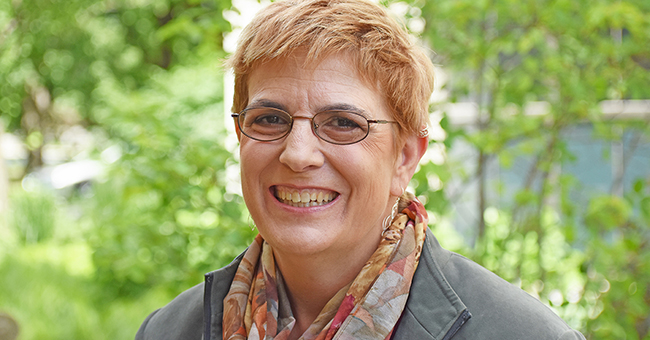
    About Hilary Levey Friedman 

    Hilary Levey Friedman is a sociologist at Brown University, where she has taught a popular course titled “Beauty Pageants in American Society.” She is a leading researcher in pageantry, merging her mother’s past experiences as Miss America 1970 with her interests as a glitz- and glamour-loving sometime pageant judge, and a mentor to Miss America 2018. Friedman also serves as the president of the Rhode Island chapter of the National Organization for Women. Her first book, Playing to Win, focused on children’s competitive afterschool activities. Connect with her at hilaryleveyfriedman.com and on Twitter (@hleveyfriedman).

  • Woman in office

    Photo credit: tranphuoccongdanh

    Since COVID-19 elbowed its way in as a long-standing, unbidden guest, more women are losing their jobs than men. Even in our woke-ass times—we can’t wait to quit you, 2020—they’re still making reduced wages and taking on the greater brunt of childcare. For women and nonbinary entrepreneurs who are launching, funding, and growing their companies, the business landscape has been just as brutal. It shouldn’t take a pandemic to sound the alarm of gender disparity in the entrepreneurial world, an alarm we have heard but have yet to heed in earnest, but here we are. Again.

    The obstacles for women, especially those of color, are—wait for it!—systemic, which journalist and professor Susanne Althoff investigates in her book Launching While Female: Smashing the System That Holds Women Entrepreneurs Back. They persist because the current start-up world was engineered by and for white men. Because white men will always do for white men. Must be nice. Through interviews with over a hundred founders across the country and in all industries, Althoff paints a picture of an entrepreneurial system rife with bias and discrimination, where women receive less than 3 percent of this country’s venture capital, struggle to find mentors in the wake of #MeToo, and are dismissed as “mompreneurs.”

    The effects of this unequal system are felt by all of us: a weaker economy, fewer jobs, and less innovation. Althoff explains how more equitable structures in business and entrepreneurship will benefit all people, not just those hoping to fund a startup. These facts about gender inequality reinforce what desperately needs to change, because we’ll need women and nonbinary business leaders at the helm after we’ve kicked out COVID. The worst. House guest. Ever.

    ***

    Fact 1: Women in this country are opening businesses at a remarkable rate—they went from owning 5 percent of all firms in 1972 to 42 percent in 2019—but dig deeper and the situation seems a lot less cheery. Women-owned businesses were responsible for just 8 percent of all employment and 4 percent of total revenues in 2019. Hitting $1 million or more in annual revenue is an important early marker of success for a company, yet in 2018 a mere 2 percent of women-owned firms had this distinction.

    Fact 2: In 2019, start-ups founded only by women pulled in just 2.7 percent of the total venture capital investment in the United States. Women of color receive an even tinier slice.

    Fact 3: By the end of 2017, only thirty-four Black women entrepreneurs and fifty-eight Latinx women entrepreneurs had raised at least $1 million in venture funding. Not in one year. For all time. Black women took in a mere 0.0006 percent of all venture funding from 2009 to 2017. There is some hope, though: the number of Black women–led start-ups more than doubled from 2016 to 2017.

    Fact 4: The number of companies owned by Black women jumped 50 percent from 2014 to 2019, while it increased 41 percent for women who are Native Hawaiian or Pacific Islander, 40 percent for Latinx women, 37 percent for Asian American women, and 26 percent for Native American and Alaska Native women. Yet there’s a troubling component: companies owned by women of color tend to pull in less money. In 2019, the average revenue for a business owned by a woman of color was $65,800, while it was $218,800 for a white woman.

    Fact 5: In 2010, the Center for Talent Innovation reported that a whopping 89 percent of “highly qualified” women lack a sponsor and 68 percent have no mentor. A 2009 Catalyst survey of lawyers showed that 62 percent of women of color say the lack of an influential mentor holds them back.

    Fact 6: In 1979, women-owned businesses received a mere 0.2 percent of federal prime contracting dollars, and at the time of the hearings in 1988, that number had inched up to about 1 percent. (Today, the federal government’s goal is to award at least 5 percent of procurement dollars to women-owned businesses—yes, equality is a slow march.

    Fact 7: And women are good at running companies. According to research by the Boston Consulting Group and Mass Challenge, women-led start-ups make seventy-eight cents for every dollar of investment they receive, compared to thirty-one cents for companies led by men.

    Fact 8: In a 1965 Harvard Business Review survey titled “Are Women Executives People?” only 35 percent of male executives said their attitude toward women in management was favorable and just 27 percent said they’d feel okay working for a woman.

    Fact 9: According to a 2018 survey of women founders by Inc. and Fast Company magazines, 53 percent of respondents experienced harassment or discrimination while running their companies.

    Fact 10: In her book Boss Lady: How Three Women Entrepreneurs Built Successful Big Businesses in the Mid-Twentieth Century, historian Edith Sparks notes that about 40 percent of women working in this era experienced sexual harassment on the job.

    Fact 11: According to the Bureau of Labor Statistics, in households with a mother and father who both work full-time, the woman on average assumes 60 percent of the childcare and 60 percent of the household work.

    Fact 12: Researchers from the University of Southern California discovered that when small business owners appeared in films rated PG-13, PG, and G, only 5 percent were played by women characters. For corporate executives featured in family movies, a mere 3 percent were played by female characters.


    About Susanne Althoff 

    Susanne Althoff is a veteran journalist and an assistant professor at Emerson College in Boston, where she teaches publishing entrepreneurship and women’s media. She’s also served as advisor to women-led start-ups. Before joining Emerson in 2015, Althoff worked for 22 years as a magazine editor, including 6 years as the editor in chief of the Boston Globe Magazine. Her writing has appeared in WIRED, the Boston Globe, and other publications. Connect with her on Twitter @SusanneAlthoff and at susannealthoff.com.

  • A Q&A with Rachel S. Mikva

    Rachel S. Mikva

    All religious ideas are dangerous. Just ask religious scholar Rabbi Rachel S. Mikva. Scripture’s abiding relevance can inspire great goodness, such as welcoming the stranger and extending compassion for the poor. Likewise, its authority has also been wielded to defend slavery, marginalize LGBTQ individuals, ignore science, and justify violence. In Dangerous Religious Ideas: The Deep Roots of Self-Critical Faith in Judaism, Christianity, and Islam, Rabbi Mikva reveals how Abrahamic religions have passed down constructed mechanisms for self-critique and correction that are integral to their teachings. A self-critical faith, she explains, is the litmus that properly distinguishes contemporary camps and encourages the willingness to grapple substantively with the potential harm their ideas may inflict. Beacon Broadside editor Christian Coleman caught up with Rabbi Mikva to chat with her about her book.

    Christian Coleman: What was the inspiration behind writing Dangerous Religious Ideas

    Rachel S. Mikva: Teaching and speaking in religious communities, I kept bumping into two assumptions. In progressive spaces, people often imagined that they had already reformed their traditions enough so their religious ideas were never dangerous. In more traditional spaces, people often worried that asking critical questions would weaken faith, when in fact it strengthens faith. I wanted people to reexamine these assumptions, to see the deep roots of self-critical faith and to recognize that its work is never done. 

    CC: You’re a Professor in Jewish Studies and Senior Faculty Fellow of the InterReligious Institute at Chicago Theological Seminary. And you earned your PhD at Jewish Theological Seminary. Tell us a little about your background and what led you to specialize in rabbinic literature and the history of scriptural interpretation. 

    RSM: I was a congregational rabbi for thirteen years but always felt that a rabbi is, above all, a teacher. So I decided to get my doctorate to study what I love to teach the most—the amazingly creative, multivocal interpretive traditions of rabbinic Judaism. I knew that many of the stories and teachings had profoundly shaped Jewish life and continue to do so. I’m fascinated by exploring how interpretation influences what we do and how we see the world.  

    Living amidst the rich diversity of spiritual lifestances in the US, I think it’s imperative to understand something about other people’s traditions as well. So my focus expanded. As religious difference repeatedly emerges as a source of conflict, this work seems increasingly urgent. 

    CC: You write that religion is a potent force, like fire, that has the potential to be wielded for good or evil. “Its very power makes it dangerous.” Tell us why that is.  

    RSM: Power is always wielded both for good and ill. Religious power is particularly fraught because of its claims of ultimacy. It has astounding capacity to justify actions and beliefs that we would otherwise declare harmful or ill-conceived, even to create cultures of violence. At the same time, its power to imagine that the world could be different than it is, to inspire hope and motivate goodness, is necessary to our existence. Just like fire, it is immensely valuable, despite the potential for abuse. 

    CC: What’s interesting is that you emphasize that all religious ideas, not just the extremist ones that make headlines, are dangerous. Why was it important to include this point in the book? 

    RSM: The minute we assume that all the dangers of religion belong to someone else’s faith, we become part of the problem. 

    CC: Why did you decide to look at Judaism, Christianity, and Islam to explore the importance of self-critical faith? Were there commonalities that you wanted to draw our attention to? 

    RSM: Well, first because they are the three traditions I know anything about! And yes, there are countless intersections between the teachings and histories of Judaism, Christianity, and Islam, encountering each other through the centuries. When I write about the tools used to moderate the use and abuse of scripture’s power, for example, they all show up in each one. 

    But most of all, I want people to understand that this phenomenon is not about only one religion having dangerous potential, or only one tradition having the capacity for self-critical faith. We are all in the same boat. Doing the work together can also draw us closer, deepening our understanding through our shared struggles. 

    CC: I like how you write about religion having cultural memes that get passed down generation after generation. Would you say that religion has been resilient and adaptable precisely because of its tools of self-critical faith? 

    RSM: Yes, religion has to be able to adapt, because the world keeps changing. Of course, it could adapt simply to survive, not necessarily improving along the way. Richard Dawkins, one of the “new atheist” authors, described “faith as one of the world’s great evils, comparable to the smallpox virus but harder to eradicate.” Religion is resilient because it is woven into the psychological, sociological, anthropological, evolutionary, and neurological dimensions of our being.  

    Adaptation is a-moral. The evolution of religion cannot be. It is self-critical faith that works to make it a force for blessing. 

    CC: You teach a “Dangerous Religious Ideas” course. Have you had any surprising student reactions in response to the curriculum or to any key concepts you cover? 

    RSM: When the students start thinking about dangerous religious ideas, they frequently start with someone else’s. What delights and surprises me is how quickly they realize that all religious ideas are potentially dangerous, including their own, including ones that stand at the heart of faith. They intuitively grasp that their faith will be better, stronger, as a result of the process. 

    On the negative side, it surprises me how little most people know about religions other than their own—and that includes many of our students. Our seminary mandates Master of Divinity candidates take a course in a different religion, because we believe interreligious literacy should be a requirement to be a religious leader or teacher today. 

    CC: As we see intolerance rear its head toward religions like Islam and a kind of herd mentality gear up on the evangelical side during the peak of election seasons, what would you like readers to take away from the book?  

    RSM: There are all kinds of “others,” people we deem not like us because of their race, nation, ethnic identity, tribe, gender, sexual orientation, class, politics, etc. Religions create them too. But they also transmit teachings of transcendence, enabling us to see a fundamental unity of all humanity, an interdependence of all creation.  

    We must look critically at the role of religion in our collective public life. That’s why the book keeps coming back to the way these ideas play out in our own time. 


    About Rachel S. Mikva 

    Rachel S. Mikva serves as Professor in Jewish Studies and the Senior Faculty Fellow of the InterReligious Institute at Chicago Theological Seminary. Rabbi Mikva went to teach and earn her PhD at Jewish Theological Seminary, focusing on rabbinic literature and the history of biblical interpretation. Her courses and research address a range of Jewish and comparative studies, with a special interest in the intersections of scripture, culture, and ethics.

  • A Discussion with Frances Moore Lappé, Adam Eichen, and David Daley

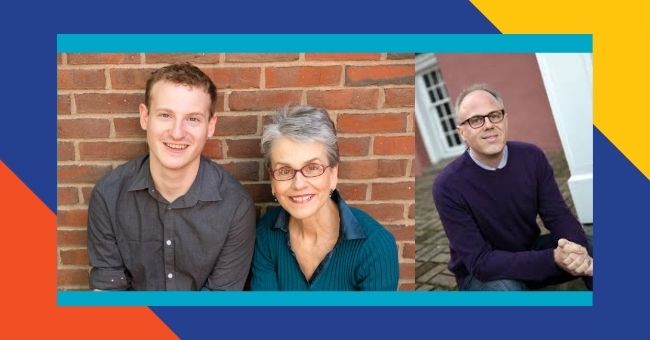
    From left to right: Adam Eichen, Frances Moore Lappé, David Daley

    From left to right: Adam Eichen, Frances Moore Lappé, David Daley

    It’s Election Day! May the votes be ever in our favor. What will it take for us as a country to come together and dare for democracy after Decision 2020? Regardless of who wins the election, we as citizens will have to pick up the pieces and demand the democracy reform to bend the moral arc back in the direction of justice. Frances Moore Lappé and Adam Eichen, who coauthored Daring Democracy: Igniting Power, Meaning, and Connection for the America We Want, came together in our online event, Daring Democracy in 2020, on October 23, to discuss what that would look like and how to keep stoking the fires for social justice. David Daley, author of Ratf**cked: The True Story Behind the Secret Plan to Steal America’s Democracy, moderated the discussion. Here’s what they had to say.

    This excerpt from their event has been edited and condensed for clarity.

    David Daley: I want to talk about how we translate the spirit of Daring Democracy and the spirit of what we’ve seen across the nation over the course of the last three years, and how we keep that going. The fight for a more daring democracy has always been fought by those who had tugged Dr. King’s arc of moral justice in another direction, but there’s always the possibility that the White House changes hands in this election, that people feel less immediate fear. If you’re talking about turning fear into action, perhaps people will feel as if they have turned fear into action. And then they let go of the arc. Frances, I’m curious: How do we keep this energy and action going if Joe Biden wins? And in turn, how do we hold Democrats accountable for democracy reform if Democrats hold the trifecta in Washington come January?

    Frances Moore Lappé: I know that Biden has said that democracy reform is important, and I wish he had highlighted it more. And who knows? It may take another march or several more marches. But I feel like we are in a different world today. President Trump is such an alert. Most people understand that this was a presidency that was not a fluke, but rather a direct product of a highly broken, warped system not in favor of the people. That’s clear now, and that’s a big gain for us. People are more awake. One of the things I love to say is: “To save the democracy we thought we had, we have to take it where it’s never been.” People get that it’s not about just patching up something broken but that we have to go forward and to go much deeper. Three quarters of us understand that money has way too much power in politics.

    What’s key to going forward in helping everyone pushing for democracy reform is to frame it with the message of working toward a better life. That people have been so hurt by the brutalism of an extreme form of capitalist logic. That people have been made vulnerable in so many ways, especially to the very narrow messaging of an authoritarian voice. We can come forward linking all our reforms with everyone doing better, just as we did during my generation. (I was born in the forties.) From my generation on through the seventies, every social class benefited and doubled its family income, and the poorest gained the most. Can you imagine that? It’s important to link that with the day-to-day suffering people are experiencing to show what is possible.

     As for how to motivate people, we need to create a place where they can see the breadth and depth of the Democracy Movement, find their place in it, and see how they can plug in right now. We’ve created an online meeting ground that just launched. It’s called DemocracyMovement.us. There’s a map there. I just went to Massachusetts, and there it was! It shows who’s taking what money from whom and what campaigns are underway. It’s just a tool, but I’m very excited about it.

    DD: Adam, let’s build on where this goes next. This is where my possibilist and my pessimist intersect, and I need you to pull me out to bring me back towards where we need to be. The US Supreme Court has issued troubling decisions on voting rights. This last week, we learned that there are four conservatives who would review the power of state constitutions to regulate free and fair elections. Which means you’ve got four justices to the right of the man who wrote the Shelby County decision, and a fifth still to come. We’ve seen the initiatives that have been undone by courts and legislatures. How does this movement need to evolve to address these challenges? How do activists need to think about the road forward and adjust their strategies if the other side has shifted in its tactics?  

    Adam Eichen: This is profoundly discouraging. But, Dave, you know me: I will throw it right back at you in a more positive frame.

    One of the things we highlight in Daring Democracy is the coordination of what we termed the Anti-Democracy Movement, inspired in large part by a secret memo written by another Supreme Court justice from long ago, Lewis F. Powell, Jr., about how to reign in corporate power in Washington, DC. Seems kind of silly now to think that corporations didn’t have a lot of power, but there’s accuracy there in the late 1960s and 1970s. The ways in which they have been deliberate about unleashing money in politics, restricting the right to vote, gerrymandering, but also as you said, packing the courts with these ideologues—they’re doing whatever they can for partisan gain. We may think they are non-partisan, intellectual jurists, but it’s very clear, if the past decade has shown anything, that they are partisan hacks. John Roberts and the rest of them in the Shelby County decision, which is one of the worst decisions in the last decade—maybe even post World War II—and the effect we see of it today are all very troubling.

    But building off what Frankie said, there’s only one solution: to fight like hell. That involves massive citizen engagement not just to pass HR 1, which is a game-changer. It would mandate independent redistricting commissions for congressional elections. It would pass a slew of pro-voter laws. It would pass public financing of elections for congressional campaigns, and a whole bunch of other ethics reforms as well. It’s a number one priority. But I’m willing to go so far as to say that a big change in my package of democracy reform I would be advocating for now is the expansion of the Supreme Court and the federal court in every single circuit. This is imperative for our democracy. In fact, I’m not so sure what that court would do if we pass HR 1 without trying to reform the Court. We know from history that FDR tried this and failed. But times are different, and it will only succeed if citizens demand it.

    My hope is that, despite the Democrats absolutely bungling the hearings recently in terms of legitimizing that sham proceeding, the shift will come from the grassroots, just like every other reform. Every other major shift in American politics has shown it comes from the grassroots.

    If next year, in January, people don’t give up and realize the fight doesn’t end at the voting booth, that we can’t leave our democracy alone and trust it to the elites that don’t safeguard it themselves—and I’m not saying ‘elites’ in a derogatory way; they’re the ones who are supposed to govern us—we’ll realize that we must demand it of them, that we are the people they are accountable to. And we’re going to push you like hell to restore our democracy.

    ***

    If you weren’t able to attend their event, you can watch it in full here.


    About the Panelists

    Frances Moore Lappé, author of the multimillion-selling Diet for a Small Planet and seventeen other books, is a recipient of the Right Livelihood Award, the “Alternative Nobel.” She is the coathor of Daring Democracy: Igniting Power, Meaning, and Connection for the America We Want. Follow her on Twitter at @fmlappe and visit her website

    Adam Eichen serves as Campaigns Manager at Equal Citizens and is also a member of the Democracy Matters board of directors. He is coauthor of Daring Democracy: Igniting Power, Meaning, and Connection for the America We Want with Frances Moore Lappé. Follow him on Twitter at @AdamEichen.

    David Daley is a senior fellow for FairVote and the author of Ratf**ked: The True Story Behind the Secret Plan to Steal America's Democracy, which helped spark the recent drive to reform gerrymandering. David's new book, Unrigged: How Americans Are Battling Back to Save Democracy, chronicles the victories and defeats in state efforts to reform elections and uphold voting rights. When writing for the Hartford Courant, he helped identify Mark Felt as the “Deep Throat” source for Bob Woodward and Carl Bernstein.

  • By Polly Price

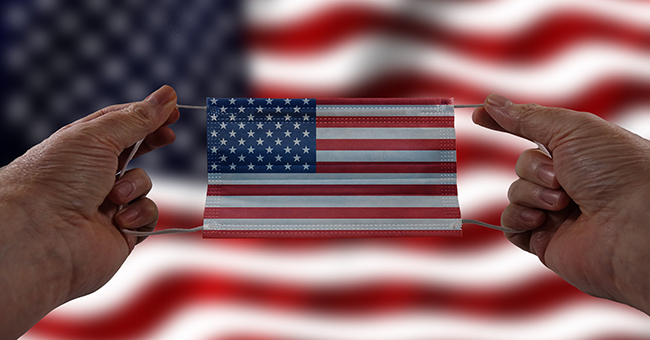
    American flag as face mask

    Photo credit: Gerd Altmann

    This article appeared originally on plaguesinthenation.com.

    Well, it’s official. A presidential administration that left US citizens to sink or swim when facing the worst pandemic in a century has finally admitted what we already knew. It has given up. Saying the quiet part out loud, White House Chief-of-Staff Meadows acknowledged the coronavirus task force no longer even pretends to address the spread of the virus. But this is no surprise to anyone paying attention. This presidential administration was never interested in using the full power, resources, and authority of the federal government to combat COVID-19. And shamefully, it shows.

    Chance brought us the unhappy coincidence of a pandemic and an election year for a first-term sitting president. A president who speaks and acts as though the coronavirus pandemic was a plot by Democrats to deny him a second term, so he denies its existence, spreads falsehoods, and divides the country. A president who takes no responsibility for COVID entering our shores, the failure to contain it, or the preventable deaths that have occurred and will continue in frightening numbers this fall and winter. A president who calls medical experts in his administration “idiots” and the CDC—the world’s premier disease-fighting agency—part of the “deep state.” A president who left states to deal with basically everything and then undermined their efforts constantly, whether by calling for militia to “liberate” states from public health measures put in place to save lives, or by ridiculing face masks, which, after all, are a proven measure to help limit spread, allowing businesses and schools to remain open. Even though his own administration’s experts agree that mask wearing on a wider basis could save hundreds of thousands of lives.

    All the while, the United States continues to lead the world in the number of COVID-19 infections and deaths, with numbers currently hurtling toward new records. How can it possibly be that the wealthiest nation on earth, with medical expertise and institutions the envy of the world, has responded very much like a second-rate, if not a third-world country?

    Under the cover of a stingy, warped view of “federalism,” it’s every state and locality for itself. Territories, states, cities, tribes, hospital systems, and healthcare facilities all compete against each other for critical medical supplies, adequate testing, and other resources. Long-term care facilities are still unable to acquire adequate PPE, let alone adequate, affordable testing. The current administration has left the nation’s defense completely up to the States while at the same time undermining public health measures its own task force deemed essential. All while the federal government sits on enormous resources and capabilities yet to be tapped.

    It need not have been this way. If President Trump were to be elected to a second term, would he work harder to save lives, no longer focusing on his reelection but instead concerned about his legacy? Or might he at least stay out of the way and let the medical experts at the world’s premier health agencies guide us, without undermining every effort?

    Whoever is the occupant of the Oval Office come January still has time to turn it around. A do-over is possible. Here is a short guide to immediate steps the new administration should take.

    It is not too late for the federal government to mobilize for an aggressive fight against COVID-19Take these steps. 

    A pandemic virus spreading as easily as COVID would always be difficult to contain, as the experience of other nations shows. Germany and France, for example, have returned to limited shutdowns in the face of a COVID resurgence. Step one for the next administration: study how other nations combat COVID-19, especially those that have been relatively successful and continue to learn. This is a pandemic, after all, and the US is not leading the way out.

    There is no shortage of policy prescriptions for steps we must take. Fifty leading legal experts recently offered recommendations on how federal, state, and local leaders can better respond to COVID-19. Their proposals include: how to strengthen executive leadership for a stronger emergency response; expand access to public health; health care and telehealth; and fortify protections for workers.

    My top three priorities for the next administration? Read about them here. There is so much that could yet be done, rather than just give up.

    Congress is not off the hook either. In past public health emergencies, most recently Zika and Ebola, Congress held numerous oversight hearings to ask whether our federal health agencies were responding appropriately and had the resources they needed. What has the US Senate done in this pandemic? Oversight hearings in the Senate have focused on the so-called Russia “hoax” from four years ago. As if getting to the bottom of that will save lives now. The Senate committee overseeing the Department of Homeland Security has spent its time assessing discredited Russian propaganda funneled through presidential intermediaries in an apparent attempt to relitigate the prior election, or to find nonexistent crimes to make the president look better in guess what—an election year. These are not lethal threats to the American public like COVID is. If protecting Americans during a pandemic is not in the purview of Homeland Security, what is? And shouldn’t the Senate be interested in how DHS is responding?

    When we think about how we can be better prepared next time—and there will be a next time, perhaps with even more lethality—what needs to change? No doubt better coordination is possible among our disease-fighting agencies and medical institutions (as President Obama’s Ebola czar proved). Harnessing the power of federal agencies to all row in the same direction requires constant effort, not the one-time appointment of a task force that soon gives up to go out on the campaign trail.

    Is the federal government constitutionally restricted in favor of state action to address a pandemic? In other words, are our laws getting in the way of an adequate federal response? The answer is NO. The federal government can act on the many critical issues we face. The executive branch has ample legal authority to improve our situation, if only it would.

    Our inability to control the pandemic within our borders has caused other nations to quarantine against us. We are now the exporting threat, but at least our allies express pity while they take the necessary steps to protect themselves from us. Instead of responding like a powerful, wealthy, nation with enormous reserves of scientific expertise, the US responds as if we were fifty different, relatively poor nations with inadequate access to critical medical supplies and other basics of public health. Harness the authority of the federal government and use it to protect us, please.


    About the Author 

    Polly Price is an award-winning legal historian and professor of law and public health at Emory, and is the author of two scholarly books and numerous articles on issues related to public health. Her book Plagues in the Nation, a narrative history of America through major outbreaks, is a forthcoming title from Beacon Press. Connect with her online at plaguesinthenation.com and on Twitter at @PollyJPrice.

  • A Discussion with Andreas Karelas, Katharine Hayhoe, and Bill McKibben

    From left to right: Andreas Karelas, Katharine Hayhoe, Bill McKibben

    From left to right: Andreas Karelas, Katharine Hayhoe, Bill McKibben

    The existential threat of environmental collapse may loom high, but Andreas Karelas, founder and executive director of RE-volv, shows how we can move past our collective inaction on climate change and work together in our communities in his book Climate Courage. Climate scientist Katharine Hayhoe and environmentalist Bill McKibben joined him for his book launch on September 29 to talk about it. They also discussed how saving our planet, our economy, and our democracy are not mutually exclusive goals. Amy Caldwell, the book’s editor, moderated the discussion.

    Climate change was a key topic in what turned out to be two rather than three presidential debates. On one hand, President Trump defended the fossil fuel industry while not displaying much understanding of how humans are responsible for changing the climate. On the other, Vice President Biden spoke about his climate plan’s goal of job creation. According to Karelas, we already have the tools needed to solve the climate crisis. Here’s what he, Karelas, McKibben, and Hayhoe had to say during the book launch about the power of community steering our course to solving our crisis with those very tools.

    Amy Caldwell: We know that the fires that have been decimating California and the Pacific Northwest are related to climate change. There are also huge fires in South America and Australia. So this is a global issue. Every year, we hear bad news about the polar ice caps; there’s more bad news this year. What are some bright spots? What are some bright spots and solutions that focus on inclusivity within the climate movement?

    Andreas Karelas: Bill, I was recently flipping through your book Falter, and one of the things you write that speaks to a big portion of Climate Courage is that we have two technologies that, if employed, could be decisive to the era: the solar panel and the nonviolent movement. RE-volv, the nonprofit that I founded, finances solar-energy projects for nonprofits that otherwise couldn’t go solar. Those nonprofits can then reduce their electricity costs, benefit the people they serve even more so, and demonstrate to the community the benefits of solar energy.

    One of the things we have on our side in the fight against climate change is the fact that solar energy is contagious. When someone goes solar, their neighbor is more likely to go solar. And their neighbor is even more likely to go solar. We’ve seen this play out in communities across the country. It happens over and over and over again. You can see it on a map in clusters of people going solar.

    To tie this to the equity piece, there was a great study that came out of Tufts and UC Berkeley about a year ago. It talked about the racial and ethnic disparity of solar installations in those communities. What they found, not surprisingly, is that communities of color, particularly African American communities, have much less solar, even after you account for wealth disparity. But what the study also found was the solution they call seed projects. These seed projects build off the idea that solar is contagious. In fact, if you put solar in a community of color, the adoption rates are even faster. The solar contagious effect is even higher, dramatically so, than it is compared to other communities. That is super powerful. It means that we as communities look to our neighbors to see how we can solve this thing, and if we see other people taking action, we want to take those same actions, and those can spread.

    The climate movement, in my opinion, has often painted one of two areas of engagement. One is, as Bill mentioned, changing your lightbulbs, or taking individual actions. Like you said, we have a detector that says, “That’s not going to cut it.” I can bring a reusable tote bag, but that’s not going to stop companies from spewing carbon into the atmosphere. The other side looks at what our leaders can do. What can our federal government do? As somebody who’s been in this fight for a long time, we all know that none of us are holding our breath, waiting for the federal government to solve this, right? We send petitions, we sign letters to our congress folks and representatives, but we don’t necessarily think that’s the only way it’s going to happen, as important as that is. Between those, what I see is the way to engage people so that they can feel agency is at the community level. What can we do with our neighbors? What can we do in our cities and our counties that can actually have an impact, that can demonstrate the benefits of sustainability, and thus, like a seed project, have this contagious effect from one community to another?

    Some examples, the Sierra Club has their Ready for 100 campaign. They’ve basically trained volunteers to say, “Go to your community. Go to your local city and county and convince them to commit to 100 percent renewable energy.” This campaign, in just a few short years, has been so successful that now we have one out of every three Americans lives in a city or county or state that is committed to 100 percent renewable energy. That’s the power of community.

    Bill McKibben: I do think there are things that should give us plenty of reasons to be optimistic. Or if not optimistic, at least not a reason to give up. We’ve watched over the last year or so a real sea change in the way Wall Street thinks about carbon and climate. It’s happened because lots of people have gotten together and pushed. And it’s also happened because solar power and wind power are now the cheapest way to generate electricity, and that causes your spreadsheet to start blinking amber in alert. Between that, the way money gets allocated has begun to shift. And Andreas is right to caution us that Washington is not the only place that counts. There are lots of possibilities. The part about coming together is really important. There’s been some good coming together even over the course of this horrible year.

    The most important thing anyone has said in 2020 was what George Floyd said as he was being murdered: “I can’t breathe.” There are lots of reasons why people can’t breathe. They can’t breathe because there’s a cop kneeling on their neck. Or because police brutality stifles their community. Often, in the very same communities, people can’t breathe because there’s a coal fire powerplant down the street. We know enough about the effects of COVID to understand that it follows lines of race and class vulnerability, too. People can’t breathe because the wildfire smoke gets so thick that the authorities tell people to tape shut their windows and stay inside. People can’t breathe because it gets too damn hot. We saw the hottest temperature ever reliably recorded on our planet this summer. 130 degrees in California. 120 degrees in San Luis Obispo, which is pretty much on the Pacific Ocean. That really shouldn’t be possible, but it is now. We have the possibility for a commonality that we have not felt before, or at least not for a while, in this overly divided nation and in this overly divided world. It’s a commonality of vulnerability as well as of possibility. We’re at this moment when the technologies that engineers gifted to us could be transformative if applied quickly and at scale. Our job is to make sure we create the conditions for that to happen.

    Had Andreas’s book come out ten years ago, it would’ve been whistling past the graveyard, because we wouldn’t have had in place the possibility for solutions at scale. But now that we do, it makes enormous sense to be precisely having this conversation.

    Katharine Hayhoe: People often ask, “How do we talk about this when there are so many other issues right up in our face?” There’s injustice, poverty, inequity, the inability to supply the physical needs of our families and put food on the table. Right here at home, as well as everywhere around the world, everybody is struggling right now. The reason we care about climate change is not because it increases the average temperature of the planet by one or two or three or five degrees; it’s because climate change is the great threat multiplier. It takes everything we already care about today and it makes it worse. It increases the risk of health impacts, the area burned by wildfires, the risks of extreme heat, which, of course, hit the poorest first. It makes our hurricanes stronger and much more devastating.

    If you look at every basic goal to reduce poverty, eliminate hunger, insure people have clean water to drink, make sure that we have stable systems where people can go to school and go to the doctor—all of those basic things are threatened by climate change. So what I say to people is, “Who you already are is the perfect person to care. In fact, you already do.” It isn’t a case of moving climate change up your priority list and displacing something else. The only reason we care about climate change is because items 1, 2, 3, 4, 5—all the way down are being affected by climate change.

    ***

    If you weren’t able to attend the book launch, you can watch it here in full.


    About the Panelists 

    Andreas Karelas is the founder and executive director of RE-volv, a nonprofit organization that empowers people around the country to help nonprofits in their communities go solar and raise awareness about the benefits of clean energy. He is a dedicated clean-energy advocate with over 15 years of environmental and renewable energy experience. He is an Audubon TogetherGreen Conservation Leadership Fellow and an OpenIDEO Climate Innovator Fellow. He lives and works in San Francisco. Connect with him at re-volv.org and on Twitter at @AndreasKarelas.

    Katharine Hayhoe, who wrote the foreword for Climate Courage, is an atmospheric scientist whose research focuses on understanding what climate change means for people and the places where we live.

    Bill McKibben is a founder of the environmental organization 350.org and was among the first to have warned of the dangers of global warming. He is the author of several bestselling books.

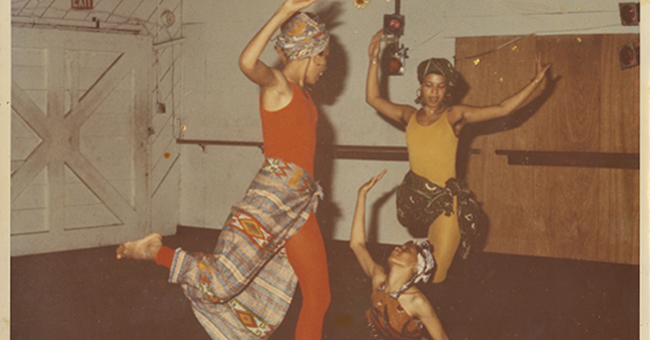
  • Halifu Osumare, Aisha Kahlil, and Ntozake Shange dancing in Oakland California, circ. 1970s.

    Halifu Osumare, Aisha Kahlil, and Ntozake Shange dancing in Oakland California, circ. 1970s. Photo courtesy of the Ntozake Shange Revocable Trust & Barnard College Special Collections.

    It was not so long ago when we said goodbye to renowned poet, novelist, playwright, and performer Ntozake Shange. Two years ago, we received news that she had passed while working with her on what is now her first posthumous book, Dance We Do: A Poet Explores Black Dance, her tribute to those who taught her and to her passion for rhythm, movement, and dance. It’s also a personal history and celebration of Black dance, featuring stunning photos along with personal interviews with Mickey Davidson, Halifu Osumare, Camille Brown, and Dianne McIntyre.

    Massive thanks go to Reneé L. Charlow and Alexis Pauline Gumbs, who helped see Dance We Do to completion! Charlow is professor of theatre at Shepherd University and worked with Ms. Shange for four years before her passing. Gumbs is another close colleague of Ms. Shange’s. And we were overjoyed with the massive turnout of folks who expressed their gratitude for her and her book! This big a crowd is a party—a party worthy of a beautiful gift with BLACK JOY written in all caps on it from a brilliant artist. We join our gratitude with these awesome people.

    ***

    “Through Ntozake Shange’s personal memories of dance—what it has meant to her, how she came to know, understand, and feel it—we are taken on a journey that chronicles some of the greatest dancers and choreographers of the latter part of the twentieth century.”
    —Phylicia Rashad

    “A gorgeous last offering from one of our most gifted and multifaceted artists. Her passion for dance, just like her passion for words, is among the many reasons she will be missed, though these insightful interviews, ruminations, and reflections will continue to be a balm, across generations, from her to us.rdquo;
    —Edwidge Danticat, author of Everything Inside

    “A workaholic to her last breath, Ntozake Shange has left us with a book that expands our knowledge of Black dance. Not only is it a textbook but it was composed by someone who created a new form. A true innovator.”
    —Ishmael Reed, author of Malcolm and Me

    “Ntozake Shange presents a language of movement that only she knew—relearned with clarity and courage, and unveiled to the world as a black American groove of words in commemorative motion.”
    —Rebecca Carroll, author of Sugar in the Raw: Voices of Young Black Girls in America and host of the podcast Come Through with Rebecca Carroll

    “Ntozake Shange delivered her gifts to us embossed with directions, and permission, to create our own magic and miracle and movement. Dance We Do is her final gift to us, but it is, like she was, a gift that will nourish and replenish us for generations to come.”
    —Bassey Ikpi, author of I’m Telling the Truth, but I’m Lying

    “In Dance We Do, Ntozake Shange offers the living history of Black dance our current movements need. In these conversations’ exquisite choreography, we witness the artist’s incomparable poetic stretch, her dazzling theoretical reach, and her unparalleled ability to name the deep political necessity of Black bodily knowledge. Here, we see Shange as teacher and theorist, charting the spiral histories of Black dance with the eloquence of a lyrical rond de jambe. Her keen and tender reflections on dance greats such as Dianne McIntyre and Dyane Harvey set the beat for interviews with newer voices like Camille A. Brown and Davalois Fearon, alongside whom we learn from Shange’s great vision and pedagogy. To read Dance We Do is to move with a master. It is to learn not only what Black dance means, why Black bodies matter, but how. Dance We Do makes its meanings elegantly, fearlessly, with the endless precision of Blackness itself: a full vocabulary of bodies and lives, writing rhythms that out-move time.”
    —Mecca Jamilah Sullivan, PhD, author of Blue Talk and Love

    “Blessed are we to have a new work by the inimitable Ntozake Shange, whose writing is a balm for the soul. Sharing with readers her earliest body memories, Shange takes us into the most intimate spaces of her own fleshy form and, by extension, those of the oft overlooked Black dancers she spotlights. She makes us feel the connections between body and brain, the ache of overworked muscles, the discipline required to make jetés and fouettés appear effortless, as we linger on every word of this taut work of Black brilliance, wanting our eyes to forever dance on its pages.”
    —Tanisha C. Ford, author of Dressed in Dreams: A Black Girl’s Love Letter to the Power of Fashion

    Dance We Do holds an eternal flame for the embodied work and life of Ntozake Shange. This new work is our spiritual relevé. It helps us rise to our toes and once again honor Black bodies as beautiful, magical, and elegant. Each chapter is a radical intervention that brings us closer to the Black Radical Tradition of exploring our rhythms. Shange has always known that Black lives matter, and this text is a reminder of her commitment to the nuance of Blackness. While reading I had to stand up, move around, walk, and signify with the text. Thank you, Shange, once again for bringing us home.”
    —Jamara Wakefield, writer

    “A dancer first, the irrepressible Ntozake Shange writes of her art with passion and humor.”
    —Jennifer Dunning, author of Alvin Ailey: A Life in Dance

    ’A celebration of poetry, mentorship, music, and the Black body in movement and art.”
    —Aku Kadogo, chair, Department of Theater and Performance, Spelman College

    “Remarkable—provoking—insightful. Ntozake Shange’s Dance We Do is a valuable document for those interested in the foundational elements that make dance what it is today, especially Black dance. A real look-see into a world many people knew about but that has never been explored. A must-read for those interested in identifying and understanding where much of American dance concepts today are derived.”
    —Otis Sallid, producer, director, and choreographer 


    About Ntozake Shange 

    Ntozake Shange (1948–2018) was a renowned poet, novelist, playwright, and performer, best known for her Broadway-produced and Obie Award–winning choreopoem for colored girls who have considered suicide/when the rainbow is enuf. She wrote numerous works of fiction, poetry, and nonfiction, including If I Can Cook/You Know God CanWild Beauty, and Sassafras.

  • By Gustavus Stadler

    Woody Guthrie

    Photo credit: Al Aumuller/New York World-Telegram and the Sun

    I knew that when my book, Woody Guthrie: An Intimate Life, came out, I would inevitably be asked questions like, “What would Woody Guthrie do today? Where would he stand on this issue? What would he think of this candidate or that elected official?” I’m mostly accustomed to writing about topics at least several decades distant from the present, and I try hard to honor the otherness of the past, rather than portray it as a simpler version of the now. Plus, responses to such questions so often depend more on the projections of the answerer than on historical evidence. Witness the sick spectacle of contemporary conservatives claiming the legacy of Martin Luther King, Jr. because they can cram a single phrase from a single speech into the mold of their ideology and conveniently ignore his fleshed-out views linking racism to capitalism and militarism.

    Consequently, I confess to a bit of dread, and resistance, toward such questions. Nonetheless, in some very real way, these are also the essential questions to ask of a book like mine; why write a book about a historical figure without some sense that, in no matter how obscure or transparent fashion, something about them matters in the present? Also, I have seen the evidence, having viewed the vast majority of Guthrie’s archive. So, a fair assessment is somewhere within my reach. And some of its aspects might surprise you. So here goes.

    His soul imprinted by personal and collective trauma in his childhood, Guthrie believed, unabashedly, that government should play a strong, reparative role in people’s lives, easing suffering, righting injustice, and enabling all citizens to flourish. To this extent, he would have despised the more and less militant, but nonetheless consistent anti-government orientation of our last six Presidents of both parties. And he would have enthusiastically welcomed the Bernie Sanders campaign, as well as the rise of the new stars of the leftier regions of the Democratic party: Alexandria Ocasio-Cortez and the rest of “The Squad”: Ilhan Omar, Ayanna Pressley, and Rashida Tlaib, as well as the growing numbers of state and local politicians committed to grassroots campaigning and governing.

    But here’s where things get more controversial. The politicians I’ve named straddle Democratic-party-approved liberalism and a more radical set of views that drives their advocacy for selected policies one could fairly call socialist. Fundamentally, though, they remain committed to “America” as a powerful ideal, a synonym for ideals of freedom and equality, and they have faith in its institutions to, ultimately, realize these ideals. I don’t believe Woody Guthrie shared this commitment or this faith, at least not in the same form.

    Indeed, no person of sound judgment and good faith could leave a deep reading of his archive with the idea that Guthrie’s main passion was to celebrate America and Americans. No one could come out of that place believing he would ever have embraced calls for unity before calls for justice. Guthrie would have sacrificed America in a split second if doing so could eradicate fascism from the world.

    Obviously, the sense that Guthrie is a celebratory nationalist comes largely from his by far best-known song, “This Land is Your Land,” which has become a favorite tune in elementary schools and at campfires. But this is not a song about inclusivity. Even overlooking the seldom-sung verse in which he explicitly condemns private property, the song’s refrain carries an implicitly negative message alongside the explicitly positive one: this land is your land, not the land of the people who, in market terms, own it, who hold the deeds to it. Those deeds are fictions, these people are thieves. (The question of the song’s erasure of Indigenous people and settler colonialism is more complicated.)

    I won’t hazard a guess as to whether he would have bent his principles, as so many leftists are doing, and supported the centrist-liberal Biden-Harris campaign for the Presidency. I do know that Woody Guthrie was a radical, not a liberal. He didn’t believe that any of the ideals America claim as its foundation could be realized without the destruction—or at the very least substantial transformation of—capitalism. The ideal America he envisioned, in other words, would look wholly alien, if not utterly terrifying, to many of the nation’s citizens today—perhaps even to the majority of them.

    Another largely underexplored area of his writing speaks meaningfully to the struggles of the present. Later in his life, in the late 1940s and early 1950s, before his permanent hospitalization with Huntington’s disease, he began to think about race and racism in ways that challenged nationalist liberal common sense. He had worked hard to shed the influence of his white supremacist father and the ambient racism of his growing years in Oklahoma and Texas. As his positions drew him more and more toward communism, he learned of the Party’s efforts, led by Black members, to address a range of issues related to racism—not only voting rights and equal access to institutions, but problems faced specifically by working class Black people, like economic inequality and police violence. In 1949, he was among the crowds leaving a Paul Robeson concert in Peekskill, New York, only to be set on violently by white supremacist gangs and police officers. He called it the worst thing he’d ever seen.

    In the following couple of years, Guthrie grew closer to his friend Stetson Kennedy, a white anti-racism activist in Florida, who worked with the Civil Rights Congress, a largely Black group affiliated with the Communist Party. In 1951, the CRC issued a petition to the United Nations titled “We Charge Genocide,” which condemned the history of racial inequality in the United States as a deliberate program of mass extinction, led in the present day by the state via the police. Appended to the petition were hundreds of newspaper accounts of police brutality. Guthrie turned several of these cases into never-recorded songs. He also wrote a long poem embracing the document’s position, titled “Genocide.” Despite the growing acknowledgment among white liberals that structural racism exists in the US, and the wide acceptance of the idea that racist police violence is a serious problem, it’s hard to imagine any electoral candidate or elected official taking a stance this confrontational and not destroying their career.

    Finally, Guthrie believed that fascism and capitalism overlapped significantly. They were both driven by rapaciousness and cruelty, and they both stifled the lives of the vast majority of a nation’s people, all so that a small minority could systematize their self-inflating, sadistic vision of the world while living in opulence. If the last four years haven’t convinced someone of this truth, it seems safe to say nothing will.


    About the Author 

    Gustavus Stadler is a professor of English at Haverford College. A well-established scholar of nineteenth- and twentieth-century US culture and popular music, he is the author of Troubling Minds: The Cultural Politics of Genius in the U.S., 1840–1890. His writing has appeared in the Bay GuardianSF Weekly, the North Carolina Independent WeeklySocial TextSounding Out!, avidly.com, and numerous other outlets. He lives in Haverford, Pennsylvania. Connect with him at gustavusstadler.org and on Twitter at @majortominor.

  • By Linda Hogan

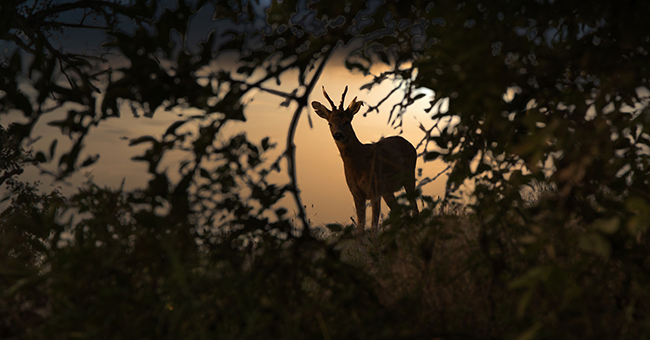
    Fawn in the wild

    When Chickasaw poet and essayist Linda Hogan fell in love with her current home, a 1930s cabin in Idledale, Colorado, she would be continually astounded with wonder from learning the surrounding environment and animals. As she writes in this selection from her latest book of poetry and prose, The Radiant Lives of Animals, cultivating her connection with the land has been a lesson in the impact human life leaves behind and, with the insight of Indigenous knowledge systems, the kinship between us and the natural world begging to be nurtured to this day.

    ***

    The story of this land is ancient. The red earth, crags, and canyons were once an inland sea. I imagine the currents when this mountain basin was ocean, water swaying as the moon became full or as wind moved it, swaying. Within the water, a shining circle of fish, many lives all thinking and moving as one. Sea animals hid inside stone caves and indentations that now, so many years later, shelter canyon wrens and swallow nests, once protecting numbers of indwelling bats.

    In the times that passed between all these, dinosaurs left behind their footprints and bones for humans to find and fight over. Those are on the other side of this mountain that holds me.

    On a dry day with particles of dust shining in sunlight, I drove up one hill and down another, my Blackfeet friend having me stop the car several times to gather red and yellow ochre for ceremonies or to use as paint for powwow dancing. That was long ago when I lived several homes away, but even then, I looked down this valley and knew one day I would live in this home and with this land so alive, so vibrantly enchanted with songs from ancient times, and with the night animals wandering through the forest of trees or the ones crossing hillsides by day. I knew other tribes had once stayed in this place of accepted amnesty as was the rule at the hot springs not far away. The earth here is created of all their stories, ancient and new.

    Even so, down below the main road, at Bear Creek, Col. Chivington planned the massacre of human beings at Sand Creek, while promising them peace and safety. This betrayal, unfortunately, is also a story of this land.

    Four miles up the road, Buffalo Bill is buried, a man known only for his abuses. Not so far away from his remains is a large buffalo herd. It is a joy for me to watch them calve in the spring, then watch the light-colored calves grow and darken, but mostly it is a pleasure to witness the tenderness between mother and calf, knowing that love is an unmeasured emotion even for human beings.

    Not far over the mountain, northward down a highway, the land was once a great buffalo wallow filled with large numbers of bison. Now it is the city of Denver.

    ~~~

    I fell in love with my home a few years back when I was hiking animal trails through the forest across from here. At the time this uncared-for little place wasn’t rented, so when I saw the cabin, I felt I was not trespassing. I crossed the creek and climbed up the hill, then tried to look inside. I found only one window allowing me to see a wall with wallpaper peeling like bark from a birch tree. But for me, the condition of this 1930s cabin didn’t matter. The land was my gravity and eventually gravity won. All these years later, it still holds me.

    This became my home twenty years after that day of window-peeking. It is land that owns me. At first, I didn’t know the large number of animals that lived here and passed through, needing protection from development to the north. Nor would I have guessed I’d be years learning an environment so powerfully alive. Here are a million years of stories to tell. Some are immediate and very present, like the flattened morning grasses that reveal what slept here last night, usually a small group of doe and fawns curled together in herd dreaming. Or how the marmots across the way call out with a gentle trilling voice when they see a predator, and the three o’clock fox sings as it passes by on its daily journey with its wide tail full and beautiful. From hidden places, crows scream out and fly down to swarm their enemy, cawing loudly, alerting me to danger.

    Then all becomes peacefully quiet forest and canyon once again, the singing creek passing through green mountain curves, traveling past the location where the lion keeps her bones, past the infant forest, an entire world filled with both visible and secretive lives.

    Perhaps the ancestors dreamed it into existence, dreamed the future where I now live after many years of looking down into this valley with curiosity and longing, hoping I would one day live here and feel safe with the animal lives around me. I do feel that safety, living and planting above the place where water seeps out through the canyon walls, pure and clear from its secret journeys of underground miles.

    I continue learning the animals, but I also want to learn the human animal. After all, we are the puzzle, the most difficult to understand or know. All the others may cohabit a field together easily: wild turkey, deer, rarely even a coyote, and the small birds at the edges. They are fine together until a human is near. Seeing us, they scatter. I am a predator known to them, when my own inner sea wants to know how we might be a part of the wilderness congress.

    ~~~

    It is not my purpose to create a pastoral world. There are nights I hear death cries or screams of animals caught by others. I am also aware not only of the great number of species lost everywhere each day, but of the toll climate change is taking on the entire beleaguered planet. We are inundated with this pain in every book, every story on the news.

    When I think of change, I consider the re-minding of ourselves and I mean that it is time to consider other kinds of intelligence and ways of being, to stretch our synapses to take in new ways of thought. As an Indigenous woman, I look toward our Native knowledge systems, the times when our relationship with the earth wasn’t the disjointed connection most of us have learned from our Euro-American education systems. I am one human animal who wants to take back original meanings and understandings in ways that are possible and are necessary.

    Perhaps some of us make poetry, music, and art because the ancient story still dwells inside our body, as does a feeling for old ways of seeing and knowing the world. I see it in our work, our circles of native science conversations and the popularity of our books. We also know it in some quiet moments, intimations that surface from deep in the marrow as a brief yearning. Sometimes it feels like grief, sometimes it is grace. Sometimes it is like loneliness. Sometimes a joining together with all others. In any case, it is a true and deep need, this desire to change our systems of thought and vision. In this same way, we still feel our animal kinship, our own animal life, and the primordial green and dirt-rich odor of our world connection as a reminder.

    The kinship and relationship between human and nonhuman others rise from inside to seek what is relevant in this changing world. But there is more. Many of us remember this in our shared histories. We want to know what sees us when we do not know we are being watched, but only feel that watching. Our need is like the shadow attached at our feet, never to be walked away from. Instead of speaking to what is beneath that shadow, it is often easier to ignore the dialogue asked of us by earth, its language spoken within and without our own skin.

    In most Indigenous creation stories, humans were the last ones created. Around us are our many teachers. For now, it is enough to simply know that we do not live alone in the skin of any environment. We are part of a collective, the way marmots hibernate together in their complicated burrows beneath ground.


    About the Author 

    Linda Hogan (Chickasaw) is a poet, novelist, essayist, teacher, and activist. Her work illuminates environmental and Indigenous activism, as well as Native spirituality. She was born in Oklahoma and now lives and works in Idledale, Colorado, a town of 252 human souls. Her literary works have earned her awards and fellowships including a National Endowment of the Arts award, a Guggenheim, a Lifetime Achievement Award from the Native Writers Circle of America, and, most recently, the Thoreau Prize from PEN and a Native Arts and Culture Award. Connect with Linda at lindahoganwriter.com.

  • By Judith Ortiz Cofer

    Women's eyes

    It’s a minefield that women of Hispanic and Latinx heritage have to navigate in mainstream white culture and spaces—the media-engendered image of the Latina in the United States and all the stereotypes that come with it. For Hispanic/Latinx Heritage Month, we share with you an excerpt from writer Judith Ortiz Cofer’s personal essay on the subject, “The Myth of the Latin Woman,” collected in Women Writing Resistance: Essays on Latin America and the Caribbean, edited by Jennifer Browdy.

    ***

    On a bus trip to London from Oxford University where I was earning some graduate credits one summer, a young man, obviously fresh from a pub, spotted me and as if struck by inspiration went down on his knees in the aisle. With both hands over his heart he broke into an Irish tenor’s rendition of “Maria” from West Side Story. My politely amused fellow passengers gave his lovely voice the round of gentle applause it deserved. Though I was not quite as amused, I managed my version of an English smile: no show of teeth, no extreme contortions of the facial muscles—I was at this time of my life practicing reserve and cool. Oh, that British control, how I coveted it. But Maria had followed me to London, reminding me of a prime fact of my life: you can leave the Island, master the English language, and travel as far as you can, but if you are a Latina, especially one like me who so obviously belongs to Rita Moreno’s gene pool, the Island travels with you.

    This is sometimes a very good thing—it may win you that extra minute of someone’s attention. But with some people, the same things can make you an island—not so much a tropical paradise as an Alcatraz, a place nobody wants to visit. As a Puerto Rican girl growing up in the United States and wanting like most children to “belong,” I resented the stereotype that my Hispanic appearance called forth from many people I met.

    Our family lived in a large urban center in New Jersey during the sixties, where life was designed as a microcosm of my parents’ casas on the island. We spoke in Spanish, we ate Puerto Rican food bought at the bodega, and we practiced strict Catholicism complete with Saturday confession and Sunday mass at a church where our parents were accommodated into a one-hour Spanish mass slot, performed by a Chinese priest trained as a missionary for Latin America.

    As a girl I was kept under strict surveillance, since virtue and modesty were, by cultural equation, the same as family honor. As a teenager I was instructed on how to behave as a proper señorita. But it was a conflicting message girls got, since the Puerto Rican mothers also encouraged their daughters to look and act like women and to dress in clothes our Anglo friends and their mothers found too “mature” for our age. It was, and is, cultural, yet I often felt humiliated when I appeared at an American friend’s party wearing a dress more suitable to a semiformal than to a playroom birthday celebration. At Puerto Rican festivities, neither the music nor the colors we wore could be too loud. I still experience a vague sense of letdown when I’m invited to a “party” and it turns out to be a marathon conversation in hushed tones rather than a fiesta with salsa, laughter, and dancing—the kind of celebration I remember from my childhood.

    I remember Career Day in our high school, when teachers told us to come dressed as if for a job interview. It quickly became obvious that to the barrio girls, “dressing up” sometimes meant wearing ornate jewelry and clothing that would be more appropriate (by mainstream standards) for the company Christmas party than as daily office attire. Th at morning I had agonized in front of my closet, trying to figure out what a “career girl” would wear because, essentially, except for Marlo Thomas on TV, I had no models on which to base my decision. I knew how to dress for school: at the Catholic school I attended we all wore uniforms; I knew how to dress for Sunday mass, and I knew what dresses to wear for parties at my relatives’ homes. Though I do not recall the precise details of my Career Day outfit, it must have been a composite of the above choices. But I remember a comment my friend (an Italian-American) made in later years that coalesced my impressions of that day. She said that at the business school she was attending the Puerto Rican girls always stood out for wearing “everything at once.” She meant, of course, too much jewelry, too many accessories. On that day at school, we were simply made the negative models by the nuns who were themselves not credible fashion experts to any of us. But it was painfully obvious to me that to the others, in their tailored skirts and silk blouses, we must have seemed “hopeless” and “vulgar.” Though I now know that most adolescents feel out of step much of the time, I also know that for the Puerto Rican girls of my generation that sense was intensified. The way our teachers and classmates looked at us that day in school was just a taste of the culture clash that awaited us in the real world, where prospective employers and men on the street would often misinterpret our tight skirts and jingling bracelets as a come-on.

    Mixed cultural signals have perpetuated certain stereotypes—for example, that of the Hispanic woman as the “Hot Tamale” or sexual firebrand. It is a one-dimensional view that the media have found easy to promote. In their special vocabulary, advertisers have designated “sizzling” and “smoldering” as the adjectives of choice for describing not only the foods but also the women of Latin America. From conversations in my house I recall hearing about the harassment that Puerto Rican women endured in factories where the “boss men” talked to them as if sexual innuendo was all they understood and, worse, often gave them the choice of submitting to advances or being fired.

    It is custom, however, not chromosomes, that leads us to choose scarlet over pale pink. As young girls, we were influenced in our decisions about clothes and colors by the women—older sisters and mothers who had grown up on a tropical island where the natural environment was a riot of primary colors, where showing your skin was one way to keep cool as well as to look sexy. Most important of all, on the island, women perhaps felt freer to dress and move more provocatively, since, in most cases, they were protected by the traditions, mores, and laws of a Spanish/Catholic system of morality and machismo whose main rule was: You may look at my sister, but if you touch her I will kill you. The extended family and church structure could provide a young woman with a circle of safety in her small pueblo on the island; if a man “wronged” a girl, everyone would close in to save her family honor.

    Because of my education and my proficiency with the English language, I have acquired many mechanisms for dealing with the anger I experience. This was not true for my parents, nor is it true for the many Latin women working at menial jobs who must put up with stereotypes about our ethnic group such as: “They make good domestics.” This is another facet of the myth of the Latin woman in the United States. Its origin is simple to deduce. Work as domestics, waitressing, and factory jobs are all that’s available to women with little English and few skills. The myth of the Hispanic menial has been sustained by the same media phenomenon that made “Mammy” from Gone with the Wind America’s idea of the black woman for generations; Maria, the housemaid or counter girl, is now indelibly etched into the national psyche. The big and the little screens have presented us with the picture of the funny Hispanic maid, mispronouncing words and cooking up a spicy storm in a shiny California kitchen.

    This media-engendered image of the Latina in the United States has been documented by feminist Hispanic scholars, who claim that such portrayals are partially responsible for the denial of opportunities for upward mobility among Latinas in the professions. I have a Chicana friend working on a PhD in philosophy at a major university. She says her doctor still shakes his head in puzzled amazement at all the “big words” she uses. Since I do not wear my diplomas around my neck for all to see, I too have on occasion been sent to that “kitchen,” where some think I obviously belong.

    One such incident that has stayed with me, though I recognize it as a minor offense, happened on the day of my first public poetry reading. It took place in Miami in a boat-restaurant where we were having lunch before the event. I was nervous and excited as I walked in with my notebook in my hand. An older woman motioned me to her table. Thinking (foolish me) that she wanted me to autograph a copy of my brand-new slender volume of verse, I went over. She ordered a cup of coffee from me, assuming that I was the waitress. Easy enough to mistake my poems for menus, I suppose. I know that it wasn’t an intentional act of cruelty, yet of all the good things that happened that day, I remember that scene most clearly, because it reminded me of what I had to overcome before anyone would take me seriously. In retrospect I understand that my anger gave my reading fire, that I have almost always taken doubts in my abilities as a challenge—and that the result is, most times, a feeling of satisfaction at having won a convert when I see the cold, appraising eyes warm to my words, the body language change, the smile that indicates that I have opened some avenue for communication. That day I read to that woman and her lowered eyes told me that she was embarrassed at her little faux pas, and when I willed her to look up at me, it was my victory, and she graciously allowed me to punish her with my full attention. We shook hands at the end of the reading, and I never saw her again. She has probably forgotten the whole thing but maybe not.

    Yet I am one of the lucky ones. My parents made it possible for me to acquire a stronger footing in the mainstream culture by giving me the chance at an education. And books and art have saved me from the harsher forms of ethnic and racial prejudice that many of my Hispanic compañeras have had to endure. I travel a lot around the United States, reading from my books of poetry and my novel, and the reception I most often receive is one of positive interest by people who want to know more about my culture. Th ere are, however, thousands of Latinas without the privilege of an education or the entrée into society that I have. For them life is a struggle against the misconceptions perpetuated by the myth of the Latina as whore, domestic, or criminal. Every time I give a reading, I hope the stories I tell, the dreams and fears I examine in my work, can achieve some universal truth which will get my audience past the particulars of my skin color, my accent, or my clothes.


    About the Author 

    Judith Ortiz Cofer was born in Hormigueros, Puerto Rico, and spent her childhood traveling back and forth between Puerto Rico and the United States. She has published ficion, creative nonfiction, and poetry, including The Latin Deli: Telling the Lives of Barrio Women, which was nominated for a Pulitzer Prize; a memoir, Silent Dancing: A Partial Remembrance of a Puerto Rican Childhood; several children’s books, including An Island Like You and Call Me Maria; and several volumes of poetry, including Reaching for the Mainland and A Love Story Beginning in Spanish. Cofer teaches at the University of Georgia as the Regents’ and Franklin Professor of English and Creative Writing.