• By Enrico Gnaulati

    Schooling at home

    Photo credit: Victoria Borodinova

    Under normal circumstances, family life in America is a “fire shower of stress, multi-tasking, and mutual nitpicking” according to journalist Benedict Carey, covering the results of a four-year-long UCLA observational study of thirty-two urban families for the New York Times. A survey funded by Sleepopolis a few years back discovered that kids have an eye-popping 4,200 arguments with their parents before they turn eighteen, averaging fourteen minutes long, with parents “winning” upwards of sixty percent of the time. I’m assuming “winning” meant parents successfully cajoling their kids to complete household chores, clean up bedrooms and shared spaces, and finish homework—the most common reasons for disagreements.

    Under the pandemic, it’s not just kids’ homework that parents are placed in the thankless task of overseeing, but also their entire remote learning experience. Schools in the majority of states across the country have shuttered their doors, leaving in excess of forty-three million kids in grades K-12 housebound. Earlier this spring, as families sheltered in place, parents stepped in to manage their kids’ distance-learning needs. It was thought to be a stop-gap measure, even a novelty for many involved. There was the added advantage of having the “morning rush” eliminated, allowing for more sleep and less stress. This is notwithstanding kids winning back the free time they were used to sacrificing by being overscheduled with extracurricular activities. Family members hunkered down at home. Many parents I work with confessed during Zoom therapy sessions that they enjoyed the family togetherness. Working mothers, in particular, felt released from the guilt and anxiety they often carry juggling professional demands and domestic responsibilities, never quite performing either up to their standards.

    Months along, the novelty has worn off, and parents are concerned about the ramifications of prolonged virtual classrooms for the quality of education their kids are receiving. A recent poll by the FM3 Research firm found that a whopping seventy-five percent of parents believed that distance learning was inferior to in-class instruction. Parents are concerned about the learning loss their kids face as well as the social drawbacks. Socially anxious kids may be the most hard hit because they are void of the social exposure that attending school offers, which over time provides them with the interactional practice and acquisition of social skills that renders them less socially avoidant.

    Overuse of screens—especially videogaming—is more the bane of parents’ existence than usual. Virtual learning leaves many kids bored and undermotivated. A perfect storm arises—kids rushing through their schoolwork to maximize their videogame time and parents feeling hamstrung, capitulating when they know they shouldn’t, because their own job responsibilities working remotely from home leave them, understandably, otherwise preoccupied. Several months ago, nearly seventy-five million residents of California, Illinois, Connecticut, and New York were ordered to sequester themselves at home. Simultaneously, videogame play during Verizon’s peak hour of internet usage increased seventy-five percent from the week before. Being lax about kids’ videogame usage may be unavoidable. But it’s an arrangement that’s unsustainable since data indicate that most parents are deeply concerned about the risks posed to their kids while playing videogames—ninety-four percent, in fact, according to a McAfee study.

    For high-school and college students, the struggles imposed by the pandemic are especially pronounced. Adolescence and young adulthood are phases of life that emphasize individuating from one’s family and venturing out into the world to build greater personal assertiveness and agency. Having teachers, professors, coaches, and other supportive adults to educate and mentor them strengthens the individuation process and fosters teenagers’ and young adults’ social competence and self-confidence. Millions of teenagers and young adults are now housebound, reliant on social media to stay in contact with peers and stuck having parents as the omnipresent adults in their lives to whom they feel accountable. Time will tell to what degree stay-at-home orders and remote learning have thwarted and delayed the individuation experience of this generation of teenagers and young adults.

    How are we to stay sane during these insane times? Top of the list, for me, pertains to respectfully honoring spacial and emotional boundaries. Confined at home—often in close quarters—having to locate the ideal conditions for them to stay motivated, focused, and productive, it behooves parents and kids alike to be overt with their needs. Under the best of conditions, it is extremely difficult, even for adults, to assertively ask for alone time. Kids and teens often communicate their needs for separateness—to have physical and emotional space from a parent—indirectly through their behavior, conveying grumpiness, irritation, or defiance. Having a family meeting to discuss matters such as: how closed doors signal a wish to be alone; better ways to rearrange the physical environment at home to allow each family member access to their ideal working conditions; and the acceptability of requesting alone time in kind, assertive ways are all highly relevant issues.

    The way we conduct our emotional lives and relate to one another as family members even has a bearing on the health or ill-health of our immune systems. Just like viruses, emotions are contagious. Partners “catch” each other’s stress, and there are adverse health implications. The good news is that partners also “catch” each other’s happiness. Cooped up at home to protect against the transmission of COVID-19, sharing humor and goodwill gestures will not only help avert the outbreak of a parallel pandemic—more strife in family life—but keep our immune systems well-toned.


    About the Author 

    Enrico Gnaulati, PhD, is a nationally recognized reformer of mental health practice and policy. His latest book is Saving Talk Therapy: How Health Insurers, Big Pharma, and Slanted Science are Ruining Good Mental Health Care (Beacon Press, 2018).

  • By Angela Chen

    Books

    Photo credit: Clarissa Bell

    This essay appeared originally in Powell’s.

    I distrust narratives, always have. The child too shy to open her mouth and captivate others with story became the science journalist who fetishized data instead, fond of talking about how stories can stand in the way of justice—just look at how a blond girl suddenly kidnapped can receive so much more attention and care than all the less photogenic children who live every day in difficult conditions.

    The distrust has not changed. I still believe that narratives are easy to mutate and misinterpret, and that narrative is an insidious form of magic, a tool not always used for good. The difference now is that I see that narrative is all there is. All my suspicion has done little to immunize me; I am not as imaginative as I would like to believe. And I keep thinking about a minor plot point in Philip Pullman’s His Dark Materials how it taught me without me knowing, and how it hits differently now.

    One of the most alluring feats of world-building in that universe is the daemon, the animal personification of a person’s soul. Daemons change shape throughout childhood, but eventually pick an animal and stick to it. At the end of the Pullman series, young protagonists Lyra and Will touch each other’s daemons (which is usually a major taboo). Their daemons settle, hers into a pine marten and his into a cat. They are adults now. “And she knew, too,” Pullman writes, “that neither daemon would change now, having felt a lover’s hands on them. These were their shapes for life: they would want no other.”

    It’s a quiet detail and a lovely moment. It is a new rule in this world, one I accepted and rarely thought about until, a decade or so later, I heard someone joke: If you’re asexual, does that mean your daemon remains a shapeshifter forever? (Asexual people can experience romantic attraction—it's people who are aromantic who usually don't have lovers—but Pullman is alluding to both sexual and romantic awakening here.) And the subtext: Since only children have shifting daemons, will you be seen as a child forever?

    It’s a tongue-in-cheek comment, yes, but it also pokes a hole in a narrative that most readers had taken for granted. His Dark Materials used a story to reinforce the old lesson that sexual maturity equals the onset of adulthood. Sexuality equals growing up; before that, you are a child, immature and naive about the ways of the world.

    For many, this lesson lines up with what they know of life. There is no incongruity, and so this passage provokes no criticism. For asexuals, or aces—people who do not experience sexual attraction—this type of narrative can be wielded to infantilize us. It can be internalized, too, used against ourselves. Many people I interviewed for my book Ace told me about struggling with the feeling that they were infantile, despite not knowing, exactly, where that feeling had come from or how they had learned it.

    This is not the only lesson from fiction that we absorb about those who may be ace. Though few literary novels feature protagonists who could be read as asexual, recent fiction does provide two examples. One is Keiko Furukura, the eponymous protagonist of Sayaka Murata’s Convenience Store Woman. The other is Jude St. Francis, from Hanya Yanagihara’s A Little Life. (Neither character explicitly identifies as ace.)

    Keiko from Convenience Store Woman has always been a misfit. She is not ambitious. She is not interested in a traditional career, and she is even less interested in romantic relationships, sexuality, or children, much to the dismay of a family who just wants her to be “normal.” The book is clearly a critique of the patriarchal pressures placed on Japanese women—yet by making Keiko such an outlier, it also reinforces the idea that not being interested in sexuality is “odd,” a trait of those on the fringes. There is nothing wrong with being odd or on the fringes, but this connection with asexuality is very common, and I'd like to see portrayals expand beyond this set of associations. Asexuality should be normalized and presented as part of the everyday lives of many types of people.

    Jude from A Little Life teaches a different, though equally easy to misinterpret, lesson. A brilliant and much-loved lawyer, Jude’s history of sexual trauma has made him averse to having sex. Jude should be claimed as asexual, especially because there are asexual people who are disabled and asexual people who are survivors of sexual violence. Yet when general ace representation is so thin, each example can become overly important, and narratives never exist in a vacuum. If Jude were to become the face of asexuality in modern fiction, set against the reality that most people still don’t understand the nuances of the orientation, it becomes very likely that people will learn another misguided lesson: that asexuality is always related to disability or sexual trauma—when that is not always the case.

    It’s too much pressure to place on any book, and the only solution is more stories. Narratives exclude, but a multiplicity of narratives can provide a fuller picture, and I have tried to do some of this work myself. In the months since I first published an excerpt of Ace, many people have reached out to me, saying that my description of my own asexuality aligned with their experience in a way that other depictions of asexuality never had. I am not disabled or a survivor of sexual violence like Jude or “quirky” like Keiko. I am not celibate or sex-repulsed like many common representations of asexuality in nonfiction. People told me that my narrative was an anchor of sorts and that they were going to think more carefully now about the labels that fit and do not, and what that might mean, and what lessons they have learned and what new lessons they need to learn.

    I see now that narrative is inescapable. Our minds are never blank slates, and to think so is to be deluded, even less objective than if we interrogated our assumptions. We can only try to question that which we may have already learned and, when those lessons are found lacking, look for new stories that contain new revelations.


    About the Author 

    Angela Chen is a journalist and writer in New York City. Her reporting and criticism have appeared in the Wall Street JournalAtlanticGuardianParis ReviewElectric LiteratureCatapult, and elsewhere. Chen is a member of the ace community and has spoken about asexuality at academic conferences and events including World Pride. Find her on Twitter @chengela or at angelachen.org.

  • A Q&A with Michael Torres

    Michael Torres

    Who do we belong to? This is the question Michael Torres ponders as he explores the roles that names, hometown, language, and others’ perceptions each play on our understanding of ourselves in his debut poetry collection An Incomplete List of Names. More than a boyhood ballad or a coming-of-age story, this collection illuminates an artist’s struggle to make sense of the disparate identities others have forced upon him. Poet Raquel Salas Rivera selected it as our winner in the National Poetry Series. For Hispanic/Latinx Heritage Month, he caught up with Torres to chat with him about it.

    Raquel Salas Rivera: One of the things that struck me the most was your use of metaphor. You seem to be doing something akin to what I’ve long been trying to do in my own work—find metaphors in the quotidian, in your surroundings. In your opening poem, “1991,” for example, you compare “an eyelash/ resting on the fingertip” to “an empty/ teeter-totter at the park.” Each of these alone would stand its ground, but the fact that you are able to draw them together, through both movement, precarity, and intimacy, that's something else. It reminds me of Federico García Lorca's argument that Luis de Góngora was able to create island-metaphors, small solar systems around metaphors, where two things are comparable on only one point, but work at different levels. Who do you feel taught you some of what you know about metaphor, or who, I guess, influenced you?

    Michael Torres: I’d have to say Larry Levis has been the biggest influence. Though, I don’t think I intentionally went to his work for metaphors. I just loved the way another, surreal world could blossom from within the real world of the poem. I’m always fascinated at the point in which an image or description sinks into a deeper space.

    RSR: Who is the Pachucho? When do you decide to speak in the third person and when in the first? Talk to me about those choices.

    MT: The Pachuco is based on an imagined version of my grandfather, and understanding that my speaker is the grandson, I was able to write about topics or concerns in ways that, for some reason I still can’t quite name, I couldn’t when I perceived the speaker as me. Simply put, the Pachuco gives his grandson confidence (maybe I’m speaking to lineage); the Pachuco’s grandson is a lot bolder/more daring than the speaker I’d been writing through before he came to the page.

    RSR: The poem where the Pachuco's Grandson is first introduced is particularly interesting because, in a way, it is not just the generality of your multiple names, but also about institutional erasure. The speaker responds to the moment in which the teacher chooses not to call your name in roll call with “That’s how I knew/ I didn’t have to answer no more. I became absence/ in my seat, asleep.” I was also left thinking about tagging in graffiti, how the tag is more about getting your name everywhere than about being aesthetically pleasing, more about having a presence in public space. Talk to me about the importance of naming in the book. 

    MT: Growing up (particularly in middle school), some of my best friends and just the funnest people to hang with at lunch were who the adults—proctors, vice principals, PE coaches—thought were only troublemakers and were often, in my opinion, mistreated. I have a distinct memory of returning with a homie to the vice principal’s office at the end of the school year to retrieve his pager. That year, I’d worked as an office assistant (insert nerd emoji here), and when the vice principal saw me walk in with my homie, he said, “You’re friends with this guy?” He seemed genuinely confused. I, on the other hand, thought: Yes, of course; he’s a wonderful friend. Needless to say, very early on, I learned not to trust what authority figures thought of people they knew only from certain angles or aspects. Naturally, this led me to want to take control of my own identity as I grew into adolescence. The homies I then made in high school were all mostly graffiti artists. Our identity, the names we gave ourselves, were the most important aspects of us. It was reputation and recognition, on our terms. 

    RSR: Poems like “The Very Short Story of Your Knuckles” and “The Pachuco’s Grandson Smokes His First Cigarette After Contemplating Masculinity,” in fact most of the poems of the book, deal with masculinity and lineage directly. I’m struck by the verses, “What mean teach/ boys to be, girls witness as well.” Do you think poetry has given you the face to rethink patriarchal masculinity? If so, why? If not, when do you think that questioning began?

    MT: Since poetry, for me, is explorative, I’ve been able to expand on masculinity, its various manifestations. It’s more complicated and complex than I gave it credit for growing up. (How could I fathom it, right?) It runs deep. It modulates and corrects every action and answer. I still find myself abiding by it, even as I critique it. Yes, I like to think about the harm in that but I also think it’s as important to identify/label as many parts of this creation, and its reverberations—in my community, in the greater society. There’s nothing and no one it doesn’t permeate. I think a lot of the tension in my poems stems from the speaker’s desire to simultaneously stay true to a macho masculinity while also presenting and maintaining tenderness.

    RSR: In the poem, “Empties” you write, “How many hours did I spend/ inventing my childhood? And what did it look like/ to my father who never stopped to play, who instead/ crushed each stubborn can under his heavy boot?” Do you think of poetry as a kind of “play”?

    MT: I think play truly happens for me in metaphor. Most of my work is narrative and elegiac in tone and execution, so metaphor is almost like a moment of excitement, or something that means shaking up that narrative. I also understand it as playful, because metaphor is also a way where I/the speaker is once removed. There’s a degree of separation (from the narrative) that opens up this space to be playful—usually that’s where I’m also dipping into being lyrical.

    Also, poetry has been, for me, a place where my imagination—something I can’t separate from childhoodness—thrives. What is the imagination if not play? I never wanted to lose that part of me. Thinking about it like that, it makes sense that I ended up in the arts.

    RSR: I grew up obsessed with hip hop in Puerto Rico during the early 2000s. I listened to everything from Black Star to Intifada, which back then was still called Conciencia Poética. So I was listening to 90s underground stuff I could get my hands on and early Vico C, then I was going to shows and b-boy competitions with a tape recorder doing interviews because I was an obsessed teenager. Not that many people know about how obsessed I used to be with hip hop, its history, and how it got to Puerto Rico. Then I met my first boyfriend, Edgar Vidal—may he rest in peace—and Edgar had his old crew from the Bronx who he sometimes freestyled with. With him, I learned so much more about hip hop in New York. All this to say, your book probably hit me hard also because of that background. I saw that you tagged a few copies of the book with bubble letters and I got so excited. When did hip hop enter your life and how do you see it relating to your poetry? Oh, and who is your favorite MC?

    MT: Being brought up on the West Coast during the era of East Vs. West beefs, hip hop was always around. LA and Hollywood were like an hour away. Though we lived in the hood, the aura of celebrity and rappers was there. I listened to Tupac. Learned and loved The Pharcyde, Tribe Called Quest. Black Star too! So those experiences coupled with an older sister who exposed me to Shakespeare and Dickinson when I was really young really set the foundation. 

    Not long after high school, I learned about a local open mic spot, A Mic and Dim Lights. Spoken word and slam poetry with a DJ to mix and play music during breaks. That’s actually where I got my first taste of performing poetry. I’d write and memorize pieces that I performed there. I even got to feature there once. Back then, a lot of what I wrote was a mix of hip hop and its rhythms and narrative storytelling that would later become the focus of my writing process. This is probably why I still love a hype, high energy reading event over a quiet-snaps, nodding-type reading. 

    So many MCs to choose from! I have to say Kendrick Lamar. I have to. West Coast, represent! He was also coming up when I decided on being a poet. So I loved watching his growth and success as I began to move through the literary world.

    RSR: Thank you again for taking the time to answer these questions, Michael. My final question is, how do you hope this book moves through the world? Who would you love to see reading it and why?

    MT: When I started writing this book, I imagined it for my homies primarily, and I still do; but now they have kids who are getting to the age I was when who I was going to be developed through adolescent experiences. I want this book in their hands too. I want this book in the hands of anyone who uses the term “homie” or the phrase “this foo”—which to me is a masculine cariño. I hope these poems are worthy. That someone may flip through its pages and find themselves in it.


    About Michael Torres 

    Michael Torres was born and brought up in Pomona, CA, where he spent his adolescence as a graffiti artist. In 2019, he received fellowships and awards from the National Endowment for the Arts, the Bread Loaf Writers’ Conference, and the Loft Literary Center for the Mirrors & Windows Program. His writing has been featured in POETRYPloughshares, and other literary journals. Currently, he teaches in the MFA program at Minnesota State University, Mankato, and through the Minnesota Prison Writing Workshop. Connect with him at michaeltorreswriter.com.

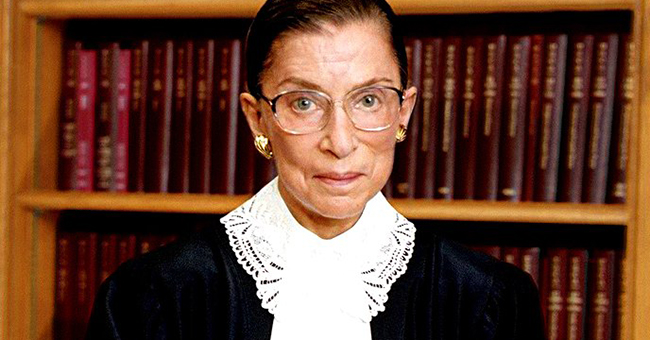
  • Ruth Bader Ginsburg

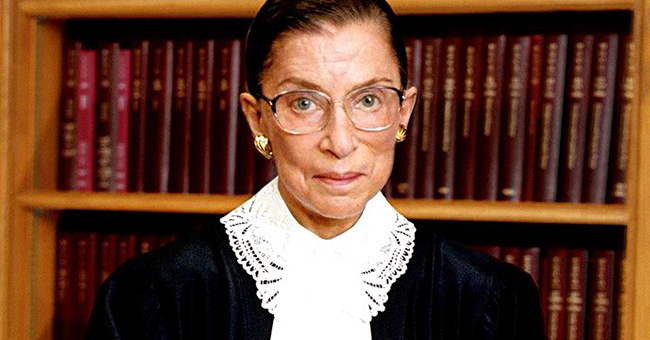
    Photo credit: Collection of the Supreme Court of the United States

    We were hoping Justice Ruth Bader Ginsburg would hold out through November. After serving twenty-seven years on the nation’s highest court, she passed away on September 18. She was eighty-seven. A legal, cultural, and feminist icon and champion of gender equality, she was an inspiration, a bastion of strength and courage. We asked some of our authors to reflect on her legacy and share their remembrances here.

    ***

    Rosemarie Day

    FROM THE PERSONAL . . .

    Justice Ginsburg showed that size doesn’t matter. Just over five feet tall, she proved that true stature does not need to come in a six-foot-tall, loud, male package. Her legacy is historic. She wielded incredible power through her words and deeds. As someone who has been routinely underestimated due to my size and gender, this is especially meaningful. She was also inspiring to older women, including my mother and her friends, proving that you can work out and do planks well into your eighties.

    She also exemplified persistence, arguing numerous cases before the Supreme Court, through which she built a path toward gender equality, step by step. As only the second woman appointed to the Supreme Court, she knew that “women belong in all the places decisions are being made . . .”

    . . . TO THE POLITICAL

    Which brings me to health reform. Her now famous statement that “women belong in all the places decisions are being made” is one of my all-time favorite quotes. I included it in my book as the lead-in to the chapter on health reform solutions. I, too, have seen that we cannot have true fairness in our policies if women are not at the table, in seats of power where they can decide or strongly influence the outcome. Decades ago, Ruth paved the way for this to happen. And health reform proves the point. Justice Ginsburg MUST be replaced with someone who will protect the ACA, as well as a woman’s right to choose whether or not she has a child. 

    Losing Ruth Bader Ginsburg at this critical moment threatens so many of the issues she fought for. In this fall’s election, we have to fight for her legacy, and our own lives. She deserves no less.”
    —Rosemarie Day, Marching Toward Coverage: How Women Can Lead the Fight for Universal Health Care


    Amanda Frost

    “Justice Ruth Bader Ginsburg (aka the ‘Notorious RBG’), taught the world that women’s rights were human rights. She believed that discrimination against women harmed everyone—not just women, but also men, children, families, the economy, and the larger society. As a lawyer for the ACLU in the 1970s, she regularly convinced the nine men on the Supreme Court to see discrimination that way, too. She then served on that Court for twenty-seven years, helping to shape the law through her own opinions. But for me personally—as for many other women in law—her greatest impact was to open the door of the mostly-male legal profession to all the women that have followed in her footsteps.”
    —Amanda Frost, You Are Not American: Citizenship Stripping from Dred Scott to the Dreamers


    Nancy Gertner

    “So many thoughts swirl following Ruth Bader Ginsburg’s passing; some I have written down, some I have yet to write. The first was a paean to her and her influence on my generation of women lawyers. She was all I wanted to be, as I said in a Washington Post op-ed. She put her considerable legal skills at the service of social change and was successful beyond her wildest expectations. She conceived of an expansive and robust view of equality, where men and women would be freed from the stereotypes that trapped them. She applied her vision to her litigation, spoke about it in her speeches, used it in her teaching and then embodied it in her judging. At the same time, I feel an overarching sense of peril—for the rights that my generation of women won over the course of forty years, the right to choose abortion first and foremost. Justice Ginsburg viewed reproductive rights as part of a skein of rights, each dependent upon the other. In situating abortion squarely in the fight for women’s equality, she tried to reframe the debate. Not about competing interests (fetal life vs. a woman’s rights), not just about abortion, but also birth control. If a woman cannot choose when or if to be a mother, no other protections mater. And I feel rage—flat-out rage (at who? The Divine?)—that she could not have lasted just few months longer, that the Republicans, by rushing through a Ginsburg replacement—as if they could—are dancing on her grave. This beyond the trope: elections have consequences. The Court the latest nominee, Amy Coney Barrett, may join has a fundamentally premodern view of American democracy, hearkening back to the years before the New Deal. Then I swing back to profound gratitude for knowing her at all.

    In 2014, I gave the Ruth Bader Ginsburg lecture for the New York City Bar Association. I ended by quoting a speech of Jill Ruckelshaus, a founder of the National Women’s Political Caucus, in the 1970s: 

    ‘We are in for a very, very long haul . . . . I am asking for everything you have to give. We will never give up . . . You will lose your youth, your sleep, your arches, your patience, your sense of humor, and occasionally . . . the understanding and support of the people you love very much. In return, I have nothing to offer you but . . . your pride in being a woman, all your dreams you’ve have had for your daughters, your future and the certain knowledge that at the end of your days you will be able to look back and say that once in your life you gave everything you had for justice.’   

    “And I turned directly to the Justice and said, ‘Justice Ginsburg, in all of the roles you have played, role model, advocate, judge, justice, one thing is clear. You gave everything you had for justice.’”
    —Nancy Gertner, In Defense of Women: Memoirs of an Unrepentant Advocate


    “First and foremost, I will remember Justice Ginsburg with gratitude for her pathbreaking work in creating, as legal scholar Linda Greenhouse has put it, ‘a new jurisprudence of sex equality’—work that has changed the life possibilities for millions of Americans. But I will also remember her for her extraordinary deftness at combining the roles of brilliant and highly respected Supreme Court Justice and popular culture icon. I will never forget the moment when asked how she felt about her new identity as the ‘Notorious RBG,’ a name clearly based on the rapper The Notorious B.I.G., she calmly answered, ‘Well, we have something very important in common—we were both born in Brooklyn.’ Or, how she, a well-known lover of opera, actually agreed to act in one! By agreeing to be such an icon, while never sacrificing her dignity, this octogenarian reached countless people, of all ages, and inspired them with a vision of gender equality.”
    —Carole Joffe, Dispatches from Abortion Wars: The Costs of Fanaticism to Doctors, Patients, and the Rest of Us  


    Rebecca Todd Peters

    “The last public event I attended was in February at Union Theological Seminary in New York where Ruth Bader Ginsburg gave the annual Women of Spirit lecture. It was evident then that her health was fragile, but it was also clear that her mind was not! Listening to her wisdom in the twilight of her life was a gift and a blessing. As we remember her legacy and consider the fight that is brewing over her replacement, I believe her own words offer us all something important to remember about the power of the Court. She said, ‘The Court is a reactive institution. If the people don’t care, nothing will change.’ Her legacy is also our responsibility to support and to defend.”
    —Rebecca Todd Peters, Trust Women: A Progressive Christian Argument for Reproductive Justice


    Polly Price

    “Ruth Bader Ginsburg worked tirelessly for justice and equality, with a humility and strength that has inspired me and countless others. As a personal remembrance, Justice Ginsburg generously wrote the foreword to one of my books, a judicial biography. Judge Richard S. Arnold, she wrote, was ‘ever mindful of the people law exists to serve.’ She recognized this value in others, because it was so much a part of her judicial work. She best served people, as she put it, by helping ‘repair tears in her society, to make things a little better.’ Justice Ginsburg leaves an incredible legacy and the inspiration to continue to fight for justice and equality.”
    —Polly Price, Plagues in the Nation (forthcoming)


    Scott W. Stern

    “The death of Justice Ginsburg has been simply crushing, for all the obvious reasons. The work of pioneering advocates like Ginsburg was what inspired me to go to law school in the first place, and her most famous accomplishments are so well-known that I do not have to repeat them here. Instead, I'll write something that may be fairly unpopular: I was never a fan of the ‘Notorious RBG’ nickname. For one thing, RBG was a liberal incrementalist; she was not a radical judge (if such a thing can even exist). But more importantly, I always felt this nickname diminished her—it reduced her to a symbol, an inoffensive logo to slap on a tote-bag or t-shirt. Yet RBG was more than a symbol, more than a logo, more, even, than a judge. She was, at her best, a clear-eyed and incisive and inclusive activist, one who never failed to credit Pauli Murray and Dorothy Kenyon for the legal theories on which she drew. As an advocate, Ginsburg challenged the death penalty, forced sterilization, and racially disparate sentencing, in addition to her well-known fights for gender equality. So many of us have benefited from her advocacy. The movement of which she was a part continues to embolden and inspire me, even in our dystopian present.”
    —Scott W. Stern, The Trials of Nina McCall: Sex, Surveillance, and the Decades-Long Government Plan to Imprison “Promiscuous” Women

    Ruth Bader Ginsburg

  • By Paul Ortiz

    Migrant workers harvest Lettuce at Lakeside Organic Gardens in Watsonville, CA.

    Migrant workers harvest Lettuce at Lakeside Organic Gardens in Watsonville, CA. Photo credit: US Department of Agriculture

    The outbreak of COVID-19 is far from the first time immigrants and the Latinx community have been taken for granted as the labor force that keeps this country running. Today, they face poverty wages, the threat of infection, white supremacist violence, and/or deportation. As Paul Ortiz shows in this selection from An African American and Latinx History of the United States, they faced poverty wages, displacement, white supremacist violence, and deportation in the past. So little has changed, including the demonizing rhetoric used against them. Sound familiar? And yet, they still thrive and resist.

    ***

    The reconfiguration of racial capitalism in the early twentieth century hinged upon the exploitation of agricultural workers who were fired, deported, or driven into cities when they tried to organize in defense of their interests. Local governments, growers, and vigilantes in the Sunbelt counties stretching from Orange County, Florida, to Orange County, California, put the hammer down on agricultural laborers seeking to achieve independence. Employers and their enforcers ruthlessly suppressed Mexican, Chinese, Sikh, Japanese, Indian, Italian, white, and African American farmworkers seeking to organize. In 1908, a group of armed white citizens marched into a camp of farmworkers of Indian extraction in Live Oak, California, and “burned it to the ground, beat and terrorized a hundred or more Hindus in the camp, drove them out of the community, and, in doing so, robbed them of about $2,500.” For decades, politicians in California used anti-Chinese racism as bluntly as the Democratic Party used anti-Black hatred in the South to consolidate power. Leading growers in Jim Crow Florida urged their industry to look to California for a solution to the “labor problem” in agriculture.

    The birth of modern agribusiness in the United States is a chronicle of dispossession. The Texas Rangers and other law enforcement agents played a key role in the bloody process of expropriating lands belonging to Mexican and Native American people. The historian Robert Perkinson writes, “From the beginning, the territory’s pioneering lawmen did less to suppress crime in any conventional sense than to force open lands for Anglo American settlement.” Mexican victims of the Texas Rangers’ furious attacks were quite often landowners with extensive holdings: “Title challenges and outright theft led to a loss of more than 187,000 acres of land for Tejanos in the lower Rio Grande Valley from 1900 to 1910.” The historian Zaragosa Vargas notes, “The eventual violent collapse of Tejano ranching society took place in the early twentieth century, when the Texas Rangers, intermediaries in the transition to capitalism, cleaned out the remaining Tejano landowners, summarily executing more than three hundred ‘suspected Mexicans.’” Over time, the pace of land theft quickened. Native Americans suffered most grievously, losing approximately ninety million acres of land in the decades after the implementation of the Dawes Act in 1887.

    Agribusiness in the Sunbelt was marked by an authoritarian pattern of social control whereby racism, patriarchy, and rule by force overwhelmed democratic institutions. Writing in 1928, the Trinidadian American sociologist Oliver Cromwell Cox noted, “The Southern leadership, because of its success in disenfranchising its colored labor force, has remained a turbulent, primitive group of capitalists. It has been relatively untouched by the democratic restraints operative in other sections of the country. It can be depended upon, therefore, to throw its vast weight against organized labor and to obstruct movements to implement the democratic gains of the people as a whole.” When one extends Cox’s thesis to the entire Sunbelt, it is apparent that the disenfranchisement of farm labor lent an antidemocratic thrust to rural American politics with regressive implications for democracy that can be felt up to the present day.

    In 1915, inspired by the land reforms of the Mexican Revolution, insurgent Tejanos and Mexicans promulgated the Plan de San Diego, which called for the reclaiming of land in southern Texas for Mexican people and Native Americans as well as an independent state for African Americans. The insurgents launched bloody attacks on white ranchers under banners reading “Equality and Independence,” but they were defeated, and a new reign of Ranger-led violence was initiated. It resulted in the murder of hundreds of Tejanos and “the forced displacement of thousands of Mexicans who fled for their lives across the border.”

    The US Border Patrol was created in 1924, ostensibly to provide border security. However, as the historian Kelly Lytle Hernández observes, officers of the agency quickly understood immigration enforcement as labor control. Hernández quotes one Texas farmer as saying, “We tell the immigration officers if our Mexicans try to get away to the interior, and they stop them and send them back to Mexico. Then in a few days they are back here and we have good workers for another year.” Mexican laborers who regularly crossed the border between Mexico and the United States to work in Texas—for example, from Ciudad Juarez to El Paso—were sprayed with DDT, Zyklon B, and other carcinogenic chemicals by US health inspectors who used these Mexicans as unwilling subjects in experiments with different delousing treatments. Jose Burciaga, who worked as a janitor in El Paso, recalled, “At the customs bath by the bridge . . . they would spray some stuff on you. It was white and would run down your body. How horrible! And then I remember something else about it: they would shave everyone’s head . . . men, women, everybody. . . . The substance was very strong.” On January 28, 1917, Carmelita Torres, a domestic worker, organized Latinas who refused to be deloused: they shut down traffic in El Paso and protested the racial stereotype of Mexicans as disease carriers.

    Employers and politicians invoked racialized stereotypes of Mexican workers to justify poverty wages and the denial of citizenship. Dr. George P. Clements, manager of the Agriculture Department of the Los Angeles Chamber of Commerce during the 1920s, denigrated the Mexican American worker: “He is ignorant of values; he knows nothing of time; he knows nothing of our laws; he is as primitive as we were 2,500 years ago. He does not know our language, the result being that he becomes a petty criminal through ignorant violations. . . . He rarely if ever takes out his citizenship, mixes in politics, or labor squabbles unless directed by some American group. He is the most tractable individual ever came to serve us.” Ralph H. Taylor, the executive secretary of the California Agricultural Legislative Committee, claimed, “The Mexican has no political ambitions; he does not aspire to dominate the political affairs of the community in which he lives.” Growers and state officials repeatedly emphasized that Mexican workers were preferable to any other form of labor because if they demanded rights or citizenship they could easily be deported.


    About the Author 

    Paul Ortiz is director of the Samuel Proctor Oral History Program and a professor of history at the University of Florida. He is the author of Emancipation Betrayed: The Hidden History of Black Organizing and White Violence from Reconstruction to the Bloody Election of 1920, An African American and Latinx History of the United States, and coeditor of the oral history Remembering Jim Crow: African Americans Tell About Life in the Segregated South. He lives in Gainesville, Florida.

  • Celebration

    Photo credit: Miguel Á. Padriñán

    Be Proud of Your Past, Embrace the Future. That’s this year’s theme for Hispanic Heritage Month. In times like these, the theme is a manifesto to live by. The books in our catalog about the lives and contributions of Hispanic/Latinx communities attest to it. Whether writing about Latinx folks joining fellow Black Americans throughout history in the shared struggle for civil rights, personal stories of crossing borders and of staking a claim in a place to call home for a new beginning, or even the human condition in all its complexities in poetry, our authors highlight how important these voices are in the ongoing narrative of the United States. Take a look at these titles from our catalog! Happy Hispanic Heritage Month!


    An African American and Latinx History of the United States

    An African American and Latinx History of the United States
    Paul Ortiz

    “A welcome antidote to the poison of current reactionary attitudes toward people of color, their cultures, and place in the US.”
    Booklist


    How Does It Feel to Be Unwanted

    How Does It Feel to Be Unwanted?: True Stories of Mexicans Living in the United States
    Eileen Truax

    “It celebrates the tenacity and resilience of a community whose stories are, without any doubt, part of the American experience.”
    —Reyna Grande, author of The Distance Between Us


    A Cup of Water Under My Bed

    A Cup of Water Under My Bed: A Memoir
    Daisy Hernández

    “Hernández writes with honesty, intelligence, tenderness, and love. I bow deeply in admiration and gratitude.”
    —Sandra Cisneros, author of The House on Mango Street


    Family Sentence

    Family Sentence: The Search for My Cuban-Revolutionary, Prison-Yard, Mythic-Hero, Deadbeat Dad
    Jeanine Cornillot

    “As incisive as she is lyrical, funny as she is profound, Cornillot dislodges the bolero-and-palm-tree nostalgia associated with Cuban American identity, and asserts claim to a new and very real history.”
    —H. G. Carillo, author of Loosing My Espanish


    How to Love a Country

    How to Love a Country: Poems
    Richard Blanco

    “A visionary hymn of love to the human beings who comprise what we call this country. Whether he speaks in the voice of an immigrant who came here long ago, or the very river an immigrant crosses to come here today, Blanco sings and sings.”
    —Martín Espada, author of Vivas to Those Who Have Failed


    Hunting Season

    Hunting Season: Immigration and Murder in an All-American Town
    Mirta Ojito

    “Compelling and complex . . . Told with the authority of a much-respected journalist, whose own experience as an immigrant lends this book the depth, insights, and poignancy that only someone of her experience can convincingly—and rightfully—convey.”
    —Oscar Hijuelos, Pulitzer Prize–winning author of The Mambo Kings Play Songs of Love


    An Incomplete List of Names

    An Incomplete List of Names: Poems
    Michael Torres

    “This spectacular collection of acutely conscious poems awakens readers to our universal need to belong. . . . He speaks to the constant naming and renaming of the self and others at the intersection of multiple identities and perceptions through an arresting voice that is provocative yet vulnerable, urban yet serene, mournful yet buoyant.”
    —Richard Blanco, author of How to Love a Country


    The Lost Apple

    The Lost Apple: Operation Pedro Pan, Cuban Children in the US, and the Promise of a Better Future
    María de los Ángeles Torres

    “Deeply felt and impressively researched, The Lost Apple undertakes the difficult work of reconciliation—between parents and children, exiles and revolutionaries, the Cuba of yesterday and the Cuba of today.”
    —Gustavo Perez Firmat, author of Life on the Hyphen: The Cuban-American Way


    The Weight of Shadows

    The Weight of Shadows: A Memoir of Immigration & Displacement
    José Orduña

    “A provocative and insightful work that is destined to introduce a new form to the world of creative nonfiction…This memoir will no doubt be required reading for years to come.”
    —Willie Perdomo, author of The Essential Hits of Shorty Bon Bon


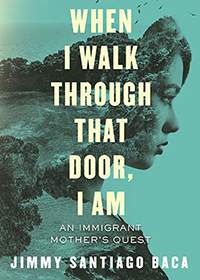
    When I Walk Through That Door

    When I Walk Through That Door, I Am: An Immigrant Mother’s Quest
    Jimmy Santiago Baca

    “This slim, salient volume will open readers’ eyes wide to the true human stories behind blaring headlines about immigration policies and debates.”
    Booklist, Starred Review

    Celebration

  • A Q&A with Angela Chen

    Angela Chen

    Author photo: Sylvie Rosokoff

    Ace: What Asexuality Reveals About Desire, Society, and the Meaning of Sex is the first book of its kind to offer an in-depth examination of asexuality, contextualize it within the queer community, and resist characterizing aces as a monolith. Journalist Angela Chen centers Ace on the experiences of asexual people and traces a path to understanding her own asexuality through a blend of reporting, cultural criticism, and memoir. She candidly explores the misconceptions around asexuality and challenges us to rethink the meaning of pleasure and intimacy. Our intern, Priyanka Ray, caught up with Chen to chat with her about it.

    Priyanka Ray: In Ace, you argue that the experiences of aces can outline the constrictive system of compulsory sexuality and reveal alternate forms of eroticism. What does a world without compulsory sexuality look like, and what steps can we take to dismantle this system?

    Angela Chen: A world without compulsory sexuality doesn’t mean desexualizing everything. It means removing the “compulsory” part. It means removing pressures and presenting more ways of how to live. It means more choice. People will be able to choose what they want—a lot of sex, no sex, and so on—without pressure or shame or judgment and without feeling like they need to explain themselves to doubters. People will be encouraged to really question what pleasure is and whether it has to be sexual and find what other forms of pleasure exist in their lives. There will be many types of relationships and relationship models, both in real life and expressed in popular culture. Drug companies won’t prey on people’s fears about low desire to sell medication; there will be more equality in relationships when it comes to desire and consent; and sex ed will include the ace perspective too. 

    It’s wonderful when people learn about asexuality and the ace lens and see things differently, but it’ll take so long to get anywhere if we wait for people to discover this way of thinking one by one. I really do believe that it’s important to politically organize, to lobby and campaign and work together to show that there are many ways to live a full life and we should all get to choose the way that works best for us. 

    PR: You write that performing sexuality is often a prerequisite for male identity and social inclusion. How do the experiences of asexual men encourage us to deconstruct gender expectations?

    AC: There is a pervasive message that “real men” have a lot of sexual desire and are supposed to be able to score with a lot of people. Especially in the cis and hetero context, men are encouraged to speak about women sexually as a bonding activity and as a way of proving their masculinity. Ace men say that this has made them feel like outcasts, encouraged them to “play along” and pretend to have crushes they don’t, encouraged them to have unwanted sex with partners, and at times made them question their gender. One trans man I interviewed said that before his transition, people were fine with what they saw as his sexual hesitancy, but afterward told him that he needed to just “get out there.”

    It’s not a secret that these pressures exist, especially because there’s been a lot of discussion about incels (involuntary celibates) in the past couple of years. But the experiences of ace men show that the same pressures that affect incels affects this seemingly opposite group of ace men. In fact, ace men say that people sometimes think they’re actually incels who are just pretending to be asexual because they’re bitter that they can’t get laid. I’m not an incel apologist—plenty of people feel unattractive and excluded without becoming entitled—but this shows how just deeply the idea that men have to be sexual is ingrained. It also shows that working to reduce this pressure would help a lot of different groups of men. 

    PR: With the advent of sex positivity, sex has become viewed as a way to perform feminist politics. Therefore, women who do not want or enjoy sex are seen as conservative and repressed by patriarchal control. How can we acknowledge that women’s sexual liberation is political while decentering sex from feminist politics?

    AC: Sex is political, of course. Many women are shamed by double standards and don’t feel comfortable exploring their sexuality. I would never contest this. But sexual variation also exists. People are different! There are asexual women out there who simply don’t experience sexual attraction, and it’s not because of shame or repression or because they need to try more sex positions or sex toys. And there’s nothing wrong with that. (It’s also true that you can be both shamed into feeling disconnected from sex and discover that you’re ace. A lot of nuances exist.)

    It’s important for people to walk the line between encouraging women to explore, which is good, while also believing them and not being pushy if they say that they’re apathetic about sex and simply not that interested. Don’t assume that, deep down, every woman has a high libido and just needs to throw off the chains of repression to discover it. In general, I advocate letting other people be the experts on themselves. 

    I also think it’s important to have more representations of asexuality in popular culture, especially feminist popular culture. Very few feminists would explicitly say that not having sex makes you repressed or that having a lot of sex makes you more feminist or cool—but the message of sex as liberation and sex as cool and sex making you more fun is still present. It’s a feeling in the air and in the culture. I don’t have a problem with explicit content about desire, but I don’t think it’s good for any one message to dominate, because those messages can and do make ace women (and anyone ace-adjacent or anyone who simply isn’t that into sex) feel ashamed. We can keep those messages and also have different stories and different messages brought to prominence, too.

    I always advocate for focusing on the power of organizing and collective action. Ace women can feel like they’re not “feminist enough” because they don’t fulfill this supposed requirement that feminist women personally enjoy sex a lot. But the greater potential of organizing is that you work politically to help others and to change structures around a wide variety of issues. Who cares if you don’t care about sex if you’re writing to politicians and campaigning and lobbying for better pay and domestic abuse protections and uplifting women of color? That’s the work that will change systems and do so much good for so many people. 

    PR: Throughout the book you illustrate how understanding ace experiences can liberate all of us from harmful cultural narratives, particularly those surrounding consent. What new ways of thinking about and practicing consent do asexual people’s experiences with sex give us? 

    AC: There are two things I’d like to highlight. One is this often unspoken belief that while nobody should have unwanted sex with strangers, within a relationship you need a “good enough reason” to say no. A good enough reason is that you’re sick or stressed or that your partner is treating you badly. “I don’t want to” is not a good enough reason. It means you’re withholding and selfish. I think this idea comes from the belief that everyone has a baseline of sexual desire; so if everyone has that baseline and nothing is wrong, why wouldn’t you want to have sex with someone if you love them? 

    This kind of reasoning really makes aces feel like “no” within relationships is not okay, that they can say “no” right now but cannot say “no” forever and have to keep fending their partner off. (Well, this reasoning can make everyone feel this way, but the pressure is especially acute for aces.) My position is this: if we believe that people should never have unwanted sex with strangers, no matter how good of a person the stranger may be, we should believe that people should never have unwanted sex with their partners, no matter how good and loving their partner is. Entering a relationship should never mean giving up a measure of consent. I should add that partners are free to not date someone if sex is a dealbreaker, and that is completely their prerogative. But there’s a difference between setting your own boundaries and feeling entitled to sex without ever discussing it and then shaming the other person.

    Similarly, there is also a very common narrative that the lower-desire partner is “broken” and it’s their responsibility to work on themselves to fix their libido. But there are two people in a relationship, and this is a shared problem that needs a shared solution. If one person wants to have sex just as much as the other person wants not to have sex, why is the preference of the higher-desire partner given more moral weight? Shouldn’t they be equal, because they’re equal people in the relationship? There are so many books on learning to desire again, whereas it’s rare to ask the higher-desire partner to have less sexual desire. Asking someone to work on themselves to have more sex seems reasonable, but asking someone to try to be celibate or have less sex seems like asking too much. 

    Don’t get me wrong. Of course I acknowledge that most people in relationships have and enjoy sex and that having sex is “normal”—insofar as “normal” means “statistically common.” But I argue that “statistically common” is less important in a relationship than carefully considering what the two people in the relationship want and what works for them and how each can feel valued and learn to compromise. In that case, the preferences of both people should have equal weight.

    PR: What insights would you want allo (non-asexual) readers to take away from your book?

    AC: The questions that aces have regarding sexuality and desire are questions that almost everyone (ace or not) will deal with at some point, and a lot can be gained from the ace perspective. Learning about asexuality can encourage allos to rethink their very definitions of sexual attraction and sexuality. It can help them consider more carefully the ways that sexuality intersects with race and disability and gender; the ways we privilege romantic relationships over friendships; the invisible inequalities in relationships and consent. It can help them think through questions such as the difference between platonic and romantic feelings and the difference between “normal” low-sexual desire and asexuality and a medical condition. The ace lens really offers new ways of evaluating sexual ethics and pleasures and intimacy.


    About Angela Chen 

    Angela Chen is a journalist and writer in New York City. Her reporting and criticism have appeared in the Wall Street JournalAtlanticGuardianParis ReviewElectric LiteratureCatapult, and elsewhere. Chen is a member of the ace community and has spoken about asexuality at academic conferences and events including World Pride. Find her on Twitter @chengela or at angelachen.org.

  • By Alan Levinovitz

    Caster Semenya

    Photo credit: Citizen59

    In the wake of the decision to bar South African Olympic champion Caster Semenya from participating in the women’s 800m, Alan Levinovitz reminds us in this excerpt from Natural: How Faith in Nature’s Goodness Leads to Harmful Fads, Unjust Laws, and Flawed Science of the long and fraught history of policing the male/female binary in sports, and the role that “naturalness” plays in the process.

    ***

    The value of inclusiveness, like fairness, is written into the International Association of Athletics Federations’ (IAAF) official constitution. One of the organization’s primary goals is “to strive to ensure that no gender, race, religious, political or other kind of unfair discrimination exists, continues to exist, or is allowed to develop in Athletics in any form, and that all may participate in Athletics regardless of their gender, race, religious or political views or any other irrelevant factor.”

    That gender shouldn’t affect one’s ability to participate in athletics is now taken for granted, but only after overcoming centuries of pseudoscientific sexism arguing that women were naturally unfit to compete. In ancient Greece, women could not participate in the Olympics, and married women were prohibited from watching. They were also left out of the first modern Olympics, since, in the words of Baron Pierre de Coubertin, founder of the games, their inclusion would be “impractical, uninteresting, unaesthetic, and incorrect.”

    Even after women were allowed to participate, it was only in those sports believed to accord with their naturally delicate physiology: tennis, croquet, sailing, and golf. Experts warned that more strenuous events might cause women to age prematurely, their uteruses to fall out, and perhaps turn them into men. When the 800 meters was opened to women in the 1928 Olympics, scandalized journalists exaggerated or invented the fatigue experienced by the competitors. “Below us on the cinder path were 11 wretched women, 5 of whom dropped out before the finish, while 5 collapsed after reaching the tape,” claimed one account in the New York Evening Post. “It is obviously beyond women’s powers of endurance, and can only be injurious to them,” asserted another writer in the Montreal Daily Star. In fact, only nine women had run the race, all of them finished, and only one could conceivably be characterized as collapsing. But the truth didn’t matter. In accordance with an invented version of natural law, women were banned from the 800 meters until 1960.

    When it comes to women’s participation in sports, there’s an important distinction to be drawn between two types of discrimination. The first type of discrimination bars women from participating in sports thought to be incompatible with women’s biology, such as ski jumping, the 800 meters, and boxing (men’s only until the 2012 Olympics). This type of discrimination has been repeatedly shown to have no basis in science. When it comes to women’s ability to participate in and excel at any sport, gender should be considered an “irrelevant factor,” as the IAAF describes it.

    The second type of discrimination is that which divides men and women for the purposes of competition. With the exception of equestrian events and sailing, in every Olympic sport, and in nearly every professional sport, men compete against men and women compete against women. Some have suggested that having men’s and women’s categories also represents an unfair form of discrimination, and ought to be replaced with different classificatory categories that more accurately reflect the physical traits demanded by a given sport, a practice that already has precedent in the use of weight classes. “For example, for a 100m sprinter, the ideal athlete would perhaps be made up of muscle mass and fast-twitch fibres,” writes Roslyn Kerr, a sociologist of sport, “Therefore, rather than classifying by sex, sprinters could be classified by their level of muscle mass and fast-twitch fibres.”

    Despite such critiques, advocates of female participation in sports generally recognize the need for, and benefits of, sex segregation. The exercise physiologist Ross Tucker puts it straightforwardly: “Being genetically male is the single biggest performance advantage in sport.” The advantage enjoyed by biological males exceeds that of other comparatively advantageous traits, including height and weight. A 2010 study quantified the gap between men’s and women’s top performances in eighty-two different events, from swimming to speed skating. Starting in 1896, the gap narrowed significantly over time as women were allowed to participate in sports. But by 1983 the gap stabilized “at a mean difference of 10.0% ± 2.94 between men and women for all events.” The gap depends on the sport, from 5.5 percent for 800-meter freestyle swimming to 36.8 percent for weightlifting. Nevertheless, the overall conclusion is clear: “Results suggest that women will not run, jump, swim or ride as fast as men.” Discrimination of the second type is based on good science, not pseudoscientific sexism, and there’s a very strong case to be made that it is beneficial for elite female athletes, who would not otherwise get to compete at the highest levels of their sport.

    However, policing the division between men and women in sports has a long and fraught history. Since men have the biological advantage, the only athletes subject to sex testing have been women. In the 1960s, when official testing standards were first adopted by the International Olympic Committee and the IAAF, female athletes were subject to incredibly humiliating inspections, including being paraded naked in front of doctors who would inspect their genitalia and pronounce them genuine women. Widespread indignation led to the adoption of chromosome testing, but that proved equally controversial. Unlike weight and height, biological sex occasionally defies simple forms of measurement. This fact was vividly and tragically illustrated in a horrific ordeal endured by the Spanish hurdler Maria José Martínez-Patiño. In 1985, she was looking forward to competing in the World University Games in Japan as a woman, just as she always had. Now a physician, Martínez-Patiño has made public the painful details of what happened. “Our team doctor told me—in front of the teammates I sat with on the night before my race—that there was a problem with my result,” she recalls. The doctor told her to fake an injury and withdraw from the race. She agreed, devastated, not knowing what exactly had gone wrong. “Did I have AIDS? Or leukaemia, the disease that had killed my brother?”

    Two months later, the official results arrived. She was 46, XY—the male karyotype. But because of a condition known as androgen insensitivity, Martínez-Patiño was insensitive to testosterone, which is why no one, including her, had any idea: “When I was conceived, my tissues never heard the hormonal messages to become male.” Eventually her story was leaked to the press, with catastrophic results:

    I was expelled from our athletes’ residence, my sports scholarship was revoked, and my running times were erased from my country’s athletics records. I felt ashamed and embarrassed. I lost friends, my fiancé, hope, and energy. But I knew that I was a woman, and that my genetic difference gave me no unfair physical advantage. I could hardly pretend to be a man; I have breasts and a vagina. I never cheated.

    Martínez-Patiño successfully appealed her disqualification, and after a few different attempts to standardize the testing practices, the IOC gave up and adopted a “suspicion-based” approach. If someone seemed like they might not be a woman, well, then they’d be subjected to further testing.

    Unsurprisingly, this approach failed miserably. In 2009, South African runner named Caster Semenya, then eighteen years old, won gold at the Berlin World Championships, crushing her rivals in the once-forbidden-to-women 800 meters. Some of them were suspicious. “These kind[s] of people should not run with us,” stated the Italian sixth-place finisher Elisa Cusma. “For me, she’s not a woman. She’s a man.” The IAAF responded by requiring tests, and, as in Martínez-Patiño’s case, news of the testing leaked to the press. Some members of the media mocked Semenya’s “masculine” appearance and called her a hermaphrodite. She reportedly spent two hours with her legs in stirrups to facilitate examination and photographs of her genitalia, and eventually went into hiding, undergoing treatment for trauma.

    In the wake of the Semenya debacle, the IAAF issued a new standard for competing as a female, this time based on testosterone. Again, there were problems. The new standard disqualified all female competitors with hyperandrogenism, a rare condition that causes women to have testosterone levels that are in the typically male range, which, some speculate, is what Semenya has. In 2014, testing revealed that the Indian sprinter Dutee Chand was also above the limit set by the IAAF for female competitors. The Sports Authority of India subsequently ruled that Chand “will still be able to compete in the female category in [the] future if she takes proper medical help and lowers her androgen [testosterone] level to the specified range.”

    Appalled at the thought of having to artificially lower her naturally produced androgen level with medication, Chand appealed her case to the Court of Arbitration for Sport (CAS), the same administrative body that considered Pistorius’s case. The naturalness of her hyperandrogenism, as well as the potential side effects of a medical intervention, was central to her case. She argued that any advantage she enjoyed was a “natural genetic gift,” and that in no other case do natural physiological advantages disqualify an athlete. “These interventions are invasive, often irreversible and will harm my health now and into my future,” she said in a statement to the CAS. “I am unable to understand why I am asked to fix my body in a certain way simply for participation as a woman. I was born a woman, reared up as a woman, I identify as a woman and I believe I should be allowed to compete with other women, many of whom are either taller than me or come from more privileged backgrounds, things that most certainly give them an edge over me.”

    Chand’s case was taken up by numerous experts, including the Stanford bioethicist Katrina Karkazis. “When a man has unusually high levels of testosterone, the next step is a carbon isotope test,” she told me. “If it’s deemed to be natural, the case is closed. But for women, if it’s natural the case is not closed, and you get ushered into more tests.” Although Chand won her appeal, the issue is far from settled. In late 2018, the IAAF issued new testosterone limits that would, once again, disqualify Chand and other hyperandrogenous female athletes. The limits sparked outrage, and Caster Semenya made a rare public statement denouncing them. “I don’t like talking about this new rule,” she said. “I just want to run naturally, the way I was born. It is not fair that I am told I must change. It is not fair that people question who I am. I am Mokgadi Caster Semenya. I am a woman and I am fast.” (As of this writing, Semenya’s fate still hangs in the balance. By the time you read these words, it may have been settled.)

    The IAAF’s clarifying comments are notably unhelpful, lurching between recognition that sport “seeks to celebrate” a combination of “natural talent and sacrifice and determination” while also maintaining that high testosterone levels are a unique natural biological advantage that should be regulated. Part of the dilemma is that the distinct biological advantage enjoyed by men over women cannot be translated into a rule about testosterone. Hyperandrogenous women are not men. They do not exhibit the same kind of dominance in their respective sports that men would. Nevertheless, the question remains open: If testosterone levels fail to capture that advantage, how can regulatory bodies like the CAS fairly adjudicate the division between men’s and women’s sports.


    About the Author 

    Alan Levinovitz is associate professor of religious studies at James Madison University. In addition to academic journals, his writing has appeared in Wired, the Washington Post, the AtlanticAeonVoxSlate, and elsewhere. He is the author of Natural: How Faith in Nature’s Goodness Leads to Harmful Fads, Unjust Laws, and Flawed Science. Connect with him on Twitter at @AlanLevinovitz.

  • A Q&A with Vicki Mayk

    Vicki Mayk

    Author photo: Steve Husted Knot Just Any Day

    Owen Thomas, star football player at Penn, took his own life when he was only twenty-one. The result of the pain and anguish was caused by chronic traumatic encephalopathy (CTE). His landmark case demonstrated that a player didn’t need years of head bashing in the NFL, or even multiple sustained brain concussions, to cause the mind-altering, life-threatening, degenerative disease.

    In her book Growing Up on the Gridiron: Football, Friendship, and the Tragic Life of Owen Thomas, award-winning journalist Vicki Mayk explores his story, the community touched by it, and the cultural allure of football. Her exploration raises a critical question: does loving a sport justify risking your life? Beacon Broadside editor Christian Coleman caught up with Mayk to chat with her about it and to ask what the impact of high schools and colleges canceling or delaying football seasons has had during the pandemic.

    Christian Coleman: Tell us about what inspired you to write Growing Up on the Gridiron.

    Vicki Mayk: What really drew me to the story was Owen Thomas, the young man who is at the center of my book. When he died by suicide in April 2010, I was invited to join a private memorial page that friends set up for him on Facebook. The way that everyone talked about him—from his teammates at his high school near Allentown, PA, and at the University of Pennsylvania to friends, former teachers, casual acquaintances—was mesmerizing. They told stories about him being a warrior on the field and one of the kindest humans off the field. One girl in his high school said Owen changed the energy when he entered a room. I wanted to answer the question: Who was Owen Thomas and how did someone who was so beloved by so many come to this tragic end? When it emerged that he had chronic traumatic encephalopathy, what we know as CTE, that added another important dimension to the story.

    CC: How did you find out about the RIP Owen Thomas memorial page on Facebook?

    VM: I actually never met Owen, but a series of events made me feel as if this story chose me. For nearly thirty years, I had lived five minutes away from Union United Church of Christ in Neffs, PA, where Owen’s father, the late Rev. Thomas N. Thomas, was pastor. One day, I decided to go to a service there and began attending somewhat regularly. I don’t know why I chose that particular time to begin attending a church I had passed almost every week for decades. It meant that, when Owen died, I was invited to join the memorial page on Facebook.

    CC: His friendships are at the heart of the book. What was it like to interview his friends and teammates to learn about his story?

    VM: It was an emotional experience to connect with these young men and women and hear them reminisce about Owen. I stayed in touch with his friends, family, and teammates off and on for nearly a decade after his death, and that longitudinal look at their lives is an integral part of the book. What struck me is that many still shed tears over his loss three, five, even seven years after his death. They keenly felt his loss at key milestones in their lives. One of his friends wore one of his t-shirts under his tux on his wedding day so that Owen would be present for him. I felt they had entrusted me with their memories and were relying on me to document their friendship with someone they had loved.

    CC: Even though the dangers and risks of long-term harm are numerous, football matters deeply to many young men like Owen Thomas. Why is that the case?

    VM: I learned that the reason young players love this game has as much to do with relationships formed on the team as it does about the game itself. In the book, I refer to this as the brotherhood of football. As human beings, we crave belonging, and football gives young men a powerful sense of belonging. Yes, they enjoy the sport. But bound up with that are the relationships they form on a football team.

    CC: During the pandemic, there has been a lot of disappointment over high schools and college football conferences canceling or delaying football seasons. Does your book offer any insights about that?

    VM: Football is central to American culture. That is something that has certainly been well documented over the years. Losing it is jarring. But I think my book highlights a key issue about what losing a football season during the pandemic specifically means to high school and college players. Jonathan Holloway, the president of Rutgers University, was interviewed on National Public Radio about canceling football season, and he talked about how much a student athlete’s identity is wrapped up in playing their sport. He said losing that identity is “destabilizing.” My book examines how players’ personal identity is developed by playing football and about how it defines them. Losing a season means disrupting that identity.

    CC: And lastly, what would you like readers to take away from reading the book?

    VM: I want readers to realize that, given the passion for football in America by players on all levels and by fans, there aren’t easy answers about the future of the sport. I also hope my book will raise awareness about head injuries. If you are a fan, be aware of the risks this game poses for the players you idolize. If you are a player, be aware of the risks you are taking in playing. And if you are a parent, be aware of the fact that research has found that the earlier boys start playing and the longer they play, the greater the risk. Make informed choices. Finally, I hope Owen’s story raises awareness about suicide. Suicide is a complicated issue. It sometimes happens despite treatment and the support of friends and family. But anyone who has lost someone to suicide will tell you: If you see a friend struggling, reach out.


    About Vicki Mayk 

    A former reporter for the Pittsburgh Post-GazetteVicki Mayk has enjoyed a 35-year career in journalism and public relations. Her love affair with football began at the age of nine, when her father first took her to a Steelers game. She is the author of Growing Up on the Gridiron: Football, Friendship, and the Tragic Life of Owen Thomas. Connect with her at vickimayk.com and follow her on Twitter (@VickiMayk).

  • By Pamela D. Toler

    Mulan of Liang

    Mulan of Liang by He Dazi (赫達資) from “Gathering Gems of Beauty” (畫麗珠萃秀).

    The time to wait for the release of Disney’s live-action Mulan is finally over. For a price. Delayed again and again and again because of the pandemic, the film will be available to stream on Disney+ for $30. Say what? But if you’re in no mood to throw any coin at the House of Mouse, here’s another option. Read this selection from Pamela D. Toler’s Women Warriors: An Unexpected History about her. In all its variations and incarnations (Conglomoland is late to the adaptation party with its animated and live action versions), the story of the cross-dressing warrior is one of many in overlooked history, proving that women have always fought—not in spite of being women but because they are women.

    ***

    The Chinese heroine Hua Mulan is one of the oldest and most enduring examples of a woman who becomes a warrior because of her role as a daughter1.

    Scholars have argued for centuries over whether or not Mulan was a historical figure. At some level, it doesn’t matter as far as piecing together her story is concerned. The available information about her life is scarce to nonexistent, even by the often-shaky standard of what we know about other women warriors of the ancient world.

    Our oldest source for her story is the “Poem of Mulan,” which appears in a twelfth-century poetry anthology compiled by Guo Maoqian2, who attributes it to a sixth-century collection that no longer exists. The poem is anonymous, undated, and three hundred words long. A few details, such as the use of the title “khan” rather than “emperor,” suggest the poem dates from the Northern dynasties period (386–581 CE)3.

    For the most part, I chose not to discuss the stories of mythical women warriors, because there are plenty of historical examples to consider4. But Mulan is a special case. She is as well known in China as Joan of Arc is in the West. Despite the absence of biographical details in the original source, several regions of China claim her as their own folk heroine.

    Mulan’s story is familiar to American audiences thanks to the 1998 Disney film Mulan5. But the Walt Disney Company is simply one in a long tradition of Mulan adapters, and by no means the most fanciful in its interpretation. Over a period of 1,500 years, Mulan’s story has been told in Chinese operas, plays, folk tales, and now video games.

    While the versions differ in the details, the basic structure of the story remains the same: Threatened by invaders from the north, the emperor (or the khan) conscripted soldiers to defend the country. Because her father was too old to fight and her brother too young, Mulan purchased a horse, weapons, and armor; disguised herself as a man; and joined the army to fulfill the family’s conscription obligation.

    The original poem gives us a brief, vivid impression of Mulan’s life as a soldier, but no details:

    She did not hear her parents’ voices, calling for their daughter,
    She only heard the whinnying of Crimson Mountain’s Hunnish horsemen.
    Myriads of mile: she joined the thick of battle,
    Crossing the mountain passes as if flying.
    Winds from the north transmitted metal rattles,
    A freezing light shone on her iron armor.
    A hundred battles and the brass were dead;
    After ten years the bravest men returned6.

    This is war from the common soldier’s viewpoint, stripped down to misery and poetry. Later versions of the story fill this space with heroic deeds, gender-problematic romances, and, in the Disney version, a smart-mouthed dragon sidekick.

    At the end of their tour of duty, Mulan and her comrades met with the emperor, who offered them honorary ranks, appointments at court, and rewards “counted in the millions.” (In one late version, the emperor discovers her gender and offers to make her his consort. She tells him she would rather die.) Mulan refused everything; all she wanted was a fast horse (or sometimes a camel) to take her home. Once there, she went into the house and put on a woman’s clothing and makeup. When she came back out, her army buddies were flabbergasted by the truth. During the ten (or sometimes twelve) years she served in the army, none of her fellow soldiers suspected she was a woman7.

    In Mulan’s story, the link between being a daughter and becoming a soldier is direct and irrefutable. Chinese readers/listeners/viewers would understand her action as an extreme act of filial piety. In fact, in one version of the story she receives the posthumous title Filial-Staunchness. Filial piety—respect for and obedience to one’s parents—is the foundation on which Confucian society stands. Children are loyal to their parents. Wives are loyal to their husbands. Subjects are loyal to the ruler. The ruler is loyal to the kingdom itself. If everyone performs their duties to those above them in the hierarchy, society flourishes. If duties are not faithfully performed, chaos reigns, the emperor loses the mandate of heaven, and dynasties fall. It is an alien concept for those of us who grew up in a culture defined in terms of rights rather than social duties. But it is as powerful a fundamental social principle as “all men are created equal.”

    Seen through this lens, Mulan became a warrior in order to protect her father, her family, and the social order as a whole. She preserved society’s norms by stepping outside them.


    1. Also known as Wei Hua Hu, Fua Mulan, or Wei Mulan. Names don’t always travel well across time, space, and transliteration.
    2. Who is known to history primarily for said anthology. Women aren’t the only people who leave thin trails in the dusts of time.
    3. Just to make it clear how vague all this is: there are scholars who disagree and place the poem, and therefore Mulan, in the Sui dynasty (581–618 CE). Imagine how difficult it would be for future historians to write about Abigail Adams if they didn’t know whether her letters dated from 1776 or 1976.
    4. No Amazons, except once or twice in passing.
    5. Disney’s Mulan wasn’t the first appearance of the Chinese woman warrior in American popular culture. Under the name Fa Mu Lan, she is a central image in Maxine Hong Kingston’s The Woman Warrior: Memoirs of a Girlhood Among Ghosts. Published in 1976, Kingston’s book opened the genre of memoir to women and minority writers in the United States.
    6. Quotations from “Poem of Mulan” are from Mulan: Five Versions of a Classic Chinese Legend, with Related Texts, ed. and trans. Shiamin Kwa and Wilt L. Idema (Indianapolis: Hackett Publishing, 2010), 1–3.
    7. This is the major point at which the Disney version departs from the basic shape of the story. In Disney’s Mulan, her fellow soldiers discover her deception when she is wounded and reject her—at least until she saves the empire. The change is powerful and reflects the historical experience of many women who fought disguised as men (except for single-handedly saving the empire). Being wounded always brought with it the risk of exposure.


    About the Author 

    Pamela D. Toler goes beyond the familiar boundaries of American history to tell stories from other parts of the world, as well as history from the other side of the battlefield, the gender line, or the color bar. She is author of The Heroines of Mercy Street: The Real Nurses of the Civil War and Women Warriors: An Unexpected History, among other books. Her work has appeared in Aramco WorldCalliopeHistory Channel MagazineMHQ: The Quarterly Journal of Military History, and on Time.com. Visit her website and follow her on Twitter at @pdtoler.