• A Discussion with Thomas Norman DeWolf and Sharon Leslie Morgan

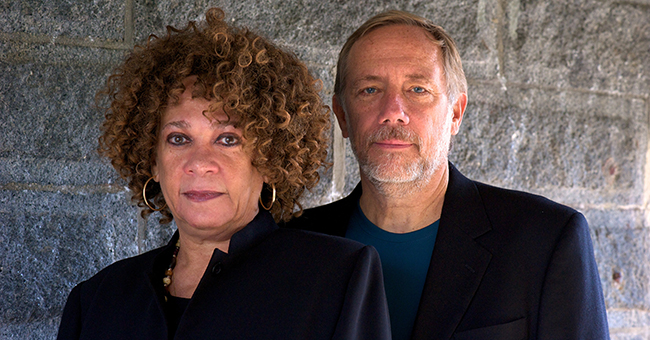
    Sharon Leslie Morgan and Thomas Norman DeWolf

    Author photo: Kristin Little

    In light of our current fractured moment, Thomas Norman DeWolf and Sharon Leslie Morgan discussed the roots of our division and the forms reconciliation can take by reexamining their book Gather at the Table: The Healing Journey of a Daughter of Slavery and a Son of the Slave Trade. The discussion took place during their Unlearning Division, Coming Together online event on July 15, moderated by the book’s editor Gayatri Patnaik.

    One of the forms of reconciliation they spoke about was reparations. Amid the protests over the unending police shootings of unarmed Black people, some US cities, such as Providence, Rhode Island, and Asheville, North Carolina, have proposed ways to finally work toward reparations and to funnel more funding toward programs for Black communities. Here’s what Morgan and DeWolf had to say.

    Gayatri Patnaik: How do you feel about the government doing some type of reparations for descendants whose ancestors were enslaved?

    Sharon Leslie Morgan: I absolutely feel like there should be reparations. But I feel they do not have to take the form that people immediately think about, which is, “Write me a check.” Because if you write a check, you’re absconding. You’re not really engaging the process. I think that it takes many forms.

    The best form would be investing money in repairing the damage, not as much to individuals as to people on a societal level. There should be scholarships. There should be changes in mortgage lending. There should be things like that to give economic benefit to individuals, but not necessarily in the form of a check. And I would urge the House Bill 40, which was presented by Congressman John Conyers for years and years and years and never got any consideration. The US government has even not wanted to look at the possibility of researching what needs to be repaired. That is actually a first step toward reparation, which is looking at what happened, what needs to be repaired, and how much that would be worth, how much should be invested in that.

    Thomas Norman DeWolf: I would support writing the checks to individuals. I look at the wealth in this nation, the disparity of wealth and how much more wealth white families own and control compared to African-descended families. The GI Bill at the end of World War II was supposed to support GIs coming home. Ninety-eight percent of that money went to white GIs who then built the all-white suburbs, left the cities. Our schools are funded by property taxes, and these all-white suburbs, with all of their higher property values, built these really nice schools. And the schools in the inner cities suffer as a result. So white folks have ten or fifteen times the wealth over Black folks.

    [My organization] Coming to the Table has a reparations working group. We have a twenty-three-page reparations guide on what individuals and groups can do in terms of history, healing, connecting, and action. It’s a wonderful document and it’s available on the website.

    I agree with Sharon on scholarships and what have you. I just watched a documentary on Asbury Park, New Jersey, and how fifty years ago this month, race riots just decimated this town that was famous for its music primarily. Over the five decades since then, all the repair has been done on the east side of tracks where all the white people live. On the west side of the tracks, where Black folks and Italian folks and people of color have lived, it’s still just devastated. That happens that way throughout the United States, where there’s always support for people who look like me.

    Look at the parallels right now, how Congress provided the additional $600 per week in unemployment because people have lost their jobs. Well, this, to me, is much longer history of people being discriminated against who should be provided direct financial support. People of color, to Black folks in particular. Legacy of slavery is a perfectly reasonable approach to dealing with the economic disparity that has been set up within the systems of this country. It doesn’t take away from me. This is white people’s biggest fear. The word ‘reparations’ strikes fear in white people.

    What we’re talking about is repair. We’ve created a breach. That’s what it talks about in the Christian bible—repairing the breach, the brokenness that we have created since the founding of this nation. And it’s going to take money. It’s going to take effort. It’s going to take change. Not always easy. But how can we imagine a difference in this world where we look at repair for the sake of repair, not repair for what’s in it for me or what’s going to cause me and my family harm. Get past that. Get past living in fear and imagine a better world we all know is possible when we create a world that is more equitable financially, educationally, justice-wise.


    If you weren’t able to attend their event, you can watch it here in full.


    About the Authors 

    Thomas Norman DeWolf is the author of Inheriting the Trade: A Northern Family Confronts Its Legacy as the Largest Slave-Trading Dynasty in U.S. History, and co-author of Gather at the Table: The Healing Journey of a Daughter of Slavery and a Son of the Slave Trade(both published by Beacon Press). His latest, The Little Book of Racial Healing, was published in January. Tom DeWolf facilitates workshops and speaks regularly about healing from the legacy of slavery and racism at colleges, conferences, and other venues throughout the United States, and serves as Executive Director for Coming to the Table. Learn more at http://tomdewolf.com/. Follow him on Twitter at @TomDeWolf and on Facebook.

    Sharon Leslie Morgan is co-author of Gather at the Table: The Healing Journey of a Daughter of Slavery and a Son of the Slave Trade (Beacon Press). She is the founder of OurBlackAncestry.com, a website devoted to African American family research.

  • A Q&A with Hilary Levey Friedman

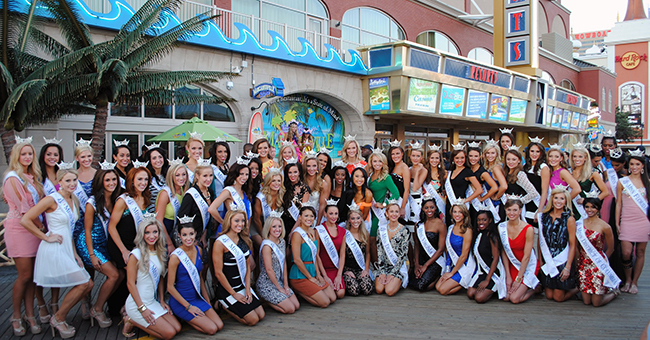
    Miss America contestants

    Miss America contestants. Photo credit: skeeze

    This year, Miss America, turns one hundred! Many predicted that pageants would disappear by the twenty-first century, yet they are still thriving. Why do they persist? In Here She Is: The Complicated Reign of the Beauty Pageant in America, Hilary Levey Friedman reveals the surprising ways they have been an empowering feminist tradition. Using her unique perspective as a NOW state president, daughter to Miss America 1970, sometimes pageant judge, and scholar, she traces their role in many of the feminist movement’s signature achievements, including bringing women into the public sphere, helping them become leaders in business and politics, providing increased educational opportunities, and giving them a voice in the age of #MeToo. In this Q&A, she tells us how she got interested in beauty pageants, how they are linked with feminism, and more. 

    Q: What got you interested in beauty pageants?

    A: I have never competed in a beauty pageant, but my mother was Miss America 1970, so pageants have always been a part of my life. My mom and I are different—for example, I am a bookworm and she was not the best of students—but studying pageants has been a way for me to think how our lives and generations are similar, yet different.

    The way I got started studying beauty pageants was when I did a paper in a sociology class about why mothers enroll their young daughters in beauty pageants after the murder of JonBenét Ramsey. That paper turned into my senior thesis and started me down the path of writing about childhood, culture, and more!

    Q: How are feminism and pageantry linked?

    A: Pageants and feminism are inextricably linked. At key moments of the feminist movement, beauty contests have been right there. For example, in 1854, a few years after the Seneca Falls Convention, P. T. Barnum started the first commercial beauty contest. Even more telling, the ratification of the Nineteenth Amendment and Miss America nearly share a (one hundredth!) birthday—and the pageant sash comes from the suffragist sash. Fast forward a few decades, and one of the events considered foundational to the establishment of Second Wave feminism took place outside of the Miss America pageant in 1968, selected as a site because of its cultural resonance. More recently, the election of Donald Trump as President of the United States has ignited a new wave of organized feminism and protests. Trump famously used to own Miss Universe/USA, and his behavior as owner was part of the campaign. Recall that at the end of the first presidential debate in 2016, Hillary Clinton brought up his treatment of Miss Universe 1996 Alicia Machado.

    Q: I hadn’t thought about how pageants and politics are so connected! Can you tell me more?

    A: Beauty contests have been a vehicle for business/showmen like Barnum and Trump, who turned to elected office later in life. But this makes sense given that there is definitely an element of pageantry in politics. Think of the elaborate ceremony of the party convention, or a State of the Union.

    It used to be that many pageant winners wanted to marry a politician. Think of Miss America 1964 Donna Axum, who married the Speaker of the Texas House of Representatives; or Miss America 1971 Phyllis George, who became the First Lady of Kentucky. Now many pageant winners want to be the politician. Several former Miss Americas have recently run for office. A few examples include:

    • Miss America 2000 Heather French Henry ran for Secretary of State in Kentucky in 2019
    • Miss America 2013 Mallory Hagan ran for US Congress out of Alabama in 2018
    • Miss America 2004 Ericka Dunlap ran for Orlando City Commission in 2017
    • Miss America 2003 Erika Harold has also run for Congress and for Attorney General in Illinois in 2018.

    Other state winners have won:

    • Miss Nevada 2002 Teresa Benitez-Thompson is currently the Majority Floor Leader in the Nevada Assembly
    • Miss Hawaii 2011 Lauren Cheape Matsumoto is the Minority Floor Leader in Hawaii’s State House of Representatives

    When I have spoken to many of these women, they identify their pageant experiences as pivotal in developing political skills (like speaking to large groups or giving a media soundbite) along with civic engagement (like local parades or Rotary lunches).

    Q: Wait, what is the difference between Miss America and Miss USA?

    A: This is a common question! I sum up the difference between Miss America and Miss USA as the three “T”s: Talent, Tuition, and Tits (I used to say Trump). Miss America has the first two, Miss USA has the latter.

    Miss USA was born from the Miss America pageant. Miss America 1951 Yolande Betbeze said that she would not do any appearances in her bathing suit, which displeased pageant sponsor Catalina, the swimsuit company. Beginning in the later 1930s, talent and education had emerged as priorities at Miss America under the aegis of the new Executive Director, Lenora Slaughter. Catalina, miffed by the change, determined to start its own event, which would place swimsuits, and hence the female form, front and center. In June 1952, the first Miss USA was crowned in Long Beach, California, followed by the first Miss Universe.

    Q: How do stereotypes of beauty pageant contestants match up with reality?

    A: A common stereotype of a pageant winner is that she is white, blonde, light-eyed, Christian, thin, and from a small Southern town. In my analysis of historical pageant program books, I find that most winners are, in fact, brunettes—though other stereotypes do hold up over time. One important distinction is that national pageant winners come from all over the country, while more contestants participate in Southern events. The reality is that, for most of the twentieth century, participating in a national beauty pageant, like Miss America or Miss USA, was quite simply one of the whitest and most ableist and heteronormative things a young woman could do. That profile has changed somewhat in the twenty-first century, but certain groups of women, like Latinx women and lesbians, remain underrepresented in major American beauty pageants.

    Q: Do most Miss USA and Miss America contestants get their start in child beauty pageants?

    A: In fact, they do not. The child beauty pageant circuit is quite separate from adult pageants, though a few child winners have gone on to win big. For example, Blaire Pancake, Miss Tennessee 2006, did many pageants as a child, as detailed in a 1994 Life article, and she also was one of the first MBAs to compete on the Miss America stage. Child pageants, in many ways, share more in common with competitive reality television shows—like So You Think You Can Dance and Dance Moms—and drag pageants, which also celebrate an exaggerated form of femininity. If you want to combine all these elements, watch some episodes of RuPaul’s Drag Race. Pageant culture really is everywhere.


    About the Author

    Hilary Levey Friedman is a sociologist at Brown University, where she has taught a popular course titled “Beauty Pageants in American Society.” She is a leading researcher in pageantry, merging her mother’s past experiences as Miss America 1970 with her interests as a glitz- and glamour-loving sometime pageant judge, and a mentor to Miss America 2018. Friedman also serves as the president of the Rhode Island chapter of the National Organization for Women. Her first book, Playing to Win, focused on children’s competitive afterschool activities. Connect with her at hilaryleveyfriedman.com and on Twitter (@hleveyfriedman).

  • By Lori L. Tharps

    Indian-women

    Photo credit: Harshraj Gond

    This essay appeared originally on My American Meltingpot.

    In 2016 my book about colorism, Same Family, Different Colors: Confronting Colorism in America’s Diverse Families was released. In that book, I wrote about how colorism manifests in Asian American, African American, Latino, and Mixed-Race Families. While I have been tangentially writing and talking about colorism as long as I have been talking and writing about Black hair, writing Same Family, Different Colors forced me to deep dive into skin color politics and history on a global scale. Needless to say, I have a much deeper understanding about this insidious, discriminatory social construct we call colorism.

    Colorism Isn’t a Black Thing, but It Is Rooted in Anti-Blackness

    Before I started my research for the book, I knew Black Americans weren’t the only people who were “color struck.” I knew skin color mattered in Latino cultures and in Asian cultures as well, but I had no idea how globally pervasive colorism really was. What’s more, even though the path to fetishizing white skin differs in each global community, here in the United States, where all of these different cultures live together, colorism is rooted in anti-Blackness, which then prohibits any true community building between Black Americans and other communities of color. It’s depressing and complicated.

    Black Lives Matter Makes South Asians Confront Their Colorism

    As a person who is a firm believer in the power of coalition building, I am very encouraged by the current energy bubbling up in the South Asian community around colorism, thanks to this current iteration of the Black Lives Matter Movement. Of course, there have been activists in this community who were doing this work before George Floyd’s brutal murder, but there is a new sense of urgency and commitment to confront colorism from this community—both here in the US and in Asia—that gives me hope.

    Confronting Colorism in South Asian Communities Makes the News

    Here are some recent stories about the South Asian community, here and abroad, and their recent conversations and actions against colorism.

    Embrace Blackness So We Can All Be Free

    I’ve said this before, and I’ll say it again: Racism, colorism, and anti-Blackness are inextricably linked, and we can’t attack one without encountering the other. Our antiracism work has to encompass defeating colorism and anti-Black bias as well. The resources are out there if you’re looking for help, but at the end of the day, the message is simple.

    Black Lives Matter. Blackness Matters. Black Is Beautiful. Black Excellence Is All Around You.

    Once the world can acknowledge these simple truths and actually believe them, then our work will be done.

    Peace!


    About the Author 

    Lori L. Tharps is an associate professor of journalism at Temple University and the coauthor of Hair Story: Untangling the Roots of Black Hair in AmericaKinky Gazpacho: Life, Love & Spain, and Same Family, Different Colors: Confronting Colorism in America’s Diverse Families. Her writing has also appeared in the New York TimesWashington Post, and Glamour and Essence magazines. She lives in Philadelphia with her family. Follow her on Twitter at @LoriTharps and visit her website.

  • A Q&A with Sumbul Ali-Karamali

    Sumbul Ali-Karamali_Demystifying Shariah

    Author photo: Evan Winslow Smith

    Shariah is a topic that gets bandied about in public and in the news with all the bluster and stereotypes and zero substance. In Demystifying Shariah: What It Is, How It Works, and Why It’s Not Taking Over Our Country, author Sumbul Ali-Karamali draws on scholarship and her degree in Islamic law to explain how shariah operates in the lives of Muslims and what it means in terms of law. She describes the anti-shariah movement’s deliberate misinformation campaign as an appropriation of Islamic academic terms redefined to frighten non-Muslims, alienate Muslim Americans and Europeans, and portray the religion as incompatible with the Constitution. The book is an introduction to the principles, goals, and general developments of shariah—and the relevance of these topics today. Beacon Broadside editor Christian Coleman caught up with Ali-Karamali to chat with her about it.

    Christian Coleman: Your first book on Islam is The Muslim Next Door. What was the difference between writing that book and writing this one?

    Sumbul Ali-Karamali: Well, both books were born of my lifelong habit of answering questions about Islam. I grew up Muslim and bicultural (Indian and American) in a time and place where I happened to be the only Muslim most of my acquaintances knew. So I got saddled with answering all their questions! Not only did I become good at answering questions about Islam in a way that those around me could understand and relate to (starting in elementary school!), but I also found I really loved coming up with answers that built bridges between my religious-cultural community and theirs. The questions I got were never addressed in the media and still aren’t. So The Muslim Next Door was a book aimed at answering the kinds of questions that had been asked of me all my life. Demystifying Shariah is a little different because I was never asked about shariah until 2010, when it first came onto the scene in American public discourse; when “shariah” or “sharia law” did become generally known, its definition was so distorted and full of fearful tall tales that I knew I had to write about what shariah truly meant.

    CC: In Demystifying Shariah, you write about people coming up to you and saying they’re afraid of “shariah law” taking over the country. How did the term “shariah law,” which has monstrous meanings in the West, become so prevalent in US media?

    SAK: Yes! I was stunned when fellow (but quite a bit older) alumni at one of my Stanford reunions saw me standing by a pile of my books at the bookstore, ready to autograph them, before approaching me to say that they were afraid shariah was taking over the United States. “Shariah” is an Islamic term of art, with defined meanings, but in 2010, the well-documented but loosely connected Islamophobia network in this country took the term and redefined it as a “scare word.” This was a deliberate move to spread fear of Islam and Muslims. Individuals in this network urged state legislators to pass “anti-shariah” laws, even though our Constitution prohibits any religious law from taking over our country. They accomplished their purpose, though, which was to bring shariah into the public discourse. As a result, hate crimes against Muslim Americans spiked in 2010.

    CC: What are one or two of the current lies and misunderstandings of shariah that you see in today’s discourse?

    SAK: That it’s a rigid set of archaic, black-and-white laws! Shariah is not “law” the way we think of law—rigid and enforceable. Shariah is religious guidelines, usually containing more than one answer to a particular question, mostly concerning personal conduct, and largely not enforceable. We usually think of punishments when we think of shariah, but only about two percent of shariah concerns punishments, and—contrary to popular wisdom—most of those punishments are so legally restricted by shariah that they are nearly impossible to apply. Of course, there are countries in the world that apply these punishments anyway (such as Saudi Arabia), but that does not mean they are complying with shariah requirements.

    CC: I love the Star Trek references in the book and how you weave them into your explanations and examples. What made you a fan of the show?

    SAK: Star Trek showed us what humankind could be! Gene Roddenberry, who created it, wanted to create a show that addressed issues of social injustice, but because he feared the obstacle of 1960s television censors, he set it in a science fiction context. Despite only three seasons, the show became iconic for its espousal of universal values and fairness and justice. I always loved the show, but wasn’t a super-Trekkie—never attended conventions or anything—so I was utterly surprised when, during the writing of my first book, I found that episodes of Star Trek kept popping into my head as examples and similes in my explanations. It makes sense, though: my books are about universal values (in the Islamic context) and shared humanity—and so is Star Trek.

    CC: At turns, humorous, ironic, and compassionate, the tone of your books is also hopeful, which I think is sorely needed as we head into another fraught election season. Why was it important for you to end with a note of optimism?

    SAK: Our world is getting smaller, and we all have to learn to live with one another. That means achieving at least a rudimentary understanding of each other and dispelling xenophobic views and stereotypes of anyone who is different from us. It might be human nature to indulge in these stereotypes, but then we must fight human nature! We can achieve the goals that Captain Kirk (my first crush) and Captain Picard fought for—peace, intercultural understanding, and the recognition that aliens were not to be feared but worthy of friendship. Muslims are worthy of friendship, too. It just takes a little intercultural understanding.

    CC: And one last question. After becoming a corporate lawyer, you earned an additional degree in Islamic law, and you’re a popular speaker on topics related to Muslims and Islam. How did you get interested in law.

    SAK: I’m the child of Indian immigrants and, contrary to what so many people believe, my parents’ overpowering ambition for me as a Muslim girl was—wait for it—financial independence. They put great pressure on me to achieve this goal by attending medical school, but because I’m probably the most squeamish person on the planet, and because I’ve always loved writing, I applied instead to law school (thus gravely disappointing my parents). During and after law school, and especially while practicing corporate law, I continued to field questions about Islam and Muslims; but my friends also started asking me for book recommendations on Islam as well. Since there were no fun ones out there, I decided to write one myself. That’s why, when my husband’s job took us to London, I earned a degree in Islamic law at the University of London’s School of Oriental and African Studies. It was the first time in my life that I’d studied something just for fun, and I was fascinated. I’m not a cleric but an academic, and I’ve found a calling synthesizing academic material into a relatable, engaging format for the general audience. It can be challenging, educating people about Islam in today’s climate, but it’s more often rewarding to know that I’m bringing people together.


    About Sumbul Ali-Karamali

    Sumbul Ali-Karamali is a Muslim American who grew up in California, answering questions on Islam ever since she can remember. After becoming a corporate lawyer, she earned an additional degree in Islamic law. She specializes in synthesizing academic material for general audiences and is the author of The Muslim Next Door and Growing Up Muslim. A popular speaker on topics related to Islam and Muslims, she hopes to promote intercultural understanding with her work, at least when she’s not watching Star Trek reruns, listening to opera, or (reluctantly) white-water rafting with her husband. Connect with Sumbul on her website: sumbulalikaramali.com.

  • By Christian Coleman

    Ronald Reagan, 1945. Source: Modern Screen. My stars! Who is that dashing man who would become the face of modern conservatism?

    Ronald Reagan, 1945. Source: Modern Screen. My stars! Who is that dashing man who would become the face of modern conservatism?

    President Ronald Reagan won over voters with his Midwest wholesomeness, his rehearsed charisma forged from years as a B-movie actor, and more importantly, his “old-fashioned” American pride. His sense of American pride appealed massively to white conservatives, as well as converts to Republicanism, and threw obstacles in the path of civil rights legislation. His racist policies were devastating for Black and Brown Americans during his presidency, and the effects still resonate today. Need we say more about our forty-fifth president who inherited his legacy?

    But Reagan wasn’t always a staunch conservative who deflected charges of racism with that sunny, Golden State smile. Comedy Central’s Drunk History narrows in on his romance with aspiring actor Nancy Davis as the turning point. As hilarious as it is, and by virtue of being a five-minute skit, it glosses over his gradual conversion from liberalism to conservatism and singles out Davis as the culprit. She wasn’t. She helped but doesn’t deserve all the credit. Reagan’s politics were already steering toward the right before the two of them met when J. Edgar Hoover came to court him with the Red Scare. These facts from Daniel Lucks’s Reconsidering Reagan: Racism, Republicanism, and the Road to Trump outline in eighteen steps how Reagan would become a juggernaut opponent of civil rights. Keep your eye on the timeline.

    ***

    Step 1: Ronald Reagan was born on February 6, 1911, in Tampico, Illinois. His father, Jack Reagan, a raffish, garrulous Irish Catholic salesman, despised the Ku Klux Klan and any semblance of racism or anti-Semitism. His mother, Nelle, infused young Ronald with a strong dose of racial liberalism. According to Reagan, she “was absolutely color blind” and instructed him to “judge everyone by how they act, not what they are.”

    Fast-forward . . .

    Step 2: In the spring of 1937, when he was a radio sportscaster, Reagan arranged a trip to cover the Chicago Cubs spring training on Catalina Island with the intention of exploring a film career. There, he met a Hollywood agent who got him a screen test with Warner Brothers. The studio was impressed by Reagan’s presence and offered him a seven-year contract.

    Step 3: Reagan never fulfilled his dream of becoming a movie star but worked steadily and achieved a string of small successes playing lead roles in thirty-one B movies between 1937 and 1943. Warner Brothers packaged Reagan’s Midwest wholesomeness and boyish charm with such skill that he famously referred to himself as “the Errol Flynn of the B’s.”

    Step 4: The wartime years and his stint of narrating films for the Army Air Corps deepened Reagan’s interest in politics. After the war, Reagan’s determination to become an A-list move star was stymied by his wartime absence from the screen and the emergence of a new generation of actors, so he increasingly devoted his attention to liberal politics.

    Step 5: After the horrors of the US bombings of Hiroshima and Nagasaki, in 1945, Reagan became an early proponent of the abolition of nuclear weapons and the internationalization of atomic energy.

    Step 6: The culmination of Reagan’s progressive political activism was his narration of Operation Terror, a thirteen-part radio program aired in 1946 about the spike of Ku Klux Klan activity in Southern California and Jim Crow Georgia. The program was sponsored by the Mobilization for Democracy and the Hollywood Writers Organization, two popular front organizations that had formed a coalition with a broad array of leftist groups to fight fascism.

    And then the Red Scare flared. Reagan’s political affiliation starts to take a right turn.

    Step 7: As J. Edgar Hoover fixated his gaze on snuffing out alleged Communists from Hollywood, he noticed Reagan and his political activities showing up in reports from the FBI’s Los Angeles field office. He was eager to cultivate more informers in Hollywood and was aware that Reagan’s brother, Neil, a conservative advertising executive in LA, was working as an informer in the FBI’s investigation of the entertainment industry. So one evening in 1946, three of Hoover’s agents paid a visit to Reagan and his then wife Jane Wyman.

    Step 7.5: Reagan initially hesitated to get involved in informing, but changed his mind after the agents told him that the Communists in Hollywood despised him and had just held a meeting where someone said, “What are we going to do about that son-of-a-bitching bastard Reagan?” Later, he came to believe that the Soviets were not only intent on gaining control of Hollywood but also striving to influence the content of its films. Reagan consented to meeting regularly with them to discuss some of the things that were going on in Hollywood. His contacts with the FBI would become regular enough that he earned the informer’s number T-10. Over the years, his relationship with the FBI deepened; during the 1960s, Hoover would lend his power to aid Reagan’s political rise in California.

    Step 8: In the spring of 1947, Screen Actors Guild’s board elected Reagan as president, a post he would hold for the next five years, making him one of the most powerful figures in Hollywood. His newfound status exhilarated him, and around this time he confessed to actress Patricia Neal that he dreamed of being president of the United States.

    Step 9: FBI documents prove that despite his repeated denials, Reagan was complicit in implementing the Hollywood blacklist that barred suspected Communists from working in the movie industry. He privately provided names of suspected Communists to the FBI and even told the FBI that he believed Congress should declare the US Communist Party illegal.

    Step 10: Anti-Communism would become the animating cause of Reagan’s life. A casualty of his myopic anti-Communism would be his youthful concern for racial justice. From this point on, Reagan perceived civil rights leaders, such as Martin Luther King, Jr. and, later, Nelson Mandela, through a Red Scare prism.

    Step 11: Until the end of his life, Reagan viewed the Black freedom struggle as part of a Red plot to undermine the American system and allied himself with white supremacists who shared his enduring anti-Communism and profited politically by these alliances at the expense of civil rights and antiracism.

    Step 12: By the early 1950s, Reagan’s politics would drift precipitously rightward. Over the years, both Reagan and his supporters would use Reagan’s youthful racial liberalism as a shield to parry the charges that Reagan’s racist politics and policies evidenced his racism.

    Enter Nancy Davis, stage right.

    Step 13: Reagan’s 1952 marriage to aspiring actress Nancy Davis was another step along his path from Cold War liberal to staunch right-wing conservative. Nancy’s preference for the society of wealthy people thrust Reagan closer to conservative friends such as the actors Richard Powell, William Holden, and Robert Taylor. Nancy shared Reagan’s disdain for left-wing causes and never showed any interest in or sympathy for the civil rights movement.

    Step 14: Reagan was a charter subscriber of the National Review, launched by William F. Buckley, Jr., and held dear the memory of picking up the first issue in its plain wrapper. He, too, wanted to stand “athwart history,” as the magazine’s mission statement said in its inaugural issue. National Review favored legal segregation in accordance with “states’ rights” and argued that Black people’s alleged backwardness justified the right of Southern whites to prevail over Blacks. Contributors endorsed pseudoscientific racist opinions about Black people. By fusing the strands of militant anti-Communism, libertarianism, and traditionalism into a comprehensible intellectual movement, the Review founded modern conservatism.

    Step 15: On July 2, 1964, with the support of twenty-seven of the thirty-three Senate Republicans, President Johnson signed the Civil Rights Act, effectively outlawing segregation in public accommodations. Arizona Senator Barry Goldwater was nominated as president on the first ballot with an approving Reagan, now officially a Republican.

    Step 16: Reagan’s star performance with his “Time for Choosing” speech ignited a groundswell of hope among conservatives that the fifty-three-year-old former actor would lead their nascent movement out of the political wilderness.

    Step 17: The smoldering racial anxiety that flared in the wake of the Watts riots in August 1965 cemented Reagan’s standing with white Californians, fearful of crime and neighborhood desegregation. By the end of 1965, race was the wedge issue that facilitated his appeal to white working-class voters who had typically voted for the Democratic party.

    Step 18: By the time Reagan launched his campaign for California governor, on January 4, 1966, white backlash had become a dominant force in American politics and a threat to liberalism. Reagan’s announcement speech was taped at his home before a crackling fire and then distributed to reporters.


    Now rewatch Drunk History’s skit with this context.


    About the Author

    Christian Coleman is the associate digital marketing manager at Beacon Press and editor of Beacon Broadside. Before joining Beacon, he worked in writing, copy editing, and marketing positions at Sustainable Silicon Valley and Trikone. He graduated from Boston College and the Clarion Science Fiction & Fantasy Writers’ Workshop. Follow him on Twitter at @coleman_II.

  • By Philip Warburg

    Triple-decker homes in Boston

    Triple-decker homes in Boston. Photo credit: Piotrus

    In his newly released $2 trillion energy and infrastructure plan, Joe Biden set a nationwide goal of 100 percent carbon-free electricity by 2035. Solar power figures prominently in his plan, but it’s not clear whether low-income households will share in this historic opportunity. 

    With racial injustice and economic inequality gaining long-overdue attention, we need to look at the gap between established homeowners who have solar power on their homes and people living in more modest circumstances who can’t afford this climate-friendly investment. 

    Anyone flying into Boston’s Logan Airport can’t help noticing the sea of triple-decker buildings that line so many neighborhood streets in and around the city. Built as multi-family worker housing more than a century ago, these hardy structures share a feature that bodes well for our region’s solar future: flat, uncluttered roofs seldom shaded by trees or adjacent buildings. 

    Why are we letting this readily accessible renewable energy resource go to waste? The Massachusetts Clean Energy Center, a state agency, has just issued a Triple Decker Design Challenge aimed at “transitioning these iconic New England dwellings into high-performing, low-carbon buildings.” Though the Challenge calls for deep energy retrofits, strangely missing is any reference to solar power.

    More encouraging is the Mass Solar Loan program, which offers low-income borrowers a 1.5 percent interest rate discount on their solar loans plus a thirty percent reduction in loan principal once their solar arrays begin operating. Incentives such as these, if adopted on a national scale, could go a long way toward bringing solar power’s benefits to millions of low-income households.

    But what about the homeowner with too low a credit rating to qualify for a commercial loan? Outright grants should be made available, allowing these households to enjoy vastly reduced electric bills while benefiting the planet with lower carbon emissions. This approach was pioneered by GRIDAlternatives, a nonprofit founded in California with generous state support. Relying heavily on volunteer crews whom they train as solar installers, GRIDAlternatives has brought free solar power to more than 16,000 financially challenged single-family and multi-family households.

    Much more ambitious in scope is the District of Columbia’s Solar for All program, which aspires to bring the benefits of locally generated solar power to 100,000 low-to-moderate income families. Income-qualified households that have access to their own rooftops can apply for grants to install their own solar arrays. Renters and others lacking their own solar-suitable rooftop access can subscribe to a community solar plan that credits their monthly electric bills with a share of the output of a solar facility in the DC area.

    The National Renewable Energy Laboratory (NREL) has projected that residential and commercial rooftops could meet up to thirty-nine percent of America’s present-day electricity needs using photovoltaic (PV) panels that were standard when the study was published in 2016. Using today’s more efficient PV modules, NREL estimates that rooftop solar could supply half of our nation’s power needs.

    Today, we have reached a tiny fraction of that potential: less than one percent of our electricity comes from “distributed” solar installations—rooftops, parking canopies, and moderately scaled ground-mounted arrays. Larger utility-scale solar installations supply only slightly more: about 1.8 percent of electricity sales nationwide.

    Vice President Biden’s call for clean electricity by 2035 demands strong and decisive action now. He’s right to call for extending the investment tax credits that have made solar appealing to many homes and businesses, but more must be done to ensure equitable access to this transformative technology. 

    Regardless of income, American homeowners should be able to tap the sun beaming down on their roofs.


    About the Author 

    Philip Warburg, author of Harness the Sun, is a Senior Fellow at Boston University’s Institute for Sustainable Energy.

  • Classroom

    Photo credit: Gang Sun

    This summer, the uprisings for racial justice and the marches for Black lives have been heartening. And believe me, we need something to root for during our pandemic timeline. This wake-up call to reckon with systemic racism and to dismantle it—and there have been many before—is ringing loud and clear. Now we need that same momentum to carry into the classrooms—all virtual please!—with the same gusto. Because schools are part of the system, too. From kindergarten to the lecture hall, they are a microcosm of the forces of oppression at large on the macro level. The school-to-prison pipeline and resource officers are permanent reminders of how white supremacy culture is dangerously upheld and enforced in the name of education.

    With back-to-school season practically knocking at the door, we’d like to point to some select titles from our catalog on making antiracism a reality in schools.


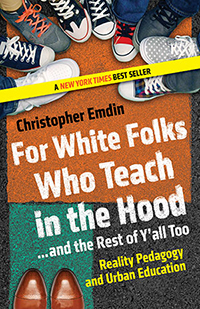
    For White Folks Who Teach in the Hood

    New York Times Bestseller

    For White Folks Who Teach in the Hood . . . and the Rest of Y’all Too: Reality Pedagogy and Urban Education

    “There are power dynamics, personal histories, and cultural clashes stemming from whiteness and all it encompasses that work against young people of color in traditional urban classrooms. This book highlights them, provides a framework for looking at them, and offers ways to address them in the course of improving the education of urban youth of color.”
    —Christopher Emdin 


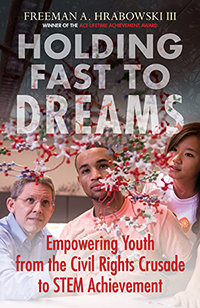
    Holding Fast to Dreams

    Winner of the ACE Lifetime Achievement Award

    Holding Fast to Dreams: Empowering Youth, from the Civil Rights Crusade to STEM Achievement

    “We now have African Americans who are placed in faculties of science and engineering departments and medical schools. We are making progress, but it is bittersweet. We are encouraged when one of our students who has recently earned the PhD becomes the first African American hire in a department, but we also need to finally, as a nation, get beyond each of these hires being ‘the first.’ We can accomplish this only by working deliberately, as a STEM community, to achieve this goal.

    All of this requires culture change. Not a change in behavior alone but a change in perspective, values, and the willingness to act. Telling stories is the first step. Inspiring others is the next. Looking in the mirror comes next. Then come identifying the problem, collecting data to understand the problem, and bringing those who can enact change into the conversation and into solving and working on the problem. This is not an easy, comfortable, or brief process. It takes a community, it takes hard work, it takes time, but it can be done.”
    —Dr. Freeman A. Hrabowski, III 


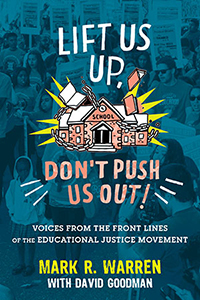
    Lift Us Up, Don't Push Us Out!

    “Lift Us Up, Don’t Push Us Out!”: Voices from the Front Lines of the Educational Justice Movement

    “Profound racial inequities and injustice in public education far predate the Trump and Obama administrations. They are rooted in deep-seated systems of white supremacy in the United States. The struggle for educational justice is part of a long-term historic struggle for freedom and liberation. We are at a new moment and must respond to new challenges.”
    —Mark R. Warren with David Goodman


    None of the Above

    None of the Above: The Untold Story of the Atlanta Public Schools Cheating Scandal, Corporate Greed, and the Criminalization of Educators

    “People had strong reactions to the Atlanta Public Schools cheating scandal because it’s true that there are real problems facing our public education system. Education is integral to a healthy democracy, so our concerns about education often illicit deeper anxieties about societal well-being. But the only way toward a public education that benefits all students, and society as a whole, entails addressing the root causes of the inequities and shortcomings that now exist. The Atlanta Public Schools cheating scandal was a distraction that deferred the real reckoning that we need to have”
    —Shani Robinson and Anna Simonton


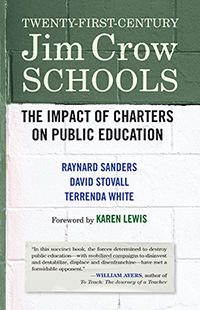
    Twenty-First-Century Jim Crow Schools

    Twenty-First-Century Jim Crow Schools: The Impact of Charters on Public Education
    Raynard Sanders, David Stovall, Terrenda White

    “The fight for publicly funded public education is a constant struggle for poor, working-class, and even middle-class families. The introduction of so-called choice and competition in the form of charters is surrounded by opportunity for the ruling class to basically extort monies from already financially strapped public schools, while shifting those funds into the hands of those who benefit the most from the opportunity gap and their friends and families.”
    —Karen Lewis, foreword


    We Want to Do More Than Survive

    Winner of 2020 Society of Professors of Education Outstanding Book Award

    We Want to Do More Than Survive: Abolitionist Teaching and the Pursuit of Education Freedom

    “To begin the work of abolitionist teaching and fighting for justice, the idea of mattering is essential in that you must matter enough to yourself, to your students, and to your students’ community to fight. But for dark people, the very basic idea of mattering is sometimes hard to conceptualize when your country finds you disposable.”
    —Bettina L. Love

    Classroom_2

  • A Q&A with Mark Warren by Stephen Abbott. This excerpt appeared originally on Organizing Engagement.

    Register for our Fight for Police-Free Schools virtual event, a conversation with leading organizers in educational justice about the police-free schools movement moderated by Mark Warren, to be held on August 5, 2020.

    Mark Warren

    Mark Warren is a professor of public policy and public affairs at the University of Massachusetts Boston’s McCormack Graduate School. Warren studies how broad-based alliances, grassroots organizing, and multiracial political action can advance social and educational justice in American communities and schools. He is the author of several books, including Fire in the Heart: How White Activists Embrace Racial Justice and Dry Bones Rattling: Community Building to Revitalize American Democracy, and he is co-author, with Karen Mapp (@karen_mapp), of A Match on Dry Grass: Community Organizing as a Catalyst for School Reform, which describes the results of a large-scale study of the role community organizing plays in school reform. Warren is also a co-founder of the Urban Research-Based Action Network, and he is committed to using scholarly research to promote greater equity in public policy, democratic practice, and educational decision-making. His most recent book, written in collaboration with the journalist David Goodman (@davidgoodmanvt) and the book’s many contributors, is Lift Us Up, Don’t Push Us Out! Voices from the Frontlines of the Educational Justice Movement.


    SA: Many Americans are simply unaware that there’s a school-to-prison pipeline in American public education because, as you mentioned, their children have not experienced abusive school-discipline practices or they have not seen first-hand the resulting long-term harm that can result from systemic school pushout. What is the school-to-prison pipeline, how does it work, and why does it urgently need to be dismantled?

    MRW: The school-to-prison pipeline refers to a systemic problem that disproportionately affects students in low-income communities and communities of color. It often begins with zero-tolerance discipline, where children, and particularly black and brown children, are suspended and often expelled for minor behavioral infractions. Once they’re expelled, they’re not in school learning, and they’re often out on the streets where they get caught up in the juvenile criminal-justice system—that’s the pipeline. And I’m not talking about small numbers of children and youth. Take Texas, for example. In that one state, 75% of all black children have been suspended from high school, as one recent study showed. Nationally, Black children are three times more likely to be suspended than white children.

    If a student is suspended, and eventually drops out or is pushed out of school, these experiences often have devastating lifelong effects on young people. If you are a young black man without a high school degree, you are highly likely to end up in the criminal justice system. In fact, another study showed that nearly 70% of all black men without a high school degree end up in prison at one point in their lives. That’s just a devastating number. Or we could look at it in terms of college completion rates. Even in a city like Boston, which claims to have one of the best big-city public education systems, a child entering one of the city’s non-exam high schools today has about a 12% chance of graduating from high school and then completing college within six or seven years. Just over half will graduate from high school. Of that number only half will even start college, and of that number only half will actually finish.

    Think about that number: 12%. If you’re poor, if you’re a black or brown child, if you’re in an underfunded school, our public education system is failing you. It just is. It’s reinforcing the profound inequities that exist in our society. These children are most likely to remain in poverty or end up in the prison system.

    Maybe ten years ago, most Americans—and even most people in the education field—had never heard the term “school-to-prison pipeline.” It turns out that the first people who started calling out the school-to-prison pipeline, and who gave it a name, were black and brown parents and students in communities across the country. I’ve been down to the Mississippi delta, and I went to Holmes County, which is very poor—it’s one of the poorest counties in the country—and I visited a local organization that’s connected to Southern Echo (@SouEcho), a community-organizing group. In Lift Us Up, Don’t Push Us Out!, Joyce Parker wrote about this particular example.

    In 1998, more than 20 years ago now, organizers with Citizens for Quality Education in Holmes County noticed that a growing number of black children were out in the streets during school time. They started asking them, “Why aren’t you in school?” The kids told them they had been suspended for talking back to a teacher or other minor things. There was one case in which black kids on a school bus were throwing peanuts at each other, and one of the peanuts hit the back of the white school-bus driver, who then drove the bus directly to the police station. Five black boys were arrested for assault, and although the charges were eventually dropped, they had to drop out of school—for throwing peanuts around on a bus.

    So the people who really pointed it out first, who got it into the public discourse, and who really drove the movement to build understanding and end zero-tolerance were the people who had been most impacted by the systemic abuses. They were the first to talk about the “school-to-jail” track, as they first called the school-to-prison pipeline. After they gave it a name and drew attention to it, researchers started to study the effects of zero tolerance and talk about the racial disproportionality, and the legal community started to address the violations of civil rights associated with the school-to-prison pipeline. Largely because of this movement, we’ve seen improvements in recent years. Suspension rates have declined in a lot of cities and districts, which is a great thing.

    But a new feature of the problem has emerged that, once again, was first called out by the students and parents who were most directly affected: it’s the widespread presence of police in schools. During the 1990s, when schools were moving to adopt zero-tolerance policies that targeted minor misbehaviors and that produced dramatic increases in suspension rates, we also began to see a significant increase in the presence of armed police and security officers in schools.

    Again, this police presence is not occurring, for the most part, in our affluent suburbs; it’s being seen in our inner-city and low-income schools. Which is ironic because when a tragedy happens, like what happened at the high school in Parkland, that results in calls for more police officers in schools, the additional police end up in schools located in low-income communities of color, which is not where mass shootings are happening.

    Having police officers in schools is a huge issue. Once again, a lot of people don’t know just how many police there are in our schools today, or what it costs to have officers in schools, which is money that could be invested in more teachers and social services. There are 1.6 million children in public schools in the United States with at least one law-enforcement officer and no counselors, and the numbers are similar for students in schools with police officers but no nurses.

    I was in Chicago, for example, and people don’t realize that there have been police substations located inside of high schools for many years. There are also metal detectors, and these armed police officers are sometimes arresting and booking children right in school in front of their peers and teachers.

    In Los Angeles, police officers used to stand outside of the schools and ticket students for coming in late. I’m not saying that I think students should be late to school, but sometimes the buses aren’t running on time or older students have to be at home a little while longer to take care of a younger sibling—things happen and students arrive late to school for reasons that may be entirely outside of their control. Instead of welcoming them in, these students were being ticketed. Many of them can’t afford to pay the $100 tickets, so the tickets pile up, of course, then they end up in violation of court orders to pay the fines, and then the police come in and arrest them for failure to pay the fine, and they end up in the juvenile justice system. This is another way the school-to-prison pipeline works.

    As we discussed, a lot of people don’t understand that these issues and processes are widespread in our education system. The school-to-prison pipeline is not just pushing students out of school, onto the street, and into the criminal justice system, but it also includes the large numbers of police officers in schools who are criminalizing, and sometimes abusing, our young people. Now the call, in the national educational-justice movement, is not just to end zero-tolerance, but also to end the regular presence of police in schools, and then use those funds to invest in counselors, nurses, teachers, and restorative-justice programs that can become alternatives to harsh discipline and pushout.

    We should keep in mind that the rise of zero-tolerance and the presence of armed police in our schools started in the 1980s, and it became much more severe in the 1990s and into the early 2000s because it was part of the “three strikes” policies being implemented in the larger criminal-justice system—policies that were based on a profoundly distorted stereotype of black boys and men, particularly the black “superpredator,” a term popularized by the criminologist John DiIulio in a widely read Weekly Standard article. [EDITORIAL NOTE: Dilulio later admitted that his superpredator theory was wrong.]

    Prejudice and stereotypes underpin the school-to-prison pipeline. It’s the stereotypes of young black men, and young brown men, that portray them as criminals, as violent, as dangers to our society, such as the widespread depictions we see in the media and in film. These prejudices and stereotypes translate into real-world problems. The larger proportion of our teaching force is white and female, for example, even in our communities of color. And very young boys of color, by the time they’re in third or fourth grade, are often seen as threatening by white teachers. The stereotype of the threatening black boy, even in grades two and three, is there, while young black boys, as early as preschool, who are rambunctious or who won’t sit still in a chair are seen as troublemakers. Yet the same behaviors by young white boys in suburban communities are just seen as harmlessly rambunctious or normal—they are not seen as troublemakers who need to be disciplined and controlled from a very early age.

    We are actually seeing a high proportion of suspensions in preschool now—if you can believe that—and newer reports are showing that the school-to-prison pipeline actually starts in preschool, with children in kindergarten and pre-kindergarten being suspended from school for normal childhood behavior.

    The first essay in our book is by Zakiya Sankara-Jabar (@ZakiyaChinyere), and she starts off by telling the story of her African American son, Amir, who was suspended and eventually expelled from a series of preschools, and how she came to understand, by talking with other black parents and looking into the research, that this wasn’t just her child’s experience, but it was a common experience for black boys everywhere. She became a racial-justice organizer and helped found a group in Dayton, Ohio, called Racial Justice NOW! (@RacialJsticeNow). In her essay, she talks about how she and other parents started to organize and eventually won a moratorium on suspensions for children in pre-kindergarten through third grade in Dayton Public Schools.

    SA: In your view, how has the rise of mass protests against police killings affected the educational justice movement

    MRW: First of all, people have to realize that these protests did not come out of nowhere. Years of organizing by groups in the educational justice movement and other movements laid the groundwork for the recent upsurge in protest. In particular, the police-free-schools movement has been building for many years, often led by young people involved in the kind of youth-organizing groups discussed in Lift Us Up, Don’t Push Us Out!, and coordinated by the Alliance for Educational Justice and other networks. This movement won victories to defund school policing in Minneapolis, Denver, Oakland, Portland, and other cities. In fact, almost all of the cities that achieved recent victories were cities in which young people had been organizing for police-free schools for years.

    More broadly, since the educational justice movement is fundamentally a racial-justice movement that has increasingly taken an intersectional approach, the movement appreciates and understands the interconnections between the various forms of racial oppression that black people and people of color face. The movement is clear that we cannot simply go back to public education as it has been traditionally defined. Our public education system has been profoundly shaped by white supremacy, and we need more radical transformations to create an antiracist and liberatory education for black children and children of color. Despite the ravages of COVID-19, this agenda makes the current period an exciting opportunity for the educational justice movement and its allies.


    Read more at Organizing Engagement.

  • By Kavita Das

    Abandoned face mask

    Photo credit: Analogicus

    America, “the land of the free, and the home of the brave” has long been a beacon to people around the world who journeyed to this country seeking freedom from political, cultural, or religious tyranny. We tout ourselves as a country where everyone is free to be who they are and live out their ideals. But America’s brand of absolute freedom can be lethal. Our red, white, and blue banner of freedom cloaks selfishness and greed.

    As children, we’re taught that our own freedom ends as soon as it infringes on the freedom of others or brings them harm. But this basic lesson is one that this country has had to learn over and over again, only to fail to live up to it. And these failures are deadly.

    We extol our right to free speech, especially when comparing ourselves to countries where citizens are jailed, tortured, or killed when speaking against the powers that be. However, our freedom of speech is not absolute. We came to understand that even this fundamental freedom needed to be curbed to protect against those whose speech incites violence. And yet, we have no recourse from the harmful lies our President has uttered about this pandemic which has infected more than 4.4 million and claimed more than 150,000 lives under his watch.

    When it comes to the freedom to bear arms, however, our country takes absolutism as far as it can go. Arms have been interpreted to not just be personal handguns but also military grade assault weapons that can and have caused mass casualties. And instead of protecting the 100,000 Americans who are victims of gun violence each year, many states have passed Stand Your Ground laws that allow those who shoot others to claim self-defense.

    But the lethalness of our obsession with personal freedom has never been so pervasive than during this pandemic. Even as the numbers of people who were infected and who died from coronavirus climbed during the initial wave of the virus, in state capitols across the country, swaths of Americans showed up mask-less and with automatic weapons strapped to their backs to protest protective sheltering in place policies, demanding that their businesses be allowed to reopen. Their livelihoods were more important than others’ lives.

    In truth, our national and local economies are in dire straits, with more than 40 million people, or one in four Americans, filing for unemployment. But instead of fighting for systemic changes like a livable wage or guaranteed universal income, which are buoying workers in other countries while they shelter in place, the promise of restoring local economies pushed states to reopen retail businesses prematurely, fueling record numbers of coronavirus cases.

    Beyond this, many of these “re-open” protesters oppose having to wear masks, which they see as not just a mere inconvenience but an assault on their personal, bodily freedom despite the fact that research has shown that wearing masks helps prevent the spread of the coronavirus. Even as health care workers were forced to battle COVID-19 in hospitals across the country without masks and other essential protective gear for weeks, “re-open” protesters ranted about how being forced to wear masks infringes on their freedom. What is lifesaving gear to doctors, patients, and immune compromised individuals is tyranny to them. Ultimately, in this country, their absolute freedom trumps others’ right to life.

    Our dangerous obsession with personal freedom has been hiding in plain sight and permitted to fester. As we wait for the development of a vaccine—our best hope against the coronavirus pandemic—our country has sacrificed protection from virulent but vaccine-preventable diseases by allowing people to exempt themselves from getting vaccinated based on their personal beliefs. In fact, most states currently allow personal belief exemptions. So, if and when a coronavirus vaccine is developed, should we allow personal freedom to trump public health, risking ongoing future outbreaks?

    As a nation, our strength and resilience lie not just in our individual freedoms and fortunes but in our collective concern. We need look no further for evidence of this than the images of the recent protests for racial justice and equity in cities and towns across the country these past several weeks. Thousands of Black, white, and brown people have been using their freedom of speech and assembly to lift their voices and march in solidarity. Most while wearing masks. Initial research suggests that these protests, despite the lack of social distancing, did not cause a spike in infections, likely because so many protesters wore masks. Meanwhile, in states that allowed bars, restaurants, and other retail businesses, including hair stylists and bowling alleys, to reopen, photos of mask-less crowds flocking to these establishments were followed a few weeks later by skyrocketing infection rates.

    These scenarios illustrate two Americas. In one America, they wear masks and embody civil rights activist Fannie Lou Hamer’s proclamation, “Nobody’s free until everybody’s free.” In the other, given the chance to protect the lives of fellow Americans by donning masks, they refuse.


    About the Author 

    Kavita Das writes about culture, race, gender, and their intersections. Nominated for a 2016 Pushcart Prize, Kavita’s work has been published in CNN, Teen Vogue, Catapult, Fast Company, Tin House, Longreads, The Atlantic, Los Angeles Review of Books, The Washington Post, Kenyon Review, NBC News Asian America, Guernica, Quartz, The Rumpus, and elsewhere. Her first book, Poignant Song: The Life and Music of Lakshmi Shankar (Harper Collins India), a biography about the Grammy-nominated Hindustani singer, was published in June 2019. Kavita is at work on her next book, Sparking Change on the Page: Lessons and Reflections on Writing About Social Issues (Beacon Press, Fall 2022). Find her on Twitter: @kavitamix.

  • By Jonathan Rosenblum

    Tax Amazon Legislation Unveiling, Press Conference. Photo credit: Seattle City Council

    Tax Amazon Legislation Unveiling, Press Conference. Photo credit: Seattle City Council

    This article appeared originally on Labor Notes.

    Pressed by a relentless working class movement, the Seattle City Council on July 6 adopted a first-time-ever tax on Amazon and other big businesses that will bring in at least $214 million a year to fund affordable housing, Green New Deal projects, and union jobs.

    The win was a stunning turn of events: just two years earlier, Amazon, the Chamber of Commerce, the corporate-backed mayor, and several business-oriented labor leaders forced the city council to rescind a newly adopted tax on big business of only $47 million a year.

    The dramatic victory shows how workers and activists can recover from a bitter defeat and organize successfully to beat austerity.

    The brutal corporate beat-down of two years earlier centered on attacking socialist Seattle City Councilmember Kshama Sawant, whose organization had led the grassroots push for the tax. Big business deployed attack ads, push polling, a tax repeal campaign that paid signature-gatherers up to $6 for each signature, and a capital strike in which Amazon threatened to stop expanding in Seattle, its main headquarters. The attack was supported by right-wing talk radio shows, pro-corporate editorials, and a building trades union leadership that openly sided with Amazon.

    Emboldened by success, the Amazon-led business coalition spent an unprecedented $4.1 million in last November’s city council elections against Sawant and other progressive and socialist candidates. The brazen corporate election-buying aimed to remake city politics and teach working people an enduring lesson about corporate power.

    They lost. Five out of seven business-backed candidates fell to defeat, and Sawant prevailed thanks to an unparalleled grassroots effort, with more than 1,000 campaigners knocking on 225,000 doors.

    Sawant didn’t shy from what the fight was about, declaring, “What’s at stake this year is who runs Seattle—Amazon and big business, or working people.”

    Conferences for Activists 

    After she was re-elected, Sawant convened a series of Tax Amazon Action Conferences beginning in January, where hundreds of activists discussed, debated, and voted on a strategy and the elements of a new proposal: a $300 million per year tax on Amazon and the biggest 3 percent of businesses in Seattle, including tech companies, biotechnology firms, big international law firms, and international hotel and restaurant chains. The money would fund affordable, publicly-controlled housing and Green New Deal projects such as home weatherization, replacing oil- and gas-heating in homes with electrified systems, and installation of solar panels.

    Not trusting the city council to enact the measure, they also launched a petition drive to place the measure on the ballot.

    The onset of the COVID-19 crisis in late February escalated the organizing challenges for activists, as face-to-face rallies and signature gathering became difficult. Instead of collecting signatures at transit stops, farmers markets, college campuses, and busy streets, organizers were forced to mail petitions to activists, who would collect signatures from their households and immediate neighbors.

    As the COVID crisis deepened, organizers set up socially-distanced signature stations in working-class neighborhoods, complete with hand sanitizer and pens cleaned after every use. But the triple crisis of COVID—the threat to health plus sweeping job loss plus threats of eviction—also stimulated tremendous public enthusiasm for the signature drive, emboldening the movement to demand that the city council act with urgency.

    The Justice for George Floyd movement that exploded on the streets in late May also strengthened the drive. At the protests, speakers drew the connection between Black Lives Matter and the Amazon Tax by calling for funds to build affordable housing to counteract racist gentrification in Seattle.

    As the drive approached the signature threshold to get on the ballot, and with hundreds of activists flooding city council offices with emails, phone calls, and public testimony, and with the Amazon tax demand being echoed in the street protests, the political establishment felt compelled to advance its own Amazon tax.

    A Substitute Bill 

    Insipidly rebranded as “Jumpstart Seattle,” the substitute legislation was intended to avert a ballot initiative. Several large businesses—notably Expedia and major hospitality corporations—sensed the movement’s momentum and embraced the establishment’s plan. “Yes, harm mitigation was part of it,” conceded one restaurant executive who fought against the Amazon tax in 2018 but came around to support the 2020 measure.

    A last-minute push by the Chamber of Commerce to tar the proposal as a “tax on jobs”—as it had done successfully in 2018—fell flat this time because of the consistent organizing message over the last two years: the tax was on Amazon and Seattle’s wealthiest businesses, not workers, jobs, or small businesses.

    On July 6 the city council adopted the tax ordinance, which will bring in at least $214 million a year—less than the movement’s $300 million initial demand but more than four times the tax that big business repealed in 2018. And on July 20, the Council adopted a plan for the Amazon tax money, largely along the lines that activists had ratified in the Tax Amazon Action Conferences.

    Lessons 

    Bosses never miss an opportunity to demand worker sacrifices to protect corporate power and profits, and the COVID-19 crisis is no exception. In state and local governments, this means not just job freezes and layoffs for public workers but also cuts in services like food, housing, child care, youth programs and recreation, worker rights enforcement, and repair of roads, bridges, and public buildings.

    How should workers fight back? Seattle’s Amazon tax fight, spanning more than two years, offers lessons for activists everywhere battling against austerity and for jobs and worker rights:

    1. It’s about power. 

    “The reason we won was because we built a powerful, independent movement that was democratically organized,” Sawant told Jacobin magazine.

    Politicians, even many who call themselves progressive, often frame political struggles as consensus-building exercises in which contending parties “come to the table” to hammer out differences and reach acceptable compromises, usually behind closed doors, away from the movement.

    The Amazon Tax prevailed because organizers mobilized for a fight, continually framing the struggle as one between workers and big business. They resisted the calls from many quarters, including some progressive community leaders, to not “antagonize” Amazon, to tone down their campaign, and to negotiate a compromise.

    Because the political fight is about opposing interests—just like in union negotiations—what workers win is always a function of the balance of power at the moment. The Tax Amazon activists recognized that the 2018 defeat was only a temporary setback, and by redoubling their organizing over two years, they changed the balance of power in the political arena.

    2. Play offense.

    Corporate executives and political leaders, reinforced by the mainstream media, continually try to tamp down worker hopes. They brand worker demands as “unrealistic” and “impractical” while insisting on austerity. The Tax Amazon organizers succeeded in electrifying working people and building a powerful movement by doing the opposite: they raised expectations, with a powerful vision of taxing Amazon to fund affordable housing, the Green New Deal, and public services.

    3. Build a democratic, grassroots organization.

    Building on the momentum of the massive grassroots 2019 re-election campaign, Tax Amazon built a strong, democratic movement. Sawant's organization, Socialist Alternative, and many unions, environmental groups, and other community groups helped organize the campaign and its conferences, where rank-and-file union members and community activists spent hours debating elements of the legislation and campaign strategy. And then they voted, with one vote per person, whether they were a top union officer or a first-time community volunteer.

    That democratic process built a resilient campaign, able to withstand pressures and attacks from the political establishment.

    4. In the political arena, as in union bargaining, you need a powerful weapon.

    The Tax Amazon Action Conference made a critical strategic decision in January, one that proved decisive: rather than rely on the city council, they would simultaneously advance both legislation and a ballot initiative drive.

    This was the equivalent of workers taking a strike vote: what the political establishment feared most was an expensive pitched battle in November over a ballot initiative that pitted workers against big business. They did not want to spend resources defending themselves against a popular tax measure, and they did not want to see even more focus on Seattle's glaring economic inequality, among the worst in the world.

    When Tax Amazon campaigners announced that they had the critical number of signatures to file, that credible threat of going to the ballot in November placed extraordinary pressure on the political establishment to act.

    5. Build movements that link our fights together.

    Tax Amazon organizers recognized that racial, economic, housing, and climate justice issues are linked. The legislation and the initiative both called for the affordable housing to be built with union labor, with priority-hire and apprenticeship opportunities for people living in the neighborhoods where the homes are to be built. The new homes must meet Green New Deal standards, including a commitment to use renewable energy, and about $20 million per year is reserved for retrofitting existing working class homes to renewable energy—again, with union labor.

    As thousands of people rallied against police violence during the final weeks of the Tax Amazon battle, leading Black clergy worked with Sawant to add an important detail to the bill: dedicated funds to build affordable homes in Seattle’s Central District. The Central District is a formerly thriving Black community that has seen two-thirds of its African American population driven out over the years. The city's notorious Operation Weed and Seed was set up in the 1990s explicitly to gentrify the District while fast-tracking incarceration of young Black men. Corporate developers snapped up entire blocks in recent years, evicting long-time homeowners.

    Backed by 229 faith activists, Sawant’s amendment reserved a minimum of $18 million per year for the construction of affordable, publicly controlled rental homes in the Central District, with “community preference” for tenants who have been displaced from the neighborhood. It passed unanimously.

    6. It’s never over.

    Even after winning the legislation, Tax Amazon activists recognize that the fight is not over. Now the movement will be challenged to force Seattle’s pro-corporate mayor, who was elected with a record donation from Amazon, to fully implement the new law. That will require continued organizing and action. Just like a union contract, the Tax Amazon legislation will need to be enforced through continued collective organizing and demonstrations of worker power.


    About the Author 

    Jonathan Rosenblum works as a community organizer for Seattle City Councilmember Kshama Sawant. He is the author of Beyond $15: Immigrant Workers, Faith Activists, and the Revival of the Labor Movement (Beacon Press, 2017), and a member of the National Writers Union/UAW 1981. Find him online at https://jonathanrosenblum.org/ or Twitter: @jonathan4212.