• By J. A. Mills

    Tiger with ear tag

    Photo source: J. A. Mills

    “China farms tigers? Why didn’t I know that?” This is the most common comment I hear when I talk about China’s industrial tiger farms and my book Blood of the Tiger, which was rereleased today in paperback.

    “Yes,” I reply, “they farm them ‘just like cows and pigs.’ That’s how a Chinese government official described it to me during my first visit to China back in 1991.”

    In 2015, China farms tigers by the thousands to make luxury products such as tiger-bone wine, even though China’s State Council banned trade in tiger bone in 1993. Even though CITES—the U.N. Convention on International Trade in Endangered Species—decided in 2007 that tigers should not be farmed for their parts and products. Even though the mainstream traditional Chinese medicine industry no longer wants or needs tiger bone. Even though polls repeatedly show that the Chinese public supports the 1993 ban.

    (more…)

  • By Linda K. Wertheimer

    Tirmizi Family with Linda K. Wertheimer

    Tirmizi Family with Linda K. Wertheimer. From left to right: Hadia, mother; Wertheimer; Rahim, youngest son; Zain, eldest son; Ali, father. Photo source: Linda K. Wertheimer

    #Notinmyname. Hadia Tirmizi, the mother of a student profiled in my book Faith Ed., posted that Twitter hashtag on her Facebook page last week in the aftermath of the terrorist attacks in Paris. She is Muslim, lives in Wellesley, a Boston suburb, and knows the backlash that can follow when terrorists are identified as Muslims.

    The same week she posted her statement against the terrorists, she also posted photos of her family celebrating her youngest son’s tenth birthday and photos of her and her husband, both physicians, on a vacation to Paris in a past year.

    (more…)

  • By Dina Gilio-Whitaker

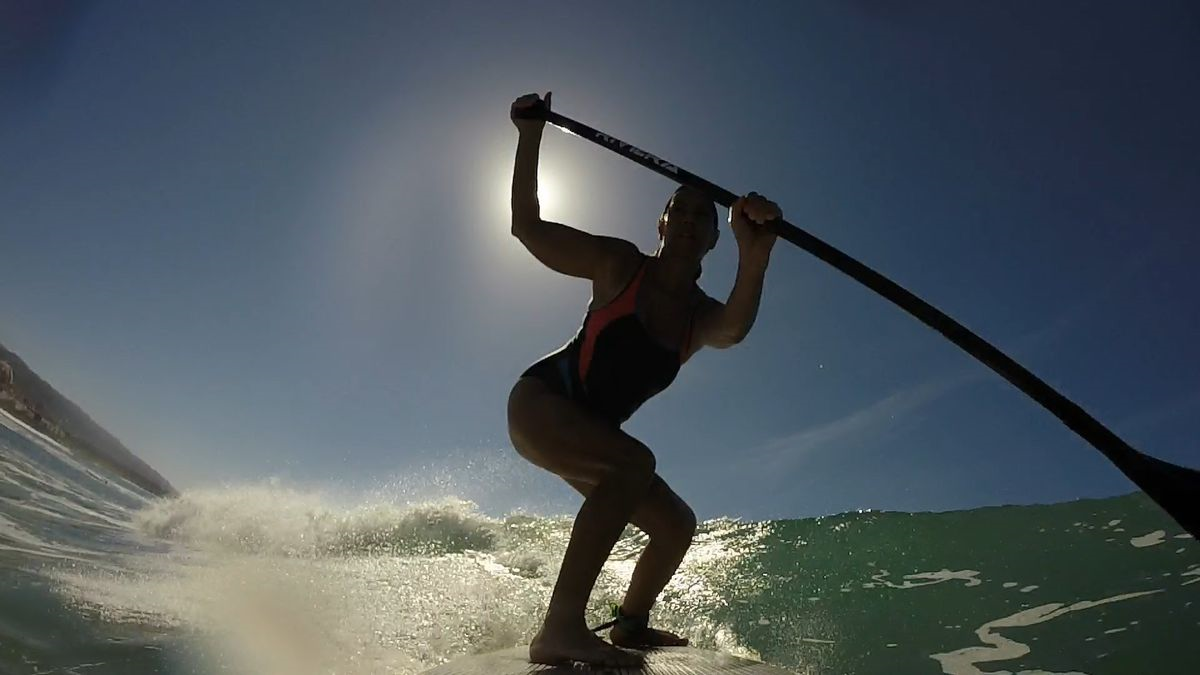
    Dina Gilio-Whitaker Riding the Waves

    Dina Gilio-Whitaker riding the waves. Photo source: Dina Gilio-Whitaker

    This blog appeared originally on Gilio-Whitaker's site RumiNative.

    At first glance, using the terms surfing and indigeneity (as in “Indigenous”) in the same sentence may seem like a non-sequitur, something that doesn’t connect or make sense. Yes, it makes sense in the context of Hawaii given that the modern sport of surfing as we know it emerges out of Native Hawaiian culture. But what does surfing have to do with American Indians? Quite a bit as it turns out, based on research and writing I’ve been doing for several years now.

    (more…)

  • By Howard Axelrod

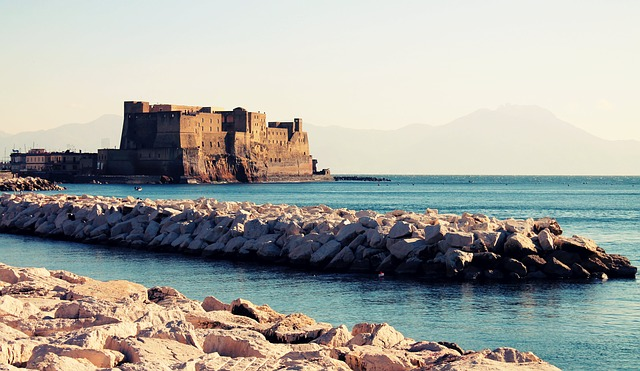
    Naples waterfrontThis essay appeared originally in Memorious Magazine.

    No one knows if Elena Ferrante is a tennis fan. No one knows much about her at all. The identity of the author of the wildly popular Neapolitan novels remains a useful mystery—useful because it reveals the poverty of our literary-critical apparatus: without the usual cues of biography and author appearances and interviews, critics have been tripping over themselves to place her work. Feminist. Post-ideological. Neo-neo-realist. They’re not wrong, exactly. But to understand Ferrante, it might help to be a tennis fan—or, at least, to be a fan of one particular match. Krickstein vs Connors, U.S. Open, 1991.

    (more…)

  • by Gayatri Patnaik

    Montgomery comrades Rosa Parks and Virginia Durr come together in South Hadley, Massachusetts, 1981.

    Montgomery comrades Rosa Parks and Virginia Durr come together in South Hadley, Massachusetts, 1981. Photo credit: Birmingham, Alabama Public Library Archives, Portrait Collection.

    Today’s theme for University Press Week is Presses in Conversation with Authors. In our entry in the blog tour, our executive editor Gayatri Patnaik interviews Jeanne Theoharis, author of the 2014 NAACP Image Award-winning The Rebellious Life of Mrs. Rosa Parks. Theoharis is Distinguished Professor of Political Science at Brooklyn College of CUNY and the author of numerous books and articles on the civil rights and Black Power movements, and the politics of race in contemporary America. She is also series editor for a new Beacon Press series, Stride Toward Justice: Confronting Race, Gender & Class in the United States. The series offers progressive voices writing on and at the intersection of race, gender and class and is an urgent response to the injustices of our times and the ideas that hide and sustain them. Theoharis’s coeditor for the series is Melissa Harris-Perry, Presidential Endowed Chair in Politics and International Affairs, the director of the Anna Julia Cooper Center at Wake Forest University, and host of Melissa Harris-Perry, which airs weekend mornings on MSNBC. 

    (more…)

  • By Wen Stephenson

    Retaking the Keystone XL Pathway

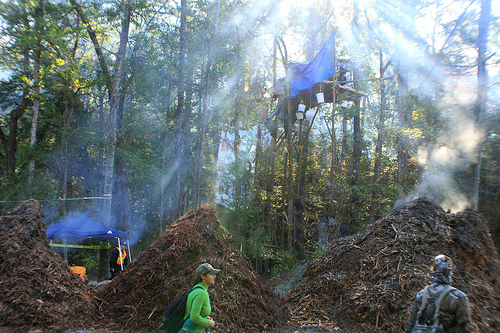
    Retaking the Keystone XL Pathway. Photo credit: Tar Sands Blockade

    Wen Stephenson was invited by the Reverend Kyle Childress, longtime pastor of Austin Heights Baptist Church in Nacogdoches, Texas and one of the key voices in What We’re Fighting For Now Is Each Other, to speak to the congregation. The church's congregation plays a crucial role in the resistance to the southern leg of the Keystone XL pipeline. They supported the Tar Sands Blockade and welcomed young blockaders into their homes.

    Stephenson tells us: “By uncanny coincidence, I was in Houston, doing an event with the grassroots group TEJAS (Texas Environmental Justice Advocacy Services)—whose founders Juan and Bryan Parras, and organizer Yudith Nieto, figure prominently in the book—when the news broke that President Obama had rejected the Keystone XL pipeline, or the northern leg of it. And the very next day I went up to Nacogdoches. Too many people, especially in our national media, have forgotten that the southern leg of the pipeline was built with Obama’s blessing, and that it began pumping tar-sands crude to refineries in Port Arthur and Houston in January 2014.”

    He adds: “I realize now that this book project wasn't truly finished until I went back to Nacogdoches and spoke to the people of that church community. It really closed the circle for me, in a profound way.”

    (more…)

  • By Deborah Jian Lee

    Church pewsThis essay appeared originally in HuffPost Religion.

    When I was fifteen, I stepped into a warm bath on my church's sanctuary stage. I was a bit of an outsider—the occasionally bullied Chinese-American kid in the white suburb—and I had found a place of belonging at this Chinese immigrant church. I made a joke about how I felt the same way about my new faith as my sixteen-year-old friend felt about her new driver’s license: I had no idea how I ever lived without this. Even my pastor chuckled as he clasped my hands, preparing to dunk me. Then I heard the splash of the warm water, the muffled underwater silence and the burst of cheers as my body broke through the surface. Smiling through currents of water, I saw the congregation beaming back. I had begun my new life in Christ.

    From there, my story followed a steady path toward lifelong evangelical devotion. Equipped with the good news, I led youth group Bible studies and then attended college where I became an evangelical activist, leading my campus ministry's weekly gatherings of more than 100 students. Some friends called me the “super Christian,” the kid who was “on fire for Jesus.” Mentors from church and my campus Christian club encouraged me to join their staffs. I longed to be in ministry and these opportunities fit the disciple’s narrative. There I was at the precipice of adulthood, armed with my fiery devotion. But just a few years later, the flame went out.

    (more…)

  • By Christine Byl

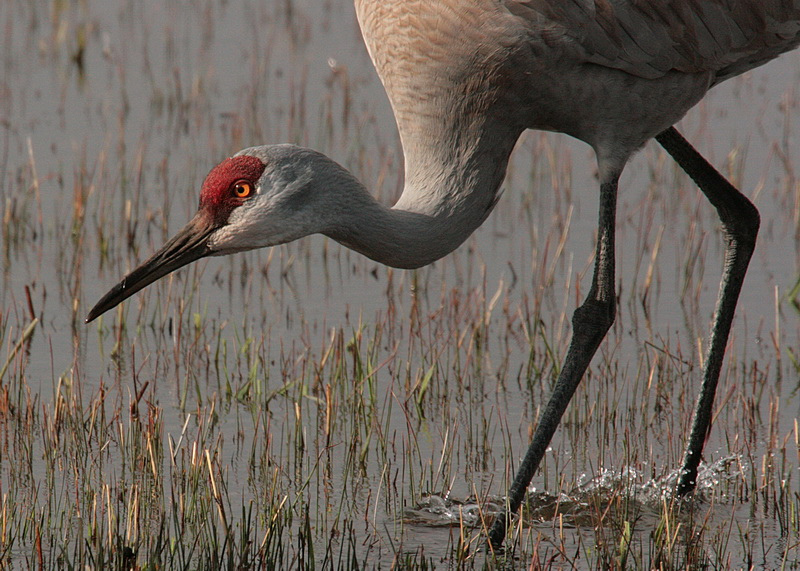
    Greater Sandhill Crane at Malheur Refuge

    Photo credit: U.S. Fish and Wildlife Service Headquarters

    Rampant wildfires across the West, venomous sea snakes on California beaches—sound familiar? Rarely does a day pass without a headline focused on climate-related news. Every time I read one of these stories, my mind goes to the people living amidst it: exhausted hotshot crews in Twisp, WA, barefoot beachcombers in Oxnard, CA. Though national in distribution, every story begins in its own neighborhood.

    About a year ago, the National Park Service invited me to write an essay for a web-based literary anthology focused on climate-triggered ecological changes in my own backyard: Denali National Park. Denali's sub-Arctic location means that taiga (the boreal forest) and tundra (a treeless region often with permafrost present) overlap, making it an ideal place to track changes. The Park Service supports critical scientific research in Denali all year round, noting and recording everything from sound pollution to glacier profiles. But the NPS also knows that one of the best ways to invest visitors in climate research is not through power points and charts, but through narrative. Hence, the call for essays by writers from the region. Here's how Denali introduces the anthology project on its website:

    (more…)

  • Blog-header

    Deborah Jian Lee left the evangelical world in her mid-twenties after growing weary of the culture wars. While she remained committed to her faith, she struggled to reconcile the message of the religious right with the gospels, so her faith became a wandering, nameless thing. After returning to the evangelical world as a journalist, she sought out believers who were living out the teachings of Jesus and found a radical tribe of evangelicals thriving at the margins. Racial minorities, women, and queer Christians were carving a new path for evangelicalism—one rooted in social justice. Deborah decided to write a book for the younger version of herself—the one who mistakenly thought that being evangelical and embracing social gospel values were mutually exclusive. She realized that if she had met these devout believers back then, if she had known their stories intimately and understood evangelical history more robustly, she likely would not have left the community. This book is for the generation of faithful evangelicals, post-evangelicals, ex-evangelicals, questioning evangelicals and weary evangelicals looking for a family with whom to live out their faith, with all the mess and beauty that comes with community. It’s also a book for the rest of the world—secular liberals, the media, religious progressives, etc—who have often misunderstood and stereotyped the evangelical community. With love, passion and rigorous reporting, Deborah tells the story of the evangelicals the world needs to meet in Rescuing Jesus: How People of Color, Women, and Queer Christians are Reclaiming Evangelicalism (on sale November 10).

    An Invitation to Our Readers: We want you to add your voice to the conversation by sharing stories about ways evangelicals are reclaiming the faith and rescuing it from partisan politics. Use the hashtag #RescuingJesus across social media and help us shine a light on the individuals and organizations who are propelling this shift.

    Read on to learn about some of the individuals who are part of the new face of the Evangelical movement.

    (more…)

  • By Michael Lanza

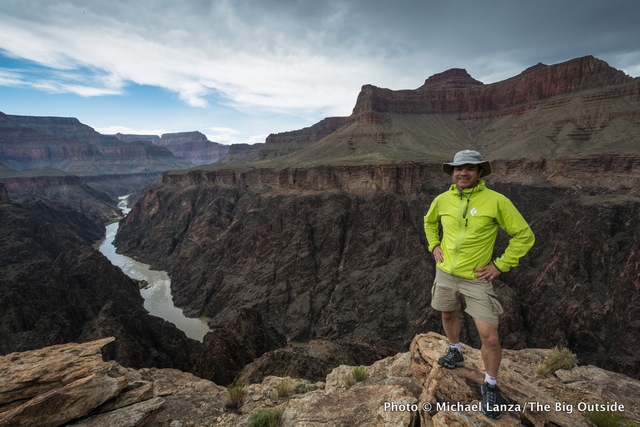
    Lanza in the Grand Canyon

    Lanza hiking in the Grand Canyon, May 2015. Photo credits: Michael Lanza

    When the country’s largest consumer co-op retailer announces it will close its doors and website on one of the biggest shopping days of the year, it attracts attention. REI did just that when it announced last week that it’s closing all 143 stores on Black Friday, the day after Thanksgiving, and won’t process any online purchases until the following day. Employees will get a paid day off and be encouraged to get outside—and no doubt many of them will.

    Beyond the benefit to REI’s workers and potential impact on company sales, does this matter to anyone else? I say, yes, it does, for reasons that reach far beyond REI’s walls. Maybe least obviously, but most importantly, this is good for our kids.

    (more…)