• By Nicholas DiSabatino

    Members of the Boston Symphony Orchestra conducted by Andris Nelsons

    Members of the Boston Symphony Orchestra conducted by Andris Nelsons

    On Monday, October 5th, I had the privilege to join Helene Atwan, our director, and Tom Hallock, our associate publisher and director of sales and marketing, at Boston Symphony Hall for the Terezín Music Foundation’s 2015 Gala, “Liberation: A Concert Honoring the 70th Anniversary of the Liberation of the Nazi Camps.” This celebration perfectly timed with the release of Liberation: New Works on Freedom from Internationally Renowned Poets, a poetry anthology edited and introduced by Mark Ludwig, the executive director of the Terezín Music Foundation. 

    The concert, featuring works by composers commissioned to set poems from the collection to music, began with a candle lighting to honor the liberators and survivors with members of the Hawthorne String Quartet beautifully playing in the background. The Boston Children’s Chorus performed two pieces, “The Day of Light,” composed by David Post and dedicated to Hanka Krasa, and “The Song About the Child,” composed by Sivan Eldar.

    (more…)

  •  

    Ada Lovelace

    Portrait of Ada Lovelace by Alfred Edward Chalon, 1840

    Today is the day to thank Ada Lovelace for the device you’re using right now to read this. Born Augusta Ada Gordon in 1815, she is recognized as the “first computer programmer.” In the early 1840s, Lovelace translated and expanded on an Italian article describing Charles Babbage’s Analytical Engine. Her elaborate notes included a method for calculating a sequence of Bernoulli numbers, largely recognized as the first computer code. Lovelace’s notes helped inspire Alan Turing’s work on the first modern computers one hundred years later.

    While Ada Lovelace Day celebrates the achievements and contributions of women in STEM (science, technology, engineering, and mathematics), science is still regarded as a boys’ club. Why is this? Even now in the twenty-first century, there should be more women in high ranking positions in the hard sciences. Novelist, essayist, and short story writer Eileen Pollack, who was one of the first two women to earn a Bachelor of Science in physics from Yale in 1978, takes a long hard look at this question in her new book The Only Woman in the Room.

    Had it not been for the isolation and the lack of encouragement she encountered while studying science and math throughout high school and college, Pollack believes she would have pursued her ambition to become a theoretical physicist. She took the hardest classes on the most accelerated track to prove her academic worth to her peers but was constantly confronted with the loneliness and pressure of being the only woman in her classes and labs. Meanwhile, toward the end of her undergrad career, she started exploring creative writing, which offered her the support and encouragement she wasn’t getting from the science department. Though her physics degree and the string of successes and awards she earned attested to her talent and hard work, she, like many other women, eventually turned away from science toward a career in the humanities. Today she is a professor on the faculty of the Helen Zell MFA Program in Creative Writing at the University of Michigan.

    Part memoir and part case study, The Only Woman in the Room compiles her personal experiences with those of young women today, and explores the most recent findings about why women often choose not to pursue careers in math and science. In honor of Ada Lovelace Day, we’re sharing seven facts that show the struggles and the changes women have seen on the road to a career in STEMs.

    Fact 1: In the 1970s, Eileen Pollack was one of the first women to earn a Bachelor of Science degree in physics at Yale. Overall, the percent of physics degrees awarded to women is about twenty percent. The percentage of women awarded Bachelor’s degrees in all STEM fields is about thirty-five.

    Fact 2: Only one-fifth of all physics PhDs in this country are awarded to women.

    Fact 3: Only about fourteen percent of all physics professors in the United States are female.

    Fact 4: A 2012 study demonstrated that scientists at every level—old or young, female or male, in physics, biology, chemistry, and engineering—still view men as more hirable, more competent, more worthy of mentoring, and worthier of higher salaries than women with exactly the same qualifications, while women were viewed as more likeable overall.

    Fact 5: In another study from 2012, the American Institute of Physics published a survey of 15,000 male and female physicists across 130 countries. In almost all cultures, the female scientists experienced discrimination in the allotment of funding, lab space, office support, and grants for equipment and travel, even after the researchers had controlled for differences other than gender.

    Fact 6: At the advanced placement level in high school, only forty-one percent of the seats in Physics B and less than a third in Physics C are occupied by girls; only half the girls who take the Physics B course take the AP exam (as compared to sixty-five percent of the boys). Only half the girls who take the Physics B exam receive a passing score (compared to sixty-two percent of boys.) Sixty-one percent of the girls who finish Physics C take the test (compared to seventy-eight percent of the boys); only sixty percent pass the Physics C exam (compared to seventy-two percent of the boys).

    Fact 7: In a 1999 study, a sample of University of Michigan undergraduates with equally strong backgrounds and abilities in math were divided into two groups. In the first, the students were told men perform better on math tests than women; in the second the students were assured that despite what they might have heard, there was no difference between male and female performance. Both groups were given a math test. In the first the men outscored the women by twenty points; in the second, the men scored only two points higher.

  • By Roxanne Dunbar-Ortiz

    An 1899 chromolithograph of U.S. cavalry pursuing American Indians, artist unknown, Werner Company, Akron, Ohio

    An 1899 chromolithograph of U.S. cavalry pursuing American Indians, artist unknown, Werner Company, Akron, Ohio

    This essay appeared originally on the Powell's Books Blog.

    The most frequent question readers ask about An Indigenous Peoples' History of the United States is: "Why hasn't this book been written before?" I'm flattered by that question, because it's the one I ask about texts that deeply move me; at the same time the information, argument, or story is new to me, it seems that it was already hidden in the recesses of my brain or heart, a truth. I knew the story I wanted to tell when I set out to write the book, part of Beacon Press's ReVisioning American History series, but that didn't make it easier to transfer to paper. Writing and rewriting, I discovered the story, just as my readers do as they read it.

    But why hasn't this book been written before? We believe we don't suffer censorship in the U.S., but we do. Rather than being mandated by the government, historians self-censor in response to institutionalized policing of the parameters of what's acceptable and what will be marginalized. William Burroughs's narrator in his 1984 novel, The Place of Dead Roads, observes that "people are not bribed to shut up about what they know. They are bribed not to find out…Now, Americans are told they should think. But just wait until your thinking is basically different…You will find out that you AREN'T supposed to think." This is particularly true in the writing of our history. It's not a free speech issue but one of asking questions that challenge the core of the scripted narrative. Historians are validated to the extent that they remain guardians of the United States origin myth.

    (more…)

  • By Howard Axelrod

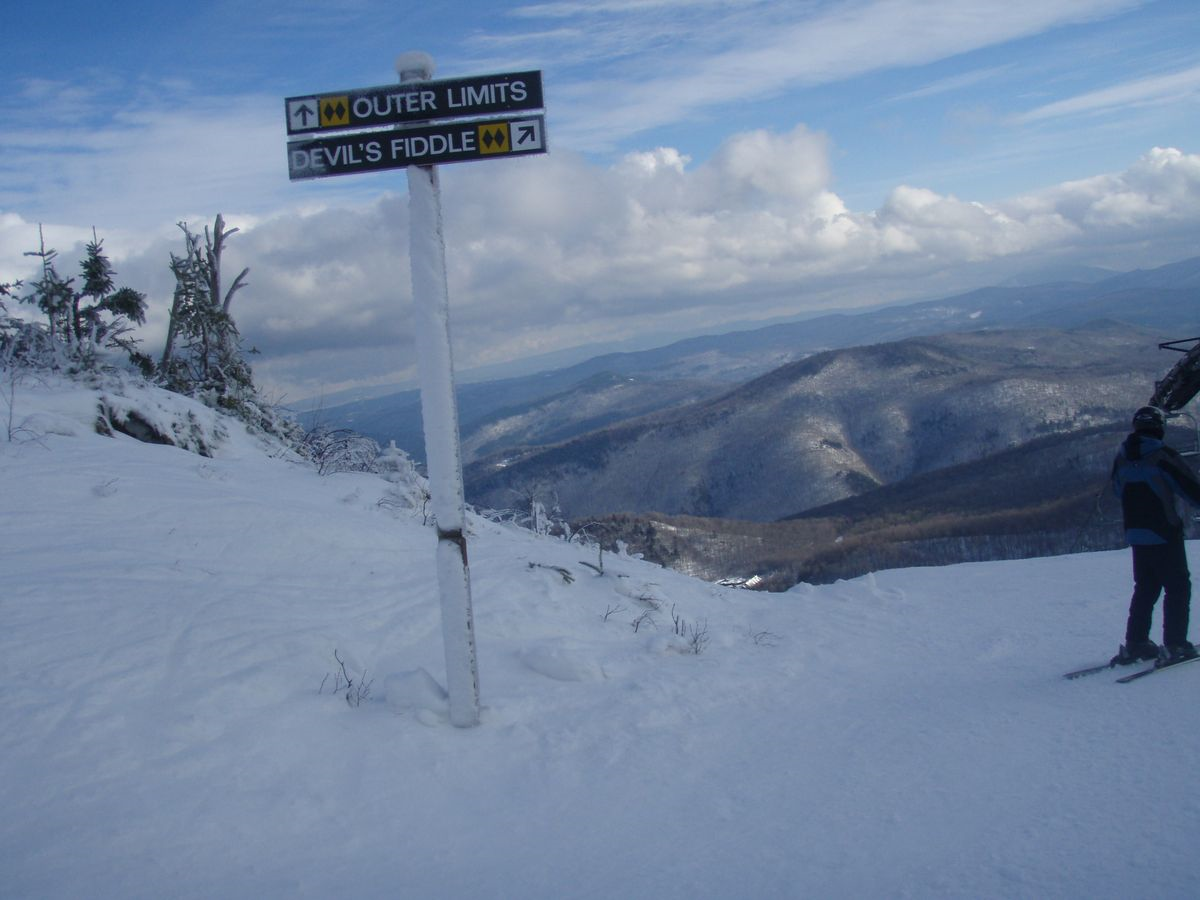
    A sign pointing to Devil's Fiddle and Outer Limits, some of the steepest trails at Killington

    A sign pointing to Devil's Fiddle and Outer Limits, some of the steepest trails at Killington

    This essay appeared originally on the Powell's Books Blog.

    As a teenager, I didn't pay much attention to posted signs. I was a strange kid—both very confident and very lost. My façade, my own sign posted for the world, was a lie and I knew it. But I believed if I could just be patient enough, a kind of secret door would eventually open to a new land, one that looked more or less the same as the old—same streets, same school, same annoying older brother—but would include a sense of orientation, which meant a sense of the world with my place in it. So, what interested me was the other kind of sign. The kind that might offer a portent of my life to come, or an insight into the way things really were.

    There was one sign that was both kinds of sign, though I didn't know it at the time. It was posted on a high black chairlift tower, about two-thirds of the ride up Killington's Bear Mountain. As I remember it now, the wind is whipping, the chairlift pitches and bobs over Outer Limits, the steepest mogul run in the east. The edge of the yellow sign is crusted with rime. Huddled below an imposing black pine tree, there's a silhouette of a man, his knees drawn toward his chest. "These woods will be as cold and lonely tonight as they were two hundred years ago. Do not ski alone."

    (more…)

  • By Danielle Ofri

    Love Read

    Photo credit: Luis de Bethencourt

    This essay appeared originally in PLOS Medicine.

    For years I dragged around poems in the pockets of my white coat, pressing them into the hands of unsuspecting medical students and residents. As an attending physician at a teaching hospital in New York City, my job was to supervise the medical students and residents. I had to ensure that our patients received good medical care and that our doctors in training were learning the ins and outs of inpatient and outpatient medicine.

    But medical training is a stressful time. Conventional wisdom as well as a growing body of literature suggests it is a critical component of the hardening of character, contributing to burnout, cynicism, brusqueness, and all the unappetizing traits we’ve come to hate in doctors. The humanities were one of those things that was thought might smooth some of the rough edges of training, humanizing—as the word itself suggests—our otherwise brutish selves.

    (more…)

  • By Rachael Marks

    Sloan

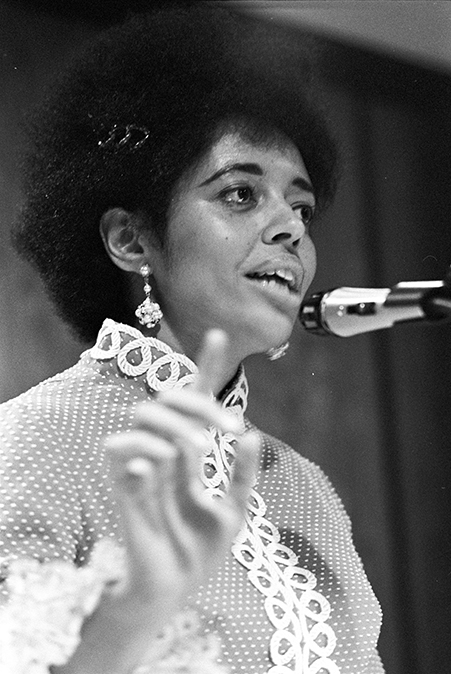
    Edith Barksdale Sloan speaking at the first national conference of household workers, in 1971. (Mary McLeod Bethune Council House National Historic Site, National Archives for Black Women’s History)

    I’d been following the domestic workers movement here in Massachusetts as they campaigned to pass the Domestic Workers Bill of Rights. In 2014, Massachusetts became the fourth state to approve the domestic workers bill of rights which guarantees basic work standards, such as meal and rest breaks, parental leave, protection from discrimination, sexual harassment, etc. I wanted to know more about the movement and this lead me to Premilla Nadasen, who was involved as an activist and historian.

    I tend to gravitate towards stories of fierce activists and agitators on the margins, so naturally I was fascinated by the history Premilla unearthed in Household Workers Unite. The women she writes about—Dorothy Bolden, Geraldine Roberts, Josephine Hulett—were all brilliant organizers who responded to the challenges that were unique to their profession, challenges that were so severe that mainstream labor regarded them as “unorganizable.” For instance, domestic workers were isolated in the home, they could have any number of employers at any given time, and perhaps most problematic, their work was categorically disregarded as work. They were excluded from basic state and federal labor rights; and were, to quote Geraldine Roberts, “invisible workers.”

    In response, they recruited other domestics on buses and street corners, made alliances with black freedom movements and women’s rights groups. They sought to professionalize the occupation through technical training programs.

    (more…)

  • By Mary E. Hunt

    Fr. John. J. McNeillBeacon Press author John J. McNeill died at the age of ninety on September 22, 2015 in Florida after a full and world-shaping life. He leaves literally thousands of survivors, people like myself whose lives were enriched, in some cases even saved, by his courageous and prophetic work as a gay religious pioneer.

    John McNeill was a Jesuit priest who wrote the first substantive treatment of Catholicism and same-sex love in his 1976 book The Church and the Homosexual. It was originally granted the required Imprimi Potest, but that permission to print was shortly withdrawn by his religious superior when it became obvious that John had touched a nerve.  

    Contra Catholic teaching, John argued that homosexuality was part of the will of God. Far from being a threat to the family, he claimed that lesbian, gay and bisexual persons (transgender people were not in his view at that point) had new experiences to share about sex unconnected to procreation. He proposed that same-sex love, rather than alienating people from God, could instead bring them closer to God. So much for the Catholic teachings on Sodom and Gomorrah, of heterosex only, and that without condoms or other forms of contraception. He articulated post Vatican II moral theology with intellectual rigor and pastoral insight.

    (more…)

  • Book burning

    Photo credit: LearningLark

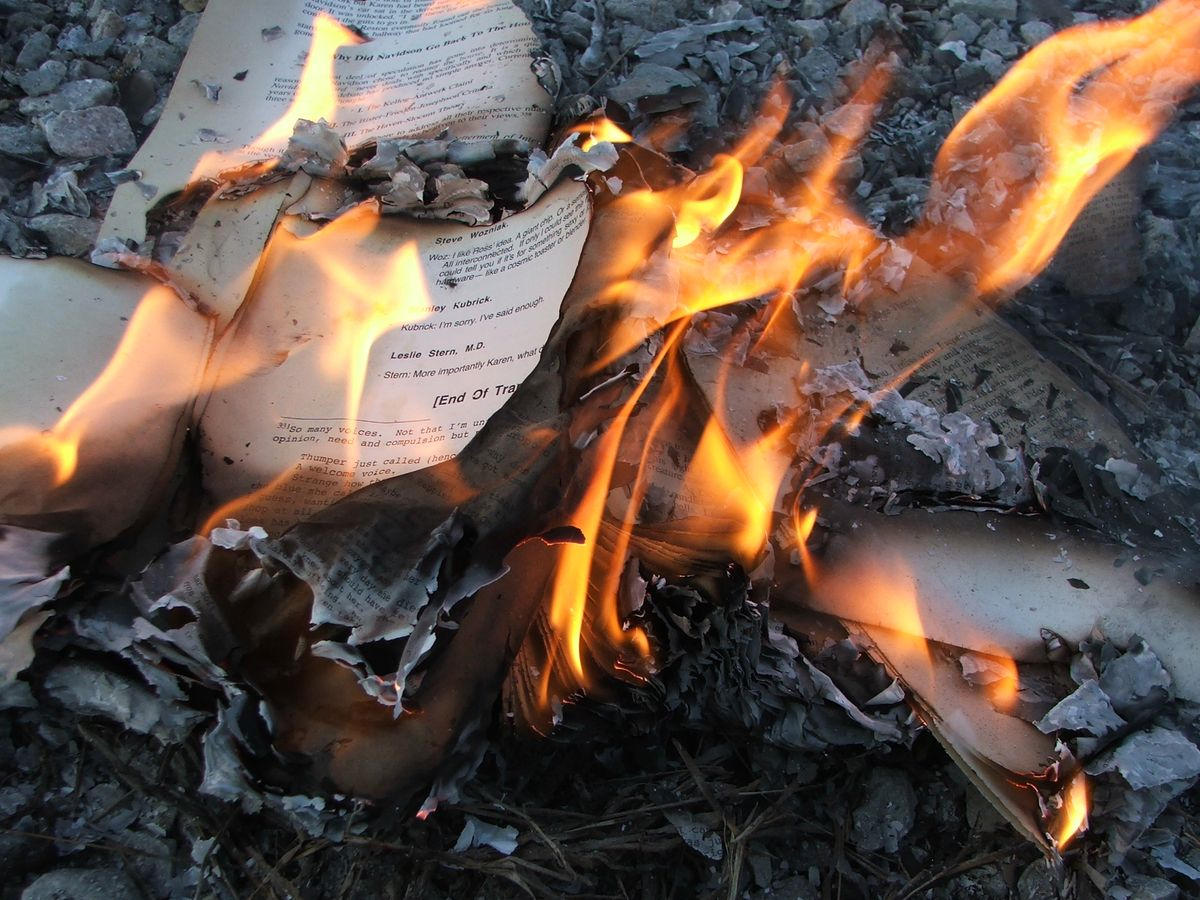
    Drawing from the Nazi book burnings and Stalin’s campaign of political repression, Ray Bradbury’s Fahrenheit 451 depicts a dystopian future of compulsory book burning in the name of censorship. This future, to an extent, is a present-day reality. Look at the enduring push to ban books with “inappropriate content,” the standard no-no’s of everyday life: sexualities, four-letter words, violence, political and religious viewpoints, etc. As bleak as American society is in Bradbury’s novel, there is a ray of hope in the character of Clarisse McClellen, the inquisitive and nonconforming teenage girl who inspires fireman Guy Montag to question his blind faith in book burning. Our present-day Clarisse is the American Library Association’s Office for Intellectual Freedom, which reports the most common banned or challenged books. For this year’s Banned Books Week, we compiled a list of banned books enjoyed by Beacon authors and staff.

    (more…)

  • By Roxanne Dunbar-Ortiz

    Junípero Serra

    Photo credit: US Embassy Madrid

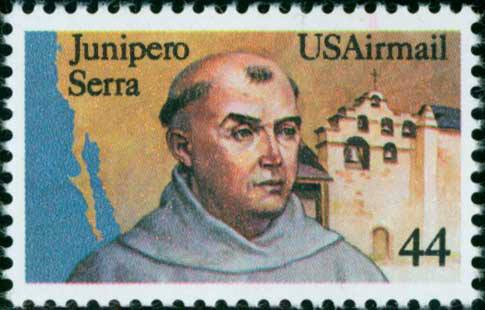
    In 1988, Pope John Paul II beatified Junípero Serra, the first step to canonization. In the wake of the Red Power movement of the 1970s and the International Indigenous Movement that followed, there was a strong outcry from California Indigenous descendants of those who perished of overwork, starvation, and outright killing in the Franciscan missions that the hands-on Serra created. The Franciscans, not the Spanish state, were the actual first colonizers of California Indians, by forcibly relocating them from their traditional territories and villages to labor for the Franciscans in the missions, making the order wealthy from the products produced there. Indigenous peoples’ who are involved in UN human rights work raised a ruckus in the UN system, and friendly Human Rights NGOs and formerly colonized member-states and liberation movements lobbied the Vatican at the UN to not canonize a notorious colonizer. That was twenty-seven years ago, and Serra was not brought up for sainthood, such a notion being clearly unacceptable. Then, to the shock of the California descendants, in May 2015, the new and admired Pope Francis took Serra off the shelf where he was meant to stay, gathering dust, and announced canonization, trying to pass him off as a Latin American, or US American, apparently not having received the memo that the Spanish empire was overthrown by the Mexican people in a ten-year war to drive them out. California was a part of Mexico. One of the first acts of the independent Mexican government was to secularize society, sending the Franciscans packing, closing all the missions.

    (more…)

  • By Kay Whitlock and Michael Bronski

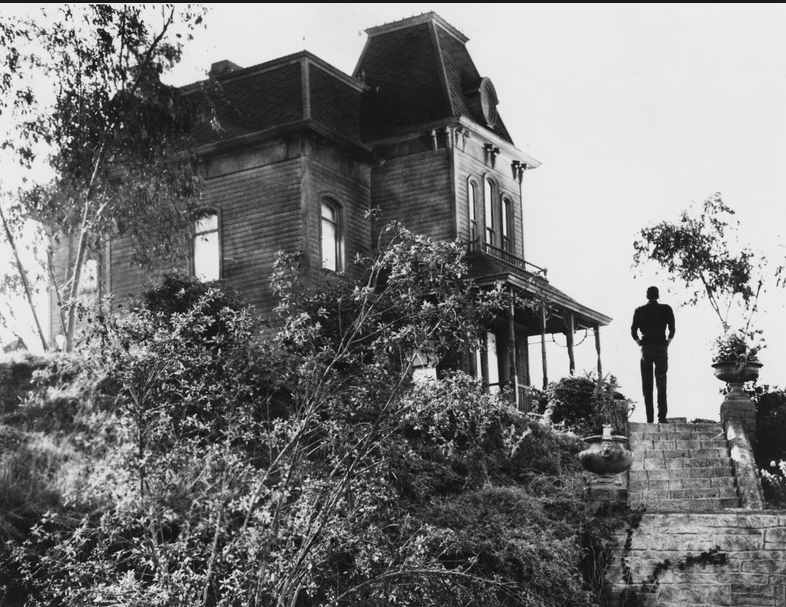
    Psycho House

    It’s almost that time of year again—and we don’t just mean Halloween. The eagerly anticipated fifth season of the American Horror Story anthology on the FX television channel is ready to air.

    AHS is something of a guilty pleasure for the two of us, not least for its superb casts, vivid (if grotesque) blending of history with American popular culture, and wild, even haunting, flights of imagination that often touch on themes of dehumanization, prejudice, fairness, and justice.

    The two of us aren’t alone. Many people love to be terrified out of their wits by fictional ghosts, psychopaths, and disturbed strangers who lurk in shadows at the dark end of the street—just so long as nobody really gets hurt and the story finally ends.

    (more…)