I take great pleasure in introducing this very surprising video, based on an equally surprising (and highly entertaining) new book, Less Medicine, More Health: 7 Assumptions That Drive Too Much Medical Care by Dr. H. Gilbert Welch, who taught us all so much in his last book, Overdiagnosed: Making People Sick in the Pursuit of Health.
-

* * * * *
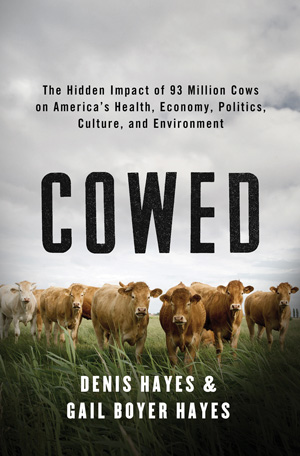
Review of Cowed: The Hidden Impact of 93 Million Cows on America’s Health, Economy, Politics, Culture, and Environment by Denis Hayes and Gail Boyer Hayes (Norton, 2015)
* * * * *Want to know what 93 million factory-fed cows have brought to American diets, the American environment, and the global climate? In their new book Cowed: The Hidden Impact of 93 Million Cows on America’s Health, Economy, Politics, Culture, and Environment, Earth Day 1970 coordinator Denis Hayes and environmental lawyer Gail Boyer Hayes provide some sobering answers. The authors combine lively narrative and finely honed scientific curiosity in recounting their travels to cattle-raising operations and dairy farms across the country.
 Nitrogen-based fertilizer is one of the cornerstones of the cattle industry as we know it today. When World War II wound down, enterprising industrialists looked for new ways to use the ammonium nitrate that had fed the wartime armaments industry. Fertilizer emerged as the preferred peacetime alternative. This led to cheaper, more abundant grain crops, made even more profitable by generous government farm subsidies. Very quickly, cattle ranchers seized the moment, moving their herds off of pastures and into factory feedlots where corn became their primary fodder.
Crowded and confined, cattle in these concentrated animal feeding operations, or CAFOs, fatten up quickly but need hefty doses of antibiotics and other medications to fight off disease. The animals also produce such prodigious amounts of manure that conventional land application methods can’t keep pace. Wastes are pumped into fetid lagoons loaded with nutrients, antibiotic residues, and pesticides—all poorly regulated by state and federal agencies deferential to cattle industry pressures. Runoff into waterways from these open ponds has become one of rural America’s most nettlesome pollution menaces.
-

Human sense perception has long been a fascination for me, though I know I'm not alone in this preoccupation. When I studied modern art in graduate school I got interested in the ways artists work with paints, photographs, and sculptures to "bend" reality and restructure our perceptual apparatuses. And when I investigated religious practices in various parts of the world I kept noticing the ways eyes and ears and tongues were triggered.
 Some years ago I set out to write about all this, wanting to chart some of the ways the senses operate in religious traditions, how the senses perceive particular objects, and how the arts help us come to grips with these processes. The result was a book, A History of Religion in 5½ Objects: Bringing the Spiritual to Its Senses. But as I note therein, something happened along the way: the objects became the subject. The incense became as crucial, even more so, than the olfactory system, and the drums themselves seemed to have powers beyond their rhythms and reverberations.
Nonetheless, it is one thing to simply say this, and another to teach about it. While the standard "read a bunch of words and write a paper" pedagogical procedure is finally beginning to fade, we remain bound by a primarily audio-visual mode of education. Not only is education far too word-based, it is also sensually deficient. The fullness of the sensorium—the perceiving across five or more senses—is generally reduced to two, at least past primary education.
-
By J.A. Mills
This post originally appeared on Mills' blog.
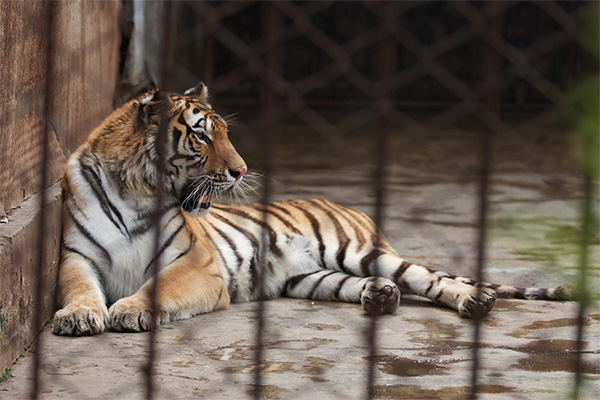
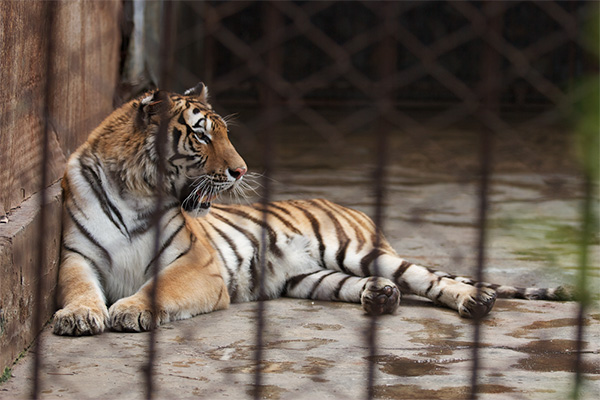
I’ve been asked whether China’s decision to open an office dedicated to the protection of wild tigers marks significant progress. The short answer is, “Yes and no.”
This announcement is significant news in that it tells people in China that wild tigers are important. The fact that President Xi Jinping recently asked about the needs and habits of wild tigers is even more encouraging.
News of this new office is less significant when viewed in a fuller context. China’s State Forestry Administration (SFA) has for many years talked about its support for saving wild tigers and stopping illegal tiger trade. What SFA officials did not say—and still do not say—is that they were and are investing significantly more effort and money in growing China’s tiger farming industry, upping its capacity to brew tiger-bone wine and seeking international approval for reopening legal trade in luxury products made from farmed tigers. The SFA’s Wan Ziming wrote in a 2009 magazine article that China would be prepared to appeal all the way to the International Court of Justice in The Hague should the UN treaty on international trade in endangered species (CITES) not give its blessing.
-
By Kay Whitlock and Michael Bronski
Amid the excitement following the announcement of the forthcoming publication of a second novel by Harper Lee, the author of the classic novel To Kill a Mockingbird, a work featuring the return of an adult Scout Finch to her hometown, the most prominent initial reaction was a sentimental outpouring of love for a book (and movie) that many readers say gave them their first introduction to the struggle for racial justice. Lost in the excited flurry of response is the unexpected relevance of To Kill a Mockingbird to current tensions throughout the country—in Ferguson, Oakland, New York City, Chicago, Cleveland, and many other communities—regarding "hate violence," structural racism, police violence, and a persistent culture of antiblackness in American society.
In this excerpt from our new book, Considering Hate: Violence, Justice, and Goodness in American Culture and Politics, we take a fresh, critical look at the way in which Mockingbird frames its discussion of racial violence and responsibility for both perpetrating and dismantling it.
THE DEATH OF TOM ROBINSON
To Kill a Mockingbird is one of the most heralded American stories of the twentieth century. Harper Lee’s novel won the 1960 Pulitzer Prize and has since sold more than thirty million copies. Many white people remember Mockingbird as the story that first opened their eyes to the terrible wrongs of racial injustice. Cultural and political scholars have examined the novel’s representations of the racial dynamics and community life of fictional Maycomb, Alabama, and its exploration of the relation of social norms to questions of justice.
-
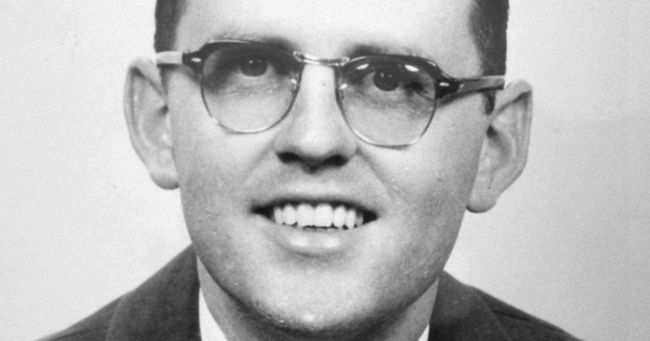
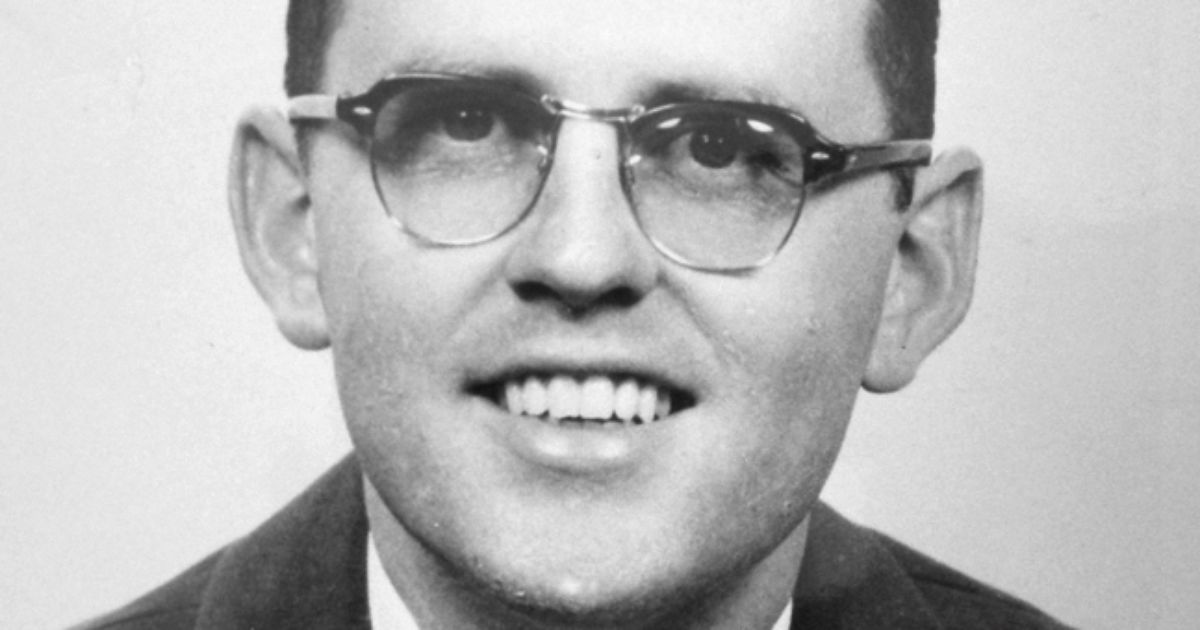
In January 1965, a campaign for voting rights launched in Selma, Alabama. Escalating police attacks against nonviolent demonstrators culminated in the shooting of Jimmie Lee Jackson on February 18. He died eight days later. In response, on March 7 activists set out to march from Selma to the state capitol in Montgomery. The marchers crossed the Edmund Pettus Bridge where they were met by a blockade of state troopers and local lawmakers. After refusing to disperse, the marchers were attacked with clubs and teargas. The event came to be known as “Bloody Sunday.” James Reeb (January 1, 1927—March 11, 1965) was among 40 Unitarian Universalist ministers who answered a call from Martin Luther King, Jr., for religious leaders to join him in Selma after the violent confrontation. On March 9, 400 religious leaders joined 2,000 African Americans to march over the bridge again to the site of the attack, where they kneeled and prayed before returning to Selma; the march had been cut short because of an order prohibiting it until protection could be provided to the marchers. That night, Rev. Reeb and two other UU ministers were attacked outside a whites-only restaurant. Rev. Reeb died two days later from his injuries. On March 21, a federally sanctioned march from Selma to Montgomery began. The march was limited to 300 people but swelled to 25,00 by the last day. On August 6, President Johnson signed the Voting Rights Act of 1965.
This eulogy for the Reverend James Reeb was delivered by the Reverend Dr. Martin Luther King, Jr., in Brown Chapel, Selma, Alabama, March 15, 1965.
———————————————————————————————————
All material copyright © Martin Luther King, Jr., and the Estate of Martin Luther King, Jr.; all material copyright renewed © Coretta Scott King and the Estate of Martin Luther King, Jr. All rights reserved.
———————————————————————————————————And, if he should die,
Take his body and cut it into little stars.
He will make the face of heaven so fine
That all the world will be in love with night.*These beautiful words from Shakespeare’s Romeo and Juliet so eloquently describe the radiant life of James Reeb. He entered the stage of history just thirty-eight years ago, and in the brief years that he was privileged to act on this mortal stage, he played his part exceedingly well. James Reeb was martyred in the Judeo-Christian faith that all men are brothers. His death was a result of a sensitive religious spirit. His crime was that he dared to live his faith; he placed himself alongside the disinherited black brethren of this community.
-

What do children around the world eat for lunch? Apparently, not what we think or hope. We’d like to think the children in Greece are being served grilled chicken and tomato-cucumber salads. Aren’t French children eating beef with haricot vert and finishing their meal with a piece of brie and an apple? Perhaps some of them are eating that way. But the unfortunate truth is that children around the globe are mostly eating the kinds of processed foods that are depressingly familiar to American school children and their parents.
A beautiful slideshow of aspirational traditional school lunches made the rounds on social media recently showing trays of food representing the mid-day meal in many countries, and featuring traditional foods that looked fresh and appealing. As has since been pointed out, those photographs are simply the ideal. They were produced by a company called Sweetgreen who have since been called to account for not making it clear that these were not photographs of actual school lunches. As others have pointed out, the reality in schools is more likely to be hamburgers, hotdogs, french fries, and fried fish no matter the location.
-
With the season’s snowfall now well past the 100-inch mark, no one needs to be reminded of how rough a winter it’s been for Bostonians. Ice dams are everywhere, gutters are straining to the breaking point, and leaks have become the prime topic of water cooler conversation. Yet amidst it all, residential solar power systems have soldiered on.
To be sure, there have been many days when the latest dump of snow has blocked the wintry sun from reaching the 23 solar panels mounted on the roof of our home and adjacent garage. But surprisingly quickly, the snow has slipped off our panels’ slick glass surfaces even as it has clung to the surrounding asphalt shingles. Soon enough our solar panels have resumed their work, generating a healthy flow of electrons.
-
By J. A. Mills

This post originally appeared on Mills' blog.
So far in 2015, the world has seen two rounds of effusive headlines about tigers “roaring back” in the wild—first from India, then from China. Unfortunately, wild tigers are nowhere near “roaring back” anywhere. In fact, their numbers are down by half what they were 20 years ago, while threats to their survival continue to escalate.
Sure, everyone prefers good news. And conservation groups must show donors that some sort of success has been bought with their dollars. But hyperbole can lead to the widespread false impression that wild tigers are much better off than they are.
“India’s tigers come roaring back,” World Wildlife Fund (WWF) announced on January 20. “India’s tiger population has significantly increased, according to the 2014-15 India tiger estimation report released today. Recent years have seen a dramatic rise in numbers….” The headline was parroted by news media around the world. But few, if any, that ran the story mentioned the fact that India’s tiger censuses are notoriously unreliable and sometimes dangerously wrong. In fact, just a month after the breaking good news, Indian and Oxford University scientists called India’s census techniques into question. “India’s tiger success story may be based on inaccurate census,” cautioned a headline in the UK’s Guardian. “Reports that India’s tiger population has risen by a third in four years are based on an unreliable count method,” said the subhead.
-
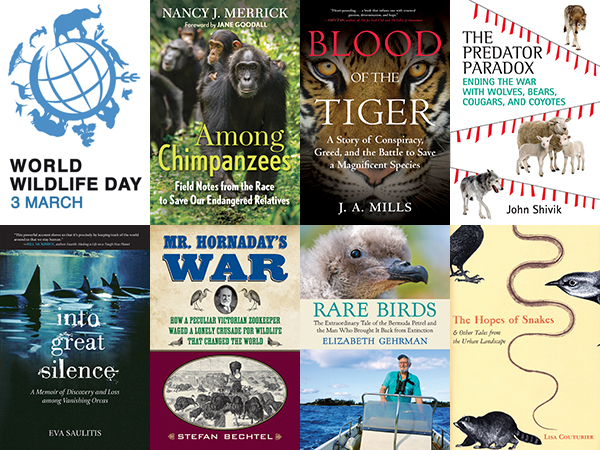
We at Beacon would like to honor World Wildlife Day, marked every year on March 3, by highlighting some of the books dedicated to various kinds of wildlife conservation. In publishing these books, we seek not only to educate the public about animals in danger, threatened, and sometimes nearer to extinction than is generally known, but also to celebrate the wonder of the natural world and to recognize those who are fighting for the future of the wild.