• By Christian Coleman
    Earthday2015

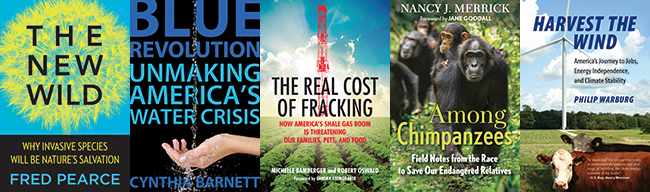
    2015 marks the 45th anniversary of Earth Day. This could be the most dynamic year in environmental history. Economic growth and sustainability, once mutually exclusive, have begun a symbiotic relationship. Citizens and experts have set up defenses for their homes and the survival of other species from the encroaching effects of ecological devastation and extinction. New business ventures have transformed renewable energies into a viable market. As challenging and daunting as these issues are, it has become more apparent that we still have a chance of preserving our home. This Earth Day, we at Beacon Press are featuring titles that showcase individuals and organizations taking a stand for our home and encourage readers to take the stand with them.

    Environmental journalist Fred Pearce presents a unique twist on a taking the lead on progress. In The New Wild: Why Invasive Species Will Be Nature’s Salvation, he implores environmentalists of the twenty-first century to celebrate the dynamic nature of invasive species and the new ecosystems they create. The case for keeping out invasive species is not only flawed, but also contradictory to the environment’s capacity for change, accelerated now by climate change and widespread ecological disaster.

    California’s limited water resources have made headlines at the start of this year. It won’t be long until the rest of the country is affected by threats of shortage. Journalist Cynthia Barnett calls for the simplest and least expensive call to action in Blue Revolution: Unmaking America’s Water Crisis. Selected as one of the Boston Globe’s top ten science books of 2011, it outlines a water ethic to reconnect Americans with our rivers, aquifers, and other freshwaters .  This blue movement will turn us to “local water” the way the green movement turned us to local foods.
    (more…)

  • By Marilyn Sewell

    image from http://www.flickr.com/photos/126015850@N02/15128683288/

    Image from Flickr User South Bend Voice

    This blog originally appeared in The Huffington Post.

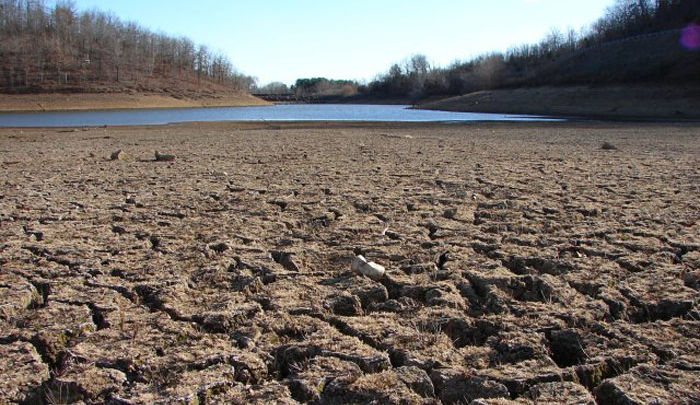
    Most people know that the earth is warming, and as the dominant creatures on the planet, humans are at fault. Two out of three people believe climate change is happening, and 89 percent are "somewhat worried" or "very worried." After all, 14 of the 15 warmest years on record in all of history have occurred since 2000. Wildfires in the West burned out of control last summer, and they are expected to be just as serious this summer. The snowpack in California is about 6 percent of normal, and so the state is putting mandatory curbs on water use, for the first time in history. The effects of global warming are not predictions for the future; they are fast becoming the realities of our daily lives.

    So why all the silence about climate change? Why isn't this topic filling our conversations, the way a tsunami would, or a major earthquake?

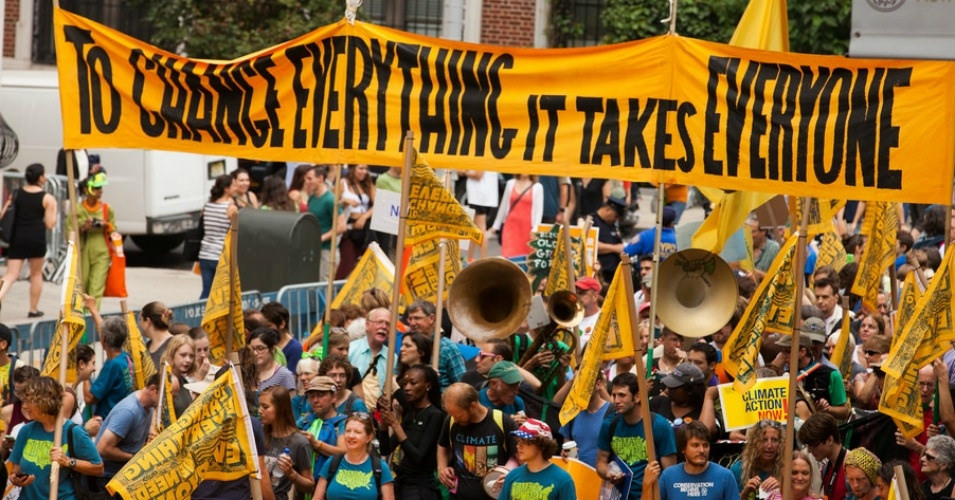
    Count me in with the "very worried" group—actually, count me in with those who are feeling filled with fear, steeped in grief. Some of the smartest people I know think we will not be able to act in time, that we will continue to delay until we can't stem the rising waters, the droughts, the refugees, the failed states, the wars fought over precious resources like arable land, food, water. In a recent New Yorker article, novelist Jonathan Franzen writes, "It's important to acknowledge that drastic planetary overheating is a done deal…no head of state has ever made a commitment to leaving any carbon in the ground." When I asked a poet I know about our chances of averting disaster, she sighed and said, "Humans are a very flawed species."

    (more…)

  • By Cynthia Barnett

    image from upload.wikimedia.org

    Long before Governor Jerry Brown ordered mandatory water restrictions to ensure Californians cut back in epic drought—and even before the drought itself—the Unitarian Universalist Church of Palo Alto, California, took on ethical water use as an article of faith.

    In 2008, as the congregation worked to earn certification as a Green Sanctuary, members zeroed in on what they could do for water. They began with small steps—a water-efficient dishwasher in the church office, for one—and ultimately made real strides. The church invested in drip irrigation and switched out thirsty plants with natives. The congregation tapped a member to chair a local water taskforce. It sent others to testify at state Senate hearings on California’s “Human Right to Water” bill. The church’s green committee brought in speakers to talk about the importance of living with less water in a changing climate.  They even got members to pledge to one less flush a day; the 1,000 or so gallons saved daily would add up.

    Spread across communities, ethical water choices do add up. In fact, a widespread ethic for water was the single-most important part of the answer for how parched metros such as Perth, Australia; Singapore; and San Antonio, Texas, turned around their water fortunes amid crisis. In Australia’s severe drought of the early 2000s, one of the nation’s best-known scientists, Tim Flannery, pronounced that Perth could become “the twenty-first century’s first ghost metropolis,” its population forced to abandon the city for lack of freshwater. In large part thanks to a new water ethic that has Aussies shunning lawn sprinklers and wineries irrigating grapes with recycled wastewater, just the opposite is true. Perth has become a worldwide model for adapting to its dry home.

    (more…)

  • image from publishersweekly.comBy Helene Atwan

    With thirteen consecutive years of surpluses behind us, we are feeling stronger than ever in our modern history, and ready to grow. After a national search, we’re bringing in two new Senior Editors not only to expand our list, but to expand our reach. Rakia Clark will work from New York, beginning on May 4th, and Jill Petty will work from Chicago, starting on June 1st. In truth, my goal originally was to hire one new editor, but both Rakia and Jill had so much to offer. Each spent the day with our editorial staff last month and literally knocked our socks off (remember, this was Boston in March—we had layers….). In the end, talking about their strengths, we agreed that we couldn’t live without both. I feel very fortunate that they have both accepted our offer with warmth and enthusiasm.

    Both Jill and Rakia will be acquiring in a broad range of nonfiction areas consonant with the press’s nonprofit mission. With Jill working mainly out of Chicago and the Midwest, and Rakia out of New York, they will be able to meet with more authors, advisors, and agents; to attend more meetings and have an even stronger sense of what thoughtful readers and social justice activists are concerned about. Jill has already lined up half a dozen conferences to attend in four different cities; Rakia has started exploring ideas a month before her official start date. The entire editorial team, the entire press, is energized by these new hires.

    (more…)

  • By Kay Whitlock

    Indiana

    Image from Flikr user Notionscapital

    Goodness: an awareness, translated into action, of the intrinsic worth and interdependence of all peoples and ecologies, and the determination to dismantle societal structures that support social inequalities and the violence that accompanies them. —Considering Hate: Violence, Goodness and Justice in American Culture and Politics

    Several rapidly shifting and competing storylines embedded in the recent furor over passage (and subsequent amendment) of Indiana’s Religious Freedom Restoration Act (RFRA) have produced a great deal of noise but little clarity.

    Who actually “won” this battle? Forget mass media narratives. The real answer depends on how closely we’re willing to sift and sort through the civic rubble and rhetorical chaos of this mess.

    In the post–Hobby Lobby era, the original Indiana RFRA bill—one of a growing number of states that have some kind of law modeled on the 1993 federal RFRA—departed from the federal template in significant ways. (The immediate impetus for the federal RFRA was protection of the religious rights of Native Americans.) The Hoosier state explicitly recognized the “free exercise” rights of for-profit businesses on an equal basis with that of individuals and faith communities. Indiana’s law even went further than the U.S. Supreme Court’s Hobby Lobby decision. Moreover, the Indiana statute made this right a defense against private lawsuits brought by individuals—not only against actions brought by government.

    (more…)

  • Alienspecies

    Pictured, left to right: Burmese python, Tamarisk, Chinese mitten crab, water hyacinth

    Most of us think in stark terms about invasive species: they are evil interlopers spoiling pristine "natural" ecosystems. But what if the traditional view of ecology is wrong—what if true environmentalists should be applauding the invaders? In his latest book, The New Wild: Why Invasive Species Will Be Nature's Salvation, veteran environmental journalist Fred Pearce argues that we should applaud the dynamism of alien species and the novel ecosystems they create. Recently, we talked with him about why he turned his focus to invasive species, what role humans have played in their rise, their benefits, and more. Read on!

    Beacon Press: You’ve written about some of the planet’s most pressing environmental issues, including water shortages, climate change, and the effects of population on nature. What made you turn your focus toward invasive species?

    Fred Pearce: Invasive species are often said to be the second most important threat to nature, after habitat destruction. And for a long time I accepted that claim. As a journalist, I have written plenty of stories about various “alien threats,” from zebra mussels and kudzu to water hyacinth and snakeheads. But I also like to question environmental assumptions. And when I delved into the world of invasive species, I found that—unlike, for instance, the warnings of climate change—there was little evidence to back up the fears. I saw little evidence that there was anything intrinsically bad about invader species. Their downside is often hopelessly hyped; and their potential benefits, such as increasing local biodiversity, are almost never researched.

    (more…)

  • By Kate Bornstein

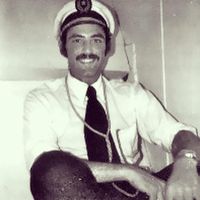
    Before becoming the gender outlaw we know and love today, Kate Bornstein was Al Bornstein,  husband, father, and strappingly handsome lieutenant of the Church of Scientology’s Sea flagship vessel. In this selection from her memoir, A Queer and Pleasant Danger, Kate details the events leading up to her excommunication from the Church.

    AlbornsteinIn Europe, Scientologists wrote us checks made out to the Religious Research Foundation, a shell company that maintained a Swiss bank account that was in no way linked to the Church of Scientology. Any money we deposited would be used in the service of the Church without having to pass through any country’s tax system—it’s a common business practice used by many international organizations. Of course, L. Ron Hubbard had no connection with that Swiss account because it was vitally important to keep all his personal finances on the up-and-up so that no enemy of the Church could use any inadvertent financial glitch against him. But that was unthinkable—(a) because he was so powerful, and (b) because he had both the Sea Org and the Guardian’s Office to protect him, and we protected him fiercely.

    So, life was . . . great. Thanks to my high income, I’d become a Sea Org star. Crew members actually lined up at the doors to send me off on tour, or welcome me home. It all came unraveled on a sunny autumn day in Zurich, 1982. I had just finished making a sizable deposit to the Swiss bank account. I was out on a quickie one-week tour on my own; Becky was back in Clearwater. This was my first time inside the bank’s home office. What a beautiful old place it was! The reverence for wealth was manifest in the severe architecture, lightly touched here and there with tasteful elegance.

    (more…)

  • By Will Myers

    Trouillotblog

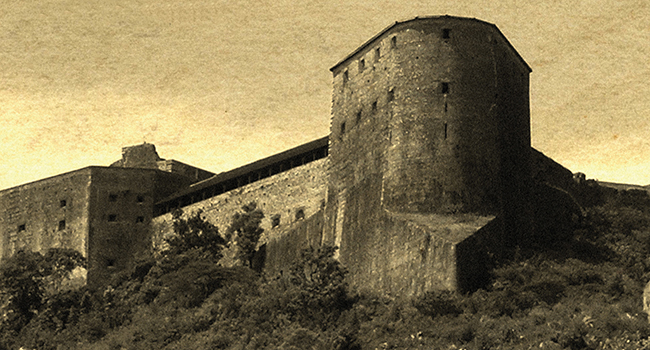
    Twenty years ago, Beacon Press published Michel-Rolph Trouillot’s Silencing the Past: Power and the Production of History. Whenever I’m asked to name my favorite Beacon book, I name this one without hesitation. It’s the kind of mind-expanding read that changes the way you look at public monuments, statues of leaders, national holidays, and the daily news. Trouillot wrote a book about the past that makes you see the present with fresh eyes. It cracks open the pat narratives we tell ourselves about our history, and it provides us with the tools to examine our taken-for-granted ideas about the workings of the world, our world, today.

    Silencing the Past manages to do several things at once, and apart from the numerous insights Trouillot offers, what’s so impressive is that the book is never dull and pedantic. It’s a history of the Haitian Revolution, the first successful slave revolt in history, which the West has, from the start, failed to acknowledge. It’s a philosophy of history, an exploration of how silences enter the historical record. It’s a study of how power intersects with and influences knowledge. It’s partly an anthropological study of professional Western history as a guild. It’s a description, concretely illustrated, of how history is a process—one that academics and amateurs, painters, politicians, and the public are all involved in. It’s also a kind of grand narrative about what our grand narratives leave out. And through all of this headiness, Trouillot remains approachable and friendly, his voice clear and jargon-free. His insights are deadly serious, but he injects a touch of playfulness into the otherwise solemn proceedings.

    (more…)

  • By J. A. Mills

    Farm tiger

    This post originally appeared on Mills' blog.

    Surely China’s President Xi Jinping would not support the commodification of tigers and rhinos if he knew all the facts.

    What stands in the way of his enlightenment is the State Forestry Administration (SFA), which is his staff’s go-to ministry on the issue. And the SFA has a conflict of interest. It’s giving its all to enforcing China’s 1980s-vintage Wildlife Protection Law, which literally calls for the “domestication” and “utilization” of a long list of endangered species so China will have strategic reserves of them and their parts and products. But here’s the pivotal thing: Significant factors have changed since that law came into effect in 1986. Most importantly, the mainstream traditional Chinese medicine (TCM) industry does not need or want tiger bone and rhino horn anymore. The industry decided years ago that it wanted to go global, which was not going to happen in a big way if its practitioners continued to consume rare wild species the world adores. It was a solid strategic business decision.

    (more…)

  • by Nancy Ellen Abrams

    Abramsblog

    This post originally appeared on Debate This Book, a place for authors and educators to discuss issues.

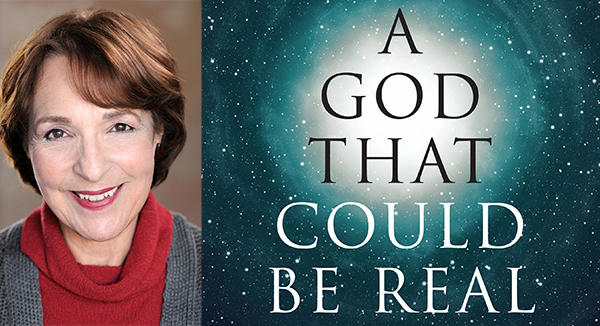
    We are living at the dawn of a new picture of the universe. We now know that everything visible with our best telescopes is less than one percent of what’s really out there. Our universe is made almost entirely of “dark matter” and “dark energy”—two invisible, dynamic presences whose 13.8 billion year competition with each other has spun the galaxies into being and thus created the only possible homes for evolution and life. This must change how we think about God.

    I’m a philosopher of science, married to one of the astrophysicists who created the modern picture of the cosmos, Joel Primack. For ten years, he and I co-taught a course at the University of California, Santa Cruz, called “Cosmology and Culture,” trying to help young people with no background in science understand how cosmologies have changed historically and how to wrap their minds around the counterintuitive idea that the “double dark” universe actually surrounds Earth and its newly discovered laws affect our world. We wrote The View from the Center of the Universe: Discovering Our Extraordinary Place in the Cosmos (Penguin/Riverhead 2006). We were invited to give the prestigious Terry Lectures at Yale in 2009, which became The New Universe and the Human Future: How a Shared Cosmology Could Transform the World (Yale Univ. Press 2011).

    (more…)