• Video used by permission of The School District of Philadelphia. All rights reserved.

    It’s the time of year when our newsfeeds are filled with posts highlighting the best commencement speeches of the season. This got us thinking about what Martin Luther King, Jr. might say to young people today who are heading into the next chapter of their lives; his speech “What Is Your Life’s Blueprint?” immediately sprang to mind. In it, Dr. King, speaking at Barratt Junior High School in Philadelphia, Pennsylvania, encourages students to be the best people they can be, regardless of their status in life.

    Now, you can watch this rarely seen film of that speech. Recorded on October 26, 1967, just six months before his assassination, Dr. King’s words will still resonate with young people today and encourage them to keep moving in the struggle for justice and make our nation a better place in which to live.

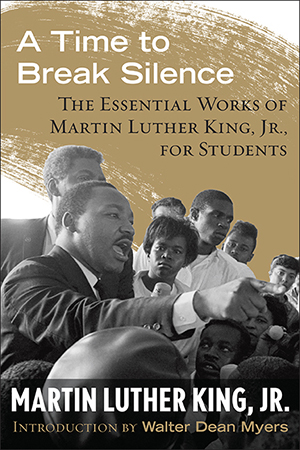
    As Walter Dean Myers said in his introduction to A Time to Break Silence: The Essential Works of Martin Luther King, Jr., for Students, in which this speech is reprinted: 

    “I believe that if Dr. King were alive today, he would enlist an army of young people to help each other and America in the education process. He would trust them to bring their energy and sense of justice to end gang violence and to reverse the feeling of helplessness that hurts so many of our young people. He would keep marching against unjust laws, racism, war, and poverty. Dr. King made America a better place for all people to live during the turbulent years of the civil rights struggle. Using his insights, his courage in tackling difficult problems, and his loyalty to nonviolence both in action and in the language we use with each other, perhaps we can continue building the America he once thought possible. What do you think?”

  • By Melinda Chateauvert

    This post originally appeared on Debate This Book.

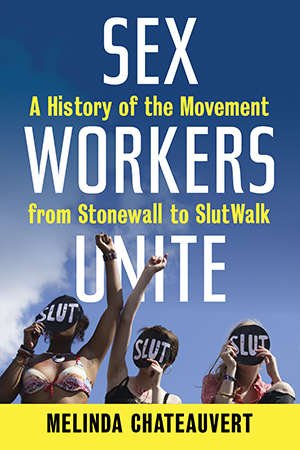
    image from www.beacon.orgMy mother kind of freaked out when I told her about the proposal for Sex Workers Unite! I never thought of her as a prude. When I was growing up, she rarely seemed embarrassed about sexuality matters, and her several non-traditional relationships definitely influenced my critique of the whole white picket fence family idea. But for her daughter to write about prostitutes’ rights threw her for a loop.

    There are huge stigmas against sex work. For my mother, who came of age after World War II when the sexual double standard was as popular as drive-ins and girdles, embracing the women’s movement and sexual liberation of the 1960s was a radical rejection of her parents’ protestant conservatism. As a feminist, she rejects the idea that a woman’s sexual history is evidence of her worth or her integrity.

    But sex work and the sex industry are another matter. For her, women “shouldn’t have to” be prostitutes; women should have education and employment opportunities and enjoy wage equality and childcare. My mother is also a successful businesswoman, a pioneer in a field that had very few women when she entered it in the early 1970s, rife with sexism, harassment and even sexual violence. She’s a feminist because the movement was supposed to liberate women through economic independence so they didn’t have to exchange sex for money or other support.

    (more…)

  • image from www.politicalresearch.org

    It’s heartbreaking when we lose such a visionary in politics and social justice. Jean Hardisty, political scientist and activist, died this year on March 16 after battling Non-Hodgkins Lymphoma. She founded Midwest Research in Chicago in 1981, which became Political Research Associates (PRA) in 1987 when it relocated to Boston. 

    Hardisty founded PRA to produce investigative research and analysis on right-wing movements to support social justice advocates and defend human rights. It specializes in reproductive justice, civil liberties, economic justice, LGBTQ rights, and racial/immigrant justice. Social change activists, in fact, knew Jean as a public intellectual concerned with feminist and lesbian issues. In order to understand conservative leaders’ influence on voters, Hadisty sought to learn what made right-wing supporters click rather than demonize or scapegoat them. It was her goal to expose the leaders of the Right. 

    She found the Left’s response to the rise of the New Right during the Reagan presidency inadequate and misguided. During her tenure as Executive Director of PRA, she taught Left activists not to underestimate the clout, finances, and the unifying vision of the Right. Patiently, she led her staff through analyses of elections, events and incidents on the local, state, and national level, and the work of the Right. Although the historical perspective she brought could be challenging, it was always reassuring. She matched the rigor of her research with the compassion, mentorship, and sense of humor her friends and colleagues cherish to this day. Those whose lives she touched will miss her dearly.

    To honor her legacy and scholarship, we’re presenting an excerpt from Mobilizing Resentment: Conservative Resurgence from the John Birch Society to the Promise Keepers. The following passage is a shining example of her prescient insight and the hard work she put into advancing social justice causes.

    (more…)

  • By Fred Pearce

    image from upload.wikimedia.org

    Kudzu growing in Atlanta, GA.

    This post appeared originally on Debate This Book.

    Alien species are taking over nature. Rogue rats, predatory jellyfish, suffocating super-weeds, snakehead fish wriggling across the land–all are headed for an ecosystem near you. These biological adventurers are travelling the world in ever greater numbers, hitchhiking in our hand luggage, hidden in cargo holds and stuck to the bottom of ships. Our modern, human-dominated world of globalized trade is giving footloose species many more chances to cruise the planet and set up home in distant lands. Some run riot, massacring local species, trashing their new habitats and spreading diseases.

    We all like a simple story with good guys and bad guys, so the threat of invasive species invading fragile environments and causing ecological mayhem instantly gets our attention. For half a century, conservationists have been in the forefront of the battle to hold back the invasive tide. And as an environmental journalist, I have written my share of stories about the mayhem they can cause.

    Some of it is true. But do we fear the invaders too much? Do zebra mussels, kudzu, salt cedar and the rest do as much damage as is claimed? And what about the thousands of other visitors who fit in without trouble? Is our fear of invasive species little more than green xenophobia? In my new book The New Wild: Why Invasive Species Will Be Nature’s Salvation (Beacon Press, 2015), I explore these questions.

    Most of us don’t treat foreign humans as intrinsically dangerous. Yet the orthodoxy in conservation is to stigmatize foreign species in just that way. Native is good, and foreign is bad. I believe it is time for a rethink—time to consider whether invasive species can sometimes be the good guys, and whether nature’s go-getters are actually rebooting ecosystems corrupted by human activity.

    (more…)

  • Update: As of June 1, Bruce Jenner has officially announced that she would like to be known as Caitlyn. We have updated this blog to reflect her name change and pronoun usage.

    Since coming out last month as a transwoman during her interview with Diane Sawyer on 20/20, former Olympian, track and field athlete, and TV personality Caitlyn Jenner has cast more light on gender identity. Her celebrity status grants her a privileged position to do so and has been propelling a paradigm shift in American society’s regard toward the standard female/male dichotomy. That Jenner came out to millions of viewers while still phenotypically male is encouraging. In fact, she inspired singer and actress Miley Cyrus to come out and admit her non-binary gender. These and the stories of others give guidance and hope to those living between and outside of the narrow definitions of masculine and feminine. If you or someone you know is at the crossroads of gender identity, we would like to share some books and resources that we hope will be helpful in the journey.

    Matt Kailey lived as a straight woman for forty-two years until he took the steps toward becoming a man. In Just Add Hormones,he shares the story of his transformation through surgery and hormone therapy, the change in the behavior of others because of his new gender identity, and the transition towards acceptance of one’s self as a person who straddles two genders. For those who have been questioning their gender, Kailey’s book is full of sound advice and answers all the questions you may have about what it’s like to live as a transsexual.

    Trans Liberation is a collection of activist Leslie Feinberg’s inspirational speeches in which ze calls for acceptance and tolerance for those who live at the boundary of sex and gender expression. Pointing out the similarities between the struggles of the trans and gay, lesbian and bi communities, Feinberg advocates for respect towards the cross-dressers, transsexuals, intersex persons, Two Spirits, drag kings and drag queens.

    It’s hard to believe that the world lost Matt Kailey and Leslie Feinberg just last year, but we hope their lives and work continues to inspire and help others.

    In My Gender Workbook, author, performance artist, playwright, and gender outlaw Kate Bornstein provides a hands-on, accessible guide to help readers discover their own gender identity. Through quizzes, exercises, and puzzles, you may discover that you’re a “real man”, a “real woman”, or “something else entirely”.

    Professor J. Jack Halberstam appoints Lady Gaga as a symbol for the new era of gender identity in Gaga Feminism: Sex, Gender, and the End of Normal. With the burgeoning influence of pregnant men, late-life lesbians, SpongeBob SquarePants, and queer families in the twenty-first century, gender and sexual politics have broken away from the status quo of heteronormativity. Halberstam urges readers to embrace the gender and sexual fluidity of the new feminism that Lady Gaga embodies.

    Our parent organization, the Unitarian Universalist Association (UUA), offers a Transgender 101: Identity, Inclusion, and Resources section on their website that includes a list of ten ways to be more welcoming and inclusive of transgender people, basic gender identity definitions, films for congregational viewing, and much more. You may also be interested in Standing on the Side of Love, a public advocacy campaign sponsored by the UUA that participates in LGBTQ activism. The campaign’s mission is to challenge exclusion, oppression, and violence based on sexual orientation, gender identity, immigration status, race, religion, or any other identity.
     

  • By Theresa Perry

    2010 Lifetime Achievement Award recipient Theresa Perry is series editor of the Simmons College/Beacon Press, Race, Education, and Democracy Lecture and Book Series. One of the books in the series is Dr. Freeman A. Hrabowski’s Holding Fast to Dreams, which went on sale yesterday. As a preview, we’re presenting the note she wrote for the book in which she explains how Hrabowski’s work, going on strong since he joined the civil rights movement at age twelve, is making headway in education and equality. 

    ***

    image from www.beacon.orgIn the spring of 2013, Dr. Freeman Hrabowski delivered the Simmons College–Beacon Press Race, Education, and Democracy Lectures, called “Standing Up for Justice, Creating Opportunity: From the Birmingham Children’s Crusade to the Creation of Excellence in Science, Technology, Engineering and Math.”

    This book, which is based on those lectures, eloquently captures the bookends of Dr. Hrabowski’s life and indeed the lives of many other African Americans who grew up in the Jim Crow South, fought with their lives to dismantle this oppressive system, and then dedicated themselves to creating opportunities for black students and other marginalized groups.

    The atmosphere at Dr. Hrabowski’s Boston lectures was electric, filled with a sense of anticipation and hope. Similarly in Holding Fast to Dreams, Dr. Hrabowski brings us a message of hope and possibility.

    In describing his young life, he embodies Du Bois’s mantra “Your child is wiser than you think.” Dr. Hrabowski offers a moving story of what it was like to become a civil rights activist at twelve years of age. He describes the agony of his parents and their initial refusals to allow him, their only child and son, to participate in the marches. He describes how the morning following their refusal, with tears in their eyes, they gave him permission to march. Dr. Hrabowski describes the brutality he experienced during the marches and while being arrested.

    (more…)

  • By Dr. Martin Luther King, Jr.

    In his speech “The Burning Truth in the South”, Martin Luther King, Jr. says the appeal of nonviolence has many facets. Though he wrote this speech half a century ago, we have been watching the facets of nonviolence at work again, this time against police brutality and racial injustice in Baltimore. The media frenzy centered on the purge riot of 27 April was inevitable. Violence, as always, elicits an immediate reaction, the most immediate attention. Up until the riot, the protests were peaceful—and still are. Student protesters Korey Johnson and John Gillespie Jr. have recently organized peaceful outlets to demanding justice for Freddie Gray. Johnson and Gillespie are shining examples of what King extols as the facets of nonviolent of direct action. 

    ———————————————————————————————————–

    All material copyright © Martin Luther King, Jr., and the Estate of Martin Luther King, Jr.; all material copyright renewed © Coretta Scott King and the Estate of Martin Luther King, Jr.

    ———————————————————————————————————–

    image from www.beacon.org"An electrifying movement of Negro students has shattered the placid surface of campuses and communities across the South. Though confronted in many places by hoodlums, police guns, tear gas, arrests, and jail sentences, the students tenaciously continue to sit down and demand equal service at variety store lunch counters, and extend their protest from city to city. In communities like Montgomery, Alabama, the whole student body rallied behind expelled students and staged a walkout while state government intimidation was unleashed with a display of military force appropriate to a wartime invasion. Nevertheless, the spirit of self-sacrifice and commitment remains firm, and the state governments find themselves dealing with students who have lost the fear of jail and physical injury.

    It is no overstatement to characterize these events as historic. Never before in the United States has so large a body of students spread a struggle over so great an area in pursuit of a goal of human dignity and freedom.

    The suddenness with which this development burst upon the nation has given rise to the description “spontaneous.” Yet it is not without clearly perceivable causes and precedents. First, we should go back to the ending of World War II. Then, the new will and determination of the Negro were irrevocably generated. Hundreds of thousands of young Negro men were mustered out of the armed forces, and with their honorable discharge papers and GI Bill of Rights grants, they received a promise from a grateful nation that the broader democracy for which they had fought would begin to assume reality. They believed in this promise and acted in the conviction that changes were guaranteed. Some changes did appear—but commensurate neither with the promise nor the need.

    (more…)

  • By Bill Fletcher, Jr.

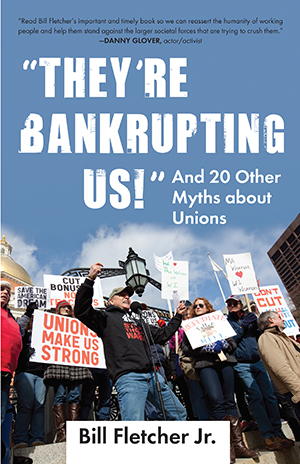
    To commemorate May Day, we’re putting the spotlight on Bill Fletcher, Jr. Fletcher has been involved with the labor movement since he worked as a welder in a Massachusetts shipyard after graduating from Harvard in 1976. He moved on thereafter to become a labor activist and organizer. With hands-on experience from the bottom up, Fletcher is in the prime position to bust the myths bent on dismantling unions. Watch him bust ten in “They’re Bankrupting Us!”: And 20 Other Myths about Unions. Fletcher-May Day 2015


    MYTH 1    Workers are forced to join unions.

    Fact: Unions are created when a majority of the workers in a workplace either vote for a union or sign cards to join the union, and are recognized by the employer. Whether one must become a member of a union depends on (a) a negotiated agreement between the workers and their employer that all union members can ratify and (b) state law.

    MYTH 2    Unions are destroying the economy.

    Fact: Problems with the U.S. economy have little to do with labor unions but instead stem from a global capitalist economy and polices that perpetuate inequality. Labor unions seek to more fairly distribute the results of labor.

    MYTH 3    Unions are run by labor bosses.

    Fact: Leadership is chosen through an electoral process. Local union leaders are elected by individual members, while delegates sent from local unions then choose national union officers, including a president and an executive board.

    MYTH 4    Unions are always on strike.

    Fact: The number of strikes, a nonviolent tactic for asserting worker needs, has declined from an average of 352 per year in the 1950s to 21 in the last ten years.

    (more…)

  • By Kay Whitlock

      Krakauer-Missoula

    In some cases, serious community rifts opened, centered on contested ideas of innocence, guilt, consent, and morality. At the heart of these divisions was the belief that the accused were not criminal types, so the immorality must be located entirely in the young women.

    —from a discussion of cultures of sexual violence in U.S. cities in Considering Hate: Violence, Goodness, and Justice in American Culture and Politics

    The firestorm of anxiety and local attempts to discredit Jon Krakauer and his new book Missoula: Rape and the Justice System in a College Town  provide a mirror image of the volatile, polarizing controversies that exploded when residents of this Montana community first became publicly aware of events detailed in the book.

    As a longtime Missoula resident, I’ve paid close attention.

    Krakauer’s book focuses on the experiences of several Missoula women who reported being sexually assaulted or raped by acquaintances who were university students. Alleged assailants included members of the University of Montana’s beloved Grizzlies (“The Griz”) football team. He places the women’s voices at the center of the narrative. His account draws extensively from transcripts and other documents that provide damning detail of university and law enforcement authorities’ reluctant, inconsistent, and severely flawed responses to those women.

    Prior to its publication, many residents who had not read a single page denounced the book and the author, declaring that Missoula’s good reputation was being unfairly tarnished. An attorney who successfully defended a popular UM quarterback against rape charges—Krakauer describes the case in excruciating detail—aggressively sought to discredit the author. Missoula’s recently-elected county attorney, deeply implicated in the events described in the book, joined in public denunciation prior to the book’s release and confirmed efforts to delay publication.

    (more…)

  • Get Over Your Guilt. It's Part of America's Historic Problem with Race

    By Thomas Norman DeWolf

    image from upload.wikimedia.org

    Image from Flickr user Nivrae

    This post originally appeared in Zócalo Public Square.

    Dear Ben,

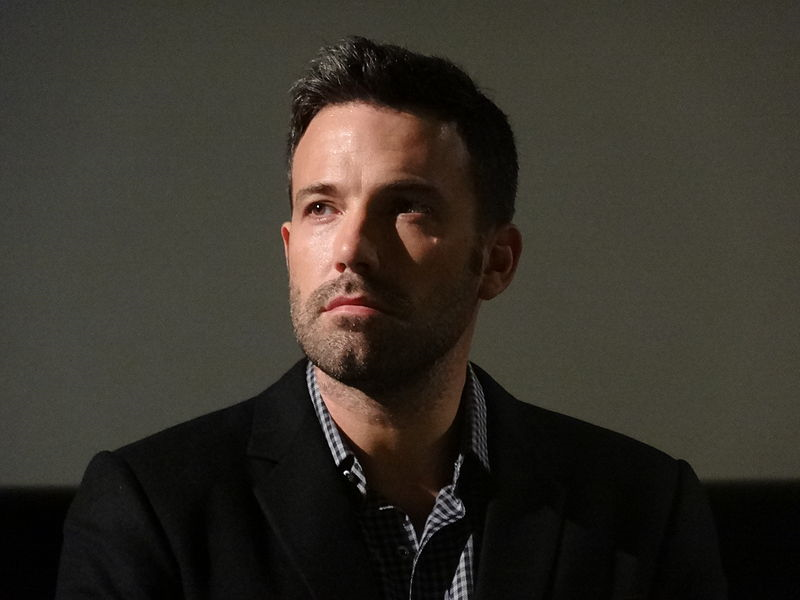
    I’m certain being in the spotlight for not wanting the PBS show Finding Your Roots to include mention of your slave-owning ancestor has been a real pain. The unwanted headlines, the online comments, the “Dear Ben” letters must be getting old. I’m sure you want this whole episode behind you. I get that: I’m related to the most successful transatlantic slave-trading dynasty in U.S. history.

    I thank you for your honesty in admitting you were embarrassed. Many white people, upon discovering enslavers among our ancestors, feel embarrassed, ashamed, and guilty. But as I learned from Will Hairston, a white descendant of one of the wealthiest Southern enslaving families in American history, “Guilt is the glue that holds racism together.”

    I appreciate you writing on your Facebook page, “We deserve neither credit nor blame for our ancestors and the degree of interest in this story suggests that we are, as a nation, still grappling with the terrible legacy of slavery. It is an examination well worth continuing.”

    Yes it is. And I can tell you from personal experience that what you choose to do next to continue that examination is what matters now.

    (more…)