• By J. A. Mills

    Tiger in wine

    Authorities in China seldom respond to the consistent flow of new evidence that Chinese demand for tiger products drives poaching of wild tigers. When they do, it’s important to notice what isn’t said.

    The New York Times recently wrote a courageous editorial about China’s “plunder” of Myanmar’s natural resources. “China’s insatiable demand for tiger and leopard parts, bear bile and pangolins has helped to transform the town of Mong La, near the Chinese border, into a seedy center of animal trafficking, prostitution and gambling,” it said. “The people of Myanmar…want this plunder stopped.”

    A few days later, China’s official Xinhua News Agency published a retort from Chinese Foreign Ministry spokesman Hua Chunying. “We firmly disagree with the editorial,” Hua was quoted as saying. “We are committed to strengthening cooperation with our neighbors, including Myanmar, to tackle illegal activities, protect natural environment and safeguard the stability of border areas.”

    No confirmation; no denial.

    (more…)

  • By Jenah Blitz-Stoehr

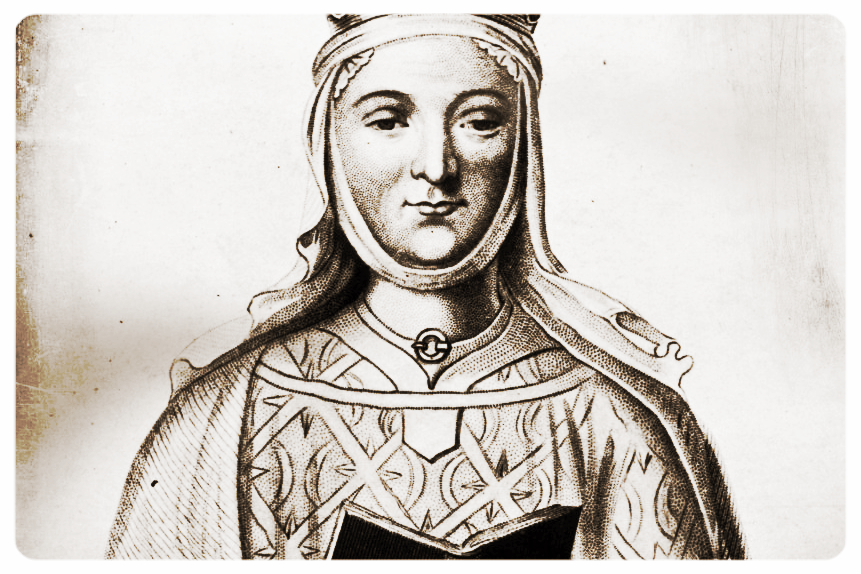
    Eleanor of Aquitaine

    During my junior year of college I picked up a copy of Eleanor of Aquitaine: A Life by Alison Weir for a bit of “light reading.” An experienced historian with an eye for detail, Weir makes it clear from the get go that, while this is a history of Eleanor of Aquitaine, there are quite a few places where we simply don’t know what was going on with her because, in the twelfth century, no one really cared to document her life. This struck me as remarkable. This is a woman who controlled one of the most desirable duchies in Europe, became queen of France, insisted on joining her husband in the Second Crusade, managed to get her marriage annulled despite papal opposition, married yet another king (England this time!), and eventually became Queen regent when her royal son thought embarking on another crusade would be more fun than ruling his own country. The woman was a force of nature and a canny one at that. And yet, there are gaping holes in her history where even an experienced and well respected historian can only guess what she was up to based on what her male contemporaries say women typically did.

    (more…)

  • By J. A. Mills

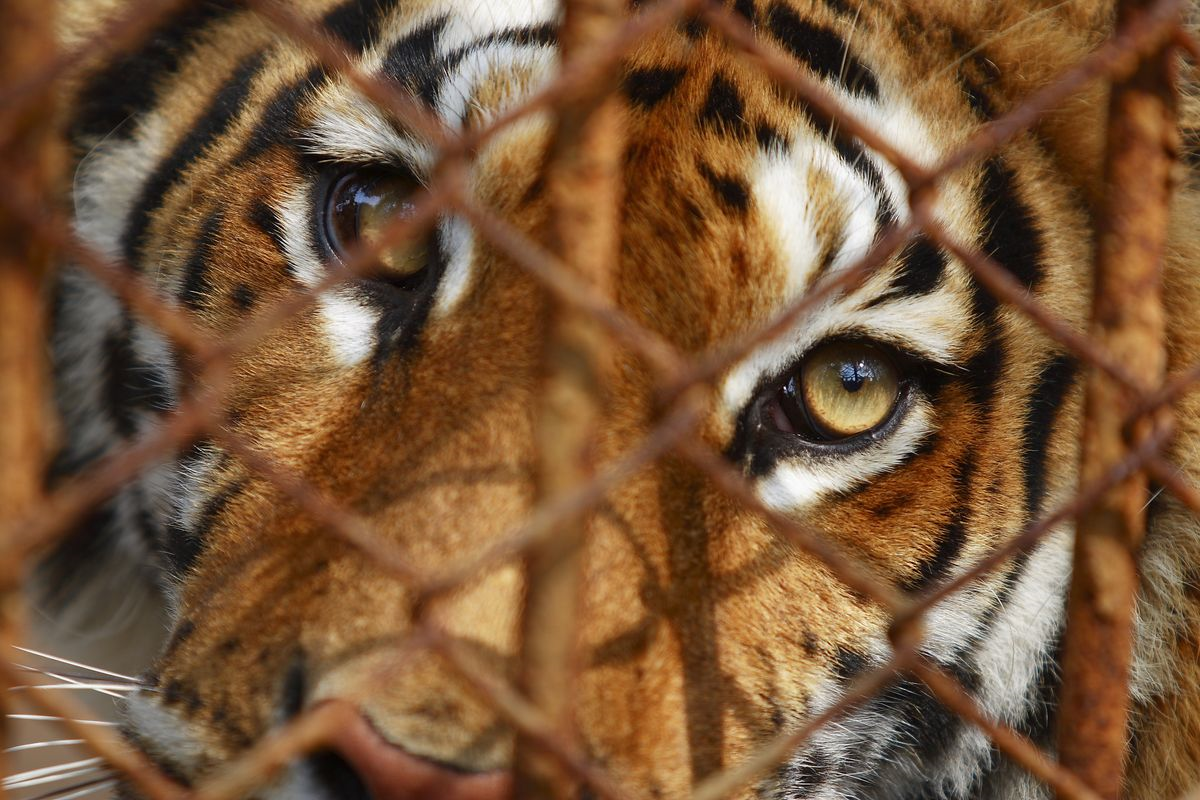
    Close-up of tiger behind bars

    A few years ago, I suggested to a coalition of conservation groups that we use crowdsourcing to engage the world in saving wild tigers and to come up with some fresh, out-of-our-box ideas because business-as-usual was not working.

    Two prominent wildlife organizations nixed the idea. “That is not our brand,” one of their people said. “Our brand is that we are the ones who have the solutions.” Never mind that millions of dollars had been spent over decades of effort and wild tigers were still in dangerous decline.

    This week, headlines joyfully called out India’s announcement that wild tiger numbers there may be up by as much as 30 percent. That is good news indeed, if the numbers are right. But here is the risk: Many people may take this to mean wild tigers are out of danger, and some organizations married to that we’ve-got-it-covered brand will be playing down the potentially fatal list of caveats.

    (more…)

  • By Carole Joffe


    President Obama’s forceful comments on the need for federal support of child-care programs were one of the most notable aspects of his recent State of the Union address. As he said, “It’s time we stop treating child care as a side issue, or a women’s issue, and treat it like the national economic priority that it is for all of us …. In today’s economy, when having both parents in the workforce is an economic necessity for many families, we need affordable, high-quality child care more than ever … [It is] a ‘must-have,’ and not a ‘nice-to-have.’”

    As a longtime advocate for quality, accessible child care, I was heartened to hear these words at such a high-profile time. It occurred to me that it had been more than 40 years since a US president had so visibly addressed the child-care issue—and on that occasion, the message had been very different.

    (more…)

  • By Alan Wolfe


    In an excerpt from At Home in Exile, historian and scholar Alan Wolfe warns that, although the kind of Islamic-inspired anti-Semitism behind the Charlie Hebdo–linked attack at the Hyper Cacher kosher market in Paris is real, it is important not to let these actions overshadow “ongoing efforts at cooperation between the two faiths.”

    “How did the Jews get back at Hitler?” run the words of what one presumes to be a joke. “They sent him back the gas bill.” So spoke a British Muslim cleric, Abdullah al-Faisal, to appreciative laughter at a 2001 event in the English city of Luton. One of his listeners then posed some questions: “Should we hate Jews, and when we see them on the street, should we beat them up?” To which the good cleric replied, “You have no choice but to hate them. How do you fight the Jews? You kill the Jews.” These horrific sentiments are cited by Anthony Julius toward the end of Trials of the Diaspora. If Christian anti-Semitism is no longer as powerful as it once was, and if Jewish anti-Semitism is a far-fetched charge, then the most important source of diasporic anti-Semitism may well be the rancid language and all-too-frequent violent deeds emanating from the world’s ever-growing Muslim community, especially, as the Luton story suggests, in Europe, where tensions between these two faiths have been palpable. In a 2008 report, the highly reputable Pew Research Center found disturbing trends in xenophobia and anti-Semitism throughout much of the European continent. Not all such Jew hatred originates with Muslims. Neo-Nazi and ultranationalist parties, such as Golden Dawn in Greece, Jobbik in Hungary, and Svodoba in the Ukraine, while clearly anti-Semitic, contain more than their fair share of native-born Europeans who in all likelihood hate Muslims as well as Jews. But all too much of it does. France in particular has witnessed serious Islamic-based violence against Jewish targets. Toulouse, for example, was not only where four Jews, including three children, were killed by a French Muslim in 2012, but it has also been the scene of repeated anti-Semitic vandalism since. Saudi-run schools in Great Britain, according to the BBC program Panorama, rely on textbooks filled with anti-Semitic words and pictures, including descriptions of Jews as “monkeys and pigs.” Malmö, Sweden’s third largest city, which has one of the largest percentages of Muslims anywhere on the continent and whose mayor once suggested that Jews bring hatred on themselves, has experienced record-breaking numbers of attacks, including an explosive placed in front of a Jewish Community Center. A survey conducted by the Belgian sociologist Mark Elchardus found that half of the Muslim schoolchildren in Brussels hold anti-Semitic views. One can argue about why these things are happening. But that they are indeed happening is obvious. Had large numbers of Muslims not made Europe their home over the past decades, anti-Semitism would no doubt still exist there. That so many have only adds to a potentially combustible mix.

    (more…)

  • President Obama delivered a fiery State of the Union earlier this week, immediately making headlines (and exploding the Twittersphere) for a now-famous ad-libbed line about winning both elections. Chatter about the unplanned quip, however, threatened to overshadow the more substantive parts of the President’s speech, in which he promised to tackle inequalities in income, education, and immigration as well as offering concrete measures for slowing climate change, benefiting veterans, closing tax loopholes, and the like. It was also, notably, the first time a President has used the word transgender during a State of the Union address.

    For those looking for deeper insight into some of the issues Obama spoke about, we’ve created a State of the Union reading list, and highlighted a few specific titles below:

    (more…)

  • By Lani Guinier


    The following article is excerpted from The Tyranny of the Meritocracy, Lani Guinier’s bold argument for revamping our standards of “merit” and for creating collaborative education models that strengthen our democracy rather than privileging individual elites.

    Suspended on steam tunneling up from the government-issue heating grates, the last of the fall foliage dances just beyond the windowpane. In the crisp autumn air, the leaves ricochet off the grimy glass before coming to rest on the banks of the buildings’ curved cement ledge, just outside the science classroom. These dancing leaves are barely visible to the sixteen- and seventeen-year-old teenagers unpacking their book bags atop rows of smooth, black Formica countertop, crowded with petri dishes, glass beakers, and gas blowtorches. It’s a Monday morning in November, the time of year when high school seniors around the country carefully calculate their college admissions odds. A solemn stillness reigns as nine boys and one girl wait for the Advanced Placement physics teacher to begin the double-period lesson that is the toughest course in this public school. Of the seven high school seniors and three juniors, only one—a policeman’s son—does not have parents who graduated from college. Nevertheless all ten students are preoccupied with the same thing: getting into college.

    (more…)

  •  

    Two decades ago, international wildlife investigator J. A. Mills went undercover to expose bear farming in China and discovered a plot to turn tigers into nothing more than livestock. Now, a new video for Blood of the Tiger takes viewers deep into the heart of one of these tiger farms.

    (more…)

  •  

    The Reverend Dr. Martin Luther King, Jr. addresses supporters and fellow marchers outside the State Capital in Montgomery, Alabama at the end of the Selma to Montgomery march on March 25, 1965.

    Ava DuVernay’s film Selma, set during the 1965 voting rights marches from Selma to Montgomery, Alabama, has been justly lauded for its portrait of the human, and more radical sides of Martin Luther King, Jr., even as it’s gained notoriety for what some are calling an ahistorical portrayal of President Lyndon B. Johnson. That fuss has somewhat obscured a more significant departure from historical accuracy in the film: the fact that all of the speeches Dr. King delivers in the film, including the rousing victory speech at the climax, were actually fictionalized, written by DuVernay herself in the style of King. The choice wasn’t artistic; usage rights to King’s actual speeches had belonged to another project. Nevertheless, such an omission might leave viewers of the film wanting for King’s actual words.

    (more…)

  • By Ruth Behar

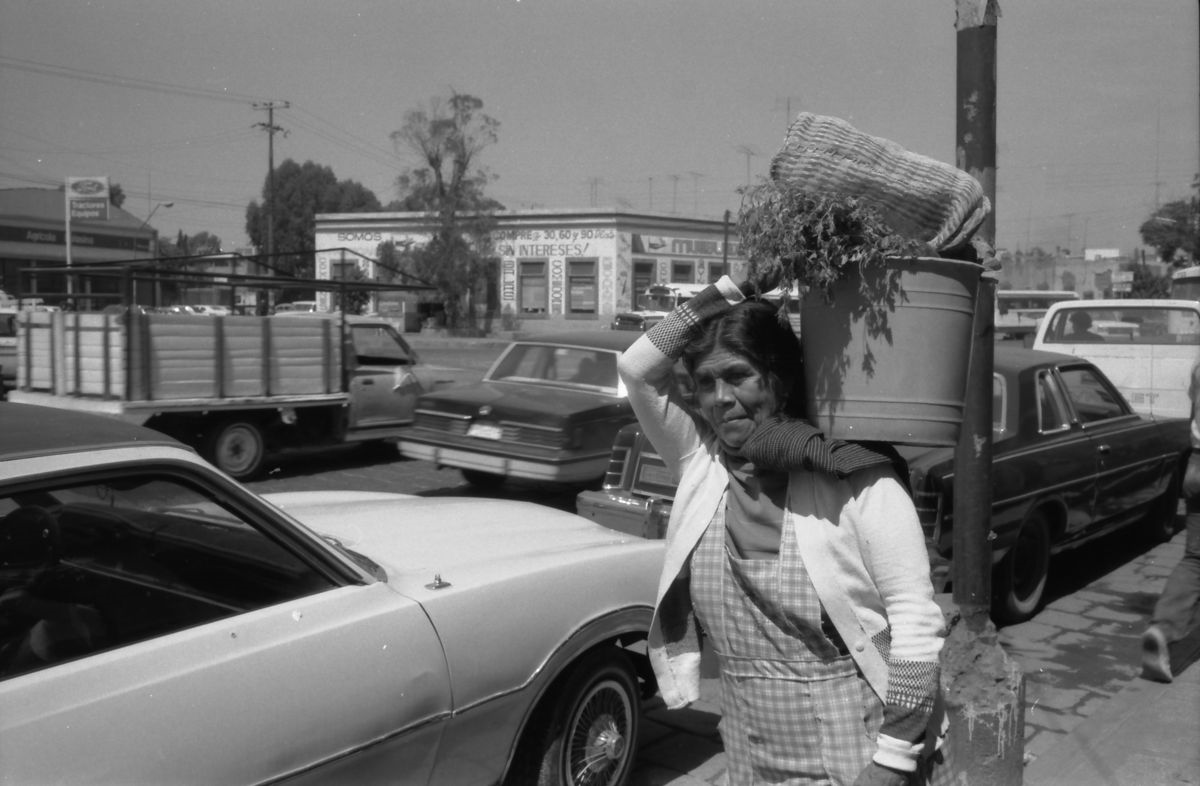
    Esperanza peddling in San Luis Potosi, 1988

    Esperanza peddling in San Luis Potosi, 1988

    The old year ended and I hadn’t yet said goodbye to Esperanza, my comadre. I just couldn’t believe she was gone.

    I knew that the first important thing I needed to do in the new year was to write a farewell letter to her. Now it is Three Kings Day, an appropriate moment to thank her for all the gifts she gave me.

    Esperanza and I met on the Day of the Dead in 1983. I was about to turn twenty-seven and all I had to my name was a recent Ph.D. in anthropology. I was living in the town of Mexquitic, in Mexico, fifteen hours from the Laredo border, and trying to decide what to do with my life after a disastrous, humiliating academic job interview. She was fifty-three-years-old, a farmer and street peddler, barely literate. Other women told me to avoid her. She was known to be fiery, rude, and a witch.

    She looked beautiful carrying a bouquet of calla lilies to place on the grave of an ancestor. I reached out timidly, uncertainly, asking whether I could photograph her. She looked back harshly, but still let me take the picture, and then she turned away. I thought I wouldn’t have any other encounters with her, but afterwards she came asking me to be her comadre. She had expected me to act like an arrogant gringa. My shyness, and Cuban accent, made a positive impression on her.

    (more…)