• By Ryan Mita

    Atabaque

    “Is music universal?” It’s one question among many raised by S. Brent Plate in his new book A History of Religion in 5 ½ Objects, and a question I struggled with for some time myself.

    When I first started practicing capoeira, the Afro-Brazilian martial art informed by live music, I had trouble picking out the tinkling rhythm provided by the lead instrument. Not understanding the rhythm meant not knowing the specific set of rituals involved.

    At the time, I was traveling through Japan, and my Japanese was a becoming a burden, rather than an asset. While visiting a capoeira group in Tokyo, I did not want to embarrass my mestre (teacher), or my mestre’s mestre, still leading classes in Brazil at the age of 76.

    (more…)

  • By Lisa M. Weinbaum

    Turn Your Papers Over by Flickr user comedy_nose (via Creative Commons)

    In retrospect, the discussion was about me, though I didn’t realize it while sitting there. My colleagues’ conversation this day swirled around teachers not following State Mandates—how enforced curriculum mapping would ensure every teacher is on the same page, teaching the same topic, at the same time. Later, I realized I was the cause of my cohorts’ discontent, but not until a parent e-mailed, alerting me my job was in jeopardy from teaching “peace instead of literature,” not until students said they were “sorry about next year,” and not until a colleague cautioned that I was “not teaching the State Standards and Benchmarks.”

    WHAT!?

    Languishing under the sweltering sun of New Mexico, where unemployment rates climb nearly as high as the temperatures, in part because of job outsourcing to nearby Juarez, Mexico, two thirds of my students subsist below the poverty level. For many, they would be the first in their families to finish high school, assuming the daily drudgery of educational irrelevance doesn’t dull their enthusiasm for learning, wouldn’t rob them of a lifetime of opportunity. For example, because of the frenzy to meet our high-stakes testing goals, most language arts teachers conformed their curriculum to the District’s thirteen “scientifically research-based” literacy strategies, none of which included reading books. These were disseminated and reinforced through countless vertical alignment meetings, horizontal alignment meetings, and daily team meetings with other content area teachers. These District-mandated literacy strategies promoted robotic writing and acronyms such as ACE (Answer question, Cite evidence, Explain further) and KIM (Key Idea, Information, Memory Clue) as they prepared for their MAP (Measurement of Academic Progress) before taking their CRT (Criterion Referenced Test) under the auspices of NCLB. But after teaching ACE and KIM ad nauseam, while watching my students’ eyes glaze over, I simply couldn’t take the monotony anymore.

    (more…)

  • By Sheryll Cashin

    University of Texas at Austin, by Brandon Watts (via Creative Commons)

    In Place, Not Race: A New Vision of Opportunity in America, now available from Beacon Press, legal scholar Sheryll Cashin reimagines affirmative action and champions place-based policies, arguing that college applicants who have thrived despite exposure to neighborhood or school poverty are deserving of special consideration. Sixty years since the historic decision, we’re undoubtedly far from meeting the promise of Brown v. Board of Education, but Cashin offers a new framework for true inclusion for the millions of children who live separate and unequal lives. In the following excerpt, Cashin examines one case where a seeming setback in affirmative action policy resulted in more inclusive legislation and a surprising outcome for students throughout Texas.

    In 1997, Texas adopted a new law after the US Court of Appeals banned race-based affirmative action in Hopwood v. Texas, a case brought by four white applicants who were denied admission to the University of Texas School of Law. The law guarantees admission to the public colleges and universities of Texas to graduating seniors in the top 10 percent of every high school in the state. The program, which was developed by a group of Latino and black activists, legislators, and academics, passed in the Texas legislature by one vote, after a conservative Republican rural member whose constituents were not regularly being admitted to the University of Texas decided to support the legislation. As predicted, the plan increased minority enrollments and that of rural white students at the flagship public universities in the state. Those students who gain entrance under the plan do so by class rank, not standardized tests or extracurricular activities that they may not have time or money to afford. The program has repaired one shred in Texas’ social contract, forcing the same kind of trade-offs that robustly diverse private institutions like Rice University make in order to enrich their racial, geographic, and socioeconomic demographics.

    (more…)

  • By Deborah Jiang Stein


       #151375108 / gettyimages.com


    Julia Ward Howe originally conceived of Mother’s Day in her 1870 “Appeal to womanhood” (later renamed her “Mother’s Day Proclamation”), a rallying cry to protest the bloodshed of the American Civil War and the Franco-Prussian War. Howe was a prominent women's rights and social activist, a poet, a lecturer, Unitarian, and the author of the poem “The Battle Hymn of the Republic.” She worked to end slavery, helped to initiate the women’s movement in many states, and organized for international peace.

    The traditional “Mother’s Day” holiday of flowers and Hallmark cards, celebrated this year on Sunday, May 11th, is also “Mamas Day”—a day to honor all mamas with acts of justice and love. This year, the Unitarian Universalist Association is joining with Strong Families and other organizations to help return Mother's Day to its activist roots. Let’s especially celebrate those who bear the brunt of hurtful policies or who are weighed down by stigma in our culture, and, for me, this is a call to remember mothers and women in prisons.

    (more…)

  • By Heather Dune Macadam

    Auschwitz Birkenau Wall of Remembrance, by Nick Moulds (via Creative Commons)

    “What is it to you?”

    That was the question the woman was asking me, while we stood on the rooftop of a Brooklyn apartment building enjoying a cookout and celebrating the release of my first book. She had just been introduced to me as someone important in the Holocaust community (I won’t say how) and her response to the fact that I had just co-authored a book with a Holocaust survivor left me stunned.

    It had never occurred to me that the Holocaust was something that was private or unshared by the rest of the world. In fact, one of the reasons Rena—the women I wrote Rena’s Promise about—wanted to tell her story was so she didn’t have to bear it alone anymore. She hoped that by telling her story the pain of her experience would lessen, and it did. It is through sharing our stories and through empathetic listeners that pain and horror is validated and in that way the pain and horror can shift from being solely a personal burden. That is the purpose of Holocaust Remembrance Days and Weeks—it is a chance for us to touch history and honor its place in our lives. It is a chance for us to remind ourselves of the importance of preserving our humanity.

    (more…)

  • Social Insecurity by James W. Russell
    Are you worried about the future as you approach retirement age? Did you watch your 401(k) shrink dramatically during the 2008 recession, taking your dreams of retirement with it? Are you worried that your retirement account may never recover from those losses? Sadly, you're not alone. According to a recent study of 2.2 million large-company employees who have 401(k)-type plans, 85% will not have sufficient resources to meet their needs if they retire at age 65.

    How did we get to this state of affairs?

    In Social Insecurity: 401(k)s and the Retirement Crisis, retirement expert James W. Russell shows how and why a majority of Americans moved from the stability of traditional pensions to more volatile market-based 401(k) accounts. In the process, he exposes what amounts to a massive and international retirement robbery—a substantial transfer of wealth from everyday workers to Wall Street financiers via tremendously costly hidden fees.

    (more…)

  • By Carole Joffe

    Phyllis Schlafly, speaking at the Conservative Political Action Conference (CPAC) in 2011. (WikiMedia Commons)

    Phyllis Schlafly, speaking at the Conservative Political Action Conference (CPAC) in 2011. (WikiMedia Commons)

    “The best way to improve economic prospects for women is to improve job prospects for the men in their lives, even if that means increasing the so-called pay gap.”

    The above quote is from a recent column by Phyllis Schlafly, arguably the nation’s, if not the world’s, most famous hater of the feminist movement. I had not seen mention of her in the media for some time, and this column has caused me to reflect both on her long career and her relevance. Her column also sparked thoughts about the larger problem that U.S. conservatism has had in finding credible spokeswomen.

    I confess to some grudging admiration for Schlafly, given that at nearly 90 she is still active politically—but that is the only thing about her I can admire. Ever since the 1970s, Schlafly has devoted her considerable energies to vilifying the women’s movement and those who identify with it. Here are some of her positions on various items of the feminist policy agenda:

    On marital rape: “By getting married, the woman has consented to sex, and I don’t think you can call it rape.”

    On sexual harassment: “Non-criminal sexual harassment on the job is not a problem for the virtuous woman except in the rarest of cases.”

    On domestic violence: “When marriages are broken by false allegations of domestic violence, U.S. taxpayers fork up an estimated $20 billion a year to support the resulting single-parent, welfare-dependent families.”

    (more…)

  • By Robin Beaudoin

    Robin Beaudoin's stone collectionMy stone collection lives in a Hard Rock Café glass on my kitchen counter. Many of them are polished gemstones, purchased at some point in a mystical gift shop or as accessories to a tabletop fountain or other faux-zen object. Some of them were gifts, like the leopard skin jasper or the sodalite, that were proposed to hold some kind of power—self-confidence, inner peace, the dissipation of fear—which would “flow around” me, granting me the ability to shed the flaws in my personality. This might be only time the phrase “mumbo jumbo” has ever been applicable for me.

    (more…)


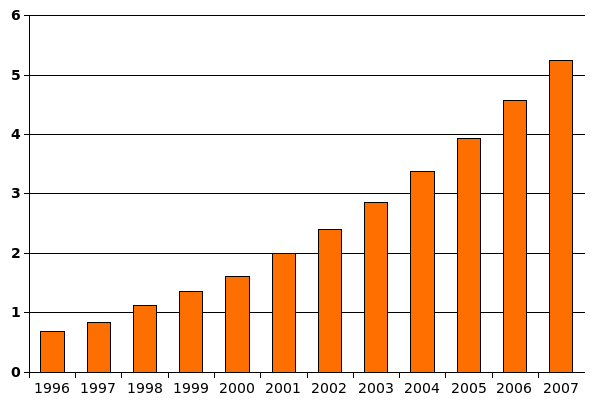
  • Reports of autism cases per 1,000 children grew dramatically in the US from 1996 to 2007.

    Reports of autism cases per 1,000 children grew dramatically in the US from 1996 to 2007.

    April is Autism Awareness Month, established in the 1970s by the Autism Society to “highlight the growing need for concern and awareness about autism.” Unfortunately, that need continues to outpace expectation: reports of autism have exploded over the past twenty years, leading some to believe that doctors are overdiagnosing Autism Spectrum Disorder on a large scale. In the interest of spreading awareness about common factors that lead to the misdiagnosis of Autism Spectrum Disorder (ASD), we spoke with Dr. Enrico Gnaulati, clinical psychologist and author of the recent book Back to Normal: Why Ordinary Childhood Behavior Is Mistaken for ADHD, Bipolar Disorder, and Autism Spectrum Disorder.

    Q: Why do you think Autism Spectrum Disorder (ASD) is overdiagnosed? Where’s the evidence?

    Dr. Gnaulati: The latest statistics out of the famed Centers for Disease Control and Prevention reveal that 1 in 68 children are now affected by autism. That’s a 30 percent increase in just two years. In 2002, 1 in 150 children were given the diagnosis and, in 1991, 1 in 500. The spike in diagnosis is mostly accounted for by “mild” cases of autism, where the afflicted child has acquired decent communication skills and has average, or above, intelligence. Many of these milder cases go on to shed the disorder—upwards of 30 percent, according to a University of North Carolina, Chapel Hill study, making one wonder if the diagnosis really applied in the first place. Remember, ASD is generally considered to be a life-long, disabling neuropsychiatric condition that a child does not shed as childhood progresses. Consequently, with a sizable percentage of children supposedly shedding the diagnosis in the course of childhood, we have to start questioning the validity of the diagnosis in many cases.

    (more…)

  • By Susan Katz Miller

    We celebrated Easter last year with our community of Christian and Jewish interfaith families. Our minister started off by pointing out that Easter is not in the Bible, and that our holiday traditions make reference to ancient goddesses, and the fertility rites of spring. She then gathered the children together and talked to them about the Buddhist metaphor of a cup of tea representing the comforting memories of life after the tea bag (or body) is gone. She’s not your typical minister.

    Next, our rabbi gave an adult sermon about the themes of intimacy, transcendence and unity in the story of the resurrection of Jesus. Somehow, the idea of life beyond death, of renewal and regeneration, seemed completely universal to me as he spoke. As a Jew, I do not feel I need to believe in a messiah or a personal savior in order to celebrate these Easter messages. Our rabbi spent his career at Georgetown, knows his gospels, and has been called a “closet Catholic” by Catholic friends. And yet, he’s an erudite, dedicated and deeply spiritual Jew. He’s not your typical rabbi.

    (more…)