An interview with authors DeWolf and Morgan on NPR’s Tell Me Moreaired Christmas Day.
The authors begin the West Coast leg of their tour this
weekend. The entire month of January, they’ll be making appearances in
Washington, Oregon, California, and Colorado. Check out their website for more info.
PORTLAND, OR: January 14, 2013, 12:00 noon: The Portland
Building. Sponsored by DEEP (Diverse
and Empowered Employees of Portland)
BEND, OR: January 15, 2013, 6:30pm: Bend’s Community
Center 1036 NE 5th Street.
BERKELY, CA: January 18, 2013, 4:00pm: University of
California at Berkeley.
Chevron Auditorium, International
House. Sponsored by the Office of the Vice Chancellor for Equity &
Inclusion.
Booklist review, Jan
01: “Saulitis’ stunning and sorrowful ‘book of contemplation’ elucidates the
discipline, tedium, danger, and bliss of whale studies… Candid, transfixing,
and cautionary, Saulitis celebrates and mourns for a wondrous and imperiled
species.”
Intensive Care: A Doctor’s Journey by Danielle
Ofri (March 05)
Kirkus Reviews in print (Jan. 15) and online
(Jan. 01): “in sharp, take-no-prisoners prose, Khalidi maintains that the U.S.
and Israel… have conspired to deny Palestinians any semblance of
self-determination. A stinging indictment of one-sided policymaking
destined, if undisturbed, to result in even greater violence.”
“Drawing on his own experience as
a Palestinian negotiator and recently released documents, Rashid Khalidi mounts
a frontal attack on the myths and misconceptions that have come to surround
America’s role in the so-called “peace process” which is all process and no
peace. The title is not too strong: the book demonstrates conclusively
that far from serving as an honest broker, the US continues to act as Israel’s lawyer
– with dire consequences for its own interests, for the Palestinians, and for
the entire region. Professor Khalidi deserves much credit for his superb
exposition of the fatal gap between the rhetoric and reality of American
diplomacy on this critically important issue.” —Avi Shlaim, Emeritus Professor of International
Relations at Oxford and author of The Iron Wall: Israel and the Arab World.
"Every denizen of wild places
from Laotse to St. Francis to Rachel Carson to black bears to field mice has
depended upon trails. But rarely have we considered the people, tools, or toil
that lay our favorite trails down. Dirt Work is a spectacular correction of
this omission. Imbued with a tough-minded, ribald reverence for honest labor
that brings to mind a female Gary Snyder or Wendell Berry (if you can imagine
that!), Christine Byl does epic justice to the whole-bodied satisfactions that
come of staying out in the weather, staying alert, and working one’s ass off
for others with love, tenacity and skill." —David James Duncan,
author of The River Why and Sun House.
“Christine Byl has been summering
on trail crews for more than a decade and a half. A first-rate storyteller, she
details the techniques and tools, and the spirit of fellowship and feel of the
woods. If you love getting into the back country, or even if you're an armchair
backpacker as I am now at age eighty, you'll love Dirt Work.”
–William Kittredge, author of Hole in the Sky and The
Nature of Generosity
“Byl’s is not a world of groomed
nature, inert tools, or nostalgic rituals, but a vibrant landscape inhabited by
people and animals and layered by idea and history. She means this book as a
love song, she writes, and it is, not only from her to her fellow laborers, but
from the mind to the body, the hand to the tool, the human to the wild.” —Sherry
Simpson, author of The Accidental Explorer: Wayfinding in Alaska
Today’s post might provide a little inspiration for your 2013 vacation, much as editor Alexis Rizzuto received for her outdoor adventures.
At this time of year, I start pulling out maps and guidebooks and poring over my lengthy—and always growing—list of outdoor trips I want to take. (My document slugged “Trip Ideas” is now 11,855 words long.) There are two reasons: First, to make those big dream trips happen, you have to think, plan, and dream months in advance. Plus, the planning is almost as much fun as taking the trip.
Here are my 10 favorite family adventures at The Big Outside (another list that will keep growing and evolving), to help give you some ideas and inspiration for 2013. All have a story and photo gallery, and most also have a video. In a couple of weeks, I’ll share my list of 10 all-time favorite adventures at The Big Outside, domestic and international, that are not necessarily for families—although there are definitely trips that could be on either list (and there’s no overlap between the two lists).
Here’s wishing you an adventurous 2013.
Campsite below Zoroaster Temple, along the Tonto Trail in the Grand Canyon.
Did you unwrap an e-reader this holiday season? Or did you treat yourself to one? (Don't worry, we won't judge.) Here are Beacon's most popular e-book titles for 2012 along with a few suggestions for titles sure to be on next year's bestseller list. Download one or two and see why they've inspired people to click and read.
At the time of Frankl's death in 1997, Man's Search for Meaning had sold more than 10 million copies in twenty-four languages. A 1991 reader survey for the Library of Congress that asked readers to name a "book that made a difference in your life" found Man's Search for Meaning among the ten most influential books in America.
"One of the great books of our time." —Harold S. Kushner, author of When Bad Things Happen to Good People
"One of the outstanding contributions to psychological thought in the last fifty years." —Carl R. Rogers (1959)
View the discussion guide for UU communities: HTML or PDF.
Dana, a modern black woman, is celebrating her twenty-sixth birthday with her new husband when she is snatched abruptly from her home in California and transported to the antebellum South. Rufus, the white son of a plantation owner, is drowning, and Dana has been summoned to save him. Dana is drawn back repeatedly through time to the slave quarters, and each time the stay grows longer, more arduous, and more dangerous until it is uncertain whether or not Dana's life will end, long before it has a chance to begin.
"Octavia Butler is a writer who will be with us for a long, long time, and Kindred is that rare magical artifact . . . the novel one returns to, again and again." —Harlan Ellison
"One cannot finish Kindred without feeling changed. It is a shattering work of art with much to say about love, hate, slavery, and racial dilemmas, then and now." —Sam Frank, Los Angeles Herald-Examiner
"In Kindred, Octavia Butler creates a road for the impossible and a balm for the unbearable. It is everything the literature of science fiction can be." —Walter Mosley
In this beautiful and lucid guide, Zen master Thich Nhat Hanh offers gentle anecdotes and practical exercise as a means of learning the skills of mindfulness–being awake and fully aware. From washing the dishes to answering the phone to peeling an orange, he reminds us that each moment holds within it an opportunity to work toward greater self-understanding and peacefulness.
"Thich Nhat Hanh's ideas for peace, if applied, would build a monument to ecumenism, to world brotherhood, to humanity." -Martin Luther King, Jr.
"He has immense presence and both personal and Buddhist authority. If there is a candidate for 'Living Buddha' on earth today, it is Thich Nhat Hanh." -Roshi Richard Baker, author of Original Mind: The Practice of Zen in the West
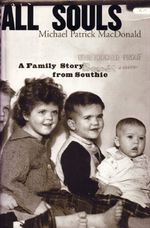
All Souls by: A Family Story from Southie Michael Patrick MacDonald
View the readers' guide: HTML or community guide:PDF
A breakaway bestseller since its first printing, All Souls takes us deep into Michael Patrick MacDonald's Southie, the proudly insular neighborhood with the highest concentration of white poverty in America. Rocked by Whitey Bulger's crime schemes and busing riots, MacDonald's Southie is populated by sharply hewn characters like his Ma, a miniskirted, accordion-playing single mother who endures the deaths of four of her eleven children. Nearly suffocated by his grief and his community's code of silence, MacDonald tells his family story here with gritty but moving honesty.
The Cure for Everything! Untangling Twisted Messages About Health, Fitness, and Happiness by Timothy Caulfield
In The Cure for Everything, health-policy expert and fitness enthusiast Timothy Caulfield debunks the mythologies of the one-step health crazes, reveals the truths behind misleading data, and discredits the charlatans in a quest to sort out real, reliable health advice. He takes us along as he navigates the maze of facts, findings, and fears associated with emerging health technologies, drugs, and disease-prevention strategies, and he presents an impressively researched, accessible take on the production and spread of information in the health sciences.
Overdiagnosed: Making People Sick in the Pursuit of Health by Dr. H. Gilbert Welch, Dr. Lisa M. Schwartz, and Dr. Steven Woloshin
Drawing on twenty-five years of medical practice and research, Dr. H. Gilbert Welch and his colleagues, Dr. Lisa M. Schwartz and Dr. Steven Woloshin, have studied the effects of screenings and presumed preventative measures for disease and "pre-disease." Welch argues that while many Americans believe that more diagnosis is always better, the medical, social, and economic ramifications of unnecessary diagnoses are in fact seriously detrimental. Unnecessary surgeries, medication side effects, debilitating anxiety, and the overwhelming price tag on health care are only a few of the potential harms of overdiagnosis.
Unchosen: The Hidden Lives of Hasidic Rebels by Hella Winston
When Hella Winston began talking with Hasidic Jews in Brooklyn for her doctoral dissertation in sociology, she was surprised to be covertly introduced to Hasidim unhappy with their highly restrictive way of life and sometimes desperately struggling to escape it. Unchosen tells the stories of these "rebel" Hasidim, serious questioners who long for greater personal and intellectual freedom than their communities allow. In her new Preface, Winston discusses the passionate reactions the book has elicited among Hasidim and non-Hasidim alike.
"Winston . . . builds fascinating case studies, inviting readers into her interviewees' conflicted, and often painful, lives . . . show[ing] us a Hasidic underworld where large families and a lack of secular education have resulted in extreme poverty and some serious at-risk behavior among youth. Her story of courage and intellectual rebellion will inspire anyone who has ever felt like a religious outcast." –Publishers Weekly, starred review
Around noon on January 15, 1919, a group of firefighters was playing cards in Boston's North End when they heard a tremendous crash. It was like roaring surf, one of them said later. Like a runaway two-horse team smashing through a fence, said another. A third firefighter jumped up from his chair to look out a window-"Oh my God!" he shouted to the other men, "Run!"
A 50-foot-tall steel tank filled with 2.3 million gallons of molasses had just collapsed on Boston's waterfront, disgorging its contents as a 15-foot-high wave of molasses that at its outset traveled at 35 miles an hour. It demolished wooden homes, even the brick fire station. The number of dead wasn't known for days. It would be years before a landmark court battle determined who was responsible for the disaster.
Plain Secrets: An Outsider Among the Amish by Joe Mackall
Joe Mackall has lived surrounded by the Swartzentruber Amish community of Ashland County, Ohio, for over sixteen years. They are the most traditional and insular of all the Amish sects: the Swartzentrubers live without gas, electricity, or indoor plumbing; without lights on their buggies or cushioned chairs in their homes; and without rumspringa, the recently popularized "running-around time" that some Amish sects allow their sixteen-year-olds.
Over the years, Mackall has developed a steady relationship with the Shetler family (Samuel and Mary, their nine children, and their extended family). Plain Secrets tells the Shetlers' story over these years, using their lives to paint a portrait of Swartzentruber Amish life and mores. During this time, Samuel's nephew Jonas finally rejects the strictures of the Amish way of life for good, after two failed attempts to leave, and his bright young daughter reaches the end of school for Amish children: the eighth grade. But Plain Secrets is also the story of the unusual friendship between Samuel and Joe. Samuel is quietly bemused—and, one suspects, secretly delighted—at Joe's ignorance of crops and planting, carpentry and cattle. He knows Joe is planning to write a book about the family, and yet he allows him a glimpse of the tensions inside this intensely private community.
“I was born male and now I’ve got medical and government documents that say I’m female—but I don’t call myself a woman, and I know I’m not a man. . . .”
Scientologist, husband and father, tranny, sailor, slave, playwright, dyke, gender outlaw—these are just a few words which have defined Kate Bornstein during her extraordinary life. For the first time, it all comes together inA Queer and Pleasant Danger, Kate Bornstein’s stunningly original memoir that’s set to change lives and enrapture readers.
Wickedly funny and disarmingly honest, this is Bornstein’s most intimate book yet. With wisdom, wit, and an unwavering resolution to tell the truth (“I must not tell lies”), Bornstein shares her story: from a nice Jewish boy growing up in New Jersey to a strappingly handsome lieutenant of the Church of Scientology’s Sea flagship vessel, and later to 1990s Seattle, where she becomes a rising star in the lesbian community. In between there are wives and lovers, heartbreak and triumph, bridges mended and broken, and a journey of self-discovery that will mesmerize readers.
The $60,000 Dog: My Life With Animals by Lauren Slater
From the time she is nine years old, biking to the farmland outside her suburban home, where she discovers a disquieting world of sleeping cows and a "Private Way" full of the wondrous and creepy creatures of the wild-spiders, deer, moles, chipmunks, and foxes-Lauren Slater finds in animals a refuge from her troubled life. As she matures, her attraction to animals strengthens and grows more complex and compelling even as her family is falling to pieces around her. Slater spends a summer at horse camp, where she witnesses the alternating horrific and loving behavior of her instructor toward the animals in her charge and comes to question the bond that so often develops between females and their equines. Slater's questions follow her to a foster family, her own parents no longer able to care for her. A pet raccoon, rescued from a hole in the wall, teaches her how to feel at home away from home. The two Shiba Inu puppies Slater adopts years later, against her husband's will, grow increasingly important to her as she ages and her family begins to grow.
The $60,000 Dog is Lauren Slater's intimate manifesto on the unique, invaluable, and often essential contributions animals make to our lives. As a psychologist, a reporter, an amateur naturalist, and above all an enormously gifted writer, she draws us into the stories of her passion for animals that are so much more than pets. She describes her intense love for the animals in her life without apology and argues, finally, that the works of Darwin and other evolutionary biologists prove that, when it comes to worth, animals are equal, and in some senses even superior, to human beings.
Written during the 1940s and early 1950s, when Baldwin was only in his twenties, the essays collected in Notes of a Native Son capture a view of black life and black thought at the dawn of the civil rights movement and as the movement slowly gained strength through the words of one of the most captivating essayists and foremost intellectuals of that era. Writing as an artist, activist, and social critic, Baldwin probes the complex condition of being black in America. With a keen eye, he examines everything from the significance of the protest novel to the motives and circumstances of the many black expatriates of the time, from his home in "The Harlem Ghetto" to a sobering "Journey to Atlanta."
Notes of a Native Son inaugurated Baldwin as one of the leading interpreters of the dramatic social changes erupting in the United States in the twentieth century, and many of his observations have proven almost prophetic. His criticism on topics such as the paternalism of white progressives or on his own friend Richard Wright's work is pointed and unabashed. He was also one of the few writing on race at the time who addressed the issue with a powerful mixture of outrage at the gross physical and political violence against black citizens and measured understanding of their oppressors, which helped awaken a white audience to the injustices under their noses. Naturally, this combination of brazen criticism and unconventional empathy for white readers won Baldwin as much condemnation as praise.
Notes is the book that established Baldwin's voice as a social critic, and it remains one of his most admired works. The essays collected here create a cohesive sketch of black America and reveal an intimate portrait of Baldwin's own search for identity as an artist, as a black man, and as an American.
Melanie Hoffert longs for her North Dakota childhood home, with its grain trucks and empty main streets. A land where she imagines standing at the bottom of the ancient lake that preceded the prairie: crop rows become the patterned sand ripples of the lake floor; trees are the large alien plants reaching for the light; and the sky is the water’s vast surface, reflecting the sun. Like most rural kids, she followed the out-migration pattern to a better life. The prairie is a hard place to stay—particularly if you are gay, and your home state is the last to know. For Hoffert, returning home has not been easy. When the farmers ask if she’s found a “fella,” rather than explain that—actually—she dates women, she stops breathing and changes the subject. Meanwhile, as time passes, her hometown continues to lose more buildings to decay, growing to resemble the mouth of an old woman missing teeth. This loss prompts Hoffert to take a break from the city and spend a harvest season at her family’s farm. While home, working alongside her dad in the shop and listening to her mom warn, “Honey, you do not want to be a farmer,” Hoffert meets the people of the prairie. Her stories about returning home and exploring abandoned towns are woven into a coming-of-age tale about falling in love, making peace with faith, and belonging to a place where neighbors are as close as blood but are often unable to share their deepest truths.
In this evocative memoir, Hoffert offers a deeply personal and poignant meditation on land and community, taking readers on a journey of self-acceptance and reconciliation.
Chris Stedman is the author of Faitheist: How an Atheist Found Common Ground with the Religious. Stedman is Assistant Humanist Chaplain at Harvard and the Values in Action Coordinator for the Humanist Community at Harvard, and the founder of the first blog dedicated to exploring atheist-interfaith engagement, NonProphet Status. Stedman writes for the Huffington Post, the Washington Post's On Faith blog, and Religion Dispatches.
In case you missed it, we are now in the month of December. That means that many of us have been enduring public displays of Christmas-affection for at least a month now, if not more. And while I admit that hearing a tinny rendition of “O Come All Ye Faithful” blare from the overhead speakers in a shopping mall in October is almost enough to turn my heart two sizes too small, I can’t help but feel excited that Christmas is just around the corner.
But why? You might ask. You’re an atheist. You’re not supposed to do that.
I’ve heard that argument before, and I still don’t buy it.
Christmas is perhaps my favorite holiday, as it is the one time during the year that my entire family is able to come together. Growing up, Christmas was never really about Jesus (I mean, if anything, it was about Santa) — it was about family. I’m the only person in my family who no longer lives in Minnesota, so I cherish the time I get to spend with those who have loved me the longest and the most, and the binding traditions that we share. (Including poking fun at one another incessantly – hey, who doesn’t engage in this tradition on any given holiday?)
As one example of why I have very fond associations with Christmas: the year I started to come out as gay, after several painful years of self-loathing, my mom got me a book about gay people and enclosed a special, handwritten note about how much she loved me and how proud she was of me. She hugged me tight, and I could see the lights from our Christmas tree reflecting off of the glossy tears in her eyes. Could she have given this to me on any other day? Sure, of course. And she did — throughout that year, and at many other times during my life, she has given me resources and support. But I remember that Christmas as a special moment in a year full of them, where she took the time to do something extra. And she, along with my entire family, has continued to do so — the year I moved out of the house to begin an independent life, she created a quilt made from scraps of the fabric she had used to make handsewn pajamas throughout my childhood. On the bottom side, she stitched in a note: “Pieces of memories… stitched together to wrap you in the love of your family.” I continue to pull out this Christmas gift every year to combat the December chill. As I wrote in a post earlier today, we ritualize our lives in various ways. For me, Christmas has been among the most significant.
A couple of Christmases past, my dad’s girlfriend asked me something just as I was preparing to leave home. “I know you’re an atheist,” she said, “but is it okay for me to wish you a ‘Merry Christmas’?” At first I thought it a rather silly question, as we had just spend the last day eating cookies shaped like trees and exchanging shiny boxes filled with gifts. But she explained that she had once dated an atheist, and that he had refused to join her for her family’s Christmas celebration. “As he put it, he’d never celebrate a ‘hol-lie-day’ for a made-up god,” she said to me.
The Humanist Community at Harvard offices, December 2012.
That same season, headlines roared over a new American Atheists billboard campaign, which exclaimed: “You KNOW It’s A Myth… This Season, Celebrate Reason!” In interviews, their president explained that the billboard campaign was not intended to turn Christians into atheists. Instead, he said that American Atheists wanted to encourage atheists to stop “going through the motions of celebrating Christmas.” And less than a week ago, Tom Flynn (who I met less than a week ago at the Center for Inquiry – Transnational) wrote a blog post advocating a similar sentiment — but he went a step further, suggesting that atheists should not celebrate secular seasonal holidays like HumanLight or the Winter Solstice, either. He has shared his perspective about why he doesn’t celebrate Christmas in the past, but reading his most recent post, I still found myself unpersuaded.
You see, for me, Christmas didn’t begin as a religious holiday. As I said, it was always about family — about coming together during the coldest and darkest time of the year to create a little more light and a little more warmth. That continues to be the case for me, and it is only bolstered by my increased awareness of the origins of religious narratives, and my expanding knowledge of the triumphs of human achievement — triumphs that have enabled me to live long enough to celebrate my twenty-fifth Christmas this year, achievements that ensure my ability to quickly travel through the air from Massachusetts to Minnesota in order to be reunited with my family, advances that allow me to communicate and coordinate my plans long before I am reunited with said family, and human efforts that will allow me to stay warm throughout the season. My appreciation for Christmas, and the family that I celebrate on that day, has grown in concert with my appreciation for the marvels of life and of human ability.
This year, I had to miss the Humanist Community at Harvard’s annual holiday party because I was on my book tour, and I admit that I was pretty disappointed that I couldn’t be there. Our office was transformed with twinkling lights, mistletoe, and stockings hung along the room divider with care (see the image earlier in this post). People came together as a community to celebrate one another and the year that has passed, but we also used this event as an opportunity to kick off our monthlong cereal drive to benefit the Pine Street Inn — and, so far, we’ve collected over $400 worth of cereal for those in need, with more donations set to come in later this week.
So, in short: I believe that you should celebrate Christmas, or HumanLight, or Hanukkah, or the Solstice, or Festivus, or whatever you’d like. Or, you know, nothing. But the increasing politicization of Christmas — a discourse often polarized by many believers, who use Christmas as an opportunity to exclude those who don’t share in their views, but also by some atheists — doesn’t account for those of us who see Christmas as a tradition that gives us an excuse to huddle together in the face of an all-too-often cold and dark world, relishing in good food, good music, and the company of good friends and family. And as an opportunity to help make a dark, cold world just a little warmer, a little brighter, and a little more inhabitable for others, through compassionate service or loving action.
There are many problems in the world that demand our concern and attention — I don’t think that some atheists celebrating Christmas should be near the top of that list. Our lives are short, and they are precious. If you have found a way to make your life and the lives of those around you that much richer, whether by celebrating Christmas or by ordering takeout that day, then I celebrate along with you.
Here are some things that have occurred in the immediate aftermath of the tragic slaughter of children and their teachers in Newtown, Connecticut: More signatures on a petition calling for gun control than any other petition that has been sent to the White House; conservative politicians from both parties—for example senators Joe Manchin of W. Virginia, and Marco Rubio of Florida—for the first time signaling their willingness to do something about gun regulation; changing poll numbers about gun control among the general population, with support for stricter control at a ten-year high. And perhaps most significantly, total silence for several days about this incident from the National Rifle Association (NRA), considered to be the most powerful lobby in the United States.
These post-Newtown reactions have led numerous observers to feel that this latest mass murder incident may be a game changer. For years, many politicians have been fearful of offending the NRA and the public has been divided about guns, if not largely indifferent. As a result, there has not been a visible or highly effective gun control movement in this country, in spite of the hard work for many years of groups such as the Brady Campaign to Prevent Gun Violence. Correspondingly, there has been almost no Congressional legislative action to curtail guns during the Obama administration, and at the state level, there have been more efforts to expand gun owners’ prerogatives—for example, concealed carry laws—than to limit then.
To be sure, petitions and expressions of outrage by both politicians and the public do not necessarily lead to a social movement. Even if an assault weapons ban is passed—Senator Dianne Feinstein has pledged to introduce such legislation in January—that might be a one-off event (welcome as it would be), and politicians would then turn their attention to the many other issues on their plates. And recall that there was such a ban passed in 1994 during the Clinton presidency—and then that ban was allowed to quietly expire in 2004. That expiration is a textbook case of what happens when legislation is not accompanied by a vibrant social movement that is able to rally the public and to hold lawmakers accountable.
But let’s assume that the Newtown shootings do lead to a social movement with staying power. What could such a movement hope to accomplish? To answer this question, I find myself looking to the history of the anti-choice movement in this country. To put it mildly, I am no fan of this movement, but I do acknowledge its effectiveness in limiting access to abortion and stigmatizing the procedure. Both the current anti-chocie movement and a potential gun control movement share the feature of wanting to limit something that is legal but contested. As Robin Marty has wittily put it in a recent post, how do we make guns as difficult to get as an abortion?
Here are three pertinent lessons drawn from the forty years of anti-choice activity since the Roedecision. The first is the utility of a “chipping away” strategy. The antiabortion movement has thus far been unable to have Roe overturned, and with Obama’s re-election putting future Supreme Court nominees in his hands, this will be likely the case for the foreseeable future. Nevertheless, the hundreds of regulations passed by state legislatures over the years—the near-absolute restrictions on public funding, the “TRAP” laws that have demanded irrelevant and expensive physical upgrades to clinics, the waiting periods, the parental consent laws and so on—have made access to abortion care very cumbersome for providers, and often unmanageable for patients, especially the young and the poor. In short, Roe technically still stands, but for too many women unable to find and afford abortion care, this is a hollow victory.
Similarly, those gun control activists who would like to see an America where private gun ownership only minimally exists (as in Japan and a number of European countries) will never reach this goal, as a recent Supreme Court decision on the Second Amendment made clear. But a renewed gun control movement could chip away at this right. A ban on assault weapons and on gun magazines with huge amounts of ammunition capacity, higher prices and taxes for ammunition, limitations on the amount of guns and ammunition a person can buy in a given time period, far stricter enforcement of waiting periods and back-ground checks, and of course, serious efforts to keep guns out of the hands of the mentally ill are just some of the items under discussion that would accomplish such “chipping.”
Second, the anti-abortion movement over the years has effectively re-framed its rationale for opposing abortion from moralistic or religious reasons to matters of safety and a defense of the physical and mental health of women. “Abortion hurts women” is a prime example of this re-framing. Given that medical researchers have recently shown that American women are 14 times more likely to die in childbirth than from a first trimester abortion, and given that psychological experts have repeatedly debunked the claims of “post abortion syndrome” made by the antiabortion movement, this re-framing is hardly credible. But these arguments have been eagerly appropriated by anti-choice politicians to justify all sorts of restrictions.
Similarly, a gun control movement might consider framing its arguments against guns not only as matters of reducing crime and mayhem or simply the immorality of a society armed to the teeth—but also, with far more credibility than the above-mentioned anti-choice attempts, as a public health issue, as various clinicians and researchers have long urged. Treating gun violence through a public health lens implies, as with all public health campaigns, a focus on injury prevention and a necessity to regulate guns as consumer items that are dangerous. This framing also leads to the recognition of the burden that our country’s epidemic of gun violence puts on hospital emergency rooms, as well as the lasting costs of caring for people wounded by gunfire.
Finally, one of the most consequential activities of the anti-choice movement has been the stigmatizing of abortion, and especially the abortion provider. Providers have been relentlessly caricatured by the anti-choice movement as greedy, medically-inept and immoral. They also have been the target of unacceptable levels of violence and harassment by the militant wings of the movement. While most in the medical profession are themselves pro-choice and do not accept this portrayal of abortion providers, the controversy surrounding abortion has facilitated the marginality of abortion provision from the rest of the medical community.
For a gun control movement, a comparable strategy that suggests itself is to stigmatize certain kinds of gun ownership. For example, to cite a point currently offered even by some gun owners, why does any private citizen need an assault weapon? The prime targets for stigmatization, however, are the gun manufacturers and dealers, and organizations such as the NRA. These are the groups and individuals who directly profit from gun sales. They are the ones who most strongly resist any kind of regulation and who make little or no effort to screen the individuals to whom they sell dangerous weapons. It is these merchants of death that need to be held accountable for their role in not only the spectacular tragedies such as occurred at Newtown, but for the 88 individuals that die each day in the U.S. due to gun violence. In sum, the lesson that a gun control movement can learn from the anti-abortion experience is that effective action involves both legislative and cultural campaigns.
Similarities aside, there is one very important distinction to be drawn between these two movements. The anti-abortion movement has long tolerated an extremist wing that has murdered eight members of the abortion providing community and has terrified thousands of other providers and patients. The threat of intimidation and violence always hovers around the abortion issue, and explains a large part of the stigma and controversy in this field. Yet another function of this extremist wing is that it makes the rest of the movement and its demands more palatable. A gun control movement, by definition, could never tolerate such a violent flank. But in an ironic connection between these two groups, if a successful gun control movement does emerge in the United States, it may well recapture for Americans what it truly means to be “pro-life.”
About the Author
Carole Joffe is the author of Dispatches from the Abortion Wars: The Costs of Fanaticism to Doctors, Patients, and the Rest of Us. Joffe is a professor in the Bixby Center for Global Reproductive Health at the University of California, San Francisco (however, the views and opinions expressed here do not necessarily state or reflect those of the Regents of the University of California, UCSF, or the UCSF Medical Center).
This post originally appeared on his blog at MarkWinne.com.
I’ll never forget the look on the desk sergeant’s face as he gazed down at me from the heights of his dark-paneled police podium. Before him was a neatly dressed, wavy-haired 18-year old cradling something seemingly as long as baseball bats wrapped in a tattered brown army blanket. Not fitting the profile of the regular string of miscreants who normally paraded before him – “hoods” as my high school friends called the few greasy-haired “bad boys” who inhabited our affluent North Jersey suburb – he targeted his puffy eyes at me and asked, “Yes, what can I do for you?”
I cleared my throat and said, “Sir, I’d like to turn these in.” Laying my little bundle on a heavy oak table before me, I slowly pulled the edges of the blanket away to reveal a single-shot, bolt action .22-caliber rifle and a single-barreled, 16-gauge shotgun. For a moment, the sergeant appeared to drop his right hand to his sidearm, but quickly discerning I meant no harm, planted both his elbows on his desk and glared at me asking, “What do you mean ‘turn these in?’” I told him what I would later tell my parents and quizzical friends, that I was sick of the violence and the killing, that for any of us to keep guns in our homes was nonsense, and that the only way to end the killing was for all of us to give up our guns.
This was June, 1968. Senator Robert F. Kennedy had just been gunned down in California. Rev. Martin Luther King, Jr. had been slain two months earlier in Memphis. Four years before that, I sat at my George Washington Junior High School desk listening to our principal announce the assassination of President John F. Kennedy. That “violence was as American as cherry pie,” a notion reinforced daily with bloody TV and magazine images from Vietnam, the streets of Newark, and the Columbia University campus, had become for me a palpable reality to which I could either succumb, attempt to suppress, or perhaps, in a fit of youthful naïveté, resist.
My relatively benign weapons – the heft of their polished steel and wood across my eager teenage palms, the crack of their retort against my eardrums, and the sting of ignited powder in my nostrils – had once pointed a way to manhood and dominance. But like the progression from the toy Davy Crocket musket, to the six-shooter cap pistol, to the battery-powered rata-tat-tat of the plastic M-14, my “real” guns had only perpetuated the myth of power and control over the world around me. The young boy pointing his stick at an imaginary aggressor and screaming “bang, bang, bang!” is the precursor to the adolescent hunter, jolted at last to adult consciousness by the pellet-riddled pheasant now lying limp on the forest floor. The boy’s cocoon of security is at last shattered, his omnipotence exposed as an illusion, and the choice to commit violence or non-violence the only one that matters.
It’s been a long time since I’ve cried, but I made up for the dry spell this past weekend. As a former resident of Connecticut, where for 25 years I did my bit to bring healthier and saner options to that state’s children, I could not help but steep myself in the misery that is now Newtown’s lost children. I will not patronize that community’s pain by claiming to feel it, but I can sense their loss more acutely having gained a grandson just five days before the elementary school shootings. Little Bradley is safe and secure with his 3-year old sister, Zoe, in the United Kingdom where my daughter chose to marry and live. Though their distance limits my time with them, I take some solace knowing that they have greater protection from the gun-toting mayhem that rules the U.S. and takes cowardly sanctuary behind the fortress of our Second Amendment. While the United Kingdom has its share of profoundly disturbed people, the prevailing wisdom is to protect people from guns rather than protect the gun enthusiasts. The fewer guns in circulation, the less means the tragically deranged will have to snuff out life. The United Kingdom is far from perfect, but at least I know that my grandchildren will not have to attend an elementary school bristling with the characteristics of a minimum security prison that will soon become the norm at U.S. schools.
Becoming a man or a woman these days means making tough choices and often surmounting difficult obstacles. We eventually leave behind the security blankets of our childhood and learn that the best path to safety and happiness is through an open and creative engagement with others. The most society can to do is attempt to clear life’s minefield of man-made hazards like poverty, junk food, and yes, guns. And to better achieve that end may I suggest the repeal of the Second Amendment to henceforth be replaced with an amendment that reads: “A safe and healthy people, being necessary to the prosperity of a free state, the right of individuals to keep and bear arms shall be severely restricted.”
About the Author
For 25 years Mark Winne was the Executive Director of the Hartford Food System, a private non-profit agency that works on food and hunger issues in the Hartford, Connecticut area. Winne now writes, speaks, and consults extensively on community food system topics including hunger and food insecurity, local and regional agriculture, community assessment, and food policy. He also does policy communication work for the Community Food Security Coalition. He is the author of Closing the Food Gap and Food Rebels, Guerrilla Gardeners, and Smart-Cookin’ Mamas.
As we began our work week on Monday, we mourned with the rest of the country the deaths at Sandy Hook Elementary School in Newtown, Connecticut. We, like many others, wanted to help in some way, and thought our best response would be to share books that could offer comfort and guidance: Earl A. Grollman's Living When a Loved One Has Died and Talking About Death: A Dialogue Between Parent and Child.
When we posted the offer, we were met with an immediate, emotional response from our Facebook fans and Twitter followers. The posts were shared and retweeted, and emails forwarded to friends in need.
Our distributor, Random House, offered its help with fulfilling the large number of requests we received, waiving all charges to Beacon for shipping the orders. We especially want to thank the people who work in their Westminster, MD, warehouse, who found a way to schedule this special project during a busy season while they were getting ready for their holiday breaks. In all, we'll be mailing approximately 2,500 books, and about 90% will be shipped through Random House. We are deeply grateful for their generosity.
We hope everyone who receives books will share them with others in their communities who have a need for these resources.
Managing Your Distress in an Aftermath of a Shooting This is an excellent, well-written guide for parents and other adults by the American Psychological Association, published 2008. One of the best ways to help children is to put ourselves—parents, teachers, congregation members—on a path towards healing. This document could be very helpful.
Tips for Parents of School Age Children: Helping Your Children Manage Distress in the Aftermath of School Shootings Aimed specifically at parents working with their children. From the American Psychological Association, 2007.
Children and Trauma: A Guide for Parents and Professionals by Cynthia Monahon.
A Terrible Thing Happened: a story for children who have witness violence or trauma, by Margaret M. Holmes—addresses the need for children to find a place to speak about their experiences.
Protecting Your Church from Crime and Violence. Regular price: $17.95. Sale price: $14.95. Nine chapters. Particularly recommended: "A Shooter in the House—A Police Officer's Advice on How to Prevent and React to, a Gunman at Church." The entire document is 24 pages long.
Confronting Gun Violence at Church. Regular price: $17.95. Nine chapters. Particularly recommended: "Should Our Church Have an Armed Security Guard?" The entire document is 22 pages long.
A partridge in a pear tree? But the Nahan’s Partridge of Africa is endangered, as are the Sichuan Partridge of China and the grey partridge of Britain. And why would you uproot a pear tree from its native habitat?
Chocolate Hannukah gelt? Not if that chocolate is from Cote d’Ivoire – the source of half the world’s chocolate – where young girls are forced to undergo genital mutilation.
On the other hand, coal in the Christmas stocking isn’t a great idea, either. Was the coal strip-mined by blasting the top off a mountain in Appalachia? Were any mine workers killed underground trying to dig it out?
Sigh. If you want to be an ethical gift-giver, it sometimes seems as if the only safe present is a tube of Tom’s of Maine peppermint toothpaste.
(Oops: Tom’s of Maine was bought by Colgate-Palmolive, so you would actually be giving your money to a big corporation that uses weird ingredients like PVM/MA copolymer and propylene glycol.)
Then factor in size, price, and whether the recipient would actually like the thing, and by any definition, it’s impossible to find the perfect gift.
But ‘tis the season. You have to try.
You can certainly read labels, consult “do not buy” lists, and seek out companies that fit your ethical standards. In fact, we at Beacon have compiled a comprehensive list of the major consumer, environmental, labor, animal-welfare, anti-sweatshop, and other “ethical” rankings:
If that seems too arduous, maybe you could look at gift-giving from a different direction. Instead of analyzing the labels, analyze the process. Here are some ideas:
Some companies are actually better than their reputation. Nike, for instance, has dramatically improved its monitoring of overseas suppliers and is considered a leader in ethical leather sourcing in the shoe industry. Nevertheless, it still has such a terrible image, stemming from its sweatshop horrors of the 1990s, that friends and relatives might be furious if you gave them a pair of Air Jordans. So for now, buy the shoes for yourself, and tell people why you did.
Other companies are worse than fans realize. Someone on your gift list might love a bag of Starbucks Via or a mermaid-logo mug, but you know that Starbucks tried to cheat the poor coffee farmers of Ethiopia, wrecks the environment by selling bottled water, and was cited by the National Labor Relations Board for illegal harassment of union organizers. Don’t buy that mug.
If a company takes some actions that really bother you, but overall it seems to be ethically operated, then go ahead and purchase its merchandise. But at the same time, make a donation to a cause that will help counteract the company’s misdeeds, and include the donation card with the gift. For instance: a contribution to PETA along with a set of leather Timberland boots, or a contribution to NOW with an American Apparel shirt.
Give alternative gifts. For the person who lives on Starbucks lattes, try a gift certificate to a local independent café. The Trader Joe’s addict? Some banana bread from the farmers’ market. Of course, the recipients may hate your gift; after all, there’s a reason they go to Starbucks five times a day. But they can always re-gift it.
In the end, there’s some truth to the cliché that it’s the thought that counts.
I recently gave a TEDx talk that looks at one of the more pressing challenges of our time: How do we wrest control of our economy back from giant corporations?
The statistics are stunning: Four big banks dominate our banking system. Agribusiness giants monopolize food production. Walmart captures $1 of every $4 Americans spend on groceries. One company, Amazon, accounts for over one-third of everything we buy online.
The good news is that many Americans are beginning to question the wisdom of letting a few companies run everything. They are changing where they shop, what they buy, and where they bank. And they are making a difference: Since 2004, the number of farmers markets has doubled. More than 1,000 neighborhood grocers have sprouted up. Nearly 500 new independent bookstores have opened. Long-vacant factory buildings are filling up with small-scale brewers and clothing makers. And over 600,000 people have moved from big banks to local banks and credit unions.
But – and here's the bad news – as remarkable as these trends are, they are unlikely to amount to more than an interesting side-note on the margins of the economy if the only way we confront corporate power is by trying to be better consumers.
Choosing independent businesses and local financial institutions is a great idea. But a purely consumer-oriented response won't get us where we need to go, in part because it fails to fully grapple with how we got here in the first place.
For a long time, the story of how big companies grew so dominant was, basically: bigger is better. It's more efficient, more productive, better performing. But, as I explain in the talk, when you pull back the curtain and really begin to look at the evidence, you find that, in one sector after another, the case for bigness doesn't stand up. Many of today's dominant companies do not in fact deliver better outcomes, higher productivity, or even, in some cases, lower prices.
How, then, have they taken over so much of the economy? The answer is that they've used their size and political influence to hijack government and rig public policy to their own advantage. From the farm bill to banking regulations to state tax codes, the rules favor big corporations and undermine smaller, more sustainable businesses.
And that's why the "buy local" and "eat local" and "bank local" movements need to get much more political. Unless we change the underlying policies that shape our economy, big corporation are going to continue to gain ground.
Our deepest condolences go out to the families and friends of those who lost their lives in Newtown, CT. We share the grief that is felt throughout the country. To help families, teachers, counselors, and others who are having conversations about death and grief in the wake of this tragedy, Beacon Press is offering free copies of Talking About Death: A Dialogue between Parent and Child and Living When a Loved One Has Died both by Dr. Earl A. Grollman. We hope these resources will help everyone affected begin to heal. Simply choose one or both books and submit your shipping information by Wednesday, December 19, 2012.
 Gather at the Table: The Healing Journey of a Daughter
 Faitheist: How an Atheist Found Common Ground
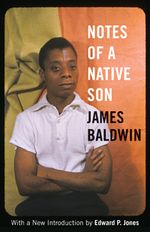 Notes of a Native Son by James Baldwin
 Into Great Silence by Eva Saulitis (Jan. 15)
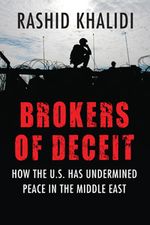 Brokers of Deceit: How the U.S. Has Undermined
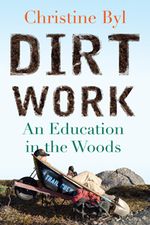 Dirt Work: An Education in the Woods by Christine