• Listen to Mary Oliver read "About Angels and About Trees" from the CD Many Miles:

    About Angels And About Trees (Evidence) by Mary Oliver


    About Angels and About Trees

    Where do angels
    fly in the firmament,

    and how many can dance
    on the head of a pin?

    Well, I don’t care

    about that pin dance,

    what I know is that
    they rest, sometimes,

    in the tops of the trees

    and you can see them,

    or almost see them,

    or, anyway, think: what a

    wonderful idea.

    I have lost as you and

    others have possibly lost a

    beloved one,

    and wonder, where are they now?

    The trees, anyway, are

    miraculous, full of

    angels (ideas); even
    empty they are a

    good place to look, to put

    the heart at rest—all those

    leaves breathing the air, so

    peaceful and diligent, and certainly
    ready to be

    the resting place of
    strange, winged creatures

    that we, in this world, have loved.

    Copyright @2009 by Mary Oliver. From Evidence: Poems, Beacon Press.


  • Gift20

    Order any book at Beacon.org (including the ones featured in our Buzz Report below) by December 31st and receive 20% off your order and free standard shipping.* And orders of $75 or more will receive a free King Legacy Series tote bag. 

    * December 13th is the last day we can guarantee that our free shipping will get you your order by December 24th, so don't delay! 

    Some Holiday reading from our blog:

    A Hanukkah Surprise for Interfaith Mom by Susan Katz Miller

    It Wasn’t the Grinch Who Stole Christmas at My House by Susan Campbell

    Arms Wide Open: Lighting Candles for Winter Solstice by Patricia Harman

    8 Reasons My Interfaith Family Celebrates Hanukkah and Christmas by Susan Katz Miller

    Children of Disappointment and the Season of Hope by David Chura

    Your Guide to Holiday Sanity: Talking Politics in a Bipartisan Family by Sophia Raday

    What Brings Real Joy at Christmas? by Rev. Marilyn Sewell

    Fundamentalist Family, Secular Christmas by Susan Campbell

    A Modest Proposal for Your Holiday Correspondence by Jay Wexler

    Hanukah: Moving Past Two-Mindedness by Rabbi Danya Ruttenberg 

    Putting Hussein in Christmas by Rita Nakashima Brock and Rebecca Ann Parker

    Single at the Holidays: Not Alone, but a Different Kind of Togetherness by Kay Trimberger

    Related articles

    Holiday Sale: 20% off and free shipping, plus support a good cause
    A Hannukah Surprise for Interfaith Mom
  • Susan Katz Miller is both an interfaith child and an interfaith parent. Her book on raising children with two religions, based on hundreds of survey responses and interviews, will be published by Beacon Press in 2013. You can find her interfaith essays at interfaithfamily.com and on NPR’s All Things Considered. She served as an expert on interfaith children at national conferences, and has chaired the Board of the Interfaith Families Project of Greater Washington DC, the interfaith group with the largest religious education program in the country. She is a former reporter forNewsweek and New Scientist magazines, and her work has also appeared in The New York Times, The Christian Science Monitor, Discover, Science, and many other publications.

    This post originally appeared at her blog, On Being Both.

    Menorah-pinAfter almost two decades of raising interfaith children with two religions, I realize I am about to be laid off from my parenting job. I must content myself with the idea that my husband and I have done all we could to educate our kids in both family religions: Judaism and Christianity. The controversial pathway we chose long ago has served us well. Now, it will be up to these new young interfaith adults we produced to decide whether or not to continue to tell their own stories. And I will be stuck chronicling the experience of interfaith empty-nesters. 

    So, Hanukkah feels strange and slightly melancholy this year, with our firstborn away at college. With only one teenager left at home, I declared the official end to kids hunting for little Hanukkah gifts hidden under sofa cushions and behind bookcases. My son was fine with this. Adults rarely give each other Hanukkah gifts in my extended family, and he is well on his way to becoming an adult. But as it turns out, I did not actually have the authority to make this abrupt and unilateral proclamation. Just because I represent the Jewish side in our interfaith family does not make me the boss of Hanukkah.

    So after we lit candles and said blessings and sang “Rock of Ages” on the second night, my (Christian) husband surprised me by saying he had hidden little Hanukkah gifts for me and our son. I was touched, and irrationally excited: I hadn’t hunted for a present since I was a kid and my (Christian) mom instituted this Hanukkah tradition in our family.

    My bemused son and I quickly located the little tissue paper packets–in a clay pot on the mantel, and on the windowsill behind the curtains. They turned out to be utterly fabulous, completely cheesy blinking LED Hanukkah pins–a menorah and a dreidel. I wore them both at a Hanukkah party the next night.

    So my husband created a moment of role-reversal comedy (mom acting like a kid and receiving a goofy “kid” present). At the same time, he distracted us all from missing our college girl. And he paid sweet tribute to the interfaith family created when we got married 25 years ago, and to the tradition instituted by my pioneering interfaith parents, who are still happily married after more than 50 years. Such small gestures, combining tradition and innovation, respect and humor, bind interfaith families together.

    Related articles

    Saint Francis: Interfaith Peacemaker
    ChristmasHanukkahKwanzaa Thoughts?
    City Room: At Interfaith Luncheon, an Appeal for a Miracle
    Faitheist: How an Atheist Found Common Ground with the Religious
    Cards Blend the Holidays
    Interfaith Elf
  • Susan Campbell is the author of Dating Jesus and the upcoming biography, Tempest-Tossed: The Spirit of Isabella Beecher Hooker. For more than a quarter-century, she was a columnist at the Hartford Courant, where her work was recognized by the National Women’s Political Caucus, New England Associated Press News Executives, the Society for Professional Journalists, the American Association of Sunday and Feature Editors, the National Society of Newspaper Columnists, and the Sunday Magazine Editors Association. Her column about the shootings at lottery headquarters in March 1998 was part of The Courant’s Pulitzer Prize-winning coverage.

    This post originally appeared at Hot Dogma.

    Bigstock-Christmas-lights-14088431It was the fundamentalists.

    Back when my parents were still married, we celebrated Christmas with all the trimmings. I sang “Away In a Manger” at a Christmas fair. One brother was a shepherd, when he wanted very much to be Joseph. We talked about Baby Jesus in the manger.

    And then my parents divorced, and my mother married a fundamentalist Christian for whom Christmas was nothing more than those Catholics trying to get one over on you — Christ-Mass. Get it? So we celebrated, but only the secular part (tree, Santa, gifts) and we did so quietly because some of the more dedicated members of my church didn’t do even that.

    I remember asking about that in Sunday school, and having it explained to me that Jesus couldn’t have been born on Dec. 25, and that holidays like that weren’t really our style, that we celebrate every Sunday and isn’t that better than just once a year?

    I wasn’t stupid. Sundays weren’t nearly as interesting as Christmas, and as I grew up, I found that theology growing smaller for me — and my Christmas trees getting bigger.

    Ah, but the sword of fundamentalism plunges deep. You can think you’ve walked far from that whole thing, and then? Something snatches you back. I decorated our tree last night, and drowned myself in a maudlin retelling (mostly, to the ornaments themselves, as who wants to be around a maudlin hillbilly?) of each ornament’s history. The Mickey Mouse ornament I bought the year of my own divorce, when I won a writing contest and spent every penny to take my son to Disney World. The cheap, buy-’em-by-the-half-dozen ornaments I got the year I thought I’d lost all my Christmas gear. The fancy glass ornaments I saved up for, just like the ones my dad brought back from Germany. Sprinkled throughout are precious homemade ornaments from my sons, a poem, a pair of cotton skates, a carefully rendered manger scene.

    1066As I decorated, I listened to Nat King Cole, who has accompanied me every year as I make my (slow) way back to Christmas. And every year, when the choir behind him swells, I get a little choked up. It’s a good kind of choked up, I promise. So what if Jesus wasn’t born on Dec. 25? It’s a beautiful holiday when people  show a little more kindness, and a lot more love. We really do need a little Christmas.

    So when I die, and I stand before God, and She asks, “Did you have a Christmas tree?” I will answer, “Hell, yes, I did.”

    Sorry about the hell, though.

     Christmas lights image from Bigstock.

    Related articles

    Beacon Buzz: Holiday Sale, Great TEDx talks – Beacon Broadside
    Faitheist: How an Atheist Found Common Ground with the Religious
    500th and Final 2012 Election Tweet from @ElinorLipman!
  • The Universal Declaration of Human Rights was adopted on December 10th, 1948. To honor Human Rights Day, we've collected a selection of Beacon Press titles that explore the issues of Human Rights from a diverse perspective. Order any of these books at Beacon.org using the code GIFT20 and receive 20% off, free shipping, and Beacon Press will donate 15% of proceeds to help schools affected by Hurricane Sandy. Get the full details here.


    1427Man's Search for Meaning by Viktor Frankl

     Psychiatrist Viktor Frankl's memoir has riveted generations of readers with its descriptions of life in Nazi death camps and its lessons for spiritual survival. Between 1942 and 1945 Frankl labored in four different camps, including Auschwitz, while his parents, brother, and pregnant wife perished. Based on his own experience and the experiences of others he treated later in his practice, Frankl argues that we cannot avoid suffering but we can choose how to cope with it, find meaning in it, and move forward with renewed purpose. Frankl's theory-known as logotherapy, from the Greek word logos ("meaning")-holds that our primary drive in life is not pleasure, as Freud maintained, but the discovery and pursuit of what we personally find meaningful.

    At the time of Frankl's death in 1997, Man's Search for Meaning had sold more than 10 million copies in twenty-four languages. A 1991 reader survey for the Library of Congress that asked readers to name a "book that made a difference in your life" found Man's Search for Meaning among the ten most influential books in America. 

    "One of the great books of our time." 
    —Harold S. Kushner, author of When Bad Things Happen to Good People

    "One of the outstanding contributions to psychological thought in the last fifty years."
    —Carl R. Rogers (1959) 


    0130The Death of Josseline: Immigration Stories from the Arizona Borderlands by Margaret Regan  

    For the last decade, Margaret Regan has reported on the escalating chaos along the Arizona-Mexico border, ground zero for immigration since 2000. Undocumented migrants cross into Arizona in overwhelming numbers, a state whose anti-immigrant laws are the most stringent in the nation. And Arizona has the highest number of migrant deaths. Fourteen-year-old Josseline, a young girl from El Salvador who was left to die alone on the migrant trail, was just one of thousands to perish in its deserts and mountains.

    With a sweeping perspective and vivid on-the-ground reportage, Regan tells the stories of the people caught up in this international tragedy. Traveling back and forth across the border, she visits migrants stranded in Mexican shelters and rides shotgun with Border Patrol agents in Arizona, hiking with them for hours in the scorching desert; she camps out in the thorny wilderness with No More Deaths activists and meets with angry ranchers and vigilantes. Using Arizona as a microcosm, Regan explores a host of urgent issues: the border militarization that threatens the rights of U.S. citizens, the environmental damage wrought by the border wall, the desperation that compels migrants to come north, and the human tragedy of the unidentified dead in Arizona's morgues.

    View the readers' guide.


    5116Queer (In)Justice: The Criminalization of LGBT People in the United States by Joey L. Mogul, Andrea J. Ritchie and Kay Whitlock 

    A groundbreaking work that turns a “queer eye” on the criminal legal system, Queer (In)Justice is a searing examination of queer experiences—as “suspects,” defendants, prisoners, and survivors of crime. The authors unpack queer criminal archetypes—like “gleeful gay killers,” “lethal lesbians,” “disease spreaders,” and “deceptive gender benders”—to illustrate the punishment of queer expression, regardless of whether a crime was ever committed. Tracing stories from the streets to the bench to behind prison bars, they prove that the policing of sex and gender both bolsters and reinforces racial and gender inequalities.

    Read chapter 3 from Queer (In)Justice

    “Queer (In)Justice ought to be force-fed to the staffs and boards of directors of every national and state gay organization in the hope that it might open their eyes to a reality they too often deliberately ignore. . . . It’s that important.”—Doug Ireland, Gay City News

    “A vivid account of how the law in the United States has his?torically treated LGBT people as criminals and, startlingly, the degree to which for?mal decriminalization of gay sex has failed to remove the criminal taint from queer sexuality and expression . . . Mandatory reading.”—Lesbian/Gay Law Notes


    0227

    In Our Own Best Interest: How Defending Human Rights Benefits Us All by William Schulz

    Sierra Leone, Kosovo, East Timor, the Bronx. The nightly news brings vivid images into our homes of the mistreatment of people all over the world. In the secure comfort of our living rooms, we may feel sympathetic to the victims of these atrocities but far removed from them. "What does all this have to do with a person in east Tennessee?" is the question, from a radio program host, that prompted William Schulz to write this book.

    Schulz provides answers with an insightful work, generously laced with compelling stories of women and men from all continents, which clearly delineates the connection between our prosperity here in the United States and human rights violations throughout the globe. The book reveals the high cost of indifference not only in ethical and moral terms, but in terms of the political, economic, environmental and public health consequences in our own backyards.

    Consider, for example, the high cost to U.S. military personnel and their families of radical political instability in the Balkans-costs that might well have been avoided if the United States and the international community had conscientiously defended human rights. Or the devastating economic impact on U.S. businesses of systemic corruption in Asia. Or the serious environmental hazards of nuclear fuel leaks in Russia, the spread of drug-resistant tuberculosis, and the expensive dangers of inhumane prison conditions in the United States, to name just a few examples. At the heart of each of these problems lies the abuse of basic human rights.

    Through the stories of Natasa Kandic and Alexander Nikitin, of Samia Sarwar and Han Dongfang, of Jaime Garzon and Sister Dianna Ortiz, Schulz introduces us to the front line of the international battle for rights and builds a powerful case for defending our own interests by vigorously defending the human rights of people everywhere.

    "If any foreign policy primer could be called a page-turner, it is this one by the executive director of Amnesty International USA. What the human rights community needs to do, argues Schulz in this well-written clarion call, is find 'the compelling reasons why respect for human rights is in the best interests of the United States.' . . . Schulz has written a clear and provocative book that should be read by all concerned with human rights and U.S. foreign policy and will draw new supporters among the general public."
    -Publishers Weekly, starred review

    0123I Don't Wish Nobody to Have a Life Like Mine: Tales of Kids in Adult Lockup by David Chura

    David Chura taught high school in a New York county penitentiary for ten years-five days a week, seven hours a day. In these pages, he gives a face to a population regularly demonized and reduced to statistics by the mainstream media. Through language marked by both the grit of the street and the expansiveness of poetry, the stories of these young people break down the divisions we so easily erect between us and them, the keepers and the kept-and call into question the increasing practice of sentencing juveniles as adults.
    "Riveting . . . An indictment of the system."-Sam Roberts, New York Times

    "As U.S. courts send more than 250,000 minors each year into adult prisons (according to a 2008 Juvenile Justice report), Chura's anguished, incisive depiction of one of those outposts is . . . a compelling call to repair our society's brokenness."-Cathi Dunn MacRae, Youth Today

    "In its many twists and turns, the book discovers in the prison labyrinth a metaphor of the confinements and refuges of the human spirit. In the face of every person he so carefully depicts, the author shows us a mirror."-David Kaczynski, Times Union

    "[Chura] recalls the raw, gritty emotions of young men with little education and few options. . . . A compelling personal look at the failings of the juvenile justice system."-Booklist


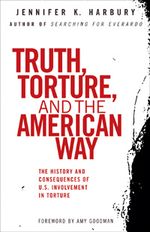
    0307Truth, Torture, and the American Way: The History and Consequences of U.S. Involvement in Torture by Jennifer K. Harbury

    Jennifer Harbury's investigation into torture began when her husband disappeared in Guatemala in 1992; she told the story of his torture and murder in Searching for Everardo. For over a decade since, Harbury has used her formidable legal, research, and organizing skills to press for the U.S. government's disclosure of America's involvement in harrowing abuses in Latin America, Southeast Asia, and the Middle East. A draft of this book had just been completed when the first photos from Abu Ghraib were published; tragically, many of Harbury's deepest fears about America's own abuses were graphically confirmed by those horrific images.

    This urgently needed book offers both well-documented evidence of the CIA's continuous involvement in torture tactics since the 1970s and moving personal testimony from many of the victims. Most important, Harbury provides solid, convincing arguments against the use of torture in any circumstances: not only because it is completely inconsistent with all the basic values Americans hold dear, but also because it has repeatedly proved to be ineffective: Again and again,'information' obtained through these gruesome tactics proves unreliable or false. Worse, the use of torture by U.S. client states, allies, and even by our own operatives, endangers our citizens and especially our troops deployed internationally.

    "The word "torture" has always brought to mind the Gestapo, or the gulag. Jennifer Harbury shocks us as she confronts us with our own nation's record of torture and brutality, from Latin America to Vietnam to Iraq. She tells the story of her husband's disappearance, torture, and murder in Guatemala, but also presents the testimonies of other torture victims, with the C.I.A. a shadowy, ominous presence. Their stories make us feel shame at the betrayal of our most cherished values, but Harbury is undaunted, believing we must expose the truth and demand that our government not respond to the terrorism of 9-11 with the terrorism of the secret torture chamber." — Howard Zinn, author of A People's History of the United States

    "A few bad apples? A small group of undisciplined soldiers? Read this harrowing, courageous book and you will discover that the torments of Abu Ghraib are deeply and systematically rooted in a poisonous American past." — Ariel Dorfman, author of Other Septembers, Many Americas

    "Bully for this brave woman who, despite her personal tragedy, takes democracy more seriously than its alleged protectors. She is a patriot to put the pundits to shame." — Eric Alterman, The Nation


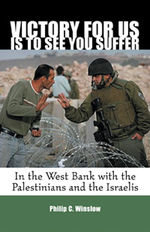
    6906Victory For Us Is to See You Suffer: In the West Bank with the Palestinians and the Israelis by Philip C. Winslow

    During the second Palestinian intifada, Philip C. Winslow worked in the West Bank with the United Nations Relief and Works Agency (UNRWA), driving up to 600 miles a week in the occupied territory. He returned to the region in 2006. In this book, Winslow captures the daily struggles, desperation, and anger of Palestinians; the hostility of settlers; the complex responses of Israeli soldiers, officials, and peace activists; and even the breathtaking beauty of nature in this embattled place.

    "[Winslow] writes in a gentle tone about the constant brutalizing and inhumane quality of the Israeli occupation, the administration of checkpoints, and attempts to crush the Palestinian community and economy. He doesn't consider the political positions of either side but blames both for ignoring the repercussions of their actions, on their enemy and on themselves. Winslow's sensitivity and strong writing make this an important volume."
    —Library Journal

    "Foreign correspondent Winslow depicts the universal cost of Israel's occupation of Palestinian lands in excruciatingly human terms . . . The multilayered narrative demonstrates unusual compassion for the human side of the conflict, sympathizing with both the Palestinian citizens and the Israeli soldiers in the clear understanding that the latter, too, are dehumanized by the violence that surrounds them."
    —Publishers Weekly, starred review


    4419Executed on a Technicality: Lethal Injustice on America's Death Row by David R. Dow 

    When David Dow took his first capital case, he supported the death penalty. He changed his position as the men on death row became real people to him, and as he came to witness the profound injustices they endured: from coerced confessions to disconcertingly incompetent lawyers; from racist juries and backward judges to a highly arbitrary death penalty system.

    It is these concrete accounts of the people Dow has known and represented that prove the death penalty is consistently unjust, and it's precisely this fundamental-and lethal-injustice, Dow argues, that should compel us to abandon the system altogether.

    Read David R. Dow's posts at Beacon Broadside

    "An honorably dispassionate and logical broadside against a shameful practice."
    —Kirkus Reviews

    "Dow reveals the dirty little secret of American death-penalty litigation: procedure trumps innocence . . . [His book] is insightful and full of the kinds of revelations that may lead readers to reconsider their stand on the death penalty."
    —Steve Mills, Chicago Tribune

    "Dow's book leaves all else behind. It is powerful, direct, informative, and told in compelling human terms. He makes us see that the issue is not sentiment or retribution or even innocence. It is justice."
    —Anthony Lewis, Pulitzer Prize-winning former columnist for the New York Times


    Related articles

    Today is International Human Rights Day
    Human Rights Day ~ 10th December
    Beacon Buzz: Holiday Sale, Great TEDx talks – Beacon Broadside
    Beacon Books at Audible: Transgender Books for Transgender Awareness Week

  • Gift20

    Order any book at Beacon.org (including the ones featured in our Buzz Report below) by December 31st and receive 20% off your order and free standard shipping.* And orders of $75 or more will receive a free King Legacy Series tote bag. 

    Plus, Beacon Press will donate 15% of total sales to the Teachers College Literacy Lifeboats Initiative. Use Promo Code GIFT20 at checkout.

    *Due to the increased volume of mail shipping during the holiday season, we cannot guarantee orders submitted after December 13 will arrive by December 24. If you would like to ensure your package arrives by that date, we offer paid shipping options via UPS. A 15% donation from each sale using promo code GIFT20 will be given to the Teacher's College Literacy Lifeboats Initiative to aid those affected by Hurricane Sandy.

    Must Watch

    Eboo-sacredgroundSacred Ground: Pluralism, Prejudice, and the Promise of America by Eboo Patel

    Eboo Patel spoke at TEDx Women in Washington DC about his grandmother,
    Dorothy Day, and his growth as an interfaith activist. 


    Big-Box Swindle: The True Cost of Mega-Retailers and
    the Fight for America’s Independent Businesses
    , by Stacy Mitchell

    Stacy Mitchell spoke at TEDx Dirigo on “Why We Can’t Shop Our Way to a
    Better Economy.”


    I Told You So, by Kate Clinton

    Kate Clinton talks about her job as a lesbian feminist comic and how
    humor gets us through the most discouraging of times at TEDx Women.


    Notable Mentions

    SLATER-60KDogThe $60,000 Dog: My Life With Animals, by Lauren
    Slater

    Wisconsin Public Radio's Joy Cardin Show, Nov. 30, live by phone.

    ELLE magazine’s December issue: “A thoughtful memoir
    unravels the depth of our animal attachments.”


    Faitheist: How an Atheist Found Common Ground with the
    Religious
    , by Chris Stedman

    Minneapolis Star
    Tribune
    review: “ [an] enlightening and engaging memoir.”

    Skeptic
    blog
    write-up:  

    Atheism
    is actually not a duopoly of firebrands and diplomats. These two types of
    evangelists no more describe “both kinds” of atheist than “country and western”
    describes “both kinds” of music.

    Stedman
    explicitly rejects “the demise of religion”—that is not a goal he shares. He
    also rejects the firebrands versus diplomats dichotomy. “I believe how
    pushy should we be?
     is the wrong question,” he writes. The better
    question is how do we make the world a better place?


    Before They’re Gone: A Family's Year-Long Quest to
    Explore America's Most Endangered National Parks
    , by Michael Lanza

    2012 National Outdoor Book Awards NOBA Honorable Mention for Outdoor Literature. 


    A Gift of Love: Sermons from Strength to Love and
    Other Preachings
    , by Martin Luther King, Jr, Coretta Scott King, and Rev.
    Dr. Raphael G. Warnock 

    Beliefnet
    ran an excerpt, “Loving Your Enemies.”

    Upheaval after upheaval has reminded us
    that modern man is traveling along a road called hate, in a journey
    that will bring us to destruction and damnation. Far from being the pious
    injunction of a Utopian dreamer, the command to love one’s enemy is an absolute
    necessity for our survival. Love even for enemies is the key to the solution of
    the problems of our world. Jesus is not an impractical idealist: he is the
    practical realist.


    Soul Repair: Recovering from Moral Injury after War,
    by Rita Nakashima Brock and Gabriella Lettini 

    Two great radio interviews with Rita Brock: Northern
    Spirit Radio
    and KPCC
    Take Two
    (interview highlights and book excerpt online at KPCC) 

    Blue Revolution: Unmaking America's Water Crisis,
    by Cynthia Barnett

    Barnett was interviewed for a Marketplace
    story on a water desalination plan for San Diego.

    Educational Courage: Resisting the Ambush on Public
    Education
    , by Mara Sapon-Shevin and Nancy Schniedewind

    Poughkeepsie
    Journal
    : “In “Educational Courage,”
    veteran educators and activists Schniedewind and Mara Sapon-Shevin bring
    together the voices of those resisting market-driven initiatives such as
    high-stakes testing, charter schools, mayoral control and merit pay.”


    Coming Soon

    Brokers of Deceit: How the U.S. Has Undermined Peace
    in the Middle East
    , by Rashid Khalidi (March 12, 2013)

    Foreign
    Policy
    post by Khalidi, Nov. 29: “Obama’s Three Options”

    Advance praise for Brokers of Deceit:

    "Khalidi has combined history, common sense and his
    first-hand understanding of arab-israeli peace talks, as brokered by
    Washington, to make the case that American national security interests would be
    best served by a just peace in the Middle East.  Instead, he write with
    great sadness, Washington's efforts to be a honest broker fall "somewhere
    between high irony and farce" –and puts democratic America, with its
    avowed commitment to freedom for all, in the position of enabling the continued
    subjugation of the Palestine people.  This is an important book." —Seymour
    M. Hersh, the New Yorker; Winner of the Pulitzer Prize


    Related articles

    A story of educational courage
    Holiday Sale: 20% off and free shipping, plus support a good cause
    Beacon Buzz: Melissa Harris-Perry talks racial reconciliation with the authors of Gather at the Table
    Beacon Buzz: "A writer of uncommon, bracing eloquence."
    500th and Final 2012 Election Tweet from @ElinorLipman!
  • Award-winning journalist Fran Hawthorne has been a writer or editor at Fortune, BusinessWeek, Institutional Investor, and other publications. She is the author of several books including Ethical Chic: The Inside Story of the Companies We Think We Love and The Overloaded Liberal: Shopping, Investing, Parenting,and Other Daily Dilemmas in an Age of Political Activism.

    Bigstock-Blank-T-Shirts--2725687Dov Charney has his good points. Really.

    Sure, employees have filed at least 10 lawsuits against the founder
    and chief executive of sexy-clothing-maker American Apparel, alleging sexual
    harassment, bullying, violence, and illegal use of corporate money. His firm
    went bankrupt once and has skirted the financial edge two more times.

    The newest lawsuit—brought by the male manager of an
    American Apparel outlet in uber-cool Malibu, California—claims, among other
    things, that Charney spewed obscenities at him for poor sales, called him “a
    fag” and “a f***ing Jew,” tried to squeeze and choke him, and then tried to rub
    dirt in his face.

    Actually, this is an improvement over some of the earlier legal
    actions, in which Charney was accused of grabbing his penis in front of one
    female worker and using company funds to buy sex videos for himself. At least
    this time, he apparently is concerned about store sales.

    Yet, the case against Charney is not that simple.

    The same bravado and willingness to buck conventional wisdom
    that allegedly produce the sexual filth, also propel Charney to open his big
    mouth for unpopular causes of social justice.

    While other U.S. companies hire undocumented foreign-born
    workers mainly to cheat them out of wages and overtime, knowing that they don’t
    dare complain, Charney champions their rights. He marches in Los Angeles’s
    biggest Latino parade, donates money to immigrant rights’ groups, ran ads
    supporting citizenship, and designed two special lines of T-shirts as
    fund-raisers.

    While other U.S. clothing-makers ship their production out
    to sweatshops in places like Bangladesh, Vietnam, Honduras, and China, seeking
    the lowest wages possible, regardless of safety or health, Charney makes
    everything in the U.S. At American Apparel’s airy, light-filled main factory,
    workers can get subsidized health care, subsidized meals, free loaner bikes,
    free massages, free English lessons, discount bus passes, and free international
    calls back home (to all those countries they may have illegally come from). 

    0094Charney also vigorously opposed California’s Proposition 8,
    which banned same-sex marriage.

    In short, if you’re concerned about corporate ethics, those
    two sides of Dov Charney can drive you crazy. Hate him or love him?

    But there is a simple solution: Hate the man, love the
    company.

    While Charney may be the drum major of the parade, the
    qualities that make American Apparel an ethical business should be pretty well entrenched
    throughout that factory by now. After 15 years, it would be hard to tear out the
    sunny windows or yank away the health care and English lessons. Company
    officials claim their  “vertically
    integrated” manufacturing platform has proved that making clothing in America is
    cost-effective.

    Thus, the good parts should keep running even if Charney
    disappeared.

    By the same token, the harassment and abuse lawsuits are
    only against Charney, personally, No other American Apparel executive has been
    accused of talking and acting dirty. Get rid of Charney, and the harassment and
    bullying should stop.

    Charney probably owns too much of the company to be fired
    outright, and anyway, it’s often his creative vision behind the popular
    designs.

    Instead, American Apparel should keep him locked up in a
    tower with lots of porn videos, Hungry Man frozen dinners, consenting (and over
    18) young women—and a laptop with a good graphics program. Every now and then,
    a few upper-tier managers could come by to talk about plans for new hoodies or dresses.
    But never, ever, ever let Dov Charney out. 

    T-Shirts image from Bigstock.

    Related articles

    Let's Stop Making Migration a Crime
    American Apparel's First Profits In Years Put The CEO's Sex Scandals In The Rearview Mirrow (APP)
    Those Sex Harassment Lawsuits Against American Apparel CEO Dov Charney Were Mostly Bogus, It Turns Out (APP)
    American Apparel Sold More Unisexy Basics Than Expected
    Fast Fashion's Challenge: Making Money With 'Made In The USA'
    Double standard
  • Carolyn Meckbach is a former editorial intern for Beacon Press, where she crafted the discussion guide for Faitheist. She is studying Political Science and Gender Studies at Gordon College while directing If I Told You, a student-run journal that publishes personal narratives surrounding sexual orientation, spiritual doubt, and mental health.

    Get Faitheist and all other Beacon books for 20% off if you order in December. You'll also get free shipping and support a good cause. Click here for more info.
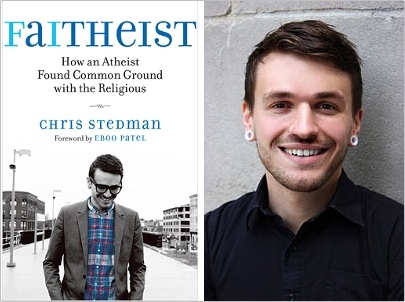
    StedmanNo sooner had I found a
    spot in the cramped basement of an Old Jerusalem café in Central Square than I
    realized I had entirely misplaced the notes and questions I had written for an
    interview with Chris Stedman, author of Faitheist:
    How an Atheist Found Common Ground with the Religious
    . My mind reeled,
    trying to remember my talking points, trying to brainstorm new ones. Chris had
    just arrived back in town from a cluster of speaking gigs and was already
    taking time away from work to meet with me; the least I could do was ensure I
    knew what I wanted to ask him. As I grabbed my notebook and began to scrawl a
    few poorly-ordered questions, I looked up to see him standing before me
    smiling, arms held out as if to give me a hug. (I had never met him, but
    immediately doubted he was a native New Englander: as it would turn out, he is
    not.) I stood to greet him, and amid his laughter about a nearly unsuccessful
    attempt to find the place, I remember him glancing down at my notes to remark:

    “I’m feeling
    conversational today, if that’s alright with you.”

    After conversing with him
    for those few hours, and in the subsequent times we’ve met, I’ve realized that his
    initial request—more an invitation—pretty much sums up Chris’s entire approach
    to conflict-resolution: a preference for open, personal discourse as opposed to
    rigid debate. In person, what’s notable about Chris is the way he becomes immediately
    familiar through quirky and humbling admissions, and the forward-leaning manner
    in which he listens. It’s abundantly clear that Chris is most fulfilled when he’s
    creating an opportunity for both others and himself to speak with honesty.

    What follows is a highly-condensed
    version of some of our conversations (also found at Patrol
    Magazine
    ) in which Chris explores his transition from Evangelical
    Christianity to secular humanism – as well as the various insights which have
    positioned him to share about his journey.

    So: let’s
    be frank here. You’re 25, and you’ve already written a memoir…

    [Laughing]
    Ahh. More often than not, people will say to me: ‘A memoir? You must have had a really interesting life.’ I suppose I
    have had an interesting life, but it’s hard for me to compare it to others
    because it’s the only life I’ve ever had. Most people think their own life is
    interesting, and I guess I’m no exception. But this book isn’t really about
    whether my life has been sensational or not; I wrote this book because I care
    about trying to improve the way that the religious and the nonreligious speak
    with and about one another, because it feels to me like there is an
    increasingly volatile chasm between those groups. The reason I wrote this book
    as a memoir is because scholars like Marshall Ganz agree that storytelling is
    one of the best avenues for reconciliation and for prompting discussion across
    lines of diversity. The easiest way for me to explain why I believe this work
    is urgent, and why I personally care about it so much, is by discussing it
    through the lens of my own story.

    Faitheist
    sheds light on when you were 10 and encountered books like
    The Diary of
    Anne Frank, Roots, and Hiroshima. How
    instrumental were these books to your initial impulse to become involved in
    peace-building?

    I was horrified. I had no
    idea I lived in a country that had recently allowed for slavery. I had no idea
    that I lived in a country built on stolen land. I had no idea that, within the
    last 50 years, an atomic bomb had been dropped by my own country on another. I
    had no idea that WWII had happened; I knew nothing of the Holocaust. And these
    books, of course, didn’t just present the facts; they were stories that personified these issues, making it easy
    for me to imagine myself, or friends or loved ones, in those situations.

    And how did this affect your pursuit
    of a god?

    Well, I was looking for a
    way at a very young age of how to make sense of all that—I wondered if the
    perpetrators of those crimes would be on the receiving end of some type of justice,
    or if the people who had suffered at the hands of such evil individuals would
    experience some kind of redemption. The Christian cosmology provided the
    answers to the questions I had been asking; the theology I was presented said
    that those who acted in selfish ways—ways that obscured others’ rights to live
    freely in the world—would be punished for their actions, and that the innocent
    individuals who suffered would be rewarded with an eternal life… if they accepted Jesus Christ as their
    personal savior.

    And that’s a big “if” that you
    committed to, right?

    Well, I wanted that for
    myself too. Converting seemed like a no-brainer at the time. Everybody there
    was, like, so excited for me, and I thought: okay, now I belong. Now I belong somewhere; I belong here. And not only
    in this physical space, surrounded by these people, but in this sort of larger
    cosmic structure. As in: “I am part of God’s flock now.”

    How did people receive you?

    So warmly. I remember the
    youth pastor asking me, after I casually mentioned I had a big exam coming up,
    “How did that math test go?” They were very attentive; they really seemed to
    care—and that felt really nice, given the way my family was fracturing at the
    time. Another factor that played into my going to church was that I wasn’t the
    coolest kid around—I didn’t have trendy clothes and was a bit of a nerd, and
    all the cool kids went to youth group.
    Youth group was this weird mix of cool kids and the nerds they wouldn’t
    associate with outside of youth group. But while you’re at youth group, you’re
    all best friends. Anyway, despite all of those things that appealed to me about
    church—the way it substituted the structure my family once provided, how it
    compensated for my feeling like a total misfit at school, and how it provided me
    a framework for making sense of injustice—it wasn’t a good thing for very long.

    Why not?

    Well,
    I soon realized it was only a safe place for some. About two months into my participation in this Evangelical
    Christian community, I finally put my finger on something that I had always
    sort of known. I had always felt a little, um, different. And I wasn’t
    altogether sure why. I mean, everybody feels a bit different at some point. But
    I just knew something was ‘off.’ Something about who I was didn’t fit what I
    was supposed to be.

    I assume
    you’re partly referring to your sexual orientation—how would you say that you
    first fully recognized this “difference”?

    I
    write about it in the book: I was watching TV and this commercial came on. It
    was a low-budget ad for swim suits; there was a male model and a female model
    standing next to each other, and I just had this moment where I was like: ‘Oh my God. It’s supposed to be the one on
    the left drawing my eye, but it’s the one on the right
    .’ It was horrifying.
    I was like, ‘Oh f—.  I’m in big trouble.’ Because I knew this was
    going to be a big problem—not just in terms of societal expectations, but
    particularly within this community that I was so enamored with, that meant so
    much to me.

    And you
    lived in a small town in the Midwest, right?

    I
    grew up just outside of St. Paul, in a blue-collar river town. To put it in
    perspective, my elementary school district was the one featured in a Rolling Stone article entitled “One
    Town’s War on Gay Teens,” which investigated a recent suicide epidemic where
    nine students thought to be gay killed themselves within a two-year period. So,
    needless to say, I didn’t want to be gay. See—things are very different today.
    There are representations of happy, healthy LGBT folks all over the place.
    Ellen DeGeneres, Glee—they’re
    everywhere you look. But when I was in middle school, I don’t think even Will & Grace was on the air yet. And
    even by the time that show did come, they, you know, lived in these fancy New
    York apartments with lives that didn’t look anything like mine. I was a dorky
    Midwesterner—I could not relate to that. I didn’t personally know any gay
    people, and the few things I had heard about gay people were not good. At the end of the day, though,
    my being gay was just another way thing to make me feel different from the
    majority of my peers.

    How did the realization that you
    were gay affect
    your faith?

    Since I didn’t really
    want to be gay, I decided I was going to change my sexual orientation. I got
    the idea from my Christian church, who said that homosexuality was solvable,
    changeable. I didn’t talk to anyone about it for fear of being ostracized, but
    I got the impression based on ideas promoted within the church that being gay
    was a spiritual affliction—one that could be overcome through dutifulness to
    tradition. So if I prayed and I fasted and I studied Scripture and was just
    this model Christian, my ‘burden’ would be lifted. I came to see my same-sex
    attractions as a test, or a punishment—one I could overcome. So I worked very hard
    to do just that, but became despondent as years passed by and I didn’t see any
    progress. The irony is that I had become a part of this community because I was
    looking for a way to make sense of suffering and because the communal aspect of
    Christianity was very appealing—but when I became increasingly serious about my
    quest to change my sexual orientation for them, I ended up retreating further
    and further into myself, and suffering more and more. Eventually I was just a
    zombie stumbling through my own life, completely unengaged with the world
    around me; focused solely on this one
    thing.

    You write in the book about certain
    times that you were harassed by Christians. How much did those experiences
    influence your break with Evangelical Christianity?
     

    My
    atheism wasn’t born out of the negative experiences that I had had within the
    church, although I will admit that they sort of set me on a course of
    self-reflection that led me to the conclusion that God probably does not exist.
    As a college student, I was encouraged to turn a critical eye on my initial
    conversion experience. When I did, I realized I hadn’t really converted for the
    theology of the church, but for the community and the ethics and the positive
    social action. But I wonder if I would’ve had the opportunity to enter into
    that deep kind of reflection if I hadn’t had to question everything about who I
    was for a number of years. I don’t know. I actually think those kinds of
    hypotheticals are a bit silly. I am where I am now, and that’s what I know. But
    it’s important for me to say that I didn’t decide that I don’t believe in an
    anthropomorphized deity who is an interventionist force simply because
    Christians were mean to me. I feel that’s what a lot of people think about
    atheists—that they don’t believe in God because of negative experiences with
    religion.

    Reactionary?

    Exactly. Sometimes
    atheism is portrayed as something that is purely reactionary. For me, it was
    actually more the result of critical self-reflection, which I go into in the
    book. I looked at my own underlying values and beliefs and I just decided, you
    know, this community isn’t my community and this Christian narrative is not my
    narrative. It’s interesting to me that when I tell a very brief version of my
    story of my years in the church, I’ll have Christians come up to me afterwards,
    and they’ll say: “I just want to apologize on behalf of all Christians for what
    you went through and you should know that not all Christians believe this. I’m
    a part of a community that would welcome you without question for who you are.”
    And while I really appreciate that, and I know it’s usually coming from a very
    good place, part of me wonders: ‘did you
    listen to the second half of what I talked about?’
    My issue with
    Christianity wasn’t solely because I hadn’t been entirely welcomed, though that
    was a big part of it; I had to find a place where I fit. I had to find the
    right language to describe the world around me. And that right language is a
    humanistic, naturalistic way of seeing things.

    If
    existential problems don’t concern you as much anymore, why do you feel so
    strongly that the irreligious should care about religion?

    I
    care in the sense that other people care. I recognize the significance religion
    holds for so many other people. Even though the debate about the existence of
    God is increasingly irrelevant to me, that doesn’t mean that it must be
    irrelevant to everybody else. I have many friends and colleagues and people who
    inspire me to action who are deeply motivated by their religious beliefs—and not
    only isn’t that a problem to me, I actually celebrate
    it, when it’s something that enriches their lives and propels them to enrich
    other people’s lives. It’s not my business to say that because their source of
    inspiration is different from my own and because I believe it is incorrect,
    they must abandon it. If something is
    a force for good in somebody else’s life, I don’t feel that it is my place to
    erode that belief.

    And in
    this sense, you’ve been known to deviate from the New Atheist movement.

    Yes,
    this is where I diverge very strongly from some other atheists. A lot of other
    atheists I encounter believe that the solution to the problems in our world is
    to convince other people to drop “magical thinking” as they would put it—to
    look at the hard, cold facts of existence and face them in the eye and just
    deal with the fact that ‘we are all we
    have.’

    Though
    you’ve received criticism from such atheists as being “too soft” (with the
    title of your book as evidence), you haven’t always been so open to the fruitful
    aspects of religious belief. (After your conversion from Christianity, you
    express in
    Faitheist
    that you had been confrontational, mirroring the kind of atheism you now object
    to.) What changed? What’s a key principle for you now when you’re interacting
    with those who are outspokenly committed to religious beliefs that oppose your
    own?

    Self-awareness,
    first and foremost. It sounds backwards, but focusing on myself has enabled me
    to find common ground with others. I try to be increasingly aware of my own stuff: where my own pressure-points are,
    when I’m engaging in an interaction with someone else and it’s really about
    something that I myself am dealing with. I think self-awareness for me has been
    the key for being able to find common ground with people who believe really
    different things than I do, and the key to being able to forgive the people who
    perpetuated the beliefs that ultimately led me into a really difficult
    adolescence.

    As
    I write in the book, so much of my issue in college was that I really wasn’t
    self-aware. So much of what was preventing me from having those conversations
    with others – so much of what led me to be confrontational – was my own lack of
    self-awareness, and less what they had done. I hadn’t fully acquired a
    disposition which made me want to
    learn and want to listen — I had this
    orientation of wanting to project and disagree, or wanting to isolate myself,
    and I could sort of twist what others said. I could totally manipulate anything
    anyone said into something hateful. But as I got older, I shifted into a
    position of wanting to understand what I cared about the most and where my
    values were. A lot of that has had to do with my education in pastoral care
    work—my Masters was in Pastoral Care. My focus shifted from wanting to align
    the beliefs of others with my own, or wanting to confront differences, to
    wanting to live as fully into my own convictions as I could.

    Do you
    feel religious belief can ever become a problem?

    It
    becomes a problem when a person’s religious beliefs compel him or her to impose
    those beliefs onto other people’s lives in ways that are harmful and hurtful;
    when they’re used to diminish others’ liberty and dignity. Of course, I don’t
    think that religious beliefs have a monopoly on dehumanization and diminishment.
    The issue for me is not religion or religious beliefs as much as it is any kind
    of totalitarianistic, dogmatic, exclusivistic, tribalistic way of thinking and
    way of seeing the world—anything that is used to oppressive ends. If we can
    reduce the prevalence that kind of thinking and that kind of behavior, we will
    live in a much more peaceable world.

    Faitheist
    sheds light upon both your adolescence and early adulthood, and I know that the
    work you immerse yourself in – interfaith activism—involves reaching out to a
    younger crowd who oftentimes feels hesitant to validate their nonreligious,
    religious, and sexual-based identities due to their age. How do you hope that
    younger individuals will interact with this book?

    I
    hope that it might encourage younger people to step out into the public arena
    with their stories and their beliefs. I believe young people have the capacity
    to do such good work in the world, but many don’t feel they have the authority
    to speak, or to act, or to influence. This is why I’m so involved with IFYC,
    because I hope that other young people will see me say: ‘You know, he’s not the
    smartest guy around. He’s not the most well-spoken; sure, what he’s doing
    resonates with me, but I could do what he’s doing.’ Young people’s voices are
    largely absent in these circles of influence, and I hope that my experience
    inspires other people to be confident, to speak out, and to not feel like they
    have to have everything figured out in order to participate in discussions
    about religious diversity.

    As with any memoir, publishing this
    puts you in a vulnerable position. How do you feel you might respond to any
    criticism about “not-having-all-of-your-ducks-in-a-row” – that your life is too
    much in flux to be penning it down in a memoir?

    [Laughing:] I’m sure that
    in 5 years from now so much will have changed, but I suspect that my central
    concerns will remain relatively stable. Without being apologetic about it, I
    come right out in the book and try to explain that I don’t have it all figured
    out. Still, I hope my striving for authenticity will come through in the
    writing, and in who I am as a person. And if that doesn’t translate, then, you
    know, I’ll keep trying. What I’ve learned over the years from struggling with
    all of this is that every day is a new day—a chance to try again, to try it
    anew, to try something else. It’s
    constantly ongoing, meaning: nothing is at the end of the book. There is no
    period.

    Related articles

    From Closeted Evangelical to Unapologetic Atheist: A "Faitheist" Manifesto
    Faitheist: How an Atheist Found Common Ground with the Religious
    Toxic atheism drives people apart
    Thoughts on Chris Stedman's Faitheist
    Beacon Buzz: Moral Injury, Faitheist, and the Get Bitten blog tour
  • Tom Wooten is the author of We Shall Not Be Moved: Rebuilding Home in the Wake of Katrina. This post originally appeared at Good.

    Bigstock-ROCKAWAY-PARK-NY-NOVEMBER---39166960

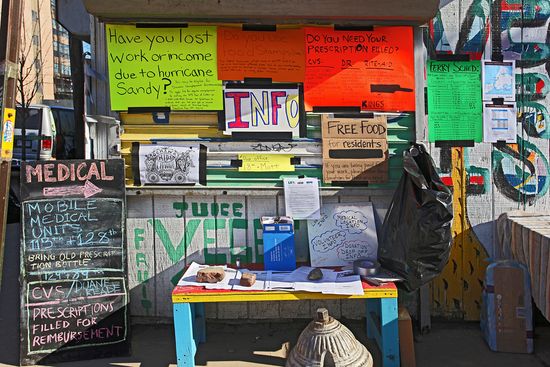
    Posters providing help at Rockaway Beach, Queens, NY. (From Bigstock)

    This year, thousands of families from Long Island, the Rockaways, Staten Island, and the Jersey Shore were not able to celebrate Thanksgiving at home. For these people, whose houses and apartments were damaged or destroyed during Hurricane Sandy, the long recovery journey is just beginning. Rebuilding poses an array of daunting challenges: insurance proceeds rarely cover costs, destruction lays bare the risk of building anew, and doubt lingers over whether neighbors will return. To make matters worse, national attention moves on quickly after a disaster.

    Gulf Coast residents can relate. In the more than seven years after Hurricane Katrina washed away the Mississippi Gulf Coast and flooded much of New Orleans, recovery has been a slow and uneven process. Parts of St. Bernard Parish, the Lower Ninth Ward, New Orleans East, Waveland, Miss., and other Gulf communities remain as empty as the charred blocks of Breezy Point, Queens. Katrina permanently displaced hundreds of thousands of people. For those who have been able to return, restoring life to flooded neighborhoods has been a trying, all-consuming endeavor. Much of their work remains unheralded; the slow work of reconstituting a community rarely makes for snappy evening news stories.

    Lessons from the long Gulf Coast recovery can inform the work that lies ahead for Sandy’s displaced survivors. The most important such lesson is that context matters. What works in one place will not necessarily work in another, and local knowledge is vastly more important than outside expertise or prior disaster recovery experience. New Orleans resident Hal Roark, who worked on recovery efforts with hundreds of his neighbors in the Broadmoor neighborhood, puts it best when he says, “We are the world’s leading experts on Broadmoor.”

    Because of a vacuum of city, state, and federal government leadership in Katrina’s wake, New Orleans neighborhood-based organizations carried out much of the city’s recovery work. Their diverse recoveries reflect the importance of tailoring efforts to match physical and social context. Hal’s neighborhood of Broadmoor, a racially and socioeconomically diverse community, based its rebuilding effort on the recovery plan drafted by dozens of resident-led committees and democratically ratified by the neighborhood. In Hollygrove, a predominantly poor and black neighborhood, churches and religious nonprofits drove recovery efforts. Lakeview, a white, upper middle class community, drew on a longstanding neighborhood civic tradition to organize its recovery. Village de l’Est, a far-flung Vietnamese-American neighborhood, coordinated recovery efforts through its 6,000-member Catholic parish. The Lower Ninth Ward, which sustained the most damage of any neighborhood in the city, relied on close coordination between resident-led organizations and massive teams of outside volunteers.

    Even counting the inevitable missteps, it is clear that the response to Hurricane Sandy from all levels of government has been vastly better than the response to Hurricane Katrina. However, although mid-Atlantic communities will not have to “go it alone” to the same extent as Gulf Coast communities, much of the onus for post-Sandy recovery will nevertheless fall to the most local level. Residents and community leaders bear most of the responsibility for leading recovery. Government agencies, nonprofits, and grassroots organizations can be valuable partners to flooded neighborhoods, but they will not do most of the heavy lifting.

    What kinds of partnerships should residents form with outside groups? In New Orleans, the best partnerships augmented neighborhood capacity, providing a hand up instead of a handout. These partnerships emerged when residents had a firm sense of what they needed in order to drive recovery forward and when outside groups had the good sense to listen to residents instead of dictating assistance on their own terms. Strong neighborhood partners emerged across the organizational and political spectrum, from the anarchist-founded Common Ground Collective to the Shell Oil Corporation.

    Strong community partners are also appearing in Sandy’s wake. Volunteers for Occupy Sandy, an outgrowth of the Occupy Wall Street movement, noticed that returning residents needed bleach to disinfect their flooded homes. They launched a trick or treating initiative for supplies across New York City, collecting thousands of half-used Clorox jugs to distribute in Queens and on Staten Island. The tech community has also jumped into the fray. Recovers.org, a web platform that allows communities to host recovery websites matching goods and volunteers to resident needs, has created websites serving Hoboken; Staten Island; Red Hook in Brooklyn, and Astoria in Queens. More neighborhoods hoped to use the service, but the organization reached capacity.

    For recovers.org co-founder Caitria O’Neill, the biggest lesson to come out of Sandy is the importance of prior organization. Recovers.org works with communities to set up web portals before disasters occur, so that residents can immediately coordinate recovery work and solicit donations in a disaster’s wake. Caitria and her staff spent sleepless weeks after Sandy setting up the four web pages, all the while aware the communities would be far better served if the portals had been created in advance. “A disaster is like an inverse political campaign,” she explained. “Attention peaks right after it happens, and wanes after that.” A short delay in web presence can mean losing out on the bulk of potential public giving.

    New Orleans residents also sing the praises of prior organizing. Neighborhoods with strong pre-Katrina organizations—namely churches and residents’ associations—had a much easier time launching coordinated recovery efforts than did comparatively disorganized neighborhoods. To be sure, though, although a number of less-organized communities faced a longer and bumpier road to recovery, many such neighborhoods have since caught up. No matter how long or hard the process, few in New Orleans who were fortunate enough to rebuild regret their decision.

    In the days after Sandy, a touching blog popped up featuring photos of New Orleans residents holding hand-written notes to Sandy survivors. “Believe in your N’hood,” begins one message. “Take it day-by-day. Remember it’s a marathon, not a sprint. Keep believing in the rebuild. You & your neighbors are what will bring your n’hood back…. It’s a long haul for those who are committed, but the emotional payoff is huge.”


  • YoungThe Shoemaker and the Tea Party: Memory and the American Revolution
     tells the story of George Robert Twelves Hewes, a Boston shoemaker who participated in such key events of the American Revolution as the Boston Massacre and the Tea Party. Hewes story might have been lost to history if not for his longevity and the historical mood of the 1830's. When the Tea Party became a leading symbol of the Revolutionary era fifty years after the actual event, this 'common man' in his nineties was 'discovered' and celebrated in Boston as a national hero. Hewes story continues to inspire and instruct today, thanks to the work of one historian. 

    Alfred F. Young, author of The Shoemaker and the Tea Party as well as many other works, died on November 6. He was a man beloved for his warmth and good nature and respected for his scholarship. When his wife, Marilyn, sent an email to her late husband's contact list, including Beacon editor Gayatri Patnaik, many responded to the news with memories of the man and his work. Gayatri sent an email to Marilyn:

    "I’ve been an executive editor at Beacon Press for ten years and had the very good fortune to know Al. I’ve been reading all the emails from his friends and colleagues over the past few days and am struck, though not surprised, at the many people he touched. I myself was always humbled when I interacted with him, not because of his legacy as a historian but also by his generosity and kindness." 

    Thinking that the thoughts of his colleagues and friends would be a fitting tribute to a man much admired here at Beacon Press, we've asked their permission to share what we publish here today. 

    We'll begin with an email Young received before his death but never read, as it arrived in the final days of his illness. It is from Geoffrey Charles Peart, a descendent of George Robert Twelves Hewes, the subject of The Shoemaker and the Tea Party. 

    Dear Dr. Young,
    In doing some research on my family history, I came across your book on George Robert Twelves Hewes. I am a direct descendant of his by way of his son George Robert Twelves Fifteen Hewes. I was fascinated to read your account, and see in print the same stories my grandmother (born 1907) told me as a child.

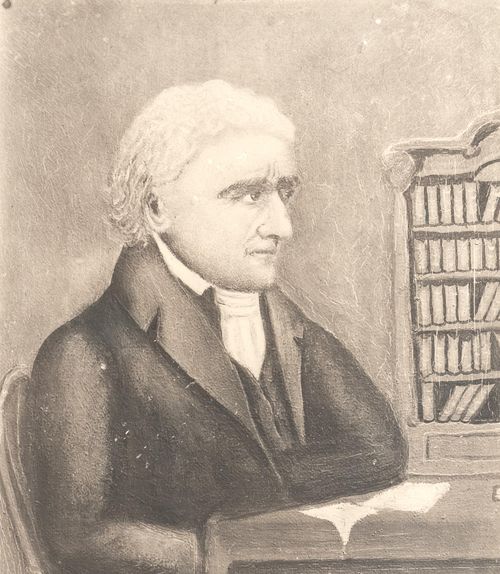
    While all letters and documentation I have are in relation to his descendants living in Michigan, we do have a portrait at home that family tradition holds is of G. R. T. Hewes. Below I have attached a scanned version. Should you have any questions, I would be more than happy to share what I have.

    Thank you for the wonderful book!

    Geoffrey Charles Peart

    George Robert Twelve Hewes
    Portrait of George Robert Twelve Hewes


    It has been deeply moving to read the tributes about Al Young so many historians and comrades–especially from the many younger scholars for whom he was an inspiration and to whom he gave encouragement and support. He and I were roughly of the same generation–he was a few years older than I–and our work on popular and artisanal resistance movements and their connection with festivity took place at the same time: his in revolutionary America, mine in early modern France. We didn't know each other then, but I recognized him as a co-conspirator, and I'm sure he felt the same about me. It was thrilling to meet him in later years. And also so get to know his daughter Liz Young, who has carried on his tradition in another field. His legacy is a rich one.

    Natalie Zemon Davis, Professor of History, University of Toronto 


    This is incredibly sad news. Al was ahead of his time in so many ways, showing us how to mobilize the new social history to uncover political dynamics, how to get at the politics of memory–and above all, how to do our work with generosity, as part of a collective. I will miss him.

    Reeve Huston, Associate Professor of History, Duke University


    Al leaves a grand legacy as an inspired scholar, a person of principles, and a prince of a man. He took history seriously and presenting it to the public even more seriously.

    Terry J. Fife (co-author with Alfred Young and Mary E. Janzen of We the People)


    As an NIU colleague for years I can add that there was no truer friend, no stauncher fighter for what was right, no better model of what a senior colleague should be and stand for, or forhow a committed scholar, sensing the right moment, could literally change the way man, many thousands of others understood their citizenship, their country, and their world.

    Mary Furner, Professor UCSB Department of History


    Very sad. He was a great scholar and elegant stylist but also a model of modesty. I counted him as a friend and mentor and mourn his passing. The world's a much smaller place.

    Bruce Laurie, Professor Emeritus, UMass Amherst Department of History


    Al was hugely important to my own development, from when he first noticed me in 1973 onwards. We all stood in his shadow one way or another. He was a scholar, a gentleman, and a total mensch.

    Ed Countryman, University Distinguished Professor, Southern Methodist University Department of History 


    Al befriended me when I was working as an administrative assistant in the Newberry Library. He took me seriously, although I was a young graduate student, and he has been a mentor, ally, and friend ever since. I admired his work tremendously. But I admired him as a person even more. And I will miss him.

    Laura Edwards, Professor of History, Duke University


    From Ray Raphael, author of A People’s History of the American Revolution: How Common People Shaped the Fight for Independence and Founding Myths: Stories That Hide Our Patriotic Past and coeditor of Revolutionary Founders: Rebels, Radicals, and Reformers in the Making of the Nation.

    About six years ago, Al approached me with an idea: since people love to digest history in the form of biography, shouldn't there be a book featuring biographical essays of radicals of the Revolutionary Era?

    Good idea, I responded. Then I continued to pump him with questions for my own work-in-progress.

    A few weeks later, he mentioned his idea again, then again and again for perhaps a year, until he finally asked outright if I would be interested in working with him on such a project. I had been blind, I realized; he had been asking me all along, but I hadn't taken his hints. At a younger age, he would have charged into this on his own, but now he sought company.

    I had two books in the works, but I could hardly say no. Gary Nash signed on as well, and for three years or so, the three of us tried to fulfill Al's vision. Truly, Revolutionary Founders was his book.

    Al was my teacher years before he knew I existed. When I started studying people's history of the American Revolution in the mid-90s, I gleaned onto the classic collection of essays he had published in 1976 that gave the field definition, and I used the long historiographic essay he had just published as my starting roadmap. I didn't yet know him when he blurbed my first Am Rev book, The People's History of the American Revolution, but after that I introduced myself by email and phone, and from that moment onward, he was my constant advisor. Whenever I had any question, I turned to Al first, and he would rattle off, from the top of his head, a readings list I should pursue.

    And now I would be working side-by-side with a mentor! It was a thrilling prospect, but Al proved to be a tough taskmaster. Email followed email, five or six per day at times, and in the course of the project, a thousand at least. He was direct and spoke his mind, relentless and demanding in his pursuit of historical truth, but he could be curt. Intermittently we quibbled over this or that. At one low ebb, when the tone seemed to turn a bit sour, I headed East with a mission: to meet Al in person. Never have I lived with someone so long and so intensely without meeting him first.

    Durham, NC, the fall of 2009: Al and I hit it off famously, working together for three days, tidying up this essay and that, jamming on the intro, talking shop. Through work was how Al related most deeply, as musicians do with their music. I was face to face with a dedicated, highly effective, rigorous historian and a truly wonderful man; these went hand-in-hand. That visit was a gift; especially now, I am thankful for it. In point of fact, who among us does not owe Al great thanks? He defined who we are, collectively and to some extent individually. 

    Staughton, in his Nov. 9 email tribute, says Al was "a product of the Popular Front atmosphere of the late 1930s," and he suggests that Al was somehow locked within that framework, promoting "the people" without fully embracing the African American and Native American experiences. That's not how I saw him. Al grew with the times and in fact he helped the times grow with him. He saw the Revolution as a complex affair in which there were many renditions of "the people." In our book, he insisted on including women, blacks, and Native Americans and felt uncomfortable to the end with not featuring such groups more; unfortunately, a central essay on the black experience was never completed.

    Al was a true scholar, open to fully honest discussion. Once, on the phone, I confessed that in two footnotes to People's History, I had taken him to task on points in his Hewes essay. Had he noticed these? "Of course," he responded. "That's what most attracted me to you. You took me seriously." 

    And he took me seriously, critiquing my work as only a master can. In an early draft for Revolutionary Founders, I had presented a tolerably good essay on Timothy Bigelow, a radical leader from Worcester who happened to be a blacksmith. Not strong enough, said Al. You need to bring out the blacksmith thing, that is crucial. Here, in fact, is an email on the subject I just retrieved from June 25, 2009, when Al was 84 and still, as you see, at the top of his game. I'll let him have the last word so we can see him in process, tireless, determined, and exacting. It’s a primary source, presented exactly as written. This was vintage Al as I knew him: supreme clarity of mind but working quickly, with his typing fingers not always up to the pace.

    To explain why a blacksmith might have a following: Of all the artisans he is the one most essential to farmers and townspeople. They need him to shoe their oxen and horses, to mend their tools. He might make other household ironware too.

    He is the one artisans who people would visit and have to stay a while while he shod their horses or repaired a pitchfork.

    Only other comparable figure might be the miller but farmers would bring him their grains at infrequent intervals.

    He is also a craftstmen whose work you could evaluate yourself and know whether he was a good man.

    So it not just men talked as men will do as you say. He was familiar to many people; they knew him; they had confidence in him.

    Would the Brit iron policies have been a felt grievance. Interesting question. Do you have a source saying it was.

    The iron act of 1750 forbade colonists to erect any new slitting mills.[ not quite sure distinction from a forge]

    And the importation of raw iron from the colopnies was encouraged. But says Merrill Jensen"the act did not serve either puroose. There was a staedy increase in iron production, but mostof it was used in the colony where it was produced… or shipped to other colonies where it was made into finished iron products by locval artisans'… colonial governors closed their eyes to the the fact of 'local slitting mills]

    Jensen ed Colonial Engkish Histirical D ocuments   ed Jensen NY Ocford 1955. Jensen is even handed about these matters.

    Do you have any other evidence?  My guess is the average blacksmith had all he could do managing  the damnds of local farmers.

    BUT the boycot movement was accompanied by a buy American movement, big in Mass. with a long list of p;ropducts colonists were encouraged to buy from amer manufacturers.   I wrote in my mechanics essay as I recall that the prospect of of increasing Amer manufactures was an appeal to artisans rather than saying the restrictions were a felt grievance. A distinction. The visio of the prospects for Amer manufactures was an appeal ti many artisans.  Wteher you can say this for Bigelow.I dont know

    Al

    That's Al for you. I mourn him and miss him.


    Read more about Al Young: 

    Al Young's essay "The People and the Patriots" in the Boston Review, November/December 2011

    Josh Brown at the American Social History Project's Now and Then blog

    Chris Cantwell at the Newberry blog

    Ann M. Little at Historiann

    Benjamin Carp at Common-Place

    Gregory Nobles at the NYU Press blog

    J. L. Bell's Boston 1775 blog: "Alfred F. Young: A Giant of a Historian"