• Gift20

    Order any book at Beacon.org by December 31st and receive 20% off your order and free standard shipping.* And orders of $75 or more will receive a free King Legacy Series tote bag. 

    Plus, Beacon Press will donate 15% of total sales to the Teachers College Literacy Lifeboats Initiative. Use Promo Code GIFT20 at checkout.

    *Due to the increased volume of mail shipping during the holiday season, we cannot guarantee orders submitted after December 13 will arrive by December 24. If you would like to ensure your package arrives by that date, we offer paid shipping options via UPS. A 15% donation from each sale using promo code GIFT20 will be given to the Teacher's College Literacy Lifeboats Initiative to aid those affected by Hurricane Sandy.


  • Susie Bright, in addition to being a best-selling author, activist, and podcast host, is editor at large for Audible. Susie's blog, The Bright List, keeps readers and listeners apprised of new audiobooks, with Aretha Bright reviewing new titles. 

    Today's post is a cross-post of Aretha's review of The $60,000 Dog: My Life With Animals by Lauren Slater, which was simultaneously released in hardcover, ebook, and audiobook last week. 

    SLATER-60KDogDon’t be fooled by the adorable puppy cover—author Slater does indeed love animals, but her memoir is anything but soft and fuzzy.

    Her memoir is the story of a bleak childhood, dominated first by her mother’s mental illness and then by a foster family that gave her a house, "but not a home." Her love for animals starts here, where she finds refuge in the countryside and observing the lives of deer, foxes, and insects.

    The $60,000 dog of the title is Lila, the family pet, who came down with an extremely painful case of glaucoma. The dilemma that Slater faced is one that will resonate with every person who has ever valued an animal as more than just a pet.

    As Lila’s medical bills mounted, Slater was faced with choosing between sending her daughter to summer camp or buying the medicines that would ease Lila’s pain. The happiness of her daughter stacked up against the happiness of her pet.

    Slater first wrote of this situation in O Magazine, where it was a huge hit and inspired the rest of the book. Animal lovers will certainly relate to the “do anything it takes” approach to save their fuzzy family members.

    Slater is great at building tension and intrigue. Her memories of animals that affected her life are beautiful. Be prepared to cry during the scenes at the vet hospital! Especially for the baby swan whose beak was broken off. 

    This book will touch every person who has ever thought of animals as their dearest companions.

  • Praise for The $60,000 Dog


    SLATER-60KDogThe
    $60,000 Dog: My Life With Animals
     by Lauren Slater

    Enter to win a signed copy of the book at Beacon.org

    Laura Miller reviewed The $60,000 Dog at Salon.com: “Because Slater is willing to take the personal essay to unsettling places and because she is a writer of uncommon, bracing eloquence, the beauty of her work can sometimes blindside her reader. But it’s precisely this wallop that makes her perpetually worth reading.” (Salon.com also posted an excerpt earlier this month).

    Boston
    Globe
    also ran a favorable review: “Edgy, revelatory,
    disturbing, and beautifully written, Lauren Slater’s The $60,000 Dog is too
    unsentimental and idiosyncratic in structure to be lumped in with more
    traditional animal books.”

    Boston
    Phoenix
    write-up in advance of Brookline Booksmith author event.

    The
    Bookworm Sez
    post in the Clermont Sun.


    Faitheist Roundup


    STEDMAN-FaitheistFaitheist: How an Atheist Found Common
    Ground with the Religious
     by Chris Stedman 

    Andrew Sullivan's blog on The Daily Beast on Nov 11 quotes from a
    previous Chris Stedman interview; Andrew
    Sullivan The Daily Beast

    Religion
    Dispatches
     Q&A with Chris Stedman (picked up by the Washington Post On Faith blog)

    The Pioneer Press (St.
    Paul, Minnesota) feature on Chris Stedman and Faitheist Nov 24 (his
    upcoming Twin Cities appearances are listed at article’s end).

    Upcoming Events:

    Nov 27, 7 PM
    Yale Divinity School, New Haven, CT
    Speech, reception, and signing
    Marquand Chapel
    Sponsored by Open Party, Chaplain's Office, Yale Humanist Society, Bridges, and Yale Divinity Student Book Supply

    Nov 28, 2 PM
    Lincoln School for Girls, Providence, RI
    Assembly speech
    EEH Music Center

    Nov 28, 7 PM
    Bryant University, Providence, RI
    Speech and signing
    Bryant Interfaith Center
    Co-sponsored by Humanists of Rhode Island, and Bryant University's Literary and Cultural Studies, History and Social Sciences, Applied Psychology, the Women’s Center, the College of Arts and Sciences and the Interfaith Center
    More information

    Nov 29, 7 PM
    Subtext, St. Paul, MN
    Reading and signing
    More information

    Nov 30, 7:30 PM
    Magers & Quinn, Minneapolis, MN
    Reading and signing
    More information

    Dec 2, 6 PM
    Concordia College, Moorhead, MN
    Speech and signing
    Sponsored by Secular Student Community (SSC), Straight and Gay Alliance (SAGA), Concordia Better Together, Mathetai, and the Forum on Faith and Life
    More information

    Dec 3, 4 PM
    University of Minnesota Bookstore, Minneapolis, MN
    Reading and signing
    More information

    Dec 6, time TBD
    Oberlin College, Oberlin, OH
    Speech, workshops, and signing

    Dec 14, 7 PM
    Center For Inquiry Transnational Headquarters
    Speech
    1310 Sweet Home Road Amherst, NY 14228


    Notable Mentions

    “They’re
    Bankrupting Us!” And 20 Other Myths About Unions
     by Bill Fletcher, Jr.

    Daily Kos review Nov 11: “There's an immense amount to appreciate in these
    sophisticated discussions of 21 myths about unions.” The link was reposted
    by:

    Mark Allan’s blog; Mark
    My Words
             

    I4U News; I4U.com

    Politifreak; Politifreak

    Politomix; Politomix

    Liberal Roundup; Liberal
    Roundup


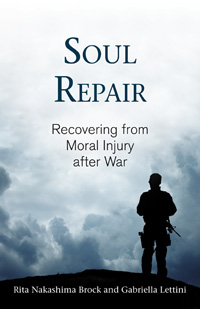
    Soul Repair: Recovering from Moral Injury after War by Rita Nakashima Brock
    and Gabriella Lettini

    Soul Repair co-author Rita Brock was on NPR’s Talk of the Nation on November 21st. She was interviewed alongside Dr. Jonathan Shay and former marine Tyler Boudreau. 

    Rita Brock was also interviewed on Interfaith Voices
    on DC’s WAMU and Think on KERA in Dallas.

    The Huffington
    Post's religion page
    ran a post by
    Gabriella Lettini on Nov 12 (Veteran’s Day)


    A Queer and Pleasant Danger: The
    true story of a nice Jewish boy who joins the Church of Scientology and leaves
    twelve years later to become the lovely lady she is today
     by Kate Bornstein

     East Bay Express review and inclusion in the
    “Books We Love in 2012” roundup:

    “Bornstein injects humor and
    love into the memoir of her life, and you'll walk away richer for having known
    this amazing person, even if only on paper.” 

    Huffington
    Post
     named Kate
    Bornstein one of top 50 transgender icons. 


    Educational Courage: Resisting the Ambush of Public Education edited by Nancy Schniedewind & Mara Sapon-Shevin

    The Washington Post Answer Sheet blog ran an excerpt from the book about a group of New York City teachers taking a stand against standardized testing. 


    Coming Soon:

    The Rebellious Life of Mrs.
    Rosa Parks
     by Jeanne Theoharis (Jan. 29, 2013)

    Publishers Weekly  review Nov. 12: “Theoharis submits a lavishly well-documented study of Parks’s life and
    career as an activist.”

    Brokers of Deceit: How the U.S. Has
    Undermined Peace in the Middle East
     by Rashid Khalidi (March 12, 2013) 

    “What has happened to the
    Palestinian people since 1948 is one of the great crimes of modern history. Of
    course, Israel bears primary responsibility for this tragedy. However,
    as Rashid Khalidi shows in his smart new book, American presidents from
    Truman to Obama have sided with Israel at almost every turn and helped it
    inflict immense pain and humiliation on the Palestinians. At the same time,
    they have employed high-sounding but dishonest rhetoric to cover
    up Israel's brutal behavior. As Brokers of Deceit makes clear,
    the United States richly deserves to be called ‘Israel's lawyer.’” – John J.
    Mearsheimer, coauthor of The Israel Lobby

    Hunting Season: A Story of
    Home, Immigration, and Murder 
    by Mirta Ojito (Nov 05, 2013)

    "With the
    hyperbolic rhetoric of immigration spewing from every medium, we forget that there
    are dreams on either side of the divide that has cleaved United States society
    and threatens our sense of self. Respected journalist Mirta Ojito writes about immigration
    from the perspective of those who have lived it: from the Italian descendant
    Mayor of Patchogue to a naturalized waiter from Colombia, from undocumented
    Ecuadorean laborers to teenagers pumped on adrenaline with not enough to do on
    a fall night–to heartbroken parents in two continents.  This is an
    important book. I couldn't
    put it down." – Esmeralda Santiago, author of When I was Puerto Rican and Conquistadora.


  • SLATER-60KDogA stunning new book about the role of animals in our lives, by a popular and acclaimed writer
     

    From the time she is nine years old, biking to the farmland outside her suburban home, where she discovers a disquieting world of sleeping cows and a "Private Way" full of the wondrous and creepy creatures of the wild-spiders, deer, moles, chipmunks, and foxes-Lauren Slater finds in animals a refuge from her troubled life. As she matures, her attraction to animals strengthens and grows more complex and compelling even as her family is falling to pieces around her. Slater spends a summer at horse camp, where she witnesses the alternating horrific and loving behavior of her instructor toward the animals in her charge and comes to question the bond that so often develops between females and their equines. Slater's questions follow her to a foster family, her own parents no longer able to care for her. A pet raccoon, rescued from a hole in the wall, teaches her how to feel at home away from home. The two Shiba Inu puppies Slater adopts years later, against her husband's will, grow increasingly important to her as she ages and her family begins to grow. 

    Slater's husband is a born skeptic and possesses a sternly scientific view of animals as unconscious, primitive creatures, one who insists "that an animal's worth is roughly equivalent to its edibility." As one of her dogs, Lila, goes blind and the medical bills and monthly expenses begin to pour in, he calculates the financial burden of their canine family member and finds that Lila has cost them about $60,000, not to mention the approximately 400 pounds of feces she has deposited in their yard. But when Benjamin begins to suffer from chronic pain, Lauren is convinced it is Lila's resilience and the dog's quick adaptation to her blindness that draws her husband out of his own misery and motivates him to try to adjust to his situation. Ben never becomes a true believer or a die-hard animal lover, but his story and the stories Lauren tells of her own bond with animals convince her that our connections with the furry, the four-legged, the exoskeleton-ed, or the winged may be just as priceless as our human relationships. 

    The $60,000 Dog is Lauren Slater's intimate manifesto on the unique, invaluable, and often essential contributions animals make to our lives. As a psychologist, a reporter, an amateur naturalist, and above all an enormously gifted writer, she draws us into the stories of her passion for animals that are so much more than pets. She describes her intense love for the animals in her life without apology and argues, finally, that the works of Darwin and other evolutionary biologists prove that, when it comes to worth, animals are equal, and in some senses even superior, to human beings. 

    Praise for The $60,000 Dog

    “Assumption-busting, gut–wrenching, life-affirming essays about the borderlands where humans and animals intersect.” — More Magazine

    “A revealing, often surprising memoir . . . Slater continually surprises with connections she makes. Beautifully written, and not just for animal lovers.” — Kirkus Reviews

    “Because Slater is willing to take the personal essay to unsettling places and because she is a writer of uncommon, bracing eloquence, the beauty of her work can sometimes blindside her reader. But it’s precisely this wallop that makes her perpetually worth reading.” — Laura Miller, Salon.com

    “A thoughtful examination of a sometimes difficult life, ameliorated and often alleviated by connections with nature and animals. . . .Dogs, wasps, and bats also figure in a poetic narrative that gives the reader a melodic look into a deeply considered life.”—Booklist

    Read an excerpt, "A Raccoon of My Own," at Aeon Magazine

    About the Author

    Lauren Slater is the author of seven books, including Welcome to My Country, Lying: A Metaphorical Memoir, Opening Skinner's Box, the short-story collection Blue Beyond Blue, and Love Works Like This, which chronicled the agonizing decisions she made relating to her psychiatric illness and her pregnancy. Slater has been the recipient of numerous awards, including a 2004 National Endowments for the Arts Award, multiple inclusions in Best American volumes, and a Knight Science Journalism fellowship at the Massachusetts Institute of Technology. Slater was a practicing psychologist for eleven years before embarking on a full-time writing career. She served as the clinical and later executive director of AfterCare Services. Slater lives and writes in Harvard, Massachusetts.

  • Bigstock-Horn-Of-Plenty-2172031Whether your Thanksgiving dinner is a small affair or a feast of epic proportions, you probably have a favorite dish or two (or eight) that you look forward to eating this Thursday. I asked around the offices of Beacon Press for cherished Thanskgiving recipes and got several tasty replies. The most intriguing came from Crystal Paul in editorial, who teased me with: "I’ve got a killer sweet potato pie that I am the only one in my family who knows the recipe to (my grandma passed it down to only one lucky kitchen devotee). So I’d share it, but clearly, it’s a secret…" Thankfully, others weren't so mysterious.

    Sharon Leslie Morgan is the co-author, with Thomas Norman DeWolf of, Gather at the Table: The Healing Journey of a Daughter of Slavery and a Son of the Slave Trade. Sharon is an inspiring speaker, an illuminating author and, from all accounts, a gifted cook. She sent us this recipe for Corn Pudding because, "There could be no 'Thanksgiving' without the gift of corn." 

    Corn Pudding
    (8 Servings)

    INGREDIENTS

    ½ cup butter

    ½ cup sugar (white)

    4 eggs

    1 cup sour cream

    1 cup heavy cream

    1 cup corn meal (yellow)

    4 cups corn (whole kernel sweet, frozen)

    SEASONING

    1 tbs paprika

    DIRECTIONS

    CREAM butter and sugar together

    ADD eggs slowly & MIX well
    ADD creams & MIX well
    ADD corn meal & MIX well

    ADD corn & MIX well

    TURN batter into a buttered cooking casserole

    SPRINKLE with paprika

    BAKE @ 325F for about one hour, until custard is set

    Kate Noe in Production sent a newspaper clipping of this Harvest Bake, which she has adapted to be vegan by subsituting Earth Balance spread for the butter. 

    Harvest Bake
    (6 servings)

    INGREDIENTS

    1 23-oz can sweet potatoes or yams, drained
    8 TBSP unsalted butter
    1/4 cup brown sugar, packed
    1 TBSP flour
    1/4 tsp ground cardamom
    2 TBSP chopped pecans
    1 apple, cored and thinly sliced 

    DIRECTIONS

    In 1-quart round casserole, mash sweet potatoes until smooth. Melt 7 tablespoons butter and stir into sweet potatoes. 

    Mix brown sugar, flour, and cardamom in small bowl. Cut 1 tablespoon cold butter into mixture. Stir in pecans and sprinkle 1/2 mixture over potatoes. Arrange apple slices on top. Sprinkle with remaining mixture.

    Bake at 350 degrees 35 to 40 minutes or until apples are tender-crisp. 

    Rachael Marks in Editorial sends her recipe for Hummingbird Cake with this note: "The original recipe appeared in Southern Living in 1978 courtesy of a certain  Mrs. L.H. Wiggins of Greensboro, NC (my hometown… yes, I’m clearly biased). I’ve always been a fan of Southern Living’s updated (read: less artery-clogging) version. It can be either 3-layers or 2-layers but should *never* be made in bundt pan (that would be ridiculous and borderline offensive)." 

    Hummingbird Cake

    INGREDIENTS

    3 cups all-purpose flour
    1 teaspoon baking soda
    1 teaspoon salt
    2 cups sugar
    1 teaspoon ground cinnamon
    3 large eggs, beaten
    1 cup vegetable oil
    1 1/2 teaspoons vanilla extract
    1 (8-ounce) can crushed pineapple, undrained
    1 cup chopped pecans
    2 cups chopped bananas 
    Homemade Cream Cheese Frosting (see below)
    1/2 cup chopped pecans

    DIRECTIONS 

    Combine first 5 ingredients in a large bowl; add eggs and oil, stirring until dry ingredients are moistened. (Do not beat.) Stir in vanilla, pineapple, 1 cup pecans, and bananas.

    Pour batter into three greased and floured 9-inch round cakepans. Bake at 350° for 25 to 30 minutes or until a wooden pick inserted in center comes out clean. Cool in pans on wire racks 10 minutes; remove from pans, and cool completely on wire racks.

    Spread Cream Cheese Frosting between layers and on top and sides of cake; sprinkle 1/2 cup chopped pecans on top. Store in refrigerator.

    Cream Cheese Frosting:
    1/2 cup butter
    1 (8-oz) package cream cheese, softened
    1 (16-oz) package powdered sugar, sifted
    1 tsp vanilla extract

    Cream butter and cream cheese. Gradually add powdered sugar, beat until mixture is light and fluffy. Stir in vanilla.

    *I always double the frosting recipe because I simply won’t tolerate a lightly frosted cake.

    Abby Mayer in Production sent us a link to this recipe for Apple Salad from Emeril Lagasse, about which she says, "I make this every year, and it is a HUGE hit. No one thinks salad on Thanksgiving… until you force them to with (gasp) blue cheese-encrusted croutons."

    As for me, my responsibility at Thanksgiving is the stuffing, or really "dressing" since we never stuff the two Kosher turkeys my mother-in-law prepares for our two nights of feasting: Thanksgiving evening and Shabbat leftover night. Let us know if you try any of these recipes yourself, or share your favorites below. And have a wonderful Thanksgiving! —Jessie Bennett, Blog Editor

    Challah Stuffing
    (serves a bunch of people)

    INGREDIENTS

    1 large challah
    2 TBSP olive oil
    1 large sweet onion, diced
    2 green bell peppers, diced
    3 stalks of celery, diced
    2 tablespoons fresh thyme, finely chopped (or 1 teaspoon dried)
    1 tablespoon fresh rosemary, finely chopped (or ¼ teaspoon dried and crumbled)
    ½ tablespoon fresh sage, finely chopped (or ¼ teaspoon dried)
    1/2 cup chopped dried apricots
    1 cup of apple cider 
    2 or 3 cups of chicken or vegetable broth

    DIRECTIONS

    Rip or cut the challah into small pieces and set aside. You can do this a day or so ahead of time.

    In a large skillet, heat the olive oil over medium heat. Add the onions and saute until slightly carmelized. This will take a while. When the onions are nicely browned, add bell peppers, celery, and herbs and saute until softened. 

    Rub olive oil around the inside of a large baking pan. Add the challah pieces, sauteed vegetables, and apricots and mix. Mix the broth and the apple cider together and pour over the bread and vegetable mixture until all of the bread is completely saturated (use more than I indicate if you need it). Bake at 350 for 45 minutes to an hour, until the top is browned and crispy.  

    Photo from Bigstock.

  • Susie Bright, in addition to being a best-selling author, activist, and podcast host, is editor at large for Audible. This past spring, she approached Beacon with the goal of bringing out some of our titles in audiobook format on Audible, and we couldn't be more excited to announce that the first few books are now available. Susie's blog, The Bright List, keeps readers and listeners apprised of new audiobooks, with Aretha Bright reviewing new titles. Today's post is a cross-post of two recent reviews. 

    This week is Transgender Awareness Week, and we're highlighting two new Audible titles that are enlightening listening for trans- and cis-gendered folks alike: A Queer and Pleasant Danger by Kate Bornstein and Just Add Hormones by Matt Kailey.

    Kate on Audio! — Jewish Lesbian Tattooed Tranny, with a Titanium Knee & Scientologist Past


    BORNSTEIN-Queer&PleasantDangerA Queer and Pleasant Danger: The true story of a nice Jewish boy who joins the Church of Scientology and leaves twelve years later to become the lovely lady she is today by Kate Bornstein

    Kate Bornstein writes books condemned by Pope Benedict. She's a self-identified jewish lesbian tattooed masochist tranny, with a titanium knee. She's the definition of an outlaw! So how did she get this way? 

    A Queer and Pleasant Danger is Kate's memoir, broken into three parts: growing up a Jewish boy in New Jersey,  joining Scientology as an adult (and leaving 12 years later), and finally, transitioning into a woman, coming out as a lesbian, and joining the BDSM culture. Who says getting old is a drag?

    Kate's story is a deliciously matter-of-fact narrative, narrated by Alice Rosengard. Alice, coincidentally, went to college with Kate when she was known as "Al." They were friends!  She called Kate up and they collaborated on the narration process— an unusual and delightful reunion. 


    Matt Kailey Lays It Out — The Transssexual Experience


    7959Just Add Hormones: An Insider’s Guide to the Transsexual Experience by Matt Kailey

    Author Matt Kailey answers all the questions cisgendered people might be too polite to ask— about what it's like to change from living as a woman, to living as a man. 

    Just Add Hormones has behind-the-scenes details on the female to male transitioning process, with both humor and serious contemplation.

    This book assumes you don't know about the process already, and explains the basics while moving into  every detail. —From the therapist sessions to the chest surgery, the testosterone shots to the "clit-dick!" 


  • Repairing the Spiritual Damage of War:


    BROCK-SoulRepairSoul Repair: Recovering from Moral Injury After War
     by Rev. Rita Nakashima Brock and Gabriella Lettini, PhD.

    A Veteran's Day post by Gabriella Lettini at Huffington Post looks at the concept of Moral Injury as a wound of war: 

    War does not end when peace is declared and the troops come home. It continues to affect the bodies, psyches, souls, lands and communities of everyone involved. War's tragic legacy passes on from generation to generation, more dangerously so when it is ignored and left unattended.

    More about Soul Repair:

    Publishers Weekly review: "eloquent and unflinching discourse on war's problematic moral core." 

    Excerpt on BeliefNet

    Rev. Rita Nakashima Brock interviewed on Interfaith
    Voices


    Faitheist is Everywhere:

    Faitheist

    Faitheist: How an
    Atheist Found Common Ground with the Religious
     by Chris Stedman

    Since there are far too many links to post, here are a few highlights of media and mentions for Chris Stedman and Faitheist:

    Christian Century review posted online November 2
    Starred review in Booklist: "Stedman’s story is motivational, his thoughts on interreligious dialogue insightful, and in this short memoir, he proves himself an activist in the truest sense and one to watch."

    Religion and Ethics Newsweekly segment on atheism, humanism, and the religiously unaffiliated.

    State of Belief interview with Rev. Walton Gaddy

    "Why I'm Proud to Work With a Faitheist" on Patheos.com

    Salon.com excerpt

    Edge Online November 2 feature 

    On Being Both exploration of interfaith issues.


    Fanpire Blog Tour:


    ERZEN-Fanpire-revFanpire: The Twilight Saga and the Women Who Love It
    by Tanya Erzen

    Fanpire took a bite out of the blogosphere last week with the Get Bitten blog tour:

    Excerpt from the Introduction on the IndieWire blog Women and Hollywood

    Guest post by Tanya Erzen at Feminism and Religion

    Guest post by Tanya Erzen at Bitch Flicks

    A look at Fanpire and the Twilight phenomenon at Fang-tastic Books

    Guest post by Tanya Erzen at Everyday Sociology Blog


    Coming Soon:

    The $60,000 Dog:
    My Life With Animals 
    by Lauren
    Slater

    Excerpt posted at Salon.com

    Powells.com Q&A with Lauren Slater;  

    My Mother’s Wars by Lillian Faderman

    “My Mother’s
    Wars tells the aching story of immigrant factory workers in the decades preceding
    World War II — sad lives made sadder by the terrified knowledge that their
    families in Europe are being extinguished.  The book is part memoir, part
    reconstruction … and all artistry.” —Edith Pearlman, author of Binocular
    Vision

    Fast Future: How the Millennial
    Generation Is Shaping Our World
     by David D. Burstein

    Kirkus Reviews in print (Dec 1) and online (Nov 12): “An inspiring look at what the
    millennial generation is doing in America.”

    “With careful research and thoughtful
    observation, David Burstein holds a mirror up to his own generation and tries
    to help all of us better understand who they are, what matters to them, and how
    they may shape the future. Everyone who is fascinated by Millennials—and how
    can we not be?—will learn something from this book.”—Judy Woodruff, PBS NewsHour


  • SoulrepairThe first book to explore the idea and effect of moral injury on veterans, their families, and their communities
     

    Although veterans make up only 7 percent of the U.S. population, they account for an alarming 20 percent of all suicides. And though treatment of post-traumatic stress disorder has undoubtedly alleviated suffering and allowed many service members returning from combat to transition to civilian life, the suicide rate for veterans under thirty has been increasing. Research by Veterans Administration health professionals and veterans' own experiences now suggest an ancient but unaddressed wound of war may be a factor: moral injury. This deep-seated sense of transgression includes feelings of shame, grief, meaninglessness, and remorse from having violated core moral beliefs. 

    Rita Nakashima Brock and Gabriella Lettini, who both grew up in families deeply affected by war, have been working closely with vets on what moral injury looks like, how vets cope with it, and what can be done to heal the damage inflicted on soldiers' consciences. In Soul Repair, the authors tell the stories of four veterans of wars from Vietnam to our current conflicts in Iraq and Afghanistan—Camillo "Mac" Bica, Herman Keizer Jr., Pamela Lightsey, and Camilo Mejía—who reveal their experiences of moral injury from war and how they have learned to live with it. Brock and Lettini also explore its effect on families and communities, and the community processes that have gradually helped soldiers with their moral injuries. 

    Soul Repair will help veterans, their families, members of their communities, and clergy understand the impact of war on the consciences of healthy people, support the recovery of moral conscience in society, and restore veterans to civilian life. When a society sends people off to war, it must accept responsibility for returning them home to peace.

    Click here to read an excerpt of Soul Repair on Beliefnet.com
    Click here to read an excerpt of Soul Repair on Scribd.

    "Soul Repair is an eloquent, deeply human reminder that war is not just what takes place on a distant battlefield. It is something that casts a shadow over the lives of those who took part for decades afterwards. The stories told by Lettini and Brock are deepened by what the authors reveal about the way the tragic thread of war's aftermath has run through their own families."—Adam Hochschild, author of To End All Wars 

    "Those you send to war may come home with souls unclean and hearts drowning in bitter mistrust. But the need for purification after battle has vanished into the blind spot of our culture. We neither offer it to returning veterans, nor remember that we-for whose sake, in whose name, our soldiers went to war-need purification with them. Potent challengers of conventional thinking, rich in heart, those who speak here are voices you will not forget." —Jonathan Shay, MD, PhD, author of Odysseus in America: Combat Trauma and the Trials of Homecoming 

    "Very important and deeply moving. I strongly recommend it."—James H. Cone, author of The Cross and the Lynching Tree 

    "Soul Repair is stunning, just beautiful. Riveting. This is not just a breakthrough book, it is a breakthrough moment, the kind of work that makes history shift and emotions adjust. It restores balance and reclaims life." —Amir Soltani, author of Zahra's Paradise 

    "Eloquent and unflinching discourse on war's problematic moral core."—Publishers Weekly


  • FaitheistThe story of a former Evangelical Christian turned openly gay atheist who now works to bridge the divide between atheists and the religious
     

    The stunning popularity of the "New Atheist" movement—whose most famous spokesmen include Richard Dawkins, Sam Harris, and the late Christopher Hitchens—speaks to both the growing ranks of atheists and the widespread, vehement disdain for religion among many of them. In Faitheist, Chris Stedman tells his own story to challenge the orthodoxies of this movement and make a passionate argument that atheists should engage religious diversity respectfully. 

    Becoming aware of injustice, and craving community, Stedman became a "born-again" Christian in late childhood. The idea of a community bound by God's love-a love that was undeserved, unending, and guaranteed—captivated him. It was, he writes, a place to belong and a framework for making sense of suffering. 

    But Stedman's religious community did not embody this idea of God's love: they were staunchly homophobic at a time when he was slowly coming to realize that he was gay. The great suffering this caused him might have turned Stedman into a life-long New Atheist. But over time he came to know more open-minded Christians, and his interest in service work brought him into contact with people from a wide variety of religious backgrounds. His own religious beliefs might have fallen away, but his desire to change the world for the better remained. Disdain and hostility toward religion was holding him back from engaging in meaningful work with people of faith. And it was keeping him from full relationships with them—the kinds of relationships that break down intolerance and improve the world. 

    In Faitheist, Stedman draws on his work organizing interfaith and secular communities, his academic study of religion, and his own experiences to argue for the necessity of bridging the growing chasm between atheists and the religious. As someone who has stood on both sides of the divide, Stedman is uniquely positioned to present a way for atheists and the religious to find common ground and work together to make this world—the one world we can all agree on—a better place. 

    Praise for Faitheist

    “Stedman’s story is motivational, his thoughts on interreligious dialogue insightful, and in this short memoir, he proves himself an activist in the truest sense and one to watch.” —Booklist, Starred Review 

    “Rigid anti-theists and theists alike will be challenged as they read—challenged to greater humanity, empathy, and understanding. Wholeheartedly recommended.”—Brian D. McLaren, author of Why Did Jesus, Moses, the Buddha, and Mohammed Cross the Road? 

    “Smart. Funny. Heartening. Inspiring. Faitheist is the perfect book for those seeking a middle path between the firm, opposing certainties of religious fundamentalism and intolerant atheism.”—Reza Aslan, author of No god but God and Beyond Fundamentalism 

    “If Chris Stedman had become a pastor, he’d have a big, big church. Instead, he’s a humanist hero, a compelling writer whose efforts to build bridges between non-believers and the faithful will leave a lasting mark. Faitheist should be required reading in Sunday schools and Richard Dawkins’s house alike.”—Kevin Roose, author of The Unlikely Disciple 

    “The world would be a better place with more Chris Stedman’s in it and fortunately he has provided us a roadmap to just such a world.”—The Rev. William F. Schulz, President, Unitarian Universalist Service Committee 

    “Who can we be together? Chris Stedman asks in this powerful book. Faitheist reveals that it’s not what we believe that matters, but how our beliefs shape what we do with our lives—a timely reminder for both atheists and the religious that the goal should be neither conversion nor the destruction of religion, but rather to make a better world.”—Sarah Sentilles, author of Breaking Up with God: A Love Story 

    “The searching, intelligent account of a gay man's experiences growing away from God and into a thoughtful and humane atheist…Brave and refreshingly open-minded.”—Kirkus Reviews 


    ContentImage-7471-124601-about_chris_stedmanAbout the author

    Chris Stedman is the Assistant Chaplain and the Interfaith and Community Service Fellow at the Humanist Chaplaincy at Harvard, the emeritus managing director of State of Formation at the Journal of Inter-Religious Dialogue, and the founder of the first blog dedicated to exploring atheist-interfaith engagement, NonProphet Status. Stedman writes for the Huffington Post, the Washington Post's On Faith blog, and Religion Dispatches. He lives in Boston.

    Follow Chris on Twitter. Like him on Facebook.

    Watch a video about Chris and his interfaith work at the Interfaith Youth Core YouTube channel.

  • William Ayers is Distinguished Professor of Education and Senior University Scholar at the University of Illinois at Chicago. He is the founder of the Small Schools Workshop and the Center for Youth and Society, and he is the author of many books on education, including Teaching Toward Freedom: Moral Commitment and Ethical Action in the Classroom, On the Side of the Child, and A Kind and Just Parent. His new memoir, Public Enemy: Memoirs of Dissident Days, will be published by Beacon Press in Fall 2013. 

    This post originally appeared at Good.

    Ayers author picDear President Obama: Congratulations!

    I’m sure this is a moment you want to savor, a time to take a deep breath, get some rest, hydrate, regain your balance, and take a long walk in the sunshine. It might be as well a good time to reflect, rethink, recharge, and perhaps reignite. I sincerely hope that it is, and I urge you to put education on your reflective agenda.

    The landscape of “educational reform” is currently littered with rubble and ruin and wreckage on all sides. Sadly, your administration has contributed significantly to the mounting catastrophe. You’re not alone: The toxic materials have been assembled as a bipartisan endeavor over many years, and the efforts of the last several administrations are now organized into a coherent push mobilized and led by a merry band of billionaires including Bill Gates, Michael Bloomberg, Sam Walton, and Eli Broad.

    Whether inept or clueless or malevolent—who’s to say?—these titans have worked relentlessly to take up all the available space, preaching, persuading, promoting, and, when all else fails, spreading around massive amounts of cash to promote their particular brand of school change as common sense. You and Secretary Arne Duncan—endorsed in your efforts by Newt Gingrich, Paul Ryan, and a host of reactionary politicians and pundits—now bear a major responsibility for that agenda.

    The three most trumpeted and simultaneously most destructive aspects of the united “school reform” agenda are these: turning over public assets and spaces to private management; dismantling and opposing any independent, collective voice of teachers; and reducing education to a single narrow metric that claims to recognize an educated person through a test score. While there’s absolutely no substantive proof that this approach improves schooling for children, it chugs along unfazed—fact-free, faith-based reform at its core, resting firmly on rank ideology rather than any evidence whatsoever.

    The three pillars of this agenda are nested in a seductive but wholly inaccurate metaphor: Education is a commodity like any other—a car or a refrigerator, a box of bolts or a screwdriver—that is bought and sold in the marketplace. Within this controlling metaphor the schoolhouse is assumed to be a business run by a CEO, with teachers as workers and students as the raw material bumping along the assembly line while information is incrementally stuffed into their little up-turned heads.

    It’s rather easy to begin to think that “downsizing” the least productive units, “outsourcing” and “privatizing” a space that was once public, is a natural event. Teaching toward a simple standardized measure and relentlessly applying state-administered (but privately developed and quite profitable) tests to determine the “outcomes” (winners and losers) becomes a rational proxy for learning; “zero tolerance” for student misbehavior turns out to be a stand-in for child development or justice; and a range of sanctions on students, teachers, and schools—but never on lawmakers, foundations, corporations, or high officials (they call it “accountability")—is logical and level-headed.

    I urge you to resist these policies and reject the dominant metaphor as wrong in the sense of inaccurate as well as wrong in the sense of immoral.  

    Education is a fundamental human right, not a product. In a free society education is based on a common faith in the incalculable value of every human being; it’s constructed on the principle that the fullest development of all is the condition for the full development of each, and, conversely, that the fullest development of each is the condition for the full development of all. Further, while schooling in every totalitarian society on earth foregrounds obedience and conformity, education in a democracy emphasizes initiative, courage, imagination, and entrepreneurship in order to encourage students to develop minds of their own. 

    When the aim of education and the sole measure of success is competitive, learning becomes exclusively selfish, and there is no obvious social motive to pursue it. People are turned against one another as every difference becomes a potential deficit. Getting ahead is the primary goal in such places, and mutual assistance, which can be so natural in other human affairs, is severely restricted or banned. It’s no wonder that cheating scandals are rampant in our country and fraudulent claims are commonplace.

    Race to the Top is but one example of incentivizing bad behavior and backward ideas about education as the Secretary of Education begins to look and act like a program officer for some charity rather than the leading educator for all children: It’s one state against another, this school against that one, and my second grade in fierce competition with the second grade across the hall.

    You have opposed privatizing social security, pointing out the terrible risks the market would impose on seniors if the voucher plan were ever adopted. And yet you’ve supported—in effect—putting the most endangered young people at risk through a similar scheme. We need to expand, deepen, and fortify the public space, especially for the most vulnerable, not turn it over to private managers. The current gold rush of for-profit colleges gobbling up student loans is but one cautionary tale.

    You’ve said that you defend working people and their right to organize and yet you have publicly and noisily maligned teachers and their unions on several occasions. You need to consider that good working conditions are good teaching conditions, and that good teaching conditions are good learning conditions. We can’t have the best learning conditions if teachers are forced away from the table, or if the teaching corps is reduced to a team of short-termers and school tourists.

    You have declared your support for a deep and rich curriculum for all students regardless of circumstance or background, and yet your policies rely on a relentless regimen of standardized testing, and test scores as the sole measure of progress.

    You should certainly pause and reconsider. What’s done is done, but you can demonstrate wisdom and true leadership if you pull back now and correct these dreadful mistakes.

    In a vibrant democracy, whatever the most privileged parents want for their children must serve as a minimum standard for what we as a community want for all of our children. Arne Duncan attended the University of Chicago Laboratory Schools (as did our three sons); you sent your kids to Lab, and so did your friend Rahm Emanuel. There students found small classes, abundant resources, and opportunities to experiment and explore, ask questions and pursue answers to the far limits, and a minimum of time-out for standardized testing. They found, as well, a respected and unionized teacher corps, people who were committed to a life-long career in teaching and who were encouraged to work cooperatively for their mutual benefit (and who never would settle for being judged, assessed, rewarded, or punished based on student test scores).

    Good enough for you, good enough for the privileged, then it must be good enough for the kids in public schools everywhere—a standard to be aspired to and worked toward. Any other ideal for our schools, in the words of John Dewey who founded the school you chose for your daughters, “is narrow and unlovely; acted upon it destroys our democracy.”

    Sincerely, 

    William Ayers

    Want to make sure this letter gets heard—and acted upon—send it to Secretary Duncan.