• Today's post is from Carole Joffe, author of Dispatches from the Abortion Wars: The Costs of Fanaticism to Doctors, Patients, and the Rest of Us. Joffe is a professor in the Bixby Center for Global Reproductive Health at the University of California, San Francisco (however, the views and opinions expressed here do not necessarily state or reflect those of the Regents of the University of California, UCSF, or the UCSF Medical Center). This post originally appeared at RHRealityCheck.

    "For a woman to 'ask her physician' for a safe and effective contraceptive  presupposed that she had a physician, that she could afford a contraceptive, and that the physician would be willing to give it to her, regardless of her marital status."

    These are the words of the historian Sheila Rothman, writing about the setbacks Margaret Sanger faced in the 1920s and 1930s in trying to realize her vision of making birth control widely available to all women, including the poorest—and about the ultimate “ownership” of contraceptive services during that era by physicians. Sanger’s original vision was a fleet of clinics, to be run by public health nurses. But as Rothman and others have documented, when she attempted to open such clinics, she experienced repeated arrests and the closures of her facilities, as contraception was then illegal. In the years leading up to the 1965 Supreme Court Griswold decision, which legalized birth control for married persons, only physicians were legally permitted to provide such services, and as the quote from Rothman implies, this situation put poor women at a tremendous disadvantage.

    PlanbRothman’s critique, written in the 1970s about events in the ‘20s and ‘30s,  is remarkably relevant to today’s leading reproductive controversy: the Obama administration’s overruling of the FDA decision to allow over-the-counter status of Plan B, an Emergency Contraceptive product, for young women under the age of seventeen. If one substitutes “teenager” for “woman” and “Plan B” for “a safe and effective contraceptive” in Rothman’s quote, one can readily appreciate how, once again in America’s longstanding reproductive wars, the needs of the most vulnerable are willfully neglected.

    Secretary of Health and Human Services Kathleen Sibelius and President Obama justified the Administration’s action because of concerns about pre-teens’ ability to use EC correctly. But as ha been repeatedly observed, only a tiny portion of this age group is sexually active. It is 15- and 16-year-olds who are sexually active in far greater numbers, and therefore, far likelier to have need of EC (and to be able to use it correctly). But many in this group do not have a primary health care provider to whom they can go for a prescription. Some of those who do have a relationship with a provider may be too embarrassed, or afraid of a breach of confidentiality, to ask for such a prescription.

    To be sure, some things have improved in the contraceptive world since the dominance of private practice physicians in Margaret Sanger’s time. In 1970, Congress authorized the Title X program, which made federal funds available for family planning services for poor women including, notably, teenagers. (As a sign of how much the reproductive battle lines have hardened in the last 30 years, Title X was signed by a Republican president, Richard Nixon, and one of its most enthusiastic sponsors in Congress was a future Republican president, George H.W. Bush). A number of contraceptive products are available on the shelves of drugstores.

    And it is no longer just physicians who can advise and dispense contraception. In public health clinics and Planned Parenthood facilities, nurses are in fact the main providers of contraception. We can hope that some portion of those teenagers who need EC can find their way to a Planned Parenthood or other Title X site in the three day window in which the drug is most effective.

    But this recent decision of the Obama administration on EC occurs, of course, in an atmosphere in which Republicans in Congress are attempting to abolish Title X, and various states have defunded Planned Parenthood, leading to a closing of numerous clinics. The reproductive wars drag drearily on—and in our times, as in Sanger’s, the most vulnerable of women pay the greatest price.


  • You've graduated from your small-state college… will you stay or will you go?

    In the wake of the Occupy movement, is Herbert Marcuse's Marxism ripe for a comeback? 

    Arms Wide Open is highly recommended.  

    Should quality education be a Constitutional right? Watch Robert Moses leading a discussion on BookTV.

    On Politico, Write These Laws Upon Your Children makes their Top Political Books of 2011 list. 

    One of the top religion stories of 2011: interfaith secularists. We're very excited to have Faitheist coming out in 2012!

  • See_me_nakedStories of sexual scandals in churches throughout the nation have been downright routine in recent years, suggesting to many Americans that a deeply rooted problem plagues American Christianity-and prompting some to abandon their congregations altogether. In See Me Naked, Amy Frykholm takes us beyond simple indictments of, or blind allegiance to, Christian cultures to explore the complex, intimate intersection of sexuality and spirituality as it affects the lives of ordinary Christians.

    Recounting with care and nuance the life histories of nine American Protestants, Frykholm shows us the harm done by the rules-based sexual ethic now dominant, which alternately denies and romanticizes sexuality. But she also points to how American Christians might otherwise access their spiritual tradition to heal the divide between religion and sexuality. One story examines the intricate relationship between a man's religious faith and his sexual addiction. In another, a man defines religion as a wall that kept him from the discovery that he was gay. One young woman uses sex to defy her devout parents, while another seeks to transcend her body by going without food. Nearly everyone interviewed in See Me Naked remains a Christian, with some further on their journey than others. Yet each of them is working to understand the connection between their desires and their faith. Ultimately, their stories-stories of pain and violence, perseverance and courage-attest to the healing power of struggling through the wild and uncertain experiences of life.

    See Me Naked explores the many ways that people work to recover from harmful beliefs and restores the notion that one of the key insights of Christianity is that the body, with all its struggles, pains, and difficulties, is a vehicle of the holy and can lead us into a more full relationship with God. 

    Click here to read a review of Frykholm's work posted on Spirituality and Practice.

    Read an excerpt from See Me Naked on Scribd.

    // <![CDATA[
    // &lt;![CDATA[
    // &amp;lt;![CDATA[
    (function() { var scribd = document.createElement(&amp;quot;script&amp;quot;); scribd.type = &amp;quot;text/javascript&amp;quot;; scribd.async = true; scribd.src = &amp;quot;http://www.scribd.com/javascripts/embed_code/inject.js&amp;quot;; var s = document.getElementsByTagName(&amp;quot;script&amp;quot;)[0]; s.parentNode.insertBefore(scribd, s); })();
    // ]]&amp;gt;
    // ]]&gt;
    // ]]>

  • Today's post addresses the recent media surrounding revelations of childhood sexual abuse at Penn State and elsewhere. The author is Martin Moran, whose memoir The Tricky Part, was first published by Beacon Press in 2005, and was adapted from his one-man play of the same name, for which he won an Obie in 2004. Moran makes his living as an actor and writer in New York City. He has appeared in many Broadway and Off-Broadway plays, including Spamalot, Titanic, Cabaret, Bells Are Ringing, and Floyd Collins, and is currently playing Dr. Dillamond in the National Tour of Wicked. He is also at work on a new one man piece scheduled to be performed off broadway in Fall of 2012.  

    TrickypartSix years ago I wrote a memoir. It was about forgiveness, growing up Catholic, sex. It was an attempt to make sense of the chaos of having been molested as a kid (over a three year period) by a camp counselor many years my senior. I wrote a thoughtful book full of mercy. It went out into the world and I felt relief, gratitude. I felt I’d arrived. Somewhere. Sainthood. Peace.

    I have since learned that there are moments I will be knocked to the dirt. The complexity, the half-life of sexual abuse is endless. The most recent and, for reasons I’m still unraveling, most potent sucker punch has come in the form of Penn State.

    The media was already at fever pitch when, on 11/11/11, I opened the door of my hotel room to find at my feet, in huge and murderously red-colored print across the front of a complimentary copy of USA Today: “Victim Number 1.” My stomach heaved.

    I didn’t want to peek but I peeled open the pages to learn that this headline was a reference, not to Sandusky’s first apparent victim, but to the brave young man (nameless in the news for now) who has been the first to step forward. Who has, with the help of a counselor, a lawyer and (I pray) his family, spoken up and brought his case, his story, to the police. Not yet twenty, this boy was described in USA Today as a hero who, because of his courage, has finally put a stop to a string of horrible crimes. Ended the ‘conspiracy of cowards,’ the countless officials at Penn Sate who remained silent.

    I stepped back into my Des Moines Hotel room and fell into a chair. The tears came fast and furious.

    *  *  *

    On a spring afternoon two years ago I was at my desk, which overlooks the playground of a public elementary school. The kids were out for a sky blue recess, their jackets tied around their waists or tossed to the foot of the fence.  I was in the midst of writing a story about a trip to Italy. I kept looking out the window at the swirl of chirping students and the next thing I knew I had crossed to the phone in our living room. I had dialed 411 and asked for the number of a Southern California police station.

    “Please hold for the Golena Sheriff’s Department.”

    “Oh. OK.  Thank you operator.” Lord, it was happening. I pressed the receiver to my ear.

    Golena. I am guessing it is a small town. Rural. Never been there. It is the last place that I know he resided. Where, perhaps, he still resides to this very day.

    It rings twice.

    “Hello. Sheriff’s office.”

    The voice is female and I’m instantly relieved. Whatever it is I want to say, it seems it will be easier saying it to a her.

    “My name is Martin Moran and….”   

    My heart is throwing a tantrum: Hang up! This is stupid. And now the brain is off like a shot:  You’re fifty years old for God’s sake! What in the world are you afraid of? The derision of a sheriff? Disturbing Bob’s life? Do you think he could hurt you still, threaten you?  This is fucking Stockholm Syndrome kid.

    “Hello?”

    Breathless, I am little boy twelve and man of fifty at once.

    “Yes. Hello… I am calling… I think someone may reside in your town who molested me when I was a kid. I wanted to be sure, if he’s still living, that you were aware of his… him.”

    I’m relieved at how matter of fact I sound. This feels like manly progress of a sort.

    “Was he ever convicted?” she asks.

    “Yes, Ma'am.  In Colorado. In the Seventies. Not by me, though.”

    Someone else did that brave work, I think, but don’t say as I try to quell the voices that chide me: Coward. Wimp. Co-conspirator.

    “His name?

    “Robert Kosanke.”

    And there it is. His actual name. I said it aloud to the lady sheriff and I am writing it here now on this cold December of 2011.  In the 2005 memoir I used a Kafkaesque Robert C______. Aesthetically I loved the mystery of the blank. I felt (still do) this rendered the tale more eternal, universal. Somehow, without the weight of his real name I felt freer, less encumbered in composing the interior story of a soul, in recreating memories from thirty years before. And the publisher’s legal department felt it prudent to make slight alterations to avoid any possible litigation. Fine. It was not a book, after all, focused on blame but on a journey toward understanding.  So good, let’s not sully the page with his fucking name.

     “Still checking, the lady sheriff says.” I hear the clicking sound of what must be her fingernails at the keyboard. I am picturing a small suburban street, a ramshackle house with a truck in the drive, up on a jack, missing a wheel, tools scattered in a driveway, weeds creeping through cracked cement. I picture him gray and slow and bent as he was when I found and confronted him at a Vet’s hospital in 2002. I picture him asking a neighbor boy to help fix a tire on the old truck. Asking the kid to come on inside for lemonade. And, please God, a cop car pulling up to arrest things.

    “Oh,” she says. “Yes…yes he does live here.”

    So he’s alive!  I had Googled him more than once, searching for an obit or something to pop up that spoke of his demise thinking this would be the final curtain, a welcome closure. But I had (have still) never found a thing.

    “We know where he is,” she continues, with a kind of Perry Mason twang. “He is a registrant.”

    “What’s that?”

    “He’s required to register with us periodically. It’s part of his agreement. He is current, I see.”

    “ So you’re aware, I mean, able to–”

    “Yes sir. We keep a strict watch on him.”

    God, I pray that’s true.  The relief I feel! Someone is doing the job. The job I never did.

    Before I hang up she says,  “Thanks for your call, Martin. Take good care.”

    Her voice is replete with wisdom, with kindness. Or so it seems and I feel my eyes water, my throat tighten as I think: She understands. Understands everything.

    It took me more than thirty years to call the cops.

    Back at my desk, I kept lifting my gaze to the window, the schoolyard. Fourth graders, I guessed. Maybe fifth, leaping every which way.  They take turns at coming out for recess. The various ages have distinct qualities of play: Kindergartners all high-pitched cries, flailing limbs. With seventh and eighth graders coordination, deeper shouts and zinging projectiles. I find I often guess at the ages, at the lives of these growing, precious creatures. Sending out a wish that they safely find their way in their own time toward their authentic selves.

    It knew it was the ache, the persistent niggling at the back of my head. It was an ancient guilt that brought me to the phone. A duty long deferred? A stab that says:  Marty, if you’d blown the whistle way back when, others may have been spared. How many did he go on to seduce in the months and years I remained frozen in silence. This thought kills me.

    * * *

    “The only thing necessary for evil to triumph is for good men to do nothing.”

    Edmund Burke.

    My shame is ancient. Intractable. Shame that I allowed it to happen in the first place. That I gave in and over to the wild, confusing pleasure of sex with him. It was a relationship of sorts and I remained terrified, frozen in the bond of it. Until I dug down and wrote a book that I know added an honest voice to the paralyzing complexity of childhood sexual abuse. “I never took legal action” I have heard myself say to various questioners. “I took dramatic action.” Still the shame of not having smacked or strangled the guy will sneak up and I have to remind myself again and again that I was a kid and that along the way I have done my best, that it has taken countless steps, year by year, to unravel the damn thing and move toward speaking out, toward healing, toward forgiveness. Mostly for myself.

    The recent revelations (They keep coming, don’t they? They are so many) in the issue of USA Today that I held in my hands a few weeks ago made me weep crazily for about a thousand reasons. You may have wept too and or certainly cried out in disbelief, confusion or righteous anger. Yes ‘interests’ were probably being served; grown men trapped in some insane male bastion (Catholic, Mormon, Orthodox Jews, now Football) remained quiet as kids were being violated. There are inexcusable actions and non-actions.

    As I sat in that hotel room clutching that oh so American newspaper, I wept for the courage of Victim Number 1. For all the victims. I wept for the apparent sickness of the accused. I wept at my own faults and frailty. But I also wept and weep now because that newspaper I held insisted on painting a black and white tale of monsters and victims, of cowards and heroes. It’s how we like our stories. It’s how we judge and keep human events at a distance. It is terribly difficult to ponder how real and how close, how human and how common what happened at Penn State is. At the fear and greed and desire that can shatter our ethics. Our hearts.

    Somewhere between all the black and white, the heroes and victims in the sad story of Penn State, is the gray of frightened human beings caught up in a world of hyper-masculinity and voiceless secrets. It calls for our condemnation. Somehow, it also calls for our compassion.  How else might we learn to talk and so truly learn from these horrific events?  To be truly aware of each other’s human plight?

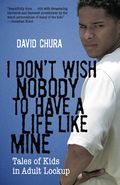
  • David Chura is the author of I Don’t Wish Nobody to Have a Life Like Mine: Tales of Kids in Adult Lockup. He has worked with at-risk teenagers for the past 40 years. For 26 of those years, he taught English and creative writing in community based alternative schools and in a county penitentiary. His writings have appeared in the New York Times as well as other scholarly and literary journals. He blogs at http://kidsinthesystem.wordpress.com/. This post originally appeared on the Juvenile Justice Information Exchange blog.

    SwitchboardIt was like a giant switchboard, the kind you see in 30s and 40s movies, a bevy of operators plugging in a crisscross of wires, taking calls, making connections, a cacophony of chatter.

    That image came to me recently as I walked into the lobby of the MassMutual Center in Springfield, Mass. The only difference was that the conversations filling the hall were about the same thing: girls and young women in the juvenile justice system.

    We were there — teachers, social workers, lawyers, mentors, youth workers, college students and professors — for the Through Her Eyes conference sponsored by the Center for Human Development, a regional social services agency. This annual gathering, now in its seventh year, came about when a number of professionals expressed concern over the increased number of at-risk young females in “the system,” and the need for “best practices” to help this growing population. The Center for Human Development stepped up to address their concerns with the first Through Her Eyes conference in 2004.

    This increase isn’t just a regional issue, however. It is a nationwide trend. According to the Institute on Women & Criminal Justice the number of women in prison has grown 832 percent in the past three decades. (The male population grew 416 percent during the same period.) Of this population African American girls and young women are the fastest growing group. The Department of Justice reports that black females are 2.5 times more likely to be arrested than Hispanics and 4.5 times more likely than whites.

    But numbers don’t tell the whole story. They don’t tell what it’s like to be abandoned by your family, the child welfare system, your school and community, to be physically and sexually abused, to grow up in poverty and neglect, to have your life controlled by drugs, alcohol and sex.

    The conference participants, though, had firsthand experience of what life was like behind the data. They had sat with these young women in emergency rooms and clinics, stood with them before the judge, listened with them as the school principal refused to give a girl one more chance. That day at the MassMutual Center they were there to share what they had seen Through Her Eyes and to learn other ways to help these vulnerable, much neglected and almost invisible young people.

    As a teacher in an adult county prison, I taught high school English on the female unit several days a week. Tell people you teach locked-up girls and you can see all the images they’ve ever heard of or seen in B-grade women-in-prison movies flash across their faces: violent, tough, sadistic, sinister. I’m not sure people believe me when I tell them that none of those stereotypes really fit. Not that my students, some as young as 15, didn’t don one of those masks if they had to. After all, jail is jail and you have to survive. But in the brutal hierarchy of prejudice incarcerated girls and women are on the bottom rung. Society demonizes them as irredeemable while the prison system infantilizes and insults them. (The Warden—a white, middle-aged man — for the female unit where I taught rationed toilet paper and tampons in order to save money.)

    ChuraBut when these girls came to school they were what they most wanted to be — teenagers living a “normal life.” It was a struggle since none had ever had a normal life. Not Heather who after her mother died of AIDS got hooked on crack at 12 years old and took to prostitution to support her habit. Nor Ayesha whose mother refused to name her, leaving the hospital to fill in her birth certificate, “No Name.” As Ayesha was handed down from foster home to group home to detention center she would give herself a different name. “That way I get to feel like a new person each time.” And certainly not Eppy, unless a normal life means being physically and sexually abused first by her brother, then by her uncle, and finally her boyfriend. Until in desperation and self-defense she stabbed the boyfriend with a screwdriver.

    Each of us had stories like that to share during the conference. As the day wound down another image, a phrase really, came to my mind, “Only connect.” It was from E.M. Forster’s 1910 novel, Howards End. “Only connect…and human love will be seen at its height.”

    It was as old fashioned perhaps as that switchboard image, and maybe only an old English teacher like me would think of it. But for me it summed up the focus of the conference day and the purpose of the work so many professionals like us did across the country: to give the girls and young women lost in the juvenile justice system what we all want and need — a connection to a better life and a share of human love at its height.

    Switchboard photo used under Creative Commons, courtesy Seattle Municipal Archives. 

  • Today's post is from Thomas Norman DeWolf, author of Inheriting the Trade: A Northern Family Confronts Its Legacy as the Largest Slave-Trading Dynasty in U.S. History. DeWolf was born in California and educated at the University of Oregon. He is currently at work on a new book, Gather at the Table, with Sharon Morgan. This post originally appeared on his Inheriting the Trade blog.

    The-helpThe movie of the best-selling novel The Help is now available for home viewing on video. (Spoiler alert! Key plot points are divulged through the web links in this post.)

    For anyone who missed it in the theater, I highly recommend you watch The Help. When the book came out in 2009 I read it and loved it… and I was troubled by it… and I reviewed it…

    One reason I recommend The Help is that it tackles very challenging subjects with sincerity and an eye toward justice and truth. Another reason I recommend it is because of… disquieting thoughts [it raised in my mind].

    There has been some serious controversy in connection with The Help. Check out Patricia Turner’s New York Times Op-Ed, "Dangerous White Stereotypes," and "Of Anger and Alternative Endings" in the Jackson Free Press. The author of the latter column (Donna Ladd, a white woman) accurately (in my opinion) points out that…

    The Help just could not have ended as it did. Hilly, or her man, would have called the [White Citizens] Council on Aibileen, Minny and Skeeter. My guess is that Aibileen would have been severely beaten and never hired again in the state; anyone related to Skeeter would have been destroyed economically and at least one cross burned in her mama’s yard; and Minny would have been killed and her house burned.

    Also watch Desiree Cooper’s (a black woman) perspective “Confronting our racial history with ‘The Help’” on PBS:

    I am a post-civil rights black woman whose Southern roots have been nearly erased by world travel and an adulthood spent raising a family in Michigan. I am supposed to be offended by the movie The Help for its simplification of the injustices of the Jim Crow South. But I am not.

    Black and white people have both praised and vilified The Help. One of the most powerful statements comes from the Association of Black Women Historians. The authors list several troubling, false, and stereotypical portrayals in The Help:

    Despite efforts to market the book and the film as a progressive story of triumph over racial injustice, The Help distorts, ignores, and trivializes the experiences of black domestic workers. We are specifically concerned about the representations of black life and the lack of attention given to sexual harassment and civil rights activism.

    I respect the expertise and sincerity of the authors, and I’m troubled by one point they highlight:

    We respect the stellar performances of the African American actresses in this film. Indeed, this statement is in no way a criticism of their talent.

    How can the authors of this statement find it “unacceptable for either this book or this film to strip black women’s lives of historical accuracy for the sake of entertainment” and then praise the performances of the black actors who chose to portray those very characters? If you disagree so strongly with a white woman writing this story and claim that The Help misrepresents both African American speech and culture, wouldn’t it be more consistent to criticize the African American actors who chose to star in the film?

    According to the cover story in Entertainment Weekly (#1167, August 12, 2011), Viola Davis and Octavia Spencer “love the characters of Aibileen and Minny, which makes having to defend them to detractors a strange and uneasy burden.” Spencer says,

    I am thrilled to be playing this woman. She is a human being with the breadth and depth of emotions, and she is a contributing member of society. It should not be ‘Why is Viola Davis playing a maid in 2011?’ I think it should be ‘Viola Davis plays a maid and she gives the f—king performance of her life.’

    I continue to think about The Help and the reasons I loved it and the reasons it troubled me. Jackson, Mississippi was a terribly racist city in the 1960′s when this story takes place. In far too many ways, Jackson (like the rest of our nation) still has such a very long way to go. Racism and hatred are alive and well (note the recent, brutal murder in Jackson of James Anderson). But ultimately I land on the side of those who recommend that people read or watch The Help. Love it or hate it or something in between, The Help, as pointed out by Jamia Wilson in her powerful and balanced article (she points out both positive and negative aspects) for Good Culture, inspires us to think and talk about race. That fact alone–that I continue to ponder the issues it raises (and I suspect anyone who has read the book or watched the film does as well)–is, in my opinion, the most redeeming quality about The Help.

    NOW, one more point. I cannot stress enough how much I hope that people — particularly white people — will seek out other books by black writers on the subject of black domestic workers. The Association of Black Women Historians included a list of ten books at the end of their Open Statement to the Fans of The Help that they recommend. I’d like to highlight one of those books that I recently read; one that is published by my publisher, Beacon Press.

    I loved Like One of the Family by Alice Childress [read an excerpt here]. This novel is a series of vignettes; brief conversations between Mildred, a black domestic worker, and her friend Marge. Childress creates a vivid image of the life of a black working woman in New York in the 1950s. It is funny, sarcastic, outspoken, and rings with truth. Here’s a brief excerpt:

    ‘Mrs. M…, what is the matter, you look so grieved and talk so strange ’til I don’t know what to think?’ She looked at me accusingly and said, ‘I’m afraid to say anything to you, Mildred. It seems that every time I open my mouth something wrong comes out and you have to correct me. It makes me very nervous because the last thing I want to do is hurt your feelings. I mean well, but I guess that isn’t enough. I try to do the right thing and since it keeps coming out wrong I figured I’d just keep quiet. I… I… want to get along but I don’t know how.’

    Marge, in that minute I understood her better and it came to my mind that she was doing her best to make me comfortable and havin’ a doggone hard go of it. After all, everything she’s ever been taught adds up to her being better than me in every way and on her own she had to find out that this was wrong… That’s right, she was tryin’ to treat me very special because she still felt a bit superior but wanted me to know that she admired me just the same.

    ‘Mrs. M…,’ I said, ‘you just treat me like you would anybody else that might be workin’ for you in any kind of job. Don’t be afraid to talk to me because if you say the wrong thing I promise to correct you, and if you want to get along you won’t mind me doing so.’

    This excerpt captures for me some of the challenges with The Help. Katherine Stockett did her best to write a book that would, well, help. It is flawed, as are all books, but it is her story; the story of a time and a place and people written from the perspective of a white woman. Balance The Help with Like One of the Family or one of many books about that time and place. Your knowledge and curiosity will grow. That is a good thing.

    And then talk about race… which is one real value of The Help.

    Photo: Jessica Chastain and Octavia Spencer in 'The Help' (courtesy of Dreamworks)

  • SnowmanOrder any book from beacon.org by December 31st and receive 10% off your order and free standard shipping*. 

    Plus, Beacon Press will donate 20% of total sales to three of its favorite organizations–Harlem Children’s Zone, Interfaith Youth Core, and Food Democracy Now!

    Use Promo Code HOLIDAY11 at checkout.

    *Due to the increased volume of mail shipping during the holiday season, we cannot guarantee orders submitted after December 13 will arrive by December 24. If you would like to ensure your package arrives by that date, we offer paid shipping options via UPS. A 20% donation from each sale using promo code HOLIDAY10 will be divided between the three organizations: Harlem Children’s Zone, Interfaith Youth Core, and Food Democracy Now.

    Snowman photo by chad.latta on Flickr. Used by permission.

  • Today marks the 78th anniversary of the end of Prohibition. In honor of this historic date, read about the 21st Amendment in this freebie chapter from The Odd Clauses. Bonus: act out the Granholm v Heald play with your friends and fulfill your dreams of playing Justice Scalia. 

    Listen to Anita Hill talk about Reimagining Equality, and she also dicsusses why men in power continue to think they can get away with sexual harrassment. "We must continue to be vigilant." 

    As part of her series at Grist, Stacy Mitchell looks at Wal-Mart's environmental impact.  

    Hear the Rev. Dr. Martin Luther King, Jr. read the prayer that concluded his "Drum Major Instinct" sermon, included in the new book "Thou, Dear God".

  • Jay Wexler is the author of The Odd Clauses: Understanding the Constitution Through Ten of Its Most Curious Provisions. Wexler is a professor at the Boston University School of Law; prior to teaching he worked as a clerk to Justice Ruth Bader Ginsburg at the U.S. Supreme Court, and then as a lawyer in the Office of Legal Council at the Department of Justice. He has published nearly twenty academic articles, essays, and reviews, as well as nearly three dozen short stories and humor pieces, in places like The Boston Globe, Spy, Mental Floss and McSweeney's. This post originally appeared on his blog.

    WEXLER-OddClausesOne of my favorite constitutional provisions that I talk about in my book The Odd Clauses is the so-called Original Jurisdiction Clause of Article III, which says that “In all cases affecting Ambassadors, other public Ministers and consuls, and those in which a State shall be Party, the supreme Court shall have original jurisdiction.” Usually (by which I mean almost always, maybe 99% of the time), the Supreme Court hears cases under its appellate jurisdiction, which means that it hears a case that has already been heard by lower courts, and its role consists of reviewing the decisions of those courts. But when the Supreme Court exercises its original jurisdiction, it is the first and only court to hear the case. This is very strange, because the Supreme Court is not set up, as is a trial court, to hear evidence and witnesses and make factual determinations and the like; usually all it does is decide pure legal issues.

    Although the Constitution provides for a few different kinds of cases that the Court can hear in its original jurisdiction, Congress has provided by statute that almost all of these kinds of cases can also be heard by the federal trial courts. As a result, even almost all of the cases that would fall under the Court’s original jurisdiction end up being heard in the first instance  by a lower court. As it turns out, then, pretty much the only cases that the Supreme Court ever considers in its original jurisdiction are cases in which one state sues another state (or states). For these state vs. state cases, the Supreme Court is the only court that has the objectivity necessary to provide for a fair hearing to both states. If Nebraska were to sue Iowa, for instance, over where their border should be drawn, where else would it sue? It wouldn’t want to sue in Iowa. And Iowa wouldn’t want it to be able to sue in Nebraska. The framers understood this problem, and so they gave the Supreme Court original jurisdiction over these difficult cases to prevent interstate conflict and even war, which at least at the time of the founding, was by no means an impossibility.

    Every year the Supreme Court hears somewhere between zero and three of these cases; the cases don’t, in other words, make up much of the Court’s docket. The Court has yet to list an original jurisdiction case for this term yet, for instance. Last term the Court decided one case, a water rights dispute between Montana and Wyoming. The most notable thing about the opinions in that case was Justice Scalia’s attempt to rename the people of Wyoming, a stunt that led me to open up a poll asking readers to vote on their preferred moniker for Wyoming citizens. (The winner was “Wyomans.”)

    Most original jurisdiction cases involve some type of border or water rights dispute. Some involve tax issues of some sort of another. A few involve interstate pollution issues, like when Missouri sued Illinois at the turn of the 20th century, claiming that Illinois’ decision to reverse the flow of the Chicago River had spread disease downstream to St. Louis (Missouri lost). The most famous recent original jurisdiction case involved New York and New Jersey arguing over who owns Ellis Island. The Court, much to the dismay of many New Yorkers, held for New Jersey.

    Although the Supreme Court could, if it wished, hold actual trials in these cases, in which presumably the justices would decide as a group on the thousand nitty gritty issues of evidence and whatnot that come up during your average trial, it almost never does this (I think maybe it’s done it three times in its history). Instead it appoints somebody called a “Special Master” to sort through the evidence, hold a trial, and issue a report that makes recommendations about what the Court should do. The Court then reviews those recommendations and decides whether to adopt them. Special Masters are generally chosen from the elite bar. I, for example, am unlikely to be appointed as a Special Master.  :(

    In my book, I explain that I love these State vs. State cases in part because their names (Oklahoma v. Texas, Arizona v. California, etc.) sound like college football games. I also mention that while writing the book I had considered analyzing all these cases and reporting on the win-loss records of all the states, to see which states have fared the best and the worst in these interstate disputes. Also in the book I mention that I did not have time to actually do this because I have a “family” and because my editor was a real stickler with her deadlines, etc. etc.

    I am happy now to announce, however, that over this past summer, my crack team and I (by which I mean my very smart and conscientious research assistant Dave Hatton, working under my haphazard and oft-distracted supervision) completed this important, shall I say pathbreaking research (yes, I shall), by looking at every original jurisdiction state versus state case decided since 1900 (we had to leave some further research to those who follow in my scholarly footsteps) and coming up with the win-loss records of each state. Now, I should make a couple of disclaimers before reporting on the data. For one thing, some of these cases are hard to call, and reasonable minds may differ as to who won and who lost. We simply made the best judgment we could. For another thing, I explicitly told Dave that his other tasks were more important and that he shouldn’t knock himself out analyzing the cases, and that if he missed something or otherwise got sick of trying to get to the bottom of something, he should just make a decision and get on with it because, let’s face it, none of this makes any difference.

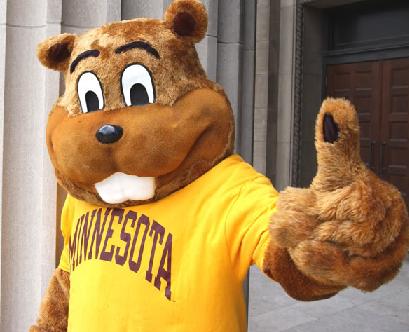
    GoldyAnyway, without any further ado, I present the following two lists–the first is an alphabetical list of all the states with their win-loss records, and the second is a list of all states judged to have participated in five or more cases, in order of their winning percentages. As you’ll see, the big winners here are Minnesota and Michigan. The states that have fared the worst are Tennessee and Louisiana. Here is the first list:

    Alabama 1-2
    Alaska no cases
    Arizona 2-6
    Arkansas 1-5
    California 6-3
    Colorado 8-9
    Connecticut 0-1
    Delaware 3-0
    Florida 1-3
    Georgia 0-1
    Hawaii no cases
    Idaho 2-1
    Illinois 3-6
    Indiana 1-1
    Iowa 2-0
    Kansas 4-4
    Kentucky 2-4
    Louisiana 2-7
    Maine 0-1
    Maryland 2-1
    Massachusetts 3-2
    Michigan 6-1
    Minnesota 5-0
    Mississippi 3-5
    Missouri 2-4
    Montana 1-2
    Nebraska 4-2
    Nevada 3-2
    New Hampshire 1-1
    New Jersey 3-3
    New Mexico 7-3
    New York 7-4
    North Carolina 3-1
    North Dakota 1-1
    Ohio 4-1
    Oklahoma 3-4
    Oregon 1-1
    Pennsylvania 5-3
    Rhode Island 1-0
    South Carolina 1-1
    South Dakota 1-0
    Tennessee 0-5
    Texas 6-8
    Utah 3-0
    Vermont 1-2
    Virginia 4-4
    Washington 1-1
    West Virgina 3-5
    Wisconsin 5-2
    Wyoming 7-5

    And here is the second list:

    Minnesota 5-0 (winning percentage 100%)
    Michigan 6-1 (86%)
    Ohio 4-1 (80%)
    Wisconsin 5-2 (71%)
    New Mexico 7-3 (70%)
    California 6-3 (67%)
    Nebraska 6-3 (67%)
    New York 7-4 (64%)
    Pennsylvania 5-3 (63%)
    Massachusetts 3-2 (60%)
    Nevada 3-2 (60%)
    Wyoming 7-5 (58%)
    Kansas 4-4 (50%)
    New Jersey 3-3 (50%)
    Virginia 4-4 (50%)
    Colorado 8-9 (47%)
    Oklahoma 3-4 (43%)
    Texas 6-8 (43%)
    Mississippi 3-5 (38%)
    Washington 3-5 (38%)
    Illinois 3-6 (33%)
    Kentucky 2-4 (33%)
    Missouri 2-4 (33%)
    Arizona 2-6 (25%)
    Arkansas 1-5 (17%)
    Louisiana 2-7 (22%)
    Tennessee 0-5 (0%)

    There you have it, folks. The first ever, as far as I know, original jurisdiction standings. Of course, there’s a lot more to be done with this data, for those so inclined. Like, maybe breaking up the analysis into how well states do when they are plaintiffs as opposed to defendants, for example. Or devising a board game called State versus State where the goal is to successfully sue as many states as possible to increase your borders, access the most water, and get the most tax revenues. In any event, I’m happy to take questions on how I got these numbers if anyone cares, and I’m definitely happy to adjust the numbers if it turns out I mischaracterized a decision or missed a decision or whatever. Until then, enjoy.

  • MichaelBronskiMichael Bronski was named one of the Out100 by Out Magazine. (Be sure to check out the full spread–some amazing photos!)

    Gender Outlaw Kate Bornstein, whose memoir will be published by Beacon Press in 2012, weighs in on a tricky question at the Never-Safe-For-Work Savage Love. 

    Wondering about the Letters of Marque clause? Jay Wexler talks about the Odd Clauses with New Hampshire Public Radio. 

    Spirituality and Practice gives a great review to See Me Naked by Amy Frykholm. 

    Going viral right now and very relevant to #Occupy: Chuck Collins (Wealth and Our Commonwealth) explains why we need to tax the wealthy.