• Mark Winne is the author of Food Rebels, Guerrilla Gardeners, and Smart-Cookin’ Mamas: Fighting Back in an Age of Industrial Agriculture andClosing the Food Gap: Resetting the Table in the Land of Plenty.
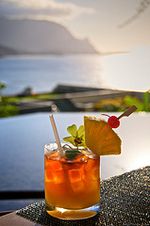
    Maitai The rum-soaked beverage and balmy breeze were starting to erode my leftist resistance to luxury. Let’s face it, sipping a Mai Tai from a beachfront terrace with a million-dollar view of Diamond Head will dull the edge of the most hardened class warrior. But just as I was slouching into vacation mode, I made the mistake of cracking open Sarah Vowell’s Unfamiliar Fishes. With my second cocktail in one hand and her book in the other, I soon discovered the whole sordid tale of how Christian zealotry, political chicanery, and ruthless exploitation dropped the Hawaiian Islands into the laps of America’s 19th century conquistadores.

    Damn, just as I was starting to enjoy this place my social conscience kicks in!

    Motivated – though somewhat reluctantly – to find Hawaii’s contemporary oppressors, I accepted an invitation from Derrick Kiyabu to visit MA’O Organic Farm on Oahu Island’s west side. The drive took me past Honolulu’s cheek-to-jowl ocean view condos and the Pearl Harbor Naval Base before the H1 Freeway deposited me onto Highway 93. This is the approximate place where the sign “Now Leaving Paradise, Welcome to Poverty” would be placed if tourist officials chose to acknowledge such things. But lacking most of what vacationers are looking for from a tropical getaway, the Wai’anae Coast, as it is commonly known, can only offer fast-food joints, scruffy commercial buildings, and residential housing that rival the worst of third-world Asia. I guess this is why the Lonely Planet guidebook refers to the region, almost quaintly, as “a little bit of Appalachia by the sea.”

    My pre-farm tour reached a crescendo when I happened by a homeless encampment cobbled together along a one-mile stretch of state beach. Late model cars – many rusted and in various states of disassembly – jerry-rigged shelters, and a mish mash of makeshift camping and cooking gear presented such a scene of utter destitution that even knuckle-dragging conservatives would advocate for immediate relief.

    As I moved inland a couple of miles, the landscape and impressions changed. Small sections of dry, flat farmland intermingled with vast tracks of military land – securely fenced and sporting giant arrays of submarine-tracking sonar towers capable of detecting a flushing toilet in a Russian sub north of Okinawa. It is here though, amid palm and banana trees, that you’ll find the peaceful acres of MA’O Organic Farms, armed with nothing more dangerous than wholesome organic produce and 40 or so farm interns between the ages of 17 and 24.

    Book cover for Food Rebels, Guerrilla Gardeners and Smart-cookin' mamas by mark winneLike almost all the interns and staff, Derrick is wearing the farm’s “No Panic, Go Organic” t-shirt. Noting some of the underlying principles of the program, he reminds me that “pre-contact” Hawaiians were 100% food self-reliant and that their traditional farming methods were totally organic. In a more pragmatic vein, he also explains the program’s business model: “Organic produce generates the most revenue from our customers such as Whole Foods, numerous natural food stores, CSA members, and Honolulu’s high-end restaurants.” As a self-described social enterprise, the non-profit farm generates 40 percent of its million-dollar-plus annual budget from produce sales. This is how they support the youth development and leadership program that is at the core of the farm’s mission. Promoting food security in the surrounding region is secondary to the need to generate funds for instructional costs, community college tuition, and stipends for the workers.

    Without a doubt, the produce is top-notch. The packing sheds – two retrofitted chicken coops – are filled with interns washing and packing perfect heads of green and white bok choy, glowing red radishes, and gorgeous greens. A big whiteboard lists all the customers and the number of units each will purchase that day. As the young people pack each order in MA’O Farms custom boxes and load them on to the refrigerated delivery truck, the pride is evident in their smiles; after all, they grew it, picked it, and packed it. From the sales revenue, they’ll be paid a monthly stipend by it. Moreover, the produce will help send them to college.

    But MA’O isn’t just another scheme to reconnect kids to land, food, and a little income. According to Kamu Enos, MA’O’s Social Entrepreneur Director, the farm is a training and leadership development program designed to overcome the poverty and social dysfunction that was so evident on my drive in. He tells me that “this region of Oahu has the highest concentration of native Hawaiians on all the Islands. We also have a 20% poverty rate, which is disproportionately higher for Hawaiians. Over 40% of our kids drop out of school and only 10% of our graduating high school class goes to college, and many of those leave during the first year.” Derrick puts the problem more succinctly, “Our public education system has ripped off our kids.”

    When I noted the unusually high number of very heavy people I saw in Wai’anae, Kamu explained that, like other Native American communities, the ravages of Spam, loss of land, and the decline of traditional practices have taken their toll on peoples’ bodies as well as their souls.  In what might be called the second wave of white man’s disease (the first, as Sarah Vowell makes clear, was the 19th century smallpox and measles epidemics brought by missionaries and seamen that reduced the native Hawaiian population from 300,000 to 40,000), the American fast-food diet and the paucity of fresh fruits and vegetables are degrading the community’s health. “The root problem,” said Kamu, “is the disconnect between our land, people, and economy. Instead [of controlling these things], we exist under the predatory practices of the military.” Not only does the Defense Department control most of the land in the region, military recruiters find local Hawaiians easy targets for enlistment because good civilian job opportunities are so few.

    Getting control of land, especially for farming, is a daunting challenge for Hawaiians – there’s not much affordable, arable land that developers don’t already have their mitts on.  But sugar daddies do show up, and they are not always the kind that operated sugar cane plantations. In MA’O Organic Farms’ case, the sweet guy is none other than Pierre Omidyar, founder of E-Bay. He generously dropped a cool million on the program, which, with assistance from the Trust for Public Land, bought the 11 acres that are now the heart of the farm.

    Pua, 21, is a MA’O youth leader and the first member of her family to go to college. She recently received her associate degree from Leeward Community College and is scheduled to start at the University of Hawaii at Manoa in August. She tells me that high school didn’t prepare her for college, but with her mother’s encouragement and MA’O’s help – counseling, remedial instruction, and peer support – she’s climbed some pretty steep personal cliffs and is now ready for bigger challenges. While she’s not likely to pursue farming as a career she credits the farm program with giving her the emotional tools she needed to succeed. “The farm experience is an inspiration. Like college, it’s hard work. The farm grounds you because you have to manage your time, you have to work as a team with others to succeed, and you have to face the consequences of your actions.”

    For other young people like Pua, the path out of poverty starts with a walk down the farm’s vegetable rows. Many start to eat better and lose weight. Kainoa is one youth worker who actually lost 130 pounds by exercising and changing his diet. But what the program cultivates even more than the farm’s well composted soil is the interns’ state of mind. Disempowered, brought up with low expectations, some homeless, they were staring at a future that promised little but a swift descent into diabetes and a life in the unemployment line. Now the steps out of poverty are more visible.

    To grow and sell a half-million dollars of organic fruits and vegetables every year is no small feat. But to raise dozens of young leaders who can challenge the dominance of the condo kings and restore the economic and physical health of their people would no doubt bring a smile to the ancient kings and queens of Hawaii.

    Mai Tai photo by Andy-Beale on Flickr, used under Creative Commons.
  • Thurman
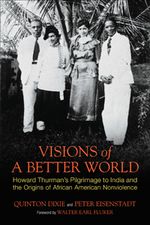
    The first biographical exploration of one of the most important African American religious thinkers of the twentieth century–Howard Thurman–and of the pivotal trip he took to India that ultimately shaped the course of the civil rights movement.

    In 1935, Howard Thurman took a trip to India that would forever change him. He became the first African American to meet with Mahatma Gandhi and found himself called to create a version of American Christianity that was intolerant of self-imposed racial and religious boundaries. Deeply influenced by Gandhi's philosophy and practice of satyagraha, his translation of the idea into a Black Christian context became one of the key tenets of the civil rights movement, influencing an entire generation of black ministers–most notably Martin Luther King, Jr. Visions of a Better World explores this pivotal trip and its effect on the very shape of the civil rights tradition. Drawing from previously untapped archival material and obscurely published works, Quinton Dixie and Peter Eisenstadt outline, for the first time, Thurman's development into the towering theologian who would so profoundly influence the epochal shift in U.S. race relations in the mid-twentieth century.

    Order from Beacon Press | Independent Bookstore | Amazon | Barnes & Noble | Powell's 

    If you can't read the excerpt below, click here to read on Scribd. 

    Introduction, Visions of a Better World

  • Trumpet of conscienceThe Martin Luther King, Jr. memorial in Washington, D.C., officially opened to the public this week. Although the official ceremony scheduled for Sunday has been postponed due to Hurricane Irene, we will continue to honor this historic event, we'll be posting excerpts from books in The King Legacy series on Beacon Broadside every day this week.

    In celebration of the MLK Memorial Dedication, we are also giving away books by Dr. King. Enter for your chance to win hardcover editions of recent titles released by Beacon Press: Stride Toward Freedom: The Montgomery Story, Where Do We Go from Here: Chaos or Community?, Why We Can't Wait, The Trumpet of Conscience, "All Labor Has Dignity," and MLK: In Word and Image. One grand prize winner will receive ALL SIX BOOKS. Five winners will receive one book of their choice. Enter by Sunday, August 28th! For more information and to enter, see the Beacon Press website.

    In November and December 1967, Dr. Martin Luther King, Jr., delivered five lectures for the renowned Massey Lecture Series of the Canadian Broadcasting Corporation. The collection was immediately released as a book under the title Conscience for Change, but after King's assassination in 1968, it was republished as The Trumpet of Conscience. The collection sums up his lasting creed and is his final testament on racism, poverty, and war.

    Each oration in this volume encompasses a distinct theme and speaks prophetically to today's perils, addressing issues of equality, conscience and war, the mobilization of young people, and nonviolence. Collectively, they reveal some of King's most introspective reflections and final impressions of the movement while illustrating how he never lost sight of our shared goals for justice. The book concludes with "A Christmas Sermon on Peace"—a powerful lecture that was broadcast live from Ebenezer Baptist Church on Christmas Eve in 1967. In it King articulates his long-term vision of nonviolence as a path to world peace.

    If you cannot read the excerpt below, click on this link to read it at Scribd.

    The Trumpet of Conscience by Martin Luther King, Jr.

    // <![CDATA[
    // &lt;![CDATA[
    (function() { var scribd = document.createElement(&quot;script&quot;); scribd.type = &quot;text/javascript&quot;; scribd.async = true; scribd.src = &quot;http://www.scribd.com/javascripts/embed_code/inject.js&quot;; var s = document.getElementsByTagName(&quot;script&quot;)[0]; s.parentNode.insertBefore(scribd, s); })();
    // ]]&gt;
    // ]]>

  • Book cover for All Labor Has Dignity by Martin Luther King Jr.The Martin Luther King, Jr. memorial in Washington, D.C., officially opened to the public this week. In honor of this historic event, we'll be posting excerpts from books in The King Legacy series on Beacon Broadside every day this week.

    In celebration of the MLK Memorial Dedication, we are also giving away books by Dr. King. Enter for your chance to win hardcover editions of recent titles released by Beacon Press: Stride Toward Freedom: The Montgomery Story, Where Do We Go from Here: Chaos or Community?, Why We Can't Wait, The Trumpet of Conscience, "All Labor Has Dignity," and MLK: In Word and Image. One grand prize winner will receive ALL SIX BOOKS. Five winners will receive one book of their choice. For more information and to enter, see the Beacon Press website.

    Today's excerpt is from All Labor Has Dignity. People forget that Dr. King was every bit as committed to economic justice as he was to ending racial segregation. He fought throughout his life to connect the labor and civil rights movements, envisioning them as twin pillars for social reform. As we struggle with massive unemployment, a staggering racial wealth gap, and the near collapse of a financial system that puts profits before people, King's prophetic writings and speeches underscore his relevance for today. They help us imagine King anew: as a human rights leader whose commitment to unions and an end to poverty was a crucial part of his civil rights agenda.

    If you can't read the excerpt below, click this link to read it on Scribd.com.


    All Labor Has Dignity by Martin Luther King, Jr., Excerpt

    // <![CDATA[
    (function() { var scribd = document.createElement("script"); scribd.type = "text/javascript"; scribd.async = true; scribd.src = "http://www.scribd.com/javascripts/embed_code/inject.js&quot;; var s = document.getElementsByTagName("script")[0]; s.parentNode.insertBefore(scribd, s); })();
    // ]]>

  • David Chura is the author of I Don’t Wish Nobody to Have a Life Like Mine: Tales of Kids in Adult Lockup. He has worked with at-risk teenagers for the past 40 years. For 26 of those years, he taught English and creative writing in community based alternative schools and in a county penitentiary. His writings have appeared in the New York Times as well as other scholarly and literary journals. He blogs at http://kidsinthesystem.wordpress.com/.

    Prison_cell

    In a six by eight foot jail cell there’s barely room for a bunk, a seatless toilet, and a postage-sized sink. The only other space you have in jail is in your head, and even that gets crowded with all the people you carry around in there who you resent for the things they did to you.

    The world is pretty small when you’re locked up, especially if you’re a kid doing time with a healthy body that needs to move, energy sizzling through you like high tension wires, your emotions threatening to blow the power grid any second as you struggle with those nagging teenage questions, “Who am I?” “Why me?” It doesn’t help that the only answers you get come from walls and bars, gates and guards, and maybe that crowd of unreliable experts in your head.

    Many of my jailhouse students lived that loneliness and isolation hour after hour, day after day, and for some, year after year until it was hard for them not to see the world as anything but confining, and brutally uncaring. It’s a vision that, as hard as they might work against it, too many of them carry throughout life.

    Even though I taught high school in a county penitentiary for over 10 years and experienced in a minor way some of that same isolation and indifference I still know otherwise about the world: That there are people out there who care about real justice, not just for the “done to” but for the “doer” as well; who worry not only about “the system”—child welfare, juvenile and criminal justice—but about the kids, each individual kid, consigned to those systems.

    But it’s hard a sell to young people whose world has taught them otherwise. Sometimes, listening to them talk about their lives, I feel as though they are living an alternative reality. Then again, maybe that is the reality of today’s America.  

    ChuraThis summer I got to talk with various groups about these issues and met some people who could back me up on my view of the world. I just wish my students could’ve met them as well.

    I’d like them to meet the 15 or so law students whom I met who were interning at the New York Center for Juvenile Justice (NYCJJ) in New York City, an organization working to ensure that kids in trouble are treated compassionately and fairly in the justice system. Even the toughest guys that I taught, and I’ve taught quite a few “thugs”—scarred, tattooed, hearts tough as stone (or so they’d like you to think)—would’ve had a hard time not being affected by the interns’ sensitivity to, genuine concern for, and insights into their lives and “the system” that had them (in so ways.) But my students were used to words—judge words, cop words, social worker words, even teacher words, so they would have been impressed by the students plans to establish juvenile justice chapters in their law schools and gotten a kick out of the fast-cut videos they made about laws that treat kids as adults when it comes to crime but not when it comes to voting or drinking or going to the movies.

    And I wonder what they would’ve thought of the group of German juvenile justice professionals visiting the center. In halting English or through the slow process of translation, these professionals shared the same concerns about their criminal justice system that people in this country have about ours: a system that refuses to treat children as children; that refuses to look at the real reasons—poverty, discrimination, failing families, lack of money and resources for youth programs—that young people get drawn into crime.

    At times the conversation in two languages was stumbling and drawn out. However, what translated fluently was the universality of the concern and compassion that is out there for the world’s young throwaways. It was moving to realize that there is a worldwide network of people just like me, just like the student interns and the staff at NYCJJ, just like the many other folks I know—teachers, lawyers, judges, social workers, clergy, parents, and yes, correctional staff—involved in this work. We may not be many but we’re out there, and, if you’re like me, it helps just knowing that.

    Because the work never stops. As concerned as many of us from various nations are about the already bleak treatment young offenders receive, there are in some countries loud demands to make that treatment even harsher and more punishing. Canada for example “is planning to shift toward a jail-intensive approach” when dealing with its juveniles according to Toronto’s The Globe and Mail. And in the wake of Britain’s’ recent riots there are renewed calls for a retaliatory approach to young offenders rather than a rehabilitative one.   

    The global picture can be bleak. Nevertheless, that network of concerned and committed people is still out there. Despite everything, they keep doing what they can for the world’s locked up kids because no matter how much as those kids might bad mouth their country, society, “The Man,” their lives, they don’t give up hope. So, I ask you, how could any of us do otherwise?

    Prison photo by Tim Pearce on Flickr. Used under Creative Commons.

  • "I thought of twenty million black people who dreamed that some day they might be able to cross the Red Sea of injustice and find their way to the promised land of integration and freedom. There was no more room for doubt." Martin Luther King, Jr., Why We Can't Wait

    Book cover for Why We Can't Wait by Martin Luther King Jr.The Martin Luther King, Jr. memorial in Washington, D.C., officially opened to the public this week. In honor of this historic event, we'll be posting excerpts from books in The King Legacy series on Beacon Broadside every day this week.

    In celebration of the MLK Memorial Dedication, we are also giving away books by Dr. King. Enter for your chance to win hardcover editions of recent titles released by Beacon Press: Stride Toward Freedom: The Montgomery Story, Where Do We Go from Here: Chaos or Community?, Why We Can't Wait, The Trumpet of Conscience, "All Labor Has Dignity," and MLK: In Word and Image. One grand prize winner will receive ALL SIX BOOKS. Five winners will receive one book of their choice. For more information and to enter, see the Beacon Press website.

    Today's excerpt is from Why We Can't Wait. Often applauded as Dr. Martin Luther King, Jr.’s most incisive and eloquent book, Why We Can’t Wait is Dr. King's account of the civil rights movement in Birmingham during the spring and summer of 1963. He campaign in vivid detail, while underscoring why 1963 was such a crucial year for the civil rights movement. During this time, Birmingham, Alabama, was perhaps the most racially segregated city in the United States, but the campaign launched by Fred Shuttlesworth, King, and others demonstrated to the world the power of nonviolent direct action. King examines the history of the civil rights struggle and the tasks that future generations must accomplish to bring about full equality. The book also includes the extraordinary “Letter from Birmingham Jail,” which King wrote in April of 1963.

    The excerpt (if you can't read it below, click this link to read on Scribd) describes the events leading up to King's arrest by Bull Connor in Birmingham on Good Friday. 

    Why We Can't Wait by Martin Luther King, Jr., Excerpt

    // <![CDATA[
    (function() { var scribd = document.createElement("script"); scribd.type = "text/javascript"; scribd.async = true; scribd.src = "http://www.scribd.com/javascripts/embed_code/inject.js&quot;; var s = document.getElementsByTagName("script")[0]; s.parentNode.insertBefore(scribd, s); })();
    // ]]>

  • Maria Kefalas (Saint Joseph’s University) and Patrick Carr (Rutgers University-New Brunswick) are husband and wife sociologists who have been working with youth in Philadelphia for over a decade. They are founders of the Philadelphia Youth Solutions Project (www.pysp.org), and Kefalas directs the Richard Johnson Center for Anti-Violence at Saint Joseph’s University. They are the authors of Hollowing Out the Middle: The Rural Brain Drain and What It Means for America.

    This post originally appeared on the Huffington Post. 

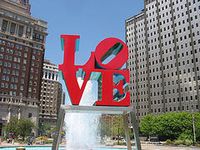
    Philly The fact that Philadelphia is now in the throes of our second experience with violent teen mobs in two years should surprise no one. What we are seeing is the City of Brotherly Love's version of the events taking place in many cities in England: dispossessed, frustrated, bored kids looking for something to do and a way to express their anger. In a city where our pools barely had funds to open and where rec-center camps and summer schools often lack the funds to keep the lights on and air conditioning running, what is amazing is that the mobs didn't happen sooner and weren't bigger and more destructive.

    In Philadelphia, as in Tottenham, Toxteth and Handsworth, we have been here before. The young people who are cast as the folk devils du jour come from the most disadvantaged of backgrounds. Steep budget cuts have pared down education and social services to bare-bones levels. Endemic violence plagues their neighborhoods — in Philadelphia we average a murder a day and over 1,000 non-fatal shootings annually for the past decade. And most tellingly of all, the gap between haves and have-nots has increased inexorably, condemning many to a marginal, socially isolated and powerless existence.

    When a minority of what we call "socially excluded" youth lash out violently, their crimes are met with outrage, revulsion and an almost exclusively punitive response. It is, after all, much easier to reach for the stick than it is to try to explain what is going on. But there is more to young people than flash mobs and riots, which is sadly buried in the race to be toughest on crime.

    Philadelphia Mayor Michael Nutter's response to the "teen mobs" has included extending hours of operation for rec centers, keeping more police on duty, enforcing curfews for minors and, most tellingly, accusing young people involved in the attacks of "damaging your own race." Yet in all the official responses, we have yet to see young people speaking publicly about what is taking place, why so many of them are out on the streets and what from their perspective can be done about it.

    Not long after the December 2009 teen flash mobs and Mayor Nutter's subsequent declaration of a zero-tolerance policy, we founded the Philadelphia Youth Solutions Project.

    The PYSP is a collaboration between young people and adults that was inspired by Harvard University's Dr. Felton Earls. Earls argues that with the guidance and recognition of adults, adolescents can participate as engaged citizens in their communities. Dr. Earls believes young people are uniquely positioned to enrich and improve their world, particularly on the issues of youth violence.

    The goal of the PYSP is to offer a safe space for young people to explain their views and emotions about the danger and violence that consumes so much of their daily lives, to ask questions of themselves and the people charged with running the city they live in, and to have a serious conversation with teachers, parents, city officials, community leaders, state legislators, reporters, politicians and anyone else who wants to know what is going on in their community. The ultimate goal is to move forward on solutions to the epidemic of violence informed by the youth perspective. The founding principle of the PYSP is that young people are the experts offering their advice. Our "delivery system" for cultural change is the Internet. Facebook, YouTube and other forms of social media are just as powerful tools for doing good as harm.

    If anyone asked the young people we work with in the PYSP, they would say that they want to be safe in their neighborhoods and their schools. They feel angry when the see how people care more about violence when the victims are not kids like them, or from neighborhoods like theirs. If they could speak to the mayor and the media, they would remind us that some of the kids committing acts of violence against law-abiding citizens regularly commit acts of violence against their classmates and neighbors, yet there are no reporters or camera crews around when it happens. They would say that the supposed "celebrations" in the wake of the Phillies' World Series victory in 2008 resulted in looting and rioting. But those acts of violence and vandalism were committed by fans who got a little out of control; no one said that they were damaging their own race. They want to know why the Phillies fans were not punished as harshly as the flash-mob teens.

    One of the most interesting things to have come out of the riots in England is the flash mobs who have assembled in the aftermath of the mayhem. Summoned by Facebook and Twitter and armed with brooms instead of bricks, these young people came out to help ravaged store owners clean up and reclaim their property. Maybe young people ought to be part of the conversation if we are not going to be doomed to repeat the mistakes of the past, and just maybe someone should ask them.

    Photo by vic15 on Flickr. Used under Creative Commons.

  • Book cover for Where Do We Go from Here? by Martin Luther King, Jr.The Martin Luther King, Jr. memorial in Washington, D.C.,officially opened to the public this week. In honor of this historic event, we'll be posting excerpts from books in The King Legacy series on Beacon Broadside every day this week.

    In celebration of the MLK Memorial Dedication, we are also giving away books by Dr. King. Enter for your chance to win hardcover editions of recent titles released by Beacon Press: Stride Toward Freedom: The Montgomery Story, Where Do We Go from Here: Chaos or Community?, Why We Can't Wait, The Trumpet of Conscience, "All Labor Has Dignity," and MLK: In Word and Image. One grand prize winner will receive ALL SIX BOOKS. Five winners will receive one book of their choice. For more information and to enter, see the Beacon Press website.

    Today's excerpt is from Where Do We Go from Here: Chaos or Community?, the last book written by Dr, King.

    In 1967, Dr. Martin Luther King, Jr., isolated himself from the demands of the civil rights movement, rented a house in Jamaica with no telephone, and labored over his final manuscript. In this prophetic work, which has been unavailable for more than ten years, he lays out his thoughts, plans, and dreams for America's future, including the need for better jobs, higher wages, decent housing, and quality education. With a universal message of hope that continues to resonate, King demanded an end to global suffering, asserting that humankind-for the first time-has the resources and technology to eradicate poverty.

    Civil rights activist, theologian, and historian Vincent Harding wrote the introduction to the Beacon Press edition of Where Do We Go from Here. You can read it below or on Scribd. (Follow the link if the excerpt does not display properly in your browser or email.)

    Where Do We Go from Here by Martin Luther King, Jr, Excerpt

    // <![CDATA[
    // &lt;![CDATA[
    // &amp;lt;![CDATA[
    (function() { var scribd = document.createElement(&amp;quot;script&amp;quot;); scribd.type = &amp;quot;text/javascript&amp;quot;; scribd.async = true; scribd.src = &amp;quot;http://www.scribd.com/javascripts/embed_code/inject.js&amp;quot;; var s = document.getElementsByTagName(&amp;quot;script&amp;quot;)[0]; s.parentNode.insertBefore(scribd, s); })();
    // ]]&amp;gt;
    // ]]&gt;
    // ]]>

  • Michael Lanza is a freelance photographer and writer. The creator ofTheBigOutside.com, Lanza dedicates his site to sharing personal hiking adventures and offering guidance to fellow wilderness enthusiasts. He is the Northwest Editor of Backpacker magazine, blogs for backpacker.com, and a former editor for AMC Outdoors magazine. Author of previously published hiking guides, Lanza's newest book, Before They're Gone (Beacon Press, spring 2012), examines climate change in national parks through the lens of family hiking excursions. 

    The water of Johns Hopkins Inlet lies flat, perfectly reflecting the first patches of blue sky we’ve seen since arriving in Glacier Bay yesterday morning. I rest my paddle across the kayak and listen. A barely audible moan of wind floats down from high in the mountains, then fades away. A bald eagle screeches, briefly piercing the quiet; but as soon as the sound passes, the silence that returns seems as deep as the sea we’re floating on.

    On the second afternoon of a five-day sea kayaking trip, 55 miles up this Southeast Alaska fjord where cliffs shoot straight up out of the sea and razor peaks smothered in ice and snow rise thousands of feet overhead, I’m taking a moment to enjoy a rare pleasure: listening to the cacophony of nothing.

    My seven-year-old daughter, Alex, who is perfectly content to sit back and let me power our two-person kayak loaded with food and gear, points to the eagle perched in its nest in a snag high up a cliff. “He’s watching the kayakers go by,” she informs me. A harbor seal pops its head above water nearby, inspecting us with dark eyes. Alex faintly catches her breath as she and the seal lock gazes. A moment later, it disappears with a “bloop.”

    Then a sharp concussion rips open the quiet.

    About six miles away, visible at the other end of the inlet, the mile-wide, twelve-mile-long Johns Hopkins Glacier has dropped another immense piece of itself into the sea. The native Tlingits, who have lived on this coast for centuries, call that explosive noise “white thunder,” which strikes me as the best possible descriptor for it.

    The Hopkins Glacier is the most active remnant of an unimaginably massive river of ice that filled this realm of liquid water in the geologically very recent past. Tomorrow, we will paddle up this inlet for a close-up view of that dynamic glacier. We’re hoping this improved weather will hold out at least until then.

    My family, including my wife, Penny, and our nine-year-old son, Nate, are taking a sea kayaking trip run by Alaska Mountain Guides. With our two guides and six other clients, we’ve come to paddle around Glacier Bay’s upper West Arm, probing deep within a national park the size of Connecticut, at the heart of a contiguous protected wilderness area the size of Greece.

    By mid-afternoon, we pull up onto a rocky beach at the mouth of the inlet, where we’ll camp for two nights. The sky has mostly cleared and the water’s still dead calm. Icebergs float in the bay. Glaciers pour off of serrated peaks on all sides; tendrils of clouds wrap themselves around the mountaintops.

    And throughout the evening, every 15 or 20 minutes, another sharp report booms down the inlet.


    Dan Berk paddles beneath the Lamplugh Glacier in Glacier Bay National Park.

    Two centuries ago, there was no Glacier Bay. When British Capt. George Vancouver sailed the H.M.S. Discovery through Southeast Alaska’s Icy Strait in 1794, he wrote in his ship’s log about a “compact sheet of ice as far as the eye can see.” He was looking at a colossus of ancient, frozen water 4,000 feet thick and up to 20 miles wide that reached more than a hundred miles into the St. Elias Mountains. By the time John Muir visited in 1879, the tongue of ice that had touched the waters of Icy Strait had slid 30 miles backward. He wrote that, at night, “the surge from discharging icebergs churned the water into silver fire.” 

    Glacier Bay has seen the fastest glacial retreat on the planet. The ice has pulled back 65 miles, unveiling a fjord with numerous inlets and 1,200 miles of coastline. While the national park still has more than 50 glaciers covering 1,375 square miles—more than a quarter of the entire park—most are in declining health, a trend driven largely by one factor: In the past 60 years, the state’s average temperature has increased 3° F., more than twice the average warming worldwide.

    A scientist who has studied Alaska’s glaciers for 40 years told me that 99 percent of them are shrinking. Just in the four decades since he first kayaked in Glacier Bay, the number of so-called tidewater glaciers, those that extend from the mountains to the sea in various inlets, has gone from a dozen to five.

    Named a national monument in 1925 by President Calvin Coolidge and a national park and preserve in 1980 by President Jimmy Carter, Glacier Bay today attracts more than 250,000 visitors a year. The vast majority of them see the bay from the railing of the park’s tour boat, which is certainly a great experience. But so few people go kayaking in the bay—and it is so vast—that kayakers run into very few other people on multi-day trips here.

    On our first day, we paddled into Reid Inlet and explored the hundred-foot-tall snout of the Reid Glacier, where a river of gray water poured out of a blue-ice cave. After camping at the inlet’s mouth, we started our second morning with a visit to the ruins of a cabin inhabited eight decades ago by Joe and Shirley “Muz” Ibach. The couple staked their claim to mine the land a year before the bay became a national monument, and were permitted to continue living and mining there for another 16 years, making perhaps $13 after expenses in a good year, until their deaths. 

    Frowning at what’s left of their former one-room wood structure in the middle of the wilderness, Alex asked me, “How did they entertain themselves?” Even by the simpler lifestyles of those times, it’s hard to imagine such solitude.

    Then again, there would be that constant soundtrack of white thunder playing in the background.


    Our second campsite in Johns Hopkins Inlet, Glacier Bay National Park.

    Another morning of glassy waters greets us as we push the kayaks out into Johns Hopkins Inlet on our third day. Under clear skies and a warm sun that will deliver our trip’s warmest day, pushing 60º F, we cruise slowly up the inlet, passing icebergs ranging from truck-size to chunks of ice that look like abstract mantelpiece sculptures. 

    Capt. Cook saw these peaks in 1778, during an identical short reprieve from the typically wet, gray Southeast Alaska weather, and named them the Fairweather Mountains. Given that the region receives six feet of rain a year and is much more frequently enveloped in fog than bathed in sunshine, it may be the most misleading place name on the planet.

    We’ve arrived in late July, just a few weeks after Johns Hopkins Inlet was opened to kayaks and boats. The park closes this inlet to human traffic every year during spring and early summer to avoid disturbing the thousands of harbor seals that birth their pups and keep them on floating icebergs to protect them from predators.

    Glacier Bay is something of a northern paradise, teeming with life. Humpback whales and orcas ply its waters. On the four-hour park ferry tour up the bay that first morning, en route to our drop-off point, we saw brown bears ambling down rocky beaches and mountain goats scrambling up sea cliffs. Scores of Steller sea lions, the largest males ten feet long and over 2,000 pounds, piled up on the barren rock of South Marble Island, where researchers have counted 1,100 of them.

    We spotted black-legged kittiwake nesting in sea cliffs, pigeon guillemot with its red legs and beak, and the more-common tufted puffin as well as the rare horned puffin. Some species threatened or endangered outside Alaska, like the bald eagle and marbled murrelet, abound in Glacier Bay.

    The bay also offers a rare natural laboratory displaying a living timeline of plant succession in the wake of deglaciation. In the lower bay, ice-free for 250 years, a mature temperate rainforest of spruce and hemlock grows almost impenetrably thick. As one travels up the bay, the forest gets younger, dominated by deciduous cottonwood, willows, and alder. In the upper bay, there’s little vegetation beyond mosses, lichens, and a few determined wildflowers. Waterfalls plummet hundreds of feet down cliffs scarred by the glacier that scraped past just decades ago. The upper bay opens a window onto what North America looked like when the last Ice Age drew to a close 10,000 years ago.


    Our group paddles up Johns Hopkins Inlet toward the Johns Hopkins Glacier in Glacier Bay.

    As we paddle farther up Johns Hopkins Inlet, the icebergs crowd more densely around us, some as large as tiny islands. We weave more cautiously among them, careful not to get too close, in case one abruptly rolls over. 

    About three hours from our camp, we take out on a beach of sun-warmed, fine black sand a quarter-mile long, littered with blocks of ice gleaming a brilliant white in the sunshine. Gulls are squawking. Backing the beach, multi-tiered Chocolate Falls sends a column of brown water crashing over cliffs. A half-mile away, the Johns Hopkins Glacier spans the entire head of the inlet, a sheer wall of ice a mile across and 300 feet tall, roaring at us at irregular intervals.

    A couple of pairs of binoculars come out and we discover that the bergs across the inlet are covered with hundreds of seals. Some of the seals approach our beach, poking their heads above water to stare at us, then diving under again.

    Earlier today, Arlie and Mike, a young American couple living in Vancouver, B.C., had broached the idea of taking a swim in the bay. The water is right around freezing. When I remind Arlie about her idea, we instantly have a party of swimmers: Arlie, Mike, our assistant guide Dan Berk, who’s in his early twenties, and me. We strip to underwear and, with the video camera rolling—of course—dash down the beach shouting and dive into the waves.

    I’ve jumped into lakes within several degrees of freezing before, but this is the most frigid dip I’ve ever taken. The shock seems to squeeze my chest; my head pulses with a cold ache. All four of us jump up and immediately turn back for shore as the rest of our group on the beach hoots and laughs—Alex and Nate the loudest. For no logical reason, I turn and dive in again, thinking it will be the finale. 

    But back on the warm sand, the four of us shivering, Dan suggests one more plunge. I can’t very well back out. So with our half-frozen legs not working as well this time, we jog over and dive in again. This time, when we come out, I chatter through blue lips, “That’s the last one.” We trot around on the warm black sand for several minutes before getting our core body temperatures back up to normal.

    We were right to presume that this warm sunshine would offer our only enticing opportunity for a swim. Tomorrow will deliver more raw overcast and a few hours of steady rain as we paddle to our final campsite, where the park tour boat will pick us up the following morning. We will paddle tomorrow among a few icebergs and see more waterfalls, seals, bald eagles, numerous other birds, and even a porpoise—while listening to those sporadic rumbles of white thunder.

    [Author’s note: I write more about this trip and Glacier Bay’s climate story in my book, Before They’re Gone: A Family’s Year-Long Quest to Explore America’s Most Endangered National Parks, due out from Beacon Press on April 3, 2012.]
     

    See info on how to plan this trip at thebigoutside.com/Sea_kayaking_Glacier_Bay.html. For more stories and images of outdoor adventures, please visit TheBigOutside.com.

  • Book cover for Stride Toward Freedom by Martin Luther King, Jr.The Martin Luther King, Jr. memorial in Washington, D.C., officially opens to the public today. In honor of this historic event, we’ll be posting excerpts from books in The King Legacy series on Beacon Broadside every day this week.

    Today’s excerpt is from Stride Toward Freedom: The Montgomery Story. According to Dr. King, this memoir is “the chronicle of 50,000 Negroes who took to heart the principles of nonviolence, who learned to fight for their rights with the weapon of love, and who in the process, acquired a new estimate of their own human worth.’’ 

    In Stride Toward Freedom, King delineates racial conditions in Montgomery before, during, and after the bus boycott which lasted from December 15, 1955 until December 21, 1956. He discusses the origin and significance of the boycott, the roles that residents, civic and church leaders, and community organizations played in organizing and sustaining the movement, and the reactions of Montgomery’s white community. An unparalleled historical account, Dr. King also shares the intellectual influences of thinkers like Hegel, Marx, Thoreau, and especially Gandhi. 

    This account of the first successful large-scale application of nonviolent resistance in America is comprehensive, revelatory and intimate. It traces the phenomenal journey of a community, and shows how the twenty-eight year old Dr. King, with his conviction of equality and nonviolence, helped transformed the nation—and the world.

    The excerpt posted here today recounts the events surrounding the arrest of Rosa Parks.  

    Read an excerpt from Stride Toward Freedom by Martin Luther King, Jr., here or on Scribd

    //