• Award-winning educator Linda F. Nathan founded the Boston Arts Academy in 1998. She consults and speaks She consults and speaks on educational issues nationally and internationally, and teaches a graduate course at Harvard on building democratic schools. Nathan is the author of The Hardest Questions Aren't on the Test: Lessons from an Innovative Urban School.

    Book cover for The Hardest Questions Aren't on the Test by Linda NathanEvery year we ask all of our students and faculty to select a book from our Literature Circle book list to read. In the early weeks of September we divide the entire school into book groups to discuss their book of choice. Here are some of my favorites from this year’s list:

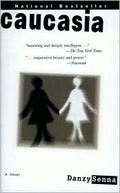
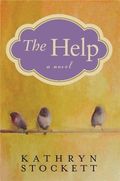
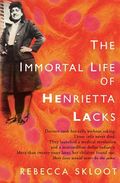
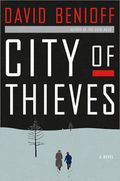
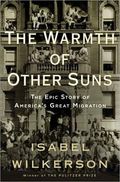
    Edwinge Danicat’s Krik? Krak!, Caucasia by Danzy Senna, The Help by Kathryn Stockett, and The Immortal Life of Henrietta Lacks by Rebecca Skloot. I’m excited to talk about all of these books with my students and colleagues, and I’ll be interested in hearing their reactions. I also read a few other books that I both hope will make next year’s Literature Circle book list and are now on my “recommend to others” list. They are: City of Thieves by David Benioff and The Tiger’s Wife by Téa Obreht, each compelling in its depiction of life during or just after war. I also enjoyed Allegra Goodman’s The Cookbook Collector. But at the top of my list is Isabel Wilkerson’s The Warmth of Other Suns: History of African-American Migration. This is not a feel good book, but it is a page turner. I am still furious at how our nation treated its own “immigrants.” I just saw Gershwin’s Porgy and Bess directed by Diane Paulus, and I’ve been transposing that musical onto Wilkerson’s book and characters. I want to discuss with others how we see and enter into our history, and I want to ensure that my students are exposed to both of these brilliant works.

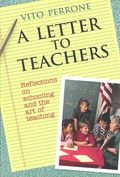
    My mentor and dear friend, Vito Perrone, died this August. I always like to re-read his books before the school year begins. A Letter to Teachers and Teacher with A Heart are books that help me re-energize and re-focus each year. I know that Vito would have liked to have discussed Wilkerson’s book and that he would have pushed me to describe the connections that I saw with Warmth of Other Suns and Porgy and Bess. He would have helped me develop those generative questions to guide difficult discussions. I know he would have come and sat in our literature circles, too. He would have wanted to hear how books captured my students’ imaginations and passions. When I am at my lowest about the state of schools and education policy, Vito would inspire me to “recommit ourselves to a wide-awakeness on behalf of our students, schools, and communities, to a greater understanding that we are about democratic work. Our schools are not yet as good as they should be (Teacher with a Heart, intro p xi).” I hope I can take that wide-awakeness into this new school year. 

    Books mentioned in this post:

    Book cover for Krik? Krak! by Edwidge DanticatCaucasia by Danzy Senna Book cover for The Help by Kathryn StockettBook Cover for The Immortal Life of Henrietta Lacks by Rebecca SklootBook cover for City of Thieves by David BenioffBook cover for the Tiger's Wife by Tea ObrehtThe Cookbook Collector- A Novel by Allegra GoodmanBook cover for The Warmth of Other SunsLetter to Teachers by Vito PerroneTeacher With a Heart by Vito Perrone
  • Joan Murray is a poet, writer, and playwright. She is the editor of The Pushcart Book of Poetry and the anthologies Poems to Live By in Uncertain Times and Poems to Live By in Troubling Times. A repeat guest on NPR's Morning Edition, she is also a National Poetry Series Winner, a National Endowment for the Arts Poetry Fellowship Winner, a Wesleyan New Poets Series Winner, and Winner of Poetry Society of America's Gordon Barber Award.  

    Book Cover for Poems to Live by in Uncertain Times by Joan Murray Four days after the terror attacks I was traveling on an Amtrak train. Like most Americans, I was gripped by sorrow, fear, and uncertainty about the future. I went to the café car for coffee, and noticed a group of men there—they were wearing shorts and jeans, but they were carrying themselves erect, with a sense of mission. It dawned on me they must be firemen. Yes, they were firemen, they told me when I asked them, and they were going to New York “to dig.” They reminded me of the men and women of my parents’ generation: ordinary people who stepped forward to do very difficult things. I told them, “I hope you find some survivors,” and I went back to my seat and wrote “Survivors—Found.” It shot out of me in ballad rhyme—something I’ve never used before or since.

    Because I’d been on NPR’s Morning Edition before, I faxed the poem there, and so, eight days after the attacks, I read “Survivors—Found” on the air, and thousands of people from all over the world contacted NPR for copies. I was invited to read the poem at the official New York State Memorial Observance; at a Fallen Brothers Foundation firefighters fundraiser; and at a stadium unveiling of the 9/11 stamp. Boston-based ABC Affiliate NECN-TV taped me for a 9/11 video using “Survivors—Found” as the voiceover. People seemed to need the poem because it paid tribute to our better natures and gave us something to weigh against the horrors and sorrows of that day.

    I was also approached by publishers who invited me to edit an anthology as a response to the attacks. Since I’d published with Beacon Press before, I knew they’d do something respectful (no flaming towers on the cover!), and so I began assembling an anthology from poems in my own home library—the same poems that I’d been turning to myself in those sad, anxious days. I called the book: Poems To Live By in Uncertain Times. And the whole time I was choosing its poems, my Beacon editor and her assistant were moving mountains to obtain permissions and bring the book forward. The designers, copyeditors and publicists were working at record speed too. I don’t think any of us slept for weeks, but we had the book in hand 11/11/01—exactly two months after the attacks.

    Poems to Live By in Uncertain Times became a Beacon Bestseller—and it continues to sell well today, probably because it’s not a book of 9/11 poems; rather, it’s a book of timeless poems by noted contemporary poets that can guide us through our own difficult times—whatever times we face that require solace or encouragement. I hadn’t wanted to include “Survivors—Found” in the book, but my editor insisted it be there, and I’m very glad she did. “Survivors—Found” has become an anthem for 9/11—and, ten years later, it still reminds us of what we gained in the midst of all that terrible loss. Coming forward with generosity and courage, we discovered ourselves as a nation.

    Hear Joan Murray read "Survivors–Found" on NECN.

    Read "Survivors–Found" on Scribd.

    // <![CDATA[
    // &lt;![CDATA[
    (function() { var scribd = document.createElement(&quot;script&quot;); scribd.type = &quot;text/javascript&quot;; scribd.async = true; scribd.src = &quot;http://www.scribd.com/javascripts/embed_code/inject.js&quot;; var s = document.getElementsByTagName(&quot;script&quot;)[0]; s.parentNode.insertBefore(scribd, s); })();
    // ]]&gt;
    // ]]>

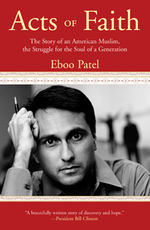
  • Beacon Press authors have been sharing their thoughts on the anniversary of 9/11: memories, commentary, criticisms, and hopes for the future. Today, we share with you a post from Eboo Patel, author of the award-winning book Acts of Faith: The Story of an American Muslim, the Struggle for the Soul of a Generation. After the post, browse our Storify collection of stories on 9/11. 

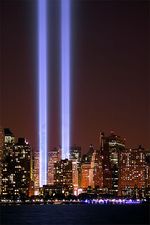
    911_lightsTen years on, I'm remembering the literature I read and the music that kept me going in the days and months after 9/11. I had Rumi and Whitman on my bedside table, reading them back to back, alternating between selections of the "Mathnawi" and poems from "Leaves of Grass", sometimes feeling like the two were one, the soul of America and the soul of Islam intersecting at some point beyond where the eye could see:

    "Whoever you are, motion and reflection are especially for you,The divine ship sails the divine sea for you."– Walt Whitman

    Come, come, whoever you are,Wanderer, worshipper, lover of leaving,Ours is not a caravan of despair.Even if you have broken your vows a thousand timesIt doesn't matterCome, come yet again, come"– Rumi

    Until then, the Quran for me was a book of personal spiritual guidance, a convening symbol for my religious community. But after 9/11, I viewed it as a balm for my country's pain, especially lines from Ayat al-Kursi: "His throne extends over the heavens and the earth, and He feels no fatigue in guarding and preserving them."

    I remember trying to decipher the opening noises of Wilco's "Yankee Hotel Foxtrot," and then having my breath taken away by the understated poetry: "All my lies are always wishes / I know that I would die if I could come back new." In the death of that day, how many wishes went unfulfilled, how many lies went untold, how many resolutions had no chance?

    I remember the lift I felt when I first heard Bruce Springsteen's "The Rising," and the light that broke through when I went to the tour and heard him include in a song a bit that sounded like Arabic prayer. I felt like he was saying to the Muslims in the crowd, "You are a part of the us."

    I remember the stories that summed up the American spirit in that moment. Salman Hamdani, an American Muslim emergency medical tech, hearing about the tragedy and rushing to the site. He perished there with his fellow American first responders. John Tateishi, head of the Japanese American Citizen's League, heard the news on the radio, felt alarm as the whispers that Muslims were to blame grew louder, saw those whispers easily turning into pointed fingers and worse. He cancelled his appointments for the next two weeks and sent a message to his organization's affiliates around the country: we are making partnership with American Muslims our highest priority. One of John's earliest memories was the day he left an internment camp in the mid-1940s. His father had told him: "Never forget this day, John, and never let this country forget it either. It is too good for what it did to us." John was going to make sure that America didn't commit the same egregious crime again with another minority community.

    I visited ground zero a few months after the attacks. It was mid-winter, just past dusk, time for the Maghrib prayer. The lights were glaring at ground zero, the cranes were lifting and placing. There was a big pit in the ground, but that wasn't the main thing going on.

    "What did you see," my wife asked when I returned.

    "We're building," I told her, "we're building."

    http://storify.com/beaconpressbks/beacon-press-authors-on-911.js

    View "Beacon Press Authors on 9/11" on Storify

  • Chris Stedman is the Interfaith and Community Service Fellow for the Humanist Chaplaincy at Harvard University and the Managing Director of State of Formation, a new initiative at the Journal of Inter-Religious Dialogue. Beacon Press will publish his book (F)a(i)theist in 2012.

    IMG_5452_2For the last several years, my work as an interfaith activist has been largely defined by a single question: "Wait — you do interfaith work, and you're an atheist?!"

    That question, posed by religious people (to be fair, I've gotten that question from many atheists, though usually for a different reason-for more on that, check out this recent piece I wrote on atheists and interfaith work), is usually followed by a confession that the individual offering it hasn't met many atheists. I often push back on this a bit, inviting them to think about whether they truly don't know any atheists. Even after further consideration, most cannot think of a single atheist they know personally.

    It isn't much of a surprise that many claim to not know any atheists; surveys demonstrate that atheists constitute an incredibly small percentage of the population. While some 15 percent of Americans report having no religion, only about 2 percent of Americans use labels such as atheist, agnostic, Humanist, and less widely-recognized identifiers like "freethinker," "bright," or "Pastafarian," to describe themselves, suggesting that the majority of nonreligious Americans don't identify as nontheists.

    Because we represent such a small sliver of the American population and are often seen in a negative light, I believe that it is imperative that atheists make themselves known. A 2010 Gallup poll demonstrated something the LGBTQ community has recognized for some time: people are significantly more inclined to oppose gay marriage if they do not know anyone who is gay. Similarly, a Time Magazine cover story last year featured revealing numbers that speak volumes about the correlation between positive relationships and civic support; per their survey, 46 percent of Americans think Islam is more violent than other faiths and 61 percent oppose Park51 (or the "Ground Zero Mosque"), but only 37 percent even know a Muslim American. Another survey released around the same time, by Pew, reported that 55 percent of Americans know "not very much" or "nothing at all" about Islam. The disconnect is clear-when only 37 percent of Americans know a Muslim American, and 55 percent claim to know very little or nothing about Islam, the negative stereotypes about the Muslim community go unchallenged. The same logic can be extended to atheists-the fewer relationships we have with people of faith, the worse our image will be.

    But it isn't enough that religious people know atheists — the quality of the relationships that exist between atheists and the religious makes a significant difference in undoing anti-atheist attitudes. As Robert Wright wrote in the New York Times last year, the LGBTQ community has learned that engaged relationships change people's hearts and minds, and this is a model that can be applied to the issue of anti-atheist bias as well.

    This is one reason I, as an atheist, believe that interfaith work is imperative. Humanizing those with different religious and philosophical worldviews is essential to ensuring that pluralism is upheld for all communities. Engaged diversity breeds the idea that all people's rights must be protected; through positive and productive relationships, we learn that another has value, worth, and the right to dignity.

    Based on my experiences as an atheist and an interfaith activist, I have confidence that building diverse coalitions will alter the negative public perceptions about atheists. I'm working on a book about this, tentatively titled (F)a(i)theist: How One Atheist Learned to Overcome the Religious-Secular Divide, and Why Atheists and the Religious Must Work Together (Beacon Press, 2012), and I've been fortunate enough to speak about it and the work I do at nearly twenty colleges and universities across the U.S. this year. At these speeches, I've met more religious people than I can count who've told me that they'd never considered that atheists might hold similar hopes and aspirations, and that they were going to make an effort to get to know more atheists so that they could better understand a group of people they had previously seen as radically unlike them. I'm daily inspired by the willingness of religious people I meet to challenge their beliefs about atheists, and by atheists I know who are dedicated to building constructive relationships with the religious.

    The other day I had dinner with my grandma, and we got to talking about the work I do. As a progressive Christian, she has long been supportive of my queer and interfaith activism, but she's never seemed to fully understand my atheism. After some discussion, she surprised me by asking directly how I can offer the nontheist students I work with a sense of purpose and hope. I talked to her about my habit of finding a quiet outdoor spot to sit and consider the wonder of the natural world and the joy of making meaning alongside others, and the satisfaction I've gotten from sharing that practice with others. Speaking excitedly, I explained that the community of atheists I work with at The Humanist Chaplaincy at Harvardis a diverse group of people interested in having a positive impact on the world and living lives of fulfillment. Sipping her tea, she smiled and said, "We may not believe the exact same things, but I think I finally get where you're coming from."

    I'm sure I will continue to get questioned about my atheism as I persist in this work, but as I build more and more positive relationships with people of faith, I'm also sure that those questions will lead to increased understanding.

    Engaging in interfaith coalition-building efforts requires a certain level of vulnerability and humility — to be understood, we all must work to understand. To understand our privileges, our pasts, our prejudices, and what we each bring to the table in order to strengthen ourselves as a community and as a country, we must be willing to challenge the beliefs we have about "the other."

    It begins with a relationship. To atheists and religious people alike: Are you willing to put yourselves out there and meet one another in the middle?

    This post originally appeared in the Washington Post On Faith.

  • Book cover for Acts of Faith by Eboo PatelThe Unitarian Universalist Association has selected Acts of Faith: The Story of an American Muslim, the Struggle for the Soul of a Generation as its 2011-12 Unitarian Universalist Association (UUA) Common Read. We hope that the Common Read will bring this book to many new and appreciative readers among our UU friends.

    Of course, you don't need to be a Unitarian Universalist to appreciate Eboo Patel's writing: Reza Aslan said that, "Acts of Faith is more than a book, it is an awakening of the mind. It should be required reading for all Americans." And former president Bill Clinton called it "a beautifully written story of discovery and hope." Since its publication in 2007, this book has been selected as a school-wide read at numerous colleges, and Eboo Patel was selected by Barack Obama for the Advisory Council in his Office of Faith Based and Neighborhood Partnerships.

    Read an excerpt of the book below, read about the Common Read program at UUA.org, and read some of Eboo's past posts here on Beacon Broadside. And read his essay, "Muslims Deepened Their American Roots After 9/11" at CNN.com. 

    If you can't see it below, read this excerpt from Acts of Faith on Scribd.

    // <![CDATA[
    // &lt;![CDATA[
    // &amp;lt;![CDATA[
    (function() { var scribd = document.createElement(&amp;quot;script&amp;quot;); scribd.type = &amp;quot;text/javascript&amp;quot;; scribd.async = true; scribd.src = &amp;quot;http://www.scribd.com/javascripts/embed_code/inject.js&amp;quot;; var s = document.getElementsByTagName(&amp;quot;script&amp;quot;)[0]; s.parentNode.insertBefore(scribd, s); })();
    // ]]&amp;gt;
    // ]]&gt;
    // ]]>

    Watch our Eboo Patel YouTube playlist

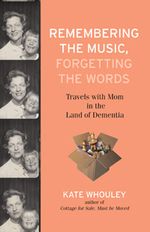
  • Book cover for Remembering the Music, Forgetting the Words by Kate WhouleyIn Remembering the Music, Forgetting the Words, Kate Whouley strips away the romantic veneer of mother-daughter love to bare the toothed and tough reality of caring for a parent who is slowly losing her mind. Yet, this is not a dark or dour look at the demon of Alzheimer’s. Whouley shares the trying, the tender, and the sometimes hilarious moments in meeting the challenge also known as Mom. 

    As her mother, Anne, falls into forgetting, Kate remembers for her. In Anne we meet a strong-minded, accidental feminist with a weakness for unreliable men. The first woman to apply for—and win—a department-head position in her school system, Anne was an innovative educator who poured her passion into her work. House-proud too, she made certain her Hummel figurines were dusted and arranged just so. But as her memory falters, so does her housekeeping. Surrounded by stacks of dirty dishes, piles of laundry, and months of unopened mail, Anne needs Kate’s help—but she doesn’t want to relinquish her hard-won independence any more than she wants to give up smoking.

    Time and time again, Kate must balance Anne’s often nonsensical demands with what she believes are the best decisions for her mother’s comfort and safety. This is familiar territory for anyone who has had to help a loved one in decline, but Kate finds new and different ways to approach her mother and her forgetting. Shuddering under the weight of accumulating bills and her mother’s frustrating, circular arguments, Kate realizes she must push past difficult family history to find compassion, empathy, and good humor.

    When the memories, the names, and then the words begin to fade, it is the music that matters most to Kate’s mother. Holding hands after a concert, a flute case slung over Kate’s shoulder, and a shared joke between them, their relationship is healed—even in the face of a dreaded and deadly diagnosis. “Memory,” Kate Whouley writes, “is overrated.”

    Read an excerpt on Salon.com.

    Read an interview with Kate Whouley at USA Today.

    Read Kate Whouley's essay, "Eating Cake on 9/11" on Obit.

    Watch the book trailer on YouTube.


  • Book cover for Showdown by Thomas G. SmithIn 1961-as America crackled with racial tension-the Washington Redskins stood alone as the only professional football team without a black player on its roster. In fact, during the entire twenty-five-year history of the franchise, no African American had ever played for George Preston Marshall, the Redskins' cantankerous principal owner. With slicked-down white hair and angular facial features, the nattily attired, sixty-four-year-old NFL team owner already had a well-deserved reputation for flamboyance, showmanship, and erratic behavior. And like other Southern-born segregationists, Marshall stood firm against race-mixing. "We'll start signing Negroes," he once boasted, "when the Harlem Globetrotters start signing whites." But that was about to change.

    Opposing Marshall was Interior Secretary Stewart Udall, whose determination that the Redskins-or "Paleskins," as he called them-reflect John F. Kennedy's New Frontier ideals led to one of the most high-profile contests to spill beyond the sports pages. Realizing that racial justice and gridiron success had the potential either to dovetail or take an ugly turn, civil rights advocates and sports fans alike anxiously turned their eyes toward the nation's capital. There was always the possibility that Marshall-one of the NFL's most influential and dominating founding fathers-might defy demands from the Kennedy administration to desegregate his lily-white team. When further pressured to desegregate by the press, Marshall remained defiant, declaring that no one, including the White House, could tell him how to run his business.

    In Showdown: JFK and the Integration of the Washington Redskins, sports historian Thomas G. Smith captures this striking moment, one that held sweeping implications not only for one team's racist policy but also for a sharply segregated city and for the nation as a whole. Part sports history, part civil rights story, this compelling and untold narrative serves as a powerful lens onto racism in sport, illustrating how, in microcosm, the fight to desegregate the Redskins was part of a wider struggle against racial injustice in America.

    Listen to Thomas G. Smith discussing Showdown on NPR's Weekend Edition. 

    Read an excerpt from Showdown here or on Scribd.com

  • Eric Mann was a member of SEIU 250 in San Francisco/Oakland as an operating room orderly. He was a member of UAW Local 560 in Milpitas, California and UAW Local 645 in Van Nuys, California as an auto assembly line worker for ten years. He was the coordinator of the Campaign to Keep GM Van Nuys Open, keeping that plant open for 10 years (1982-1992) after GM threatened to shut it down. He is the Director of the Labor/Community Strategy Center in Los Angeles, a working class center for civil rights and the environment. He is the author of Playbook for Progressives: 16 Qualities of the Successful Organizer, published by Beacon Press.

    MANN-PlaybookForProgressivesIt is Labor Day, a 3 day weekend to honor working men and women in the United States. Too often, however, the day has lost its meaning, and is reduced to baseball games, barbeques, and a great 3 day weekend off from work. Sadly, Labor day in the U.S. was created to separate the U.S. working class from May Day, May 1st, International Workers Day, the more left incarnation of working people’s day. May Day internationally was sparked by the struggles in the United States for the 8 hour day in commemoration of the 1886 Haymarket Massacre in Chicago, when, after an unknown person threw a dynamite bomb at police as they dispersed a public meeting, Chicago police fired on workers during a general strike for the eight hour workday, killing several demonstrators and resulting in the deaths of several police officers, largely from friendly fire. Four anarchists, in a repressive show trial, were framed for a bombing of unknown origins and hung. Thus International Workers Day was born and celebrated all over the world from a workers action in the United States.

    As Wikipedia explains, “In the United States and Canada, however, the official holiday for workers is Labor Day in September. This day was promoted by the Central Labor Union and the Knights of Labor, who organized the first parade in New York City. After the Haymarket Square riot in May, 1886, US President Grover Cleveland feared that commemorating Labor Day on May 1 could become an opportunity to commemorate the riots. Thus he moved in 1887 to support the Labor Day that the Knights supported. To make it worse, in 1958, the U.S. Congress, in the heat of the cold war, renamed May Day “Loyalty Day” to try to separate the U.S. working class from any connection to the far more radical and effective International Workers Day—ironically, originally initiated to support the heroism of U.S. workers.

    The isolation of the U.S. Labor Movement from its more radical roots has hurt it deeply, as management has engaged in a sustained attack on unions since the few decades of “labor peace” in the 1950s and 1960s. Today labor unions, under bi-partisan attack, are fighting for their lives. As we try to re-celebrate Labor Day and support working men and women in the United States, it’s important to understand the positive role of unions in the United States today.

    In Wisconsin, tens of thousands of public sector workers were going to work every day, helping the people in the DMV, hospitals, health care centers, public transportation, teachers, fire fighters, and clerical workers. Then, on February 11, 2011, Republican Governor Scott Walker introduced a bill, with a Republican majority in the legislature, that would virtually eliminate public sector unions as we know them. The bill opposed collective bargaining rights, required annual votes to ask workers if they wanted the unions to represent them, and prevented the unions from collecting dues automatically out of workers' paychecks. The anti-union movement is spreading to Ohio and many other states and we have to develop a plan to beat back the pro-corporate anti-union forces. These Ten Reasons are put forth as a tactic to help the movement for union rights.

    1) Because the relationship between labor and capital, labor and management, is in contradiction: They do not have the same class interests. Otherwise we wouldn't need unions. Unions propose radical ideas such as higher pay, safer working conditions, vacations, medical leave and benefits, and pensions. Employers, especially at this time in history, have gone to war against all of those "benefits" that many workers considered part of their total pay package — negotiated between the unions and management, the unions and local and state governments. In one fell swoop, the Governor of Wisconsin like a petty monarch has declared that unions do not have bargaining rights — their life and blood. All governors and anti-worker politicians are trying to copycat Scott Walker in other states. These attacks on unions and workers are living proof of why unions are so valuable.

    2) Unions support the most progressive causes in the U.S.: Look at every ballot initiative statewide and nationally. Public sector unions in general have supported gay rights, women's reproductive rights, civil rights, and the rights of immigrants to live in peace, moving towards amnesty and citizenship. In many states they have challenged the mass incarceration of Black and Brown youth.

    3) Unions are one of the few organized forces that can challenge the corporations in the political arena: In the 2008 presidential election the corporations outspent the unions by a ratio of 23 to 1. They are never satisfied and moved to expand their power. Under the Supreme Court's Citizens United decision, corporations can now spend unlimited money on electoral campaigns. There may come a time when it costs $3 billion to run for president and $10 million to run for a seat in the House of Representatives, which only one party, the Republicans, will be able to fund. Union funds for progressive initiatives and candidates are essential to our democracy and are under heavy attack. The right to use members' dues for political expenditures is both a democratic right of any union and essential; attacks on this right should be resisted. (How many votes does it take for the Koch brothers to spend their billions?")

    4) Unions encourage women's leadership: The AFL-CIO has elected Arlene Holt Baker as Executive Vice President, the first Black executive officer, and Liz Schuler as Secretary Treasurer alongside new President Rich Trumka. This makes two of the top 3 officers in the federation women. Elizabeth Bunn is the first woman to be Organizing Director and Lynn Rhinehart is the first woman General Counsel. At the national level, Randi Weingarten is the president of the American Association of Teachers and Mary Kay Henry is president of the Service Employees International Union. Maria Elena Durazo is the head of the Los Angeles County Federation of Labor. The rise of women's leadership in top positions is reflected all the way down to the rank and file.

    5) Unions have become a great friend of Latino immigrant labor:I remember that, as late as the 1960s, some unions were unfriendly to immigrant labor and saw immigrants as taking "American" jobs. But the union movement has made a moral and strategic about-face. Unions have become a great friend of immigrant labor, especially Latino labor, with strong representation in Justice for Janitors (SEIU), UNITE-Hotel Employees Restaurant Employees, United Food and Commercial Workers, and Laborers. In virtually every major union, organized labor has welcomed, trained, and integrated Latinos into the rank and file and leadership of the union. Today there are 2.1 million Latinos in the organized labor movement who are also highly organized as voters in swing states. The labor union is becoming an important institution for the integrity and viability of the Latino community.

     6) Unions are a critical component of the Black community: The symbolism of Dr. Martin Luther King Jr. being killed while supporting a sanitation workers' strike is heightened by how he offered a new strategy of a civil rights/labor alliance to address racism, poverty, and war. For almost a century, the public jobs in the North were one of the few places Black men and women could find meaningful work. Today, the right-wing bias against public sector workers and their unions is a thinly veiled attack on Black women and men doing a great job providing essential services in government agencies, from Social Security and Medicare to the public schools. During the 2008 elections, then AFL-CIO secretary treasurer and now president Richard Trumka made an impassioned speech in opposition to racism in the working class and racism directed at Barack Obama. He said that with all its imperfections the labor movement was the most racially integrated institution in the country. Trade unions, churches, and civil rights groups are three invaluable pillars holding the Black community together as it comes under fierce attack.

    7) Unions are one of the few institutional bulwarks against a corporate dictatorship over all of us: How are people organized in society? Into factories and electronics assembly shops and big box stores. They wake up in the morning and, even with strong unions, much of their life is dominated by the company: what time to show up, what time breaks are and if they get one, how fast they work. Without labor unions they live in terror, knowing that at virtually any time a supervisor can come up to them and fire them for any reason and they have little or no recourse. When I went to work in the GM Van Nuys plant in 1981, "old timers" used to tell me that GM wouldn't allow them to get bathroom breaks and they often had to hold it in for two hours while working on an assembly line. Finally, the UAW had won "relief men and women" who could come to your job and let you get out for 5 minutes and get back to the line — a civilizing element of work won by the union. One hundred years ago, women in the Triangle Shirtwaist Factory had to work in a factory with permanently closed doors — and 146 workers were burned or jumped to their death. Today, many workers exposed to toxic chemicals, to dangerous mining jobs, still risk their lives to go to work. Bob Herbert, formerly of the New York Times, said that the astronomical and immoral concentration of wealth is moving the US toward becoming a democracy in name only. Labor unions are among our best hopes for democracy.

    8) Union meetings are rough and tumble but a real exciting place to go: Some local unions are run by a clique but the members have the right to vote them out. Some union meetings are run top down but the workers have the right to yell out their ideas and get the floor. Some local unions — like the one I was in, UAW Local 645 in Van Nuys, California — were hotbeds of political discussion with a great local union president who encouraged discussions of Jobs with Peace, civil rights, immigrant rights, nuclear disarmament, the war in El Salvador, and of course our local contract, conditions in the plant, uses of union money, and future elections. Local union meetings are best for the feisty but the great thing about them is that they are real grassroots democracy. If you haven't yet, you should try it. Democracy gets to be a contagious thing.

    9) Unions are a force for world peace and do not want working people fighting each other when peaceful means of resolving disputes exist: In recent years, the AFL-CIO came out strongly against the war in Iraq, the first time it had ever opposed a war when U.S. troops were on the ground. The AFL-CIO also passed a resolution for the US to withdraw the troops from Afghanistan. At the One Nation March in October, 2010, many union leaders like UAW President Bob King made heart-felt pleas to bring the troops home and to invest in our declining if not dying schools, hospitals, clean industries, and social services — all of which could generate millions of jobs. U.S. Labor Against the War has been doing some very fine organizing. They have 190 affiliates — from entire national unions such as the Communications Workers of America to local labor councils, entire union locals, and local USLAW workers' groups. As organizer Gene Bruskin points out, the anti-war movement today has the highest number of working-class people in the leadership of any anti-war movement going back decades. Its base has a strong working class as well as student and middle-class composition.

    10) Unions are social institutions in the age of alienation: Today people are so damned lonely. Large workplaces are shutting down. People are living on their parents' couch. Families are taking care of ailing relatives (with very little or no help from the government). People try to construct a life with 20 apps on their iPhone but all it does is send them from one lonely place to another. I know friends who have 1,000 "friends" on Facebook, but not one answered a call to come out to a demonstration. Unions provide companionship and camaraderie in the midst of alienation and anomie. It's damn lonely out there and unions offer softball teams, social events, and a fight for better conditions and dignity at work, and provide a sense of community. Whether you're a union member or not, we need millions of people wearing "Support Our Unions" T-shirts to unite the organized, unorganized, and union supporters and wearing them to rallies at statehouses and workplaces throughout the country. The fight to preserve and expand labor unions is s a battle that no one can afford to sit out — the stakes are so high for all of us.

  • Amie Klempnauer Miller is the author of She Looks Just Like You: A Memoir of (Nonbiological Lesbian) Motherhood. She is a frequent speaker about gay and lesbian families, and her writing has appeared on Salon, inBrain, Child and Greater Good magazines, and elsewhere. Miller works as a development consultant to the public media industry and lives with her partner and daughter in St. Paul, Minnesota.

    MILLER-SheLooksJustLikeYouCongresswoman Michele “I’m really from Iowa” Bachmann has spent some time lately wondering whether same-sex couples with children can be considered family. Apparently they cannot, in her world. Mrs. Bachmann has hardly been a friend of the LGBT community in the past. But since she wants to become President, there are some things she should know about the people she proposes to lead:

    • Approximately two-thirds of Americans do see same-sex couples with children as families, according to 2010 research from Indiana University.
    • Based on 2010 U.S. Census data, there are more than 901,000 same-sex couples in the U.S., 25% of whom are raising children.
    • Same-sex couples with children live in large cities, suburbs and small towns all across the country.  The fact that there are 13,360 families with same-sex parents in New York may not seem surprising.  But the Census also reports:  6,290 families with same-sex parents in North Carolina; 2,585 in Oklahoma; 4,550 in Arizona and 2,372 right here in Minnesota, the state she represents.
    • And here’s one for Mrs. Bachmann to chew on: support for same-sex marriage is growing in Iowa – even among Republicans.

    If children will teach you anything, it is that things change. Not that long ago, gay men and lesbians assumed that coming out meant that they would never become parents. Now, young gays and lesbians assume that they can. Not that long ago, same-sex marriage seemed improbable at best. Now, it is legal in six states and Washington, DC. What’s more, 53% of Americans support legalizing same-sex marriage – with support reaching 70% among young adults. Clearly, there are still fiercely divided opinions about same-sex marriage and parenting, but public attitudes are shifting and younger generations are driving the change.

    “So,” I say to my daughter, “some people think we’re not a family because we don’t have a mom and a dad.”

    “That’s stupid,” she says.

    “What is it about us that makes you know we’re a family?” I ask.

    She shrugs and looks at me like I’m a bit dim. “It makes me feel good. I feel cozy and safe. I don’t know. We just are.”

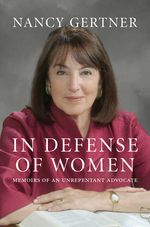
  • GERTNER-InDefenseOfWomenToday marks the first day of the Honorable Judge Nancy Gertner's retirement from the United States District Court, where she has served since her nomination to the bench by President Clinton in 1994. Don't worry–she's not going to take up quilting or zip off to a deck chair in Boca: the illustrious judge has been appointed a Professor of Practice at Harvard Law School, where Dean Martha Minow said upon her appointment:

    "Nancy Gertner's brilliance as a legal advocate did so much to advance civil rights, criminal law, and the rule of law for two decades even before her appointment to the federal bench. As a distinguished federal judge for the past 17 years, she has brought keen intelligence, deep learning, and rigorous investigation of facts and law while also serving as an inspiring teacher and scholar. She has shared her searching questions, rich experiences, and uncanny ability to bridge theory and practice with students at Harvard Law School and elsewhere, and I could not be more delighted that she will now join our community as a Professor of Practice." (link)

    She ended her tenure with a several noteworthy decisions. We wish Judge Professor Gertner well in her new academic digs, and can't wait to read her next memoir. 

    In honor of her retirement, here are some videos of her talking about her legal career, including her first case as a lawyer and how she became a judge.