• Jay Wexler is the author of The Odd Clauses: Understanding the Constitution Through Ten of Its Most Curious Provisions. Wexler is a professor at the Boston University School of Law; prior to teaching he worked as a clerk to Justice Ruth Bader Ginsburg at the U.S. Supreme Court, and then as a lawyer in the Office of Legal Council at the Department of Justice. He has published nearly twenty academic articles, essays, and reviews, as well as nearly three dozen short stories and humor pieces, in places like The Boston Globe, Spy, Mental Floss and McSweeney's. This post originally appeared on his blog.

    [Editor's note: SPOILER ALERT! In the post that follows, renowned legal Scholar Jay Wexler reveals important plot points from Disney Pixar's Cars 2. Because we care deeply about your enjoyment of family-friendly entertainment, if you have not yet seen this movie consider yourself warned and do not read any further, but do go out and pre-order your copy of The Odd Clauses.]

    Hi there. If you have kids and are interested in obscure aspects of the Constitution, then perhaps you are wondering whether it was constitutional for Mater the goofball tow truck from Cars to be knighted by the Queen of England car at the end of Cars 2, following how Mater saved the world and everything. Doesn’t the Constitution say something about titles of nobility, and doesn’t that maybe prevent US citizens from becoming knights and dukes and what have you?

    First of all, of course, it might not be the case that the U.S. Constitution governs these cars. How the hell do I know what legal system these automobiles live under? In the first movie, Doc Hudson presided over a court that sentenced Lightning McQueen to fix the road that he ruined when he fell out of Mac and lost control on his way into Radiator Springs. Then again, Doc Hudson also presided over what seemed to be something of a prostate exam on the police car, so who knows what’s going on? It does seem, however, that there is law in Cars land, and Cars does seem to be set in a world that looks almost exactly like our own, only that there are no people and only cars. I think it’s a fair assumption that the Constitution applies. I suppose we could get into the question of whether to assume that if the world of Cars is governed by the Constitution, the founding car fathers also substituted the word “cars” for “persons” whenever that would have been appropriate. What good would a Constitution that refers to “persons” be in a world where there are no persons, right? In any event, I think I’ll just let you stew over that one yourself.

    WEXLER-OddClauses Assuming that the U.S. Constitution applies to these cars, however, it would still have been okay for the Queen car to knight Mater, because although the Constitution prohibits active “officers” of the United States from generally accepting titles of nobility, and although it also prohibits the U.S. federal government or any of the states from granting titles of nobility, it does not prohibit a regular old citizen from accepting a foreign title of nobility. That’s why it has always been okay for various non government officials like Jerry Lewis and Bob Hope to accept foreign titles and lordships and legions of honor and what have you. It doesn’t, of course, explain why French people think Jerry Lewis is funny, but at least he didn’t violate the Constitution. And neither did Mater. Phew.

    For more about the Titles of Nobility Clauses, I hope you’ll check out my book when it comes out in the fall, because there’s a whole chapter in there about them.

  • Laurie Essig teaches at Middlebury College and is the author of American Plastic: Boob Jobs, Credit Cards and Our Quest for Perfection. Essig writes for the Chronicle of Higher Education's Brainstorm Blog, where this post originally appeared.

    Tea_partyYesterday people started sending me emails about how Andrew (Anders) Breivik, the Oslo mass murderer, had specifically targeted left-wing journalists and professors as well as feminists in his 1,000 page manifesto, 2083, A European Declaration of Independence.

    Let me be clear. The real motivation behind Breivik’s attack was racism and xenophobia, pure and simple. But he saw the problem as not the Other coming to Europe, but Europeans letting the Other in. In particular, Breivik blamed “cultural marxism” and “feminism” for diminishing the ability of Europeans to create strong nationalist movements and strong men that would keep the Other out of Europe in the first place.

    Galleycat ran a piece about how Breivik singled out left-wing cultural elites. As Breivik wrote

    The thing is that many of our political and cultural elites, including politicians, NGO leaders, university professors/lecturers, writers, journalists and editors – the individuals making up the majority of the so called category A and B traitors, knows exactly what they are doing. They know that they are contributing to a process of indirect cultural and demographical genocide and they need to be held accountable for their actions.

    And as Mona Willis Aronowitz, the daughter of feminist Ellen Willis (and Marxian scholar Stanley Aronowitz) was shocked to find out, Breivik targeted her mother by name. Willis Aronowitz wrote over at Good that Breivik was motivated by a real misogyny that played out as anti-feminism.

    Breivik mentions (my mother) in the same breath as Simone de Beauvoir (go Mama!) and blames them for the “skyrocketing divorce rates” and “plummeting birth rates” that created a “cultural and demographic vacuum” in the West. According to Breivik, this vacuum led directly to the Islamic takeover he cited as justification for Friday’s bombing and shooting spree.

    After reading more about Breivik’s thinking,  it started to sound depressingly familiar and so I started to read the damn thing. Yes, you can read it online.  And there is much to find disturbing. First and foremost, Breivik is clearly not alone. In fact, he mentions distributing the manifesto to his 7,000 Facebook friends and their friends. Second, Breivik is not stupid. The manifesto is logical (to the point of psychosis), practical, offers all sorts of useful advice on how to carry out the revolution throughout Europe, and extremely well-written despite English being Breivik’s second language. And third, as I suspected, there is absolutely nothing unusual about Breivik’s thinking because it is exactly like the far-right thinking in this country.

    The thinking goes like this: they are at war because their white and male privilege are being dismantled by a host of demons from Marxists and socialists to feminists and queers. They must join together with other white men and make war—literally, with lots of weapons—against these groups or see their world destroyed.

    It is the exact same thinking that links the “Mexican threat” to the “socialist government of Obama” to the “Muslim threat” to “castrating feminist bitches”  to the “Ivory Tower” to “left-wing journalists.”

    In fact, what I read of the Manifesto  sounds a lot like the far-right hate mail and, at times, death threats that arrive in my inbox on a regular basis. How often have I received notice that “after the revolution you will be shot first” because I am a “traitor”? Enough times that I mostly ignore these threats.  In other words, Breivik’s philosophy is a lot like what many (white and male) people seem to be thinking here.

    The only real questions that remain are:

    Why do these men have such easy access to weapons?

    Will our national security forces, so obsessed with looking for terrorism from without, begin to realize that some of the red-blooded American (or Norwegian) men who love God, country, and tradition so much that they are willing to threaten to kill all who disagree are in fact armed and dangerous?

  • Mark Winne is the author of Food Rebels, Guerrilla Gardeners, and Smart-Cookin’ Mamas: Fighting Back in an Age of Industrial Agriculture and Closing the Food Gap: Resetting the Table in the Land of Plenty.

    Ballard_food_bankDan and Isabelle sit patiently on the folding metal chairs in the tastefully decorated waiting room of Seattle’s Ballard Food Bank. Intelligent, soft-spoken, and in his late 50s, Dan is a chronically underemployed architectural draftsman who barely managed to eke out three days of temporary work over the past week. His unemployment benefits have long since evaporated and he’s thinking about applying for food stamps, although he cringes as the words leave his mouth. With his shrunken income dedicated to keeping a roof over his head, he and Isabelle are two among 1,200 or so neighborhood residents who will request a shopping cart-full of food this week at the food bank.

    Peggy Bailey, Ballard’s Operation Manager, is one of those dedicated, unflappable souls whose work holds the lives of others together as the larger universe spins out of control. Her recitation of statistics is the “growth” story that you’ll hear from any of the 60,000 emergency food sites across America. “In 2001 we were serving about 350 people per week; four years ago it was 450; now we’re serving between 1,100 and 1,200.” Peggy escorts me past tattooed skateboarders, young women clutching babies, and unshaven men for whom a good night is a dry patch of grass underneath a bridge.

    Like all the 25 volunteers (out of a total of 100) on hand this day – good neighbors who keep the flow of people safe and dignified – Peggy beams with pride over the food, large walk-in refrigerators, and the recently retrofitted 6,200-square-foot machine shop that’s been their new home for only a year (after relocating from their cramped, dilapidated home of nearly 40 years). Almost half of the available food is produce, some of which comes from nearby Pea Patch community gardens and local fruit tree gleaners. An abundant supply of artisan bread, fresh dairy products, and even enough frozen meat to give each person two packages, fill the shelves. Not only can you select from a rather remarkable range of products: e.g. microwaveable entrees that retail for $9.00 at Trader Joes, there’s also a “no-cook” section that, in an average month, serves 350 people without kitchens. In addition, nearly 100 bags are assembled and delivered weekly to shut-ins and people with special dietary needs.

    Unlike food banks in days of yore, Ballard does more than give away food. If you don’t have a permanent address, they’ll act as your personal post office box, a service currently used by 480 people. Case workers from the Department of Social and Health Services try to connect food bank users with SNAP (food stamps) as well as medical and dental services. Need help paying your rent or electrical bill? You can apply for a $300 voucher for the former and $200 voucher for the latter.

    When I asked Peggy how she keeps up with the demand for food, she told me, almost blithely, that enough food was not a problem. In a comment that would make her the envy of every food bank worker in America, she said, “We’ve never had to turn anyone away due to lack of food. This is a very generous community. We have Whole Foods, Trader Joes, Safeway and dozens of other food donors.” While supporting five paid staff, three trucks, and a good-size modern facility, the food bank gets 95% of its operating funds from private donations, receiving only $40,000 per year from Seattle city government. One anonymous individual, for instance, gives the Ballard Food Bank $2,000 each month just to buy fresh dairy products.

    In contrast to the generosity of the surrounding neighborhoods, you have the U.S. House of Representatives. If the miracles that these Seattle residents pull off every day make Christ’s feeding of the 5,000 look like a cheap card trick, the House majority’s proposal to slash $3 billion from SNAP, WIC, and TEFAP makes Scrooge look like a Salvation Army volunteer. At a time when the nation’s economy is still on life support and when a record 43 million Americans are receiving food stamps, the House Republicans want to hack the safety net with a machete while leaving the silver cutlery of hedge fund operators untarnished. Take from the poor, but don’t touch a dime of the rich.

    Ballard is a human-scale urban environment whose sloping landscape gently lowers you to the shores of the Puget Sound. On street corners, food bank volunteers greet the homeless people by name, who, in turn, respond in a friendly manner, pleased that there are people who don’t avert their eyes. Stroll a few blocks north of Market Street, and you’ll come to a lovely park where grassy slopes and park benches are populated by homeless men catching a ray or two of Seattle’s stingy sunlight. In the opposite corner is a small skateboard tunnel where young dudes, hat brims cocked at precise angles, practice their chutes and curls. Between the skaters and the homeless are several fountains that spray giggling toddlers cheered on by happy moms.

    WINNE_FoodRebelsThe park reflects Ballard’s values: there’s room for everybody, diversity is encouraged, and the community does its darnedest to meet everyone’s needs. But, beneath this cloak of tolerance, there is a creeping sense that there may be limits to what any group of caring people can do. Perhaps it’s symbolized by the police cruiser stationed just across the street from the “homeless end” of the park. Maybe you hear it in the voices of the young men at the food pantry who were too ashamed to give me their names, but did say that in spite of a couple of years of college they couldn’t find jobs. “We’re not trained for anything.” Or perhaps you can smell it on the breath of the middle-aged drunken man, who according to Peggy had been “doing so well up until now.”

    If the House Republicans have their way, the Ballard Food Bank’s waiting room could very well become so crowded that the smiling volunteers will be replaced by stern-faced security guards. When I asked John, an 87-year old food bank volunteer of 12 years, what he thought was behind the ever rising number of clients, he said emphatically, “It’s all about the economy. I see how embarrassed people are who are asking for help, but you can either sleep on the street or come to the food bank.” One has to ask if that is the vision that the budget cutting, non-taxing conservative minority have for America. If that is true, and every statement from the Republican leadership seems to suggest that it is, then one has to ask where the rage is at this time in our nation’s history.

    How big must food banks get to contain the ever-swelling legions of un- and underemployed workers? How much food will Ballard’s neighborhood grocers have to donate to ensure that all the young mothers can feed themselves as well as their babies? Is there indeed a tipping point when community compassion can no longer clean up the mess made by mean-spirited politicians who avert their eyes from the growing victims of a failed American dream?

    Evelyn, 87, has been volunteering at the Ballard Food Bank for 15 years, longer than anyone else. She’s a feisty, retired machinist who worked for a Boeing Aircraft subcontractor. Sitting at a table where she was sorting nuts into small plastic bags for the home delivery sacks, Evelyn shared the most commonly expressed reason for volunteering at food banks. “If you’ve been blessed, you have to give back.” Yes, I said, I’d heard that sentiment from many people in the emergency food world, but I wondered if there wasn’t something else. At that point the fiery machinist union member took over from the charitable grandmother. Growing up during the Great Depression on a Minnesota farm, she did not need the reason for rage explained to her. “Things have to change in this country,” she said, eyes narrowing and pronouncing each syllable more distinctly. “The idea of not taxing the rich is ridiculous. We have to stop farm and oil subsidies. We got to get politicians to care about people all the time, not just when they’re trying to get elected.”

    Compassion and “giving back” may not be sustainable when one class of Americans lives under the House Republicans’ Golden Fleece, while bourgeoning flocks live under highway overpasses. So that compassion may live, we must sometimes release the rage.

    Photo from the Ballard Food Bank Facebook page.

  • David Chura is the author of I Don’t Wish Nobody to Have a Life Like Mine: Tales of Kids in Adult Lockup. He has worked with at-risk teenagers for the past 40 years. For 26 of those years, he taught English and creative writing in community based alternative schools and in a county penitentiary. His writings have appeared in the New York Times as well as other scholarly and literary journals. He blogs at http://kidsinthesystem.wordpress.com/.

    ChuraNow that all the high school graduations are over and the backyard barbeques celebrated, I’m finally coming down from the contact high of all that youthful exuberance and optimism.

    It’s easy to get swept up into those good feelings. But now as I move into summer’s quieter months, I can’t help thinking about the high school students I taught in a county penitentiary and what “commencement” meant for them.

    Success never came easily to my students. Why should it? They came from lives wrecked by poverty and discrimination. It tried to wreck their spirit, but it never could, not completely. In that way my students weren’t any different from the kids at our local high schools—like their peers, they believed that life was there for the shaping.  That faith in success, though, didn’t always translate onto the streets. So they got caught up in crime, got arrested, did their time.

    When that time was served, their “commencement” was being released from jail. The “graduation ceremony” wasn’t much: Down to booking to sign papers, their clothes stuffed into black garbage bags. Then the booking officer handed the “graduate” bus money and delivered the keynote address, “Stay out of jail.”

    And that’s exactly what they intended to do. My jailhouse students talked a lot about “starting over again,” and I believed each of them. Because while they were locked up, most worked to change things for the better. They studied for their diploma or GED. They worked at staying clean and sober. They grappled with the rage of disappointment that tore at their guts through anger management programs. If there was a thread of family life left, they reconnected with it.

    When they hit the streets, they were determined to shake the dust—and smell—of prison off them forever. But the only thing that had changed while they were locked up was them, not the streets. There was nothing out there for them, no services, no resources, no one. The only things waiting were the same predator-prey food chain, the same joblessness, and the same lure of the streets with easy money.

    I knew the litany these young people heard from corrections and probation officers: Get a job. Go to school. Stay away from your buddies (the only people who even remembered your name). Stay away from your girlfriend (the only one glad to see you). Stay in the house. Start over. Stay out of trouble. And I’ve watched more than one kid’s face fall when he was told that he had to find someplace else to live. He couldn’t live with his mother because his probation didn’t allow him to associate with anyone with a record, and since his brother, or uncle, or cousin was already there he needed to find another home.

    It’s not hard to guess what all those demands sound like to a 16 year old fresh out of prison: Stop being the only person you recognize. Stop living your life.

    I often tell people that the changes we demand of young ex-offenders are things most of us, even with all our assets, would find daunting. The isolation. The loneliness. The helpless rage of unreasonable expectations. Yet these kids are told to make those changes with no one to help or guide them.

    It happens, though, if rarely—some kid takes the plunge into all that fear and dynamites his life apart.

    Alex was one of those kids. The judge made it clear. This time no probation. Instead a full county bid. Next arrest, a long stretch in state prison. Even at 17 Alex knew that going back to the same neighborhood, the same friends and enemies would seal his fate. “I might as well stay here and wait for the next bus to state prison,” he tried to laugh it off but couldn’t.

    I can’t tell you what happened, but something did. Everybody had given up on him, with good reason or not, but somehow he hadn’t. Alex had a cousin in California that he never met but who said he could come live with him. So at his “graduation” he hopped a cross country bus. However, there was nothing quixotic about his move. Alex had never been out of his own town except to go to various jails and detention centers. He knew he had to do it. It was a terrible struggle at first. The dirt jobs. The loneliness. The disorientation. The fears of failure. Eventually, though, the jobs got better and he signed up for college. Last I heard Alex was close to a real commencement.

    Watching that final moment of triumph when our local high school graduates flung their caps into the air I imagined all the hands—of family, teachers, coaches, clergy, counselors—that over the years had made that moment possible.  Young ex-offenders at their “commencement” haven’t had, and don’t have that same net of hands. And yet, there are plenty of hands in each of their communities to help, if they only would. That way kids like Alex wouldn’t have to go 3,000 miles for a chance at a new beginning.

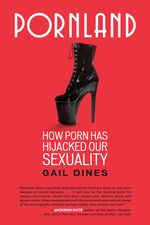
  • DINES-Pornland-PB Gail Dines doesn't pull any punches in this piece for Counterpunch about Dominique Strauss-Kahn and the hotel maid who accused him of raping her: 

    I have a great idea for a movie. Here’s the pitch: A poor, slutty immigrant takes a job as a chambermaid so she can have great sex with the hotel guests. One day she hits the jackpot. She walks into a room only to be met by an irresistible stud old enough to be her father. Known in his home country as “The Seducer” he offers her a full view of his impressive manhood.

    Overcome with lust, she falls to her knees and the two have great consensual sex. But being a woman and all, she is a lying, scheming whore and accuses the seducer of rape.  The poor seducer becomes one more victim of “sex offender hysteria,” as one caller to National Public Radio named it, and now he must defend his good name.

    Read the rest at Counterpunch. And read an excerpt from Pornland on Scribd.

    An excerpt from Pornland–"Racy Sex, Sexy Racism: Porn from the Dark Side"

    // <![CDATA[
    (function() { var scribd = document.createElement("script"); scribd.type = "text/javascript"; scribd.async = true; scribd.src = "http://www.scribd.com/javascripts/embed_code/inject.js&quot;; var s = document.getElementsByTagName("script")[0]; s.parentNode.insertBefore(scribd, s); })();
    // ]]>

  • Today’s post is from David Gessner, author of Soaring With Fidel and The Prophet of Dry Hill. The following is adapted from his new book, My Green Manifesto: Down the Charles River in Search of a New Environmentalism, which was just published by Milkweed Editions. This post originally appeared on his blog. 

    Mygreenmanifesto My new book is about many things, including the need to fight for a limited wildness, but it is also, to a lesser extent, about language. I’ve always wondered why our words grow soft and mushy when we begin to talk about nature. Perhaps I am too persnickety, too preoccupied with the language that we use to describe the natural world, but I am in the minority that believes we should watch our words, that false language both reflects and encourages false thinking, that our lives depend on our sentences. I feel particularly strongly that “being in nature” should not be described as some precious or highfalutin’ experience. After all, didn’t we as a species evolve, along with our words, while spending a million years or so living in the midst of the natural world? And wasn’t our relationship with that world, among other things, quite practical and direct? “Nature” is where the living roots of our language evolved, which suggests that that language should still be able to circle back and describe the place from whence we came without fencing it behind some quasi-mysterious mumbo-jumbo.

    So many people who speak for the wild world seem to feel the need to speak in the voice of the mystic, with a hushed, voice-over reverence. We affect this high priest tone, and everyone else is expected to get down on their knees and listen to the whispered wisdom of the shaman. At times like those there’s very little indication that any of us have the quality that many humans find most important for living on earth: a sense of humor. You’d never guess that any of us ever laughed or farted. (Which, it needs to be made clear, is different than translating Native American Myths about trickster coyotes who laugh and fart.)

    I cringe when my language grows too flaccid on the one hand–oh, Great Blue Heron, help my soul and keep all sweetness and light–or, on the other, too rigid and devoid of feeling–Great Blue Heron, or Ardea herodias, is a member of the Heron (snore). . . .

    Lately, I’ve been invited to give a lot of talks and when I speak people sit listening, rapt, or at least putting on rapt faces. I suppose if I really wanted to make it big I would start spreading the word of doom and intoning the phrase “global warming” over and over, hitting my audiences with it like a big stick. But I’ve got other ideas, however, impure little ideas that get in the way. For instance, sometimes I think that, from an artistic point of view, the end of the world might be kind of interesting, at least more interesting than all the dull predictions about it. Another troubling notion is that I’m not really sure I want to be this thing called an environmentalist.

    I’m not trying to be glib here–I don’t think it’s unimportant to fight for environmental causes. It’s just that I would like to put forth a sloppier form of environmentalism, a simultaneously more human and wild form, a more commonsense form and, hopefully, in the end, a more effective form. Because the old, guilt-ridden, mystical enviro-speak just isn’t cutting it. Maybe the musty way of talking about nature needs to be thrown over a clothesline and beaten with a broom. That’s what I’ve been trying to say at these talks I’ve been giving. My role, to put it more clearly, is to try to pull the pole out of the collective environmental ass. It isn’t easy work. For a costume I wear a Hawaiian shirt and to get into character I drink a few beers. Throughout my talks I make jokes about how earnest everyone is and the audience usually laughs along semi-masochistically. Sometimes I get carried away. I start feeling megalomaniacal and believe I am the bringer of a new language. I imagine myself to be Bob Dylan at Newport, playing electric guitar among the folkies, trying (futilely) to get them to yell out “Judas.”

    This last metaphor was confirmed by one of the door prizes I was given recently, a CD tribute to Rachel Carson’s work, after a talk at a conference in Boothbay Harbor, Maine, to celebrate Carson’s life and work. On the way home I listened to a song on the CD about the demise of the osprey from DDT, and then another on the birds’ remarkable comeback, a subject I wrote a book about. It is fair to say that Carson is one of my greatest heroes but the music that came warbling out of my speakers seemed to be sung by a caricature of a late fifties Pete Seeger wannabe, who wailed about the poisons coursing through the ospreys’ bodies with such excruciatingly earnest detail that it almost made me root for the birds’ death. Anything as long as the song ended. This, I found myself thinking, this is part of the problem. Why does nature turn us into this kind of warbler? It makes me long for a new sort of music, a music anyone would listen to; a music that the Dan Driscoll’s of the world could actually work to: a punk osprey tribute sung by, say, the Sex Pistols.

    And maybe, I think now, that’s a good place to start.

    A new music.

  • 0059 Now available in paperback: Nobody Turn Me Around: A People's History of the 1963 March on Washington by Charles Euchner, a dramatic account of the 1963 March on Washington–the demonstration that changed America.

    On August 28, 1963, over a quarter-million people-two-thirds black and one-third white-held the greatest civil rights demonstration ever. In this major reinterpretation of the Great Day-the peak of the movement-Charles Euchner brings back the tension and promise of the march. Building on countless interviews, archives, FBI files, and private recordings, this hour-by-hour account offers intimate glimpses into the lives of those key players and ordinary people who converged on the National Mall to fight for civil rights in the March on Washington.

    Read an excerpt of Nobody Turn Me Around here or on Scribd

    // <![CDATA[
    // &lt;![CDATA[
    // &amp;lt;![CDATA[
    (function() { var scribd = document.createElement(&amp;quot;script&amp;quot;); scribd.type = &amp;quot;text/javascript&amp;quot;; scribd.async = true; scribd.src = &amp;quot;http://www.scribd.com/javascripts/embed_code/inject.js&amp;quot;; var s = document.getElementsByTagName(&amp;quot;script&amp;quot;)[0]; s.parentNode.insertBefore(scribd, s); })();
    // ]]&amp;gt;
    // ]]&gt;
    // ]]>

  • Today's post is from David L. Hudson, Jr., author of Let the Students Speak!: A History of the Fight For Free Expression in American Schools. Hudson is a First Amendment Scholar with the First Amendment Center at Vanderbilt University. He teaches at Vanderbilt University Law School and Nashville School of Law and blogs at the First Amendment Center, where this post originally appeared. 

    4454

    Twenty-five years ago – on July 7, 1986 — the U.S. Supreme Court curtailed the free-speech rights of public school students in Bethel School District No. 403 v. Fraser, ruling that public school officials could punish a student for giving a speech that they considered vulgar and lewd before a school assembly.

    The decision signaled a sea change in First Amendment law, as the Court seemingly created a large exception to its seminal free-speech decision inTinker v. Des Moines Independent Community School District (1969) — known as the black-armband decision. In Tinker, the Court had ruled that public school officials could restrict or punished student speech if they could show evidence that it would cause or had caused a substantial disruption of school activities.

    Under the Tinker “substantial disruption” standard, Matthew Fraser should have won his free-speech battle with school officials at Bethel High School. Instead Fraser inspired the wrath of school officials after he delivered a sex-laced speech nominating a fellow student for elective office at the school assembly of 600 students.

    “I know a man who is firm — he’s firm in his pants, he’s firm in his shirt, his character is firm — but most . . . of all, his belief in you, the students of Bethel, is firm.

    “Jeff Kuhlman is a man who takes his point and pounds it in. If necessary, he’ll take an issue and nail it to the wall. He doesn’t attack things in spurts — he drives hard, pushing and pushing until finally — he succeeds.

    “Jeff is a man who will go to the very end — even the climax, for each and every one of you.

    “So vote for Jeff for A. S. B. vice-president — he’ll never come between you and the best our high school can be.”

    For his brazenness, school officials suspended Fraser for several days for allegedly violating a school no-disruption rule. But his speech did not cause a substantial disruption. Some students giggled and snickered. A teacher took time to discuss the speech in the classroom. The incident did not, however, cause a breakdown of school discipline or other significant problems.

    That is why Matthew Fraser prevailed before a federal district court in Washington and the 9th U.S. Circuit Court of Appeals. His punishment also is the probable reason that fellow students elected Matthew Fraser as a speaker at graduation. Years ago, Matthew Fraser told me in an interview that school officials made a free-speech martyr out of him.

    Although lower court judges voted for Matthew Fraser, the U.S. Supreme Court did not. Chief Justice Warren Burger and the majority of his colleagues saw the legal dispute differently. They said school officials needed more flexibility to establish control over students. In the last opinion he wrote on the Court, Burger emphasized that “[t]he undoubted freedom to advocate unpopular and controversial views in schools and classrooms must be balanced against the society’s countervailing interest in teaching students the boundaries of socially appropriate behavior.”

    “Surely it is a highly appropriate function of public school education to prohibit the use of vulgar and offensive terms in public discourse,” Burger wrote. He created a new standard to handle student speech considered to be vulgar, lewd or plainly offensive.

    Burger took pains to distinguish Fraser’s case from the Tinker precedent, writing there was a “marked distinction” between the political speech symbolized by the black peace armbands and Matthew Fraser’s sexual speech. But Burger conveniently ignored that Matthew Fraser was delivering a speech nominating a student to elective office.

    Two justices — Thurgood Marshall and John Paul Stevens — dissented from the Court’s ruling. Marshall, a consistent defender of free speech, wrote that “the School District failed to demonstrate that respondent’s remarks were indeed disruptive.”

    Stevens began his dissent with the famous Clark Gable line from “Gone With the Wind”: “Frankly, my dear, I don’t give a damn.” He emphasized that Matthew Fraser was denied due process because he was not given fair notice that he could be punished under a disruption rule for a speech that didn’t create a substantial disruption.

    But Chief Justice Burger prevailed 25 years ago today, writing an opinion that gave school officials greater control over student speech within school walls.

  • Today’s post is from Carole Joffe, author of Dispatches from the Abortion Wars: The Costs of Fanaticism to Doctors, Patients, and the Rest of Us. Joffe is a professor in the Bixby Center for Global Reproductive Health at the University of California, San Francisco. She blogs at RHRealityCheck, where this post originally appeared.

    How much I appreciated your gracious letter telling of plans for the Western Regional Conference on Abortion and inviting me to attend.

    Although my upcoming personal and official commitments will not permit me to be with you, I am grateful for this opportunity to convey my warmest greetings to all attending and my hopes for the success of the Conference.

    382px-Betty_Ford,_official_White_House_photo_color,_1974 So wrote Betty Ford, in February 1976, to the organizers of one of the first medical conferences on abortion to take place in the U.S. after the Roe v Wade decision in 1973—a message that would have been inconceivable for any of the Republican First Ladies that followed her. What Betty Ford said publicly about abortion, and what subsequent Republican women in that role could not, speaks both to the spirited and independent character of the former, who died on July 8 at age 93, and to the sea change in American politics that was shortly to come with the rise of the Religious Right and the role of abortion as that movement’s leading wedge issue.

    But even in 1976, a newly emerged Right to Life movement was making clear that presidential candidates would be accountable for their positions on abortion, which had been legalized in 1973 with the Roe v Wade decision. And President Gerald Ford, running for his first election to the office (after taking over from the disgraced Richard Nixon in 1974) was under attack from antiabortion forces for his “waffling” views on the subject, arguing that  Roe v Wade went too far, and  that the abortion issue should be left to individual states. In contrast, his wife at that time publicly reaffirmed her full support of Roe, stating in a television interview  that the decision took the issue “out of the backwoods and put [it] in the hospital where it belongs. “

    JOFFE-DispatchesFromAbortionWarsTo be sure, it was not only on the topic of abortion that Betty Ford was outspoken. Again, in a way that would be unimaginable for later Republican First Ladies, she identified as a feminist, supported the ERA, and spoke frankly about the realities of premarital sex. Of course, not all her views were, in today’s terms, “liberal”—she was a strong supporter of the Vietnam War, for example. And the admiration she drew from the public—the New York Times in its obituary stated she was among the most popular of all First Ladies—transcended conventional politics. It was her candor about her struggle with breast cancer, at a time when the disease was rarely spoken of publicly, and even more courageously, her public acknowledgement of her struggle with alcohol and prescription drug abuse (which led to the founding of the Betty Ford Center for treatment of chemical dependency) that arguably is the main source of such lasting affection from the American people.

    And what of Betty Ford’s Republican successors as First Ladies? Did they speak as freely as she did? On the abortion issue, there is reason to believe that all of the women in question—Nancy Reagan, Barbara Bush, and Laura Bush—were to varying degrees prochoice (as indeed, privately, may have been all their husbands), but all these women felt constrained from speaking frankly. Nancy Reagan’s views are perhaps the most ambiguous, but Lou Cannon, Ronald Reagan’s biographer, has written that while the latter was governor of California, both his wife and father-in-law supported the California Therapeutic Abortion bill signed in 1967. In his memoir the late Donald Regan, Reagan’s chief of staff during his presidency, quoted Nancy Reagan as saying privately to him, “I don’t give a damn about the right to lifers.” The views of Barbara and Laura Bush are much clearer. The latter, in a memoir published after her husband’s presidency stated her support of Roe v Wade.  The former, in the summer of 1992, while her husband was campaigning for reelection, even stated her belief that abortion and homosexuality were “personal choices” that should be left out of politics—though whether this was a case of Barbara Bush acting in a moment of genuine independence, or in a calculated move to draw in support of the rapidly diminishing moderates in the Republican party, remains debatable.

    What is not debatable is that Betty Ford’s tenure as First Lady was the last time in American politics that someone in that role could inspire bi-partisan admiration—even while expressing her own political views. American politics has become so polarized, and the culture wars so fierce, that First Ladies can only be broadly liked if they suppress their own views on controversial matters. Betty Ford’s passing reminds us of what has been lost in our political culture.

    Official White House photo of Betty Ford, 1974.

  • Mark Hyman is a sports journalist with special interests in the business of sports, sports and law and sports for children. He is the author of Until It Hurts: America's Obsession with Youth Sports and How It Harms Our Kids, and is currently writing a book about the business of youth sports. He blogs at youthsportsparents.blogspot.com, where this post originally appeared.

    2066855301_66fe80fdb7_m If your child's pediatrician diagnosed a contagious bug and prescribed medication, what would you do? Same as most parents, no doubt. Get the medicine. Give it to your kid. When a child's health is at stake, we tend to follow doctor's orders.

    In May, the American Academy of Pediatrics issued a widely publicized clinical report regarding kids and sports drinks. The AAP recommended cutting back on such drinks for kid athletes. In so many words, the kids' doctors group found them to be unnecessary at best, and at times even harmful.

    Dr. Holly Benjamin of the AAP Council on Sports Medicine and Fitness noted: “For most children engaging in routine physical activity, plain water is best, Sports drinks contain extra calories that children don’t need, and could contribute to obesity and tooth decay."

    It's been three weeks since the AAP issued that statement. How many of us have heeded this simple advice? Anyone?

    The sport-drink industry isn't exactly urging us to shut the spigot. Gatorade, for one, spends tens of millions each year in sports marketing. According to the Sports Business Journal, the four major sports leagues have deals with Gatorade as do a majority of teams in those leagues. Dozens of star players are paid to pitch the sports drink including Peyton and Eli Manning, Dwayne Wade, Kevin Garnett and Landon Donovan. Seventy-four college programs count Gatorade as a sponsor as do 13 college conferences and 11 bowl games.

    Hyman Oh, and Gatorade is a highly visible sponsor of high school sports. Next spring, check out the ESPN Rise National High School Invitational Presented by Gatorade. I did last March. In a gym in suburban D.C., it was me, about 700 fans and about 700 Gatorade logos.

    Maybe I'm off base and water is about to make a comeback as the kids' thirst quencher of choice. That would please your kid's doctor. It might not make the Manning brothers happy.

    Sports drink photo by toniwbusch on Flickr. Used under Creative Commons.