• Today's post is from Carole Joffe, author of Dispatches from the Abortion Wars: The Costs of Fanaticism to Doctors, Patients, and the Rest of Us. Joffe is a professor in the Bixby Center for Global Reproductive Health at the University of California, San Francisco.

    Joffe Reading the Grand Jury report on Women’s Medical Society in Philadelphia, the now-closed abortion clinic ran by Dr. Kermit Gosnell, is stomach turning. This was truly a chamber of horrors: a filthy facility, with blood stained blankets and furniture, unsterilized instruments, and cat feces left unattended. Most seriously, there was a jaw dropping disregard of both the law and prevailing standards of medical care. Untrained personnel undertook complex medical procedures , such as the administration of anesthesia, and the doctor in question repeatedly performed illegal (post viability) abortions, by a unique and ghastly method of delivering live babies and then severing their spinal cord. Two women have died at this facility and numerous others have been injured. What remains baffling is how long this clinic was allowed to operate, in spite of numerous complaints made over the years to city and state agencies, and numerous malpractice suits against Dr. Gosnell. Indeed, it was only because authorities raided the clinic due to suspicion of lax practices involving prescription drugs that the conditions facing abortion patients came to law enforcement’s attention.

    As information about this clinic spread, many have understandably compared Women’s Medical Society to the notorious “back alley” facilities of the pre-Roe era, when unscrupulous and often unskilled persons (some trained physicians, some not) provided abortions to desperate women, in substandard conditions . This is an apt comparison. But Gosnell’s clinic should not only be understood as a strange throwback to the past. Women’s Medical Society represents to me an extreme version of what I have termed “rogue clinics,” facilities that today prey on women, disproportionately women of color and often immigrants, in low income communities.

    (more…)

  • Michael Lanza is a freelance photographer and writer. The creator of TheBigOutside.com, Lanza dedicates his site to sharing personal hiking adventures and offering guidance to fellow wilderness enthusiasts. He is the Northwest Editor of Backpacker magazine, blogs for backpacker.com, and a former editor for AMC Outdoors magazine. Author of previously published hiking guides, Lanza's newest book, Before They're Gone (Beacon Press, spring 2012), examines climate change in national parks through the lens of family hiking excursions.

    Fat, perfect snowflakes pour down in a silent, frozen torrent from a blank white page of sky, as if the mountains are inside a Christmas snow globe that someone just shook vigorously. Powder lays several feet deep on the ground and smothers the tall ponderosa pines, looking like dozens of clean, white mittens on their boughs. No wind stirs the still air, and it’s not too cold. The quiet could drown out any negative thoughts.

    It’s the kind of day that can make you wish winter lasted all year.

    I ask four of my skiing partners what they think of the storm. My question triggers a blizzard of opinions.

    “It’s pretty snowy.”

    “It’s great!”

    “I’m getting snow in my face. I love it!”

    “I say it’s perfect.”

    They’re strikingly casual about skiing into a snowstorm, but not entirely out of ignorance. They’ve all skied into the backcountry in these conditions before—four years in a row in these same mountains on almost exactly the same dates, in fact. So they’ve come to expect this.

    The four are my son Nate, 10, and daughter Alex, seven, and family friends Lili and Sofi, 10-year-old twins. Also with us on this cross-country ski trail are my wife, Penny, and Lili and Sofi’s parents, Vince and Cat. It’s just after Christmas, and we’re on our way to the Skyline yurt, two miles and several hundred vertical feet uphill from ID 21 in Idaho’s Boise National Forest.

     
    The Banner Ridge yurt in the Boise National Forest, Idaho.

    For anything else, we’d have trouble tearing our kids away from their new Christmas loot. Not for this annual expedition, though. They’ve been talking about it for weeks.

    (more…)

  • Health is much more than not being able to find something wrong. It’s how people feel, it’s a state of mind. And it’s hard to feel good when things are constantly being found wrong with you. But we are moving towards a [notion of] health that means the absence of any abnormalities. That’s not a good definition.– Dr. H. Gilbert Welch, Wall Street Journal Health Blog Q&A

    OverdiagnosedDiagnoses of every condition, from high cholesterol and high blood pressure to osteoporosis, diabetes, and even cancer, have skyrocketed over the last few decades. Yet Americans are living longer than ever. While the medical establishment credits aggressive early disease detection as the cause of improved public heath, it is in fact the reason so many of us are told we are sick. Going against the conventional wisdom that more screening is the best preventive medicine, Dr. H. Gilbert Welch builds a compelling counterargument that what we need is fewer, not more, scans and tests.

    Drawing on twenty-five years of medical practice and research on the effects of screening, Welch explains how the cutoffs for "abnormal" test results have been drastically lowered while at the same time technological advances have enabled doctors to detect more and more "abnormalities," many of which will pose no health complications. Now, with genetic and prenatal screening common practice, patients are increasingly being diagnosed not only with disease but with "pre-disease."

    Examining the social, medical, and economic ramifications of a health care system that unnecessarily diagnoses and treats patients, Welch makes a reasoned call for change that would save us from countless unneeded surgeries, debilitating anxiety, and exorbitant costs.

    Read Dr. H. Gilbert Welch at CNN.com discussing the negative ramifications of a blood test for cancer.

    Overdiagnosed by Dr. H. Gilbert Welch, Dr. Lisa Schwartz, and Dr. Steven Woloshin, Excerpt
    http://d1.scribdassets.com/ScribdViewer.swf

  • Laurie Essig looks at a disturbing trend: Plastic surgery without anesthesia.

    Cosmetic surgery is not well regulated. Any medical doctor can perform it, trained or not. A recent study in California found that 40 percent of those performing liposuction had no training whatsoever before entering the field. So clearly we need more state regulation of cosmetic surgery and commercial medicine generally. But that doesn’t really answer the question of why anyone would submit to what can only be described as torture?

    In the wake of the Tucson shootings, Jonathan Metzl wants to stop the scapegoating of the mentally ill:

    Only in the 1960s and 1970s did we begin to consider schizophrenia as a violent disorder; suddenly, psychiatric journals were replete with case studies of angry, violent schizophrenic men. In research done at the University of Michigan, we’ve shown that the emergence of stigmatizing fears about violent schizophrenia in the 1960s and 1970s resulted not from the actions of people with mental illness, but from changes in the definition of mental illness itself. As but one example, we’ve analyzed how the second edition of the Diagnostic and Statistical Manual, published in 1968, redefined schizophrenia as a condition of “hostility” and “aggression” in ways that erroneously encouraged psychiatrists to link the disorder to violent acts.

    Peter Hessler writes for the New Yorker News Desk blog about Sargent Shriver’s relationship with John F. Kennedy, and draws on a story from When the World Calls, about how he sidestepped Kennedy’s advisors in urging the presidential candidate to call the wife of Martin Luther King Jr. while King was in jail:

    Realizing that the candidate’s advisors would oppose any gesture of support, he kept silent until Kenneth O’Donnell, one of the top aides, went to the bathroom. “Why don’t you telephone Mrs. King and give her your sympathy?” Shriver said, when he was alone with Kennedy. “Negroes don’t expect everything will change tomorrow, no matter who’s elected. But they do want to know whether you care. If you telephone Mrs. King, they will know you understand and will help. You will reach their hearts and give support to a pregnant woman who is afraid her husband will be killed.”

    Elan Magazine posts a Q&A with Shelina Janmohamed about Love in a Headscarf and arranged marriage:

    Finding love and companionship are very challenging things, and my advice is to take all the help and support you can get! Families are on the whole very well-tuned to identifying who will make a good match for you as they’ve known you better than anyone else. They also have your interest at heart. However, you should always remember that it is you who has the final decision, and when you’re married and that front door shuts, you are the one alone with that person. So take advice, choose wisely, but remember that it’s your choice and non-one should pressure you into something you’re uncomfortable with – whether it’s to accept or reject.

  • Stanley Meisler is the author of When the World Calls: The Inside Story of the Peace Corps and Its First Fifty Years. Meisler was a foreign and diplomatic correspondent for the Los Angeles Times, Foreign Policy, the Atlantic, the Nation, and Smithsonian, and lives in Washington, D.C.

    Meisler The family joke was that President John F. Kennedy handed his brother-in-law, Sargent Shriver, a lemon and Shriver turned it into lemonade. The lemon was the new Peace Corps, and Shriver, who died on Tuesday just six weeks short of the 50th anniversary of the Peace Corps, transformed that lemon in 1961 into the most dynamic, popular and exciting agency of the new administration. The success of the Peace Corps made Shriver a national celebrity.

    President Kennedy had not intended the new agency to be so dynamic nor his brother-in-law to be so celebrated. In the hierarchy of the large Kennedy family, brothers-in-law were second class, expected to stifle their own political ambitions until those of the real brothers — Jack, Bobby and Ted — were satisfied. Shriver had mused about running for governor of Illinois in 1960, but the Kennedys quickly squelched this distraction from the main family job of electing Jack president.

    The pragmatic Kennedys never quite knew what to make of the idealist Shriver. He struck them not as a tough politico but a dilettante. In Chicago, where he managed the massive Merchandise Mart office building for the family, he had become involved in civil rights causes and served as president of the school board. Some Kennedys joked he was a communist. Bobby Kennedy liked to call him a Boy Scout. In a family where the patriarch, Joe Kennedy, and several of his sons were notorious womanizers, Shriver, according to biographer Scott Stossel, was still a virgin at age 37 when he married Eunice Kennedy.

    President Kennedy’s call for a Peace Corps during the campaign had excited college students throughout the country. Many thousands had rushed letters to Washington offering to join the still unformed corps. But Kennedy was wary of thousands of youngsters rushing around the world interfering with his foreign policies. He envisioned a small Peace Corps — a total of several hundred at most, all strictly supervised by veteran officials of the US Agency for International Development (AID). He handed Shriver and his Peace Corps task force a professor’s proposal along these lines and urged his brother-in-law to follow it.

    All Shriver’s public relations and sales instincts rebelled against this cautious approach.  As Harris Wofford, a member of the task force and a future US Senator, put it, President Kennedy’s model was “contrary to every bone in Shriver’s body and every cell in his brain.”  Shriver looked elsewhere for ideas.

    He found them in a report, “The Towering Task,” written by two young officials of the foreign aid agency that became AID, Warren Wiggins and William Josephson. In many ways, their paper was ridiculous. They proposed sending 50,000 Volunteers to India, 17,000 to the Philippines, 5,000 to 10,000 to Nigeria, and “a few thousand” to Mexico. This kind of massive folly would have choked the Peace Corps senseless at birth.

    But Shriver found two vital conclusions in the report: (1) the Peace Corps had to be large enough to make an impact on the developing world, to impress Americans and to accommodate the thousands of young American applicants, and (2) President Kennedy had to move quickly, creating the agency by executive order instead of waiting for congressional legislation. After the task force adopted these recommendations, President Kennedy signed the executive order creating the Peace Corps on March 1, 1961.

    But the President still refused to make the Peace Corps independent. Shriver enlisted the help of Vice President Lyndon Johnson. Johnson had once warned Shriver against letting the Peace Corps become part of the foreign policy establishment. “You put the Peace Corps into the Foreign Service and they’ll put striped pants on your people when all you’ll want them to have is a knapsack and a tool kit and a lot of imagination,” Johnson said. He pushed the same argument on Kennedy. Faced with pressure from both his vice president and his brother-in-law, the president gave up and made the Peace Corps independent.

    Shriver now had independence and the executive order but nothing else. He had no staff, no programs, no Volunteers, no real Peace Corps. He put everything together in six months in a whirlwind of verve, stamina, risk and enthusiasm. The atmosphere was frenetic, sometimes frantic, and enervating. A staff had to be organized. Governments had to be persuaded to accept Volunteers. Staffers had to devise programs and then travel overseas to make sure there would be jobs for the Volunteers. Applicants had to be selected. Universities had to train Volunteers in language, cultural studies and job skills.

    Shriver or "Sarge," as everyone he hired now called him, hunted for imaginative and unusual people for his staff. He hired two mountain climbers who had conquered K-2 in Pakistan, one to run the program in Nepal, the other in India. When Sarge tried to hire Franklin Williams from the staff of California Attorney General Stanley Mosk, Williams said he could not leave his job that soon. “Yes, you can,” said Shriver. He phoned Mosk right then. “Stanley, we got to have your assistant, Williams,” he said. Mosk gave him up.

    Sarge hired Jack Hood Vaughn from AID and then reneged. He had too many people from AID on his staff. But an associate rushed in to Sarge’s office. Did he realize that Vaughn had won the amateur featherweight championship of Michigan, fought professionally in Mexico under the name of Johnny Hood, coached the University of Michigan team, and spared with Sugar Ray Robinson in Detroit? “My God, how did I miss that?” said Shriver. Vaughn was rehired.

    Everyone worked long hours. The Washington Post ran a photo showing lights glowing in the Peace Corps building at night while all other government buildings were dark. Staffers leaving the building at midnight sometimes found Shriver in the same elevator.

    Sarge was an inspiring, untiring leader. He was always articulate and in command of facts at news conferences and congressional committee hearings. He ran lively staff meetings where new ideas were continually explored and no one feared to contradict anyone else, not even Sarge.

    Finally, on August 31, 1961, six months after President Kennedy had signed the executive order, a Pan Am charter flight landed in Accra, Ghana with 50 Peace Corps Volunteers, all teachers. The Volunteers alighted and managed to sing an anthem in Twi, one of the three main indigenous languages of Ghana. Their grasp of Twi was actually woeful, but they did a credible job, after rehearsal on the plane, of impressing their Ghanian welcomers. The teachers were the first Volunteers to reach their assigned country. Sarge’s Peace Corps had been launched.

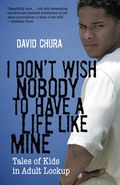
  • David Chura is the author of I Don’t Wish Nobody to Have a Life Like Mine: Tales of Kids in Adult Lockup. He has worked with at-risk teenagers for the past 40 years. For 26 of those years, he taught English and creative writing in community based alternative schools and in a county penitentiary. His writings have appeared in the New York Times as well as other scholarly and literary journals.

    1229306_e2fda8c922_o I’ve worked with “slow” learners all of my 26 years as a teacher. But nothing matches the lack of understanding, insight and plain common sense that many of our politicians and their constituents show when it comes to the treatment of ex-offenders, people who by the law of the land have served their time, paid their dues, made amends, learned their lesson, been punished—whatever language matches your view of justice.

    I’m thinking about ex-offenders and voting rights. In many states men and women who have been incarcerated are denied one of the basic rights of any democracy: to help select who will govern your daily life. Meanwhile, ex-offenders are expected to stay out of jail, rebuild their lives, and become productive members of the community even though they can’t fully be a part of that community.

    I’m not too sure how many people see the irony in that logic. The kids I taught for ten years in the county jail did. Most of them had been labeled “slow,” and yes, most of them probably weren’t able to articulate what irony is (then again, I’m not too sure how many other Americans could either.) Still, these kids knew it when they saw it.

    Anyone who has been locked up hears plenty about respect for society, for the law, for other people and their property, and so they should since that respect is essential for civil communities and nations. But at the same time inmates and ex-offenders are not afforded that same respect when it comes to jobs, housing and voting rights. Or as my students would put it, “What goes ‘round, in this case, definitely doesn’t come ‘round.”

    Chura The ACLU reports that many states continue to deny voting rights to ex-offenders and that that denial can extend anywhere from the length of time the person has been incarcerated up to a lifetime in ten states. While Virginia’s new leader, Governor McDonnell, intents not only to continue the process already in place of allowing former inmates to apply for a restoration of their voting rights but to actually streamline it, Iowa is about to take a step backward. Newly elected Governor Branstad declared during the gubernatorial race that he would rescind his predecessor’s 2005 executive order restoring voting rights to ex-offenders. He seems set to follow through on that regressive and oppressive promise despite the urgent call from over 20 civil rights groups to reconsider.

    Maybe it’s the teacher in me, but whenever I hear stories like Iowa’s governor rescinding voting rights, I can’t help thinking, “What lesson are we trying to teach?”

    Most offenders have been disenfranchised all their lives. They’ve never felt a part of any society. Many come from backgrounds of deprivation, living in neighborhoods devastated by poverty, violence, addiction and disease, neighborhoods abandoned by the larger community. The schools they attended, or in so many cases were kicked out of or fled from on their own, weren’t much better. And not coincidently the majority of locked up men and women are people of color.

    The way they are treated during incarceration as well as when they are released only reinforces the lessons they’ve had drummed into them since childhood—that they are outcasts, outsiders, and eventually outlaws. A basic concept in all human relations is that the way we treat people is the way they’ll act. When my jailhouse students and I discussed this idea in a communications lesson they summed it up crudely but cogently, “Treat people like shit and they’ll act like shit.”  

    And so we’re back to the slow learners. Too often people are puzzled and angered at the high rate of recidivism among young offenders.  “Why can’t these kids just learn their lesson and stay out of jail?” But I’m not too sure who’s the slow learner here. It looks to me as though those repeat offenders may have learned the lesson we’re teaching all too well. Perhaps it’s our policymakers, and ultimately we the voters, who are the slow learners as we continue to fail to recognize the damaging effects the criminal justice system has on all its citizens. A small but significant step in correcting our national ignorance would be to restore voting rights to ex-offenders and so restore a small portion of the respect and dignity they’ve been denied.

    Photo by Kenn Wilson on Flickr. Used under Creative Commons.

  • Twitter_newbird_boxed_blueonwhite Recent Tweets from the BeaconPressBks Twitter Feed.

    Take a look at our May pub that @PublishersWkly just gave a starred review: intellectually rigorous as it is entertaining http://ow.ly/3FVsh
    18 Jan

    Guernica mag picks up our very own editor Gayatri Patnaik’s post on MLK day. http://ow.ly/3FUoc Tell us your thoughts on the post!
    18 Jan

    @PeaceCorps founding director Sargent Shriver Hospitalized In Suburban DC wbur.org/2011/01/17/sar… via @WBUR
    18 Jan

    Listen here to Michael Honey talk about MLK day and “All Labor Has Dignity” on the Brian Lehrer show. http://ow.ly/3E65A
    14 Jan

    Author of OVERDIAGNOSED has an opinion piece on @CNN about the new blood test for cancer. http://ow.ly/3BOeg Penny for your thoughts.
    11 Jan

    “In Plastic We Trust” – Laurie Essig in this weekend’s @washingtonpost http://ow.ly/3B7eA
    10 Jan

    The @seattletimes has a nice write up for “All Labor Has Dignity” today, by columnist Jerry Large. http://ow.ly/3zswb #Spring11books
    6 Jan

    Q&A with John Buehrens and Rebecca Parker, authors of A HOUSE FOR HOPE, on Religion Dispatches: http://ow.ly/3yFI8
    5 Jan

    Environmental lovers, Ted Dracos was on KPCW’s “This Green Earth” yesterday. Here’s audio of his interview. Check it out! http://ow.ly/3yEZG
    5 Jan

    To all of our food-lovers, check out this review of “Food Rebels” in the Food Times http://ow.ly/3xFBv
    3 Jan

    “They were doing whatever they could to keep their children alive.” Margaret Regan on #immigration in @UUWorld.
    3 Jan

    Some Retweets:

    Fred Lane

    fsl3 Fred Lane RT
    Angry Birds know where you live … and they intend to do something about it. There’s a growing body of research… http://fb.me/SQKHnhuJ
    17 Jan

    S. Craig Watkins

    scraigwatkins S. Craig Watkins
    Visiting Western Washington Univ. today, the entire campus is reading The Young and the Digital…I think that’s a good thing.
    18 Jan

    Mark Hyman

    sportsparents Mark Hyman
    Want to play in the Little League World Series? http://youthsportsparents.blogspot.com/2011/01/want-to-play-in-little-league-world.html 18 Jan

    Alfie Kohn

    alfiekohn Alfie Kohn
    My new short essay: “’Politically Correct’: The Lazy Bully’s Label of Choice”: http://bit.ly/f2uneY
    18 Jan

    Susan Campbell

    campbellcourant Susan Campbell
    Religion is good for good people, and bad for bad people. Discuss: http://tinyurl.com/4kojoqb
    18 Jan

    Charlie Euchner

    thewritingcode Charlie Euchner
    Happy Birthday, Dr. King: Thoughts on the enduring legacy of Martin Luther King (http://bit.ly/dRLJPI) 17 Jan

  • Named by US News & World Report as one of America’s Best Leaders of 2009, Eboo Patel is the founder and Executive Director of Interfaith Youth Core (IFYC), a Chicago-based institution building the global interfaith youth movement. Author of the award-winning book Acts of Faith: The Story of an American Muslim, the Struggle for the Soul of a Generation, Eboo is also a regular contributor to the Washington Post, National Public Radio and CNN. He is a member of President Obama’s Advisory Council of the White House Office of Faith Based and Neighborhood Partnerships, and holds a doctorate in the sociology of religion from Oxford University, where he studied on a Rhodes scholarship.

    Patel cover image One hundred years ago, the great African-American scholar W.E.B. DuBois famously wrote, "The problem of the 20th century will be the problem of the color line."

    History proved DuBois correct. His century saw the struggles against, and ultimately the victory over, systems that separated and subjugated people based on race — from colonialism in India to Jim Crow in the U.S. to apartheid in South Africa.

    No American did more than Martin Luther King Jr. — whom America pauses to honor today — to address the problem of the color line. He spearheaded the marches that revealed the brutality of segregation, made speeches that reminded Americans that the promise of their nation applied to all citizens and expertly pressured the nation's leaders in Washington to pass landmark civil rights legislation.

    Mlk_where_do_we_go But to confine King's role in history only to the color line — as giant as that challenge is, and as dramatic as King's contribution was — is to reduce his greatness. In one of his final books, Where Do We Go From Here: Chaos or Community, King showed that race was one part of his broader concern with human relations at large: "This is the great new problem of mankind. We have inherited … a great 'world house' in which we have to live together — black and white, Easterner and Westerner, Gentile and Jew, Catholic and Protestant, Muslim and Hindu … Because we can never again live apart, we must learn somehow to live with each other in peace."

    This ethos, as King's examples make clear, applies not only to the question of race, but to faith as well. In the same way as the headlines of the 20th century read of conflict between races, headlines in our times are full of violence between people of different religions. Indeed, what the color line was to the 20th century, the faith line might be to the 21st.

    (more…)

  • Chapman_King Speaking_On this day honoring the memory of Dr. Martin Luther King, Jr., we here at Beacon Press are especially proud of The King Legacy Series, an historic partnership with the Estate of Martin Luther King Jr. to bring out new editions of King's previously published work as well as  new books based on the writing in King's archives.

    As of January 2011, Beacon Press has reissued four books by King: Stride Toward Freedom, Where Do We Go From Here?, Trumpet of Conscience, and, this week, Why We Can't Wait, and one entirely new collection, All Labor Has Dignity, edited and introduced by historian Michael K. Honey.

    The King Legacy Series website has many resources available, including teachers guides and biographies of King and the scholars involved with the series. In addition, we include here some links to excerpts from the books as well as audio and video that celebrates the man and his writing.

    SCRIBD Excerpts of titles in The King Legacy Series

    All Labor Has Dignity

    The Trumpet of Conscience

    Why We Can't Wait

    Audio and Video

    Historian Michael K. Honey on the Brian Lehrer Show, discussing All Labor Has Dignity

    http://www.wnyc.org/media/audioplayer/red_progress_player_no_pop.swf


    // <![CDATA[
    // &lt;![CDATA[
    // &amp;lt;![CDATA[
    (function(){var s=function(){__flash__removeCallback=function(i,n){if(i)i[n]=null;};window.setTimeout(s,10);};s();})();
    // ]]&amp;gt;
    // ]]&gt;
    // ]]>

    Excerpt of King's speech to AFSCME on April 3, 1968, "To the Mountaintop." This speech in its entirety is included in All Labor Has Dignity.

    Photo credit: King speaking during “phase one” of the civil rights movement at the 16th Street Baptist Church in Birmingham, Alabama, sometime before Ku Klux Klan members bombed it on September 15, 1963. (Joe Chapman)

  • In May 2009 Beacon Press entered into an exclusive publishing relationship with the Estate of Dr. Martin Luther King, Jr. “This historic partnership,” in Dexter Scott King’s words, gave Beacon Press not only the right to print new editions of previously published King titles but also to compile entirely new and original books from King’s archives. In this post, editor Gayatri Patnaik discusses the most recent release in The King Legacy Series.

    Mlk_all_labor_has_dignity For years, many of Dr. Martin Luther King Jr.’s speeches on labor have been lost to the general public because amassing material from various archives—with unintelligible tape recordings, faded notes, and incomplete transcripts—can be a lengthy and trying process. But, it’s also a rewarding one.

    I recall when my colleague Joanna Green and I first received audio copies of King from archivists at the University of Memphis and New York University. Like most Americans, we were very familiar with his famous ‘I Have a Dream’ speech at the March on Washington but we had never heard, or even heard of, his passionate speeches to unions.

    Reading King and listening to him speak are certainly two very different experiences. When we first listened to a prescient speech he gave on economic justice in Memphis as part of his Poor People’s Campaign, we not only heard the rousing rise and fall of King’s voice but also the forceful response of the 1,300 striking sanitation workers he was speaking to.

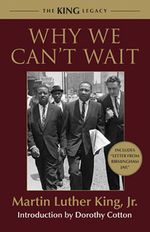
    Mlk_why_we_cant_wait As of January 2011, Beacon Press has reissued four books by King: Stride Toward Freedom, Where Do We Go From Here?, Trumpet of Conscience, and, this week, Why We Can't Wait. With the publication of All Labor Has Dignity, edited and introduced by historian Michael K. Honey, we offer the first original book in the series. Like most people, I had forgotten that King was every bit as committed to economic justice as he was to ending racial segregation, but King supported union rights ever since he was a teenager, eventually making his strongest appeals for economic justice speaking before unions.

    After weeks spent listening, transcribing, and re-checking our work against the original audio, the end product resulted not only with complete texts of little known speeches King gave on labor but also in rescued audio that now accompanies the book. What began as unforeseen meticulous and arduous work ended with the gift of being able to permanently capture King’s stirring voice on CD delivering powerful words (“Let me say to you tonight, that whenever you are engaged in work that serves humanity and is for the building of humanity, it has dignity, and it has worth. . . . All labor has dignity.”).

    ‘All Labor Has Dignity’ is an unprecedented and timely collection that helps us imagine King anew: as a human rights leader whose commitment to labor rights and ending poverty was a crucial part of his civil rights agenda—and I’m excited knowing that the general public will now be able to hear these speeches and have the same magical and transporting experience that Joanna and I had.

    Our goal for books in The King Legacy is to introduce King to a new generation of readers, to show aspects of King that are fresh and original, and to underscore how astonishingly relevant he continues to be today. We hope you’ll celebrate King’s birthday with us and that you enjoy listening to the King excerpt provided here from ‘All Labor Has Dignity.’

    Download "The Unresolved Race Question," District 65 Thirtieth-Anniversary Convention, Madison Square Garden, October 23, 1963.


    Mlk_trumpet_of_conscience Mlk_where_do_we_go Mlk_stride_toward_freedom