• If you are reading this in Massachusetts or Maine, odds are
    good you're enjoying a three-day weekend thanks to Patriots' Day, which our
    history editor explains involves something historic, but many Bostonians
    understand to be the day everyone watches the Boston Marathon. Even if you are
    reading outside the region, we hope you enjoy these recent media appearances by
    Beacon Press authors et al:

    On "The View,"
    the ladies talk to the Trebing family about their quest for a donor sibling to
    help heal their daughter, a moving true story veteran journalist Beth
    Whitehouse tells in her new book The Match.

    Listen to Fred Pearce discuss The Coming Population
    Crash
     on WNYC's "The
    Brian Lehrer Show
    ."

    Dana
    Sachs
     joins NPR's
    "Talk of the Nation"
     host Neal Conan to discuss Operation
    Babylift and how, in 1975, the U.S. government airlifted nearly 3,000 displaced
    children out of wartime Vietnam.

    A Beacon Press editor related to the pink bird in the intro of "The Dylan Ratigan Show" recommends this Story Pirates video on financial deregulation. “This,”
    she says, “is what I call educational programming.”

  • Beacon Broadside ran a post by William Ayers on April 7 about
    being "disinvited" from lecturing at the University of Wyoming—read
    the original post
     here. On April 13,INSIDE Higher Ed ran an update on that
    story: the university is encountering criticism and possible legal action for
    free speech violations.

  • Fran Hawthorne is the author of The Overloaded Liberal: Shopping, Investing, Parenting,and Other Daily Dilemmas in an Age of Political Activism. An excerpt from that book appears below. Click here to listen to an interview with Fran, then vote your values.

    I have to confess that I was kind of smug about my lifestyle before I started this book. I knew that I took a lot of steps to save energy, to support unions and small stores, and to put my money in mutual funds that invested in causes I believe in, and I was quite pleased with myself for all of that. I used cloth napkins instead of paper. I never crossed a picket line. I brought my own shopping bags to stores. I recycled nearly every scrap of paper, metal, glass, and plastic possible, and then I bought recycled paper, and . . . Well, I won't go through my whole self-satisfied list right here. (If you're interested, it's in the book.) Let's just say that every time I opted for the more expensive, no-antibiotics, no-added-hormones ground beef, I thought I was managing to live pretty much according to my liberal values.

    Except that guilty reminders were always tapping at the edge of my brain. If I really were an ethical consumer, wouldn't I buy the beef at the farmers market and the food co-op, not the chain grocery store? In fact, wouldn't I avoid eating beef altogether? But if the ethical goal is to avoid eating beef, why was anyone bothering to make antibiotic-free beef, if not for people like me who care about animal welfare and the environment? Wasn't this better for the environment, or at least the cow? And if the grocery store I sometimes went to was, as it claimed, an "individually owned and operated," unionized member of a purchasing and distribution cooperative, was it really an evil Big Chain?

    (more…)

  • Kudos to nonprofit publisher Bellevue Literary Press, an independent press run out of New York University's School of Medicine, for Paul Harding's Pulitzer Prize winning novel Tinkers. Boston-area independent bookstore Brookline Booksmith adds to the applause for Harding, a local author, and Galleycat re-airs its interview with Danielle Ofri, editor-in-chief of the Bellevue Literary Review.

  • Chuck Collins is a senior scholar at the Institute for Policy Studies where he directs the Program on Inequality and the Common Good.

    Seven years after writing Wealth and Our Commonwealth: Why America Should Tax Accumulated Fortunes, with Bill Gates Sr, I feel like I'm part of the same stuck tax debate. Will raising taxes on the wealthy hurt the economy–or restore fairness to a broken system? Is it a form of punishing success or recycling economic opportunity from those who've benefited from the system?

    (more…)

  • Beaconhillspring I usually prefer to remain a silent editor, allowing our authors' voices to carry the day here on the blog, but I wanted to let all of our readers know that there will be a different person running Beacon Broadside for the next few months. Allison Trzop, who has posted here and here and is an Associate Editor responsible for launching Beacon's new graphic books list, nurturing our sports list, and in general bringing us some pretty terrific books, will serve as blog editor while I am out on maternity leave. It is extremely difficult to leave Beacon Hill when it looks so gorgeous in all its springtime glory, but I look forward to returning post-Independence Day. Enjoy all the fabulous content while I'm gone!

    With warmest regards,
    Jessie Bennett, Blog Editor

  • In Closing the Food Gap: Resetting the Table in the Land of Plenty, food activist and journalist Mark Winne poses questions too often overlooked in our current conversations around food: What about those people who are not financially able to make conscientious choices about where and how to get food? And in a time of rising rates of both diabetes and obesity, what can we do to make healthier foods available for everyone? In this video, he looks at encouraging signs that we are making progress toward closing some of the biggest gaps in our food system.

  • Mark Winne is the author of Closing the Food Gap: Resetting the Table in the Land of Plenty. For 25 years, Winne was the Executive Director of the Hartford Food System, a private non-profit agency that works on food and hunger issues in the Hartford, Connecticut area. He currently writes, speaks, and consults extensively on community food system topics including hunger and food insecurity, local and regional agriculture, community food assessment, and food policy. His new book, Food Rebels, Guerilla Gardeners, and Smart-Cookin' Mamas: Fighting Back in an Age of Industrial Agriculture, will be published this fall.

    Winne The outstretched limbs of Savannah's live oaks sent dappled sunlight along a wide promenade separating two rows of farm stalls in Forsyth Park. The Saturday morning farmers market was in full swing, with boxes heaped high with red peppers, collard greens, and bright orange carrots.

    Hilton Graham was doing a brisk business in just-picked organic produce from his nearby Telfair County farm. Dressed in an old polo shirt and well-worn jeans, Graham was assisted by two sheepish teenage boys whose baggy shorts and designer sweatshirts gave them a decidedly un-farmer like appearance. While one hand was fluffing up bunches of greens and the other pointing his helpers in the direction of a waiting customer, he told me with a big wide grin that, "It's a great day for a market, and as crazy as this place gets, it still gives me peace of mind being here."

    But the experience of Graham and other African-Americans farmers selling organic produce in this park at this time is not just another farmers' market story. Excluded for decades after World War Two from public funds that helped white farmers prosper, black farmers have also been left out of the growing ranks of organic farming, a movement that is giving small farmers across the country a chance at success. Fortunately, that is now changing. By taking matters into their own hands, black farmers formed the Southeast African American Organic Network (SAAFON). And at the same time that they were converting more of their members to organic agriculture, black farmers, with partners in local multiracial organizations, were organizing a farmers' market in a public space previously denied to them.

    (more…)

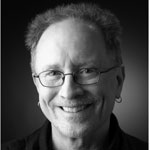
  • William Ayers is Distinguished Professor of
    Education and Senior University Scholar at the University of Illinois at
    Chicago. He is the founder of the Small Schools Workshop and the Center
    for Youth and Society, and he is the author of many books on education,
    including Teaching Toward Freedom and A Kind and Just Parent, and a memoir, Fugitive Days.

    Bayers_150 On March 30, 2010, officials at the University of Wyoming, citing “security threats” and “controversy,” canceled two talks I was invited to give in early April, one a public lecture entitled “Trudge Toward Freedom: Moral Commitment and Ethical Action,” and the other, a talk to faculty and graduate students called “Teaching and Research in the Public Interest: Solidarity and Identity.” I’d been invited in August, 2009, but one week before I was to travel to Laramie, I was told I had been “disinvited.”

    In February, as the University began to publicize my scheduled visit, a campaign to rescind the invitation was initiated on right-wing blogs, accelerating quickly to a wider space where a demonizing and dishonest narrative dominated all discussion. A wave of hateful messages and death threats hit the University, and was joined soon enough by a few political leaders and wealthy donors instructing officials in ominous tones to cancel my visit to the campus. On March 28 an administrator wrote to tell me that the University was receiving vicious e-mails and threatening letters, as well as promises of physical disruption were I to show up. This is becoming drearily familiar to me, as I’ll explain.

    (more…)

  • Mary Oliver is one of America’s most beloved poets. This essay is from her second audio recording, the CD Many Miles, which contains the poet reading a selection of her work, including four as-yet uncollected poems. You can learn more about the CD here, and also enter to win a poster featuring a poem from her forthcoming book, The Swan.

    Listen to Mary Oliver read her poem "Many Miles."

    http://www.beacon.org/client/audio/audio-player.js
    http://www.beacon.org/client/audio/player.swf
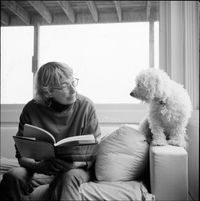
    MaryOliver_photo credit Rachel Giese Brown
    Photo by Rachel Giese Brown

    All our lives, at least seasonally, the redbird sings, and the oriole and the wren, and in April the ponds are reliably loud with the singing of frogs, and on long winter afternoons the snow-heavy wind whistles in the pines. But our own voices, the particular voices of those who are dear or important to us– or both– vanish utterly at the end of the season of life. And how thoroughly also are the sounds of a certain place gone when we visit it no more, though visual joys, sometimes with great clarity, may remain in the mind.

    In Rajastan, in India, a man, a woman, and a child were singing outside a restaurant; I can still see them in their vibrant gypsy clothes, the man holding a stringed instrument somewhat like a guitar, but smaller and shaped differently, rather like a gourd. But I cannot hear anymore their loud brisk, joyful singing, a strange and powerful performance. How can this be, that the eyes can keep so many pictures, and the ears have no such reliable and comforting memory? It was perhaps the most exciting music I had ever heard; I think I might have followed it anywhere; but we drove on to the next town, and now in my ears there is nothing.

    Of course, the ears are not always quite so empty as I describe them in this story. One can remember voices and almost hear them again a little, especially the intonation of a familiar voice at some pitch of emotion, angry, or frightened, or tender. But for me, at least, it’s a few syllables thrust into the air, and they are hard to hold onto.

    Many years ago a friend and I used to go to the Old Met in New York, two or three nights a week sometimes. We would stand in the lobby and wait, and sure enough some svelte couple would come dashing out at the end of Act One, to a dinner or a party perhaps, and we– poor but audacious– would ask them to give us their ticket stubs. We were never refused, and invariably they were good seats: first floor, down front. Tebaldi, Tucker, Warren, De los Angeles! And then Tebaldi and the others sang at the Met no more, sang no more anywhere.

    (more…)