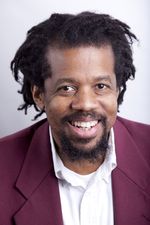
• Today’s post is from David Chura, author of I Don’t Wish Nobody to Have a Life Like Mine: Tales of Kids in Adult Lockup. Chura has worked with at-risk teenagers for forty years. His writing has appeared in the New York Times and multiple literary journals and anthologies, and he is a frequent lecturer and advisor on incarcerated youth. This post originally appeared at his Kids in the System blog.

    Chura-flickr-lockers  “Zero tolerance.” It sounds like a good idea: “Put your foot down.” “Get tough.” “We’re not taking it anymore.”

    The American public, worried about the purported drug and gun wars being fought in our cities in the 1990s, grabbed onto this concept. In turn, a number of states and municipalities adopted “zero tolerance” laws.

    Since then “zero tolerance” has pervaded our culture.

    Draconian drug laws impose harsh sentences on nonviolent offenders, glutting prisons and draining overextended state budgets, while leaving the people with drug problems untreated.

    Our hard-hitting laws about who is a sex offender create a caste of people who will be a burden for the rest of their lives on the very society these laws hoped to shield.

    Certainly citizens, young and old, need to be protected from real sex offenders, but consider the case of a 17-year-old I taught at the county jail.

    (more…)

  • Today's post is from Gail Dines, author of the forthcoming book Pornland: How Porn Has Hijacked Our Sexuality. Dines has written and lectured on the porn industry for over two decades. She is professor of sociology and women's studies at Wheelock College.

    Book cover for PornlandFor all those women who think men are interested only in sex and not conversation or intimacy, think again. A New Jersey based company, ironically called True Companion, has come out with what it calls the "the world's first sex robot". This is, according to news reports, a life-size rubber doll that has all the "necessary" orifices. Why the big news? After all, this is not the first time that the porn industry has come out with a sex doll. The company Real Doll has been around since 1996 and offers "an extensive list of options, including 10 female body types and 16 interchangeable female faces." Offering to customize the doll to the desires of the particular consumer – color and shape of pubic hair, fingernail colors, hairstyle, ethnic features etc., — the company boasts that "If you've ever dreamed of creating your ideal partner, then you have come to the right place."

    True Companion is trying to build a business on the deep insight that some men want more from their ideal partner than silent beauty. For about $8,000 True Companion offers a doll that actually talks in response to various stimuli, generating nuanced and complex sentences such as "I love holding hands with you." Douglas Hines, the owner of True Companion, wants the customer to be able to "talk and relate to" the doll because he has come to the great realization that "Sex only goes so far — then you want to be able to talk to the person." At last, men have discovered that for most women — and perhaps a few dolls — conversation matters! Well, it's a start.

    As ridiculous as this robot may seem to many of us, it actually makes perfect sense in a society saturated by porn, where the average age boys first view porn is 11 years. Boys and men are socialized by porn to see sex as lacking in connection, intimacy and emotion. Sex in porn is all about penetration; as chrisfjohn, commenting on the robot on the Huffington Post, said, "the great part about porn is that you don't have to deal with all of the emotions and drama of a relationship." For chrisfJohn the robot is a bit too emotionally connected — he doesn't want to "have to listen to it talk." For Don E Chute, on the other hand, the price is a bit steep because, he calculates, for that amount he could buy "roughly, 80, $100 hookers." To be fair, many of the comments do see the problem with the robot-as-partner idea, but the misogyny still drips from their posts, as in the case of AZ85283, when he asks "Mothers, what the hell are you raising?"

    Of course, it's not the mothers but the pornographic culture that is raising men who are increasingly seeing women as interchangeable with sex dolls. If a doll with three orifices can stand in for a woman, then it doesn't bode well for women who want to be seen as equal to men and deserving of full human rights. To see just how gender specific this is, can you imagine women shelling out thousands of dollars for a male doll, no matter what size his manhood, even if it did say, "can I make dinner for you"?

  • Today’s post is an excerpt from Where Do We Go from Here: Chaos or Community? by Martin Luther King, Jr. The last book written by Dr. King, it is one of the first, along with Stride Toward Freedom: The Montgomery Story, to be released by Beacon Press as part of The King Legacy Series. In this prophetic work, which has been unavailable for more than ten years, he lays out his thoughts, plans, and dreams for America’s future, including the need for better jobs, higher wages, decent housing, and quality education. With a universal message of hope that continues to resonate, King demanded an end to global suffering, asserting that humankind-for the first time-has the resources and technology to eradicate poverty.

    Kinglegacy Some years ago a famous novelist died. Among his papers was found a list of suggested plots for future stories, the most prominently underscored being this one: “A widely separated family inherits a house in which they have to live together.” This is the great new problem of mankind. We have inherited a large house, a great “world house” in which we have to live together– black and white, Easterner and Westerner, Gentile and Jew, Catholic and Protestant, Muslim and Hindu– a family unduly separated in ideas, culture and interest, who, because we can never again live apart, must learn somehow to live with each other in peace.

    However deeply American Negroes are caught in the struggle to be at last at home in our homeland of the United States, we cannot ignore the larger world house in which we are also dwellers. Equality with whites will not solve the problems of either whites or Negroes if it means equality in a world society stricken by poverty and in a universe doomed to extinction by war.

    All inhabitants of the globe are now neighbors. This worldwide neighborhood has been brought into being largely as a result of the modern scientific and technological revolutions. The world of today is vastly different from the world of just one hundred years ago. A century ago Thomas Edison had not yet invented the incandescent lamp to bring light to many dark places of the earth. The Wright brothers had not yet invented that fascinating mechanical bird that would spread its gigantic wings across the skies and soon dwarf distance and place time in the service of man. Einstein had not yet challenged an axiom and the theory of relativity had not yet been posited.

    Book Cover for Where Do We Go From Here Human beings, searching a century ago as now for better understanding, had no television, no radios, no telephones and no motion pictures through which to communicate. Medical science had not yet discovered the wonder drugs to end many dread plagues and diseases. One hundred years ago military men had not yet developed the terrifying weapons of warfare that we know today– not the bomber, an airborne fortress raining down death; nor napalm, that burner of all things and flesh in its path. A century ago there were no sky-scraping buildings to kiss the stars and no gargantuan bridges to span the waters. Science had not yet peered into the unfathomable ranges of interstellar space, nor had it penetrated oceanic depths. All these new inventions, these new ideas, these sometimes fascinating and sometimes frightening developments, came later. Most of them have come within the past sixty years, sometimes with agonizing slowness, more characteristically with bewildering speed, but always with enormous significance for our future.

    (more…)

  • Mary Daly, a world-renowned radical feminist philosopher, died on January 3rd. Today's post honoring Daly is from Ann Braude, Senior Lecturer on American Religious
    History and Director of the
    Women's Studies in Religion Program at Harvard Divinity School.

    DALY_MARYx390 What color flowers do you choose for a memorial for Mary Daly? Deep red roses for radicalism and women's blood? The lighter roses seemed more calming and reflective, closer to my own mood. But would Mary have blanched at the prettiness, the conventional feminine associations of the pastels? Or would she have relished the playfulness of pink with baby’s breath? Or would she have hated the idea of roses altogether, decrying working conditions on Brazilian flower farms? I settled on deep coral roses with purple asters. The unconventional contrast seemed right, and, sadly, Mary would not be there to argue with the choice.

    But she would still be arguing in my mind. Mary Daly made us think about everything: every choice, every action, every word. Because of her, generations of women and men questioned what had never been questioned before. Two dozen of us whose lives were changed by Mary Daly's work gathered on Tuesday at Harvard Divinity School to remember one of the most courageous and outrageous thinkers of the 20th century. Sitting in a circle, we recounted memories, crystalline in detail, of the extraordinary interventions of Mary and her work in our lives. Several brought missives from those who could not be present. While Mary's books are her legacy — and all agreed that their importance has yet to be realized — the change she wrought in so many souls is a powerful legacy as well.

    (more…)

  • Today’s post is from Adele Barker, who was awarded a Ucross Fellowship for her work on her latest book, Not Quite Paradise: An American Sojourn in Sri Lanka. Barker has taught at the universities of Arizona and Washington, and is the author and editor of five books on Russian literature and cultural life. In 2001-2002 she received a Fulbright Senior Scholar grant to teach and write in Sri Lanka. After the tsunami she returned to the island where she traveled to the areas most devastated by the waves and by the thirty year old civil war between the Tamil Tigers and the central Sinhalese government.

    This post is the first of a series, appearing at the Huffington Post, marking the anniversary of the 2004 tsunami. This week’s tragedy in Haiti calls painfully to mind the human loss and devastation of five years ago.

    December 25, 2009

    Everyone is complaining about the heat here, even the stalwarts who were born to it. Disgorged from mind numbing twenty-some odd hour flights, my son and I arrived to find the chocolates we had brought as Christmas presents liquefied into something the consistency of a post-rain mud flow. Vitamin capsules succumbed to the heat in Ziploc bags; lipstick lost its former identity as we moved to the tune of Christmas carols, bright lights and election streamers that dot the streets of this country just a heartbeat north of the equator. We are back in Sri Lanka. It’s Christmas in Colombo!

    My son Noah and I have come back to this island that was our home for a year after 9/11. Noah has not been back since 2002. I returned for eight months after the tsunami to work on my book about the island Not Quite Paradise. I thought I had finished the book in 2004, but then the wave hit. And everything changed. The book will be out in a few days. We both decided we needed to return, to put our feet on the island again, to take stock of a place that had so deeply defined our lives for that year and longer. In just days it will be five years since the tsunami. It feels to us as if it should be marked in some way, but so far there has been nothing in the press about it. Friends tell me that the country is too busy with other things, the upcoming presidential election in January for one. The kickoff to the campaign began the day after we arrived. For many this is going to be a bitterly fought contest between the incumbent president, Mahinda Rajapaksa, and General Sarath Fonseka both of whom claim responsibility for the victory in May of this year over the Tamil Tigers. Some say this election is going to determine the future of this country. Others fear that the direction has already been charted and that nothing is going to change regardless of who is running the place. But this is what is garnering the attention these days as Noah and I thread our way through the traffic of Christmas shoppers and campaign throngs in downtown Colombo.

    (more…)

  • In the terrible wake of the devastating quake in Haiti, we have heard this about long-time Beacon friend and supporter, author Edwidge Danticat, who was interviewed for this story about Haitian-Americans waiting for news of loved ones:

    Edwidge Danticat, a Haitian-American author whose books about the
    country have won the National Book Award and the Pushcart Prize,
    gathered family and friends at her Miami home, which has become
    something of a command center.

    "Some people are online, some are watching CNN, some are listening to
    Haitian radio," she said late Tuesday night. "There's a huge sense of
    helplessness about it. You want to go there, but you just have to wait.
    I think the hardest part is the lack of information."

    She said that for years, Haitians wondered with trepidation what would
    happen if an earthquake hit.

    "Life is already so fragile in Haiti, and to have this on such a massive
    scale, it's unimaginable how the country will be able to recover from
    this."

    Those who want to pitch in are encouraged to check out these resources:

    AMERICAN RED CROSS
    Text “HAITI” to “90999″ to make a $10 donation.
    2025 E Street, NW
    Washington, D.C. 20006
    (800) REDCROSS (733-2767)

    CARE
    151 Ellis Street
    Atlanta, GA 30303
    (800) 521-CARE (521-2273)

    DOCTORS WITHOUT BORDERS USA/MEDECINS SANS FRONTIERES (MSF)
    333 7th Avenue, 2nd Floor
    New York, NY 10001-5004
    (888) 392-0392

    OXFAM AMERICA
    226 Causeway St., 5th Floor
    Boston, MA 02114-2206
    (800) 77-OXFAM (776-9326)

    Unitarian Universalist Service Committee
    PO Box 845259
    Boston, MA 02284-5259
    (617) 868-6600

  • This post is quite a bit longer than what we usually publish here at Beacon Broadside, but we hope that you'll take the time to read it in its entirety. The story is by author Don Belton, and was included in Speak My Name: Black Men on Masculinity and the American Dream, which was edited by Belton and published by Beacon Press in 1995. Don Belton's death on December 27th was a great loss, and we feel that this essay offers a fine example of the power and humanity of his work.

    Don Belton On Christmas morning in 1991 I telephoned my nephew. I have two nephews: Charles, who had only just turned nineteen the week before, and Wayne, Jr., who is somewhere in his middle twenties by now. These are the children of my brother's first marriage. My nephews grew up in Newark, New Jersey, where much of my early childhood was spent, but that was before the conflagration of the 1967 riot and the razing of what remained of the city by the local, state, and federal governments in the name of an urban renewal which is yet to come. While Newark was not an easy city to live in, it was still, in any case, from the late 50s to the mid-60s (when I lived there with my great-grandmother in the black district called the Hill) a city. Today Newark is the ghost of a city. Its statistics for AIDS, black-on-black crime, infant mortality, and unemployment bear witness to dissolution.

    Charles was living in Newark in 1991. I had not spoken to him in over four years. I hadn't seen him in a longer time. The last time we'd spoken was by telephone. (For several years now, I seem to talk to the members of my family only on the phone.) By 1991 I still felt unresolved about our last conversation. I had been visiting my parents' house in Philadelphia, while they were away on a trip. "Uncle Don," Charles had said to me on the phone back then, "Where's Grandad and Gramma? I want to tell them I got shot."

    (more…)

  • Today's post is from Jeremy Adam Smith, editor of Shareable.net and author of The Daddy Shift: How Stay-at-Home Dads, Breadwinning Moms, and Shared Parenting are Transforming the American Family. He blogs about the politics of parenting at Daddy Dialectic and at Mothering.com, where this post originally appeared as part of his series: "25 Ways for Dads to Change the World."

    Facemask-225x300 "Keep yer stick on the ice!" yelled one dad, his voice filled with anger.

    "Come on, number fifteen!" yelled another. "You skate like a girl!"

    Liko and I were watching a youth hockey game at the Yerba Buena rink in San Francisco. We were surrounded by fathers watching their boys play hockey… and, man, was it ugly.

    As the kids battled on the ice, you could feel the tension rising among the parents.

    Then I heard a lone, small voice from the other side of the bleachers:

    "Have fun!" it said.

    I looked up, and so did the other parents.

    There stood a fellow on the top bleacher, smiling down at us. The smile said, C'mon, guys, lighten up.

    I chuckled, and a ripple of laughter spread through the stands. We did lighten up.

    One of the (few) moms yelled, "Have fun keeping your sticks on the ice!"

    "Have fun skating like a girl!" shouted a dad.

    (more…)

  • MetzlMelissa Harris-Lacewell asks: Who Are You Calling Crazy? in her review of Jonathan Metzl's The Protest Psychosis.

    Patricia Harman discussed The Blue Cotton Gown with WYPL's Book Talk. Listen to the podcast here.

    On "The Choice" blog at NY Times, Alan Collinge calls for consumer protections on student loans.

    Carol Joffe's Dispatches from the Abortion Wars is the book of the week on DoubleX.

    The mammogram debate should be about science, not emotions, says Danielle Ofri. Dr. Ofri had a fantastic book launch for Medicine in Translation–congratulations!

  • Today’s post is from David Chura, author of I Don’t Wish Nobody to Have a Life Like Mine: Tales of Kids in Adult Lockup. Chura has worked with at-risk teenagers for forty years. His writing has appeared in the New York Times and multiple literary journals and anthologies, and he is a frequent lecturer and advisor on incarcerated youth.

    Book Cover for I Don't Wish Nobody to Have a Life Like MineThe numbers are disturbing. During 2008 through 2009, 12 percent or 3,220 of the kids locked up in state or privately run juvenile detention centers reported that they had been sexually victimized by another kid or by facility staff.

    Even more disturbing is that 10.3 percent stated they had had sexual contact with an adult staff member. Of that number, 1,150 kids said that sex or sexual contact was forced on them. All this according to the recently released National Survey of Youth in Custody (NSYC) report mandated by the Department of Justice as part of the Prison Rape Elimination Act.

    Statistics have an odd way of getting to us.

    On one hand, they’re just numbers; cut and dry; lifeless; boring to read; easy to lose track of. Yet they’re potent, almost like talismans that draw our attention to the truth beneath them.

    (more…)